The Museum of Ancient Seafaring in Mainz, known in German as the Museum für Antike Schifffahrt, is one of the city’s most interesting attractions for visitors interested in Roman history, archaeology and ancient engineering.
Located close to the Roman Theatre, the museum explores the ships, waterways and trading routes that helped connect communities throughout the Roman Empire.
Museum of Ancient Seafaring in Mainz
The Roman Ships of Mainz
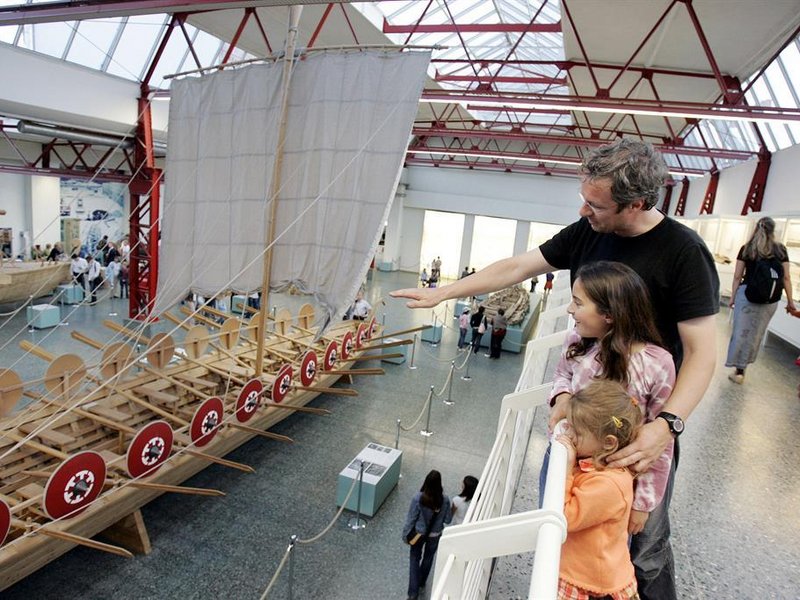
The highlight of the museum is the collection of ancient Roman ships discovered in Mainz.
Remains of several Roman military vessels dating from around the 4th century AD were discovered during construction work near the Rhine.
The preserved wooden remains provide archaeologists with valuable information about how Roman ships were designed and constructed.
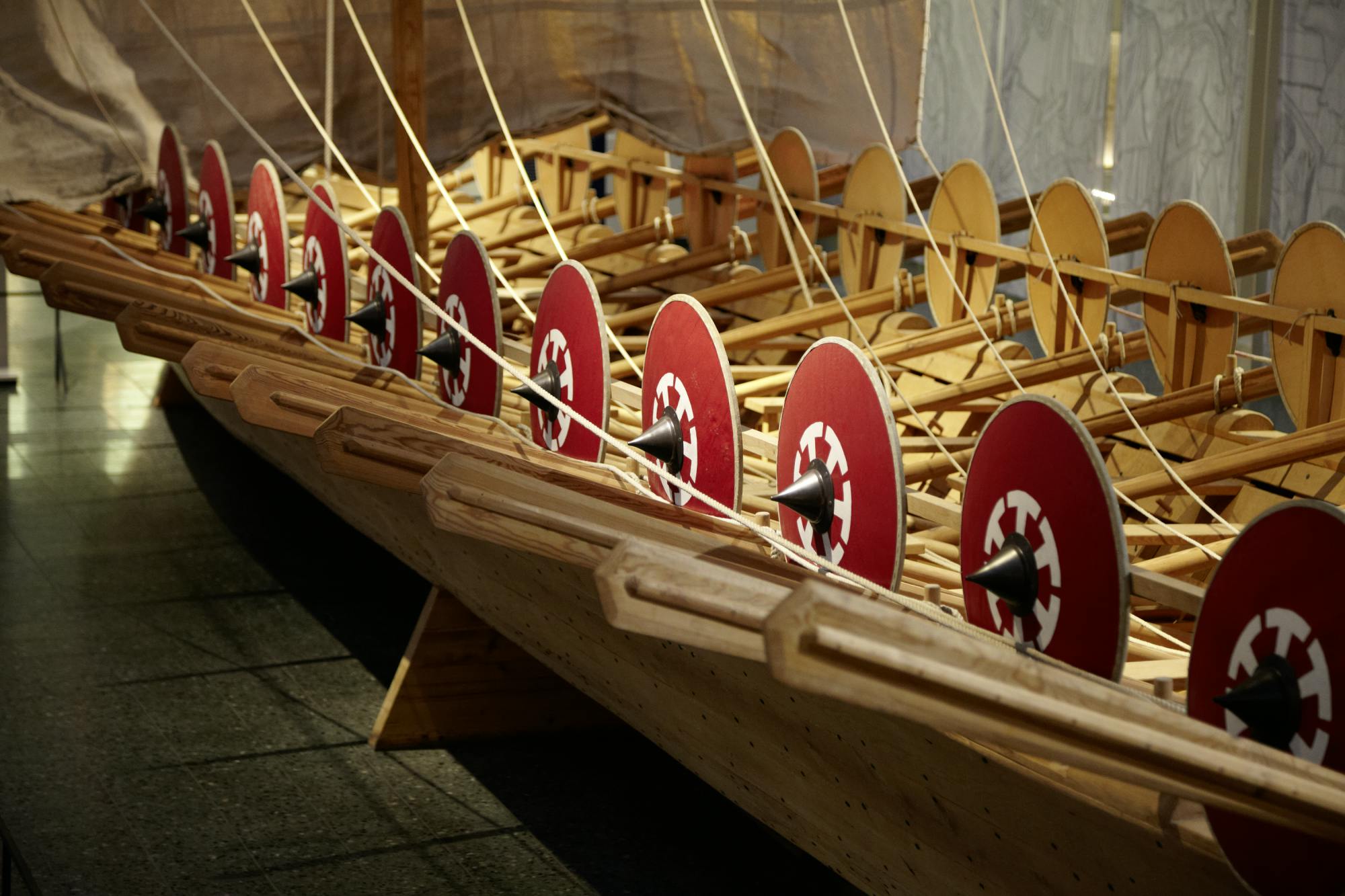
The museum also contains impressive reconstructions and models that help visitors understand what these ancient vessels would have looked like when they were operating on the Rhine.
What to See at the Museum
The Museum of Ancient Seafaring combines archaeological finds with reconstructed vessels, models and displays explaining the importance of river transport in the Roman Empire.
Exhibits explore subjects including:
Roman military ships
Ancient shipbuilding techniques
Trade along the Rhine
Roman merchant shipping
Navigation and transportation
Archaeological discoveries from Mainz
The role of rivers in the Roman Empire
The full-size ship reconstructions are particularly useful for understanding the scale and construction of Roman vessels.
Roman Mainz
Mainz was known to the Romans as Mogontiacum.
The settlement developed around an important Roman military base positioned strategically on the River Rhine.
Roman influence remained strong in the area for centuries, and several important archaeological sites can still be visited around modern Mainz.
The Museum of Ancient Seafaring can easily be combined with other Roman attractions in Mainz, including the Roman Theatre and the Drusus Stone.
Visiting the Museum of Ancient Seafaring
Address:
Neutorstraße 2b
55116 Mainz
Germany
The museum has been undergoing a major modernisation and renovation program. Visitors should check the latest opening information before travelling specifically to visit the museum.
How Long Should You Allow?
Most visitors should allow approximately 1 to 2 hours to explore the museum.
Visitors with a particular interest in Roman history, archaeology, military history or ancient shipbuilding may wish to spend longer examining the displays and reconstructed vessels.
Getting to the Museum
The Museum of Ancient Seafaring is located close to the centre of Mainz and is conveniently situated near Mainz Römisches Theater railway station.
Its location makes it easy to include the museum as part of a walking tour of Mainz and its Roman archaeological sites.
Why Visit the Museum of Ancient Seafaring?
The Museum of Ancient Seafaring offers something quite different from a conventional Roman history museum.
Seeing original remains of ancient ships alongside full-size reconstructions gives visitors a much better understanding of Roman engineering and the importance of river transportation.
The Rhine was one of the most important transport routes in Roman Europe, carrying soldiers, supplies, merchants and goods between settlements throughout the empire.
For travellers interested in Roman history, archaeology and ancient technology, the Museum of Ancient Seafaring makes an interesting addition to a visit to Mainz.
Travel Tip
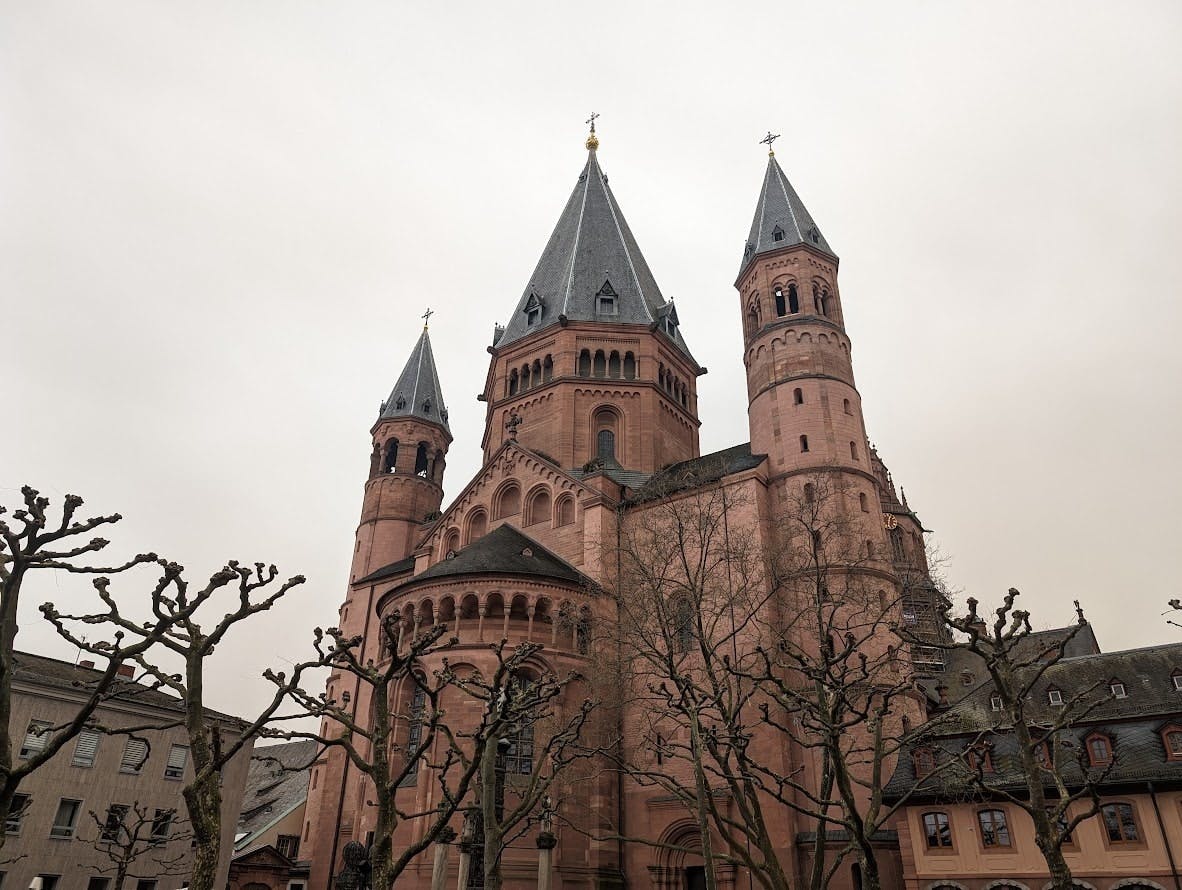
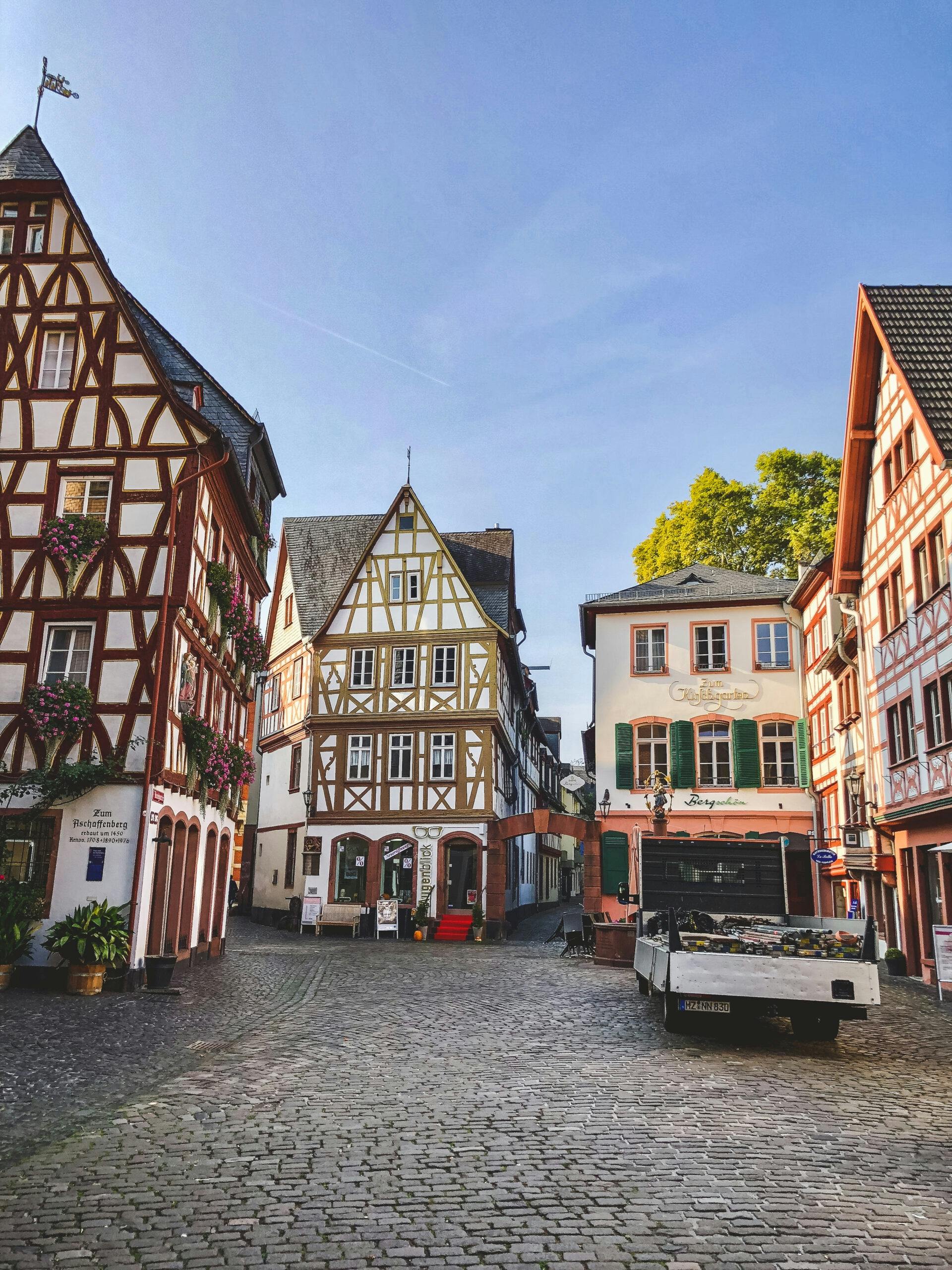
Combine your visit with the nearby Roman Theatre and explore the historic centre of Mainz. The museum’s central location also makes it easy to continue to Mainz Cathedral, the Gutenberg Museum and the attractive old town.
Important: Check the museum’s current opening status before visiting, particularly while renovation and modernisation work is being completed.
Sponsored Popular Items
Quick take: Musement.com offers a worldwide selection of tours and attractions
Ticket for the Museum of Ancient Seafaring in Mainz Germany Plan Ticket for the Museum of Ancient Seafaring in Mainz, a water-based experience, with practical tips on timing, inclusions and what to check before booking. Compare current availability, prices and booking conditions before you go.
Mainz Lost Relic City Exploration Game Germany Plan Mainz Lost Relic City Exploration Game, a self-guided game or exploration experience, with practical tips on timing, inclusions and what to check before booking. Compare current availability, prices and booking conditions before you go.
Goethe’s Footsteps in Frankfurt is a self-guided outdoor exploration game that combines literary history, sightseeing and puzzle-solving through central Frankfurt. Instead of following a conventional tour guide, participants use the Questo smartphone app to solve clues that gradually reveal the next location on a walking route connected with Johann Wolfgang von Goethe and the city in which he was born.
The route begins at the Goethe Monument on Goetheplatz, leads through Frankfurt’s historic centre, includes Goethe’s birthplace and Römerberg, ventures through the city’s wider historic quarters and finishes at the Kleinmarkthalle. The current route covers approximately 3.2 kilometres and contains 11 location-based puzzles. :contentReference[oaicite:2]{index=2}
The experience is particularly useful for travellers who prefer exploring independently. There is no guide, no group and no compulsory departure time. You can begin when convenient, pause for coffee or lunch and continue later from where you stopped. :contentReference[oaicite:3]{index=3}
Goethe’s Footsteps in Frankfurt at a Glance
Tour Information
Details
Experience
Goethe’s Footsteps in Frankfurt city exploration game
Provider
Questo
Format
Self-guided outdoor escape game and walking tour
Starting point
Goethe Monument, Goetheplatz
Finishing point
Kleinmarkthalle, Hasengasse 5–7
Distance
Approximately 3.2 km
Puzzle locations
11
Typical game time
About 1½–2¼ hours depending on pace
Language
English
Human guide
No
Fixed starting time
No
Can you pause?
Yes
Attraction admissions included?
No
Goethe House admission included?
No
Internet
Required by the Musement version; Questo says ordinary play can also function offline after setup
Current direct Questo price
From €9.99 solo
Best for
Literature, history, couples, families with older children and independent sightseeing
The direct Questo listing currently estimates 110–140 minutes, while the TUI Musement version gives a nominal duration of around 1 hour 30 minutes. The difference mainly reflects individual puzzle-solving and sightseeing pace. :contentReference[oaicite:4]{index=4}
What Exactly Is the Experience?
This is best described as a cross between a self-guided literary walking tour, treasure hunt and outdoor escape game.
After downloading the app, you travel to the Goethe Monument. The app presents a story and your first challenge. When you solve it correctly, the next location is revealed. This continues through 11 stages until you reach the final destination at Kleinmarkthalle. :contentReference[oaicite:5]{index=5}
There is no member of staff waiting at Goetheplatz. TUI Musement specifically notes that this is a self-guided treasure-hunt-style experience and that no person assists participants at the starting point. :contentReference[oaicite:6]{index=6}
The Story: Frankfurt in 1774
The current game places you imaginatively in Frankfurt in 1774.
A young Johann Wolfgang Goethe is searching for inspiration for his next work when he receives a mysterious letter inviting him to an unusual meeting. The game uses this fictional premise to lead players through real locations associated with Goethe and Frankfurt’s history. :contentReference[oaicite:7]{index=7}
It is worth remembering that the puzzles are entertainment rather than a documentary reconstruction. The locations and Goethe biography are historical, while the mystery surrounding them provides the game’s fictional framework.
Who Was Johann Wolfgang von Goethe?
Johann Wolfgang Goethe was born in Frankfurt in 1749 and spent his childhood and much of his youth in the family home on Großer Hirschgraben. He remained closely associated with Frankfurt until leaving for Weimar in 1775. :contentReference[oaicite:8]{index=8}
During his Frankfurt years he created some of the works that established his reputation, including Götz von Berlichingen and The Sorrows of Young Werther, while also beginning work on the subject that eventually became Faust. :contentReference[oaicite:9]{index=9}
That makes Frankfurt more than simply Goethe’s birthplace. It was the setting for the formative period in which the young writer developed into one of the central figures of German literature.
Start at the Goethe Monument
The game begins at:
Goethe-Denkmal
Goetheplatz
Frankfurt am Main
Germany
There is no ticket office and no guide to meet. Open the app once you reach the monument and begin the first challenge. :contentReference[oaicite:10]{index=10}
An Interesting Irony About Goetheplatz
The game’s creators deliberately point out that the adventure starts somewhere Goethe himself never saw in its present form. From there the narrative gradually takes you into locations much more directly connected with his life, including his birthplace. :contentReference[oaicite:11]{index=11}
This makes the starting point useful symbolically: modern Frankfurt’s memorial to Goethe becomes the gateway into the Frankfurt that shaped the young writer.
The Route Is About More Than Goethe
Although Goethe provides the central theme, the route also introduces the wider history and culture of Frankfurt.
The current itinerary specifically incorporates:
Goetheplatz
Goethe’s birthplace
Frankfurt’s Old Town
Römerberg
Sachsenhausen
Local food traditions
Kleinmarkthalle
The operator describes the experience as combining Goethe, Frankfurt history and local gastronomy rather than functioning solely as a literary biography. :contentReference[oaicite:12]{index=12}
Do Not Miss the Goethe House
The most important Goethe-related location on the route is the Frankfurter Goethe-Haus.
The house on Großer Hirschgraben is where Goethe was born and where he spent his childhood and most of his youth before moving to Weimar in 1775. The reconstructed period rooms recreate the domestic world of the Goethe family and 18th-century Frankfurt. :contentReference[oaicite:13]{index=13}
Is Goethe House Admission Included?
No.
The outdoor game includes views of certain attractions from outside and specifically excludes entrance fees. You therefore need a separate museum ticket if you want to explore the Goethe House interior. :contentReference[oaicite:14]{index=14}
This distinction is important because simply completing the puzzle route does not provide the same experience as entering Goethe’s home.
Current 2026 Goethe House Admission
As of August 2026, the official combined admission for the Frankfurter Goethe-Haus and Deutsches Romantik-Museum is:
Ticket
Current Price
Regular
€12
Students / trainees
€7
Visitors with Frankfurt Card
€6
School students
€3
Family ticket
€18
Children up to age 6
Free
Tickets are currently sold at the museum ticket desk rather than online. :contentReference[oaicite:15]{index=15}
Current Goethe House Opening Hours
Day
Hours
Monday
10:00 am–6:00 pm
Tuesday
10:00 am–6:00 pm
Wednesday
10:00 am–6:00 pm
Thursday
10:00 am–9:00 pm
Friday
10:00 am–6:00 pm
Saturday
10:00 am–6:00 pm
Sunday and public holidays
10:00 am–6:00 pm
Special opening times apply on a handful of dates. For example, the official 2026 calendar lists an early 5:00 pm closure on 28 August 2026 and complete closures on 24–25 December and 31 December. :contentReference[oaicite:16]{index=16}
A Very Good Way to Combine the Game and Goethe House
If Goethe is the main reason you chose the activity, allow more than the advertised game duration.
A strong plan is:
Goethe Monument → begin game → pause at Goethe House → visit the museum → resume the game → Römerberg → continue route → finish at Kleinmarkthalle.
The app allows participants to pause and resume, so there is no need to rush past Goethe’s birthplace simply to protect your game time. :contentReference[oaicite:17]{index=17}
Allow About 1½ Hours for Goethe House
The historic home deserves at least an hour if you enjoy literature or period interiors. Combining it with the adjacent Deutsches Romantik-Museum can easily turn the stop into a longer visit.
Public Goethe House tours are currently offered at 2:00 pm and 4:00 pm daily, with an additional 10:30 am tour on Saturdays and Sundays. They last around 50 minutes and are included with admission, subject to availability and minimum participation. :contentReference[oaicite:18]{index=18}
The Goethe House Is Not Fully Accessible
This is an important practical limitation.
The official museum states that the historic Goethe House can only be reached using stairs. The newer Deutsches Romantik-Museum, Goethe Gallery and temporary-exhibition areas are barrier-free. :contentReference[oaicite:19]{index=19}
Visitors with substantial mobility limitations can still enjoy the outdoor Goethe game, but should not assume the historic house itself has full step-free access.
Römerberg
The route also leads into Römerberg, Frankfurt’s famous historic central square. The current game specifically identifies the restored Römerberg as one of its major highlights. :contentReference[oaicite:20]{index=20}
This is one of the sections where the experience broadens beyond Goethe. Römerberg provides a visual introduction to the city’s civic history and reconstructed Old Town environment.
Nearby landmarks include:
Römer town hall complex
St Paul’s Church
Frankfurt Cathedral
New Old Town
Main riverfront
Eiserner Steg footbridge
Römerberg and St Paul’s Church sit only a few minutes from Goethe House on foot, making this one of the most sightseeing-dense parts of the game. :contentReference[oaicite:21]{index=21}
Sachsenhausen
The tour description also references Sachsenhausen, Frankfurt’s well-known district south of the Main. :contentReference[oaicite:22]{index=22}
Sachsenhausen is particularly associated with Frankfurt’s traditional Apfelwein, or apple wine, culture. The game’s inclusion of Frankfurt food traditions therefore fits naturally with its wider exploration of the city rather than Goethe alone.
Food Is Part of the Theme
The game does not include a meal or food tasting, but the operator deliberately incorporates Frankfurt’s culinary traditions into the experience. :contentReference[oaicite:23]{index=23}
That makes it worth leaving enough time for a stop rather than playing purely against the clock.
Typical Frankfurt foods you may encounter around the wider city centre include:
Frankfurter green sauce
Apple wine
Frankfurter sausages
Handkäse
Regional breads and pastries
The Game Finishes at Kleinmarkthalle
The final destination is:
Kleinmarkthalle
Hasengasse 5–7
Frankfurt am Main
The exact finishing location is confirmed by both the Questo and Musement/TUI listings. :contentReference[oaicite:24]{index=24}
Why Kleinmarkthalle Makes a Good Finish
Kleinmarkthalle is one of Frankfurt’s principal food markets. Frankfurt’s official tourism organisation describes a market containing approximately 150–156 stalls selling fresh produce, regional specialities, international foods, herbs, spices and prepared food. :contentReference[oaicite:25]{index=25}
That makes the finish feel less arbitrary than simply ending at another monument. After several kilometres of walking and puzzles, you arrive somewhere specifically suited to eating and exploring local food.
Do the Game While Kleinmarkthalle Is Open
If you want to experience the market properly, avoid completing the route late at night or on Sunday.
Frankfurt’s tourism authority states that Kleinmarkthalle operates every day except Sunday. :contentReference[oaicite:26]{index=26}
The digital quest itself is flexible, so you can still complete it when the market is closed, but you would lose one of the most useful aspects of the finishing location.
Kleinmarkthalle Is Being Modernised
Visitors during 2026 should also be aware that Frankfurt has begun a multi-stage modernisation of Kleinmarkthalle. The city states that preparatory and construction work started in 2026, initially focusing on non-public areas on the northern side of the building. :contentReference[oaicite:27]{index=27}
The market remains a visitor attraction, but temporary changes around parts of the building may occur while work progresses.
How Long Does Goethe’s Footsteps Take?
90 Minutes
This is the approximate duration advertised by the TUI Musement version. It is realistic if you solve the puzzles efficiently and do not enter museums or make lengthy stops. :contentReference[oaicite:28]{index=28}
110–140 Minutes
This is the current direct Questo estimate and is probably a more comfortable allowance for the 3.2 km route and 11 puzzles. :contentReference[oaicite:29]{index=29}
3 Hours
Better for sightseeing.
This gives you time to solve clues, photograph Römerberg and stop for coffee without treating the experience as a race.
4–5 Hours
Best for Goethe enthusiasts.
Pause to visit the Goethe House and Deutsches Romantik-Museum, then resume the outdoor route and finish with food at Kleinmarkthalle.
The Route Is 3.2 Kilometres
Questo currently gives a total walking distance of approximately 3.2 km, equivalent to around 4,200 steps on its route estimate. :contentReference[oaicite:30]{index=30}
This is not a physically demanding city walk for most travellers, but the total distance you actually cover may be higher once you explore side streets, museums and food stops.
Current 2026 Direct Questo Prices
The direct provider currently offers several access options:
Pass
Current Price
Solo – 1 player / 1 phone
€9.99
Duo – 2 players / 2 phones
€17.99 total
Fellowship – up to 5 players / 5 phones
€29.99 total
The direct provider states that each participant who wants to solve the challenges independently on their own phone needs suitable access. :contentReference[oaicite:31]{index=31}
Important Ticket Discrepancy
Third-party seller conditions differ.
The current TUI Musement product states that one ticket is valid for a group, whereas the direct Questo site sells solo, duo and multi-device passes according to how many participants want the game on their own phones. :contentReference[oaicite:32]{index=32}
Use the conditions displayed by the seller you actually book through rather than assuming the rules are identical on every platform.
Current Third-Party Price
Musement currently advertises the Goethe’s Footsteps experience among its Frankfurt activities from approximately US$9, although price and currency can vary with market, date and sales channel. :contentReference[oaicite:33]{index=33}
Because the direct provider also offers different group configurations, compare the final checkout price according to the number of people who want to play.
What Is Included?
Access to the downloadable city-game app
Goethe-themed story
Self-guided route
11 location-based puzzles on the current direct version
Ability to pause and resume
Independent sightseeing through central Frankfurt
The TUI Musement product lists the downloadable app as the main included item. :contentReference[oaicite:34]{index=34}
What Is Not Included?
Goethe House admission
Museum tickets
A live tour guide
Food
Drinks
Public transport
Hotel transfers
Entrance fees are specifically excluded from the current seller version. :contentReference[oaicite:35]{index=35}
No Fixed Departure Time
One of the biggest advantages is that there is no scheduled meeting time.
The direct provider describes the game as instantly accessible with no booking slot, while players can stop and restart whenever they choose. :contentReference[oaicite:36]{index=36}
This makes the activity particularly useful on an arrival day when you are unsure exactly when you will reach central Frankfurt.
Best Time to Start
Morning
Best if you want to enter Goethe House.
Starting around 10:00 am allows you to pause at the house, continue through Römerberg and reach Kleinmarkthalle while food stalls are operating.
Late Morning
Excellent if food is important.
Time your finish around lunch at Kleinmarkthalle.
Afternoon
Good for a straightforward sightseeing game, especially during warmer months.
Evening
The game itself can still work outdoors, but you lose the opportunity to enter Goethe House or properly enjoy Kleinmarkthalle after their opening hours.
For that reason, daylight hours are considerably better for a first visit.
Can You Play on Sunday?
Yes, the outdoor game can be played independently, and Goethe House is normally open on Sundays from 10:00 am to 6:00 pm. :contentReference[oaicite:37]{index=37}
However, Kleinmarkthalle is normally closed on Sunday, so the final stop will be less interesting from a food perspective. :contentReference[oaicite:38]{index=38}
If you have a choice of days, Monday through Saturday is preferable.
What Phone Do You Need?
You need a smartphone capable of running the Questo Outdoor Escape Games app.
The Musement/TUI instructions say to:
Download the app
Create an account using the same email address used for booking
Enter the activation code supplied after purchase
Have an internet connection while playing
They also recommend bringing a fully charged phone or power bank. :contentReference[oaicite:39]{index=39}
Direct Questo Says the Quest Can Work Offline
The current direct provider states that ordinary quest play can operate offline once prepared, while live group racing requires a connection. :contentReference[oaicite:40]{index=40}
Because the Musement instructions still explicitly require internet access, the safest approach is to have mobile data available regardless of where you purchase it.
The Game Is English Only
The current version is offered in English. :contentReference[oaicite:41]{index=41}
This matters more than on a simple audio sightseeing tour because participants must understand written clues well enough to solve puzzles.
How Difficult Are the Puzzles?
The route is designed as a city-exploration game rather than a professional escape-room competition.
The emphasis is on observing surroundings, interpreting clues and discovering the next place rather than solving highly technical riddles.
Questo currently rates the experience highly among its Frankfurt literary/cultural quests, with a listed user rating around 4.6 out of 5 at the time checked. :contentReference[oaicite:42]{index=42}
Can You Play as a Couple?
Yes. This format works particularly well for two people.
Unlike a guided tour, you can discuss clues privately, stop whenever something interests you and spend extra time in Goethe House or at a café without holding up a group.
The direct provider currently offers a dedicated two-player Duo pass. :contentReference[oaicite:43]{index=43}
Is It Good for Families?
Families with school-age or teenage children who enjoy puzzles may find the format considerably more engaging than a conventional literary walking tour.
Children can concentrate on locating clues while adults absorb more of the historical context.
The main consideration is the 3.2 km walking distance and approximately two-hour game time. :contentReference[oaicite:44]{index=44}
Is It Good for Solo Travellers?
Yes.
The direct provider sells a solo pass and there is no requirement to join other participants. :contentReference[oaicite:45]{index=45}
It can be a good first-day activity for a solo visitor because the route provides a purpose and structure while introducing central Frankfurt.
Is the Outdoor Route Wheelchair Accessible?
The sales material does not provide a complete step-free accessibility guarantee for every puzzle location, so travellers who require a fully accessible route should not assume every clue can be reached without obstacles.
Central Frankfurt itself contains many pedestrianised and relatively level areas, but historic paving, kerbs and individual locations can create difficulties.
The most important confirmed limitation is that the historic Goethe House itself is only accessible via stairs, although entry to the house is optional and not included in the game. :contentReference[oaicite:46]{index=46}
What If the Weather Is Bad?
This is a fully outdoor activity apart from optional stops you choose to make. TUI Musement recommends dressing according to the weather and wearing comfortable shoes. :contentReference[oaicite:47]{index=47}
Questo specifically notes that the game can be paused, allowing visitors to go indoors and warm up before continuing. :contentReference[oaicite:48]{index=48}
Light rain therefore does not necessarily ruin the experience, but a prolonged downpour will make puzzle-solving and phone use less enjoyable.
What to Bring
Fully charged smartphone
Mobile internet
Power bank
Comfortable walking shoes
Water
Umbrella or rain jacket if required
Sun protection in summer
Camera or phone for photographs
The phone, power-bank, weather protection and comfortable-footwear recommendations are specifically highlighted by the operator. :contentReference[oaicite:49]{index=49}
Getting to the Starting Point
Goetheplatz is extremely central and is easiest to reach from the Hauptwache public-transport interchange.
The nearby Goethe House lists Hauptwache as its principal S-Bahn and U-Bahn stop, served by S-Bahn lines 1, 2, 3, 4, 5, 6, 8 and 9 and several U-Bahn routes. :contentReference[oaicite:50]{index=50}
This makes the game easy to begin from Frankfurt Hauptbahnhof, the airport or accommodation elsewhere in the city.
Where to Stay
Innenstadt / Hauptwache
Best for the starting point.
Goetheplatz and Goethe House are within easy walking distance, while the main shopping and public-transport connections are nearby.
Altstadt
Best for historic atmosphere.
Römerberg, cathedral, Goethe House and Kleinmarkthalle all lie within a compact central area.
Sachsenhausen
Best for evening atmosphere and apple-wine taverns.
This is particularly appealing if you want the daytime Goethe game to flow into a more traditional Frankfurt evening.
A Good Half-Day Goethe Itinerary
10:00 am – Goethe Monument
Activate the game and solve the first clue.
10:30 am – Goethe House
Pause the quest and enter Goethe’s birthplace.
11:45 am – Resume the Game
Continue through central Frankfurt.
12:15 pm – Römerberg
Take time to explore the historic square rather than simply solving the clue and leaving.
1:00 pm – Continue the Route
Follow the remaining puzzles through the historic centre.
2:00 pm – Kleinmarkthalle
Finish the quest and stay for a late lunch or regional snack.
A Faster Two-Hour Version
If the city game itself is your main priority:
Start at Goethe Monument
View Goethe House from outside
Continue through Römerberg
Solve all 11 puzzles
Finish at Kleinmarkthalle
This is closest to the route intended by the direct provider, which estimates approximately 110–140 minutes. :contentReference[oaicite:51]{index=51}
Outdoor Game or Goethe House?
The two experiences serve different purposes.
Choose the Outdoor Game If You Prefer:
Walking
Puzzles
Exploring several parts of Frankfurt
Freedom to set your own pace
Seeing Goethe in the wider context of his city
Choose Goethe House If You Prefer:
Original and reconstructed interiors
Detailed literary history
Goethe’s family life
18th-century domestic history
Museum interpretation
Best Option
Do both.
The outdoor game explains Goethe through the geography of Frankfurt, while the museum gives you the closest experience of his domestic world.
Goethe House and Deutsches Romantik-Museum
The standard €12 museum ticket currently includes both Goethe House and the adjacent Deutsches Romantik-Museum. :contentReference[oaicite:52]{index=52}
The Romanticism museum examines the wider literary and cultural movement surrounding Goethe’s period through original objects and modern exhibition design. :contentReference[oaicite:53]{index=53}
If you are genuinely interested in German literature, the combination can turn the Goethe game into an excellent half-day literary itinerary.
Current Summer 2026 Exhibition
Visitors in August 2026 can also encounter the current exhibition programme around Goethe House and the Romanticism Museum. A temporary presentation on Schopenhauer and Romanticism is scheduled through 13 September 2026. :contentReference[oaicite:54]{index=54}
A combined museum ticket including the applicable special exhibition is currently €15 for a regular adult. :contentReference[oaicite:55]{index=55}
Can You Make It a Food Tour Too?
Not formally, but the ending at Kleinmarkthalle makes that easy.
The market contains roughly 150 stalls and specialises in both Frankfurt regional food and international ingredients. Frankfurt’s official tourism organisation specifically highlights local products including Frankfurt Green Sauce. :contentReference[oaicite:56]{index=56}
A good strategy is to avoid a large meal before the game and finish with lunch or snacks at the market.
Can You Do the Game From Frankfurt Airport?
Yes, if you have enough time between flights, but this should be treated as a city excursion rather than an airport attraction.
You need time to travel into central Frankfurt, complete roughly 3.2 km of walking and return through airport security. The flexible start helps, but a short connection is not suitable.
For travellers staying overnight near the airport, the game is an easy way to turn a spare afternoon into a structured visit to the centre.
Photography
The route includes several of central Frankfurt’s most photogenic locations.
Good subjects include:
Goethe Monument
Goethe House façade
Römerberg
Historic Old Town buildings
Main river views
Sachsenhausen streets
Kleinmarkthalle food stalls when open
Because there is no guide controlling the pace, photographers can simply pause the game whenever the light or architecture deserves more attention.
Best Season
Spring
Comfortable walking temperatures and longer daylight make the outdoor route particularly pleasant.
Summer
Long daylight is excellent, but choose morning or later afternoon on hot days.
Autumn
Often one of the most comfortable periods for an urban walk.
Winter
The game still operates, but short daylight, cold weather and possible rain make the pause function especially useful.
During the Christmas-market season, Römerberg becomes part of Frankfurt’s major Christmas market, which in 2026 is scheduled from 23 November to 22 December. :contentReference[oaicite:57]{index=57}
Common Mistakes to Avoid
Expecting a Tour Guide at Goetheplatz
There is none. The entire experience operates through the app. :contentReference[oaicite:58]{index=58}
Assuming Goethe House Entry Is Included
It is not. Entrance fees are excluded. :contentReference[oaicite:59]{index=59}
Starting With a Nearly Flat Phone
The phone is effectively your guide, map, puzzle book and ticket.
Playing Late on Sunday and Expecting Kleinmarkthalle to Be Open
The market is normally closed on Sundays. :contentReference[oaicite:60]{index=60}
Rushing Through Römerberg
The flexibility is one of the main advantages of the experience. Pause and actually explore the historic centre.
Assuming Every Seller Uses the Same Group-Ticket Rules
Musement/TUI currently says one ticket is valid for a group, while direct Questo access is structured according to the number of players and devices. :contentReference[oaicite:61]{index=61}
Practical Tips
Allow around two hours for the game alone.
Allow four hours if adding Goethe House.
Start during daylight.
Use Monday–Saturday if you want Kleinmarkthalle open at the finish.
Charge your phone fully.
Carry a power bank.
Have mobile internet available.
Wear comfortable shoes for the 3.2 km route.
Pause at Goethe House rather than rushing past it.
Remember that museum admission is separate.
Compare direct Questo and third-party ticket conditions before paying.
Finish with food at Kleinmarkthalle when its stalls are operating.
Is Goethe’s Footsteps in Frankfurt Worth Doing?
Yes, particularly if you want to explore central Frankfurt independently and prefer active sightseeing to simply listening to a guide.
The route is substantial enough to feel worthwhile without consuming an entire day: approximately 3.2 kilometres, 11 puzzle locations and around two hours of play on the current direct Questo version. :contentReference[oaicite:62]{index=62}
It also follows a logical story. You begin beside the modern Goethe Monument, move into the Frankfurt associated with the young writer, encounter his birthplace and Römerberg and finish somewhere that represents another part of the city’s identity: the food stalls of Kleinmarkthalle. :contentReference[oaicite:63]{index=63}
The main limitation is that this is not a substitute for the Goethe House. The game shows the house from the wider city context, but entrance tickets are not included. If Goethe himself is your primary interest, the strongest version of the experience is to pause the game and go inside. :contentReference[oaicite:64]{index=64}
Current 2026 Goethe House admission is €12 for the standard combined ticket with the Deutsches Romantik-Museum, with the museums generally open from 10:00 am to 6:00 pm and until 9:00 pm on Thursdays. :contentReference[oaicite:65]{index=65}
The game itself remains inexpensive. Direct Questo access currently starts at €9.99 for a solo player, with discounted multi-player packages, while Musement listings can show different pricing and group-access conditions. :contentReference[oaicite:66]{index=66}
For the best visit, do not treat it as a race. Start in the morning or late morning, pause to explore Goethe’s home, take your time around Römerberg and finish while Kleinmarkthalle is still operating.
Goethe’s Footsteps works best not merely as a puzzle game, but as a framework for discovering the Frankfurt that surrounded one of Germany’s most important writers during the years in which his literary career began.
Sponsored Popular Items
Quick take: Musement.com offers a worldwide selection of tours and attractions
Frankfurt Public Walking Tour – Frankfurt Am Main City Tour Germany Frankfurt public walking tour is a convenient way to add structure, local context and purposeful sightseeing to the itinerary. Check current availability, inclusions and booking details before you go.
Frankfurt Skyline Tour by Bus – Frankfurt Am Main Guided Tour Germany Frankfurt skyline tour by bus is a convenient way to add structure, local context and purposeful sightseeing to the itinerary. Check current availability, inclusions and booking details before you go.
The Ammochostos Motor Museum is a relatively new attraction in the centre of Ayia Napa, Cyprus, displaying more than 100 classic cars, motorcycles and other historic vehicles in a modern indoor museum.
The collection ranges from elegant cars of the 1920s through post-war classics and colourful vehicles of the 1960s and 1970s to 1980s performance cars. Highlights promoted by the museum include a 1927 Fiat 509, 1928 Renault Tourer, 1955 Rolls-Royce Silver Cloud I and a dramatic Batmobile built from a 1940 Lincoln Zephyr.
The museum is particularly convenient for holidaymakers because it is not hidden in an industrial estate outside town. It is located at 20 Kryou Nerou in central Ayia Napa, close to other attractions, restaurants and hotels. The museum also provides free parking behind the building and has a bus stop nearby.
As of August 2026, general admission is €12 for adults, €10 for visitors over 65 and €6 for children aged 4–12. Children under four enter free. Current published opening hours are 10:00 am–10:00 pm daily, although the museum warns that hours can vary during the season.
Ammochostos Motor Museum at a Glance
Visitor Information
Details
Location
Ayia Napa, Famagusta District, Cyprus
Address
Kryou Nerou 20, Ayia Napa 5330
Opened
2025
Total collection
About 105 exhibits
Classic cars
70
Motorcycles
29
Small vehicles
3
Historic tractors
2
Special display
Batmobile based on a 1940 Lincoln Zephyr
Adult admission
€12
Age 4–12
€6
Age 65+
€10
Under 4
Free
Current hours
10:00 am–10:00 pm daily
Typical visit
About 1–1½ hours
Tour style
Self-guided
Accessibility
Wheelchair-accessible attraction
Parking
Free parking behind the museum
Best for
Car enthusiasts, families, teenagers and rainy or very hot days
A New Attraction in Ayia Napa
The Ammochostos Motor Museum opened in 2025, adding something quite different to a destination better known for beaches, nightlife and water activities.
Local reporting when the museum opened described a collection of restored vehicles ranging broadly from the 1920s through the 1980s, including traditional classics and sporting machines.
The museum’s own description places a strong emphasis on restoration. Vehicles were located, restored and prepared for display so that visitors can see examples representing different stages in the development of motoring.
Why Is It Called Ammochostos Motor Museum?
Ammochostos is the Greek name associated with the Famagusta district of Cyprus. Ayia Napa lies within the Famagusta region.
The name can occasionally confuse visitors into assuming that the museum is located in the city of Famagusta. It is not.
The museum itself is in Ayia Napa at 20 Kryou Nerou.
What Is Inside?
The current collection contains approximately 105 exhibits.
Published regional tourism information breaks this down as:
70 classic cars
29 motorcycles
3 small or compact vehicles
2 historic tractors
A Batmobile display
The collection therefore covers much more than expensive sports cars. Part of the attraction is seeing how ordinary personal transport changed alongside luxury and performance vehicles.
The Batmobile
The Batmobile is likely to be one of the biggest attractions for children and movie-car enthusiasts.
The museum describes its example as being constructed from a 1940 Lincoln Zephyr and styled as Gotham City’s famous crime-fighting vehicle.
It should be viewed as a themed automotive display rather than automatically assuming it is an original vehicle used in a particular Batman film or television production.
The dramatic black bodywork makes it one of the easiest exhibits for younger visitors to recognise immediately.
1955 Rolls-Royce Silver Cloud I
At the opposite end of the automotive spectrum is the Rolls-Royce Silver Cloud I.
The museum highlights a 1955 example representing the tradition of large British luxury cars.
The Silver Cloud is worth examining for details such as:
The prominent Rolls-Royce grille
Long bonnet
Formal body proportions
Chrome work
Luxury interior treatment
It provides an excellent comparison with much smaller European cars built during roughly the same period.
1928 Renault Tourer
The 1928 Renault Tourer takes visitors much closer to the early days of practical motoring.
The museum describes it as an open-air vintage vehicle that captures the character of the period when automobiles were still dramatically different from modern cars in their controls, construction and everyday usability.
Look at details such as the wheels, lighting, instrumentation and passenger compartment and compare them with a car built only 30 or 40 years later.
1927 Fiat 509
Another officially highlighted early car is the 1927 Fiat 509.
Produced during a period when manufacturers were trying to make automobiles smaller and more accessible, the 509 represents a completely different philosophy from enormous prestige cars.
For visitors interested in automotive history, these ordinary early cars can actually be more revealing than a modern supercar because they demonstrate how quickly the basic automobile evolved.
Cars From the 1920s to the 1980s
The museum describes its collection as spanning much of the golden age of motoring, from the 1920s through the 1980s.
That means the displays allow you to compare radically different eras:
Pre-war touring cars
Large luxury automobiles
Post-war family cars
European compact vehicles
Sports cars
Motorcycles
Later performance machinery
Even visitors who know little about engines can easily see the changes in styling, comfort, aerodynamics and vehicle size.
The Motorcycle Collection
With approximately 29 motorcycles, bikes form a substantial part of the exhibition rather than a token addition beside the cars.
The motorcycles are useful for comparing the evolution of two-wheeled transport with changes happening simultaneously in the automobile industry.
Look at:
Engine size
Frame design
Suspension
Braking systems
Fuel tanks
Seating
Lighting
Instrument panels
Compact Vehicles
The museum also lists three small vehicles within its current collection.
Compact and unusual cars can be particularly entertaining because they show some of the different solutions manufacturers developed for cheap and efficient personal transport.
They also provide an amusing contrast with the enormous luxury cars nearby.
Historic Tractors
Two historic tractors broaden the story beyond cars and motorcycles.
Agricultural mechanisation had an enormous impact on rural life, so these machines represent an important branch of motoring history that is easy to overlook in a museum dominated by attractive road cars.
Restoration Is a Major Part of the Story
The Ammochostos Motor Museum is not simply a room containing old vehicles acquired in perfect condition.
The museum states that considerable restoration work went into bringing vehicles back to display standard, with attention paid to bodywork, engines and individual details.
That makes it worth looking closely at:
Paintwork
Chrome
Wheels
Interior upholstery
Badges
Dashboard instruments
Engine-bay details where visible
A Self-Guided Museum
The standard experience is self-guided.
Your admission ticket covers entry to the permanent exhibition, but a personal guided tour is not included in the regular ticket sold through current booking platforms.
This works well for a car museum because different visitors naturally want to spend very different amounts of time with individual vehicles.
How Long Does the Ammochostos Motor Museum Take?
45 Minutes
Enough for a quick look if only one member of your group is genuinely interested in cars.
1 Hour
A realistic visit for many holidaymakers.
Recent visitors commonly describe spending around an hour exploring the collection.
1½ Hours
Better for anyone interested in classic vehicles.
You can stop to read the information, photograph favourite cars and look more carefully at the motorcycles and smaller exhibits.
Up to 2 Hours
Current commercial ticket listings allow up to approximately two hours for the experience.
Serious collectors and enthusiasts may naturally remain longer than casual visitors.
Current 2026 Ticket Prices
As of August 2026, the official museum prices are:
Visitor
Current Admission
Adult age 13+
€12
Child age 4–12
€6
Pensioner age 65+
€10
Child under 4
Free
The museum’s current flexible online tickets remain valid for a single admission during the stated validity period rather than requiring visitors to commit to one particular hour.
Current 2026 Opening Hours
The museum currently publishes the following hours:
Daily: 10:00 am–10:00 pm
This unusually late closing time makes the museum easy to include around a beach day.
However, the museum specifically states that opening hours are subject to change during the season, so check the current schedule if visiting outside the main summer period.
Seasonal Opening
The museum reopened for its 2026 season on 15 April 2026, indicating that travellers visiting Ayia Napa during the quieter winter period should not assume the long summer opening schedule operates year-round.
For summer visitors, the current daily 10:00 am–10:00 pm schedule provides considerable flexibility.
Best Time of Day to Visit
Late Morning
Good if you want to see the museum before heading to lunch or the beach.
Mid-Afternoon
One of the best times in summer.
Ayia Napa can be extremely hot in the afternoon, and the museum provides an indoor break from several hours in the sun.
Recent visitor reports also describe the museum as air-conditioned.
Early Evening
Excellent for fitting the museum around a beach holiday.
Because the current summer schedule extends until 10:00 pm, you can spend the day swimming and visit the collection after returning from the beach.
Do You Need to Book in Advance?
Flexible tickets are currently available online, but this is not the type of attraction where ordinary admission is tied to one short timed slot.
For most visitors, advance booking is mainly useful for convenience.
Groups travelling during busy holiday periods may still prefer to arrange admission beforehand.
Check Cancellation Conditions
Booking conditions can differ according to where you buy the ticket.
One current third-party self-guided ticket specifically states that the booking is non-refundable and cannot be changed.
If flexibility matters, compare the conditions with the museum’s direct ticket before purchasing through an intermediary.
Is the Museum Suitable for Children?
Yes, particularly for school-age children and teenagers who like cars.
Unlike an art gallery where younger visitors may struggle with lengthy interpretation, the exhibits here are large and immediately understandable.
Children may especially enjoy:
The Batmobile
Brightly coloured classic cars
Motorcycles
Unusual compact vehicles
Comparing very old cars with modern vehicles
The museum specifically promotes itself for families as well as enthusiasts and collectors.
A Good Activity for Teenagers
The attraction can work particularly well for teenagers who are less enthusiastic about churches, archaeological sites or conventional museums.
Performance cars, motorcycles and film-inspired displays provide a very different experience from the cultural attractions elsewhere in Cyprus.
Current visitor feedback also describes the museum as particularly enjoyable for families and teenagers.
Is It Only for Serious Car Enthusiasts?
No.
A knowledgeable collector may be interested in specific engines, production history and restoration details, but casual visitors can simply enjoy the changing designs.
The easiest way to appreciate the collection without knowing anything about automotive engineering is to compare:
A 1920s car with a 1950s car
Luxury vehicles with people’s cars
European compact cars with large cruisers
Early motorcycles with later machines
Traditional cars with the Batmobile display
Photography
The museum actively encourages visitors to get close enough to appreciate and photograph its restored vehicles.
Useful photographic subjects include:
Front grilles and badges
Steering wheels
Dashboard details
Chrome work
Motorcycle fuel tanks
Classic wheel designs
The Batmobile
The Rolls-Royce
Do not cross display barriers or touch vehicles unless museum staff specifically indicate that it is permitted.
Wheelchair Accessibility
The current self-guided attraction listing describes the Ammochostos Motor Museum as wheelchair accessible.
As with any visitor requiring a particular facility, it is sensible to contact the museum directly before travelling if you need confirmation about toilets, lifts or a specific type of mobility equipment.
Free Parking
Free visitor parking is available behind the museum.
This is particularly useful for visitors travelling around eastern Cyprus by rental car.
Cyprus drives on the left-hand side of the road, an important point for overseas visitors renting a vehicle.
Getting There by Bus
The museum states that there is a bus stop directly outside or immediately beside the attraction.
Ayia Napa and the wider Protaras/Paralimni region are served by OSEA local buses.
A particularly useful central Ayia Napa service is Route 201, which passes the nearby Thalassa Museum on Kryou Nerou before continuing through central Ayia Napa and towards the Nissi Avenue side of town.
Because routes and seasonal frequencies can change, check the current OSEA schedule on the day you travel.
Getting There From Protaras
Visitors staying in Protaras can travel towards Ayia Napa using the regional bus network or by taxi.
Current OSEA routes 101 and 102 connect the Ayia Napa, Cape Greco, Konnos, Protaras, Pernera and Paralimni corridor.
Once in central Ayia Napa, the museum’s Kryou Nerou location is straightforward to reach on foot, by local bus or taxi.
Getting There From Larnaca
Ayia Napa is connected with Larnaca by intercity bus services, while airport transfer services also connect the Ammochostos region with Larnaca International Airport.
If the motor museum is only one stop in a full eastern-Cyprus day trip, a rental car generally provides the greatest flexibility.
Where Is the Museum in Ayia Napa?
The museum is located at:
Ammochostos Motor Museum
20 Kryou Nerou
Ayia Napa 5330
Cyprus
This is a very convenient location because Kryou Nerou runs through the eastern side of central Ayia Napa towards Cape Greco.
Combine It With Thalassa Museum
The Thalassa Ayia Napa Municipal Museum is only a short distance away on the same street.
Thalassa is devoted to Cyprus and its relationship with the sea, with exhibits including a full-size replica of the ancient Kyrenia ship, archaeological material, fossils and displays about marine life.
The two museums work surprisingly well together:
Ammochostos Motor Museum → lunch or coffee → Thalassa Museum
One explores the history of vehicles; the other explores maritime and natural history.
Combine It With the Ayia Napa Sculpture Park
If you prefer to mix indoor and outdoor sightseeing, continue east from central Ayia Napa towards the International Sculpture Park.
It provides an open-air contrast after spending an hour among vehicles and is particularly attractive later in the afternoon when the heat begins to decrease.
A Good Half-Day Ayia Napa Plan
Late Morning – Motor Museum
Allow around 60–90 minutes to see the complete collection.
Lunch
Stop in central Ayia Napa.
Afternoon – Another Museum or Beach
Visit the nearby maritime museum or return to the coast.
Evening
Explore central Ayia Napa once temperatures become more comfortable.
An Excellent Hot-Weather Activity
Most visitors come to Ayia Napa for the beaches, but summer temperatures can make continuous outdoor sightseeing tiring.
The Motor Museum provides a useful indoor activity during the hottest part of the day.
A practical summer schedule is:
Beach during the morning
Lunch
Motor Museum during the hotter afternoon
Return outdoors in the late afternoon
Good on a Rare Rainy Day
Cyprus is famous for sunshine, but poor-weather days do occur.
Because the collection is indoors, the museum becomes a particularly useful backup attraction when beaches, boat trips or Cape Greco activities are less appealing.
Where to Stay
Central Ayia Napa
Best choice for visiting the museum.
Staying centrally means you can normally reach Kryou Nerou easily and combine the museum with restaurants, shops and other attractions without needing a car.
Eastern Ayia Napa
Best for quieter surroundings and easier access towards Cape Greco.
This side of town is particularly convenient if your itinerary combines the museum with coastal sightseeing.
Protaras
Best if beaches and a quieter resort atmosphere are your priority.
You can still visit Ayia Napa using a rental car, taxi or the regional bus network.
Ayia Napa Motor Museum or Cyprus Motor Museum in Limassol?
Do not confuse the Ammochostos Motor Museum in Ayia Napa with the older Cyprus Historic & Classic Motor Museum in Limassol.
They are separate attractions in different parts of Cyprus.
Choose Ammochostos Motor Museum If:
You are staying in Ayia Napa
You are staying in Protaras or Paralimni
You want a compact one-hour museum visit
You want an activity near eastern Cyprus beaches
You want to see the Batmobile display
Choose the Limassol Motor Museum If:
You are staying around Limassol
You are touring southern Cyprus by car
You specifically want another large historic vehicle collection
There is little reason for an Ayia Napa holidaymaker to drive across Cyprus purely because an older guide refers generically to the “Cyprus Motor Museum.” Make sure you are looking at the correct attraction.
What Should Car Enthusiasts Look For?
Rather than simply photographing the whole vehicle, compare the details that changed through different decades.
Headlights
Watch them change from separate external lamps to integrated body designs.
Wheels and Tyres
Early narrow wheels gradually evolve into increasingly wide performance tyres.
Dashboard
Compare sparse early instrumentation with later speedometers, gauges, switches and entertainment systems.
Body Shape
Look at the transition from upright bodies and running boards to lower, smoother and increasingly aerodynamic forms.
Interiors
Compare early utilitarian seating with the leather, wood and comfort features of prestige cars.
Tips for Visiting With Someone Who Does Not Like Cars
The museum is compact enough that a mixed-interest couple or family can still visit without committing half a day.
If one person is a serious enthusiast and the other is not:
Allow around an hour
Concentrate on visually interesting cars
Find the oldest and newest vehicles
Look for the Batmobile
Compare luxury and ordinary cars
Continue afterwards to another Ayia Napa attraction
This makes the museum easier to include than a huge specialist collection that takes three or four hours to explore.
Is There a Café?
The museum’s own website currently includes visitor feedback referring to an upstairs café.
Because café opening arrangements can be seasonal, do not make it an essential part of your meal plans without checking when you arrive.
Central Ayia Napa has plenty of alternative cafés and restaurants within the surrounding area.
What to Bring
You do not need special equipment for the visit.
Useful items include:
Phone or camera
Comfortable walking shoes
Water during very hot weather
Proof of age if claiming the pensioner rate
Your mobile ticket if booked online
Practical Tips
Allow around 1–1½ hours.
Current adult admission is €12.
Children aged 4–12 currently pay €6.
Children under four enter free.
Visitors over 65 currently pay €10.
Summer opening hours are currently 10:00 am–10:00 pm daily.
Hours can change seasonally.
Free parking is available behind the museum.
There is public transport close to the entrance.
Look for the Batmobile, Rolls-Royce, Renault Tourer and Fiat 509.
Use the museum as a hot-afternoon or rainy-day activity.
Combine it with another central Ayia Napa attraction rather than dedicating an entire day to it.
Is the Ammochostos Motor Museum Worth Visiting?
Yes, particularly if you are interested in classic cars or want an easy indoor attraction during an Ayia Napa holiday.
The biggest advantage is the combination of a substantial collection and a very convenient location. The museum currently contains around 105 exhibits, including 70 cars, 29 motorcycles, three small vehicles and two historic tractors, together with its distinctive Batmobile display.
The variety is important. You are not simply looking at a row of modern supercars. The collection stretches back into the 1920s and includes vehicles representing very different approaches to motoring, from small practical cars to prestigious luxury machines.
Officially highlighted exhibits include the 1927 Fiat 509, 1928 Renault Tourer, 1955 Rolls-Royce Silver Cloud I and the Batmobile constructed from a 1940 Lincoln Zephyr.
Admission is also relatively straightforward. Current 2026 prices are €12 for adults, €10 for visitors over 65 and €6 for children aged 4–12, with children under four admitted free.
The current 10:00 am–10:00 pm daily schedule is particularly useful in a beach destination. You do not need to sacrifice the best part of a sunny morning to visit the museum; it can easily be saved for the hottest afternoon period or early evening.
Most visitors will need only around one to one-and-a-half hours, making it easy to combine with the rest of Ayia Napa.
For car enthusiasts it is an obvious addition to an eastern Cyprus itinerary, but even casual visitors may find that an hour surrounded by beautifully restored vehicles makes a surprisingly enjoyable change from another day on the beach.
Sponsored Popular Items
Quick take: Musement.com offers a worldwide selection of tours and attractions
Ayia Napa Ammochostos Motor Museum entry ticket Cyprus Plan Ayia Napa Ammochostos Motor Museum entry ticket, a cultural or heritage experience, with practical tips on timing, inclusions and what to check before booking. Compare current availability, prices and booking conditions before you go.
Ayia Napa Ammochostos Motor Museum entry ticket Cyprus Plan Ayia Napa Ammochostos Motor Museum entry ticket, a cultural or heritage experience, with practical tips on timing, inclusions and what to check before booking. Compare current availability, prices and booking conditions before you go.
The Musée des Arts et Métiers is one of Paris’s most fascinating museums for anyone interested in inventions, engineering, transport, science or the machines that changed everyday life. Its collection includes early automobiles, calculating machines, scientific instruments, mechanical automata, steam engines, communication technology, pioneering aircraft and the famous Foucault Pendulum.
The setting makes the experience even more unusual. More than 2,400 inventions and technical objects are displayed partly inside the historic former Saint-Martin-des-Champs priory, with some of the museum’s largest transport exhibits dramatically suspended inside the old church.
The Conservatoire national des arts et métiers was founded in 1794 by Henri Grégoire as a repository for useful inventions and technological knowledge. The present museum was extensively refurbished and reopened in its modern form in 2000.
For a first visit, allow around 2 to 3 hours. Visitors with a serious interest in engineering or technological history can easily spend half a day examining the collections.
Musée des Arts et Métiers at a Glance
Visitor Information
Details
Location
3rd arrondissement, Paris
Address
60 rue Réaumur, 75003 Paris
Institution founded
1794
Objects displayed
More than 2,400
Permanent collection sections
7
Current standard ticket
€12
Current reduced ticket
€9
Free for everyone
First Sunday of each month and Fridays 6:00–9:00 pm
Normal opening hours
Tuesday–Sunday, 10:00 am–6:00 pm
Friday late opening
Until 9:00 pm
Monday
Closed
Typical visit
2–3 hours
Nearest Metro
Arts et Métiers
Best for
Science, inventions, engineering, aviation, transport and families
What Is the Musée des Arts et Métiers?
The name can be slightly confusing for English-speaking visitors. This is not a decorative-arts museum.
“Arts et Métiers” is closer to the idea of practical arts, engineering, trades and technology. The museum follows the development of machines and scientific knowledge through seven permanent collections:
Scientific Instruments
Materials
Construction
Communication
Energy
Mechanics
Transport
The result is effectively a history of how humans learned to measure, calculate, build, communicate, generate power and travel.
A Museum Created During the French Revolution
The Conservatoire national des arts et métiers was established in 1794 during the French Revolution. Henri Grégoire envisioned a public repository in which machines, models and useful inventions could be collected and demonstrated so that technical knowledge could be shared.
In 1798, the former Saint-Martin-des-Champs priory was assigned to the newly created Conservatoire. The historic religious buildings gradually became home to scientific collections, teaching facilities and eventually the museum visitors explore today.
The Former Saint-Martin-des-Champs Priory
The historic architecture is one of the unexpected pleasures of the visit.
Instead of seeing early aircraft and steam engines in an industrial warehouse, you eventually enter the former church of Saint-Martin-des-Champs, where machines are displayed beneath Gothic vaults and stained-glass windows.
This contrast is particularly dramatic in the Transport collection, where historic aircraft appear to float above medieval architecture.
More Than 2,400 Inventions
The museum currently displays more than 2,400 objects, while its broader holdings are far larger. The permanent route is organised so that technological developments can be followed chronologically as well as thematically.
You can move from instruments used by early scientists through mechanical calculation, steam power, industrial machinery, photography, cinema, telecommunications, automobiles and aviation.
The 7 Permanent Collections
1. Scientific Instruments
This section explores how scientists learned to measure and describe the physical world.
Expect objects connected with:
Astronomy
Measurement
Timekeeping
Optics
Chemistry
Electricity
Mathematics
Physics
Several of the museum’s most historically important objects are found here, including equipment connected with Antoine Lavoisier, early calculation and precision measurement.
2. Materials
The Materials collection looks at how humans learned to extract, process and transform substances into useful products.
The displays connect traditional craftsmanship with industrial manufacturing and help explain why advances in metallurgy, glass, ceramics, textiles and synthetic materials were essential to technological development.
3. Construction
The Construction galleries concentrate on the engineering required to create buildings and infrastructure.
Models are particularly important here. Before computer modelling existed, highly detailed physical models allowed engineers, architects and students to understand structures, bridges and construction techniques.
4. Communication
The Communication collection traces the enormous transformation in the way information is recorded and transmitted.
The route includes technology associated with printing, photography, telegraphy, sound recording, cinema and later forms of electronic communication.
5. Energy
The Energy galleries explain the machines that turned heat, water, electricity and other energy sources into usable power.
Steam engines are particularly important because industrialisation depended on the ability to generate reliable mechanical power without relying exclusively on animals, wind or flowing water.
6. Mechanics
Gears, transmissions, mechanisms and machine tools show how apparently simple mechanical ideas can be combined into increasingly sophisticated machines.
This section is especially worthwhile if you enjoy seeing how things actually work rather than simply reading about the finished invention.
7. Transport
The Transport collection contains some of the museum’s most spectacular objects.
Cars, steam-powered vehicles and aircraft eventually lead visitors into the former church, where enormous machines occupy multiple levels of the historic space.
Do Not Miss the Foucault Pendulum
The Foucault Pendulum is one of the museum’s signature exhibits.
French physicist Léon Foucault demonstrated in 1851 that a freely swinging pendulum could provide visible evidence that Earth rotates on its axis.
The idea is beautifully simple. A heavy sphere hangs from a long wire and swings back and forth. The pendulum’s plane of oscillation remains comparatively stable while Earth rotates beneath it, so its path appears gradually to change relative to the floor.
The museum preserves Foucault’s historic pendulum sphere and displays the pendulum in the former church, giving the experiment an unusually dramatic architectural setting.
Watch a Foucault Pendulum Demonstration
The museum currently schedules demonstrations of the pendulum at:
12:00 noon
5:00 pm
from Tuesday to Sunday except public holidays. Each explanation lasts around 20 minutes.
There are occasional exceptions, so check the day’s programme if seeing the demonstration is particularly important.
Cugnot’s Steam-Powered Fardier
Another essential exhibit is Nicolas-Joseph Cugnot’s steam-powered fardier.
In 1769, military engineer Cugnot constructed a vehicle able to propel itself without animal traction. The enormous three-wheeled machine was intended to move heavy artillery equipment and is widely regarded as one of the earliest self-propelled road vehicles and an ancestor of the automobile.
The front is dominated by a large boiler positioned ahead of a single driven wheel, giving the machine a wonderfully unconventional appearance by modern standards.
Why the Fardier Matters
Modern cars look nothing like Cugnot’s machine, but the principle was revolutionary: a vehicle could move under its own mechanical power rather than being pulled by horses.
Seeing the full-size machine helps make the leap from stationary steam engines to powered transport much easier to understand.
Clément Ader’s Avion No. 3
One of the most visually impressive exhibits is Clément Ader’s Avion No. 3, built in 1897.
The aircraft looks almost organic. Its broad wings resemble those of a giant bat, reflecting Ader’s interest in using forms from nature to solve the problem of powered flight.
The aircraft measures roughly 15 metres across and weighs about 258 kilograms.
Ader later presented the machine to the Conservatoire, and today it hangs dramatically above the museum’s grand staircase and transport galleries.
The Beginnings of Powered Flight
Ader’s experiments belong to the period immediately before controlled powered aviation became practical.
The museum uses his aircraft to tell a broader story about the enormous engineering problems early aviation pioneers had to solve: weight, engines, lift, control and structural strength.
The Lumière Cinématographe
Film enthusiasts should look for the museum’s early Lumière Cinématographe.
The brothers Auguste and Louis Lumière patented their cinematograph in 1895. Jules Carpentier manufactured the apparatus based on their patent, creating a compact machine capable of recording and projecting moving images.
The Lumière technology helped transform moving pictures from a scientific and technical curiosity into public entertainment.
Lavoisier’s Laboratory
The museum also preserves instruments and equipment associated with Antoine Lavoisier, one of the foundational figures of modern chemistry.
The displays connect physical objects with experiments and theories developed during the 18th century, allowing visitors to see the types of equipment with which chemical science was being transformed into a quantitative discipline.
The Pascaline
The history of computing starts far earlier than electronic computers.
Blaise Pascal created his mechanical calculating machine, generally known as the Pascaline, in the 1640s. Its gear mechanism could perform arithmetic while automatically handling numerical carrying.
Seeing mechanical calculation alongside later communication and computing technologies helps illustrate how many modern digital ideas have surprisingly old ancestors.
The Standard Metre
The museum’s collections also connect directly with the creation of the modern metric system.
A metre standard produced by Étienne Lenoir in 1799 forms part of the museum’s interpretation of measurement and scientific standardisation.
The object may not have the theatrical impact of an aircraft or steam vehicle, but agreeing on reliable universal measurements was essential for modern science, engineering and international trade.
The Joueuse de Tympanon
One of the museum’s most charming objects is the Joueuse de Tympanon, an extraordinary mechanical automaton dating from 1784.
The figure represents an elegantly dressed young woman playing a small hammered string instrument. A complex internal mechanism created by clockmaker Pierre Kintzing controls the movements required to play.
The automaton demonstrates that the desire to reproduce human actions mechanically existed centuries before modern robotics.
The Automata Theatre
The museum maintains a dedicated area devoted to automata and mechanical toys, including the Joueuse de Tympanon and later moving figures.
This is particularly engaging for children because gears, cams and mechanical movement are easier to understand when they cause a figure to walk, play music or perform an action.
Why the Church Is the Best Part of the Building
Even visitors who begin to experience “museum fatigue” often regain their enthusiasm when the route enters the former church.
The architecture suddenly opens into a large Gothic space filled with transport technology.
Here the museum feels almost theatrical:
Early aircraft hang overhead
Historic vehicles sit below
Mechanical machinery occupies platforms
The Foucault Pendulum swings beneath medieval vaults
The combination of ancient architecture and industrial technology is one of the reasons the Musée des Arts et Métiers feels different from a conventional science museum.
Zeus, the Metallic Horse
Visitors in 2026 may also encounter Zeus, the striking mechanical horse created for the Paris 2024 Olympic Games opening ceremony.
The large metallic horse is currently displayed on the museum forecourt as a free outdoor installation, allowing visitors to see it even without entering the paid galleries.
The accompanying indoor exhibition about its design and construction finished earlier in 2026, but the exterior installation is scheduled to remain for a longer period.
Current 2026 Ticket Prices
As of August 2026, the museum’s standard combined ticket for the permanent collections and any applicable temporary exhibition is:
Ticket
Current Price
Full price
€12
Reduced price
€9
Reduced and free categories have eligibility requirements, so bring proof if you intend to claim a concession.
Free Entry for Visitors Under 26
Current Paris visitor information lists free museum admission for visitors under 26, including both EU and non-EU visitors.
Check the current eligibility conditions when obtaining the ticket, particularly if temporary exhibitions or special events are involved.
Free First Sunday of the Month
Admission is currently free for everyone on the first Sunday of each month.
This can be excellent for budget travellers, although free days naturally tend to attract more visitors.
Free Friday Evening
One of the best-value museum opportunities in Paris is the museum’s Friday late opening.
Admission is currently free for everyone from 6:00 pm until 9:00 pm on Fridays.
This is particularly useful if you want to save daytime hours for outdoor sightseeing.
Current Opening Hours
Day
Hours
Monday
Closed
Tuesday
10:00 am–6:00 pm
Wednesday
10:00 am–6:00 pm
Thursday
10:00 am–6:00 pm
Friday
10:00 am–9:00 pm
Saturday
10:00 am–6:00 pm
Sunday
10:00 am–6:00 pm
The museum is also closed on 1 January, 1 May and 25 December.
Current Temporary Exhibition Situation in August 2026
The previous major temporary exhibition, Flops?!, finished on 17 May 2026, while the next major exhibition, Lady Liberté: De la sueur, de l’audace, du génie, is scheduled to begin on 22 September 2026.
Visitors in August 2026 should therefore treat the outstanding permanent collection as the main attraction rather than planning the trip around a large temporary exhibition.
How Long Do You Need?
1 Hour
Too short for the full museum, but possible for a highlights-only visit.
Concentrate on:
Foucault Pendulum
Cugnot’s Fardier
Avion No. 3
Lumière Cinématographe
The former church
2 Hours
Good minimum for a first visit.
You can move through all seven collections while slowing down for the most important objects.
3 Hours
Best for most interested adults.
This gives you enough time to read the interpretation, examine models and mechanisms and include a Foucault Pendulum demonstration.
Half a Day
Appropriate for engineering, aviation, transport or industrial-history enthusiasts.
The museum contains enough technical material that a specialist visitor can easily spend four hours or more.
Best Time of Day to Visit
10:00 am
Best if the museum is a major priority.
You can explore the upper collections first and then position yourself in the church for the noon Foucault demonstration.
Late Morning
A particularly good choice if you specifically want the 12:00 noon pendulum demonstration.
Friday Evening
Best for value.
The museum remains open until 9:00 pm and general admission is free from 6:00 pm.
Suggested Route Through the Museum
The museum is large enough that attempting to examine every label can become exhausting.
A useful first-visit strategy is:
Begin with the Scientific Instruments.
See the Lavoisier material and calculating machines.
Move through Materials and Construction at a moderate pace.
Spend extra time in Communication for photography and cinema.
Follow the development of steam and mechanical power through Energy and Mechanics.
Finish with Transport and the former church.
Time your arrival in the church for a Foucault demonstration.
If You Have Only 90 Minutes
Prioritise the museum’s flagship objects rather than trying to complete every room.
Pascaline and early scientific instruments
Lavoisier displays
Lumière Cinématographe
Cugnot’s Fardier
Clément Ader’s Avion No. 3
Foucault Pendulum
The museum itself identifies a selection of around 150 flagship objects for visitors wanting a faster route.
Guided Visits and Demonstrations
The museum offers guided tours, short interpretive visits, demonstrations, workshops and family programmes throughout the year.
Current programmes can include explanations of:
Foucault Pendulum
Cugnot’s Fardier
Lavoisier’s laboratory
Automata
Aviation
Major inventions
Check the programme for your specific date because activities vary during school holidays and special events.
Visiting With Children
The Musée des Arts et Métiers can be excellent for children, particularly from primary-school age onwards.
The strongest exhibits are large, mechanical and visually understandable.
Children may particularly enjoy:
The giant bat-shaped Ader aircraft
Steam vehicles
Automata
The Foucault Pendulum
Mechanical gears
Old cameras
Early cars
Scientific demonstrations
The museum also runs dedicated family workshops and children’s activities throughout its programme.
A Good Museum for Curious Children
Rather than asking children to memorise dates, try questions such as:
How did this machine move?
What powered it?
Why was this invention useful?
What modern object replaced it?
Which parts are still used today?
The museum works particularly well when children are encouraged to compare old technologies with devices they recognise.
Accessibility
The museum provides step-free access directly from rue Réaumur and has adapted circulation for visitors with reduced mobility.
Two wheelchairs can currently be borrowed at reception in exchange for identification, and seating is positioned around the route to provide opportunities for regular rest.
The museum also provides accessibility information and services for visitors with visual, hearing, intellectual and psychological disabilities.
Luggage and Cloakroom Rules
The museum has cloakroom facilities, but luggage rules are important.
Small bags up to approximately 55 × 35 × 25 centimetres can be accommodated within the current restrictions.
Rolling suitcases are not admitted regardless of size, and luggage larger than cabin dimensions is prohibited.
If you are visiting between hotel check-out and a train or flight, arrange proper luggage storage elsewhere rather than relying on the museum.
Where Is the Museum?
The address is:
Musée des Arts et Métiers
60 rue Réaumur
75003 Paris
France
It lies in the 3rd arrondissement, on the northern side of the historic Marais area.
Getting There by Metro
The most convenient station is appropriately named:
Arts et Métiers
The museum also lists Réaumur–Sébastopol as a nearby Metro option.
The Arts et Métiers Metro station itself is worth noticing. Its unusual metallic design makes it one of the more distinctive stations on the Paris Métro network.
Getting There by Bus
The museum currently lists bus routes:
20
38
39
as useful public-transport connections.
Combine the Museum With Le Marais
The museum sits close to Le Marais, making it easy to combine technology and science with several hours exploring one of central Paris’s most interesting historic neighbourhoods.
A particularly good plan is to visit the museum in the morning and then walk south into the Marais for lunch and afternoon sightseeing.
Continue Towards Place de la République
Another easy option is to continue northeast towards Place de la République after the museum.
This works particularly well if you are using the museum as part of a broader walking day rather than making a dedicated return journey from another part of Paris.
A Good Half-Day Itinerary
10:00 am – Enter the Museum
Begin with Scientific Instruments and the early history of measurement and calculation.
11:00 am – Communication, Energy and Mechanics
Concentrate on inventions whose purpose you can compare with modern equivalents.
Noon – Foucault Pendulum
Reach the former church for the scheduled 12:00 demonstration.
12:30 pm – Transport
Spend time with Cugnot’s Fardier and Clément Ader’s aircraft.
1:00 pm – Leave for Lunch
Continue into Le Marais or the surrounding 3rd arrondissement.
A Good Rainy-Day Paris Attraction
The museum is particularly useful when poor weather makes long outdoor walks less appealing.
Because the collections are extensive, you can easily spend several hours indoors without feeling that you chose a minor attraction simply because it was raining.
Is It Good During Hot Weather?
Yes. A long visit provides a useful break from exposed streets during the warmest part of a summer day.
Another strategy is to visit outdoor Paris during the morning and then use the museum during the afternoon before returning outside for the evening.
Friday Night Is an Excellent Option
For travellers trying to maximise sightseeing time, the Friday schedule is particularly valuable.
The museum remains open until 9:00 pm, and entrance is free from 6:00–9:00 pm.
This makes it possible to spend the entire day elsewhere in Paris and visit Arts et Métiers after many other museums have closed.
Is This Museum Mainly for Engineers?
No.
Engineers will obviously find enormous amounts of technical detail, but the best exhibits tell stories that are easy to appreciate without specialist knowledge.
You do not need to understand thermodynamics to appreciate an enormous steam vehicle, aerodynamics to enjoy Ader’s bat-shaped aircraft or advanced physics to understand the basic idea behind Foucault’s Pendulum.
Musée des Arts et Métiers or a Traditional Science Museum?
The experience is slightly different from a modern interactive science centre.
Choose Arts et Métiers If You Want:
Original historic machines
Engineering history
Early automobiles
Aviation pioneers
Scientific instruments
Mechanical automata
The history of inventions
Choose a Modern Science Centre If You Want:
Large numbers of hands-on experiments
Interactive digital exhibits
Contemporary science demonstrations
Activities designed primarily for children
Arts et Métiers is best understood as a museum of technological history containing real landmark inventions rather than a giant interactive playground.
Photography
The former church is one of the most photogenic areas.
Look for compositions involving:
Aircraft beneath Gothic vaults
The reflection of the Foucault Pendulum
Steam machinery against historic architecture
Mechanical details and gears
Early automobiles
Low light can make photography difficult in some galleries, so hold your camera or phone steady and follow any photography restrictions displayed by the museum.
Where to Stay
Le Marais
Best for atmosphere and walking access.
Staying in or around the Marais places the museum within easy walking distance while also giving convenient access to restaurants, historic streets and central Paris.
République
Best for transport connections and a wider range of accommodation.
The museum remains close while several Metro lines make travelling to other parts of Paris straightforward.
Common Mistakes to Avoid
Confusing It With the Musée des Arts Décoratifs
They are completely different museums.
The Musée des Arts et Métiers is devoted to science, technology, engineering and inventions.
Allowing Only 30 Minutes
The collection contains more than 2,400 displayed objects across seven major themes. A quick visit misses much of what makes the museum worthwhile.
Missing the Former Church
The Transport collection, early aircraft and Foucault Pendulum make this one of the most memorable sections.
Not Checking the Pendulum Times
The current regular demonstrations are at noon and 5:00 pm from Tuesday to Sunday, subject to exceptions.
Arriving on Monday
The museum is closed every Monday.
Bringing a Rolling Suitcase
Rolling luggage is currently prohibited even when it is relatively small.
Ten Things Not to Miss
Foucault Pendulum
Cugnot’s steam-powered Fardier
Clément Ader’s Avion No. 3
Lumière Cinématographe
Lavoisier laboratory instruments
Pascaline and early calculation
The Joueuse de Tympanon automaton
The historic measurement collections
The Transport gallery inside the former church
Zeus, the metallic horse, while it remains on display
Practical Tips
Allow 2–3 hours for a first visit.
Do not visit on Monday because the museum is closed.
Try to see a Foucault Pendulum demonstration at noon or 5:00 pm.
Use Friday evening for free admission from 6:00–9:00 pm.
The first Sunday of each month is also free.
Do not bring a rolling suitcase.
Spend extra time in the former church.
Look for the original machines rather than trying to read every label.
Families should check the current workshop programme.
Combine the museum with a walk through Le Marais.
Is the Musée des Arts et Métiers Worth Visiting?
Yes, particularly if you want to visit a Paris museum that feels completely different from the Louvre, Musée d’Orsay and the city’s traditional art collections.
The Conservatoire was founded in 1794, and the modern museum now displays more than 2,400 inventions across seven technological collections.
Its great strength is that many of the objects are not replicas created simply to illustrate an idea. You are looking at machines connected directly with important stages in technological history: Cugnot’s pioneering steam vehicle, Clément Ader’s experimental aircraft, the Lumière cinematograph, mechanical calculation, Lavoisier’s scientific apparatus and Foucault’s famous pendulum experiment.
The building adds another dimension. Finishing the visit beneath the Gothic vaults of the former Saint-Martin-des-Champs church, surrounded by early aircraft, machines and a swinging Foucault Pendulum, is an experience few other technology museums can reproduce.
Current admission is also reasonable by Paris standards at €12 full price and €9 reduced. Better still, admission is free for everyone on the first Sunday of each month and every Friday from 6:00 pm until the 9:00 pm closing time.
The museum is normally open Tuesday through Sunday from 10:00 am to 6:00 pm, with the Friday late opening until 9:00 pm. It closes on Mondays as well as 1 January, 1 May and 25 December.
For the best visit, give yourself around three hours, choose several inventions you genuinely want to understand and arrange your route so that you reach the former church in time for one of the Foucault Pendulum demonstrations.
The Musée des Arts et Métiers is ultimately a museum about how ideas became machines—and how those machines gradually created the technological world we now take for granted.
Sponsored Popular Items
Quick take: Musement.com offers a worldwide selection of tours and attractions
Koh Samui: Paris Follies Cabaret Show Entry Ticket & Drinks Thailand Enjoy a dazzling ladyboy cabaret show in Koh Samui. Choose from a variety of drink packages and experience a colorful, high-energy performance with elaborate costumes and dance routines
The Royal Monastery of Brou in Bourg-en-Bresse is one of the most remarkable late-Gothic monuments in France. Its brilliant glazed-tile roof, intricate white-stone church, three cloisters and spectacular Renaissance tombs were created from a deeply personal story: Margaret of Austria built the monastery as a memorial to her husband, Philibert the Handsome, Duke of Savoy, after his sudden death.
Construction began in 1506 and was largely completed by 1532. Margaret recruited artists, stonecutters and craftsmen from across Europe, producing a building that combines Flamboyant Gothic architecture, Flemish artistic influence and Burgundian decorative traditions.
The monastery is much more than a church. A standard ticket also gives access to the three historic cloisters, Margaret of Austria’s apartments and the Musée des Beaux-Arts, whose collection ranges from medieval and Flemish art to Gustave Doré and major modern artists.
Allow around 1½ to 2 hours for a good first visit. Art enthusiasts can easily spend considerably longer.
Royal Monastery of Brou at a Glance
Visitor Information
Details
French name
Monastère royal de Brou
Location
Bourg-en-Bresse, Ain, eastern France
Address
63 boulevard de Brou, 01000 Bourg-en-Bresse
Founder
Margaret of Austria
Construction began
1506
Church completed
1532
Architectural style
Flamboyant Gothic with strong Flemish influence
Current general admission
€11
April–September
9:00 am–6:00 pm
October–March
9:00 am–5:00 pm
Typical self-guided visit
About 1½ hours
Audio-guide visit
About 1 hour 45 minutes
Audio guide
€4 extra
Nearest railway station
Bourg-en-Bresse
Walk from station
About 20 minutes
Accessibility
Main monument fully accessible to visitors with reduced mobility
Best for
Architecture, history, Renaissance sculpture, art and photography
A Monument Built From Love and Loss
The story of Brou begins with Margaret of Austria, one of the most powerful women in early 16th-century Europe.
Margaret married Philibert II of Savoy, known as Philibert the Handsome, in 1501. Contemporary accounts portray the marriage as unusually happy, but it lasted only three years. Philibert died suddenly in 1504.
Margaret decided to create an exceptional religious complex and mausoleum in his memory.
The church would ultimately contain three monumental tombs:
Philibert the Handsome
Margaret of Austria
Margaret of Bourbon, Philibert’s mother
It is this personal story that has given Brou its reputation as a “monument to eternal love”.
Margaret of Austria
Margaret was not simply a wealthy widow commissioning an elaborate tomb.
She was the daughter of Emperor Maximilian I, aunt of Emperor Charles V, Duchess of Savoy and later Regent of the Habsburg Netherlands.
She governed from Mechelen in present-day Belgium while directing construction of Brou from a distance.
Margaret spent a substantial part of her fortune on the project and demanded exceptional craftsmanship. Artists, architects, sculptors and materials came from different parts of Europe.
She died in 1530, two years before the work was completed. Remarkably, although she controlled the project from Mechelen, she never returned to Brou during the construction.
Her body was finally brought to the monastery and buried beside Philibert in 1532.
Construction Began in 1506
Margaret laid the first stone on 28 August 1506.
The project proceeded remarkably quickly for such an ambitious complex. The three cloisters were completed by approximately 1513, while construction of the present church began in 1512.
By 1532 the ensemble had become one of the finest expressions of late Flamboyant Gothic architecture in Europe.
The Spectacular Glazed-Tile Roof
Before entering the church, look carefully at the roof.
Its geometric pattern of brown, green, ochre and pale-yellow glazed tiles immediately distinguishes Brou from most French Gothic churches.
More than 150,000 tiles were required to cover the nave and choir roofs.
The colourful design is associated with the great glazed roofs of Burgundy and deliberately recalled Margaret’s connections with the Burgundian territories.
Similar decorative traditions can be seen at famous buildings such as the Hôtel-Dieu in Beaune.
The Roof You See Today Is a Restoration
The roof changed considerably over the centuries.
By the 18th century the original structure had deteriorated badly. Major reconstruction in 1758 altered the shape of the roof and removed its colourful glazed tiles.
Only in 1998 was the church given a roof intended to recreate the appearance and profile of the original 16th-century design.
The current roof has now become one of the monastery’s defining visual features.
Enter the Church
The interior creates an interesting contrast with the exterior.
The nave is relatively restrained, drawing the eye towards the richly decorated choir.
This distinction was intentional. The comparatively sober public areas make the extraordinarily detailed funerary and religious decoration beyond the rood screen appear even more dramatic.
The Extraordinary Rood Screen
Do not rush past the rood screen.
It is one of the monastery’s masterpieces and one of the relatively few historic rood screens to survive in France.
The screen originally separated the nave used by the faithful from the choir occupied by the religious community.
Its carved decoration resembles exceptionally delicate stone lace.
Look carefully for:
Intertwined letters P and M for Philibert and Margaret
Flamboyant Gothic foliage
Daisy motifs
Burgundian symbols
Finely carved architectural details
The Hidden Love Symbol
The intertwined P and M initials are connected by decorative “love knots”, symbolically joining Philibert and Margaret for eternity.
Once you know to look for them, the couple’s initials appear repeatedly within the church decoration.
Walk Across the Rood Screen
One of the unusual aspects of visiting Brou is that you can actually walk across the upper level of the rood screen.
The passage was originally designed to connect Margaret’s apartments with her private chapel, allowing the princess to reach the church without moving through public areas.
Today visitors can follow essentially the same route.
From above, you get an excellent view over:
The church nave
The choir
The princely tombs
The stained-glass windows
This elevated viewpoint is one of the best places for appreciating the overall design of the interior.
The Three Princely Tombs
The three tombs in the choir are the artistic heart of the monastery.
Their carved pinnacles, arches, statuettes and canopies are so intricate that the official monument describes them as resembling stone lace.
Philibert the Handsome
Philibert’s tomb occupies the central position.
It is particularly fascinating because it presents him at two different levels.
The upper recumbent figure portrays the duke magnificently dressed as a prince.
Beneath it is a second representation, the transi, depicting him much more simply in death.
Margaret of Austria
Margaret’s tomb stands to one side beneath an exceptionally elaborate architectural canopy appropriate to her imperial rank.
Like Philibert’s monument, it contains both an idealised living figure and a lower funerary representation.
Margaret of Bourbon
The third monument commemorates Philibert’s mother, Margaret of Bourbon.
Her original vow to restore the religious community at Brou helped inspire Margaret of Austria’s much more ambitious project.
Look Closely at the Materials
Margaret selected luxurious stone from several parts of Europe.
The tombs incorporate:
Black stone from Belgian and Swiss quarries
White Carrara marble from Italy
Jura alabaster for fine sculptural details
The alabaster was especially suitable for the intricate carving of small figures, pinnacles and decorative elements.
The Tombs Were Restored in 2018
A major restoration completed in 2018 cleaned the funerary monuments and revealed details that had become difficult to see beneath centuries of accumulated dirt.
The work was intentionally delicate, using water, steam, brushes, absorbent materials and even tools as simple as cotton and toothbrushes.
The Renaissance Stained Glass
The choir contains an exceptional group of stained-glass windows produced between 1525 and 1531 from designs created in Brussels.
The central window presents scenes connected with the risen Christ, while neighbouring windows include images of Philibert and Margaret accompanied by their patron saints.
Heraldic emblems celebrate the distinguished ancestry of both families.
Look closely at the windows after viewing the tombs: sculpture, heraldry and stained glass were designed to work together as one dynastic memorial.
Margaret’s Private Chapel
The decoration becomes particularly elaborate around Margaret of Austria’s chapel.
Highlights include:
White alabaster
Black marble
Highly detailed carving
A large Assumption stained-glass window
An elaborate alabaster altarpiece
The great altarpiece depicts the Seven Joys of the Virgin.
The Three Cloisters
Brou is unusual because it has three separate cloisters rather than one.
The official monument describes this arrangement as unique in France.
Together their galleries cover more than 4,000 square metres.
Each cloister served a different community and function:
Guest Cloister
Monks’ Cloister
Clerks’ Cloister
1. The Guest Cloister
The first cloister acted as a transition between the outside world and the enclosed religious community.
Guest accommodation overlooked it, and apartments were intended for Margaret and her ladies-in-waiting if she visited Brou.
Look for the sculpted supports beneath the vaulting. Small figures include:
Angels
Monks
Fantastic animals
Foliage
Heraldic shields
Many visitors walk through the galleries without noticing these details.
2. The Monks’ Cloister
The second cloister is the largest of the three.
It has a more austere appearance and was used by the Augustinian monks for contemplation and walking.
Seven open arches along each gallery provided a symbolic rhythm that could recall ideas such as the seven virtues, seven sacraments or seven days of the week.
3. The Clerks’ Cloister
The third cloister is simpler and more functional.
It served the practical working life of the monastery.
Buildings around it contained facilities including:
Refectory
Kitchens
Furnaces
Wine cellar
Infirmary
Servants’ rooms
Even a small prison
Its more rustic character provides a useful contrast with the extraordinary decoration of the church.
Contemporary Art in the Cloisters
Brou is not frozen in the 16th century.
The monastery deliberately places contemporary artworks within its historic architecture.
In the second cloister, look for two huge forged-steel works by American sculptor Richard Serra.
Created in 1985 and titled Marguerite and Philibert, the two blocks weigh approximately 7.5 and 8.5 tonnes.
The massive industrial forms deliberately contrast with the extraordinarily delicate stone carving of the 16th-century tombs.
The Musée des Beaux-Arts
A major advantage of visiting Brou is that your admission ticket includes the Fine Arts Museum.
The museum has occupied part of the monastery since 1922.
The permanent museum route covers several centuries of European art and currently displays more than 400 works.
Collections include:
Medieval art
15th- and 16th-century Flemish painting
Renaissance works
17th-century European art
18th-century painting and decorative arts
19th-century art
Orientalist works
Modern and contemporary art
An Important Flemish Collection
The museum’s Flemish collection is especially appropriate because Margaret governed the Netherlands from Mechelen and brought northern European artistic influence to Brou.
The collection includes works connected with Margaret’s own period, including portraits by Bernard van Orley of Margaret and her nephew Emperor Charles V.
Do Not Miss Gustave Doré’s Dante and Virgil
One of the museum’s most dramatic paintings is Dante and Virgil in the Ninth Circle of Hell by Gustave Doré.
Painted in 1861, the enormous canvas is more than four metres wide.
The scene comes from Dante’s Divine Comedy and depicts Dante and his guide Virgil observing condemned traitors trapped in a frozen lake.
The painting caused a sensation when it was exhibited at the Paris Salon and is now one of the principal works in the Brou museum.
The Wider Gustave Doré Collection
The museum holds an important group of works by Doré, including paintings and sculptures, while the City of Bourg-en-Bresse preserves more than 220 works connected with the artist.
If you mainly came for the Gothic monastery, this collection may be an unexpected highlight.
Modern and Contemporary Art
The museum continues far beyond the Renaissance.
Its modern collections include works by artists such as:
Pierre Soulages
Judith Reigl
Olivier Debré
Joan Mitchell
Simon Hantaï
This broad time span makes the museum considerably more substantial than the small collection sometimes found inside historic monuments.
Why Is It Called a “Royal” Monastery?
Although Margaret was the daughter of an emperor and a major European princess, the monastery was not originally called “royal”.
For more than a century it was occupied by Augustinian monks from Lombardy.
They were replaced by French Augustinians in 1659. At that point the monastery was placed under the protection of the French king and acquired the title Royal Monastery of Brou.
What Happened During the French Revolution?
The monks were expelled following the French Revolution in 1789.
The monastery narrowly escaped demolition in 1791 when a local deputy successfully argued that the complex should be preserved at national expense.
Over subsequent years it served several unexpected purposes, including:
Prison for refractory priests
Cavalry barracks
Begging depot
Psychiatric institution
A diocesan seminary moved into the buildings in 1823 and remained for much of the 19th century.
The monastery finally ceased religious use in 1906.
A Cultural Monument Today
The site opened increasingly to the public during the early 20th century and became a permanent cultural institution when the municipal museum was installed in 1922.
The visitor route was extensively renewed in 2018 and 2022 to integrate the history of Margaret, the architecture and the museum collection.
In 2014, Brou was voted France’s Favourite Monument during the inaugural edition of the national television competition.
Current 2026 Admission
As of August 2026, general admission is:
€11 per adult
The ticket includes:
The church
The three cloisters
Margaret of Austria’s apartments
Musée des Beaux-Arts
Temporary exhibitions when operating
Free Admission
Current free-entry categories include:
Visitors under 18 under the applicable individual-visitor conditions
European Union nationals under 26
Visitors with disabilities and an accompanying adult
Qualifying jobseekers and RSA recipients
Education Pass holders
Architecture students
ICOM cardholders
Supporting documentation may be required.
Free First Sundays in Winter
The monastery also currently offers free admission for everyone on the first Sunday of January, February, March, November and December.
Discount for Recent SNCF Travellers
An unusual current discount may be useful for visitors arriving by train.
A passenger presenting a qualifying recent SNCF TGV INOUI ticket less than five days old currently qualifies for a reduced monument rate of €9.50.
Check current conditions at the ticket office before relying on the discount.
Current Opening Hours
Season
Opening Hours
1 April–30 September
9:00 am–6:00 pm
1 October–31 March
9:00 am–5:00 pm
Last admission is currently 30 minutes before closing, and visitors begin being cleared from the monument approximately 15 minutes before closing.
Annual Closing Days
The monastery is closed on:
1 January
1 May
25 December
How Long Should You Allow?
1 Hour
Too short for the complete complex. You could concentrate on the church and princely tombs, but would miss much of the museum and cloisters.
1½ Hours
The official approximate duration for a normal self-guided visit.
2 Hours
Best for most first-time visitors.
This gives you time to appreciate the tombs, stained glass, rood screen and cloisters while seeing the museum highlights.
3 Hours
Recommended for visitors particularly interested in painting, sculpture, architecture or photography.
Audio Guide
The current audio-guide experience costs an additional:
€4
It provides more than an hour of commentary covering the monastery’s history, architecture, Margaret’s apartments and museum collections.
Current languages are:
French
English
German
Spanish
Italian
The complete audio-guided visit takes approximately 1 hour 45 minutes.
Free Guided Church Visits
The monument currently offers approximately one-hour guided visits of the church led by site staff.
These are included with normal admission but are conducted in French.
Times vary and are displayed at the monument.
Upcoming 2026 Exhibition
Visitors travelling later in 2026 can see a major temporary exhibition entitled The Moulins Triptych: A Renaissance Masterpiece Restored to Its Former Glory.
The current exhibition dates are:
12 September 2026–3 January 2027
Temporary exhibitions are included within the normal monument admission ticket.
Visiting With Children
Brou is surprisingly suitable for families.
The attraction provides child-oriented interpretation, booklets and QR-code games, while special activities and workshops are scheduled for children throughout the year.
Things children may particularly enjoy include:
Searching for strange carved animals in the cloisters
Finding the hidden P and M initials
Walking across the elevated rood screen
The huge tomb sculptures
The colourful tiled roof
The dramatic Gustave Doré painting
Accessibility
The entire main monument is accessible to visitors with reduced mobility.
A lift provides access to the upper level, including:
Upper gallery of the rood screen
Margaret’s apartments
Musée des Beaux-Arts
Additional facilities include:
Accessible toilets
Wheelchairs available on request
Folding seats
Accessible interpretation
Adaptations for visually and hearing-impaired visitors
The monument received the Tourisme & Handicap designation in 2026.
Pushchairs and Babies
Pushchairs are permitted, and a baby-changing facility is available.
This makes the monument considerably easier for families than many historic monasteries with extensive staircases and inaccessible galleries.
Luggage Lockers
Luggage lockers are available.
This is particularly useful if visiting Bourg-en-Bresse as a train stop between other destinations.
Can You Bring Food Inside?
No. Food is currently prohibited inside the monument.
Dogs are also prohibited except for guide and assistance dogs.
Where Is the Royal Monastery of Brou?
The address is:
63 boulevard de Brou
01000 Bourg-en-Bresse
France
The monastery lies just southeast of central Bourg-en-Bresse and is close enough to the historic centre to combine both on foot.
Getting There From Lyon
Bourg-en-Bresse is particularly easy to visit from Lyon.
The official monument information gives a typical direct regional train journey of approximately:
45 minutes from Lyon to Bourg-en-Bresse.
This makes Brou practical as a day trip if you are staying in Lyon but want to see somewhere much less crowded than the city’s principal tourist attractions.
Getting There From Paris
Direct high-speed trains can connect Paris with Bourg-en-Bresse in approximately:
1 hour 50 minutes
This technically makes a day trip possible, although Bourg-en-Bresse deserves more than simply arriving, visiting Brou and immediately returning.
From Bourg-en-Bresse Railway Station
The monastery is approximately:
20 minutes on foot
10 minutes by bicycle
Current local bus options include:
Line 2 to Valéry
Line 6 to Monastère de Brou
Arriving by Car
Typical driving times published by the monument are approximately:
Lyon: 1 hour
Mâcon: 35 minutes
Geneva: 1 hour 15 minutes
Actual journey times naturally depend on traffic.
Combine Brou With the Historic Centre of Bourg-en-Bresse
Do not leave Bourg-en-Bresse immediately after seeing the monastery.
The town centre contains historic streets, timber-framed buildings, shops and restaurants and is compact enough to explore on foot.
A useful day is:
Royal Monastery of Brou → lunch in Bourg-en-Bresse → historic-centre walk.
Visit the Old Apothecary
Only a short distance from Brou is the historic Apothicairerie de Bourg-en-Bresse, preserved inside the former Hôtel-Dieu.
The pharmacy moved to this location at the end of the 18th century and remained in use until 1963.
Its rooms still contain:
18th-century oak cabinetry
Historic medicine jars
Glass containers
Mortars
Distillation equipment
Medical books
Old pharmaceutical substances
Visits are generally organised as guided experiences, so check the current programme before building it into your day.
What to Eat in Bourg-en-Bresse
Bourg-en-Bresse is an excellent destination for travellers interested in French regional food.
The area is particularly famous for Bresse chicken, but menus may also feature:
Quenelles
Frogs’ legs
Comté
Bleu de Bresse
Local poultry dishes
A traditional lunch makes a natural break between a morning visit to Brou and an afternoon walk through the town.
A Good Half-Day Visit
9:00 am – Arrive at Brou
Begin early while the monument is relatively quiet.
9:15 am – Explore the Church
Take time with the roof, nave, rood screen, stained glass and three tombs.
10:15 am – Walk Across the Rood Screen
Follow Margaret’s private route towards her apartments.
10:30 am – Musée des Beaux-Arts
Concentrate on the Flemish Renaissance works and Gustave Doré if you are short on time.
11:15 am – Three Cloisters
Walk through each cloister and look for the carved figures hidden beneath the vaults.
Noon – Walk Towards Central Bourg-en-Bresse
Continue into town for lunch.
A Good Full-Day Bourg-en-Bresse Itinerary
Morning
Royal Monastery of Brou
Church and princely tombs
Three cloisters
Fine Arts Museum
Lunch
Try Bresse regional cuisine in the town centre.
Afternoon
Historic Bourg-en-Bresse streets
Old Apothecary if a tour is available
Cafés and local shops
Where to Stay
Central Bourg-en-Bresse
Best overall choice.
Staying centrally gives you access to restaurants and historic streets while keeping Brou within walking distance or a short local bus ride.
Near the Railway Station
Best for an overnight rail stop.
This is practical if Bourg-en-Bresse forms part of a larger rail journey between Lyon, Geneva, Paris or eastern France.
The monastery is still only around a 20-minute walk from the station.
Best Time of Day to Visit
9:00 am
Best overall choice.
You have plenty of time to explore the church before moving into the museum and cloisters.
Late Morning
Good if you plan to continue directly into town for lunch.
Afternoon
Still worthwhile, but avoid arriving close to the final admission time because the complex is considerably larger than the church exterior suggests.
Best Time of Year
Spring
Comfortable temperatures make it easy to combine the monastery with walking around Bourg-en-Bresse.
Summer
The monument operates its longer 9:00 am–6:00 pm schedule and the cloisters provide pleasant shaded spaces.
Autumn
Often excellent for architecture and photography with fewer peak-season visitors.
Winter
The shorter 9:00 am–5:00 pm schedule applies, but the monastery is a strong indoor cultural attraction. First-Sunday free admission also operates in several winter months.
Photography Tips
The monastery offers excellent architectural photography.
Useful subjects include:
Patterned glazed roof
White Flamboyant Gothic façade
Rood-screen carving
Princely tombs
Stained glass
Cloister arcades
Reflections and shadows within the galleries
For the exterior, move away from the façade rather than photographing only from immediately outside the entrance. A wider position makes it easier to include the distinctive roof.
What Should You Make Sure You See?
If you have limited time, prioritise:
The colourful Burgundian-style roof
The Flamboyant Gothic church
The rood screen
Philibert’s tomb
Margaret of Austria’s tomb
The Renaissance stained glass
Margaret’s private passage
The three cloisters
Flemish paintings in the museum
Dante and Virgil by Gustave Doré
Common Mistakes to Avoid
Thinking Brou Is Only a Church
Your ticket includes an extensive art museum, three cloisters and historic apartments.
Walking Straight Past the Rood Screen
Look closely at the carvings and then use the upper passage for a completely different view of the church.
Ignoring the Museum
The collection is much stronger than many visitors expect and includes important Flemish art and Gustave Doré.
Allowing Only 30 Minutes
The official self-guided route alone takes approximately 1½ hours.
Looking Only at the Tombs From Ground Level
Use the upper rood-screen gallery for one of the best overall views of the choir.
Royal Monastery of Brou or a Day in Lyon?
Brou is not a replacement for Lyon. It offers a completely different experience.
Choose Brou If You Want:
Flamboyant Gothic architecture
Renaissance tomb sculpture
A quieter historic attraction
Flemish art
An unusual French regional day trip
Stay in Lyon If You Want:
A larger city
More museums
Roman monuments
Extensive restaurants and nightlife
Several days of sightseeing
Because the train journey from Lyon to Bourg-en-Bresse can take only around 45 minutes, it is easy to combine both during the same French itinerary.
Practical Tips
Allow at least 1½–2 hours.
Visit the church before the museum so the story of Margaret and Philibert is clear.
Look carefully at the roof before entering.
Do not miss the three tombs.
Walk across the rood screen.
Use the audio guide if you want a detailed independent visit.
Check for temporary exhibitions because they are included in admission.
Use the luggage lockers if visiting during a rail journey.
Spend some time in Bourg-en-Bresse rather than immediately returning to Lyon.
Is the Royal Monastery of Brou Worth Visiting?
Absolutely, especially if you enjoy architecture, Renaissance art or historic buildings with a strong personal story.
Brou is unusual because virtually every major part of the monument connects back to one woman and one relationship. After Philibert the Handsome died only three years into their marriage, Margaret of Austria transformed her grief into an architectural project of extraordinary ambition.
She laid the first stone in 1506, recruited artists and craftsmen from across Europe and created a monastery intended to preserve the memory of Philibert, his mother and ultimately Margaret herself.
The result includes an exceptional Flamboyant Gothic church, a roof containing more than 150,000 coloured tiles, three richly sculpted princely tombs, Renaissance stained glass and one of France’s surviving historic rood screens.
The visit becomes even more worthwhile because the €11 admission ticket also includes the three cloisters and Musée des Beaux-Arts. The museum adds Flemish Renaissance paintings, decorative arts, 19th-century works and one of Gustave Doré’s most dramatic monumental paintings.
Current opening hours are 9:00 am–6:00 pm from April through September and 9:00 am–5:00 pm from October through March.
Brou is also surprisingly easy to reach. Bourg-en-Bresse is around 45 minutes by train from Lyon, and the monastery is approximately a 20-minute walk from Bourg-en-Bresse station.
For the strongest experience, give yourself about two hours, spend time examining the tombs rather than simply photographing them and follow Margaret’s old passage across the rood screen before exploring the cloisters and art museum.
The Royal Monastery of Brou is memorable not simply because it is beautiful, but because its architecture, sculpture and symbolism were all designed around one central idea: preserving the memory of Margaret and Philibert’s love long after both of them were gone.
Sponsored Popular Items
Quick take: Musement.com offers a worldwide selection of tours and attractions
Aquarium du Grand Lyon Entrance Ticket and 1GB eSIM France Plan Aquarium du Grand Lyon Entrance Ticket and 1GB eSIM, a ticket or attraction experience, with practical tips on timing, inclusions and what to check before booking. Compare current availability, prices and booking conditions before you go.
Guided Crime History Walking Tour in Lyon Presqu'île France Plan Guided Crime History Walking Tour in Lyon Presqu'île, a outdoor experience, with practical tips on timing, inclusions and what to check before booking. Compare current availability, prices and booking conditions before you go.
Lyon Murder Mystery City Exploration Game France Plan Lyon Murder Mystery City Exploration Game, a self-guided game or exploration experience, with practical tips on timing, inclusions and what to check before booking. Compare current availability, prices and booking conditions before you go.
Cité de l’Histoire is an immersive history attraction beneath the Grande Arche at Paris La Défense. Instead of presenting traditional museum galleries filled with historical artefacts, it uses reconstructed rooms, actors, projection mapping, sound, lighting and multisensory effects to place visitors inside important episodes from French and world history.
The attraction occupies approximately 6,000 square metres and opened to the public in January 2023. Its principal permanent experience, La Clé des Siècles, carries visitors through 12 centuries of French history in 17 reconstructed settings.
For summer 2026, the Cité de l’Histoire has also introduced a major temporary experience devoted to China’s Forbidden City, combining an exhibition with a 360-degree immersive film.
Cité de l’Histoire at a Glance
Visitor Information
Details
Location
Paris La Défense, Puteaux
Address
1 Parvis de La Défense, 92800 Puteaux, France
Setting
Directly beneath the Grande Arche
Opened
January 2023
Size
Approximately 6,000 m²
Main experience
La Clé des Siècles
Historical period
12 centuries of French history
Immersive rooms
17
Main route duration
Approximately 40 minutes
Recommended total visit
Approximately 3 hours
2026 online adult price
€14.99
2026 reduced online price
€10.99
Children under 5
Free
Nearest Metro
La Défense – Line 1
Nearest RER
La Défense – RER A
Best for
Families, history enthusiasts and immersive entertainment
What Is the Cité de l’Histoire?
The Cité de l’Histoire sits somewhere between a museum, theatre and immersive attraction.
You should not expect rows of ancient manuscripts, paintings, uniforms and archaeological objects. Instead, the experience relies on:
Full-size historical sets
Actors on selected days
Recorded narration
Projection mapping
Lighting effects
Sound effects
Temperature changes
Air movement
Textures and other sensory effects
Interactive displays
The intention is to make history feel more immediate, particularly for visitors who prefer storytelling and visual experiences to reading long museum labels.
La Clé des Siècles
La Clé des Siècles is the principal reason to visit.
The approximately 40-minute experience passes through 17 rooms representing different periods in French history and covers around 12 centuries.
Instead of explaining each century chronologically through display cases, the attraction takes you into reconstructed scenes where individual moments are used to represent larger historical periods.
Current examples highlighted by the venue include:
845 – a Viking attack
1429 – Joan of Arc at Orléans
1789 – a craftsman’s workshop during the French Revolution
1903 – a school of the French Third Republic
1954 – Charles de Gaulle at La Boisserie
Walk Through Reconstructed Historical Rooms
The attraction works best when you treat each room as a small theatrical scene rather than a conventional exhibit.
You might step from a medieval environment into a revolutionary workshop and later find yourself inside a 20th-century setting.
Décor, lighting and sound change between the rooms so that the historical period is communicated as much through atmosphere as through narration.
A Multisensory Experience
La Clé des Siècles is described by the venue as a four-dimensional experience.
Effects can include changes in:
Temperature
Humidity
Sound
Air movement
Texture
Physical atmosphere
These effects are designed to make reconstructed environments feel more convincing than a static display.
Actors on Weekends
There is an important difference between weekday and weekend visits.
On Saturdays and Sundays, actors are currently used during parts of La Clé des Siècles to help guide visitors through the historical scenes.
During the rest of the week, the experience relies primarily on audio headsets and immersive recorded narration.
If live performance is important to you, a weekend visit has an advantage.
Audio Narration
The main immersive route uses audio narration including the voices of Franck Ferrand and Anissa Haddadi.
Headsets help synchronise the story with the rooms and special effects as you progress through the attraction.
Is English Available?
Yes, but not every element is translated in the same way.
The principal immersive route has simultaneous audio available in English and Spanish.
The current official visitor information states that the main activities are available in English, although the Ellipse 360° programme itself is currently presented only in French.
International visitors can therefore follow most of La Clé des Siècles comfortably, but should expect some French-only narration in the 360-degree show.
Summer 2026: The Forbidden City
Visitors travelling between 1 July and 13 September 2026 can experience a major temporary programme called:
La Cité Interdite: Six Centuries of Mysteries
The exhibition explores Beijing’s famous Forbidden City through projection mapping, reconstructed environments, interactive interpretation and a 360-degree film.
What Happens During the Forbidden City Experience?
The complete experience lasts approximately 45 minutes.
It begins with an introduction to Beijing’s historic central axis before moving into a large immersive projection space.
The story is presented through three observers from different periods:
Matteo Ricci – the 16th-century Jesuit missionary
Jean-Denis Attiret – the French painter who worked at the imperial court during the 18th century
A contemporary traveller
Through their perspectives, visitors move from monumental gates towards the imperial apartments and learn about life inside a palace that remained inaccessible to most people for centuries.
The 360-Degree Projection
The centrepiece is the Ellipse 360°, an immersive arena using approximately 700 square metres of projection surface.
Video mapping surrounds the audience rather than appearing only on a conventional cinema screen.
The format works particularly well for architecture because gates, palace interiors and large historical scenes can extend around the visitor.
Interactive Forbidden City Exhibition
The experience continues after the film.
The current 2026 exhibition includes information on:
The Ming dynasty
The Qing dynasty
The architecture of the Forbidden City
Imperial life
China’s historical timeline
Comparisons between important events in Chinese and French history
There is also a photography area inspired by traditional Chinese culture.
Is the Forbidden City Exhibition Included?
Yes, during its 2026 season.
The official venue states that tickets during the exhibition period include both:
La Cité Interdite
La Clé des Siècles
Separate tickets for the two experiences are not currently offered.
How Long Should You Allow?
The official venue currently recommends approximately:
3 hours
for the complete Cité de l’Histoire experience.
1 Hour
Too short if you want to experience everything properly.
2 Hours
Possible if you concentrate on the main immersive attractions and move quickly.
3 Hours
Best option for most first-time visitors.
Your ticket is organised around a three-hour visiting period, allowing you to arrange the different experiences in the order that suits you.
More Than 3 Hours
You can extend your time on site by visiting the bookshop, shop or Bistrot de l’Histoire.
Current 2026 Ticket Prices
The Cité de l’Histoire currently lists the following online prices:
Ticket
Current Price
Standard online admission
€14.99
Reduced online admission
€10.99
Group of 4 or more – online
€10.99 per person
School group
€10 per pupil
Children under 5
Free
Prices and temporary exhibition arrangements can change, so it is sensible to confirm the final amount when choosing your visit date.
Who Qualifies for Reduced Admission?
The current reduced online rate applies to qualifying visitors including:
Visitors under 18
Students
Registered job seekers
Recipients of qualifying social benefits
Annual or monthly Navigo pass holders
Qualifying visitors with disabilities and their accompanying person
Supporting identification or documentation may be required.
Children Under Five
Children aged under five currently enter free when accompanied by an adult, except within organised school groups.
Should You Book in Advance?
Advance booking is strongly recommended.
A physical ticket office is available, but the venue does not guarantee that your preferred time will remain available if you wait until arrival.
This is particularly worth remembering:
During school holidays
At weekends
During temporary exhibitions
If you have other timed attractions planned on the same day
Tickets Are Not Refundable
Current Cité de l’Histoire admission tickets are neither exchangeable nor refundable.
Check your date carefully before completing the booking.
Current Opening Schedule
The current official schedule is more complicated than a simple seven-day opening week.
Day
Current General Cité de l’Histoire Schedule
Monday
Closed
Tuesday
Closed for the main Cité de l’Histoire experience
Wednesday
10:00 am–7:00 pm during school holidays; otherwise groups by reservation
Thursday
10:00 am–7:00 pm during school holidays; otherwise groups by reservation
Friday
10:00 am–7:00 pm during school holidays; otherwise groups by reservation
Saturday
10:00 am–7:00 pm
Sunday
10:00 am–7:00 pm
Separate virtual-reality attractions can operate on days when the main Cité de l’Histoire programme is closed, so do not assume the whole complex follows exactly the same schedule.
Arrive Near the Beginning of Your Time Slot
The venue recommends arriving within the first 30 minutes of the time shown on your ticket.
This allows enough time to complete the different activities without feeling rushed.
Éternelle Notre-Dame
Another major experience operates within the same venue: Éternelle Notre-Dame.
This uses virtual reality to take visitors through approximately 850 years of Notre-Dame Cathedral’s history.
The experience lasts around 45 minutes and can include virtual visits to locations such as:
The nave
The medieval roof structure
The towers
Historic Paris streets
Éternelle Notre-Dame Requires a Separate Ticket
It is not included with ordinary Cité de l’Histoire admission.
The current starting price is approximately €20.99, although combination tickets may be available.
If you want to experience both, allow substantially more than three hours.
New in 2026: Paris Ville Lumière
A second immersive experience called Paris Ville Lumière is new for 2026.
It explores the history and major transformations of Paris through an immersive format and is currently advertised from approximately €20.99.
Like Éternelle Notre-Dame, it operates under a separate ticket rather than being automatically included in standard Cité de l’Histoire admission.
Which Ticket Should You Choose?
Choose Standard Cité de l’Histoire Admission If:
This is your first visit
You mainly want French history
You are travelling with children
You want La Clé des Siècles
You are visiting during the 2026 Forbidden City exhibition
Add Éternelle Notre-Dame If:
You particularly enjoy virtual reality
Notre-Dame interests you
You want a longer immersive day
Consider Paris Ville Lumière If:
You are particularly interested in the development of Paris
You prefer immersive storytelling to a traditional museum
Is It Suitable for Children?
Yes. Families are one of the attraction’s main audiences.
Children may find reconstructed scenes, actors and moving visual effects easier to engage with than a conventional historical museum.
The attraction also structures the story at different levels so that younger visitors can follow the main narrative without needing detailed knowledge of French history.
An Important Rule About Pushchairs
Pushchairs are not permitted inside the main immersive attractions.
They can be used in the freely accessible areas, including the restaurant, shop and bookshop, but must be left outside the animations.
Parents therefore need to be prepared to carry very young children during the immersive sections.
This is particularly important for families with babies because the main visit can last several hours.
Accessibility
The Cité de l’Histoire states that its main activities are accessible to wheelchair users and visitors with reduced mobility.
Wheelchairs can also be borrowed from reception, although they need to be reserved in advance and availability must be confirmed by the venue.
Sensory Effects
The attraction uses:
Darkened environments
Sound effects
Projection
Lighting
Movement
Other sensory effects
The venue advises visitors with conditions such as epilepsy, significant visual or hearing impairment or cognitive disabilities to contact staff before visiting so that appropriate advice can be given.
Current Luggage and Locker Situation
One particularly useful detail for travellers is that the venue’s cloakroom lockers are currently out of service.
The Cité de l’Histoire states that it cannot guarantee the security of belongings left in the cloakroom area.
If you are arriving in Paris with suitcases, leave large luggage at your hotel or a proper luggage-storage facility before visiting.
The Bistrot de l’Histoire
You do not need to leave the complex if you want a break between activities.
The Bistrot de l’Histoire is accessible even without an attraction ticket and provides somewhere to stop for lunch or a snack.
Can You Bring a Picnic?
Picnics are not permitted inside the Cité de l’Histoire.
You can, however, eat outdoors on the public La Défense esplanade.
The Historical Bookshop
The on-site bookshop is also free to enter without an attraction ticket.
It carries a substantial selection of history books ranging from accessible titles and graphic novels to more detailed historical studies.
If the immersive visit introduces a period you want to learn more about, the bookshop can be a useful final stop.
Where Is the Cité de l’Histoire?
The address is:
Cité de l’Histoire
Sous la Grande Arche
1 Parvis de La Défense
92800 Puteaux
France
Although commonly described as a Paris attraction, it is technically in Puteaux, immediately west of Paris in the La Défense business district.
Getting There by Metro
The easiest option for many visitors is Metro Line 1.
Get off at:
La Défense – Grande Arche
The venue recommends Exit 1 – Grande Arche.
Line 1 is particularly convenient because it crosses central Paris and connects La Défense with major visitor areas without requiring a change for many journeys.
Getting There by RER
RER A also stops at La Défense.
This is often the quickest option if you are travelling from areas of Paris already close to an RER A station.
Other Public Transport
La Défense is also served by:
Tram T2
Transilien Line L
Transilien Line U
The excellent transport connections make the attraction considerably easier to reach than its position outside the traditional centre of Paris might suggest.
Driving and Parking
If travelling by car, the venue recommends parking facilities around Westfield Les 4 Temps or the CNIT.
Public transport is normally easier for tourists staying in central Paris because La Défense is directly connected by Metro and RER.
See the Grande Arche
One advantage of the location is that you are already directly beneath one of modern Paris’s most recognisable landmarks.
The Grande Arche was completed in 1989 and stands at the western end of Paris’s famous historic axis.
Before or after the Cité de l’Histoire, walk out onto the main esplanade and look east along the long urban axis towards central Paris.
Cité de l’Histoire or a Traditional History Museum?
The experiences are very different.
Choose Cité de l’Histoire If You Prefer:
Immersive scenery
Storytelling
Actors
Projection mapping
Sound and special effects
A family-oriented experience
Choose a Traditional Museum If You Prefer:
Original historic objects
Paintings and manuscripts
Detailed academic interpretation
Reading exhibits at your own pace
Large permanent collections
Cité de l’Histoire is best understood as an immersive historical attraction rather than a collection-based museum.
Is It Good for Someone Who Does Not Know French History?
Yes.
The attraction is designed around major characters, events and visual scenes rather than assuming specialist knowledge.
The English audio option for La Clé des Siècles makes the core experience considerably easier for international travellers.
However, visitors who already understand the broad chronology of French history will probably notice more of the connections between individual scenes.
Weekend or Weekday?
Weekend
Best if you want live actors.
Saturday and Sunday currently include actors within parts of La Clé des Siècles.
Weekday During School Holidays
Good if avoiding peak weekend demand matters more than live performance.
The main attraction currently opens Wednesday through Friday during school-holiday periods.
Is It a Good Rainy-Day Attraction?
Yes.
The principal activities take place indoors beneath the Grande Arche, making the Cité de l’Histoire an excellent option during poor weather.
It can also be useful during very hot summer weather when spending several hours walking through central Paris is less appealing.
Practical Tips
Allow around three hours.
Book online ahead of your visit.
Check the day’s opening schedule because weekday opening varies outside school holidays.
Visit on a weekend if live actors are important to you.
Bring proof of eligibility if using a reduced ticket.
Arrive within the first 30 minutes of your booked slot.
Remember that pushchairs cannot enter the immersive attractions.
Do not bring large luggage while the lockers remain unavailable.
Collect an English audio headset for La Clé des Siècles if required.
Remember that the 360° programme is currently French-only.
Allow extra time if adding Éternelle Notre-Dame or Paris Ville Lumière.
Check your date carefully before paying because tickets are currently non-refundable.
Where to Stay
La Défense
Best if you want easy access to the attraction and modern transport connections.
The district contains many business-oriented hotels and provides straightforward Metro and RER access to central Paris.
Central Paris
Best overall choice for most first-time visitors.
There is little need to move accommodation purely to visit Cité de l’Histoire because Metro Line 1 and RER A make La Défense easy to reach from the city.
Is the Cité de l’Histoire Worth Visiting?
Yes, particularly for families and travellers who enjoy immersive attractions.
Its biggest strength is that it makes history physical. Instead of moving through a conventional gallery, you walk through 17 reconstructed environments covering 12 centuries of French history, accompanied by narration, sound, lighting and sensory effects.
The main La Clé des Siècles route lasts around 40 minutes, but the venue recommends approximately three hours to experience the complete programme properly.
Current 2026 online admission is also relatively affordable for a major Paris-area immersive attraction: €14.99 for standard admission and €10.99 for qualifying reduced tickets, while children under five currently enter free.
Visitors travelling during summer 2026 receive an additional reason to go. Until 13 September 2026, admission combines La Clé des Siècles with the temporary Forbidden City experience, including a 360-degree presentation and interactive exhibition.
The attraction is also extremely easy to reach. It sits directly beneath the Grande Arche, with Metro Line 1 and RER A stopping at La Défense.
It is not the place to choose if your priority is seeing rare original historical artefacts. But if you want history presented through theatre, reconstructed environments, technology and storytelling, Cité de l’Histoire offers something considerably different from a conventional Paris museum.
For families in particular, it can turn several centuries of French history from dates in a textbook into places, sounds and scenes that are much easier to remember.
Sponsored Popular Items
Quick take: Musement.com offers a worldwide selection of tours and attractions
Koh Samui: Paris Follies Cabaret Show Entry Ticket & Drinks Thailand Enjoy a dazzling ladyboy cabaret show in Koh Samui. Choose from a variety of drink packages and experience a colorful, high-energy performance with elaborate costumes and dance routines
The Áo Dài Museum in Ho Chi Minh City is one of the best places in Vietnam to understand the history, craftsmanship and cultural significance of the country’s most recognisable traditional garment.
Located in the peaceful Long Phước area of Ho Chi Minh City, well away from the high-rises and traffic of central Saigon, the museum combines exhibitions of historic áo dài with traditional Vietnamese architecture, gardens, ponds, wooden bridges and opportunities to wear an áo dài yourself.
The museum currently holds more than 1,500 artefacts, regularly displays around 150 áo dài and keeps hundreds of garments available for visitor experiences and photography.
The setting is an important part of the attraction. Rather than occupying a conventional urban gallery, the museum sits within a large green estate designed to evoke the architecture and atmosphere of traditional southern Vietnam.
Áo Dài Museum at a Glance
Visitor Information
Details
Vietnamese name
Bảo Tàng Áo Dài
Location
Long Phước, Ho Chi Minh City
Address
206/19/30 Long Thuận Street, Long Phước Ward, Ho Chi Minh City
Opened
22 January 2014
Founder
Designer and artist Sĩ Hoàng
Grounds
Approximately 16,000 m²
Current opening hours
8:30 am–5:30 pm daily
Current adult admission
50,000 VND
Student / child admission
30,000 VND
Under 2 / visitors with disabilities
Free
Recommended visit
1½–2 hours
Allow with áo dài photography
2–3 hours
From central Ho Chi Minh City
Approximately 45–60 minutes by car depending on traffic
Best for
Vietnamese culture, fashion, photography, history and families
What Is the Áo Dài?
The áo dài is one of the most recognisable symbols of Vietnamese culture.
The modern garment usually consists of a long fitted tunic with high side slits worn over loose trousers. Although frequently associated with women, traditional and contemporary áo dài are also worn by men, particularly for weddings, festivals, ceremonies and important cultural occasions.
The áo dài appears throughout modern Vietnamese life at:
Weddings
Tết celebrations
School ceremonies
Official events
Religious and cultural festivals
Graduations
Family photographs
Tourism and hospitality events
The garment has continually changed rather than remaining frozen in one historical form. That evolution is the central story told by the Áo Dài Museum.
The Origins of the Modern Áo Dài
The history is more complicated than simply saying the áo dài has always looked as it does today.
Vietnam Tourism traces an important predecessor to 1744, when Nguyễn Phúc Khoát, ruler of Đàng Trong in southern Vietnam, introduced a front-buttoned gown worn with trousers. The five-panel áo ngũ thân that developed from this tradition became an important ancestor of the modern áo dài.
The Áo Ngũ Thân
The áo ngũ thân, or five-panel robe, is particularly important when trying to understand how the familiar modern silhouette developed.
Its construction and styling were different from the highly fitted áo dài commonly seen today, but many elements of the modern garment can be traced through these earlier forms.
The museum’s historical displays allow visitors to compare older garments with later designs rather than seeing the áo dài as one unchanging costume.
The Le Mur Revolution of the 1930s
A major transformation occurred during the 1930s.
Vietnamese artist and designer Nguyễn Cát Tường, whose French-influenced design name was Le Mur, reworked the traditional garment into a slimmer, more modern form.
The resulting áo dài Lemur incorporated contemporary tailoring and Western fashion influences while retaining recognisably Vietnamese characteristics.
The museum’s own historical material identifies Nguyễn Cát Tường as one of the key figures in this transformation.
The Áo Dài Continued to Change
The áo dài did not stop evolving in the 1930s.
Later designers experimented with:
Different collars
Different sleeve lengths
More fitted waists
New fabrics
Embroidery
Printed patterns
Hand painting
Brocade
Beadwork
Modern cuts
Contemporary designers continue to reinterpret it today, which is one reason the garment remains culturally relevant rather than existing only as a museum piece.
Why the Áo Dài Museum Was Created
The museum grew from the vision of Vietnamese designer and artist Sĩ Hoàng, who wanted to preserve and explain the history of the áo dài and its role in Vietnamese society.
The museum officially opened on 22 January 2014.
It was established not simply to display attractive dresses but also to collect garments, photographs, documents and other material connected with áo dài history.
A Large Collection of Historic Áo Dài
Current reporting states that the museum holds more than 1,500 artefacts and regularly exhibits approximately 150 áo dài, while broader museum collections include hundreds of designs representing different periods and styles.
The exhibitions can include examples associated with:
Áo tứ thân
Áo ngũ thân
Le Mur designs
French colonial-era fashions
Mid-20th-century áo dài
Brocade áo dài
Hand-painted áo dài
Contemporary fashion designs
Seeing them together makes it much easier to understand how dramatically the garment has changed.
Áo Dài Worn by Important Vietnamese Women
One side of the museum’s collection concentrates on the historical development of the garment, while another important section preserves áo dài connected with women who made significant contributions to Vietnamese public, cultural and artistic life.
This makes the collection more than a history of fashion.
The garments are connected with individual stories involving:
Politics
Education
Diplomacy
Literature
Music
Film
Art
Social movements
When possible, read the information accompanying the garment rather than looking only at the embroidery or fabric. The person who wore an áo dài can be just as important as the design itself.
The Traditional Architecture
The museum building is almost as interesting as the clothing.
The complex incorporates traditional nhà rường-style architecture with timber construction and yin-yang tiled roofs. Elements were influenced by traditional architecture from Quảng Nam and the famous Kim Bồng woodworking tradition.
Inside, dark timber columns, warm lighting and long galleries create a completely different atmosphere from a modern white-walled fashion museum.
The architecture deliberately places the áo dài within a broader Vietnamese cultural setting.
The Gardens Are Part of the Attraction
The museum occupies approximately 16,000 square metres of landscaped grounds.
The official Thủ Đức tourism service describes the setting as reflecting the green, waterside character of southern Vietnam while blending this with traditional central Vietnamese architectural influences.
Around the grounds you may encounter:
Ponds
Traditional houses
Wooden structures
Bridges
Tropical vegetation
Courtyards
Garden paths
Traditional decorative elements
This is why it is worth allowing more time than you would for the clothing galleries alone.
Try on an Áo Dài
One of the most enjoyable experiences is the opportunity to wear an áo dài yourself.
The museum keeps a large selection of garments in different colours and styles for visitor experiences, and recent Vietnamese television coverage reported more than 300 designs available for visitors to try.
Wearing one while walking around the traditional buildings and gardens can also help explain the relationship between the garment, movement and Vietnamese architecture in a way that simply looking at a mannequin cannot.
Excellent Location for Photography
The museum has become particularly popular for photography because you can combine traditional clothing with:
Wooden bridges
Ponds
Traditional houses
Gardens
Verandas
Historic-style architecture
The museum and tourism sources actively promote áo dài photography as part of the visitor experience.
If you are planning a professional photo shoot, large equipment setup or commercial filming, contact the museum beforehand because different rules can apply from ordinary visitor photography.
Do You Have to Wear an Áo Dài?
No.
You can enjoy the museum entirely as a conventional cultural attraction.
Trying one on simply adds another dimension to the visit.
If you are travelling as a couple or family, the experience can also make for much more distinctive photographs than another standard sightseeing stop.
Special Exhibitions
The museum also presents broader exhibitions connecting áo dài with different parts of Vietnamese culture.
Published exhibition themes have included:
Áo dài and cultural heritage
Áo dài and Vietnamese intangible heritage
Bàu Trúc pottery
Traditional performance arts
Regional crafts
ASEAN-themed áo dài
Temporary exhibitions and cultural programmes change, so what you see may differ from photographs taken by previous visitors.
Vietnamese Cultural Heritage Beyond Clothing
One of the strengths of the museum is that it does not treat the áo dài in isolation.
The official local tourism authority notes that the complex also preserves and presents other aspects of Vietnamese heritage, including specialised exhibition areas and traditional architectural environments.
This helps place fashion within a wider story involving craft, architecture, music, ceramics and regional identity.
Áo Dài Workshops
Depending on the programme operating during your visit, the museum can offer practical activities connected with designing, cutting, sewing, decorating or embroidering áo dài.
These provide an opportunity to understand how much skill lies behind a finished garment.
If a workshop is important to your visit, arrange it in advance rather than assuming one will operate continuously throughout the day.
Children’s Experiences
The Áo Dài Museum has a dedicated experiential space intended to introduce younger visitors to traditional clothing and Vietnamese culture.
This makes it a more family-friendly attraction than the word “fashion museum” might initially suggest.
Children may particularly enjoy:
Trying traditional clothing
Walking through the gardens
Photography
Craft activities
Exploring traditional buildings
Current 2026 Entrance Fee
Current published visitor information lists:
Visitor
Admission
Adult
50,000 VND
Student / school-age visitor
30,000 VND
Child under 2
Free
Visitor with a disability
Free
Additional activities such as áo dài rental, professional photography or workshops may involve separate charges.
Current Opening Hours
The museum currently publishes operating hours of:
8:30 am–5:30 pm daily
The local government tourism service and the museum’s own current public information both list these hours for every day of the week.
Older online guides sometimes state that the museum closes on Mondays. Current local tourism and museum information instead lists daily opening, so use the current schedule rather than relying on older reviews.
Best Time of Day to Visit
8:30 am–10:30 am
Best overall choice.
Temperatures are usually more comfortable for walking through the gardens, and early light can be particularly attractive for photography.
Late Morning
Good for the galleries, although outdoor areas can become warmer.
Afternoon
Still perfectly suitable, especially if you want to combine the visit with morning sightseeing elsewhere.
If photography is important, avoid arriving too close to closing time because the gardens are a substantial part of the experience.
How Long Do You Need?
1 Hour
Enough for a quick look at the main exhibition, but you will miss much of the atmosphere of the grounds.
1½–2 Hours
Best for most visitors.
This gives you enough time to examine the main exhibits and explore the gardens.
2–3 Hours
Best if you want to wear an áo dài and take photographs.
The grounds contain enough different backgrounds that photography can easily add another hour to the visit.
Where Is the Áo Dài Museum?
The current address is:
206/19/30 Long Thuận Street
Long Phước Ward
Ho Chi Minh City
Vietnam
The museum is on the eastern outskirts of the metropolitan area rather than in central District 1.
This is important when planning your day because it is not an attraction that you can casually walk to from Ben Thanh Market or Nguyen Hue.
How Far Is the Museum From Central Saigon?
Allow roughly 45–60 minutes by car from central Ho Chi Minh City under typical conditions, although heavy traffic can extend the journey.
The distance is one reason it makes sense to give the museum at least 1½–2 hours rather than travelling all the way out for a very short visit.
Taxi or Ride-Hailing Service
For most international travellers, a taxi or ride-hailing vehicle is the simplest option.
When booking the return journey, allow some flexibility because vehicle availability may not be as immediate as it is in central District 1.
Keep the museum’s Vietnamese name and full address available on your phone:
Bảo Tàng Áo Dài – 206/19/30 Long Thuận, Long Phước, TP.HCM
Getting There by Bus
Current visitor information identifies bus routes 76 and 88 as public-transport options serving the broader museum area.
Bus travel is considerably cheaper than a private vehicle but can take substantially longer and may require additional walking or connections.
If your time in Ho Chi Minh City is limited, a car or ride-hailing service is normally more practical.
Should You Book in Advance?
Individual visitors can normally purchase admission directly at the museum.
Current visitor guidance says advance booking is not generally required for ordinary individual admission, although larger groups should contact the museum beforehand.
Advance contact is also sensible if you specifically want:
An English-speaking guide
An áo dài workshop
A professional photography session
A large group visit
A special cultural programme
Weekend Cultural Activities
The museum has hosted weekend activities including rural-style markets, food experiences and traditional cultural performances.
These programmes should be treated as scheduled events rather than guaranteed daily attractions. If one is an important reason for visiting, confirm that it is operating on your particular date.
What to Wear
Comfortable clothing and shoes are sensible because part of the visit involves walking outdoors.
The museum asks visitors to dress neatly and appropriately and to respect the cultural environment.
Bring:
Comfortable shoes
Lightweight clothing
Sunscreen
Umbrella or rain protection during wet weather
Water
Camera or phone
If you intend to change into an áo dài, lightweight clothes that are easy to change out of can make the process simpler.
Photography Tips
The combination of clothing and traditional architecture makes this one of Ho Chi Minh City’s more unusual photography locations.
Useful backgrounds include:
Wooden corridors
Traditional columns
Garden paths
Ponds
Bridges
Historic-style houses
Tropical vegetation
Try to arrive earlier in the morning if photography is one of your main reasons for visiting. The temperature is usually more comfortable and the grounds may be quieter.
Professional Photography
Professional photography and filming can be subject to different rules from ordinary personal snapshots.
Current visitor guidance recommends contacting the museum in advance if you intend to conduct a professional photo or video shoot.
Is the Museum Accessible?
The museum offers free admission to visitors with disabilities, but the attraction combines galleries with traditional buildings, garden paths, bridges and outdoor spaces.
Visitors with significant mobility requirements should contact the museum before travelling to confirm which parts of the site are step-free and suitable for their needs.
Is It Suitable for Children?
Yes.
The combination of costumes, gardens and interactive experiences can make it more engaging for children than a museum consisting entirely of display cases.
The dedicated children’s activity area also reflects the museum’s emphasis on introducing younger generations to áo dài heritage.
Is the Museum Mainly for Fashion Lovers?
No.
Fashion enthusiasts will obviously find plenty to appreciate, but the museum is equally useful for travellers interested in:
Vietnamese history
Social change
Women’s history
Traditional architecture
Textiles
Embroidery
Photography
Vietnamese cultural identity
The áo dài provides the central theme, but the larger story is about the way Vietnamese culture has adapted across different historical periods.
Combine the Museum With Long Phước
The museum is located in a quieter, greener part of Ho Chi Minh City than most international visitors normally see.
Rather than immediately returning to District 1, consider allowing some extra time to appreciate the surrounding Long Phước area.
The change from central Saigon’s traffic and high-rise skyline is one of the pleasures of making the journey out to the museum.
Where to Stay
District 1
Best overall choice for first-time visitors.
Stay centrally and treat the Áo Dài Museum as a half-day excursion.
District 1 gives you much easier access to Ho Chi Minh City’s main restaurants, nightlife and historical attractions.
Thảo Điền and Eastern Ho Chi Minh City
Useful if you prefer a quieter base east of the city centre.
You will be somewhat closer to Long Phước while still having a good selection of restaurants and accommodation.
Long Phước Area
Only necessary if you specifically want a quieter outer-city stay.
For most international visitors, there is little reason to move accommodation solely to be close to the Áo Dài Museum.
A Good Half-Day Áo Dài Museum Itinerary
8:00 am – Leave Central Ho Chi Minh City
Allow approximately 45–60 minutes depending on traffic.
9:00 am – Arrive at the Museum
Begin with the main exhibition before spending too much time taking photographs.
9:30 am – Explore Áo Dài History
Follow the development from earlier garments through Le Mur and later modern designs.
10:15 am – Famous Garments and Special Exhibitions
Spend time with áo dài connected with significant Vietnamese figures and any temporary exhibitions operating during your visit.
10:45 am – Try on an Áo Dài
If you want the full experience, select a garment and begin exploring the gardens.
11:15 am – Gardens and Photography
Use the traditional buildings, wooden bridges and landscape as backgrounds.
Noon – Leave for Central Ho Chi Minh City
Return to the city for lunch or continue with your afternoon sightseeing.
Áo Dài Museum or an Áo Dài Painting Workshop?
The experiences are different and complement each other well.
Choose the Áo Dài Museum If You Want:
Historical clothing
Traditional Vietnamese fashion
Gardens and architecture
Photography
To wear an áo dài
A broader cultural experience
Choose a Craft Workshop If You Want:
A hands-on activity
Painting or designing something yourself
A shorter experience
A souvenir you have personally created
If you have several days in Ho Chi Minh City, doing both provides a very different perspective on Vietnamese design and traditional craftsmanship.
Common Mistakes When Visiting
Assuming It Is in Central District 1
It is not. Allow substantial travel time.
Allowing Only 30 Minutes
The gardens are part of the experience, so rushing only through the exhibition misses much of what makes this museum unusual.
Not Trying an Áo Dài
You do not have to wear one, but the opportunity is worth considering, particularly if you enjoy photography.
Relying on Old Opening Information
Some older travel guides say the museum closes on Mondays. Current museum and local tourism information lists opening from 8:30 am to 5:30 pm every day.
Arriving Too Late for Photography
If you want to explore the gardens and change clothing, give yourself plenty of time before the 5:30 pm closing.
Practical Tips
Allow 45–60 minutes each way from central Saigon.
Visit in the morning if you want cooler conditions and photography.
Allow at least 1½–2 hours.
Add another hour if you plan to wear an áo dài.
Bring sun and rain protection because much of the attraction is outdoors.
Ask before arranging professional photography.
Contact the museum ahead for workshops or group visits.
Do not rush the gardens. They are an important part of the museum.
Is the Áo Dài Museum Worth Visiting?
Yes, particularly if you want to understand Vietnamese culture beyond the major war-history attractions of central Ho Chi Minh City.
The museum tells the story of a garment that has changed continually alongside Vietnam itself. Its displays follow áo dài from earlier traditional forms through the transformations of the 20th century and into contemporary Vietnamese fashion.
The collection is substantial. Recent reporting states that the museum now preserves more than 1,500 artefacts, with around 150 garments regularly displayed and more than 300 áo dài available for visitor experiences.
The setting makes the experience particularly memorable. The official local tourism authority describes a landscaped site of around 16,000 square metres, combining southern Vietnamese garden scenery with traditional timber architecture inspired by central Vietnam.
Current visitor information lists admission at only 50,000 VND for adults and 30,000 VND for students and children, with free admission for children under two and visitors with disabilities.
The main disadvantage is location. The museum is outside central Saigon, so allow around 45–60 minutes each way by road depending on traffic.
For most visitors, the best plan is to arrive shortly after opening, spend around two hours exploring the historical displays and gardens, and add extra time if you want to wear an áo dài and take photographs.
If fashion, photography, textiles or Vietnamese culture interest you, the journey is worthwhile. Instead of simply seeing people wearing áo dài during your travels, you leave with a much better understanding of where the garment came from, how it changed and why it remains such an enduring symbol of Vietnam.
Sponsored Popular Items
Quick take: Musement.com offers a worldwide selection of tours and attractions
Ho Chi Minh: 4-Day Mekong & U Minh Thuong Tour to Phu Quoc Vietnam Travel from Ho Chi Minh City to Phu Quoc through the Mekong: cycle Can Tho’s countryside, explore Mua Xuan wetlands and U Minh Thuong National Park, with your ferry to Phu Quoc included
VINSEUM – Museum of the Wine Cultures of Catalonia is one of Spain’s most interesting destinations for anyone wanting to understand wine as more than something poured into a glass. Located in Vilafranca del Penedès, at the heart of one of Catalonia’s most important wine-producing regions, the museum explores thousands of years of relationships between vineyards, people, landscape, food, religion, trade and culture.
The museum combines a historic medieval royal palace with a striking modern extension that opened in its completed form in November 2024. The redevelopment expanded VINSEUM to almost 5,000 square metres, with three major permanent exhibitions spread through the complex.
VINSEUM is particularly easy to include in a Barcelona itinerary because Vilafranca del Penedès lies around 55 kilometres from Barcelona and the museum is only about a 10-minute walk from Vilafranca railway station.
For most visitors, allow at least 1½ to 2 hours. The museum itself recommends a minimum of 90 minutes because the permanent exhibition extends across four visitor floors.
VINSEUM at a Glance
Visitor Information
Details
Full name
VINSEUM – Museum of the Wine Cultures of Catalonia
Location
Vilafranca del Penedès, Catalonia, Spain
Address
Plaça Jaume I, 1-5, 08720 Vilafranca del Penedès
Museum origins
1935
Wine collection developed
From 1943
New museum inaugurated
November 2024
Total museum area
Almost 5,000 m²
General admission
€10
Reduced admission
€7
Visit with DO tasting
€20
Premium tasting option
€30
Children 0–12
Free
Tuesday–Saturday
10:00 am–7:00 pm
Sunday and public holidays
10:00 am–2:00 pm
Monday
Closed
Recommended visit
At least 1½ hours
From Vilafranca station
Approximately 10 minutes on foot
What Is VINSEUM?
VINSEUM is not simply a museum explaining how grapes are crushed and fermented.
Its subject is the much broader concept of wine culture.
The exhibitions explore questions such as:
Why vineyards developed in particular landscapes
How grape growing shaped rural communities
How wine was produced and stored
How wine became part of trade and commerce
Its place in religion and ritual
The design of bottles, glasses and drinking vessels
Changing agricultural technology
Wine in art and popular culture
The relationship between wine, identity and Catalonia
The challenges facing vineyards in the future
This broader approach makes the museum worthwhile even for visitors who are interested in history and culture but are not particularly knowledgeable about wine.
One of Europe’s Oldest Wine Museums
VINSEUM has much deeper roots than its modern exterior suggests.
The institution was founded in 1935 as a local museum intended to preserve the heritage of Vilafranca and the surrounding Penedès region.
Wine-related collections became increasingly important after the First Vine and Wine Fair in 1943. Wine eventually became the defining subject of the institution.
The museum describes itself as the first wine museum founded in Spain and one of the earliest of its type in Europe.
The New VINSEUM
The present museum is the result of a major redevelopment lasting almost eight years.
The completed new VINSEUM was officially inaugurated in November 2024.
A new building added approximately 3,500 square metres to the existing historic spaces, creating a museum complex of almost 5,000 square metres.
The modern building contains six levels – a basement, ground floor and four upper floors – and connects internally with the historic Palau Reial, or Royal Palace.
The result is an interesting architectural experience in its own right. During the visit, you move between contemporary exhibition spaces and sections of a medieval palace rather than remaining inside a conventional modern museum building.
The Royal Palace
Part of VINSEUM occupies the former Royal Palace of Vilafranca, associated with the medieval monarchs of the Crown of Aragon.
The palace dates principally from the 12th and 13th centuries and provides an appropriate historic setting for collections tracing the long relationship between people, agriculture and wine.
This combination of medieval architecture and modern museum design is one reason VINSEUM is worth visiting even if you normally prefer historic attractions to specialist food-and-drink museums.
Three Permanent Exhibitions
The redesigned museum is organised around three principal permanent exhibition areas:
La Plaça del Vi – The Wine Square
Les Arrels – The Roots
Les Cultures del Vi de Catalunya – The Wine Cultures of Catalonia
Together they occupy more than half of the renovated museum’s total floor area.
La Plaça del Vi – The Wine Square
Your introduction begins on the ground floor with La Plaça del Vi.
This freely accessible space focuses on the vitality and diversity of Catalan wine in the present day.
Rather than beginning immediately with ancient history, the exhibition introduces wine as a living part of modern Catalonia and then encourages visitors to explore how that culture developed.
Les Arrels – The Roots
Downstairs, Les Arrels explores origins.
The exhibition looks at the history of VINSEUM itself and the development of the Penedès region.
The wider museum collection contains archaeological material from more than 600 excavated sites, documenting human activity across Alt Penedès, Baix Penedès and Garraf from the Palaeolithic period through Iberian, Roman and medieval times.
Archaeology helps explain that wine culture did not suddenly appear with modern wineries. Drinking, storage vessels, agriculture and trade have evolved through thousands of years of Mediterranean history.
The Wine Cultures of Catalonia
The largest exhibition extends across the first, second and third floors.
Les Cultures del Vi de Catalunya tells the story of vineyards and wine throughout Catalonia from a broad social and cultural perspective.
The emphasis is not solely on famous producers or expensive bottles. The exhibition considers the people who worked the vineyards, the tools they used, the landscapes they created and the changing role wine has played in Catalan society.
Wine-Making Tools and Equipment
VINSEUM’s ethnographic collection contains agricultural and cellar equipment representing centuries of vineyard work and wine production.
You can see objects connected with:
Planting and maintaining vines
Harvesting grapes
Transporting grapes
Pressing
Fermentation
Storage
Barrel making
Bottling
Serving and drinking wine
These objects show how dramatically wine production changed as agriculture moved from manual labour towards mechanised and scientifically controlled processes.
Ancient Wine Vessels
Among the wider collections are objects such as ancient amphorae and other ceramic vessels associated with the storage, transportation and consumption of liquids.
These help explain how wine moved through ancient Mediterranean trading networks long before glass bottles became the normal container.
Wine Glasses, Ceramics and Drinking Culture
The museum is particularly interesting when it moves from how wine is produced to how people actually drink it.
Its collections include ceramic vessels, glassware and other objects associated with drinking customs.
VINSEUM also holds more than 1,500 pieces of pottery, documenting Catalan ceramic production from approximately the 14th through the 19th centuries, together with examples from several other important Spanish ceramic centres.
The Wine Dioramas
One of VINSEUM’s distinctive historic collections is a series of wine dioramas.
These detailed miniature scenes were created to illustrate the history of vineyards and wine production.
The broader collection has included scenes representing wine environments from different periods, including ancient Egypt, Rome and the medieval monastery of Poblet.
The dioramas are interesting partly because they belong to an earlier tradition of museum interpretation. They show how museums attempted to make history visually understandable before digital projections and interactive screens became common.
VINSEUM Is Also an Art Museum
Wine may provide the central story, but VINSEUM owns significant collections beyond viticulture.
The art collection includes:
Painting
Sculpture
Drawings
Religious art
Gold and silver work
Ceramics
Some works date from the 12th century, while others illustrate Catalan artistic developments during the 19th and 20th centuries.
More Than 17,000 Objects
The museum’s complete collection exceeds 17,000 items.
It extends across fields including:
Wine culture
Archaeology
Art
Ethnology
Ceramics
Natural history
Historical documentation
This breadth reflects VINSEUM’s origins as a general museum for Vilafranca and the Penedès before wine culture became its principal identity.
The Audio Guide
The standard admission price includes an audio guide at no additional charge.
Current audio-guide languages include:
Catalan
Spanish
English
French
This makes the museum easy to visit independently without needing to join a guided group.
Current 2026 General Admission
The standard permanent-exhibition ticket currently costs:
€10 per person
Importantly, the normal ticket includes:
Permanent museum exhibitions
Audio guide
One wine tasting from the museum’s featured winery
This makes the tasting part of the normal museum experience rather than an expensive optional extra.
Reduced Admission
The current reduced ticket costs:
€7
It applies to qualifying visitors including:
Young people aged 13–17
University students
Retired visitors
Groups of 20 or more
Holders of the qualifying Barcelona Provincial Council library card
The reduced ticket includes the audio guide. Minors receive grape must rather than wine for the tasting component.
Free Admission
VINSEUM currently offers free admission to several visitor categories, including:
Children aged 0–12
People with disabilities
Eligible unemployed visitors
Accredited active teachers
Official guides
Accredited journalists
ICOM members
Admission is also free for everyone on the first Sunday of each month.
Free admission does not include the wine tasting.
The €20 DO Wine Experience
Visitors who want to make wine tasting a larger part of the experience can choose the Visit with DO ticket.
Current price:
€20
The ticket includes:
Permanent exhibitions
Audio guide
Three wines from the featured Catalan Denomination of Origin
The featured wine region changes, providing visitors with an opportunity to discover different Catalan appellations.
Premium Wine Tasting
Vilafranca’s official tourism service also currently lists a €30 premium tasting visit.
This includes the museum and audio guide together with three tastings selected from some of the more distinctive wines of Catalonia.
The Wine Tasting at the End
For adult visitors using standard admission, finishing the museum with a glass of wine is a fitting conclusion.
After spending the visit learning how landscape, agriculture, technology and culture come together to produce wine, you finally experience the subject through taste.
The standard ticket’s featured wine changes as different wineries are highlighted.
The VINSEUM Tavern
If one tasting is not enough, VINSEUM also has its own wine tavern.
The tavern specialises in Catalan wines by the glass, with particular attention given to wineries associated with the museum.
Food is based around simple, uncooked tapas-style accompaniments rather than operating as a conventional full-service restaurant.
Current Tavern Opening Hours
Day
Hours
Monday
Closed
Tuesday–Wednesday
4:00 pm–7:00 pm
Thursday–Saturday
12:00 pm–10:00 pm
Sunday and public holidays
12:00 pm–3:00 pm
Current Museum Opening Hours
Day
Opening Hours
Monday
Closed
Tuesday
10:00 am–7:00 pm
Wednesday
10:00 am–7:00 pm
Thursday
10:00 am–7:00 pm
Friday
10:00 am–7:00 pm
Saturday
10:00 am–7:00 pm
Sunday
10:00 am–2:00 pm
Public holidays
10:00 am–2:00 pm
Ticket sales currently close at 6:00 pm Tuesday to Saturday and at 1:00 pm on Sundays and public holidays.
Annual Closing Dates
VINSEUM is currently closed on:
Every Monday
1 January
6 January
1 May
25 December
26 December
Several other dates, including 5 January, 30 and 31 August and 24 and 31 December, currently operate on reduced hours from 10:00 am to 2:00 pm.
How Long Should You Allow?
1 Hour
Too short for most first-time visitors.
You could see highlights, but you would need to move rapidly through the exhibitions.
1½ Hours
The museum’s recommended minimum.
This gives you time to explore the four main visitor levels and finish with the included tasting.
2 Hours
Best for most visitors.
You can use the audio guide, examine the most interesting objects and avoid rushing through the final floors.
2½–3 Hours
Worthwhile for people with a serious interest in wine, archaeology, social history or Catalan culture.
Add extra time if you intend to remain in the tavern afterwards.
Do You Need to Book Ahead?
Individual visitors can purchase tickets through the museum’s ticketing system, and booking ahead can be useful if VINSEUM is an important part of a day trip from Barcelona.
Advance arrangements become particularly important for organised groups. VINSEUM considers 20 or more people a group and recommends reserving group visits well in advance.
Guided Tours
Formal guided visits of the permanent collection are currently available to groups of 20–25 people.
The guide service costs €80 and must currently be reserved at least 15 days in advance.
Guided tours last approximately 90 minutes and are available in:
Catalan
Spanish
English
French
Independent visitors do not need a guide because the included audio-guide system covers the museum.
Is VINSEUM Suitable for Children?
Yes.
Children do not need to be interested in drinking wine to find worthwhile material here.
The museum also deals with:
Farming
Ancient objects
Archaeology
Machinery
Landscapes
Art
Social history
Children aged 12 and younger currently enter free, while visitors aged 13–17 qualify for the €7 reduced rate. Where a reduced ticket contains a tasting component, minors receive grape must instead of alcoholic wine.
Accessibility
VINSEUM has been designed with substantial accessibility provision.
The building is wheelchair accessible and has lifts serving the different floors.
Facilities include:
Accessible toilets
A wheelchair available for visitors
Portable stools
Braille exhibition guides
Multisensory interpretation modules
Magnetic-loop service
Sign-language versions of selected audiovisual material
Admission for service dogs
Lockers and Bags
Lockers are available on the ground floor.
Objects larger than 35 × 35 × 25 centimetres and sharp objects must currently be placed in the lockers rather than taken through the galleries.
Where Is VINSEUM?
VINSEUM is located at:
Plaça Jaume I, 1-5
08720 Vilafranca del Penedès
Catalonia
Spain
The location is right in the historic centre of Vilafranca, directly opposite the Basilica of Santa Maria.
Getting to VINSEUM by Train
Vilafranca del Penedès is connected to the Barcelona metropolitan rail network, making VINSEUM possible as a day trip without hiring a car.
Once you arrive at Vilafranca del Penedès railway station, the museum states that VINSEUM is approximately a 10-minute walk away.
Train schedules can change, so check the current service from your Barcelona station on the day you travel rather than relying on an old timetable.
Getting There by Car
Vilafranca can be reached using major routes including the AP-7, N-340 and C-15.
The museum is located inside the largely pedestrianised historic centre, so you should not expect to drive directly to the entrance and park outside.
Both paid and free parking areas are available elsewhere around the town.
Combine VINSEUM With Santa Maria Basilica
The Basilica of Santa Maria stands immediately opposite VINSEUM and is the easiest historic attraction to combine with your museum visit.
The present Gothic building has roots in the 13th century, while later modifications have added further architectural layers.
Its prominent bell tower is one of the defining features of Vilafranca’s historic centre.
Visiting the basilica before or after VINSEUM helps put the museum’s medieval Royal Palace setting into a wider historical context.
Explore Vilafranca del Penedès
Do not travel to Vilafranca only to enter the museum and immediately return to Barcelona.
The historic centre contains medieval, Gothic and later architectural elements, while the broader town has been shaped heavily by its role as the commercial and cultural centre of the Penedès wine region.
A few hours walking through Vilafranca makes the VINSEUM exhibitions much easier to understand because the influence of wine extends beyond the museum walls into the architecture, businesses and identity of the town itself.
Combine VINSEUM With a Penedès Winery
For wine enthusiasts, the ideal day combines VINSEUM with a winery or vineyard visit.
The museum teaches you why wine developed as it did across Catalonia. A winery then shows you how grapes are actually grown, fermented and matured today.
This sequence can work particularly well:
VINSEUM in the morning → lunch in Vilafranca → vineyard or winery experience in the afternoon.
Penedès Tourism identifies wine culture as one of the defining characteristics of Vilafranca and the surrounding region.
A Good Half-Day in Vilafranca
Morning – Arrive in Vilafranca
Walk approximately 10 minutes from the railway station into the historic centre.
VINSEUM
Allow around two hours to explore the permanent exhibitions and enjoy the included tasting.
Santa Maria Basilica
Step outside VINSEUM and explore the historic area surrounding the basilica.
Lunch
Stay in Vilafranca for lunch and try local Catalan or Penedès cuisine.
Afternoon
Either continue exploring Vilafranca or arrange a vineyard or winery experience in the surrounding Penedès countryside.
Local Food to Look For
Wine is naturally central to Penedès gastronomy, but the region also has distinctive foods worth trying.
Specialities associated with Vilafranca and the surrounding region include:
Penedès black chicken
Xató
Seasonal vegetables
Cured meats
Local pastries
Ordal peaches when in season
These regional foods reinforce the same message presented inside VINSEUM: wine is part of a much broader agricultural and culinary landscape.
Where to Stay
Vilafranca Historic Centre
Best if you want to explore the wine capital on foot.
Staying centrally gives you easy access to VINSEUM, restaurants and the historic streets while allowing you to enjoy Vilafranca after day visitors have left.
Penedès Countryside
Best for a wine-focused holiday.
A rural hotel or vineyard accommodation makes more sense if VINSEUM forms part of several days exploring wineries and the landscape rather than a single day trip.
Barcelona
Best if VINSEUM is simply one excursion during a wider city holiday.
Vilafranca lies around 55 kilometres from Barcelona, and its railway connection means there is no need to move accommodation simply to visit the museum.
VINSEUM for People Who Do Not Drink Alcohol
The museum can still be worthwhile if you do not drink wine.
The main exhibitions deal with agriculture, archaeology, history, architecture, trade, technology and culture rather than requiring visitors to consume alcohol.
The standard tasting is only a small part of the overall visit.
Free admission categories do not include wine tasting, and minors using reduced admission receive grape must rather than wine.
Is VINSEUM Just for Wine Experts?
No.
In fact, one of the museum’s strengths is that you do not need to understand grape varieties, vintages or winemaking terminology before arriving.
The story begins with people, land and history and gradually explains how wine became embedded in Catalan society.
Someone interested in archaeology or social history can therefore enjoy the museum for completely different reasons from a dedicated wine enthusiast.
VINSEUM or a Winery Tour?
The two experiences complement rather than replace each other.
Choose VINSEUM If You Want:
Wine history
Catalan culture
Archaeology
Historic objects
Art and ceramics
An easy activity accessible by train
An indoor attraction in poor weather
Choose a Winery If You Want:
Vineyard scenery
Modern wine-production equipment
Cellar tours
More extensive tasting
Direct contact with a producer
If you have a full day available, doing both provides the strongest introduction to Penedès wine culture.
Is VINSEUM Worth Visiting From Barcelona?
Yes, particularly if you are interested in wine, Catalan culture or destinations beyond central Barcelona.
VINSEUM is unusual because it places wine into a much broader historical story instead of functioning mainly as a promotional tasting centre.
The museum’s origins stretch back to 1935, while the completely renewed museum that visitors experience today opened in November 2024 after almost eight years of redevelopment. The complex now covers nearly 5,000 square metres and combines new galleries with the medieval Royal Palace.
The permanent exhibitions progress from the roots of the Penedès through the wider history of Catalan wine culture, using archaeology, agricultural equipment, ceramics, art, audiovisual material and historic wine collections to tell the story.
Current general admission is also good value at €10, including the English-language audio guide and a wine tasting. Visitors wanting a more substantial tasting can currently choose a €20 DO experience or the €30 premium option.
The museum is open Tuesday to Saturday from 10:00 am to 7:00 pm and Sundays and public holidays from 10:00 am to 2:00 pm. It is closed on Mondays.
For the best experience, allow around two hours rather than rushing through the galleries. Afterwards, explore the historic centre, have lunch in Vilafranca and, if time allows, continue into the surrounding Penedès countryside for a winery or vineyard visit.
VINSEUM works particularly well because it explains the story behind the glass of wine: the land it came from, the people who produced it, the technology that changed it and the culture that grew around it.
Sponsored Popular Items
Quick take: Musement.com offers a worldwide selection of tours and attractions
The Louvre Museum is one of Paris’s greatest attractions and one of the most important art museums in the world. Housed inside a former royal palace beside the River Seine, its galleries contain everything from ancient Egyptian sculpture and Greek antiquities to Renaissance masterpieces and monumental 19th-century French paintings.
The collection includes some of the most recognisable artworks ever created, including Leonardo da Vinci’s Mona Lisa, the Venus de Milo and the Winged Victory of Samothrace.
But the Louvre is much larger than those three famous works. Around 35,000 objects are displayed across more than 400 rooms, and the museum itself advises visitors that seeing everything in a single day is impossible.
For a first visit, allow at least three hours. Four to five hours provides a much more comfortable experience, while serious art and history enthusiasts could easily spend an entire day or return for a second visit.
Louvre Museum at a Glance
Visitor Information
Details
Location
1st arrondissement, central Paris
Address
Musée du Louvre, Rue de Rivoli, 75001 Paris
Museum opened
1793
Works on display
Approximately 35,000
EEA visitor admission
€22
Non-EEA visitor admission
€32
Under 18
Free
EEA residents and citizens under 26
Free
Monday
9:00 am–6:00 pm
Tuesday
Closed
Wednesday
9:00 am–9:00 pm
Thursday
9:00 am–6:00 pm
Friday
9:00 am–9:00 pm
Saturday and Sunday
9:00 am–6:00 pm
Recommended visit
3–5 hours
Nearest Metro
Palais Royal–Musée du Louvre, Lines 1 and 7
The Louvre Was Originally a Fortress
The Louvre did not begin as an art museum.
Its history stretches back to medieval Paris, when a fortress was constructed on the site under King Philippe Auguste around the end of the 12th century.
Over subsequent centuries the fortress was transformed, expanded and eventually incorporated into an enormous royal palace.
Visitors can still see remains associated with the medieval Louvre beneath the modern museum in the Sully Wing.
This underground section is worth visiting because it demonstrates just how much older the Louvre is than the elegant palace façades visible from the courtyard today.
From Royal Palace to Museum
Generations of French monarchs enlarged and transformed the Louvre Palace.
Eventually the royal court moved its principal residence to Versailles, although the Louvre continued to be used for artistic, governmental and cultural purposes.
The French Revolution fundamentally changed the building’s role.
On 10 August 1793, the Louvre opened to the public as the Muséum central des arts.
Over the following two centuries, both the palace and its collections continued to expand.
The Louvre Pyramid
The glass Louvre Pyramid in Cour Napoléon is now almost as recognisable as many of the artworks inside the museum.
Designed by Chinese-American architect I. M. Pei, the pyramid was inaugurated in 1989 as part of the major modernisation of the Louvre.
Its transparent glass structure provides the principal public entrance to the museum.
The pyramid rises approximately 19 metres and was deliberately constructed using exceptionally transparent glass so visitors could continue to see the historic palace façades through it.
Which Louvre Entrance Should You Use?
The Pyramid is the Louvre’s main entrance.
Visitors with a timed reservation will find a designated queue around the Pyramid according to their entry arrangements.
During busy periods, additional entrances may also operate:
Carrousel du Louvre
Porte des Lions
The Carrousel and Porte des Lions entrances are generally intended for visitors already holding valid admission tickets.
Entrance arrangements can change according to visitor numbers and museum operations, so check the official Louvre information shortly before travelling.
Book a Timed Ticket Before You Visit
Advance booking is strongly recommended.
The Louvre uses timed admission, and popular dates can fill well in advance.
This is particularly important during:
Summer
School holidays
Weekends
Easter
Christmas and New Year periods
Major Paris events
During July and August 2026, advance reservations are required for almost all visitors, including many people who qualify for free admission.
Visitors entitled to free admission should therefore not assume they can simply arrive without reserving a time.
Current 2026 Louvre Ticket Prices
The Louvre introduced separate EEA and non-EEA admission rates from January 2026.
Visitor
2026 Admission
EEA resident or citizen
€22
Non-EEA resident and citizen
€32
Visitor under 18
Free
EEA resident or citizen under 26
Free
Audio guide
€6
The admission ticket includes access to the Louvre’s permanent collection and temporary exhibitions as well as admission to the Musée National Eugène-Delacroix on the same day or the following day.
When Is the Louvre Free?
In addition to its normal free-admission categories, the Louvre currently offers free entry for all visitors on the first Friday evening of each month after 6:00 pm, except during July and August.
The museum is also free for all visitors on 14 July.
These free periods can be extremely popular, so booking ahead remains advisable.
Current Louvre Opening Hours
Day
Opening Hours
Monday
9:00 am–6:00 pm
Tuesday
Closed
Wednesday
9:00 am–9:00 pm
Thursday
9:00 am–6:00 pm
Friday
9:00 am–9:00 pm
Saturday
9:00 am–6:00 pm
Sunday
9:00 am–6:00 pm
Last admission is one hour before closing, and visitors begin being cleared from galleries 30 minutes before closing.
The museum is closed on 1 January, 1 May and 25 December.
Wednesday and Friday Evening Visits
The late opening until 9:00 pm on Wednesdays and Fridays can be extremely useful.
An evening visit allows you to spend most of the day elsewhere in Paris before entering the museum in the late afternoon.
It can also feel less exhausting than attempting to spend seven or eight consecutive hours inside.
A good approach is to reserve a late-afternoon entry and remain for several hours.
Do Not Try to See the Entire Louvre
This is perhaps the most useful advice for a first-time visitor.
Do not try to see everything.
The Louvre itself states that the palace contains more than 400 rooms and approximately 35,000 displayed artworks.
Trying to walk through every gallery usually results in exhaustion and seeing very little properly.
Instead, decide what interests you most before entering.
The Three Louvre Wings
The museum is organised principally into three wings:
Denon
Sully
Richelieu
Each contains several floors and multiple collections.
Denon Wing
The Denon Wing contains many of the Louvre’s most famous works, including:
Mona Lisa
Winged Victory of Samothrace
Italian Renaissance paintings
The Wedding Feast at Cana
The Raft of the Medusa
Liberty Leading the People
If you have only one or two hours, the Louvre itself recommends concentrating on the Denon Wing.
Sully Wing
The Sully Wing is particularly useful for visitors interested in:
Ancient Egypt
Greek antiquities
Venus de Milo
Medieval Louvre
French decorative arts
Richelieu Wing
The Richelieu Wing includes major collections of:
French sculpture
Northern European paintings
Decorative arts
Near Eastern antiquities
Second Empire interiors
The quieter Sully and Richelieu wings can provide a welcome change after the busy galleries surrounding the Mona Lisa.
The Mona Lisa
For many first-time visitors, the Mona Lisa is the first artwork they want to see.
Leonardo da Vinci’s famous portrait is displayed in:
Salle des États
Room 711
Denon Wing
Level 1
The painting depicts Lisa Gherardini, wife of the Florentine merchant Francesco del Giocondo.
King François I acquired the painting after inviting Leonardo da Vinci to France, and it subsequently entered the French royal collection.
The Mona Lisa Is Smaller Than Many Visitors Expect
Many people are surprised by the physical size of the Mona Lisa.
The viewing experience is also unusual because large numbers of visitors gather in front of the painting.
Since 2005, it has been displayed inside a climate-controlled protective glass case because the work was painted on a poplar panel rather than canvas.
Look Behind You After Seeing the Mona Lisa
This is one of the most useful Louvre tips.
After reaching the Mona Lisa, turn around.
Directly opposite Leonardo’s relatively small portrait is Veronese’s enormous The Wedding Feast at Cana.
At more than six metres high and almost ten metres wide, it is the largest painting in the Louvre.
Because so many visitors remain focused entirely on the Mona Lisa, they can overlook one of the museum’s most spectacular paintings only a few metres away.
Winged Victory of Samothrace
The Winged Victory of Samothrace occupies one of the most dramatic positions in the museum.
The ancient Greek marble sculpture stands at the top of the monumental Daru Staircase in:
Room 703
Denon Wing
Level 1
The sculpture represents Nike, the Greek goddess of Victory, apparently descending onto the prow of a ship.
It probably dates from around 190 BC and was discovered on the Greek island of Samothrace in 1863.
Why the Winged Victory Is So Impressive
The statue is intentionally displayed high above the staircase.
Its original setting in ancient Samothrace also placed it prominently so worshippers could see it from a distance.
As you climb the Daru Staircase, the sculpture gradually becomes more imposing.
Stop at the bottom of the staircase before approaching it. The combination of ancient sculpture and monumental architecture creates one of the finest views inside the entire Louvre.
Venus de Milo
The famous Venus de Milo is another essential stop.
You will find her in:
Room 345
Sully Wing
Level 0
The marble sculpture was discovered on the Greek island of Milos in 1820 and entered the Louvre the following year.
It is generally identified as Aphrodite, the Greek goddess of beauty and love, although its missing arms mean the identification cannot be absolutely certain.
Why Are the Venus de Milo’s Arms Missing?
The sculpture was already incomplete when discovered.
Early proposals suggested reconstructing the missing arms, but the Louvre ultimately decided against altering the ancient statue.
Parts of the original sculpture were carved separately and attached, a technique visible through evidence remaining on the marble.
The Great Sphinx of Tanis
If ancient Egypt interests you, look for the Great Sphinx of Tanis.
The enormous granite sphinx stands near the beginning of the Louvre’s Egyptian Antiquities displays.
It introduces a collection containing more than 6,000 displayed works spanning almost 5,000 years of Egyptian history.
Egyptian Antiquities
The Egyptian galleries are among the best sections of the Louvre for visitors who want more than European paintings.
The collection explores many aspects of ancient Egyptian civilisation, including:
Pharaohs
Gods and religion
Sarcophagi
Mummification
Hieroglyphics
Everyday life
Sculpture
Temples
Funerary beliefs
Families may find this area particularly appealing because the objects are visually varied and easier for children to engage with than long galleries of paintings.
The Raft of the Medusa
Théodore Géricault’s enormous The Raft of the Medusa is one of the masterpieces of French Romantic painting.
The work was inspired by the real 1816 wreck of the French frigate Méduse.
Approximately 150 people were left drifting on an improvised raft for nearly two weeks. Only a small number survived.
The painting transformed the contemporary disaster into a monumental image of desperation, survival and political scandal.
Liberty Leading the People
Nearby is another of France’s most recognisable paintings: Eugène Delacroix’s Liberty Leading the People.
The painting was inspired by the July Revolution of 1830.
The central female figure represents Liberty and carries the French tricolour while leading revolutionaries across a barricade.
Napoleon III Apartments
If open during your visit, the Napoleon III Apartments provide one of the biggest surprises in the Louvre.
These lavish rooms contain:
Gilded ceilings
Enormous chandeliers
Red velvet furnishings
Decorative furniture
Elaborate Second Empire interiors
Despite their name, Napoleon III did not live in these apartments. They formed part of the Ministry of State during the Second Empire and are named for their decorative style and historical period.
The rooms opened to the public as part of the Louvre in 1993.
Check Which Galleries Are Open
The Louvre is so large that individual galleries are sometimes closed because of renovations, staffing, maintenance or environmental conditions.
This becomes particularly important if you are travelling specifically to see a less famous collection.
The museum publishes a current schedule of available galleries and room closures.
During periods of extreme summer heat, some galleries may also close because not every section of the historic palace is fully air-conditioned.
How Long Should You Spend at the Louvre?
1–2 Hours
Only suitable if your time in Paris is extremely limited.
Concentrate mainly on the Denon Wing.
A possible route is:
Winged Victory → Mona Lisa → Wedding Feast at Cana → French Romantic paintings
The Louvre itself recommends Denon for visitors with only an hour or two.
3 Hours
A good minimum for most first-time visitors.
You can see:
Mona Lisa
Winged Victory
Venus de Milo
Selected Italian paintings
Several major French paintings
A small section of Egyptian Antiquities
4–5 Hours
The best choice for a substantial first visit.
This allows you to slow down, explore several departments and take a rest or refreshment break.
Full Day
Worthwhile for serious art, archaeology and history enthusiasts.
Even then, you will see only a fraction of the collection.
A Good Three-Hour Louvre Route
1. Enter Through the Pyramid
Collect or photograph a museum map before beginning.
2. Head to the Denon Wing
Follow signs towards the major Italian collections.
3. Winged Victory of Samothrace
Stop at the Daru Staircase before continuing upstairs.
4. Mona Lisa
Continue to the Salle des États.
5. Wedding Feast at Cana
Turn around after seeing the Mona Lisa and examine Veronese’s enormous painting.
6. French Romantic Paintings
See major works including The Raft of the Medusa and Liberty Leading the People.
7. Venus de Milo
Continue towards the Greek antiquities in the Sully Wing.
8. Egyptian Antiquities
Finish with the Great Sphinx of Tanis and a selection of Egyptian galleries.
This gives a first-time visitor a mixture of painting, sculpture and archaeology rather than spending the entire visit in one collection.
A Better Half-Day Louvre Route
If you have four to five hours, use the same route but add:
More Italian Renaissance paintings
Medieval Louvre
Additional Egyptian galleries
French sculpture
Decorative arts
Napoleon III Apartments if open
Take at least one break.
The Louvre contains approximately 13.5 kilometres of exhibition space, so museum fatigue is a genuine problem.
Best Time to Visit the Louvre
At 9:00 am
Best for most first-time visitors.
Book the earliest available time and arrive before your reservation.
Head towards one of your priority masterpieces immediately rather than spending the first half-hour wandering through the entrance hall.
Wednesday or Friday Evening
Best alternative.
The Louvre remains open until 9:00 pm on these evenings.
An evening visit can be particularly attractive if you prefer splitting your sightseeing day into outdoor and indoor sections.
Middle of the Day
This is often one of the busiest periods, particularly around the Mona Lisa and main circulation routes.
If you enter at midday, consider beginning with a quieter section rather than immediately joining the largest crowds.
How to Avoid Spending Your Entire Visit in Crowds
The area around the Mona Lisa is rarely quiet.
Instead of allowing the crowd there to define your entire impression of the museum:
See the Mona Lisa early
Move into the Sully or Richelieu wings afterwards
Explore less famous rooms
Use an evening opening if convenient
Plan a few priority works rather than following crowds
Some of the most enjoyable Louvre experiences happen when you turn into a quieter gallery and discover an extraordinary object you had never intended to see.
The Louvre Audio Guide
The official audio guide currently costs €6.
It is available in nine languages:
English
French
Spanish
German
Italian
Portuguese
Chinese
Korean
Japanese
Advance reservation is sensible because same-day audio-guide availability is not guaranteed.
Should You Take a Guided Louvre Tour?
A guided tour can be particularly worthwhile for a first visit because one of the biggest difficulties at the Louvre is not the lack of things to see but deciding what not to see.
A good guide can provide context while navigating efficiently between major works.
A guided highlights tour is especially useful if:
You have only two or three hours
This is your first visit
You want historical context
You find very large museums overwhelming
You want to concentrate on a particular period
If you prefer independent exploration, the official audio guide and museum map are perfectly adequate.
Visiting the Louvre With Children
The Louvre can be excellent for children, but trying to keep them inside for an entire day is rarely a good plan.
The museum itself advises families to keep visits manageable because of the building’s enormous size.
Good family highlights include:
Egyptian mummies and antiquities
Great Sphinx of Tanis
Venus de Milo
Winged Victory
Mona Lisa
Medieval fortress remains
Large-scale paintings
Children under 18 receive free admission.
Prams and Baby Carriers
Prams are permitted inside the Louvre.
If your stroller is too large for the museum lifts, smaller prams can be borrowed beneath the Pyramid.
Only front-worn baby carriers are permitted; back-mounted carriers are not allowed.
Accessibility
The Louvre provides accessibility services for visitors with physical, visual, hearing, developmental and learning disabilities.
Visitors with disabilities and one accompanying person are among those eligible for free admission.
Because the museum occupies a huge historic palace with numerous levels and interconnected wings, visitors with specific mobility requirements should plan their route before arriving.
Can You Leave and Re-enter?
No.
The Louvre currently states that once you leave the museum, your exit is final.
Plan your meals, breaks and itinerary accordingly before leaving the secure museum area.
Food and Cafés
The Louvre has restaurants, cafés and takeaway counters within the museum and surrounding palace complex.
Taking a break can make a significant difference if you are visiting for four hours or more.
Rather than rushing through galleries because you are tired or hungry, stop for 20–30 minutes and then continue.
How to Get to the Louvre by Metro
The most convenient station is:
Palais Royal–Musée du Louvre
It is served by:
Metro Line 1
Metro Line 7
RATP recommends these lines as the most direct Metro options for reaching the museum.
Walking to the Louvre
The Louvre sits in one of the best walking areas of central Paris.
If you are already staying around the 1st arrondissement, Saint-Germain-des-Prés, Île de la Cité or central Right Bank, walking may be easier than using the Metro.
Approaching across the Seine also gives you impressive views of the long Louvre Palace façades before you enter Cour Napoléon.
Tuileries Garden
The Tuileries Garden begins immediately west of the Louvre.
After several hours inside the museum, walking through the gardens is an excellent way to recover from museum fatigue.
The garden is free to enter.
During August 2026, it currently opens from 7:00 am until 9:30 pm.
Palais Royal
Palais Royal is another easy nearby stop.
Its arcades, courtyard and garden provide a quieter contrast with the crowds around the Louvre Pyramid.
The area also contains cafés, restaurants and elegant streets, making it a useful place for lunch before or after a museum visit.
A Good Half-Day Louvre Itinerary
8:30 am – Arrive at Cour Napoléon
Take photographs of the Pyramid and palace before entering.
9:00 am – Enter the Louvre
Have your timed ticket ready and collect a museum map.
9:15 am – Winged Victory
Walk towards the Daru Staircase.
9:30 am – Mona Lisa
Continue to the Salle des États before the largest daytime crowds arrive.
9:45 am – Wedding Feast at Cana
Turn around and examine Veronese’s enormous masterpiece.
10:00 am – Italian Paintings
Explore more of the surrounding galleries.
10:45 am – French Paintings
See The Raft of the Medusa and Liberty Leading the People.
11:30 am – Venus de Milo
Move into the Sully Wing and explore Greek sculpture.
Noon – Egyptian Antiquities
Visit the Great Sphinx and selected Egyptian galleries.
1:00 pm – Finish or Take a Break
Either leave for lunch or stop inside and continue into the quieter sections of the museum.
Where to Stay Near the Louvre
1st Arrondissement
Best for being within walking distance of the Louvre.
Staying here puts you close to:
Louvre Museum
Tuileries Garden
Palais Royal
River Seine
Central Paris shopping and restaurants
The main disadvantage is price. This is one of Paris’s most central and desirable accommodation areas.
Saint-Germain-des-Prés
Best for atmosphere, restaurants and a Left Bank stay.
The Louvre can be reached by walking across the Seine.
This is an excellent choice if you want historic Parisian streets and cafés while remaining close to the museum.
Opera and Madeleine Area
Best for transport and shopping.
This area provides easy access to central Paris while remaining within walking or short Metro distance of the Louvre.
Le Marais
Best for restaurants, nightlife and historic streets.
Le Marais is farther east but still convenient for the Louvre and many other central Paris attractions.
Is It Worth Visiting the Louvre if You Do Not Like Art Museums?
Yes, but keep the visit relatively short.
The Louvre is as much a historic building as an art collection.
You can explore:
A former royal palace
Medieval fortress remains
Ancient Egyptian monuments
Greek sculpture
Imperial interiors
The architecture of the Pyramid
A two- or three-hour highlights visit can therefore be worthwhile even if you normally avoid large art museums.
Common Louvre Mistakes
Trying to See Everything
The museum is simply too large.
Not Booking Ahead
Timed slots can fill, particularly during peak periods.
Going Straight to the Mona Lisa and Leaving
You will miss extraordinary works only metres away.
Ignoring the Building
The palace itself is part of the attraction.
Not Checking Gallery Closures
A specific collection may not be accessible on the day you visit.
Visiting When Exhausted
The Louvre requires considerable walking. Avoid placing it at the end of an already exhausting sightseeing day unless you are deliberately using a shorter evening visit.
Is the Louvre Museum Worth Visiting?
Absolutely.
The Louvre is not famous simply because it contains the Mona Lisa.
Its significance comes from the extraordinary combination of palace, archaeology, sculpture, painting and history gathered into one enormous complex.
You can walk past the remains of a medieval fortress, stand beneath the Winged Victory of Samothrace, examine a monumental Egyptian sphinx, see the Venus de Milo and then enter a gallery containing Leonardo da Vinci, Veronese, Titian and Tintoretto.
The collection displayed throughout the palace contains around 35,000 works, which is precisely why attempting to see everything is the wrong approach.
For a first visit, book a timed ticket, allow at least three hours and decide on your priority works before entering.
If you only have a couple of hours, concentrate on the Denon Wing and the Louvre’s headline masterpieces. If you have four or five hours, add the Venus de Milo, Egyptian Antiquities, medieval palace and quieter galleries.
As of 2026, admission is €22 for eligible EEA visitors and €32 for non-EEA visitors. The museum opens from 9:00 am to 6:00 pm on Monday, Thursday, Saturday and Sunday, remains open until 9:00 pm on Wednesday and Friday, and is closed every Tuesday.
Most importantly, do not judge the Louvre solely by the crowd around the Mona Lisa.
See the famous painting, then walk away from the busiest galleries and explore.
The moments when you unexpectedly find yourself almost alone with an ancient sculpture, enormous painting or lavish palace room are often what make a visit to the Louvre genuinely memorable.
Sponsored Popular Items
Quick take: Musement.com offers a worldwide selection of tours and attractions
Louvre Museum France Book your Louvre Museum tickets online. Save time and money with our best price guarantee. Check current availability, inclusions and booking conditions.
The Space Needle is Seattle’s most recognisable landmark and one of the defining symbols of the Pacific Northwest. Rising above Seattle Center, the futuristic tower was built for the 1962 World’s Fair and continues to provide some of the best panoramic views in the city.
At 605 feet tall, the Space Needle offers two main observation levels, including an outdoor viewing deck at 520 feet and The Loupe, the world’s first and only revolving glass floor, at 500 feet.
On a clear day, visitors can see across downtown Seattle, Puget Sound, Lake Union, the Olympic Mountains, the Cascade Range and potentially Mount Rainier rising dramatically in the distance.
The Space Needle sits within Seattle Center, making it extremely easy to combine with Chihuly Garden and Glass, the Museum of Pop Culture, the International Fountain and other nearby attractions.
Seattle Space Needle at a Glance
Visitor Information
Details
Location
Seattle Center, Seattle, Washington
Address
400 Broad Street, Seattle, WA 98109
Height
605 feet / approximately 184 metres
Opened
21 April 1962
Upper observation level
520 feet / approximately 158 metres
The Loupe glass floor
500 feet / approximately 152 metres
2026 general admission
US$35–US$55 depending on date and time
Space Needle + Chihuly combo
US$74
Children aged 4 and under
Free
Recommended visit
1–2 hours
Best time
Late afternoon through sunset
Best nearby attractions
Chihuly Garden and Glass and Museum of Pop Culture
Why Was the Space Needle Built?
The Space Needle was created as the architectural centrepiece of the 1962 Seattle World’s Fair, officially known as the Century 21 Exposition.
The fair’s theme was “The Age of Space”, reflecting the enormous international excitement surrounding science, technology and space exploration during the early 1960s.
Seattle hotel executive Edward E. Carlson helped organise the fair and conceived the idea for a tower after seeing a broadcast tower during a trip to Stuttgart, Germany, in 1959.
He sketched his initial idea on a napkin.
That rough drawing eventually evolved into the futuristic tower that now defines Seattle’s skyline.
The Space Needle Is 605 Feet Tall
The finished Space Needle rises 605 feet above Seattle.
The saucer-shaped top house sits around 520 feet above ground and contains the primary observation areas.
When it opened on 21 April 1962, the tower perfectly captured the Space Age optimism of the period.
More than six decades later, its unusual shape still appears surprisingly futuristic.
Ride the Glass Skyliner Elevator
The journey to the observation level has become part of the attraction itself.
The Space Needle’s new Skyliner elevator opened in 2025 as part of the tower’s long-term elevator modernisation project.
It is described by the Space Needle as the first all-glass, double-deck outdoor elevator in North America and the first of its kind on a tower anywhere in the world.
The elevator travels at speeds of up to approximately 10 miles per hour and reaches the observation level in about 41 seconds.
The floor-to-ceiling glass allows views of Seattle to expand dramatically as you climb.
The 520-Foot Observation Deck
The main observation level sits approximately 520 feet above Seattle.
Visitors can move between indoor viewing areas and an open-air deck surrounded by large glass panels.
The modern design provides almost uninterrupted 360-degree views.
Depending on the weather, you may be able to see:
Downtown Seattle
Puget Sound
Lake Union
Mount Rainier
The Cascade Mountains
The Olympic Mountains
Elliott Bay
Seattle’s waterfront
Seattle’s changeable weather means the view can be completely different from one day to another.
Try the Skyriser Glass Benches
One of the more unusual features of the outdoor observation deck is the series of Skyriser glass benches.
These transparent benches are attached to outward-leaning glass walls.
You sit facing into the observation deck while leaning backwards towards the Seattle skyline, creating the impression that you are suspended above the city.
They are particularly popular for photographs.
If heights make you uncomfortable, you can enjoy the same panorama without using them.
The Loupe: The Revolving Glass Floor
The most distinctive modern feature of the Space Needle is The Loupe.
Located at approximately 500 feet above ground, it is the world’s first and only revolving glass floor.
Rather than looking only across the skyline, you can look directly downward through the floor at the Space Needle’s steel structure and the city far below.
The floor rotates slowly using a mechanical system powered by multiple motors.
You can even see parts of the mechanism through the glass.
Is the Glass Floor Safe?
Yes.
The Loupe was engineered specifically for heavy visitor use.
The rotating floor contains multiple layers of structural glass and weighs approximately 37 tons.
The glass system was designed with substantial safety redundancy and load capacity.
Of course, knowing this does not necessarily stop your brain from reacting when you first step onto transparent glass 500 feet above the ground.
The Oculus Staircase
The upper observation level and The Loupe are connected by the dramatic Oculus Staircase.
The circular staircase incorporates wood, steel and glass.
At its base is another transparent section allowing visitors to look directly down through the structure of the Space Needle.
Take your time rather than simply treating the staircase as a route between floors.
It has become an architectural feature in its own right.
The Space Needle’s Major Renovation
The Space Needle underwent its most extensive renovation beginning in 2017.
Known as the Century Project, the privately funded redevelopment transformed the viewing experience while retaining the tower’s historic architectural character.
Major changes included:
Floor-to-ceiling glass
New outdoor glass barriers
Skyriser glass benches
The Oculus Staircase
The Loupe revolving glass floor
Structural and seismic improvements
Modernised elevators
The renovation used more than 176 tons of glass.
Is There Still a Revolving Restaurant?
No.
This is worth knowing because many older Seattle travel guides still mention the Space Needle’s revolving restaurant.
The former SkyCity Restaurant closed in September 2017 as part of the major renovation.
There is currently no traditional full-service revolving restaurant at the Space Needle.
However, there are several food and drink options within the observation levels.
The Revolving Bar
A walk-up bar operates on The Loupe level, allowing visitors to enjoy a drink while standing above the revolving glass floor.
Offerings can include cocktails, local beer and wine.
The combination of a slowly moving floor and panoramic Seattle views makes this considerably more unusual than an ordinary observation-deck bar.
TipTop Cafe
The upper observation level contains the TipTop Cafe.
It provides a more casual option for snacks, drinks and desserts without requiring a separate restaurant reservation.
If your main priority is the view rather than a full meal, this can be a convenient way to stay at the top longer.
The Loupe Lounge
The Loupe Lounge operates seasonally and offers a more substantial food-and-drink experience on the revolving glass floor.
The Space Needle currently states that the lounge normally operates between fall and spring.
If this experience interests you, check whether it is operating during your visit rather than assuming it is available year-round.
Current 2026 Space Needle Ticket Prices
Space Needle admission uses variable pricing.
Current general admission prices range from approximately:
US$35 to US$55 per person
The exact amount depends on the date, season and time of day.
Sunset and other popular times can cost more.
Discounts are available for:
Youth aged 5–12
Seniors aged 65 and over
Qualifying military visitors
King County residents
Some groups and special programmes
Children aged four and under enter free.
Space Needle and Chihuly Combination Ticket
One of the best-value options for many visitors is the combination ticket covering:
Space Needle
Chihuly Garden and Glass
IMAX at the Center
The current combination ticket costs approximately US$74.
The attractions are only steps apart, making this one of Seattle’s easiest sightseeing combinations.
Should You Buy Tickets in Advance?
Yes, particularly if you want a specific time.
The Space Needle uses timed entry.
Current admission slots are scheduled at regular intervals throughout the day.
Tickets can be purchased:
Online
By mobile device
At the on-site ticket office
At self-service kiosks
Visitors who buy in advance generally save time, while same-day walk-up tickets are subject to availability and possible waits.
How Long Can You Stay?
Your ticket gives you a scheduled arrival time, but it does not limit you to a short visit once you reach the observation levels.
After entering, you can remain on the upper observation level and The Loupe until the Space Needle closes for the day.
This is particularly useful for sunset visits because you can arrive while it is still daylight and remain until after the city lights appear.
How Long Should You Allow?
45–60 Minutes
Enough for a relatively quick visit to both observation levels.
1–1½ Hours
Best for most visitors.
This provides enough time for the views, Skyrisers, glass floor, photographs and a drink or snack.
2 Hours or More
Worthwhile if you arrive before sunset and want to watch Seattle change from daylight to night.
What Is the Best Time to Visit the Space Needle?
Morning
Best for potentially clearer visibility and smaller crowds.
Morning can be particularly attractive if Mount Rainier and the surrounding mountains are your priority.
Afternoon
A convenient option if you are spending the rest of the day exploring Seattle Center.
Sunset
Arguably the best overall experience.
Book an entry time before sunset and you may be able to see Seattle in daylight, watch the sky change colour and then remain as the downtown skyline begins to illuminate.
Sunset is popular, so advance reservations are particularly worthwhile.
Night
The experience becomes completely different after dark.
Instead of mountain views, the focus shifts towards the lights of downtown Seattle, surrounding neighbourhoods and traffic moving through the city.
What Happens if the Weather Is Cloudy?
Seattle weather can be unpredictable.
Cloud, rain and mist occasionally reduce the long-distance views significantly.
If Mount Rainier is completely hidden, you can still enjoy:
Downtown skyline views
The revolving glass floor
The Skyriser benches
The architecture of the tower
The nearby Seattle Center campus
If the weather forecast is flexible and panoramic views are your main priority, choose the clearest day available during your Seattle stay.
Mount Rainier From the Space Needle
On a clear day, Mount Rainier is one of the great highlights of the view.
The enormous volcano rises southeast of Seattle and can appear to tower above the surrounding landscape when atmospheric conditions are good.
It is much farther away than photographs sometimes make it appear, and cloud often hides it completely.
Seattle locals sometimes describe a particularly clear day by saying, “The mountain is out.”
Chihuly Garden and Glass
If you visit only one other attraction at Seattle Center, make it Chihuly Garden and Glass.
The exhibition celebrates the work of Washington-born glass artist Dale Chihuly.
It contains:
Eight galleries
Large-scale glass installations
The spectacular Glasshouse
An outdoor garden incorporating colourful glass artworks
The entrance is only steps from the Space Needle.
Current 2026 standard admission is approximately US$40–US$45, while the combination ticket with the Space Needle and IMAX costs US$74.
Museum of Pop Culture
The Museum of Pop Culture, or MOPOP, stands almost directly beside the Space Needle.
Its unusual flowing building was designed by architect Frank Gehry and is itself worth seeing from the outside.
Inside, exhibitions explore subjects including:
Popular music
Film
Science fiction
Fantasy
Horror
Video games
Contemporary popular culture
MOPOP currently opens daily and is located at 325 Fifth Avenue North within Seattle Center.
International Fountain
The International Fountain is another surviving feature of the 1962 World’s Fair.
It sits within a large open lawn area at Seattle Center and provides an easy free attraction between museum visits.
The fountain was originally designed around themes of space exploration, matching the futuristic spirit of the World’s Fair.
Climate Pledge Arena
Climate Pledge Arena is also part of Seattle Center.
The building incorporates the historic roofline of the arena originally constructed for the 1962 World’s Fair while containing an extensively redeveloped modern venue beneath it.
Today it hosts major concerts and sporting events.
If an event is taking place on the evening of your Space Needle visit, expect Seattle Center and surrounding restaurants to become considerably busier.
A Good Half-Day at Seattle Center
9:00 am – Space Needle
Begin with the tower while conditions may be clearer and crowds lighter.
10:30 am – Chihuly Garden and Glass
Allow approximately 1½ hours.
Noon – Seattle Center Armory
Stop for lunch at one of the food outlets inside the Armory.
1:00 pm – Museum of Pop Culture
Spend the afternoon exploring MOPOP.
This itinerary allows you to experience three very different Seattle attractions without needing a car or public transport between them.
A Good Sunset Visit
Another excellent approach is to spend your morning around downtown Seattle and return to Seattle Center later.
Afternoon – Chihuly Garden and Glass
Explore the galleries and garden.
Early Evening – Dinner or Drink
Have a meal around Seattle Center or Uptown.
Before Sunset – Space Needle
Enter approximately 45–60 minutes before sunset.
Enjoy the views during daylight and remain as the city changes after dark.
This is one of the best ways to experience the Space Needle.
How to Reach the Space Needle
The Space Needle is located at:
400 Broad Street
Seattle, WA 98109
It sits within Seattle Center, north of the main downtown commercial district.
Seattle Center Monorail
One of the easiest and most enjoyable ways to reach the Space Needle from downtown is the Seattle Center Monorail.
The monorail connects:
Westlake Center in downtown Seattle → Seattle Center
The journey takes less than two minutes.
The Seattle Center station is immediately beside the Space Needle and MOPOP.
The monorail is particularly useful if you are staying around downtown, Pike Place Market or Westlake.
Current 2026 Monorail Hours
During the current summer operating period through early September 2026, the normal schedule is:
Monday–Friday: 7:30 am–11:00 pm
Saturday–Sunday: 8:30 am–11:00 pm
Hours are frequently extended for concerts and sporting events at Seattle Center.
From after Labor Day through the following spring, the regular timetable becomes shorter on some weekdays and Sundays.
Walking From Downtown
You can also walk to the Space Needle from central Seattle.
From the Westlake and northern downtown area, the walk is relatively straightforward.
If you are staying around Pike Place Market, allow roughly 20–30 minutes depending on your route and walking pace.
The monorail is faster, but walking gives you a better sense of Seattle’s neighbourhoods.
Driving and Parking
Parking garages and paid parking areas are available around Seattle Center, but a car is unnecessary if you are already staying downtown.
Traffic can become heavier when Climate Pledge Arena hosts a major event.
If your hotel is centrally located, walking or using the monorail is often easier than driving and paying for parking.
Accessibility
The Space Needle has made significant improvements to accessibility through its renovation.
Current facilities include lifts providing access to both the upper observation level and revolving glass-floor level.
Mobility scooters are permitted.
Because the tower is a historic structure, not every individual area has identical accessibility, so visitors with specific requirements may wish to check arrangements before arrival.
Can You Bring a Stroller?
Strollers cannot be taken through the main Space Needle visitor experience because of limited elevator space.
They need to be left in the designated stroller area or elsewhere before entry.
Infant car seats are permitted.
Can You Take Photographs?
Yes.
Photography is strongly encouraged.
The Space Needle also includes complimentary digital photo experiences with general admission.
Current admission includes professional-style digital photo opportunities such as welcome photographs and high-level selfies.
Can You Bring a Water Bottle?
Plastic and metal water bottles are allowed.
Glass containers are prohibited.
Water-bottle filling stations are available at the top.
Where to Stay Near the Space Needle
Uptown / Lower Queen Anne
Best for being closest to the Space Needle.
Stay here if you want to walk to:
Space Needle
Chihuly Garden and Glass
MOPOP
Climate Pledge Arena
Seattle Center
The area has numerous restaurants and is particularly convenient if you are attending a concert or sporting event.
Belltown
Best compromise between Seattle Center and downtown.
Belltown lies between the Space Needle and Pike Place Market.
Staying here allows you to walk in either direction and gives easy access to restaurants and nightlife.
Downtown / Westlake
Best for first-time visitors.
This area provides easy access to:
Seattle Center Monorail
Pike Place Market
Seattle waterfront
Downtown shopping
Light rail
The monorail makes reaching the Space Needle particularly easy.
Pike Place Market Area
Best for classic Seattle atmosphere.
Staying close to Pike Place Market places you near the waterfront while keeping Seattle Center within walking or monorail distance.
This is one of the strongest locations for travellers visiting Seattle for the first time.
Space Needle for Cruise Passengers
The Space Needle is particularly convenient for visitors arriving on an Alaska cruise because Seattle’s cruise terminals are relatively close to Seattle Center.
Passengers using Pier 66 are especially well positioned for downtown sightseeing.
If you have several hours before embarkation or after disembarking, the Space Needle can easily be combined with Chihuly Garden and Glass.
However, allow plenty of time for luggage storage, transport and returning to your ship.
Space Needle or Columbia Center?
Seattle has other high-level viewpoints, but the Space Needle provides something different.
The main advantage is that you are visiting an internationally recognised landmark rather than simply observing Seattle from a tall building.
The Space Needle also provides:
Outdoor viewing
The Loupe revolving glass floor
Skyriser glass benches
A glass elevator experience
Direct access to Seattle Center attractions
If panoramic height alone is your priority, other viewpoints may compete with it.
If you want the classic Seattle experience, the Space Needle remains the obvious choice.
Is the Space Needle Worth Visiting?
Yes, particularly on a clear day.
The Space Needle is undeniably one of Seattle’s major tourist attractions, but its appeal goes beyond simply checking off a famous landmark.
The 2017–2018 renovation transformed the old observation deck into a much more interesting experience, adding enormous glass walls, leaning glass benches and the extraordinary revolving glass floor.
You can now move between a 520-foot indoor and outdoor observation level and The Loupe at 500 feet, while looking across Puget Sound, downtown Seattle and the surrounding mountain ranges.
For the best first visit, book your timed ticket in advance and aim for late afternoon or approximately an hour before sunset.
If the weather is clear, you can see the city and mountains in daylight, watch the sky change colour and stay until Seattle begins illuminating below you.
Allow around 1–1½ hours for the Space Needle itself.
Then take advantage of its location. Chihuly Garden and Glass is immediately beside the tower, MOPOP is only steps away and the Seattle Center Monorail can return you to downtown in less than two minutes.
That combination makes the Space Needle much more than an isolated observation tower. It sits at the centre of one of Seattle’s easiest and most enjoyable sightseeing districts.
Sponsored Popular Items
Quick take: Musement.com offers a worldwide selection of tours and attractions
Seattle Space Needle and Chihuly Garden and Glass Combo Ticket United States Combine panoramic views from Seattle's Space Needle with the colourful glass installations of Chihuly Garden and Glass. Check current availability, inclusions and booking details before you go.
Seattle Space Needle tickets United States Plan Seattle Space Needle tickets, a water-based experience, with practical tips on timing, inclusions and what to check before booking. Compare current availability, prices and booking conditions before you go.
Seattle's Space Needle Area Self-Guided Walking Tour - Wellness Experience Seattle's Space Needle Area Self-Guided Walking Tour combines independent exploration with recorded commentary, allowing travellers to discover Seattle at their own pace. Check current availability, inclusions and booking details before you go.
Behind an elegant Baroque entrance on Graz’s central Herrengasse lies one of Europe’s most remarkable historic collections. The Landeszeughaus, usually called the Styrian Armoury in English, contains around 32,000 pieces of armour, weaponry and military equipment arranged across four densely packed floors.
This is not a modern museum filled with reconstructed scenes. It is an original seventeenth-century arsenal whose timber floors, weapon racks and storage system have survived largely intact. Rows of dark helmets hang above narrow aisles, suits of armour stand in formation and racks of pikes appear to stretch into the distance.
Sponsored Popular Items
Quick take: Musement.com offers a worldwide selection of tours and attractions
Landeszeughaus Styrian Armoury Entry Ticket Graz Austria Landeszeughaus Styrian Armory Entrance Ticket provides a structured way to visit a notable attraction or cultural site. Check current availability, inclusions and booking details before you go.
Even travellers with little interest in military history may find the Landeszeughaus compelling. Its value lies not only in individual objects, but also in the extraordinary scale and atmosphere of the collection.
Landeszeughaus Quick Facts
Official name
Landeszeughaus, or Styrian Armoury
Location
Herrengasse 16, central Graz, Austria
Collection
Approximately 32,000 historic objects
Main period represented
From the late fifteenth century to the eighteenth century
Building dates
Constructed from 1642 to 1644
Exhibition levels
Four historic storage floors
Recommended visit
About 90 minutes, or up to two hours with a guided tour
Best for
History, architecture, craftsmanship and unusual museums
Nearest tram stop
Hauptplatz/Graz Congress
Why the Styrian Armoury Is Worth Visiting
The Landeszeughaus is often described as a weapons museum, but that description does not fully explain what makes it special. The building was created as a functioning regional armoury, and much of the collection remains arranged according to its original storage purpose.
The result feels less like a conventional exhibition and more like entering a seventeenth-century military warehouse that has been placed on pause. Instead of viewing a few isolated objects in glass cases, visitors see hundreds of helmets, breastplates, swords, muskets and polearms stored together in disciplined rows.
The overwhelming quantity is part of the experience. It shows the logistical scale of early modern warfare: equipment had to be ordered, manufactured, maintained and stored for thousands of soldiers who could be called upon to defend Styria.
The armoury is also a striking example of historic preservation. Its timber-lined interior helps regulate moisture, while specialist conservators continue the demanding work of protecting thousands of metal objects from corrosion.
The History of the Landeszeughaus
For centuries, Styria occupied a vulnerable position in the southeastern territories of the Habsburg monarchy. From the late fifteenth century onward, regional authorities faced repeated military pressure associated with Ottoman expansion, border warfare and conflict in neighbouring areas.
The Styrian estates gradually accumulated large stocks of defensive equipment. By the seventeenth century, the existing storage facilities were no longer sufficient, and a purpose-built armoury was commissioned beside the Styrian Landhaus.
The Italian-born architect Antonio Solar designed the narrow, multi-storey building, which was constructed between 1642 and 1644. Its location beside the provincial government building was practical: political administration and military preparation stood side by side.
At its peak, the armoury is believed to have held as many as 190,000 items. These were not primarily ceremonial treasures. Most were practical pieces of equipment intended for ordinary soldiers, including helmets, breastplates, firearms, pikes, swords, powder containers and tools.
During the eighteenth century, Empress Maria Theresa reorganised the military administration of the Habsburg lands and proposed closing regional armouries. The Styrian estates successfully argued that the Landeszeughaus should be retained as a historic monument.
That decision preserved both the building and a substantial portion of its contents. In April 2026, the Landeszeughaus received the European Heritage Label in recognition of its wider importance to European cultural history.
What to See Inside the Styrian Armoury
The historic storage rooms
The four main floors are the attraction’s defining feature. Wooden racks fill the galleries from floor to ceiling, creating long, symmetrical views through thousands of pieces of equipment.
Look beyond the individual weapons and notice how the rooms were organised. Similar items were grouped together so that equipment could be counted, maintained and distributed efficiently when troops were mobilised.
Suits of armour
The armoury contains thousands of pieces of protective equipment, including helmets, breastplates, backplates, arm and leg protection and several complete suits of armour.
Many belonged to ordinary infantrymen rather than wealthy knights. Their relatively standardised construction demonstrates that armour was produced on a considerable scale, although individual sizes and details still varied.
The horse armour
One of the collection’s most memorable exhibits is an almost completely preserved suit of armour for a horse. It dates from the early sixteenth century and is one of only a small number of comparable examples surviving worldwide.
The display gives visitors a clearer sense of the weight, cost and visual impact of armoured cavalry than isolated pieces could provide.
Pikes, halberds and other polearms
Long ranks of pikes and halberds form some of the armoury’s most dramatic displays. Pikes allowed groups of foot soldiers to create defensive formations, while halberds combined several functions in a single weapon.
Seen together in large numbers, these weapons reveal how military effectiveness depended on formations and coordinated movement rather than individual combat alone.
Historic firearms
The collection includes muskets, pistols and other early firearms, together with powder flasks, bullet moulds and associated equipment. These objects help trace the gradual transformation of European warfare as firearms became increasingly important.
Some weapons are relatively plain and practical, while others display highly skilled metalworking, decorative inlay and carved wooden stocks.
Swords and edged weapons
Swords, sabres, daggers and other cutting or thrusting weapons appear throughout the collection. Their shapes and construction differed according to purpose, period and the type of soldier expected to use them.
The finest examples demonstrate that weapon making could combine engineering, craftsmanship and artistic decoration.
The building itself
Do not focus only on the displays. The structure is a major part of the visit. Heavy wooden beams, worn floorboards and original storage fittings preserve the atmosphere of a working arsenal.
The exterior is relatively restrained, although the entrance is decorated with statues of Mars, the Roman god of war, and Minerva, associated with wisdom, strategy and the arts.
Should You Take a Guided Tour?
A guided tour is particularly valuable at the Landeszeughaus because the artefacts are not individually labelled inside the historic rooms. Extensive signs and display panels have deliberately been avoided to protect the character and fabric of the site.
Without interpretation, the enormous quantity of equipment is impressive but can become difficult to understand. A guide explains why the armoury was created, how weapons were stored, who used them and how the collection survived.
Regular English-language tours are generally offered at 12:30 pm, with German tours usually scheduled at 11:00 am and 2:00 pm. Tour times and availability can change, so confirm the current programme before visiting.
Visitors who prefer to explore independently can request a free printed visitor guide. A paid multimedia or audio guide is also available in several languages.
How Long to Spend at the Armoury
Allow approximately 90 minutes for a comfortable self-guided visit. History enthusiasts and visitors using an audio guide may want closer to two hours.
A quick visit can be completed in about an hour, but moving too quickly reduces the experience to repeated rows of metal objects. Taking time to examine the differences in armour, firearm mechanisms and craftsmanship makes the collection far more rewarding.
Four floors can also involve more walking and standing than expected, although a lift is available.
Tickets and Opening Hours
During the 2026 summer season, from 1 April to 31 October, the armoury is scheduled to open Tuesday to Sunday and on public holidays from 10:00 am until 6:00 pm. It is normally closed on Mondays, apart from certain public-holiday exceptions.
Winter access is more restricted and may depend on joining a guided tour. Limited independent admission is sometimes offered on selected weekends and holiday dates. Anyone visiting between November and March should check the current schedule before arriving.
Standard adult admission was listed at €13 in 2026, with discounted tickets for seniors, students, young people, visitors with disabilities and families. Children under six enter free. Prices may change after publication.
The museum is part of the Universalmuseum Joanneum. A 24-hour or 48-hour Joanneum ticket can offer better value when visiting several participating museums in Graz and elsewhere in Styria.
Entry is also included with qualifying versions of the Graz Card. Check the current card conditions because inclusions can be revised.
How to Get to the Landeszeughaus
The armoury is located at Herrengasse 16 in the heart of Graz’s Old Town. It is only a short walk from Hauptplatz, the city’s main square, and can easily be included in a walking tour of central Graz.
The nearest major public transport stop is Hauptplatz/Graz Congress. Several tram routes serve the stop, after which the armoury is reached by walking south along Herrengasse.
Driving into the historic centre is generally unnecessary. Central Graz is compact, pedestrian-friendly and well served by trams. Travellers arriving by car will usually find it easier to use a public parking garage outside the most restricted Old Town streets.
Accessibility
The Herrengasse entrance is accessible, and a lift provides access to the exhibition levels. The route through the museum is step-free.
Some upper-floor wooden surfaces are old and uneven, so wheelchair users and visitors with limited mobility should move carefully. An accessible toilet is available on the ground floor, reached by a ramp where some visitors may require assistance.
Wheelchairs may be borrowed free of charge at the ticket counter on presentation of photographic identification. Assistance dogs are permitted.
What to See Near the Styrian Armoury
Landhaus courtyard
The armoury stands beside the Styrian Landhaus, one of Graz’s finest Renaissance buildings. Its arcaded courtyard is free to enter when open and takes only a few minutes to explore.
Hauptplatz
Graz’s main square is lined with colourful historic façades and overlooked by the Rathaus. It is an easy starting point for exploring the Old Town.
Schlossberg and the Clock Tower
The wooded Schlossberg rises above the city centre. Visitors can walk, take the funicular or use the Schlossberg lift to reach panoramic viewpoints near the famous Clock Tower.
Graz Cathedral and the Mausoleum
The cathedral and the neighbouring Mausoleum of Emperor Ferdinand II provide a contrasting look at the religious and imperial history of Graz.
Kunsthaus Graz and Murinsel
Across the River Mur, the futuristic Kunsthaus and the floating Murinsel structure show the modern side of Graz. Both are within walking distance of the armoury.
Practical Tips for Visiting
Join the English tour when possible: The lack of individual labels means guided interpretation adds considerable value.
Visit earlier in the day: The narrow historic galleries are more atmospheric when they are less crowded.
Look up as well as around: Helmets and other equipment are stored above eye level throughout the building.
Wear stable footwear: Some of the centuries-old wooden floors are uneven.
Allow time for every level: The displays may initially appear similar, but each floor contains different types of equipment.
Check seasonal hours: Winter admission arrangements differ substantially from the main summer season.
Combine the visit with the Landhaus: The adjacent courtyard provides useful architectural and political context.
Ask about photography: Confirm the current museum rules at the entrance before taking photographs.
Frequently Asked Questions
What is the Landeszeughaus?
The Landeszeughaus is a historic regional armoury in Graz. It was built during the seventeenth century to store weapons and defensive equipment for Styrian troops.
Why is the Styrian Armoury famous?
It is considered the world’s largest preserved historic armoury. Around 32,000 objects remain inside the original building and its historic wooden storage system.
Is the Landeszeughaus a medieval armoury?
Some objects date from the late medieval period, but much of the collection belongs to the early modern era. The building itself was constructed from 1642 to 1644.
How many floors are open to visitors?
The principal collection is displayed across four historic storage levels. The building has an additional ground-floor area used for visitor services and other functions.
How long does a visit take?
Most visitors should allow between 90 minutes and two hours. A focused visit can be completed in around one hour.
Are there English-language tours?
Yes. An English tour is generally scheduled at 12:30 pm on operating days, although visitors should verify the time before arriving.
Are the weapons individually labelled?
No. Extensive labels have not been installed in the historic rooms. Visitors can use a printed guide, audio guide or guided tour for information about the collection.
Is the Styrian Armoury suitable for children?
School-aged children interested in knights, armour or history often enjoy the dramatic displays. Younger children may find four floors of similar-looking equipment repetitive, so a shorter visit may work better.
Is the building wheelchair accessible?
Yes. A lift reaches the exhibition floors and the visitor route is step-free. Some original wooden flooring is uneven, and assistance may be useful in certain areas.
Can I visit the Landeszeughaus in winter?
Yes, but access is more limited than during the summer season and may require a guided tour. Always check the current winter timetable before travelling.
Is the Styrian Armoury included with the Graz Card?
Admission is included with qualifying Graz Card products under the current arrangements. Check the latest card inclusions before purchase.
Is it worth visiting if I am not interested in weapons?
Yes. The authentic building, repeated visual patterns, craftsmanship and unusual survival of an original arsenal make it interesting as a historical and architectural site, not merely as a collection of weapons.
Final Thoughts
The Landeszeughaus is one of those rare attractions whose impact comes from the survival of an entire place rather than a single masterpiece. Thousands of objects remain surrounded by the timber racks and storerooms for which they were made, preserving a powerful record of Styria’s difficult frontier history.
Its rows of armour can be visually spectacular, but the deeper story is about administration, manufacturing, regional defence and the human cost of centuries of conflict. A guided tour helps reveal that context and transforms the armoury from an impressive store of old weapons into one of Graz’s most thought-provoking historic sites.
Sponsored Popular Items
Quick take: Musement.com offers a worldwide selection of tours and attractions
Landeszeughaus Styrian Armoury Entry Ticket Graz Austria Landeszeughaus Styrian Armory Entrance Ticket provides a structured way to visit a notable attraction or cultural site. Check current availability, inclusions and booking details before you go.
Kunsthaus Graz is one of Austria’s most recognisable contemporary buildings. Its swollen blue form rises beside the River Mur like a futuristic organism, contrasting dramatically with the tiled roofs, church towers and historic façades of central Graz.
The building is widely known as the “Friendly Alien,” a nickname that captures its unusual relationship with the surrounding city. It appears strange without feeling hostile, hovering above a transparent ground floor while curved nozzles project from its roof and hundreds of façade lights communicate with the streets after dark.
Sponsored Popular Items
Quick take: Musement.com offers a worldwide selection of tours and attractions
Kunsthaus Graz Austria Entry Ticket Austria Kunsthaus Graz entrance ticket provides a structured way to visit a notable attraction or cultural site. Check current availability, inclusions and booking details before you go.
Inside, Kunsthaus Graz is an exhibition centre for international contemporary art rather than a museum with a permanent collection. Displays change regularly and may include large installations, sculpture, photography, film, digital art, performance and projects responding directly to the building’s vast curved interior.
The architecture is therefore as important as the exhibition programme. Visitors enter beneath the blue shell, travel upward on long moving walkways, explore two expansive gallery levels and finish at a glass viewing platform overlooking Graz.
Kunsthaus Graz stands immediately across the river from the historic centre and only a short walk from the Murinsel, Hauptplatz and Schlossberg. It can be visited in approximately two hours or included in a full day combining contemporary art, historic Graz and panoramic city views.
Kunsthaus Graz Quick Facts
Visitor information
Details
Location
Lendkai 1, Graz, Austria
River
Mur
Opened
2003
Architects
Peter Cook and Colin Fournier
Nickname
The Friendly Alien
Main purpose
Changing exhibitions of international contemporary art
Permanent collection
No traditional permanent collection
Current adult single ticket
€13
Visitors under 19
Free single admission
Reduced single ticket
€11 for eligible visitors
Students aged 19–25
€6.50 with appropriate identification
Joanneum 24-hour ticket
€20 for adults
Joanneum 48-hour ticket
€26 for adults
Opening hours
Tuesday–Sunday and public holidays, 10:00 am–6:00 pm
Normal closing day
Monday
Recommended visit
One and a half to two hours
Nearest tram stop
Südtiroler Platz–Kunsthaus
Parking
Underground car park beneath the building
Included photography venue
Camera Austria exhibition rooms
Best exterior experience
After dark when the BIX façade is illuminated
Current-information note: The exhibition programme, room access, BIX displays and public-holiday schedule change throughout the year. Check current arrangements before travelling to see one particular exhibition.
What Is Kunsthaus Graz?
Kunsthaus Graz is a contemporary-art exhibition centre operated as part of the Universalmuseum Joanneum.
It presents temporary exhibitions rather than maintaining a conventional permanent display. The galleries can therefore look completely different from one visit to another.
Depending on the programme, visitors may encounter:
Large installations.
Painting and sculpture.
Film and video.
Photography.
Sound art.
Digital and interactive works.
Performance.
Architecture and design.
Ecological and socially engaged projects.
The building is also an artwork-like object in its own right. Many people visit primarily to experience its shape, internal circulation, BIX façade and relationship with Graz’s historic cityscape.
Why Visit Kunsthaus Graz?
Kunsthaus Graz offers two closely linked experiences: contemporary art and experimental architecture.
Main reasons to visit include:
Seeing one of Europe’s most unusual museum buildings.
Exploring changing international art exhibitions.
Travelling through the building on its distinctive moving walkways.
Looking through a nozzle towards the Schlossberg Clock Tower.
Experiencing the dark, curved gallery interiors.
Viewing Graz from the glass Needle.
Seeing the BIX media façade after dark.
Visiting Camera Austria with the same admission ticket.
Combining the museum easily with the historic centre.
The museum is especially rewarding for travellers interested in contemporary architecture, installation art, urban design and the way modern buildings can interact with historic cities.
History of Kunsthaus Graz
Plans for a major contemporary-art building in Graz developed during preparations for the city’s year as European Capital of Culture in 2003.
An earlier proposal for a museum near the Schlossberg generated significant public debate. The eventual location was chosen on the western bank of the Mur in the Lend district.
This position was symbolically important. Graz’s major historic attractions were concentrated primarily on the eastern side of the river, while the western districts had traditionally received less visitor attention.
Kunsthaus Graz helped connect the two sides of the city and contributed to the cultural renewal of the Lend and Gries areas.
Construction incorporated the historic Eisernes Haus while adding the radically different blue exhibition structure above and beside it.
The building opened in 2003 and quickly became one of Graz’s defining landmarks.
Graz European Capital of Culture 2003
Kunsthaus Graz was one of several important projects created for Graz’s European Capital of Culture year.
Another lasting project was the Murinsel, the artificial island and pedestrian structure in the river nearby.
The 2003 programme aimed to:
Strengthen Graz’s international cultural profile.
Encourage contemporary architecture.
Reconnect the city with the River Mur.
Create cultural activity outside the historic core.
Support new public spaces and institutions.
Both Kunsthaus Graz and the Murinsel were initially associated with a specific cultural year but became permanent parts of the city.
Peter Cook and Colin Fournier
Kunsthaus Graz was designed by British architect Peter Cook and architect Colin Fournier.
Cook was closely associated with Archigram, the influential experimental architecture group known for futuristic proposals involving movable cities, technology and flexible living environments.
The Kunsthaus reflects similar interests in:
Organic form.
Technology.
Movement.
Media.
Architecture resembling a living organism.
Flexible internal space.
Rather than imitating Graz’s historic buildings, the architects created an intentionally different structure capable of entering into visual conversation with them.
Why Is It Called the Friendly Alien?
The nickname “Friendly Alien” is associated with Colin Fournier’s description of the building.
It appears alien because its smooth blue body, rounded underside and tubular rooftop openings have little in common with the surrounding traditional architecture.
It appears friendly because:
Its shape is rounded rather than aggressive.
The transparent ground level remains open to the street.
It communicates with the city through light.
It does not attempt to dominate the historic buildings.
One nozzle deliberately faces the Clock Tower.
Visitors have compared the building with a whale, sea creature, heart, spaceship, baby hippopotamus and giant blue bubble.
The architects deliberately avoided assigning one fixed interpretation.
Understanding the Architecture
The building combines several visually different elements:
The blue biomorphic gallery body.
A transparent glass entrance level.
The restored Eisernes Haus.
Long internal travelators.
Curved dark exhibition spaces.
The BIX media façade.
The glass Needle extending towards the city.
The main blue form spans up to approximately 60 metres and contains two principal exhibition levels.
Its irregular shape was difficult to design and construct using traditional drafting alone. Computer modelling was used to translate the handmade architectural model into individually manufactured building components.
The Blue Acrylic Skin
The outer surface is formed from translucent blue acrylic elements over a double-layered structure.
During daylight, the skin reflects:
The sky.
Clouds.
The River Mur.
Neighbouring buildings.
Changing weather.
The colour can shift from deep navy to bright cobalt or metallic grey according to the light.
After dark, the surface becomes a screen for the BIX lighting system.
The Rooftop Nozzles
Sixteen trunk-like openings project from the building’s upper surface.
These are known as nozzles and serve primarily as sources of controlled daylight.
Most face north, helping to introduce indirect natural light rather than strong direct sunlight.
One nozzle points east towards the Schlossberg Clock Tower.
This creates a deliberate connection between:
Graz’s traditional landmark.
Its major contemporary landmark.
The old city on one side of the river.
The newer cultural district on the other.
Travelators and the Journey Inside
Visitors do not simply climb a normal staircase from the foyer to the galleries.
A long moving walkway, commonly called the Travelator or Pin, carries visitors upward through the blue shell.
The journey creates a gradual transition from:
The bright glass entrance.
The ordinary street environment.
The dark internal skin.
The controlled atmosphere of the galleries.
A second moving walkway connects the principal exhibition levels.
The travelators are among the building’s most memorable features, although lifts provide an alternative route for visitors who cannot or prefer not to use them.
Space01 and Space02
The principal galleries are known as Space01 and Space02.
Space02
Space02 is the first major exhibition level reached from the entrance.
Its wide floor and dark ceiling allow curators to create:
Open installations.
Temporary rooms.
Screening spaces.
Sculptural environments.
Flexible lighting arrangements.
Space01
Space01 occupies the higher level and reaches approximately eight metres at its tallest point.
It is especially suitable for:
Large sculpture.
Monumental installations.
Suspended works.
Immersive environments.
Projects responding to the building’s organic shape.
The curved walls and absence of conventional rectangular rooms can make orientation unusual. This is intentional and encourages visitors to explore rather than follow a rigid corridor.
The Needle Viewing Platform
The Needle is a glass extension projecting from the upper part of the building.
After experiencing the dark exhibition spaces, visitors emerge into this brighter linear platform.
Views may include:
The River Mur.
The historic centre.
Church towers.
Schlossberg.
The Clock Tower.
Roofs of the Lend district.
The view provides an important final connection between the exhibitions and the surrounding city.
The Historic Eisernes Haus
Kunsthaus Graz incorporates the Eisernes Haus, or Iron House, a historic building dating from the 19th century.
Its cast-iron construction was innovative for its time and is among the oldest surviving examples of this structural approach in Central Europe.
Rather than demolishing the building, the Kunsthaus project restored it and connected it to the new galleries by bridges.
The contrast demonstrates two different periods of technological ambition:
Industrial iron-and-glass construction.
Computer-modelled organic architecture.
Camera Austria occupies exhibition rooms within the Eisernes Haus section.
The BIX Media Façade
BIX is a combination of the words “big” and “pixels.”
The system was developed by the architecture and art studio realities:united.
Hundreds of circular lamps are integrated into the acrylic skin facing the Mur and historic centre.
Each light functions as a large, low-resolution pixel.
The façade can display:
Abstract movement.
Text.
Symbols.
Simple animations.
Artist-designed sequences.
Interactive projects.
BIX is not intended to compete with a high-resolution advertising screen. Its limited visual information creates images that are read from a distance and interpreted through movement, rhythm and brightness.
Seeing Kunsthaus Graz at Night
The exterior experience is strongest after dark, when BIX becomes visible across the river.
Good viewing positions include:
The Murinsel.
The eastern riverbank.
The Erzherzog-Johann Bridge.
Streets near Südtiroler Platz.
Elevated viewpoints on Schlossberg.
The exact display varies. Some evenings feature a current artistic project, while others use programmed sequences or reduced illumination.
Allow time to see the building both during daylight and after sunset when possible.
Does Kunsthaus Graz Have a Permanent Collection?
No conventional permanent collection is displayed.
Kunsthaus Graz is primarily an exhibition venue. Its programme changes several times each year.
This means visitors should check the current exhibitions before purchasing a ticket.
The advantage is that:
Every visit can provide a different experience.
Artists can respond directly to the architecture.
Large spaces can be completely transformed.
The programme can address current social and environmental themes.
The possible disadvantage is that visitors cannot expect to find a fixed group of famous masterpieces.
Current 2026 Exhibitions
As of June 2026, the principal Kunsthaus Graz exhibitions form part of the wider Universalmuseum Joanneum theme BLOOM.
Exhibition or project
Location
Dates
30% Dandelion
Space02
21 March–8 November 2026
Hybrid Pleasures: Helen Chadwick Supported by Liesl Raff
Space01
21 March–20 September 2026
Expanded Garden by Markus Jeschaunig
Terrace
21 March 2026–20 March 2027
Circadian Bloom by Anna Ridler
BIX façade
20 March–2 July 2026
Speak More Truth, Eat More Fruit by Maruša Sagadin
Forecourt
Until March 2027
Dates are useful for planning, but installations, terrace access and individual works may be affected by maintenance or events.
30% Dandelion
30% Dandelion brings together more than 35 works examining flowers as botanical organisms, cultural symbols, aesthetic forms and companions to human life.
The exhibition uses the dandelion as a symbol of:
Persistence.
Adaptation.
Healing.
Seed dispersal.
Shared ecosystems.
Resistance to control.
Life on overlooked margins.
Its themes connect flowers with ecological crisis, colonial histories, digital acceleration and different forms of coexistence.
The presentation includes contemporary art alongside material drawn from fields such as natural history, literature and cultural history.
It is more political and ecological than the title’s cheerful yellow flower may initially suggest.
Hybrid Pleasures
Hybrid Pleasures: Helen Chadwick Supported by Liesl Raff places works by influential British artist Helen Chadwick in dialogue with contemporary sculptures by Liesl Raff.
Chadwick’s practice challenged divisions between:
Beauty and disgust.
The body and technology.
Human and non-human life.
Organic and artificial materials.
Desire and mortality.
Raff’s works use materials such as latex and metal to respond to Chadwick’s investigation of bodies, language and hybrid forms.
The exhibition was adapted specifically to Kunsthaus Graz’s flowing upper gallery and includes a programme of performances and live events.
Some imagery and themes may be challenging for younger children. Families should ask staff about the current display before entering.
Expanded Garden
Markus Jeschaunig’s Expanded Garden occupies the Kunsthaus terrace.
The project extends the museum’s 2026 focus on flowers and ecology into an outdoor environment.
Terrace access can depend on:
Weather.
Maintenance.
Events.
Seasonal plant conditions.
Ask at the ticket counter whether the terrace is fully accessible on the day of the visit.
Camera Austria
Camera Austria is an independent institution devoted to photography and contemporary image culture.
Its exhibition rooms are located on the second floor of the Kunsthaus and Eisernes Haus complex.
A Kunsthaus Graz single ticket currently includes admission to Camera Austria.
The exhibitions may explore:
Contemporary photography.
Documentary practice.
Moving images.
Publishing.
Politics of representation.
Digital image culture.
Allow approximately 20–40 additional minutes when Camera Austria’s current exhibition is of interest.
Current Ticket Prices
Single Kunsthaus ticket
Current price
Adult
€13
Visitors under 19
Free
Senior citizens
€11
Eligible visitors with disabilities
€11
Groups of 12 or more
€11 per person
Students, apprentices and eligible service personnel aged 19–25
€6.50
Student groups and social institutions
€3 per person
Multimedia guide
€3
Scheduled guided tour supplement
€4
Identification is required for age-based or concession admission.
The single ticket permits one visit during the calendar day and includes the Camera Austria exhibition rooms.
Joanneum 24-Hour and 48-Hour Tickets
The Universalmuseum Joanneum operates numerous museums in Graz and across Styria.
Joanneum ticket
Adult
Age 6–18
24 hours
€20
€5
48 hours
€26
€6.50
The multi-museum ticket may be better value when combining Kunsthaus Graz with attractions such as:
Styrian Armoury.
Neue Galerie Graz.
Natural History Museum.
History Museum.
Schloss Eggenberg museums.
Folk Life Museum.
The validity period begins from purchase or activation according to the ticket conditions.
Guided tours and certain special events are normally charged separately.
Graz Card and Graz Card Light
The tourist Graz Card includes entry to selected attractions, including Kunsthaus Graz, together with additional benefits.
Card
24 hours
48 hours
72 hours
Graz Card with public transport
€32
€42
€47
Graz Card Light without public transport
€24
€30
€35
The full Graz Card currently includes:
Public transport within Zone 101.
Selected museum admission.
Schlossbergbahn funicular.
Schlossberg lift.
A guided historic-centre walk.
Additional attraction discounts.
Two children under 15 can be included with each adult card, but individual child tickets must be issued when purchasing.
The card is most valuable when visiting several museums and using transport or the Schlossberg services during the same period.
Current Opening Hours
Kunsthaus Graz normally opens:
Tuesday–Sunday: 10:00 am–6:00 pm.
Public holidays: 10:00 am–6:00 pm unless otherwise announced.
Monday: Closed under the normal weekly schedule.
For the remainder of 2026, the museum currently lists additional opening on 26 October.
It is scheduled to close on:
24 December 2026.
25 December 2026.
Individual galleries may begin closing shortly before the official building closure.
Do You Need to Book?
Advance booking is not usually necessary for an ordinary individual visit.
Booking is useful for:
Special events.
English-language tours.
Workshops.
Large groups.
School visits.
Opening weekends.
Prearranged group tours should generally be requested at least one week ahead.
The building can become busy during exhibition openings and free-admission events, but it rarely experiences the continuous queues associated with Europe’s major historic art museums.
How Long Should You Spend?
Time available
Realistic experience
45–60 minutes
Architecture and one principal exhibition
90 minutes
Both major galleries and Needle viewpoint
2 hours
Comfortable visit including Camera Austria
2½–3 hours
Detailed exhibitions, multimedia guide, terrace and café
Two hours is suitable for most first-time visitors.
Allow longer when the current exhibitions include extensive video works or when attending a guided tour.
The Best Route Through the Building
Walk around the exterior before entering.
Examine the transparent ground-floor relationship with the blue structure.
Check the current exhibitions and terrace access at the ticket desk.
Use the first travelator to reach Space02.
Explore the lower principal exhibition.
Continue by travelator or lift to Space01.
Visit the upper exhibition.
Look through the Clock Tower-facing nozzle where accessible.
Continue towards the Needle viewpoint.
Visit Camera Austria.
Return to the foyer, shop and café.
Cross the river to see the exterior from a distance.
One-Hour Highlights Visit
When time is limited:
Spend ten minutes examining the exterior.
Use the travelator to Space02.
Choose the exhibition most suited to your interests.
Continue briefly to the upper level.
Finish at the Needle viewpoint.
See the BIX façade from across the river later that evening.
Do not spend the full hour reading every introductory panel. The building itself deserves time and attention.
Detailed Two-Hour Visit
First 20 Minutes: Exterior and Foyer
Walk around the Lendkai and Südtiroler Platz sides, examine the nozzles and compare the new structure with the Eisernes Haus.
Next 40 Minutes: Space02
Explore 30% Dandelion or the current lower-level exhibition.
Next 40 Minutes: Space01
Visit Hybrid Pleasures or the current upper-level installation.
Final 20 Minutes
Visit the Needle, terrace if open and selected Camera Austria rooms.
Add additional time for the café, shop or multimedia guide.
Guided Tours and Multimedia Guides
Scheduled guided tours generally cost €4 in addition to admission.
A prebooked private group tour for up to approximately 25 people currently costs €55 plus admission.
English-language tours are offered on selected dates rather than continuously.
Guides can be especially helpful because contemporary installations may depend on:
Political context.
Material processes.
Performance history.
Site-specific design.
Concepts not immediately visible.
A multimedia guide is available for approximately €3, and free online audio material may accompany individual exhibitions.
Visiting with Children
Kunsthaus Graz can be enjoyable for children because the building feels unusual and exploratory.
Children may particularly enjoy:
The building’s creature-like appearance.
The moving walkways.
Looking through the nozzles.
Large installations.
Light and video works.
The glass Needle.
The BIX façade.
The actual suitability of exhibitions varies considerably.
Some contemporary displays may include:
Nudity.
Disturbing images.
Loud sounds.
Dark rooms.
Flashing light.
Complex political themes.
Ask staff for current family recommendations before beginning.
Visitors under 19 currently receive free single admission, making it inexpensive for families to enter briefly and concentrate on the building.
Accessibility
Kunsthaus Graz was designed with extensive step-free access.
Arrival
An underground car park is available beneath the building.
A designated accessible parking area is available on Grieskai.
Vehicles can stop briefly near the entrance for passenger drop-off and collection.
Automatic entrance doors are clearly marked.
Inside
Lifts connect the principal floors.
The ticket desk has tactile and visual features.
A guidance system assists navigation from the entrance.
Acoustic announcements operate in the lift.
Seating is available in the entrance area and Needle.
Staff can assist with individual access needs.
Visual Accessibility
A tactile model of the building stands outside and includes information in Braille.
White gloves may be provided so blind or partially sighted visitors can touch selected authorised objects.
Accessible Tours
Accessible guided tours can be arranged on published dates or by request and may be available in different languages.
Light, Sound and Sensory Considerations
Contemporary exhibitions may use:
Flashing light.
Rapid video projection.
Dark spaces.
Loud or repetitive sound.
Smoke or atmospheric effects.
Mirrors and disorienting surfaces.
Some effects may present a risk to visitors with photosensitive epilepsy.
Ask at the ticket desk whether the current exhibitions include flashing or rapidly changing light.
Visitors with sensory sensitivities may prefer opening time on a weekday, when the galleries are usually quieter.
Bags, Lockers and Visitor Rules
Large bags and backpacks may need to be stored before entering the galleries.
General rules normally include:
Do not touch artworks unless specifically invited.
Keep food and drinks outside exhibition rooms.
Follow floor markings around installations.
Supervise children closely.
Do not sit on art objects unless they are clearly designated as seating.
Follow staff instructions in dark or interactive spaces.
Installation requirements change, so an object that appears robust may still be fragile or operationally sensitive.
Photography
Personal photography is usually permitted in much of the building, but restrictions may apply to individual exhibitions or borrowed works.
Expect prohibitions on:
Flash.
Tripods.
Selfie sticks.
Professional filming without permission.
Photography of selected temporary works.
The best architectural photography locations include:
Südtiroler Platz.
The eastern bank of the Mur.
Murinsel.
Schlossberg.
The Needle.
Kunsthauscafé and Shop
Kunsthauscafé occupies the ground-floor area and can normally be entered without purchasing an exhibition ticket.
It serves as a café, restaurant and evening meeting place for the Lend district.
The café’s hours are separate from the museum’s and may continue after the galleries close.
The Kunsthaus shop offers items such as:
Exhibition catalogues.
Architecture books.
Contemporary-art publications.
Design objects.
Postcards.
Graz souvenirs.
Children’s creative products.
Getting to Kunsthaus Graz
Kunsthaus Graz stands at Lendkai beside the River Mur, directly opposite the historic centre.
Its central location makes it easy to reach by:
Tram.
Walking.
Bicycle.
Taxi.
Car.
Most visitors staying in central Graz do not need a car.
Arriving by Tram
The nearest stop is Südtiroler Platz–Kunsthaus.
Tram lines serving this stop currently include:
Line 1.
Line 4.
Line 6.
Line 7.
Tram lines 3 and 5 stop at Hauptplatz–Graz Congress, followed by a short walk through Murgasse and across the river.
Some sections of central Graz operate as a free Old Town tram zone. Check the current boundaries and ticket requirements before travelling beyond the free area.
Walking from Central Graz
Kunsthaus Graz is only a few minutes from Hauptplatz.
A pleasant route is:
Begin at Hauptplatz.
Walk west through Murgasse.
Cross the River Mur.
Continue towards Südtiroler Platz.
Approach the museum from the historic-centre side.
Another route crosses the Murinsel, providing attractive views of the building from the river.
Approximate walking times:
Starting point
Approximate walk
Hauptplatz
5–8 minutes
Murinsel
2–5 minutes
Schlossbergplatz
8–12 minutes
Joanneumsviertel
10–15 minutes
Graz Opera
20–25 minutes
From Graz Hauptbahnhof
From Graz’s main railway station, use a tram towards the city centre and leave at Südtiroler Platz–Kunsthaus.
The public-transport journey normally takes approximately ten minutes once aboard, depending on the service and waiting time.
Walking from the station takes approximately 20–30 minutes.
The route is mostly straightforward but is less attractive with heavy luggage. Store bags at accommodation or the station before visiting.
Driving and Parking
An underground parking garage is located directly beneath Kunsthaus Graz, with access from Lendkai.
Parking charges are separate from museum admission.
Driving in central Graz can involve:
One-way streets.
Tram lines.
Pedestrian areas.
Cycle lanes.
Limited street parking.
Use the underground garage rather than searching repeatedly for roadside spaces.
A car is unnecessary for a central sightseeing day and may be less convenient than public transport.
The Best Time to Visit
Tuesday to Friday Morning
Weekday opening time generally provides the quietest galleries.
Late Afternoon
A visit beginning around 3:30 or 4:00 pm allows time inside before seeing the exterior light change towards evening.
After Dark
Return to the opposite riverbank to see BIX.
The exact illumination time changes with daylight, programming and season.
Rainy Days
Kunsthaus Graz is a strong wet-weather attraction, although the exterior and city views are less striking during heavy rain.
Monday
The museum is normally closed. Use Monday for outdoor Graz attractions or museums with different closing schedules.
Attractions Near Kunsthaus Graz
The museum is exceptionally well placed for combining contemporary architecture with historic Graz.
Nearby attractions include:
Murinsel.
Hauptplatz.
Franciscan Church.
Schlossberg.
Clock Tower.
Graz Museum.
Styrian Armoury.
Joanneumsviertel.
Neue Galerie Graz.
Natural History Museum.
Murinsel
Murinsel is a shell-like structure floating in the River Mur a short walk from Kunsthaus Graz.
It was designed by New York artist Vito Acconci for Graz’s European Capital of Culture year in 2003.
The structure includes:
Pedestrian bridges.
A café.
An amphitheatre.
River-level views.
Night lighting.
Crossing the Murinsel is free.
It provides one of the best close views of Kunsthaus Graz and creates a natural modern-architecture pairing.
Schlossberg and Clock Tower
Schlossberg rises immediately above the historic centre.
Visitors can reach the summit by:
Stairs.
Paths.
Lift.
Funicular.
The hill provides excellent views of the Kunsthaus blue shell surrounded by traditional red roofs.
The Clock Tower is Graz’s best-known historic landmark and is deliberately framed by one of the Kunsthaus nozzles.
A combined Kunsthaus and Schlossberg visit demonstrates the dialogue between old and new Graz particularly clearly.
Graz Old Town
Graz’s historic centre is recognised as part of a UNESCO World Heritage property.
Important sights include:
Hauptplatz.
Graz Town Hall.
Landhaus courtyard.
Styrian Armoury.
Graz Cathedral.
Mausoleum of Emperor Ferdinand II.
Sporgasse.
Glockenspielplatz.
The Kunsthaus stands just outside the traditional core, making it easy to contrast different periods of the city in one walk.
Other Museums to Combine with Kunsthaus Graz
Neue Galerie Graz
Neue Galerie presents modern and contemporary art and provides a more collection-based complement to the changing Kunsthaus programme.
Styrian Armoury
The armoury contains an exceptional historic collection of weapons and armour stored in its original city arsenal setting.
Natural History Museum
This museum covers geology, zoology, botany and the natural environment of Styria.
CoSA
The Center of Science Activities offers interactive science experiences and is particularly suitable for families.
Schloss Eggenberg
The palace complex contains historic state rooms, gardens and several Joanneum collections.
It requires a tram journey from the centre and is best given at least half a day.
Suggested Half-Day Kunsthaus Graz Itinerary
10:00 am: Enter Kunsthaus Graz
Explore the architecture and current exhibitions for approximately two hours.
12:00 pm: Kunsthauscafé
Have coffee or an early lunch.
1:00 pm: Murinsel
Cross the river using the island structure and photograph Kunsthaus Graz from the water.
1:30 pm: Hauptplatz
Walk through Murgasse to Graz’s principal square.
2:00 pm: Schlossberg
Use the lift, funicular or walking route to reach the Clock Tower and panoramic viewpoints.
Suggested Full-Day Graz Itinerary
9:00 am: Historic Centre
Begin at Hauptplatz and explore the Landhaus courtyard and Herrengasse.
10:00 am: Styrian Armoury
Allow approximately one hour.
11:30 am: Kunsthaus Graz
Cross the Mur and spend approximately two hours in the museum.
1:30 pm: Lunch
Eat at Kunsthauscafé or in the Lend district.
3:00 pm: Murinsel
Cross the river and continue towards Schlossbergplatz.
3:30 pm: Schlossberg
Visit the Clock Tower, viewpoints and gardens.
5:30 pm: Old Town
Walk through Sporgasse or visit Graz Cathedral.
After Dark
Return to the river to see the illuminated Kunsthaus and Murinsel.
Is Kunsthaus Graz Worth Visiting?
Kunsthaus Graz is highly worthwhile for visitors interested in architecture, contemporary art or urban design.
Main Advantages
One of Austria’s most distinctive modern buildings.
Central location.
Changing international exhibitions.
Memorable interior circulation.
Excellent city views.
Camera Austria included.
Free single admission for visitors under 19.
Easy combination with Murinsel and the Old Town.
Impressive night-time façade.
Possible Drawbacks
No permanent collection.
Exhibition quality and personal appeal vary.
Some art may be conceptually difficult.
Dark rooms and media effects may not suit everyone.
Closed on Mondays.
The BIX display is more effective after dark than during a daytime-only visit.
Even visitors who are uncertain about contemporary art may find the architecture alone worth the admission.
Frequently Asked Questions About Kunsthaus Graz
Where is Kunsthaus Graz?
It is beside the River Mur at Lendkai 1, directly opposite Graz’s historic centre.
What is Kunsthaus Graz?
It is a contemporary-art exhibition centre and architectural landmark operated within the Universalmuseum Joanneum.
Why is it called the Friendly Alien?
The nickname refers to its unusual blue organic form and its deliberate but non-aggressive contrast with historic Graz.
Who designed the building?
Peter Cook and Colin Fournier designed it.
When did it open?
It opened in 2003 during Graz’s year as European Capital of Culture.
What does the building resemble?
Visitors have compared it with a spaceship, whale, sea creature, heart, bubble and baby hippopotamus.
Does it have a permanent collection?
No. It presents changing temporary exhibitions.
What type of art is shown?
The programme includes contemporary painting, sculpture, photography, installations, film, performance, digital art and socially engaged projects.
What exhibitions are running in June 2026?
The principal exhibitions are 30% Dandelion and Hybrid Pleasures: Helen Chadwick Supported by Liesl Raff.
When does 30% Dandelion end?
It is currently scheduled to continue until 8 November 2026.
When does Hybrid Pleasures end?
It is scheduled until 20 September 2026.
How much is admission?
A current adult single ticket costs €13.
Do children enter free?
Visitors under 19 currently receive free single admission.
How much is the student ticket?
Eligible students aged 19–25 currently pay €6.50.
Is Camera Austria included?
Yes. The Kunsthaus single ticket currently includes Camera Austria’s exhibition rooms.
What is the Joanneum 24-hour ticket?
It is a €20 adult ticket covering exhibitions at participating Universalmuseum Joanneum museums for 24 hours.
Is Kunsthaus Graz included in the Graz Card?
Yes, under the current Graz Card and Graz Card Light benefits.
What are the opening hours?
The museum normally opens Tuesday–Sunday and public holidays from 10:00 am to 6:00 pm.
Is it open on Monday?
It is normally closed on Mondays.
Does it close at Christmas?
It is currently scheduled to close on 24 and 25 December 2026.
Do I need an advance ticket?
Not normally for an individual visit, although booking is useful for tours, events and workshops.
How long does a visit take?
Allow one and a half to two hours.
Can I see it in one hour?
Yes, by concentrating on the building and one principal exhibition.
What are the nozzles?
They are trunk-like rooftop openings that introduce controlled natural light into the galleries.
How many nozzles are there?
There are sixteen.
Why does one nozzle face the Clock Tower?
It creates a visual dialogue between Graz’s traditional landmark and its modern architectural landmark.
What is the BIX façade?
It is a low-resolution media façade made from individually controlled circular lights integrated into the building’s skin.
What does BIX mean?
The name combines “big” and “pixels.”
When can I see BIX?
It is most visible after dark, although the exact programme and illumination time vary.
Where is the best view of BIX?
The eastern riverbank and Murinsel provide excellent views.
What is the Needle?
It is the glass viewing platform extending from the upper building.
What are the travelators?
They are long moving walkways carrying visitors from the entrance through the blue skin to the gallery levels.
Can I use a lift instead?
Yes. Lifts provide an alternative step-free route.
Is Kunsthaus Graz wheelchair accessible?
Yes. It has automatic entrances, lifts, accessible parking options and internal guidance systems.
Is there a tactile model?
Yes. A tactile model with Braille information is positioned outside the building.
Are there flashing lights?
Some temporary exhibitions use flashing light or video effects. Ask staff about current sensory conditions.
Is it suitable for children?
The architecture is family-friendly, but the suitability of temporary exhibitions varies.
Can I take photographs?
Personal photography is usually possible, but restrictions may apply to specific works and exhibitions.
Is there a café?
Yes. Kunsthauscafé occupies the ground-floor area and normally has separate opening hours from the museum.
Can I visit the café without a museum ticket?
Normally yes.
Is there a museum shop?
Yes. It sells art, architecture and design publications as well as gifts.
What is the nearest tram stop?
Südtiroler Platz–Kunsthaus.
Which tram lines stop there?
Lines 1, 4, 6 and 7 currently serve the stop.
How far is Kunsthaus Graz from Hauptplatz?
It is approximately a five- to eight-minute walk.
How far is it from Murinsel?
Only a few minutes on foot.
How far is it from Graz Hauptbahnhof?
The tram journey is short, while walking commonly takes around 20–30 minutes.
Is there parking?
Yes. An underground garage is located beneath the building, with entry from Lendkai.
Is the Murinsel free?
Yes. The pedestrian structure can be crossed without admission.
Can I combine Kunsthaus Graz and Schlossberg?
Yes. They form an excellent modern-and-historic architecture itinerary.
Can I combine it with Styrian Armoury?
Yes. The armoury is within walking distance and is included in the Joanneum multi-museum ticket.
Is the museum worth visiting when I do not like contemporary art?
Yes, particularly for the architecture, travelators, Needle viewpoint and BIX façade.
What is the biggest planning mistake?
Arriving on Monday or assuming that the museum has a fixed permanent collection.
Final Thoughts
Kunsthaus Graz demonstrates how a radically modern building can become part of a historic city without imitating its surroundings.
The blue Friendly Alien remains deliberately strange, yet its transparent ground floor, Clock Tower-facing nozzle, BIX façade and riverfront setting connect it closely with Graz.
The exhibition programme changes regularly, so checking the current artists and themes is essential. In 2026, the museum’s focus on flowers, ecology, bodies and hybrid forms makes particularly strong use of the building’s flowing spaces.
Allow approximately two hours inside, use the travelators rather than moving immediately to the lift, and finish at the Needle viewpoint. Afterwards, cross the Murinsel, explore the historic centre and climb Schlossberg.
Return to the river after dark. Seeing the blue skin transformed by BIX completes the experience and explains why Kunsthaus Graz has become far more than a temporary project from the 2003 European Capital of Culture year.
Sponsored Popular Items
Quick take: Musement.com offers a worldwide selection of tours and attractions
Kunsthaus Graz Austria Entry Ticket Austria Kunsthaus Graz entrance ticket provides a structured way to visit a notable attraction or cultural site. Check current availability, inclusions and booking details before you go.