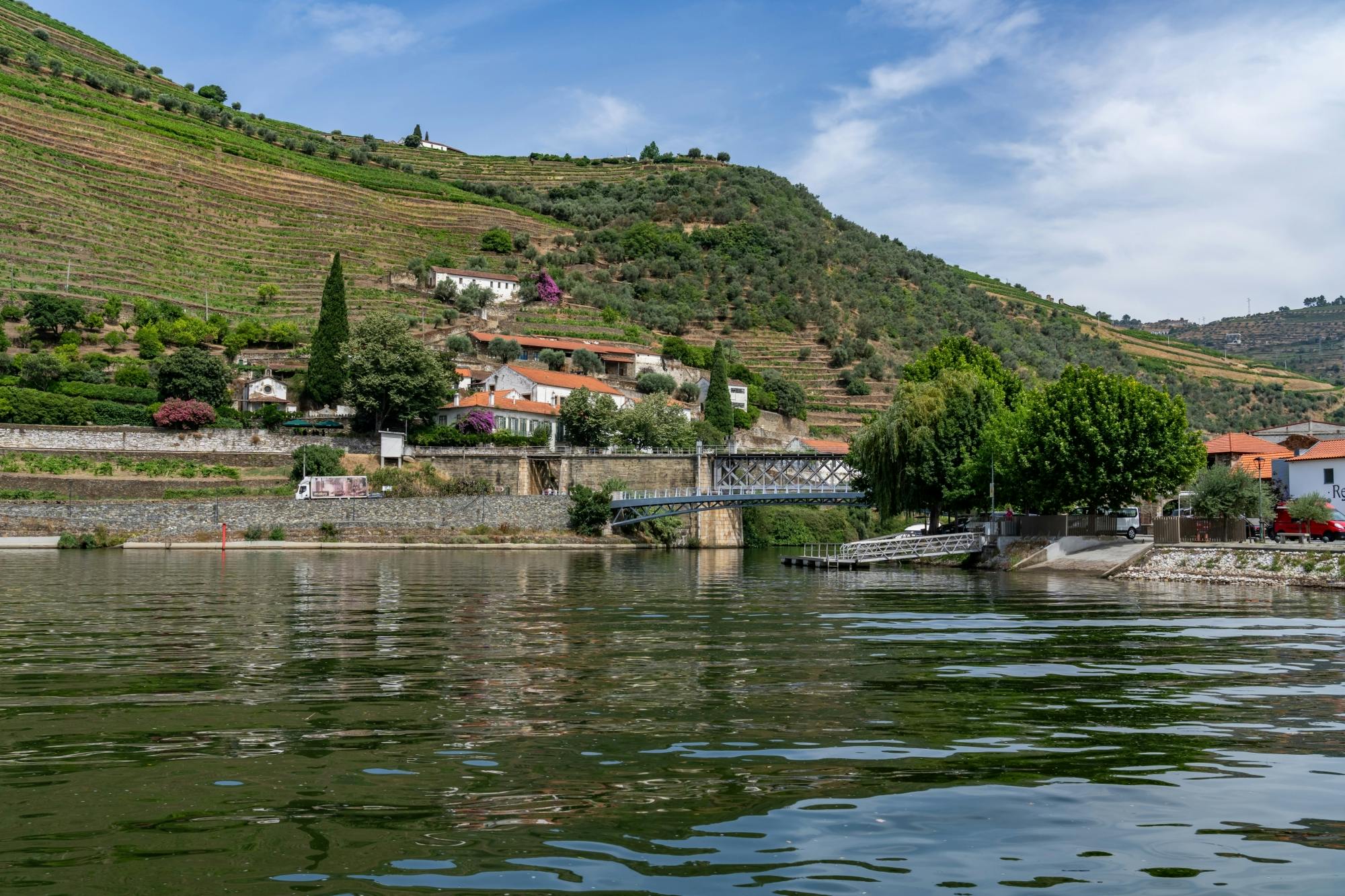
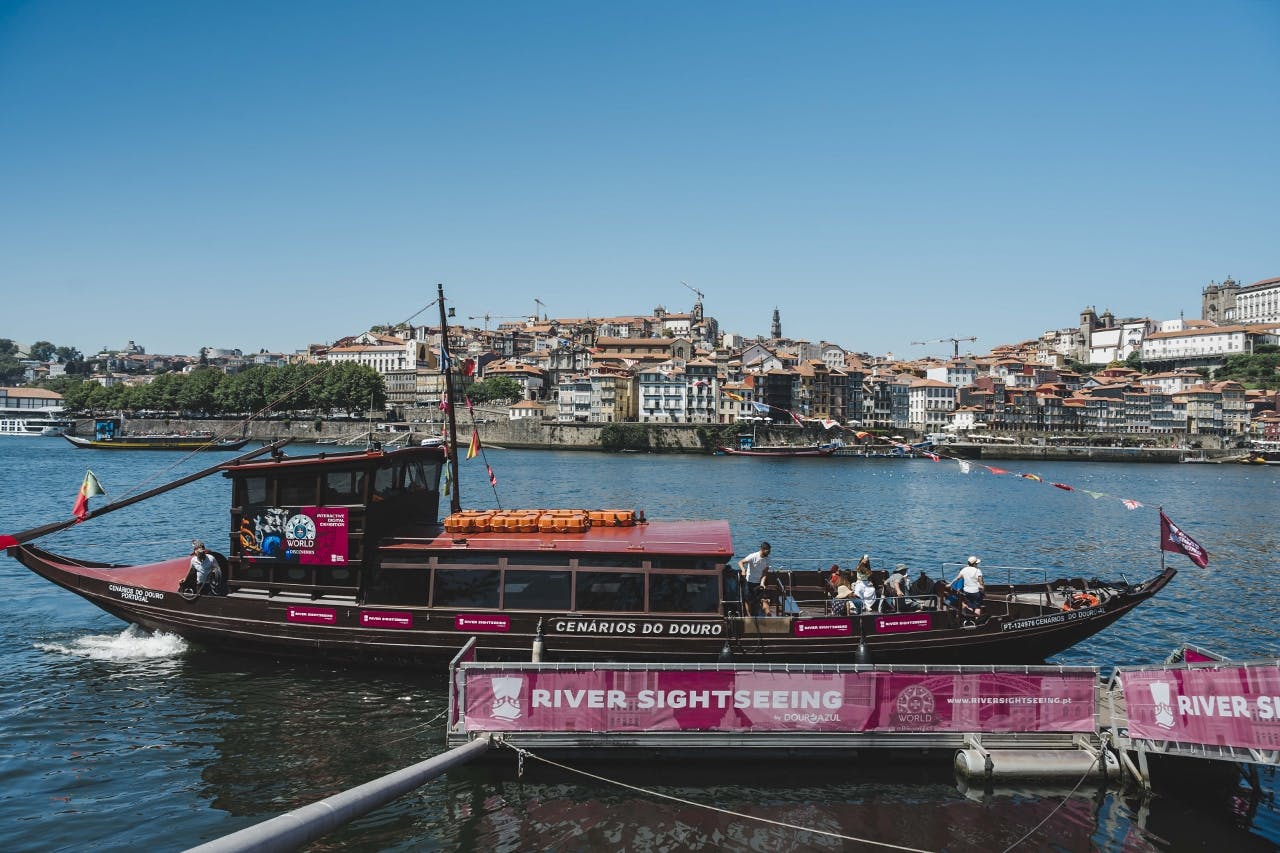
The Essence of Douro, also sold as Douro Essence, is a short panoramic boat trip through one of the most beautiful sections of Portugal’s Douro Valley. Departing from Cais da Folgosa, the cruise travels quietly along the Douro River towards Cais do Ferrão before returning to the same departure point.
The experience lasts approximately 50 minutes and takes place aboard Ferrão I, a panoramic solar-powered vessel designed to operate quietly and with zero emissions. Unlike a full-day Douro excursion, there are no winery visits, no stops and no wine tasting included in the standard Essence cruise. The attraction is the river journey itself: terraced vineyards, steep hills and views towards famous wine estates including Quinta do Crasto, Quinta do Menin and Quinta Nova.
This makes The Essence of Douro particularly useful for travellers who are already exploring the valley independently and want a short scenic river experience without spending several hours on a traditional cruise.
The Essence of Douro at a Glance
Tour Information
Details
Experience
Douro Essence / The Essence of Douro
Operator
Ferrão Boats
Departure point
Cais da Folgosa
Address
Rua da Quelha 2, 5110-204 Folgosa, Armamar
Duration
Approximately 50 minutes
Route
Folgosa → Cais do Ferrão area → Folgosa
Stops
None
Boat
Panoramic solar-powered Ferrão I
Guide
Portuguese and English on current operator listing
Wheelchair access
Yes
Onboard toilet
Yes
Shade
Yes
Wine tasting
Not included on the standard Essence cruise
Swimming
Not included
Transfers from Porto
Not normally included; optional transfers may be available
Current advertised price
Varies considerably by booking platform
Best for
Couples, independent Douro travellers, seniors, families and visitors wanting a short scenic cruise
Where Does the Cruise Depart?
The cruise departs from Cais da Folgosa in the small riverside village of Folgosa, in the municipality of Armamar.
The current meeting point is:
Cais da Folgosa
Rua da Quelha 2
5110-204 Folgosa
Armamar, Portugal
Ferrão Boats recommends arriving approximately 15 minutes before departure. The vessel and crew are identified with Ferrão Boats branding.
This is important because The Essence of Douro does not depart from Porto. It is a Douro Valley activity for travellers who have already reached Folgosa or who arrange their own transport into the wine region.
The Cruise Route
The itinerary is deliberately simple.
Board at Cais da Folgosa.
Sail eastward along the Douro.
Pass the Cais do Ferrão area.
Enjoy river-level views towards major wine estates and terraced vineyards.
Turn around and cruise back towards Folgosa.
Disembark at the same quay where you started.
The complete journey takes approximately 50 minutes and there are no scheduled landings along the route.
What Will You See?
The principal attraction is the Douro landscape itself. The river winds between remarkably steep hills covered by terraces that have been shaped over centuries for vines.
Ferrão Boats currently highlights views towards three important estates:
Quinta do Crasto
Quinta do Menin
Quinta Nova
You see these estates from the river; the standard cruise does not stop at them. If you want a cellar tour or wine tasting, arrange that separately before or after the boat trip.
The Douro Is a UNESCO World Heritage Cultural Landscape
This stretch of river forms part of a wine landscape with an exceptionally long history. UNESCO inscribed the Alto Douro Wine Region on the World Heritage List in 2001.
Wine has been produced in the wider Alto Douro for around 2,000 years, while Port became an internationally important product from the 18th century. UNESCO recognises the valley not only for wine but for the way generations of people transformed extremely steep terrain into a distinctive agricultural landscape.
Portugal’s official tourism organisation also describes the Douro as the world’s oldest demarcated wine region, with vines planted across terraces carved into the schist hillsides.
Why Seeing the Douro From the River Is Different
Driving through the Douro gives you spectacular elevated viewpoints. Travelling on the river gives you almost the opposite perspective.
From the boat, the hills rise steeply on both sides and you gain a much clearer appreciation of:
The height of the vineyard terraces
How close many quintas are to the river
The difficulty of cultivating steep slopes
The relationship between the river and wine transport
The enormous scale of the landscape
A short boat journey therefore complements a road trip particularly well.
The Solar-Powered Ferrão I
One feature distinguishing this cruise from many traditional Douro boats is the vessel itself.
Ferrão I is powered by solar energy and is promoted by the operator as a zero-emission vessel. Because electric propulsion is considerably quieter than a conventional diesel engine, there is less engine noise competing with the landscape.
The operator describes the boat as panoramic and designed for a comfortable sightseeing journey rather than a high-speed trip.
What Is On Board?
Current facilities include:
Seating for passengers
A shaded canopy
Panoramic viewing
An onboard toilet
Flat accessible boarding and passenger areas
Background music
Professional crew
Passenger insurance
The combination of seating, shade and a proper onboard bathroom makes the cruise particularly suitable for travellers who may not want a long or physically demanding excursion.
Is This a Traditional Rabelo Boat?
No.
The Douro is famous for historic rabelo boats, which were traditionally used to transport barrels of Port wine downstream towards Vila Nova de Gaia.
The Essence of Douro uses a modern panoramic solar vessel rather than a traditional rabelo-style sightseeing boat.
If the historic appearance of the boat itself is important to you, a traditional cruise departing from Pinhão may be a better choice. If quiet operation, accessibility and comfort matter more, Ferrão I has considerable advantages.
Is Wine Included?
No wine tasting or open bar is included with the standard Douro Essence cruise.
Ferrão Boats offers other products involving wine and sunset experiences, but those are separate tours.
The 50-minute Essence itinerary is fundamentally a scenic sightseeing cruise.
Can You Bring Food and Drinks?
The current operator information allows passengers to bring their own food and non-alcoholic drinks on the standard Essence cruise.
There is no normal onboard bar service included on this particular trip.
Is Swimming Included?
No.
The 50-minute Essence tour does not include a swimming stop and passengers remain aboard for the entire round trip.
This is another important distinction between this cruise and some of Ferrão Boats’ longer experiences.
Current 2026 Price
Prices vary surprisingly widely according to the booking platform.
As of August 2026:
One current Musement listing advertises the experience from approximately US$46–47 per person.
Current GetYourGuide and Expedia listings have shown the standard Ferrão Boats Douro Essence experience from approximately US$23 per person.
Compare the exact product before booking rather than assuming all listings are identical. Check whether you are purchasing a shared scheduled departure, a private version or an experience with additional inclusions.
Is It a Private Cruise?
There is some inconsistency between current sales listings.
Musement currently labels “Private tour” as an inclusion on its version of The Essence of Douro, while the operator’s own Douro Essence page and other major booking platforms describe scheduled daily departures suitable for families, couples and groups.
Ferrão Boats also sells a separate explicitly private Essence cruise.
If having the entire boat to yourself matters, confirm that your exact ticket is for a private charter before paying.
Cancellation Policy
The current operator product information allows free cancellation up to 24 hours before departure.
Musement currently publishes the same 24-hour full-refund condition on its Essence listing.
However, some third-party listings use different ticket conditions, including non-refundable fares. Always rely on the terms displayed during your own booking.
What Happens in Bad Weather?
The tour can be cancelled when adverse weather creates unsafe navigation conditions.
The operator currently states that where weather compromises safety, the excursion is cancelled and refunded.
Light cloud or a small amount of rain does not necessarily mean a cruise will be cancelled. Strong winds, storms and river conditions are much more important operational factors.
Accessibility
Accessibility is one of the strongest features of this particular Douro cruise.
The operator describes Ferrão I as fully adapted for visitors with reduced mobility, with a flat platform and accessible passenger areas.
The current Musement listing also describes the experience as wheelchair accessible.
Visitors using a particularly large powered wheelchair or requiring a specific boarding arrangement should still contact the operator before travelling.
Pushchairs
The operator currently states that the boat is pram and pushchair accessible.
This makes the cruise much easier for families with very young children than some traditional vessels involving narrow gangways or steep steps.
Important Child-Age Discrepancy
Families should check the rules carefully because current sales pages conflict.
The Musement listing for The Essence of Douro currently states that children under 10 are not allowed.
However, Ferrão Boats’ own current product information describes the experience as family-friendly and simply states that children must remain supervised by a responsible adult. Current GetYourGuide listings also promote it as suitable for families.
If travelling with a child under 10, confirm the age rule directly with the operator or booking platform before purchasing.
Is It Suitable for Seniors?
Yes.
The short duration, seating, shade, onboard toilet and step-free accessibility make this one of the easier ways for older travellers to experience the Douro from the water.
The operator specifically promotes the relaxed itinerary as suitable for seniors as well as couples and groups.
How Long Should You Allow?
The cruise itself takes only:
Approximately 50 minutes.
Allow around 1 hour 15 minutes in total once you include arriving 15 minutes early and disembarking after the trip.
This is short enough to fit comfortably between a winery visit and lunch or between two other Douro sightseeing stops.
When Should You Arrive?
Be at Cais da Folgosa approximately 15 minutes before your scheduled departure.
The cruise follows a fixed timetable, so arriving late risks missing the boat rather than simply joining a later portion of the trip.
Best Time of Day
Morning
Best during very hot weather.
The air is generally cooler and the vineyards can look especially attractive in softer morning light.
Middle of the Day
The shaded canopy makes midday possible, although summer temperatures in the Douro can become very high.
Late Afternoon
Excellent for photography.
Lower sunlight can create stronger contrast across the terraces and warmer tones on the vineyards.
If sunset itself is your priority, Ferrão Boats operates a separate longer sunset cruise rather than simply extending the standard Essence journey.
What Should You Bring?
The operator specifically recommends sunscreen.
It is also sensible to bring:
Hat
Sunglasses
Camera or phone
Water
Light layer during cooler months
Comfortable clothing
The boat has shade, but the Douro sun can still be powerful in summer.
Getting to Folgosa
Folgosa lies deep inside the Douro wine country rather than in Porto itself.
For most independent travellers, car, taxi, private driver or organised transfer is the simplest way to reach the quay.
The operator states that transfers can sometimes be arranged on request and are subject to availability and additional cost.
Driving From Porto
Folgosa is roughly 100 kilometres by road from Porto, depending on your starting point and route.
Do not treat the journey merely as transport. Roads through the Douro pass viewpoints, river bends, vineyards and wine estates, so allow considerably more time if you intend to stop for photographs.
The EN222
Cais da Folgosa lies beside the famous EN222 corridor through the Douro Valley.
This makes the cruise particularly easy to incorporate into a driving itinerary between the Régua and Pinhão sections of the valley.
Can You Get There by Train?
The Douro railway follows the river and provides some of Portugal’s most attractive train scenery, but the train does not deliver you directly to Cais da Folgosa.
Travellers relying entirely on public transport should therefore plan the final transfer carefully rather than assuming the cruise operates beside Pinhão or Peso da Régua station.
If you do not have a car, an organised transfer or taxi is normally more convenient for this specific boat departure.
Folgosa or Pinhão Cruise?
Many first-time visitors automatically look for a boat at Pinhão because it is the best-known river-cruise centre in the central Douro.
Choose The Essence of Douro at Folgosa If You Want:
A quiet solar-powered vessel
A short 50-minute trip
Excellent accessibility
An onboard toilet
A cruise that fits easily between winery visits
A less conventional departure point
Choose Pinhão If You Want:
A larger selection of boat operators
Traditional rabelo-style cruises
Easy connection with the Douro railway
More visitor services concentrated around one waterfront
This Is Not a Full Douro Valley Tour
The name “The Essence of Douro” can make the experience sound like a complete regional excursion.
It is important to understand what you are purchasing:
This is a 50-minute river cruise, not a full-day Douro Valley tour.
The standard product does not include:
Transport from Porto
Winery visits
Wine tastings
Lunch
Land sightseeing
Swimming
This is not a disadvantage if you are already exploring independently. In fact, the short format is one of its greatest strengths.
How to Build a Half-Day Around the Cruise
A good independent schedule is:
Morning – Winery Visit
Book one Douro wine estate for a cellar tour and tasting.
Lunch – Folgosa or Nearby
Have lunch overlooking the valley or river.
Afternoon – The Essence of Douro
Arrive at Cais da Folgosa 15 minutes before your departure and enjoy the 50-minute cruise.
Late Afternoon – Scenic Drive
Continue towards Pinhão or return towards the western Douro as the light softens across the vineyards.
This provides a much more complete impression of the region than the boat cruise alone.
Can You Visit the Quintas Seen From the Boat?
Some of the estates visible from the river offer wine-tourism experiences, but seeing them from the boat does not include admission.
Winery visits in the Douro generally need to be booked independently and availability can be limited during busy periods.
If a particular estate matters to you, arrange the winery first and fit the boat departure around it.
Where to Stay
Folgosa
Best for maximum convenience and tranquillity.
Staying in Folgosa places you immediately beside the river and makes it easy to build a relaxed itinerary involving wineries, scenic driving and the Essence cruise.
Accommodation in the village includes river-facing options, and Hotel Folgosa Douro is located directly within the local riverside setting.
Pinhão
Best for travellers wanting more wine-tourism infrastructure.
Pinhão is one of the principal visitor bases in the heart of the Douro, with railway access, numerous wine estates and several other boat excursions.
Staying there still allows you to travel to Folgosa for this cruise while giving you more alternatives for the rest of your itinerary.
Photography Tips
The Douro is exceptionally photogenic from river level.
Useful subjects include:
Terraced vineyards climbing above the river
Wine estates positioned high on the slopes
Reflections on calm sections of water
Patterns created by vineyard rows
Other river traffic
Small riverside buildings and quays
Because Ferrão I is quiet, photography is generally easier than on a boat where vibration and engine movement are significant.
Spring
Spring brings increasingly green vineyards and generally comfortable sightseeing temperatures.
It is particularly suitable for travellers planning winery visits and walking in addition to the cruise.
Summer
The landscape is green and the weather is generally well suited to boating, but the Douro interior can become extremely hot.
Choose a morning or later-afternoon departure, wear sun protection and carry water.
Autumn and Harvest Season
Autumn is one of the most interesting periods in the wine region as the vineyards change colour and harvest activity becomes part of the landscape.
Popular wineries can be busy during this period, so book tastings and tours ahead.
Winter
Winter gives the valley a quieter atmosphere and dramatically different colours.
Weather is less predictable, so flexibility becomes more important for any river activity.
Is It Good for a Porto Day Trip?
Yes, but only as one part of the day.
It would make little sense to travel from Porto to Folgosa solely for a 50-minute boat trip and immediately return.
Instead, combine the cruise with:
A winery visit
Lunch in the valley
A scenic drive
Time in Pinhão or another nearby river location
The Essence cruise then becomes an excellent short water-based component within a larger Douro day.
Who Will Enjoy It Most?
The cruise is particularly suitable for:
Couples
Seniors
Visitors with reduced mobility
Independent road-trippers
Families, subject to the age rule of the booking platform
Photographers
Travellers who dislike long boat journeys
Anyone wanting a peaceful break between winery visits
Who Should Choose a Different Tour?
Consider a full-day Douro excursion instead if you want:
Hotel pickup from Porto
Several wineries
A traditional Portuguese lunch
Multiple wine tastings
A guide throughout the day
All transport organised for you
The Essence cruise is better viewed as a single activity to add to a Douro itinerary rather than the itinerary itself.
Practical Tips
Arrive 15 minutes before departure.
Remember that the cruise leaves from Folgosa, not Porto.
Allow approximately 50 minutes on the water.
There are no stops.
Wine tasting is not included.
The boat has shade and a toilet.
Wheelchair access is a major advantage of Ferrão I.
Bring sunscreen.
Food and non-alcoholic drinks are currently allowed.
Compare booking-platform prices before purchasing.
Confirm whether your exact ticket is shared or private.
Families with children under 10 should confirm the age rule before booking because current listings conflict.
Is The Essence of Douro Worth Booking?
Yes, if you want a short, quiet and comfortable way to see the Douro from river level.
The experience is refreshingly uncomplicated. You board at Folgosa, spend around 50 minutes travelling through one of Portugal’s most celebrated wine landscapes and return to the same quay. There are no lengthy stops, sales presentations or complicated itinerary changes.
The solar-powered Ferrão I is also a significant part of the appeal. Its quiet propulsion, panoramic layout, seating, shade, accessible design and onboard bathroom make it particularly comfortable compared with some smaller traditional boats.
The scenery has genuine historical significance. UNESCO recognises the Alto Douro as a cultural landscape shaped by roughly two millennia of winemaking, and from the river you get an excellent view of just how dramatically vineyards have transformed the steep terrain.
The main limitation is also worth emphasising: this is not a complete Douro Valley excursion. There is no winery visit, meal or standard wine tasting, and transport from Porto is not automatically included.
For travellers already driving through the valley, however, that simplicity is precisely what makes it useful. Book a winery separately, enjoy lunch, take the 50-minute cruise and continue along the Douro without sacrificing half the day to a long boat journey.
The Essence of Douro is best understood as a peaceful pause in a larger Douro adventure: 50 minutes of vineyards, river and silence in the heart of Portugal’s historic wine country.
Sponsored Popular Items
Quick take: Musement.com offers a worldwide selection of tours and attractions
Douro Sunset Party Cruise with DJ and Open Wine Bar Portugal Plan Douro Sunset Party Cruise with DJ and Open Wine Bar, a food and drink experience, with practical tips on timing, inclusions and what to check before booking. Compare current availability, prices and booking conditions before you go.
The Essence of Douro and a 50-Minute River Cruise with Views Portugal Plan The Essence of Douro and a 50-Minute River Cruise with Views, a water-based experience, with practical tips on timing, inclusions and what to check before booking. Compare current availability, prices and booking conditions before you go.
Party Boat on Douro River with sunset option Portugal Party Boat on Douro River with sunset option adds structure, local context and purposeful sightseeing to the itinerary. Check current availability, inclusions and booking details before you go.
A Wrocław River Cruise is one of the most relaxing ways to explore this beautiful Polish city. Wrocław is built around the Oder River, known in Polish as the Odra, with islands, canals, historic bridges and waterfront architecture creating an unusually attractive cityscape from the water.
Wrocław’s official tourism organisation describes the city as having 12 islands and 112 bridges. Sightseeing boats travel through the historic centre, around the islands and beneath some of the bridges, giving visitors views that are difficult to appreciate from the streets.
There is no single Wrocław River Cruise. Visitors can choose from traditional passenger ships, small sightseeing boats, catamarans, motorboats and quiet solar-powered electric boats. Routes also vary, with some concentrating on the Old Town and Cathedral Island while others travel farther towards Wrocław Zoo and the eastern parts of the city.
Wrocław River Cruise at a Glance
Visitor Information
Details
River
Oder River / Odra River
Main cruise area
Wrocław Old Town and Ostrów Tumski
Typical sightseeing cruise
Approximately 25–60 minutes depending on route
Example 2026 cruise duration
40 minutes
Example 2026 adult fare
60 PLN
Typical main season
Spring to autumn
Popular departure areas
Ostrów Tumski, Piasek Island and Dunikowski Boulevard
Popular sights
Cathedral Island, Grunwald Bridge, University district and Old Town islands
Best time
Late afternoon or evening
Recommended for
First-time visitors, couples, families and photographers
Why Take a River Cruise in Wrocław?
Wrocław is particularly well suited to sightseeing from the water because the river runs directly through the historic city.
Unlike river cruises where most interesting landmarks are far from the water, a Wrocław cruise can take you directly past historic islands, churches, university buildings, bridges, boulevards and distinctive modern architecture.
It also provides a welcome opportunity to sit down after exploring the Old Town on foot.
A cruise can therefore work particularly well during the middle or later part of a sightseeing day.
Why Wrocław Is Sometimes Called the Venice of the North
Wrocław’s network of rivers, canals, islands and bridges has led to comparisons with Venice.
The city developed around different branches of the Oder, creating a complicated waterscape that is particularly obvious when viewed from a boat.
The official tourism authority lists 12 islands and 112 bridges within the city.
You should not expect Venice-style canals lined entirely with historic palaces. Wrocław has its own character, combining Gothic churches, Baroque buildings, modern architecture, university campuses and extensive riverside green spaces.
Where Do Wrocław River Cruises Depart?
There are numerous marinas around central Wrocław rather than one single cruise terminal.
The official tourism organisation identifies many departure points around:
Dunikowski Boulevard
Ostrów Tumski
Piasek Island
Słodowa Island
The University district
The area around Wrocław Zoo
This variety is convenient because several marinas are close to Wrocław’s principal tourist attractions.
Always check the exact marina printed on your booking confirmation. Two boats advertised as a “Wrocław River Cruise” may depart from completely different sides of the Old Town.
Przystań Latarnika on Ostrów Tumski
One current 2026 sightseeing operator departs from Przystań Latarnika, or Lighthouse Keeper’s Marina, on Father Aleksander Zienkiewicz Boulevard at Ostrów Tumski.
Its guided sightseeing cruise lasts approximately 40 minutes and travels around the central waterways and Old Town island system.
This is a particularly convenient departure area because Ostrów Tumski is itself one of Wrocław’s most important historic districts.
What Will You See on a Wrocław River Cruise?
The precise landmarks depend on the boat and route, but central cruises can provide views of many of Wrocław’s best-known riverside sights.
A current 40-minute route from Ostrów Tumski passes or provides views towards:
Ostrów Tumski is one of the highlights of many Wrocław cruises.
Despite often being translated as Cathedral Island, it is no longer technically an island because an old branch of the river was filled in. It remains the historic ecclesiastical heart of Wrocław.
The skyline is dominated by the twin towers of the Cathedral of St John the Baptist.
Seeing the cathedral towers rising behind the embankment from the river is one of the classic views of Wrocław.
Piasek Island
Piasek Island lies immediately west of Ostrów Tumski and is surrounded by waterways and historic bridges.
Smaller sightseeing boats often pass through this area because they can navigate waterways and lower bridges that larger vessels may not be able to use.
Wrocław’s official tourism organisation notes that small boats and water trams commonly travel around the Old Town past Piasek Island, the University area and Mill Bridge.
Grunwald Bridge
The enormous Grunwald Bridge is one of Wrocław’s most recognisable bridges.
Seeing it from below is very different from walking or travelling across it.
The official tourism authority specifically highlights the view of Grunwald Bridge from the water as one of the attractions of the popular route between Ostrów Tumski and Wrocław Zoo.
Wrocław University of Technology
Some cruises continue past the campus of Wrocław University of Science and Technology.
This part of the route offers a contrast with the medieval and Baroque buildings around Ostrów Tumski, showing how the city developed along the river during later periods.
The distinctive Polinka cable car crossing the Oder near the university is another unusual sight from the river.
University of Wrocław
Other central cruises travel west towards the University of Wrocław.
The university’s historic riverside buildings provide some of the most attractive architecture along this section of the Oder.
Smaller boats can navigate the waterways around the Old Town islands and give visitors a particularly good view of the university district from river level.
Wrocław Zoo Route
One of the most popular longer routes connects Ostrów Tumski with the area around Wrocław Zoo.
According to Wrocław’s official tourism organisation, this route includes views of:
Ostrów Tumski
Grunwald Bridge
Wrocław University of Science and Technology
Historic water tower
Riverside neighbourhoods
This can be particularly useful if you are planning to visit the zoo and Afrykarium, although you should check whether your particular boat operates as a return sightseeing cruise or offers useful point-to-point transport.
Different Types of Wrocław River Cruises
There is considerably more variety than many first-time visitors expect.
Traditional Passenger Ships
Larger sightseeing vessels provide a conventional river-cruise experience with more passenger capacity and often covered seating.
These are a good choice for families and groups.
Small Sightseeing Boats
Smaller boats can travel through narrower waterways and beneath lower bridges in the historic centre.
This can provide a more intimate view of Wrocław’s islands.
Catamaran Cruises
Several operators use compact catamarans carrying relatively small groups.
One current operator’s Viper catamaran accommodates up to 12 passengers and has transparent weather protection, heating, comfortable seating and onboard facilities.
Solar-Powered Boats
Wrocław also has electric solar-powered catamarans.
City Boats operates quiet electric craft around the Old Town islands, Ostrów Tumski and towards Grunwald Bridge and the university area.
Because the boats use electric propulsion, they provide a particularly quiet sightseeing experience without conventional engine noise and exhaust emissions.
Private Boat Charters
Small vessels can also be hired privately for:
Families
Groups of friends
Birthdays
Private sightseeing
Celebrations
Corporate events
One current operator lists private catamaran hire from 650 PLN for the first hour, while its larger Viking-style boat starts from 700 PLN for the first hour.
How Much Does a Wrocław River Cruise Cost in 2026?
Prices vary considerably according to the vessel, length and route.
As a current example, one operator running from Ostrów Tumski lists the following prices for a 40-minute sightseeing cruise:
Ticket
2026 Price
Regular adult
60 PLN
School-age reduced ticket
50 PLN
Student or senior
55 PLN
Children up to 3 years
Free
These prices should be treated as an example rather than a universal Wrocław cruise tariff because the city has many independent operators.
Check the price, route and duration of the particular cruise you intend to take before booking.
How Long Does a Wrocław River Cruise Take?
Most sightseeing cruises are relatively short.
Wrocław’s official tourism organisation states that scheduled river cruises generally range from approximately 25 minutes to one hour, depending on the route.
A short 40–60 minute cruise works particularly well because it can easily be incorporated into a day of walking around the Old Town.
You do not need to devote an entire day to the river.
When Do River Cruises Operate?
Wrocław river cruising is primarily a spring-to-autumn activity.
One current operator runs its regular ticketed cruises from May through October.
Other boats can operate during different periods, and enclosed or heated vessels may extend farther into cooler weather.
Heavy rain, strong wind, high or low water conditions and other operational factors can affect departures.
If a river cruise is important to your plans, check the operating schedule on the day.
Daytime or Evening Cruise?
Morning Cruise
A morning cruise is useful if you want clearer views of architectural details and intend to spend the afternoon sightseeing elsewhere.
Afternoon Cruise
Best for fitting naturally into a sightseeing day.
Spend the morning walking through the Old Town, have lunch and then sit down for a relaxing cruise.
Evening Cruise
One of the most atmospheric options.
Evening and night cruises are popular during the main season, when bridges and historic buildings become illuminated.
Some evening cruises also offer refreshments, music or additional stops.
Best Time for Photography
Late afternoon and early evening are particularly attractive because lower sunlight can create warmer colours on Wrocław’s churches and historic façades.
If you take an evening cruise, the changing light also allows photographs of both the daytime architecture and illuminated riverfront.
For photography, an open-deck or small boat can be preferable to a fully enclosed vessel because you are less likely to photograph through glass.
Is It Worth Booking in Advance?
Yes during weekends and the main summer season.
Wrocław has numerous boats, so finding some form of river cruise is often possible, but smaller catamarans may carry only around a dozen passengers.
If you specifically want:
A sunset departure
A small-group boat
A solar catamaran
A private cruise
A particular route
booking ahead is sensible.
What to Bring
Comfortable clothing
Sunglasses
Sun hat during summer
Sunscreen
Camera or phone
Light jacket or jumper
Rain jacket if showers are forecast
Even on a warm day, moving air over the river can feel noticeably cooler than the streets of the Old Town.
Is the Cruise Suitable for Children?
Yes.
A short Wrocław River Cruise can work particularly well with children because it breaks up a day of walking and sightseeing.
The official Wrocław tourism authority specifically promotes river cruising as part of its family sightseeing suggestions.
Smaller children should remain supervised at all times around boarding areas and open decks.
Is a Wrocław River Cruise Suitable for Older Travellers?
A sightseeing cruise is a particularly useful activity for visitors who want to see more of Wrocław without spending another hour walking.
Most of the experience is seated.
However, accessibility varies significantly between boats and marinas. Some involve steps, narrow gangways or changes in river level.
If mobility is limited, contact the operator before booking and ask specifically about boarding arrangements rather than assuming every boat is wheelchair accessible.
Combine the Cruise With Ostrów Tumski
If your cruise departs around Ostrów Tumski, arrive early and explore the district before boarding.
Highlights include:
Cathedral of St John the Baptist
Historic ecclesiastical buildings
Cathedral Bridge area
Riverside boulevards
Nearby Botanical Garden
The historic district is particularly attractive towards evening.
Combine the Cruise With Wrocław Market Square
Wrocław Market Square, or Rynek, should be part of almost every first visit to the city.
The enormous square is surrounded by colourful historic buildings and dominated by the Old Town Hall.
A good sightseeing sequence is:
Market Square → University district → Piasek Island → Ostrów Tumski → River Cruise
This allows you to explore the historic centre on foot before seeing much of the same city from a completely different perspective.
Combine the Cruise With Wrocław Zoo
If you have children or enjoy wildlife attractions, consider combining a longer river route with Wrocław Zoo and Afrykarium.
The official tourism organisation identifies the Ostrów Tumski-to-Zoo route as one of the city’s most popular river journeys.
Afrykarium is one of Wrocław’s major attractions and concentrates on aquatic ecosystems and animals associated with Africa.
Allow several hours for the zoo rather than treating it as a quick stop.
Centennial Hall
Close to Wrocław Zoo is Centennial Hall, another major attraction that can be added to the same day.
The surrounding area also includes gardens, parkland and the Multimedia Fountain.
This makes the eastern side of Wrocław particularly suitable for a full day combining river travel and sightseeing.
A Good Half-Day Wrocław River Itinerary
Morning – Market Square
Explore Rynek and the surrounding Old Town streets.
Late Morning – University Quarter
Walk towards the University of Wrocław and continue alongside the river.
Lunch
Stop around the Old Town before continuing towards the islands.
Afternoon – Ostrów Tumski
Explore Cathedral Island and its historic churches.
Late Afternoon – River Cruise
Board a sightseeing vessel for a 40–60 minute journey through the central waterways.
Evening
Return to the Old Town for dinner, or remain around Ostrów Tumski as the historic district begins to illuminate.
Where to Stay for a Wrocław River Cruise
Old Town / Rynek
Best overall choice for first-time visitors.
Staying around the Old Town puts you close to the Market Square, restaurants, historic sights and several riverfront areas.
Most central cruise marinas are easily incorporated into a sightseeing day from here.
Ostrów Tumski
Best for atmosphere and river access.
This quieter historic area is particularly attractive in the evening and places you close to several cruise departure points.
University and Northern Old Town Area
Best for access to the river and nightlife around the islands.
This location places you between the Market Square and waterways around Słodowa Island.
Near Centennial Hall and the Zoo
Best if Wrocław Zoo and the eastern attractions are a priority.
This area is farther from the Market Square but can be convenient for families spending substantial time around the zoo, Afrykarium and Centennial Hall.
River Cruise or Walking Tour?
The best answer is to do both.
A river cruise does not replace exploring Wrocław on foot.
From the streets you can enter churches, courtyards, museums and the Market Square.
From the river you understand something different: how Wrocław’s islands, bridges and neighbourhoods fit together.
A 40–60 minute cruise is short enough to combine comfortably with a walking tour during the same day.
Which Wrocław River Cruise Should You Choose?
Choose an Old Town Cruise if:
This is your first visit
You have limited time
You want historic architecture
You want to see Cathedral Island and the central bridges
Choose a Zoo Route if:
You want a longer journey
You are visiting Wrocław Zoo
You want to see Grunwald Bridge from the water
You want to explore beyond the Old Town
Choose a Solar Catamaran if:
You prefer a small-group experience
You want a quieter boat
You are interested in navigating smaller waterways
Choose an Evening Cruise if:
You are travelling as a couple
You enjoy photography
You want to see illuminated Wrocław
You have already explored the main sights during the day
Is a Wrocław River Cruise Worth Doing?
Yes.
Wrocław is one of those cities where a river cruise genuinely adds something to the sightseeing experience rather than simply repeating views available from the street.
The Oder divides around islands, passes beneath dozens of bridges and flows directly beside historic and modern landmarks. A short cruise helps explain why the river has played such an important role in shaping Wrocław.
Current options range from large passenger vessels to small motorboats and solar-powered catamarans, while sightseeing journeys generally last between about 25 minutes and one hour.
For a simple first experience, a 40–60 minute Old Town cruise is ideal. One current 2026 operator charges 60 PLN for a regular 40-minute ticket and operates from May through October.
If you have more time, consider a route towards Wrocław Zoo, which passes beneath the impressive Grunwald Bridge and shows more of the eastern riverfront.
For the best overall experience, spend part of the day exploring the Old Town and Ostrów Tumski on foot, then take a late-afternoon or evening cruise.
You will see many of the places you have just walked through from a completely different angle—and gain a much better understanding of why Wrocław is a city defined as much by its river and bridges as by its beautiful Market Square.
Sponsored Popular Items
Quick take: Musement.com offers a worldwide selection of tours and attractions
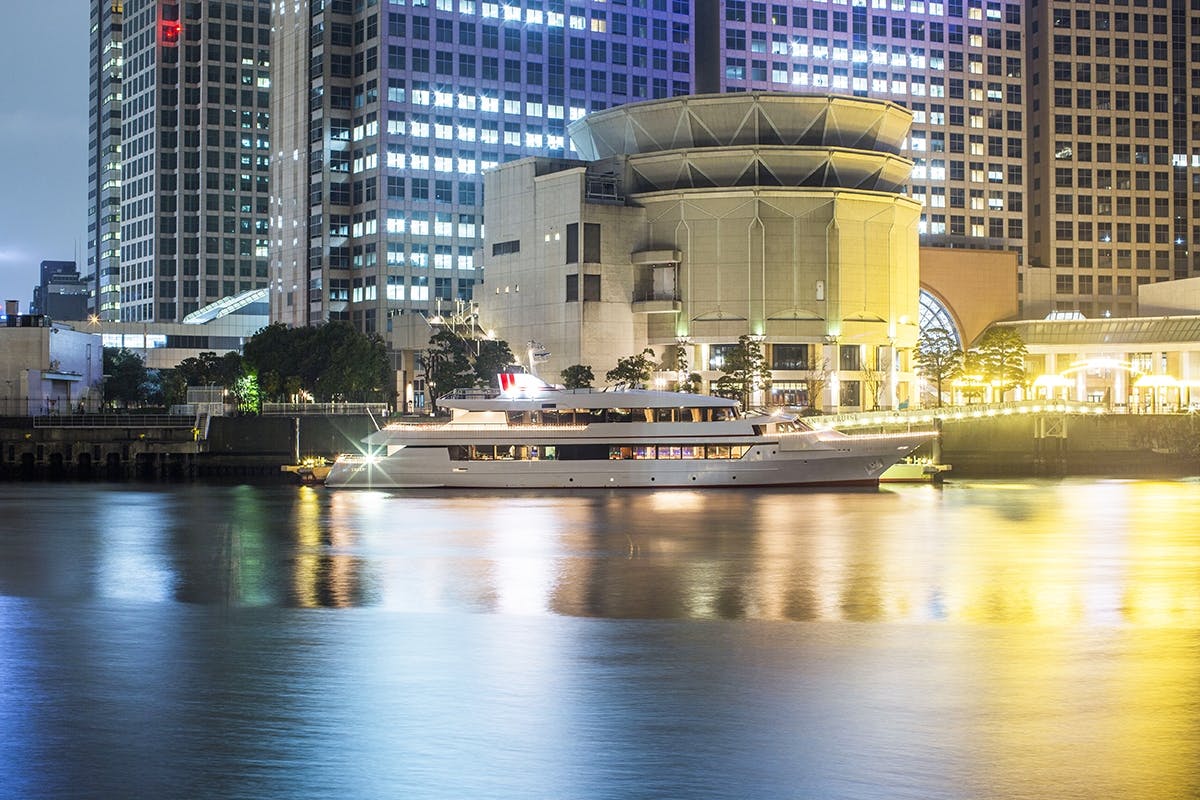
Tokyo Bay Cruising - Scenic Water Experience Japan Tokyo Bay Cruising combines sightseeing with the relaxed sense of movement that comes from a boat-based experience. Check current availability, inclusions and booking details before you go.
Yogyakarta: The Art of Practical Gamelan Music Class Indonesia Immerse yourself in the rich culture of Yogyakarta with this practical guide designed especially for beginners. You will learn to recognize the beat, tune the feel and immediately try playing the instrument
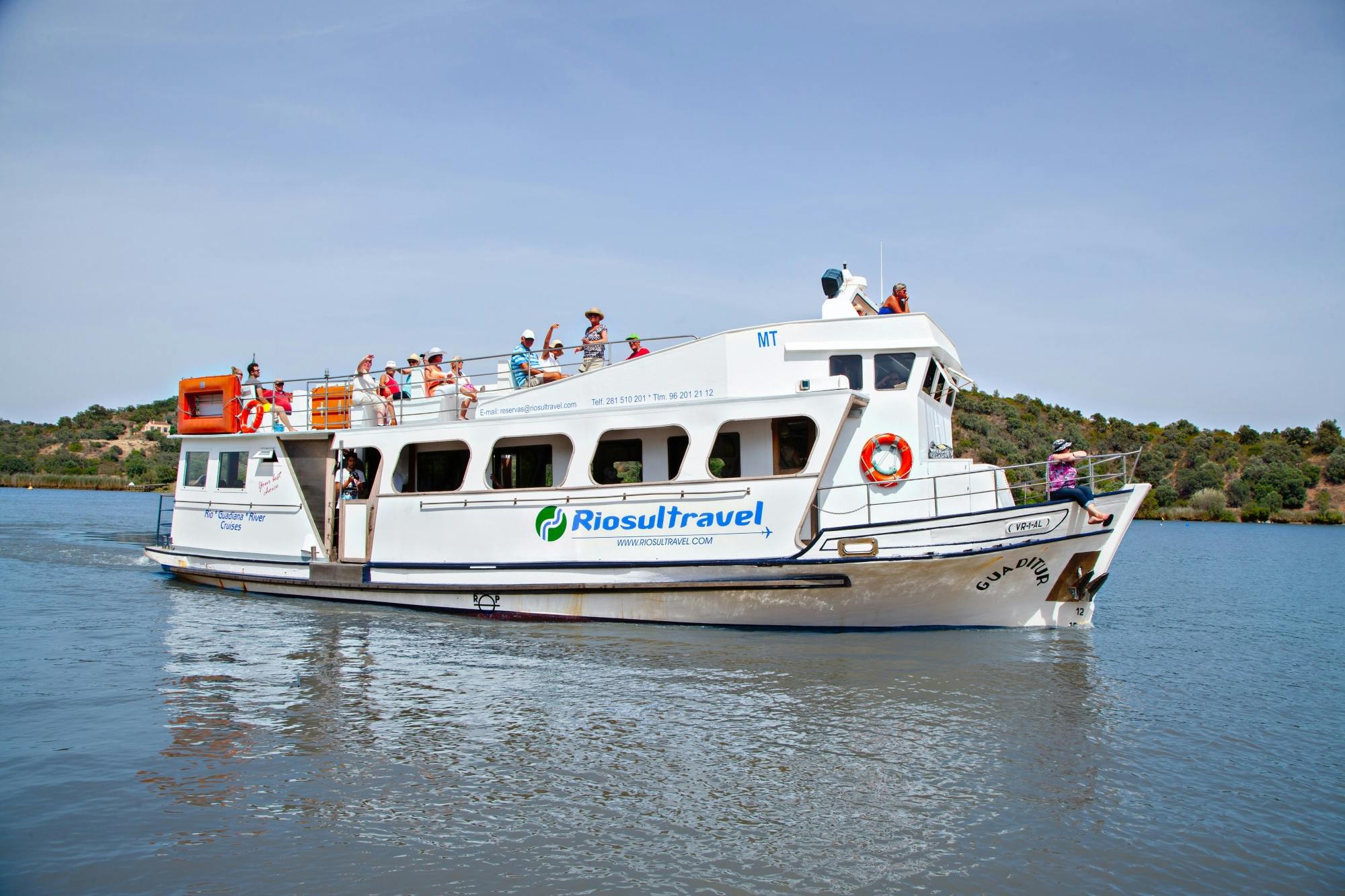
A Guadiana River cruise is one of the most relaxing ways to discover the quieter eastern Algarve. Instead of the busy beaches and resort towns of Portugal’s southern coast, the cruise takes you inland through a landscape of rolling hills, small riverside villages and largely undeveloped countryside.
The River Guadiana forms much of the natural border between Portugal and Spain in this part of the Algarve. Cruises normally depart from Vila Real de Santo António, with Portugal on one side of the boat and Spain on the other as you travel upstream.
One of the most popular full-day cruises continues towards Foz de Odeleite, where passengers can explore a small riverside village before visiting Quinta do Rio for swimming, a traditional Algarve lunch, regional wine and live Portuguese entertainment.
For travellers who have already explored the Algarve’s beaches, a Guadiana cruise provides a completely different perspective on the region.
The standard full-day cruise currently lasts around eight hours, making it a relaxed day trip rather than simply a short sightseeing boat ride. :contentReference[oaicite:0]{index=0}
Guadiana River Cruise at a Glance
Visitor Information
Details
Main departure point
Vila Real de Santo António, eastern Algarve
Typical full-day duration
Around 8 hours
Current adult price
From approximately €66
Current child price
From approximately €36 for ages 4–12
Infants
Free with some operators
Typical destination
Foz de Odeleite and Quinta do Rio
Lunch
Included on many full-day cruises
Swimming
Included on some itineraries
Languages
English, Portuguese, Spanish and French available on some cruises
Best for
Scenery, relaxation, local culture, couples and families
One established operator currently lists its eight-hour cruise at €66 for adults, €36 for children aged 4–12 and free for infants aged three and under. Prices and operating dates can change, so confirm the actual itinerary and price before booking. :contentReference[oaicite:1]{index=1}
Where Is the Guadiana River?
The Guadiana is one of the Iberian Peninsula’s major rivers.
It begins in Spain and travels for approximately 850 kilometres before reaching the Atlantic Ocean between Vila Real de Santo António in Portugal and Ayamonte in Spain. :contentReference[oaicite:2]{index=2}
The lower section of the river forms an international boundary.
This makes a cruise particularly interesting because for much of the journey you are effectively sailing between two countries:
Portugal on the western bank
Spain on the eastern bank
The lower Guadiana feels dramatically different from the heavily developed central Algarve.
Once the boat leaves Vila Real de Santo António, urban development gradually gives way to open countryside, isolated homes, small settlements and low hills.
Where Does the Guadiana River Cruise Depart?
The most common departure point is Vila Real de Santo António, at the southeastern corner of Portugal.
The town stands beside the Guadiana close to the river’s mouth and directly opposite the Spanish town of Ayamonte.
One major cruise operator currently boards passengers from its riverfront kiosk on Avenida da República in Vila Real de Santo António.
The cruise returns to the same area at the end of the day. :contentReference[oaicite:3]{index=3}
What Happens on a Guadiana River Cruise?
Although itineraries vary between operators, one of the established full-day excursions follows a route from Vila Real de Santo António upstream towards Foz de Odeleite.
A typical day includes:
Morning departure from Vila Real de Santo António
Scenic cruise upstream between Portugal and Spain
Views of riverside countryside and villages
Optional guided walk at Foz de Odeleite
Swimming opportunity
Traditional Algarve lunch at Quinta do Rio
Regional red and white wine with lunch
Live Portuguese music and entertainment
Relaxed afternoon cruise back downstream
The complete excursion is designed as a leisurely day on the river rather than a fast sightseeing tour. :contentReference[oaicite:4]{index=4}
The Journey Up the Guadiana
The scenery is one of the major attractions.
Leaving Vila Real de Santo António, the boat heads away from the Atlantic and deeper into the countryside.
The river becomes increasingly rural as you travel north.
Look for:
Small riverside settlements
Fishing boats
Sailing yachts
Rolling hills
Traditional farms
Mediterranean vegetation
Birdlife
Occasional isolated houses
It is a very different Algarve from the high-rise hotels and beaches around some of the larger coastal resorts.
Portugal on One Side and Spain on the Other
One of the most enjoyable aspects of the trip is simply knowing that you are sailing along an international frontier.
The Guadiana separates the Portuguese Algarve from the Spanish province of Huelva.
You can therefore sit on the boat looking towards Portugal, turn your head and look across the water towards Spain.
Despite centuries of border history, today the river has a peaceful atmosphere dominated by fishing, leisure craft, small villages and natural scenery.
Foz de Odeleite
Many full-day Guadiana cruises stop at Foz de Odeleite.
This small settlement lies where the Odeleite River meets the Guadiana.
Some cruises include an optional guided walk through the village before passengers continue towards their lunch stop.
The village experience is deliberately low-key.
You are not visiting a major tourist attraction filled with souvenir stores and large monuments. Instead, the appeal lies in seeing one of the small communities that developed beside the Guadiana.
The current Riosultravel and Transguadiana itineraries both include a stop at Foz de Odeleite. :contentReference[oaicite:5]{index=5}
Quinta do Rio
One of the highlights of the popular full-day cruise is the stop at Quinta do Rio.
The private riverside property provides a place to leave the boat, relax and enjoy lunch surrounded by countryside.
Depending on conditions and the excursion selected, passengers may also have an opportunity to swim.
The standard lunch currently includes traditional Algarve food accompanied by regional red and white wine and mineral water. :contentReference[oaicite:6]{index=6}
Lunch and Live Portuguese Music
The lunch stop is intended to be part of the experience rather than simply a quick meal before returning to the boat.
Live Portuguese music and entertainment accompany lunch on the principal full-day itinerary.
This gives the excursion a social atmosphere and distinguishes it from a conventional sightseeing cruise where passengers remain seated on the boat for the entire day.
Extra drinks, coffee and tea may not be included in the base price, so check the inclusions when booking. :contentReference[oaicite:7]{index=7}
Swimming During the Cruise
Some full-day cruises provide an opportunity to swim during the stop near Quinta do Rio.
If you plan to swim, bring:
Swimwear
Towel
Sun protection
Change of clothing if desired
Towels are not included on at least one of the major current cruise itineraries. :contentReference[oaicite:8]{index=8}
The Return Cruise
After lunch, the boat travels back downstream towards Vila Real de Santo António.
This tends to be the most relaxed part of the day.
You can sit on the open upper deck enjoying the countryside or move into the lower saloon.
One of the main vessels currently used for Guadiana cruises has an open sightseeing deck, shaded area, lower saloon-bar, passenger toilets and side walkways. :contentReference[oaicite:9]{index=9}
Does the Cruise Go to Alcoutim?
Some Guadiana cruises do, but not all of them.
This is important when booking.
The popular eight-hour cruise described above travels towards Foz de Odeleite and Quinta do Rio.
Other operators offer routes farther upstream towards Alcoutim.
Therefore, do not assume that every excursion advertised as a “Guadiana River Cruise” follows the same route.
Check the destination before paying if Alcoutim is somewhere you particularly want to visit.
Alcoutim
Alcoutim is one of the most attractive villages of the lower Guadiana and is worth visiting either on a suitable cruise or as a separate excursion.
The village developed at an important point in the tidal river where vessels historically had to wait for suitable conditions before continuing downstream.
Its narrow streets retain the peaceful atmosphere of a traditional Algarve riverside settlement. :contentReference[oaicite:10]{index=10}
Places of interest include:
Alcoutim Castle
The riverside
Historic churches
Small marina
River beach
Across the river is Spain, making Alcoutim another place where the international character of the Guadiana is particularly obvious.
A River With a History of Smuggling
The border between Portugal and Spain was not always as easy to cross as it is today.
For generations, remote parts of the Guadiana became associated with informal trade and smuggling between communities on opposite riverbanks.
Goods could be moved quietly across the river between Portugal and Spain, particularly when economic conditions and prices differed significantly between the two countries.
Several modern tours make reference to this border history, and some excursions are specifically marketed around the old smugglers’ routes.
Wildlife Along the Lower Guadiana
The river mouth is close to the Castro Marim and Vila Real de Santo António Marsh Natural Reserve.
The Guadiana reaches this low-lying landscape shortly before flowing into the Atlantic, creating creeks, marshes, lagoons and salt pans.
The wetlands provide important habitat for fish, shellfish and numerous birds.
Birds found within the reserve include:
Flamingos
White storks
Black-winged stilts
Numerous other wetland species
Visit Portugal notes that birds can be observed within the reserve throughout the year. :contentReference[oaicite:11]{index=11}
The Salt Pans of the Eastern Algarve
Salt production has played an important role in this part of the Algarve for centuries.
Salt pans occupy a substantial part of the protected wetlands around Castro Marim and Vila Real de Santo António, and traditional salt production continues today. :contentReference[oaicite:12]{index=12}
If you are staying in the area for several days, the nature reserve and salt pans make an interesting contrast with the river cruise.
How Much Does a Guadiana River Cruise Cost?
Current 2026 prices vary according to operator and itinerary.
One of the principal eight-hour full-day cruises currently lists:
Passenger
Current Price
Adult aged 13+
From €66
Child aged 4–12
From €36
Infant aged 0–3
Free
The price includes the cruise, lunch, wine and mineral water with lunch, entertainment and the optional village walk on the itinerary described above. :contentReference[oaicite:13]{index=13}
Another established Guadiana cruise operator currently advertises a similar full-day excursion at €66 for adults and €36 for children. :contentReference[oaicite:14]{index=14}
Always check the final price when booking because transfers, private tours and optional extras can cost more.
Book Ahead
Advance booking is recommended.
Guadiana cruises do not necessarily operate every day of the year, and schedules vary according to season, demand, weather and operator.
This is particularly important if you are visiting the eastern Algarve specifically to take the cruise.
Do not travel a long distance to Vila Real de Santo António without first confirming that your chosen boat is operating.
What Is Included?
On the current eight-hour Riosultravel excursion, the published inclusions are:
Full-day Guadiana River cruise
Open upper sightseeing deck
Lower saloon-bar
Traditional lunch
Red wine
White wine
Mineral water with lunch
Live Portuguese music and entertainment
Optional guided village walk
Extra drinks, coffee, tea, towels, sunscreen and footwear are not included. :contentReference[oaicite:15]{index=15}
What Should You Bring?
Comfortable clothing
Sun hat
Sunscreen
Sunglasses
Comfortable shoes for the village walk
Swimwear
Towel
Camera or phone
Light layer for cooler or breezy conditions
Water for additional hydration
Even when temperatures on land are very warm, the open deck can feel noticeably cooler when the boat is moving.
Best Time of Year for a Guadiana Cruise
Spring
One of the best periods.
Temperatures are generally comfortable, the countryside can be greener and conditions are well suited to spending several hours outdoors.
Summer
Summer provides reliably warm conditions but temperatures in inland Algarve areas can become very high.
Bring strong sun protection and plenty of water.
The swimming opportunity at the lunch stop can be particularly welcome during July and August.
September and October
Another excellent period.
The weather is often warm while the extreme heat of midsummer becomes less likely.
Winter
Boat schedules are generally more limited and weather is less predictable.
Check availability before planning your journey around a winter cruise.
Is the Guadiana Cruise Suitable for Children?
For many families, yes.
The day involves relatively little strenuous activity and combines time on the boat with a village stop, swimming and lunch.
Children who become restless during long boat journeys may find the stop at Quinta do Rio particularly useful.
Parents should check current age rules, safety arrangements and swimming supervision with the chosen operator before booking.
Is It Suitable for Older Travellers?
A Guadiana cruise can be a very good option for travellers who want to see the Algarve without undertaking a strenuous walking tour.
Most of the day is spent sitting on the boat or relaxing during the lunch stop.
However, boarding boats and walking through small villages may involve steps or uneven surfaces.
If mobility is limited, contact the cruise company before booking and explain your requirements.
Vila Real de Santo António
Do not rush away immediately after the cruise.
Vila Real de Santo António is worth exploring in its own right.
The riverside town was largely planned and rebuilt during the 18th century and has a more orderly street pattern than many older Algarve settlements.
Its riverfront is ideal for an evening stroll after returning from the cruise. Visit Portugal particularly highlights the former Customs House and gardens beside the Guadiana. :contentReference[oaicite:16]{index=16}
Take the Ferry to Spain
Another enjoyable excursion is the ferry across the Guadiana between Vila Real de Santo António and Ayamonte.
This is a transport ferry rather than a sightseeing cruise, but it provides an easy way to visit Spain while staying in Portugal.
Transporte Fluvial del Guadiana currently operates the cross-border ferry and also offers separate river cruises and charter trips. :contentReference[oaicite:17]{index=17}
Remember that mainland Spain is normally one hour ahead of Portugal, so take the time difference into account when checking return transport.
Monte Gordo
Monte Gordo is one of the most convenient beach resorts for travellers taking a Guadiana cruise.
It lies only a short distance west of Vila Real de Santo António and offers:
Long sandy beach
Hotels
Holiday apartments
Restaurants
Cafés
Easy access to Vila Real de Santo António
Some tour operators can arrange pickup and drop-off services, although these should be confirmed at the time of booking. :contentReference[oaicite:18]{index=18}
Castro Marim
Castro Marim is another worthwhile nearby destination.
The town’s castle provides panoramic views over the surrounding salt marshes and towards the mouth of the Guadiana.
The area is particularly interesting for visitors who enjoy:
Birdwatching
Walking
Historic castles
Salt production
Wetland landscapes
Portugal’s official tourism organisation also notes that organised boat trips on the Guadiana are a popular local activity, with many incorporating regional food. :contentReference[oaicite:19]{index=19}
Where to Stay for a Guadiana River Cruise
Vila Real de Santo António
Best overall choice.
Stay here if the cruise is a priority.
You will be within easy reach of the departure point and can explore the riverfront before and after the excursion.
Monte Gordo
Best for combining the cruise with a beach holiday.
Monte Gordo has a larger concentration of resort-style accommodation and a long sandy beach while remaining close to Vila Real de Santo António.
Castro Marim
Best for nature and history.
This quieter alternative works well for visitors interested in the nature reserve, castle and salt pans.
Alcoutim
Best for a peaceful inland Algarve experience.
Alcoutim is much quieter than the coastal resorts and provides a completely different atmosphere beside the upper section of the lower Guadiana.
Its steep streets, castle and riverfront make it particularly appealing for a slow-travel itinerary. :contentReference[oaicite:20]{index=20}
A Good Two-Day Guadiana Itinerary
Day 1 – Guadiana River Cruise
Arrive in Vila Real de Santo António before departure.
Spend the day cruising upstream, visiting Foz de Odeleite and enjoying lunch at Quinta do Rio.
After returning, walk along the Vila Real de Santo António riverfront and have dinner in town or nearby Monte Gordo.
Day 2 – Border and Nature
Spend the morning exploring Castro Marim and the surrounding salt-marsh landscape.
Later, return to Vila Real de Santo António and take the passenger ferry across the river for a visit to the Spanish side if ferry times suit your itinerary.
Guadiana Cruise or Algarve Coastal Cruise?
The experience is quite different from a typical Algarve coastal boat trip.
Choose a Guadiana River Cruise if you prefer:
Peaceful river scenery
Small villages
Portuguese culture
Lunch and wine
Relaxed sightseeing
Portugal and Spain in the same landscape
Choose an Algarve Coastal Cruise if you prefer:
Sea caves
Cliffs
Atlantic beaches
Faster boats
Marine wildlife excursions
Ocean swimming
If you have enough time, the two experiences complement each other very well.
Is a Guadiana River Cruise Worth Doing?
Yes, especially if you want to see a quieter side of the Algarve.
The cruise is not about dramatic cliffs or famous monuments.
Its attraction is the pace of the day.
You leave Vila Real de Santo António and gradually travel away from the busy coast, following a river that has shaped the history and geography of both Portugal and Spain.
Small villages appear beside the water, hills replace beach resorts and much of the landscape remains rural.
The popular full-day itinerary adds enough variety to keep the experience interesting: a scenic cruise, optional village walk, swimming, traditional lunch, Portuguese wine and live entertainment. :contentReference[oaicite:21]{index=21}
For most visitors, the best option is to stay around Vila Real de Santo António or Monte Gordo, book the cruise in advance and allow the entire day rather than planning another major activity afterwards.
Most importantly, check exactly which cruise you are booking. Some Guadiana excursions travel to Foz de Odeleite and Quinta do Rio, while others continue farther towards Alcoutim.
Choose the itinerary that matches what you want to see, then settle onto the deck and enjoy one of the Algarve’s most peaceful journeys.
Sponsored Popular Items
Quick take: Musement.com offers a worldwide selection of tours and attractions
Small-Group Sunset Guadiana River Cruise Australia Unwind at the end of the day on a relaxed sunset cruise along the Guadiana River, the natural border between Spain and Portugal. Check current availability, inclusions and booking details before you go.
Small-group Guadiana River cultural cruise Spain Plan Small-group Guadiana River cultural cruise, a water-based experience, with practical tips on timing, inclusions and what to check before booking. Compare current availability, prices and booking conditions before you go.
Guadiana River cruise with barbecue – Scenic Water Experience Portugal As the natural border between Spain and Portugal, the River Guadiana cuts through areas of natural beauty. Check current availability, inclusions and booking details before you go.
Travel from downtown Juneau to the Mendenhall Glacier Recreation Area on a convenient three-hour round-trip excursion. After a narrated coach journey, enjoy approximately two hours to explore the visitor centre, photograph the glacier and follow the trail beside Mendenhall Lake to Nugget Falls.
Explore Mendenhall Lake, glacier viewpoints, walking trails and Nugget Falls during your independent visit.
Affiliate disclosure: This page may contain affiliate links. We may receive a commission when you make a booking, without increasing the price you pay.
Check current tour times and prices
Departure times, prices and remaining seats vary according to the date and Juneau cruise-ship schedule.
Round-trip transportation in an air-conditioned vehicle
Commentary
Narration and local information from the driver during the coach journey
Glacier visit
Self-guided exploration within the Mendenhall Glacier Recreation Area
Entrance fees
Park and visitor-centre entrance fees are listed as included
Maximum group size
Up to 50 travellers
Language
English
Ticket type
Mobile ticket
Tour operator
M&M Glacier and City Tours
The Mendenhall Glacier Express is primarily a convenient transportation and sightseeing service between Juneau’s cruise-port area and the Mendenhall Glacier Visitor Centre.
A driver-guide provides commentary during the road journey. Once at Mendenhall Glacier, passengers explore independently because tour guides are not permitted to conduct guided tours within the recreation area under the operator’s United States Forest Service permit.
This is not a glacier-walking tour. The excursion does not include landing on, climbing or walking across the ice. Mendenhall Glacier is viewed from the visitor-centre area, Mendenhall Lake and surrounding trails.
What to expect from the Mendenhall Glacier Express
The experience is structured around a scheduled outward and return journey. You travel to the recreation area with your assigned group, explore independently for approximately two hours and then return to downtown Juneau on the designated bus.
The operator advises that passengers cannot extend their visit by returning on a later service. Round-trip tickets are connected to a specific departure and return time.
Good choice for: Juneau cruise passengers who want straightforward transportation to Mendenhall Glacier, enough time for the principal viewpoints and the Nugget Falls trail, and a scheduled return to the port area.
Set the right expectation: much of the experience is self-guided. The driver provides information during the coach journey, but you will not have a personal guide accompanying you along the trails.
Why consider this Mendenhall Glacier tour?
Convenient cruise-port location: meet near the Goldbelt Tram in downtown Juneau.
Return transportation: avoid arranging separate taxis or a rental car.
Approximately two hours at the glacier: enough time for the main viewpoints and a walk to Nugget Falls for many visitors.
Park fees included: recreation-area and visitor-centre admission is listed among the inclusions.
Independent exploration: choose how to divide your time between the trails, lake, photography and exhibits.
Local commentary: hear information about Juneau and the surrounding area during the road journey.
Family friendly: the operator describes the excursion as suitable for families and children.
Short port-day activity: the approximate three-hour duration can leave time for another Juneau activity.
Mendenhall Glacier Express itinerary
1. Meet beside the Goldbelt Tram
Meet the tour representative on the waterfront side of the Goldbelt Tram building. Look for the green canopy and a representative carrying an M&M Tours sign.
Arrive at least 15 minutes before the scheduled departure so there is enough time to check in and board.
2. Narrated journey through Juneau
Board the coach for the journey from downtown Juneau to the Mendenhall Valley. Depending on the driver and road conditions, commentary may cover Juneau’s history, local culture, scenery, wildlife and useful visitor information.
The driving portion normally takes around 25 to 30 minutes in each direction, although traffic and port activity can affect travel time.
3. Explore Mendenhall Glacier independently
After arrival, approximately two hours are provided for self-guided exploration. Possible activities include visiting the interpretive centre, walking to Photo Point, viewing Mendenhall Lake and following the trail to Nugget Falls.
Your driver will explain the return time and meeting place. Pay close attention because passengers must return to the bus assigned to their booking.
4. Return to downtown Juneau
Meet the coach at the designated time for the return journey. The excursion ends near the original meeting point beside the Goldbelt Tram and Juneau cruise terminal.
Walking to Nugget Falls
Nugget Falls is one of the most popular features within the Mendenhall Glacier Recreation Area. The broad waterfall descends beside the glacier-fed lake, with Mendenhall Glacier visible across the water in suitable conditions.
The operator describes the Nugget Falls route as approximately 1.5 miles, or about 2.4 kilometres, return. Much of the route is relatively level, but conditions can be wet, uneven or muddy.
Allow approximately 40 to 60 minutes for the return walk, depending on your pace, crowd levels, photo stops and trail conditions. Slower walkers may need longer.
Manage your time carefully. The full visit is limited to approximately two hours. Leave enough time to walk back from the falls, use the facilities and reach the bus before the stated departure time.
Alternatives to the Nugget Falls walk
Travellers who do not want to complete the longer walk can still enjoy glacier views and shorter pathways closer to the visitor centre.
Photo Point Trail
Visitor-centre viewing areas
Interpretive displays
Mendenhall Lake viewpoints
Short walks around the recreation area
Seasonal wildlife viewing near Steep Creek
Mendenhall Glacier Visitor Centre
The visitor centre contains interpretive information about glaciers, geology, wildlife and the changing Mendenhall landscape. Large windows and nearby viewpoints provide views towards the glacier and lake.
During the principal summer season, the United States Forest Service currently lists visitor-centre operating hours from 9:00 am until 6:00 pm between May and September. The surrounding grounds remain open for longer hours.
Hours, exhibits and ranger services can change because of staffing, seasonal operations, weather or federal closures. The tour can still provide access to outdoor viewpoints and trails when the building itself is unavailable, subject to recreation-area conditions.
Possible wildlife sightings
Wildlife may be seen within the recreation area, but sightings cannot be guaranteed. Possible species include:
Black bears
Bald eagles
Porcupines
Beavers
Mountain goats on surrounding slopes
Arctic terns and other waterbirds
Seasonally returning salmon
Remain wildlife aware. Do not approach or feed animals. Follow all posted instructions, maintain a safe distance and keep food secured.
What is included?
Round-trip transportation from downtown Juneau
Air-conditioned coach or similar vehicle
Driver-guide during the bus journey
Narrated transportation
Approximately two hours of independent time at Mendenhall Glacier
Park entrance fees
Mendenhall Glacier Visitor Centre admission when the centre is operating
Return to the original downtown meeting area
The exact vehicle, driver and commentary can vary according to the departure.
What is not included?
A personal guide while exploring the glacier recreation area
Walking on or landing on Mendenhall Glacier
Meals and drinks
Hotel pickup outside the stated meeting arrangements
Private transportation
Extended time beyond the scheduled two-hour visit
Return on a different or later bus
Specialist guided hiking equipment
Gratuities
Travel insurance
Juneau meeting point
The meeting point is on the waterfront side of the Goldbelt Tram building near Juneau’s cruise-ship terminal.
Look for:
A green canopy tent
An Alaska Tales tour representative
An M&M Tours sign
Passengers should arrive 15 minutes before their confirmed departure. Use the directions on the final Viator voucher because port arrangements and boarding locations can change.
Goldbelt spelling: some booking information may display the location as “Gold Belt Tram,” but the attraction is commonly known as the Goldbelt Tram.
Information for Juneau cruise passengers
The excursion is designed around Juneau’s cruise-port area, making it convenient for passengers whose ships dock close to downtown.
Confirm the walking distance between your ship’s berth and the Goldbelt Tram meeting area. Some vessels may use a more distant dock or tender arrangement.
Before booking, compare these times
Your ship’s scheduled arrival time
The time passengers are permitted to disembark
The tour check-in and departure time
The expected tour return time
Your ship’s all-aboard time
Any tender, shuttle or dock-transfer time
Although the operator aligns departures with cruise activity, an independently booked shore excursion is not controlled by the cruise line. Leave a sensible margin before your ship’s all-aboard deadline.
Accessibility and physical requirements
Viator lists the excursion as not wheelchair accessible but pushchair accessible. Infants must sit on an adult’s lap during transportation.
The tour operator advises that a moderate degree of fitness may be needed because visitors can encounter uneven surfaces, walking trails and stairs.
Travellers with limited mobility should ask the operator about:
Coach steps and handrails
Space for folding mobility aids
Walking distance from the bus to the viewpoints
Availability of ramps and accessible facilities
Whether assistance is available during boarding
Current trail conditions
The longer Nugget Falls trail is optional. Visitors can remain closer to the visitor centre and choose shorter viewing routes.
What to bring
Juneau weather can change quickly. Rain, wind and cool conditions are possible even during summer.
Waterproof jacket
Warm fleece or jumper
Layered clothing
Comfortable shoes with non-slip soles
Small umbrella if preferred
Camera or fully charged phone
Portable charging bank
Water bottle
Small snack
Sunscreen and sunglasses
Insect repellent
Any required medication
Downloaded or printed booking voucher
Photography tip: carry a lens cloth or small dry cloth. Fine rain and waterfall spray can quickly cover phone and camera lenses.
Cancellation and booking conditions
Viator currently lists free cancellation when the reservation is cancelled at least 24 hours before the scheduled starting time.
The cut-off is calculated according to the experience’s local time. Late cancellations may not qualify for a refund.
The operator also advises that tours can sell out, particularly when several cruise ships are visiting Juneau. Advance booking is recommended for travellers with a specific port date or preferred departure time.
Weather, road conditions, recreation-area restrictions and operational requirements can affect the tour. Read the final booking conditions before completing payment.
The complete excursion lasts approximately three hours, including transportation and time at Mendenhall Glacier.
How much time is spent at the glacier?
Passengers receive approximately two hours to explore the Mendenhall Glacier Recreation Area independently.
Is the glacier visit guided?
No. The driver provides commentary during the road journey, but the two-hour visit at Mendenhall Glacier is self-guided.
Do you walk on Mendenhall Glacier?
No. This tour visits the Mendenhall Glacier Recreation Area and its viewpoints. It does not include walking on, landing on or climbing the glacier.
Can I walk to Nugget Falls?
Yes. Many passengers use their independent exploration time to follow the lakeside trail to Nugget Falls.
How long is the Nugget Falls trail?
The operator describes the trail as approximately 1.5 miles, or 2.4 kilometres, return. Allow roughly 40 to 60 minutes, depending on pace and conditions.
Are entrance fees included?
Yes. Park entrance fees are listed among the tour inclusions.
Is the visitor centre included?
Visitor-centre admission is listed as included when the building is operating. Hours and services remain subject to seasonal and operational changes.
Where does the tour meet?
Meet on the waterfront side of the Goldbelt Tram building beneath the green canopy. Look for a representative holding an M&M Tours sign.
Does the tour return to the cruise port?
The excursion returns to the original downtown meeting area near the Juneau cruise terminal and Goldbelt Tram.
Can I return on a later bus?
No. The operator states that passengers must return on the scheduled bus connected with their booking.
Is the tour wheelchair accessible?
No. Viator currently lists the excursion as not wheelchair accessible.
Can I bring a pushchair?
Viator lists the excursion as pushchair accessible. Confirm storage space and boarding arrangements with the operator before travelling.
Can children join?
Yes. The operator describes the tour as family friendly and suitable for children of all ages.
Are infant seats provided?
The operator does not provide car seats. Viator states that infants must sit on an adult’s lap. Families may bring their own suitable seat after confirming arrangements with the operator.
Could I see bears or other wildlife?
Black bears, bald eagles, porcupines, beavers, mountain goats and seasonal salmon may be present, but wildlife sightings cannot be guaranteed.
Does the tour operate in rain?
Tours commonly operate in wet weather. Dress in layers and carry rain protection. Severe conditions or safety concerns can still cause changes or cancellations.
Is food included?
No meals or drinks are listed as included. Consider carrying water and a small snack.
How large is the group?
Viator lists a maximum of 50 travellers for this tour.
Can I cancel for a refund?
Viator currently allows cancellation up to 24 hours before the experience begins for a full refund, subject to the published local-time deadline.
Should I book in advance?
Advance booking is recommended because seats and suitable cruise-port departure times can sell out.
Visit Mendenhall Glacier from downtown Juneau
Check available departure times, current prices and the latest booking conditions before reserving your excursion.
Editorial note: Tour details were reviewed on 18 July 2026. Prices, departure times, meeting arrangements, visitor-centre hours, access, trail conditions, inclusions and cancellation policies may change. The final Viator booking page and supplier confirmation govern your reservation.
3-Day Doubtful Sound Overnight Cruise and Glowworm Tour from Queenstown
Journey from Queenstown into the dramatic landscapes of Fiordland on a three-day small-group tour combining Te Anau, its celebrated glowworm caves and an overnight cruise through remote Pātea Doubtful Sound. The itinerary includes one night near Lake Te Anau and one night aboard the Fiordland Navigator.
Cruise between rainforest-covered mountains and remote waterways in Doubtful Sound.
Affiliate disclosure: This page may contain affiliate links. We may receive a commission when you make a booking, without increasing the price you pay.
Check dates and current prices
Prices, departure dates, room availability and pickup arrangements can change. Review the current Viator booking page before confirming your trip.
Te Anau, Te Anau Glowworm Caves, Manapouri and Doubtful Sound
Accommodation
One night in three-star accommodation in Te Anau and one night aboard the Fiordland Navigator
Meals listed
One dinner and one breakfast
Group size
Maximum of 10 travellers
Language
English
Ticket type
Mobile ticket
Tour operator
Supplied by Discover New Zealand
This tour removes much of the transport planning involved in visiting Doubtful Sound independently. Coach travel begins in Queenstown, continues through Te Anau and Manapouri, and returns to Queenstown on the final day.
The central experience is the overnight cruise. Remaining in the fiord after daytime visitors leave provides an opportunity to experience the quieter evening and early-morning atmosphere that is difficult to appreciate during a standard day trip.
Why consider this Doubtful Sound tour?
Two major Fiordland experiences: the Te Anau Glowworm Caves and an overnight Doubtful Sound cruise are combined in one itinerary.
Return travel from Queenstown: there is no need to organise a separate rental car or drive the long route yourself.
Small group: the Viator listing specifies a maximum of 10 travellers for the overall tour.
Overnight in the fiord: experience Doubtful Sound during the evening and following morning.
Onboard accommodation: spend the second night aboard the traditional-style Fiordland Navigator.
Nature-focused journey: look for waterfalls, forest-covered mountains, dolphins, fur seals and native birdlife.
Best suited to: travellers who want a more immersive Fiordland experience than a single-day coach trip and who prefer to have transport, accommodation and major activities arranged in advance.
Three-day itinerary
Day 1: Queenstown to Te Anau and the glowworm caves
Leave Queenstown by coach and travel south towards Te Anau, the principal gateway to Fiordland National Park. Time is allowed in Te Anau before joining the included glowworm cave excursion.
The cave experience normally begins with a cruise across Lake Te Anau. Inside the cave system, flowing water, sculpted rock passages and clusters of glowworms create a memorable underground environment.
The first night is spent in three-star accommodation within walking distance of Te Anau’s shops. Meals are not listed as included on the first day, so travellers should budget separately for lunch and dinner.
Day 2: Doubtful Sound overnight cruise
Continue towards Manapouri and begin the multi-stage journey into Doubtful Sound. Access typically involves travelling across Lake Manapouri and crossing Wilmot Pass before boarding the Fiordland Navigator at Deep Cove.
Once aboard, the vessel cruises through the deep waterways of Pātea Doubtful Sound, surrounded by steep mountains, native rainforest and waterfalls. Wildlife sightings are never guaranteed, but the region supports bottlenose dolphins, New Zealand fur seals, Fiordland crested penguins and numerous seabirds.
Conditions permitting, passengers may be offered a kayaking excursion or a smaller tender-boat trip. Dinner is served aboard the vessel before guests retire to their overnight cabins.
Day 3: Morning cruise and return to Queenstown
Wake in Doubtful Sound and enjoy breakfast aboard the Fiordland Navigator. The vessel continues through the fiord before beginning the return journey through Deep Cove, Wilmot Pass and Manapouri.
Coach transport then returns passengers to Queenstown. The precise arrival time can be affected by road, weather and cruise conditions, so avoid arranging a tightly timed flight or major commitment immediately after the tour.
What is included?
Coach transport beginning and ending in Queenstown
Experienced English-speaking coach drivers
Admission to the Te Anau Glowworm Caves
One night of accommodation in Te Anau
One night aboard the Fiordland Navigator in Doubtful Sound
Breakfast
Dinner aboard the overnight cruise
Activities and nature commentary provided as part of the overnight cruise itinerary
Expenses to allow for separately
Meals not specifically listed as included
Accommodation in Queenstown before or after the tour
Personal purchases and drinks from any licensed onboard bar
Gratuities
Travel insurance
Optional activities or itinerary upgrades not shown in the selected package
Always check the inclusions attached to your selected departure date and room option before paying. Package details can differ by season and availability.
Accommodation and meals
Te Anau accommodation
The first night includes three-star accommodation within walking distance of the Te Anau shopping area. The exact property may depend on the departure date and available inventory.
Fiordland Navigator accommodation
The second night is spent aboard the Fiordland Navigator. The traditional-style vessel has indoor lounges, outdoor viewing areas, a dining saloon and overnight cabins. The selected booking option determines the cabin configuration.
A buffet-style dinner and breakfast are associated with the overnight cruise. Travellers with allergies or specific dietary requirements should provide details during booking and reconfirm them with the local operator before departure.
Queenstown meeting point and departure
The listing advises that the coach departs from Queenstown’s central business district at approximately 7:00 am. Pickup may be available from some major Queenstown CBD hotels when accommodation details are supplied at the time of booking.
Pickup arrangements can change. Confirm the exact location, reporting time and luggage instructions directly with the local provider before the departure date.
Do not rely solely on the general meeting-point description. Use the information on your final voucher and any message sent by the tour operator. Missing the scheduled coach can affect the entire three-day itinerary.
Accessibility and physical requirements
Viator describes the tour as wheelchair and pushchair accessible and states that accessible transportation and surfaces are available. Service animals are also listed as permitted.
However, the itinerary includes coaches, boats, changing transport, accommodation and potentially wet outdoor areas. The separate cruise information also indicates that a reasonable level of mobility may be required.
Travellers who use a wheelchair, walker or other mobility aid should contact the operator before booking to confirm cabin access, bathroom layout, boarding arrangements and whether assistance is available at each transfer point.
What to pack for Doubtful Sound
Fiordland is known for frequent rainfall and rapidly changing conditions. Rain is also responsible for the region’s waterfalls and mist-covered landscapes, so wet weather does not necessarily make the trip unsuccessful.
Waterproof jacket
Warm fleece, jumper or layered clothing
Comfortable non-slip walking shoes
Change of clothes
Small overnight bag
Personal medication
Insect repellent
Sunscreen and sunglasses
Camera or phone with sufficient storage
Portable charging bank
Swimwear when appropriate
Snacks and any meals not included in the package
Large suitcases may be impractical aboard the cruise. Follow the baggage instructions supplied with the confirmed booking and consider leaving unnecessary luggage at your Queenstown accommodation.
Important booking conditions
This Viator experience is listed as non-refundable. The published policy states that cancellations and requested amendments are not refunded. Read the conditions displayed for your selected date before completing payment.
Confirmation may take up to 48 hours and remains subject to availability. Overnight cabins and small-group departures have limited capacity, so booking well ahead is advisable during the spring, summer and early-autumn operating season.
Prices shown online may vary according to travel date, cabin occupancy, seasonal surcharges, currency conversion and remaining availability. The final booking screen is the authoritative source for the amount payable.
The complete experience lasts approximately three days, beginning with the coach journey from Queenstown and ending after the return coach trip.
Does it begin and end in Queenstown?
Yes. The published itinerary starts in central Queenstown and returns to Queenstown on day three.
Are the Te Anau Glowworm Caves included?
Yes. Admission to the glowworm cave excursion is listed as included on the first day.
Where are the two nights spent?
The first night is spent in three-star accommodation in Te Anau. The second night is aboard the Fiordland Navigator in Doubtful Sound.
Is the cruise cabin private?
The Fiordland Navigator offers private twin or double cabins. Confirm the exact cabin and occupancy arrangement shown in the booking option you select.
Does the cabin have a private bathroom?
Ensuite cabins are associated with the Fiordland Navigator cruise. Check the selected room description to ensure that it specifies a private ensuite rather than another cabin category.
Which meals are included?
The Viator listing includes one dinner and one breakfast. Other meals should be treated as an additional expense unless the final booking details state otherwise.
How much luggage can I bring?
A small carry-on or overnight bag is recommended for the cruise. Review the operator’s final baggage instructions before leaving Queenstown.
Is kayaking included?
Kayaking or a tender-boat excursion may be offered during the overnight cruise when weather and operating conditions permit. A particular activity cannot be guaranteed.
What wildlife might be seen?
Possible sightings include bottlenose dolphins, New Zealand fur seals, Fiordland crested penguins and native seabirds. Wildlife is free-ranging, so sightings cannot be guaranteed.
Does the tour operate in rain?
Fiordland experiences substantial rainfall, and tours commonly operate in wet conditions. Severe weather or safety concerns can still result in itinerary changes.
Is the tour wheelchair accessible?
Viator marks the experience as wheelchair accessible. Travellers should nevertheless confirm access to every coach, vessel, cabin and bathroom with the operator before booking.
How large is the group?
The overall tour is listed with a maximum of 10 travellers. The overnight vessel can carry additional passengers who have booked through other arrangements.
Can children join?
Children can generally join when accompanied by an adult. Confirm the minimum age, room-sharing requirements and child price attached to the selected departure.
Is hotel pickup included?
Pickup may be available from major hotels in Queenstown’s CBD. Provide your accommodation details when booking and wait for the operator to confirm the exact arrangements.
Can the booking be cancelled for a refund?
The Viator listing describes this experience as non-refundable and not changeable. Review the policy presented during checkout before paying.
When does the tour operate?
The overnight cruise is a seasonal experience, generally operating during the warmer months. Available dates should be checked directly on the booking calendar.
How far ahead should I book?
Booking early is sensible because the tour combines limited small-group places, Te Anau accommodation and overnight cruise cabins. Popular summer departures may fill several months ahead.
Explore Doubtful Sound from Queenstown
Check available dates, cabin options, current prices and the complete booking conditions before reserving your place.
Editorial note: Tour details were reviewed on 18 July 2026. Departure times, prices, accommodation, accessibility, activities, inclusions and cancellation conditions may change. The final supplier confirmation and booking voucher govern your reservation.
Sponsored Popular Items
Quick take: Musement.com offers a worldwide selection of tours and attractions
Queenstown: Queenstown Lake Cruise and Walter Peak Farm Tour New Zealand Set sail on a stunning Lake Whakatipu cruise and step into the heart of Kiwi farming life with an unforgettable adventure to Walter Peak High Country Farm—departing from the vibrant hub of Queenstown
Queenstown Ice Bar - Queenstown’s Premium Ice Bar Experience New Zealand Experience Queenstown's Premium Ice Bar with a delicious drink in hand. Relax on an evening out in a unique setting built from almost 30 tonnes of hand-carved, crystal-clear ice architecture
Join a half-day Hervey Bay whale watching cruise to see humpback whales in the protected waters near K’gari and the Great Sandy Strait.
A Hervey Bay half-day morning whale watch cruise is one of the best ways to experience Queensland’s famous humpback whale season. Departing from Urangan in Hervey Bay, this cruise takes travellers into the calm, sheltered waters where humpback whales pause, rest, play and interact during their annual migration.
Hervey Bay is often described as one of Australia’s best whale watching destinations because the whales do not simply pass by. During the season, many whales spend time in the bay near K’gari, giving visitors the chance to see behaviours such as breaching, tail slapping, spy-hopping, pectoral fin waving, mother-and-calf interactions and close approaches to vessels.
Book a Hervey Bay Morning Whale Watch Cruise
Compare live availability, departure dates, current prices, inclusions, family options, hotel pickup details, cancellation terms and seasonal whale watching times before booking your Hervey Bay whale cruise.
What Is the Hervey Bay Half Day Morning Whale Watch Cruise?
This is a half-day whale watching cruise from Hervey Bay, designed border-radius:6px; font-weight:bold;”>
Search Hervey Bay Whale Watch Cruise on Experience Oz
What Is the Her for travellers who want a shorter whale experience without committing to a full-day tour. The cruise travels into the waters off Hervey Bay and K’gari, where humpback whales are commonly seen during the winter and spring whale season.
The cruise is especially practical for visitors staying in Hervey Bay, Urangan, Torquay, Scarness or nearby Fraser Coast accommodation. It is also a good option for travellers combining Hervey Bay with K’gari, Bundaberg, Maryborough, Rainbow Beach or a wider Queensland road trip.
Tour Highlights
Half-day Hervey Bay whale watching cruise during the seasonal humpback whale migration.
Morning cruise option for travellers who prefer an earlier start and a free afternoon.
Whale sighting guarantee on eligible cruises, according to the current booking conditions.
Six viewing decks across multiple levels for better whale viewing angles.
Underwater viewing windows to help guests see below the waterline when conditions allow.
Hydrophone equipment to listen to whale song when available.
Expert commentary about humpback whales, Hervey Bay and K’gari.
Morning tea included on the morning cruise.
Courtesy transfers from selected Hervey Bay tourist accommodation when arranged correctly.
Family-friendly vessel with space to move around and whale viewing from different decks.
What to Expect on the Morning Cruise
Check-In at Whale Bay Marina
The cruise departs from Whale Bay Marina on Buccaneer Drive in Urangan, Hervey Bay. If you are using hotel pickup, follow the booking instructions carefully and reconfirm your pickup time before travel. If you are meeting at the marina, allow time for parking, check-in and boarding.
Morning Departure
Morning cruises are popular because you can enjoy the whale watching experience early in the day and still have the afternoon free for the Esplanade, beach walks, cafés, K’gari tours or a relaxed Hervey Bay evening.
Cruising Toward the Whale Watching Grounds
The vessel heads into the sheltered waters of Hervey Bay and the Great Sandy Strait. The crew scans for blows, splashes, tail movements and whale activity while providing commentary about the whales and the local marine environment.
Whale Encounters
Once whales are sighted, the boat positions for safe and respectful viewing. Every cruise is different. You may see whales travelling, resting, breaching, rolling, spy-hopping, slapping their tails or interacting with calves.
Viewing Decks and Underwater Windows
A key benefit of this vessel style is the ability to move between viewing areas. Multiple decks help passengers find different angles, while underwater windows may provide another perspective when whales come close enough and visibility allows.
Hydrophone Whale Song
When conditions are suitable, the crew may use a hydrophone so passengers can listen to whale sounds below the surface. This can add a memorable extra dimension to the experience.
Return to Hervey Bay
After whale watching, the cruise returns to the marina. The half-day format makes it easy to add lunch, an afternoon walk, a visit to the Hervey Bay Botanic Gardens, a sunset drink or a relaxed Esplanade dinner.
Best Time for Whale Watching in Hervey Bay
Hervey Bay’s whale watching season generally runs from July to October. The early part of the season can bring active adult whales, while later in the season visitors may have a better chance of seeing mothers and calves resting and interacting in the bay.
August and September are often considered peak whale watching months, although sightings and whale behaviour vary from day to day. If whale watching is a major reason for your trip, book early and allow more than one day in Hervey Bay in case weather or availability changes.
Morning vs Afternoon Whale Watching
A morning whale watch cruise is a good choice if you prefer cooler conditions, an earlier start and the flexibility to use the afternoon for other activities. It can also suit families, older travellers and anyone who likes to complete their main tour before lunch.
Whale behaviour is not completely predictable, so morning is not automatically better than afternoon. Whales are wild animals, and their activity changes with individuals, weather, tide, season timing and natural behaviour.
Who Is This Cruise Best For?
First-time whale watchers: The cruise offers an easy introduction to humpback whale watching from one of Australia’s best-known whale destinations.
Families: The half-day length, viewing decks, onboard commentary and child-friendly format can work well for families.
Older travellers: The larger vessel and multiple viewing areas can be more comfortable than smaller, faster boats, though guests should still be comfortable moving around a vessel.
Photographers: Breaches, tail slaps, blows and close whale encounters can create excellent photo opportunities. A zoom lens is useful.
Couples: A morning cruise is a memorable shared activity and leaves time for lunch or a relaxed afternoon in Hervey Bay.
K’gari travellers: Hervey Bay is a key gateway to K’gari, so whale watching pairs well with a Fraser Coast itinerary.
Short-stay visitors: The half-day format is useful if you only have one or two nights in Hervey Bay.
Who Should Think Carefully Before Booking?
This cruise may not suit travellers who are very prone to seasickness, dislike boats, have limited mobility, or need guaranteed calm conditions. Hervey Bay is generally more sheltered than many open-ocean whale watching locations, but weather, wind and sea conditions can still vary.
What to Bring
Camera or phone: Bring spare battery power if you plan to take photos or videos.
Sun protection: Hat, sunglasses and sunscreen are important on the water.
Light jacket: It can feel cooler on the boat, especially in the morning or when windy.
Comfortable clothing: Wear layers that suit sun, wind and sea spray.
Flat shoes: Choose non-slip footwear suitable for walking around the vessel.
Motion sickness tablets: Take them before departure if you are prone to seasickness and follow the medication directions.
Water bottle: Stay hydrated during the cruise.
Booking voucher: Have your mobile or printed voucher ready for check-in.
Whale Watching Tips
Scan the horizon: Look for whale blows, splashes, dark shapes, tail flukes and birds gathering.
Move between decks carefully: Different viewing levels can offer better angles depending on where whales appear.
Use burst mode for photos: Whale breaches and tail slaps happen quickly.
Protect your camera: Sea spray, wind and sudden movement can affect equipment.
Listen to the crew: Crew commentary can help you understand whale behaviour and know where to look.
Be patient: Whale watching involves waiting, scanning and then sudden moments of excitement.
Respect the whales: Do not throw anything overboard, make unnecessary noise or encourage unsafe behaviour.
Responsible Whale Watching
Whale watching should be enjoyable for visitors and safe for the whales. Keep noise respectful, follow crew instructions and allow the vessel crew to manage viewing distances and vessel positioning. The best experiences happen when whales choose to approach naturally.
Avoid littering, feeding wildlife or disturbing marine animals. Hervey Bay’s whale encounters are special because the whales use these protected waters to rest, socialise and care for calves during migration.
Where Does the Cruise Depart?
The cruise departs from Whale Bay Marina on Buccaneer Drive in Urangan, Hervey Bay. Urangan is the main marina and tour departure area for many Hervey Bay marine experiences, with access to whale watching, K’gari tours, fishing trips, cafés and waterfront accommodation.
Suggested Hervey Bay Itinerary Ideas
One-Day Hervey Bay Whale Stop
Start with the morning whale watch cruise, return around lunchtime, then spend the afternoon walking the Esplanade, visiting Urangan Pier or relaxing at the beach.
Two-Night Fraser Coast Break
Day one: arrive in Hervey Bay and explore the waterfront. Day two: join the morning whale watch cruise and enjoy a relaxed afternoon. Day three: add K’gari, Maryborough or a scenic drive along the Fraser Coast.
Whales and K’gari Combination
Combine a Hervey Bay whale watch with a separate K’gari day tour or overnight island stay. This is one of the best ways to experience the Fraser Coast’s marine and island landscapes.
Family Weekend
Book the morning whale cruise, then add WetSide Water Park, Urangan Pier, the Esplanade playgrounds and a casual waterfront dinner.
Nearby Things to Do in Hervey Bay
Urangan Pier
Urangan Pier is one of Hervey Bay’s best-known landmarks and a good spot for walking, fishing, photos and sea breezes before or after your cruise.
Hervey Bay Esplanade
The Esplanade links beaches, cafés, restaurants, parks, cycling paths and waterfront accommodation. It is a practical area to stay if you want easy access to the marina and relaxed coastal activities.
K’gari
K’gari is a major reason travellers visit Hervey Bay. Add a day tour or overnight stay if you want rainforest, lakes, beaches, sand tracks and World Heritage-listed island scenery.
Reefworld Aquarium
Reefworld Aquarium near Urangan can be a useful family-friendly activity, especially if travelling with children or filling time before a tour.
Maryborough
Maryborough is a historic Fraser Coast town with heritage streets, museums, riverfront walks and Mary Poppins connections, making it a good add-on for a slower regional itinerary.
Booking Tips
Book early during peak season: Whale season can be busy, especially in school holidays and popular winter travel periods.
Check the exact cruise time: Morning and afternoon cruises may both appear on booking pages, so confirm you have selected the correct departure.
Reconfirm hotel pickup: If using transfers, provide hotel details and reconfirm with the operator as instructed.
Allow time to check in: Arrive early if meeting directly at the marina.
Check cancellation rules: Weather, sea conditions and personal travel plans can affect your schedule.
Choose seating and decks based on comfort: Some travellers prefer shaded or lower areas, while photographers may want open deck access.
Do not overpack: Bring essentials, but keep your hands free for moving safely around the vessel.
Hervey Bay Morning Whale Watch Cruise FAQ
Is the Hervey Bay half-day whale watch cruise worth it?
Yes, especially during whale season. Hervey Bay is one of Australia’s most reliable and memorable places to see humpback whales, and the half-day format is practical for families, couples and short-stay visitors.
When is whale watching season in Hervey Bay?
Whale watching tours generally operate from July to October, with strong whale activity often seen in August and September. Exact sightings and behaviour vary because the whales are wild animals.
What time does the morning whale watch cruise depart?
The morning cruise is listed as departing at 8.30am and returning around 1pm. Always check your current booking confirmation in case times change.
Where does the cruise depart from?
The cruise departs from Whale Bay Marina on Buccaneer Drive, Urangan, Hervey Bay.
Is hotel pickup included?
Courtesy transfers between Hervey Bay tourist accommodation and the marina may be included when arranged correctly. Add your hotel details during booking and reconfirm pickup with the tour operator before travel.
Are whale sightings guaranteed?
The Experience Oz listing notes a whale sighting guarantee. Check the current conditions on the booking page, as guarantee terms can depend on the date, operator policy and season.
Is the cruise suitable for children?
Yes, the cruise is generally family-friendly, with viewing decks, commentary and kids’ activities listed among the inclusions. Children should be supervised at all times on board.
Will I get seasick?
Hervey Bay is usually more sheltered than many open-ocean whale watching areas, but motion sickness is still possible. If you are prone to seasickness, take suitable medication before departure and follow the instructions.
What whales will I see?
Humpback whales are the main whale species seen during Hervey Bay’s whale season. You may also see dolphins, turtles, seabirds or other marine life, but sightings vary by day.
Should I choose the morning or afternoon cruise?
Choose the morning cruise if you prefer an earlier start and a free afternoon. Choose the afternoon cruise if you want a slower morning. Whale behaviour can be excellent at either time because it depends on the whales, not just the clock.
Ready to Book Your Hervey Bay Whale Watch Cruise?
Search live availability for the Hervey Bay Half Day Morning Whale Watch Cruise, compare current inclusions and booking conditions, and choose the best date for your Fraser Coast whale watching experience.
Hervey Bay to K'gari/Fraser Island 3-Day Tour (Beach House) Australia Explore ancient rainforests, stunning lakes, and unique landscapes on a two-night tour in our beach house accommodation, shared rooms. Drive a pink 4WD vehicle with tips from your knowledgeable guide.
Hervey Bay: Premium Small-Group Whale Watching Safari Australia Join us for a premium adventure in Hervey Bay for our Whale Watching Safari. With small groups and a private beach stop, our tours offer the chance to get close to the whales.
From Hervey Bay: K'gari, Fraser Island Full-Day Coach Tour Australia Embark on a day trip to K'gari, Fraser Island, and learn about its natural features from your guide. Ride along sand tracks and see highlights, including Lake McKenzie, Eli Creek, and… Check current availability, inclusions and booking conditions.
San Francisco Bay is one of the most iconic urban waterways in the world, framed by the Golden Gate Bridge, Alcatraz Island, Angel Island, Sausalito, the Marin Headlands, the Bay Bridge and the steep skyline of San Francisco. For travellers, the bay is not just a view from the city. It is a full experience: ferry rides, Alcatraz tours, bridge walks, waterfront seafood, island visits, sailing cruises, foggy mornings, sunset viewpoints and classic California scenery.
The best way to understand San Francisco is to see it from the water and from the hills around the bay. One hour you can be walking the Embarcadero past piers and ferry terminals; the next you can be cruising under the Golden Gate Bridge, exploring Alcatraz, riding a ferry to Sausalito, or watching the city glow from Treasure Island, Crissy Field or the Marin Headlands.
Quick take: Musement.com offers a worldwide selection of tours and attractions
Alcatraz and Golden Gate Bridge Guided Bike Tour – Outdoor Adventure Australia Alcatraz and Golden Gate Bridge Guided Bike Tour adds structure, local context and purposeful sightseeing to the itinerary. Check current availability, inclusions and booking details before you go.
San Francisco Bay suits many travel styles: first-time visitors, families, photographers, history lovers, ferry riders, food travellers, cyclists, walkers and anyone wanting the famous mix of city, sea, bridges and fog.
Why Visit San Francisco Bay?
San Francisco Bay is worth visiting because it brings together world-famous landmarks, dramatic natural scenery and a lively waterfront culture in one compact area. You can see the Golden Gate Bridge, visit the former prison island of Alcatraz, watch sea lions at Pier 39, cruise past the skyline, eat seafood near Fisherman’s Wharf, then take a ferry across the bay for a completely different view of the city.
The bay also gives San Francisco its changing mood. Fog can roll through the Golden Gate in the morning, sunlight can break over the water by midday, and evening can turn the bridges, hills and skyline into a glowing panorama. Even short ferry rides can feel like sightseeing tours.
San Francisco Bay is best for:
First-time visitors to San Francisco
Golden Gate Bridge and Alcatraz sightseeing
Bay cruises, sailing trips and ferry rides
Families wanting easy waterfront attractions
Photographers chasing fog, bridges and skyline views
History lovers interested in Alcatraz, Fort Point and maritime heritage
Couples wanting sunset cruises and waterfront walks
Cyclists riding across the Golden Gate Bridge to Sausalito
Where Is San Francisco Bay?
San Francisco Bay sits on the northern California coast, with San Francisco on the western side of the bay and the East Bay, Marin County, Peninsula and South Bay surrounding it. The narrow opening to the Pacific Ocean is the Golden Gate, crossed by the famous Golden Gate Bridge.
Location Detail
Traveller Notes
Main city
San Francisco, California, USA
Famous bridge
Golden Gate Bridge
Famous island
Alcatraz Island
Main waterfront areas
Embarcadero, Ferry Building, Fisherman’s Wharf, Pier 39, Marina, Crissy Field
Nearby bay destinations
Sausalito, Tiburon, Angel Island, Treasure Island, Oakland, Berkeley, Marin Headlands
Best visit style
Bay cruise, Alcatraz tour, ferry ride, bridge walk, cycling route or waterfront city break
For travellers, the easiest part of the bay to explore is the San Francisco waterfront from the Ferry Building to Fisherman’s Wharf, then west toward Fort Mason, Marina Green, Crissy Field and the Golden Gate Bridge.
Golden Gate Bridge and Bay Views
The Golden Gate Bridge is San Francisco’s defining landmark. It spans the Golden Gate Strait between San Francisco and Marin County, linking the city with the Marin Headlands and the wider North Bay.
You can experience the bridge in several ways: walk part of it, cycle across it, photograph it from Crissy Field, view it from Battery Spencer in the Marin Headlands, cruise underneath it by boat, or see it from Alcatraz and bay ferries.
Best ways to enjoy the Golden Gate Bridge
Walk the bridge: ideal for close-up views of the towers, cables and bay.
Cycle to Sausalito: a classic route combining the bridge, Marin views and ferry return.
Visit Crissy Field: excellent for flat walking, beach views and bridge photos.
Stop at Fort Point: dramatic low-angle views directly beneath the bridge.
Go to Battery Spencer: one of the best postcard viewpoints from the Marin side.
Take a bay cruise: many cruises pass under or near the bridge.
Visit at sunset: light can be spectacular if fog and weather cooperate.
Bridge tips
Dress warmly, even on sunny days. The bridge can be windy.
Check fog conditions if photography is your priority.
Use marked pedestrian and cycling areas.
Do not stop suddenly in bike lanes.
Allow extra time if driving to Marin viewpoints, as parking can be limited.
Alcatraz Island
Alcatraz Island is one of the most popular attractions in San Francisco Bay. Known for its former federal prison, the island also has military history, gardens, seabirds, harbour views, exhibits and one of the most atmospheric audio tours in the United States.
Official Alcatraz visits require a ferry ticket. The standard visit includes round-trip ferry transportation and access to the Cellhouse audio tour. Because tickets can sell out, especially in peak travel periods, booking ahead is strongly recommended.
What to expect on Alcatraz
Ferry ride across San Francisco Bay
Views of the city skyline, Golden Gate Bridge and Bay Bridge
Self-guided Cellhouse audio tour
Historic prison blocks, exercise yard and island buildings
Outdoor walking areas and gardens
Ranger talks or exhibits when available
Windy weather and steep walking paths
Excellent photography from the island
Alcatraz tips
Book through the official provider or a reputable authorised tour package.
Arrive early for your departure.
Wear layers and comfortable shoes.
Allow several hours for the full experience.
Check official alerts close to your visit, because ferry schedules, dock works and island access can change.
Book the night tour early if you want a more atmospheric experience.
San Francisco Bay Cruises
A San Francisco Bay cruise is one of the easiest ways to see the city’s major waterfront landmarks in a short time. Many sightseeing cruises depart from the Fisherman’s Wharf and Pier 39 area and sail past landmarks such as Alcatraz, the Golden Gate Bridge, Angel Island, Sausalito, Fort Mason and the city skyline.
Bay cruises are especially useful for first-time visitors because they give a clear sense of how the city, bridges, islands and waterfront fit together.
Popular bay cruise types
Cruise Type
Best For
Traveller Notes
60-minute Golden Gate Bay Cruise
First-time visitors and short stays
Usually includes Alcatraz views and Golden Gate Bridge scenery.
Alcatraz landing tour
History lovers
This is different from simply cruising around Alcatraz.
Escape-from-Alcatraz-style cruise
Visitors wanting prison history without landing
Often circles the island but does not include going ashore.
Sunset cruise
Couples, photographers and evening views
Dress warmly; the bay gets cold after sunset.
Sailing cruise
Smaller-group atmosphere and classic bay experience
More weather-dependent and wind-exposed.
Private boat charter
Groups, celebrations and custom routes
More expensive but flexible and memorable.
Bay cruise tips
Choose a landing Alcatraz tour if you want to go onto the island.
Choose a simple bay cruise if you mainly want bridge and skyline views.
Bring a warm jacket, even in summer.
Sit or stand outside for the best photos, but expect wind and spray.
Check boarding pier carefully; different companies use different docks.
Book sunset cruises early during peak season.
Ferries, Sausalito and Angel Island
Ferries are one of the best ways to experience San Francisco Bay like a local traveller rather than only as a tourist. Regular ferry services connect San Francisco with destinations such as Sausalito, Tiburon, Angel Island, Oakland, Alameda, Vallejo and Larkspur depending on the route and operator.
Sausalito
Sausalito is a scenic waterfront town across the Golden Gate from San Francisco. It is famous for hillside homes, marina views, restaurants, galleries, houseboats and postcard views back toward the city. A classic itinerary is to cycle across the Golden Gate Bridge to Sausalito, then return to San Francisco by ferry.
Angel Island
Angel Island is a state park in the middle of the bay, offering hiking, biking, picnic areas, historic immigration station sites and panoramic views of San Francisco, Marin, Alcatraz and the East Bay. Ferries operate from San Francisco and Tiburon, but schedules vary, so planning is essential.
Tiburon
Tiburon is a polished waterfront town in Marin County, with restaurants, bay views and ferry access. It pairs well with Angel Island or a relaxed North Bay day trip.
Oakland and Alameda
Ferries to Oakland and Alameda give a different view of the bay and are useful for travellers wanting food, breweries, waterfront neighbourhoods or East Bay access.
Ferry tips
Check current schedules before travelling.
Arrive early for popular routes, especially on weekends.
Use Clipper or mobile ticketing where available.
Bring a jacket for open-deck views.
Do not assume the last ferry runs late; check return times.
For Angel Island, confirm whether tickets include park fees and round-trip service.
Best Waterfront Areas Around San Francisco Bay
Ferry Building and Embarcadero
The Ferry Building is one of the best starting points for a San Francisco Bay day. It combines ferry terminals, food vendors, shops, bay views and easy access to the Embarcadero waterfront walk.
Fisherman’s Wharf
Fisherman’s Wharf is touristy but useful. It has bay cruise departures, seafood restaurants, souvenir shops, maritime attractions and easy access to Pier 39 and Alcatraz departure areas.
Pier 39
Pier 39 is famous for sea lions, family attractions, restaurants and views toward Alcatraz and the Golden Gate Bridge. It is busy but fun for first-time visitors.
Fort Mason
Fort Mason sits between Fisherman’s Wharf and the Marina. It offers bay views, historic buildings, event spaces and walking access toward Aquatic Park and Marina Green.
Marina Green
Marina Green is a wide grassy waterfront area with excellent views of the Golden Gate Bridge, Alcatraz and sailboats on the bay. It is popular for walking, jogging and relaxing.
Crissy Field
Crissy Field is one of the best places for a flat waterfront walk with Golden Gate Bridge views. It is ideal for families, photographers and travellers who want bridge scenery without a steep hike.
Fort Point
Fort Point is a historic fort directly beneath the Golden Gate Bridge. It gives one of the most dramatic close-up views of the bridge structure.
Treasure Island
Treasure Island offers wide skyline views across the bay toward downtown San Francisco, especially at sunset and after dark.
Best Things to Do Around San Francisco Bay
1. Take a Golden Gate Bay Cruise
A bay cruise is the fastest way to see the Golden Gate Bridge, Alcatraz, Angel Island, Sausalito and the San Francisco skyline from the water.
2. Visit Alcatraz Island
Alcatraz is one of the bay’s most powerful historic experiences. Book well ahead if you want the official island landing tour.
3. Walk or cycle the Golden Gate Bridge
Crossing the bridge gives dramatic views of the bay, city skyline, Marin Headlands and Pacific Ocean.
4. Ride the ferry to Sausalito
The ferry ride to or from Sausalito is scenic, practical and memorable. It is especially good after a bike ride across the bridge.
5. Walk the Embarcadero
The Embarcadero connects the Ferry Building, piers, waterfront art, bay views, restaurants and attractions.
6. See the Pier 39 sea lions
The Pier 39 sea lions are a classic family-friendly stop and one of the easiest wildlife encounters on the San Francisco waterfront.
7. Visit Angel Island
Angel Island is ideal for hiking, biking, picnics and panoramic bay views. It feels much quieter than the city waterfront.
8. Photograph the bay from Battery Spencer
Battery Spencer in the Marin Headlands gives one of the most famous views of the Golden Gate Bridge with San Francisco behind it.
9. Explore Crissy Field
Crissy Field is one of the best low-effort, high-reward waterfront walks in the city.
10. Watch sunset over the bay
Good sunset spots include Crissy Field, Baker Beach, Twin Peaks, Treasure Island, Sausalito, Battery Spencer and the Embarcadero.
Best Viewpoints of San Francisco Bay
Viewpoint
Best For
Traveller Notes
Battery Spencer
Classic Golden Gate Bridge view
Best on clear days; parking can be difficult.
Crissy Field
Flat walk, bridge photos and families
Excellent for easy access and open views.
Fort Point
Close-up bridge structure
Great for dramatic low-angle photography.
Baker Beach
Beach view of Golden Gate Bridge
Strong photo spot; water is cold and often unsafe for swimming.
Marin Headlands
Bridge, city and ocean panoramas
Best with a car, tour or bike route.
Alcatraz Island
City skyline and bay views
Only accessible by ferry ticket.
Treasure Island
Downtown skyline and Bay Bridge
Excellent at sunset and night.
Coit Tower area
Bay, piers and city views
Good if combining North Beach and the waterfront.
Twin Peaks
Wide city and bay panorama
Best on clear days; can be windy.
Best Time to Visit San Francisco Bay
San Francisco Bay can be visited year-round, but the weather is famously changeable. Summer often brings fog and cool wind, especially near the Golden Gate. Autumn can be one of the clearest and most pleasant periods. Winter can be rainy but atmospheric, while spring brings fresh greenery and variable conditions.
Season
What to Expect
Advice
Spring
Milder weather, flowers, mixed sun and fog
Good for walking, ferry rides and photography.
Summer
Cool fog, wind and busy tourist season
Bring layers; do not expect hot beach weather.
Autumn
Often clearer, warmer and less foggy
One of the best times for bay views and cruises.
Winter
Cooler weather, possible rain and fewer crowds
Good for moody photos and indoor-outdoor itineraries.
Suggested San Francisco Bay Itinerary Ideas
Option 1: Classic One-Day San Francisco Bay Route
Morning: Start at the Ferry Building and walk north along the Embarcadero.
Late morning: Continue to Pier 39 and Fisherman’s Wharf.
Midday: Take a 60-minute Golden Gate Bay Cruise.
Afternoon: Visit Fort Mason, Marina Green or Crissy Field.
Evening: Watch sunset near the Golden Gate Bridge or from the Embarcadero.
Option 2: Alcatraz and Waterfront Day
Morning: Take the official ferry to Alcatraz Island.
Midday: Complete the Cellhouse audio tour and explore island viewpoints.
Afternoon: Return to the waterfront and walk Fisherman’s Wharf or Pier 39.
Late afternoon: Continue toward Fort Mason and Marina Green.
Evening: Eat seafood or take a sunset cruise if energy allows.
Option 3: Golden Gate Bridge and Sausalito Day
Morning: Start at Crissy Field and walk toward Fort Point.
Late morning: Walk or cycle across the Golden Gate Bridge.
Lunch: Continue to Sausalito for waterfront dining.
Afternoon: Explore Sausalito’s shops, marina and bay views.
Return: Take the ferry back to San Francisco.
Option 4: Angel Island Day Trip
Morning: Take a ferry to Angel Island from San Francisco or Tiburon.
Midday: Hike, bike or take a tram-style island tour if available.
Lunch: Picnic with bay views.
Afternoon: Visit historic sites and return by ferry.
Evening: Dine near the Ferry Building or Embarcadero.
Option 5: Photography-Focused Bay Day
Sunrise: Photograph the Bay Bridge from the Embarcadero or Treasure Island.
Morning: Visit Pier 39 and Alcatraz viewpoints.
Afternoon: Take a bay cruise for water-level shots.
Golden hour: Head to Crissy Field, Fort Point or Battery Spencer.
Night: Photograph the skyline from Treasure Island if conditions are clear.
Where to Stay for San Francisco Bay Views
Area
Best For
Traveller Notes
Embarcadero / Ferry Building
Ferries, food, waterfront walks and Bay Bridge views
Excellent for travellers who want easy ferry access.
Fisherman’s Wharf
Families, bay cruises and first-time sightseeing
Touristy but very convenient for Alcatraz and cruise departures.
North Beach
Restaurants, cafés and walking access to waterfront
Good balance of neighbourhood feel and bay access.
Marina / Cow Hollow
Golden Gate Bridge, Crissy Field and relaxed dining
Good for bridge walks and waterfront scenery.
Union Square
Shopping, transport and central city access
Not waterfront, but useful for broad sightseeing.
Sausalito
Bay views, slower pace and romantic stays
Beautiful, but less convenient for city nightlife.
Oakland / Alameda waterfront
Alternative bay views and East Bay access
Good if using ferries or exploring beyond San Francisco.
Useful Booking Resources for San Francisco Bay Tours and Activities
San Francisco Bay is easy to explore independently, but booking platforms are useful for Alcatraz tickets, bay cruises, sunset cruises, bike rentals, Golden Gate Bridge tours, Sausalito day trips, food tours, private guides and ferry-based experiences. The suppliers below are useful places to compare tour styles, inclusions and cancellation rules. Skimlinks may automatically convert these merchant links into affiliate links if the merchant is active in your Skimlinks account.
GetYourGuide – offers San Francisco Bay cruises, Alcatraz combinations, Golden Gate Bridge tours, bike rentals, Sausalito trips, food tours and city sightseeing activities.
Viator – offers Alcatraz packages, bay cruises, private city tours, Muir Woods and Sausalito combinations, Golden Gate Bridge experiences, food tours and customisable San Francisco itineraries.
Klook – offers San Francisco attraction tickets, bay cruises, transport products, SIM/eSIM options, bike rentals and selected city experiences.
KKday – offers local tours, attraction tickets, transport services and United States travel products useful for comparing San Francisco activities.
Tiqets – offers mobile-friendly tickets for San Francisco attractions, museums, cruises, observation-style experiences and cultural venues.
Musement – offers San Francisco city tours, attraction tickets, cultural activities, cruises and local experiences.
G Adventures – offers small-group and multi-day United States tours that may include San Francisco as part of a broader California or West Coast itinerary.
Go City – offers bundled attraction passes for selected destinations, useful for readers comparing multi-attraction sightseeing options in San Francisco.
CityPASS – offers San Francisco attraction passes that may include bay cruises and major city attractions, useful for visitors planning several paid experiences.
Booking tip: Before booking a San Francisco Bay tour, check whether it includes Alcatraz landing or only Alcatraz views, exact departure pier, cruise duration, guide language, audio commentary, hotel pickup, bike rental, ferry return, child pricing, accessibility, cancellation rules and weather policy. For Alcatraz, check official availability and alerts close to your visit.
San Francisco Bay Travel Tips
Dress in layers
San Francisco Bay can feel cold and windy even in summer. Bring a jacket, especially for boat trips, bridge walks and sunset viewpoints.
Book Alcatraz early
Alcatraz is one of the city’s most popular attractions. Book ahead if it is important to your itinerary.
Check whether your cruise lands on Alcatraz
Many bay cruises pass around Alcatraz but do not stop there. A true Alcatraz visit requires an official island ferry ticket.
Use ferries for sightseeing
A ferry to Sausalito, Tiburon, Angel Island, Oakland or Alameda can be both practical transport and a scenic bay experience.
Watch return times
Some ferry routes do not run late. Always check the last return before planning dinner or sunset away from the city.
Expect fog
The Golden Gate Bridge may be partly hidden by fog, especially in summer. Fog can be beautiful, but it may affect photos.
Protect your phone and camera on cruises
Wind, spray and movement can make photography tricky. Use a strap or secure pocket.
Allow extra time at Fisherman’s Wharf
The area is busy, and piers can be confusing. Arrive early for cruise departures.
Use public transport where practical
Parking near the waterfront, bridge and major viewpoints can be difficult. Use ferries, buses, streetcars, rideshare or guided tours when convenient.
Do not underestimate the hills
Waterfront walks are mostly flat, but nearby neighbourhoods climb quickly. Wear comfortable shoes.
Is San Francisco Bay Worth Visiting?
Yes, San Francisco Bay is absolutely worth visiting. It is the heart of the city’s scenery, history and travel identity, linking the Golden Gate Bridge, Alcatraz, Sausalito, Angel Island, Fisherman’s Wharf, the Ferry Building and some of the best views in California.
It may not suit travellers expecting warm beach weather or calm conditions every day. The bay is often windy, cool and foggy, but that weather is part of its character.
The best way to enjoy San Francisco Bay is to combine land and water: walk the Embarcadero, visit Alcatraz, take a bay cruise, cross or photograph the Golden Gate Bridge, ride a ferry to Sausalito or Angel Island, and finish with a sunset viewpoint over the water.
FAQs About San Francisco Bay
What is San Francisco Bay famous for?
San Francisco Bay is famous for the Golden Gate Bridge, Alcatraz Island, ferry rides, bay cruises, Fisherman’s Wharf, Pier 39, Sausalito, Angel Island, the Bay Bridge and dramatic waterfront views.
What is the best way to see San Francisco Bay?
The best way is to combine a bay cruise, a waterfront walk, a Golden Gate Bridge viewpoint and a ferry ride to Sausalito, Angel Island or another bay destination.
Can you visit Alcatraz Island?
Yes. You can visit Alcatraz Island with an official ferry ticket. The ticket usually includes round-trip ferry transportation and the Cellhouse audio tour.
Do all bay cruises stop at Alcatraz?
No. Many bay cruises pass around Alcatraz for views but do not land on the island. Check carefully before booking.
How long is a typical San Francisco Bay cruise?
Many classic Golden Gate Bay cruises last around 60 minutes. Longer sunset, bridge-to-bridge, Alcatraz-style or private cruises may run longer.
Can you walk across the Golden Gate Bridge?
Yes. Pedestrians can walk on designated areas of the Golden Gate Bridge, subject to posted access rules, weather and safety conditions.
Is Sausalito worth visiting from San Francisco?
Yes. Sausalito is a scenic waterfront town with restaurants, galleries, marina views and excellent ferry connections back to San Francisco.
Is Angel Island worth visiting?
Yes. Angel Island is excellent for hiking, biking, history, picnics and panoramic views across San Francisco Bay.
When is the best time to visit San Francisco Bay?
Autumn often has clearer and warmer weather, while summer can be foggy and windy. The bay is still worth visiting year-round if you dress in layers.
Is San Francisco Bay worth visiting?
Yes. San Francisco Bay is one of the most memorable urban waterfronts in the world, combining bridges, islands, ferries, historic sites, skyline views and classic California scenery.
Sponsored Popular Items
Quick take: Musement.com offers a worldwide selection of tours and attractions
Alcatraz and Golden Gate Bridge Guided Bike Tour – Outdoor Adventure Australia Alcatraz and Golden Gate Bridge Guided Bike Tour adds structure, local context and purposeful sightseeing to the itinerary. Check current availability, inclusions and booking details before you go.
San Francisco Golden Gate Bridge Bike and Brew Tour United States San Francisco Golden Gate Bridge bike and brew tour is a convenient way to add structure, local context and purposeful sightseeing to the itinerary. Check current availability, inclusions and booking details before you go.
Porto Douro is one of Portugal’s most atmospheric travel experiences, combining the historic city of Porto with the Douro River, the port wine cellars of Vila Nova de Gaia and the vineyard-covered Douro Valley upstream. It is a destination of bridges, tiled churches, steep lanes, riverfront cafés, wine lodges, boat cruises, sunset viewpoints and some of northern Portugal’s most memorable scenery.
In Porto itself, the Douro River separates the colourful Ribeira waterfront from Vila Nova de Gaia, where the famous port wine cellars line the riverbank. Above the water, the double-deck Dom Luís I Bridge links both sides and creates one of the most iconic views in Portugal.
For travellers, Porto Douro can mean several things: a riverside walk in Porto, a six bridges cruise, a port wine tasting in Gaia, sunset from Jardim do Morro, a train ride into the Douro Valley, or a full-day wine tour through terraced vineyards. The best trip combines the city and the river rather than treating them as separate experiences.
Quick take: Musement.com offers a worldwide selection of tours and attractions
Discovery Game Porto’s Vila Nova de Gaia – Self-Guided Experience Portugal Discovery Game Porto’s Vila Nova de Gaia is a convenient way to add structure, local context and purposeful sightseeing to the itinerary. Check current availability, inclusions and booking details before you go.
Why Visit Porto Douro?
Porto Douro is worth visiting because it brings together city history, river scenery and wine culture in a compact and highly walkable setting. You can spend the morning exploring Porto’s old streets, cross the Dom Luís I Bridge for port wine tasting in Gaia, take a river cruise in the afternoon and watch sunset over the Douro before dinner.
The river gives Porto its shape and mood. The hills rise steeply from both banks, creating dramatic views from almost every level. Down by the water, the atmosphere is lively and photogenic. Higher up, viewpoints reveal red rooftops, church towers, bridges, wine lodges and the Douro curving toward the Atlantic.
Porto Douro is best for:
First-time visitors to Porto
Couples looking for river views, wine tasting and sunset walks
Food and wine lovers interested in port, Douro wines and Portuguese dining
Photographers wanting bridges, tiled buildings and river reflections
Travellers who enjoy city walks and short boat cruises
Visitors planning a Douro Valley wine day trip
People wanting a compact European city break with strong atmosphere
Where Is Porto Douro?
Porto sits in northern Portugal at the mouth of the Douro River, close to the Atlantic Ocean. The most famous visitor area is the historic riverfront between Porto’s Ribeira district and Vila Nova de Gaia on the opposite bank.
Location Detail
Traveller Notes
City
Porto, northern Portugal
River
Douro River
Main Porto waterfront
Ribeira
Wine cellar district
Vila Nova de Gaia
Main bridge
Dom Luís I Bridge
Upstream wine region
Douro Valley / Alto Douro Wine Region
Best visit style
City break, river cruise, wine tasting, walking holiday or Douro Valley day trip
Do not confuse the Porto riverfront with the Douro Valley. They are connected by the same river, but they offer different experiences. Porto is the historic city and wine-cellar gateway. The Douro Valley is the vineyard region upstream, famous for terraced hillsides, quintas, river bends and wine estates.
Ribeira and the Porto Riverfront
Ribeira is Porto’s most famous riverside district. It is the colourful old waterfront area beneath the historic centre, with narrow lanes, tall houses, cafés, restaurants and river views across to Vila Nova de Gaia.
This is one of the best places to start a Porto Douro visit. The riverfront is lively during the day and atmospheric at night, when lights reflect on the water and the bridge glows above the city.
Things to do in Ribeira
Walk along the Cais da Ribeira waterfront.
Photograph the colourful houses facing the river.
Look across to the port wine lodges of Vila Nova de Gaia.
Take a six bridges cruise from the riverfront.
Eat lunch or dinner at a riverside restaurant.
Climb back into the old town through narrow medieval lanes.
Cross the lower level of Dom Luís I Bridge to Gaia.
Ribeira can be busy and restaurant prices can be higher close to the river. For better value, walk a few streets uphill or compare menus before sitting down.
Vila Nova de Gaia and Port Wine Cellars
Vila Nova de Gaia, usually called Gaia, sits directly across the river from Porto. This is where many historic port wine cellars are located. The famous wine names on the riverbank are part of the classic Porto view, and visiting a cellar is one of the most popular things to do in the city.
Gaia offers more than wine tasting. It has a long riverside promenade, views back toward Porto, restaurants, rooftop bars, the Gaia cable car, Jardim do Morro and the Serra do Pilar viewpoint above the river.
Best things to do in Gaia
Join a guided port wine cellar tour.
Taste ruby, tawny, white or vintage-style port.
Walk the Gaia riverfront promenade.
Take photos back toward Ribeira and Porto Cathedral.
Ride the Gaia cable car for river views.
Watch sunset from Jardim do Morro.
Visit the Serra do Pilar viewpoint.
Explore wine, food and cultural venues around the Gaia waterfront.
Port tasting tips
Book cellar tours ahead during busy periods.
Do not schedule too many tastings in one afternoon.
Eat before tasting if you are sampling several wines.
Ask the difference between ruby, tawny and white port.
Check whether the tour includes cellar access, museum displays or only tasting.
Use the metro, taxi or walk back carefully after tastings.
Dom Luís I Bridge and the Six Bridges
The Dom Luís I Bridge is Porto’s most iconic bridge. It has two levels: the upper level carries the metro and pedestrians, while the lower level links Ribeira with the Gaia waterfront. Walking across both levels gives two very different views of the city and river.
The six bridges of Porto are a major part of the city’s Douro experience. Short boat cruises usually pass beneath or near several bridges, showing how the city, suburbs and riverbanks connect.
The classic six bridges experience
Dom Luís I Bridge – the most famous and photogenic bridge.
Ponte da Arrábida – a large concrete arch bridge closer to the Atlantic side.
Ponte do Infante – a modern bridge with elegant lines.
Ponte Maria Pia – historic railway bridge associated with 19th-century engineering.
Ponte de São João – railway bridge upstream from the centre.
Ponte do Freixo – road bridge farther upstream.
For the best view, walk the upper level of Dom Luís I Bridge late in the afternoon, then stay on the Gaia side for sunset.
Douro River Cruises in Porto
A short Douro River cruise is one of the easiest ways to experience Porto from the water. The most common option is the six bridges cruise, usually lasting around 50 minutes. It is a relaxed sightseeing ride rather than a long wine-country cruise.
Most six bridges cruises depart from either Ribeira on the Porto side or Gaia on the opposite bank. The route typically travels along the urban Douro, passing under bridges and giving views of the old town, wine lodges, riverfront houses and city hills.
Types of Porto Douro cruises
Cruise Type
Best For
Traveller Notes
Six bridges cruise
First-time visitors and short stays
Usually around 50 minutes and easy to fit into one day.
Private boat cruise
Couples, families and small groups
More expensive but quieter and more flexible.
Sunset cruise
Photography and romantic views
Best when weather is clear and light is soft.
Douro Valley river cruise
Wine region scenery
Longer route, usually a full-day or multi-day trip.
Boat plus wine tasting package
Visitors wanting a simple combo experience
Check whether tasting is in Gaia or in the Douro Valley.
Douro Valley Day Trips from Porto
The Douro Valley is the wine region upstream from Porto, famous for terraced vineyards, river bends, wine estates and scenic viewpoints. It is one of the best day trips from Porto and a strong choice for travellers interested in wine, landscapes and slow rural scenery.
Most Douro Valley day trips include transport from Porto, vineyard visits, wine tastings, lunch and sometimes a short river cruise near Pinhão or another valley town. Independent travellers can also take the train from Porto toward Peso da Régua or Pinhão for a scenic rail journey along the river.
Best ways to visit the Douro Valley
Guided wine tour: easiest option, usually includes transport, tastings and lunch.
Train to Pinhão: scenic and independent, good for travellers who enjoy rail journeys.
Self-drive: flexible but winding roads and wine tasting require careful planning.
Private tour: best for couples, families or travellers wanting a slower personalised day.
River cruise: scenic but can be long; check exact route and return transport.
Overnight stay: best if you want to experience the valley without rushing.
Popular Douro Valley stops
Peso da Régua – one of the main Douro Valley gateways.
Pinhão – scenic riverside town surrounded by vineyards.
Quintas – wine estates offering tastings and tours.
Miradouros – viewpoints over the river and terraced slopes.
Wine villages – small communities shaped by vineyard culture.
Best Things to Do in Porto Douro
1. Walk through Ribeira
Ribeira is the classic Porto riverfront. Walk slowly, look up at the colourful houses, watch boats move along the Douro and enjoy the atmosphere.
2. Cross Dom Luís I Bridge
Walk the lower level for a close river crossing and the upper level for panoramic views. Both are worth doing.
3. Take a six bridges cruise
This short river cruise is one of Porto’s easiest sightseeing activities and gives a good introduction to the city’s bridges and riverbanks.
4. Visit a port wine cellar in Gaia
A port tasting is essential for understanding Porto’s wine identity. Book a guided cellar tour if you want more context.
5. Watch sunset from Jardim do Morro
Jardim do Morro, on the Gaia side near the upper bridge level, is one of the best sunset spots in Porto.
6. See the view from Serra do Pilar
The viewpoint near the Monastery of Serra do Pilar gives one of the most complete views of Porto, Gaia, the bridge and the river.
7. Explore São Bento Station
São Bento is famous for its blue-and-white tile panels and is a useful starting point for walks down toward Ribeira.
8. Visit Porto Cathedral
Porto Cathedral sits above the old town and offers excellent access to viewpoints and downhill walks toward the river.
9. Continue to Foz do Douro
Foz do Douro is where the river reaches the Atlantic. It is good for coastal walks, sea air, sunset and a quieter contrast to Ribeira.
10. Take a Douro Valley day trip
If you have more than two days in Porto, add a Douro Valley tour for vineyards, river scenery and wine tastings.
Best Time to Visit Porto Douro
Porto can be visited year-round, but spring and autumn are especially pleasant for walking, river cruises and Douro Valley tours. Summer has long days and lively waterfront energy, while winter is quieter, cooler and more atmospheric.
Season
What to Expect
Advice
Spring
Mild weather, flowers, good walking conditions
Excellent for Porto city walks and Douro Valley trips.
Summer
Warm weather, busy riverfronts and long evenings
Book tours and restaurants ahead.
Autumn
Wine harvest period, golden light and pleasant temperatures
One of the best seasons for the Douro Valley.
Winter
Cooler, wetter and quieter
Good for lower crowds, port tastings and moody river photos.
Suggested Porto Douro Itinerary Ideas
Option 1: Classic One-Day Porto Douro Walk
Morning: Start at São Bento Station and Porto Cathedral.
Late morning: Walk downhill through the old streets to Ribeira.
Lunch: Eat near Ribeira or slightly uphill for better value.
Afternoon: Take a six bridges cruise on the Douro.
Late afternoon: Cross Dom Luís I Bridge to Gaia.
Evening: Watch sunset from Jardim do Morro and have dinner in Gaia or Porto.
Option 2: Porto Wine and River Day
Morning: Walk Ribeira and photograph the riverfront.
Midday: Cross to Gaia and join a port wine cellar tour.
Afternoon: Taste port, visit another cellar or explore the Gaia promenade.
Sunset: Go to Serra do Pilar or Jardim do Morro.
Night: Return to Porto for dinner or stay in Gaia for riverside views.
Option 3: Two-Day Porto Douro City Break
Day 1: Explore São Bento, Porto Cathedral, Ribeira, Dom Luís I Bridge and Gaia.
Day 2: Visit Livraria Lello, Clérigos, Bolhão Market, Foz do Douro and take a sunset river walk.
Option 4: Porto Plus Douro Valley
Day 1: Explore Porto’s historic centre and Ribeira.
Day 2: Visit Gaia wine cellars and take a six bridges cruise.
Day 3: Join a Douro Valley wine tour with vineyard tastings, lunch and river views.
Option 5: Slow Douro Wine Escape
Day 1: Stay in Porto and explore the riverfront.
Day 2: Travel to the Douro Valley by train, car or private tour.
Day 2 night: Stay overnight at a quinta or riverside hotel.
Day 3: Visit vineyards, viewpoints and return slowly to Porto.
Where to Stay for Porto Douro
Area
Best For
Traveller Notes
Ribeira
River views, first-time visitors and atmosphere
Beautiful but can be busy and hilly.
Baixa / Aliados
Central access, restaurants and transport
Good all-round base for city sightseeing.
São Bento / Sé
Historic centre and walking routes
Great views but expect hills and steps.
Vila Nova de Gaia
Wine cellars, views of Porto and quieter evenings
Excellent for sunset and port tasting.
Foz do Douro
Ocean walks and a calmer stay
Better for returning visitors or longer stays.
Douro Valley
Wine estates, river scenery and rural escape
Best as an overnight extension from Porto.
Useful Booking Resources for Porto Douro Tours and Activities
Porto Douro is easy to explore independently, but tours are useful for port wine cellars, six bridges cruises, Douro Valley wine estates, private guides, food tours and transport. The suppliers below are useful places to compare tour styles, inclusions and cancellation rules. Skimlinks may automatically convert these merchant links into affiliate links if the merchant is active in your Skimlinks account.
GetYourGuide – offers Porto six bridges cruises, Douro Valley day trips, port wine cellar tours, food tours, walking tours, private guides and river cruise combinations.
Viator – offers Porto city tours, Douro River cruises, Gaia wine tastings, Douro Valley vineyard tours, private day trips, airport transfers and customisable Portugal itineraries.
Klook – offers Porto attraction tickets, river cruises, city tours, transport products, SIM/eSIM options and Portugal travel add-ons depending on availability.
KKday – offers Porto local tours, Douro Valley experiences, attraction tickets, transport services and Portugal travel products depending on current availability.
Tiqets – offers mobile-friendly tickets for Porto attractions, museums, churches, wine experiences and cultural venues.
Musement – offers Porto city tours, Douro Valley excursions, food and wine experiences, attraction tickets and Portugal sightseeing products.
G Adventures – offers small-group and multi-day Portugal tours that may include Porto, the Douro Valley and broader northern Portugal itineraries.
Go City – offers bundled attraction passes in selected destinations, useful for readers comparing multi-attraction city sightseeing options.
CityPASS – offers bundled attraction passes mainly for selected North American cities. It is not a main Porto booking option, but may suit readers planning wider international travel.
Booking tip: Before booking a Porto Douro tour, check whether the price includes hotel pickup, six bridges cruise, port wine tasting, cellar tour, Douro Valley transport, lunch, river cruise in the valley, guide language, group size, accessibility, cancellation rules and exact meeting point. For wine tours, confirm whether the experience is in Gaia or in the Douro Valley, because they are not the same thing.
Porto Douro Travel Tips
Wear comfortable shoes
Porto is steep and cobbled. Good walking shoes make Ribeira, Gaia and the bridge crossings much easier.
Walk both levels of Dom Luís I Bridge
The lower deck is convenient for crossing between Ribeira and Gaia. The upper deck gives the dramatic postcard view.
Book port cellar tours ahead
Popular wine lodges can fill, especially on weekends and in peak season. Book if you want a specific time or brand.
Do not overdo port tastings
Port is stronger than standard table wine. Eat properly, drink water and pace yourself.
Take the six bridges cruise in good weather
The cruise is much more enjoyable when visibility is clear and the river is calm.
Use Gaia for sunset
Jardim do Morro and Serra do Pilar are among the best sunset viewpoints over Porto and the Douro.
Allow a full day for the Douro Valley
The Douro Valley deserves time. If you rush it, you may spend more time in transit than enjoying the vineyards.
Try the train to Pinhão
The train along the Douro is one of Portugal’s classic scenic rail journeys, especially if you enjoy independent travel.
Visit Foz do Douro if you want the sea
Foz is where the Douro reaches the Atlantic. It is ideal for a calmer walk after busy Ribeira.
Check restaurant location carefully
Riverside restaurants have atmosphere, but better-value meals are often a little away from the busiest riverfront strips.
Is Porto Douro Worth Visiting?
Yes, Porto Douro is absolutely worth visiting. It is one of the most beautiful urban river settings in Europe, with historic neighbourhoods, dramatic bridges, port wine cellars, boat cruises and easy access to the Douro Valley.
It may not suit travellers who dislike hills or busy riverfronts, especially in peak season. But with a good plan, Porto is deeply rewarding: walk early, cross the bridge, taste port in Gaia, take a river cruise and leave time for the Douro Valley if your schedule allows.
The best way to enjoy Porto Douro is to combine city and river: Ribeira for atmosphere, Gaia for wine, Dom Luís I Bridge for views, a six bridges cruise for perspective and the Douro Valley for vineyards and landscape.
FAQs About Porto Douro
What does Porto Douro mean?
Porto Douro usually refers to the relationship between Porto and the Douro River, including Ribeira, Vila Nova de Gaia, port wine cellars, river cruises and Douro Valley trips upstream.
Where is the Douro River in Porto?
The Douro River runs along Porto’s southern edge, separating the Ribeira waterfront from Vila Nova de Gaia.
Is Ribeira worth visiting?
Yes. Ribeira is one of Porto’s most atmospheric areas, with colourful riverfront buildings, cafés, boat departures and views across to Gaia.
What is the best Douro cruise in Porto?
The six bridges cruise is the easiest and most popular short cruise in Porto. It usually lasts around 50 minutes and passes the city’s main bridges.
Where are the port wine cellars in Porto?
The historic port wine cellars are mainly across the river from Porto in Vila Nova de Gaia, not in Ribeira itself.
Can you walk across Dom Luís I Bridge?
Yes. Pedestrians can cross both the lower and upper levels. The upper level gives the best panoramic views.
Is the Douro Valley a day trip from Porto?
Yes. The Douro Valley can be visited as a full-day trip from Porto by guided tour, train, car or river cruise. Staying overnight gives a slower and more scenic experience.
What is the best time to visit Porto and the Douro?
Spring and autumn are ideal for walking and Douro Valley scenery. Summer is lively and warm, while winter is quieter and good for port wine tastings.
Should I stay in Porto or Vila Nova de Gaia?
Stay in Porto for old-town atmosphere and central sightseeing. Stay in Gaia for wine cellars, sunset views and a slightly calmer riverfront base.
Is Porto Douro worth visiting?
Yes. Porto Douro is one of Portugal’s best travel experiences, combining historic streets, river views, port wine, bridge walks, short cruises and access to the Douro Valley.
Sponsored Popular Items
Quick take: Musement.com offers a worldwide selection of tours and attractions
Discovery Game Porto’s Vila Nova de Gaia – Self-Guided Experience Portugal Discovery Game Porto’s Vila Nova de Gaia is a convenient way to add structure, local context and purposeful sightseeing to the itinerary. Check current availability, inclusions and booking details before you go.
River Sightseeing from Gaia Portugal River Sightseeing from Gaia adds structure, local context and purposeful sightseeing to the itinerary. Check current availability, inclusions and booking details before you go.
Lofoten Svolvær Fjord is best understood as the spectacular fjord and coastal landscape surrounding Svolvær, one of the main towns and activity bases in Norway’s Lofoten Islands. From Svolvær harbour, travellers can join boat trips into Trollfjord, sea eagle safaris, kayaking tours, fishing trips, photography cruises and winter or summer fjord experiences framed by sharp Arctic mountains.
Svolvær is not a quiet hidden fishing village. It is a working harbour town, transport hub and adventure base with hotels, restaurants, galleries, tour operators, fishing boats and dramatic peaks rising directly behind the waterfront. Its biggest natural drawcard is access to the surrounding fjords, especially the famous Trollfjord, a narrow, steep-sided inlet reached by boat from Svolvær.
For travellers who want a classic Lofoten experience without constantly changing accommodation, Svolvær is a practical base. You can take a fjord cruise one day, drive to Henningsvær the next, photograph the harbour at blue hour, chase the northern lights in winter, or enjoy the midnight sun season in summer.
Quick take: Musement.com offers a worldwide selection of tours and attractions
Lofoten Winter Photography Tour Norway Planning Lofoten Winter Photography Tour For a guided sightseeing experience, compare the itinerary and logistics so the tour fits comfortably with the rest of your plans. Check current availability, inclusions and booking details before you go.
Why Visit Lofoten Svolvær Fjord?
Svolvær is one of the easiest places in Lofoten to get straight onto the water. The harbour is close to hotels, restaurants and tour offices, and many fjord trips depart within walking distance of the town centre. This makes it ideal for travellers who want impressive Arctic scenery without a complicated transfer.
The fjord scenery around Svolvær is dramatic in every season. In summer, you may see clear water, green slopes, waterfalls and long Arctic evenings. In winter, the same mountains are snow-covered, the light turns blue and gold, and the fjord feels colder, sharper and more cinematic.
Lofoten Svolvær Fjord is best for:
First-time visitors to Lofoten who want an easy fjord-cruise base
Travellers wanting to visit Trollfjord by boat
Wildlife lovers interested in white-tailed sea eagles
Photographers chasing Arctic light, mountains and reflections
Families wanting organised boat tours from a town base
Couples looking for scenic fjord cruises and harbour stays
Visitors combining Svolvær, Henningsvær, Kabelvåg and wider Lofoten road trips
Where Is Svolvær?
Svolvær is in the eastern part of the Lofoten Islands in northern Norway. It sits on the island of Austvågøya and is one of Lofoten’s main towns, with a harbour, airport access nearby, ferry and road connections, hotels, restaurants and tour departures.
Location Detail
Traveller Notes
Destination
Svolvær, Lofoten Islands
Country
Norway
Region
Nordland, Northern Norway
Main fjord trip
Trollfjord / Trollfjorden
Best departure point
Svolvær harbour
Best visit style
Fjord cruise, sea eagle safari, kayaking, road trip base or winter northern lights stay
When travellers say “Svolvær fjord”, they are often referring to the fjord, harbour and coastal scenery around Svolvær, plus boat trips from Svolvær into nearby fjords such as Trollfjord.
Trollfjord: The Classic Fjord Trip from Svolvær
Trollfjord, or Trollfjorden, is the headline fjord experience from Svolvær. It is a narrow, dramatic side fjord reached by boat through the Raftsundet area. The entrance is famously tight, with steep mountains rising sharply from the water and a sense of entering a hidden natural amphitheatre.
The fjord is not long, but it feels powerful because of the scale. Boats glide between cliffs, waterfalls, high peaks and dark water. On some trips, passengers may also see white-tailed sea eagles soaring overhead or diving near the boat.
Why Trollfjord is special
It is one of the most dramatic short fjords in northern Norway.
The entrance is narrow, making the arrival feel cinematic.
Mountains rise steeply from the water, creating a strong sense of scale.
It is accessible by boat from Svolvær.
It is linked with sea eagle safaris and Lofoten wildlife experiences.
It is beautiful in both summer and winter.
It works well for travellers who want a memorable half-day activity.
Common ways to visit Trollfjord
Tour Type
Best For
Traveller Notes
Silent electric or hybrid fjord cruise
Comfort, photography, calmer sightseeing
Good for travellers who prefer warmth, space and slower viewing.
RIB sea eagle safari
Speed, adventure, wildlife and close-to-the-elements feeling
Usually colder and bumpier, but very exciting.
Classic boat cruise
General sightseeing and families
Check whether indoor seating, toilets and refreshments are included.
Kayak tour
Active travellers and quiet water-level views
Usually seasonal and weather-dependent.
Coastal cruise ship passage
Travellers on Hurtigruten or Havila-style routes
Large ships may enter or view the fjord only when conditions and schedule allow.
Best Fjord Experiences from Svolvær
1. Trollfjord Cruise
A Trollfjord cruise is the easiest and most iconic fjord experience from Svolvær. Choose a comfortable sightseeing boat if you want more shelter from wind and weather, especially in winter.
2. Sea Eagle Safari
Sea eagle safaris usually travel by fast RIB boat toward Trollfjord and surrounding waters. The trip combines mountain scenery, local stories, cold sea air and the chance to see white-tailed sea eagles.
3. Silent Electric Boat Cruise
A silent or hybrid-electric fjord cruise is ideal if you want a slower and quieter trip. It is especially good for photography, families, older travellers and anyone who prefers comfort over speed.
4. Kayaking from Svolvær
Kayaking gives a water-level view of the harbour, islands and surrounding mountains. Guided tours are best for visitors unfamiliar with Arctic waters, currents and weather changes.
5. Fishing Trip
Fishing is central to Lofoten’s identity. A fishing trip from Svolvær can connect the scenery with the region’s cod-fishing history and modern coastal life.
6. Winter Fjord Cruise
Winter fjord cruises can be cold but spectacular. Snow-covered peaks, blue light, dark water and fewer crowds create a completely different mood from summer.
7. Midnight Sun Season Cruise
In summer, long daylight and the midnight sun season create soft evening light over the fjords. This is one of the best times for photography and relaxed sightseeing.
8. Harbour Walk and Photography
You do not need a boat to enjoy Svolvær’s scenery. The harbour, rorbuer-style buildings, fishing boats, mountain backdrop and reflections are excellent for walking and photography.
Sea Eagles and Wildlife Around Svolvær
The white-tailed sea eagle is one of the star wildlife species around Svolvær and Trollfjord. These large birds are often seen gliding above the water, circling cliffs or diving near boats during guided safaris.
Wildlife sightings are never completely guaranteed, but the Trollfjord and Raftsundet area is well known for sea eagle activity. Some tours are specifically designed around finding and viewing them responsibly.
Wildlife you may see
White-tailed sea eagles – the main wildlife highlight on many trips.
Seabirds – gulls, cormorants and other coastal birds.
Seals – possible around rocky shores and quieter waters.
Porpoises or whales – possible but not guaranteed.
Cod and other fish – important to the region’s fishing culture.
Responsible wildlife tips
Choose operators that respect wildlife and local rules.
Do not shout at birds or animals to force movement.
Use a zoom lens rather than demanding closer approaches.
Follow guide instructions around feeding demonstrations or viewing protocols.
Avoid disturbing nesting areas, cliffs and shoreline habitats.
Best Time to Visit Lofoten Svolvær Fjord
Svolvær and the surrounding fjords can be visited year-round, but the experience changes sharply by season. Summer brings long daylight, easier roads and greener landscapes. Winter brings snow, northern lights potential and dramatic Arctic light.
Season
What to Expect
Advice
Winter
Snowy mountains, blue light, northern lights potential, colder boat trips
Dress very warmly and choose tours with good thermal gear.
Spring
Longer days, snow on peaks, changing weather and fishing culture
Good for photography and fewer crowds than summer.
Summer
Midnight sun season, long daylight, warmer tours and busy roads
Book accommodation and tours early.
Autumn
Moody light, fewer crowds, possible northern lights later in season
Bring rain and wind protection.
If your priority is fjord cruising, summer and early autumn are easier. If your priority is dramatic Arctic atmosphere, winter can be unforgettable, but you need warmer clothing and flexible plans.
Things to Do Near Svolvær
Svolvær Harbour
Svolvær Harbour is the town’s centrepiece, with fishing boats, tour boats, restaurants, rorbuer-style buildings and mountain views. It is especially photogenic at sunrise, sunset, blue hour and in winter light.
Svolværgeita
Svolværgeita, meaning “the Svolvær Goat”, is a distinctive twin-peaked mountain formation above the town. It is famous among climbers and easily recognised from around Svolvær.
Kabelvåg
Kabelvåg is a historic village near Svolvær with cultural sites, harbour views and links to Lofoten’s fishing heritage. It is a good short trip by car or bus.
Henningsvær
Henningsvær is one of Lofoten’s most photogenic fishing villages, famous for its harbour, galleries, cafés and island football pitch. It is an easy day trip from Svolvær.
Lofoten War Memorial Museum
The Lofoten War Memorial Museum in Svolvær is useful for visitors interested in World War II history, coastal Norway and local wartime stories.
Magic Ice Lofoten
Magic Ice is an ice bar and gallery-style attraction in Svolvær. It can be a fun indoor stop in poor weather.
Lofotpils Brewery
Lofotpils is a local brewery in Svolvær and can be a good stop for adults interested in local craft beer and harbour-town atmosphere.
Austnesfjorden Viewpoint
Austnesfjorden is a scenic viewpoint north-east of Svolvær, useful for photography, road-trip stops and fjord views from land.
Suggested Lofoten Svolvær Fjord Itinerary Ideas
Option 1: Classic Svolvær Fjord Day
Morning: Walk around Svolvær harbour and photograph the waterfront.
Midday: Join a Trollfjord cruise or silent electric boat trip.
Afternoon: Return to Svolvær for lunch or coffee.
Evening: Visit a local restaurant, brewery or harbour viewpoint.
Option 2: Sea Eagle Safari and Henningsvær Day
Morning: Take a RIB sea eagle safari from Svolvær to Trollfjord.
Lunch: Warm up in Svolvær after the boat trip.
Afternoon: Drive to Henningsvær for galleries, harbour views and cafés.
Evening: Return to Svolvær or stay in Henningsvær.
Option 3: Winter Svolvær Fjord Experience
Morning: Take a winter fjord cruise or sea eagle safari, weather permitting.
Afternoon: Visit Magic Ice, a museum or a café if the weather turns.
Evening: Watch for northern lights from a dark location away from town lights.
Night: Stay in Svolvær for easy tour access the next day.
Option 4: Summer Midnight Sun Route
Daytime: Explore Svolvær, Kabelvåg and nearby viewpoints.
Late afternoon: Join a fjord cruise or kayaking tour if available.
Evening: Drive or walk to a west-facing viewpoint for long Arctic light.
Late night: Photograph harbour reflections under the midnight sun season glow.
Option 5: Family-Friendly Svolvær Plan
Morning: Choose a comfortable boat cruise rather than a fast RIB if travelling with young children.
Lunch: Eat near the harbour.
Afternoon: Visit an indoor attraction, gallery or short viewpoint walk.
Evening: Keep dinner close to your accommodation.
Where to Stay in Svolvær
Area
Best For
Traveller Notes
Svolvær harbour
Tour departures, restaurants, easy walking
Best for first-time visitors and those without a car.
Svinøya
Rorbuer-style stays, harbour views, atmosphere
Good for classic Lofoten accommodation close to town.
Better for travellers wanting a more scenic village stay.
Accommodation in Lofoten can book out early, especially in summer and northern lights season. Reserve ahead if you want harbour views, rorbuer cabins or easy walking access to tour departures.
Useful Booking Resources for Lofoten Svolvær Fjord Tours and Norway Travel
Svolvær fjord activities can be booked locally or online, but advance booking is recommended for summer, northern lights season, cruise-ship call days and popular Trollfjord departures. The suppliers below are useful places to compare tour times, boat types, inclusions and cancellation rules. Skimlinks may automatically convert these merchant links into affiliate links if the merchant is active in your Skimlinks account.
GetYourGuide – offers Svolvær Trollfjord cruises, sea eagle safaris, silent electric boat tours, northern lights activities, Lofoten day trips and Norway travel experiences.
Klook – offers Norway and Europe activities, attraction tickets, transport products, SIM/eSIM options and selected Lofoten experiences depending on availability.
KKday – offers local tours, activity tickets, transfers and Europe travel products that may be useful for comparing Norway and Arctic travel add-ons.
Tiqets – offers mobile-friendly tickets for attractions, museums and landmarks. It is more useful for city-based sightseeing before or after a Lofoten trip.
Musement – offers city tours, attraction tickets, cultural activities and local experiences, useful for comparing Norway and wider Europe travel options.
G Adventures – offers small-group and multi-day Norway or Arctic-style tours that may suit travellers planning a broader Scandinavia itinerary rather than a standalone Svolvær fjord trip.
Go City – offers bundled city attraction passes in selected destinations. It is not a main Svolvær booking option, but it can help readers planning city stopovers before or after Norway.
CityPASS – offers bundled attraction passes mainly for selected North American cities. It is not designed for Lofoten or Norway, but may suit readers planning wider international travel.
Booking tip: Before booking a Svolvær fjord tour, check the departure point, duration, boat type, whether it enters Trollfjord, whether sea eagle viewing is included, thermal suit availability, toilet access, indoor seating, child rules, weather cancellation policy, guide language, accessibility and whether food or hot drinks are included.
Lofoten Svolvær Fjord Travel Tips
Book Trollfjord tours early
Popular departures can fill quickly, especially in summer, winter northern lights season and cruise-ship periods. Book ahead if your dates are fixed.
Choose the right boat type
A RIB is fast and exciting but colder and more exposed. A larger cruise boat is warmer, more stable and better for families, older travellers and photographers who want comfort.
Dress warmer than you think
Even in summer, it can feel cold on the water. Wear layers, wind protection, gloves and a hat if joining an exposed boat trip.
Protect your camera
Sea spray, rain and wind can affect phones and cameras. Use a dry bag or waterproof cover, especially on RIB safaris.
Be flexible with weather
Lofoten weather changes quickly. Boat trips can be delayed, rerouted or cancelled for safety. Keep spare time in your itinerary.
Check daylight in winter
Winter light is beautiful but limited. Choose daytime tours carefully and do not overpack the schedule.
Use Svolvær as a practical base
Svolvær is convenient for tours, food and transport. It is not the only beautiful place in Lofoten, but it is one of the easiest bases for fjord activities.
Respect local life
Lofoten is a living fishing region, not only a tourist backdrop. Respect private property, working harbours, fishing gear and residential areas.
Do not rely only on public transport
Public transport exists but can be limited for flexible sightseeing. Rent a car if you want to explore villages, beaches and viewpoints beyond Svolvær.
Stay more than one night if possible
A single night gives little room for weather delays. Two or three nights in Svolvær or nearby makes fjord tours, road trips and photography easier.
Is Lofoten Svolvær Fjord Worth Visiting?
Yes, Lofoten Svolvær Fjord is absolutely worth visiting if you want an accessible Arctic fjord experience with dramatic mountains, harbour scenery, Trollfjord cruises and sea eagle safaris. It is one of the easiest places in Lofoten to step from town directly onto a world-class fjord tour.
It may not suit travellers looking for a completely remote village with no tourism infrastructure. Svolvær is a working town and activity hub, which is exactly why it is so useful as a base.
The best way to enjoy it is to stay in or near Svolvær, book a Trollfjord cruise or sea eagle safari, allow flexibility for weather, and combine the fjord experience with nearby villages such as Kabelvåg and Henningsvær.
FAQs About Lofoten Svolvær Fjord
What is Lofoten Svolvær Fjord?
Lofoten Svolvær Fjord usually refers to the fjord, harbour and coastal scenery around Svolvær in the Lofoten Islands, plus nearby boat-trip destinations such as Trollfjord.
Where is Svolvær?
Svolvær is in the Lofoten Islands in northern Norway, on the island of Austvågøya. It is one of Lofoten’s main towns and activity bases.
Can you visit Trollfjord from Svolvær?
Yes. Svolvær is one of the best departure points for Trollfjord cruises, silent boat tours and sea eagle safaris.
How long is a Trollfjord cruise from Svolvær?
Tour lengths vary. RIB sea eagle safaris are often around 2 hours, while larger sightseeing or silent fjord cruises can take around 3 hours or more depending on the operator and route.
Can you see sea eagles near Svolvær?
Yes. White-tailed sea eagles are commonly associated with Trollfjord and the waters around Svolvær. Sightings are likely on dedicated sea eagle safaris but never completely guaranteed.
Is a RIB safari or silent cruise better?
A RIB safari is better for speed, excitement and close-to-the-elements adventure. A silent or larger cruise boat is better for comfort, photography, families and colder weather.
What is the best season for Svolvær fjord cruises?
Summer is easiest for long daylight and milder weather. Winter is colder but dramatic, with snow-covered mountains, blue light and northern lights potential.
Is Svolvær a good base for Lofoten?
Yes. Svolvær is a practical base with accommodation, restaurants, tour departures, transport links and easy access to nearby fjord trips and villages.
Do you need a car in Svolvær?
You can join fjord tours and walk around Svolvær without a car, but a car is very useful for exploring Henningsvær, Kabelvåg, beaches, viewpoints and the wider Lofoten road route.
Is Lofoten Svolvær Fjord worth visiting?
Yes. It is one of the most accessible and rewarding places in Lofoten for fjord scenery, Trollfjord cruises, sea eagle safaris, harbour photography and Arctic coastal atmosphere.
Sponsored Popular Items
Quick take: Musement.com offers a worldwide selection of tours and attractions
Lofoten Winter Photography Tour Norway Planning Lofoten Winter Photography Tour For a guided sightseeing experience, compare the itinerary and logistics so the tour fits comfortably with the rest of your plans. Check current availability, inclusions and booking details before you go.
Winter Photography Tour of the Lofoten Archipelago Norway Take unique and unrepeatable pictures Lofoten archipelago and discover the islands that continue to inspire artists from all over the world on your winter photography tour with you ticket from Musement. Check current availability, inclusions and booking details before you go.
Svolvær Cruises, Boat Tours & Water Experiences Guide Norway Svolvær is a principal Lofoten base, combining a working fishing harbour, steep mountains, cod-fishing heritage and cruises toward Trollfjord and coastal villages. Check current availability, inclusions and booking details before you go.
Chongqing Three Gorges usually refers to the famous Yangtze River cruise route that begins in the mountain city of Chongqing and sails downstream through the legendary Three Gorges toward Yichang in Hubei. It is one of China’s classic river journeys, combining steep cliffs, ancient poetry, dramatic river bends, temples, small-gorge excursions, modern cruise ships and the enormous Three Gorges Dam project.
The Three Gorges are Qutang Gorge, Wu Gorge and Xiling Gorge. Each has a different character. Qutang Gorge is short, narrow and dramatic; Wu Gorge is long, misty and graceful; Xiling Gorge is historically known for its dangerous shoals and rugged river scenery. Together, they form one of the most famous landscapes along the Yangtze River.
Most travellers experience the Three Gorges by taking a multi-day cruise between Chongqing and Yichang. The popular downstream journey from Chongqing to Yichang usually takes around four days and three nights, while the upstream route from Yichang to Chongqing usually takes longer because the ship travels against the river current.
Quick take: Musement.com offers a worldwide selection of tours and attractions
The Chongqing Three Gorges route is worth visiting because it combines natural scenery, river culture and modern Chinese engineering in one slow-moving journey. Unlike a fast city break, a Yangtze River cruise lets you watch China unfold from the water: steep hills, riverside towns, bridges, temples, misty cliffs, cargo ships, small boats and villages along the banks.
The journey is especially appealing for travellers who want a more comfortable way to see inland China. Instead of changing hotels every night, you sleep on board, eat on the ship and join organised shore excursions during the day.
The Chongqing Three Gorges route is best for:
First-time visitors wanting a classic Yangtze River cruise
Travellers interested in Chinese landscapes, history and poetry
Older travellers who prefer slower, comfortable sightseeing
Families wanting an organised multi-day China experience
Photographers looking for cliffs, mist, river bends and bridges
Visitors combining Chongqing, Yichang, Zhangjiajie, Wuhan or Shanghai
Travellers interested in the Three Gorges Dam and Yangtze River development
Where Are the Three Gorges?
The Three Gorges lie along the Yangtze River between the Chongqing Municipality area and Hubei Province. The classic cruise route usually starts in Chongqing, travels downstream through the gorges, and ends near Yichang, the gateway city for the Three Gorges Dam area.
Place
Best For
Traveller Notes
Chongqing
Cruise departure, mountain city views, hotpot, Hongya Cave, Ciqikou
Most downstream Three Gorges cruises board here in the evening.
Fengdu
Ghost City or cultural shore excursions
A common early cruise stop, depending on ship itinerary.
Fengjie / Baidi City
Qutang Gorge, Kuimen Gate, poetry and history
Often linked with the dramatic entrance to Qutang Gorge.
Wushan
Wu Gorge, Goddess Peak, Lesser Three Gorges or Shennv Stream
One of the most scenic sections of the cruise.
Yichang
Three Gorges Dam, cruise disembarkation, onward travel
Main endpoint for many downstream cruises.
Chongqing to Yichang Cruise Route
The classic downstream Yangtze cruise usually runs from Chongqing to Yichang. Travellers board in Chongqing, sleep on the ship, sail through the gorges and disembark in Yichang after visiting or passing near the Three Gorges Dam area.
Exact routes vary by cruise company, water conditions, dam operations, season, weather and shore-excursion arrangements. Some cruises start from central Chongqing’s Chaotianmen Wharf, while others may use another port or transfer arrangement depending on water levels and operational rules.
Typical downstream cruise structure
Day
Typical Experience
Notes
Day 1
Board in Chongqing during the evening
Settle into your cabin, attend safety briefing and prepare for departure.
Day 2
River cruising and shore excursion
Common stops may include Fengdu, depending on itinerary.
Day 3
Qutang Gorge, Wu Gorge and small-gorge excursion
This is often the scenic highlight day.
Day 4
Three Gorges Dam area and disembarkation in Yichang
Many cruises finish around midday, but timing varies.
Downstream vs upstream
Chongqing to Yichang: Usually shorter and more popular for first-time travellers.
Yichang to Chongqing: Usually longer because the ship travels upstream.
Chongqing to Wuhan or Shanghai: Longer cruise options exist but are less common for quick Three Gorges trips.
Luxury cruise: Better cabins, dining and service, but higher price.
Budget cruise: Cheaper but may have simpler cabins, food and English support.
The Three Gorges Explained
1. Qutang Gorge
Qutang Gorge is the shortest but often considered the most dramatic of the Three Gorges. It is famous for its narrow river channel, towering cliffs and the iconic Kuimen Gate, where steep rock walls frame the Yangtze like a natural gateway.
This section is especially important for photography. If your cruise schedule passes Qutang Gorge during daylight, be on deck early and ready with your camera. Mist, morning light and cliff shadows can make the gorge look especially powerful.
2. Wu Gorge
Wu Gorge is longer and more graceful, known for misty mountains, deep valleys and the famous Goddess Peak. Many travellers find Wu Gorge the most atmospheric section because the scenery changes slowly as the ship moves between layered ridges and cloud-covered peaks.
This is also the area where cruise itineraries often include a smaller-boat excursion into side valleys such as Shennv Stream or the Lesser Three Gorges, depending on the ship and water conditions.
3. Xiling Gorge
Xiling Gorge is the longest of the Three Gorges and historically was known for dangerous currents, shoals and difficult navigation. Today, the river environment has changed significantly because of the Three Gorges Dam, but the area still holds major historical and engineering significance.
Many travellers encounter this region near the end of the cruise before or after visiting the Three Gorges Dam area near Yichang.
Popular Shore Excursions on a Three Gorges Cruise
Shore excursions vary by cruise line and season. Some are included in the cruise fare, while others are optional extras. Always check the itinerary carefully before booking because two cruises with similar names may include very different stops.
Fengdu Ghost City
Fengdu Ghost City is a cultural and religious site associated with afterlife beliefs, temples, statues and folklore. It is one of the traditional shore excursions on Yangtze cruises, though not all ships include it.
Baidi City
Baidi City, also known as White Emperor City, sits near the entrance to Qutang Gorge. It is strongly associated with Chinese poetry, history and views toward Kuimen Gate.
Shennv Stream
Shennv Stream is a quieter tributary excursion near Wu Gorge. Visitors usually transfer to a smaller boat to explore narrower waters and steep valley scenery.
Lesser Three Gorges
The Lesser Three Gorges are a popular side-trip from Wushan, offering smaller-scale gorge scenery, cliffs, green water and traditional boat routes.
Three Gorges Tribe
Three Gorges Tribe near Yichang combines river scenery, cultural performances and traditional-style riverside village settings. It may appear on some itineraries or be added before or after the cruise.
Three Gorges Dam Site
The Three Gorges Dam is the major engineering stop near Yichang. Most downstream cruise passengers visit the dam area near the end of the route, depending on the cruise package.
Three Gorges Dam
The Three Gorges Dam is one of the largest and most discussed engineering projects in the world. It changed the Yangtze River landscape, improved navigation, generated hydroelectric power and reshaped communities and river systems along the Three Gorges region.
For travellers, the dam visit is usually a structured shore excursion. You may visit viewing platforms, exhibition areas and scenic overlooks rather than the operational parts of the dam itself. Security, access rules and routes can change, so follow the guide’s instructions carefully.
What to know before visiting the dam
The visit is usually organised by the cruise company.
Security and access rules may be strict.
Some areas may require shuttle transport.
Photography rules may vary by location.
The site is more about engineering and scale than natural scenery.
It is best understood in context with the river, reservoir and Three Gorges region.
What to Do in Chongqing Before the Cruise
Chongqing is worth at least one or two nights before boarding a Three Gorges cruise. It is a huge mountain city with dramatic river views, spicy food, layered streets, monorails, bridges and neon-lit night scenery.
Best Chongqing stops before your cruise
Hongya Cave – famous for stacked riverside buildings and night lights.
Jiefangbei – central shopping and dining district.
Ciqikou Ancient Town – historic-style lanes, snacks and souvenirs.
Liziba Monorail Station – known for the train passing through a building.
Yangtze and Jialing River viewpoints – ideal for understanding the city’s geography.
Chongqing hotpot – essential for food lovers, but choose spice level carefully.
Chaotianmen area – traditional river-port area and common cruise reference point.
If your cruise boards in the evening, spend the day sightseeing but keep your schedule realistic. Leave enough time to return to your hotel, collect luggage and reach the correct cruise pier or transfer point.
Best Time to Cruise the Three Gorges
The Three Gorges can be visited for much of the year, but the experience changes with season, weather and river conditions. Spring and autumn are usually the most comfortable seasons for scenery and temperature.
Season
What to Expect
Advice
Spring
Milder weather, greener hills, misty scenery
One of the best seasons for comfortable cruising.
Summer
Hot, humid and busier during holiday periods
Bring sun protection and light clothing.
Autumn
Clearer skies, pleasant temperatures and good visibility
Often the best overall season for photography.
Winter
Cooler weather, fewer crowds and misty landscapes
Some services or excursions may be reduced; pack warm layers.
Chinese public holidays
Higher demand and higher prices
Book early and avoid tight travel plans.
Suggested Chongqing Three Gorges Itinerary Ideas
Option 1: Classic 5-Day Chongqing and Three Gorges Cruise
Day 1: Arrive in Chongqing, visit Jiefangbei and Hongya Cave.
Day 2: Explore Ciqikou, river viewpoints and board the cruise in the evening.
Day 3: Cruise along the Yangtze with shore excursion depending on itinerary.
Day 4: Sail through Qutang Gorge and Wu Gorge, with a side-stream excursion.
Day 5: Visit the Three Gorges Dam area and disembark in Yichang.
Option 2: Chongqing City Break + Downstream Cruise
Day 1: Chongqing food and night views.
Day 2: Liziba Monorail, Ciqikou and hotpot dinner.
Day 3: Board Yangtze cruise in the evening.
Days 4–5: Three Gorges cruise scenery and shore excursions.
Day 6: Disembark in Yichang and continue to Wuhan, Zhangjiajie or Shanghai.
Option 3: Three Gorges Cruise + Zhangjiajie
Days 1–2: Chongqing sightseeing and cruise boarding.
Days 3–5: Yangtze River cruise through the Three Gorges.
Day 5: Disembark in Yichang.
Days 6–8: Continue to Zhangjiajie for sandstone peaks, Tianmen Mountain or Avatar-style scenery.
Option 4: Relaxed Senior-Friendly Route
Day 1: Arrive in Chongqing and rest.
Day 2: Light sightseeing and early arrival at cruise boarding point.
Days 3–5: Enjoy cruise scenery, onboard meals and gentle shore excursions.
Day 5: Disembark in Yichang and stay overnight rather than rushing onward.
Option 5: Photography-Focused Route
Chongqing: Photograph Hongya Cave, bridges and city night views.
Qutang Gorge: Be on deck early for Kuimen Gate and cliff scenery.
Wu Gorge: Capture misty ridges, Goddess Peak and river bends.
Side excursion: Photograph smaller gorges or Shennv Stream from a local boat.
Yichang: Finish with Three Gorges Dam viewpoints and river infrastructure.
Useful Booking Resources for Chongqing Three Gorges Cruises and China Tours
Three Gorges cruises vary widely in ship quality, cabin size, shore excursions, dining, language support and price. Booking ahead is recommended, especially in spring, autumn and Chinese holiday periods. The suppliers below are useful places to compare cruise products, city tours, transfers and broader China itineraries. Skimlinks may automatically convert these merchant links into affiliate links if the merchant is active in your Skimlinks account.
GetYourGuide – offers Chongqing city tours, China sightseeing, private guides, Yangtze River-related experiences and broader China travel products where available.
Viator – offers Chongqing tours, Yangtze River cruise packages, private transfers, Three Gorges itineraries and customisable China sightseeing experiences.
Klook – offers Yangtze River Three Gorges cruise products, Chongqing activities, transport, China attraction tickets, SIM/eSIM products and travel add-ons.
KKday – offers China local tours, attraction tickets, transport services, cruise-related products and regional travel experiences depending on current availability.
Tiqets – offers mobile-friendly tickets for attractions, museums and landmarks. It is more useful for city-based sightseeing before or after a Three Gorges cruise.
Musement – offers city tours, attraction tickets, cultural activities and local experiences. It can help travellers compare China sightseeing and broader Asia travel options.
G Adventures – offers small-group and multi-day China tours that may suit travellers wanting a broader guided itinerary rather than booking a standalone Yangtze cruise.
Go City – offers bundled city attraction passes in selected destinations. It is not a main Three Gorges booking option, but it can help readers planning multi-city stopovers before or after China.
CityPASS – offers bundled attraction passes mainly for selected North American cities. It is not designed for Chongqing or the Three Gorges, but may suit readers planning wider international travel.
Booking tip: Before booking a Chongqing Three Gorges cruise, check the exact ship name, cabin type, departure pier, boarding time, disembarkation city, included shore excursions, optional excursion costs, meals, English-speaking guide support, luggage arrangements, cancellation rules, visa requirements and whether transfers are included. Do not assume all cruises include the same stops.
Chongqing Three Gorges Travel Tips
Arrive in Chongqing at least one day early
Do not fly or train into Chongqing too close to cruise boarding time. Delays, traffic and pier changes can create stress. Arriving one day early is safer and lets you enjoy the city.
Confirm the boarding pier
Chongqing cruises often reference Chaotianmen, but actual boarding points can vary. Confirm the pier or transfer arrangement with your operator shortly before departure.
Choose your cabin carefully
A balcony cabin is worthwhile if you enjoy scenery and photography. Check deck level, cabin size, window type and whether the room faces outward.
Check included excursions
Some shore excursions are included, while others are optional. Compare total costs, not just the base cruise price.
Pack layers
Weather can change quickly on the river. Bring light layers, rain protection, comfortable shoes and a warmer layer outside summer.
Bring motion-sickness medication
The Yangtze is usually calmer than open sea, but sensitive travellers may still feel movement. Bring medication if needed.
Be on deck for the gorge sections
The scenic highlights can pass quickly. Listen for announcements and be ready before entering Qutang Gorge and Wu Gorge.
Use a translation app
English support varies by ship and excursion. A translation app helps with signs, menus, announcements and port information.
Do not overpack shore days
Shore excursions can involve steps, walking, buses and crowds. Wear comfortable shoes and carry only what you need.
Plan onward travel from Yichang carefully
Disembarkation times can vary. Avoid booking very tight onward trains or flights unless your cruise company confirms timing clearly.
Is a Chongqing Three Gorges Cruise Worth It?
Yes, a Chongqing Three Gorges cruise is worth it if you want a scenic, comfortable and culturally significant way to travel through inland China. It combines Chongqing’s dramatic mountain-city energy with one of the Yangtze River’s most famous landscapes.
It may not suit travellers who prefer independent hiking, boutique hotels or very flexible day-by-day travel. A cruise follows a set schedule, and the experience depends heavily on the ship, cabin and excursions you choose.
The best way to enjoy it is to spend at least one night in Chongqing before boarding, choose a cruise with clear excursion details, book a cabin that matches your comfort level, and stay flexible around weather, water levels and port arrangements.
FAQs About Chongqing Three Gorges
What are the Three Gorges?
The Three Gorges are Qutang Gorge, Wu Gorge and Xiling Gorge on the Yangtze River. They are famous for steep cliffs, river scenery, cultural history and the Three Gorges Dam region.
Where does the Chongqing Three Gorges cruise go?
The classic downstream cruise travels from Chongqing to Yichang, passing through the main Three Gorges and usually including shore excursions along the Yangtze River.
How long is the Chongqing to Yichang Three Gorges cruise?
The popular downstream Chongqing to Yichang route is commonly sold as a 4-day, 3-night cruise. Upstream Yichang to Chongqing cruises are usually longer.
Which gorge is the most beautiful?
Many travellers consider Qutang Gorge the most dramatic and Wu Gorge the most graceful. Xiling Gorge is historically important and closely linked with the Three Gorges Dam region.
Do Three Gorges cruises include the Three Gorges Dam?
Many downstream cruises include a visit to the Three Gorges Dam area near Yichang, but inclusions vary. Always check your exact itinerary before booking.
Is Chongqing worth visiting before the cruise?
Yes. Chongqing is worth at least one or two nights for Hongya Cave, Jiefangbei, Ciqikou, river views, hotpot and mountain-city scenery.
What is the best season for a Three Gorges cruise?
Spring and autumn are usually the most comfortable seasons, with milder temperatures and good scenery. Summer can be hot and busy, while winter is cooler and quieter.
Are Three Gorges cruises suitable for older travellers?
Yes, many cruises are suitable for older travellers because accommodation, meals and sightseeing are organised. Check walking demands, stairs, shore excursions and cabin access before booking.
Can you visit the Three Gorges without a cruise?
Yes, some areas can be visited by land, train, bus or local day tours from cities such as Chongqing, Wushan or Yichang. However, the classic experience is still the multi-day Yangtze River cruise.
Is a Chongqing Three Gorges cruise worth it?
Yes. It is one of China’s classic river journeys and a comfortable way to see Qutang Gorge, Wu Gorge, Xiling Gorge, Yangtze River towns and the Three Gorges Dam region.
Sponsored Popular Items
Quick take: Musement.com offers a worldwide selection of tours and attractions
Kalbarri: Inland and River Gorges Tour Australia Join a guided tour of Kalbarri National Park and see the Z Bend Lookout, Nature's Window, and the Kalbarri Skywalk. Learn about the area's geological formations, flora, and fauna from your guide.
An Amsterdam canal cruise is one of the best ways to experience the city’s historic beauty, graceful bridges, narrow canal houses and UNESCO-listed waterways. Amsterdam was shaped by its canals, and seeing the city from a boat gives you a different perspective from walking, cycling or taking the tram.
The most famous canal routes glide through the Grachtengordel, the 17th-century canal ring that includes areas around Herengracht, Keizersgracht and Prinsengracht. Depending on the cruise, you may also pass the Amstel River, Skinny Bridge, Seven Bridges, the Anne Frank House area, old merchant houses, houseboats and historic warehouses.
Amsterdam canal cruises are easy to book, widely available and suitable for most visitors. The main choice is not whether to take one, but which type suits your travel style: a classic sightseeing boat, open boat, luxury saloon boat, evening cruise, drinks cruise, private boat, dinner cruise or museum-combo ticket.
Quick take: Musement.com offers a worldwide selection of tours and attractions
An Amsterdam canal cruise is worth doing because the city was built around water. From a boat, you can see how the canal houses, bridges, warehouses, churches, locks and streets fit together. It is also a relaxing way to see a lot of central Amsterdam without walking for hours.
For first-time visitors, a canal cruise gives a quick overview of the city. For returning travellers, a smaller open boat or evening cruise can feel more intimate and atmospheric. Even if you have already walked through the Jordaan, Nine Streets or museum district, the water-level view feels different.
An Amsterdam canal cruise is best for:
First-time visitors wanting a city overview
Couples looking for a romantic Amsterdam experience
Families wanting a low-effort sightseeing activity
Travellers with limited walking time
Photography lovers interested in bridges and reflections
Visitors combining canals with museums, food tours or city walks
Anyone wanting to understand why Amsterdam’s canal ring is so famous
What to Expect on an Amsterdam Canal Cruise
Most standard Amsterdam canal cruises last around one hour, though some open-boat, private, food or evening cruises may run longer. You board at a central pier, usually near Amsterdam Central Station, Damrak, the Anne Frank House area, Rijksmuseum, Leidseplein or other major tourist zones.
Classic sightseeing boats often have glass roofs, indoor seating and audio commentary. Open boats feel more relaxed and personal, but they are more weather-dependent. Luxury saloon boats and private boats are usually smaller and better for couples, groups or special occasions.
What you may experience
Historic canal houses and merchant homes
Low bridges and narrow waterways
Houseboats and waterside gardens
Views of the Amstel River
Photo spots such as the Skinny Bridge or Seven Bridges
Audio commentary or live guide depending on cruise type
Optional drinks, snacks, cheese, wine or dinner on selected cruises
Evening lights and reflections on night cruises
What not to expect
Do not expect every cruise to follow the same route.
Do not expect open boats to be ideal in heavy rain or cold wind.
Do not assume drinks or food are included unless clearly stated.
Do not expect all boats to be wheelchair accessible.
Do not arrive late; many cruises depart on fixed times.
Best Types of Amsterdam Canal Cruises
Cruise Type
Best For
Traveller Notes
Classic glass-roof sightseeing cruise
First-time visitors, families, easy sightseeing
Usually the most affordable and weather-safe option.
Open boat cruise
Photos, relaxed atmosphere, sunny days
Better views but more exposed to weather.
Luxury saloon boat
Couples, small groups, stylish sightseeing
Often more comfortable and intimate than large boats.
Evening canal cruise
Romance, lights, reflections, calmer mood
Best after sunset when bridges and canal houses are lit.
Drinks, cheese or wine cruise
Couples, friends, relaxed social cruising
Check inclusions carefully before booking.
Dinner cruise
Special occasions and slow evenings
More expensive, but combines sightseeing and dining.
Private canal cruise
Families, celebrations, small groups
Best for flexibility and privacy.
Museum-combo cruise
Value-focused sightseeing
May combine canal cruise with Rijksmuseum, Van Gogh Museum or other attractions.
Popular Amsterdam Canal Cruise Routes
Routes vary by operator, boat size, season, canal traffic and departure point. Most cruises focus on the central canal ring, but smaller boats may access narrower canals that larger glass-roof boats cannot easily enter.
Classic canal ring route
This is the most common introduction to Amsterdam. It usually passes through parts of the 17th-century canal ring, with views of elegant canal houses, bridges and old merchant districts.
Amstel River route
Some cruises include the Amstel River, where you may see the Skinny Bridge, theatre buildings, waterside houses and broader river views.
Jordaan and Anne Frank House area
Many routes pass near the Jordaan and the Anne Frank House area. Boats do not usually stop for museum visits, but the cruise gives useful city context.
Seven Bridges view
Some cruises highlight the famous view where several arched bridges line up along the canal. This is especially beautiful in the evening.
Amsterdam Light Festival route
In winter, special evening cruises may follow Amsterdam Light Festival routes when light artworks are installed around the city. These cruises are seasonal and should be booked separately.
Best Time to Take an Amsterdam Canal Cruise
The best time depends on the experience you want. Daytime is better for clear views of architecture. Evening is better for romance, lights and reflections. Sunny weather is ideal for open boats, while rainy weather is better suited to covered glass-roof boats.
Time
Best For
Advice
Morning
Fewer crowds, calm water, clear photos
Good for first-day sightseeing and families.
Afternoon
Easy scheduling, museum combinations
Can be busier, especially in high season.
Golden hour
Photography, warm light, romantic mood
One of the prettiest times for open-boat cruises.
Evening
Lights, reflections, couples, drinks cruises
Book ahead for popular dinner or wine cruises.
Winter nights
Light Festival and cosy covered boats
Dress warmly and check seasonal schedules.
What You May See on an Amsterdam Canal Cruise
Canal houses
Amsterdam’s tall, narrow canal houses are one of the main highlights. Many were built by merchants during the city’s Golden Age, with decorative gables, large windows and hoist beams near the roofline.
Historic bridges
Amsterdam’s bridges are a major part of the city’s charm. From the water, you can see their arches, brickwork and reflections much better than from street level.
Houseboats
Houseboats are part of Amsterdam’s canal life. Some are simple and practical, while others are stylish floating homes with plants, terraces and carefully designed interiors.
The Skinny Bridge
The Magere Brug, or Skinny Bridge, is one of Amsterdam’s most famous bridges. It is especially photogenic at night when lights reflect on the Amstel River.
The Golden Bend
The Golden Bend is a prestigious stretch of Herengracht known for grand canal houses once owned by wealthy merchants and city elites.
Seven Bridges
The Seven Bridges view is a classic canal photo scene, where a line of bridges appears one after another along the water.
Old warehouses
Amsterdam’s former warehouses show the city’s trading past. Many have been converted into apartments, offices, galleries or cultural spaces.
Church towers and skyline views
Depending on the route, you may see towers, domes and church spires rising above the canal houses, adding depth to the city view.
Family, Couple and Accessibility Tips
For families
A classic covered sightseeing cruise is usually easiest with children. Choose a shorter route, bring snacks if allowed, use toilets before boarding and avoid late dinner cruises if children get tired.
For couples
Choose an open boat in good weather, a luxury saloon boat for comfort, or an evening drinks cruise for atmosphere. Sunset and night cruises are usually the most romantic.
For older travellers
Check boarding steps carefully. Some boats have steep gangways or narrow entrances. Covered boats are better in poor weather, and central departure points reduce walking.
For wheelchair users
Not all canal boats are wheelchair accessible. Contact the operator before booking and confirm boarding access, toilet access, seating and whether staff can assist safely.
For photographers
Open boats offer better photos because there is no glass reflection. If using a glass-roof boat, sit near a clean side window and avoid shooting through wet or scratched glass when possible.
Suggested Amsterdam Canal Cruise Itinerary Ideas
Option 1: First-Time Amsterdam Day
Morning: Walk around Dam Square and the canal ring.
Midday: Take a classic one-hour canal cruise.
Afternoon: Visit the Rijksmuseum, Van Gogh Museum or Anne Frank House if pre-booked.
Evening: Have dinner in the Jordaan or Nine Streets area.
Option 2: Romantic Evening Cruise
Late afternoon: Walk through the Nine Streets or along Prinsengracht.
Sunset: Board an open boat or luxury saloon boat cruise.
Evening: Enjoy drinks, bridge lights and canal reflections.
Afterwards: Have dinner near Jordaan, Leidseplein or the canal ring.
Option 3: Museum and Canal Combination
Morning: Visit the Rijksmuseum or Van Gogh Museum.
Lunch: Eat near Museumplein.
Afternoon: Take a canal cruise from a nearby departure point.
Evening: Walk back through the canal ring or visit a brown café.
Option 4: Family-Friendly Canal Day
Morning: Take a covered canal cruise before children get tired.
Midday: Have pancakes, fries or a simple lunch.
Afternoon: Visit NEMO Science Museum, Artis Zoo or a family-friendly museum.
Evening: Keep dinner casual and close to your hotel.
Option 5: Winter Canal Lights Route
Afternoon: Visit a museum or Christmas market-style seasonal area if available.
Evening: Book a winter lights or Amsterdam Light Festival canal cruise if operating.
Night: Warm up with hot chocolate, Dutch apple pie or dinner nearby.
Useful Booking Resources for Amsterdam Canal Cruises and City Tours
Amsterdam canal cruises are easy to book online or at departure points, but advance booking is wise for evening cruises, small boats, dinner cruises, private cruises and peak-season travel. The suppliers below are useful places to compare cruise styles, routes, inclusions and cancellation rules. Skimlinks may automatically convert these merchant links into affiliate links if the merchant is active in your Skimlinks account.
Klook – offers Amsterdam attraction tickets, canal cruise passes, museum combinations, transport products, SIM/eSIM options and Europe travel activities.
KKday – offers canal cruise tickets, local tours, attraction passes, transport services and Amsterdam travel add-ons depending on current availability.
Tiqets – offers mobile-friendly tickets for Amsterdam canal cruises, museums, attractions and city experiences, often useful for same-day or timed-entry planning.
Musement – offers Amsterdam canal cruises, museum tickets, city tours, cultural activities and local experiences across the Netherlands and Europe.
G Adventures – offers small-group and multi-day tours that may include Amsterdam as part of broader Netherlands or Europe itineraries, better suited to longer trips than a standalone cruise.
Go City – offers bundled city attraction passes in selected destinations. It may be useful if you want to combine multiple Amsterdam attractions and check whether canal cruise options are included.
CityPASS – offers bundled attraction passes mainly for selected North American cities. It is not a main Amsterdam canal cruise booking option, but may suit readers planning wider international travel.
Booking tip: Before booking an Amsterdam canal cruise, check the departure point, cruise duration, route, boat type, live guide or audio guide, language options, food and drink inclusions, cancellation policy, accessibility, toilet availability, child pricing and whether the boat is open or covered. For evening cruises, confirm the sunset time and boarding location carefully.
Amsterdam Canal Cruise Travel Tips
Book early in peak season
Amsterdam is busy in spring, summer, weekends and holiday periods. Book ahead if you want a specific time, open boat, dinner cruise or private cruise.
Choose the right boat for the weather
Open boats are beautiful in warm, dry weather. Covered glass-roof boats are better in rain, wind or cold conditions.
Check the departure point
Amsterdam has many cruise piers. Do not assume all cruises leave from Central Station. Check your voucher and allow time to walk there.
Arrive 15 to 20 minutes early
Many cruises depart on fixed schedules. Late arrivals may miss the boat, especially during busy periods.
Sit near the side for better views
Window or side seats are best for photos. On open boats, choose a seat with a clear view forward or sideways.
Bring a light jacket
Even in summer, it can feel cooler on the water, especially in the evening.
Use the toilet before boarding
Not every canal boat has a toilet, and one-hour cruises do not usually stop mid-route.
Consider a small boat for a better experience
Large boats are easy and affordable, but smaller boats often feel more personal and can access quieter canals.
Do not overpack the day
A canal cruise is relaxing, but boarding, finding the pier and getting back to your next stop takes time. Leave space between timed museum tickets and cruise bookings.
Respect the canals
Avoid throwing anything into the water, keep noise reasonable on residential canals and choose responsible operators where possible.
Is an Amsterdam Canal Cruise Worth It?
Yes, an Amsterdam canal cruise is absolutely worth it, especially for first-time visitors. The canals are central to Amsterdam’s identity, and seeing the city from the water helps you appreciate its architecture, planning and atmosphere in a way that walking alone cannot.
A classic cruise is best for convenience and value. An open boat is best for views and photos. An evening cruise is best for romance and reflections. A private cruise is best for groups or special occasions.
The best way to enjoy the experience is to choose a cruise that matches your travel style, check exactly what is included, arrive early at the correct pier and allow yourself to relax. Amsterdam is a city made for slow looking, and the canals are one of the best places to do it.
FAQs About Amsterdam Canal Cruises
Is an Amsterdam canal cruise worth it?
Yes. An Amsterdam canal cruise is one of the best ways to see the city’s UNESCO-listed canal ring, historic bridges, canal houses, houseboats and waterside neighbourhoods.
How long is an Amsterdam canal cruise?
Most classic sightseeing cruises last around one hour. Dinner cruises, private cruises, drinks cruises and special seasonal cruises may last longer.
What is the best canal cruise in Amsterdam?
The best cruise depends on your style. Choose a classic covered boat for easy sightseeing, an open boat for photos, a luxury saloon boat for comfort, an evening cruise for romance or a private boat for flexibility.
Do Amsterdam canal cruises run in the rain?
Yes, many cruises run in rain, especially covered glass-roof boats. Open boats may be less comfortable or may change operations depending on weather.
Where do Amsterdam canal cruises depart from?
Common departure areas include Amsterdam Central Station, Damrak, Rijksmuseum, Leidseplein, Anne Frank House area and other central canal piers. Always check your exact booking location.
Is a day or night canal cruise better?
Day cruises are better for architecture and clear views. Night cruises are better for lights, reflections and romantic atmosphere. Late afternoon into evening gives a good balance.
Are Amsterdam canal cruises good for children?
Yes. A short covered sightseeing cruise is usually family-friendly. Choose a daytime cruise, use toilets before boarding and avoid long dinner cruises if children tire easily.
Can you take photos on a canal cruise?
Yes. Open boats are best for photography because there is no window glare. On covered boats, sit near a clean side window and avoid shooting through wet glass if possible.
Do canal cruises include food and drinks?
Some cruises include drinks, cheese, wine, snacks or dinner, but standard sightseeing cruises may not. Check inclusions before booking.
Should I book an Amsterdam canal cruise in advance?
Advance booking is recommended for peak season, evening cruises, dinner cruises, private boats, small boats and Amsterdam Light Festival cruises.
Sponsored Popular Items
Quick take: Musement.com offers a worldwide selection of tours and attractions
Amsterdam Canal Cruise Netherlands Ultimate Amsterdam canal cruise combines sightseeing with the relaxed sense of movement that comes from a boat-based experience. Check current availability, inclusions and booking details before you go.
Most “Florence shore excursions” are actually day trips to Florence (and often Pisa) from nearby cruise ports—most commonly Livorno (Tuscany) or La Spezia (Liguria). Your sources cover three booking approaches: big marketplaces (GetYourGuide/Viator), cruise-line excursions (Celebrity), and premium private guides (The Roman Guy). (GetYourGuide)
Book/browse pages provided to make it easier for you
This is the classic “two cities, one day” shore format. Viator’s Livorno shore excursion listing explicitly frames it as a Florence + Pisa day with round-trip transport from port and highlights like Florence’s historic centre and Pisa’s Leaning Tower area. (Viator) GetYourGuide’s Livorno option also describes a Florence + Pisa day with time in both cities and adds a food tasting element on the specific listing shown in the category. (GetYourGuide)
Celebrity positions Florence/Pisa shore excursions as a way to see Renaissance art/culture in Florence and iconic Pisa sights, with excursions offered under their shore excursions program. (Celebrity Cruises) They also emphasise La Spezia as a gateway to Florence, Pisa, Lucca, Tuscany and Cinque Terre, which is useful context for port-based planning. (Celebrity Cruises)
Private “premium” day from Livorno (The Roman Guy)
The Roman Guy markets a private shore excursion with luxury transport and an expert local guide for doing Florence and Pisa in a day from Livorno. (The Roman Guy)
Choose GetYourGuide or Viator if you want flexibility and comparison
Both categories aggregate multiple operators and formats (private drivers, guided, and “time-in-two-cities” day trips). Viator’s category summary explicitly references private day trips from Livorno with round-trip transport and optional guide/tickets. (Viator)
Choose Celebrity if you want a cruise-line-managed option
Celebrity’s shore excursion pages position their excursions as curated cruise add-ons for Florence/Pisa and nearby destinations from La Spezia. (Celebrity Cruises)
Choose The Roman Guy if you want a private guide and premium transport
Their product framing is specifically “private shore excursion + luxury transport + expert local guide.” (The Roman Guy)
Practical shore-excursion tips for your UnusedRooms post
Expect “Florence/Pisa” to mean a port day trip (often from Livorno; also possible from La Spezia depending on itinerary). (Viator)
Two cities in one day is the standard packaged format you’ll see repeatedly across marketplace listings. (GetYourGuide)
If you want a simple editorial CTA structure, use:
Are Florence shore excursions usually from Florence itself? Often, no—many are designed as shore excursions from nearby cruise ports (commonly Livorno; also La Spezia as a gateway). (Viator)
Can I see Florence and Pisa in one port day? Yes—both Viator and GetYourGuide feature Florence + Pisa in one day shore excursion formats. (Viator)
What’s the difference between a marketplace tour and a cruise-line excursion? Marketplace platforms (Viator/GetYourGuide) list multiple operators and formats; cruise lines (Celebrity) sell excursions within their own shore program and position them as curated port options. (Viator)
Is there a private, guided option from Livorno? Yes—The Roman Guy markets a private shore excursion from Livorno with luxury transport and a local guide. (The Roman Guy)
Sponsored Popular Items
Quick take: Musement.com offers a worldwide selection of tours and attractions
Keelung Port Cruise Ship On Shore Tour Taiwan Best deals for Keelung Port Cruise Ship On Shore Tour. Best tour for a limited time travelers. Visit the National Palace Museum, Taipei 101, Change of The Guard Ceremony at Chiang Kai Shek Memorial Hall, Lunch at at Din Tai Fung, the famous xiaolongbao. Available from getyourguide.com.
Picton Marlborough Wine Tour Cruise Ship Shore Excursion New Zealand Discover Marlborough from your cruise ship with premium wine tastings, stunning scenery, local flavours, and relaxed small-group touring direct from Port Marlborough, Picton
Cruise Ship - Port Arthur Shore Excursion - Hobart Australia Created for cruise ships arriving & docked in Hobart only. We will tailor the tour based on your arrival and departure times. We will visit the Port Arthur Historic Site & some local producers.