Blue Mountains National Park: Waterfalls, Lookouts and One of Australia’s Great Escapes
A dramatic World Heritage landscape of sandstone cliffs, deep valleys, eucalyptus forest, famous lookouts and some of the best day walks in New South Wales.
Blue Mountains National Park is one of those rare places that feels iconic before you even arrive. The name alone suggests cliffs, mist, escarpments and distant blue ridgelines, and the reality more than lives up to it. Just west of Sydney, this immense protected landscape delivers grand lookouts, accessible short walks, challenging descents, waterfalls, picnic spots and heritage-rich mountain villages that make the whole region easy to explore.
What makes the Blue Mountains so appealing is their versatility. You can come for a quick lookout stop and leave impressed, or stay for several days and barely scratch the surface. Families can enjoy easy viewpoints and short bushwalks, photographers can chase morning haze and dramatic cliffs, and more active travellers can link together waterfalls, stairs, valleys and longer escarpment tracks into a rewarding hiking itinerary.
Where Is Blue Mountains National Park?
Blue Mountains National Park lies west of Sydney in New South Wales and forms part of the Greater Blue Mountains World Heritage Area. It is a vast landscape of sandstone plateaux, escarpments, deep gorges, waterfalls and eucalypt forest, with popular access points around Katoomba, Wentworth Falls, Leura, Blackheath and Glenbrook.
Why Visit?
It is one of Australia’s most famous natural landscapes, yet it is still easy to reach from Sydney.
The park offers experiences for every pace, from accessible lookouts to longer cliff-edge hikes and steep valley descents.
The scenery is constantly changing, with waterfalls, forest, rocky ledges and wide valley views all within one region.
The surrounding mountain towns add character, making it easy to turn a day trip into a longer, slower escape.
How to Get There
By Train from Sydney
One of the best things about Blue Mountains National Park is that you do not need a car to enjoy it. Regular trains run from Sydney on the Blue Mountains Line, with stations including Wentworth Falls, Leura, Katoomba, Blackheath and Lithgow. For many visitors, Katoomba is the easiest rail base because it gives quick access to some of the best-known lookouts and walking areas.
By Car
Driving is straightforward from Sydney via the M4 and Great Western Highway. This gives you more flexibility if you want to combine several lookouts and walking areas in one day, especially if you plan to move between Katoomba, Wentworth Falls and Blackheath.
Visitor Access
The park itself is always open, but individual tracks, roads and lookouts may close temporarily because of weather, maintenance or fire danger. It is wise to check current alerts before setting out, especially if you are planning walks rather than simple sightseeing stops.
Closest Towns and Best Bases
Katoomba
Katoomba is the heart of the classic Blue Mountains visitor experience. It places you close to Echo Point, the Three Sisters, major valley views and several popular walking tracks. If you are visiting for the first time, this is usually the easiest and most practical base.
Leura
Leura sits close to Katoomba and works well if you want a charming mountain village atmosphere with easy access to walks, cafés and lookouts. It is a particularly pleasant choice for couples and travellers who prefer a slower pace.
Wentworth Falls
Wentworth Falls is ideal if you want quick access to waterfalls, scenic walking tracks and the eastern end of the Grand Cliff Top Walk. It feels a little quieter while still being close to the park’s major highlights.
Blackheath
Blackheath is a strong base for travellers who love big escarpment views and a slightly less crowded feel. It gives easy access to Govetts Leap and other Grose Valley lookouts.
What to Do in Blue Mountains National Park
1. See the Three Sisters at Echo Point
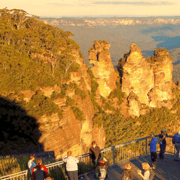
This is the park’s most famous viewpoint for a reason. Echo Point delivers classic views over the Jamison Valley and the Three Sisters rock formation, and it is one of the easiest ways to appreciate the scale of the Blue Mountains even on a short visit.
2. Walk the Three Sisters Track
If you want more than a photo stop, take the short walk from Echo Point. It adds movement and perspective to the visit and makes the landmark feel more immersive than simply viewing it from the railing.
3. Explore Wentworth Falls
Wentworth Falls picnic area is one of the best starting points in the park. From here you can enjoy lookouts, bushwalks and beautiful waterfall scenery. It works well for visitors who want a scenic half-day without committing to a very long hike.
4. Take in the Views from Govetts Leap
Govetts Leap is one of the most rewarding lookouts in the Blue Mountains, with sweeping views over the Grose Valley, cliff walls and waterfalls. It is also a strong option if you want spectacular scenery without a strenuous walk.
5. Hike Part of the Grand Cliff Top Walk
If you want a more immersive experience, the Grand Cliff Top Walk links Wentworth Falls, Leura and Katoomba across 19 kilometres of escarpment country. You do not have to complete the full route to enjoy it. Even a shorter section can give you a wonderful mix of waterfalls, viewpoints and village access.
6. Try an Easy Scenic Walk
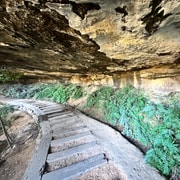
The park is not only about steep descents and full-day hikes. There are also access-friendly and easier walking options around some of the major viewpoints, which makes the region appealing for a broad range of travellers.
Suggested One-Day Blue Mountains Plan
Start early in Katoomba
Visit Echo Point and enjoy the Three Sisters views
Take a short walk if conditions suit
Head to Wentworth Falls picnic area for another change of scenery
Stop for lunch in a mountain village
Finish the day with a lookout stop at Govetts Leap in Blackheath
How Long Should You Stay?
Half a day: enough for one or two iconic lookouts
1 full day: good for the major highlights
2 to 3 days: ideal if you want to combine walks, waterfalls, villages and slower sightseeing
Longer: worthwhile for keen hikers and repeat visitors
What to Wear and Bring
Comfortable walking shoes with grip
A jacket or extra layer because mountain weather can shift quickly
Water and snacks for walks
Sunscreen and a hat
A charged phone or camera
A small daypack for longer walks
Useful Practical Tips
Check park alerts before you go, especially for walking tracks.
Start early on weekends and holidays if you want easier parking and quieter lookouts.
Do not assume every walk is easy just because the lookout is accessible. Some tracks are steep and can be challenging.
Mobile reception can be limited in parts of the park, so plan ahead for longer walks.
Pets are not permitted in the national park.
Most of the park has no general entry fee, but an $8 per vehicle per day fee applies at attractions in the Glenbrook area.
Who Will Love This Park?
First-time visitors to New South Wales
Nature lovers and photographers
Walkers wanting everything from short lookouts to longer hikes
Families looking for an easy scenic escape from Sydney
Travellers who enjoy combining wilderness with village cafés and mountain stays
Final Thoughts
Blue Mountains National Park earns its reputation because it offers real variety without losing its sense of scale. It can be dramatic, peaceful, convenient and wild all at once. One moment you are at a busy, famous lookout; the next, you are following a track into forest and waterfall country with nothing but birdsong and cliff walls around you.
If you are planning a New South Wales itinerary, this is one of the easiest and most rewarding nature destinations to add. Give it more than a rushed stop if you can. The longer you stay, the more the Blue Mountains reveal just how much landscape, atmosphere and adventure they hold.
Sponsored Popular Items
Quick take: Musement.com offers a worldwide selection of tours and attractions
From Sydney: Blue Mountains Sightseeing And Sunset Day Tour Australia Discover the Blue Mountains with a private, luxury 9-hour tour. Enjoy stunning landscapes, iconic lookouts, and a magical sunset. Perfect for small groups, traveling in style and comfort.
Blue Mountains: Overcliff-Undercliff Guided Hike Australia Embark on a guided hike of the Overcliff-Undercliff hike in the Blue Mountains. Admire the views of the Jamison Valley, explore the beauty & see waterfalls within a part of the Blue Mountains.
Avatar Hallelujah Mountains: How to Visit Zhangjiajie’s Real-Life Floating Peaks
Misty stone pillars, cliff-edge viewpoints and one of China’s most cinematic landscapes
If there is one place in China that feels as though it belongs in a fantasy film, it is the landscape around the Avatar Hallelujah Mountains in Zhangjiajie. Rising dramatically from deep forested valleys, these slender sandstone pillars appear to hover in the clouds after rain, creating the dreamlike scenery that has made this part of Hunan famous around the world.
The best-known peak is Avatar Hallelujah Mountain, a towering pillar in the Yuanjiajie Scenic Area, but the real magic is the wider panorama around it. You do not come here for a single lookout alone. You come for a whole world of soaring rock spires, natural stone bridges, forest trails, cliffside lifts and viewpoints that seem built for sunrise, mist and unforgettable photographs.
Where Are the Avatar Hallelujah Mountains?
The Avatar Hallelujah Mountains are in Yuanjiajie Scenic Area, inside Zhangjiajie National Forest Park in Wulingyuan District, Zhangjiajie, Hunan Province, China. This is part of the larger Wulingyuan scenic region, one of China’s most spectacular natural landscapes.
Although many travellers casually refer to the whole area as the “Avatar Mountains”, the landmark most people mean is the famous pillar now known as Avatar Hallelujah Mountain. Around it, you will find hundreds of other stone peaks, deep ravines, forested slopes and cloud-wrapped viewpoints that make the entire area feel surreal.
Why Visit?
See a world-famous landscape in real life: the scenery is every bit as dramatic as the photos suggest.
Experience one of China’s most iconic national parks: this is a destination that feels different from anywhere else.
Combine easy access with big scenery: you can reach major viewpoints without committing to a strenuous multi-day trek.
Enjoy a mix of sightseeing and walking: cable cars, shuttle buses and the Bailong Elevator make the area accessible for many travellers.
Photograph mist, forest and stone spires: conditions can change by the hour, which keeps the landscape visually dramatic all day.
How to Get There
By Air
The nearest airport is Zhangjiajie Hehua International Airport. From there, most travellers continue by road to either Wulingyuan or Zhangjiajie City, depending on where they are staying.
By Train
Many visitors also arrive via Zhangjiajie West Railway Station, the main high-speed rail gateway for the region. From the station, continue by taxi, private transfer or local transport toward Wulingyuan or the national park entrances.
By Road
If you are already in Zhangjiajie, the simplest way to reach the park is by taxi, private driver or bus to the Wulingyuan side of the scenic area. For many independent travellers, this is the easiest base and entry point for visiting Yuanjiajie and the Avatar Hallelujah Mountain area.
Closest Towns and Best Places to Stay
Wulingyuan
Wulingyuan is the closest and most practical base for visiting the Avatar Hallelujah Mountains. Staying here cuts down travel time in the morning and makes it easier to get an early start before the biggest crowds arrive. It is also convenient for park entrances, restaurants and evening walks after a full day sightseeing.
Zhangjiajie City
Zhangjiajie City is the main transport hub of the region and is a good choice if you are also planning to visit Tianmen Mountain. It is less convenient than Wulingyuan for early entry into the forest park, but it works well if you want a split stay and plan to see multiple scenic areas.
Best Stay Strategy
If your main goal is the Avatar Hallelujah Mountains, stay in Wulingyuan. If you are building a broader Zhangjiajie itinerary, split your stay between Wulingyuan and Zhangjiajie City.
What to Do at the Avatar Hallelujah Mountains
1. See Avatar Hallelujah Mountain in Yuanjiajie
This is the signature experience. Stand at one of the main viewing platforms in Yuanjiajie and look out over a forest of vertical peaks rising from the valley below. In clear weather the rock pillars look immense and sculptural. In mist, they seem to float.
2. Ride the Bailong Elevator
One of the most memorable ways to enter Yuanjiajie is via the Bailong Elevator, a glass lift built against the cliff face. It turns the journey up the mountain into part of the attraction and saves time compared with a long uphill hike.
3. Walk to First Bridge Under Heaven
This naturally formed stone bridge is one of the area’s most striking geological features. Even if you are not usually interested in rock formations, this one stands out for its scale, setting and sense of drama.
4. Stop at Enchanting Terrace
Enchanting Terrace is one of the best places to pause, slow down and take in the layered stone peaks. It is especially rewarding when cloud or mist lingers around the mountains.
5. Explore More of Zhangjiajie National Forest Park
Do not limit yourself to one viewpoint if you have the time. The wider park includes other memorable areas such as:
Tianzi Mountain for wide panoramas and classic sea-of-peaks views
Golden Whip Stream for a calmer valley walk beneath towering cliffs
Yangjiajie for more rugged scenery and a slightly wilder feel
Huangshizhai for more big-picture views across the forest park
Best Time to Visit
The Avatar Hallelujah Mountains can be visited year-round, but the most comfortable seasons are usually spring and autumn. Spring brings fresh greenery, flowers and soft mist, while autumn often offers crisp air, clearer views and rich seasonal colour.
Summer is lush and vibrant, though it can be humid and busy. Winter can be quieter and atmospheric, especially when the peaks are touched by frost or snow, but conditions may be colder and visibility more changeable.
How Much Time Do You Need?
If you are focused only on the main Avatar viewpoints, you can experience the highlights of Yuanjiajie in half a day to a full day. That said, the surrounding national park deserves more than a rushed stop.
For most travellers, the sweet spot is:
1 day for Yuanjiajie and nearby highlights
2 days for a more rewarding forest park visit
3 days or more if you also want Tianmen Mountain or the Grand Canyon area
Suggested One-Day Route
Start early from Wulingyuan
Enter via the East Gate
Take transport toward the Bailong Elevator
Explore Yuanjiajie and see Avatar Hallelujah Mountain
Walk to First Bridge Under Heaven
Pause at Enchanting Terrace
Continue to Tianzi Mountain if you still have time and energy
Return to Wulingyuan for dinner
Practical Travel Tips
Start early: the most famous viewpoints get busy.
Wear proper walking shoes: even with lifts and shuttle buses, you will still do a fair amount of walking.
Bring water and snacks: a long sightseeing day is more enjoyable if you are prepared.
Pack for changing weather: mist, drizzle and cooler temperatures can appear quickly at higher viewpoints.
Allow flexibility for photos: the scenery can look completely different in sun, fog and low cloud.
Respect wildlife: if you encounter monkeys, keep your distance and do not feed them.
Check current ticketing and entry rules before you go: transport options and access arrangements can change.
Who Will Love This Destination?
The Avatar Hallelujah Mountains are ideal for travellers who love dramatic natural scenery, photography, unusual geology and places that feel genuinely different from the standard city-and-temple circuit. They also work well for visitors who want big rewards without needing a hardcore hiking expedition.
This is a particularly strong choice for:
nature lovers
photographers
couples
China first-timers wanting an iconic landscape
travellers building a wider Hunan itinerary
Final Thoughts
The Avatar Hallelujah Mountains are more than a movie comparison. Yes, the landscape feels cinematic, but what makes it special is the scale, the atmosphere and the way the scenery changes from hour to hour. One moment the cliffs are sharp and sunlit; the next, the whole valley disappears into cloud and the peaks seem to hover in empty air.
If you are planning a trip to Zhangjiajie, make Yuanjiajie and the Avatar Hallelujah Mountain area a priority. Stay nearby in Wulingyuan, start early, give yourself time to wander, and let the landscape do what it does best: surprise you.
Sponsored Popular Items
Quick take: Musement.com offers a worldwide selection of tours and attractions
Swim, jump, slide and abseil your way through Empress Canyon—one of the Blue Mountains’ most popular canyoning routes.
Quick take: A beginner-friendly (but still thrilling) canyoning adventure at Empress Falls featuring short swims,
rock jumps, natural slides, and an epic 30-metre waterfall abseil—all in spectacular Blue Mountains scenery not far from Sydney.
Duration: approximately 3 hours (canyoning journey)
Season: September to mid-June (warm weather season)
Location: Wentworth Falls, Blue Mountains (NSW)
Experience level: no experience necessary (full training provided)
Key feature: 30-metre waterfall abseil at Empress Falls
Cancellation: free changes up to 7 days prior (see policy below)
Highlights
Enjoy the thrills of canyoning at Empress Falls in the Blue Mountains
Take on short swims, rock jumps and a 30-metre waterfall abseil
See incredible natural scenery close to Sydney
What to expect
This half-day canyoning tour is ideal for beginners and also suits experienced canyoners who want a fast, fun canyon run (with optional extra obstacles).
You’ll meet your guides in the Blue Mountains, get a full safety briefing, and be fitted with all technical gear (harness, pack, helmet and wetsuit).
From there it’s a short bushland walk to the canyon entry—then the adventure ramps up. Depending on water levels, you’ll move through the canyon by abseiling, walking, wading, swimming, jumping and sliding all the way to the end.
The big finale is the famous 30-metre waterfall abseil—a true “I can’t believe I just did that” moment.
What’s included
Half-day canyoning experience
Full instruction from expert guides
All technical and safety equipment for canyoning and abseiling
Departure location / meeting point
Meet here: Bus parking area outside The Conservation Hut Café Address: 92 Fletcher St, Wentworth Falls NSW 2782
From Sydney: Blue Mountains Sightseeing And Sunset Day Tour Australia Discover the Blue Mountains with a private, luxury 9-hour tour. Enjoy stunning landscapes, iconic lookouts, and a magical sunset. Perfect for small groups, traveling in style and comfort.
Blue Mountains: Overcliff-Undercliff Guided Hike Australia Embark on a guided hike of the Overcliff-Undercliff hike in the Blue Mountains. Admire the views of the Jamison Valley, explore the beauty & see waterfalls within a part of the Blue Mountains.
Jinguashi is a former gold-mining settlement near Jiufen, known for its mining relics, mountain views,
and the Gold Museum. Quieter and more spacious than Jiufen, it’s ideal for history lovers and hikers
wanting a deeper look into Taiwan’s mining past.
Jinguashi (金瓜石): Taiwan’s Historic Gold Mining Village
Located just uphill from Jiufen, Jinguashi played a central role in Taiwan’s gold-mining boom during
the Japanese colonial period. Today, abandoned mines, atmospheric ruins, and sweeping coastal views make it
a fascinating and less crowded alternative to Jiufen.
Top Things to Do in Jinguashi
Gold Museum – learn about mining life and see a giant gold ingot.
Benshan Fifth Tunnel – walk into a real former mine.
Teapot Mountain hike – one of northern Taiwan’s most iconic trails.
Historic Japanese-era buildings scattered through the village.
Why Visit Jinguashi
Rich Japanese colonial and industrial history
Less crowded than nearby Jiufen
Access to scenic mountain hiking trails
Coastal views over the Yinyang Sea
Easy to combine with Jiufen and Shifen
Three Jinguashi Highlights
Golden Waterfall – mineral-rich water gives the rocks their colour.
1) Golden Waterfall
This striking cascade glows yellow and orange due to mineral deposits from old mining operations—
a dramatic reminder of Jinguashi’s industrial past.
Benshan No.5 Tunnel – a preserved mining tunnel.
2) Benshan No.5 Tunnel
Step inside a former gold mine to experience the harsh working conditions miners once faced,
with exhibits explaining extraction methods and daily life.
Teapot Mountain – a rewarding hike with sweeping views.
3) Teapot Mountain
A popular but challenging hike leading to panoramic views of the coastline, mountains,
and remnants of Taiwan’s mining heritage.
How to Combine with Jiufen
Visit Jinguashi in the morning for museums and hikes.
Head to Jiufen Old Street later for food and lantern views.
Total travel time between villages: about 10 minutes by bus or taxi.
Quick Facts
Location: New Taipei City, northeast Taiwan.
Known for: Gold mining history, museums, hiking.
Ideal visit length: 2–4 hours.
Best season: Autumn to spring for cooler hiking weather.
FAQ
Is Jinguashi less crowded than Jiufen?
Yes. It’s noticeably quieter, especially on weekdays.
Do I need hiking experience?
No for the village and museum areas; yes for Teapot Mountain, which is steep and exposed.
Can I visit Jinguashi without Jiufen?
Yes, but most visitors enjoy combining both for history and atmosphere.
How do I get there from Taipei?
Train to Ruifang Station, then bus or taxi to Jinguashi (about 15 minutes).
Image credits: Wikimedia Commons.
Sponsored Popular Items
Quick take: Musement.com offers a worldwide selection of tours and attractions
Taiwan Taipei: Quick Photoshoot with Taiwan Photographer Taiwan Best deals for Taiwan Taipei: Quick Photoshoot with Taiwan Photographer. Welcome to Taipei Taiwan! Say goodbye to selfies, I will be your personal photographer. Let me show you the beauty of Taipei, and capture the best of you! Check my IG: mason.taiwan.photographer Available from getyourguide.com.
Taiwan Taipei: Half-day VIP Photoshoot Taiwan Photographer Taiwan Best deals for Taiwan Taipei: Half-day VIP Photoshoot Taiwan Photographer. Wanna try local way to travel? Don't worry about the travel plan. Let me choose the iconic spots and hidden gems for you while capturing the best of you! Check my IG: mason.taipei.photographer Available from getyourguide.com.
Taiwan Tainan: Photoshoot with Taiwan Photographer Taiwan Best deals for Taiwan Tainan: Photoshoot with Taiwan Photographer. Welcome to Tainan Taiwan! Say goodbye to selfies, I will be your personal photographer. Let me show you the beauty of Tainan, and capture the best of you! Check my IG: mason.taipei.photographer Available from getyourguide.com.
Jiufen Old Street is Taiwan’s most atmospheric mountain village—famous for red lanterns, teahouses, sea views, and narrow alleys. Just 1 hour from Taipei, it’s best visited late afternoon into evening for lantern light, tea culture, and street snacks.
Jiufen Old Street (九份老街): Taiwan’s Lantern-Lit Hillside Village
Perched on the hills above Taiwan’s northeast coast, Jiufen was once a thriving gold-mining town during
the Japanese colonial era. Today it’s known for its steep stairways, packed food stalls, historic teahouses,
and misty ocean views—especially magical when the lanterns come on at dusk.
Top Things to Do in Jiufen
Walk Jiufen Old Street – snack your way up and down the lantern-lined steps.
Visit a traditional teahouse for mountain and sea views.
Explore side alleys for quieter corners and photo spots.
Sunset watching over the Pacific on clear days.
Combine with nearby towns like Shifen or Jinguashi.
Why Jiufen Is So Famous
Japanese-era architecture and mining history
Iconic red lanterns and narrow staircases
Teahouses overlooking mountains and ocean
Often linked (unofficially) to Spirited Away
Easy half-day trip from Taipei
Three Jiufen Highlights
1) A-Mei Teahouse
Famous for its tiered balconies and lanterns, this historic teahouse is best enjoyed with a pot of tea
as the fog rolls in and lights flicker on across the village.
2) Jiufen Old Street
The main stairway is packed with stalls selling taro balls, herbal rice cakes, peanut ice cream rolls,
and souvenirs. Expect crowds, especially on weekends.
3) Ocean & Mountain Views
On a clear day, Jiufen’s elevated position offers sweeping views across the coastline—one reason
lingering with tea is just as rewarding as wandering the streets.
What to Eat in Jiufen
Taro balls (芋圓) – Jiufen’s signature dessert
Herbal rice cakes
Peanut ice cream rolls with cilantro
Traditional teas in historic teahouses
Getting There
From Taipei: Train to Ruifang + bus/taxi (about 1 hour total).
Direct buses: From Taipei city (popular and easy).
Best time: Late afternoon → evening for lantern atmosphere.
Quick Facts
Location: New Taipei City, northeast coast.
Known for: Lanterns, teahouses, mining history.
Ideal visit length: 2–3 hours.
Best season: Autumn–spring; mist adds atmosphere year-round.
FAQ
Is Jiufen very crowded?
Yes—especially weekends and holidays. Visit early morning or stay until evening once day-trippers leave.
Is Jiufen related to Spirited Away?
There’s no official confirmation, but the lantern-lit teahouses often remind visitors of the film.
Can Jiufen be combined with other sights?
Yes—Shifen Waterfall, Shifen Old Street, and Jinguashi are common pairings.
Is Jiufen suitable in rainy weather?
Absolutely—rain and mist often enhance its moody, cinematic feel.
Sponsored Popular Items
Quick take: Musement.com offers a worldwide selection of tours and attractions
From Taipei: Yehliu, Shifen, Houtong & Jiufen One-Day Tour Taiwan Best deals for From Taipei: Yehliu, Shifen, Houtong & Jiufen One-Day Tour. Discover the natural beauty and cultural charm of Taiwan on a day trip from Taipei. Visit Yehliu Geopark, Shifen Waterfall, Houtong Cat Village, and Jiufen Old Street. Available from getyourguide.com.
Yehliu Geopark, Jiufen Street, Shihfen Lantern One-Day Tour Taiwan Best deals for Yehliu Geopark, Jiufen Street, Shihfen Lantern One-Day Tour. The most famous and must see spots in Taipei city for foreign visitors who just want to explore the exciting of Taiwan. Guests can visit the exciting places in one day and have unforgettable memory. Available from getyourguide.com.
Taiwan Nature & Culture: Shifen, Jiufen & TaipeiEYE Day Tour Taiwan Best deals for Taiwan Nature & Culture: Shifen, Jiufen & TaipeiEYE Day Tour. Discover Taiwan on a day trip from Taipei. Visit Shifen Old Street, explore Jiufen Village, and enjoy a traditional TaipeiEYE cultural performance. Available from getyourguide.com.
Tunnels in Taiwan are more than transport links—they’re scenic, historic, and sometimes dramatic landmarks carved through mountains, cliffs, and coastlines. From marble tunnels in Taroko Gorge to abandoned railway tunnels turned cycle paths, Taiwan’s tunnels tell a story of engineering, resilience, and geography.
Tunnels in Taiwan: Engineering Through Mountains & Time
Taiwan’s rugged terrain—dominated by steep mountains and fault lines—has made tunnels essential to its development.
Over time, these tunnels have evolved from hand-cut passages and military routes into modern rail, road, and cycling corridors.
Many are now attractions in their own right, offering dramatic scenery and cultural insight.
Famous Tunnels You Can Visit
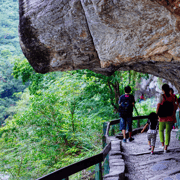
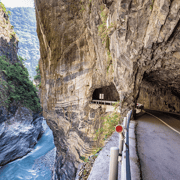
Taroko Gorge Tunnels (Hualien) – Narrow cliff-hugging tunnels like Swallow Grotto and Tunnel of Nine Turns.
Caoling Tunnel – Taiwan’s longest cycle tunnel, once a railway line, now a coastal bike route.
Jiashan Military Tunnel (Kaohsiung) – Historic coastal defence tunnels carved into rock.
Shifen Old Railway Tunnels – Atmospheric tunnels near waterfalls and lantern towns.
Why Taiwan’s Tunnels Are Special
Carved through marble, granite, and coastal rock
Blend of Japanese-era, military, and modern engineering
Many are pedestrian- or bike-friendly
Often paired with dramatic scenery (cliffs, rivers, ocean)
Free and accessible attractions
Three Standout Tunnel Experiences
Caoling Tunnel – a former railway tunnel now open to cyclists.
1) Caoling Tunnel (宜蘭)
Stretching over 2 km, Caoling Tunnel connects Yilan and New Taipei along the coast.
It’s cool even in summer and forms part of one of Taiwan’s most scenic cycling routes.
Tunnel of Nine Turns – dramatic geology on foot.
2) Tunnel of Nine Turns (Taroko)
A short walking route with multiple tunnels and bridges, showcasing Taroko’s raw marble formations
and the power of the Liwu River below.
Jiashan Military Tunnel – coastal defence history in Kaohsiung.
3) Jiashan Military Tunnel
Located near Zuoying and Cijin, this tunnel complex offers insight into Taiwan’s Cold War defences,
with sea views and cool underground passages.
Quick Facts
Terrain: Over 70% of Taiwan is mountainous.
Oldest tunnels: Many date back to the Japanese colonial era (1895–1945).
Best-known: Taroko Gorge tunnel system.
Visitor tip: Helmets are often required in Taroko tunnels.
FAQ
Are Taiwan’s tunnels safe for visitors?
Yes—tourist-accessible tunnels are maintained and monitored. Always follow park rules and weather advisories.
Can I walk or cycle through tunnels?
Many old railway tunnels (like Caoling) are dedicated to cyclists and pedestrians.
What’s the most scenic tunnel?
Swallow Grotto in Taroko Gorge is often considered the most dramatic.
Do I need special equipment?
Comfortable shoes and a helmet (provided in Taroko) are usually sufficient.
Image credits: Wikimedia Commons.
Sponsored Popular Items
Quick take: Musement.com offers a worldwide selection of tours and attractions
Hualien: Taroko Gorge, Sky Mirror Beach ATV & Coast Day Tour Taiwan Best deals for Hualien: Taroko Gorge, Sky Mirror Beach ATV & Coast Day Tour. Discover Taroko Gorge and Hualien’s stunning Pacific coast in one unforgettable day. Walk through marble canyons, ride a beach ATV, admire Qingshui Cliff, and unwind at beautiful Qixingtan Beach. Available from getyourguide.com.
From Taipei: Taroko Gorge Private Tour Taiwan Best deals for From Taipei: Taroko Gorge Private Tour. Escape the city and explore the marble canyons, shrines, and river valleys of Taroko Gorge on a private day trip from Taipei. Available from getyourguide.com.
From Hualien: Taroko Gorge & Scenic Coastal Views Day Tour Taiwan Best deals for From Hualien: Taroko Gorge & Scenic Coastal Views Day Tour. Explore the breathtaking beauty of Taroko Gorge on this all-in-one day tour from Hualien, featuring marble cliffs, lush forest trails, and dramatic coastal views. Available from getyourguide.com.
Hualien is Taiwan’s east-coast gateway to Taroko Gorge—a relaxed seaside city backed by mountains and the Pacific Ocean. Plan 2–3 days to combine Taroko’s marble canyons with coastal walks, night markets, and scenic day trips. Trains from Taipei are easy and scenic.
Hualien (花蓮): Taiwan’s East Coast Nature Hub
Taroko Gorge’s marble walls and Liwu River are Hualien’s headline attraction. (Image: Wikimedia Commons)
Hualien sits between dramatic mountains and the Pacific, offering a slower pace than Taiwan’s west-coast cities.
It’s the natural base for exploring Taroko National Park, but the city itself rewards lingering—with
oceanfront promenades, friendly cafés, and easy access to waterfalls, cliffs, and quiet beaches.
Top Things to Do
Taroko Gorge day tour – marble canyons, tunnels, and riverside trails.
Qixingtan Beach – pebble shore, sunrise views, and coastal cycling.
Hualien Night Market – casual street food and local snacks.
Pine Garden – hilltop viewpoints over the city and sea.
Coastal cycling – flat paths with Pacific breezes.
Easy Day Trips from Hualien
Taroko National Park – Shakadang Trail, Swallow Grotto, Eternal Spring Shrine.
Qingshui Cliffs – towering sea cliffs north of town.
Liyu Lake – calm lakeside walks and pedal boats.
East Coast Highway – scenic drives toward Taitung.
Three Hualien Highlights
Shakadang Trail: gentle walking with crystal-clear water. (Image: Wikimedia Commons)
1) Taroko Gorge Trails
Guided or self-guided, Taroko’s accessible paths make it easy to see big scenery without extreme hiking.
Helmets are often provided for tunnel sections.
Qixingtan Beach: sunrise and sea air minutes from town. (Image: Wikimedia Commons)
2) Qixingtan Beach
A favourite for early mornings and sunsets—pebbles, waves, and wide horizons rather than swimming crowds.
Pine Garden: calm views over Hualien and the Pacific. (Image: Wikimedia Commons)
3) Pine Garden
Once a military site, now a peaceful lookout with cafés—ideal for a quiet pause between adventures.
Food to Try
Mochi (Hualien specialty)
Seafood and coastal noodles
Night-market snacks like scallion pancakes and grilled skewers
Getting There & Around
Train: Scenic 2–2.5 hrs from Taipei (TRA).
Local transport: Taxis, buses, scooters; tours are easiest for Taroko.
Best base: Near Hualien Station or along the seafront.
Quick Facts
Location: East coast of Taiwan, facing the Pacific Ocean.
Known for: Taroko Gorge, coastal scenery, relaxed pace.
Ideal stay: 2–3 days.
Best season: Oct–Apr for cooler, drier weather.
FAQ
Is Hualien worth visiting if I’ve already seen Taipei?
Yes—Hualien offers a completely different side of Taiwan focused on nature, space, and ocean views.
Do I need a guided tour for Taroko Gorge?
Not required, but guided tours add safety and context—especially after weather events.
Can Hualien be done as a day trip from Taipei?
It’s possible but rushed. An overnight stay is strongly recommended.
Image credits: Wikimedia Commons.
Sponsored Popular Items
Quick take: Musement.com offers a worldwide selection of tours and attractions
Hualien: Taroko Gorge, Sky Mirror Beach ATV & Coast Day Tour Taiwan Best deals for Hualien: Taroko Gorge, Sky Mirror Beach ATV & Coast Day Tour. Discover Taroko Gorge and Hualien’s stunning Pacific coast in one unforgettable day. Walk through marble canyons, ride a beach ATV, admire Qingshui Cliff, and unwind at beautiful Qixingtan Beach. Available from getyourguide.com.
From Taipei: Taroko Gorge Private Tour Taiwan Best deals for From Taipei: Taroko Gorge Private Tour. Escape the city and explore the marble canyons, shrines, and river valleys of Taroko Gorge on a private day trip from Taipei. Available from getyourguide.com.
From Hualien: Taroko Gorge & Scenic Coastal Views Day Tour Taiwan Best deals for From Hualien: Taroko Gorge & Scenic Coastal Views Day Tour. Explore the breathtaking beauty of Taroko Gorge on this all-in-one day tour from Hualien, featuring marble cliffs, lush forest trails, and dramatic coastal views. Available from getyourguide.com.
Located just minutes from Airlie Beach, Conway National Park is one of Queensland’s most beautiful coastal rainforest reserves. Covering more than 22,000 hectares, the park protects lush tropical forests, rugged hills, hidden waterfalls, and sweeping Whitsunday views. It’s an essential stop for hikers, nature lovers, and anyone wanting to escape into Queensland’s quiet green heart.
⭐ Why Visit Conway National Park
1. Lush Coastal Rainforest
The park is part of the largest remaining tropical lowland rainforest in Queensland’s central coast region. Expect:
Strangler figs
Palm groves
Fern-filled gullies
Vine forests alive with birdsong
It’s a world away from the busy airlie waterfront—yet only a short drive away.
2. Famous Lookouts with Whitsunday Views
Some of the region’s best viewpoints are found inside the park, including:
🏞️ Honeyeater Lookout – A challenging but rewarding trail offering panoramic views over Airlie Beach and the Whitsundays
🌊 Mt Rooper Lookout – A shorter walk with vistas over Shute Harbour
🌅 Sea Eagle Lookout – Sweeping views across Conway Bay
These viewpoints are especially stunning at sunrise or late afternoon.
3. Excellent Bushwalking Trails
The park offers tracks for every fitness level:
Honeyeater Lookout Trail (8 km return) – The most iconic hike
Mt Rooper Circuit – Great for families and casual walkers
Swamp Bay Track – Gentle coastal walk to a secluded shoreline
Conway Circuit (28 km) – A multi-day rainforest adventure for experienced hikers
Expect shaded paths, wildlife encounters, and rainforest immersion.
4. Wildlife Encounters
Conway National Park is home to:
Proserpine rock-wallabies
Goannas
Lace monitors
Butterflies
Forest birds including honeyeaters, cockatoos & the elusive wompoo pigeon
Quiet morning walks offer the best sightings.
5. Close to the Whitsundays, Yet Peaceful
Many travellers come to Airlie Beach for boating and island trips. Conway National Park is the perfect balance—tranquil, wild, and refreshingly crowd-free.
🌺 Top Things to Do in Conway National Park
🚶 1. Hike to Honeyeater Lookout
A must-do. The moderately steep climb rewards you with one of the best views in the region.
🌴 2. Explore the Rainforest Circuit Walks
Walk beneath towering trees, listen for bird calls, and take in the cooling jungle atmosphere.
🌊 3. Visit Swamp Bay
A peaceful, lesser-known shoreline perfect for photography, shell collecting, and watching boats pass the islands.
🎒 4. Try the Conway Circuit
A full backcountry adventure across creeks, ridgelines, and remote rainforest terrain.
📸 5. Sunset at Mt Rooper Lookout
A stunning way to end a day in the Whitsundays.
🛎️ Where to Stay
The park has no campgrounds, but nearby options include:
Airlie Beach holiday parks
Shute Harbour rentals
Airlie Beach hotels, resorts & hostels
The region caters to all budgets.
🚘 Getting There
Conway National Park is easily accessible from:
Airlie Beach (5–15 minutes)
Shute Harbour (5 minutes)
Main entrances include the Forestry Road Trailhead, Mt Rooper, and Shute Harbour.
❓ Q&A (Short)
Q: Is Conway National Park suitable for families? A: Yes—Mt Rooper and shorter trails are family-friendly.
Q: Do I need a 4WD? A: No—most trailheads are accessible by standard vehicles.
Q: Are there facilities? A: Limited. Bring water, snacks, and sun protection.
Q: Best time to visit? A: May to September for cooler hiking weather, but the park is beautiful year-round.
🌅 Final Thoughts
Conway National Park is the emerald heart of the Whitsundays—lush, quiet, and endlessly scenic. Whether you’re hiking to dramatic lookouts, wandering coastal forests, or escaping the crowds of Airlie Beach, the park offers a refreshing slice of tropical wilderness just minutes from the coastline.
Sponsored Popular Items
Quick take: Musement.com offers a worldwide selection of tours and attractions
Whitsundays: 2-Day, 1-Night Sailing, Snorkeling, Whitehaven Australia Habibi offers 2 fun days sailing the Whitsunday Islands, snorkel pristine reefs in the Great Barrier Reef Marine Park, visit Whitehaven Beach & Hill Inlet lookout. Geared towards 18-30yr travelers.
Best places to visit in the Whitsundays: Where to start Australia Lachlan lives in Paris and is the Head of Content and Community at misterb&b, an LGBTQ+ accommodation platform. He enjoys coffee and cocktails (not always in that order), and loves to… Check current availability, inclusions and booking conditions.
Whitsundays Bowen Beaches & Discovery Australia Explore Bowen’s stunning beaches,epic lookouts, colourful stories on a thrilling day where every stop delivers jaw-dropping views and unforgettable moments. An adventure that wows… Check current availability, inclusions and booking conditions.
Yangmingshan National Park is Taipei’s beloved natural escape—a landscape shaped by dormant volcanoes, steaming vents, rolling green hills, and seasonal flower blooms. Just a short drive from the city, it’s one of the most accessible national parks in Asia, perfect for hiking, photography, cherry blossoms, and hot-spring relaxation.
With cool mountain air, panoramic viewpoints, and geothermal wonders, Yangmingshan offers the perfect contrast to Taipei’s urban energy.
⭐ Why Visit Yangmingshan
1. A Volcanic Wonderland
The park sits within the Datun Volcano Group and features:
steaming fumaroles
bubbling sulphur vents
crater lakes
dramatic ridgelines
It feels like stepping into another world—yet you’re still within Taipei.
2. Incredible Scenic Views
From peaks like Xiaoyoukeng, Qixing Mountain, and Lengshuikeng, you’ll enjoy sweeping views over:
Taipei 101
the Keelung River Valley
the northern coastline
3. Seasonal Beauty
Each season brings something special:
Spring: cherry blossoms, azaleas, calla lilies
Summer: lush green hills
Autumn: silvergrass fields waving in the wind
Winter: mysterious fog, cool temperatures
4. Hot Springs & Relaxation
Yangmingshan is dotted with public and private hot springs—perfect after a hike.
🌿 Top Things to Do in Yangmingshan
🌋 1. Xiaoyoukeng
A dramatic geothermal site with:
steaming vents
sulphur crystals
boardwalk viewpoints
It’s one of the most photographed spots in the park.
🏔 2. Hike Qixing Mountain (Seven Star Mountain)
The tallest peak in Taipei at 1,120m. Expect:
stone paths
lush meadows
sweeping 360° panoramas
A moderate hike suitable for most fit travellers.
🌾 3. Qingtiangang Grassland
A peaceful plateau known for:
wild cattle roaming freely
wide open skies
gentle walking trails
Great for sunset photos.
🪷 4. Yangmingshan Flower Clock & Cherry Blossoms
In early spring, the park transforms with:
cherry trees
rhododendrons
camellias
The Flower Clock area is colourful and family-friendly.
💦 5. Lengshuikeng Hot Springs
A picturesque natural basin with:
a free public foot-soak
bathhouses
nearby Milk Lake (a small crater lake with milky white water)
📸 6. Zhuzihu Calla Lily Fields
In April–May, this area blooms with rivers of white calla lilies—one of Taiwan’s most photogenic spring landscapes.
🧭 7. Yangmingshan Visitor Center
The best place to get maps, trail advice, and weather updates.
🏨 Best Places to Stay Near Yangmingshan
Beitou Hot Spring Hotels – ideal for spa retreats
Shilin & Tianmu Area – convenient access + dining options
Downtown Taipei – easy transit connections to the park
🍽 What to Eat
Local mountain snacks include:
bamboo shoots
sweet potatoes
herbal soups
farm-fresh vegetables
hot-spring eggs
Cafés with views dot the park’s roads.
🚆 Getting There
From Taipei:
Bus R5 or 260 from MRT Jiantan Station
S-series shuttle buses within the park
Taxi or rideshare for quicker access
Parking is limited on weekends—public transport is recommended.
❓ Quick Q&A
Q: Is Yangmingshan good for beginners? A: Yes, many easy trails and scenic viewpoints require minimal walking.
Q: How long should I spend there? A: 4–6 hours for major sights, a full day for hiking.
Q: Best time to visit? A: Spring for flowers, autumn for silvergrass, winter for cool weather.
Q: Does it get cold? A: Yes—temperatures can be 5–10°C lower than Taipei, especially at night.
🌅 Final Thoughts
Yangmingshan is a must-visit for anyone travelling to Taipei. With volcanic landscapes, expansive grasslands, colourful seasonal blooms, and soothing hot springs, it’s the perfect nature getaway just minutes from the city. Whether you’re hiking to the highest peak, wandering through flower fields, or relaxing in a hot spring, Yangmingshan offers beauty and serenity in every season.
Sponsored Popular Items
Quick take: Musement.com offers a worldwide selection of tours and attractions
Taipei: Taipei Night Market Experience Taiwan Best deals for Taipei: Taipei Night Market Experience. Explore Taipei's night markets on a guided tour. Savor a local snack and boba drink, learn about the culture and history of street foods, and try your hand at traditional night market games. Available from getyourguide.com.
Taipei: Taipei-Hualien one day tour Taiwan Best deals for Taipei: Taipei-Hualien one day tour. Discover Hualien and Taroko Gorge on a day trip from Taipei. Depart from Xingtian Temple, stroll through Xincheng Old Street, and explore the scenic Tianxiang Recreation Area. Available from getyourguide.com.
Taipei: Taipei 101 Observatory - Skyline 460 Cloud Walk Taiwan Best deals for Taipei: Taipei 101 Observatory - Skyline 460 Cloud Walk. Elevate your adventure at Taipei 101’s Skyline 460, Asia’s highest outdoor observatory. Soak in breathtaking panoramic views of Taipei, enjoy guided tours, and skip the lines with fast-track access. Available from getyourguide.com.
Sun Moon Lake is one of Taiwan’s most beautiful and serene destinations—a calm, crystalline lake cradled by forested mountains in central Taiwan’s Nantou County. Loved by locals and travelers alike, the lake is famous for its breathtaking sunrise views, cycling paths, lakeside temples, indigenous culture, and peaceful atmosphere.
Shaped like a sun and moon on either side—hence the name—this lake invites slow travel, scenic exploration, and gentle outdoor adventures.
⭐ Why Visit Sun Moon Lake
One of Taiwan’s Most Scenic Destinations
Sun Moon Lake is all about mood and beauty: morning mist, mirrored reflections, and golden-hour light over the water.
Perfect for Cycling & Outdoor Lovers
The lakeside cycling route is often listed as one of the most beautiful bike paths in the world.
Culture, Temples & Indigenous Heritage
The area is home to the Thao people, one of Taiwan’s indigenous tribes, and several important temples with mountain views.
Cruising the Lake
Boat rides link key piers and offer peaceful, panoramic perspectives of the lake and mountains.
🌅 Top Things to Do at Sun Moon Lake
🚲 1. Cycle Around the Lake
Whether you rent a bicycle or e-bike, the lakeside path—especially the Shuishe–Xiangshan stretch—is smooth, scenic, and beginner-friendly.
🛥 2. Take a Lake Cruise
Boat services hop between the main piers:
Shuishe Pier
Ita Thao Pier
Xuanguang Pier
It’s one of the best ways to experience the lake’s stillness and sweeping views.
🛕 3. Visit Wenwu Temple
A grand temple overlooking the lake with:
traditional Chinese architecture
sweeping staircases
an iconic viewpoint
Great for photos at sunrise or sunset.
🌄 4. Xiangshan Visitor Center
A modern architectural gem with:
panoramic lake views
rooftop walkways
a stylish café
Ideal for relaxing after cycling.
🌿 5. Explore Indigenous Ita Thao Village
Ita Thao offers:
street food (try millet mochi, wild boar, bamboo rice)
souvenir markets
ropeway access to the Formosan Aboriginal Culture Village
🚡 6. Sun Moon Lake Ropeway
A scenic cable car ride offering dramatic views over the lake and mountains. It connects to:
Formosan Aboriginal Culture Village (theme park + cultural center)
🧘 7. Xuanguang Temple & Xuanzang Temple
Smaller, peaceful temples with beautiful lookouts and historical artefacts.
🚣 8. Kayaking or SUP
For a quiet morning on the water, rent a kayak or stand-up paddleboard and enjoy the lake at its calmest.
🏨 Best Areas to Stay
Shuishe
best transport access
convenient for food, shops, and lake cruises
Ita Thao
lively village atmosphere
great for food and ropeway access
Lakeside Resorts
stunning views and infinity pools
perfect for couples and relaxation trips
🍽 What to Eat at Sun Moon Lake
Ah-Po Black Tea (famous local variety)
President Fish (arou fish)
Bamboo rice
Millet wine
Indigenous snacks in Ita Thao
🚆 Getting There
From Taichung (closest major city):
direct buses from Taichung HSR Station (≈ 1.5 hrs)
day tours are available
or rent a scooter/car for flexibility
From Taipei:
HSR or TRA train to Taichung, then transfer by bus
❓ Quick Q&A
Q: How many days do you need? A: 1 day for highlights, 2–3 days for a relaxed lakeside escape.
Q: When is the best time to visit? A: Year-round, but autumn has the clearest skies and mild temperatures.
Q: Is the cycling path easy? A: Yes—flat, smooth, and suitable for beginners.
Q: Can you swim in Sun Moon Lake? A: No, swimming is restricted except during the annual Sun Moon Lake Swim Festival.
🌅 Final Thoughts
Sun Moon Lake is Taiwan’s peaceful heart—an escape into nature, culture, and gentle beauty. Whether you’re cycling along the shore, riding a boat between forested piers, sipping black tea in Ita Thao, or watching the sunrise from Wenwu Temple, the lake offers a rare sense of calm that stays with you long after you’ve left.
Sponsored Popular Items
Quick take: Musement.com offers a worldwide selection of tours and attractions
Taiwan Taipei: Quick Photoshoot with Taiwan Photographer Taiwan Best deals for Taiwan Taipei: Quick Photoshoot with Taiwan Photographer. Welcome to Taipei Taiwan! Say goodbye to selfies, I will be your personal photographer. Let me show you the beauty of Taipei, and capture the best of you! Check my IG: mason.taiwan.photographer Available from getyourguide.com.
Taiwan Taipei: Half-day VIP Photoshoot Taiwan Photographer Taiwan Best deals for Taiwan Taipei: Half-day VIP Photoshoot Taiwan Photographer. Wanna try local way to travel? Don't worry about the travel plan. Let me choose the iconic spots and hidden gems for you while capturing the best of you! Check my IG: mason.taipei.photographer Available from getyourguide.com.
Taiwan Tainan: Photoshoot with Taiwan Photographer Taiwan Best deals for Taiwan Tainan: Photoshoot with Taiwan Photographer. Welcome to Tainan Taiwan! Say goodbye to selfies, I will be your personal photographer. Let me show you the beauty of Tainan, and capture the best of you! Check my IG: mason.taipei.photographer Available from getyourguide.com.
Stretching from Caloundra to Noosa and inland to the lush Blackall Range, the Sunshine Coast is one of Queensland’s most beloved holiday regions. Known for its sparkling beaches, relaxed surf towns, wildlife encounters, and rolling hinterland scenery, the Sunshine Coast blends outdoor adventure with a breezy, welcoming atmosphere.
Whether you’re chasing surf, waterfalls, gourmet local food, peaceful villages, or family-friendly attractions, the Sunshine Coast offers a little of everything—wrapped in year-round sunshine.
🌊 Why Visit the Sunshine Coast
1. Pristine Beaches
From the family-friendly shores of Mooloolaba and Kings Beach to the stylish surf vibes of Coolum and Sunshine Beach, the coast is lined with golden sand and turquoise water.
Top beaches:
Mooloolaba Beach
Kings Beach (Caloundra)
Coolum Beach
Noosa Main Beach
Marcoola Beach
2. Noosa National Park
One of Australia’s most iconic coastal parks, offering:
Ocean cliffs and hidden bays
Koalas in the wild
Scenic coastal walking tracks
Panoramic viewpoints like Hell’s Gates
3. Wildlife Encounters
The Sunshine Coast is home to some of Queensland’s best wildlife experiences:
Australia Zoo – made famous by the Irwin family
SEA LIFE Sunshine Coast – marine life & interactive exhibits
Whale-watching cruises from Mooloolaba (June–November)
4. Hinterland Villages
Just a short drive inland lies the lush Blackall Range, home to charming towns with local boutiques, cafés, waterfalls, and rainforest walks.
Must-visit hinterland spots:
Montville
Maleny
Mapleton
Kondalilla National Park
Mary Cairncross Scenic Reserve
5. Food, Markets & Local Produce
The Sunshine Coast is a rising foodie destination. Expect coastal dining, breweries, farm-fresh produce, and some of Australia’s best weekend markets.
Top picks:
Eumundi Markets
Mooloolaba Wharf dining precinct
Noosa Farmers Market (Sundays)
Sunshine Coast wineries & distilleries
🧭 Top Things to Do on the Sunshine Coast
Noosa Heads
Explore Hastings Street, kayak the Noosa River, hike to Tea Tree Bay, or enjoy a beach sunset.
Mooloolaba & Alexandra Headland
Great for families, surfing, beachfront cafés, and water-based activities.
Caloundra Coastal Walk
A scenic route linking multiple beaches and viewpoints—perfect for photography.
Glass House Mountains
Hike or take a scenic drive through volcanic peaks with panoramic views.
Mary Valley Rattler
A heritage steam train journey through charming countryside towns.
🌤️ Best Time to Visit
The Sunshine Coast has warm weather year-round, but the best months are:
Autumn (Mar–May) – sunny, dry, great for hiking
Spring (Sep–Nov) – warm water, fewer crowds
Winter (Jun–Aug) – mild days, perfect for whale watching
Summer is hot and bustling—ideal for beach lovers and school holidaymakers.
🚗 Getting Around
Sunshine Coast Airport (Marcoola) connects to major Australian cities.
Local buses, ferries (in Noosa), taxis, and rideshare services available.
A car is highly recommended for exploring beaches and hinterland areas.
❓ Quick Q&A
Q: Is the Sunshine Coast good for families? A: Absolutely—calm beaches, wildlife parks, playgrounds, and family-friendly attractions make it ideal.
Q: How many days do you need? A: 3–5 days for a highlights trip; a week is perfect for beaches + hinterland.
Q: Can you swim year-round? A: Yes! Water temperatures stay pleasant, especially from September to May.
🌅 Final Thoughts
The Sunshine Coast embodies the best of Queensland coastal living—laid-back, sun-soaked, nature-rich, and endlessly inviting. Whether you’re hiking through rainforests, lounging on golden beaches, chasing wildlife encounters, or indulging in gourmet markets, the Sunshine Coast offers an unforgettable escape for every kind of traveller.
Sponsored Popular Items
Quick take: Musement.com offers a worldwide selection of tours and attractions
Sunshine Coast: SEA LIFE Sunshine Coast Entry Ticket Australia Get up close with marine mammals and help animal conservation on Australia’s Sunshine Coast with full access to SEA LIFE Sunshine Coast Aquarium in Mooloolaba!. Check current availability, inclusions and booking conditions.
The BEST Things to Do in Sunshine Coast - Top Activities in 2026 | GetYourGuide Australia Find the best-reviewed things to do in Sunshine Coast for 2026. From prices and availability to skip-the-line options, get all the information you need to make the most of your trip. Check current availability, inclusions and booking conditions.
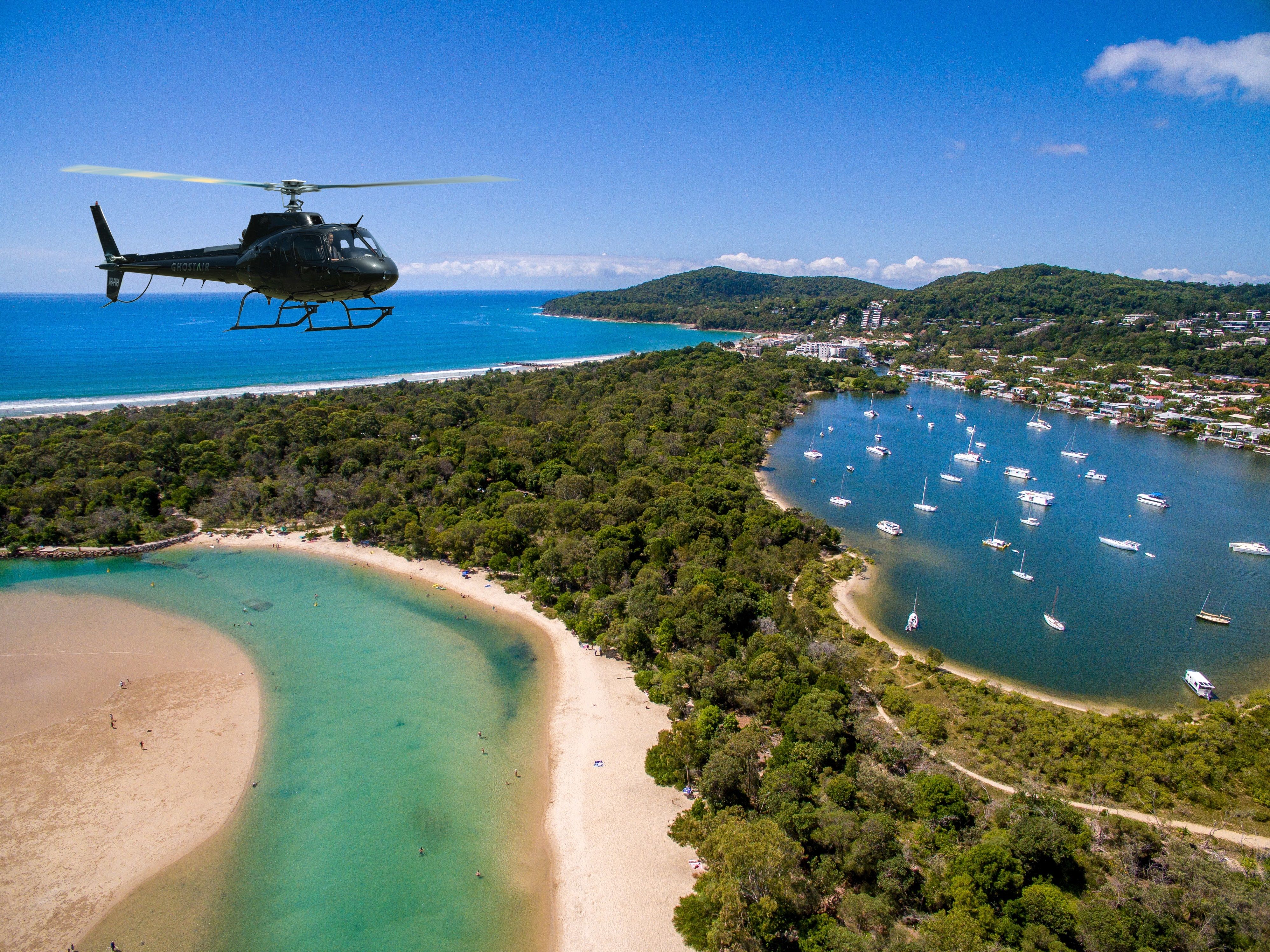
Noosa Heads, located on Queensland’s iconic Sunshine Coast, is one of Australia’s most beloved beach destinations—famous for its glamorous village feel, unspoiled national park, and pristine surf beaches. Whether you’re here to relax, explore nature, or indulge in great food, Noosa has a rare blend of coastal calm and boutique charm.
⭐ Why Visit Noosa Heads
1. Noosa Main Beach
A gentle surf beach ideal for swimming, sunbathing, paddleboarding, and family days out. It’s one of the few east-facing beaches in Australia that’s sheltered, making the water calm year-round.
2. Noosa National Park
One of the Sunshine Coast’s star attractions. Explore:
Coastal walking trails
Boiling Pot lookout
Hell’s Gates
Dolphin Point
Secluded bays like Tea Tree Bay & Granite Bay
Keep an eye out for koalas in the eucalyptus trees—Noosa is one of the best spots to see them in the wild.
3. Hastings Street
The stylish heart of Noosa. Wander past:
Boutique shops
Outdoor cafés
Fine-dining restaurants
Luxury hotels
Perfect for shopping, dining, or an evening stroll.
4. Noosa River & Noosaville
A quieter waterway lined with:
Kayak and boat hire
Riverside dining
Sunset picnic spots
Great for families and those seeking a relaxed pace.
5. Everglades & Hinterland
Just outside town lies the Noosa Everglades—one of only two everglade systems in the world. Kayaking here is peaceful, scenic, and unforgettable.
Nearby hinterland towns like Eumundi, Cooroy, and Pomona offer markets, local produce, and mountain trails (including the steep summit of Mount Cooroora).
🌅 Best Time to Visit
Noosa is beautiful year-round, but the best seasons are:
Autumn (March–May) – perfect weather, warm water
Spring (September–November) – sunny and mild
Winter (June–August) – warm days, great for hiking
By plane: Fly into Sunshine Coast Airport (30 min drive)
Local transport: Buses, ferries, e-bikes, and walking are common
📝 Quick Q&A
Q: Is Noosa good for wildlife? A: Yes—koalas, dolphins, turtles, and rare birdlife are commonly spotted.
Q: Can beginners surf in Noosa? A: Absolutely. Noosa Main Beach has gentle waves ideal for first-timers.
Q: Are there good markets nearby? A: Yes. The Eumundi Markets (Wed & Sat) are some of Australia’s best.
Q: How many days do you need in Noosa? A: 3–5 days is ideal for beaches, nature walks, dining, and exploring.
🌞 Final Thoughts
Noosa Heads offers the perfect mix of coastal luxury and natural beauty. With calm beaches, lush national parks, stylish dining, and easy access to the Sunshine Coast hinterland, it’s no surprise Noosa is one of Australia’s most timeless holiday escapes.
Sponsored Popular Items
Quick take: Musement.com offers a worldwide selection of tours and attractions
Noosa Heads: Surf Experience on the Sunshine Coast Australia Experience the thrill of surfing at Noosa Heads! Stand up and catch your first waves in no time with warm water, perfect waves, and expert instructors. Learn to ride with confidence!. Check current availability, inclusions and booking conditions.
Noosa Heads - 2-Hour Surf Lesson with Expert Instructors Australia Learn to surf at world famous Noosa Heads Main Beach. Expert instruction provided by qualified local surf coaches. Beginner and intermediate lessons daily. Enjoy the rush of catching… Check current availability, inclusions and booking conditions.
Noosa Heads Surfing Lesson for Beginners – Active Outdoor Experience Australia Learn to Surf in Noosa Heads: Beginner-Friendly Lessons on the Sunshine Coast 🌊 If you’ve always dreamed of catching your first wave, there’s no better place than Noosa Heads on Queensland’s Sunshine Coast. Check current availability, inclusions and booking details before you go.