Temple of Hephaestus, Athens: Discover One of Greece’s Most Magnificent Ancient Temples
Imagine standing before a magnificent ancient Greek temple that has watched over Athens for nearly 2,500 years. Its graceful marble columns still rise proudly towards the Mediterranean sky, its architectural details remain remarkably intact, and the breathtaking Acropolis forms an unforgettable backdrop.
Welcome to the extraordinary Temple of Hephaestus in Athens, one of Greece’s most beautifully preserved ancient monuments and a true treasure of classical architecture.
While thousands of visitors flock to the famous Parthenon, this remarkable temple offers something equally special: an extraordinary opportunity to see what an ancient Greek temple actually looked like when it was standing in all its architectural glory.
Perched on a gentle hill overlooking the historic Ancient Agora, the Temple of Hephaestus combines fascinating mythology, magnificent craftsmanship, captivating history and some of the loveliest views in Athens.
Whether you’re passionate about ancient Greece, fascinated by mythology, interested in architecture or simply searching for unforgettable places to explore, this magnificent temple deserves a prominent place on your Athens itinerary.
What Is the Temple of Hephaestus?
The Temple of Hephaestus is an ancient Greek temple dating from the fifth century BC, situated on the western side of the Ancient Agora of Athens.
Dedicated to Hephaestus, the Greek god of fire, metalworking and craftsmanship, and Athena Ergane, the goddess Athena in her role as protector of craftspeople, the temple celebrated the skills and creativity of ancient Greek artisans.
Construction began around 449 BC, during the celebrated Golden Age of Athens, when the city was flourishing as a centre of art, architecture, philosophy and political life.
What makes this temple particularly extraordinary is its remarkable state of preservation.
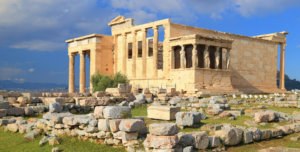
Unlike many ancient monuments that survive only as scattered columns or foundations, the Temple of Hephaestus retains much of its original structure, including its impressive roofline, beautiful Doric columns and intricate sculptural decorations.
It is widely regarded as one of the best-preserved ancient Greek temples anywhere in the world.
Standing before it today is almost like stepping directly into the world of ancient Athens.
Where Is the Temple of Hephaestus?
The Temple of Hephaestus stands on Agoraios Kolonos Hill, overlooking the western side of the Ancient Agora archaeological site in central Athens, Greece.
Location: Ancient Agora of Athens, Athens 105 55, Greece.
Main archaeological site entrance: 24 Adrianou Street, Athens.
Nearest Metro Stations: Thiseio (Line 1) and Monastiraki (Lines 1 and 3).
The temple is conveniently located within walking distance of several of Athens’ most famous attractions, including the Acropolis, Roman Agora, Monastiraki Square and the picturesque Plaka neighbourhood.
Its elevated position makes it particularly easy to admire from different parts of the surrounding archaeological site.
Meet Hephaestus: The Fascinating Greek God of Fire and Craftsmanship
Every great Greek temple has an extraordinary story behind it, and the Temple of Hephaestus is certainly no exception.
In ancient Greek mythology, Hephaestus was the god of fire, blacksmiths, metalworking, craftsmanship and invention.
According to mythology, he was the master craftsman of Mount Olympus, creating magnificent weapons, armour, jewellery and extraordinary objects for the gods and heroes of ancient Greece.
He was credited with forging some of the most famous objects in Greek mythology, including armour for the legendary warrior Achilles.
Unlike many other Olympian gods, who were celebrated for their beauty, strength or power, Hephaestus represented the extraordinary achievements of skilled labour and human creativity.
His association with craftsmanship made him an especially important deity in ancient Athens, where pottery, metalworking and artistic production played significant roles in the city’s economy.
The temple’s location was particularly appropriate because workshops belonging to metalworkers and other craftspeople operated in the surrounding area.
Visitors standing before this extraordinary monument can imagine the ancient artisans who once sought the blessings of Hephaestus before undertaking their skilled work.
A Remarkable History Spanning Nearly 2,500 Years
The story of the Temple of Hephaestus is just as fascinating as its magnificent architecture.
Construction began during the fifth century BC, at a time when Athens was undergoing an extraordinary period of cultural and architectural development.
Many of the city’s greatest monuments were created during this era, including the magnificent buildings of the Acropolis.
The Temple of Hephaestus was constructed using marble and designed in the classical Doric architectural order, celebrated for its elegant proportions, powerful columns and harmonious appearance.
For centuries, the temple served as an important religious monument within the bustling centre of ancient Athens.
However, its story did not end with the decline of ancient Greek religion.
From Ancient Greek Temple to Christian Church
One of the most fascinating reasons for the temple’s extraordinary survival is its transformation into a Christian church during the Byzantine period.
The building was converted into a church dedicated to Saint George, allowing it to remain in religious use for many centuries.
This continued use helped protect much of its original structure from the extensive destruction and dismantling experienced by other ancient monuments.
Today, visitors can admire a temple that has witnessed countless changes in religion, politics, culture and daily life over an astonishing span of history.
Its survival makes it one of the most remarkable architectural treasures in Greece.
What to See at the Temple of Hephaestus
Although the temple itself is relatively compact compared with the extensive ruins of the Ancient Agora, there is plenty to discover and appreciate.
From its magnificent columns to its mythological sculptures and elevated setting, every detail tells part of the story of ancient Greek civilisation.
1. Admire the Magnificent Doric Columns
One of the first things you’ll notice is the extraordinary beauty and symmetry of the temple’s marble columns.
The Temple of Hephaestus is an outstanding example of Doric architecture, one of the three principal architectural orders of ancient Greece.
The building features six columns across its shorter ends and thirteen along each longer side, creating a wonderfully balanced and harmonious appearance.
These impressive columns support the ancient entablature and surviving upper structure, giving visitors an excellent impression of the building’s original architectural design.
Walk slowly around the exterior and admire the elegant proportions, carefully carved stonework and extraordinary craftsmanship involved in constructing such a magnificent monument without modern machinery.
It’s an impressive testament to the creativity and engineering skill of ancient Greek builders.
2. Discover the Fascinating Mythological Sculptures
Look closely at the temple’s decorative sculptures and you’ll discover fascinating connections to the legendary heroes of Greek mythology.
Some of the surviving sculptural decorations depict the famous labours of Heracles, one of ancient Greece’s most celebrated mythical heroes.
Other scenes are associated with the adventures of Theseus, the legendary hero closely connected with the city of Athens.
These decorations helped communicate important mythological stories to ancient worshippers and visitors.
Although centuries of weathering have softened some of the details, the surviving carvings remain wonderful examples of ancient Greek artistic achievement.
For mythology enthusiasts, discovering these ancient stories carved into the temple is one of the most rewarding parts of the visit.
3. Marvel at the Remarkably Preserved Structure
Perhaps the greatest surprise for many visitors is just how complete the Temple of Hephaestus appears.
When compared with the surviving ruins of many other Greek temples, its preservation is truly exceptional.
Much of the original colonnade remains standing, while the surviving upper architectural elements help visitors imagine the temple as it appeared in antiquity.
This makes the building particularly valuable for understanding ancient Greek temple design.
It’s also a fantastic destination for photography, with the temple’s beautifully preserved silhouette creating an unforgettable image against the blue Athenian sky.
4. Enjoy Spectacular Views Across the Ancient Agora
The temple’s elevated setting is another wonderful reason to visit.
Standing on Agoraios Kolonos Hill, you can enjoy lovely views across the archaeological remains of the Ancient Agora, with the magnificent Acropolis rising beyond.
Below you lie the remains of the bustling marketplace and civic centre where ancient Athenians gathered to trade, socialise, discuss politics and participate in public life.
It’s easy to imagine the extraordinary scenes that once unfolded here thousands of years ago.
The combination of ancient ruins, greenery, olive trees and historic architecture makes this one of the most atmospheric viewpoints in central Athens.
Photography tip: Visit during the early morning or later afternoon when the softer Mediterranean sunlight creates beautiful shadows across the temple’s marble columns.
5. Experience the Peaceful Surroundings
Despite its location in the heart of a busy European capital, the Temple of Hephaestus offers a surprisingly peaceful atmosphere.
Its hilltop position and surrounding greenery provide a refreshing contrast to the lively streets of modern Athens.
Take your time exploring the permitted pathways, admiring the architecture and soaking up the magnificent historical surroundings.
It’s a wonderful place to appreciate the beauty and enduring legacy of ancient Greek civilisation.
Why Is the Temple of Hephaestus So Special?
Athens is home to some of the world’s most celebrated ancient monuments, but the Temple of Hephaestus has several qualities that make it truly exceptional.
Its remarkable preservation: The temple is among the finest surviving examples of ancient Greek religious architecture.
Its magnificent craftsmanship: The beautifully proportioned columns and architectural details reveal the extraordinary skill of ancient Greek builders.
Its fascinating mythology: The temple celebrates Hephaestus and Athena Ergane, divine protectors of craftspeople and artistic creation.
Its extraordinary history: From ancient religious sanctuary to Christian church and protected archaeological monument, the building has experienced centuries of cultural change.
Its beautiful location: Overlooking the Ancient Agora, the temple offers wonderful views and an atmospheric setting surrounded by history.
For travellers who appreciate architecture, mythology and ancient civilisations, it is an unforgettable destination.
Temple of Hephaestus Tickets and Opening Hours
The Temple of Hephaestus is located within the Ancient Agora archaeological site, and admission is included in the ticket for the Ancient Agora.
There is normally no need to purchase a separate ticket specifically for the temple.
Visitor Information
Details
Attraction
Temple of Hephaestus
Location
Ancient Agora, Athens, Greece
Standard Admission
€20 for the Ancient Agora archaeological site
Reduced Admission
€10 for eligible visitors
Temple Admission
Included with Ancient Agora admission
Winter Opening Hours
Generally 8:00 am–5:00 pm
Summer Opening Hours
Seasonal hours; check the official schedule
Recommended Time
30–45 minutes for the temple, or 1.5–2.5 hours for the wider Agora
Nearest Metro
Thiseio or Monastiraki
Important visitor information: Opening hours, entrance arrangements, ticket prices and eligibility for reduced admission can change. Check the official website before your visit.
The Temple of Hephaestus is beautiful throughout the year, but choosing the right time can make your visit even more enjoyable.
Spring: Wonderful Weather and Beautiful Surroundings
Spring is one of the loveliest seasons to explore Athens.
Temperatures are usually comfortable for sightseeing, the surrounding greenery looks particularly attractive, and the softer sunlight creates wonderful photographic opportunities.
Summer: Bright Sunshine and Spectacular Views
Summer brings brilliant blue skies and the classic Mediterranean atmosphere that makes Athens so appealing.
However, temperatures can become very high, particularly during July and August.
Plan to visit early in the morning, carry drinking water and wear a hat and sunscreen.
Autumn: Pleasant Temperatures and Relaxed Exploring
Autumn is another excellent time to discover the Temple of Hephaestus.
With generally milder temperatures than midsummer, it’s a wonderful season for combining the temple with a longer walk through the Ancient Agora and surrounding neighbourhoods.
Winter: A Different Side of Ancient Athens
Winter can provide a quieter and more atmospheric experience.
Although the weather may be cooler and occasional rain is possible, the temple remains impressive throughout the season.
Winter visitors should remember that archaeological sites generally have shorter opening hours.
Helpful Tips Before Visiting
Wear comfortable walking shoes: Paths around the archaeological site can be uneven, with some slopes and ancient stone surfaces.
Bring a camera: The beautiful architecture, scenic surroundings and Acropolis views offer outstanding photographic opportunities.
Carry drinking water: Athens can become particularly hot during the summer months.
Allow enough time: Although you can admire the temple relatively quickly, the wider Ancient Agora deserves a longer visit.
Visit the museum: The Museum of the Ancient Agora inside the Stoa of Attalos contains fascinating archaeological finds.
Look closely at the decorations: The sculptural details reveal fascinating connections with ancient Greek mythology.
Respect the monument: Stay on designated visitor routes and follow archaeological site instructions.
Consider a guided tour: Learning about the temple’s mythology, construction and historical significance can make your experience even more rewarding.
Other Amazing Attractions Near the Temple of Hephaestus
One of the greatest advantages of visiting the Temple of Hephaestus is its wonderful location among some of Athens’ most celebrated historical landmarks.
There are numerous fascinating places to discover within easy walking distance.
Ancient Agora of Athens
The Temple of Hephaestus stands within the extraordinary Ancient Agora, once the centre of political, commercial and social life in ancient Athens.
Explore ancient pathways, government buildings, religious monuments and archaeological remains associated with the development of Athenian democracy.
This remarkable open-air archaeological site is an essential destination for anyone fascinated by ancient Greek history.
Stoa of Attalos and Museum of the Ancient Agora
The beautifully reconstructed Stoa of Attalos is one of the most impressive buildings within the Ancient Agora.
Originally constructed during the second century BC, the magnificent colonnaded structure once housed shops and public gathering spaces.
Today, it contains the Museum of the Ancient Agora, where visitors can discover pottery, sculptures, coins, inscriptions and fascinating objects connected with everyday life in ancient Athens.
Acropolis of Athens
No visit to Athens would be complete without exploring the magnificent Acropolis.
Rising above the city, this world-famous archaeological site is home to the extraordinary Parthenon and several other remarkable ancient monuments.
The Acropolis is within walking distance of the Temple of Hephaestus, making it easy to combine these two spectacular attractions in one memorable day.
Roman Agora
Discover another fascinating chapter of Athens’ history at the Roman Agora.
This ancient marketplace developed during the Roman period and contains the impressive Tower of the Winds, an extraordinary octagonal monument associated with timekeeping and weather observations.
It’s a wonderful addition to any historical walking itinerary through central Athens.
Monastiraki Square
Just a short walk away, lively Monastiraki Square offers a colourful contrast to the peaceful atmosphere of the ancient temple.
Browse bustling markets, discover traditional shops, enjoy delicious Greek street food and admire wonderful views towards the Acropolis.
It’s a fantastic place to relax after exploring the archaeological sites.
Plaka: Athens’ Most Charming Historic Neighbourhood
Wander through the picturesque streets of Plaka, where beautiful neoclassical buildings, flower-filled balconies, inviting cafés and traditional tavernas create an unforgettable atmosphere.
This enchanting neighbourhood is perfect for browsing small shops, enjoying authentic Greek cuisine and experiencing the charm of historic Athens.
Make a Day of It: Ancient Temples, Greek Culture and Delicious Food
Why not turn your visit to the Temple of Hephaestus into an unforgettable day exploring the treasures of Athens?
Begin your morning at the Ancient Agora, where you can wander through the archaeological remains before making your way towards the magnificent Temple of Hephaestus.
Spend time admiring the temple’s beautiful columns, exploring its fascinating history and photographing its extraordinary architectural details.
Afterwards, visit the Stoa of Attalos and its fascinating museum to discover more about daily life in ancient Athens.
When lunchtime arrives, head towards the lively streets of Monastiraki or the charming neighbourhood of Thiseio.
Find a welcoming Greek taverna and enjoy a delicious meal of souvlaki, grilled seafood, fresh Greek salad or traditional meze.
In the afternoon, continue your adventure towards the Roman Agora, explore picturesque Plaka or discover the breathtaking Acropolis.
It’s a fantastic way to experience some of Athens’ most important attractions while enjoying the city’s wonderful atmosphere, culture and cuisine.
Is the Temple of Hephaestus Worth Visiting?
Absolutely!
The Temple of Hephaestus is one of Athens’ most rewarding historical attractions and a genuine highlight for anyone interested in ancient Greek architecture.
Its extraordinary preservation allows visitors to appreciate the beauty and sophistication of classical temple design in a way that few other archaeological sites can match.
The fascinating mythology associated with Hephaestus, the building’s remarkable history and its spectacular location overlooking the Ancient Agora all contribute to its appeal.
And because the temple forms part of the larger archaeological site, a visit provides an opportunity to explore the extraordinary world of ancient Athenian civilisation.
Whether you’re an enthusiastic history lover or a first-time visitor to Greece, the Temple of Hephaestus is a place that will leave a lasting impression.
Final Thoughts: Discover One of Athens’ Greatest Ancient Treasures
Athens is a city filled with extraordinary historical monuments, but few capture the elegance and enduring beauty of ancient Greek architecture quite like the Temple of Hephaestus.
For nearly 2,500 years, this magnificent marble temple has stood above the Ancient Agora, witnessing the rise and fall of empires, changes in religion and the transformation of Athens into the vibrant modern capital it is today.
Its graceful Doric columns, fascinating mythological connections and remarkable preservation make it one of the most extraordinary ancient buildings in Greece.
Whether you’re admiring its beautiful architecture, discovering the legends of Hephaestus or enjoying the spectacular views across historic Athens, visiting this remarkable temple is an experience to treasure.
So, when planning your Greek adventure, make sure the Temple of Hephaestus is on your list of must-see attractions.
Come for the incredible history, marvel at the beautiful architecture and discover a monument that has proudly preserved the spirit of ancient Greece for thousands of years.
The Temple of Hephaestus isn’t simply an ancient ruin. It’s a magnificent surviving masterpiece of Greek civilisation, waiting to be discovered.
Sponsored Popular Items
Quick take: Musement.com offers a worldwide selection of tours and attractions
Delphi Full-Day Guided Tour from Athens Discover Delphi Archeological Site and Museum with a professional tour guide. Admire the Springs of Krya in Levadia and have lunch in Arachova.
Athens half-day sightseeing tour See all the famous sites of ancient and modern Athens and get a perfect overview of the modern city on this guided tour.