Paphos Mosaics, Cyprus: Discover Breathtaking Roman Masterpieces and the Legends of Ancient Greece
Imagine stepping into a luxurious Roman villa overlooking the sparkling Mediterranean Sea, where magnificent works of art cover the floors beneath your feet. Thousands of tiny coloured stones create extraordinary images of Greek gods, legendary heroes, mythical creatures and dramatic adventures, their beauty surviving for almost 2,000 years.
Welcome to the spectacular Paphos Mosaics in Cyprus, one of the Mediterranean’s greatest archaeological treasures and an unforgettable highlight of any visit to this beautiful island.
Located within the magnificent Paphos Archaeological Park, these extraordinary Roman mosaics are celebrated among the finest surviving examples in the eastern Mediterranean.
From the joyful celebrations of Dionysos, the Greek god of wine, to the legendary battle between Theseus and the terrifying Minotaur, these remarkable artworks bring the captivating world of ancient Greek mythology vividly to life.
What makes the Paphos Mosaics particularly special is that these incredible masterpieces were not originally displayed in museums or grand public galleries.
They decorated the floors of luxurious private residences, offering a fascinating glimpse into the wealth, artistic sophistication and cultural traditions of Roman Cyprus.
Whether you’re passionate about ancient history, fascinated by mythology, interested in art or simply searching for unforgettable cultural experiences, the Paphos Mosaics deserve a prominent place on your Cyprus itinerary.
What Are the Paphos Mosaics?
The Paphos Mosaics are an extraordinary collection of ancient floor artworks discovered within the remains of Roman villas at Kato Paphos Archaeological Park in southwestern Cyprus.
Dating mainly from the second to fifth centuries AD, these remarkable mosaics were created using thousands of tiny pieces of coloured stone, known as tesserae.
Skilled mosaic artists arranged the stones into intricate patterns and elaborate scenes depicting Greek mythology, hunting, animals, decorative designs and aspects of ancient life.
The artworks are particularly celebrated for their exceptional detail, vivid compositions and extraordinary preservation.
Four principal residences contain the most famous collections:
House of Dionysos: Beautiful mosaics depicting Dionysos, mythological adventures, hunting scenes and intricate decorative patterns.
House of Theseus: A magnificent circular mosaic portraying the legendary battle between Theseus and the Minotaur.
House of Aion: Extraordinary mythological scenes featuring Dionysos, Apollo, Marsyas, Leda and other legendary figures.
House of Orpheus: Fascinating artworks depicting the legendary musician Orpheus charming wild animals, alongside other mythological scenes.
Together, these magnificent mosaics form one of the most remarkable surviving collections of Roman domestic art in the Mediterranean world.
Where Are the Paphos Mosaics Located?
The Paphos Mosaics are situated within Paphos Archaeological Park in Kato Paphos, close to the picturesque harbour and waterfront promenade.
Location: Kato Paphos Archaeological Park, Paphos, Cyprus.
Main Entrance: Near Paphos Harbour.
Nearest Airport: Paphos International Airport.
Getting There: The archaeological park is within easy walking distance of many hotels, cafés, restaurants and attractions around Kato Paphos Harbour.
Visitors staying farther away can reach the harbour by public bus, taxi or rental car.
The wonderful coastal location makes it easy to combine a visit to the mosaics with a relaxing walk along the Mediterranean waterfront or a delicious traditional Cypriot meal.
A Remarkable Discovery That Changed the History of Paphos
For centuries, the extraordinary mosaics of ancient Paphos lay hidden beneath layers of earth, protected from the elements and largely forgotten.
Then, in 1962, an accidental discovery revealed one of Cyprus’s greatest archaeological treasures.
According to the widely told account of their discovery, a local farmer uncovered part of an ancient mosaic while working his field.
The find attracted archaeological attention, leading to investigations that gradually exposed the remarkable remains of luxurious Roman residences.
As excavations continued, archaeologists uncovered beautifully preserved floors decorated with extraordinary mythological scenes.
The discoveries transformed our understanding of ancient Paphos and revealed the artistic sophistication of its Roman inhabitants.
Today, these magnificent mosaics are among the principal reasons that the ancient remains of Paphos have achieved international recognition.
Why Are the Paphos Mosaics a UNESCO World Heritage Treasure?
In 1980, Paphos was inscribed on the UNESCO World Heritage List, recognising its outstanding archaeological and cultural significance.
The magnificent Roman mosaics are among the most celebrated treasures within the UNESCO-listed archaeological property.
The artworks provide extraordinary evidence of ancient artistic techniques, mythological traditions and the luxurious lifestyles of wealthy Roman inhabitants.
They also reveal the enduring influence of Greek culture during the Roman period.
Although the mosaics were created for Roman-era residences, many depict stories from Greek mythology that had been celebrated for centuries.
Today, their survival provides an invaluable window into the artistic imagination of the ancient Mediterranean world.
House of Dionysos: Discover the Most Spectacular Collection of Roman Mosaics
One of the greatest highlights of any visit to the Paphos Mosaics is the magnificent House of Dionysos.
This extraordinary Roman residence dates largely from the second century AD and is named after Dionysos, the Greek god of wine, celebration, fertility and theatre.
The villa once occupied approximately 2,000 square metres, with more than 550 square metres of beautifully decorated mosaic floors.
Imagine entering a luxurious Roman home where elaborate stone artworks covered the principal rooms, displaying the wealth and sophisticated tastes of its inhabitants.
The mosaics feature fascinating scenes from mythology, hunting adventures and beautifully arranged decorative patterns.
Dionysos: The Greek God of Wine and Celebration
Dionysos was one of the most colourful and fascinating figures in ancient Greek mythology.
Associated with wine, festivity, theatre and transformation, he frequently appears in ancient artwork surrounded by companions, musicians and celebrations.
The mosaics of the House of Dionysos capture aspects of this lively mythological world.
Beautifully arranged figures and intricate details reveal how ancient artists transformed familiar stories into extraordinary decorative compositions.
For visitors interested in Greek mythology, these artworks offer a captivating opportunity to discover the ancient stories that inspired generations of artists.
The Fascinating Story of Phaedra and Hippolytus
One particularly memorable mosaic depicts the tragic mythological story of Phaedra and Hippolytus.
According to Greek mythology, Phaedra fell in love with her stepson Hippolytus, leading to a tragic series of misunderstandings and devastating consequences.
The story became a celebrated subject in ancient literature and drama.
The mosaic captures the emotional tension of the myth through carefully arranged figures and expressive artistic details.
It’s a wonderful example of how ancient Roman homeowners incorporated famous dramatic stories into the decoration of their residences.
Discover the Ancient Sea Monster Scylla
Another fascinating feature is an early pebble mosaic depicting the mythical sea monster Scylla.
In Greek mythology, Scylla was a terrifying creature associated with dangerous waters and the adventures of legendary sailors.
She appears in stories connected with the hero Odysseus and his extraordinary journey home following the Trojan War.
The pebble mosaic is especially interesting because it belongs to an earlier artistic tradition than many of the villa’s Roman-period floors.
It offers a wonderful opportunity to compare different ancient mosaic techniques within the same archaeological setting.
Hunting Scenes and Everyday Roman Luxury
Not every mosaic in the House of Dionysos depicts a famous mythological adventure.
Some feature animals, hunting scenes and decorative arrangements designed to create a beautiful and impressive living environment.
These artworks demonstrate how wealthy Roman inhabitants used elaborate flooring as a symbol of status, refinement and artistic taste.
Don’t miss: Allow plenty of time to admire the individual details. The variety of scenes makes the House of Dionysos one of the most rewarding attractions in Cyprus.
House of Theseus: Discover the Legendary Battle with the Minotaur
Another extraordinary treasure within Paphos Archaeological Park is the magnificent House of Theseus.
This enormous Roman residence is believed to have accommodated a high-ranking official and contained more than 100 rooms arranged around courtyards and other architectural spaces.
Its most famous artwork is a spectacular circular mosaic depicting the legendary Greek hero Theseus confronting the terrifying Minotaur.
The Fascinating Legend of Theseus and the Minotaur
According to ancient Greek mythology, the Minotaur was a fearsome creature with the body of a man and the head of a bull.
The monster lived deep within a complicated labyrinth beneath the palace of King Minos on the island of Crete.
Every few years, young Athenians were sent to Crete as sacrifices to the terrifying creature.
Determined to end this tragedy, the heroic Theseus volunteered to enter the labyrinth and confront the monster.
With the help of Ariadne, who provided him with a thread to mark his route, Theseus defeated the Minotaur and escaped.
The magnificent mosaic at Paphos captures this legendary confrontation.
Its circular design and carefully arranged figures create an unforgettable visual interpretation of one of Greek mythology’s most famous stories.
More Magnificent Mosaics in the House of Theseus
The residence contains other beautiful mythological scenes, including representations associated with Poseidon and Amphitrite and the first bath of the legendary warrior Achilles.
These artworks demonstrate the variety of stories chosen to decorate the luxurious villa.
The sheer size of the residence also provides a fascinating insight into the wealth and social standing of its ancient occupants.
Walk around the permitted areas and imagine the extraordinary lifestyle enjoyed by the inhabitants of this magnificent Roman complex.
House of Aion: Five Magnificent Scenes from Greek Mythology
For many visitors, the House of Aion contains some of the most visually spectacular mosaics in the entire archaeological park.
Dating from the fourth century AD, its magnificent artwork features five elaborate mythological scenes arranged into a sophisticated decorative composition.
The colours, expressive figures and extraordinary artistic detail demonstrate the remarkable skills of ancient mosaic artists.
1. The Birth and Childhood of Dionysos
One beautiful scene depicts the infant Dionysos, celebrating the extraordinary mythical origins of the Greek god of wine and celebration.
The carefully arranged figures and decorative details bring the ancient story to life.
2. Leda and the Swan
Another fascinating scene illustrates the myth of Leda and Zeus, who approached her in the form of a swan.
This famous mythological story became a popular subject in ancient art and literature.
The mosaic demonstrates the sophistication with which Roman artists portrayed familiar Greek legends.
3. Cassiopeia and the Nereids
One of the most intriguing panels depicts a mythological beauty contest involving Cassiopeia and the Nereids, sea nymphs associated with the ancient Greek world.
The composition includes the figure of Aion, a personification of time or eternity, from whom the residence takes its modern name.
The artistic detail is extraordinary, with carefully arranged figures creating a dramatic mythological scene.
4. Apollo and Marsyas
Another remarkable panel depicts the famous musical contest between Apollo, the Greek god associated with music and the arts, and Marsyas, a satyr celebrated for his musical skill.
According to mythology, Marsyas challenged Apollo to a musical competition, with tragic consequences.
The story became an important subject in ancient art, exploring themes of pride, artistic rivalry and divine authority.
5. The Triumph of Dionysos
The final magnificent scene celebrates Dionysos and the festive mythology associated with the god.
Its elaborate composition and expressive figures demonstrate the extraordinary artistic sophistication of late Roman mosaic craftsmanship.
Photography tip: If photography is permitted, capture both the complete five-panel composition and the intricate details of individual scenes.
House of Orpheus: Discover the Musician Who Could Charm Wild Animals
Another fascinating destination within the archaeological park is the House of Orpheus.
This Roman residence contains beautiful mosaics associated with the legendary musician Orpheus, one of Greek mythology’s most enchanting figures.
According to ancient legends, Orpheus possessed such extraordinary musical talent that his melodies could charm wild animals, move trees and even influence the gods.
His music was said to possess an almost magical power over the natural world.
Orpheus Among the Animals
The most celebrated mosaic depicts Orpheus playing his musical instrument while animals gather around him, captivated by the beautiful melodies.
The scene is an extraordinary artistic interpretation of the legendary musician’s power.
Imagine the skill required to create the figures, animals and decorative details using thousands of tiny pieces of stone.
It’s a wonderful example of ancient mosaic storytelling.
Heracles and the Nemean Lion
Another mosaic associated with the residence depicts Heracles, also known as Hercules, confronting the fearsome Nemean Lion.
According to Greek mythology, defeating this extraordinary creature was one of the legendary hero’s twelve labours.
The scene celebrates strength, courage and heroic achievement.
The Amazon Warrior
The House of Orpheus also contains a mosaic depicting an Amazon warrior with her horse.
In Greek mythology, the Amazons were a legendary society of formidable female warriors.
Their stories fascinated ancient audiences and frequently appeared in Greek and Roman art.
Visitor note: Access to the House of Orpheus and individual mosaics may be limited by conservation or archaeological work. Check current arrangements before visiting.
How Were the Paphos Mosaics Made?
One of the most fascinating aspects of visiting the Paphos Mosaics is discovering the extraordinary craftsmanship required to create them.
Ancient mosaic artists worked with tiny pieces of coloured stone, marble and sometimes glass, carefully arranging them to create detailed images.
These pieces, known as tesserae, were placed into prepared mortar layers according to complex designs.
The process required enormous patience, artistic skill and careful planning.
Thousands of Tiny Stones, One Extraordinary Masterpiece
Imagine creating a painting without brushes, pencils or conventional pigments.
Instead, every colour, shadow and detail must be represented by carefully selected pieces of stone.
By arranging the tesserae in different directions and using subtle variations in colour, ancient artists could create remarkably lifelike figures and flowing decorative patterns.
Some mosaics feature intricate geometric borders, while others present sophisticated mythological scenes resembling paintings.
The results are truly extraordinary.
Why Have the Mosaics Survived So Well?
Many of the Paphos Mosaics remained buried beneath soil and debris for centuries.
Although the ancient buildings above them were damaged or disappeared, the buried floors were protected from some of the effects of weather and human activity.
Modern archaeological conservation has played an essential role in preserving these fragile artworks.
Protective structures, controlled visitor access and ongoing conservation work help ensure that future generations can continue to enjoy their extraordinary beauty.
What Makes the Paphos Mosaics So Special?
The Paphos Mosaics are celebrated internationally for several remarkable reasons.
Extraordinary artistic quality: Their detailed figures, expressive compositions and elaborate decorative patterns demonstrate exceptional craftsmanship.
Fascinating Greek mythology: The mosaics depict celebrated legends featuring Dionysos, Theseus, Orpheus, Apollo and other famous mythological figures.
Remarkable preservation: Many floors have survived for almost 2,000 years, retaining impressive detail.
Luxurious Roman history: The decorated villas reveal the wealth and artistic sophistication of ancient Paphos.
UNESCO recognition: The mosaics form an important part of the Paphos World Heritage property, inscribed in 1980.
Beautiful Mediterranean location: The archaeological park stands beside the picturesque harbour and coastline of Paphos.
Paphos Mosaics Tickets and Opening Hours
The Paphos Mosaics are located within Kato Paphos Archaeological Park.
Visitors purchase admission to the archaeological park rather than a separate ticket for each Roman villa.
Visitor Information
Details
Attraction
Paphos Mosaics
Location
Kato Paphos Archaeological Park, Paphos, Cyprus
Standard Admission
€4.50
16 April–15 September
8:30 am–7:30 pm
16 September–15 April
8:30 am–5:00 pm
Opening Days
Daily, except specified holidays
Recommended Mosaic Visit
1–2 hours
Recommended Full Park Visit
2–3 hours
Accessibility
Partially accessible to wheelchair users
Contact Telephone
+357 26 306 217
Public holiday closures: The archaeological park normally closes on Christmas Day, New Year’s Day and Orthodox Easter Sunday.
Multi-site admission: Cyprus offers Department of Antiquities entry cards for visitors exploring several archaeological attractions. Published options include one-day, three-day and seven-day cards.
Important: Admission prices, opening hours and access to individual mosaics may change without notice. Always confirm current information before travelling.
Spring: Beautiful Weather and Comfortable Exploring
Spring is one of the loveliest seasons to explore Paphos Archaeological Park.
Temperatures are generally pleasant, the surrounding scenery becomes greener and the Mediterranean sunshine creates beautiful conditions for sightseeing.
It’s an excellent time to appreciate the mosaics without the intense heat of midsummer.
Summer: Spectacular Sunshine and Mediterranean Atmosphere
Summer brings brilliant blue skies and a wonderful holiday atmosphere to Cyprus.
However, temperatures can become extremely high during July and August.
Visit early in the morning where possible, carry drinking water and wear a hat and sunscreen.
Some mosaics are protected beneath covered structures, but much of the archaeological park remains exposed to the sun.
Autumn: Ideal for Archaeological Adventures
Autumn is another wonderful time to discover the Paphos Mosaics.
The weather often remains pleasantly warm while sightseeing becomes more comfortable as summer temperatures begin to ease.
It’s also a lovely season for combining archaeology with relaxed walks along Paphos Harbour.
Winter: Discover a Quieter Side of Ancient Cyprus
Winter can offer a more peaceful atmosphere for exploring the archaeological treasures.
Although occasional rain is possible, Cyprus often enjoys relatively mild winter conditions.
Remember that the archaeological park closes earlier during the cooler months.
Insider Tips for Visiting the Paphos Mosaics
Visit the House of Dionysos first: Its extensive collection provides a wonderful introduction to Roman mosaic art.
Don’t miss the House of Aion: The five-panel mythological composition is one of the most extraordinary artworks in the archaeological park.
Look closely at the House of Theseus: The famous circular Minotaur mosaic is an unforgettable highlight.
Read the mythological explanations: Understanding the stories makes the artworks even more fascinating.
Allow enough time: Visitors interested in the details should allow at least one to two hours for the main mosaic collections.
Wear comfortable shoes: The surrounding archaeological paths can be uneven.
Bring drinking water: Much of the park is exposed to the Mediterranean sunshine.
Respect protective barriers: Never step onto ancient mosaic floors or touch fragile archaeological surfaces.
Check photography rules: Follow the site’s current restrictions and avoid flash photography where prohibited.
Check temporary closures: Conservation projects may affect access to individual villas.
Consider an audio guide: Historical explanations can help bring the mythological scenes to life.
Other Wonderful Attractions Near the Paphos Mosaics
The Paphos Mosaics are ideally located for travellers who want to discover more of Cyprus’s extraordinary archaeological heritage and beautiful Mediterranean coastline.
Paphos Archaeological Park
After admiring the mosaics, continue exploring the wider archaeological park.
Discover the Ancient Odeon, Roman Agora, Asklepieion, medieval Saranta Kolones Castle and the remains of early Christian buildings.
These fascinating monuments reveal the remarkable history of ancient Paphos beyond its luxurious Roman residences.
Paphos Harbour
Just a short walk from the mosaics, picturesque Paphos Harbour offers a wonderful Mediterranean atmosphere.
Fishing boats, waterfront restaurants, cafés and beautiful coastal views make it an ideal place to relax after sightseeing.
Enjoy delicious Cypriot cuisine while admiring the sparkling sea.
Paphos Castle
Standing at the western end of the harbour, Paphos Castle is one of the city’s most recognisable landmarks.
Its impressive stone walls and fascinating history provide another memorable glimpse into the region’s medieval heritage.
Tombs of the Kings
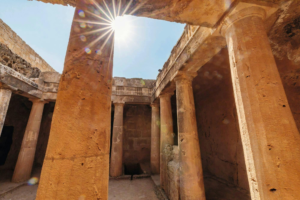
Located approximately two kilometres north of Kato Paphos Harbour, the magnificent Tombs of the Kings are among Cyprus’s greatest archaeological attractions.
Explore extraordinary underground burial chambers carved into natural rock, some featuring magnificent courtyards surrounded by Doric columns.
Despite their name, the tombs were generally associated with wealthy and high-ranking individuals rather than actual kings.
The site forms part of the wider UNESCO World Heritage property and requires separate admission.
Agia Kyriaki Chrysopolitissa
Discover the fascinating remains of an early Christian basilica beside the historic church of Agia Kyriaki.
The nearby Saint Paul’s Pillar is associated with local religious traditions concerning the apostle’s visit to Cyprus.
It’s a wonderful destination for visitors interested in religious history and early Christianity.
Paphos Old Town
For a delightful contrast to ancient ruins, explore the charming streets of Paphos Old Town.
Discover traditional markets, interesting boutiques, colourful street art and welcoming cafés.
The area offers an attractive combination of local culture, historic architecture and contemporary Cypriot life.
Make a Day of It: Ancient Mosaics, Greek Mythology and Mediterranean Food
Why not turn your visit to the Paphos Mosaics into an unforgettable day exploring the treasures of Cyprus?
Begin your morning at Paphos Archaeological Park, where you can discover the extraordinary mosaics of the House of Dionysos.
Take time to admire the intricate scenes before continuing to the magnificent House of Theseus and its legendary Minotaur mosaic.
Next, explore the beautiful House of Aion and discover the extraordinary mythological artwork featuring Dionysos, Apollo and other legendary figures.
If current access arrangements permit, continue to the House of Orpheus and admire the enchanting scene of the musician charming wild animals.
Afterwards, explore the Ancient Odeon and other fascinating archaeological remains within the park.
When lunchtime arrives, head towards picturesque Paphos Harbour.
Find a welcoming waterfront restaurant and enjoy freshly grilled seafood, traditional Cypriot meze, halloumi, souvlaki or a delicious local salad.
In the afternoon, visit Paphos Castle or continue towards the remarkable Tombs of the Kings.
Finish your day with a leisurely walk along the waterfront, enjoying the beautiful Mediterranean scenery and relaxed atmosphere.
It’s a fantastic way to combine ancient art, fascinating mythology, extraordinary history and delicious Cypriot cuisine.
Are the Paphos Mosaics Worth Visiting?
Absolutely!
The Paphos Mosaics are among the most extraordinary cultural attractions in Cyprus and one of the highlights of the island’s UNESCO World Heritage heritage.
Their remarkable preservation, beautiful artistic details and captivating mythological stories make them fascinating for visitors of all ages.
What makes the experience particularly memorable is the opportunity to admire these magnificent artworks in the archaeological remains of the homes they originally decorated.
Rather than simply viewing Roman mosaics inside a conventional museum, visitors can explore the historic landscape where wealthy inhabitants once lived and entertained their guests.
Each mosaic offers a fascinating story, from legendary battles and mythological adventures to celebrations, music and scenes from everyday life.
For art lovers, history enthusiasts, mythology fans and curious travellers, the Paphos Mosaics offer an unforgettable journey into the ancient Mediterranean world.
Frequently Asked Questions About the Paphos Mosaics
How old are the Paphos Mosaics?
The principal Roman mosaic floors date mainly from the second to fifth centuries AD, making many of them approximately 1,500 to 1,900 years old.
Where are the Paphos Mosaics?
They are located within Kato Paphos Archaeological Park, close to Paphos Harbour on the southwestern coast of Cyprus.
Are the Paphos Mosaics a UNESCO World Heritage attraction?
Yes. The mosaics are part of the archaeological property of Paphos, which was inscribed on the UNESCO World Heritage List in 1980.
How much does it cost to visit?
The published standard admission price for Paphos Archaeological Park is €4.50, which includes access to the mosaic areas that are open to visitors.
Which Paphos mosaic is the most famous?
The magnificent mosaics of the House of Dionysos are among the most celebrated, while the House of Theseus is particularly famous for its depiction of Theseus confronting the Minotaur.
How long should you spend visiting the mosaics?
Allow approximately one to two hours to appreciate the main mosaic collections. Visitors exploring the wider archaeological park should plan for two to three hours or longer.
Can visitors walk on the ancient mosaics?
No. The fragile ancient floors are protected, and visitors should remain on designated walkways or viewing areas.
Is the site suitable for families?
Yes. Children who enjoy mythology, history and discovering ancient ruins may find the colourful stories depicted in the mosaics particularly fascinating.
Final Thoughts: Discover the Extraordinary Art of Ancient Paphos
Cyprus is famous for its beautiful beaches, welcoming atmosphere, delicious food and magnificent Mediterranean scenery.
Yet few attractions reveal the island’s extraordinary cultural heritage quite like the Paphos Mosaics.
For almost 2,000 years, these remarkable stone artworks have preserved the stories, beliefs and artistic achievements of ancient Roman civilisation.
From the joyful mythology of Dionysos to the dramatic adventures of Theseus and the magical music of Orpheus, each mosaic offers a captivating glimpse into the imagination of the ancient world.
Their extraordinary beauty, intricate craftsmanship and remarkable preservation make them some of the most impressive archaeological treasures in the Mediterranean.
Whether you’re visiting Paphos for a relaxing coastal holiday or exploring the historical wonders of Cyprus, these magnificent mosaics deserve a place near the top of your itinerary.
Come for the breathtaking ancient artwork, discover the fascinating legends of Greek mythology, and leave with unforgettable memories of one of Cyprus’s greatest cultural treasures.
The Paphos Mosaics aren’t simply beautiful ancient floors. They’re magnificent stories told in stone, preserving the extraordinary creativity of a civilisation that continues to inspire the world.
Aphrodite Waterpark Paphos Ticket Make a splash with a fun day out at Aphrodite Waterpark in Paphos. Book now to hurtle down high-octane rides, drift on a lazy river and much more.
Ancient Kourion tour with Paphos Harbour visit Book here to tour Paphos from Ayia Napa. Visit Aphrodite’s Rock, ancient Paphos and the Tombs of the Kings, then enjoy free time in the Paphos harbour area.