The Musée d’Orsay is one of Paris’s great art museums and an ideal choice for visitors interested in Impressionism, Post-Impressionism and the extraordinary artistic changes that transformed Europe during the second half of the 19th century.
Standing beside the River Seine opposite the Tuileries Garden, the museum is almost as interesting architecturally as the artworks it contains. The enormous building began life as the Gare d’Orsay railway station, constructed for the 1900 Universal Exhibition and later transformed into a museum.
Today its collections concentrate primarily on art created between 1848 and 1914, providing an important chronological bridge between the collections of the Louvre and the development of modern art.
Visitors can see works by artists including Claude Monet, Pierre-Auguste Renoir, Edgar Degas, Édouard Manet, Vincent van Gogh, Paul Cézanne, Paul Gauguin and many others, together with sculpture, decorative arts, photography and architecture.
For most first-time visitors, allow approximately 2½ to 4 hours. The museum is considerably smaller and easier to navigate than the Louvre, making it possible to see many major works without devoting an entire day to one museum.
Musée d’Orsay at a Glance
Visitor Information
Details
Location
7th arrondissement, Paris
Address
Esplanade Valéry Giscard d’Estaing, 75007 Paris
Original building
Gare d’Orsay railway station
Railway station built
1898–1900
Museum opened
1986
Main collection period
1848–1914
2026 online adult admission
€16
Adult admission purchased at museum
€14
Thursday evening online rate
€12 from 6:00 pm
Under 18
Free
Eligible EEA visitors aged 18–25
Free
Closed
Monday
Late opening
Thursday until 9:45 pm
Recommended visit
2½–4 hours
Nearest Metro
Solférino – Line 12
Nearest RER
Musée d’Orsay – RER C
The Musée d’Orsay Was Originally a Railway Station
One of the things that makes the Musée d’Orsay unusual is its building.
The Gare d’Orsay was constructed between 1898 and 1900 to designs by architect Victor Laloux. It was built in preparation for the enormous 1900 Universal Exhibition, when Paris welcomed millions of visitors and showcased new technology, architecture and culture.
The station occupied an exceptionally prestigious location beside the Seine, only a short distance from the Louvre and the Tuileries.
Why Did the Railway Station Close?
Railway technology changed rapidly during the first half of the 20th century.
The platforms at Gare d’Orsay eventually became too short for the increasingly long trains used for major services.
The building subsequently served several purposes before plans developed to transform it into a museum.
In 1977, the French government decided to create a museum of 19th-century art within the former station.
The resulting Musée d’Orsay opened to the public in 1986.
The Building Is Part of the Experience
Do not treat the Musée d’Orsay simply as a container for paintings.
When you enter the main nave, look at the enormous vaulted roof and the scale of the former railway station.
Sculptures occupy the centre of the long hall while galleries rise along both sides.
The architecture provides far more natural orientation than many traditional museums. Even if you lose track of individual room numbers, returning to the central nave quickly helps you understand where you are.
The Famous Musée d’Orsay Clocks
Large clocks survive as reminders of the building’s railway history.
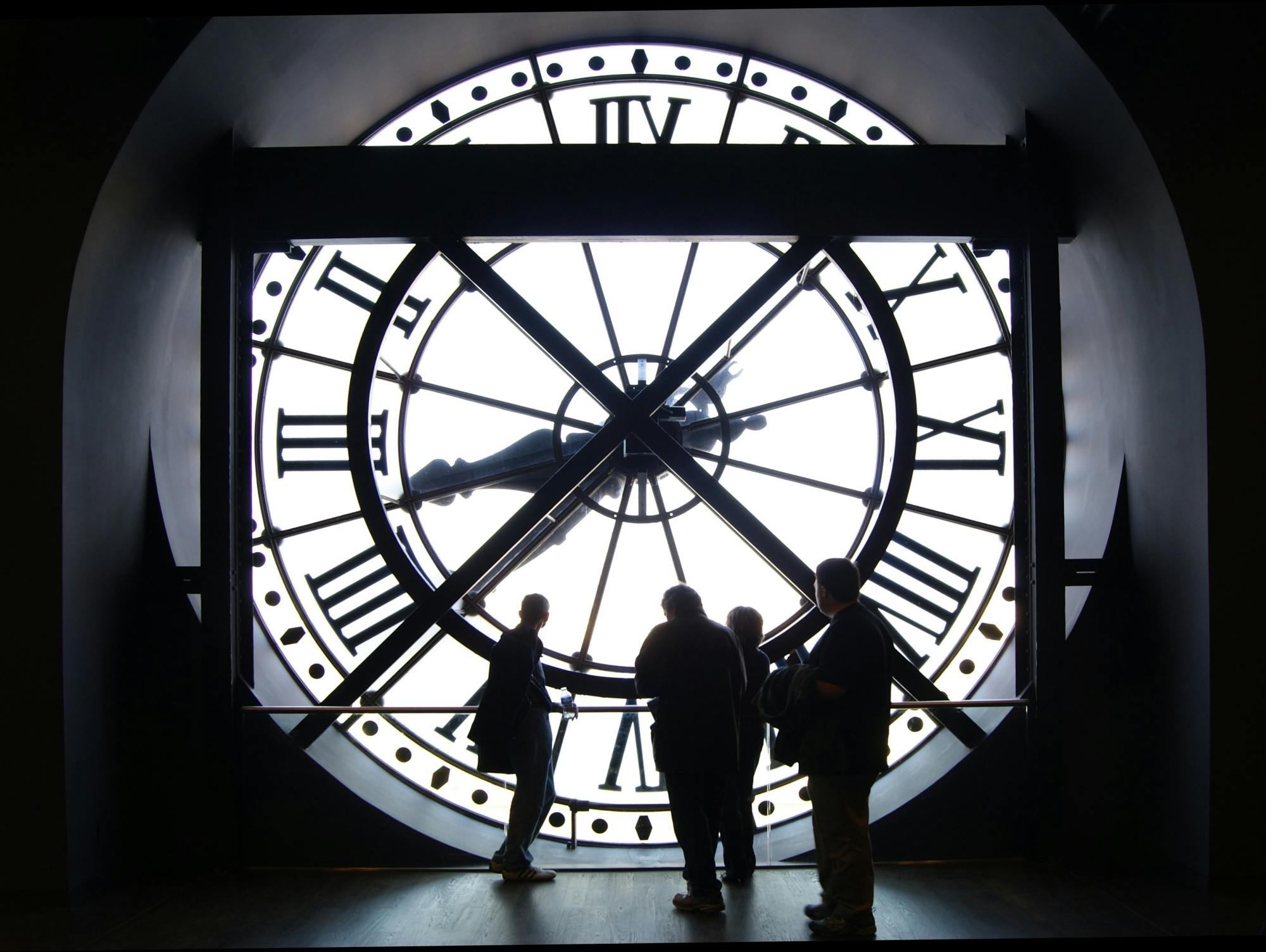
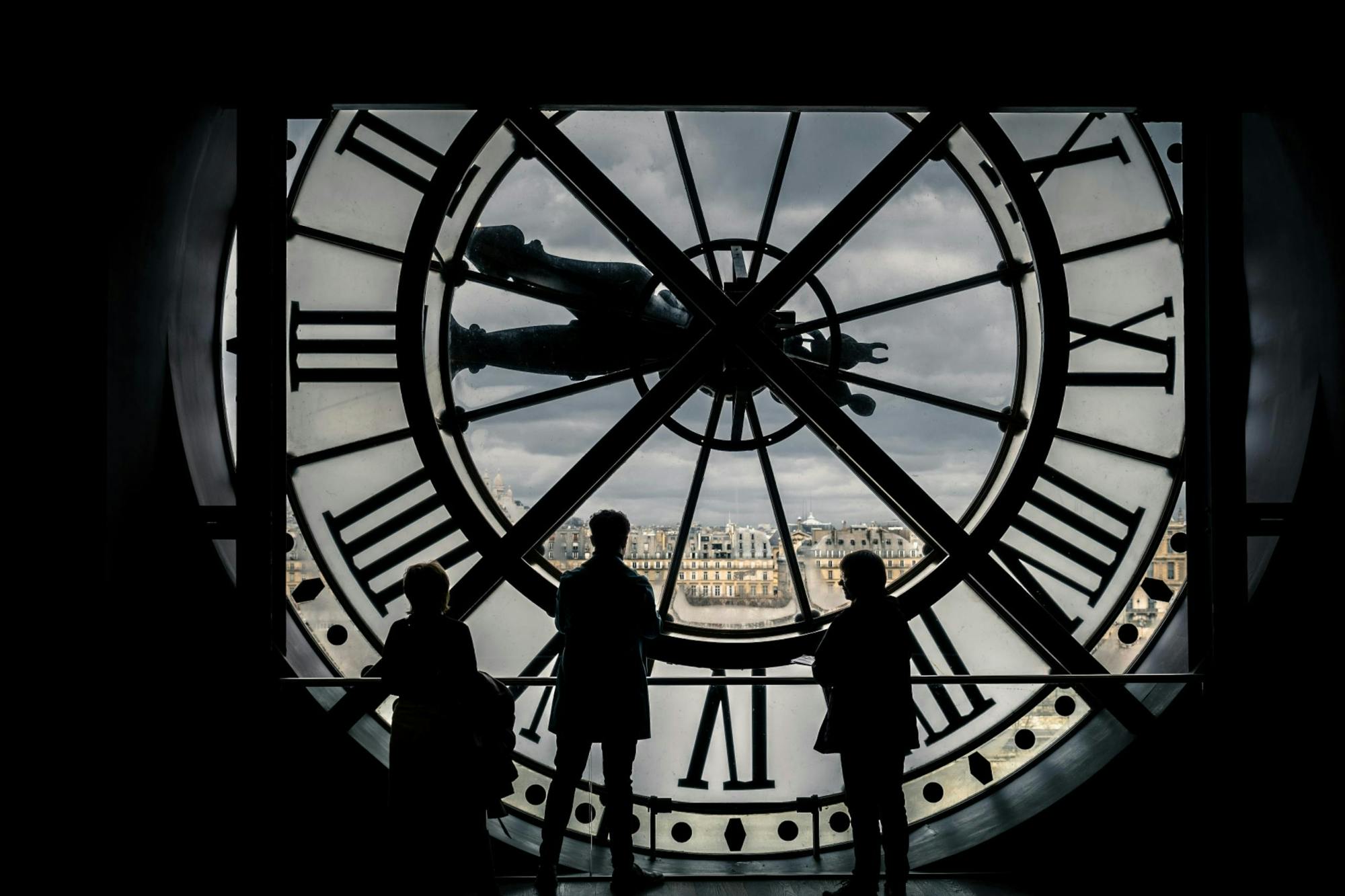
The most famous are the enormous clocks incorporated into the exterior of the former station.
From the upper levels of the museum, visitors can look through one of these giant clock faces towards the Paris skyline.
It has become one of the museum’s most popular photography locations.
Do not rush past it simply because there is a queue for photographs. The view through the clock towards Paris is one of the features that makes the Orsay experience different from visiting a conventional gallery.
What Period Does the Musée d’Orsay Cover?
The collection primarily focuses on the period from 1848 to 1914.
This was an extraordinary period in European art.
During these decades, artists moved from traditional academic painting towards Realism, Impressionism, Post-Impressionism, Symbolism and other approaches that eventually helped create modern art.
The museum therefore works particularly well after visiting the Louvre.
The Louvre contains great collections from antiquity through earlier European art, while Orsay picks up much of the story during the second half of the 19th century.
The Impressionist Galleries
For many visitors, the Impressionist collection is the main reason to come.
The upper galleries contain an extraordinary concentration of works associated with artists who rejected many of the traditions of official academic painting.
Rather than concentrating solely on historical, religious and mythological subjects, Impressionist painters increasingly explored:
Modern Paris
Railway stations
Cafés and theatres
Dance halls
Landscapes
Gardens
Leisure activities
Changing sunlight
Everyday urban life
Move slowly through this part of the museum. Many visitors arrive determined to see only the most famous Monet or Renoir paintings and overlook equally interesting works in the surrounding rooms.
Claude Monet
Claude Monet is one of the artists most closely associated with Impressionism and one of the principal reasons people visit the Musée d’Orsay.
The museum holds important examples from different stages of his career.
Monet became fascinated with changing light, weather and atmosphere. Rather than attempting to reproduce a landscape as a fixed image, he often painted the same or similar subjects repeatedly under different conditions.
Look closely at the surface of his paintings.
From nearby, individual brushstrokes and patches of colour can appear loose and disconnected. Move several metres back and the landscape begins to resolve.
Monet’s Gare Saint-Lazare
One particularly appropriate work to see inside a former railway station is Monet’s Gare Saint-Lazare.
In 1877 Monet produced a series of paintings depicting the busy Paris railway terminal.
Steam, smoke, iron, glass and modern locomotives allowed him to explore the changing atmosphere of an industrial environment.
Seeing a painting of a great Parisian railway station while standing inside another historic Parisian railway station creates an interesting connection between the artwork and the museum building itself.
Pierre-Auguste Renoir
Pierre-Auguste Renoir provides another very different version of Impressionist life.
His paintings frequently focus on people: friends, dancers, couples, fashionable Parisians and groups enjoying social occasions.
Among the works associated with Orsay is the celebrated Bal du moulin de la Galette, depicting a lively Sunday afternoon at a popular Montmartre dance venue.
Look at how sunlight appears to filter through the trees and scatter across clothing and faces.
Rather than presenting a formal historical event, Renoir turns an ordinary Parisian leisure scene into a monumental painting.
Edgar Degas
Edgar Degas is particularly famous for his images of ballet dancers.
His interest extended beyond glamorous performances to rehearsals, stretching, preparation and moments when dancers were not performing for an audience.
The Musée d’Orsay collection also contains the famous sculpture Little Dancer Aged Fourteen.
Degas exhibited the original version in 1881, making it one of the very few sculptures he showed publicly during his lifetime.
Édouard Manet
Édouard Manet occupies an important position in the transition towards modern art.
His paintings often shocked contemporary audiences because of their subjects, compositions and direct treatment of modern life.
Among the works strongly associated with the Musée d’Orsay is Olympia, one of the most discussed paintings of 19th-century France.
Rather than idealising its subject according to established traditions, Manet presented a modern woman staring directly at the viewer.
The reaction when the work was exhibited in the 1860s was intense.
Vincent van Gogh
The Musée d’Orsay is also an essential stop for anyone interested in Vincent van Gogh.
The museum contains important works from the final years of his life, when his painting became increasingly expressive in its use of line, colour and movement.
One of the best-known works in the collection is Starry Night Over the Rhône.
Van Gogh painted the night sky over Arles while reflections of artificial lights shimmer across the river.
When looking at Van Gogh’s paintings, move closer than you might with a highly detailed academic work. The thickness and direction of the paint itself are part of the experience.
Van Gogh’s Self-Portraits
Van Gogh repeatedly painted himself, partly because a self-portrait required no paid model.
These works have become particularly powerful because they allow viewers to follow changes in his style and appearance through the final years of his career.
If a Van Gogh self-portrait is on display during your visit, spend time looking at the direction of the brushwork around the face and background rather than focusing only on his expression.
Paul Cézanne
Paul Cézanne forms another important link between Impressionism and later modern art.
His landscapes, portraits and still lifes increasingly reduced objects to basic shapes and carefully organised areas of colour.
Artists including Picasso later regarded Cézanne as enormously influential.
If you are continuing your Paris art itinerary into 20th-century collections, spending time with Cézanne at Orsay helps explain how European painting moved towards Cubism and abstraction.
Paul Gauguin
Paul Gauguin rejected naturalistic colour and perspective increasingly strongly during his career.
His paintings use flattened shapes, intense colour and simplified forms.
His work also raises important modern questions about colonialism, representation and the way European artists portrayed cultures outside Europe.
The Orsay collection allows visitors to place Gauguin alongside Van Gogh and other Post-Impressionists rather than viewing him in isolation.
More Than Impressionism
One common mistake is to think of the Musée d’Orsay simply as the “Impressionist museum.”
The collections are much broader.
They include:
Painting
Sculpture
Photography
Decorative arts
Architecture
Drawings
Pastels
Medals
Early cinema-related material
The diversity reflects the museum’s goal of presenting the artistic and cultural world of the period from 1848 to 1914 rather than focusing on one movement alone.
The Sculpture in the Central Nave
The long central nave contains large-scale sculpture displayed beneath the former station roof.
This section is worth exploring even if paintings are your main interest.
The combination of sculpture and railway architecture makes the central hall one of the museum’s most impressive spaces.
It is also an excellent place to regain your bearings before moving to another level.
The Upper Floor
For many first-time visitors, the upper level should be a priority.
This is where you will find important Impressionist and Post-Impressionist galleries as well as access to the famous clock and excellent views across Paris.
If you have limited time, consider heading towards the upper galleries relatively early rather than slowly working your way through every room from the ground floor upwards.
The View Across Paris
The museum’s position beside the Seine provides excellent views across the city.
From the upper levels you can look towards the opposite bank and the historic centre of Paris.
During warmer months, the museum terrace provides another attractive viewpoint over the rooftops and across the river.
Café Campana
Café Campana sits near the exit from the Impressionist Gallery on the fifth floor.
It is located beside one of the museum’s monumental exterior clocks, making it a particularly memorable place for a break.
Current opening hours are:
Tuesday–Sunday: 10:30 am–4:45 pm
Thursday: 10:30 am–8:45 pm
The café serves light meals, salads, desserts and drinks.
The Musée d’Orsay Restaurant
The museum also contains a more formal restaurant within the historic building.
Its elaborate interior makes it an attraction in itself and provides a very different experience from a standard museum café.
If you are planning to spend four or five hours at Orsay, taking a proper break can make the second half of the visit far more enjoyable.
Current 2026 Musée d’Orsay Ticket Prices
Ticket
Online
At Museum
General admission
€16
€14
Reduced admission
Not sold online
€11
Thursday evening after 6:00 pm
€12
€10
Enfant & Cie
€13
€11
The admission ticket provides access to the permanent collections and temporary exhibitions, subject to availability.
Once you leave the museum, re-entry is not permitted on the same ticket.
Why Is the Online Ticket More Expensive?
Visitors may notice the unusual situation in which the standard online ticket currently costs €16 compared with €14 when purchased at the museum.
The main advantage of booking online is not the price but the ability to reserve a timed entry and reduce uncertainty during busy periods.
In 2026 this is particularly useful because major renovation work is affecting the museum’s reception and entrance arrangements.
Who Can Visit for Free?
Current free-admission categories include:
Visitors under 18
Visitors aged 18–25 who are citizens or residents of the European Union or European Economic Area
Certain long-term EU residents aged 18–25
Visitors with disabilities and one accompanying person
Eligible jobseekers
Other qualifying categories
The museum is also free for everyone on the first Sunday of each month, but a reserved visiting time is mandatory.
The Thursday Evening Ticket
Thursday is particularly useful for travellers trying to fit several Paris attractions into a short stay.
The Musée d’Orsay remains open until 9:45 pm, and a reduced night rate applies for visits beginning after 6:00 pm.
The current online evening rate is €12, while the ticket purchased at the museum is €10.
An evening visit can also feel more relaxed than trying to fit Orsay into the middle of a busy sightseeing day.
Current Opening Hours
Day
Opening Hours
Monday
Closed
Tuesday
9:30 am–6:00 pm
Wednesday
9:30 am–6:00 pm
Thursday
9:30 am–9:45 pm
Friday
9:30 am–6:00 pm
Saturday
9:30 am–6:00 pm
Sunday
9:30 am–6:00 pm
On ordinary days, last admission to the museum is currently at 5:00 pm, and galleries begin closing at 5:30 pm.
On Thursday evenings, last admission is at 9:00 pm and galleries begin closing at 9:15 pm.
The museum is closed every Monday as well as 1 May and 25 December.
Important 2026–2028 Renovation Work
Visitors during 2026 should know that the Musée d’Orsay is undergoing a major renovation of its public reception areas.
The project began on 10 March 2026 and is expected to continue until summer 2028.
The museum remains open during the work.
The museum states that the permanent collections and temporary exhibitions remain accessible, but entrance routes and some visitor arrangements have changed.
Which Entrance Should You Use in 2026?
During the renovation period, access currently works as follows:
Entrance 1 – Quay
Use this entrance if you have:
A timed ticket for the permanent collection
A timed ticket for a temporary exhibition
A Paris Museum Pass with a reserved time slot
Entrance 2 – Forecourt
This entrance currently serves:
Priority visitors
Visitors with disabilities
Visitors with tickets that do not specify a time
Visitors who have not yet purchased a ticket
Visitors carrying luggage
Your electronic ticket should identify the appropriate entrance.
The museum recommends arriving at least 15 minutes before your scheduled entry time.
Book Ahead During the Renovation
Online reservations are currently highly recommended.
The museum remains fully operational, but construction has altered normal entrance arrangements.
Booking a timed ticket provides a clearer arrival procedure and can be particularly helpful during weekends, school holidays and major exhibitions.
How Long Should You Spend at the Musée d’Orsay?
1½ Hours
Possible if you mainly want to see the Impressionists and a handful of famous works.
Head towards the upper galleries and concentrate on artists such as Monet, Renoir, Degas, Manet and Van Gogh.
2½–3 Hours
Best for most first-time visitors.
This gives you enough time for the principal paintings, the upper-floor clock, some sculpture and a short break.
4–5 Hours
Ideal for visitors with a strong interest in art.
You can explore Impressionism, Post-Impressionism, sculpture, decorative arts and photography without feeling that every gallery has become a race.
A Good Two-Hour Musée d’Orsay Route
1. Begin in the Central Nave
Take a few minutes to appreciate the architecture of the former railway station and the sculpture displays.
2. Head Towards the Upper Impressionist Galleries
Prioritise Monet, Renoir, Degas and other Impressionists.
3. Continue to Van Gogh and the Post-Impressionists
Look for major works by Van Gogh, Cézanne and Gauguin.
4. Visit the Famous Clock
Stop for the view through the enormous station clock towards Paris.
5. Return Through Selected Lower Galleries
Choose Manet, major sculpture or another collection according to your interests.
This provides a much better experience than trying to enter every room.
A Better Three- to Four-Hour Visit
If you have more time, explore the museum in greater depth.
Add:
Realist painting
Additional Manet works
More Degas
Decorative arts
Photography
Architecture displays
Central-nave sculpture
A café or restaurant break
The museum is large enough to reward several hours but compact enough that you do not need the same military-style planning sometimes required at the Louvre.
Best Time to Visit
9:30 am
Best choice for most visitors.
Arrive for opening and head towards your priority collection before visitor numbers increase.
Thursday Evening
Excellent for a shorter visit.
The museum remains open until 9:45 pm and offers reduced evening admission from 6:00 pm.
Late Afternoon
Another useful option if you have already spent the morning sightseeing outdoors.
Just remember that ordinary galleries begin closing at 5:30 pm on non-Thursday days.
Musée d’Orsay or Louvre Museum?
If you have enough time, visit both because they cover very different periods.
Choose the Louvre if you are most interested in:
Ancient Egypt
Greek and Roman antiquities
Renaissance painting
Leonardo da Vinci
Large historic collections
A full-day museum experience
Choose the Musée d’Orsay if you are most interested in:
Monet
Renoir
Degas
Manet
Van Gogh
Cézanne
Impressionism and Post-Impressionism
A more manageable museum visit
If someone who does not usually enjoy large museums asked which of the two was easier to experience in one morning, Musée d’Orsay would generally be the more manageable choice.
How to Reach the Musée d’Orsay
The museum is located at:
Esplanade Valéry Giscard d’Estaing
75007 Paris
France
Metro
The nearest Metro station is:
Solférino – Line 12
RER
The most convenient suburban railway station is:
Musée d’Orsay – RER C
Bus
Current bus routes serving the area include:
63, 68, 69, 73, 83, 84, 87 and 94.
Walk From the Louvre
The Louvre and Musée d’Orsay sit on opposite sides of the Seine and can easily be combined geographically.
However, visiting both major museums intensively on the same day can create serious museum fatigue.
A better approach for many travellers is to visit one in the morning and spend the remainder of the day outdoors, or place the museums on separate days.
Visit the Tuileries Garden
The Tuileries Garden lies across the Seine and provides an excellent place for a walk after several hours inside the museum.
Leaving Orsay and spending time outdoors beside the river or in the gardens helps break up a museum-heavy Paris itinerary.
Where to Stay Near Musée d’Orsay
Saint-Germain-des-Prés
Best overall nearby area for many first-time visitors.
Staying around Saint-Germain-des-Prés gives you historic streets, cafés, restaurants and easy walking access to the Seine and Musée d’Orsay.
It also places you within comfortable reach of many Left Bank attractions.
7th Arrondissement
Best for a quieter central Paris stay.
The museum itself is in the 7th arrondissement.
Parts of the district provide convenient access to Orsay while offering a more residential atmosphere than some of Paris’s busiest tourist areas.
Accessibility
The Musée d’Orsay provides priority access for visitors with disabilities and one accompanying person, with free admission on presentation of appropriate documentation.
During the current renovation period, visitors with reduced mobility should use Entrance 2 on the forecourt.
The museum also provides lifts, accessible facilities and various services for visitors with visual or hearing disabilities.
Visiting With Children
Musée d’Orsay can work well for families because it is more manageable than some of Paris’s largest museums.
Instead of attempting to explain every art movement, choose visual subjects children can understand easily:
Degas’s dancers
Monet’s trains
Van Gogh’s colourful skies
Large sculptures
The enormous railway clocks
The former station building
Visitors under 18 currently receive free admission.
Audio Guides
The museum offers audio guides containing almost 300 commentaries covering works in the permanent collection as well as temporary exhibitions.
During the 2026 renovation period, audio guides are collected from a dedicated counter in the Upper Nave.
Photography
Photography is one of the pleasures of visiting Orsay, particularly around the main nave and monumental clocks.
Remember that temporary exhibition rules can differ and that flash, tripods or other equipment may be restricted.
Always follow the signage beside individual works.
Do Not Spend the Entire Visit Taking Photographs
The large clock can attract a crowd of visitors waiting for the same photograph.
Take your picture, but then turn your attention back towards the galleries.
The main reason to visit Orsay remains the collection.
A photograph through the clock may become your social-media memory of the museum, but a Van Gogh, Monet, Renoir or Degas may be the thing you remember years later.
Is the Musée d’Orsay Worth Visiting?
Absolutely.
The Musée d’Orsay succeeds because the building and collection complement each other unusually well.
You enter a magnificent railway station built for the 1900 Universal Exhibition and then explore artworks created during roughly the same era in which railways, photography, modern Paris and new forms of entertainment were transforming European life.
The collection covers the crucial period from 1848 to 1914, with major works associated with Monet, Renoir, Degas, Manet, Van Gogh, Cézanne and Gauguin alongside sculpture, photography, decorative arts and architecture.
Unlike the Louvre, Orsay can also be explored meaningfully in a few hours.
For most first-time visitors, 2½ to 3 hours provides an excellent introduction. Start with the building itself, prioritise the upper Impressionist galleries, spend time with Van Gogh and the Post-Impressionists, and do not leave without looking through one of the enormous station clocks towards Paris.
As of August 2026, the standard admission price is €16 online or €14 at the museum. The museum opens from 9:30 am to 6:00 pm Tuesday to Sunday, remains open until 9:45 pm on Thursday and closes every Monday.
Visitors in 2026 should also remember that major entrance renovations are continuing until summer 2028. The museum remains open and its collections continue to be accessible, but entrance arrangements have changed, making advance online booking particularly useful.
If the Louvre tells the story of centuries of art before the modern age, the Musée d’Orsay shows the moment when that modern world began to emerge.
That combination of Impressionist masterpieces, railway architecture and a manageable scale makes it one of the most rewarding museums to include in a Paris itinerary.
Sponsored Popular Items
Quick take: Musement.com offers a worldwide selection of tours and attractions
Paris Art Museum Guide: Louvre, Musée d’Orsay & Smaller Collections France The city has blockbuster museums, smaller specialist collections, and enough variety to overwhelm anyone who tries to do everything at once. Check current availability, inclusions and booking details before you go.
Visiting the former territory of William Adams in Miura Japan Best deals for Visiting the former territory of William Adams in Miura. Receiving a fiefdom from the first Shogun, William Adams became Japan's sole foreign feudal lord. We visit sites his former domain in Miura Peninsula to evoke closely his life. Available from getyourguide.com.
Uji Matcha Tasting & Tea Ceremony with Former Geiko Best deals for Uji Matcha Tasting & Tea Ceremony with Former Geiko. Meet your guide in Uji and walk through the historic town, passing the UNESCO site Ujigami Shrine. Then visit a traditional house for matcha tasting and a tea ceremony with a former geiko Available from getyourguide.com.
Osaka: Sumo Show Experience with Former Pro Wrestlers Japan Best deals for Osaka: Sumo Show Experience with Former Pro Wrestlers. Experience real sumo wrestling in Osaka with former professional wrestlers. Learn about the sport's history and rituals, and step into the ring yourself to try sumo firsthand only if you want to:-) Available from getyourguide.com.
Singapore: Altitude X (former iFly Singapore) Singapore Experience the thrill of free-falling conditions with this ticket for two exhilarating sky dives at AltitudeX Indoor Skydiving, one of the world's largest indoor skydiving wind tunnels
Hoi An Food Tour: 12 Flavors of a Former Trading Port Vietnam You eat your way through every city — Hoi An deserves more than a restaurant. Walk 3 km through hidden alleys, taste 12 flavors shaped by 400 years of a former trade port. No menu, no tourist crowd
Private Tour to Long Tan - Former Australian Military Base Vietnam Visit the former Australian and New Zealand military base at Nui Dat, the Long Tan Cross and Long Phuoc Tunnels, in just one day from Ho Chi Minh City. Discover more about the Vietnam War