The Mosque-Cathedral of Córdoba, often simply called the Mezquita of Córdoba, is one of the most remarkable historic buildings in Spain. Rows of red-and-white arches stretch through a vast former Islamic prayer hall, an elaborately decorated 10th-century mihrab survives near the qibla wall, and a monumental Christian cathedral rises unexpectedly from the centre of the earlier mosque.
Few European monuments reveal so many architectural layers within a single building. Construction of the original Umayyad mosque began under Abd al-Rahman I in 786. It was enlarged repeatedly as Córdoba grew into one of the great cities of medieval al-Andalus. Following Córdoba’s Christian conquest, the building was consecrated for Catholic worship in 1236. Major Christian additions followed over subsequent centuries, including the Renaissance cathedral transept begun in 1523. :contentReference[oaicite:2]{index=2}
The result is not simply a mosque beside a cathedral. The two histories physically occupy the same enormous structure, which is why walking through the building can feel unlike visiting almost any other religious monument in Europe.
Mosque-Cathedral of Córdoba at a Glance
Visitor Information
Details
Spanish name
Mezquita-Catedral de Córdoba
Location
Historic centre of Córdoba, Andalusia, Spain
Address
Calle Cardenal Herrero 1, 14003 Córdoba
Original mosque
Built 786–788
Christian dedication
1236
Cathedral transept begun
1523
UNESCO World Heritage status
1984
2026 general admission
€15
Bell Tower
€4
Night visit
€25
Children under 10
Free for the standard monument visit
Recommended visit
1½–2 hours
With Bell Tower
Allow 2–2½ hours
Best for
Architecture, Islamic history, Christian art, photography and Spanish history
The official site currently lists general admission at €15, with several reduced and free-entry categories. Opening times are date-specific because the building remains an active cathedral and schedules can change for religious celebrations. :contentReference[oaicite:3]{index=3}
Why the Mosque-Cathedral Is So Important
The building is an exceptional physical record of Córdoba’s long history. Earlier remains on the site include the Visigothic Basilica of San Vicente, while the great mosque that followed became one of the most important architectural expressions of Umayyad rule in al-Andalus. :contentReference[oaicite:4]{index=4}
The original mosque established architectural features that would define the building throughout its Islamic expansions, particularly its rows of columns and distinctive superimposed arches. The official monument history notes influences from Hellenistic, Roman and Visigothic architecture and describes the system as enormously influential in later architectural history. :contentReference[oaicite:5]{index=5}
After 1236, Christian worship adapted the existing building rather than demolishing it. Chapels, a Gothic nave, choir, transept, altarpieces and other Christian elements were gradually inserted into the former mosque. The unusual visual tension between these layers is one of the main reasons the monument is so memorable. :contentReference[oaicite:6]{index=6}
UNESCO World Heritage Site
The Mosque-Cathedral was declared a Spanish National Monument in 1882 and became a UNESCO World Heritage Site in 1984. UNESCO recognition was later incorporated into the wider designation of Córdoba’s historic centre. :contentReference[oaicite:7]{index=7}
Its significance rests not only on its scale or age but also on the extraordinary concentration of Islamic, medieval Christian, Mudéjar, Gothic, Renaissance and Baroque elements found within one continuously used religious complex.
The Original Mosque of Abd al-Rahman I
The first major mosque was constructed between 786 and 788 under Abd al-Rahman I, founder of the independent Umayyad Emirate of Córdoba. Its prayer hall was organised into eleven naves running perpendicular to the qibla wall. :contentReference[oaicite:8]{index=8}
One of its great architectural innovations was the use of two levels of arches. Lower horseshoe arches helped brace the columns while the upper arches increased the height of the roof.
Roman and Visigothic architectural materials were reused in the early mosque, contributing to the remarkable variety of columns and capitals visible throughout the hall. :contentReference[oaicite:9]{index=9}
The Famous Red-and-White Arches
The endless ranks of arches are the image most visitors associate with Córdoba.
From many positions inside the prayer hall, columns and striped arches seem to repeat indefinitely. Walking slowly rather than following the shortest route gives you the best sense of the building’s scale.
The alternating light and dark voussoirs emphasise the rhythm of the arches and make the interior instantly recognisable. The effect is especially impressive where the historic lighting and forest of columns allow one section of the building to disappear into another.
Three Great Islamic Expansions
The mosque expanded several times as Córdoba’s population and political importance increased.
Abd al-Rahman II – 833 to 848
Eight additional sections were added towards the south, extending the prayer hall and enlarging the courtyard. :contentReference[oaicite:10]{index=10}
Al-Hakam II – 962 to 966
This expansion produced some of the most sophisticated Islamic architecture in the monument, including the magnificent maqsura and mihrab. Twelve additional sections extended the building southwards, while decorated domes and skylights created a ceremonial focus near the qibla wall. :contentReference[oaicite:11]{index=11}
Almanzor – 991 to 994
Because the nearby Guadalquivir River prevented another major extension southwards, Almanzor expanded the mosque eastward instead. This created the immense rectangular footprint that helps explain the extraordinary breadth of the prayer hall today. :contentReference[oaicite:12]{index=12}
Do Not Miss the Mihrab
The mihrab is one of the absolute highlights of the visit.
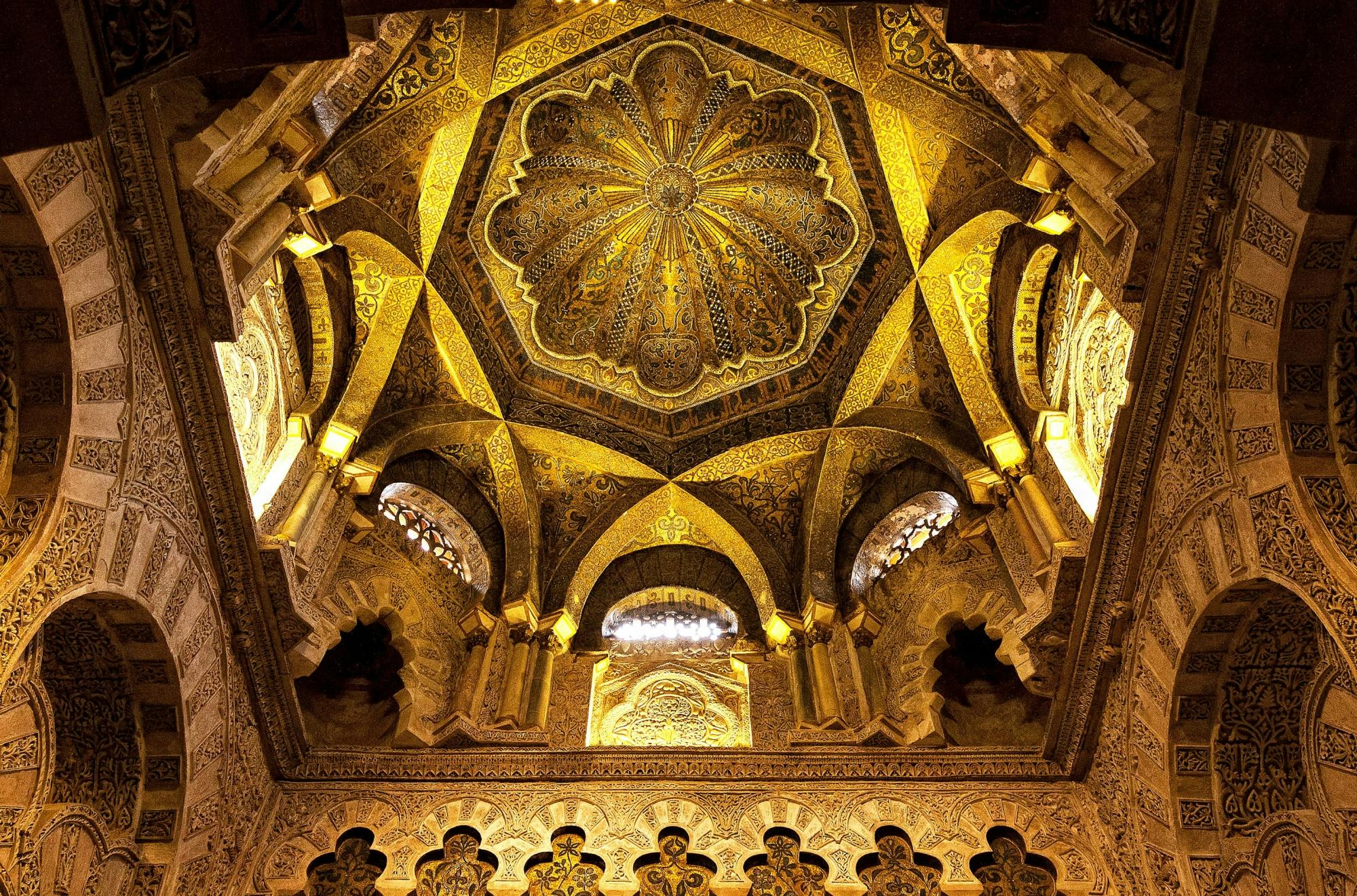
Created during the expansion of Al-Hakam II, it is far more elaborate than a simple wall niche. The structure opens through a horseshoe arch into a small octagonal chamber beneath a shell-like dome. :contentReference[oaicite:13]{index=13}
The entrance is surrounded by extraordinary gold and coloured mosaics, Qur’anic inscriptions, marble and stylised plant decoration. The official monument history attributes the mosaic tradition to craftsmen sent by Byzantine Emperor Nicephorus II. :contentReference[oaicite:14]{index=14}
Many visitors instinctively move towards the cathedral in the centre and only later search for the mihrab. It is better to make a point of finding it rather than accidentally passing through the building without seeing one of its greatest masterpieces.
The Maqsura
The maqsura is the highly decorated area immediately associated with the mihrab.
This part of the mosque was developed during the 10th-century reign of Al-Hakam II and represents the political, cultural and artistic prosperity of the Caliphate of Córdoba. Decorative marble, mosaics, interlacing arches and sophisticated ribbed domes combine to create one of the richest spaces in the entire monument. :contentReference[oaicite:15]{index=15}
Spend time looking upward. Some of the most remarkable architecture is above eye level.
The Cathedral Inside the Mosque
The most dramatic change in atmosphere comes when you reach the Christian cathedral complex inserted into the centre of the former Islamic prayer hall.
The building was dedicated to Catholic worship in 1236, but the large Renaissance intervention began much later. In 1523, Bishop Alonso Manrique ordered work on a new cathedral transept under architect Hernán Ruiz I. :contentReference[oaicite:16]{index=16}
The vertical scale suddenly changes. Instead of low repeating arches extending horizontally through the building, the cathedral rises upward with monumental vaulting, clerestory light, carved choir stalls and a richly decorated high altar.
The Main Chapel and Transept
The Renaissance cathedral occupies the visual centre of the complex.
Even visitors primarily interested in Islamic architecture should take time here, because understanding the Mosque-Cathedral means seeing how later Christian architecture interacted with the earlier building.
The transition is deliberately dramatic: a comparatively low forest of columns gives way to towering stone vaults and a traditional Christian liturgical arrangement.
The Choir Stalls
The cathedral choir contains an extraordinary group of carved wooden stalls created under Pedro Duque Cornejo during the 18th century.
Work began in 1748 and produced an ensemble of upper and lower seating together with an elaborate episcopal throne. The carving includes a large series of religious scenes and decorative imagery. :contentReference[oaicite:17]{index=17}
The contrast between these highly sculptural Baroque furnishings and the geometric Islamic architecture surrounding the cathedral is one of the building’s defining experiences.
Villaviciosa Chapel
The Villaviciosa Chapel occupies another historically important area.
Its Christian architectural history was superimposed on part of the former mosque, and restoration work in the 20th century exposed earlier architectural elements that had been hidden beneath later vaults and altarpieces. :contentReference[oaicite:18]{index=18}
It is worth slowing down here because the space demonstrates how many times parts of the monument have been adapted, covered, uncovered and restored.
The Patio de los Naranjos
Before or after entering the main building, spend time in the Patio de los Naranjos, or Courtyard of the Orange Trees.
During the Islamic period, the courtyard was associated with ritual ablutions before prayer. After the Christian conversion of the complex, it became an important ceremonial courtyard for the cathedral. :contentReference[oaicite:19]{index=19}
Today the courtyard contains rows of orange trees, fountains and views towards the Bell Tower.
It is one of the most pleasant places to pause after the dark interior of the building, particularly outside the hottest part of an Andalusian summer afternoon.
The Bell Tower
The Bell Tower is the tallest structure in Córdoba, reaching approximately 54 metres. Its story reflects the larger monument: the existing Christian tower incorporates remains of the earlier Islamic minaret. :contentReference[oaicite:20]{index=20}
Abd al-Rahman III constructed a major minaret in the 10th century. After the Christian conquest, it became a bell tower. Damage and later reconstruction eventually resulted in the present structure, which envelops surviving parts of the Caliphate minaret. :contentReference[oaicite:21]{index=21}
Should You Climb the Bell Tower?
Yes, if you are physically comfortable with stairs.
Bell Tower visits currently cost €4 and operate in fixed 30-minute slots with a maximum of 22 visitors per group. :contentReference[oaicite:22]{index=22}
The Bell Tower Is Not Suitable for Everyone
The climb rises approximately 40 metres, roughly equivalent to a 12-storey building, using numerous narrow and relatively steep steps. :contentReference[oaicite:23]{index=23}
For safety reasons, the official rules exclude several visitor groups, including:
Children under 7
Visitors using wheelchairs
People with reduced mobility
Pregnant visitors
People affected by significant vertigo or claustrophobia
People with certain heart or respiratory conditions
Children aged 7–14 must be accompanied by an adult. :contentReference[oaicite:24]{index=24}
Current 2026 Mosque-Cathedral Ticket Prices
As of August 2026, official admission prices are:
Visitor
Current Price
General admission
€15
Over 65 / students 15–26 / Youth Card
€12
Children 10–14
€8
Disability up to 64%
€8
Large-family adult
€8
Large-family child 10–14
€6
Children under 10
Free
Bell Tower
€4
Other free categories include qualifying Córdoba diocesan residents, holders of the Andalucía Junta 65 card, people with disability above 64% together with one companion, and ICOMOS members. Appropriate identification or accreditation may be required. :contentReference[oaicite:25]{index=25}
Can You Visit for Free?
Yes, during a limited early-morning period from Monday to Saturday.
The current official arrangement allows individual visitors to enter free between:
8:30 am and 9:30 am, Monday to Saturday
This does not operate when extraordinary celebrations interfere with the visit. Group visits are not permitted during the free period, entry stops at approximately 9:20 am, and visitors then begin leaving before the normal tourist programme starts. :contentReference[oaicite:26]{index=26}
This is a particularly useful option for travellers on a budget, but it is short. If you want to examine the building carefully, use an audio guide or spend two hours inside, a normal paid visit is more practical.
Current Opening Hours
Opening times vary according to the date and the cathedral’s religious schedule. The official site therefore provides a date-specific calendar rather than one permanent year-round timetable. :contentReference[oaicite:27]{index=27}
For example, on Sunday 16 August 2026, the official schedule lists the Mosque-Cathedral open:
8:30 am–11:30 am
3:00 pm–7:00 pm
Last entry is normally 30 minutes before closing. :contentReference[oaicite:28]{index=28}
Always check the official schedule for the actual day you intend to visit, especially on Sundays, religious feast days and during Holy Week.
Best Time of Day to Visit
Early Morning
Best overall for atmosphere and generally lower crowds.
If visiting Monday to Saturday, the limited free early session can be attractive, although the time available is short.
10:00 am to Noon
This is a convenient mainstream visiting period but can become busy, particularly during major tourism seasons.
Late Afternoon
A later visit can work very well because the building is usually cooler and you can continue directly towards the Roman Bridge for evening light.
How Long Should You Allow?
1 Hour
Possible if you mainly want to see the arches, cathedral and mihrab, but it will feel rushed.
1½ Hours
Good minimum for most visitors.
You can see the principal Islamic and Christian architectural highlights without hurrying excessively.
2 Hours
Best for a first visit.
This gives you time to study the architecture, listen to an audio guide and spend longer around the mihrab and cathedral choir.
2–2½ Hours With Bell Tower
Add at least another 30 minutes for the fixed Bell Tower visit, plus time to reach the tower entrance.
Audio Guides
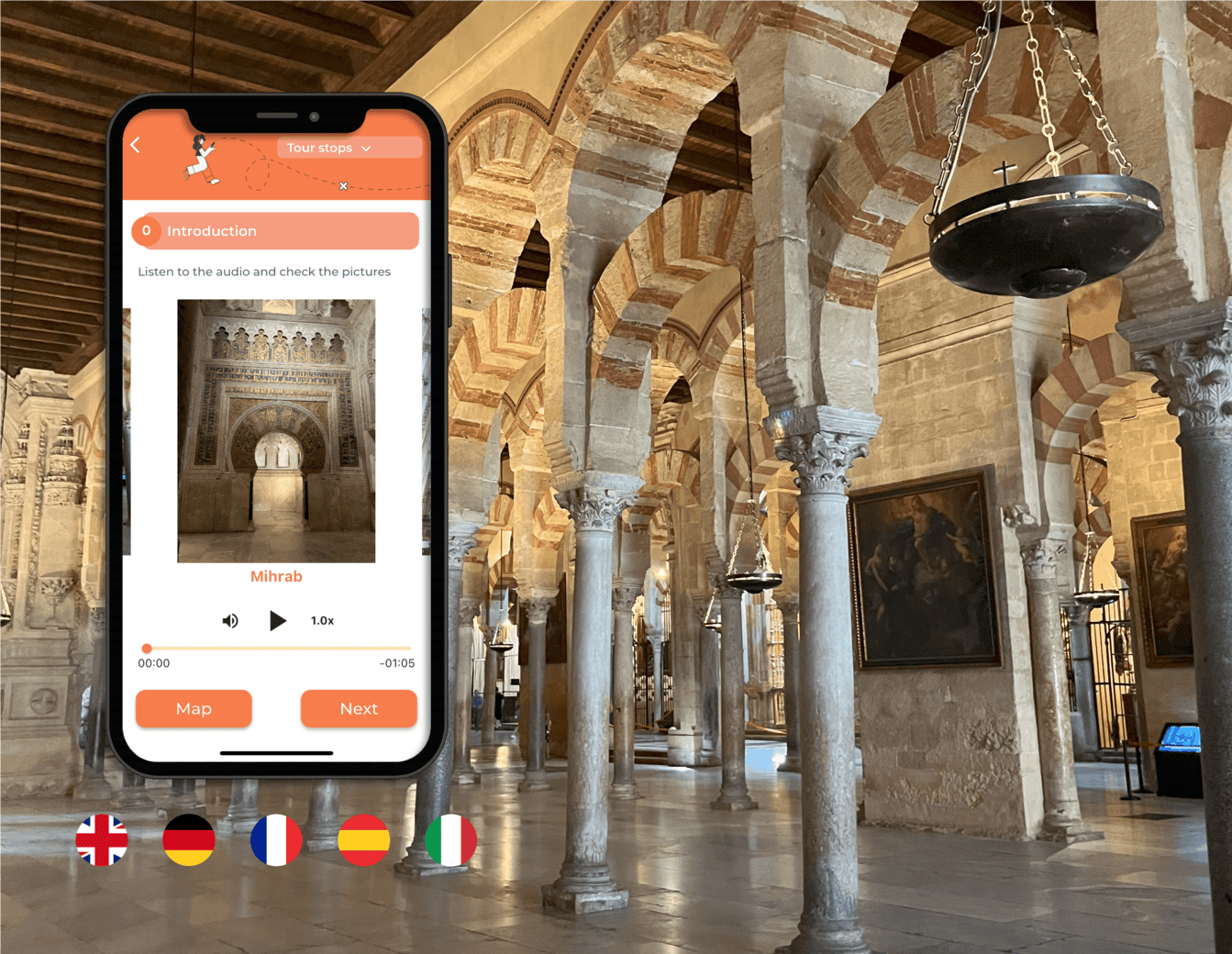
Audio guides are available from the Patio de San Eulogio Information and Reception Center. The service ends approximately one hour before the monument closes. :contentReference[oaicite:29]{index=29}
The monument also supplies an explanatory map in several languages, including:
Spanish
English
French
German
Italian
Arabic
Japanese
Official guides can also be hired. :contentReference[oaicite:30]{index=30}
Start at the Patio de San Eulogio Visitor Centre
The newer Patio de San Eulogio Information and Reception Center is designed to introduce visitors to the monument before they enter the main historic complex.
It contains information services, exhibition and audiovisual areas, ticket sales, audio-guide collection, a shop and toilets. Entry to the centre is included with the Mosque-Cathedral ticket. :contentReference[oaicite:31]{index=31}
Using it first is worthwhile if you arrive knowing little about the difference between the original mosque, later Islamic enlargements and Christian cathedral additions.
The Soul of Córdoba Night Visit
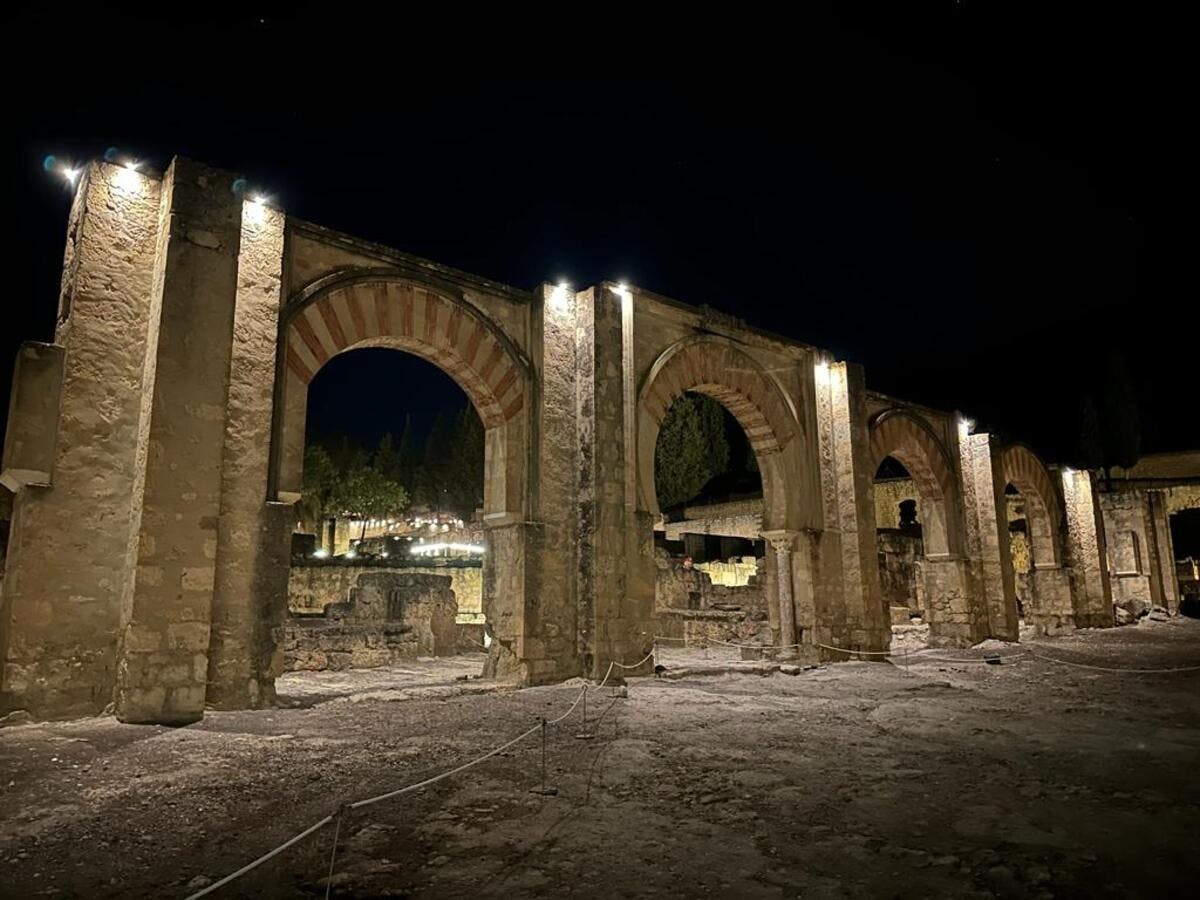
For a very different experience, the monument operates an audiovisual night visit called The Soul of Córdoba.
Current prices are:
Night Visit
Price
General
€25
Reduced
€18
Children under 7
Free when accompanied by a ticketed adult
The visit lasts approximately one hour and is offered in several languages. During June, July and August, the standard scheduled time slots are normally around 10:00 pm and 11:30 pm, although actual performance dates depend on the monument calendar. :contentReference[oaicite:32]{index=32}
Day Visit or Night Visit?
Choose the Day Visit If You Want:
To examine architectural details closely
More freedom to move at your own pace
To photograph the interior where permitted
To add the Bell Tower
A first introduction to the building
Choose The Soul of Córdoba If You Want:
A more atmospheric presentation
Dramatic lighting
An evening cultural activity
A structured one-hour experience
If the Mosque-Cathedral is one of the main reasons you are visiting Córdoba, the daytime visit is the more important of the two.
Photography Rules
Personal photography is generally possible in the normal tourist areas, but tripods and stands are prohibited. Photography and filming of liturgical celebrations are not allowed. :contentReference[oaicite:33]{index=33}
For the special Soul of Córdoba night programme, photography and filming are prohibited. :contentReference[oaicite:34]{index=34}
The interior is relatively dark, so modern phones with good low-light capability often perform better than attempting to use flash.
Dress Code and Behaviour
The Mosque-Cathedral is not simply a historic attraction; it remains the principal Catholic church of Córdoba.
Visitors are expected to wear appropriate clothing, maintain a respectful tone and observe silence during religious celebrations. :contentReference[oaicite:35]{index=35}
Current rules also state:
Remove hats or caps inside
Do not enter barefoot
Do not remove footwear inside
No food or drink
No smoking
No large bags or packages
No pets except guide dogs
Children must be supervised
These rules reflect the building’s continuing religious use. :contentReference[oaicite:36]{index=36}
Accessibility
The main Mosque-Cathedral visit provides several accessibility services.
Current facilities include:
Accessible entrance through Deanes Gate
Adapted toilets
Wheelchairs available
Guide dogs permitted
Information material for blind visitors
The main monument is therefore considerably more accessible than the Bell Tower. :contentReference[oaicite:37]{index=37}
The tower itself requires a long stair climb and is not accessible to wheelchairs or people with significant mobility limitations. :contentReference[oaicite:38]{index=38}
Visiting With Children
The Mosque-Cathedral can work very well with older children, particularly if they enjoy architecture or history.
Children under 10 currently receive free standard admission. :contentReference[oaicite:39]{index=39}
The arches, enormous scale and changing styles can also be easier for children to appreciate visually than a museum consisting mainly of display cases.
Children under 14 must remain appropriately supervised inside the monument. Children under 7 cannot climb the Bell Tower, while those aged 7–14 need an accompanying adult. :contentReference[oaicite:40]{index=40}
Where Is the Mosque-Cathedral?
The official address is:
Calle Cardenal Herrero 1
14003 Córdoba
Spain
The building stands in the heart of Córdoba’s historic centre, immediately beside the old Jewish Quarter and only a short walk from the Guadalquivir River and Roman Bridge. :contentReference[oaicite:41]{index=41}
Getting There by Bus
The official monument information lists the Puerta del Puente stop as a useful public-transport stop, served by urban bus routes 3 and 12. :contentReference[oaicite:42]{index=42}
If you are already staying in Córdoba’s historic centre, walking is usually easier because many surrounding streets are narrow and pedestrian-oriented.
Getting There From Córdoba Railway Station
Córdoba’s railway station lies outside the historic core.
From the station, you can reach the Mosque-Cathedral by:
Taxi
Local bus
Walking through the city centre
If you arrive on a high-speed train for a Córdoba day trip, allow enough time to walk or transfer into the historic centre before your scheduled monument entry.
Combine the Mosque-Cathedral With the Roman Bridge
The Roman Bridge is one of the easiest attractions to combine with your visit.
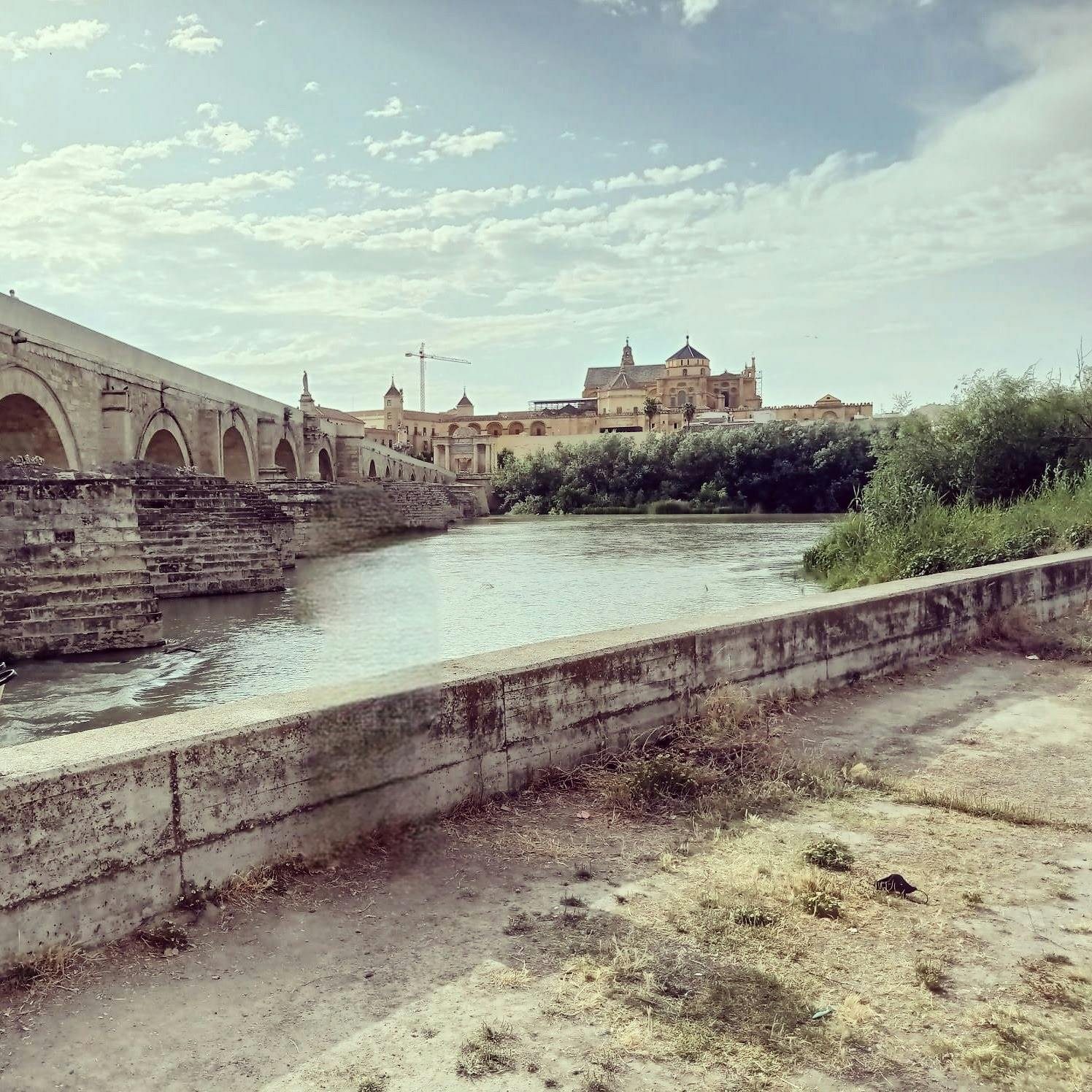
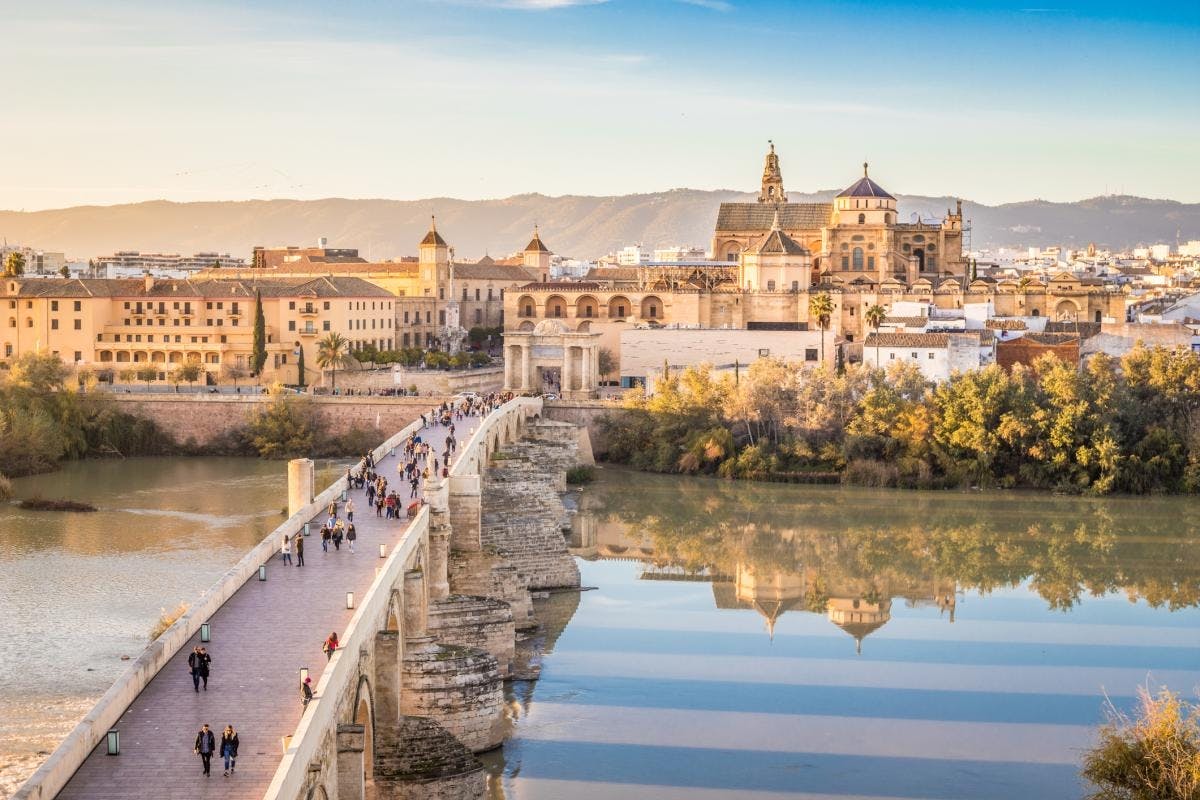
The bridge, river, Gate of the Bridge and Mosque-Cathedral together create one of Córdoba’s most famous views. Córdoba Tourism particularly recommends the area around sunset, when the final light illuminates the historic stonework. :contentReference[oaicite:43]{index=43}
The bridge has Roman origins but has been altered substantially through later centuries. Its current appearance reflects many medieval and later interventions. :contentReference[oaicite:44]{index=44}
Explore the Jewish Quarter
The Judería surrounds the Mosque-Cathedral and should not be treated as a separate distant attraction.
This historic Jewish neighbourhood forms part of Córdoba’s UNESCO-listed historic centre. Its narrow streets preserve a street pattern characterised by winding lanes, small squares and occasional dead-end alleys. :contentReference[oaicite:45]{index=45}
Highlights include:
Córdoba Synagogue
Calle Judíos
Small courtyards
Traditional whitewashed streets
Local craft shops
Visit Córdoba Synagogue
The Córdoba Synagogue dates from the 14th century and is one of the city’s most important reminders of medieval Jewish life.
It lies within comfortable walking distance of the Mosque-Cathedral, making the two sites easy to see during the same historic-centre walk. Córdoba’s official tourism service identifies it among the principal monuments of the Judería. :contentReference[oaicite:46]{index=46}
Visit the Alcázar of the Christian Monarchs
The Alcázar de los Reyes Cristianos is another major historic monument close to the Mosque-Cathedral.
The fortified complex developed over Roman and Islamic remains and later became associated with the Christian monarchy. Córdoba Tourism identifies it as one of the city’s essential heritage sites. :contentReference[oaicite:47]{index=47}
The combination of Mosque-Cathedral, Judería, Alcázar and Roman Bridge creates an excellent full day without requiring significant transport.
A Good Half-Day Around the Mosque-Cathedral
9:30 am – Mosque-Cathedral
Spend approximately two hours exploring the monument.
11:30 am – Patio de los Naranjos and Exterior
Walk around the perimeter and inspect the historic doors and tower.
Noon – Judería
Explore the narrow streets around Calle Judíos and the Synagogue area.
1:00 pm – Lunch
Stop in the historic centre for a traditional Córdoba lunch.
Finish beside the Guadalquivir for views back towards the Mosque-Cathedral.
A Good One-Day Córdoba Itinerary
Morning
Mosque-Cathedral
Bell Tower if booked
Judería
Córdoba Synagogue
Lunch
Eat in the historic centre.
Afternoon
Alcázar of the Christian Monarchs
Historic streets and patios
Roman Bridge
Evening
Return towards the Mosque-Cathedral area for dinner or, on an available date, book The Soul of Córdoba night visit.
Where to Stay Near the Mosque-Cathedral
Judería
Best overall area for a first visit.
Staying in the Jewish Quarter places you within easy walking distance of the Mosque-Cathedral, Synagogue, Roman Bridge and Alcázar.
The atmosphere is particularly attractive early in the morning and later in the evening after many day visitors have left.
Around the Mosque-Cathedral
Best for maximum convenience.
Several small hotels and guesthouses sit within only a few minutes’ walk of the monument.
This is ideal if you want an early entrance or a late evening walk around the illuminated historic centre.
Central Córdoba
Best for combining monuments with shopping and restaurants.
Staying slightly north of the Judería provides easier access to modern city facilities while keeping the monument within walking distance.
What to Eat Nearby
Córdoba has several distinctive dishes worth trying after your visit.
Look for:
Salmorejo – thick chilled tomato and bread soup
Flamenquín – rolled pork and ham, breaded and fried
Rabo de toro – slow-cooked oxtail
Berenjenas con miel – fried aubergine traditionally served with a sweet syrup or honey-style topping
A leisurely lunch is especially appealing during the hot middle of the day before returning to outdoor sightseeing later in the afternoon.
Summer Visits
Córdoba can be extremely hot in summer, so the Mosque-Cathedral works especially well as an early-morning activity.
The vast stone interior is generally more comfortable than walking exposed streets during peak afternoon heat.
A practical summer plan is:
Visit the Mosque-Cathedral in the morning
Have a long lunch during the hottest period
Return to sightseeing later in the afternoon
Walk the Roman Bridge around sunset
Do You Need a Guide?
No, but a guide can add considerable value.
The building’s history is complicated, and without explanation it is easy to see only beautiful arches and a cathedral without understanding which ruler built each section.
Visit Independently If:
You prefer moving slowly
You are comfortable using an audio guide
You mainly want architecture and photography
Choose a Guide If:
You want a detailed explanation of Islamic Córdoba
You want help identifying the different expansions
You are interested in religious history
You only have one visit and want to understand the building properly
Official guides can be hired through the monument, and audio-guide services are also available. :contentReference[oaicite:48]{index=48}
What Should You Look For?
If you are visiting without a guide, prioritise these features:
The double red-and-white arches
The oldest section of Abd al-Rahman I
The Al-Hakam II expansion
The maqsura
The mihrab mosaics
Villaviciosa Chapel
The Renaissance cathedral transept
The carved choir stalls
The Patio de los Naranjos
The Bell Tower
Mosque or Cathedral?
Visitors sometimes wonder which name is correct.
Historically, the building was the great mosque of Islamic Córdoba. Since its Christian dedication in 1236, it has functioned as a Catholic church and cathedral. The official name used today is Mosque-Cathedral of Córdoba, reflecting both the surviving Islamic monument and its continuing cathedral function. :contentReference[oaicite:49]{index=49}
Is It Still Used for Worship?
Yes.
The building remains Córdoba’s principal Catholic cathedral and operates regular liturgical celebrations. Tourist access may therefore be interrupted or adjusted around worship and special religious events. :contentReference[oaicite:50]{index=50}
This is why current opening hours should always be checked for the exact date of your visit.
Common Mistakes to Avoid
Rushing Straight to the Cathedral
The Christian cathedral is spectacular, but the mihrab and Al-Hakam II section are equally important.
Missing the Mihrab
It is one of the greatest surviving artistic features of Islamic Córdoba.
Assuming the Bell Tower Is Included
It currently requires a separate €4 ticket. :contentReference[oaicite:51]{index=51}
Assuming Opening Hours Are the Same Every Day
They vary around religious services and special events. :contentReference[oaicite:52]{index=52}
Bringing Large Luggage
Large objects and packages are not allowed inside. :contentReference[oaicite:53]{index=53}
Planning the Bell Tower Without Considering the Stairs
The climb is substantial and access restrictions are strict. :contentReference[oaicite:54]{index=54}
Practical Tips
Allow around two hours for your first visit.
Book the Bell Tower separately if you want panoramic views.
Check the official opening calendar for your exact date.
Visit early in summer to avoid the strongest heat.
Do not miss the mihrab.
Look upward around the maqsura and cathedral crossing.
Use an audio guide or guided tour if the history is important to you.
Dress appropriately because the monument remains a functioning cathedral.
Leave large luggage elsewhere.
Combine the visit with the Judería and Roman Bridge.
Is the Mosque-Cathedral of Córdoba Worth Visiting?
Absolutely. It is the essential monument in Córdoba and one of the most extraordinary buildings in Spain.
The original mosque was begun under Abd al-Rahman I between 786 and 788 and expanded repeatedly as Córdoba became the political and cultural centre of Umayyad al-Andalus. The 10th-century additions of Al-Hakam II produced the magnificent maqsura and mihrab that remain among the building’s greatest masterpieces. :contentReference[oaicite:55]{index=55}
After the building was consecrated for Catholic worship in 1236, successive generations added chapels, a Gothic nave, Renaissance transept, choir and Baroque decoration without completely erasing the earlier mosque. :contentReference[oaicite:56]{index=56}
Current general admission in 2026 is €15, while the Bell Tower costs an additional €4. Children under 10 currently enter the main monument free. :contentReference[oaicite:57]{index=57}
For the strongest experience, allow around two hours, spend time among the arches rather than following the shortest route, study the mihrab and maqsura carefully and then step into the cathedral to see just how dramatically the architecture changes.
Afterwards, walk through the Patio de los Naranjos and continue down towards the Roman Bridge for one of the classic views back towards the monument and the historic skyline of Córdoba. :contentReference[oaicite:58]{index=58}
The Mosque-Cathedral is remarkable not because one culture simply replaced another, but because the architecture allows visitors to see centuries of Córdoba’s history occupying the same space at the same time.
Sponsored Popular Items
Quick take: Musement.com offers a worldwide selection of tours and attractions
Guided tour of Cordòba Mosque-Cathedral without tickets Spain Plan Guided tour of Cordòba Mosque-Cathedral without tickets, a cultural or heritage experience, with practical tips on timing, inclusions and what to check before booking. Compare current availability, prices and booking conditions before you go.
Mosque-Cathedral of Córdoba Ticket and Audio Guide Spain Plan Mosque-Cathedral of Córdoba Ticket and Audio Guide, a cultural or heritage experience, with practical tips on timing, inclusions and what to check before booking. Compare current availability, prices and booking conditions before you go.
Medina Azahara night tour with transfer from Cordoba Spain Plan Medina Azahara night tour with transfer from Cordoba, a cultural or heritage experience, with practical tips on timing, inclusions and what to check before booking. Compare current availability, prices and booking conditions before you go.
Full-Day Tour of Cordoba during the Patio Festival – Food & Drink Experience Spain Plan Full-Day Tour of Cordoba during the Patio Festival – Food & Drink Experience, a food and drink experience, with practical tips on timing, inclusions and what to check before booking. Compare current availability, prices and booking conditions before you go.
Day Trip to Cordoba from Malaga at your leisure – Attraction Entry Spain Day trip to Cordoba from Malaga at your leisure adds structure, local context and purposeful sightseeing to the itinerary. Check current availability, inclusions and booking details before you go.
Cordoba Full-Day Tour from Málaga – Guided Tour Spain Cordoba full-day tour from Malaga USD 138 adds structure, local context and purposeful sightseeing to the itinerary. Check current availability, inclusions and booking details before you go.