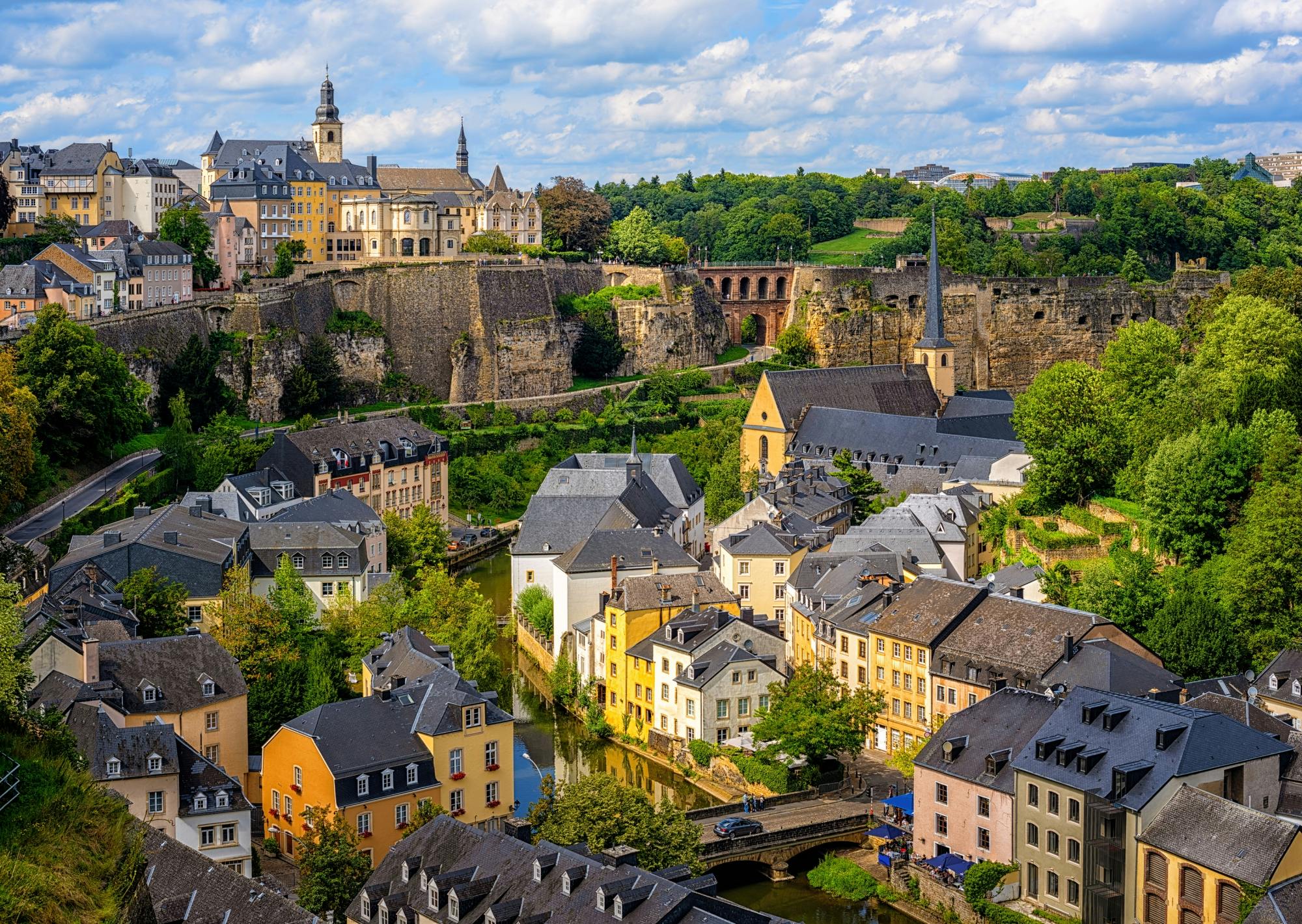
Luxembourg may be one of Europe’s smallest countries, but its wooded valleys, rocky ridges and historic towns contain an extraordinary collection of castles, fortresses and noble residences. Some have been carefully restored and opened as museums, while others survive as romantic ruins overlooking rivers and medieval villages.
Sponsored Popular Items
Quick take: Musement.com offers a worldwide selection of tours and attractions
Luxembourg and Dinant Daytrip from Brussels – Guided Tour Belgium Luxembourg and Dinant daytrip from Brussels USD 78 adds structure, local context and purposeful sightseeing to the itinerary. Check current availability, inclusions and booking details before you go.
The best-known is Vianden Castle, a vast Romanesque and Gothic stronghold above the River Our. However, travellers who venture farther into the countryside can also explore Luxembourg’s largest medieval fortress at Bourscheid, two contrasting castles at Beaufort, the dramatic ruins of Larochette and the museums inside the rebuilt castle of Clervaux.
Luxembourg Castles: A Travel Guide to the Grand Duchy’s Finest Fortresses
Luxembourg’s compact size makes castle touring relatively easy. Visitors can stay in Luxembourg City and take day trips, create a self-drive castle route or use the country’s free domestic public transport network to reach many historic towns.
Luxembourg castle touring at a glance
Country
Grand Duchy of Luxembourg
Best-known castle
Vianden Castle
Largest medieval castle
Bourscheid Castle
Best castle base
Luxembourg City, Vianden, Clervaux or Larochette
Recommended trip length
Three to five days
Best for
History, architecture, photography, walking and scenic drives
Public transport
Domestic trains, trams and most buses are free in standard class
Why visit Luxembourg’s castles?
Luxembourg’s position between France, Belgium and Germany placed it at the centre of important European trade routes and military conflicts. Castles were constructed to control river valleys, roads, farmland and border territory.
The surviving buildings range from defensive medieval fortresses to Renaissance residences and elegant Baroque palaces. Together, they reveal how military strongholds gradually became more comfortable homes, administrative centres and symbols of wealth.
Luxembourg’s castles are particularly appealing to travellers interested in:
Medieval and European history
Romanesque, Gothic, Renaissance and Baroque architecture
Castles surrounded by forests and river valleys
Scenic road trips and photography
Walking and cycling routes
Small historic towns away from major tourist crowds
Museums dealing with art, photography and the Second World War
Easy excursions from Luxembourg City
Not every castle is open to the public. Some are private residences, while others can only be viewed from outside. Always check the current access arrangements before planning a journey around a particular building.
Best castles to visit in Luxembourg
The following castles offer the most rewarding combination of historic importance, scenery and visitor access.
Vianden Castle: Best for a complete medieval castle experience
Vianden Castle is Luxembourg’s most famous historic landmark and one of the finest restored feudal residences in Europe. It stands on a rocky ridge above the town of Vianden and the River Our in the northern Éislek region, close to the German border.
The castle was constructed between the 11th and 14th centuries on the foundations of earlier Roman and Carolingian structures. It became the seat of the powerful Counts of Vianden, whose family maintained connections with both the French royal court and the German imperial court.
After centuries of alterations and decline, the castle was extensively restored. Visitors can now walk through ceremonial halls, residential rooms, defensive passages, courtyards and a distinctive two-level chapel.
What to see at Vianden Castle
The Romanesque chapel
The Great Hall and banquet rooms
Restored residential chambers
Historic armour, furniture and displays
Castle courtyards and defensive walls
Views across Vianden and the Our Valley
Archaeological remains incorporated into the visitor route
The castle hosts exhibitions, concerts and seasonal events. Its annual medieval festival is one of the largest castle events in Luxembourg and normally includes performers, crafts, music and historical entertainment.
What else to see in Vianden
Do not leave immediately after touring the castle. Vianden is one of Luxembourg’s most attractive small towns and deserves several additional hours.
Walk through the old streets, cross the bridge near the Victor Hugo statue and follow the riverbank for views back towards the castle. The Victor Hugo Literary Museum occupies the house where the French writer stayed during his visits to Vianden.
Vianden also has Luxembourg’s only chairlift. It travels from the valley to a hillside viewpoint overlooking the town, castle and surrounding countryside. Operations are seasonal and weather-dependent.
Nearby towns and bases
Diekirch
Ettelbruck
Clervaux
Bourscheid
Luxembourg City
Recommended visit: Three hours for the castle or a full day for the castle, town, riverfront and chairlift.
Sponsored Popular Items
Quick take: Musement.com offers a worldwide selection of tours and attractions
Luxembourg and Dinant Daytrip from Brussels – Guided Tour Belgium Luxembourg and Dinant daytrip from Brussels USD 78 adds structure, local context and purposeful sightseeing to the itinerary. Check current availability, inclusions and booking details before you go.
Bourscheid Castle is Luxembourg’s largest medieval castle. Its round towers, defensive walls and central keep occupy a steep promontory approximately 150 metres above the River Sûre.
The castle’s origins probably date from around the 10th century. It was enlarged during the 14th and 15th centuries, when additional fortifications and Gothic towers strengthened the complex.
Unlike the heavily restored rooms at Vianden, Bourscheid retains the rugged atmosphere of a medieval fortress. Visitors can explore its walls, courtyards, towers and former residential buildings while enjoying extensive views over forested hills and the winding river valley.
What to see at Bourscheid Castle
The outer defensive wall
Round and Gothic towers
The central keep
Former residential buildings
Courtyards and stone passageways
Panoramic views across the Sûre Valley
Audio guides are available in several languages. Evening illumination can make the castle particularly dramatic, although access times and special events should be confirmed in advance.
Nearby towns and bases
Bourscheid village
Diekirch
Ettelbruck
Esch-sur-Sûre
Vianden
Recommended visit: Approximately one-and-a-half to two hours, plus additional time for nearby viewpoints or walking trails.
3. Beaufort Castles
Beaufort offers two castles within the same historic complex: the ruins of a medieval fortress and a neighbouring Renaissance castle dating from the 17th century.
The medieval castle developed over several centuries between approximately 1050 and 1650. Its imposing remains include defensive walls, towers, cellars and residential areas overlooking the surrounding countryside.
The later Renaissance castle provides a contrasting view of aristocratic life. Rather than concentrating entirely on military defence, it was designed as a more comfortable residence.
Why visit Beaufort?
See medieval and Renaissance architecture in one location
Explore atmospheric castle ruins
Learn how noble residences changed over time
Combine the castles with hiking in the Mullerthal region
Visit nearby Echternach and Larochette
Access to the two buildings may differ. The medieval castle normally has broader visitor access, while parts of the Renaissance castle may be shown through guided visits or during particular opening periods.
Nearby towns and bases
Beaufort
Echternach
Larochette
Berdorf
Luxembourg City
Recommended visit: Two hours for the castle complex or a full day when combined with a Mullerthal walk.
4. Larochette Castle
Larochette Castle occupies a sandstone promontory approximately 50 metres above the valley of the White Ernz. Its partly ruined walls dominate the attractive town of Larochette below.
The earliest buildings date from the 11th century. Several noble families constructed separate fortified residences within the larger complex, creating a group of connected manor houses rather than one simple building.
A major fire in 1565 left much of the castle in ruins. The Créhange House was restored during the 1980s and now provides a clearer impression of the castle’s former appearance.
What to see at Larochette Castle
Ruined medieval walls and buildings
The restored Créhange House
Views across Larochette and the Ernz Valley
Temporary art exhibitions and occasional concerts
Walking trails through the surrounding woodland
The ascent and historic surfaces may be difficult for visitors with restricted mobility. Parking is available near the castle entrance, while the nearest central bus stop is within walking distance.
Explore Larochette town
Larochette is a pleasant former market town with a central square, older houses, cafés and a history connected with textile production. Woodland surrounds the town, providing several walks with changing views of the castle.
Nearby towns and bases
Larochette
Mersch
Beaufort
Echternach
Luxembourg City
Recommended visit: Two to three hours for the castle and town, or longer when adding a forest walk.
5. Clervaux Castle
Clervaux Castle stands on a rocky promontory above the small northern town of Clervaux. Its origins date from the 12th century, although the building developed in several stages.
The castle was severely damaged during the Battle of the Bulge in December 1944. It was subsequently acquired and restored by the Luxembourg government.
Today, Clervaux Castle is known primarily for its museums and cultural collections rather than furnished medieval rooms.
Museums inside Clervaux Castle
The Family of Man: Edward Steichen’s landmark photography exhibition
Battle of the Bulge Museum: Displays connected with the fighting in northern Luxembourg
Model Castle Museum: Scale models of castles and fortified buildings across Luxembourg
The Family of Man is included in UNESCO’s Memory of the World International Register. The exhibition brings together photographs exploring everyday human experiences, relationships, work, childhood, conflict and community.
The individual museums may have different opening days and ticket arrangements. Check each exhibition rather than assuming the entire castle follows one schedule.
What else to see in Clervaux
The Benedictine Abbey of Saint Maurice and Saint Maurus
The town centre and riverside
Second World War memorials
Walking routes through the surrounding Éislek countryside
Nearby towns and bases
Clervaux
Wiltz
Vianden
Troisvierges
Luxembourg City
Recommended visit: At least half a day, particularly when visiting more than one museum.
6. Esch-sur-Sûre Castle
The freely accessible ruins of Esch-sur-Sûre Castle rise above one of Luxembourg’s most dramatically situated villages.
The River Sûre curves around the settlement, giving the old village the appearance of occupying a narrow peninsula. Stone houses cluster below the rocky castle site, creating one of the country’s most recognisable landscapes.
The castle was first mentioned during the early medieval period and served as the ancestral seat of the Lords of Esch. Its position allowed the surrounding valley and river route to be observed and controlled.
What to expect
Freely accessible castle ruins
Information panels explaining the site’s history
Views over the village and Sûre Valley
Steep stairs and uneven historic surfaces
Walking routes through the Upper Sûre Nature Park
The castle ruins are not wheelchair accessible. Visitors should wear secure footwear and take care on stairs, particularly during wet or icy weather.
Nearby towns and bases
Esch-sur-Sûre
Wiltz
Bourscheid
Ettelbruck
Clervaux
Recommended visit: Two to three hours for the ruins and village, or a full day when adding a nature-park walk.
7. The Valley of the Seven Castles
The Valley of the Seven Castles follows the Eisch Valley through Luxembourg’s central Guttland region. The scenic route brings together a remarkable concentration of medieval castles, fortified houses and later noble residences.
The seven castle sites are:
Mersch Castle
Schoenfels Castle
Hollenfels Castle
Old Ansembourg Castle
New Ansembourg Castle
Septfontaines Castle
Koerich Castle
The route extends for approximately 24 kilometres, although detours, stops and different route choices can increase the total travelling distance.
Not all seven castles can be toured internally. Some are private or have limited access, so the route is best understood as a journey through a historic landscape rather than seven separate museum visits.
Highlights of the route
The ruined walls of Koerich Castle
The imposing keep at Schoenfels
The fortified setting of Hollenfels
The formal gardens of New Ansembourg Castle
Traditional villages and quiet countryside
Walking and cycling routes through the Eisch Valley
The route can be explored by car, bicycle, organised tour or a long-distance walking trail. Mersch is a practical starting point because it has rail and bus connections with Luxembourg City.
Other castles and palaces worth knowing about
Berg Castle
Berg Castle in Colmar-Berg is the official residence of Luxembourg’s Grand Duke. It is not normally open to visitors, but it can be viewed from outside while respecting security signs and the privacy of the grand ducal family.
Wiltz Castle
Wiltz Castle contains cultural and visitor facilities and provides a setting for festivals and events. Its broad terraces overlook the northern town of Wiltz.
Useldange Castle
Useldange contains accessible castle ruins, a tower and a cultural route designed to help visitors understand the site. It can be combined with the western part of the Guttland region.
Bourglinster Castle
Bourglinster combines medieval origins with later architectural additions. The restored complex is used for cultural events, hospitality and dining.
Château d’Urspelt
Château d’Urspelt near Clervaux has been restored as a hotel. It is an option for travellers who would like to stay in a historic château rather than merely visit one during the day.
Suggested four-day Luxembourg castle itinerary
Day 1: Luxembourg City and the Valley of the Seven Castles
Begin in Luxembourg City, where the old fortifications, casemates and dramatic river valleys introduce the country’s defensive history.
In the afternoon, travel towards Mersch and follow part or all of the Valley of the Seven Castles. Prioritise Koerich, Schoenfels and New Ansembourg when time is limited.
Day 2: Vianden Castle
Spend the morning exploring Vianden Castle. After lunch, walk through Vianden’s old town and along the River Our.
During its operating season, add the chairlift for elevated views of the castle and valley. Stay overnight in Vianden or continue to Clervaux.
Day 3: Clervaux and Bourscheid
Visit Clervaux Castle and choose between The Family of Man, the Battle of the Bulge Museum and the collection of castle models.
Continue to Bourscheid Castle in the afternoon to explore the fortress and enjoy the views across the Sûre Valley.
Day 4: Beaufort and Larochette
Explore the medieval and Renaissance castles at Beaufort in the morning. Continue to Larochette for lunch, a walk through the town and a visit to its hilltop ruins.
Travellers with more time can stay in the Mullerthal region and add Echternach, Berdorf or part of the Mullerthal Trail.
Can you visit Luxembourg castles on a day trip?
Yes, but trying to visit too many castles in one day can turn the journey into a rushed drive.
Good one-day combinations include:
Vianden and Bourscheid: Best for major medieval fortresses
Beaufort and Larochette: Best for castles and Mullerthal scenery
Clervaux and Vianden: Best for museums and a restored castle
Valley of the Seven Castles: Best for a scenic route near Luxembourg City
Bourscheid and Esch-sur-Sûre: Best for castles above river valleys
Choose two main castle sites for a comfortable day. Add a third only when driving, starting early and checking all opening times beforehand.
How to travel between Luxembourg’s castles
By car
A car provides the greatest flexibility, particularly for Bourscheid, Beaufort, Esch-sur-Sûre and the Valley of the Seven Castles.
Road distances are relatively short, but many rural routes are narrow and winding. Travel times can therefore be longer than the map distance suggests.
Parking near historic sites may be limited. Follow local signs and avoid entering restricted village streets.
By public transport
Domestic public transport in Luxembourg is free for passengers using standard-class trains, trams and most buses. First-class rail travel and international sections still require valid tickets.
Vianden is commonly reached by travelling to Ettelbruck and continuing by regional bus. Clervaux has its own railway station, making it one of the easiest northern castle towns to reach without a car.
Other castles may require bus changes followed by an uphill walk. Use the official Mobiliteit journey planner immediately before travelling because rural schedules can vary by day and season.
By bicycle
Luxembourg has an extensive network of cycling routes. The Valley of the Seven Castles is particularly suitable for experienced recreational cyclists.
The northern Éislek region is hillier and can be physically demanding. Electric bicycles can make longer castle routes more manageable.
By organised tour
Guided castle excursions are available from Luxembourg City and other locations. These can be useful when visitors have limited time or do not wish to drive on rural roads.
Where to stay for a Luxembourg castle tour
Luxembourg City
Luxembourg City offers the largest selection of hotels, apartments, restaurants and transport connections. It is the most convenient base for first-time visitors and travellers without a car.
The city works particularly well for day trips to Vianden, Clervaux, Mersch and the Valley of the Seven Castles.
Vianden
Stay in Vianden for a traditional small-town atmosphere and evening views of the castle. Accommodation includes hotels, guesthouses, holiday apartments and a youth hostel near the castle.
Vianden is the best choice for travellers who want to photograph the castle early in the morning or after day visitors have departed.
Clervaux
Clervaux is a convenient northern base with a railway station, restaurants and several visitor attractions. It is well positioned for Vianden, Wiltz and the wider Éislek region.
Larochette
Larochette is centrally located and surrounded by woodland. It is a practical base for Beaufort, Echternach, the Mullerthal region and central Luxembourg.
Beaufort and the Mullerthal region
Choose Beaufort, Berdorf or Echternach when combining castle visits with hiking. Accommodation includes hotels, guesthouses, campsites and holiday rentals.
Esch-sur-Sûre or Bourscheid
These quieter rural areas suit travellers who value scenery, walking and peaceful evenings. A car is generally more convenient when staying in smaller villages.
Stay in a château
Several historic residences in Luxembourg have been converted into hotels or guesthouses. Château d’Urspelt near Clervaux is one of the best-known options.
Best time to visit Luxembourg’s castles
Spring
Spring brings fresh greenery, flowing rivers and comfortable walking conditions. Seasonal attractions begin extending their opening hours, although some services may remain limited early in the season.
Summer
Summer offers the longest opening hours and the greatest number of festivals, concerts and guided tours. Vianden and other popular sites can become busy during weekends and school holidays.
Autumn
Autumn is one of the most attractive seasons for castle photography. The forests around Vianden, Bourscheid, Larochette and Esch-sur-Sûre develop strong autumn colours.
Winter
Winter can create a quiet and atmospheric castle trip, particularly around Clervaux and Vianden. However, daylight is limited and some smaller castles, gardens and visitor facilities may close or reduce their hours.
Accessibility at Luxembourg’s castles
Accessibility varies considerably because many castles occupy steep hills and contain narrow stairs, cobbled courtyards and uneven stone floors.
Vianden, Bourscheid, Larochette and Esch-sur-Sûre may involve substantial climbing. Some restored museums, including sections of Clervaux Castle, offer lifts and step-free routes.
Before travelling, check the individual attraction’s official accessibility information. Visitors with restricted mobility should also confirm the distance between parking areas, bus stops and castle entrances.
Practical tips for visiting Luxembourg’s castles
Check opening times for each castle on the day of travel.
Do not assume that every castle is open throughout winter.
Wear shoes suitable for steep paths, stone stairs and uneven surfaces.
Allow extra time for photography and village walks.
Carry a light waterproof jacket, even during summer.
Book guided tours in advance when visiting Renaissance interiors.
Use Luxembourg’s free public transport when the connections are practical.
Choose no more than two major castle visits in one day.
Check whether the LuxembourgPass includes admission or a discount.
Respect signs around castles that remain private residences.
Download route information before entering rural areas.
Expect shorter daylight hours from late autumn through winter.
Frequently asked questions about Luxembourg castles
What is the best castle to visit in Luxembourg?
Vianden Castle is the best choice for most first-time visitors. It combines impressive architecture, restored interiors, historic displays and extensive views over a beautiful medieval town.
What is the largest castle in Luxembourg?
Bourscheid Castle is recognised as Luxembourg’s largest medieval castle. Its fortified complex occupies a high promontory above the River Sûre.
Are there castles near Luxembourg City?
Yes. The Valley of the Seven Castles begins around Mersch and extends through the Eisch Valley northwest of the capital. Koerich, Ansembourg and Schoenfels are among the most convenient castle stops in this area.
Can you visit Luxembourg’s castles without a car?
Yes. Vianden can be reached by train and connecting bus, while Clervaux has a railway station. Other rural castles may require several connections and an uphill walk, so check the Mobiliteit journey planner before travelling.
Is public transport free in Luxembourg?
Domestic trains, trams and most buses are free in standard class. Tickets are still required for first-class train travel and for journeys crossing Luxembourg’s international borders.
Are any Luxembourg castles free to visit?
Yes. The ruins of Esch-sur-Sûre Castle are freely accessible. Some other ruins and exterior areas can also be seen without charge, although museums, restored interiors and guided tours usually require admission.
What are the seven castles in Luxembourg’s castle valley?
They are Mersch, Schoenfels, Hollenfels, Old Ansembourg, New Ansembourg, Septfontaines and Koerich. Not all are open for interior visits.
How many days are needed for a Luxembourg castle tour?
Three days allows visitors to see several major castles. Four or five days provides a more comfortable journey including Vianden, Bourscheid, Clervaux, Beaufort, Larochette and the Valley of the Seven Castles.
Are Luxembourg’s castles suitable for children?
Many castles are suitable for families, particularly Vianden and Bourscheid. Parents should supervise children closely around steep stairs, high walls, uneven ground and open ruins.
Are Luxembourg’s castles wheelchair accessible?
Accessibility varies. Some restored museums have lifts and step-free routes, while ruined hilltop castles may be unsuitable for wheelchairs. Check directly with each attraction before travelling.
Can you stay overnight in a Luxembourg castle?
Some historic château buildings have been converted into hotels or guesthouses. Château d’Urspelt near Clervaux is one of the best-known examples, although the major museum castles themselves do not generally provide accommodation.
What is the best season for a Luxembourg castle route?
Late spring and early autumn offer comfortable weather, attractive scenery and fewer crowds than peak summer. Autumn is especially good for photographing castles surrounded by forest.
Check current castle and transport information
Opening hours, admission prices, exhibitions and guided-tour arrangements can change. Check the official websites shortly before travelling:
Luxembourg’s castles are among the country’s most rewarding attractions. Their appeal comes not only from the buildings themselves, but also from their dramatic settings above rivers, forests and historic villages.
Vianden provides the grandest restored interior, Bourscheid delivers the strongest fortress atmosphere, Beaufort reveals two different periods of castle life and Larochette offers romantic ruins above a traditional town. Clervaux adds internationally important photography and wartime history, while Esch-sur-Sûre combines accessible ruins with one of Luxembourg’s most beautiful village landscapes.
A castle route also encourages travellers to explore beyond Luxembourg City and discover the quieter Éislek, Mullerthal and Guttland regions. Whether travelling by car, free public transport, bicycle or walking trail, Luxembourg makes it possible to experience a remarkable variety of castles within a relatively compact journey.
Sponsored Popular Items
Quick take: Musement.com offers a worldwide selection of tours and attractions
Luxembourg and Dinant Daytrip from Brussels – Guided Tour Belgium Luxembourg and Dinant daytrip from Brussels USD 78 adds structure, local context and purposeful sightseeing to the itinerary. Check current availability, inclusions and booking details before you go.
Luxembourg City Sightseeing Bus Tour with Audio Guide – Travel Pass Luxembourg Luxembourg City Sightseeing Bus Tour with Audio Guide USD 30 gives independent travellers a flexible framework for organising several sightseeing stops. Check current availability, inclusions and booking details before you go.
Self-Guided Tour with Interactive City Game of Luxembourg City - Self-Guided Experience Luxembourg Self guided tour with interactive city game of Luxembourg City is designed for travellers who prefer independent exploration while still having structured digital guidance available. Check current availability, inclusions and booking details before you go.
Guided Walking Tour in Luxembourg City - Guided Sightseeing Tour Guided walking tour in Luxembourg city brings several elements of the destination together in one organised experience. Check current availability, inclusions and booking details before you go.
1-Hour Luxembourg City Walking Tour with a Local Guide - Guided Sightseeing Tour 1-hour Luxembourg City walking tour with a local guide offers a structured way to discover more of Luxembourg City without having to organise every detail independently. Check current availability, inclusions and booking details before you go.
Luxembourg Private Tour – Guided Sightseeing Luxembourg Luxembourg Private Tour is a convenient way to add structure, local context and purposeful sightseeing to the itinerary. Check current availability, inclusions and booking details before you go.
Luxembourg City Countryside Tours & Rural Day Trips Guide Luxembourg Luxembourg City combines dramatic fortifications, ravines, European institutions, a compact old town, museums and easy access to castles and the Moselle wine region. Check current availability, inclusions and booking details before you go.
Luxembourg City Wine, Drinks & Tasting Experiences Guide Luxembourg Luxembourg City combines dramatic fortifications, ravines, European institutions, a compact old town, museums and easy access to castles and the Moselle wine region. Check current availability, inclusions and booking details before you go.