Zion National Park and Bryce Canyon National Park are two of the great natural attractions of the American Southwest. They are close enough to combine into one road trip, yet their landscapes are completely different.
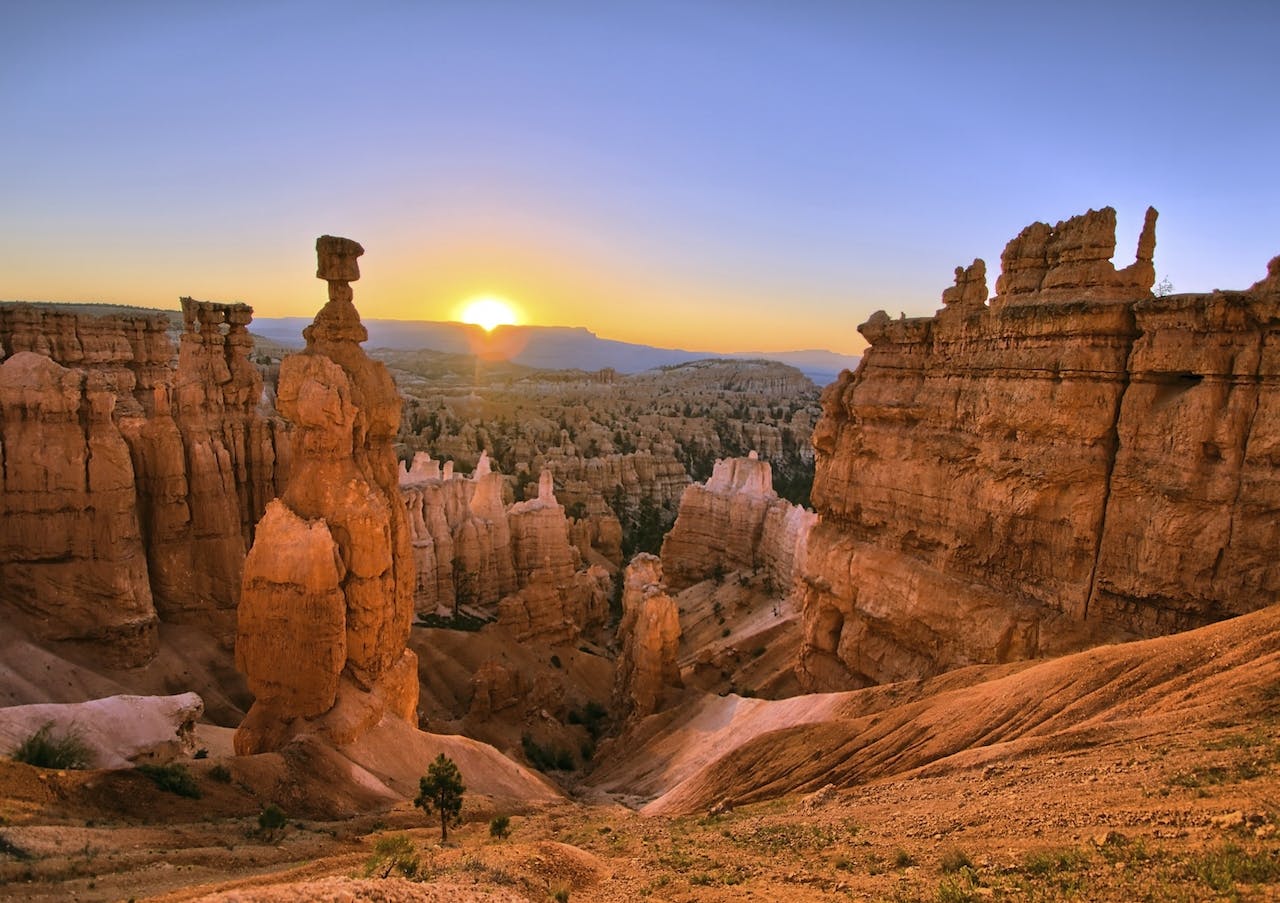
At Zion, enormous sandstone cliffs rise above the Virgin River while narrow canyons, hanging gardens and high viewpoints create some of the most dramatic scenery in Utah. Bryce Canyon sits much higher in the mountains and is famous for thousands of orange, pink and white rock spires known as hoodoos.
The two parks are separated by an exceptionally scenic drive of roughly 85 miles (137 kilometres) between Springdale and Bryce Canyon. The route passes through eastern Zion, the Zion–Mount Carmel area, US-89 and Utah Highway 12.
If your itinerary allows it, spend at least two days at Zion and one full day at Bryce Canyon. Four or five days between the two parks provides a much more relaxed visit.
Zion and Bryce Canyon at a Glance
Feature
Zion National Park
Bryce Canyon National Park
Landscape
Deep canyon, towering sandstone cliffs and the Virgin River
High plateau filled with hoodoos and natural amphitheatres
Around 8,000 feet at the main visitor area and over 9,000 feet at the highest points
Park shuttle
Essential for Zion Canyon during much of the busy season
Optional seasonal shuttle
Zion National Park
Zion National Park lies in southwestern Utah beside the small town of Springdale.
The park is dominated by Zion Canyon, a deep valley carved by the Virgin River through massive layers of sandstone. In places the cliffs rise thousands of feet above the canyon floor.
One of the unusual things about Zion is that many of its best views begin from the bottom of the canyon looking upward. Huge rock walls surround you, while cottonwoods and the Virgin River create a ribbon of green through the otherwise dry landscape.
What to See in Zion National Park
Zion Canyon
For a first visit, concentrate on Zion Canyon.
The scenic canyon contains many of the park’s best-known trailheads and viewpoints, including access to Angels Landing, Emerald Pools and the Riverside Walk leading towards The Narrows.
During the main shuttle season, private vehicles are generally not permitted on Zion Canyon Scenic Drive beyond Canyon Junction. Visitors normally park near the Zion Canyon Visitor Center or in Springdale and use the park shuttle.
The shuttle itself does not require a separate reservation or ticket, although normal park entrance requirements still apply.
The Narrows
The Narrows is one of Zion’s most unusual adventures.
Instead of following a conventional trail, visitors walk through the Virgin River between towering canyon walls.
The popular bottom-up route begins beyond the Temple of Sinawava after walking the Riverside Walk.
The experience can range from walking through ankle-deep water to wading through considerably deeper sections depending on river conditions.
Always check conditions before entering The Narrows. Flash floods are a serious hazard in slot canyons, and water levels can change rapidly after storms elsewhere in the watershed.
Angels Landing
Angels Landing is Zion’s most famous high-level hike.
The trail climbs from the canyon floor through Refrigerator Canyon and the tight switchbacks known as Walter’s Wiggles before reaching Scout Lookout.
From there, the final route to Angels Landing follows a narrow exposed ridge with chains installed for assistance.
This final section involves considerable exposure and is not appropriate for everyone, particularly visitors uncomfortable with heights.
A permit is required to hike the Angels Landing chain section. Permits are required every day and at all times. A seasonal advance lottery and a day-before lottery are used to allocate permits.
You do not need an Angels Landing permit simply to hike to Scout Lookout on the West Rim Trail.
Emerald Pools
The Emerald Pools area offers a good alternative for visitors wanting impressive Zion scenery without attempting Angels Landing or The Narrows.
Trails lead towards pools, sandstone cliffs and seasonal waterfalls.
Trail closures can occur because of rockfalls, weather and maintenance, so check current park conditions before setting out.
Canyon Overlook Trail
The Canyon Overlook Trail begins near the eastern side of the Zion–Mount Carmel Tunnel.
It is relatively short but provides an impressive elevated view across the Zion landscape.
Parking around the trailhead is limited, so arriving early is helpful.
Pa’rus Trail
The Pa’rus Trail is one of Zion’s easier walks.
It follows the Virgin River near the visitor centre and is particularly attractive towards sunset when the surrounding cliffs begin changing colour.
It is a useful choice for visitors wanting scenery without a major climb.
Kolob Canyons
If you have an extra day, consider visiting Kolob Canyons in the northwestern part of Zion National Park.
This separate section receives fewer visitors than Zion Canyon and offers another perspective on Zion’s towering red sandstone landscapes.
The Zion Canyon Shuttle
Understanding the shuttle system is important when planning Zion.
During much of the busy season, private vehicles are not allowed along Zion Canyon Scenic Drive north of Canyon Junction.
The free park shuttle transports visitors between major stops and trailheads throughout Zion Canyon.
You do not need a separate shuttle reservation.
If the visitor-centre parking area is full, another practical option is to park in Springdale and use the town shuttle towards the park entrance.
Where to Stay for Zion National Park
Springdale
Springdale is the best base for most first-time visitors.
The town sits immediately outside Zion’s main south entrance and contains hotels, restaurants, cafés, shops and transport connections.
Staying here can be particularly convenient during shuttle season because you may be able to leave your vehicle at your accommodation and use local transport to reach the park.
Zion Lodge
Zion Lodge is the only hotel-style lodging located inside Zion National Park.
It sits directly within Zion Canyon and provides exceptional access to scenery and nearby trailheads.
The lodge has hotel rooms, suites and historic cabins, but accommodation can book well ahead during popular periods.
Rockville
Rockville is a small community just west of Springdale.
It can be a useful alternative if Springdale accommodation is expensive or unavailable.
Hurricane
Hurricane is farther from Zion but offers a wider range of accommodation, restaurants and everyday services.
It can suit road-trip travellers who prefer lower accommodation prices and do not mind driving to the park each morning.
St George
St George is the largest city in the surrounding region.
It is farther from Zion than Springdale, but it has extensive accommodation, restaurants, shopping and other services.
St George is particularly useful if Zion forms part of a larger southwest Utah or Las Vegas road trip.
Bryce Canyon National Park
Drive from Zion to Bryce Canyon and the scenery changes dramatically.
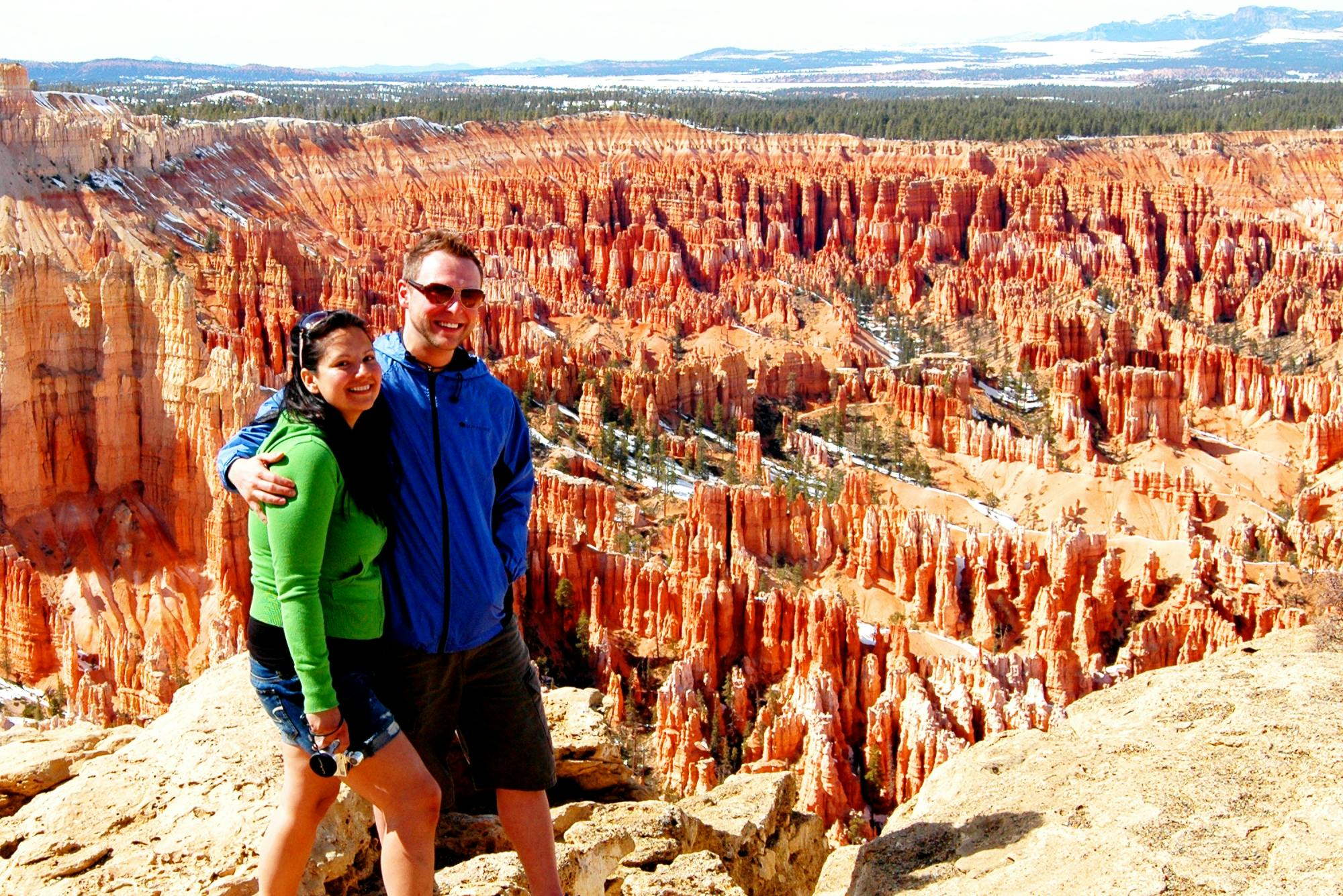
Bryce Canyon is not actually one enormous canyon. It consists largely of natural amphitheatres eroded into the edge of the Paunsaugunt Plateau.
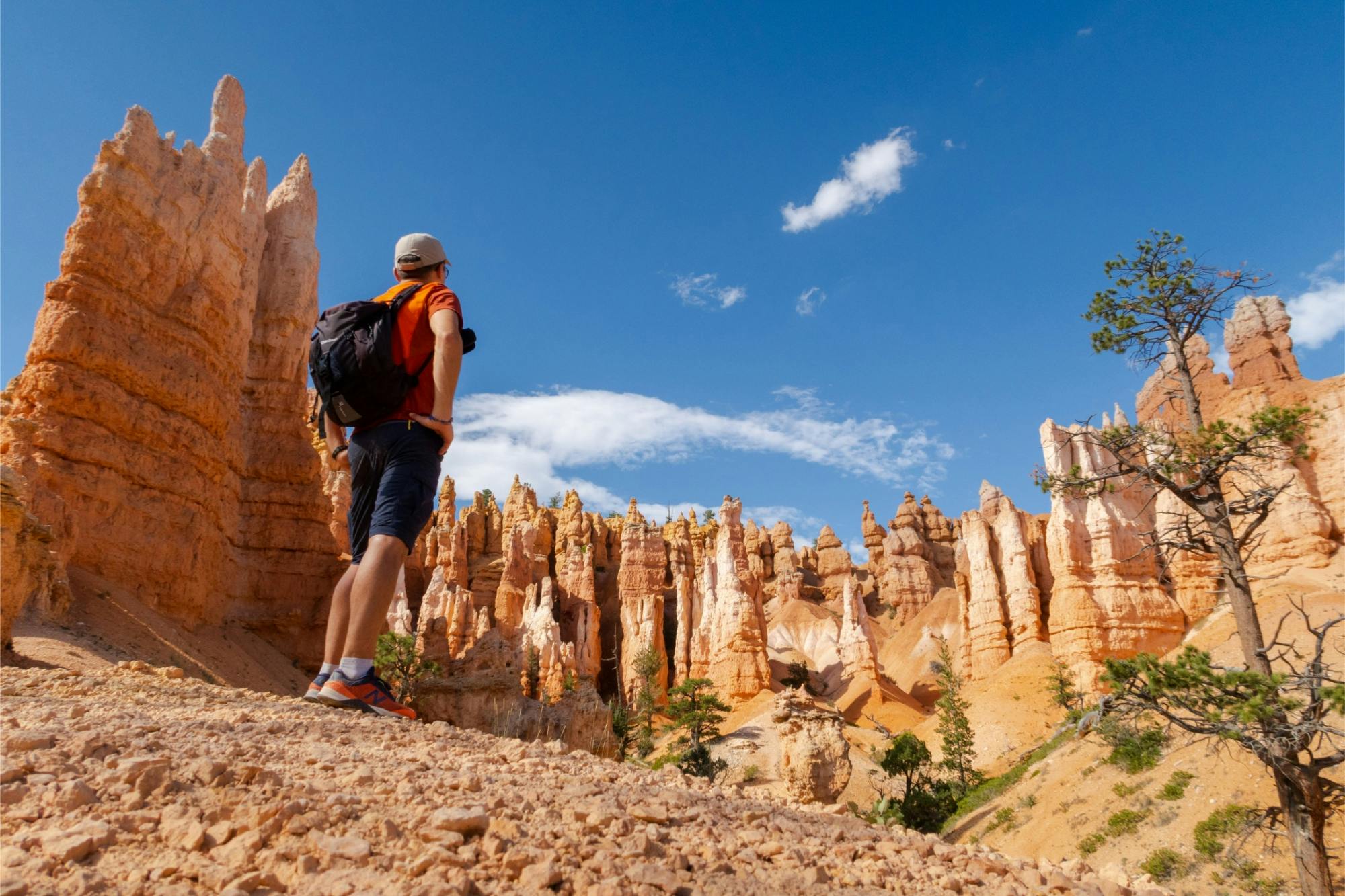
The park is famous for its extraordinary concentration of hoodoos — tall, irregular columns of rock created by weathering and erosion.
Bryce Canyon has the largest concentration of hoodoos in the world.
Its elevation is another major difference from Zion. The main visitor areas are around 8,000 feet (2,438 metres) above sea level, while the highest parts of the park exceed 9,000 feet.
This makes Bryce considerably cooler than Zion and means snow can arrive early and remain late into the year.
What to See at Bryce Canyon
Bryce Amphitheatre
If you have limited time, concentrate on the spectacular Bryce Amphitheatre.
Many of the park’s most famous viewpoints are concentrated within the first few miles of the park road.
These include:
Sunrise Point
Sunset Point
Inspiration Point
Bryce Point
Each gives a different perspective over the dense landscape of hoodoos.
Sunrise Point
Sunrise Point is understandably popular early in the morning.
The first sunlight can transform the hoodoos into brilliant shades of orange and gold.
However, the viewpoint remains worthwhile throughout the day.
Sunset Point
Sunset Point is another essential stop and provides access to the Navajo Loop Trail.
The walk between Sunrise Point and Sunset Point along the Rim Trail is relatively easy and gives excellent amphitheatre views.
Navajo Loop and Queen’s Garden
Looking down from the rim is impressive, but walking among the hoodoos provides a completely different experience.
The Queen’s Garden and Navajo Loop routes can be combined into one of Bryce Canyon’s classic hikes.
The important thing to remember is that Bryce operates in reverse compared with many mountain hikes.
You begin at the top, descend into the amphitheatre and then have to climb back to the rim at the end.
The high altitude can make the return climb more tiring than expected.
Inspiration Point
Inspiration Point provides broad views across multiple levels of hoodoos and is particularly good for photography.
There are several viewing areas at different heights.
Bryce Point
Bryce Point provides another sweeping panorama of the amphitheatre.
Changing light and shadows across the formations mean that revisiting a viewpoint at another time of day can produce a surprisingly different landscape.
Drive the Southern Scenic Road
Do not assume Bryce Canyon ends at the main amphitheatre.
The park road continues south through forests and high-country scenery towards Rainbow Point and Yovimpa Point.
Along the way are viewpoints including:
Natural Bridge
Farview Point
Swamp Canyon
Agua Canyon
Ponderosa Canyon
Rainbow Point
Yovimpa Point
This scenic drive is an excellent option for visitors who prefer sightseeing from shorter walks and viewpoints rather than undertaking a long hike.
Bryce Canyon Shuttle
Bryce Canyon operates a free seasonal shuttle that serves many of the main amphitheatre viewpoints and visitor areas.
Unlike Zion, using the shuttle is not compulsory for ordinary private vehicles.
You can generally drive into Bryce Canyon yourself, although parking at popular viewpoints can become busy.
The shuttle can therefore be a convenient way to avoid repeatedly searching for parking.
Stay for the Stars
Bryce Canyon is particularly impressive after dark.
Its high elevation, relatively remote location and dark skies make it an excellent place for stargazing.
On a clear moonless night, the difference between Bryce Canyon and a brightly illuminated city can be dramatic.
This is one reason I recommend staying overnight rather than treating Bryce as a quick daytime stop between other destinations.
Where to Stay for Bryce Canyon
The Lodge at Bryce Canyon
The Lodge at Bryce Canyon is located inside the park only a short walk from the Bryce Amphitheatre.
It offers lodge rooms, motel-style accommodation and cabins.
This is the most convenient option for visitors who want to experience sunrise, sunset and the night sky without driving back to another town.
Reservations are strongly recommended.
Bryce Canyon City
Bryce Canyon City is immediately outside the park and is the easiest external base.
It has accommodation, restaurants and visitor services and is served by the seasonal Bryce Canyon shuttle.
For a one-night Bryce stay, this is often the most practical choice.
Tropic
Tropic is a small town east of Bryce Canyon and another good accommodation base.
It has a quieter small-town atmosphere than the immediate park entrance area and is convenient for travellers continuing along Scenic Byway 12.
Panguitch
Panguitch is farther from Bryce Canyon but is a larger community with accommodation, restaurants, fuel and other services.
It can be useful when rooms close to the park are unavailable.
Driving From Zion to Bryce Canyon
The drive between Springdale and Bryce Canyon is approximately 85 miles (137 kilometres).
Allow around two hours of driving under normal conditions, but considerably longer if you stop for photographs and short walks.
And you should stop.
This is one of the most scenic transfer days of a Utah road trip.
The usual route travels:
Springdale → Zion National Park → Zion–Mount Carmel Highway → East Zion → US-89 → Utah Highway 12 → Bryce Canyon
Zion–Mount Carmel Highway
The road climbs dramatically from Zion Canyon through switchbacks and the historic Zion–Mount Carmel Tunnel before reaching the higher eastern side of the park.
The scenery is very different from the main canyon, with rounded sandstone formations and open high-country landscapes.
Checkerboard Mesa
Checkerboard Mesa is one of the easiest scenic stops on Zion’s eastern side.
The pale sandstone has distinctive horizontal and vertical lines that resemble a giant grid.
Large Vehicles
Motorhomes, buses and other large vehicles need to check Zion’s current vehicle restrictions carefully.
From June 2026, new size limits apply to vehicles using the Zion–Mount Carmel Highway between Canyon Junction and the East Entrance.
If travelling with an RV, trailer or oversized vehicle, check the official Zion National Park vehicle information before planning this route.
How Many Days Do You Need?
Three Days
A useful minimum:
Day 1: Zion Canyon
Day 2: More Zion, then drive towards Bryce Canyon
Day 3: Bryce Canyon
Four Days
A much better first visit:
Day 1: Zion Canyon and easier trails
Day 2: Angels Landing, The Narrows or another major Zion hike
Day 3: Scenic drive from Zion to Bryce and sunset viewpoints
Day 4: Bryce Amphitheatre and Scenic Drive
Five Days
Ideal if you enjoy walking, photography and slower travel.
You can explore both parks without turning every day into a race between trailheads.
A Good Four-Day Zion and Bryce Itinerary
Day 1 – Zion Canyon
Start early and use the Zion Canyon shuttle.
Choose several of the main canyon stops and undertake a moderate walk such as Emerald Pools or the Pa’rus Trail.
Day 2 – Zion Hiking
Choose one major experience.
Options include:
The Narrows
Angels Landing if you have a permit
Scout Lookout
West Rim Trail
Canyon Overlook
Do not attempt to fit every famous hike into one day.
Day 3 – Zion to Bryce Canyon
Drive east through Zion and stop around Checkerboard Mesa before continuing towards Bryce Canyon.
After checking into your accommodation, visit Sunset Point, Sunrise Point or Inspiration Point in the late afternoon.
Stay after dark if skies are clear.
Day 4 – Bryce Canyon
Start around sunrise if you are an early riser.
Walk part of the Rim Trail or descend into the amphitheatre on the Queen’s Garden/Navajo Loop area.
During the afternoon, drive towards Rainbow Point and stop at the viewpoints along the Southern Scenic Drive.
Best Time of Year to Visit
Spring
Spring can be an excellent time for Zion because temperatures are generally more comfortable than in midsummer.
Bryce Canyon is much higher, however, so snow and icy trail conditions can persist considerably later than visitors expect.
Summer
Summer brings long days but also crowds and significant heat in Zion.
Temperatures in Zion Canyon can become extremely hot, making early morning hiking particularly important.
Summer also overlaps with the monsoon period, when thunderstorms can increase the danger of flash floods in narrow canyons.
Bryce Canyon is usually considerably cooler because of its elevation.
Autumn
Autumn is one of the best periods for combining the two parks.
Zion begins cooling from its summer extremes while Bryce often has crisp mountain weather.
Cold nights can arrive early at Bryce, so carry warm clothing.
Winter
Winter creates a completely different experience.
Snow covering Bryce Canyon’s orange hoodoos can be spectacular.
Zion’s lower elevations may remain relatively accessible, although snow and ice can affect high trails.
Some roads, trails and visitor services may operate differently in winter.
Why Bryce Canyon Feels Much Colder Than Zion
Visitors are sometimes surprised by the temperature difference between the parks.
The reason is altitude.
Bryce Canyon averages around 8,000 feet above sea level and reaches above 9,000 feet.
It can therefore be cool in Bryce when Zion feels hot.
If visiting both parks on the same trip, pack layers rather than assuming one set of desert clothing will suit every day.
Altitude at Bryce Canyon
The elevation also means some visitors notice the thinner air.
Take your time when climbing back from below the rim, drink plenty of water and do not assume that a relatively short trail will feel the same as it would at sea level.
Visitors with significant heart, lung or other medical conditions should consider the effect of high altitude when planning strenuous activity.
Entrance Fees in 2026
The standard private-vehicle entrance fee at both Zion and Bryce Canyon is currently US$35 per vehicle, with a standard pass valid for up to seven days at the individual park.
Important for international visitors: in 2026, the National Park Service also requires non-US residents aged 16 and over visiting Zion or Bryce Canyon to pay an additional US$100 per person nonresident fee unless they are admitted under a qualifying Annual or America the Beautiful Pass.
For international travellers visiting several US national parks, it is therefore worth comparing the cost of individual entrance charges with the current non-resident America the Beautiful annual pass before travelling.
National park fee policies can change, so always check the official National Park Service fee pages before your trip.
Important Zion Safety Advice
Flash Floods
Never enter a narrow canyon simply because the weather directly overhead looks clear.
Rain falling many kilometres away can send floodwater through a slot canyon.
Check the official flash-flood forecast before entering The Narrows or other narrow canyons.
Heat
Zion can become extremely hot in summer.
Start strenuous hikes early, carry more water than you think you will need and protect yourself from direct sun.
Angels Landing
The final chain section is exposed and involves serious fall hazards.
Do not attempt it merely because it appears on a list of “must-do” attractions.
Scout Lookout provides excellent scenery without continuing onto the narrow chain route.
Practical Bryce Canyon Safety Advice
High Altitude
Allow your body time to adjust and expect uphill walking to feel harder than it does at lower elevations.
Lightning
Summer thunderstorms can develop quickly.
Exposed viewpoints and the rim are not good places to remain during nearby lightning.
Ice and Snow
Bryce can experience snow and ice well outside what many travellers would consider the normal winter season.
Check trail conditions and use appropriate footwear.
What Should You Pack?
Comfortable walking shoes or hiking boots
Refillable water bottles
Sun hat
Sunscreen
Sunglasses
Lightweight layers
A warm jacket for Bryce Canyon mornings and evenings
Rain protection during storm season
Camera or phone
Binoculars if you enjoy wildlife
Walking poles for steep Bryce Canyon trails if useful
Which Park Is Better?
Trying to choose a winner between Zion and Bryce Canyon misses the point.
They provide completely different experiences.
Choose Zion if you prefer:
Dramatic high cliffs
River canyons
Longer hikes
Adventurous trails
Large-scale scenery
Choose Bryce Canyon if you prefer:
Extraordinary rock formations
Sunrise and sunset photography
Easy access to spectacular viewpoints
Shorter hikes
Cooler high-altitude scenery
For most travellers, the best answer is simple: visit both.
Is a Zion and Bryce Canyon Road Trip Worth Doing?
Absolutely.
Few short drives connect two landscapes that look so completely different.
At Zion you can stand beside the Virgin River while sandstone walls rise thousands of feet above you. You can walk towards The Narrows, climb towards Scout Lookout or simply travel through Zion Canyon beneath immense cliffs.
Only a few hours away, you can stand on the rim at Bryce Canyon and look across thousands of strange orange hoodoos before descending among them on foot.
The drive connecting the parks is part of the experience, passing through Zion’s eastern sandstone country before continuing towards Utah Highway 12.
For the best first trip, spend at least two nights around Springdale and one night near Bryce Canyon. If time permits, add another night at each park.
Most importantly, do not treat Bryce Canyon as a quick photograph on the way somewhere else and do not try to see Zion entirely from a vehicle.
Walk into both landscapes.
That is when the enormous difference between Zion and Bryce Canyon becomes clear — and why visiting them together creates one of the finest national-park road trips in the American Southwest.
Sponsored Popular Items
Quick take: Musement.com offers a worldwide selection of tours and attractions
Zion and Bryce National Park with Camping United States Plan Zion and Bryce National Park with Camping, a ticket or attraction experience, with practical tips on timing, inclusions and what to check before booking. Compare current availability, prices and booking conditions before you go.