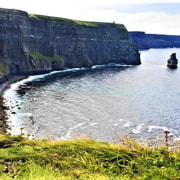
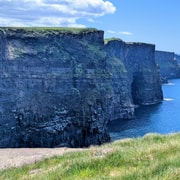
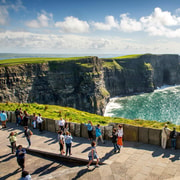
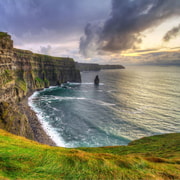
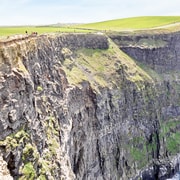
The Cliffs of Moher are one of Ireland’s most famous natural landmarks, rising dramatically above the Atlantic Ocean on the west coast of County Clare. With dark layered cliffs, crashing waves, seabirds, sea stacks, grassy cliff-top paths and far-reaching views toward the Aran Islands, Galway Bay and the Burren, this is one of the great scenic stops on Ireland’s Wild Atlantic Way.
For many visitors, the classic Cliffs of Moher experience includes walking the safe paved paths near the official visitor centre, climbing or viewing O’Brien’s Tower, photographing the cliffs from the north and south viewing platforms, learning about the geology and wildlife inside the visitor centre, and, if time allows, seeing the cliffs from below on a boat trip from Doolin.
The cliffs are beautiful, but they are also exposed, windy and dangerous if visitors ignore barriers. The safest and best way to enjoy them is to use official paths, obey closures, keep away from cliff edges and plan around weather conditions.
Quick take: Musement.com offers a worldwide selection of tours and attractions
Clare: Cliffs of Moher Guided Walk with a Local Farmer Best deals for Clare: Cliffs of Moher Guided Walk with a Local Farmer. Join a local farmer, historian, and walking enthusiast on this guided walk along the Cliffs of Moher. Enjoy views of the Dingle Peninsula and Aran Islands. Available from getyourguide.com.
Why Visit the Cliffs of Moher?
The Cliffs of Moher are worth visiting because they combine scale, atmosphere and classic Irish coastal scenery. The cliffs stretch for kilometres along the Atlantic, with sheer rock faces, green headlands, seabird colonies, sea stacks and wide ocean views.
They are not just a quick photo stop. The experience changes with the weather: sunlight can turn the cliffs golden, mist can make them moody and dramatic, and strong Atlantic winds remind you that this is a wild coastal landscape. On clear days, the views can reach toward the Aran Islands, Galway Bay, Loop Head and the mountains of Connemara.
The Cliffs of Moher are best for:
First-time visitors to Ireland
Wild Atlantic Way road trips
Photography and dramatic coastal views
Couples wanting a memorable scenic stop
Families using the official visitor area and paved paths
Birdwatching, especially during nesting season
Geology lovers exploring the Burren and Cliffs of Moher Geopark
Travellers combining Doolin, the Burren, Aran Islands and Galway
Where Are the Cliffs of Moher?
The Cliffs of Moher are in County Clare on Ireland’s west coast, between the villages of Doolin and Liscannor. They are part of the Burren and Cliffs of Moher UNESCO Global Geopark and are one of the signature stops on the Wild Atlantic Way.
Location Detail
Traveller Notes
Destination
Cliffs of Moher
County
County Clare, Ireland
Nearest villages
Doolin and Liscannor
Nearby town
Lahinch
Main visitor area
Cliffs of Moher Experience and Visitor Centre
Famous tower
O’Brien’s Tower
Best trip style
Scenic road trip, coastal walk, visitor centre stop, Doolin boat cruise or Burren day tour
The most common bases are Doolin, Lahinch, Ennistymon, Lisdoonvarna, Galway and Limerick. Galway is popular for organised day tours, while Doolin is the best base if you want boat trips, traditional music and easy access to the Aran Islands.
What to Expect at the Cliffs of Moher
Expect a dramatic Atlantic cliff-top attraction with a managed visitor centre area, paved viewing paths, parking, toilets, café facilities, exhibition space and access to viewpoints near O’Brien’s Tower. The official visitor area is the safest and easiest way to enjoy the cliffs, especially for first-time visitors, families and anyone visiting in windy or wet weather.
Outside the main visitor zone, some coastal walking routes may be restricted, rerouted or closed for safety. Always check current official advice before planning a long walk from Doolin, Hag’s Head or Liscannor.
What you may see
High Atlantic sea cliffs
O’Brien’s Tower
Aran Islands views on clear days
Galway Bay and Connemara views in good visibility
Sea stacks, including Branaunmore
Seabirds nesting on ledges
Layered shale and sandstone cliff faces
Wildflowers and coastal grasses in season
Sunset light over the Atlantic
Powerful waves at the base of the cliffs
What not to expect
Do not expect calm weather every day.
Do not expect every coastal walking section to be open.
Do not expect barriers to mean the cliffs are safe beyond them.
Do not expect clear views in fog, heavy rain or low cloud.
Do not expect to fly drones without checking rules and permissions.
Do not expect cliff-edge photos to be worth the risk.
Do not expect the experience to be quiet during peak summer or public holidays.
O’Brien’s Tower
O’Brien’s Tower is the most recognisable built landmark at the Cliffs of Moher. It stands near one of the highest and most popular viewing points, giving visitors classic views along the cliff line and out toward the Atlantic.
The tower was built in the 19th century and has long been associated with sightseeing at the cliffs. Even if you do not go inside, the tower makes a strong photo subject and helps frame the scale of the cliffs around it.
Why visit O’Brien’s Tower?
It is the classic landmark photo at the Cliffs of Moher.
It sits close to the main visitor area.
It offers excellent views north and south along the cliff line.
It is a good orientation point for first-time visitors.
It adds history and structure to the cliff-top landscape.
O’Brien’s Tower tips
Check whether tower access is included with your ticket or requires a supplement.
Expect wind around the viewing area.
Use the official pathways around the tower.
Visit early or late for fewer crowds.
In poor visibility, the tower may still be interesting even if long-distance views are limited.
Cliffs of Moher Visitor Centre
The Cliffs of Moher Visitor Centre is built into the hillside near the main viewing area. It provides ticketing, toilets, food, gift shopping, interpretive displays and a sheltered place to learn about the cliffs’ geology, wildlife, history and conservation.
The visitor centre is especially useful in bad weather. If fog, wind or rain makes outdoor viewing uncomfortable, the exhibition helps explain what you are seeing and why the cliffs are geologically important.
Visitor centre highlights
Interpretive displays about geology and wildlife
Information about the Burren and Cliffs of Moher Geopark
Café and indoor rest area
Gift shop and local products
Toilet facilities
Access to paved cliff paths
Parking and visitor services
Audio guide or app options, depending on current availability
Who should use the visitor centre?
Families with children
First-time visitors
Travellers visiting in bad weather
Visitors wanting toilets, food and indoor facilities
People interested in geology, birds and local history
Anyone who wants the safest and most accessible cliff experience
Cliffs of Moher Coastal Walk
The Cliffs of Moher Coastal Walk has long been one of the most famous cliff walks in Ireland, linking sections around Doolin, the visitor centre, Hag’s Head and Liscannor. However, coastal cliff routes can be dangerous and may be partially closed or restricted due to safety concerns.
Before planning any long walk, check the current official Cliffs of Moher walking guidance. Do not rely on old blog posts, old maps or informal paths close to the cliff edge. The safest approach is to use designated paths only and turn back where instructed.
Important walking safety rules
Stay on designated paths at all times.
Do not go beyond walls, fences or barriers.
Do not use unofficial tracks near the cliff edge.
Do not walk closed sections.
Do not walk in high winds, thick fog or stormy weather.
Keep children close and away from edges.
Wear proper walking shoes.
Do not stop on roads or hazardous sections for photos.
Respect local land, fencing and warning signs.
Short walk option
For most visitors, the best option is a short, safe walk from the visitor centre to nearby official viewpoints and O’Brien’s Tower. This gives superb views without needing to commit to a long or exposed coastal route.
Long walk option
Longer walks may be possible only on open sections and in suitable weather. Check the latest official status before setting out, and be prepared to turn back. The cliffs are not a place to improvise.
Cliffs of Moher Boat Trips from Doolin
Seeing the Cliffs of Moher from the sea gives a completely different perspective. From the cliff-top, you see the vast Atlantic horizon. From below, you understand the height, geology and power of the cliffs as they rise directly from the water.
Boat trips usually depart from Doolin Pier. Some are dedicated Cliffs of Moher cruises, while others combine the cliffs with the Aran Islands, especially Inis Oírr, Inis Meáin or Inis Mór.
Why take a boat trip?
You see the cliffs from sea level.
You can appreciate the full height of the rock faces.
You may see seabirds and sea stacks from below.
You can combine the cruise with an Aran Islands trip.
It gives a strong contrast to the cliff-top visitor experience.
Boat trip tips
Check sailing times and weather conditions before travelling.
Book ahead in summer and on weekends.
Bring a warm jacket even on sunny days.
Take seasickness tablets if needed.
Expect cancellations or route changes in rough seas.
Combine with Inis Oírr if you want a full day from Doolin.
Bring waterproof protection for your phone or camera.
Wildlife, Birds and Geology
The Cliffs of Moher are not only scenic; they are also an important habitat and geological landscape. The cliffs are made of layered shale and sandstone, formed hundreds of millions of years ago, while the wider region connects with the Burren’s limestone karst landscape.
The cliffs are especially famous for seabirds. During nesting season, ledges and sea stacks become busy with birds, including species such as puffins, guillemots, razorbills, kittiwakes and fulmars.
Birds you may see
Atlantic puffins
Guillemots
Razorbills
Kittiwakes
Fulmars
Gulls
Shags and cormorants
Choughs
Geology highlights
Layered shale and sandstone cliffs
Sea stacks shaped by erosion
Atlantic wave action at the cliff base
Connections with the Burren and Cliffs of Moher UNESCO Global Geopark
Evidence of ancient marine environments preserved in the rock layers
Bring binoculars if birdwatching matters to you. Never climb barriers or go close to cliff edges for bird photos.
Nearby Places to Visit
Doolin
Doolin is one of the best bases for visiting the Cliffs of Moher. It is known for traditional Irish music, pubs, ferry departures to the Aran Islands, cave visits and a relaxed coastal village atmosphere.
Lahinch
Lahinch is a seaside town south of the cliffs, known for surfing, beach walks, cafés and a lively holiday feel.
Liscannor
Liscannor is a small coastal village close to the southern end of the cliffs and is useful for seafood, accommodation and access to nearby routes.
The Burren
The Burren is a remarkable limestone landscape with caves, ancient tombs, wildflowers, stone walls and walking routes. It pairs naturally with the Cliffs of Moher.
Doolin Cave
Doolin Cave is famous for its large stalactite and is a good inland activity near Doolin, especially in poor weather.
Aran Islands
The Aran Islands are accessible by ferry from Doolin and can be combined with a Cliffs of Moher sea cruise. Inis Oírr is the closest and easiest for a shorter island day.
Poulnabrone Dolmen
Poulnabrone Dolmen is one of Ireland’s most famous prehistoric monuments, located in the Burren.
Galway
Galway is a popular city base for Cliffs of Moher tours. It is best if you want nightlife, restaurants and a broader west-coast itinerary.
Ennistymon
Ennistymon is a charming town near Lahinch with shops, cafés and a useful base for exploring County Clare.
Best Time to Visit the Cliffs of Moher
The Cliffs of Moher can be visited year-round, but the experience depends heavily on weather, daylight, crowds and visibility. The cliffs can be spectacular in all seasons, but they can also be hidden by fog or battered by strong wind.
Season
What to Expect
Advice
Spring
Fresh green scenery, improving daylight and nesting birds beginning to return
Good balance of scenery and manageable crowds.
Summer
Longest days, busiest visitor period and best chance of extended touring
Book ahead and visit early or late to avoid peak crowds.
Autumn
Moody skies, fewer crowds and beautiful coastal light
Excellent for photography, but weather can change quickly.
Winter
Wild seas, fewer visitors, cold wind and shorter days
Atmospheric, but dress warmly and avoid dangerous weather.
Sunset
Golden light over the Atlantic, especially in good weather
Beautiful, but stay on safe paths and bring layers.
For most travellers, late spring to early autumn is the easiest period. For photographers, shoulder seasons can be better because the light is softer and crowds are lower.
Suggested Cliffs of Moher Itinerary Ideas
Option 1: Simple Half-Day Cliffs Visit
Morning or afternoon: Arrive at the Cliffs of Moher Visitor Centre.
Start: Visit the exhibition and use the facilities.
Walk: Follow the paved paths to the main viewpoints.
Highlight: Visit O’Brien’s Tower or photograph it from nearby paths.
Finish: Have coffee or lunch at the visitor centre before continuing your journey.
Option 2: Cliffs of Moher and Doolin Day
Morning: Visit the Cliffs of Moher Experience.
Midday: Drive or transfer to Doolin.
Afternoon: Take a Cliffs of Moher boat cruise from Doolin if weather allows.
Evening: Enjoy dinner and traditional music in a Doolin pub.
Option 3: Galway to Cliffs of Moher Day Trip
Morning: Depart Galway by organised tour or car.
Route: Travel through the Burren or County Clare countryside.
Main stop: Visit the Cliffs of Moher and O’Brien’s Tower.
Optional: Stop at Doolin, Poulnabrone Dolmen or Lahinch depending on route.
Evening: Return to Galway for dinner.
Option 4: Cliffs, Burren and Aran Islands Route
Day 1: Visit the Cliffs of Moher and stay overnight in Doolin.
Day 2: Take a ferry to Inis Oírr or another Aran Island.
Return: Add a Cliffs of Moher cruise if available with your ferry ticket.
Evening: Return to Doolin for food and music.
Option 5: County Clare Slow Travel Plan
Day 1: Lahinch beach, Ennistymon and Liscannor.
Day 2: Cliffs of Moher visitor centre, O’Brien’s Tower and Doolin.
Day 3: The Burren, Poulnabrone Dolmen, Doolin Cave and Ballyvaughan.
Where to Stay Near the Cliffs of Moher
Area
Best For
Traveller Notes
Doolin
Traditional music, ferries, pubs and coastal atmosphere
Best base for combining cliffs, Aran Islands and boat trips.
Lahinch
Beach, surfing, cafés and family holidays
Good if you want a seaside town with more activity.
Liscannor
Quiet coastal stay close to the cliffs
Practical for seafood, short drives and calmer evenings.
Ennistymon
Character, local shops and access to Lahinch and the Burren
Good small-town base with charm.
Lisdoonvarna
Burren access and traditional spa-town history
Useful for exploring both Doolin and the Burren.
Galway
City base, nightlife and day tours
Best for visitors without a car who want organised tours.
Limerick
Broader west-Ireland road trip base
Useful if combining Clare with Shannon Airport or southern Ireland.
Food and Local Experiences
County Clare is excellent for seafood, pub meals, local cheese, smoked fish, traditional music and slow coastal dining. Doolin is especially famous for music pubs, while Lahinch and Ennistymon offer cafés and casual restaurants.
Food and drink ideas
Seafood chowder: warming and common in coastal pubs.
Smoked salmon: often linked with Burren and Clare food producers.
Fish and chips: perfect after a windy cliff walk.
Irish stew: hearty option in cooler weather.
Brown bread: often served with soups and seafood.
Local cheeses: especially from Burren and Clare producers.
Traditional music pub night: a must in Doolin if you stay overnight.
Irish coffee: ideal after a cold Atlantic day.
Local experiences to add
Doolin traditional music session
Aran Islands ferry trip
Burren guided walk
Doolin Cave visit
Lahinch surf lesson
Cliffs of Moher boat cruise
Burren food trail or local producer stop
Useful Booking Resources for Cliffs of Moher Tours and Ireland Activities
The Cliffs of Moher can be visited independently, but booking platforms are useful for Galway day tours, Dublin day trips, Doolin boat cruises, Aran Islands combinations, Burren guided walks, private drivers and Ireland-wide itinerary planning. Skimlinks may automatically convert these merchant links into affiliate links if the merchant is active in your Skimlinks account.
GetYourGuide – offers Cliffs of Moher day tours from Dublin and Galway, Burren combinations, Doolin stops, Aran Islands options, private tours and Ireland sightseeing activities.
Viator – offers Cliffs of Moher tours, Galway and Dublin day trips, private driver-guided experiences, Burren routes, Aran Islands combinations and customisable Ireland itineraries.
Klook – offers Ireland tours, transport products, eSIM options, attraction tickets and selected Cliffs of Moher or Wild Atlantic Way experiences depending on availability.
KKday – offers Ireland travel products, local tours, attraction tickets and transport services useful for comparing west-coast experiences.
Tiqets – offers mobile-friendly attraction tickets, museums and cultural experiences useful for travellers combining County Clare with Dublin, Galway or other European destinations.
Musement – offers Ireland tours, attraction tickets, cultural activities, day trips and local experiences across Dublin, Galway and the west coast.
G Adventures – offers small-group and multi-day Ireland tours that may include the Wild Atlantic Way, Galway, County Clare or west-coast highlights.
Go City – offers bundled attraction passes in selected destinations, useful for readers comparing multi-attraction sightseeing before or after Ireland.
CityPASS – offers bundled attraction passes mainly for selected North American cities. It is not a main Cliffs of Moher booking option, but may suit readers planning wider international travel.
Booking tip: Before booking a Cliffs of Moher tour, check whether the price includes visitor centre admission, hotel pickup, time at the cliffs, Burren stops, Doolin, boat cruise, Aran Islands ferry, guide commentary, weather policy, cancellation rules and the exact return time. For self-drive visitors, check current parking, opening hours and coastal walk closures before travelling.
Cliffs of Moher Travel Tips
Check the weather before you go
Fog, heavy rain and strong wind can affect visibility and safety. The cliffs are still atmospheric in poor weather, but clear days are best for views.
Stay on official paths
Do not climb fences, walls or barriers. The cliff edges are unstable and the drops are fatal.
Check current coastal walk closures
Sections of the Cliffs of Moher Coastal Walk may be closed or restricted. Always check official updates before planning a long walk.
Bring layers
The cliffs are exposed to Atlantic wind. Even in summer, bring a jacket or windproof layer.
Wear proper shoes
Use comfortable shoes with grip, especially if paths are wet or muddy.
Visit early or late
Morning and late afternoon are usually better for fewer crowds and softer light.
Do not rely on drones
Drone use may be restricted and can disturb birds and visitors. Check rules before bringing one.
Combine land and sea views
If conditions allow, see the cliffs from the official visitor area and from a Doolin boat cruise. The two perspectives are very different.
Keep children close
Hold children’s hands near paths and barriers. Do not allow running or climbing near cliff areas.
Stay overnight nearby if you can
Staying in Doolin, Lahinch or Liscannor lets you enjoy the cliffs without rushing and gives you flexibility for weather.
Are the Cliffs of Moher Worth Visiting?
Yes, the Cliffs of Moher are absolutely worth visiting. They are one of Ireland’s most powerful coastal landscapes, combining dramatic cliffs, Atlantic views, seabirds, geology, walking routes, O’Brien’s Tower and easy access to the Burren, Doolin and the Aran Islands.
They may not suit travellers who expect guaranteed clear weather or a quiet hidden gem. The cliffs are popular, exposed and weather-dependent. However, the scale and atmosphere make them memorable even when conditions are moody.
The best way to enjoy the Cliffs of Moher is to use the official visitor area, stay on safe paths, check current walking conditions, allow enough time for O’Brien’s Tower and the viewpoints, and consider adding a boat trip from Doolin if the sea conditions are suitable.
FAQs About the Cliffs of Moher
Where are the Cliffs of Moher?
The Cliffs of Moher are in County Clare on Ireland’s west coast, between Doolin and Liscannor.
What are the Cliffs of Moher famous for?
The Cliffs of Moher are famous for dramatic Atlantic sea cliffs, O’Brien’s Tower, seabirds, coastal views, the Wild Atlantic Way and their location within the Burren and Cliffs of Moher UNESCO Global Geopark.
How high are the Cliffs of Moher?
The cliffs rise up to about 214 metres above the Atlantic Ocean at their highest point.
How long are the Cliffs of Moher?
The cliffs stretch for about 14 kilometres along the County Clare coast.
Can you walk along the Cliffs of Moher?
Short walks are available around the official visitor area and viewpoints. Longer coastal walk sections may be closed, restricted or rerouted, so always check current official guidance before walking.
Is the Cliffs of Moher Coastal Walk safe?
It is safe only when using open, designated paths and following official guidance. Do not use unofficial cliff-edge tracks or cross barriers.
Can you see the Cliffs of Moher by boat?
Yes. Boat cruises usually depart from Doolin and give sea-level views of the cliffs. Some ferries combine the cliffs with the Aran Islands.
When is the best time to visit the Cliffs of Moher?
Late spring to early autumn is the easiest period for daylight and touring, while early morning, late afternoon and shoulder seasons are often better for photography and fewer crowds.
Where should I stay near the Cliffs of Moher?
Doolin is best for traditional music, ferries and boat trips. Lahinch is best for beach and surf atmosphere. Liscannor is a quiet nearby coastal option, while Galway is a good city base for organised tours.
Are the Cliffs of Moher worth visiting?
Yes. The Cliffs of Moher are one of Ireland’s most iconic natural attractions and are worth visiting for Atlantic views, O’Brien’s Tower, seabirds, geology, coastal scenery and Wild Atlantic Way travel.
Sponsored Popular Items
Quick take: Musement.com offers a worldwide selection of tours and attractions
Clare: Cliffs of Moher Guided Walk with a Local Farmer Best deals for Clare: Cliffs of Moher Guided Walk with a Local Farmer. Join a local farmer, historian, and walking enthusiast on this guided walk along the Cliffs of Moher. Enjoy views of the Dingle Peninsula and Aran Islands. Available from getyourguide.com.
County Clare: Inis Cealtra Guided eBike Tour with Boat Trip Best deals for County Clare: Inis Cealtra Guided eBike Tour with Boat Trip. Cycle along the shores of Lough Derg and set sail on Lough Derg to explore the ancient monastic settlement of Inis Cealtra on this guided eBike tour. 3 routes available to suit your cycling ability. Available from getyourguide.com.
County Clare: Irish Chocolate Making Guided Workshop Best deals for County Clare: Irish Chocolate Making Guided Workshop. Craft two personalized chocolate bars and enjoy an artisan hot chocolate in Ireland's Hidden Heartlands. Guided, hands-on workshop—create, customize, taste, and take home. Min:6 Max:8 Available Available from getyourguide.com.
Dublin: Private Luxury Day Tour to the Cliffs of Moher Ireland Best deals for Dublin: Private Luxury Day Tour to the Cliffs of Moher. Immerse yourself in the untamed natural splendor of Ireland on this unforgettable journey. Witness the dramatic cliffs, quaint villages, and pastoral landscapes of the West Coast of Ireland. Available from getyourguide.com.
Private Tour of Cliffs of Moher and The Burren from Dublin Ireland Best deals for Private Tour of Cliffs of Moher and The Burren from Dublin. Discover the Cliffs of Moher on a private day trip from Dublin. Explore the Burren and the Wild Atlantic Way, visit a medieval castle, and see the Aillwee Caves. Available from getyourguide.com.
Private Tour: Cliffs of Moher, Galway City & More Best deals for Private Tour: Cliffs of Moher, Galway City & More. Join our private tour! Visit Barack Obama Plaza, the Wild Atlantic Coast, Doonagore Castle, Cliffs of Moher, The Burren, and Galway City. Enjoy Ireland's top landmarks and an unforgettable journey. Available from getyourguide.com.
Private Cliffs of Moher Day Tour Best deals for Private Cliffs of Moher Day Tour. Discover Western Ireland's wonders on a tour with Connemara Chauffeurs. From ancient sites to the iconic Cliffs of Moher, immerse yourself in a personalized journey to the Cliffs of Moher. Available from getyourguide.com.
From Galway: Cliffs of Moher Half-Day Express Trip Best deals for From Galway: Cliffs of Moher Half-Day Express Trip. Discover the dramatic landscapes of Wild Atlantic Way on a half-day express coach trip to the Cliffs of Moher. Walk along the natural trails and enjoy the stunning views of the Atlantic Ocean. Available from getyourguide.com.
Galway: Scenic Flight Over Cliffs of Moher & Aran Islands Best deals for Galway: Scenic Flight Over Cliffs of Moher & Aran Islands. Fly above the Cliffs of Moher, Aran Islands, Galway and Ireland's dramatic coastline on a private exclusive scenic flight. Enjoy unobstructed views with the most scenic seat in the house. Available from getyourguide.com.