The Wieliczka Salt Mine is one of Poland’s most remarkable historic attractions. Beneath the small town of Wieliczka, just outside Kraków, hundreds of kilometres of tunnels, chambers, shafts and underground lakes reveal the story of an industry that helped finance the Polish kingdom for centuries.
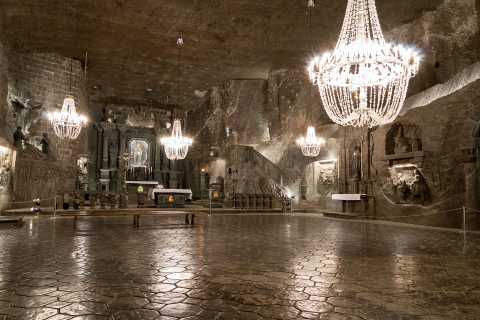
The mine is best known for the Chapel of St Kinga, an immense subterranean church decorated with statues, religious reliefs, floor tiles and chandeliers fashioned from salt. However, the chapel is only one part of the experience. The visitor route also passes historic mining machinery, timber-supported chambers, brine lakes, smaller chapels and displays explaining how generations of miners worked beneath the ground.
Sponsored Popular Items
Quick take: Musement.com offers a worldwide selection of tours and attractions
Wieliczka Salt Mine Poland Book your Wieliczka Salt Mine tickets online. Save time and money with our best price guarantee. Make the most of your visit to Wieliczka.
Wieliczka is not an abandoned mine where visitors wander independently. It remains a regulated mining site, and every underground visit takes place with a guide at a fixed time. The standard route involves about 3.5 kilometres of walking and approximately 800 stairs, including a long wooden staircase near the beginning.
This guide explains what visitors actually see, how demanding the tour is, how to travel from Kraków and how to choose between the different underground experiences.
Wieliczka Salt Mine Quick Facts
Visitor information
Details
Location
Wieliczka, approximately 10 kilometres southeast of central Kraków
Main entrance
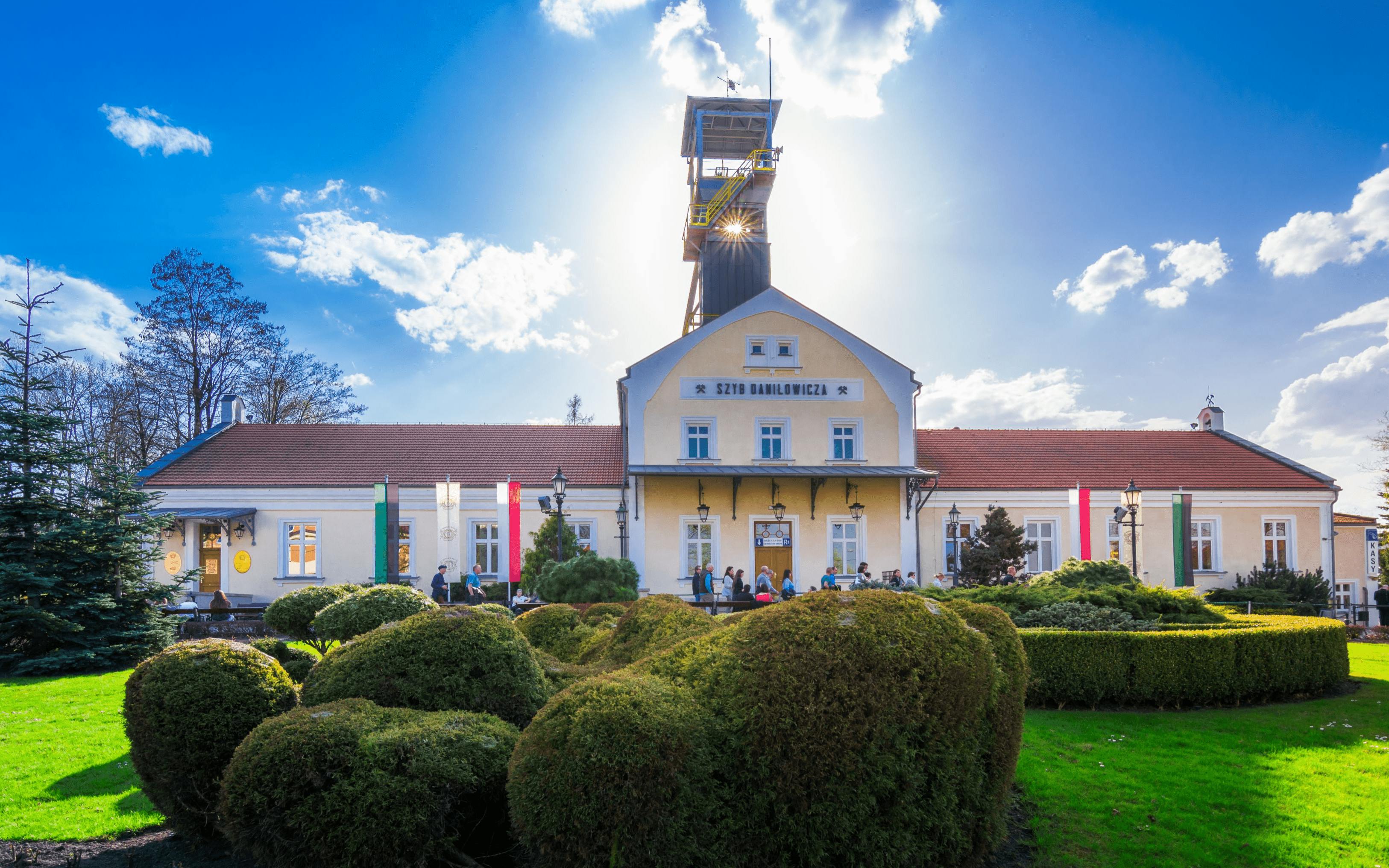
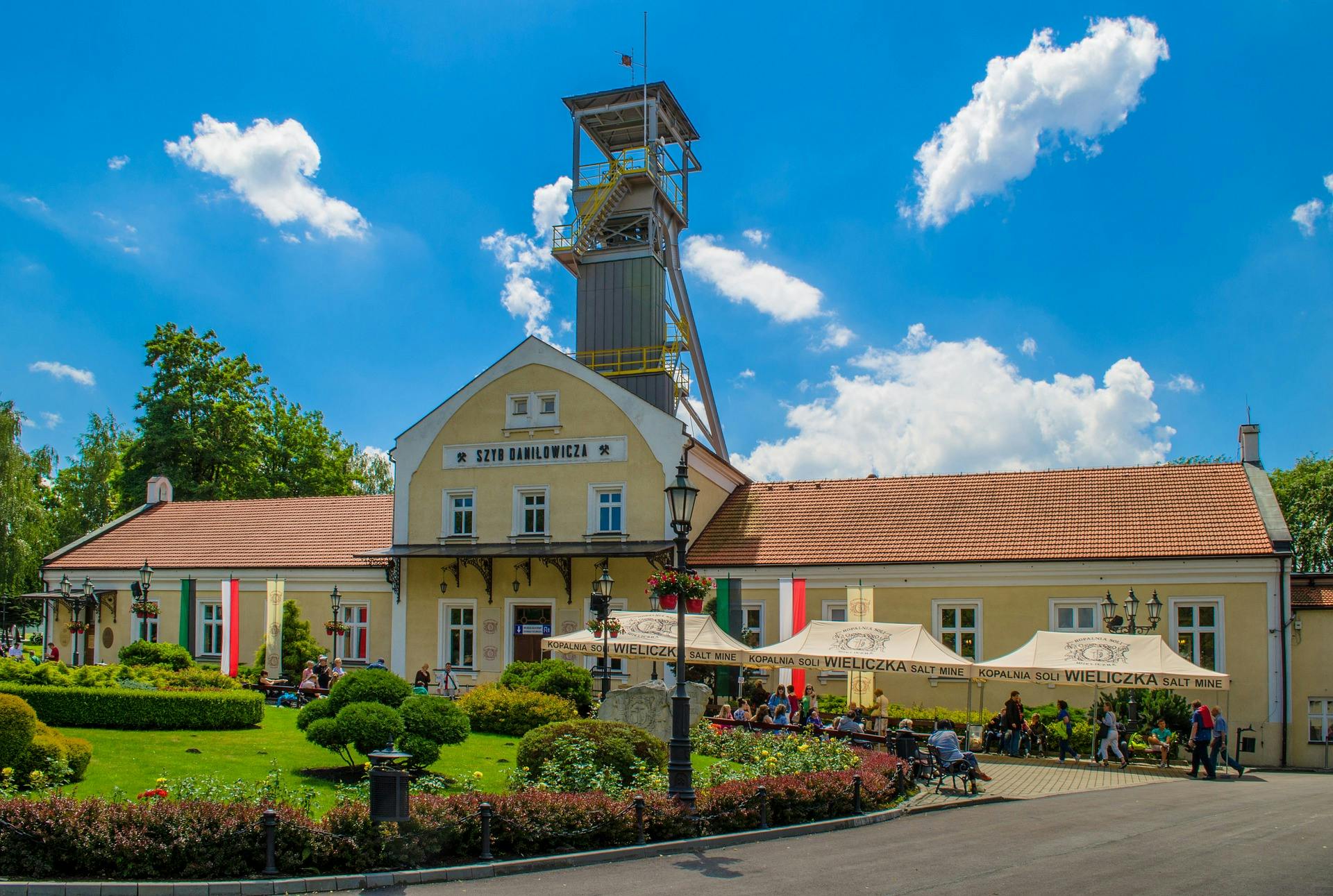
Daniłowicz Shaft, Daniłowicza 10
Standard experience
Tourist Route
Tour length
Approximately 2–3 hours
Walking distance
Approximately 3.5 kilometres
Maximum visitor depth
Approximately 135 metres
Number of stairs
Approximately 800
Initial descent
Approximately 380 stairs
Underground temperature
Approximately 17–18°C throughout the year
Tour format
Guided only
Current advertised price
From approximately 131 PLN per person, depending on date and ticket type
Typical opening period
Current Tourist Route information lists approximately 8:00 am–6:00 pm
Nearest railway station
Wieliczka Rynek Kopalnia
UNESCO status
Part of the Wieliczka and Bochnia Royal Salt Mines World Heritage property
Important: Ticket prices, language schedules and opening times are date-specific. Check the official booking calendar before travelling.
What Is the Wieliczka Salt Mine?
Wieliczka is an extensive underground mining complex created through centuries of rock-salt extraction. The full mine contains multiple levels and roughly 245 kilometres of galleries, although ordinary visitors see only a carefully maintained section.
The standard Tourist Route passes through chambers carved by miners rather than natural caves created entirely by water. The walls, pillars and ceilings are largely formed from salt-bearing rock, while timber structures support some of the larger excavations.
Over time, the miners created much more than practical workspaces. They carved chapels, statues, decorative reliefs and memorials into the salt. These additions reflected the strong religious traditions of people working in a dangerous underground environment.
Visitors should not expect every passage to resemble a sparkling crystal cavern. Many tunnels appear dark grey, brown or black because natural rock salt contains clay, minerals and other impurities. The polished floors and carved walls become more obviously salt-like when examined closely or illuminated from the correct angle.
A Short History of Salt Mining at Wieliczka
Salt was one of medieval Europe’s most valuable commodities. It preserved meat and fish, supported food production and served as an important source of government revenue.
Rock salt was mined at Wieliczka from the 13th century, although people had collected and evaporated local brine much earlier. The mine became part of the Kraków Saltworks, a royal enterprise that included the nearby Bochnia mine.
For generations, revenue from salt helped support the Polish monarchy. Mining was highly organised, and Wieliczka developed its own workforce, administrators, transport systems and underground engineering methods.
Early miners worked with hand tools, wooden hoists and horse-powered machinery. Salt blocks had to be cut, moved through narrow passages and raised to the surface through shafts.
As the mine expanded, it faced serious technical problems. Water could flood workings, unstable chambers could collapse and underground fires were especially dangerous because timber was used extensively for support.
Mining techniques gradually became more sophisticated. Large wooden structures were built to strengthen chambers, while mechanical devices improved transport and drainage.
Commercial salt extraction continued until the late 20th century. Today, the focus is on conservation, tourism, cultural events and underground health treatments rather than conventional industrial production.
Why Wieliczka Is a UNESCO World Heritage Site
Wieliczka was included in the first group of sites placed on the UNESCO World Heritage List in 1978.
Together, they document the development of European mining technology from the Middle Ages into the modern industrial period.
The UNESCO importance of Wieliczka is not based solely on the beauty of the Chapel of St Kinga. The mine also preserves historic machinery, tools, galleries, ventilation systems, chambers and evidence of the religious and social lives of its workers.
The site demonstrates how a valuable natural resource was extracted, managed and transported across many centuries.
What to Expect on the Tourist Route
The Tourist Route is the standard choice for first-time visitors. It combines the mine’s most famous decorative chambers with historical explanations and examples of mining equipment.
Sponsored Popular Items
Quick take: Musement.com offers a worldwide selection of tours and attractions
Wieliczka Salt Mine and Oskar Schindler Factory guided tour Poland Plan Wieliczka Salt Mine and Oskar Schindler Factory guided tour, a guided sightseeing experience, with practical tips on timing, inclusions and what to check before booking. Compare current availability, prices and booking conditions before you go.
Meeting at the Daniłowicz Shaft
Visitors assemble at the Daniłowicz Shaft at the time shown on their ticket. Groups are organised according to language and departure time.
Arriving late can result in missing the tour because groups descend at fixed times. Arrive at least 20 to 30 minutes early, particularly when tickets need to be collected.
The Initial Staircase
The tour begins with a descent of approximately 380 wooden stairs. The staircase turns repeatedly within the shaft and can feel surprisingly long.
The steps are secure and have handrails, but people who experience dizziness should descend slowly and avoid constantly looking down through the centre of the stairwell.
There is no standard lift alternative for ordinary visitors at the beginning of the normal Tourist Route. Special arrangements exist for visitors with limited mobility, but these must be reserved in advance.
Walking Through the Galleries
After reaching the first visitor level, the group follows the guide through illuminated passages and chambers.
The route contains displays showing:
Traditional salt-cutting techniques.
Historic transport methods.
Horse-powered machinery.
Wooden support structures.
Mining legends.
Underground religious traditions.
The guide controls the pace, and visitors must remain with the group. Some areas are narrow, while the larger chambers can accommodate many people.
The Museum Section
The basic underground walk takes about two hours. The same ticket can also include access to the underground exhibition of the Kraków Saltworks Museum, extending the visit closer to three hours.
Visitors who are tired or have limited time may be able to return towards the surface after the main route rather than continuing through every museum section. Follow the guide’s instructions at the relevant point.
Returning to the Surface
Visitors leave the mine by lift rather than climbing the 800 stairs back to ground level.
The exit shaft may be in a different place from the entrance, but visitors return to the general mine complex. The underground lift is functional rather than scenic and may feel confined when several people enter together.
The Main Underground Highlights
Historic Mining Chambers
Several chambers demonstrate how salt was extracted and how miners prevented enormous underground spaces from collapsing.
The most impressive support systems use thick timber beams arranged in tall geometric frameworks. Wood survives unusually well in the salty underground environment.
Salt-Carved Statues
Throughout the route, visitors encounter sculptures of historic figures, miners and characters connected with local legends.
Some carvings were created by working miners rather than formally trained professional artists. This is part of their interest: they reflect the culture of the mining community itself.
Underground Chapels
Miners created several places of worship within the mine. Religious services allowed workers to pray without returning to the surface and offered spiritual reassurance in a hazardous workplace.
The Chapel of St Kinga is the largest and most elaborate, but smaller chapels help explain how deeply religious practice was integrated into mining life.
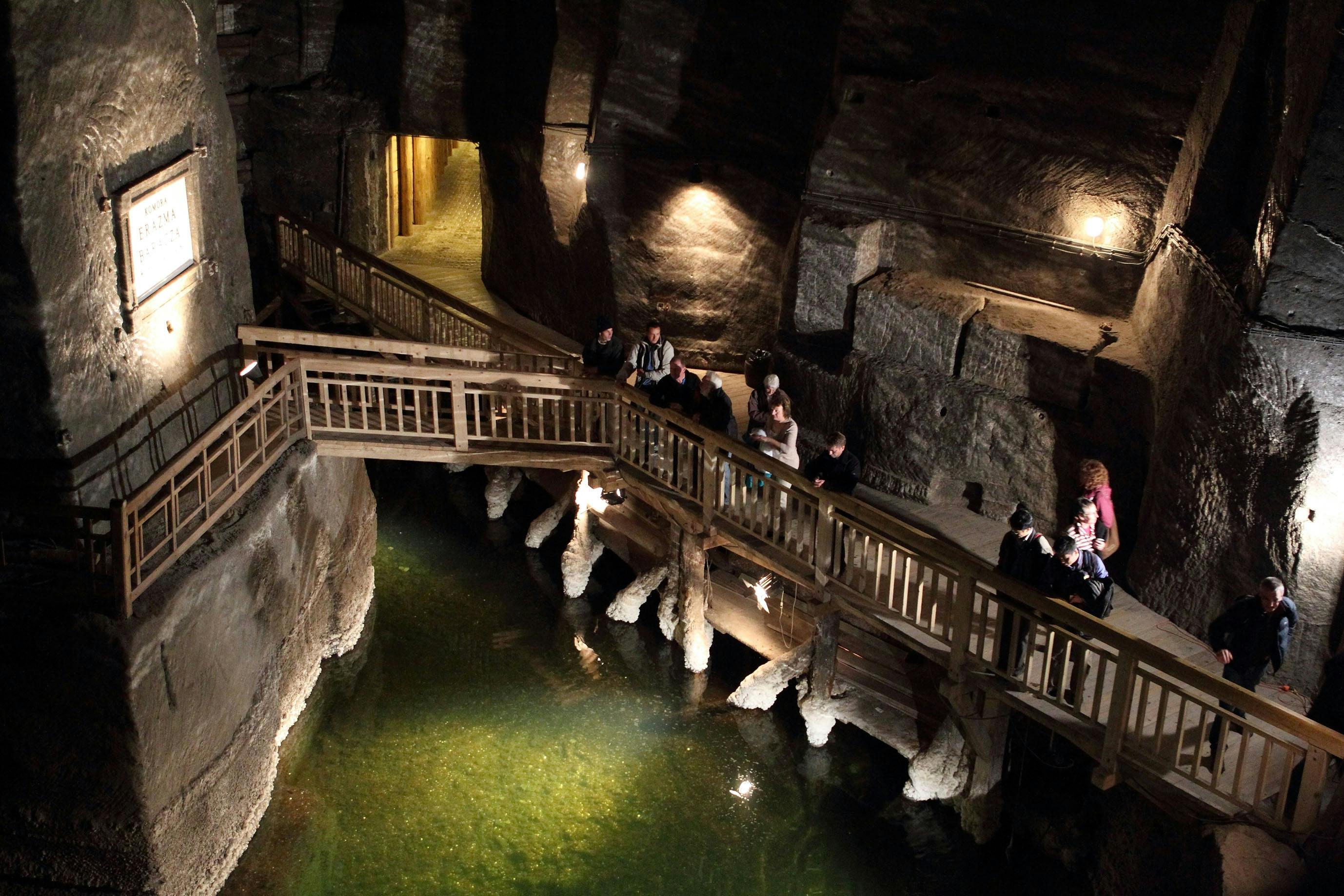
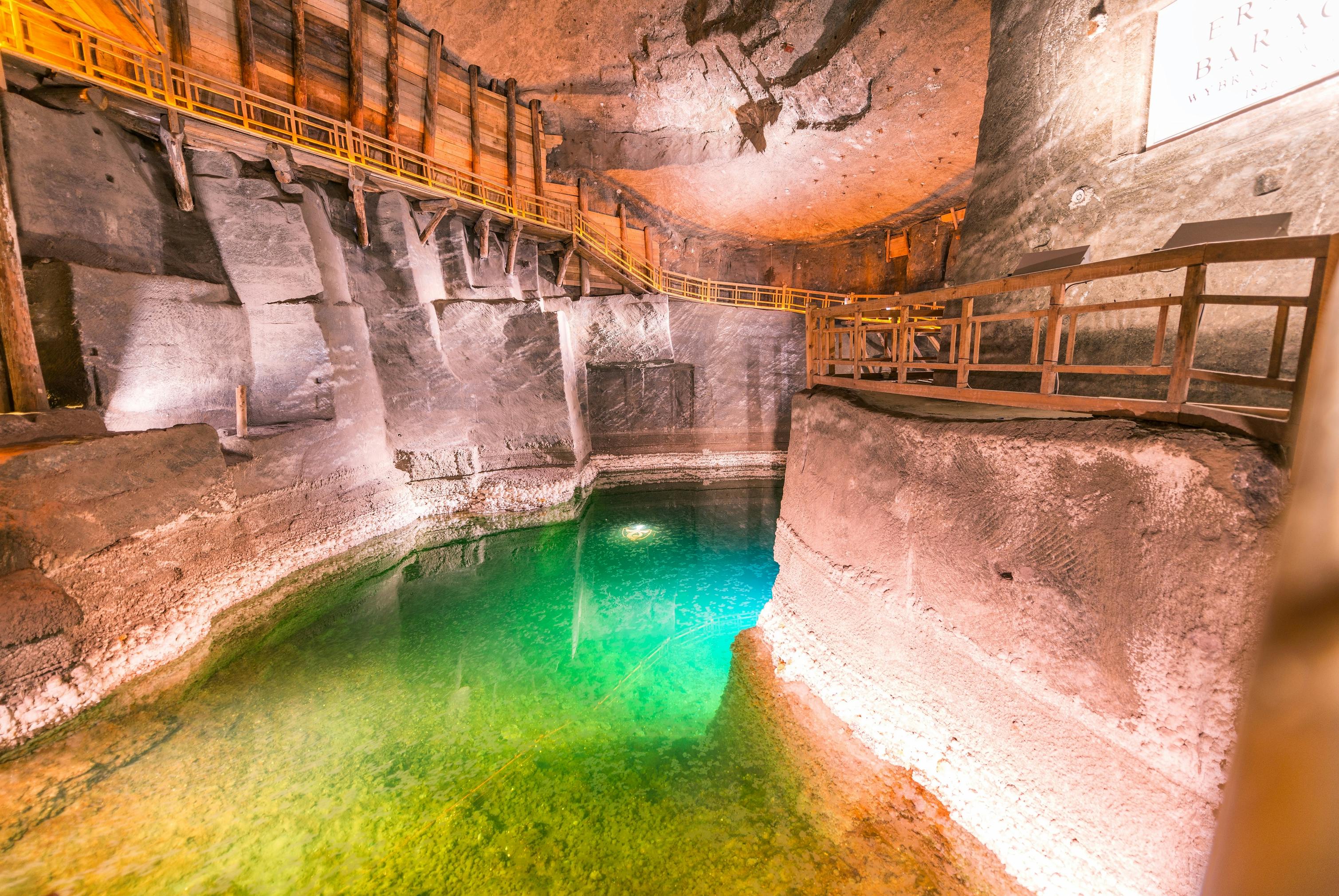
Brine Lakes
Dark underground pools appear in several chambers. Their surfaces can look almost perfectly still, reflecting the surrounding lights and timber structures.
These are highly saline brine lakes rather than ordinary freshwater pools. Visitors must remain behind barriers and should never throw objects into them.
Traditional Machinery
Historic wooden mechanisms show how miners moved salt and supplies through the underground workings.
Some displays use models or reconstructed scenes to explain systems that would otherwise be difficult to understand from the surviving machinery alone.
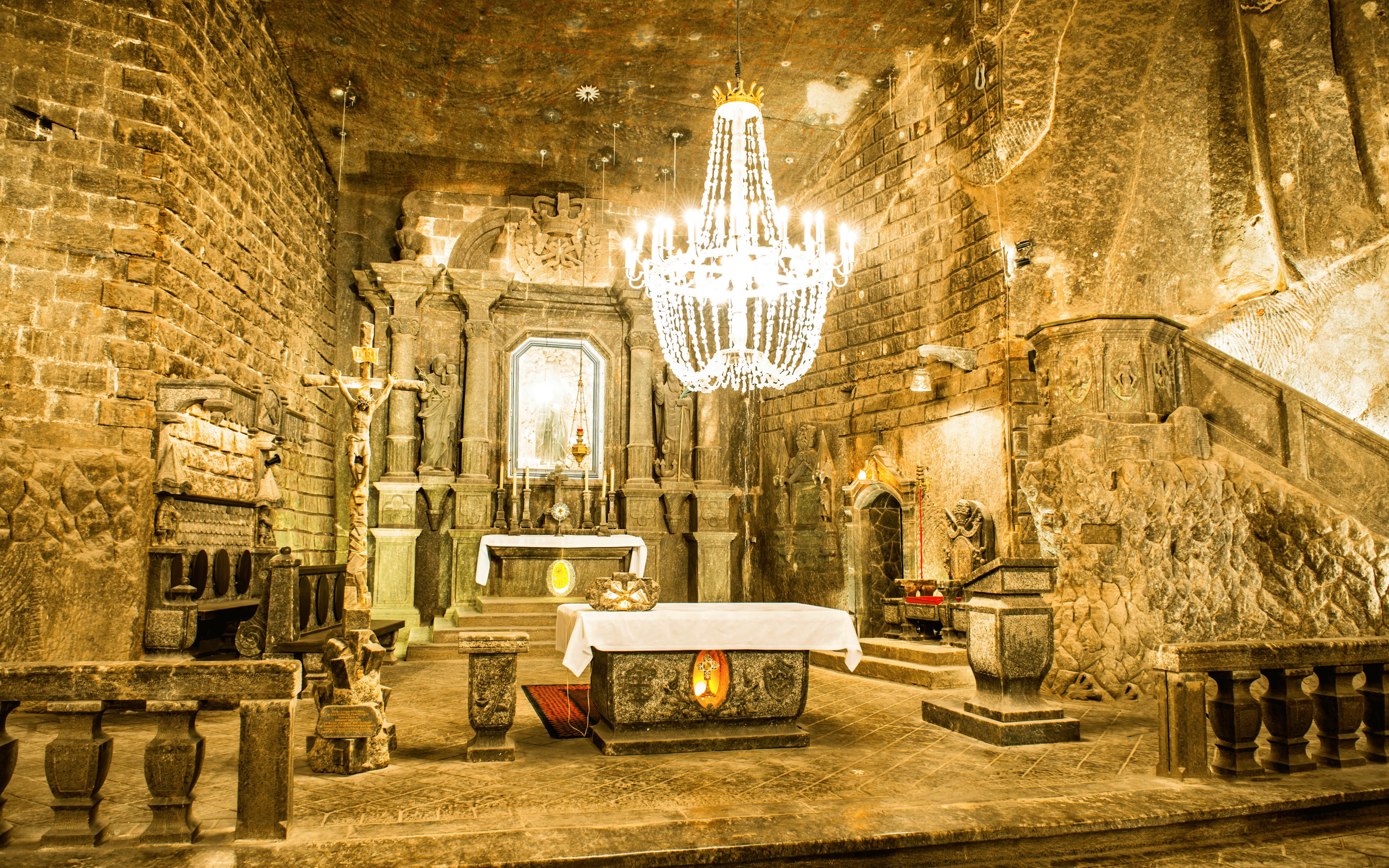
The Chapel of St Kinga
The Chapel of St Kinga is the visual centrepiece of the Tourist Route and the main reason many visitors travel to Wieliczka.
The enormous chamber lies more than 100 metres below ground and was shaped over decades by miners who transformed a working excavation into an underground church.
Almost every visible decorative feature relates to salt. The walls are carved from salt-bearing rock, the floor appears tiled but is cut and polished from salt, and the chandeliers contain salt crystals that were processed to become more transparent.
What to Look For
The main altar and statue of St Kinga.
Large salt-crystal chandeliers.
Religious sculptures along the walls.
A salt relief based on Leonardo da Vinci’s The Last Supper.
Detailed floor patterns cut into the salt.
Memorials and later additions reflecting modern Polish history.
The chapel remains a consecrated religious space. Masses, weddings, concerts and special events continue to take place there.
The Legend of St Kinga
According to legend, Kinga was a Hungarian princess who became associated with Poland through her marriage to Prince Bolesław V.
Before leaving Hungary, she is said to have thrown her ring into a salt mine. When miners later opened a salt deposit in Poland, they found her ring inside the first block.
The story symbolically links Kinga with the discovery and prosperity of Polish salt mining. She became the patron saint of miners.
Photography in the Chapel
The chapel is large and often contains several groups at once. A wide-angle camera setting is useful, but photographs may include other visitors.
Listen carefully to the guide because groups do not remain indefinitely. There is usually enough time for photographs, but the experience is structured rather than open-ended.
Why the Salt Is Grey Rather Than White
Visitors sometimes expect Wieliczka to resemble a cavern made from bright white table salt. Much of the mine is actually dark grey.
Natural rock salt contains mineral material, clay and other geological impurities. Its appearance can vary from pale grey to almost black.
Freshly cut or polished areas may show more shine, while older walls often have a duller appearance. Some salt crystal decorations have been purified or processed to transmit light more effectively.
The colour does not mean that the passages are ordinary stone. The grey walls are part of the same salt-bearing geological deposit that made Wieliczka economically important.
Choosing the Right Tour
Tourist Route
The Tourist Route is the best option for most first-time visitors.
Choose it when you want to see:
The Chapel of St Kinga.
Brine lakes.
Salt sculptures.
Large historic chambers.
Traditional mining equipment.
The route is fully illuminated and does not require a helmet or specialist clothing.
Miners’ Route
The Miners’ Route offers a more active experience focused on the practical work of mining.
Participants enter through the Regis Shaft, wear mining equipment and complete tasks under the supervision of a guide.
This route is better suited to visitors interested in mining techniques and physical participation. It is not simply a longer version of the Tourist Route, and it does not necessarily include the famous Chapel of St Kinga.
Check age requirements, language availability and physical restrictions before booking.
Pilgrims’ Route
The Pilgrims’ Route focuses on the mine’s religious heritage, underground chapels and the traditions of generations of miners.
It is most suitable for religious groups or visitors with a strong interest in sacred history.
Family Tours
Special family experiences may use legends, storytelling and characters associated with the mine to keep younger children engaged.
These operate on selected dates and may only be available in certain languages.
Graduation Tower
The outdoor brine graduation tower stands near the mine complex. Brine flows over bundles of blackthorn branches, creating a salty aerosol around the structure.
It is a separate attraction and should not be confused with the underground route.
Underground Health Resort
Parts of the mine operate as a health resort where respiratory rehabilitation and organised underground stays take place.
These medical and wellness services are separate from an ordinary tourist ticket.
Tickets and Opening Hours
The official Tourist Route currently advertises admission from approximately 131 PLN per person. The exact cost depends on:
Date and season.
Tour language.
Adult, reduced or family ticket category.
Special events or packages.
Whether tickets are purchased directly or through a tour operator.
Children under four normally receive free admission, but they still need to be included correctly in the reservation.
Opening Hours
The current Tourist Route information lists general opening from approximately 8:00 am to 6:00 pm.
This does not mean that every language departs continuously throughout the day. English tours are frequent, while other languages may operate only at selected times.
The mine normally operates throughout the year but closes on selected major public and religious holidays. Reduced hours may apply on other dates.
Should You Book in Advance?
Advance booking is strongly recommended.
Wieliczka is one of Poland’s busiest visitor attractions, and spaces are controlled by tour time and language. Tickets may sell out during:
July and August.
Weekends.
School holidays.
Easter and Christmas travel periods.
Large conference or group-tour periods.
Buying through the official mine website normally provides the clearest information about the actual route, language and departure time.
Third-party tours can be convenient when they include transport from Kraków, but read the details carefully. Some advertised “tickets” require meeting a tour representative in Kraków, while others provide direct entry at the mine.
Check whether your booking includes:
Transport from Kraków.
Mine admission.
A guide in your required language.
Hotel pickup.
Waiting time for other passengers.
Additional attractions.
How to Get to Wieliczka Salt Mine from Kraków
By Train
The suburban train is usually the simplest independent option.
Board at Kraków Główny and travel to Wieliczka Rynek Kopalnia. The journey generally takes around 20 to 30 minutes.
The station is only a short walk from the Daniłowicz Shaft. Signs direct visitors towards the mine.
Advantages of the train include:
Predictable journey time.
No road-traffic delays.
Easy access from central Kraków.
A short walk at the Wieliczka end.
Check the current railway timetable before departure, particularly in the evening or on public holidays.
By Bus 304
Bus 304 travels from the area near Kraków Główny and Galeria Krakowska towards Wieliczka.
For the Tourist Route, use the stop closest to the Daniłowicz Shaft, commonly listed as Wieliczka Kopalnia Soli.
You need a ticket valid for Kraków’s wider agglomeration zones rather than a basic central-city ticket.
The bus can be useful when its departure point is closer to your accommodation, but traffic may make journey times less predictable.
By Organised Tour
Organised tours usually include return road transport from central Kraków and a timed underground visit.
This is convenient when:
You do not want to navigate public transport.
You have limited time.
You are travelling with older relatives or children.
You want hotel pickup.
The disadvantage is reduced flexibility. There may be extra waiting while passengers are collected, and the schedule may leave little time to explore Wieliczka town.
By Taxi or Rideshare
A taxi or rideshare from central Kraków is straightforward but more expensive than public transport.
Road traffic can affect the journey, especially during weekday commuting periods.
Confirm that the destination is the Daniłowicz Shaft for the Tourist Route. The Miners’ Route begins at the separate Regis Shaft.
By Car
Wieliczka lies close to the A4 motorway and is approximately 10 kilometres from central Kraków.
Official parking areas are available near the Graduation Tower and Daniłowicz Shaft. Additional private car parks operate around the town.
Allow time to find the correct entrance after parking, as the mine complex includes several buildings and shafts.
How Long Should You Allow?
Underground Tour Only
Allow approximately two to three hours underground.
Independent Trip from Kraków
Allow at least four to five hours for:
Travel from Kraków.
Walking to the entrance.
Checking in.
The guided tour.
Waiting for the lift.
Returning to Kraków.
Mine and Wieliczka Town
Allow most of a day when combining the mine with the Saltworks Castle, local market square, lunch and the graduation tower.
A very tight itinerary can create problems because visitors cannot leave a guided group whenever they choose.
Stairs, Walking and Fitness
The Tourist Route does not require exceptional fitness, but it is more physically demanding than many people expect.
Visitors walk approximately 3.5 kilometres and negotiate around 800 stairs. Most of these descend rather than climb, but repeated downward steps can still strain knees, hips and ankles.
The initial 380-step staircase is the most intimidating section. After that, stairs are spread across the route.
Who May Find It Difficult?
The standard route may be uncomfortable for people with:
Serious knee or hip problems.
Reduced balance.
Severe breathing or heart conditions.
Strong claustrophobia.
Difficulty remaining with a moving group.
Problems standing for extended periods.
There are pauses in larger chambers, but seating is not available at every stop.
Visitors with chronic health concerns should realistically assess the distance, underground environment and fixed tour duration.
Accessibility
Parts of the underground Tourist Route have been adapted for visitors with limited mobility, but the standard public tour is not fully wheelchair accessible.
Accessible visits:
Use specially selected sections of the mine.
Must be booked in advance.
Operate at limited times.
Usually use Polish- or English-speaking guides.
Have restricted participant numbers.
Do not purchase a standard timed ticket and assume that a lift can simply replace the entrance staircase.
Contact the mine directly before booking when a traveller uses a wheelchair, cannot manage stairs or requires significant mobility assistance.
Guide and assistance dogs are permitted under the mine’s current accessibility arrangements, but advance confirmation is advisable.
Visiting with Children
Children of all ages can visit the Tourist Route, and children under four normally enter free.
The chambers, statues, lake and mining stories can be exciting for school-aged children. Younger children may become tired because the tour lasts several hours and the group cannot move entirely at its own pace.
Pushchairs
Pushchairs are not practical on the standard route because of the approximately 800 stairs.
A baby carrier or sling is generally more useful. Larger pushchairs should be left in the surface luggage-storage area.
Useful Family Facilities
Current facilities include:
Changing areas.
Highchairs in the underground restaurant.
Surface and underground toilets.
Places to purchase drinks and snacks.
Family-oriented tours on selected dates.
Keep children close on stairs and do not allow them to run ahead through tunnels or chambers.
What to Wear and Bring
Wear Layers
The underground temperature remains around 17–18°C throughout the year.
In winter, this may feel relatively warm compared with outside. In summer, it can feel cool after arriving from hot streets.
A light jacket, cardigan or long-sleeved layer is useful.
Choose Good Shoes
Wear comfortable closed shoes with secure soles. The route includes wooden stairs, stone surfaces and long corridors.
High heels, slippery fashion shoes and uncomfortable new footwear are poor choices.
Travel Light
Only small bags are allowed underground. The current maximum dimensions are approximately 20 × 20 × 35 centimetres.
Leave large backpacks, suitcases and bulky items in accommodation, a vehicle or the mine’s limited luggage facilities.
Bring
Your ticket or booking code.
Photo identification where required.
A light layer of clothing.
Comfortable shoes.
A charged phone or camera.
Any necessary medication.
A small amount of water if permitted by current rules.
Photography and Mobile Phones
Personal photography and filming are generally permitted on the Tourist Route.
Conditions underground can still make photography challenging:
Lighting levels vary considerably.
Groups continue moving.
Tripods may obstruct passages.
Flash can flatten the appearance of carvings.
Other tour groups may enter major chambers.
A phone with a good low-light mode is often sufficient. Use a wide-angle setting in the Chapel of St Kinga and larger timber chambers.
Mobile reception is limited. Only selected underground chambers have coverage or Wi-Fi.
Do not rely on your phone for communication while the group is deep underground.
Food, Toilets and Luggage
Food Underground
The Karczma Górnicza, located approximately 125 metres underground, serves Polish dishes and hot and cold drinks.
A shorter refreshment stop may also be available earlier on the route.
Opening and service arrangements can vary, so do not assume that a full meal is included in the tour time.
Surface Dining
Food is available near the Daniłowicz Shaft and at the neighbouring Grand Sal Hotel.
Wieliczka town also has cafés and restaurants within walking distance.
Toilets
Toilets are available near the entrance and at designated locations underground.
Use the surface facilities before the tour because the first underground toilets are not immediately beside the starting staircase.
Luggage Storage
Free storage and lockers are available near the mine, but capacity is limited.
Do not arrive with large suitcases expecting guaranteed storage, particularly during busy periods.
The Best Time to Visit
Early Morning
An early tour generally offers the calmest experience above ground and leaves the rest of the day available for Kraków sightseeing.
The chapel and main chambers can still be busy because groups follow one another through the route.
Late Afternoon
Later tours may fit well after a morning in Kraków, but check the final return train or bus and allow time for the full underground visit.
Summer
Summer is the busiest period. The stable underground temperature provides relief from hot weather, but ticket availability becomes more limited.
Winter
Winter is a good time to visit because the attraction is indoors and the underground temperature remains stable.
Snow or icy paths can affect the short walk from the railway station, so wear suitable shoes.
Rainy Days
Wieliczka is an obvious wet-weather choice from Kraków, which means tickets may sell quickly when heavy rain is forecast.
Other Places to Visit in Wieliczka
Wieliczka Saltworks Castle
The Saltworks Castle historically administered the royal salt enterprise. It forms part of the UNESCO World Heritage property and contains museum collections connected with mining and salt administration.
Check current opening arrangements before planning a combined visit.
Brine Graduation Tower
The graduation tower provides an outdoor wellness-style experience near the mine complex.
Visitors walk around the structure while brine flows over blackthorn branches, creating moisture and salt particles in the surrounding air.
It requires a separate ticket.
Wieliczka Market Square
The town centre contains colourful buildings, cafés and a small market square within walking distance of the mine.
It provides a quieter setting for lunch than returning immediately to central Kraków.
St Clement’s Church
This historic church near the centre of Wieliczka reflects the long connection between the town, religion and the mining community.
Suggested Half-Day Itinerary from Kraków
8:00 am: Travel from Kraków Główny
Take the suburban train towards Wieliczka Rynek Kopalnia.
8:30 am: Arrive in Wieliczka
Walk to the Daniłowicz Shaft and locate the correct ticket or meeting area.
9:00 am: Begin the Tourist Route
Descend the initial staircase and follow the guided route through the historic workings.
11:00 am: Main Route Ends
Continue into the museum section or follow the available exit arrangements.
11:30 am–12:00 pm: Return to the Surface
Allow time for the lift queue, toilets and souvenir shops.
12:15 pm: Lunch in Wieliczka
Eat near the mine, at the Grand Sal Hotel or in the town centre.
1:30 pm: Optional Graduation Tower or Castle
Add one nearby attraction when its opening hours fit your schedule.
3:00 pm: Return to Kraków
Take the train back to Kraków Główny and continue with an afternoon or evening activity.
Is Wieliczka Salt Mine Worth Visiting?
Wieliczka is worthwhile for most visitors spending more than a day or two in Kraków.
Its strongest features are:
A genuinely important industrial heritage site.
The extraordinary Chapel of St Kinga.
Centuries of mining history preserved underground.
Large timber-supported chambers.
Easy independent access from Kraków.
A stable year-round underground environment.
However, it is important to arrive with realistic expectations.
The mine is extremely popular and operates as a structured visitor attraction. Groups are large, tours move at a controlled pace and major chambers may contain many people.
It is not a quiet expedition through abandoned tunnels. The route is illuminated, interpreted and designed to accommodate high visitor numbers.
The price can also feel high compared with ordinary Polish museums, particularly when transport and booking fees are added.
Despite these limitations, the scale of the mine and the craftsmanship of its underground chapels make it unlike any normal museum or historic building. The Chapel of St Kinga is impressive in photographs, but its size and location are far more striking when experienced more than 100 metres beneath the surface.
Frequently Asked Questions About Wieliczka Salt Mine
Where is the Wieliczka Salt Mine?
It is in the town of Wieliczka, approximately 10 kilometres southeast of central Kraków.
How long does the tour take?
The main Tourist Route takes about two hours. Adding the underground Kraków Saltworks Museum can extend the visit to approximately three hours.
How far do visitors walk?
The standard route is approximately 3.5 kilometres long.
How deep does the tour go?
Visitors reach approximately 135 metres below the surface.
How many stairs are there?
The Tourist Route includes about 800 stairs, with approximately 380 at the beginning.
Do you climb the stairs back up?
No. Visitors return to the surface by lift.
Can I take a lift down instead of using the entrance stairs?
Not on the ordinary Tourist Route. Visitors who cannot manage the staircase need to reserve a specially adapted accessible tour in advance.
What is the temperature underground?
The temperature remains approximately 17–18°C throughout the year.
Do I need a jacket?
A light jacket or extra layer is recommended, especially during summer.
Can I visit without a guide?
No. The mine can only be visited with an authorised guide.
Is the Chapel of St Kinga included?
Yes. The chapel is one of the main highlights of the standard Tourist Route.
Is everything in the chapel made from salt?
The chamber, carvings, floors and many decorative elements are formed from salt. Functional components such as electrical wiring and structural fittings use ordinary modern materials.
Why is the salt grey?
Natural rock salt contains minerals, clay and other impurities, giving much of the mine a grey or dark appearance.
Can I lick the walls?
Visitors should not lick or touch the walls unnecessarily. The route receives large numbers of people, and the historic surfaces require protection.
Can children visit?
Yes. Children of all ages are admitted, and children under four normally enter free.
Can I take a pushchair?
A pushchair is not practical because of the large number of stairs. A carrier or sling is generally preferable.
Is the mine wheelchair accessible?
Selected sections are accessible through specially arranged tours. The standard Tourist Route is not fully accessible.
Can I take photographs?
Personal photography and filming are generally permitted, subject to current rules and staff instructions.
Can I bring a large backpack?
No. Underground luggage is restricted to a small bag of approximately 20 × 20 × 35 centimetres.
Are there toilets underground?
Yes. Toilets are available at designated points during the route.
Is there food underground?
Yes. The underground Karczma Górnicza serves meals and drinks, and smaller refreshments may be available elsewhere on the route.
What is the easiest way to travel from Kraków?
The suburban train from Kraków Główny to Wieliczka Rynek Kopalnia is usually the simplest independent option.
How long is the train journey?
The journey generally takes around 20 to 30 minutes.
Does bus 304 go to the mine?
Yes. Bus 304 connects central Kraków with Wieliczka. Make sure you buy a ticket valid for the required outer transport zone.
Should I book before arriving?
Yes. Advance booking is strongly recommended because tours are limited by language, time and group capacity.
Is the Miners’ Route the same as the Tourist Route?
No. The Miners’ Route is a more active, task-based experience using a different entrance and does not simply repeat the main sightseeing route.
Does the Miners’ Route include the Chapel of St Kinga?
Visitors should not assume that it does. Book the Tourist Route when the chapel is your main priority.
Is the mine suitable for someone with claustrophobia?
Many chambers are very large, but some passages, shafts and the exit lift are enclosed. People with severe claustrophobia should consider this carefully.
Can pregnant visitors take the tour?
Many active pregnant visitors can manage the route, but the 3.5-kilometre walk and 800 stairs should be discussed with a doctor where there are health concerns.
Can I leave the tour early?
Leaving independently is not normally possible. Visitors must remain with the guide and use designated exit arrangements.
Is the mine open during winter?
Yes, it operates for most of the year, excluding selected holidays and closure dates.
Is Wieliczka part of Kraków?
No. Wieliczka is a separate town within the wider Kraków metropolitan area.
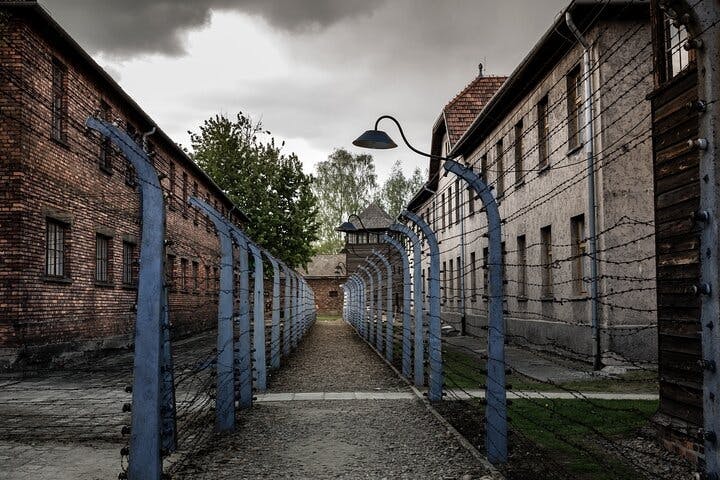
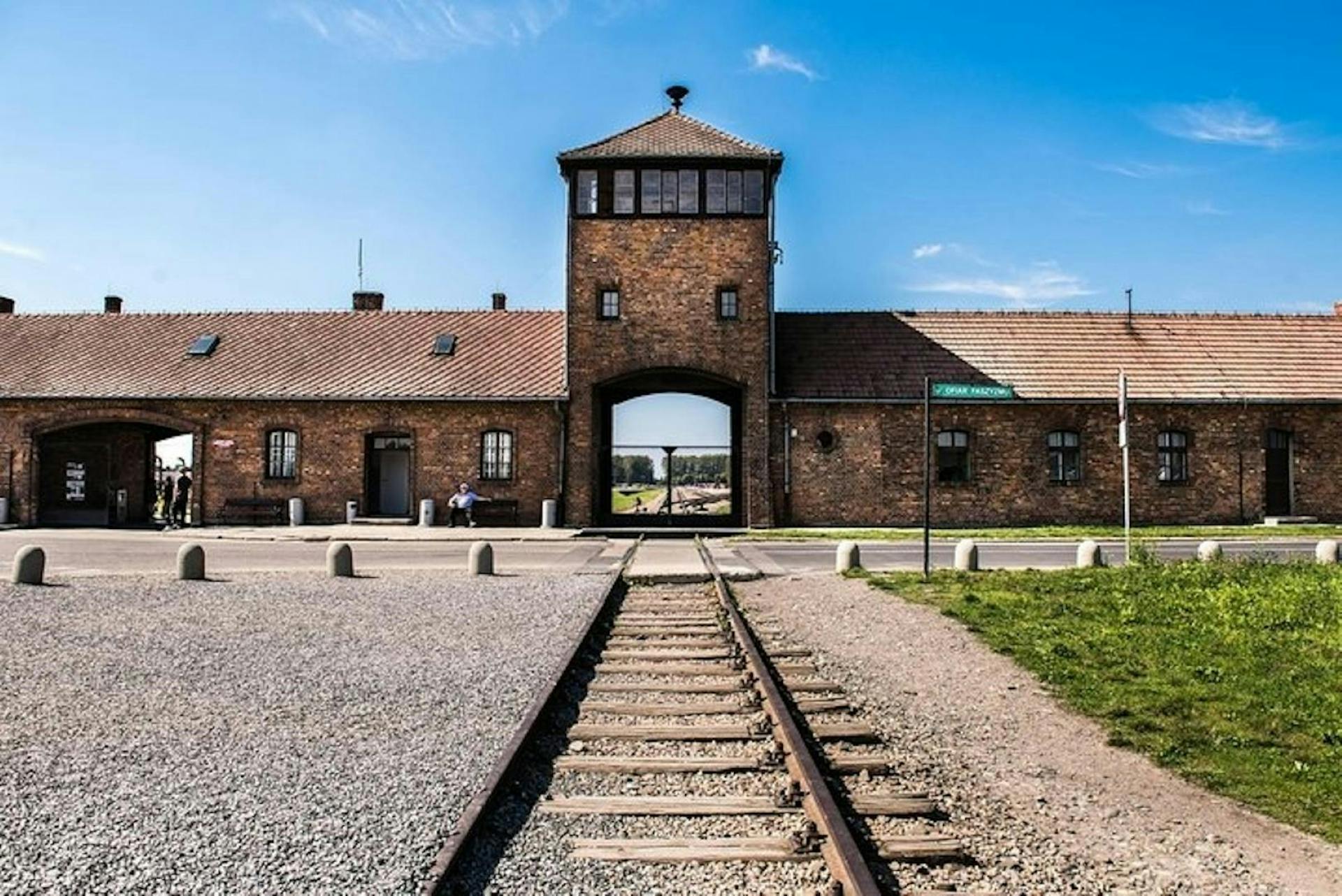
Can Wieliczka and Auschwitz be visited on the same day?
Some organised tours combine them, but it creates a long and tiring day with limited flexibility. Visiting them on separate days provides a less rushed experience.
Final Thoughts
The Wieliczka Salt Mine is one of those rare attractions where the setting is as important as the objects on display.
The long descent, cool air and dark salt passages gradually separate visitors from the ordinary streets above. By the time the route opens into the Chapel of St Kinga, it becomes easier to understand why the mine has fascinated travellers for generations.
Wieliczka is highly organised, busy and unmistakably tourist-oriented. It is also an authentic industrial monument shaped by centuries of difficult and dangerous work.
Book a timed tour, wear good shoes, bring a light layer and allow at least half a day from Kraków. The stairs require effort, but the return lift means the hardest physical section comes at the beginning.
For travellers interested in history, engineering, religion or unusual architecture, Wieliczka remains one of the most memorable experiences available near Kraków.
Sponsored Popular Items
Quick take: Musement.com offers a worldwide selection of tours and attractions
Wieliczka Salt Mine Poland Book your Wieliczka Salt Mine tickets online. Save time and money with our best price guarantee. Make the most of your visit to Wieliczka.
Wieliczka Salt Mine and Oskar Schindler Factory guided tour Poland Plan Wieliczka Salt Mine and Oskar Schindler Factory guided tour, a guided sightseeing experience, with practical tips on timing, inclusions and what to check before booking. Compare current availability, prices and booking conditions before you go.
Full-day Tour of Auschwitz-Birkenau and Wieliczka Salt Mine from Krakow Poland Plan Full-day Tour of Auschwitz-Birkenau and Wieliczka Salt Mine from Krakow, a guided sightseeing experience, with practical tips on timing, inclusions and what to check before booking. Compare current availability, prices and booking conditions before you go.
Wieliczka Salt Mine Entrance and Guided Tour – Guided Sightseeing Poland Wieliczka Salt Mine entrance and guided tour USD 48 adds structure, local context and purposeful sightseeing to the itinerary. Check current availability, inclusions and booking details before you go.
Wieliczka Salt Mine Fast-Track Entry Pass & Guided Tour Poland Visit the Wieliczka Salt Mine, one of Poland’s most popular attractions, on a guided tour and marvel at beautiful chambers, salt sculptures, and lakes 135 meters underground. Check current availability, inclusions and booking details before you go.
Wieliczka Salt Mine Guided Tour with Hotel Transfers Poland Wieliczka Salt Mine guided tour with hotel transfers is a convenient way to add structure, local context and purposeful sightseeing to the itinerary. Check current availability, inclusions and booking details before you go.