Rental Motorcycle Tour in Kyoto: South & East Heritage
Ride through Kyoto’s southern and eastern heritage districts, with stops at famous temples and shrines including Fushimi Inari Taisha.
The Rental Motorcycle Tour in Kyoto: South & East Heritage is a private motorbike sightseeing experience that links some of Kyoto’s most famous religious and cultural landmarks in one flexible route. Instead of relying on buses, taxis or crowded trains, you travel by rental motorbike with a guide through Kyoto’s southern and eastern districts.
The tour is designed for travellers who want a more active, independent-feeling way to explore Kyoto. The route includes Kiyomizu-dera, Sanjusangen-do, Fushimi Inari Taisha and To-ji Temple, making it a strong choice for visitors who want classic Kyoto heritage sites with the freedom and energy of riding between them.
Quick Tour Overview
Experience
Rental Motorcycle Tour in Kyoto: South & East Heritage
Destination
Kyoto, Japan
Tour Type
Private rental motorbike sightseeing tour
Duration
Approximately 6 hours; supplier notes describe the duration as flexible, around 5 to 7 hours
Route Distance
Approximately 20 to 25 km, mostly on Kyoto city roads
Starting Point
レオタニモト 本店 / Leo Tanimoto main store
Meeting Point Clue
The supplier notes there is a dinosaur object on top of the building
Main Stops
Kiyomizu-dera, Sanjusangen-do, Fushimi Inari Taisha and To-ji Temple
Languages
Trip.com lists Japanese; matching supplier details list English and Japanese. Confirm your selected language before booking.
Best For
Licensed riders, repeat Kyoto visitors, temple lovers, photographers and travellers wanting a more adventurous city route
Licence Requirement
A valid licence for driving in Japan is required. International visitors may need an International Driving Permit or approved Japanese translation.
Price Guide
From US$170.85 on Trip.com at the time checked; always confirm live pricing before booking
Cancellation
Trip.com lists conditional cancellation. Check the live cancellation policy before booking.
Kyoto’s famous heritage sites are spread across different districts, and moving between them can take time by bus or train. A motorcycle tour gives you a more flexible way to connect temple, shrine and neighbourhood stops while still travelling with a local guide.
This experience is especially appealing if you enjoy riding and want to see Kyoto from street level. You can feel the rhythm of the city roads, move between eastern hills, southern shrine districts and historic temple areas, and cover more ground than a standard walking route.
Main Highlights
Ride a rental motorbike through Kyoto’s southern and eastern heritage districts.
Visit Kiyomizu-dera, one of Kyoto’s most famous temples.
See Sanjusangen-do, known for its long hall and 1,001 Kannon statues.
Stop at Fushimi Inari Taisha, famous for its vermilion torii gate tunnels.
End with To-ji Temple, home to one of Kyoto’s most recognisable pagodas.
Travel with a guide rather than navigating the whole route alone.
Experience a private group format.
Cover around 20 to 25 km of city roads in one tour.
Enjoy a different perspective from standard Kyoto bus or walking tours.
Important Licence Requirement
This tour is only suitable for travellers who can legally ride in Japan. The supplier states that a valid car or motorcycle licence for Japan is required. Foreign visitors should check their home-country rules before travelling because International Driving Permits are not issued in Japan.
Visitors from some countries may be able to ride with a valid International Driving Permit under the correct convention. Travellers from countries such as Switzerland, Germany, France, Belgium, Monaco and Taiwan may require a Japanese translation of their licence. Always check official rules before booking, because arriving without the correct documents may mean you cannot ride.
Can You Ride a 50cc Motorcycle with a Car Licence?
The supplier notes that if you have a valid international car licence, you may be able to drive a 50cc motorcycle in Japan. However, licence rules depend on your issuing country, permit type and Japanese regulations.
Do not assume you are eligible. Confirm your exact licence situation before booking and carry all required documents on the day.
Documents to Bring
Driver’s licence
International Driving Permit if required
Japanese licence translation if required for your country
Passport or copy of passport
ID card or copy if requested
Booking confirmation or e-voucher
Cash for extra fees, food, drinks or temple entry if needed
Stop 1: Kiyomizu-dera
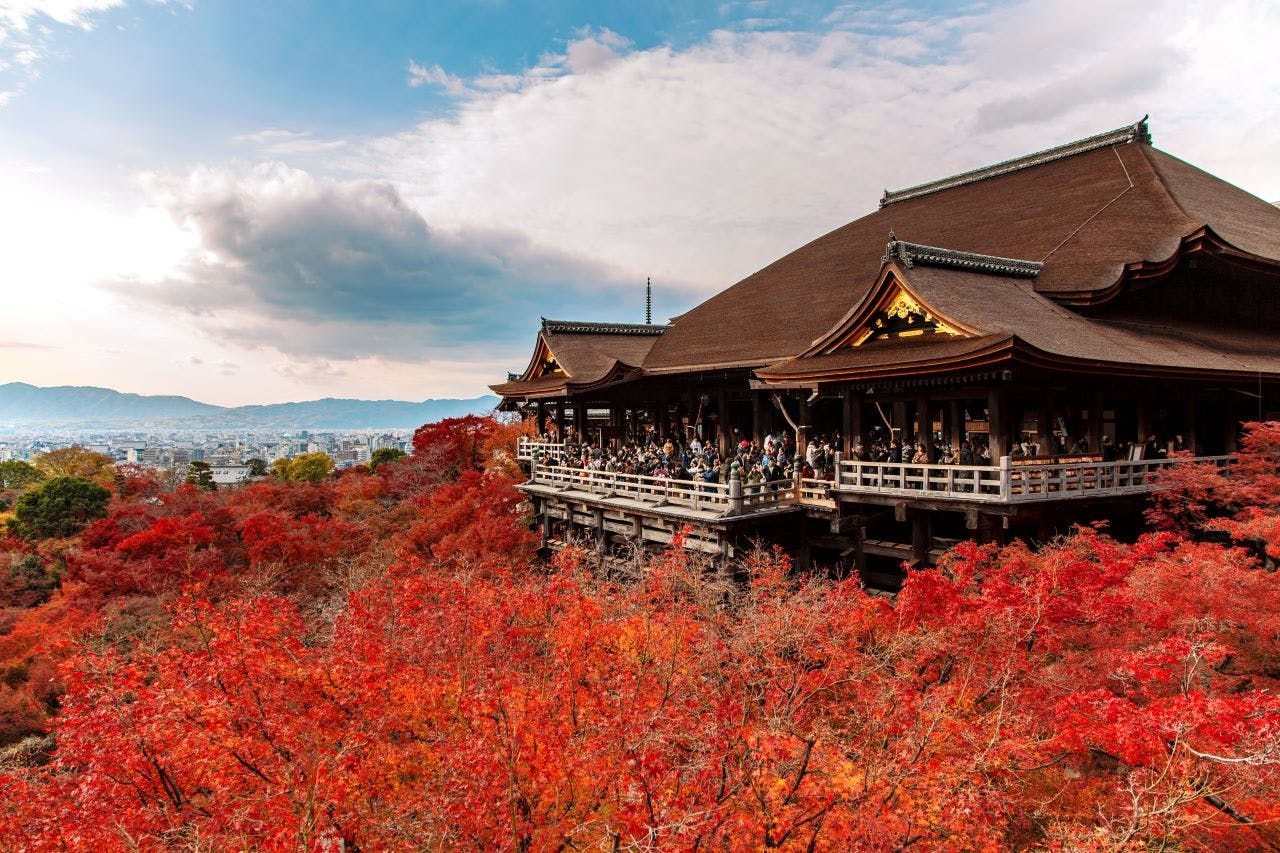
Kiyomizu-dera is one of Kyoto’s most celebrated temples, located in the eastern Higashiyama area. It is best known for its large wooden stage, which projects from the Main Hall and offers views over Kyoto and the surrounding hillside.
On this tour, Kiyomizu-dera is usually the first major sightseeing stop. The supplier itinerary allows around one hour here, which is enough for a focused visit to the main hall area, stage viewpoints and surrounding temple precinct, although not enough for a very slow exploration of all nearby lanes and shops.
What to See at Kiyomizu-dera
The famous wooden stage
Main Hall views over Kyoto
Otowa Waterfall area
Temple architecture and hillside setting
Views across Higashiyama and Kyoto city
Seasonal cherry blossoms or autumn colours if travelling at the right time
Stop 2: Sanjusangen-do
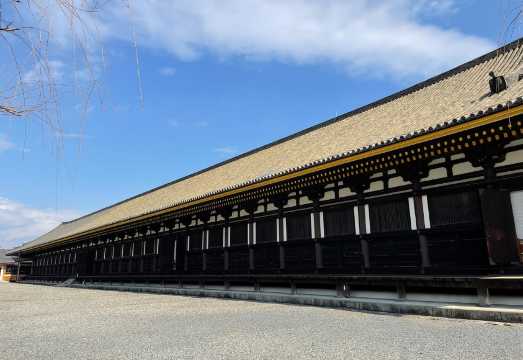
Sanjusangen-do is one of Kyoto’s most extraordinary temple halls. It is famous for its long wooden hall and its collection of 1,001 statues of Kannon, the goddess of compassion.
The atmosphere here is very different from Kiyomizu-dera. Instead of hillside views and open temple grounds, Sanjusangen-do is about interior scale, repetition, sculpture and spiritual intensity. The rows of Kannon statues are one of Kyoto’s most memorable indoor sights.
What Makes Sanjusangen-do Special?
1,001 statues of Kannon
A long temple hall with a powerful sense of symmetry
Important Buddhist sculpture
A quieter, more contemplative contrast to Kyoto’s outdoor sightseeing spots
Strong appeal for art, history and religious heritage travellers
Stop 3: Fushimi Inari Taisha
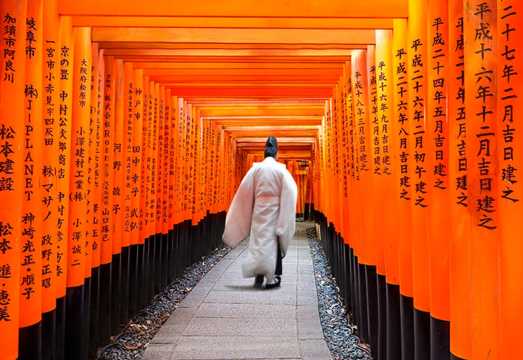
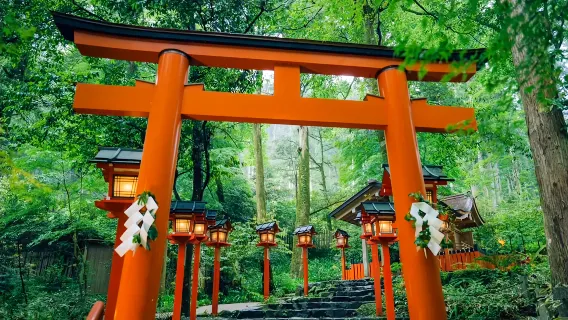
Fushimi Inari Taisha is one of Kyoto’s most photographed shrines, famous for its long paths of bright vermilion torii gates. The shrine is dedicated to Inari, associated with rice, agriculture, business and prosperity.
The tour itinerary allows around one hour here. That is enough to explore the lower shrine area and walk through part of the torii gate path, but it is not enough to complete the full mountain route. If this is your first visit, focus on the main shrine, the Senbon Torii gate area and lower trail sections.
What to See at Fushimi Inari Taisha
The main shrine buildings
The famous vermilion torii gate tunnels
Fox statues connected with Inari worship
Forest paths on the lower slopes of Mount Inari
Photo opportunities along the gate-lined walkways
Stop 4: To-ji Temple
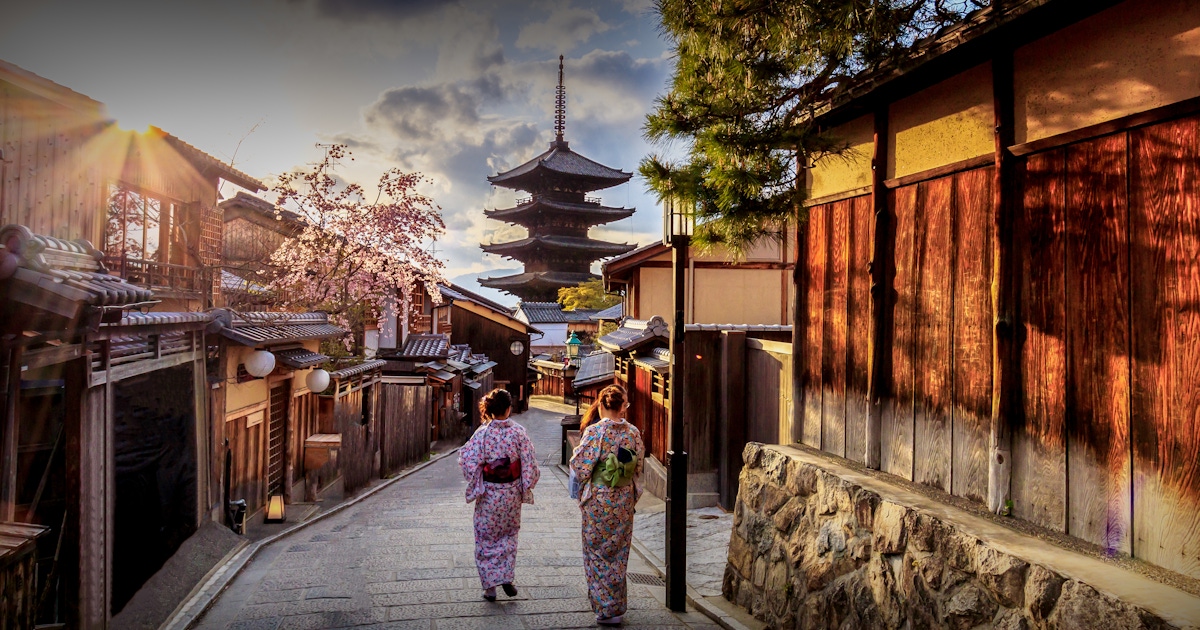
To-ji Temple is one of Kyoto’s most recognisable landmarks and a UNESCO World Heritage-related temple site. Its five-storey pagoda is one of the city’s great symbols and is widely described as the tallest wooden pagoda in Japan.
The tour usually concludes here before returning to the motorcycle rental shop. To-ji is a strong final stop because it links Kyoto’s ancient capital history, Buddhist heritage and skyline identity in one compact temple precinct.
What to See at To-ji
The five-storey pagoda
Kondo Hall
Kodo Hall and Buddhist statues
Temple ponds and gardens
Seasonal cherry blossom or autumn scenery
Kobo-ichi market if your visit coincides with the monthly market day
Suggested Route Flow
The supplier itinerary may vary, but a typical route follows this structure:
Start: Meet at Leo Tanimoto main store and complete rental and licence checks.
Ride 1: Travel towards the Higashiyama area.
Stop 1: Visit Kiyomizu-dera for around one hour.
Ride 2: Continue to Sanjusangen-do.
Stop 2: Visit Sanjusangen-do for around 45 minutes.
Ride 3: Head south to Fushimi Inari Taisha.
Stop 3: Explore Fushimi Inari Taisha for around one hour.
Ride 4: Continue towards To-ji Temple.
Stop 4: Visit To-ji Temple for around one hour.
Finish: Return to Leo Tanimoto main store.
What Is Included?
Inclusions can vary between Trip.com and supplier package details, so check your final voucher carefully. Matching supplier information lists the following key elements:
Rental motorbike
Guide service
Private group experience
Route through Kyoto’s south and east heritage districts
Stops at Kiyomizu-dera, Sanjusangen-do, Fushimi Inari Taisha and To-ji Temple
E-voucher and booking confirmation
What May Not Be Included?
Supplier information contains some mixed wording around temple entry fees, with several itinerary stops marked as extra fee. Confirm the live package before booking. Possible exclusions may include:
Temple or shrine entrance fees
Food and drinks
Fuel surcharge if applicable
Insurance upgrades if offered separately
Helmet or riding gear beyond standard rental items, depending on provider terms
Hotel pickup and drop-off
Travel insurance
Personal expenses
Meeting Point
The tour starts at レオタニモト 本店, listed by the supplier as the main starting location. The meeting point note says there is a dinosaur object on top of the building, which should help identify the correct place.
Arrive early. Motorcycle rental tours require time for licence checks, paperwork, safety explanation, bike setup and route briefing. If your documents are not accepted, you may not be able to join the ride.
Who Is This Tour Best For?
This tour is best for confident licensed riders who want a more independent and adventurous way to explore Kyoto. It suits travellers who are comfortable riding in urban traffic, have the correct driving documents, and want to visit several major heritage sites in one day.
It is also a good fit for repeat visitors to Kyoto who have already used buses and trains and want a different style of sightseeing.
Who Should Not Book This Tour?
This tour is not suitable for travellers without a valid driver’s licence for Japan. It is also not ideal for nervous riders, people uncomfortable with left-side traffic, travellers who dislike city riding, or anyone who wants a slow walking-only temple day.
If you are unsure about your riding confidence, choose a guided walking tour, e-bike tour, private car tour or public transport itinerary instead.
Riding Conditions in Kyoto
Kyoto streets can be busy, narrow and full of mixed traffic. You may encounter buses, taxis, cyclists, pedestrians, delivery vehicles, tourist crowds and tight parking areas. Riding is rewarding, but it requires attention and patience.
The route is mostly on city roads rather than open countryside. That means the experience is more about efficient heritage-site travel and street-level Kyoto atmosphere than high-speed riding.
What to Wear
The supplier gives clear clothing requirements. Dress for safety, comfort and riding practicality.
Long-sleeved shirt
Long pants
Closed-toe shoes
Comfortable clothing that allows movement
Light jacket depending on season
Gloves if you prefer extra comfort
Rain protection if showers are forecast
What Not to Wear
The supplier lists several items as not allowed. Avoid anything that could make riding unsafe or violate operator rules.
High-heeled shoes
Sandals or flip-flops
Open-toed shoes
Slippers
Shorts
Short skirts
Skirts
Sleeveless shirts
What to Bring
Driver’s licence
International Driving Permit if required
Japanese licence translation if required
Passport or copy
ID card or copy
Mobile voucher
Cash for entry fees, snacks or drinks
Small secure bag
Phone with charged battery
Portable power bank
Weather protection if needed
Safety Rules and Riding Etiquette
Follow your guide’s instructions at all times.
Ride on the left side of the road in Japan.
Do not ride after drinking alcohol.
Do not use drugs before or during the tour.
Keep a safe distance from other vehicles.
Watch for cyclists, pedestrians and buses.
Park only where instructed.
Do not rush between temple stops.
Respect local residents in narrow Kyoto streets.
Carry your licence documents throughout the ride.
Alcohol and Drugs Are Not Allowed
The supplier specifically lists alcohol and drugs as not allowed. This is especially important for a motorcycle tour. Riding under the influence is dangerous, illegal and could result in serious consequences in Japan.
Save sake, beer or nightlife experiences for after the tour, once the motorcycle has been returned and the riding day is complete.
Photography Tips
Use a secure phone strap or keep your phone packed while riding.
Do not take photos while operating the motorcycle.
At Kiyomizu-dera, photograph the wooden stage and city views.
At Sanjusangen-do, respect indoor photography rules, as photos may be restricted.
At Fushimi Inari, take torii gate photos from the lower paths if time is limited.
At To-ji, use wide-angle mode for the five-storey pagoda.
Bring a power bank because maps, photos and translation apps can drain your phone.
Best Time of Year for This Tour
Spring and autumn are especially beautiful in Kyoto, but they are also the busiest seasons. Cherry blossoms around late March to early April and autumn foliage from November into early December can make temple stops spectacular, but traffic and crowds may be heavier.
Summer can be hot and humid, so wear breathable long sleeves and stay hydrated. Winter can be crisp and quieter, but you will need warm riding layers.
Best Time of Day to Ride
Morning starts are usually best because temple areas become busier as the day continues. Earlier riding also gives you more time to handle paperwork, traffic, temple visits and small delays without feeling rushed.
If possible, avoid peak traffic periods and major festival days. Kyoto roads around popular temples and shrines can become congested during holidays, cherry blossom season and autumn foliage season.
Entrance Fee Note
Kiyomizu-dera, Sanjusangen-do and To-ji may require entry fees. Fushimi Inari Taisha is generally known as a shrine that can be visited without a standard gate admission fee for the main grounds, but paid areas or special arrangements can vary.
Because supplier wording differs across platforms, bring cash and confirm whether entry fees are included in your selected package before the tour begins.
Nearby Places to Visit Before or After
If you want to extend your day after the motorcycle tour, consider nearby Kyoto highlights depending on where you finish and your energy level.
Kyoto Station: Useful for dinner, shopping, transport connections and the station observation areas.
Higashiyama: Historic lanes, shops and tea houses near Kiyomizu-dera.
Gion: Traditional streets, restaurants and evening atmosphere.
Nishiki Market: Good for food and snacks if you still have energy.
Kyoto Tower: Convenient after To-ji or Kyoto Station.
Tofuku-ji: A famous temple near the Fushimi/Inari area, especially in autumn.
Suggested Full-Day Kyoto Plan
Morning: Arrive early at the meeting point with licence documents ready.
Ride Start: Complete paperwork, safety briefing and motorcycle setup.
First Heritage Stop: Visit Kiyomizu-dera and enjoy Higashiyama views.
Second Stop: Continue to Sanjusangen-do for Buddhist sculpture and temple history.
Third Stop: Ride south to Fushimi Inari Taisha for torii gate photos.
Final Stop: Visit To-ji Temple and see the five-storey pagoda.
Return: Ride back to the rental shop and complete return procedures.
Evening: Have dinner near Kyoto Station, Gion or central Kyoto.
Travel Tips Before Booking
Confirm that your licence is valid for riding in Japan.
Arrange your International Driving Permit before leaving your home country if required.
Check whether you need a Japanese licence translation.
Confirm whether the guide language on your selected Trip.com package suits you.
Wear long sleeves, long pants and closed-toe shoes.
Bring cash for temple fees or extras.
Arrive early for paperwork and safety checks.
Do not book if you are uncomfortable riding in city traffic.
Check weather before the tour and bring rain gear if needed.
Is the Rental Motorcycle Tour in Kyoto Worth It?
Yes, this tour is worth considering if you are a confident licensed rider who wants a more adventurous way to explore Kyoto’s southern and eastern heritage sites. It links four major cultural stops in one route and gives you a very different feeling from a standard bus or walking tour.
The key issue is eligibility. This is not a casual sightseeing tour for everyone. You must have the right licence documents and be comfortable riding in Kyoto traffic. If you meet those requirements, the combination of motorbike travel, private guide support and famous temples makes it a memorable Kyoto experience.
Frequently Asked Questions
What is the Rental Motorcycle Tour in Kyoto: South & East Heritage?
It is a private guided rental motorbike tour through Kyoto’s southern and eastern heritage districts, visiting Kiyomizu-dera, Sanjusangen-do, Fushimi Inari Taisha and To-ji Temple.
How long does the tour take?
The tour is listed as approximately 6 hours, with matching supplier details noting flexible timing of around 5 to 7 hours.
Where does the tour start?
The tour starts at レオタニモト 本店, also known as Leo Tanimoto main store.
How do I identify the meeting point?
The supplier notes that there is a dinosaur object on top of the building.
What places are included in the itinerary?
The main stops are Kiyomizu-dera, Sanjusangen-do, Fushimi Inari Taisha and To-ji Temple.
How far does the route cover?
Matching supplier details describe the route as around 20 to 25 km, mostly on city roads.
Is this a private tour?
Yes, matching supplier information lists it as a private group experience.
What language is the tour in?
Trip.com lists Japanese, while matching supplier details list English and Japanese. Confirm your chosen language before booking.
Do I need a motorcycle licence?
You need a valid licence that allows you to ride legally in Japan. The supplier states that people without a driver’s licence are not suitable for the tour.
Do I need an International Driving Permit?
Many foreign visitors need an International Driving Permit to drive in Japan. You must arrange this before arriving in Japan if it applies to you.
Do some travellers need a Japanese licence translation?
Yes. Travellers with licences from countries such as Switzerland, Germany, France, Belgium, Monaco and Taiwan may require an approved Japanese translation.
Can I ride a 50cc motorcycle with a car licence?
The supplier notes that a valid international car licence may allow you to drive a 50cc motorcycle in Japan, but you should confirm your exact legal eligibility before booking.
Are temple entrance fees included?
Supplier wording differs across platforms, and several stops are marked with extra fee notes. Bring cash and confirm whether entrance fees are included in your selected package.
Is food included?
Do not assume food is included. Bring cash for drinks or snacks and check your final voucher for exact inclusions.
What should I wear?
Wear a long-sleeved shirt, long pants and closed-toe shoes. Avoid sandals, flip-flops, high heels, skirts, shorts and sleeveless shirts.
What should I bring?
Bring your driver’s licence, International Driving Permit if required, Japanese translation if required, passport or copy, ID, voucher and cash.
Can beginners join?
This tour is better for confident riders. If you are nervous in traffic or have little riding experience, choose a walking, e-bike or private car tour instead.
Is alcohol allowed?
No. Alcohol and drugs are not allowed, and you should not ride after drinking.
Can I take photos while riding?
No. Do not take photos while operating the motorcycle. Stop safely and follow your guide’s instructions before taking photos.
Is this tour suitable in rain?
Weather can affect riding comfort and safety. Check the forecast and operator policy before departure. Bring rain protection if showers are expected.
Is this tour worth booking?
Yes, if you are properly licensed, comfortable riding in Kyoto traffic and want a more adventurous way to visit major heritage sites. It is not suitable for travellers who cannot legally ride in Japan.
Ready to explore Kyoto’s south and east heritage sites on two wheels? Check live availability, language options, licence requirements, entry-fee details and current pricing before booking your rental motorcycle tour.
Best deals for Rental Motorcycle Tour in Kyoto: South & East Heritage. Conclude your tour at To-ji Temple, home to Japan’s tallest wooden pagoda;Explore the iconic Kiyomizu-dera Temple and its panoramic views;Feel the thrill of riding a motorbike through Kyoto’s scenic streets Available from trip.com.
Sponsored Popular Items
Quick take: Trip.com offers a worldwide selection of tours and attractions and hotels
[Osaka / Kyoto Departure] Kyoto Day Tour – Guided Sightseeing Tour Japan [Osaka/Kyoto Departure] Kyoto Day Tour | Arashiyama + Kifune Shrine + Sanzen-in (Optional Sagano Romantic Train | Seasonal Sakura Viewing) adds structure, local context and purposeful sightseeing to the itinerary. [Osaka/Kyoto Departure] Kyoto Day Tour | Arashiyama + Kifune Shrine + Sanzen-in (Optional Sagano Romantic Train | Seasonal Sakura Viewing): experience overview If you have any questions, click the chat icon left of "Book Now" for live support.;You can choose a small group tour (up to 13 people) with an English-speaking driver,or travel by Car rental with an English-speaking driver.;Wander through the iconic Arashiyama Bamboo Grove and take in the…
Kyoto: Nijo Castle and Kyoto Imperial Palace Guided Tour – Guided Sightseeing Tour Japan Kyoto: Nijo Castle and Kyoto Imperial Palace Guided Tour adds structure, local context and purposeful sightseeing to the itinerary. Kyoto: Nijo Castle and Kyoto Imperial Palace Guided Tour: experience overview Discover the history of Japan's former capital on a guided walking tour;Explore the Nijo Castle, a symbol of power and authority in Japan;Learn about the political climate of the time and the architectural style Available from trip.com. This makes the experience a useful option when planning time in > Kyoto local experienceSearch results. The exact duration can depend on the selected date, option or operating schedule. Routes, start times, inclusions…
Kyoto in a Day: The Ultimate Top 4 Highlights Tour (From Osaka/Kyoto) – Guided Tour Japan Kyoto in a Day: The Ultimate Top 4 Highlights Tour (From Osaka/Kyoto) adds structure, local context and purposeful sightseeing to the itinerary. Kyoto in a Day: The Ultimate Top 4 Highlights Tour (From Osaka/Kyoto): experience overview If you have any questions, please click the icon to the left of "Book Now" to contact our online customer service. ;Explore the essence of Kyoto's millennia-old history in a single day, encompassing World Heritage sites and landmarks, embarking on a cultural, culinary, and spiritual journey.;Listen to the warbling of orioles on the floor, watch the reflection of the Golden Pavilion, feel the breeze…
Wabi-Sabi Walking Tour with Kyoto Gion Tea Ceremony – Hands-On Cultural Experience Wabi-Sabi Walking Tour with Kyoto Gion Tea Ceremony adds structure, local context and purposeful sightseeing to the itinerary. Wabi-Sabi Walking Tour with Kyoto Gion Tea Ceremony: experience overview Experience the essence of Wabi-Sabi in Kyoto's tea ceremony. Discover beauty in imperfection while savouring authentic matcha. This makes the experience a useful option when planning time in Kyoto. The exact duration can depend on the selected date, option or operating schedule. Routes, start times, inclusions and meeting arrangements may vary, so the current booking page should be treated as the final source of operational information. At a glance Experience type: Guided…
Traditional Japanese Bentō Cooking Workshop in Kyoto – Hands-On Cultural Experience Traditional Japanese Bentō Cooking Workshop in Kyoto offers a hands-on way to engage with local skills or traditions. Traditional Japanese Bentō Cooking Workshop in Kyoto: experience overview Learn how to prepare bentō with a cooking instructor who'll teach you how to arrange the perfect lunch box according to the old traditional Kyoto-style. This makes the experience a useful option when planning time in Kyoto. The exact duration can depend on the selected date, option or operating schedule. Routes, start times, inclusions and meeting arrangements may vary, so the current booking page should be treated as the final source of operational…
Tea Preparation, Tasting, and Ceremony Experience in Kyoto – Food & Drink Experience Tea Preparation, Tasting, and Ceremony Experience in Kyoto adds structure, local context and purposeful sightseeing to the itinerary. Tea Preparation, Tasting, and Ceremony Experience in Kyoto: experience overview Enjoy a traditional tea ceremony, tasting, and preparation in Kyoto together with a certified tea ceremony instructor. This makes the experience a useful option when planning time in Kyoto. The exact duration can depend on the selected date, option or operating schedule. Routes, start times, inclusions and meeting arrangements may vary, so the current booking page should be treated as the final source of operational information. At a glance Experience type: Guided…
Quick take: Trip.com helps you compare prices across accommodations. Use it to shortlist hotels, then click through to confirm the final price, room type, and inclusions on the booking site.
Kyoto Private Photography Tour – Private Photography Experience Kyoto private photography tour adds structure, local context and purposeful sightseeing to the itinerary. Kyoto private photography tour: experience overview Explore Kyoto at your own pace, get professional photos of you and your loved ones and receive an online gallery with your photos after the tour. This makes the experience a useful option when planning time in Kyoto. The exact duration can depend on the selected date, option or operating schedule. Routes, start times, inclusions and meeting arrangements may vary, so the current booking page should be treated as the final source of operational information. At a glance Experience type:…
Gion Walking Tour and Dinner with a Maiko in Kyoto – Food & Drink Experience Gion Walking Tour and Dinner with a Maiko in Kyoto explores the destination through flavour and regional customs. Gion Walking Tour and Dinner with a Maiko in Kyoto: experience overview Enjoy this Gion walking tour together with a local guide and live an unforgettable experience having dinner in the company of a Maiko. This makes the experience a useful option when planning time in Kyoto. The exact duration can depend on the selected date, option or operating schedule. Routes, start times, inclusions and meeting arrangements may vary, so the current booking page should be treated as the final source of…
Kyoto Eastern Temples Walk Eikando, Nanzen-ji and Heian-jingu – Bookable Travel Experience Japan Kyoto Eastern Temples Walk: Eikando, Nanzen-ji and Heian-jingu Kyoto’s eastern temple district is known for peaceful gardens, historic walkways, Zen architecture, maple leaves and shrine grounds set beneath the Higashiyama hills. The Kyoto Eastern Temples Walk: Eikando, Nanzen-ji & Heian-jingu is a guided cultural walking tour through one of Kyoto’s most elegant and atmospheric districts. Instead of rushing between the city’s busiest headline sights, this route focuses on a graceful sequence of temples, gardens, historic waterways and shrine grounds in the eastern Higashiyama and Okazaki area. The walk links Eikando Zenrin-ji, famous for hillside gardens, maple leaves and the Mikaeri…
Osaka, Kyoto, Hiroshima: JR-West All-Area Rail Pass – Rail Travel Pass Japan Osaka, Kyoto, Hiroshima: JR-West All-Area Rail Pass adds structure, local context and purposeful sightseeing to the itinerary. Osaka, Kyoto, Hiroshima: JR-West All-Area Rail Pass: experience overview Discover Japan's temples, landscapes, and cities effortlessly.;Enjoy hassle-free, budget-friendly travel across western Japan.;Explore Kyoto, Osaka, Hiroshima and more with JR-WEST All Area Pass. Available from trip.com. This makes the experience a useful option when planning time in > Osaka local experienceSearch results. The exact duration can depend on the selected date, option or operating schedule. Routes, start times, inclusions and meeting arrangements may vary, so the current booking page should be treated as the…
Amanohashidate & Ine Fishing Village Day Tour from Kyoto or Osaka – Guided Tour Japan Amanohashidate & Ine Fishing Village Day Tour from Kyoto or Osaka adds structure, local context and purposeful sightseeing to the itinerary. Amanohashidate & Ine Fishing Village Day Tour from Kyoto or Osaka: experience overview Escape crowds to explore Kyoto's hidden northern coastline and authentic local charm;Witness Amanohashidate's dragon-shaped sandbar from the iconic upside-down viewpoint;Discover Ine's timeless fishing village where sea and mountains meet in poetic harmony Available from trip.com. This makes the experience a useful option when planning time in > Osaka local experienceSearch results. The exact duration can depend on the selected date, option or operating schedule. Routes, start…
Kyoto in Full – Day: Amanohashidate, Ine Funaya & Miyama Thatched Village – Guided Tour Japan Kyoto in One Day: Amanohashidate, Ine Funaya & Miyama Thatched Village adds structure, local context and purposeful sightseeing to the itinerary. Kyoto in One Day: Amanohashidate, Ine Funaya & Miyama Thatched Village: experience overview Explore Amanohashidate, one of Japan's Three Scenic Views, where nature's artistry creates breathtaking landscapes;Stroll through Ine's iconic funaya boathouses, discovering how fishermen harmonize with the sea;Wander freely in Miyama's thatched-roof village, experiencing Japan's pristine rural heritage Available from trip.com. This makes the experience a useful option when planning time in > Osaka local experienceSearch results. The listing describes this as a one day experience. Routes, start…
Quick take: Trip.com helps you compare prices across accommodations. Use it to shortlist hotels, then click through to confirm the final price, room type, and inclusions on the booking site.
![[Osaka / Kyoto Departure] Kyoto Day Tour – Guided Sightseeing Tour](https://ak-d.tripcdn.com/images//0581u12000romnuvs80E7_C_960_660_Q50.jpg "[Osaka / Kyoto Departure] Kyoto Day Tour – Guided Sightseeing Tour")