Kyoto Eastern Temples Walk: Eikando, Nanzen-ji and Heian-jingu
Kyoto’s eastern temple district is known for peaceful gardens, historic walkways, Zen architecture, maple leaves and shrine grounds set beneath the Higashiyama hills.
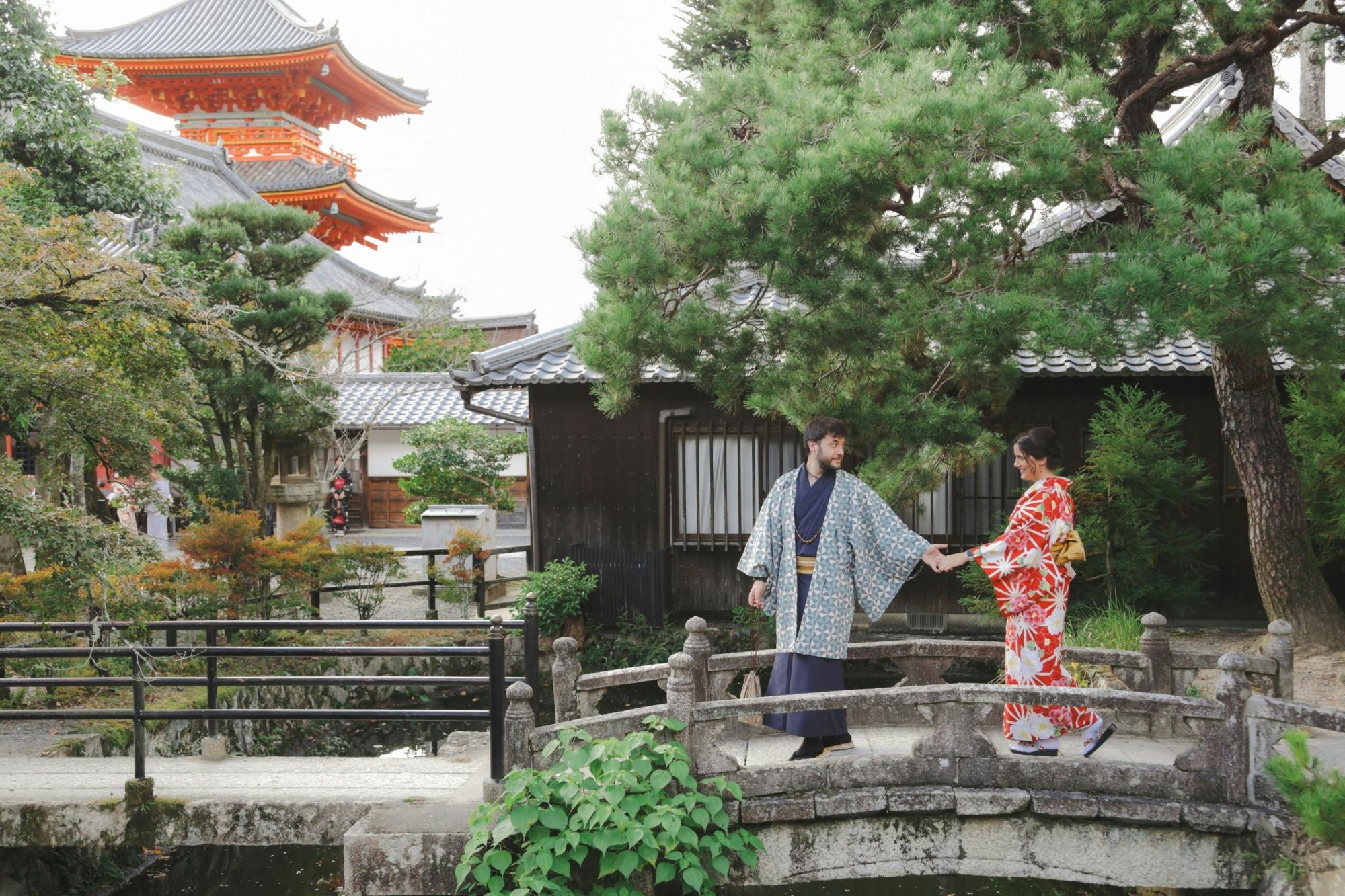
The Kyoto Eastern Temples Walk: Eikando, Nanzen-ji & Heian-jingu is a guided cultural walking tour through one of Kyoto’s most elegant and atmospheric districts. Instead of rushing between the city’s busiest headline sights, this route focuses on a graceful sequence of temples, gardens, historic waterways and shrine grounds in the eastern Higashiyama and Okazaki area.
The walk links Eikando Zenrin-ji, famous for hillside gardens, maple leaves and the Mikaeri Amida Buddha; Nanzen-ji, one of Kyoto’s great Zen temple complexes; and Heian-jingu Shrine, known for its enormous torii gate, broad courtyard and imperial-style architecture. It is ideal for travellers who want beauty, history, photography and a quieter Kyoto atmosphere in one guided experience.
Kyoto’s eastern side is one of the best areas for slow cultural sightseeing. The district sits close to the Higashiyama foothills, where temple buildings, wooded slopes, canals, gardens and stone paths create a more reflective atmosphere than the city centre.
This tour is especially appealing because it avoids the feeling of a rushed checklist. Rather than racing from one crowded landmark to another, the route is built around atmosphere: quiet temple corridors, maple trees, Zen gates, the brick arches of the Suirokaku Aqueduct and the broad ceremonial space of Heian-jingu.
Main Highlights
Explore Kyoto’s elegant eastern temple district with a local guide.
Visit Eikando, famous for maple leaves, hillside gardens and the Mikaeri Amida Buddha.
Discover Nanzen-ji, one of Kyoto’s most important Zen temple complexes.
See the photogenic Suirokaku Aqueduct inside the Nanzen-ji precincts.
Walk through quiet stone paths, wooded slopes and historic waterways.
Visit Heian-jingu, known for its massive torii gate and spacious shrine grounds.
Learn stories of monks, emperors, samurai patronage and Kyoto’s modern rebirth.
Enjoy a slower, more graceful alternative to Kyoto’s busiest tourist routes.
Stop 1: Eikando Zenrin-ji
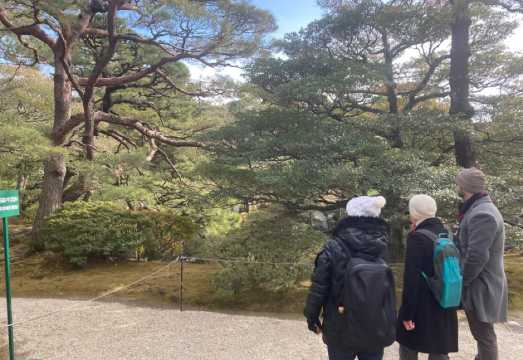
Eikando, formally known as Zenrin-ji, is one of Kyoto’s most beloved temples. It is especially famous in autumn, when its maple trees turn brilliant shades of red, orange and gold. However, it is worth visiting throughout the year because of its hillside setting, covered walkways, temple halls, ponds and contemplative atmosphere.
The temple has more than 1,100 years of history and is associated with the Jodo-shu Seizan Zenrin-ji sect. It is also famous for the Mikaeri Amida, or “Looking-Back Amida,” a rare Buddha statue shown glancing over its shoulder.
What to Look For at Eikando
Mikaeri Amida: The temple’s unusual and deeply symbolic Amida Buddha statue.
Covered walkways: Wooden corridors connecting halls across the sloping grounds.
Maple gardens: Beautiful in autumn and peaceful in green-leaf season.
Hojo Pond: A reflective garden area often framed by seasonal foliage.
Tahoto Pagoda: A hillside pagoda with views over the temple and Kyoto.
Quiet atmosphere: A more intimate temple experience than some larger Kyoto sites.
Why Eikando Is Special in Autumn
Eikando is often called one of Kyoto’s best autumn foliage temples. The maple leaves surround ponds, paths, temple roofs and hillside viewpoints, creating a layered landscape of colour.
Autumn is also the busiest season. If you visit in late November, expect crowds, especially during peak colour and evening illumination periods. Outside autumn, the temple is usually calmer and still very rewarding.
Stop 2: Nanzen-ji Temple
Nanzen-ji is one of Kyoto’s great Zen temple complexes. It has a grand, spacious feeling, with monumental gates, sub-temples, gardens, stone paths and wooded surroundings at the base of the Higashiyama mountains.
The tour’s Nanzen-ji section is ideal for travellers who enjoy Zen architecture and wide temple grounds. Compared with Eikando’s intimate hillside garden feel, Nanzen-ji feels more expansive and formal.
What to See at Nanzen-ji
Sanmon Gate: A huge wooden gate and one of Nanzen-ji’s signature sights.
Hojo Garden: A classic Zen-style garden associated with quiet contemplation.
Sub-temples: Smaller temple areas within the larger Nanzen-ji complex.
Stone paths and courtyards: Excellent for photography and slow walking.
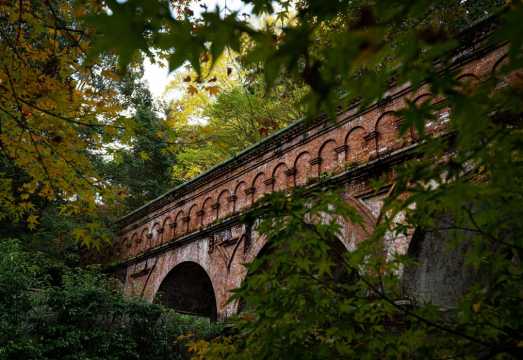
Suirokaku Aqueduct: A red-brick Meiji-era aqueduct that creates one of Kyoto’s most unusual temple scenes.
The Suirokaku Aqueduct
The Suirokaku Aqueduct is one of the most memorable features of the Nanzen-ji precinct. Its red-brick arches stand in striking contrast to the traditional temple buildings and surrounding trees.
The aqueduct is part of the Lake Biwa Canal system and was designed with care for the scenery inside the temple grounds. Today, it is one of Kyoto’s most photogenic places because it blends Meiji-era engineering with Zen temple atmosphere.
Stop 3: Heian-jingu Shrine
Heian-jingu is different from Eikando and Nanzen-ji because it is a Shinto shrine rather than a Buddhist temple. It was built in 1895 to commemorate the 1,100th anniversary of Kyoto’s role as Japan’s capital.
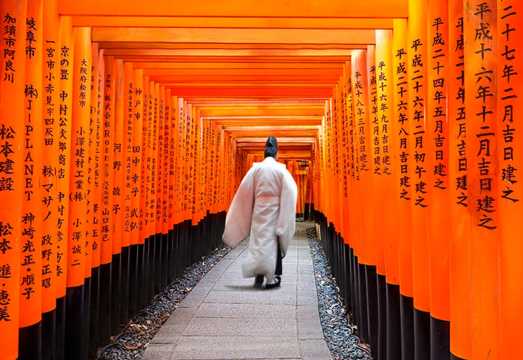
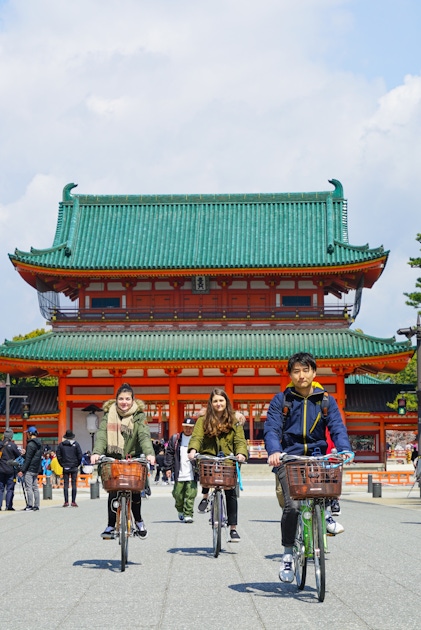
The shrine is known for its enormous vermilion torii gate, broad white gravel courtyard and colourful buildings inspired by the old imperial palace of the Heian period. After the darker woods and temple paths of Eikando and Nanzen-ji, Heian-jingu feels open, formal and ceremonial.
What to See at Heian-jingu
Large red torii gate: One of the most recognisable entrances in Kyoto.
Otenmon Gate: The impressive shrine entrance gate.
Spacious courtyard: A broad white gravel area framed by vermilion buildings.
Main shrine buildings: Inspired by the style of the ancient imperial court.
Shin-en Garden: A paid garden area known for seasonal flowers, ponds and stepping stones.
Okazaki area: Nearby museums, parks and cultural institutions.
Heian-jingu Garden Note
The main shrine grounds can usually be enjoyed without the same kind of entry structure as temple interiors, but the Shin-en Garden normally requires a separate admission fee. If the garden is included in your tour route, check whether the fee is already covered by your ticket.
The garden is especially beautiful in spring for weeping cherry blossoms, early summer for irises, autumn for foliage and winter for quiet pond scenery.
What Is Included?
Expert local guide
Small-group walking experience
Entrance fees listed by the matching supplier details
Guided visit to Eikando
Guided visit to Nanzen-ji
Visit to Heian-jingu Shrine
Scenic walks through eastern Kyoto
Cultural and historical commentary
Photo opportunities
Convenient meeting point
What Is Not Included?
Train fees
Food and drinks
Hotel pickup
Tips or gratuities
Personal expenses
Extra transport before or after the tour
Travel insurance
Meeting Point
Matching supplier details list the meeting point as on top of the stairs of Exit 4. Check your final voucher carefully to confirm the exact station, exit and meeting time.
Kyoto stations can be busy, and exits may be spread across different streets. Arrive early, especially if you are unfamiliar with the area or using Kyoto public transport for the first time.
How Much Walking Is Involved?
This is a walking tour, so expect several hours on your feet. The route includes temple paths, stone walkways, slopes, stairs, garden paths and city streets between sites.
The pace is described as relaxed, but the total duration is around five hours. Comfortable shoes are essential. Travellers who struggle with prolonged walking, stairs or uneven ground may find the tour tiring.
Who Is This Tour Best For?
This tour is best for travellers who want a slower and more atmospheric Kyoto experience. It suits photographers, history lovers, temple enthusiasts, autumn foliage travellers, solo travellers, couples and visitors who prefer guided cultural context over independent wandering.
It is also a good choice for people who have already seen Kyoto’s busiest sights and want a more graceful route through the eastern hills.
Who May Not Enjoy It?
This tour may not suit travellers who dislike walking, want hotel pickup, need wheelchair access or prefer a fast-paced checklist of famous Kyoto landmarks. It is also not suitable for children under 7, according to matching supplier details.
If you want a broader first-time Kyoto itinerary with Kinkaku-ji, Fushimi Inari and Arashiyama, choose a full-day highlights tour instead. If you want atmosphere, gardens, Zen architecture and a calmer route, this walk is a strong fit.
Best Time of Year for This Walk
This route is beautiful year-round, but each season has a different appeal.
Spring: Cherry blossoms and fresh green growth around Okazaki, canals and garden areas.
Early Summer: Green maples, moss, irises and quieter temple paths.
Autumn: The strongest season for Eikando and Nanzen-ji, especially in late November.
Winter: Quieter temple grounds, crisp air and a more contemplative mood.
Autumn is the most spectacular but also the busiest. If you want fewer crowds, choose early summer or winter.
Photography Tips
Use wide-angle mode at Heian-jingu’s courtyard and torii gate.
At Eikando, photograph reflections, covered walkways and maple leaves.
At Nanzen-ji, capture the scale of the Sanmon Gate and the brick arches of the Suirokaku Aqueduct.
Use portrait framing for stone paths, temple corridors and garden details.
Bring a power bank, as this is a long photo-heavy walk.
Be respectful around worship areas and avoid photographing where signs prohibit it.
In autumn, arrive prepared for crowds and wait patiently for clear shots.
Notebook if you enjoy recording history and temple details
What Not to Bring
Matching supplier details list several restrictions. To avoid problems, do not bring items that make the walk difficult or disturb the group.
Baby strollers
Non-folding wheelchairs
Non-folding strollers
Unaccompanied minors
Video recording equipment
Audio recording equipment
Electric wheelchairs
Temple and Shrine Etiquette
Speak quietly in temple halls and shrine areas.
Do not touch statues, altar items or garden features.
Follow photography rules inside buildings.
Do not walk on moss, roped-off paths or garden areas.
Remove shoes where required.
Let worshippers pray without interruption.
Use purification areas respectfully at shrines.
Listen to your guide’s instructions about each site.
Suggested Tour Flow
Start: Meet your guide at the confirmed Exit 4 meeting point.
First Section: Walk towards Eikando and explore hillside gardens, halls and maple scenery.
Second Section: Continue to Nanzen-ji for Zen architecture, gates and the Suirokaku Aqueduct.
Scenic Walk: Follow quiet paths and historic waterways through eastern Kyoto.
Final Section: Visit Heian-jingu Shrine and enjoy its grand torii, courtyard and shrine architecture.
Finish: Ask your guide for nearby food, museum or transport recommendations.
Nearby Places to Visit Before or After
Philosopher’s Path: A canal-side walking route north of Eikando, especially beautiful in cherry blossom season.
Ginkaku-ji: The Silver Pavilion, a major Zen temple north of the route.
Kyoto City KYOCERA Museum of Art: A major cultural stop near Heian-jingu.
National Museum of Modern Art, Kyoto: Useful for art lovers in the Okazaki area.
Kyoto City Zoo: A family-friendly option near Heian-jingu.
Okazaki Park: A pleasant area for walking, museums and seasonal scenery.
Murin-an Garden: A beautiful Meiji-era garden near Nanzen-ji.
Keage Incline: A popular cherry blossom and photography spot near the Lake Biwa Canal area.
Suggested Half-Day Plan
Morning: Have breakfast near your accommodation and travel to the meeting point.
Tour: Join the Kyoto Eastern Temples Walk and visit Eikando, Nanzen-ji and Heian-jingu.
After Tour: Stop for lunch or coffee in the Okazaki or Higashiyama area.
Afternoon: Visit a nearby museum, walk the Philosopher’s Path, or continue to Ginkaku-ji.
Evening: Head to Gion, Pontocho or central Kyoto for dinner.
Travel Tips Before Booking
Confirm the exact meeting station and Exit 4 location on your voucher.
Wear proper walking shoes.
Bring cash for train fees and small purchases.
Do not expect hotel pickup.
Book early during autumn foliage season.
Expect more crowds at Eikando in late November.
Bring water, especially in summer.
Check weather before the tour and carry rain protection if needed.
Allow time after the tour in case you want to continue exploring Okazaki or Higashiyama.
Is the Kyoto Eastern Temples Walk Worth It?
Yes, the Kyoto Eastern Temples Walk is worth considering if you want a thoughtful and scenic guided route through one of the city’s most beautiful cultural districts. It is especially strong for travellers interested in gardens, maple leaves, Zen architecture, temple history and atmospheric walking routes.
The main appeal is the balance between beauty and context. Eikando offers intimate hillside gardens, Nanzen-ji brings grand Zen architecture and the unusual Suirokaku Aqueduct, while Heian-jingu adds imperial-style shrine architecture and open ceremonial space. Together, they create a graceful Kyoto experience that feels rich without being rushed.
Frequently Asked Questions
What is the Kyoto Eastern Temples Walk?
It is a guided walking tour through Kyoto’s eastern temple district, visiting Eikando, Nanzen-ji and Heian-jingu Shrine.
How long does the tour take?
The tour lasts approximately 5 hours.
What language is the tour in?
The tour is led by an English-speaking live guide.
What places are included?
The main stops are Eikando Zenrin-ji, Nanzen-ji Temple and Heian-jingu Shrine.
Are entrance fees included?
Matching supplier details list entrance fees as included, but always check your final Trip.com package before booking.
Are train fees included?
No. Matching supplier details state that train fees are not included.
Is hotel pickup included?
No. Pickup is not available for this tour.
Where is the meeting point?
Matching supplier details list the meeting point as on top of the stairs at Exit 4. Check your final voucher for the exact station and meeting instructions.
Is this a private tour?
No. Matching supplier details describe it as a small-group experience.
Is the tour suitable for children?
It is not suitable for children under 7, according to matching supplier details.
Is the tour wheelchair accessible?
No. Matching supplier details state that the tour is not suitable for wheelchair users.
Why is Eikando famous?
Eikando is famous for its maple leaves, hillside temple grounds and the Mikaeri Amida, a rare Amida Buddha statue shown looking back over its shoulder.
Why is Nanzen-ji famous?
Nanzen-ji is one of Kyoto’s great Zen temple complexes, known for its large gates, temple grounds, sub-temples, gardens and the Suirokaku Aqueduct.
What is the Suirokaku Aqueduct?
It is a red-brick aqueduct inside the Nanzen-ji precincts, built as part of the Lake Biwa Canal system.
Why is Heian-jingu famous?
Heian-jingu is famous for its huge vermilion torii gate, broad shrine courtyard and buildings inspired by the ancient imperial palace.
Is Heian-jingu a temple?
No. Heian-jingu is a Shinto shrine, while Eikando and Nanzen-ji are Buddhist temples.
When is the best season for this tour?
Autumn is the most famous season, especially for Eikando’s maple leaves. Spring, early summer and winter are also beautiful and often calmer.
What should I wear?
Wear comfortable walking shoes and weather-appropriate clothing. Bring layers, rain protection or sun protection depending on the season.
What should I bring?
Bring your voucher, cash, water, comfortable shoes, camera or phone, power bank and a small day bag.
Can I record video or audio?
Matching supplier details list video recording and audio recording as not allowed.
Is this tour good for photographers?
Yes. Eikando, Nanzen-ji’s aqueduct and Heian-jingu’s courtyard provide excellent photography opportunities, especially in autumn.
Ready to explore Kyoto’s quieter eastern temple route? Check live availability, meeting details, inclusions and current pricing before booking your Kyoto Eastern Temples Walk.
[Osaka / Kyoto Departure] Kyoto Day Tour – Guided Sightseeing Tour Japan [Osaka/Kyoto Departure] Kyoto Day Tour | Arashiyama + Kifune Shrine + Sanzen-in (Optional Sagano Romantic Train | Seasonal Sakura Viewing) adds structure, local context and purposeful sightseeing to the itinerary. [Osaka/Kyoto Departure] Kyoto Day Tour | Arashiyama + Kifune Shrine + Sanzen-in (Optional Sagano Romantic Train | Seasonal Sakura Viewing): experience overview If you have any questions, click the chat icon left of "Book Now" for live support.;You can choose a small group tour (up to 13 people) with an English-speaking driver,or travel by Car rental with an English-speaking driver.;Wander through the iconic Arashiyama Bamboo Grove and take in the…
Kyoto: Nijo Castle and Kyoto Imperial Palace Guided Tour – Guided Sightseeing Tour Japan Kyoto: Nijo Castle and Kyoto Imperial Palace Guided Tour adds structure, local context and purposeful sightseeing to the itinerary. Kyoto: Nijo Castle and Kyoto Imperial Palace Guided Tour: experience overview Discover the history of Japan's former capital on a guided walking tour;Explore the Nijo Castle, a symbol of power and authority in Japan;Learn about the political climate of the time and the architectural style Available from trip.com. This makes the experience a useful option when planning time in > Kyoto local experienceSearch results. The exact duration can depend on the selected date, option or operating schedule. Routes, start times, inclusions…
Kyoto in a Day: The Ultimate Top 4 Highlights Tour (From Osaka/Kyoto) – Guided Tour Japan Kyoto in a Day: The Ultimate Top 4 Highlights Tour (From Osaka/Kyoto) adds structure, local context and purposeful sightseeing to the itinerary. Kyoto in a Day: The Ultimate Top 4 Highlights Tour (From Osaka/Kyoto): experience overview If you have any questions, please click the icon to the left of "Book Now" to contact our online customer service. ;Explore the essence of Kyoto's millennia-old history in a single day, encompassing World Heritage sites and landmarks, embarking on a cultural, culinary, and spiritual journey.;Listen to the warbling of orioles on the floor, watch the reflection of the Golden Pavilion, feel the breeze…
Wabi-Sabi Walking Tour with Kyoto Gion Tea Ceremony – Hands-On Cultural Experience Wabi-Sabi Walking Tour with Kyoto Gion Tea Ceremony adds structure, local context and purposeful sightseeing to the itinerary. Wabi-Sabi Walking Tour with Kyoto Gion Tea Ceremony: experience overview Experience the essence of Wabi-Sabi in Kyoto's tea ceremony. Discover beauty in imperfection while savouring authentic matcha. This makes the experience a useful option when planning time in Kyoto. The exact duration can depend on the selected date, option or operating schedule. Routes, start times, inclusions and meeting arrangements may vary, so the current booking page should be treated as the final source of operational information. At a glance Experience type: Guided…
Traditional Japanese Bentō Cooking Workshop in Kyoto – Hands-On Cultural Experience Traditional Japanese Bentō Cooking Workshop in Kyoto offers a hands-on way to engage with local skills or traditions. Traditional Japanese Bentō Cooking Workshop in Kyoto: experience overview Learn how to prepare bentō with a cooking instructor who'll teach you how to arrange the perfect lunch box according to the old traditional Kyoto-style. This makes the experience a useful option when planning time in Kyoto. The exact duration can depend on the selected date, option or operating schedule. Routes, start times, inclusions and meeting arrangements may vary, so the current booking page should be treated as the final source of operational…
Tea Preparation, Tasting, and Ceremony Experience in Kyoto – Food & Drink Experience Tea Preparation, Tasting, and Ceremony Experience in Kyoto adds structure, local context and purposeful sightseeing to the itinerary. Tea Preparation, Tasting, and Ceremony Experience in Kyoto: experience overview Enjoy a traditional tea ceremony, tasting, and preparation in Kyoto together with a certified tea ceremony instructor. This makes the experience a useful option when planning time in Kyoto. The exact duration can depend on the selected date, option or operating schedule. Routes, start times, inclusions and meeting arrangements may vary, so the current booking page should be treated as the final source of operational information. At a glance Experience type: Guided…
Quick take: Trip.com helps you compare prices across accommodations. Use it to shortlist hotels, then click through to confirm the final price, room type, and inclusions on the booking site.
Kyoto Private Photography Tour – Private Photography Experience Kyoto private photography tour adds structure, local context and purposeful sightseeing to the itinerary. Kyoto private photography tour: experience overview Explore Kyoto at your own pace, get professional photos of you and your loved ones and receive an online gallery with your photos after the tour. This makes the experience a useful option when planning time in Kyoto. The exact duration can depend on the selected date, option or operating schedule. Routes, start times, inclusions and meeting arrangements may vary, so the current booking page should be treated as the final source of operational information. At a glance Experience type:…
Gion Walking Tour and Dinner with a Maiko in Kyoto – Food & Drink Experience Gion Walking Tour and Dinner with a Maiko in Kyoto explores the destination through flavour and regional customs. Gion Walking Tour and Dinner with a Maiko in Kyoto: experience overview Enjoy this Gion walking tour together with a local guide and live an unforgettable experience having dinner in the company of a Maiko. This makes the experience a useful option when planning time in Kyoto. The exact duration can depend on the selected date, option or operating schedule. Routes, start times, inclusions and meeting arrangements may vary, so the current booking page should be treated as the final source of…
Rental Motorcycle Tour in Kyoto: South & East Heritage Guide – Guided Tour Japan Rental Motorcycle Tour in Kyoto: South & East Heritage Ride through Kyoto’s southern and eastern heritage districts, with stops at famous temples and shrines including Fushimi Inari Taisha. The Rental Motorcycle Tour in Kyoto: South & East Heritage is a private motorbike sightseeing experience that links some of Kyoto’s most famous religious and cultural landmarks in one flexible route. Instead of relying on buses, taxis or crowded trains, you travel by rental motorbike with a guide through Kyoto’s southern and eastern districts. The tour is designed for travellers who want a more active, independent-feeling way to explore Kyoto. The route…
Osaka, Kyoto, Hiroshima: JR-West All-Area Rail Pass – Rail Travel Pass Japan Osaka, Kyoto, Hiroshima: JR-West All-Area Rail Pass adds structure, local context and purposeful sightseeing to the itinerary. Osaka, Kyoto, Hiroshima: JR-West All-Area Rail Pass: experience overview Discover Japan's temples, landscapes, and cities effortlessly.;Enjoy hassle-free, budget-friendly travel across western Japan.;Explore Kyoto, Osaka, Hiroshima and more with JR-WEST All Area Pass. Available from trip.com. This makes the experience a useful option when planning time in > Osaka local experienceSearch results. The exact duration can depend on the selected date, option or operating schedule. Routes, start times, inclusions and meeting arrangements may vary, so the current booking page should be treated as the…
Amanohashidate & Ine Fishing Village Day Tour from Kyoto or Osaka – Guided Tour Japan Amanohashidate & Ine Fishing Village Day Tour from Kyoto or Osaka adds structure, local context and purposeful sightseeing to the itinerary. Amanohashidate & Ine Fishing Village Day Tour from Kyoto or Osaka: experience overview Escape crowds to explore Kyoto's hidden northern coastline and authentic local charm;Witness Amanohashidate's dragon-shaped sandbar from the iconic upside-down viewpoint;Discover Ine's timeless fishing village where sea and mountains meet in poetic harmony Available from trip.com. This makes the experience a useful option when planning time in > Osaka local experienceSearch results. The exact duration can depend on the selected date, option or operating schedule. Routes, start…
Kyoto in Full – Day: Amanohashidate, Ine Funaya & Miyama Thatched Village – Guided Tour Japan Kyoto in One Day: Amanohashidate, Ine Funaya & Miyama Thatched Village adds structure, local context and purposeful sightseeing to the itinerary. Kyoto in One Day: Amanohashidate, Ine Funaya & Miyama Thatched Village: experience overview Explore Amanohashidate, one of Japan's Three Scenic Views, where nature's artistry creates breathtaking landscapes;Stroll through Ine's iconic funaya boathouses, discovering how fishermen harmonize with the sea;Wander freely in Miyama's thatched-roof village, experiencing Japan's pristine rural heritage Available from trip.com. This makes the experience a useful option when planning time in > Osaka local experienceSearch results. The listing describes this as a one day experience. Routes, start…
Quick take: Trip.com helps you compare prices across accommodations. Use it to shortlist hotels, then click through to confirm the final price, room type, and inclusions on the booking site.

![[Osaka / Kyoto Departure] Kyoto Day Tour – Guided Sightseeing Tour](https://ak-d.tripcdn.com/images//0581u12000romnuvs80E7_C_960_660_Q50.jpg "[Osaka / Kyoto Departure] Kyoto Day Tour – Guided Sightseeing Tour")