Ponta Delgada Landmarks Guide: City Gates, Churches, Fort, Gardens, Museums and Harbour Walks
Ponta Delgada’s landmarks make the city one of the best introductions to São Miguel and the Azores. This compact capital blends black-and-white basalt architecture, historic churches, harbour views, tiled squares, botanical gardens, local markets, military fortifications, convent museums and even a volcanic lava tube beneath the city.
Many travellers use Ponta Delgada as a base for exploring Sete Cidades, Lagoa do Fogo, Furnas and whale-watching trips, but the city itself deserves time. The old centre is walkable, atmospheric and full of details: patterned calçada pavements, dark volcanic stone doorways, whitewashed façades, balconies, chapels, bell towers, sea walls and leafy gardens.
This guide focuses on the best landmarks in and around Ponta Delgada, including Portas da Cidade, Igreja Matriz de São Sebastião, Forte de São Brás, Campo de São Francisco, Santuário do Senhor Santo Cristo dos Milagres, Museu Carlos Machado, Mercado da Graça, Jardim António Borges, Jardim José do Canto, Portas do Mar and Gruta do Carvão.
Sponsored Popular Items
Quick take: Trip.com offers a worldwide selection of tours and attractions and hotels
Ponta Delgada Landmarks and History by Tourist Train – Guided Local Tour Ponta Delgada Landmarks and History by Tourist Train USD 11 adds structure, local context and purposeful sightseeing to the itinerary. Ponta Delgada Landmarks and History by Tourist Train USD 11: experience overview Discover Ponta Delgada's landmarks on a comfortable tourist train. See Campo de São Francisco, Portas da Cidade, and Mercado da Graça. This makes the experience a useful option when planning time in Sao Miguel. The exact duration can depend on the selected date, option or operating schedule. Routes, start times, inclusions and meeting arrangements may vary, so the current booking page should be treated as the final source…
Quick take: Trip.com helps you compare prices across accommodations. Use it to shortlist hotels, then click through to confirm the final price, room type, and inclusions on the booking site.
Ponta Delgada is worth exploring because it tells the urban story of São Miguel. While the island is famous for crater lakes, hot springs and green volcanic landscapes, the city shows the Azorean relationship with the sea, religion, trade, defence, botany and island culture.
The landmarks are also easy to combine. You can see the City Gates, main church, waterfront, fort, old squares, market and museums in one relaxed day, then save the island’s big natural sights for separate day trips.
Ponta Delgada landmarks are best for:
First-time visitors to São Miguel
Travellers wanting a walkable Azores city day
History, architecture and photography lovers
Cruise visitors with limited time in port
Families wanting easy sightseeing without long drives
Rainy-day alternatives to island viewpoints
Visitors interested in churches, convents, forts and local markets
Food lovers wanting Azorean cheese, pineapple, seafood and bakery stops
Where Is Ponta Delgada?
Ponta Delgada is on the south coast of São Miguel, the largest island in the Azores, Portugal. It is the main urban centre of the island and the usual arrival point for many visitors flying into João Paulo II Airport.
Location Detail
Traveller Notes
Destination
Ponta Delgada
Island
São Miguel
Region
Azores, Portugal
Main landmark area
Historic centre around Portas da Cidade, Igreja Matriz and the waterfront
Nearest airport
João Paulo II Airport
Best transport in centre
Walking, taxi, local bus or guided city tour
Best visit length
Half-day for the highlights; one full day for museums, gardens and food stops
What to Expect
Expect a compact historic centre with a strong Atlantic feel. Ponta Delgada is not a grand imperial capital like Lisbon or Porto. Its charm is smaller, slower and more island-based: volcanic-stone architecture, sea air, tiled pavements, local cafés, garden spaces and a harbour that still shapes the city’s rhythm.
What you may find
Black basalt and whitewashed buildings
Historic churches with ornate façades
Harbour and marina views
Cobbled streets and patterned pavements
Local markets with cheese, fruit, fish and regional products
Botanical gardens with exotic trees and grottoes
Museums inside former religious buildings
Fortifications linked to Atlantic defence
Tour departures for whale watching and island day trips
A relaxed city pace compared with mainland European capitals
What not to expect
Do not expect a huge city centre; Ponta Delgada is compact.
Do not expect every church or museum to be open all day.
Do not expect the best island scenery to be inside the city; Ponta Delgada is the base, not the whole experience.
Do not expect perfect weather all day; Azorean weather can change quickly.
Do not expect easy parking in the old centre at busy times.
Do not rush through the city only to leave for lakes and hot springs; the landmarks deserve a slow walk.
Portas da Cidade
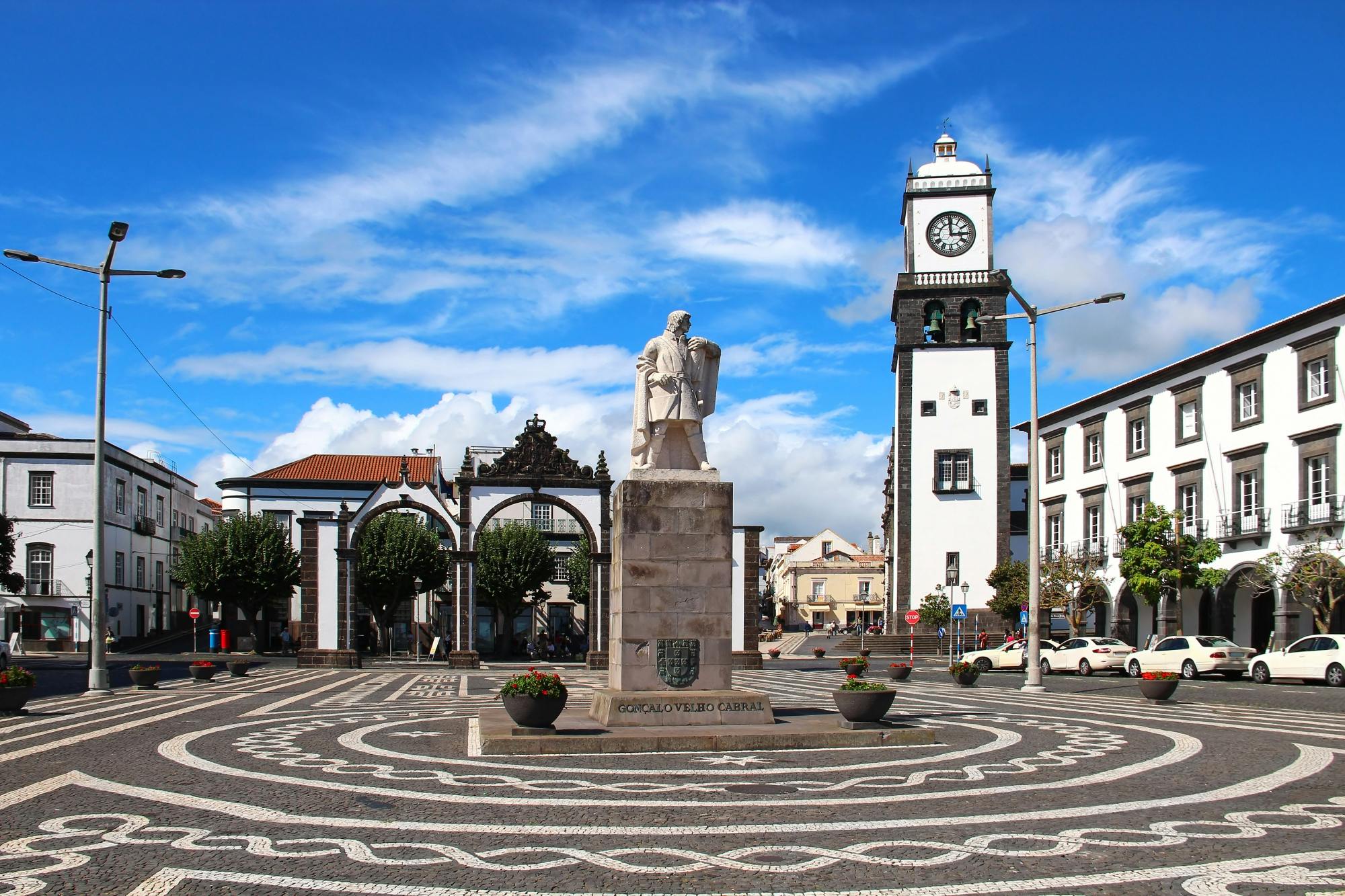
Portas da Cidade, or the City Gates, are the postcard landmark of Ponta Delgada. These three black-and-white arches stand in Praça Gonçalo Velho Cabral, close to the waterfront and the main church. They are one of the most recognisable symbols of the city.
The arches were originally built in the 18th century near the old quay and later moved to their current square. Their dark basalt and white surfaces capture the classic Azorean architectural contrast seen throughout Ponta Delgada.
Why visit Portas da Cidade?
It is the most iconic photo stop in Ponta Delgada.
It marks the historic heart of the city.
It sits beside other key landmarks, including Igreja Matriz and the City Hall area.
It is easy to visit at the beginning or end of a city walk.
It looks beautiful by day and atmospheric at night.
Photo tips
Visit early morning for fewer people.
Frame Igreja Matriz or the square through the arches.
Return at night when the arches and square are lit.
Use the patterned pavement as a foreground detail.
Step back toward the square for a full view of all three arches.
Igreja Matriz de São Sebastião
Igreja Matriz de São Sebastião is the main parish church in the centre of Ponta Delgada. It stands close to Portas da Cidade and is one of the city’s most important religious landmarks.
The church is known for its black basalt and white façade, ornate doorway, clock tower and central position in the old town. Even if you only have a short time in Ponta Delgada, this church should be part of your walk.
Why visit Igreja Matriz?
It is one of the main historic churches in Ponta Delgada.
It sits beside the City Gates and main square.
The façade shows the volcanic-stone contrast typical of Azorean architecture.
It gives a strong sense of the city’s religious and civic centre.
It is a natural stop on any self-guided walking route.
Visiting tips
Dress respectfully if entering the church.
Check opening times before planning an interior visit.
Photograph the exterior from the square and through the City Gates.
Visit in the evening for a quieter atmosphere around the church façade.
Praça Gonçalo Velho Cabral
Praça Gonçalo Velho Cabral is the main square associated with Ponta Delgada’s City Gates. It is a natural orientation point for visitors, linking the historic centre, waterfront, Igreja Matriz and nearby cafés.
The square is named after Gonçalo Velho Cabral, an important figure in the early history of the Azores. Today, it is a place to pause, take photos, meet a guide, start a walking tour or simply watch city life around the old centre.
Why stop here?
It is one of the best starting points for exploring Ponta Delgada.
It connects several major landmarks.
The patterned pavement and basalt architecture are highly photogenic.
It is close to cafés, shops and the waterfront.
It works well as a meeting point for city walks and tours.
City Hall and Bell Tower
The City Hall area near the central square adds another civic landmark to the historic core. The building and its bell tower help define the old centre and are often included in walking routes around Portas da Cidade and Igreja Matriz.
Depending on access and opening arrangements, the bell tower may offer views over the square, rooftops and harbour area. Even from outside, it is worth including because it adds to the layered civic character of Ponta Delgada.
Why include the City Hall area?
It is close to the City Gates and main church.
It adds civic history to the religious and maritime landmarks nearby.
The tower is a useful visual marker in the old centre.
It is a good stop for photography of the central square.
Tip
Check locally whether tower access is available during your visit, as access may vary by time, day and maintenance conditions.
Forte de São Brás and Military Museum
Forte de São Brás is one of the most important military landmarks in Ponta Delgada. Located near the waterfront, it was built to help defend the city and harbour, reflecting the Azores’ strategic Atlantic position.
The fort now houses the Military Museum of the Azores, where visitors can learn about island defence, military history, weapons, uniforms and the role of the fortification over time. It is a strong stop if you enjoy history beyond churches and squares.
Why visit Forte de São Brás?
It is one of Ponta Delgada’s key defensive landmarks.
It offers a different perspective on the city’s maritime history.
The Military Museum adds context to the fort’s function.
The waterfront location makes it easy to combine with the marina and Campo de São Francisco.
The stone walls and cannons are good for photography.
Visiting tips
Check opening hours before going, especially outside peak season.
Allow 45 minutes to 1.5 hours depending on your interest in military history.
Combine it with Campo de São Francisco and the harbour walk.
Wear comfortable shoes if exploring ramparts or uneven surfaces.
Campo de São Francisco
Campo de São Francisco is one of Ponta Delgada’s most important public squares. It sits close to Forte de São Brás and several religious landmarks, making it a key stop on the western side of the historic centre.
The square is spacious and atmospheric, with patterned paving, trees, churches and nearby convent buildings. It also plays an important role in the city’s religious and festival life, especially around the devotion to Senhor Santo Cristo dos Milagres.
Why visit Campo de São Francisco?
It is one of the city’s major historic squares.
It connects the fort, churches and convent landmarks.
It offers a calmer contrast to the central City Gates area.
It is a good place to understand Ponta Delgada’s religious traditions.
It is close to cafés and the waterfront.
Santuário do Senhor Santo Cristo dos Milagres
The Santuário do Senhor Santo Cristo dos Milagres is one of the most important religious landmarks in Ponta Delgada and one of the most significant devotional sites in the Azores. It is closely linked with the famous Santo Cristo festivities, which draw many visitors and pilgrims.
The sanctuary is located near Campo de São Francisco and is often visited with the neighbouring churches and convent spaces. Even travellers who are not religious may find the site important for understanding Azorean identity and tradition.
Why visit the sanctuary?
It is central to São Miguel’s religious heritage.
It is associated with one of the Azores’ most important religious festivals.
It sits in a historic area near Campo de São Francisco.
It adds cultural depth to a Ponta Delgada walking route.
It is one of the city’s most meaningful landmarks for local people.
Visiting tips
Dress respectfully.
Be quiet and considerate if services or devotional visits are taking place.
Check the festival calendar if visiting during spring.
Allow time to explore Campo de São Francisco afterwards.
Igreja de São José
Igreja de São José stands near Campo de São Francisco and is another major religious landmark in Ponta Delgada. Its scale and position make it one of the most visible churches in the western part of the historic centre.
The church adds to the strong religious character of this area, where convents, sanctuaries and public squares sit close together. It is a natural stop after visiting Forte de São Brás and before continuing toward the waterfront or central old town.
Why include Igreja de São José?
It is one of the most prominent churches near Campo de São Francisco.
It helps complete the religious landmark circuit of Ponta Delgada.
The exterior is photogenic, especially with the square and paving around it.
It is easy to combine with the Santo Cristo sanctuary and the fort.
Museu Carlos Machado
Museu Carlos Machado is one of Ponta Delgada’s most important cultural landmarks. Housed in the former Convento de Santo André, it brings together collections connected to Azorean natural history, sacred art, ethnography, painting, sculpture, tile work, toys and regional heritage.
This museum is especially useful if you want more than a pretty city walk. It gives context to the island’s nature, religious culture and social history. It is also a strong rainy-day option when the island’s viewpoints are misty or wet.
Why visit Museu Carlos Machado?
It is one of the key museums of the Azores.
It is housed in a historic convent building.
The collections cover natural history and cultural heritage.
It helps explain São Miguel beyond landscapes and viewpoints.
It is a good indoor stop on cloudy or rainy days.
Visiting tips
Check which museum circuits or buildings are open before visiting.
Allow 1 to 2 hours if you enjoy museums.
Pair it with nearby churches and the old town.
Use it as a slower cultural stop between market and garden visits.
Mercado da Graça
Mercado da Graça is Ponta Delgada’s main market and one of the best places to experience local produce. It is a practical and cultural landmark, especially for travellers interested in Azorean cheese, fruit, vegetables, flowers, fish and everyday island life.
The market is not only about shopping. It is a chance to see what grows and sells on São Miguel: pineapples, passionfruit, bananas, tea, regional cheeses, local sweets and fresh ingredients used in island cooking.
Why visit Mercado da Graça?
It gives a local flavour of Ponta Delgada.
It is good for food photography and market browsing.
You can buy regional products and souvenirs.
It is a useful stop before a picnic or self-catering meal.
It pairs well with nearby cafés and food shops.
Market tips
Go in the morning for the liveliest atmosphere.
Try local cheese, fruit or pastries where available.
Bring a small bag for purchases.
Check opening days and times before planning a visit.
Be respectful when photographing vendors and stalls.
Portas do Mar and Marina
Portas do Mar and the marina area show the modern waterfront side of Ponta Delgada. This is where many whale-watching tours, boat trips and harbour walks begin. The area links the historic centre with the sea and is especially pleasant for an evening stroll.
From here, you can look back toward the city, walk along the harbour, join marine tours, find restaurants and enjoy the Atlantic setting that has shaped Ponta Delgada for centuries.
Why visit Portas do Mar?
It is the city’s modern harbour and marina area.
It is a departure point for whale-watching and boat tours.
It offers good sunset and evening walking.
It connects easily with the City Gates and waterfront avenue.
It is useful for restaurants, cafés and sea views.
Visiting tips
Walk here after seeing Portas da Cidade.
Check whale-watching departure points in advance.
Return at sunset for harbour photos.
Use the waterfront as an easy flat walk after a day of island touring.
Jardim António Borges
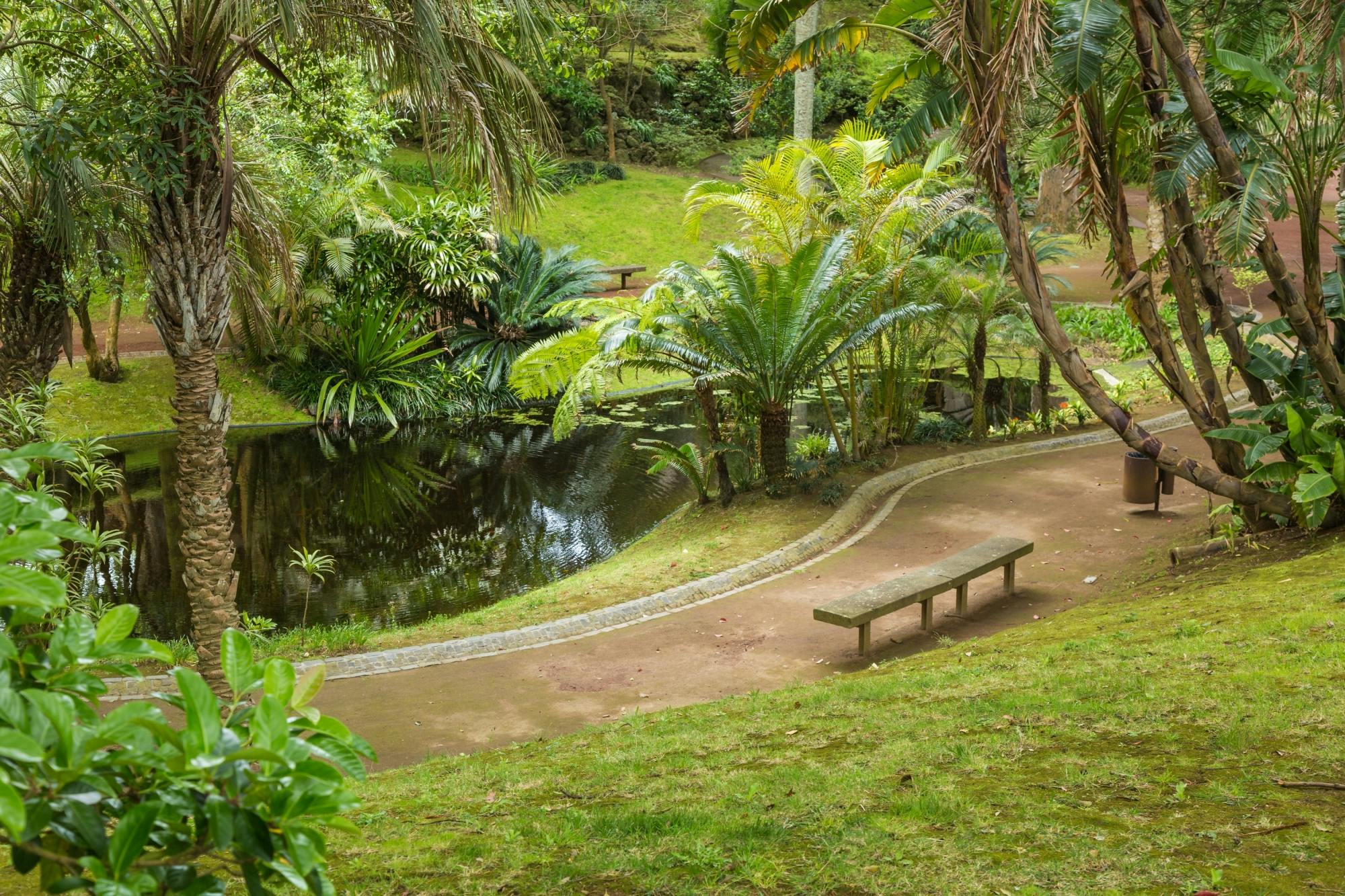
Jardim António Borges is one of Ponta Delgada’s most atmospheric green spaces. It is known for exotic trees, romantic garden design, stone grottoes, pathways, shaded corners and a slightly mysterious botanical feel.
This garden is a lovely contrast to the black-and-white architecture of the old centre. It works well as a quiet break from sightseeing, especially if you enjoy plants, photography or slower travel.
Why visit Jardim António Borges?
It is one of the city’s most attractive gardens.
The grottoes and stone features are unusual and photogenic.
It provides shade and calm away from the streets.
It is good for families and relaxed walking.
It shows the botanical richness associated with São Miguel.
Garden tips
Wear comfortable shoes for uneven paths.
Bring a camera for grottoes and tree details.
Visit after lunch for a quiet break.
Do not rush; this garden is best enjoyed slowly.
Jardim José do Canto
Jardim José do Canto is another important garden landmark in Ponta Delgada. It is associated with botanical collecting, romantic garden design and historic Azorean estate culture.
For visitors who enjoy gardens, it pairs well with Jardim António Borges. Together, they show a gentler side of Ponta Delgada, where trees, paths, chapels and botanical interest balance the city’s churches, market and waterfront.
Why visit Jardim José do Canto?
It is one of Ponta Delgada’s notable botanical gardens.
It offers a peaceful break from the city centre.
It is good for plant lovers and photographers.
It adds variety to a city landmark itinerary.
It works well on a slower full-day Ponta Delgada route.
Tip
Check current opening hours and entry arrangements before visiting, as garden access and schedules may vary.
Gruta do Carvão
Gruta do Carvão is one of the most unusual landmarks in Ponta Delgada because it takes you underground into São Miguel’s volcanic past. This lava tube sits within the city area and offers guided visits through volcanic rock formations.
It is an excellent reminder that the Azores are volcanic islands. After seeing the city’s churches and squares, Gruta do Carvão gives you a completely different type of landmark: natural, geological and hidden beneath the urban surface.
Why visit Gruta do Carvão?
It is a volcanic landmark inside Ponta Delgada.
It offers a guided underground experience.
It explains the island’s lava-tube geology.
It is a good alternative during cloudy or rainy weather.
It pairs well with a wider São Miguel volcano-themed itinerary.
Visiting tips
Book ahead if guided tour numbers are limited.
Wear closed shoes.
Bring a light jacket if you feel cool underground.
Check tour language and duration before booking.
Do not touch fragile geological formations.
Pineapple Plantations
Ponta Delgada is also close to pineapple plantations and greenhouses, where visitors can learn about São Miguel’s famous Azorean pineapple. These plantations are not always in the old centre, but they are among the most distinctive local stops near the city.
Azorean pineapples are grown in greenhouses using traditional methods, and many visitors enjoy tasting pineapple products such as liqueur, jam, juice or fresh fruit.
Why add a pineapple plantation?
It is a unique São Miguel food and agriculture experience.
It is easy to combine with Ponta Delgada sightseeing.
You can learn how pineapples are grown on the island.
It is a good short stop before or after the airport or city centre.
It offers local products to take home.
Tip
Check opening times and whether visits are self-guided or guided before going, especially outside peak travel periods.
Suggested Ponta Delgada Landmark Walking Routes
Route 1: Classic Old Centre Walk
Start: Portas da Cidade.
Stop 1: Praça Gonçalo Velho Cabral.
Stop 2: Igreja Matriz de São Sebastião.
Stop 3: City Hall and Bell Tower area.
Stop 4: Walk to Portas do Mar and the marina.
Finish: Harbour café or waterfront stroll.
Route 2: Fort, Churches and Campo de São Francisco
Start: Forte de São Brás.
Stop 1: Military Museum of the Azores.
Stop 2: Campo de São Francisco.
Stop 3: Santuário do Senhor Santo Cristo dos Milagres.
Stop 4: Igreja de São José.
Finish: Walk back along the waterfront toward the city centre.
Route 3: Market and Museum Morning
Start: Mercado da Graça in the morning.
Stop 1: Browse regional cheese, fruit and produce.
Stop 2: Coffee or pastry nearby.
Stop 3: Museu Carlos Machado.
Finish: Walk back through the old streets toward Igreja Matriz.
Route 4: Gardens and Quiet Corners
Start: Jardim António Borges.
Stop 1: Explore grottoes, trees and shaded paths.
Stop 2: Continue to Jardim José do Canto if open.
Stop 3: Add a café break or local bakery.
Finish: Return to the old centre for evening photos.
Route 5: Full-Day Ponta Delgada Landmark Plan
Morning: Mercado da Graça, Igreja Matriz and Portas da Cidade.
Late morning: Museu Carlos Machado.
Lunch: Old town or waterfront restaurant.
Afternoon: Forte de São Brás, Campo de São Francisco and Santo Cristo sanctuary.
Late afternoon: Jardim António Borges or Gruta do Carvão.
Evening: Portas do Mar, marina and harbour walk.
Food and Local Stops Near Ponta Delgada Landmarks
Food is an important part of exploring Ponta Delgada. The city is one of the best places on São Miguel to taste local cheese, seafood, beef, pineapple, pastries and Azorean wines or liqueurs.
Food ideas to try
São Jorge cheese: sharp, rich and excellent with bread or wine.
Azorean pineapple: fresh, in desserts, liqueurs or preserves.
Lapas: grilled limpets, often served with garlic and lemon.
Fresh fish: common in harbour and city restaurants.
Octopus: popular in Azorean cooking.
Bolo lêvedo: soft sweet bread from São Miguel, often served toasted.
Queijadas: small local sweet pastries.
Tea from São Miguel: especially from the island’s tea plantations.
Local beef: São Miguel is known for pasture-raised cattle and dairy.
Food tips
Visit Mercado da Graça early for regional produce.
Book dinner if visiting in peak season or weekends.
Try pineapple products at a plantation near the city.
Look beyond waterfront restaurants for smaller local places.
Allow time for coffee and pastries between landmarks.
Best Time to Explore Ponta Delgada’s Landmarks
Time / Season
What to Expect
Advice
Morning
Quieter streets, active market and good light
Best for Mercado da Graça, churches and old-town photography.
Midday
Brighter light and more visitors
Good for museums, lunch and indoor landmarks.
Late afternoon
Softer light and relaxed city atmosphere
Good for Portas da Cidade and waterfront photos.
Evening
Lit squares, harbour walks and dinner atmosphere
Best for Portas do Mar, marina and old-town dining.
Spring
Mild weather and religious festivities in season
Excellent for city walking and cultural events.
Summer
Warmer weather and more visitors
Book tours and popular restaurants ahead.
Autumn
Pleasant weather and fewer crowds
Great for a slower city-and-island trip.
Winter
More rain and quieter streets
Use museums, markets and cafés as weather-friendly options.
Where to Stay for Ponta Delgada Landmarks
Area
Best For
Traveller Notes
Historic centre
First-time visitors and walking access
Best for Portas da Cidade, Igreja Matriz, museums, restaurants and harbour walks.
Waterfront / Marina
Sea views, boat tours and evening walks
Good for whale-watching departures and Portas do Mar access.
Campo de São Francisco area
Historic squares, fort and churches
Good for a quieter stay near major landmarks.
Near João Paulo II Airport
Short stays and early flights
Practical, but less atmospheric than the old centre.
São Roque / east of centre
Coastal access and quieter local feel
Useful if you have a car and want easier island driving.
Lagoa or Ribeira Grande
Island exploring beyond the city
Better if you prefer nature bases, but farther from Ponta Delgada landmarks.
Useful Booking Resources for Ponta Delgada and São Miguel
Ponta Delgada’s landmarks can be explored independently, but booking platforms are useful for guided city walks, food tours, whale watching, Sete Cidades tours, Furnas day trips, airport transfers, car hire and hotels. Skimlinks may automatically convert these merchant links into affiliate links if the merchant is active in your Skimlinks account.
Visit Azores – official Azores tourism information for landmarks, islands, culture, nature and visitor planning.
GetYourGuide – offers Ponta Delgada walking tours, whale watching, São Miguel island tours, Sete Cidades, Furnas, Lagoa do Fogo and airport transfers.
Viator – offers Ponta Delgada tours, private guides, food experiences, whale watching, jeep tours and full-day São Miguel itineraries.
Trip.com – useful for Ponta Delgada hotels, flights, car hire, attraction listings and city-break planning.
Klook – offers selected tours, transfers, eSIMs and Portugal travel products depending on availability.
KKday – useful for selected Portugal activities, transfers and local experiences depending on availability.
Tiqets – useful for mobile-friendly tickets, museums and cultural experiences in Portugal and Europe.
Musement – offers tours, transfers, cultural activities and selected Portugal or Azores experiences.
Discover Cars – useful for comparing car hire if you plan to explore beyond Ponta Delgada.
Booking tip: If your main interest is city landmarks, choose a walking tour focused on Ponta Delgada history. If your priority is São Miguel’s landscapes, book separate day trips to Sete Cidades, Lagoa do Fogo and Furnas rather than trying to fit everything into one city day.
Ponta Delgada Landmark Travel Tips
Start at Portas da Cidade
The City Gates are the easiest orientation point for the old centre and connect naturally to Igreja Matriz, the City Hall area and the waterfront.
Use Ponta Delgada as a base, not just a transit stop
Many visitors rush out to the lakes and hot springs, but the city itself is worth at least half a day.
Check opening hours
Churches, museums, gardens and Gruta do Carvão may have varying hours, lunch closures or seasonal changes.
Wear comfortable shoes
The old centre has cobbled streets and patterned pavements that are best explored on foot.
Visit Mercado da Graça in the morning
The market is most interesting earlier in the day, especially if you want produce, cheese or local food atmosphere.
Save the waterfront for late afternoon
Portas do Mar and the marina are especially pleasant for an evening walk before dinner.
Keep a rainy-day plan
If island viewpoints are cloudy, visit Museu Carlos Machado, Gruta do Carvão, churches, markets and cafés.
Respect religious sites
Dress modestly inside churches and be quiet if services or devotional visits are taking place.
Do not rely only on a car in the centre
The historic core is better explored on foot. Use a car for pineapple plantations, Gruta do Carvão or island day trips.
Look up as you walk
Balconies, doorways, bell towers, tile details and basalt stonework are part of Ponta Delgada’s charm.
Are Ponta Delgada’s Landmarks Worth Visiting?
Yes, Ponta Delgada’s landmarks are worth visiting, especially if you want to understand São Miguel beyond its crater lakes and hot springs. The city’s gates, churches, fort, museums, gardens, market, marina and lava cave show the island’s urban, religious, maritime and volcanic identity.
Ponta Delgada may not have the scale of a mainland European capital, but that is part of its appeal. It is compact, walkable and full of Azorean character. The best approach is to slow down, explore the old centre on foot, visit at least one museum or garden, walk the waterfront and leave time for food stops.
A strong first route is Portas da Cidade, Igreja Matriz, City Hall, Portas do Mar, Mercado da Graça, Museu Carlos Machado, Forte de São Brás, Campo de São Francisco and the Santo Cristo sanctuary. Add Jardim António Borges or Gruta do Carvão if you have extra time.
FAQs About Ponta Delgada’s Landmarks
What is the most famous landmark in Ponta Delgada?
The most famous landmark in Ponta Delgada is Portas da Cidade, the black-and-white City Gates standing in Praça Gonçalo Velho Cabral near the waterfront and main church.
Is Ponta Delgada walkable?
Yes. The historic centre of Ponta Delgada is very walkable. You can easily visit Portas da Cidade, Igreja Matriz, City Hall, the waterfront, Mercado da Graça and several churches on foot.
What are the best landmarks to see in one day?
For one day, visit Portas da Cidade, Igreja Matriz de São Sebastião, Praça Gonçalo Velho Cabral, Mercado da Graça, Museu Carlos Machado, Forte de São Brás, Campo de São Francisco, Santuário do Senhor Santo Cristo dos Milagres and Portas do Mar.
Is Forte de São Brás worth visiting?
Yes. Forte de São Brás is worth visiting if you are interested in military history, Atlantic defence, harbour views and the Military Museum of the Azores.
Is Museu Carlos Machado worth visiting?
Yes. Museu Carlos Machado is worth visiting for Azorean natural history, sacred art, ethnography and cultural heritage, especially on a rainy or cloudy day.
Where is the best place for photos in Ponta Delgada?
Portas da Cidade is the classic photo spot. Other good locations include Igreja Matriz, the waterfront, Campo de São Francisco, Forte de São Brás, Mercado da Graça and Jardim António Borges.
Can you visit a lava cave in Ponta Delgada?
Yes. Gruta do Carvão is a lava tube in Ponta Delgada that offers guided visits and explains the volcanic geology beneath the city.
What is the best garden in Ponta Delgada?
Jardim António Borges is one of the most atmospheric gardens in Ponta Delgada, known for exotic trees, shaded paths and stone grottoes. Jardim José do Canto is another important botanical garden to consider.
How long do you need in Ponta Delgada?
Allow at least half a day for the main landmarks. A full day is better if you want museums, gardens, the market, the fort, waterfront walks and Gruta do Carvão.
Are Ponta Delgada’s landmarks worth visiting?
Yes. Ponta Delgada’s landmarks are worth visiting for their Azorean architecture, religious heritage, maritime history, local food culture, botanical gardens and volcanic geology.
::contentReference[oaicite:4]{index=4}
Sponsored Popular Items
Quick take: Trip.com offers a worldwide selection of tours and attractions and hotels
Ponta Delgada Landmarks and History by Tourist Train – Guided Local Tour Ponta Delgada Landmarks and History by Tourist Train USD 11 adds structure, local context and purposeful sightseeing to the itinerary. Ponta Delgada Landmarks and History by Tourist Train USD 11: experience overview Discover Ponta Delgada's landmarks on a comfortable tourist train. See Campo de São Francisco, Portas da Cidade, and Mercado da Graça. This makes the experience a useful option when planning time in Sao Miguel. The exact duration can depend on the selected date, option or operating schedule. Routes, start times, inclusions and meeting arrangements may vary, so the current booking page should be treated as the final source…
Ponta Delgada Gardens Tour by Tourist Train – Guided Sightseeing Ponta Delgada Gardens Tour by Tourist Train USD 11 adds structure, local context and purposeful sightseeing to the itinerary. Ponta Delgada Gardens Tour by Tourist Train USD 11: experience overview Explore the tranquil side of Ponta Delgada on a tourist train. Visit the António Borges and José do Canto gardens. This makes the experience a useful option when planning time in Sao Miguel. The exact duration can depend on the selected date, option or operating schedule. Routes, start times, inclusions and meeting arrangements may vary, so the current booking page should be treated as the final source of operational information.…
Ponta Delgada Coastline Exploration by Tourist Train – Guided Sightseeing Tour Ponta Delgada Coastline Exploration by Tourist Train USD 11 adds structure, local context and purposeful sightseeing to the itinerary. Ponta Delgada Coastline Exploration by Tourist Train USD 11: experience overview Experience the beauty of Ponta Delgada's coastline aboard a tourist train. Explore Praia do Pópulo, relax, and feel the ocean breeze. This makes the experience a useful option when planning time in Sao Miguel. The exact duration can depend on the selected date, option or operating schedule. Routes, start times, inclusions and meeting arrangements may vary, so the current booking page should be treated as the final source of operational…
Azores Private Tour in 4x4 Vehicle from Ponta Delgada Azores private tour in 4x4 vehicle from Ponta Delgada is for travellers who want movement, scenery and a more active element in their itinerary. Azores private tour in 4x4 vehicle from Ponta Delgada: experience overview Experience this Azores private tour in 4x4 vehicle from Ponta Delgada and discover the Azores together with a local guide at your own pace This makes the experience a useful option when planning time in Sao Miguel. The exact duration can depend on the selected date, option or operating schedule. Routes, start times, inclusions and meeting arrangements may vary, so the current booking page should…
Sete Cidades Half-Day Guided Tour from Ponta Delgada – Regional Day Trip Sete Cidades half-day guided tour from Ponta Delgada: Practical Visitor Guide Quick overview: This experience is presented as a full or partial day beyond the departure city in Ponta Delgada. The listing may offer admission, a guided visit, transport, a combination package or premium access. Read the exact live description because similarly named options can have different meeting points, durations and inclusions. Table of Contents About the experience What you may experience Planning the visit Booking checklist Frequently asked questions About This Experience A booking is most useful when it solves a practical problem: securing limited admission, providing reliable interpretation,…
Ponta São Lourenço Full-Day Guided Walk from Western Madeira Ponta São Lourenço guided walk from the west is a convenient way to add structure, local context and purposeful sightseeing to the itinerary. Ponta São Lourenço guided walk from the west: experience overview The eastern-most peninsula in Madeira, Ponta São Lourenço, is in the spotlight on this full day guided trek. You’ll walk through its nature reserve, admiring weird and wonderful rock formations, and climb to the highest point for panoramas over the Atlantic and Desertas Islands. This makes the experience a useful option when planning time in Madeira. The listing describes this as a full day experience. Routes, start…
Quick take: Trip.com helps you compare prices across accommodations. Use it to shortlist hotels, then click through to confirm the final price, room type, and inclusions on the booking site.
Full-Day Jeep Safari East – Pico do Areeiro – Santana – Ponta de são – Travel Experience Full Day Jeep Safari East - Pico do Areeiro - Santana - Ponta de são Lourenço places landscapes, habitats or wildlife at the centre of the experience. Full Day Jeep Safari East - Pico do Areeiro - Santana - Ponta de são Lourenço: experience overview from Trip.com in Funchal. Stay connected with family and friends. Available from trip.com. This makes the experience a useful option when planning time in > Funchal local experienceSearch results. The listing describes this as a full day experience. Routes, start times, inclusions and meeting arrangements may vary, so the current booking page should be treated…
Ponta de São Lourenço Full-Day Hiking Tour – Active Outdoor Experience Ponta de São Lourenço full-day hiking tour USD 47 adds movement, scenery and a more active element to the itinerary. Ponta de São Lourenço full-day hiking tour USD 47: experience overview Don't miss out on a guided hiking tour of Ponta de São Lourenço, Madeira's easternmost peninsula, and enjoy superb views of the island from north to south. This makes the experience a useful option when planning time in Madeira. The listing describes this as a full-day experience. Routes, start times, inclusions and meeting arrangements may vary, so the current booking page should be treated as the final source of…
2-Hour Snorkelling Boat Tour at Ponta de São Lourenço – Boat & Water Experience 2-Hour Snorkelling Boat Tour at Ponta de São Lourenço USD 42 presents the destination from the water and offers a different perspective. 2-Hour Snorkelling Boat Tour at Ponta de São Lourenço USD 42: experience overview Explore the untouched coasts of Madeira Island on a thrilling speedboat ride. Dive into clear waters for a guided snorkelling adventure at Baia D’Abra. This makes the experience a useful option when planning time in Madeira. The listing describes this as a 2-hour experience. Routes, start times, inclusions and meeting arrangements may vary, so the current booking page should be treated as the final source…
Ponta da Piedade Grotto Tour from Lagos – Guided Tour Ponta da Piedade Grotto tour from Lagos is a convenient way to add structure, local context and purposeful sightseeing to the itinerary. Ponta da Piedade Grotto tour from Lagos: experience overview Experience the Ponta da Piedade Grotto tour from Lagos and discover the world-famous caves of Ponta da Piedade This makes the experience a useful option when planning time in Lagos. The exact duration can depend on the selected date, option or operating schedule. Routes, start times, inclusions and meeting arrangements may vary, so the current booking page should be treated as the final source of operational information. At a…
Kayak Adventure in Ponta da Piedade – Lagos Outdoor Adventure Kayak adventure in Ponta da Piedade is for travellers who want movement, scenery and a more active element in their itinerary. Kayak adventure in Ponta da Piedade: experience overview Discover the Algarvian coast on a kayak. On this tour you'll reach Ponta da Piedade by boat and explore the area on a kayak with an expert guide. This makes the experience a useful option when planning time in Lagos. The exact duration can depend on the selected date, option or operating schedule. Routes, start times, inclusions and meeting arrangements may vary, so the current booking page should be treated as…
Ponta da Piedade Caves Boat Tour from Lagos – Boat Experience Ponta da Piedade caves boat tour from Lagos presents the destination from the water and offers a different perspective from road-based sightseeing. Ponta da Piedade caves boat tour from Lagos: experience overview Discover the Algarvian coast on this boat tour. Visit Ponta Da Piedade and enjoy the experience with live commentaries on board. This makes the experience a useful option when planning time in Lagos. The exact duration can depend on the selected date, option or operating schedule. Routes, start times, inclusions and meeting arrangements may vary, so the current booking page should be treated as the final source of…
Quick take: Trip.com helps you compare prices across accommodations. Use it to shortlist hotels, then click through to confirm the final price, room type, and inclusions on the booking site.