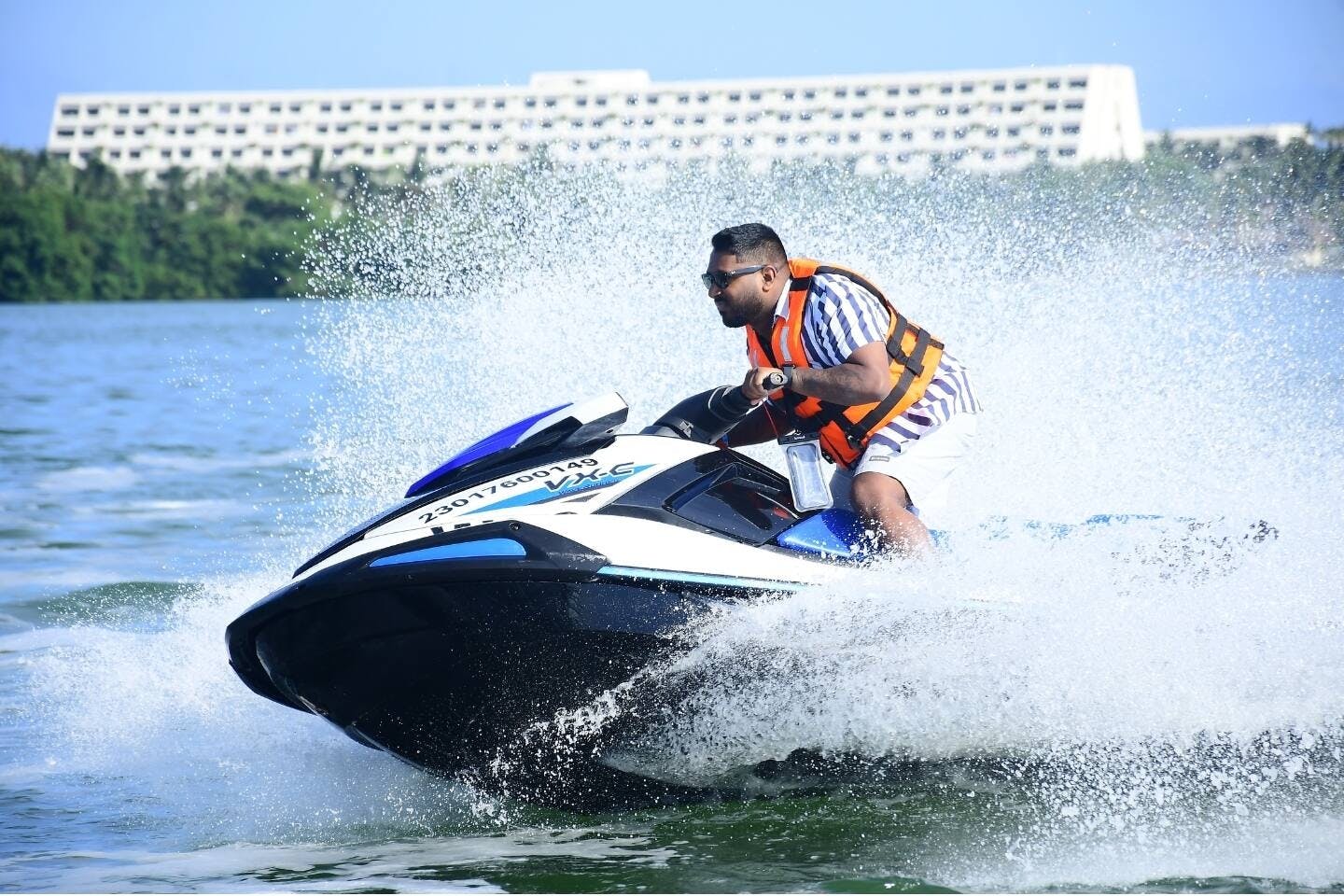
Nichupté Lagoon is the broad body of calm water and mangrove forest separating much of Cancún’s Hotel Zone from the mainland. It is visible from hotels, restaurants, shopping centres and roads throughout the resort district, yet many visitors spend their entire holiday looking towards the Caribbean Sea without exploring the lagoon behind them.
The lagoon offers a very different side of Cancún. Instead of white sand and breaking waves, visitors find narrow mangrove channels, still green-blue water, birdlife, small boats and sunsets reflected across the wetlands.
Sponsored Popular Items
Quick take: Musement.com offers a worldwide selection of tours and attractions
Nichupté Lagoon speedboat adventure with snorkelling Mexico Plan Nichupté Lagoon speedboat adventure with snorkelling, a water-based experience, with practical tips on timing, inclusions and what to check before booking. Compare current availability, prices and booking conditions before you go.
Popular activities include guided speedboat tours, kayaking, wildlife excursions, sunset cruises and dinner cruises. Some trips continue through the channels towards Punta Nizuc and add snorkelling on the Caribbean reef.
Nichupté should not be treated as a normal public swimming lake. It is an active boating area and a protected habitat containing crocodiles. The safest and most useful way to explore it is through an authorised operator or from an established public viewpoint.
Nichupté Lagoon Quick Facts
Visitor information
Details
Location
Between central Cancún and the Hotel Zone, Quintana Roo, Mexico
Type of environment
Coastal lagoon, mangrove wetland and connected waterways
Protected area
Manglares de Nichupté Flora and Fauna Protection Area
Protected surface
Approximately 4,257 hectares
Main activities
Boat tours, kayaking, birdwatching, sunset cruises and photography
Common wildlife
Waterbirds, iguanas, fish, turtles and crocodiles
Swimming
Not recommended from random shore access points
Typical speedboat tour
Approximately 90 minutes to 2 hours
Typical kayak experience
Approximately 2–3 hours
Typical dinner cruise
Approximately 2–3 hours
Best time of day
Early morning or late afternoon
Protected-area fee
Currently listed at MXN 125 per person per day
Best season
November to April for lower humidity and less rain
New bridge
Nichupté Vehicular Bridge, opened May 2026
Important: Tour durations, age limits, conservation charges and operating routes differ between companies. Read the booking conditions carefully.
What Is Nichupté Lagoon?
Nichupté is not one simple circular lake. It is a coastal lagoon system containing broad basins, narrow channels, mangrove islands, shallow wetlands and areas connected with underground freshwater sources.
The system lies immediately behind Cancún’s famous Hotel Zone. The Caribbean Sea borders the eastern side of the narrow resort strip, while Nichupté Lagoon borders much of its western side.
This position creates the distinctive geography visible from the air: a long line of hotels and beaches between bright blue ocean water and a darker mangrove lagoon.
The lagoon communicates with the Caribbean through channels near Punta Cancún and Punta Nizuc. Saltwater, rainfall and underground freshwater combine to create changing salinity conditions across the wetland.
These variations support different habitats and wildlife communities, making Nichupté much more ecologically complex than it may appear from a hotel balcony.
Understanding the Nichupté Lagoon System
Travel companies often describe Nichupté as a system of seven lagoons or basins. Names commonly associated with the system include:
North Basin.
Central Basin.
South Basin.
Laguna Bojórquez.
Laguna del Amor.
Río Inglés.
Smaller interconnected waterways and wetland basins.
Official ecological descriptions may classify the system differently according to hydrology and protected-area boundaries. For an ordinary visitor, the important point is that Nichupté contains several connected environments rather than one uniform body of water.
Laguna Bojórquez
Laguna Bojórquez lies near the northern Hotel Zone and is surrounded by tourism and urban development.
It is one of the most visible sections of the system and can be seen near restaurants, marinas and entertainment venues.
Central Nichupté
The broad central basin contains open water, islands and channels used by pleasure boats, tour vessels and wildlife.
Southern Lagoon and Punta Nizuc
The southern section becomes increasingly natural as it approaches Punta Nizuc. Mangrove channels connect with the Caribbean near the coral reefs south of the Hotel Zone.
Why Visit Nichupté Lagoon?
Nichupté reveals that Cancún is more than beaches, resorts and nightlife.
A lagoon excursion may appeal to travellers who want:
A break from crowded beaches.
A close look at mangrove ecology.
A small-boat adventure.
Birdwatching.
A sunset activity.
A romantic evening cruise.
Photography of Cancún’s skyline from the water.
A family activity that does not require a full day.
It also offers a useful visual contrast. From the water, visitors may see dense natural mangroves in one direction and the towers of the Hotel Zone in another.
This combination of urban tourism and surviving wetland is one of the lagoon’s most distinctive features.
Manglares de Nichupté Protected Area
The Mexican government declared Manglares de Nichupté a protected flora and fauna area in 2008.
The protected territory covers approximately 4,257 hectares arranged across several connected sections.
Its habitats include:
Red mangrove.
Black mangrove.
White mangrove.
Buttonwood mangrove.
Marsh vegetation.
Low tropical forest.
Freshwater springs.
Shallow lagoons.
Mangroves are particularly important because they:
Provide shelter for young fish.
Create nesting and feeding areas for birds.
Reduce erosion.
Filter sediments.
Store carbon.
Reduce some of the force of storm water and waves.
Support the nearby coral-reef ecosystem.
Visitors should use authorised service providers, avoid touching wildlife, keep rubbish on board and never damage mangrove roots or branches.
The Best Ways to Explore Nichupté Lagoon
There is no single standard Nichupté experience. Tours range from quiet paddling trips to fast speedboat circuits and evening dinner cruises.
Tour type
Best for
Typical experience
Speedboat tour
Adventure and first-time visitors
Drive a small boat through mangrove channels
Kayak tour
Nature and birdwatching
Slow guided paddle through quiet waterways
Wildlife tour
Photography and ecology
Small-group observation with a guide
Sunset cruise
Couples and relaxed sightseeing
Slow cruise with lagoon sunset views
Dinner cruise
Romantic evening
Meal, drinks and live music on a themed vessel
Clear-boat cruise
Families and non-swimmers
Scenic views through transparent sections of the boat
Mangrove Speedboat Tours
Self-drive speedboat tours are among Cancún’s most popular lagoon activities.
Participants normally follow a guide in a line of small two-, three- or four-person boats. After basic steering and safety instructions, the group travels across open water and through mangrove channels.
What to Expect
A typical tour may include:
Safety briefing.
Life jacket and boating instructions.
Approximately 60–90 minutes of driving.
Mangrove channels.
Views of Hotel Zone buildings.
Photographic stops.
An optional snorkelling section on longer tours.
Do You Need Boating Experience?
Usually not. The boats are designed for tourists and are relatively simple to operate.
The designated driver normally needs to meet a minimum age and may be required to present identification.
Alcohol should not be consumed before driving.
How Fast Are the Boats?
Speeds vary by operator, channel and conservation rules. Boats may travel relatively quickly across open sections but must reduce speed near mangroves, marinas and narrow passages.
Visitors wanting a peaceful wildlife experience may prefer kayaking, because engine noise and speed can reduce bird sightings.
Who May Find the Ride Uncomfortable?
Speedboat tours may not suit visitors with:
Recent surgery.
Back or neck problems.
Pregnancy.
Severe motion sickness.
Difficulty climbing into a low boat.
Medical conditions affected by repeated impact.
Read the operator’s health restrictions before booking.
Kayaking and Paddle Tours
A guided kayak tour provides a quieter and more environmentally focused way to experience the lagoon.
Without an engine, paddlers can hear birds, water movement and wind through the mangroves.
Advantages of Kayaking
Less noise.
Slower wildlife observation.
Access to calm and narrow areas.
Physical activity without high speed.
Lower environmental impact when properly managed.
Is Kayaking Difficult?
Most tours are suitable for beginners with normal fitness.
However, wind and heat can make paddling tiring. Double kayaks are often easier for couples or families because the workload is shared.
Guided or Independent?
A guided experience is preferable.
The lagoon contains restricted habitats, boat routes, shallow areas and crocodile territory. Guides understand authorised routes and current conditions.
Visitors should not enter random mangrove channels simply because they appear calm.
Morning Kayaking
Early morning is usually the best time because:
Temperatures are lower.
Wind may be lighter.
Bird activity can be higher.
Boat traffic is often reduced.
Lighting is softer for photography.
Wildlife and Birdwatching Tours
Nichupté is home to a surprising range of wildlife despite being surrounded by Cancún’s urban and tourism infrastructure.
Possible sightings include:
Great egrets.
Herons.
Pelicans.
Cormorants.
Common black hawks.
Ospreys.
Kingfishers.
Black iguanas.
Turtles.
Small fish and juvenile reef species.
American and Morelet’s crocodiles.
Wildlife sightings are never guaranteed. Engine noise, weather, water level and time of day all influence what is visible.
Night Crocodile Tours
Some specialist operators offer evening wildlife trips focused on crocodiles.
These should only be booked with experienced authorised guides. Passengers must remain inside the vessel and follow all instructions.
A responsible wildlife tour observes animals without feeding, touching or deliberately surrounding them.
Sunset and Dinner Cruises
The western orientation of much of the lagoon makes it one of Cancún’s best sunset locations.
While Caribbean beaches face east and are especially attractive at sunrise, Nichupté provides open views towards the setting sun.
Standard Sunset Cruise
A normal sunset cruise may include:
A slow sailing or motorboat journey.
Drinks.
Background music.
Hotel Zone skyline views.
Approximately 90 minutes to two hours on the water.
Dinner Cruise
Several themed dinner cruises operate on the lagoon, including trips aboard vessels styled as Spanish galleons.
Packages may include:
A three-course dinner.
Open bar or selected drinks.
Live saxophone or other music.
Reserved tables.
Sunset and evening skyline views.
These cruises are designed for atmosphere rather than wildlife observation.
What to Wear
Smart-casual clothing is generally appropriate. Bring a light layer because the lagoon can feel cooler after sunset.
Flat or low shoes are safer than narrow heels on a moving vessel.
Clear-Boat and Scenic Cruises
Clear-boat tours use vessels with transparent floor or hull sections, allowing passengers to look into the water without snorkelling.
They are particularly attractive to:
Families with young children.
Visitors who do not swim.
Travellers with limited time.
People wanting a gentle boat experience.
Visibility depends on water depth, sediment, sun angle and recent weather.
Nichupté’s lagoon water may not always have the bright clarity associated with Cancún’s open Caribbean beaches. A clear boat should therefore be viewed as a scenic lagoon cruise rather than a guaranteed aquarium-like experience.
What Will You See on the Lagoon?
Mangrove Tunnels
The most atmospheric sections are narrow channels where mangrove branches form walls and partial canopies.
Exposed roots extend into the water, creating nursery habitat for young fish and other marine life.
Open Basins
Beyond the channels, the lagoon opens into broad expanses reflecting the sky and Hotel Zone skyline.
Hotel Zone Views
Large hotels, observation towers, restaurants and shopping centres line parts of the eastern shore.
From the lagoon, the density of the development becomes more apparent.
Birdlife
Birds may be seen resting on mangrove branches, fishing in shallows or flying across open water.
Marinas and Restaurants
The developed sections contain marinas, waterfront restaurants, activity centres and excursion docks.
The New Bridge
The Nichupté Vehicular Bridge now forms a prominent modern element across the lagoon.
Crocodiles and Visitor Safety
Crocodiles live naturally in the Nichupté lagoon and mangrove system.
Both American crocodiles and Morelet’s crocodiles have been recorded in the protected area.
Most visitors will not see one during an ordinary daytime tour. However, their presence means that the lagoon must be treated as wildlife habitat rather than a public swimming pool.
Essential Safety Rules
Do not swim from random shoreline access points.
Do not sit or stand at the water’s edge after dark.
Do not feed crocodiles or other wildlife.
Do not throw food into the lagoon.
Keep children close near waterfronts.
Keep pets away from the water.
Remain inside the boat during wildlife encounters.
Never approach a crocodile for a photograph.
Follow local warning signs.
Use an authorised guide for night wildlife tours.
Are Crocodile Attacks Common?
Millions of people use Cancún’s Hotel Zone and organised lagoon activities without incident. Risk increases when people enter unsuitable water, ignore warnings, approach animals or remain close to the shore at night.
Respectful distance and sensible behaviour are essential.
Can You Swim in Nichupté Lagoon?
Nichupté is not generally recommended for casual independent swimming.
Reasons include:
Crocodile habitat.
Regular boat traffic.
Strong movement through some channels.
Variable depth.
Muddy or vegetated bottom.
Restricted conservation areas.
Changing water quality.
Do not enter the water from hotel lawns, restaurant edges, bridges, boat ramps or mangrove shorelines.
Some organised activities may include water access in approved locations or continue into the Caribbean for snorkelling. Follow the operator’s instructions and enter only where specifically authorised.
Lagoon Tours with Snorkelling
Many so-called Nichupté jungle tours combine lagoon boating with snorkelling near Punta Nizuc.
The boat travels through the lagoon and mangrove channels before approaching the southern connection with the Caribbean.
The snorkelling normally takes place at a recognised reef or marine-park area rather than deep inside the muddy mangrove lagoon.
Before Booking, Confirm
The precise snorkelling location.
Whether the reef fee is included.
Whether masks, snorkels and life jackets are supplied.
Minimum swimming ability.
Age restrictions.
Whether prescription masks are available.
What happens when the sea is rough.
Snorkelling may be cancelled while the speedboat section continues if offshore conditions are unsuitable.
Where Do Nichupté Tours Depart?
There is no single lagoon-tour terminal.
Operators use private marinas and docks throughout the Hotel Zone, particularly along Boulevard Kukulcán.
Common departure areas include:
Northern Hotel Zone marinas.
Laguna Bojórquez.
Docks near Punta Cancún.
Marinas around kilometre 6–9 of Boulevard Kukulcán.
Activity centres farther south near kilometre 13–15.
Punta Nizuc-area marinas.
Always follow the exact map link and kilometre marker on the booking confirmation.
Two tours with similar names may leave many kilometres apart.
Arrive Early
Arrive around 20 to 30 minutes before the stated departure for:
Registration.
Fee payment.
Life-jacket fitting.
Safety briefing.
Changing clothes.
Storage of loose items.
Tickets, Tour Prices and Conservation Fees
Tour prices vary widely according to duration, boat type, private or shared use and whether food, drinks or snorkelling are included.
Typical categories include:
Shared kayak tour.
Private kayak tour.
90-minute self-drive speedboat.
Two-hour speedboat and snorkel package.
One-hour clear-boat tour.
Sunset cruise.
Dinner cruise.
Private yacht charter.
Protected-Area Fee
CONANP currently publishes a daily admission charge for the protected Manglares de Nichupté area.
An operator may:
Include it in the advertised price.
Add it during online checkout.
Collect it at the marina.
Refer to it as a conservation, reef or marine-park fee.
Ask before booking so the final price is clear.
Other Possible Charges
Dock fee.
Locker rental.
Hotel transfer.
Photographs.
Towels.
Food and premium drinks.
Damage deposit for self-drive boats.
Gratuity.
The Best Time to Visit Nichupté Lagoon
November to April
This is generally the most comfortable period, with lower humidity, less rainfall and milder temperatures.
It is also Cancún’s busiest tourism season, so popular cruises should be booked early.
May and June
Conditions become hotter and more humid, but mornings can still be excellent for kayaking and boating.
July and August
Summer is hot, bright and often busy with families.
Afternoon showers and thunderstorms are possible.
September and October
These months often bring the greatest tropical-storm and hurricane risk.
Tour cancellations and route changes are more likely.
Morning
Morning is best for:
Kayaking.
Birdwatching.
Lower temperatures.
Reduced boat traffic.
Calmer conditions.
Late Afternoon
Late afternoon is ideal for:
Sunset cruises.
Photography.
Romantic dinners.
Lower heat.
Weather, Wind and Hurricane Season
Lagoon trips depend on wind, rain, thunderstorms and visibility.
Rain
Light rain may not stop a tour, especially on a covered vessel.
Heavy rain can reduce visibility and make kayaking or small speedboats unpleasant.
Lightning
Operators should postpone or cancel departures when thunderstorms create a lightning risk.
Wind
Strong wind affects open-water sections and makes paddling more difficult.
Mangrove channels may remain sheltered, but reaching them can still require crossing exposed water.
Hurricanes
The Atlantic hurricane season runs from June through November.
Visitors travelling during this period should:
Monitor official forecasts.
Choose refundable tours.
Follow hotel instructions.
Avoid travelling during warnings.
Understand that marinas may close early.
Getting to Nichupté Lagoon
Because the lagoon stretches along much of Cancún, transport depends on the selected marina or viewpoint.
From a Hotel Zone Resort
Many marinas are reachable by local Hotel Zone bus, taxi or rideshare.
Ask the driver to stop at the exact kilometre marker rather than saying only “Nichupté Lagoon.”
From Downtown Cancún
A taxi or rideshare is normally the simplest choice when carrying swimming equipment or travelling early.
Public buses connect central Cancún with Boulevard Kukulcán, but routes and traffic patterns may change.
Hotel Transfers
Some tours include hotel pickup. Others collect only from major meeting points.
Confirm whether transport is:
Included.
Available for an extra charge.
Shared with other passengers.
Direct or subject to multiple pickups.
The New Nichupté Bridge
The Nichupté Vehicular Bridge opened in May 2026 and provides a new road connection between central Cancún and the Hotel Zone.
The complete project extends approximately 11.2 kilometres, including a long elevated section crossing the lagoon.
The bridge was built primarily to reduce dependence on Boulevard Kukulcán and improve access between the city and resort district.
What It Means for Visitors
Some journeys between downtown and the central Hotel Zone may be faster.
Taxi and transfer routes may differ from older online advice.
The bridge has become a visible feature during lagoon tours.
Navigation apps may need time to reflect current traffic arrangements accurately.
The bridge should not be treated as permission to stop, walk in restricted areas or launch into the lagoon.
Malecón Tajamar
Malecón Tajamar is a public waterfront area on the downtown side of the lagoon.
It provides a useful land-based option for visitors who want lagoon views without booking a boat.
People use the area for:
Walking.
Jogging.
Cycling.
Photography.
Watching sunsets.
Community events.
There is no reason to enter the water. Remain on the promenade and respect any temporary barriers or construction restrictions.
Carry water and sun protection because shade can be limited.
Visiting Nichupté with Children
Many lagoon tours accept children, but the best option depends on age and confidence around boats.
Good Family Choices
Short scenic cruise.
Clear-boat tour.
Slow wildlife excursion.
Double kayak with an older child.
Speedboat tour for children meeting the operator’s minimum age.
Check Before Booking
Minimum age.
Minimum height.
Child life-jacket availability.
Whether infants are permitted.
Sun protection on the boat.
Toilet availability.
Health restrictions.
Whether the activity includes offshore snorkelling.
Children must remain supervised around every dock and lagoon edge because crocodiles and boat traffic are present.
Accessibility and Mobility
Accessibility varies greatly between vessels and marinas.
Potential difficulties include:
Steps down to floating docks.
Moving gangways.
Low speedboat seats.
Narrow boarding gaps.
Wet surfaces.
No accessible toilet.
Limited wheelchair storage.
Larger dinner-cruise vessels may be easier than small speedboats, but this must be confirmed directly.
Visitors with mobility limitations should ask:
Can a wheelchair reach the dock?
Can the passenger remain in the wheelchair?
How high is the step into the boat?
Is staff lifting required?
Is an accessible toilet available?
Can a walker be stored?
Malecón Tajamar may provide a more manageable lagoon-viewing option for some travellers.
What to Bring
Booking confirmation: Keep the marina address and contact number available.
Photo identification: Often required for the boat driver.
Sun protection: Use sunscreen, sunglasses and a secure hat.
Water: Bring a reusable bottle when permitted.
Light long-sleeved layer: Useful against sun and insects.
Insect repellent: Particularly useful near mangroves around dawn or dusk.
Secure footwear: Choose shoes suitable for a wet dock.
Waterproof pouch: Protect phones and documents.
Towel and swimwear: Required when snorkelling is included.
Light jacket: Useful on evening cruises.
Cash: Helpful for fees, lockers and tips.
Avoid carrying valuables or large bags onto a small boat.
Responsible Lagoon Tourism
Nichupté survives beside one of Mexico’s most heavily developed tourism districts. Its future depends on responsible management and visitor behaviour.
Use authorised tour operators.
Do not enter closed mangrove channels.
Never cut or break mangrove branches.
Do not touch or feed wildlife.
Do not throw food into the water.
Keep rubbish on board.
Do not anchor in seagrass.
Follow speed restrictions.
Avoid loud music on nature-focused trips.
Use reusable bottles where possible.
Do not release balloons or decorations.
Follow guide instructions near crocodiles.
Fast boating may be enjoyable, but responsible operators slow down in ecologically sensitive areas and follow marked navigation routes.
Things to Do Near Nichupté Lagoon
La Isla Cancún
La Isla is a large open-air shopping and entertainment complex beside the lagoon.
Its canals, restaurants and promenades provide water views without requiring a tour.
Torre Escénica
Cancún’s scenic tower provides elevated views over the Hotel Zone, Caribbean Sea and Nichupté Lagoon.
Operating hours and admission should be checked before visiting.
Museo Maya de Cancún
The Maya Museum displays archaeological collections from Quintana Roo and includes access to the San Miguelito ruins.
Playa Delfines
Playa Delfines is one of Cancún’s best-known public Caribbean beaches and provides a strong contrast with the calm lagoon.
Punta Nizuc
Punta Nizuc marks the southern end of the Hotel Zone and is associated with reef snorkelling and marine-park tours.
Malecón Tajamar
Visit near sunset for a free waterfront walk and skyline views.
Hotel Zone Restaurants
Several lagoon-side restaurants offer sunset views, although a table beside the water should be reserved during busy periods.
Suggested Half-Day Nichupté Itinerary
7:30 am: Leave Your Hotel
Travel to the confirmed marina before the heat and main excursion crowds build.
8:00 am: Check In
Complete registration, pay any conservation fee and attend the safety briefing.
8:30 am: Begin a Kayak or Speedboat Tour
Travel through the open lagoon and enter authorised mangrove channels.
9:30 am: Wildlife and Photography Stop
Look for herons, pelicans, iguanas and fish without disturbing them.
10:30 am: Return to the Marina
Change clothes and collect stored belongings.
11:00 am: Visit La Isla or a Lagoon-Side Café
Have an early lunch and continue enjoying views across Nichupté.
1:00 pm: Visit the Maya Museum or Playa Delfines
Combine the lagoon with either culture or a Caribbean beach.
Alternative Evening
Skip the morning tour and book a sunset or dinner cruise, arriving at the marina before dusk.
Is Nichupté Lagoon Worth Visiting?
Nichupté Lagoon is worth visiting for travellers who want to understand Cancún beyond its oceanfront resorts.
Main Advantages
Easy access from the Hotel Zone.
Mangrove scenery.
Broad choice of tours.
Good sunset views.
Birdwatching opportunities.
Activities lasting only a few hours.
Suitable options for families, couples and adventure travellers.
Possible Drawbacks
Some areas are heavily developed.
Boat traffic can be busy.
Speedboat tours are noisy.
Wildlife sightings are not guaranteed.
Conservation fees may be added separately.
Swimming is unsuitable in most areas.
Weather can cause last-minute changes.
Tour advertising may overstate water clarity or wildlife encounters.
The most rewarding experience is usually a small guided kayak or wildlife tour early in the morning. Visitors seeking excitement may prefer a speedboat, while couples may find a sunset cruise more memorable.
Frequently Asked Questions About Nichupté Lagoon
Where is Nichupté Lagoon?
It lies between central Cancún and the Hotel Zone in Quintana Roo, Mexico.
Is Nichupté one lagoon?
It is a connected lagoon system containing several basins, channels, wetlands and mangrove areas.
Is it a protected area?
Large sections form part of the federally protected Manglares de Nichupté Flora and Fauna Protection Area.
How large is the protected area?
It covers approximately 4,257 hectares.
What can visitors do there?
Popular activities include speedboat tours, kayaking, birdwatching, clear-boat trips, sunset cruises and dinner cruises.
Can I swim in Nichupté Lagoon?
Casual independent swimming is not recommended because of crocodiles, boat traffic, variable depth and protected habitats.
Are there crocodiles?
Yes. American and Morelet’s crocodiles live in the lagoon and mangrove system.
Will I see a crocodile?
Possibly, especially on a specialist wildlife tour, but sightings are not guaranteed.
Are crocodile tours safe?
They can be when operated by an experienced authorised guide and when passengers remain inside the boat and follow instructions.
Can I kayak independently?
A guided tour is strongly preferable because of conservation zones, boat routes and crocodile habitat.
Do I need experience to drive a speedboat?
Most tourist speedboat trips are designed for beginners and include instruction.
How old must the driver be?
Minimum ages differ between operators. Confirm this before booking.
How long is a speedboat tour?
Most last approximately 90 minutes to two hours.
How long is a kayak tour?
Guided kayak experiences commonly last around two to three hours.
Do speedboat tours include snorkelling?
Some do. The snorkelling normally takes place near Punta Nizuc or the Caribbean reef rather than in the central lagoon.
Are life jackets supplied?
Authorised operators normally provide life jackets and require their use.
Is the lagoon suitable for children?
Yes, on an age-appropriate organised trip with correctly fitted safety equipment.
Can babies join?
Some operators prohibit infants because of boat movement. Check the minimum age before booking.
Is Nichupté accessible to wheelchair users?
Accessibility depends on the marina and vessel. Small speedboats are generally difficult, while some larger cruises may be more suitable.
Where do tours leave from?
They depart from several marinas along Boulevard Kukulcán and around Laguna Bojórquez.
Can I walk to the lagoon?
Some hotels, malls and public areas overlook it, but most mangrove and wildlife sections require a boat.
Is there a free viewpoint?
Malecón Tajamar provides a public lagoon-side promenade on the downtown side.
What is the conservation fee?
CONANP currently lists a protected-area fee of MXN 125 per person per day. Tour inclusions vary.
Is the fee included in the tour?
Sometimes. Check the operator’s full price before booking.
What is the best time of day?
Morning is best for kayaking and wildlife. Late afternoon is best for sunsets and dinner cruises.
What is the best time of year?
November to April generally offers the most comfortable weather.
Do tours operate in rain?
Light rain may not stop a trip. Thunderstorms, lightning and strong wind can cause delays or cancellations.
Are mosquitoes a problem?
They can be present near mangroves, especially at dawn, dusk and after rain. Bring repellent.
Can I fish in the lagoon?
Fishing is controlled by conservation and licensing rules. Use an authorised fishing operator and follow current regulations.
Can I use a drone?
Drone use is subject to Mexican aviation, protected-area and privacy restrictions. Do not fly without confirming current permission requirements.
What wildlife may I see?
Possible sightings include egrets, herons, pelicans, hawks, kingfishers, iguanas, turtles, fish and crocodiles.
Is Nichupté freshwater?
It contains brackish water influenced by the sea, rainfall and underground freshwater.
Does the lagoon connect to the Caribbean?
Yes. It connects through channels near Punta Cancún and Punta Nizuc.
What is the Nichupté Bridge?
It is a new 11.2-kilometre road connection crossing the lagoon between central Cancún and the Hotel Zone.
When did the bridge open?
It opened in May 2026.
Can pedestrians stop on the bridge for photographs?
Visitors should follow current traffic and access rules and use established viewpoints rather than stopping on the roadway.
Can I combine the lagoon with a beach day?
Yes. A morning lagoon tour can be followed by Playa Delfines, Punta Nizuc or another Hotel Zone beach.
Is Nichupté better than a Caribbean boat trip?
They are different. Nichupté offers mangroves, wildlife and sunsets, while Caribbean trips focus on bright ocean water, reefs and beaches.
Sponsored Popular Items
Quick take: Musement.com offers a worldwide selection of tours and attractions
Nichupté Lagoon is one of Cancún’s most important natural landscapes, even though it sits beside one of the world’s busiest resort districts.
Its mangrove channels support fish, birds, reptiles and the coral ecosystems beyond Punta Nizuc. They also protect the shoreline and provide a natural counterpoint to the hotels and roads surrounding the water.
The lagoon is best experienced with realistic expectations. It is not a swimming beach, and its water will not always resemble the bright turquoise Caribbean. Its value comes from the mangroves, quiet channels, wildlife and unusual view back towards the Cancún skyline.
Choose an early kayak tour for nature, a guided speedboat for adventure or a sunset cruise for a relaxed evening. Use an authorised operator, pay any required conservation fee and never enter isolated water without local guidance.
For visitors willing to look behind the famous beaches, Nichupté Lagoon provides a more complete understanding of Cancún and the wetland environment that existed long before the Hotel Zone was built.
Sponsored Popular Items
Quick take: Musement.com offers a worldwide selection of tours and attractions
Nichupté Lagoon speedboat adventure with snorkelling Mexico Plan Nichupté Lagoon speedboat adventure with snorkelling, a water-based experience, with practical tips on timing, inclusions and what to check before booking. Compare current availability, prices and booking conditions before you go.
Puerto Maya WaveRunner Nichupté Lagoon Ride Mexico Puerto Maya Wave Runner USD 75 adds structure, local context and purposeful sightseeing to the itinerary. Check current availability, inclusions and booking details before you go.