Lac Cai is one of Bonaire’s most unusual coastal destinations. Hidden at the eastern end of Lac Bay, it combines a small sandy beach, calm turquoise shallows, working fishing boats, dense mangroves and enormous piles of weathered queen-conch shells.
The setting feels very different from the island’s popular western dive beaches. Lac Cai lies on Bonaire’s windward side, reached by a rough road through low scrub and wetlands. There are no large resorts, rows of beach loungers or polished shopping areas. Instead, visitors find a quiet lagoon landscape shaped by fishing traditions and one of the Caribbean’s most important coastal ecosystems.
Sponsored Popular Items
Quick take: Musement.com offers a worldwide selection of tours and attractions
Lac Cai Glass-Bottom Kayak & Snorkel Tour with Transfer Netherlands Lac Cai glass-bottom kayak and snorkel tour with transfer is for travellers who want movement, scenery and a more active element in their itinerary. Check current availability, inclusions and booking details before you go.
The bay’s shallow water can be suitable for paddling and relaxed swimming close to shore, but Lac Cai should not be treated as an unrestricted water playground. Seagrass beds, mangroves, turtles and queen conch are protected, and currents can be stronger near the opening to the sea.
This guide explains how to reach Lac Cai, what to expect, where swimming is appropriate, why the shell mounds must remain untouched and how to visit this fragile part of Bonaire responsibly.
Lac Cai Quick Facts
Visitor information
Details
Location
Eastern side of Lac Bay, southeastern Bonaire
Also called
Cai or Lac Cai
Type of destination
Small natural beach, fishing area and protected lagoon
Distance from Kralendijk
Approximately 12–15 kilometres, depending on the route
Typical driving time
About 25–35 minutes
Road
Partly rough, uneven and unpaved
Admission
No conventional beach-entry charge
Marine-park fee
Required for most visitors aged 12 or older entering the water
Main features
Shallow water, mangroves, conch-shell mounds and fishing culture
Swimming
Possible in designated and suitable areas
Snorkelling
Conditions can be unsuitable for inexperienced swimmers
Kayaking
Mangrove kayaking requires an authorised guide
Facilities
Very limited and not guaranteed every day
Best visit length
One to three hours
Best time
Morning or late afternoon
Important: The area is part of a protected marine ecosystem. Rules concerning swimming, kayaking, snorkelling and wildlife protection must be followed even when no ranger is visibly present.
What Is Lac Cai?
Lac Cai is a small beach and fishing area on the northeastern side of Lac Bay.
Official signs and maps may use the shorter name Cai, while travellers and local guides often call the wider area Lac Cai.
The beach lies between the calm interior waters of the lagoon and Bonaire’s rougher eastern coastline. From the shore, visitors look across Lac Bay towards Sorobon, where colourful windsurfers are often visible in the distance.
Lac Cai is not a conventional resort beach. Its principal attractions are:
The natural lagoon scenery.
Shallow turquoise water.
Historic piles of queen-conch shells.
Mangrove vegetation.
Traditional fishing boats.
Birdwatching.
A peaceful atmosphere on quieter days.
Local residents often gather at Cai, particularly on Sundays and holidays. On these days, the beach may feel lively rather than deserted, with music, food and family groups.
Understanding Lac Bay
Lac Bay is Bonaire’s largest lagoon and one of the largest enclosed bays in the Dutch Caribbean.
A protective reef separates much of the bay from the open Caribbean Sea. Behind this reef lies a shallow landscape of sand, seagrass beds, mangrove channels and calm water.
The bay is internationally protected as a Ramsar wetland because of its ecological importance.
Important Habitats
Lac Bay contains several connected natural environments:
Mangrove forest: Shelters young fish, birds, crabs and other wildlife.
Seagrass meadows: Feeding grounds for green turtles and habitat for juvenile queen conch.
Coral reef: Protects the bay from stronger ocean waves.
Sandy shallows: Support fish, rays, molluscs and other marine species.
Coastal wetlands: Used by flamingos, pelicans, herons and migratory birds.
These environments depend on one another. Damaging the mangroves or seagrass can eventually affect the coral reef and fish populations beyond the lagoon.
Why Visit Lac Cai?
Lac Cai provides a quieter and less commercial experience than Sorobon Beach on the opposite side of the bay.
It is particularly worthwhile for visitors interested in:
Natural landscapes.
Birdwatching.
Local fishing culture.
Coastal photography.
Protected marine habitats.
Quiet swimming close to shore.
Seeing the historic conch-shell mounds.
The journey is also part of the experience. The route passes dry scrub, wetland areas and mangrove vegetation rarely seen around the hotels of Kralendijk.
Lac Cai may disappoint visitors seeking:
A manicured resort beach.
Guaranteed restaurants and toilets.
Beach chairs and umbrellas.
A staffed swimming area.
A busy watersports centre.
Easy public transport.
How to Get to Lac Cai
Lac Cai is easiest to reach by rental car, taxi, private guide or organised island tour.
There is no dependable public bus service suitable for most visitors.
From Kralendijk
Drive southeast from Kralendijk towards Lac Bay and Sorobon. Follow signs for Cai or Lac Cai rather than stopping at the better-known windsurfing beaches on the southern side of the lagoon.
The final approach passes through a sparsely developed landscape with mangroves and low vegetation.
Mobile navigation can be useful, but visitors should also follow physical signs because map applications occasionally suggest unsuitable tracks.
By Taxi
A taxi can take visitors to Lac Cai, but returning may be difficult without a prearranged collection time.
Do not assume that taxis wait at the beach or can be called immediately from the area.
By Island Tour
Some southern-island and nature tours include a short stop at Lac Cai.
Check how much time is provided. A brief photographic stop may not allow enough time for swimming or exploring the shoreline.
Road Conditions and the Best Vehicle
The final road to Lac Cai is known for being uneven and rough.
Conditions vary according to rainfall, erosion and maintenance. Visitors may encounter:
Potholes.
Loose stones.
Washouts.
Muddy sections after rain.
Narrow areas.
Animals or birds near the road.
A four-wheel-drive vehicle is not always essential, but a car with reasonable ground clearance is preferable.
Drive slowly and avoid making sudden movements around holes or loose surfaces.
Rental-Car Conditions
Before travelling, check whether the rental agreement permits use on unpaved roads.
Some small rental cars have limited ground clearance, and damage to tyres or the underside may not be covered.
After Heavy Rain
Ask the rental company or accommodation provider about current conditions after heavy rain.
Do not drive through standing water when its depth or the road surface beneath it cannot be seen.
What Is Lac Cai Beach Like?
The beach is small, natural and relatively undeveloped.
The shoreline includes sand, coral rubble, shells and patches of vegetation. It may look different according to tides, wind, erosion and recent sargassum accumulation.
The Water
Close to shore, the water is generally:
Shallow.
Warm.
Clear in calm weather.
Protected from direct ocean swell.
Suitable for paddling and relaxed bathing.
Darker areas visible beneath the surface are often seagrass beds rather than deep water.
Visitors should avoid trampling seagrass unnecessarily because it provides essential habitat and food for turtles and other marine life.
Beach Conditions
Do not expect the entire shoreline to consist of soft white sand. Sections can be rocky or covered with shell fragments.
Water shoes are useful, especially when walking near coral rubble or the old shell piles.
The Famous Conch-Shell Mounds
The enormous piles of queen-conch shells are Lac Cai’s most recognisable feature.
For generations, local fishers collected queen conch—known locally as karko—from the shallow waters of Lac Bay. The meat was removed for food, while the empty shells accumulated beside the fishing area.
The shell mounds now serve as a physical record of this former fishery.
Why Conch Harvesting Stopped
Queen-conch populations declined severely because of overharvesting.
The species is now protected, and taking conch from Bonaire’s marine park is prohibited.
Can You Take a Shell Home?
No. Visitors must not remove conch shells from Lac Bay, whether the shell appears new, old, broken or empty.
The rule applies to shells found:
In the water.
On the beach.
Inside the shell mounds.
Beside fishing boats.
The shells are part of the protected environment and cultural landscape, not free souvenirs.
Climbing on the Mounds
Avoid climbing or walking over the piles.
The broken shells can be sharp and unstable, and repeated foot traffic damages their structure.
Photograph the mounds from the surrounding path without rearranging the shells.
Swimming at Lac Cai
The shallow shore at Cai can be pleasant for swimming and paddling, particularly in calm weather.
The easiest water entry is generally from the sandy beach area.
Close-to-Shore Swimming
Near the beach, the water may remain shallow for a considerable distance.
This creates comfortable conditions for:
Cooling off.
Gentle swimming.
Floating.
Children playing under supervision.
Watching small fish in clear water.
Currents and Channels
Conditions change farther from shore and closer to the opening between Lac Bay and the sea.
Water moving through the reef channels can create currents unsuitable for inexperienced swimmers.
Do not swim towards the outer reef or open-water passages unless you understand the local conditions and are accompanied by an authorised guide.
No Lifeguards
Visitors should not expect lifeguard supervision.
Swim with another person, watch the weather and remain within an area suitable for your ability.
Snorkelling and Sea Turtles
Lac Bay’s seagrass beds are important feeding grounds for green turtles. This makes the wider area attractive to snorkellers, but turtle sightings are never guaranteed.
Independent snorkelling at Lac Cai should be approached carefully.
Potential Difficulties
Current near channels.
Boat traffic.
Wind-driven surface movement.
Very shallow areas over seagrass.
Long distances from shore.
Restrictions protecting sensitive zones.
Beginners are better choosing an organised guided snorkel or staying in the shallow recreational area.
Watching Turtles Responsibly
When a turtle appears:
Remain at a respectful distance.
Do not chase it.
Do not block its path to the surface.
Never touch its shell or flippers.
Do not surround it with a group.
Avoid sudden splashing.
Turtles must surface to breathe and need space to move freely.
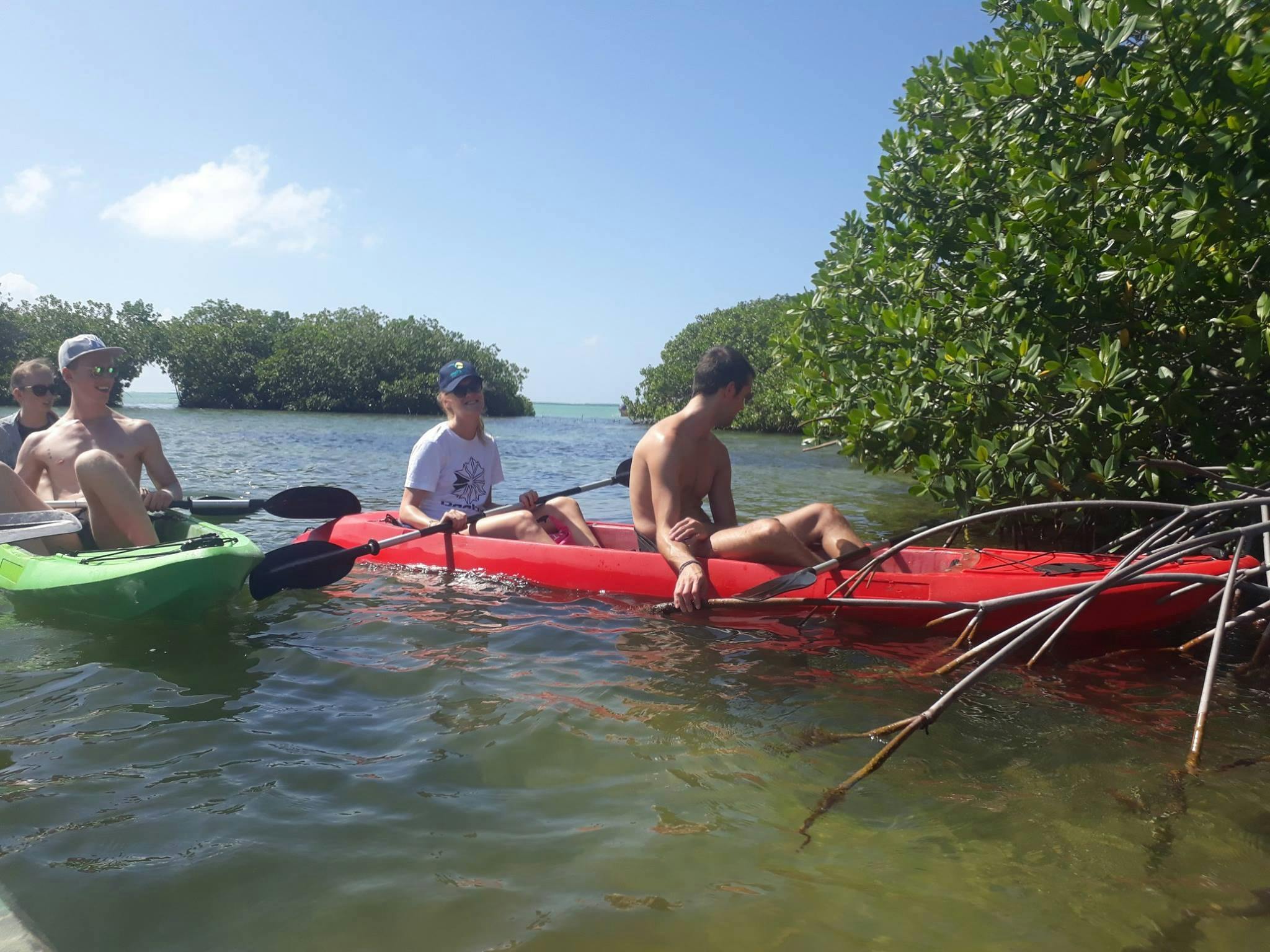
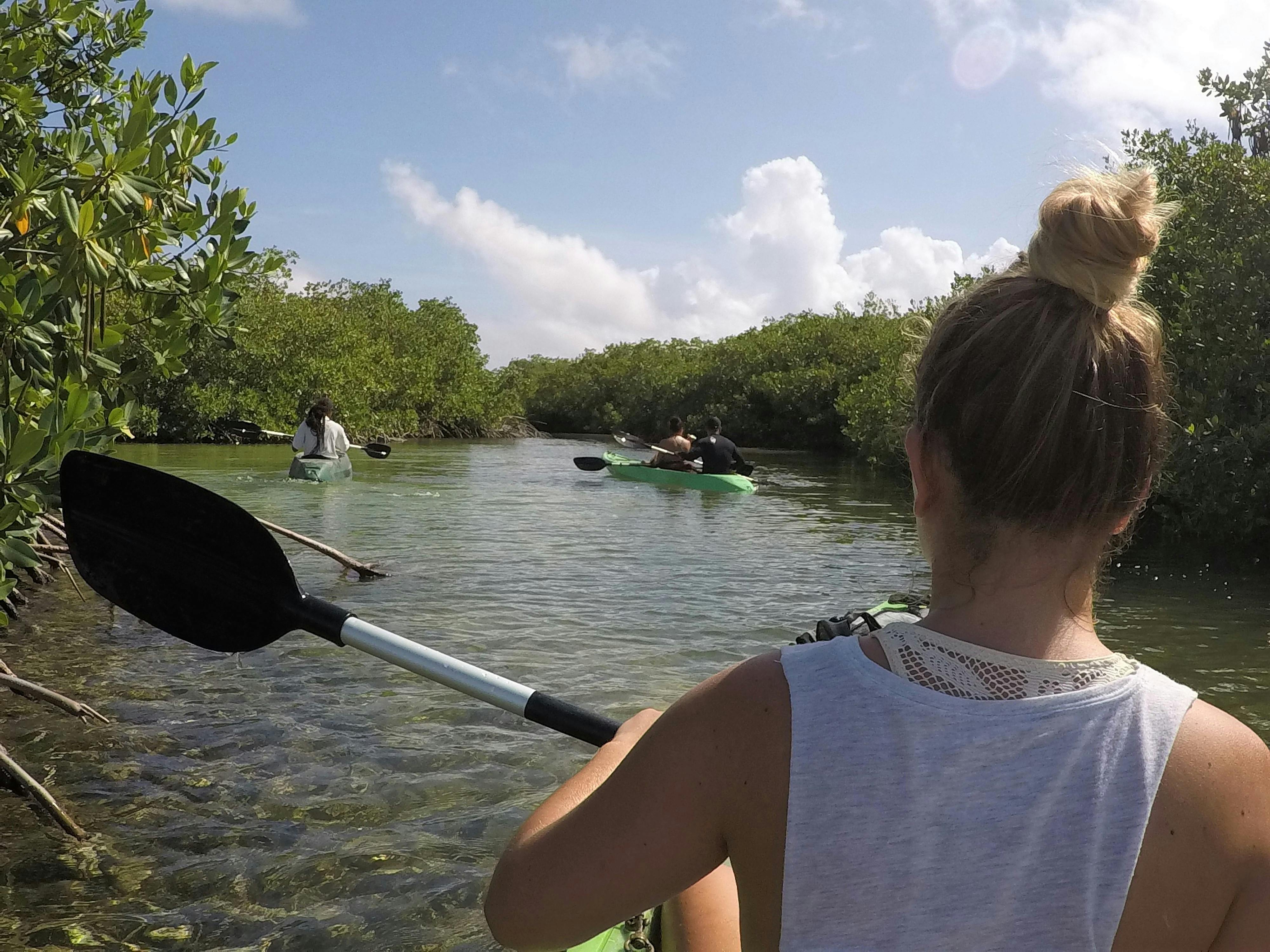
Mangroves and Guided Kayaking
Lac Bay contains the largest mangrove forest in the Dutch Caribbean.
The mangroves form sheltered channels where young fish, crabs and birds find protection.
Kayaking through these waterways is one of Bonaire’s most interesting nature experiences, but visitors cannot simply launch anywhere and enter the mangrove forest independently.
Why a Guide Is Required
Guided access helps:
Prevent damage to shallow seagrass.
Keep paddlers within approved routes.
Protect wildlife nesting and feeding areas.
Avoid disturbance in restricted zones.
Explain the role of the mangrove ecosystem.
Certified tours commonly combine kayaking with a short guided snorkel in an approved section of Lac Bay.
The mangrove-tour departure point may be elsewhere around the bay rather than directly at Lac Cai, so follow the operator’s meeting instructions.
Wildlife You May See
Lac Bay supports an impressive range of wildlife both above and below the surface.
Birds
Possible bird sightings include:
American flamingos.
Brown pelicans.
Magnificent frigatebirds.
Herons.
Egrets.
Terns.
Ospreys.
Flamingos are often visible at a distance rather than directly beside the beach.
Marine Life
Visitors may encounter:
Green turtles.
Small reef fish.
Juvenile fish living near mangrove roots.
Sea stars.
Queen conch.
Sponges.
Crabs.
Occasional rays.
Wildlife should be observed without touching, feeding or moving it.
Bonaire Nature Fee
Lac Cai forms part of Bonaire National Marine Park.
Visitors aged 12 or older who enter the sea generally need to purchase the STINAPA Nature Fee.
At the time of writing:
The standard visitor Nature Fee is US$40.
It is valid from January 1 to December 31 of the year purchased.
It also covers entry to Washington Slagbaai National Park.
Children under 12 are exempt.
A special one-day fee is available for qualifying cruise passengers.
Keep the digital confirmation or QR code accessible on your phone and carry identification.
The fee is required for swimming, snorkelling, diving and other use of the protected marine environment—not only for scuba diving.
Facilities, Food and Shade
Facilities at Lac Cai are limited.
A simple local snack bar or food stand may operate, especially during weekends and popular local gathering times. Opening should not be assumed on every day.
Visitors should not rely on finding:
A full restaurant.
Reliable toilet facilities.
Showers.
Changing rooms.
Beach-chair rental.
Umbrellas.
A staffed visitor centre.
Fresh drinking water.
Shade
Natural shade is limited and moves throughout the day.
Mangroves should not be used as places to hang equipment, break branches or force a route through the vegetation.
Bring a hat and sun-protective clothing rather than depending entirely on trees.
The Best Time to Visit
Morning
Morning is usually the best time for:
Cooler temperatures.
Quieter roads.
Birdwatching.
Clearer photography.
A peaceful beach experience.
Trade winds are a normal feature of Bonaire, but conditions may feel less intense earlier in the day.
Late Afternoon
Late afternoon offers softer light and cooler conditions.
Leave before dark unless you know the road well, as potholes and uneven sections become harder to see.
Sunday
Sunday is often one of the liveliest times at Lac Cai, when local families gather to eat, socialise and enjoy music.
This can provide an enjoyable community atmosphere, but visitors seeking silence should choose a weekday morning.
Rainy Conditions
Bonaire is relatively dry, but short heavy rain can make the approach road rougher and muddier.
Check conditions locally after unusually wet weather.
Visiting Lac Cai with Children
Lac Cai can suit families because the water immediately beside the beach is often shallow.
Children still require continuous adult supervision because:
There are no lifeguards.
Sharp shells and coral fragments may be present.
Water depth and currents vary farther from shore.
Fishing boats may operate nearby.
Shade and facilities are limited.
Water shoes can protect young feet from shell fragments.
Bring all required food, drinks, sun protection and changing supplies rather than relying on beach facilities.
Accessibility and Mobility
Lac Cai is a natural, minimally developed beach and presents challenges for visitors with limited mobility.
Potential difficulties include:
A rough access road.
Uneven parking surfaces.
Loose sand.
Shell rubble.
No guaranteed accessible toilet.
No permanent beach mat or wheelchair route.
A visitor who can walk a short distance over uneven ground may be able to reach the beach from the parking area.
Wheelchair users should arrange a suitable vehicle and assistance and seek current local advice before travelling.
What to Bring
Drinking water: Bring more than you expect to need.
Food or snacks: Do not depend on the beach stand being open.
Reef-conscious sunscreen: Apply before entering the water.
Hat and sunglasses: Shade is limited.
Water shoes: Useful for shells and coral rubble.
Swimwear and towel: Changing rooms may not be available.
Small first-aid kit: Helpful for minor cuts.
Binoculars: Excellent for birdwatching.
Waterproof phone pouch: Protects electronics from sand and water.
Nature Fee proof: Carry the digital QR code when entering the sea.
Rubbish bag: Take all waste away.
Offline map: Mobile reception and navigation may be inconsistent.
Responsible Visiting Rules
Lac Bay is environmentally fragile. Visitors should treat it as a protected wetland rather than an ordinary recreational beach.
Do not remove conch shells.
Do not collect living or dead marine animals.
Do not touch turtles, sea stars or conch.
Do not walk through mangroves.
Do not break mangrove branches.
Stay within authorised swimming and snorkelling areas.
Use a certified guide for mangrove kayaking.
Avoid trampling seagrass.
Do not feed fish or birds.
Do not light fires.
Do not leave rubbish.
Do not anchor a boat in seagrass.
Keep noise moderate around wildlife.
Leaving a shell where it lies may seem insignificant, but the combined effect of thousands of visitors removing objects can permanently alter the site.
Photography Tips
Lac Cai is one of Bonaire’s most distinctive landscape-photography locations.
Best Subjects
The conch-shell mounds.
Fishing boats on turquoise water.
Mangrove reflections.
Windsurfers across the lagoon.
Pelicans and frigatebirds.
Shell textures and weathered driftwood.
The contrast between the lagoon and rough eastern coastline.
Practical Tips
Visit early for softer light.
Use a polarising filter to reduce glare on the lagoon.
Keep the horizon level.
Do not move shells to create a photograph.
Use a longer lens for birds.
Protect equipment from sand and salt spray.
Avoid disturbing fishers while photographing boats.
Ask before photographing identifiable local people.
Drones are subject to local aviation, privacy and protected-area rules. Do not fly without confirming current permission requirements.
Things to Do Near Lac Cai
Sorobon Beach
Sorobon lies across Lac Bay and is Bonaire’s principal windsurfing area.
It offers a more developed beach experience with watersports centres, restaurants and accommodation.
Windsurfing at Lac Bay
The bay’s shallow water and consistent trade winds make it internationally known for windsurfing.
Beginners can book lessons, while experienced riders use deeper and windier areas.
Mangrove Kayak Tour
A guided kayak and snorkel excursion provides a more detailed understanding of Lac Bay’s mangrove channels and seagrass habitats.
Reserve ahead because group sizes and departure times are controlled.
Pink Beach and the Southern Coast
Visitors with a car can continue around southern Bonaire to see salt pans, slave huts, dive sites and coastal viewpoints.
Pekelmeer Flamingo Sanctuary
Flamingos can often be observed at a distance around Bonaire’s southern salt ponds.
The sanctuary itself is protected and not open for unrestricted entry.
Kralendijk
After visiting Lac Cai, return to Kralendijk for restaurants, shops, the waterfront promenade and historic buildings.
Suggested Half-Day Itinerary
8:00 am: Leave Kralendijk
Take drinking water, sun protection and all swimming equipment.
8:30 am: Arrive at Lac Cai
Park carefully without blocking fishing access or damaging vegetation.
8:45 am: Explore the Shell Mounds
Photograph the historic conch-shell piles without touching or climbing them.
9:15 am: Walk Along the Beach
Observe the mangroves, fishing boats and birds around the lagoon.
9:45 am: Swim in the Shallow Area
Remain close to shore and avoid seagrass and boat routes.
10:30 am: Relax or Watch Birds
Use binoculars to look for pelicans, frigatebirds, herons and distant flamingos.
11:15 am: Leave Lac Cai
Drive slowly over the uneven road.
11:45 am: Visit Sorobon
Have lunch and watch the windsurfers crossing Lac Bay.
1:30 pm: Continue Around Southern Bonaire
Visit the salt pans, slave huts or another recognised viewpoint before returning to Kralendijk.
Is Lac Cai Worth Visiting?
Lac Cai is worth visiting for travellers interested in Bonaire’s natural environment and local character.
Main Advantages
Beautiful turquoise lagoon scenery.
Historic conch-shell mounds.
Quiet atmosphere on weekdays.
Shallow water close to shore.
Mangroves and birdlife.
Strong contrast with developed resort beaches.
No conventional beach-admission charge.
Possible Drawbacks
Rough access road.
Few dependable facilities.
Little shade.
No lifeguards.
Sharp shell fragments.
Water restrictions designed to protect the ecosystem.
Currents farther from shore.
More activity and music on popular local days.
Visitors who expect luxury facilities may prefer Sorobon. Those who value natural scenery, cultural history and a less commercial atmosphere are likely to find Lac Cai memorable.
Frequently Asked Questions About Lac Cai
Where is Lac Cai?
It is on the eastern side of Lac Bay in southeastern Bonaire.
Is it called Lac Cai or Cai?
Both names are used. Official tourism information commonly calls the beach Cai, while Lac Cai is widely used by visitors and local businesses.
How far is it from Kralendijk?
It is approximately 12–15 kilometres away, depending on the chosen route.
How long does it take to drive?
Allow around 25–35 minutes, with additional time when the final road is in poor condition.
Is the road paved?
The final approach is rough and may include unpaved or damaged sections.
Do I need a four-wheel-drive vehicle?
Not always, but a vehicle with reasonable ground clearance is preferable.
Can I reach Lac Cai by bus?
There is no dependable visitor bus service. A rental car, taxi or tour is more practical.
Is there an entry fee?
There is no normal beach-admission charge, but most visitors aged 12 or older need the Bonaire Nature Fee before entering the sea.
How much is the Nature Fee?
The standard visitor fee is currently US$40 and is valid for the calendar year.
Do cruise passengers pay the full fee?
A US$10 one-day option is currently available for qualifying cruise passengers.
Can children swim at Lac Cai?
The water close to shore is often shallow, but children require continuous supervision because there are no lifeguards.
Is the water calm?
The lagoon is generally calmer than the open eastern coast, but wind and currents can still affect conditions.
Is Lac Cai good for beginner snorkellers?
The shallow shore can be easy, but currents and protected zones farther out make parts of the area unsuitable for beginners.
Can I see turtles?
Green turtles feed in Lac Bay’s seagrass beds, but sightings are not guaranteed.
Can I touch a turtle?
No. Remain at a respectful distance and never chase or touch marine wildlife.
Can I take a conch shell home?
No. Removing conch or conch shells from Lac Bay is prohibited.
Are the shell piles natural?
They were created by generations of historic conch harvesting and are now an important part of the site’s cultural landscape.
Can I climb the shell mounds?
No. The shells are sharp and unstable, and climbing damages the piles.
Can I kayak through the mangroves by myself?
No. Mangrove kayaking must be undertaken with an authorised guide in approved areas.
Is kayak rental available at the beach?
Guided mangrove tours normally depart from a designated operator elsewhere around Lac Bay. Do not assume equipment is available at Cai.
Are there toilets?
Facilities are limited and should not be relied upon.
Is there a restaurant?
A simple local snack or food service may operate, particularly on busy days, but opening is not guaranteed.
Can I buy drinking water?
Do not rely on it. Bring sufficient water from Kralendijk or your accommodation.
Are beach chairs available?
Normal commercial chair and umbrella rentals should not be expected.
Is there shade?
Shade is limited. Bring protective clothing and a secure hat.
Can I bring a picnic?
Yes, but take every piece of rubbish away and do not light a fire.
Are dogs allowed?
Marine-park and local beach-use rules apply. Dogs should never disturb birds, turtles or other wildlife.
Is Lac Cai crowded?
It is often quiet on weekdays but can become lively on Sundays and holidays.
What is the best time to visit?
A weekday morning generally provides the coolest, quietest experience.
Is Lac Cai suitable for wheelchair users?
The rough road, uneven parking, sand and lack of permanent accessible facilities make access difficult.
Can I visit on a cruise stop?
Yes, but prearrange transport and allow enough time for the rough road and return to the port.
Can Lac Cai and Sorobon be visited together?
Yes. They are on opposite sides of Lac Bay and provide contrasting experiences.
Is Lac Cai a dive site?
It is primarily known as a lagoon, beach and fishing area. Diving and snorkelling in the wider bay are governed by marine-park zones and local conditions.
Are flamingos found at Lac Cai?
Flamingos may be seen around the wider wetland, usually at a distance. Sightings at the beach are not guaranteed.
Is it safe to leave valuables in the car?
No beach car park should be treated as secure. Leave valuables at your accommodation and keep essential items with you.
Sponsored Popular Items
Quick take: Musement.com offers a worldwide selection of tours and attractions
Lac Cai Glass-Bottom Kayak & Mangrove Snorkelling Experience Bonaire Netherlands Lac Cai glass-bottom kayak and snorkel mangrove experience is for travellers who want movement, scenery and a more active element in their itinerary. Check current availability, inclusions and booking details before you go.
Final Thoughts
Lac Cai reveals a quieter and more complicated side of Bonaire than the island’s polished resort beaches.
The turquoise water and mangrove background are beautiful, but the historic shell mounds also tell a cautionary story about the overuse of marine resources. Queen conch once supported generations of fishing families, yet heavy harvesting eventually left the population in need of strict protection.
Today, the value of Lac Cai comes from experiencing the landscape without taking anything from it.
Drive carefully, carry your own supplies, remain in appropriate swimming areas and leave every shell exactly where it lies. A respectful visit preserves the beach, mangroves and lagoon for both Bonaire’s wildlife and the people whose lives remain connected to Lac Bay.
Sponsored Popular Items
Quick take: Musement.com offers a worldwide selection of tours and attractions
Lac Cai Glass-Bottom Kayak & Snorkel Tour with Transfer Netherlands Lac Cai glass-bottom kayak and snorkel tour with transfer is for travellers who want movement, scenery and a more active element in their itinerary. Check current availability, inclusions and booking details before you go.
Lac Cai Glass-Bottom Kayak & Mangrove Snorkelling Experience Bonaire Netherlands Lac Cai glass-bottom kayak and snorkel mangrove experience is for travellers who want movement, scenery and a more active element in their itinerary. Check current availability, inclusions and booking details before you go.