Kerið Crater, often written as Kerid Crater, is one of the most colourful and accessible volcanic crater lakes in Iceland. Located in South Iceland’s Grímsnes area, it is a popular stop on or near the Golden Circle route, known for its red volcanic slopes, green moss, dark rock and striking blue-green lake.
Kerið Crater Iceland: A Guide to the Colourful Volcanic Crater Lake on the Golden Circle
Unlike many Icelandic sights that require a long hike or rough road, Kerið is easy to visit by car or tour. Visitors can walk around the crater rim, descend toward the lake, take photos from several angles and enjoy a quick but memorable volcanic landscape only a short detour from the main Golden Circle route.
Sponsored Popular Items
Quick take: Musement.com offers a worldwide selection of tours and attractions
Kerid Crater Iceland – Nature Excursion Iceland A listing may offer admission, a guided visit, transport, a combination package or premium access. Check current availability, inclusions and booking details before you go.
What Is Kerið Crater?
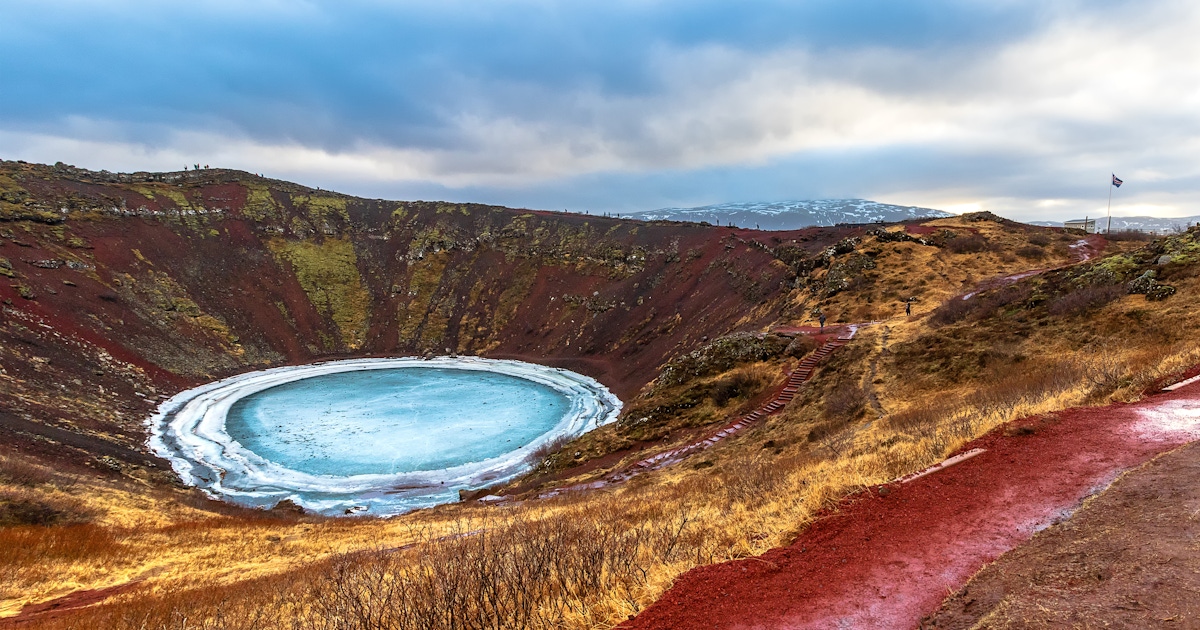
Kerið is a volcanic crater lake in South Iceland. It is part of a volcanic landscape in the Grímsnes area and is known for its bowl-shaped crater, steep red and brown volcanic walls, mossy green patches and a lake at the bottom.
The crater is often described as younger than many other volcanic formations in Iceland, which is one reason its slopes retain such vivid colour and shape. The contrast between the red volcanic rock and blue-green water makes it one of the most photogenic short stops near the Golden Circle.
Why Visit Kerið Crater?
Kerið is worth visiting because it is quick, easy and visually different from many other Golden Circle stops. Þingvellir is broad and historic, Geysir is geothermal and active, Gullfoss is powerful and dramatic, while Kerið feels compact, colourful and volcanic.
It is also practical. You do not need a long hike, specialist gear or a full day. Most visitors can experience the crater in under an hour, making it ideal as a final Golden Circle stop before returning to Reykjavík or continuing along the South Coast.
Kerið and the Golden Circle
Kerið is not always included in the classic three-stop Golden Circle route, but it is one of the best add-ons. The classic Golden Circle usually includes Þingvellir National Park, Geysir geothermal area and Gullfoss waterfall. Kerið sits farther south and is commonly added on the return drive toward Reykjavík.
If you are self-driving, Kerið is easy to include after Gullfoss and Geysir, especially if your route returns through Selfoss or the south-western side of the Golden Circle.
What to See at Kerið
The Crater Rim
The rim gives the best overall view of the crater shape. From above, you can see the full oval bowl, the lake below and the changing colours of the crater walls.
The Crater Lake
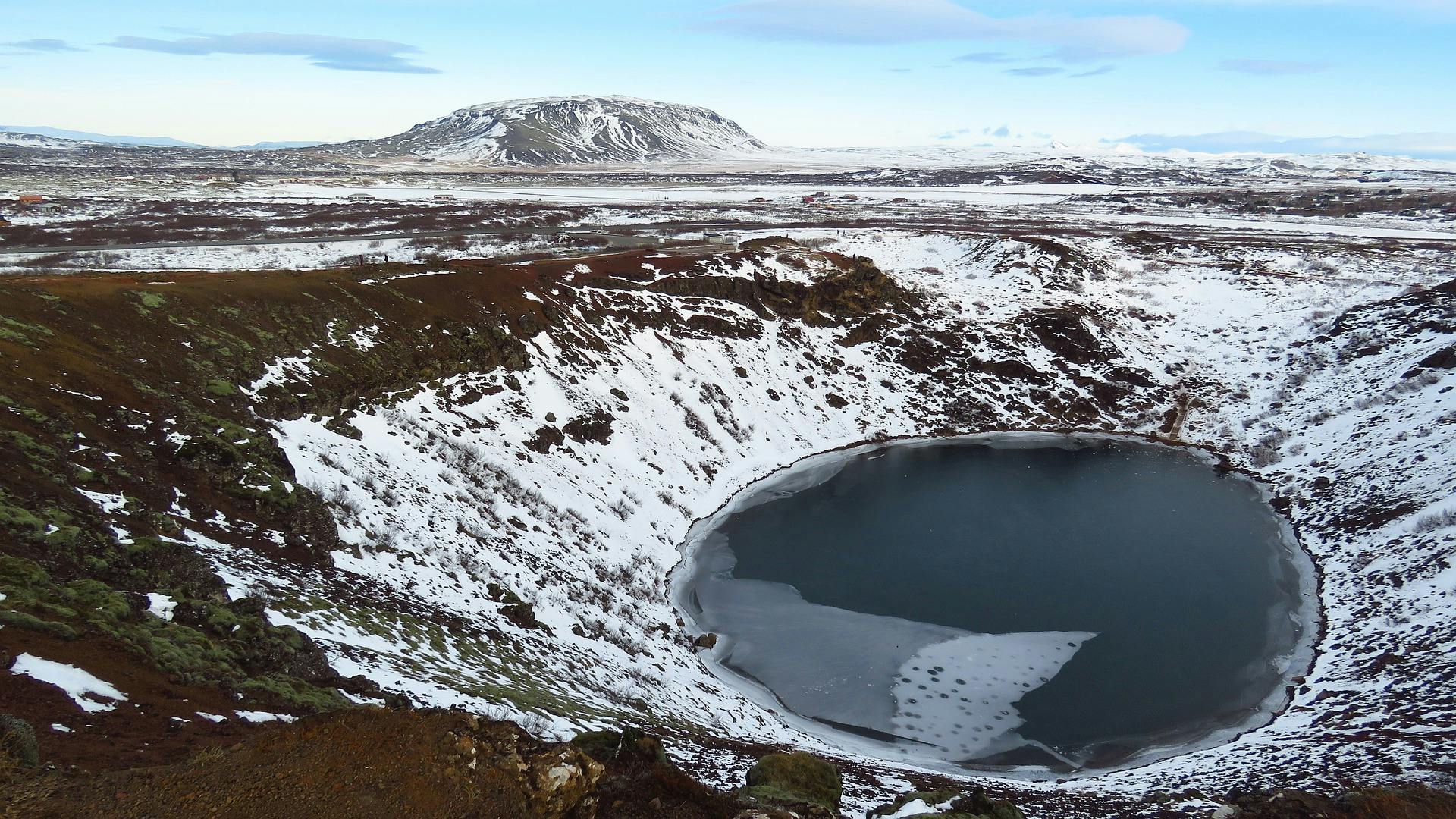
The lake at the bottom is the main visual feature. Depending on light and weather, it can look deep blue, turquoise, green-blue or dark and reflective.
The Red Volcanic Slopes
Kerið’s red and rust-coloured slopes make it stand out from darker volcanic landscapes elsewhere in Iceland. The red tones contrast beautifully with green moss and pale grasses.
Changing Light
The crater looks different throughout the day. Bright sun brings out the colour of the water, while cloud creates a moodier volcanic look. After rain, the slopes can appear richer and darker.
Walking Around the Crater Rim
The rim walk is the best way to appreciate Kerið’s shape. The path around the top gives multiple viewpoints, so do not stop only at the first lookout.
The walk is not long, but it can be exposed to wind. Some sections may be uneven, muddy, icy or slippery depending on the season. Stay on the path and avoid walking too close to the edge.
Walking Down to the Lake
Visitors can usually walk down toward the lake using the marked path and steps. This gives a different perspective from the crater floor, where the walls rise around you and the water feels much closer.
The descent is worthwhile if conditions are safe and you have suitable shoes. In winter or icy conditions, take extra care or enjoy the crater from the rim only.
Why Is Kerið So Colourful?
Kerið’s colour comes from the mix of volcanic rock, minerals, moss, grasses and lake water. The red volcanic slopes are especially striking because they differ from the black lava landscapes many visitors expect in Iceland.
The water colour changes with the sky, season and light. On a bright day, the lake can look vivid blue-green. On a grey day, it may appear darker and more reflective.
How to Get There from Reykjavík
Kerið is located in South Iceland, roughly east of Reykjavík and close to the Golden Circle driving route. Most visitors arrive by rental car or as part of a Golden Circle tour that includes Kerið as an extra stop.
For self-drivers, Kerið is reached via Route 35 in the Grímsnes area. It is generally easy to find, with a parking area near the entrance. Always check road conditions in winter, as Icelandic weather can change quickly.
Entry Fee and Opening Hours
Kerið is one of the Icelandic natural attractions that charges a small service fee. The official Kerið website currently lists the service fee at 700 ISK.
Opening is generally daylight-based rather than a typical indoor-attraction schedule. In summer, this gives long visiting hours because of Iceland’s extended daylight. In winter, daylight is short, so plan your visit carefully.
Best Time to Visit
Summer
Summer gives long daylight, easier walking conditions and strong colour contrast between red slopes, green moss and blue water. It is also the busiest season.
Autumn
Autumn can be beautiful, with cooler air, softer light and fewer visitors. The earthy crater colours often look especially rich in autumn weather.
Winter
Winter can make Kerið look dramatic, especially if snow lines the rim or the lake partly freezes. Paths may be icy, and daylight is limited, so wear proper footwear and avoid rushing.
Spring
Spring brings changing light, melting snow and quieter conditions before the main summer season. Paths can be muddy or slippery, so good shoes are useful.
How Long to Spend There
20 minutes: Enough for a quick look from the rim and a few photos.
30 to 45 minutes: Best for most visitors. This gives time to walk part or all of the rim and descend toward the lake.
One hour: Ideal if you want relaxed photography, changing viewpoints and a slower walk.
Kerið is usually a short stop, not a full-day destination. Its strength is that it adds a vivid volcanic landscape to a Golden Circle itinerary without taking too much time.
Simple Golden Circle Itinerary with Kerið
Classic Full-Day Self-Drive Route
Morning: Leave Reykjavík and drive to Þingvellir National Park.
Late morning: Continue to the Geysir geothermal area.
Midday: Visit Gullfoss waterfall.
Afternoon: Drive toward Kerið Crater and walk the rim.
Late afternoon: Continue toward Selfoss or return to Reykjavík.
Short Golden Circle Add-On
Visit Geysir and Gullfoss first.
Stop at Kerið on the return route.
Allow 30 to 45 minutes for the crater.
Return to Reykjavík before dark in winter.
What to See Nearby
Þingvellir National Park
Þingvellir is one of Iceland’s most important historic and geological sites, where the North American and Eurasian tectonic plates pull apart.
Geysir Geothermal Area
The Geysir area is famous for Strokkur, the active geyser that erupts regularly and is one of the main Golden Circle highlights.
Gullfoss Waterfall
Gullfoss is a powerful two-tiered waterfall and one of Iceland’s most famous natural attractions.
Selfoss
Selfoss is a useful town for fuel, food and overnight stays when travelling between the Golden Circle, Reykjavík and the South Coast.
Secret Lagoon
The Secret Lagoon near Flúðir is a popular geothermal bathing stop that can be added to a Golden Circle day if you want a warm soak.
What to Wear and Bring
Warm layer or windproof jacket
Comfortable walking shoes
Waterproof jacket in wet weather
Hat and gloves in winter
Camera or phone
Power bank
Water bottle
Microspikes in icy winter conditions
Card or payment method for the service fee
Practical Travel Tips
Walk More Than One Viewpoint
The crater looks different from every side. Walk at least part of the rim before deciding you have seen it properly.
Wear Proper Shoes
The path can be muddy, gravelly, windy or icy depending on the season. Avoid smooth-soled shoes.
Visit Late in the Day for Softer Light
Late afternoon can be excellent for photos, especially in summer and autumn. In winter, make sure you still have enough daylight.
Do Not Fly a Drone Without Permission
Drone restrictions may apply, and many Icelandic natural sites restrict or prohibit drone use. Check local signs and rules before flying.
Stay on Marked Paths
The crater slopes are fragile and can be slippery. Staying on marked tracks protects both visitors and the landscape.
Do Not Treat It as a Swimming Stop
Kerið is best visited as a viewpoint and walking stop. The lake is not a normal swimming attraction.
Check Winter Road Conditions
If visiting in winter, check Icelandic road and weather information before driving. Conditions can change quickly.
Add It to the End of the Golden Circle
Kerið works especially well as a final stop before returning to Reykjavík, because it is easy to visit in under an hour.
FAQs About Kerið Crater
Where is Kerið Crater?
Kerið Crater is in the Grímsnes area of South Iceland, close to the Golden Circle route and east of Reykjavík.
Is Kerið Crater worth visiting?
Yes. Kerið is worth visiting because it is colourful, easy to access and quick to add to a Golden Circle itinerary.
How much does Kerið Crater cost?
The official Kerið website currently lists a 700 ISK service fee to visit the crater and lake.
How long do you need at Kerið?
Most visitors need 30 to 45 minutes. Allow up to one hour if you want to walk the rim, go down to the lake and take photos slowly.
Can you walk around Kerið Crater?
Yes. Visitors can walk around the rim and usually descend toward the lake using marked paths.
Is Kerið part of the Golden Circle?
Kerið is often included as an extra Golden Circle stop, although the classic Golden Circle usually focuses on Þingvellir, Geysir and Gullfoss.
Can you visit Kerið in winter?
Yes, but paths can be icy and daylight is short. Wear proper footwear and check road conditions before travelling.
Can you swim in Kerið Crater Lake?
No. Kerið should be treated as a scenic crater-lake viewpoint, not a swimming spot.
Do you need a tour to visit Kerið?
No. Kerið is easy to visit by rental car. Many Golden Circle tours also include it as an additional stop.
What makes Kerið Crater red?
The red colour comes from the volcanic rock and mineral-rich slopes, which contrast strongly with moss, grasses and the blue-green lake.
Final Thoughts
Kerið Crater is one of the easiest ways to add a vivid volcanic landscape to a Golden Circle trip. Its red crater walls, blue-green lake and simple walking paths make it a rewarding short stop for photographers, families and self-drive travellers.
For the best experience, allow at least 30 to 45 minutes, walk part of the rim, go down toward the lake if conditions are safe, and visit in good light if photography matters. Kerið may be a quick stop, but its colour and shape make it one of South Iceland’s most memorable small natural attractions.
Sponsored Popular Items
Quick take: Musement.com offers a worldwide selection of tours and attractions
Kerid Crater Iceland – Nature Excursion Iceland A listing may offer admission, a guided visit, transport, a combination package or premium access. Check current availability, inclusions and booking details before you go.
Golden Circle and Blue Lagoon Admission Tickets with Kerid Volcanic Crater Iceland Golden Circle and Blue Lagoon admission tickets with Kerid Volcanic Crater provides a structured way to visit a notable attraction or cultural site. Check current availability, inclusions and booking details before you go.
Tour of the Golden Circle and Kerid Crater – Reykjavik Guided Tour Iceland Tour of the Golden Circle and Kerid Crater is a convenient way to add structure, local context and purposeful sightseeing to the itinerary. Check current availability, inclusions and booking details before you go.
Rotorua: Mount Tarawera Volcanic Crater Half-Day Guided Walk New Zealand Embark on a culturally infused 4.5-hour adventure at Mount Tarawera from Rotorua. Discover breathtaking landscapes, rich history, and local myths with an expert guide in this unforgettable experience
Lake Tekapo: Crater Stargazing at Cowan's Observatory New Zealand Experience the Southern night sky from a purpose-built stargazing crater at Cowan’s Private Observatory in Lake Tekapo. A relaxed and immersive introduction to one of the world’s clearest dark skies
Mount Rinjani 2-Day Trek to Senaru Crater Rim Indonesia Trek through a pristine rainforest and build your camp on the crater rim of Mount Rinjani. Watch a spectacular sunset and sunrise over the Gili Islands and Mt. Agung in Bali.
From Malang: 3-Day Mount Bromo and Ijen Crater Tour Indonesia Embark on a 3-day tour from Malang to Mount Bromo and Ijen Crater. Witness the Blue Flame Phenomenon, watch the sunrise over Mount Bromo, and enjoy a scenic drive through the countryside.
Rice Field, Suspension Bridge, White Crater & Coffee plant! Indonesia I will show you the local way to explore the rice fields, visit a coffee plantation and White Crater, explore tea plantations, and relieve your jet lag after a long flight by relaxing in hot springs.