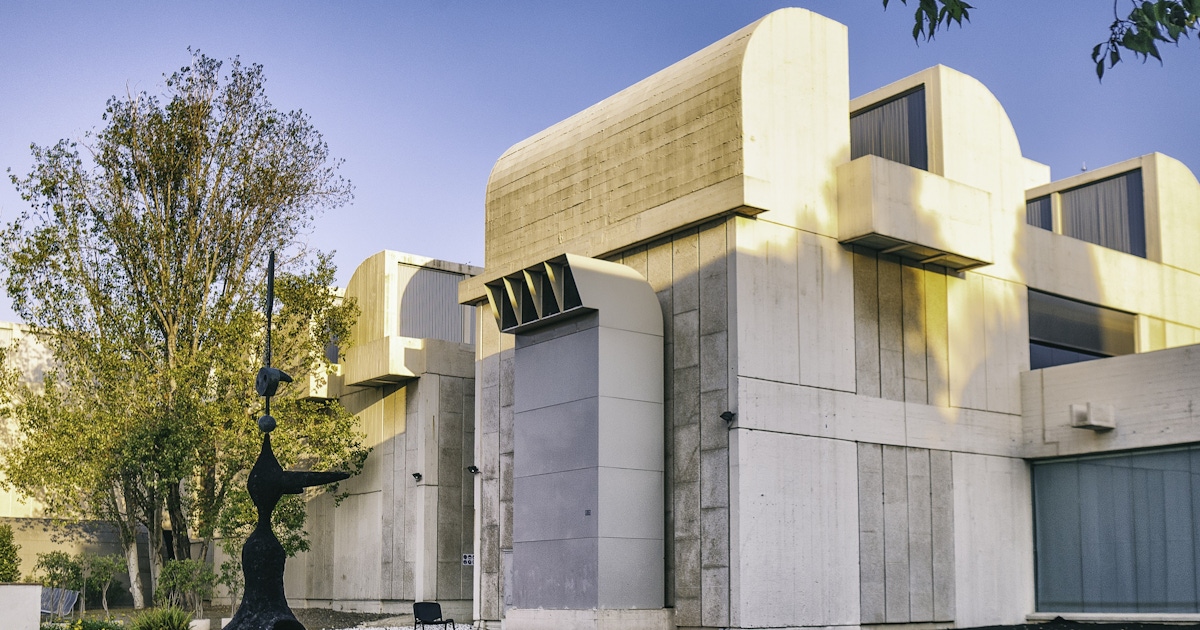
The Fundació Joan Miró is one of Barcelona’s most distinctive art museums. Set among the gardens of Montjuïc, it combines an outstanding collection of Joan Miró’s paintings, sculptures, drawings and textiles with a purpose-built modernist museum designed specifically for his work.
The museum is not simply a gallery containing Miró paintings. Artist Joan Miró and architect Josep Lluís Sert worked together to create a place where art, architecture, natural light, courtyards, terraces and the surrounding landscape form one continuous experience.
Sponsored Popular Items
Quick take: Musement.com offers a worldwide selection of tours and attractions
Fundació Joan Miró Tickets, Tours & Attractions Spain Compare sightseeing experiences in Fundació Joan Miró Tickets, Tours &, with practical tips on timing, inclusions and choosing the right option. Check current availability, prices and booking conditions before you go.
Inside, visitors can follow Miró’s development from early Catalan landscapes and experimental paintings of the 1920s to his Constellations, monumental sculptures, politically charged canvases and radical late works made with fire, rough materials and everyday objects.
The museum also supports contemporary artists through temporary exhibitions and the experimental Espai 13 programme. This reflects Miró’s intention that the Foundation should remain a living creative institution rather than become a static memorial devoted only to his own career.
Its Montjuïc location requires slightly more planning than museums in Barcelona’s historic centre, but the journey is worthwhile. The visit can be combined with the Olympic Ring, National Art Museum of Catalonia, Montjuïc Castle, botanical gardens, cable car and panoramic views across Barcelona.
Fundació Joan Miró Quick Facts
Visitor information
Details
Official name
Fundació Joan Miró – Centre d’Estudis d’Art Contemporani
Location
Parc de Montjuïc, Barcelona
Address
Avinguda de Miramar 1
Opened
10 June 1975
Architect
Josep Lluís Sert
Main collection
Paintings, drawings, sculptures, ceramics, textiles and prints by Joan Miró
Current onsite adult ticket
€18
Current online adult ticket
€17
Current onsite concession
€12
Current online concession
€11
Children
Free for children under 12 accompanied by an adult
Step-free access available, although some ramps are steep
Free museum app
Bloomberg Connects
Current-information note: Prices, transport arrangements, exhibitions and exceptional Monday openings can change. Recheck the museum and Barcelona transport information immediately before travelling.
What Is the Fundació Joan Miró?
The Fundació Joan Miró is a museum, research centre and contemporary-art institution created by Joan Miró himself.
It was founded to:
Make Miró’s work accessible to a broad public.
Preserve and study his artistic legacy.
Support younger and experimental artists.
Encourage contemporary creation.
Bring art into dialogue with architecture and nature.
Provide archives and research resources.
The Foundation’s initial holdings came largely from Miró’s own collection and donations made by the artist and his family.
Although many visitors call it the “Miró Museum,” the official name uses the Catalan word Fundació, meaning Foundation.
The museum should not be confused with the Fundació Miró Mallorca, which occupies Miró’s former studios in Palma de Mallorca, or Mas Miró near Mont-roig del Camp.
Why Visit the Fundació Joan Miró?
The museum provides the most complete introduction to Miró in Barcelona.
Its strongest features include:
A collection spanning almost the whole of Miró’s career.
Paintings that are difficult to see elsewhere.
Monumental sculptures and textiles.
A building designed specifically for the art.
Natural light and calm interior courtyards.
Outdoor terraces with views across Barcelona.
Changing contemporary-art exhibitions.
A quieter atmosphere than the city’s busiest attractions.
Easy combination with other Montjuïc sights.
The Foundation is particularly valuable because Miró’s work can appear deceptively simple in reproductions.
Seeing the original works reveals:
Changes in surface texture.
Scratches and drips.
Burn marks.
Corrections and overpainting.
Unexpected materials.
The physical scale of late canvases.
Differences between delicately drawn and aggressively painted works.
Who Was Joan Miró?
Joan Miró was born in Barcelona in 1893.
He trained in art while also encountering pressure from his family to follow a more conventional commercial career. Periods spent at the family property in Mont-roig del Camp became central to his development and remained an important source of imagery throughout his life.
Miró later divided his time between Catalonia, Paris and Mallorca.
His career was shaped by:
Catalan landscape and rural culture.
Modernist Barcelona.
Poetry.
Dada.
Surrealism.
The Spanish Civil War.
The Second World War.
Japanese art and calligraphy.
American Abstract Expressionism.
Political and social protest.
Miró worked in many media:
Painting.
Drawing.
Printmaking.
Sculpture.
Ceramics.
Tapestry.
Stage design.
Public murals.
Artists’ books.
He developed a personal visual vocabulary of stars, birds, moons, eyes, women, ladders, signs and biomorphic figures.
Miró died in Palma de Mallorca on 25 December 1983 and was buried at Montjuïc Cemetery in Barcelona.
History of the Foundation
The idea of creating a permanent centre developed after Miró’s major Barcelona exhibition at the former Hospital de la Santa Creu in 1968.
Miró wanted Barcelona to have a place where:
His works could remain accessible.
Young artists could experiment.
Contemporary art could be discussed openly.
Architecture would support rather than overwhelm the art.
The Foundation was legally established in 1972.
Miró’s friend Josep Lluís Sert was commissioned to design the building on Montjuïc. The museum opened to the public on 10 June 1975.
The original name included the phrase Centre d’Estudis d’Art Contemporani, emphasising that the institution was intended to support the study of contemporary art rather than function solely as a memorial museum.
The building was enlarged in 1988 and again in 2000 by architect Jaume Freixa, a former student and collaborator of Sert. The extensions retained the original visual language of white walls, geometric forms, patios and natural light.
Josep Lluís Sert’s Building
Josep Lluís Sert was a major Catalan modernist architect and urban planner.
He had worked with international modernist movements and later became dean of Harvard University’s Graduate School of Design.
For the Foundation, Sert created a building that combines rationalist modern architecture with Mediterranean traditions.
Important architectural features include:
White concrete walls.
Flat roofs.
Roof lanterns and skylights.
Interior patios.
Terracotta and ceramic flooring.
Curved and cylindrical elements.
Wide circulation spaces.
Terraces opening towards the landscape.
Careful control of natural light.
The building avoids an imposing monumental façade. It is intended to feel human in scale and gradually reveal itself as visitors move through it.
What to Notice About the Architecture
Central Courtyard
The principal courtyard is organised around an olive tree.
It acts as the heart of the building and provides:
Natural orientation.
A place to rest.
A transition between indoor and outdoor space.
A reference to Mediterranean domestic architecture.
Carob Tree Patio
Another courtyard contains a carob tree and provides a quieter outdoor setting close to the restaurant terrace.
North Patio
The north-facing outdoor area opens towards views across Barcelona.
Skylights
Sert used roof forms to introduce indirect daylight into the galleries.
This reduces harsh glare while allowing paintings and sculptures to be seen in changing natural conditions.
Octagonal Tower
The tower contains the Jacques Dupin Library, a specialist collection devoted to Miró, modern art and contemporary artistic research.
Rest Areas
Benches, courtyards and terraces form part of the intended museum route.
Visitors do not need to move continuously from artwork to artwork. The pauses are part of the design.
Understanding the Miró Collection
The collection covers many stages of Miró’s development.
Visitors can see the transformation from recognisable landscapes and figures into a highly personal abstract language.
The collection includes:
Early drawings and landscapes.
Paintings from the 1920s.
Works linked with Surrealism.
Images produced during war and exile.
Constellation paintings.
Large post-war canvases.
Assemblage sculpture.
Ceramics.
Textile works.
Burnt and damaged canvases.
Late monumental works.
Miró’s art changed continually. Visitors should not expect every room to contain bright primary colours and playful star-like figures.
Some periods are:
Dark.
Politically confrontational.
Minimal.
Violent in their materials.
Influenced by rural craft.
Concerned with emptiness and silence.
Women, Birds, Stars and Miró’s Visual Language
Miró developed a vocabulary of recurring signs rather than a fixed alphabet with one precise meaning.
Women
Female figures may appear as:
Curving bodies.
Eyes.
Triangles.
Vertical forms.
Explosive shapes.
They can represent sexuality, fertility, earth, humanity or a more ambiguous creative force.
Birds
Birds often connect the earth with the sky.
They may suggest movement, escape, imagination or communication.
Stars
Stars can appear as simple crossing lines or complex celestial signs.
They help create a sense of cosmic space.
Ladders
Ladders frequently suggest escape, ascent, communication or a passage between worlds.
Eyes
Large staring eyes give many figures an alert or dreamlike presence.
Visitors should remain open to several possible interpretations rather than searching for one official translation of every symbol.
Early Catalan Landscapes
Miró’s early work demonstrates that he was a skilled draughtsman and observational painter before developing his famous symbolic style.
Landscapes and village scenes from the 1910s show:
Churches.
Fields.
Houses.
Roads.
Trees.
Farm buildings.
Even in these recognisable scenes, the colours and shapes are often simplified or intensified.
Works connected with Mont-roig are especially important because the rural environment remained an emotional and visual foundation for Miró’s later abstractions.
The early rooms help demonstrate that his mature style was a deliberate process of reduction and transformation rather than an inability to paint realistically.
Miró and Surrealism
Miró became associated with Surrealist artists and writers in Paris during the 1920s.
He shared their interest in:
Dreams.
Automatic creation.
The unconscious.
Poetry.
Unexpected combinations of objects.
Rebellion against traditional artistic rules.
However, Miró maintained considerable independence.
He did not simply illustrate dreams. He transformed memories, objects, words and marks into open-ended visual poetry.
Paintings from this period may have:
Large empty backgrounds.
Tiny floating signs.
Distorted figures.
Fragments of written words.
Humorous or disturbing details.
Stand back from these works first, then move closer to inspect the small lines and symbols.
Morning Star and the Constellations
Morning Star, dated 16 March 1940, belongs to Miró’s celebrated Constellations series.
Miró began the series in France as Europe descended into the Second World War and continued it after returning to Spain.
The works are small compared with many of his later canvases, but they contain densely organised networks of:
Stars.
Birds.
Eyes.
Women.
Crescent moons.
Lines and dots.
Floating creatures.
The delicate cosmic worlds contrast with the violence occurring in Europe.
They can be interpreted as:
A form of imaginative escape.
A search for universal order.
A response to fear.
A celebration of poetry and music.
A private world created during political catastrophe.
Because works on paper are sensitive to light, individual pieces may not always remain on continuous display.
Large and Late Paintings
Miró’s later paintings often use enormous areas of colour and a limited number of strong gestures.
These works can look spontaneous, but their scale requires close physical involvement.
Look for:
Broad black brushstrokes.
Paint poured or splashed across the surface.
Unpainted canvas.
Bright primary colours.
Marks resembling calligraphy.
Figures pushed towards the edge.
Japanese calligraphy influenced Miró’s appreciation of the single decisive gesture and the importance of empty space.
The late works are best viewed from several distances.
Close inspection reveals the brush, pigment and fabric. From farther away, the scattered marks form a complete spatial composition.
The Burnt Canvases
During the 1970s, Miró deliberately cut, scorched and burned some of his canvases.
These works challenged the idea of painting as a precious, protected object.
The destruction was part of the creative process.
Burning produced:
Holes.
Blackened edges.
Exposed supports.
Irregular shapes.
Smoke marks.
Unexpected openings through the surface.
The works may be read as attacks on conventional art institutions, commercial collecting or political complacency.
They also demonstrate Miró’s continuing willingness to take risks late in his career.
May 1968
Miró’s painting May 1968 was completed in 1973 but refers to the protests, strikes and social upheaval that spread across France and other countries in 1968.
The work is large and energetic, using vivid colours and forceful marks.
Rather than illustrating a specific demonstration, it communicates movement, confrontation and collective energy.
Miró was nearly 75 during the events, yet remained interested in younger generations and political transformation.
Miró’s Sculptures
Miró created sculpture by combining everyday objects and casting them in bronze.
Objects used as starting points could include:
Stools.
Boxes.
Tools.
Natural objects.
Household containers.
Discarded materials.
Children’s toys.
Once combined and cast, familiar objects become strange creatures or figures.
Colour was sometimes added to the bronze, further separating the object from its original function.
Miró’s sculpture rewards close examination because recognisable components often remain visible beneath the transformation.
The Caress of a Bird
The Caress of a Bird is a large painted-bronze sculpture dated 1967.
The tall figure combines found-object forms into an unexpected personage.
Its playful title contrasts with the sculpture’s strange proportions and rough physical presence.
The work demonstrates Miró’s ability to turn ordinary forms into:
Birds.
Human bodies.
Totems.
Comic figures.
Dreamlike creatures.
Walk around the sculpture where permitted. Its appearance changes dramatically from different angles.
Tapestries and Textiles
Miró collaborated with textile specialists to produce large tapestries and experimental fabric works.
These pieces expand his visual language through:
Wool.
Rope.
Knotted fibres.
Found materials.
Rough surfaces.
Three-dimensional elements.
The textiles are not simply painted images translated into fabric. The material has its own weight and physical energy.
The Foundation’s monumental tapestry demonstrates the importance of collaboration in Miró’s later career.
Rooftop Terrace and Sculpture Garden
The rooftop and outdoor terraces are essential parts of the visit.
They combine:
Miró sculptures.
White architectural forms.
Open sky.
Views over Barcelona.
Montjuïc vegetation.
The changing light alters both the artworks and the building throughout the day.
Photography
The terrace is one of the best areas for photographs, but visitors should:
Remain behind barriers.
Avoid climbing on architectural walls.
Keep children close.
Secure hats during windy weather.
Respect temporary closures.
Weather
Outdoor areas may become uncomfortable or close during:
Heavy rain.
Strong wind.
Extreme heat.
Maintenance.
Special events.
Joan Miró: Circles
The current collection presentation, Joan Miró: Circles, began in March 2026 and is scheduled to continue until March 2028.
The display reorganises the collection around the relationship between:
Miró’s artworks.
Sert’s architecture.
Natural light.
Visitors’ movement.
Interior and exterior spaces.
Rather than treating the building as a neutral gallery, the presentation places architecture at the centre of the museum experience.
The exhibition highlights Miró’s connection with Catalan land and culture while also examining his continuous dialogue with international avant-garde art.
Current and Upcoming 2026 Exhibitions
Kapwani Kiwanga: Changing States
This exhibition runs from 30 April to 13 September 2026.
It is the first major Spanish retrospective devoted to Kapwani Kiwanga, recipient of the 2025 Joan Miró Prize.
The exhibition explores:
Architecture.
Power.
Material exchange.
Geological time.
Control of space.
Social and political structures.
Opening the Archive 08: Le gros orteil
This archival exhibition runs from 18 June to 29 November 2026.
It includes a recently donated 1930 work and material illuminating Miró’s relationships with artists, writers and publications.
Homes on the Move
This photography and social project runs from 11 June to 6 September 2026 and developed through work with people experiencing homelessness.
Charlotte Perriand
A major retrospective devoted to designer and architect Charlotte Perriand opens on 9 October 2026 and continues until 28 February 2027.
The exhibition is part of a wider 2026 programme examining architecture as:
A way of organising life.
A social tool.
A relationship between people and landscape.
A means of understanding the past and imagining the future.
Temporary exhibition dates and room access can change during installation periods.
Espai 13
Espai 13 is the Foundation’s experimental exhibition space for emerging and developing contemporary artists.
It has played an important role in Barcelona’s contemporary-art scene by supporting:
New commissions.
Curatorial research.
Site-specific installations.
Artists at an early career stage.
Experimental practices.
Admission to Espai 13 is currently free.
The space is in the basement and its lighting, sound and layout change with each exhibition.
Current Ticket Prices
Ticket category
At the museum
Online
General adult admission
€18
€17
Reduced admission
€12
€11
Children under 12
Free
Free
Espai 13
Free
Free
Articket BCN
€38 under current conditions
Reduced Admission
Reduced tickets currently apply to categories including:
Students aged 13–25.
Visitors aged over 65.
Barcelona library-card holders.
Carnet Jove holders.
Eligible large or single-parent families.
Companions of some visitors with disabilities.
Proof of eligibility is required.
Free Admission
Free admission currently applies to groups including:
Children under 12.
Unemployed visitors with proof.
Visitors holding a disability card.
ICOM and CIMAM members.
Accredited professional guides.
Eligible teachers.
Friends and Benefactors of the Foundation.
The accompanying person of a visitor with a severe disability may also qualify for free admission depending on the documented level of assistance required.
Current Opening Hours
Summer Hours: 1 April–31 October
Tuesday–Saturday: 10:00 am–8:00 pm.
Sunday: 10:00 am–7:00 pm.
Monday: Normally closed.
Winter Hours: 1 November–31 March
Tuesday–Sunday: 10:00 am–7:00 pm.
Monday: Normally closed.
Entry to the exhibition rooms ends 30 minutes before closing.
Exceptional Monday Openings in 2026
The museum has announced selected Monday openings around public holidays, including dates in April, May, October and December.
Check the current calendar rather than assuming every Monday is closed or open.
Do You Need to Book?
Advance booking is recommended but not normally compulsory for ordinary individual visits.
Online booking is useful because:
The ticket is €1 cheaper.
You can save the ticket on a phone.
It reduces time at the admission desk.
Busy temporary exhibitions may have capacity controls.
It provides certainty during weekends and holidays.
Book ahead during:
Easter.
Summer weekends.
Major exhibition openings.
Public holidays.
School vacation periods.
Is Articket Barcelona Worth Buying?
Articket Barcelona provides admission to several major Barcelona art museums under one pass.
Participating institutions normally include:
Fundació Joan Miró.
Museu Picasso.
Museu Nacional d’Art de Catalunya.
MACBA.
CCCB.
Fundació Antoni Tàpies.
The current price is €38.
It Is Good Value When:
You plan to visit at least three participating museums.
You are staying in Barcelona for several days.
Modern and contemporary art are major interests.
You will also visit the Picasso Museum or MNAC.
It May Not Be Worthwhile When:
You only plan to visit one or two museums.
Your itinerary is focused on architecture and outdoor attractions.
You qualify for substantial individual concessions.
How Long Should You Spend?
Time available
Realistic experience
45–60 minutes
Selected Miró highlights and terrace
90 minutes
Comfortable collection visit
2 hours
Collection, architecture and sculpture terraces
2½–3 hours
Permanent collection and temporary exhibition
Half day
Detailed museum visit, restaurant and Montjuïc walk
Most first-time visitors should allow approximately two hours.
Add another hour when a major temporary exhibition is important.
The Best Route Through the Museum
The collection route is designed to move between galleries, patios and terraces.
A practical sequence is:
Begin with early landscapes and drawings.
Follow Miró’s transition towards abstraction.
Study the Surrealist and poetic paintings.
Spend time with the Constellations.
Continue to the large post-war canvases.
Explore sculptures and assemblages.
See the textiles and late experimental works.
Visit the rooftop sculpture terrace.
Continue into the current temporary exhibition.
Finish with Espai 13, the bookshop or restaurant.
Room arrangements may change as works are loaned, conserved or reorganised.
One-Hour Highlights Route
When time is limited, prioritise:
An early Catalan landscape.
A painting from Miró’s 1920s Paris period.
Morning Star or another Constellation work when displayed.
Woman Encircled by a Flight of Birds in the Night.
May 1968.
A Burnt Canvas.
The Caress of a Bird.
The monumental tapestry.
The rooftop sculpture terrace.
Download the museum app beforehand and use its highlights section to locate currently displayed works.
Detailed Two-Hour Visit
First 30 Minutes: Origins
Study Miró’s early landscapes and the process through which recognisable villages, farms and figures became signs.
Second 30 Minutes: Poetry and Surrealism
Focus on the open backgrounds, dreamlike figures, words and floating marks of the 1920s and 1930s.
Third 30 Minutes: War and the Cosmos
Spend time with the Constellations and works shaped by the Spanish Civil War and Second World War.
Final 30 Minutes: Monumental Miró
See the large paintings, Burnt Canvases, sculpture, textiles and roof terrace.
Add time separately for the temporary exhibition.
Guided Tours and Museum App
Bloomberg Connects App
The free app provides information about:
Major Miró works.
Sert’s architecture.
The relationship between art and landscape.
Temporary exhibitions.
Visitor activities.
Download it before arriving and bring earphones.
Free Wi-Fi is available inside the museum.
Guided Collection Tours
The Foundation schedules regular guided tours in several languages.
Some sessions are included with museum admission, while others require a separate reservation or activity fee.
Check:
Language.
Starting time.
Whether booking is required.
Whether the temporary exhibition is included.
Architecture Tours
Special tours of Sert’s building are particularly worthwhile for visitors interested in modern architecture.
Visiting with Children
The museum can work well for families because Miró’s colours, creatures and symbols invite imaginative interpretation.
Children May Enjoy:
Finding birds and stars.
Inventing names for sculptures.
Looking for everyday objects hidden in bronze figures.
Comparing large and small paintings.
Exploring the patios and terraces.
Using family materials and games.
Family Room
The museum has a family area with:
Games.
Mats.
Sofas.
Resources for younger visitors.
Suggested Family Visit
Limit the initial gallery visit to around one hour and select a small number of works.
Ask children questions such as:
What animal does this shape resemble?
Where is the bird?
How many stars can you find?
Which sculpture looks funniest?
What sound would this painting make?
Children under 12 enter free but must be accompanied by an adult.
Accessibility
The Fundació Joan Miró provides extensive accessibility facilities, although the hilltop location and some steep internal ramps require planning.
Entrance
Step-free entry is provided by a ramp approximately 30 metres long.
The route has no stairs, but wheelchair users may need assistance because of the gradient.
Visitors arriving alone can contact the museum for staff support.
Inside the Museum
Most permanent-collection rooms are on a broadly level route.
A lift connects principal levels.
A long ramp with an approximately 12% gradient also reaches the upper floor.
Espai 13 can be reached by lift.
Staff assistance is available for access to the auditorium and library.
Wheelchairs and Seating
Two wheelchairs and mobile seats are available from the information desk.
Accessible Toilets
Accessible toilets are available on the ground floor, near the library and in the auditorium area.
Parking
Two designated reduced-mobility parking spaces are located approximately 35 metres from the entrance.
Hearing Accessibility
Facilities include:
Magnetic loops at several service desks and rooms.
Portable loops for guided activities.
Subtitled museum videos.
Selected activities in Catalan sign language.
Visual Accessibility
The museum provides:
Relief reproductions of selected Miró works.
A tactile model of the building.
Large-print or Braille material for selected exhibitions.
Audio descriptions.
An accessible easy-to-read guide.
Assistance Dogs
Recognised assistance dogs are admitted with appropriate documentation.
Lockers and Bag Rules
Visitor lockers use a refundable €1 coin.
The following items must normally be stored:
Backpacks.
Bags larger than approximately 30 × 30 centimetres.
Umbrellas.
Motorcycle helmets.
Food.
Drinks.
Objects that could endanger the artworks.
Contact customer service when carrying an unusually large object.
Do not assume the museum can store airline-size suitcases or substantial luggage.
Photography and Drawing
Personal photography is normally permitted.
The following are prohibited:
Flash.
Tripods.
Selfie sticks.
Commercial photography without permission.
Equipment that obstructs circulation.
Temporary exhibitions may impose additional restrictions.
Drawing
Visitors may draw in the galleries using:
Graphite pencils.
Coloured pencils.
Paint, ink and materials that could stain the galleries are not permitted.
Restaurant, Bookshop and Facilities
Bar-Restaurant
The museum restaurant has an indoor dining area and a garden terrace in the Carob Tree Patio.
It follows the museum’s general opening hours.
It is accessible without purchasing a museum ticket.
Bookshop
The specialist bookshop sells:
Miró monographs.
Exhibition catalogues.
Books on architecture and design.
Contemporary-art publications.
Posters and prints.
Art journals.
Gift Shop
The gift shop carries:
Home accessories.
Jewellery.
Fashion items.
Children’s products.
Educational games.
Miró-inspired souvenirs.
Library
The Jacques Dupin Library is normally open Tuesday–Friday from 10:00 am to 2:00 pm.
It is principally a research library devoted to Miró and modern and contemporary art.
Wi-Fi
Free Wi-Fi is available to museum visitors.
Getting to the Fundació Joan Miró
The museum stands on Montjuïc above the Poble-sec district.
It is not directly served by Barcelona’s underground metro network, so the final section normally involves a bus, replacement shuttle, taxi, bicycle or uphill walk.
The address is:
Avinguda de Miramar 1, Parc de Montjuïc, Barcelona.
Arriving by Bus
Buses 55 and 150 serve Montjuïc and stop close to the museum.
Bus 150
Bus 150 is particularly useful from the Plaça d’Espanya area and continues towards major Montjuïc attractions.
It can also serve:
Olympic facilities.
Montjuïc Castle area.
Other hilltop stops.
Bus 55
Bus 55 connects the museum with other parts of central Barcelona.
Check the current Barcelona transport journey planner because:
Routes can be diverted.
Stops may temporarily move.
Major events affect Montjuïc traffic.
Service frequency varies by day.
Montjuïc Funicular
The Montjuïc Funicular normally links Paral·lel metro station with Parc de Montjuïc.
The upper terminus is close to the museum and to the lower station of the Montjuïc cable car.
At the time of checking in June 2026, the funicular was temporarily out of service and a special shuttle bus was operating between Avinguda Paral·lel and the cable-car base.
This is a temporary transport condition and may change before your visit.
Check live transport information rather than relying on an older travel guide.
Montjuïc Cable Car
The Montjuïc cable car travels between Parc de Montjuïc and Montjuïc Castle.
It is not required to reach the Foundation when arriving at the nearby funicular or shuttle stop.
The cable car is best treated as an additional sightseeing experience.
Possible Combination
Visit the Fundació Joan Miró.
Walk to the cable-car station.
Ride to Montjuïc Castle.
Explore the castle and viewpoints.
Return by cable car, bus or on foot.
The cable car requires a separate ticket and may stop during strong wind or technical disruption.
Walking Up Montjuïc
Walking to the museum provides an attractive approach through gardens and viewpoints.
Possible starting points include:
Plaça d’Espanya.
Poble-sec.
Avinguda del Paral·lel.
MNAC and the Olympic Ring.
Walking Conditions
Expect:
Long slopes.
Stairs.
Park paths.
Limited shade on some sections.
Hot conditions during summer.
Allow significantly more time than the map distance suggests.
Carry water between June and September.
Driving and Parking
The Foundation does not provide a general visitor car park.
Public transport is normally easier.
Driving Challenges
Event-related road closures.
Limited street parking.
Tour buses.
Restrictions near sports facilities.
Busy conditions during concerts and football matches.
Two accessible parking spaces are provided for eligible reduced-mobility visitors near the entrance.
Other drivers should use legal public parking and expect to walk.
The Best Time to Visit
At Opening Time
Arriving at 10:00 am offers:
Quieter galleries.
Cooler Montjuïc temperatures.
Better access to popular works.
Time for other attractions afterwards.
Afternoon
The museum itself notes that afternoons can be quieter than school-group periods earlier in the day.
Late afternoon is particularly attractive when sunlight reaches the patios and terraces.
Summer
Summer brings:
Long opening hours.
Bright rooftop conditions.
Higher visitor numbers.
Very hot uphill walking.
Use public transport and avoid the steepest walk during the middle of the day.
Winter
Winter is quieter and more comfortable for walking, although outdoor terraces can be cold or windy.
Rainy Days
The galleries remain worthwhile during rain, but part of the intended architectural experience involves outdoor patios and terraces.
Attractions Near the Museum
Museu Nacional d’Art de Catalunya
MNAC occupies the Palau Nacional and contains important collections of:
Romanesque murals.
Gothic art.
Renaissance and Baroque painting.
Catalan modernism.
Photography.
Montjuïc Castle
The fortress stands at the summit and offers views over Barcelona’s harbour and coastline.
Olympic Ring
The 1992 Olympic complex includes:
Olympic Stadium.
Palau Sant Jordi.
Communications tower.
Public plazas.
Barcelona Botanical Garden
The garden displays Mediterranean-climate plants from several regions of the world.
Montjuïc Botanical Garden Historic Site
The historic garden occupies former quarry spaces and contains shaded paths and mature vegetation.
Poble Espanyol
This open-air architectural complex contains recreated buildings, craft workshops, restaurants and cultural events.
CaixaForum Barcelona
CaixaForum occupies a former textile factory designed by Josep Puig i Cadafalch and hosts changing art and cultural exhibitions.
German Pavilion
The reconstructed Barcelona Pavilion by Ludwig Mies van der Rohe is one of the city’s essential modern-architecture sites.
Other Miró Works in Barcelona
Miró intended visitors arriving in Barcelona by air, sea and land to encounter his work.
Barcelona Airport Mural
A large ceramic mural created with Josep Llorens Artigas can be seen at Barcelona Airport.
Pla de l’Os Mosaic
Miró’s colourful pavement mosaic is installed on La Rambla near the Liceu area.
Thousands of pedestrians cross it daily.
Woman and Bird
The monumental sculpture Woman and Bird stands in Parc de Joan Miró near Plaça d’Espanya.
It can be combined easily with the journey to Montjuïc.
Miró’s Grave
Joan Miró is buried in Montjuïc Cemetery, although the cemetery is in a different part of the hill and requires separate planning.
Where to Eat
Museum Restaurant
The Foundation’s own restaurant is the most convenient option and has a pleasant garden terrace.
Poble-sec
The neighbourhood below Montjuïc is known for:
Tapas bars.
Pintxos.
Catalan restaurants.
Casual international dining.
Cafés.
Carrer de Blai is well known for inexpensive pintxos but can be crowded and tourist-oriented.
Plaça d’Espanya Area
This area provides transport convenience and a range of casual restaurants, although it is less atmospheric than Poble-sec.
Picnic
Montjuïc has many outdoor spaces, but follow local rules and do not take food into museum galleries.
Suggested Half-Day Fundació Joan Miró Itinerary
10:00 am: Enter the Foundation
Begin with the collection before the busiest period.
10:30 am: Early Works and Surrealism
Follow Miró’s transition from Catalan landscapes to his symbolic language.
11:15 am: Constellations and Late Paintings
Spend time with the more complex war-period and monumental works.
11:45 am: Sculpture and Textile Galleries
Look for the everyday objects hidden within Miró’s sculptural figures.
12:15 pm: Rooftop Terrace
Explore the outdoor sculptures and Barcelona views.
12:45 pm: Temporary Exhibition
Visit the current Kapwani Kiwanga or later Charlotte Perriand exhibition according to the date.
1:30 pm: Lunch
Eat at the museum restaurant or descend towards Poble-sec.
Suggested Full-Day Montjuïc Itinerary
9:30 am: Travel to Montjuïc
Use the current bus, funicular-replacement or walking route.
10:00 am: Fundació Joan Miró
Allow approximately two hours.
12:15 pm: Gardens and Olympic Ring
Walk through Montjuïc’s landscaped areas towards the Olympic facilities.
1:30 pm: Lunch
Eat on Montjuïc or near Plaça d’Espanya.
3:00 pm: MNAC
Visit the Romanesque and Catalan modern-art collections.
5:30 pm: National Palace Viewpoint
Enjoy the view over Plaça d’Espanya and Barcelona.
Evening
Descend towards Poble-sec for dinner or continue to a scheduled Montjuïc event.
Is the Fundació Joan Miró Worth Visiting?
The Foundation is highly worthwhile for visitors interested in Miró, modern art, Catalan culture or architecture.
Main Advantages
Barcelona’s most important Miró collection.
A museum designed specifically for the artist.
Excellent sculptures and monumental works.
Beautiful natural light.
Outdoor terraces.
Contemporary temporary exhibitions.
Strong accessibility resources.
Easy combination with Montjuïc attractions.
Generally calmer than the Picasso Museum or Sagrada Família.
Possible Drawbacks
Uphill location.
No direct metro station at the entrance.
Temporary funicular disruption.
No general visitor parking.
Some visitors may find abstract art difficult without interpretation.
Outdoor areas are weather-dependent.
Large temporary exhibitions can alter the normal collection route.
The museum is strongest when visitors allow time to experience Sert’s building as well as Miró’s artworks.
Frequently Asked Questions About the Fundació Joan Miró
Where is the Fundació Joan Miró?
It is in Parc de Montjuïc in Barcelona, above the Poble-sec neighbourhood.
Is it a museum?
Yes. It is both a museum devoted to Joan Miró and a centre for contemporary art and research.
What does Fundació mean?
Fundació is the Catalan word for Foundation.
When did it open?
It opened to the public on 10 June 1975.
Who designed the building?
Catalan architect Josep Lluís Sert designed it in collaboration with Miró.
Why is the building important?
It is a major example of Barcelona rationalist architecture and was designed specifically to unite Miró’s art with daylight, courtyards and landscape.
How much is admission?
Current adult admission is €18 at the museum or €17 online.
How much is reduced admission?
It is currently €12 onsite or €11 online for eligible visitors.
Do children enter free?
Children under 12 enter free when accompanied by an adult.
Is Espai 13 free?
Yes.
Is the museum closed on Monday?
It is normally closed on Mondays, although selected public-holiday Mondays are exceptions.
What are the summer opening hours?
From April through October it opens Tuesday–Saturday from 10:00 am to 8:00 pm and Sunday until 7:00 pm.
What are the winter hours?
From November through March it opens Tuesday–Sunday from 10:00 am to 7:00 pm.
What time is last entry?
Entry ends 30 minutes before closing.
Do I need to book?
It is recommended, especially during weekends and major exhibitions, but ordinary individual visitors can normally buy tickets at the museum.
Is it cheaper online?
Yes. Online general and concession tickets are currently €1 cheaper.
How long does the museum take?
Allow one and a half to two and a half hours.
Can I see it in one hour?
Yes, by focusing on the major paintings, sculptures and rooftop terrace.
What should I not miss?
Look for the Constellation works, May 1968, the Burnt Canvases, The Caress of a Bird, the monumental tapestry and the sculpture terrace.
Is Morning Star always displayed?
Not necessarily. Works on paper are sensitive to light and may rotate or be loaned.
Is Miró a Surrealist?
He was closely associated with Surrealism but maintained an independent artistic identity.
Are there only paintings?
No. The collection also contains sculptures, drawings, prints, ceramics, textiles and archival material.
Are there artworks by other artists?
Yes. Temporary exhibitions and Espai 13 present modern and contemporary artists.
What is Joan Miró: Circles?
It is the current presentation of the permanent collection, placing Miró’s work in dialogue with Sert’s architecture.
What major exhibition is on in summer 2026?
Kapwani Kiwanga’s Changing States runs until 13 September 2026.
What opens in October 2026?
A major Charlotte Perriand retrospective opens on 9 October.
Is there a free audio guide?
The free Bloomberg Connects app provides detailed museum and artwork information.
Should I bring earphones?
Yes, when planning to use the app’s audio material.
Is there free Wi-Fi?
Yes.
Are guided tours available?
Yes. Collection, exhibition and architecture tours are scheduled in several languages.
Is the museum suitable for children?
Yes. Miró’s colours, creatures and sculptures are well suited to imaginative family visits.
Is there a family area?
Yes. It contains games, mats and sofas.
Is the museum wheelchair accessible?
Yes, although some ramps are steep and assistance may be useful.
Can I borrow a wheelchair?
Two wheelchairs and portable seats are available from the information desk.
Are accessible toilets available?
Yes, on several levels.
Are assistance dogs permitted?
Yes, with recognised documentation.
Are there tactile resources?
Yes. The museum provides relief reproductions of artworks and a tactile model of the building.
Are there lockers?
Yes. They require a refundable €1 coin.
Do I need to store my backpack?
Backpacks and bags larger than approximately 30 × 30 centimetres must be placed in a locker.
Can I take photographs?
Yes, for private use without flash, a tripod or selfie stick.
Can I sketch?
Yes, using graphite or coloured pencils.
Is there a restaurant?
Yes. It has an indoor area and a garden terrace.
Can I enter the restaurant without a museum ticket?
Yes. Access to the restaurant, shop and bookshop is free.
Is there a bookshop?
Yes. It specialises in Miró, contemporary art, architecture and design.
Is the museum near a metro station?
There is no metro station immediately beside it. Visitors normally use a bus, the Montjuïc funicular connection or an uphill walk.
Which buses go there?
Buses 55 and 150 serve the museum area.
Is the Montjuïc Funicular operating?
At the time of checking in June 2026 it was temporarily out of service, with a replacement shuttle operating. Check the live status before travelling.
Does the cable car take you to the museum?
The museum is close to the lower cable-car station. The cable car itself continues uphill towards Montjuïc Castle.
Can I walk from Plaça d’Espanya?
Yes, but the route is uphill and involves slopes and possibly stairs.
Can I drive?
You can reach Montjuïc by road, but the museum has no general visitor car park.
Is there accessible parking?
Two reduced-mobility spaces are located near the entrance.
What else can I visit nearby?
Nearby attractions include MNAC, Montjuïc Castle, the Olympic Ring, botanical gardens, CaixaForum, Poble Espanyol and the Mies van der Rohe Pavilion.
Can I combine the Miró Foundation and MNAC?
Yes. They make a strong full-day art itinerary on Montjuïc.
Where else can I see Miró in Barcelona?
See the airport mural, the La Rambla pavement mosaic and the monumental Woman and Bird sculpture near Plaça d’Espanya.
Is Articket Barcelona accepted?
Yes, under current arrangements.
Is Articket good value?
It is usually worthwhile when visiting at least three participating museums.
Is the rooftop included?
Yes, when open and weather conditions permit.
Does the rooftop have good views?
Yes. It provides views over Barcelona and combines architecture with outdoor Miró sculptures.
What is the quietest time to visit?
Opening time or later in the afternoon usually provides a calmer visit than school-group mornings.
Is it busy in summer?
Yes, particularly during major exhibitions, but it is generally less congested than Barcelona’s most famous architectural attractions.
What is the biggest visitor mistake?
Looking only at the paintings and failing to explore the patios, sculpture terraces and Sert architecture.
Final Thoughts
The Fundació Joan Miró is one of the rare museums where the building, collection and landscape were conceived as parts of one creative project.
Miró’s early landscapes show his connection with Catalonia, while the Surrealist paintings, Constellations, sculptures and Burnt Canvases reveal an artist who continually reinvented his methods.
The Foundation also fulfils Miró’s wish that younger artists should continue writing the institution’s story. Contemporary exhibitions and Espai 13 prevent the museum from becoming only a historical monument.
Allow around two hours, purchase the slightly cheaper online ticket and download the free museum app before arriving. Spend time in the courtyards and rooftop areas rather than moving directly from one painting to the next.
Combine the visit with another Montjuïc attraction, but avoid trying to see every museum and viewpoint on the hill in one rushed day. The Fundació Joan Miró is most rewarding when experienced at the slower pace its art and architecture were designed to encourage.
Sponsored Popular Items
Quick take: Musement.com offers a worldwide selection of tours and attractions
Fundació Joan Miró Tickets, Tours & Attractions Spain Compare sightseeing experiences in Fundació Joan Miró Tickets, Tours &, with practical tips on timing, inclusions and choosing the right option. Check current availability, prices and booking conditions before you go.