Banteay Srei is one of the most beautiful and finely carved temples in the Angkor region of Cambodia. Smaller than Angkor Wat, Bayon and Ta Prohm, this 10th-century temple is famous for its pink-red sandstone, delicate Hindu carvings, floral patterns, guardian figures and richly decorated doorways.
Located north-east of the main Angkor temple circuit, Banteay Srei is often called the “Jewel of Khmer Art.” It is a rewarding half-day trip from Siem Reap, especially for travellers who enjoy architecture, photography, Khmer history and close-up temple detail.
Banteay Srei Cambodia: A Visitor Guide to Angkor’s Pink Sandstone Temple
Sponsored Popular Items
Quick take: Musement.com offers a worldwide selection of tours and attractions
Beng Mealea and Banteay Srei Temple Private Full-Day Tour Cambodia Beng Mealea and Banteay Srei temple private full-day tour is a convenient way to add structure, local context and purposeful sightseeing to the itinerary. Check current availability, inclusions and booking details before you go.
Why Visit Banteay Srei?
Banteay Srei is worth visiting because it offers a different experience from Angkor’s larger temples. Angkor Wat impresses with scale, Bayon with stone faces and Ta Prohm with jungle atmosphere. Banteay Srei impresses with detail.
The temple’s carvings are some of the finest in the Angkor region. Doorways, lintels, pediments and walls are covered with Hindu mythological scenes, devatas, floral scrolls, animals and decorative borders. The stonework is so precise that many visitors spend more time studying one doorway here than walking through much larger temples.
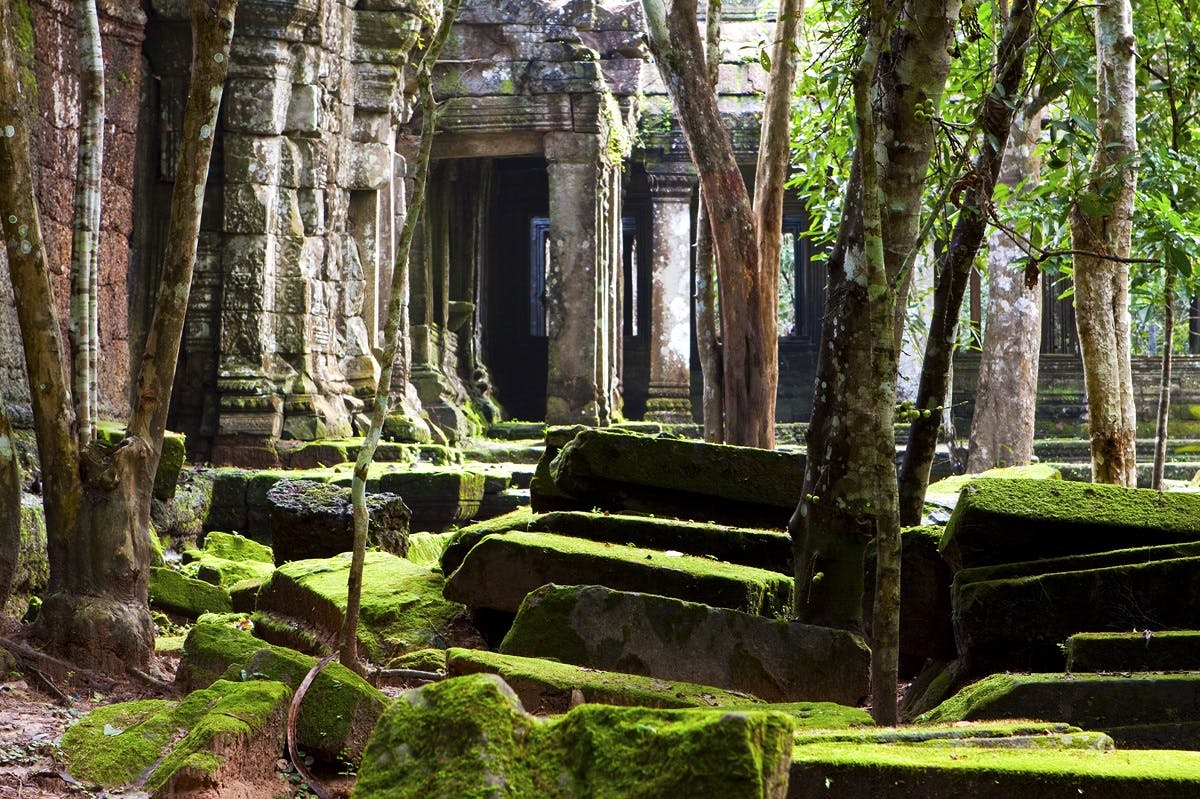
The journey from Siem Reap also adds to the experience. The drive passes countryside, villages, rice fields and palm trees, giving travellers a softer view of rural Cambodia beyond the central Angkor complex.
A Short History of Banteay Srei
Banteay Srei dates to the 10th century and was dedicated in 967. It was built during the Angkor period and was primarily dedicated to the Hindu god Shiva.
Unlike many major Khmer temples, Banteay Srei was not built directly by a king. It is associated with high-ranking courtiers and religious scholars, which makes it unusual among Angkor’s important temples.
The temple’s modern name is often translated as “Citadel of Women” or “Citadel of Beauty.” This name is usually linked to the refinement and delicacy of the carvings, rather than to a confirmed historical role as a women’s temple.
The Pink Sandstone Carvings
The pink-red sandstone is the main reason Banteay Srei looks and feels different from many other Angkor temples. The stone allowed Khmer artists to carve very fine detail, and much of that detail remains visible today.
Look closely at the lintels above the doorways and the triangular pediments over the entrances. These areas show some of the temple’s most impressive carving, including gods, demons, animals, foliage, mythological scenes and decorative patterns.
The colour of the sandstone changes with the light. In the early morning or late afternoon, the temple can glow with a warm rose tone. In harsh midday sun, the colour may look paler and the carved detail can be harder to photograph.
What to See at Banteay Srei
The Central Sanctuary
The central sanctuary is compact but richly decorated. It includes towers, doorways and carved surfaces that show the exceptional craftsmanship of the temple. Some areas may be protected by barriers, but the permitted viewing areas still give excellent close-up views.
Carved Lintels and Pediments
The lintels and pediments are the artistic highlight of Banteay Srei. Take your time here. These carvings are not background decoration; they are the main reason the temple is considered one of Angkor’s masterpieces.
Devatas and Guardian Figures
The temple features graceful devatas and guardian figures carved into the sandstone. Their jewellery, clothing, poses and facial expressions show the skill of Khmer sculptors.
The Causeway and Enclosures
The approach to the temple includes a causeway and a series of enclosures. Although Banteay Srei is small, its layout still gives visitors a clear sense of sacred progression from outer space toward the inner sanctuary.
The Moat and Landscaped Setting
The temple sits in a calm, landscaped setting with water features and open paths. This makes the visit feel less crowded and more peaceful than some of the busier central Angkor sites.
How to Get There from Siem Reap
Banteay Srei is located north-east of Siem Reap and is farther from town than Angkor Wat, Bayon and Ta Prohm. Most visitors travel by private car, tuk-tuk, motorbike, driver-guide or organised tour.
A private car is the most comfortable option, especially in hot weather. A tuk-tuk is cheaper and more atmospheric, but the ride is longer and can be dusty. For older travellers, families or anyone sensitive to heat, a car is usually the better choice.
Because Banteay Srei is outside the main temple loop, it is best planned as a half-day outing rather than added casually at the end of a long temple day.
Do You Need an Angkor Pass?
Yes. Banteay Srei is part of the Angkor Archaeological Park ticket system, so visitors generally need a valid Angkor Pass. Tickets can be bought through official Angkor Enterprise channels, and there is also a Banteay Srey ticket counter for visitors travelling directly to the temple.
Always check the current ticket rules before visiting, especially if you are combining Banteay Srei with other temples or travelling independently.
What to Combine With Banteay Srei
Banteay Srei pairs well with other temples and attractions in the same general direction. Good combinations include:
Banteay Samré: A quieter Angkor temple with attractive towers, walls and a peaceful atmosphere.
Pre Rup: A larger temple often used for sunset and eastern Angkor routes.
East Mebon: A useful stop if you are exploring the eastern temple circuit.
Kbal Spean: A forest walk to riverbed carvings, best for travellers who want a longer nature-and-temple day.
Cambodia Landmine Museum: A serious but worthwhile stop that gives context to Cambodia’s more recent history.
Best Time to Visit
The best time to visit Banteay Srei is early morning or late afternoon. Early morning gives cooler air, better light and fewer crowds. Late afternoon can make the pink sandstone look warmer and more vivid.
Midday is usually the least comfortable time because the heat can be strong and the light can flatten the carvings. If you visit around midday, bring water, sun protection and patience.
The dry season from November to March is the most comfortable period for temple sightseeing around Siem Reap. The green season can be hotter and wetter, but the countryside is lush and the temple surroundings may feel more atmospheric.
How Long to Spend There
Allow at least one hour at Banteay Srei itself. If you enjoy photography, art or history, allow 90 minutes so you can study the carvings slowly.
For the full trip from Siem Reap, allow half a day. If you combine Banteay Srei with Kbal Spean or several other temples, plan for a longer day.
Practical Travel Tips
Go Early for Better Light
Early morning light brings out the warm colour of the sandstone and makes the carvings easier to photograph.
Bring Water
Banteay Srei is farther from Siem Reap than the main Angkor circuit. Carry water, especially if travelling by tuk-tuk.
Hire a Guide if You Like Mythology
A good guide can explain the Hindu stories carved into the lintels and pediments. Without that context, the carvings are beautiful but harder to understand.
Do Not Touch the Carvings
The stonework is delicate and historically important. Do not touch, lean on, climb or sit on any temple structure.
Dress Respectfully
Wear clothing that covers shoulders and knees. Banteay Srei is an ancient religious site, not just a scenic attraction.
Use a Car in Hot Weather
A tuk-tuk is scenic, but the longer distance can be tiring in heat and dust. A private car is more comfortable for many travellers.
Take Close-Up Photos
Banteay Srei is not only about wide temple views. The best photos are often close-ups of carvings, lintels, pillars and sandstone textures.
FAQs About Banteay Srei
Is Banteay Srei worth visiting?
Yes. Banteay Srei is one of the most beautiful temples in the Angkor region and is especially worthwhile for its pink sandstone and intricate carvings.
What is Banteay Srei famous for?
Banteay Srei is famous for its pink-red sandstone, small scale and exceptionally detailed Khmer carvings.
Is Banteay Srei part of Angkor?
Yes. Banteay Srei is part of the wider Angkor Archaeological Park, although it is farther from the central temple circuit.
How far is Banteay Srei from Siem Reap?
Banteay Srei is north-east of Siem Reap and is usually visited as a half-day trip. Travel time depends on your transport and route.
Do you need an Angkor Pass for Banteay Srei?
Yes. Visitors generally need a valid Angkor Pass to enter Banteay Srei.
Is Banteay Srei older than Angkor Wat?
Yes. Banteay Srei dates to the 10th century, while Angkor Wat was built later in the 12th century.
Can you visit Banteay Srei by tuk-tuk?
Yes. Many visitors travel by tuk-tuk from Siem Reap, but the journey is longer than the central Angkor temple loop. A car may be more comfortable in hot weather.
How much time do you need at Banteay Srei?
Most visitors need about one hour. Travellers who enjoy photography or temple detail may want 90 minutes or more.
What should I combine with Banteay Srei?
Good combinations include Banteay Samré, Pre Rup, East Mebon, Kbal Spean and the Cambodia Landmine Museum.
When is the best time for photos?
Early morning and late afternoon are best because the sandstone looks warmer and the carved detail is easier to see.
Final Thoughts
Banteay Srei may be smaller than Angkor’s most famous temples, but it is one of the finest examples of Khmer artistry. Its pink sandstone, delicate carvings and peaceful setting make it a highlight for travellers who want to look closely rather than simply move quickly from temple to temple.
For the best experience, visit early, take your time with the carvings, dress respectfully and consider combining the temple with Banteay Samré or Kbal Spean. Banteay Srei is not just another Angkor stop; it is one of Cambodia’s most refined and memorable temple experiences.
Sponsored Popular Items
Quick take: Musement.com offers a worldwide selection of tours and attractions
Beng Mealea and Banteay Srei Temple Private Full-Day Tour Cambodia Beng Mealea and Banteay Srei temple private full-day tour is a convenient way to add structure, local context and purposeful sightseeing to the itinerary. Check current availability, inclusions and booking details before you go.
3-Day Angkor Temples, Banteay Srei and Floating Village Private Tour Cambodia 3-Day Angkor Temples, Banteay Srei and Floating Village private tour is a convenient way to add structure, local context and purposeful sightseeing to the itinerary. Check current availability, inclusions and booking details before you go.
Amazing Cambodia 5-Day Private Tour Phnom Penh & Siem Reap Cambodia Gain in-depth insight into Cambodia’s intriguing past on this exciting 5-day tour of iconic Phnom Penh and Angkor Wat. Guided visits to UNESCO World Heritage Sites Angkor Temples and discover