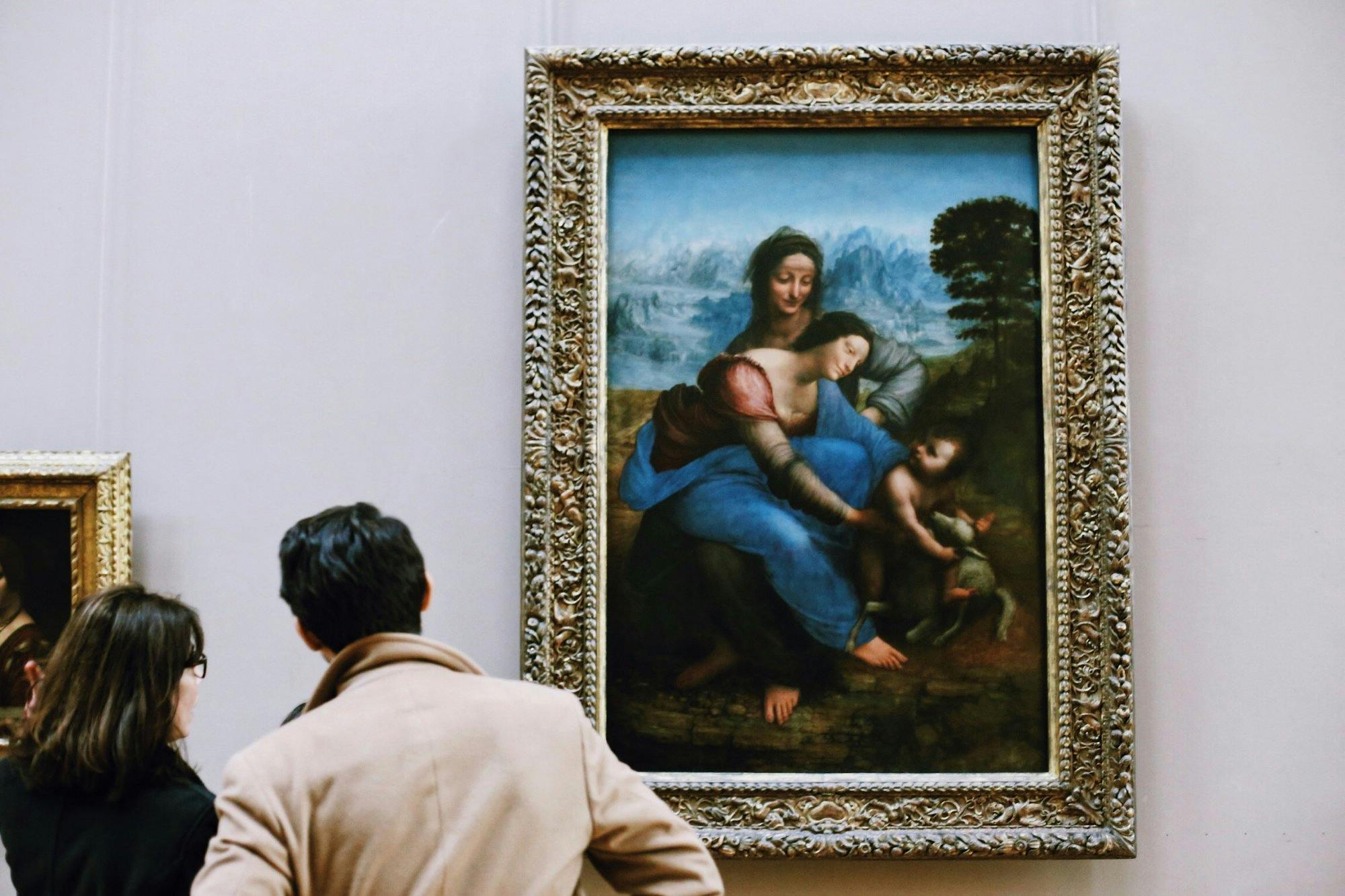
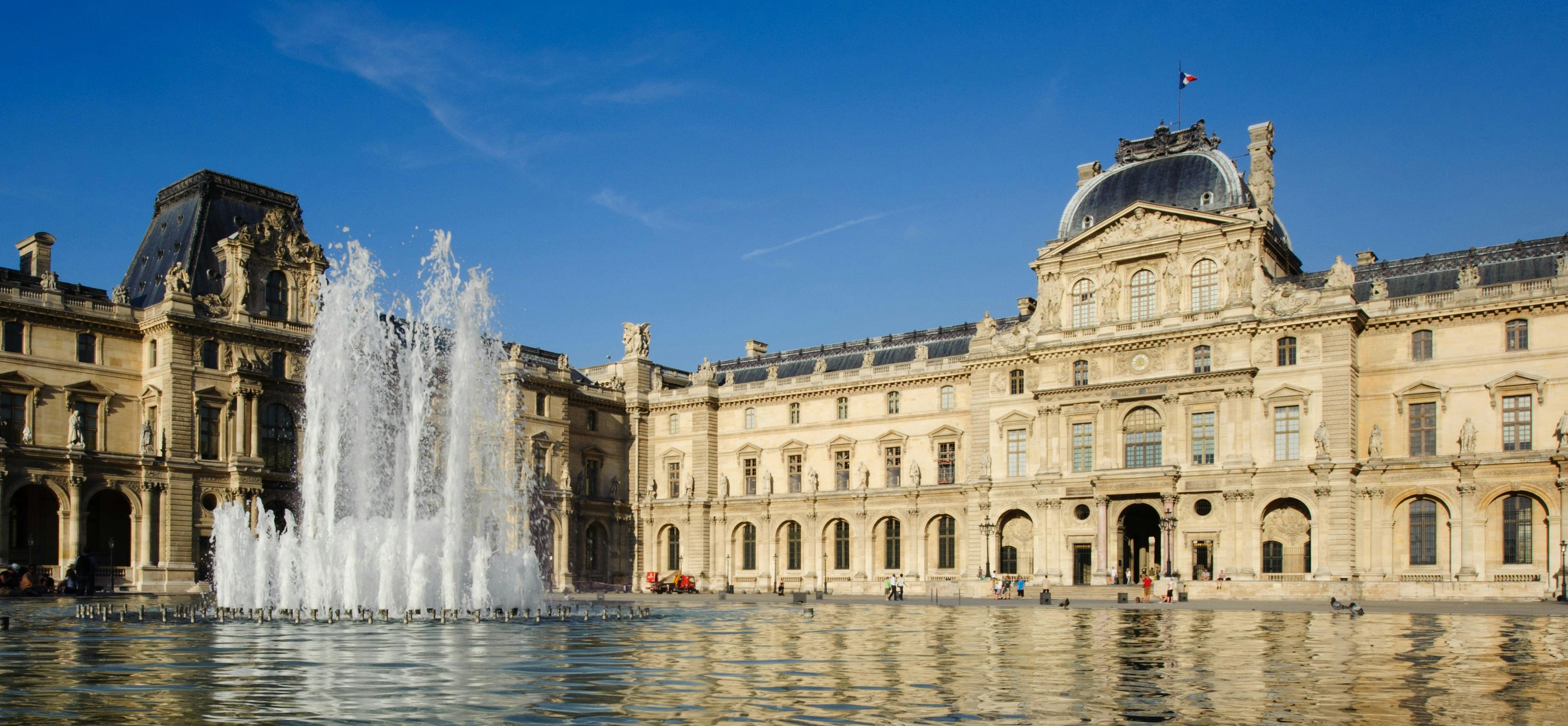
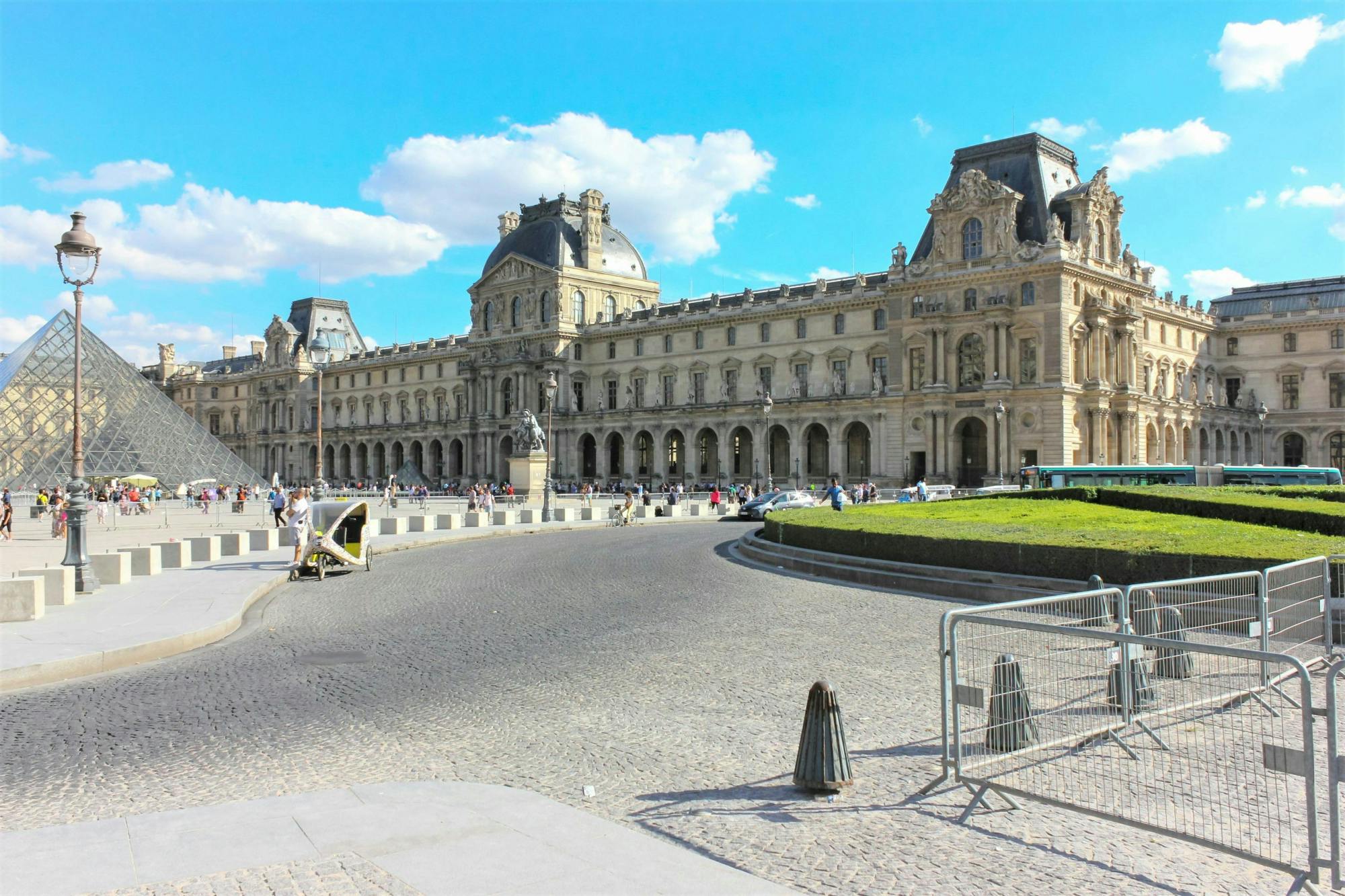
The Louvre Museum is one of Paris’s greatest attractions and one of the most important art museums in the world. Housed inside a former royal palace beside the River Seine, its galleries contain everything from ancient Egyptian sculpture and Greek antiquities to Renaissance masterpieces and monumental 19th-century French paintings.
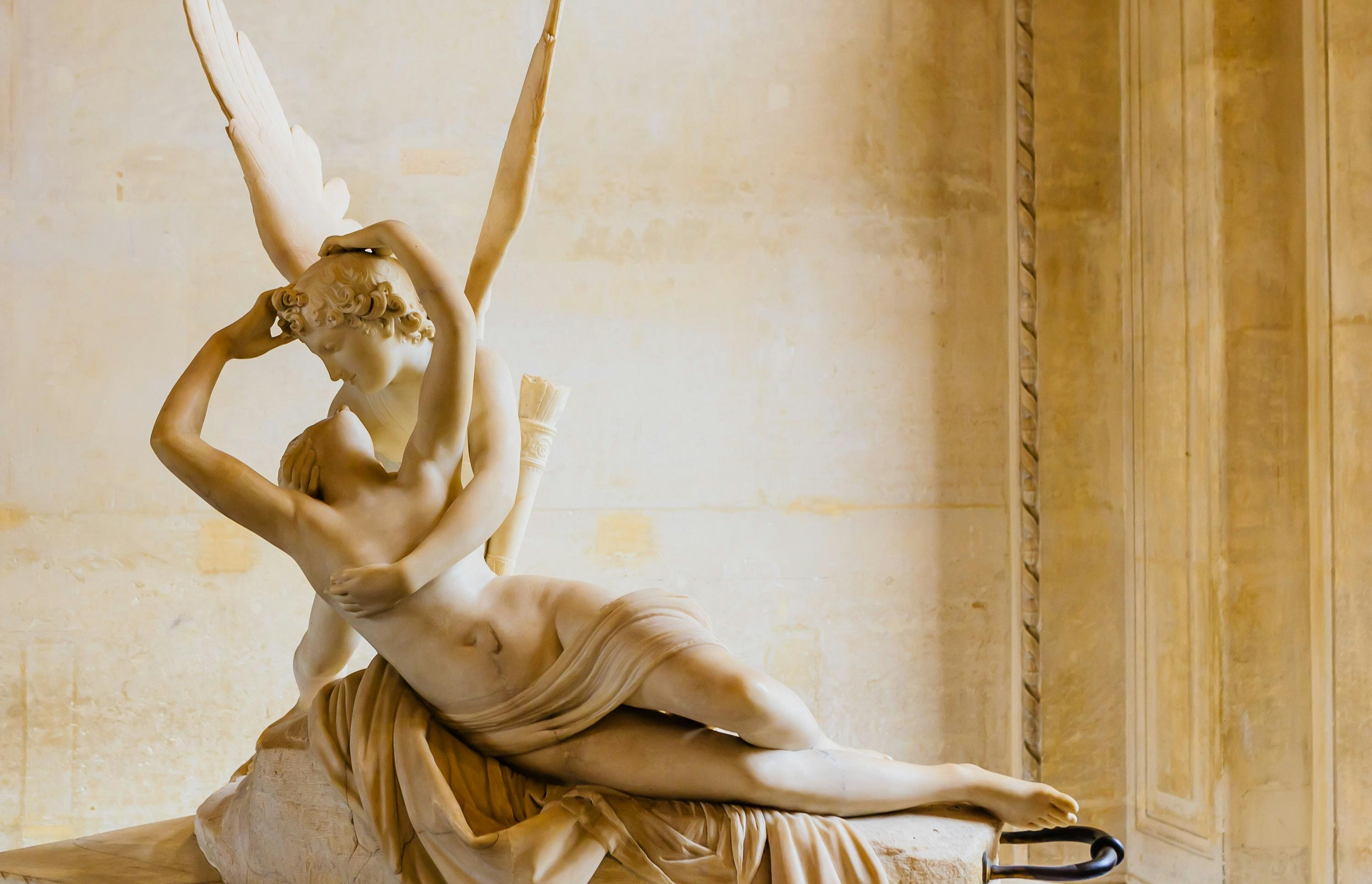
The collection includes some of the most recognisable artworks ever created, including Leonardo da Vinci’s Mona Lisa, the Venus de Milo and the Winged Victory of Samothrace.
But the Louvre is much larger than those three famous works. Around 35,000 objects are displayed across more than 400 rooms, and the museum itself advises visitors that seeing everything in a single day is impossible.
For a first visit, allow at least three hours. Four to five hours provides a much more comfortable experience, while serious art and history enthusiasts could easily spend an entire day or return for a second visit.
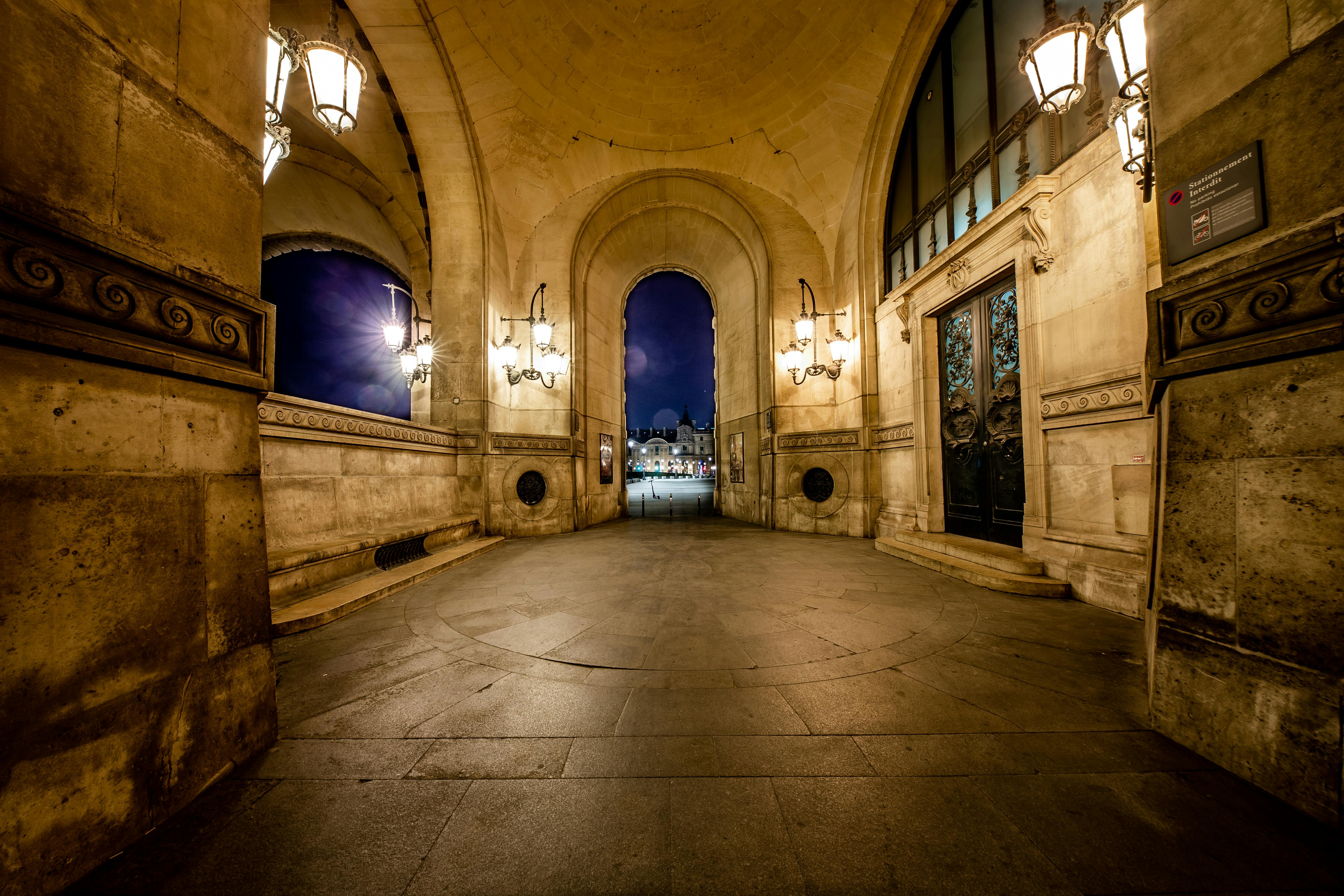
Its history stretches back to medieval Paris, when a fortress was constructed on the site under King Philippe Auguste around the end of the 12th century.
Over subsequent centuries the fortress was transformed, expanded and eventually incorporated into an enormous royal palace.
Visitors can still see remains associated with the medieval Louvre beneath the modern museum in the Sully Wing.
This underground section is worth visiting because it demonstrates just how much older the Louvre is than the elegant palace façades visible from the courtyard today.
From Royal Palace to Museum
Generations of French monarchs enlarged and transformed the Louvre Palace.
Eventually the royal court moved its principal residence to Versailles, although the Louvre continued to be used for artistic, governmental and cultural purposes.
The French Revolution fundamentally changed the building’s role.
On 10 August 1793, the Louvre opened to the public as the Muséum central des arts.
Over the following two centuries, both the palace and its collections continued to expand.
The Louvre Pyramid
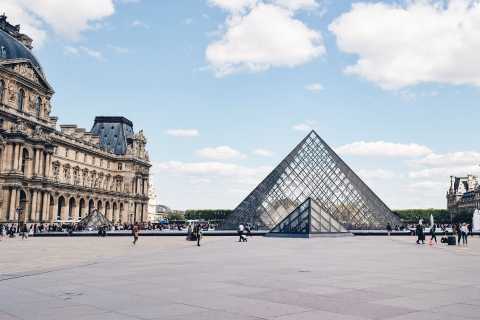
The glass Louvre Pyramid in Cour Napoléon is now almost as recognisable as many of the artworks inside the museum.
Designed by Chinese-American architect I. M. Pei, the pyramid was inaugurated in 1989 as part of the major modernisation of the Louvre.
Its transparent glass structure provides the principal public entrance to the museum.
The pyramid rises approximately 19 metres and was deliberately constructed using exceptionally transparent glass so visitors could continue to see the historic palace façades through it.
Which Louvre Entrance Should You Use?
The Pyramid is the Louvre’s main entrance.
Visitors with a timed reservation will find a designated queue around the Pyramid according to their entry arrangements.
During busy periods, additional entrances may also operate:
Carrousel du Louvre
Porte des Lions
The Carrousel and Porte des Lions entrances are generally intended for visitors already holding valid admission tickets.
Entrance arrangements can change according to visitor numbers and museum operations, so check the official Louvre information shortly before travelling.
Book a Timed Ticket Before You Visit
Advance booking is strongly recommended.
The Louvre uses timed admission, and popular dates can fill well in advance.
This is particularly important during:
Summer
School holidays
Weekends
Easter
Christmas and New Year periods
Major Paris events
During July and August 2026, advance reservations are required for almost all visitors, including many people who qualify for free admission.
Visitors entitled to free admission should therefore not assume they can simply arrive without reserving a time.
Current 2026 Louvre Ticket Prices
The Louvre introduced separate EEA and non-EEA admission rates from January 2026.
Visitor
2026 Admission
EEA resident or citizen
€22
Non-EEA resident and citizen
€32
Visitor under 18
Free
EEA resident or citizen under 26
Free
Audio guide
€6
The admission ticket includes access to the Louvre’s permanent collection and temporary exhibitions as well as admission to the Musée National Eugène-Delacroix on the same day or the following day.
When Is the Louvre Free?
In addition to its normal free-admission categories, the Louvre currently offers free entry for all visitors on the first Friday evening of each month after 6:00 pm, except during July and August.
The museum is also free for all visitors on 14 July.
These free periods can be extremely popular, so booking ahead remains advisable.
Current Louvre Opening Hours
Day
Opening Hours
Monday
9:00 am–6:00 pm
Tuesday
Closed
Wednesday
9:00 am–9:00 pm
Thursday
9:00 am–6:00 pm
Friday
9:00 am–9:00 pm
Saturday
9:00 am–6:00 pm
Sunday
9:00 am–6:00 pm
Last admission is one hour before closing, and visitors begin being cleared from galleries 30 minutes before closing.
The museum is closed on 1 January, 1 May and 25 December.
Wednesday and Friday Evening Visits
The late opening until 9:00 pm on Wednesdays and Fridays can be extremely useful.
An evening visit allows you to spend most of the day elsewhere in Paris before entering the museum in the late afternoon.
It can also feel less exhausting than attempting to spend seven or eight consecutive hours inside.
A good approach is to reserve a late-afternoon entry and remain for several hours.
Do Not Try to See the Entire Louvre
This is perhaps the most useful advice for a first-time visitor.
Do not try to see everything.
The Louvre itself states that the palace contains more than 400 rooms and approximately 35,000 displayed artworks.
Trying to walk through every gallery usually results in exhaustion and seeing very little properly.
Instead, decide what interests you most before entering.
The Three Louvre Wings
The museum is organised principally into three wings:
Denon
Sully
Richelieu
Each contains several floors and multiple collections.
Denon Wing
The Denon Wing contains many of the Louvre’s most famous works, including:
Mona Lisa
Winged Victory of Samothrace
Italian Renaissance paintings
The Wedding Feast at Cana
The Raft of the Medusa
Liberty Leading the People
If you have only one or two hours, the Louvre itself recommends concentrating on the Denon Wing.
Sully Wing
The Sully Wing is particularly useful for visitors interested in:
Ancient Egypt
Greek antiquities
Venus de Milo
Medieval Louvre
French decorative arts
Richelieu Wing
The Richelieu Wing includes major collections of:
French sculpture
Northern European paintings
Decorative arts
Near Eastern antiquities
Second Empire interiors
The quieter Sully and Richelieu wings can provide a welcome change after the busy galleries surrounding the Mona Lisa.
The Mona Lisa
For many first-time visitors, the Mona Lisa is the first artwork they want to see.
Leonardo da Vinci’s famous portrait is displayed in:
Salle des États
Room 711
Denon Wing
Level 1
The painting depicts Lisa Gherardini, wife of the Florentine merchant Francesco del Giocondo.
King François I acquired the painting after inviting Leonardo da Vinci to France, and it subsequently entered the French royal collection.
The Mona Lisa Is Smaller Than Many Visitors Expect
Many people are surprised by the physical size of the Mona Lisa.
The viewing experience is also unusual because large numbers of visitors gather in front of the painting.
Since 2005, it has been displayed inside a climate-controlled protective glass case because the work was painted on a poplar panel rather than canvas.
Look Behind You After Seeing the Mona Lisa
This is one of the most useful Louvre tips.
After reaching the Mona Lisa, turn around.
Directly opposite Leonardo’s relatively small portrait is Veronese’s enormous The Wedding Feast at Cana.
At more than six metres high and almost ten metres wide, it is the largest painting in the Louvre.
Because so many visitors remain focused entirely on the Mona Lisa, they can overlook one of the museum’s most spectacular paintings only a few metres away.
Winged Victory of Samothrace
The Winged Victory of Samothrace occupies one of the most dramatic positions in the museum.
The ancient Greek marble sculpture stands at the top of the monumental Daru Staircase in:
Room 703
Denon Wing
Level 1
The sculpture represents Nike, the Greek goddess of Victory, apparently descending onto the prow of a ship.
It probably dates from around 190 BC and was discovered on the Greek island of Samothrace in 1863.
Why the Winged Victory Is So Impressive
The statue is intentionally displayed high above the staircase.
Its original setting in ancient Samothrace also placed it prominently so worshippers could see it from a distance.
As you climb the Daru Staircase, the sculpture gradually becomes more imposing.
Stop at the bottom of the staircase before approaching it. The combination of ancient sculpture and monumental architecture creates one of the finest views inside the entire Louvre.
Venus de Milo
The famous Venus de Milo is another essential stop.
You will find her in:
Room 345
Sully Wing
Level 0
The marble sculpture was discovered on the Greek island of Milos in 1820 and entered the Louvre the following year.
It is generally identified as Aphrodite, the Greek goddess of beauty and love, although its missing arms mean the identification cannot be absolutely certain.
Why Are the Venus de Milo’s Arms Missing?
The sculpture was already incomplete when discovered.
Early proposals suggested reconstructing the missing arms, but the Louvre ultimately decided against altering the ancient statue.
Parts of the original sculpture were carved separately and attached, a technique visible through evidence remaining on the marble.
The Great Sphinx of Tanis
If ancient Egypt interests you, look for the Great Sphinx of Tanis.
The enormous granite sphinx stands near the beginning of the Louvre’s Egyptian Antiquities displays.
It introduces a collection containing more than 6,000 displayed works spanning almost 5,000 years of Egyptian history.
Egyptian Antiquities
The Egyptian galleries are among the best sections of the Louvre for visitors who want more than European paintings.
The collection explores many aspects of ancient Egyptian civilisation, including:
Pharaohs
Gods and religion
Sarcophagi
Mummification
Hieroglyphics
Everyday life
Sculpture
Temples
Funerary beliefs
Families may find this area particularly appealing because the objects are visually varied and easier for children to engage with than long galleries of paintings.
The Raft of the Medusa
Théodore Géricault’s enormous The Raft of the Medusa is one of the masterpieces of French Romantic painting.
The work was inspired by the real 1816 wreck of the French frigate Méduse.
Approximately 150 people were left drifting on an improvised raft for nearly two weeks. Only a small number survived.
The painting transformed the contemporary disaster into a monumental image of desperation, survival and political scandal.
Liberty Leading the People
Nearby is another of France’s most recognisable paintings: Eugène Delacroix’s Liberty Leading the People.
The painting was inspired by the July Revolution of 1830.
The central female figure represents Liberty and carries the French tricolour while leading revolutionaries across a barricade.
Napoleon III Apartments
If open during your visit, the Napoleon III Apartments provide one of the biggest surprises in the Louvre.
These lavish rooms contain:
Gilded ceilings
Enormous chandeliers
Red velvet furnishings
Decorative furniture
Elaborate Second Empire interiors
Despite their name, Napoleon III did not live in these apartments. They formed part of the Ministry of State during the Second Empire and are named for their decorative style and historical period.
The rooms opened to the public as part of the Louvre in 1993.
Check Which Galleries Are Open
The Louvre is so large that individual galleries are sometimes closed because of renovations, staffing, maintenance or environmental conditions.
This becomes particularly important if you are travelling specifically to see a less famous collection.
The museum publishes a current schedule of available galleries and room closures.
During periods of extreme summer heat, some galleries may also close because not every section of the historic palace is fully air-conditioned.
How Long Should You Spend at the Louvre?
1–2 Hours
Only suitable if your time in Paris is extremely limited.
Concentrate mainly on the Denon Wing.
A possible route is:
Winged Victory → Mona Lisa → Wedding Feast at Cana → French Romantic paintings
The Louvre itself recommends Denon for visitors with only an hour or two.
3 Hours
A good minimum for most first-time visitors.
You can see:
Mona Lisa
Winged Victory
Venus de Milo
Selected Italian paintings
Several major French paintings
A small section of Egyptian Antiquities
4–5 Hours
The best choice for a substantial first visit.
This allows you to slow down, explore several departments and take a rest or refreshment break.
Full Day
Worthwhile for serious art, archaeology and history enthusiasts.
Even then, you will see only a fraction of the collection.
A Good Three-Hour Louvre Route
1. Enter Through the Pyramid
Collect or photograph a museum map before beginning.
2. Head to the Denon Wing
Follow signs towards the major Italian collections.
3. Winged Victory of Samothrace
Stop at the Daru Staircase before continuing upstairs.
4. Mona Lisa
Continue to the Salle des États.
5. Wedding Feast at Cana
Turn around after seeing the Mona Lisa and examine Veronese’s enormous painting.
6. French Romantic Paintings
See major works including The Raft of the Medusa and Liberty Leading the People.
7. Venus de Milo
Continue towards the Greek antiquities in the Sully Wing.
8. Egyptian Antiquities
Finish with the Great Sphinx of Tanis and a selection of Egyptian galleries.
This gives a first-time visitor a mixture of painting, sculpture and archaeology rather than spending the entire visit in one collection.
A Better Half-Day Louvre Route
If you have four to five hours, use the same route but add:
More Italian Renaissance paintings
Medieval Louvre
Additional Egyptian galleries
French sculpture
Decorative arts
Napoleon III Apartments if open
Take at least one break.
The Louvre contains approximately 13.5 kilometres of exhibition space, so museum fatigue is a genuine problem.
Best Time to Visit the Louvre
At 9:00 am
Best for most first-time visitors.
Book the earliest available time and arrive before your reservation.
Head towards one of your priority masterpieces immediately rather than spending the first half-hour wandering through the entrance hall.
Wednesday or Friday Evening
Best alternative.
The Louvre remains open until 9:00 pm on these evenings.
An evening visit can be particularly attractive if you prefer splitting your sightseeing day into outdoor and indoor sections.
Middle of the Day
This is often one of the busiest periods, particularly around the Mona Lisa and main circulation routes.
If you enter at midday, consider beginning with a quieter section rather than immediately joining the largest crowds.
How to Avoid Spending Your Entire Visit in Crowds
The area around the Mona Lisa is rarely quiet.
Instead of allowing the crowd there to define your entire impression of the museum:
See the Mona Lisa early
Move into the Sully or Richelieu wings afterwards
Explore less famous rooms
Use an evening opening if convenient
Plan a few priority works rather than following crowds
Some of the most enjoyable Louvre experiences happen when you turn into a quieter gallery and discover an extraordinary object you had never intended to see.
The Louvre Audio Guide
The official audio guide currently costs €6.
It is available in nine languages:
English
French
Spanish
German
Italian
Portuguese
Chinese
Korean
Japanese
Advance reservation is sensible because same-day audio-guide availability is not guaranteed.
Should You Take a Guided Louvre Tour?
A guided tour can be particularly worthwhile for a first visit because one of the biggest difficulties at the Louvre is not the lack of things to see but deciding what not to see.
A good guide can provide context while navigating efficiently between major works.
A guided highlights tour is especially useful if:
You have only two or three hours
This is your first visit
You want historical context
You find very large museums overwhelming
You want to concentrate on a particular period
If you prefer independent exploration, the official audio guide and museum map are perfectly adequate.
Visiting the Louvre With Children
The Louvre can be excellent for children, but trying to keep them inside for an entire day is rarely a good plan.
The museum itself advises families to keep visits manageable because of the building’s enormous size.
Good family highlights include:
Egyptian mummies and antiquities
Great Sphinx of Tanis
Venus de Milo
Winged Victory
Mona Lisa
Medieval fortress remains
Large-scale paintings
Children under 18 receive free admission.
Prams and Baby Carriers
Prams are permitted inside the Louvre.
If your stroller is too large for the museum lifts, smaller prams can be borrowed beneath the Pyramid.
Only front-worn baby carriers are permitted; back-mounted carriers are not allowed.
Accessibility
The Louvre provides accessibility services for visitors with physical, visual, hearing, developmental and learning disabilities.
Visitors with disabilities and one accompanying person are among those eligible for free admission.
Because the museum occupies a huge historic palace with numerous levels and interconnected wings, visitors with specific mobility requirements should plan their route before arriving.
Can You Leave and Re-enter?
No.
The Louvre currently states that once you leave the museum, your exit is final.
Plan your meals, breaks and itinerary accordingly before leaving the secure museum area.
Food and Cafés
The Louvre has restaurants, cafés and takeaway counters within the museum and surrounding palace complex.
Taking a break can make a significant difference if you are visiting for four hours or more.
Rather than rushing through galleries because you are tired or hungry, stop for 20–30 minutes and then continue.
How to Get to the Louvre by Metro
The most convenient station is:
Palais Royal–Musée du Louvre
It is served by:
Metro Line 1
Metro Line 7
RATP recommends these lines as the most direct Metro options for reaching the museum.
Walking to the Louvre
The Louvre sits in one of the best walking areas of central Paris.
If you are already staying around the 1st arrondissement, Saint-Germain-des-Prés, Île de la Cité or central Right Bank, walking may be easier than using the Metro.
Approaching across the Seine also gives you impressive views of the long Louvre Palace façades before you enter Cour Napoléon.
After several hours inside the museum, walking through the gardens is an excellent way to recover from museum fatigue.
The garden is free to enter.
During August 2026, it currently opens from 7:00 am until 9:30 pm.
Palais Royal
Palais Royal is another easy nearby stop.
Its arcades, courtyard and garden provide a quieter contrast with the crowds around the Louvre Pyramid.
The area also contains cafés, restaurants and elegant streets, making it a useful place for lunch before or after a museum visit.
A Good Half-Day Louvre Itinerary
8:30 am – Arrive at Cour Napoléon
Take photographs of the Pyramid and palace before entering.
9:00 am – Enter the Louvre
Have your timed ticket ready and collect a museum map.
9:15 am – Winged Victory
Walk towards the Daru Staircase.
9:30 am – Mona Lisa
Continue to the Salle des États before the largest daytime crowds arrive.
9:45 am – Wedding Feast at Cana
Turn around and examine Veronese’s enormous masterpiece.
10:00 am – Italian Paintings
Explore more of the surrounding galleries.
10:45 am – French Paintings
See The Raft of the Medusa and Liberty Leading the People.
11:30 am – Venus de Milo
Move into the Sully Wing and explore Greek sculpture.
Noon – Egyptian Antiquities
Visit the Great Sphinx and selected Egyptian galleries.
1:00 pm – Finish or Take a Break
Either leave for lunch or stop inside and continue into the quieter sections of the museum.
Where to Stay Near the Louvre
1st Arrondissement
Best for being within walking distance of the Louvre.
Staying here puts you close to:
Louvre Museum
Tuileries Garden
Palais Royal
River Seine
Central Paris shopping and restaurants
The main disadvantage is price. This is one of Paris’s most central and desirable accommodation areas.
Saint-Germain-des-Prés
Best for atmosphere, restaurants and a Left Bank stay.
The Louvre can be reached by walking across the Seine.
This is an excellent choice if you want historic Parisian streets and cafés while remaining close to the museum.
Opera and Madeleine Area
Best for transport and shopping.
This area provides easy access to central Paris while remaining within walking or short Metro distance of the Louvre.
Le Marais
Best for restaurants, nightlife and historic streets.
Le Marais is farther east but still convenient for the Louvre and many other central Paris attractions.
Is It Worth Visiting the Louvre if You Do Not Like Art Museums?
Yes, but keep the visit relatively short.
The Louvre is as much a historic building as an art collection.
You can explore:
A former royal palace
Medieval fortress remains
Ancient Egyptian monuments
Greek sculpture
Imperial interiors
The architecture of the Pyramid
A two- or three-hour highlights visit can therefore be worthwhile even if you normally avoid large art museums.
Common Louvre Mistakes
Trying to See Everything
The museum is simply too large.
Not Booking Ahead
Timed slots can fill, particularly during peak periods.
Going Straight to the Mona Lisa and Leaving
You will miss extraordinary works only metres away.
Ignoring the Building
The palace itself is part of the attraction.
Not Checking Gallery Closures
A specific collection may not be accessible on the day you visit.
Visiting When Exhausted
The Louvre requires considerable walking. Avoid placing it at the end of an already exhausting sightseeing day unless you are deliberately using a shorter evening visit.
Is the Louvre Museum Worth Visiting?
Absolutely.
The Louvre is not famous simply because it contains the Mona Lisa.
Its significance comes from the extraordinary combination of palace, archaeology, sculpture, painting and history gathered into one enormous complex.
You can walk past the remains of a medieval fortress, stand beneath the Winged Victory of Samothrace, examine a monumental Egyptian sphinx, see the Venus de Milo and then enter a gallery containing Leonardo da Vinci, Veronese, Titian and Tintoretto.
The collection displayed throughout the palace contains around 35,000 works, which is precisely why attempting to see everything is the wrong approach.
For a first visit, book a timed ticket, allow at least three hours and decide on your priority works before entering.
If you only have a couple of hours, concentrate on the Denon Wing and the Louvre’s headline masterpieces. If you have four or five hours, add the Venus de Milo, Egyptian Antiquities, medieval palace and quieter galleries.
As of 2026, admission is €22 for eligible EEA visitors and €32 for non-EEA visitors. The museum opens from 9:00 am to 6:00 pm on Monday, Thursday, Saturday and Sunday, remains open until 9:00 pm on Wednesday and Friday, and is closed every Tuesday.
Most importantly, do not judge the Louvre solely by the crowd around the Mona Lisa.
See the famous painting, then walk away from the busiest galleries and explore.
The moments when you unexpectedly find yourself almost alone with an ancient sculpture, enormous painting or lavish palace room are often what make a visit to the Louvre genuinely memorable.
Sponsored Popular Items
Quick take: Musement.com offers a worldwide selection of tours and attractions
Louvre Museum France Book your Louvre Museum tickets online. Save time and money with our best price guarantee. Check current availability, inclusions and booking conditions.
Murders and mysteries tour of the Louvre Museum – Guided Local Tour France Murders and mysteries tour of the Louvre Museum adds structure, local context and purposeful sightseeing to the itinerary. Check current availability, inclusions and booking details before you go.
Small-Group Louvre Museum Guided Tour – Paris Heritage Tour France is a convenient way to add structure, local context and purposeful sightseeing to the itinerary. Check current availability, inclusions and booking details before you go.
Luggage Storage at the Louvre Museum in Paris - Travel Service France What to check before booking Location: check the exact storage address and how close it is to the sights or transport you plan to use. Check current availability, inclusions and booking details before you go.