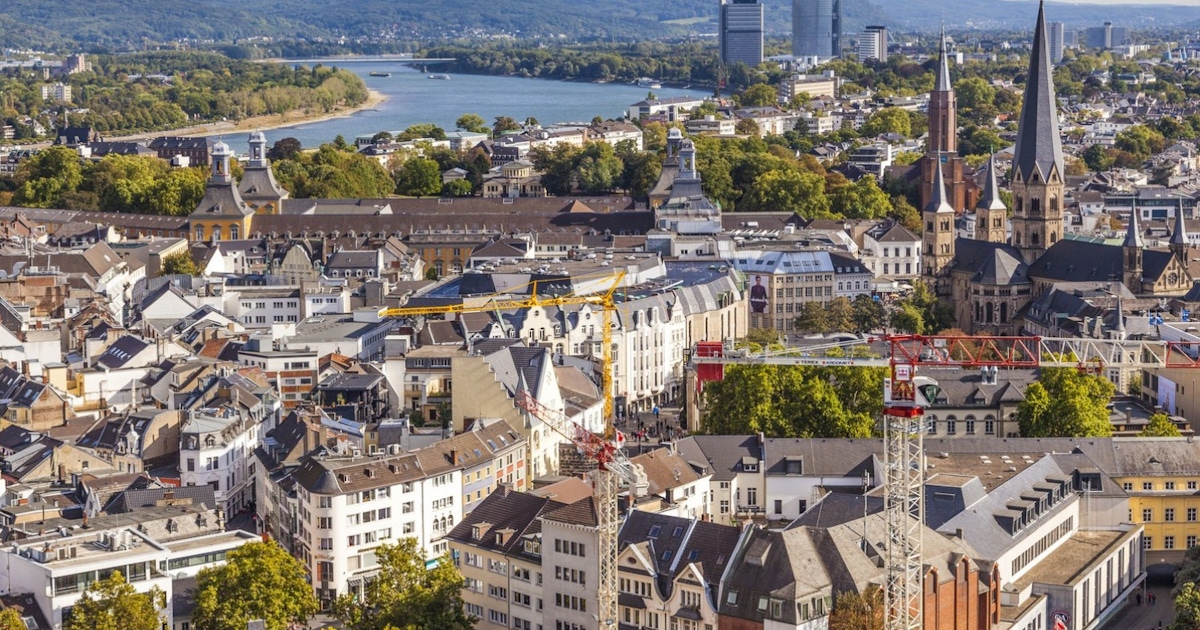
Bonn is often introduced as Ludwig van Beethoven’s birthplace or as the former capital of West Germany. Both descriptions are accurate, but neither fully explains the city.
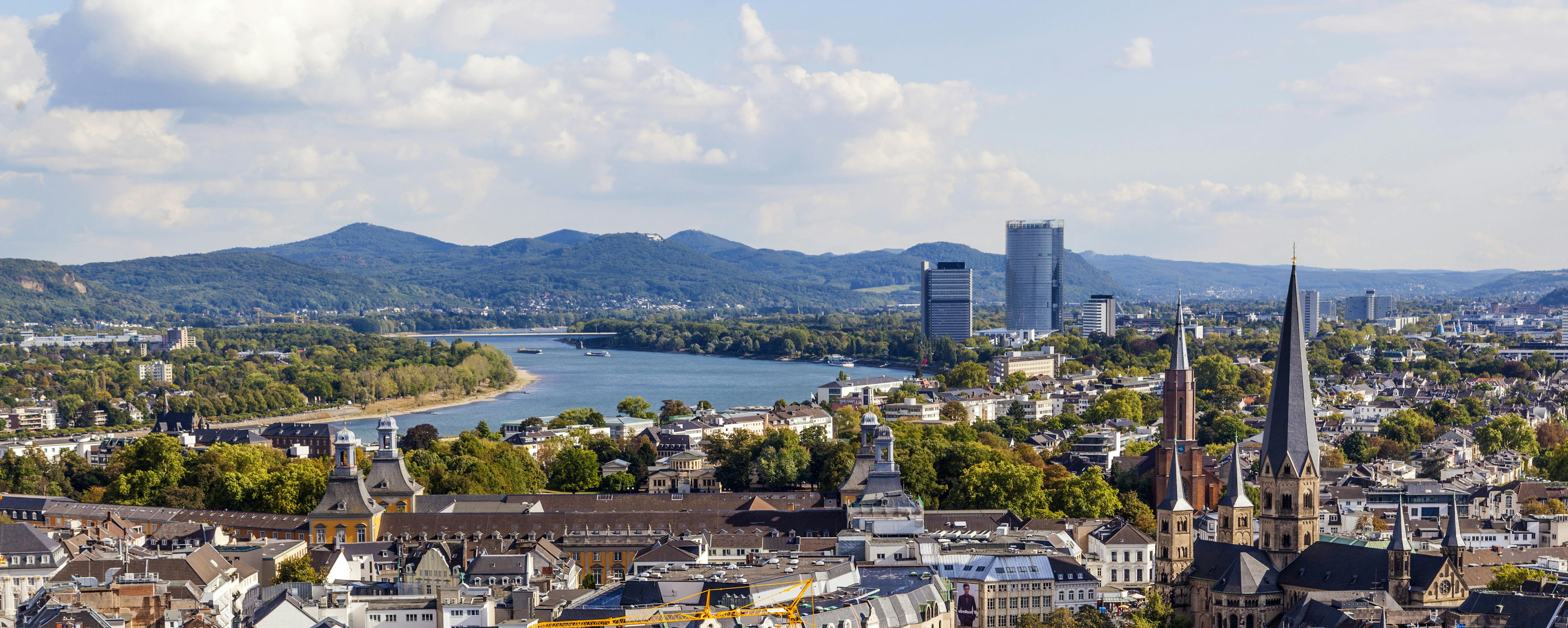
Set beside the Rhine in North Rhine-Westphalia, Bonn combines a walkable historic centre, excellent museums, elegant 19th-century neighbourhoods, university gardens, modern international institutions and easy access to the wooded hills and castles of the Rhine Valley.
Sponsored Popular Items
Quick take: Musement.com offers a worldwide selection of tours and attractions
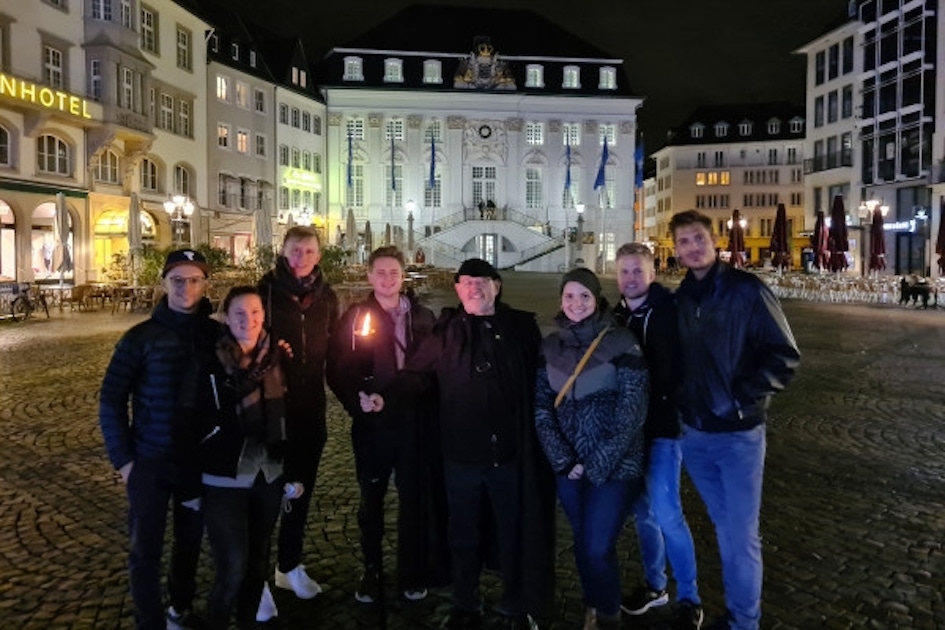
Bonn Torchlit Night Watchman Tour Germany Nightwatchman tour with torch through Bonn is a convenient way to add structure, local context and purposeful sightseeing to the itinerary. Nightwatchman tour with torch through Bonn: experience overview Experience this guided tour and accompany the night watchman through Bonn's city center at night! Listen to spooky stories of murderers and witches. This makes the experience a useful option when planning time in Bonn. The exact duration can depend on the selected date, option or operating schedule. Routes, start times, inclusions and meeting arrangements may vary, so the current booking page should be treated as the final source of operational…
It is quieter and more compact than nearby Cologne. Visitors can walk from Beethoven’s birthplace to the Rhine in minutes, travel by tram to the former government quarter, and finish the day with a river cruise or an excursion to Drachenfels and Schloss Drachenburg.
Bonn works particularly well for travellers interested in music, modern European history, art, gardens or riverside walking. One day is sufficient for the historic centre and one museum, but two or three days provide a much better introduction.
Bonn Quick Facts
Visitor information
Details
Country
Germany
State
North Rhine-Westphalia
River
Rhine
Known for
Beethoven, German political history, museums and the Rhine
Former national role
Capital of West Germany and later seat of government of reunified Germany
Recommended stay
Two nights
Historic-centre visit
Half a day
Main museum district
Museumsmeile, or Museum Mile
Principal railway station
Bonn Hauptbahnhof
Nearest major airport
Cologne Bonn Airport
Best local transport
Tram, Stadtbahn, bus and walking
Current Bonn 24-hour transport ticket
€10.30 for unlimited journeys within the city
Best seasons
April to June and September to early October
Cherry-blossom period
Usually April, depending entirely on weather
Best nearby excursion
Königswinter, Drachenfels and Schloss Drachenburg
Current-information note: Museum exhibitions, river-cruise timetables, public-transport fares and seasonal attractions can change. Check live information before travelling.
Why Visit Bonn?
Bonn offers an unusually broad range of experiences within a manageable city.
Its principal advantages include:
One of the world’s most important Beethoven museums.
A compact pedestrian centre.
Free entry to a major museum of modern German history.
International art exhibitions.
Walks beside the Rhine.
Elegant university and residential architecture.
Excellent regional train connections.
Direct access to the beginning of the Romantic Rhine landscape.
A quieter atmosphere than Cologne or Düsseldorf.
Bonn is also a useful base. Cologne is nearby, while Königswinter, the Siebengebirge hills, the Ahr wine region and several Rhine castles can be reached on day trips.
A Short History of Bonn
Bonn’s history extends back to Roman settlement along the Rhine.
The area later developed into an important ecclesiastical centre connected with the archbishops and electors of Cologne. Baroque palaces, university buildings and churches reflect this period.
Ludwig van Beethoven was born in Bonn in 1770 and spent his formative years in the city before moving to Vienna.
During the 19th century, Bonn became known for its university, elegant residential districts and Rhine tourism.
Its modern international importance began after the Second World War. In 1949, Bonn became the provisional capital of the Federal Republic of Germany, commonly known as West Germany.
Government ministries, parliament buildings, embassies and media organisations transformed what had previously been a relatively modest university city.
Following German reunification, parliament and much of the federal government moved to Berlin. Bonn nevertheless retained several federal ministries and developed into an important centre for the United Nations, international cooperation, science and sustainability policy.
How Long Should You Spend in Bonn?
One Day
One full day allows time for:
Beethoven-Haus.
Market Square.
Bonn Minster.
A walk beside the Rhine.
One Museum Mile attraction.
Two Days
Two days are ideal for a first visit. Add:
Haus der Geschichte.
Bundeskunsthalle or Kunstmuseum.
Poppelsdorf Palace and the Botanical Gardens.
The Südstadt district.
A longer Rhine walk.
Three Days
With three days, include:
A Rhine cruise.
Drachenfels and Schloss Drachenburg.
Bad Godesberg or Rheinaue Park.
A concert or seasonal event.
Beethoven-Haus
Beethoven-Haus is Bonn’s essential cultural attraction.
The museum occupies the house in which Ludwig van Beethoven was born, together with neighbouring buildings used for exhibitions, research, ticketing and visitor services.
What Is Inside?
The collection includes:
Original manuscripts and printed music.
Letters and personal documents.
Portraits and sculptures.
Musical instruments.
Objects connected with Beethoven’s hearing loss.
Early editions of his works.
Listening and multimedia installations.
Temporary exhibitions.
The museum focuses not only on Beethoven’s achievements but also on his personality, family, friendships, creative methods and health.
Current Hours
The museum currently opens from Wednesday through Monday between 10:00 am and 6:00 pm.
On Tuesdays, it opens only for registered groups.
Current Admission
Adults: €15.
Children: €10.
Family and reduced tickets: Available under current eligibility rules.
Online tickets can normally be purchased until the day before the visit.
How Long to Allow
Allow 60 to 90 minutes.
Music specialists and visitors using all multimedia material may spend two hours.
Accessibility Warning
The birthplace is a protected historic building with:
Uneven floors.
Different step heights.
Low beams.
Narrow spaces.
Several changes of level.
Contact the museum before travelling when full step-free access is required.
Following Beethoven Through Bonn
Beethoven’s connection with Bonn extends beyond his birthplace.
A self-guided route through the city can include:
Beethoven-Haus on Bonngasse.
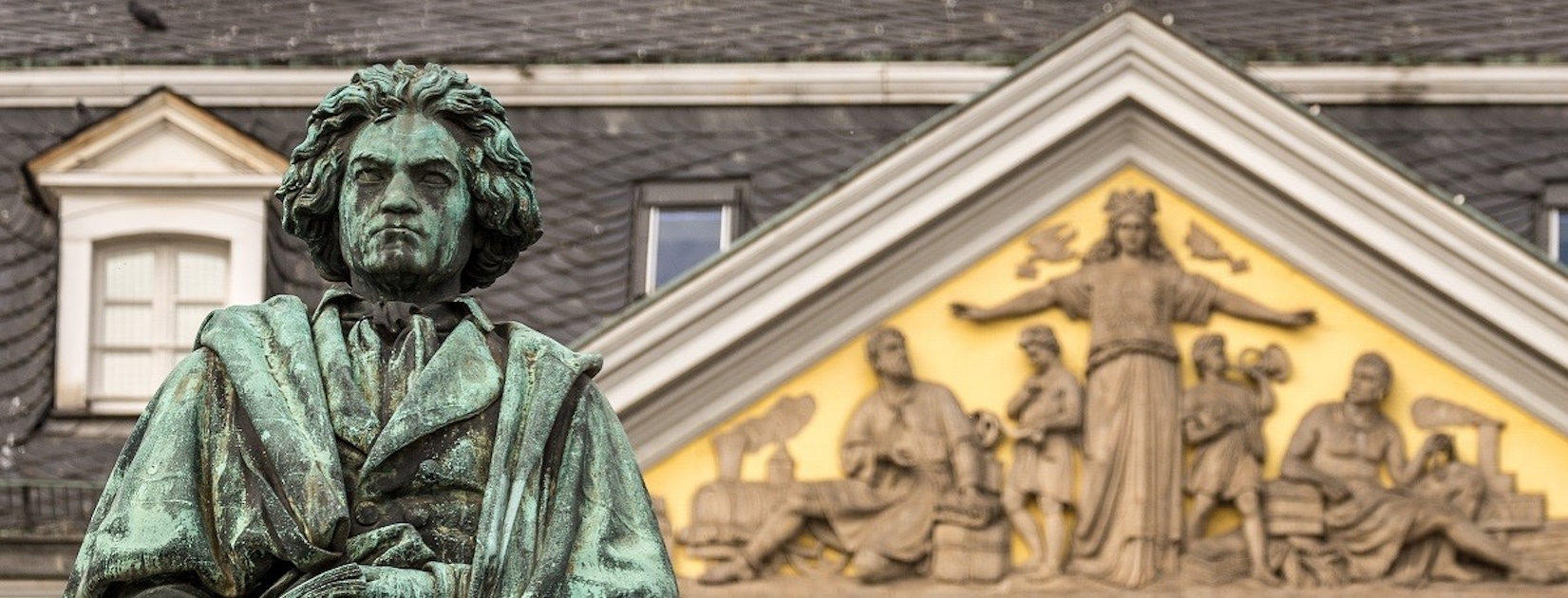
The Beethoven Monument on Münsterplatz.
Remigius Church locations associated with his baptism and early life.
The electoral palace where court musicians worked.
Sites connected with his family and teachers.
The Rhine, which formed part of his childhood environment.
Beethovenhalle.
Modern information points and digital material help explain the places that have disappeared or changed substantially.
The complete route is best treated as a city walk rather than a series of major museum interiors.
Beethovenhalle and Beethovenfest
Beethovenhalle stands near the Rhine northeast of the historic centre.
The post-war concert hall reopened after an extensive restoration programme and again serves as an important performance venue and home of the Beethoven Orchestra Bonn.
Seeing the Hall
The building is normally visited by attending a concert, conference or scheduled event rather than as a continuously open museum.
Check the current programme before travelling.
Beethovenfest 2026
The 2026 Beethovenfest runs from 3 September to 3 October.
Concerts take place across Bonn in venues including:
Beethovenhalle.
Bonn Minster.
Beethoven-Haus.
Market Square.
Churches and university buildings.
Smaller neighbourhood venues.
Popular orchestral events can sell out well in advance, while some outdoor and community performances are free.
Market Square and Old Town Hall
Bonn’s central Market Square, or Marktplatz, is one of the most attractive public spaces in the historic centre.
The Rococo-style Old Town Hall dominates the square with its pink-and-gold façade, tall windows and external staircase.
The building witnessed many official visits during Bonn’s years as the national capital.
What to Do Around the Square
Browse the produce market when operating.
Sit at an outdoor café.
Walk towards the Rhine.
Continue to Beethoven-Haus.
Explore the surrounding pedestrian streets.
Market activity varies by day, weather and public events.
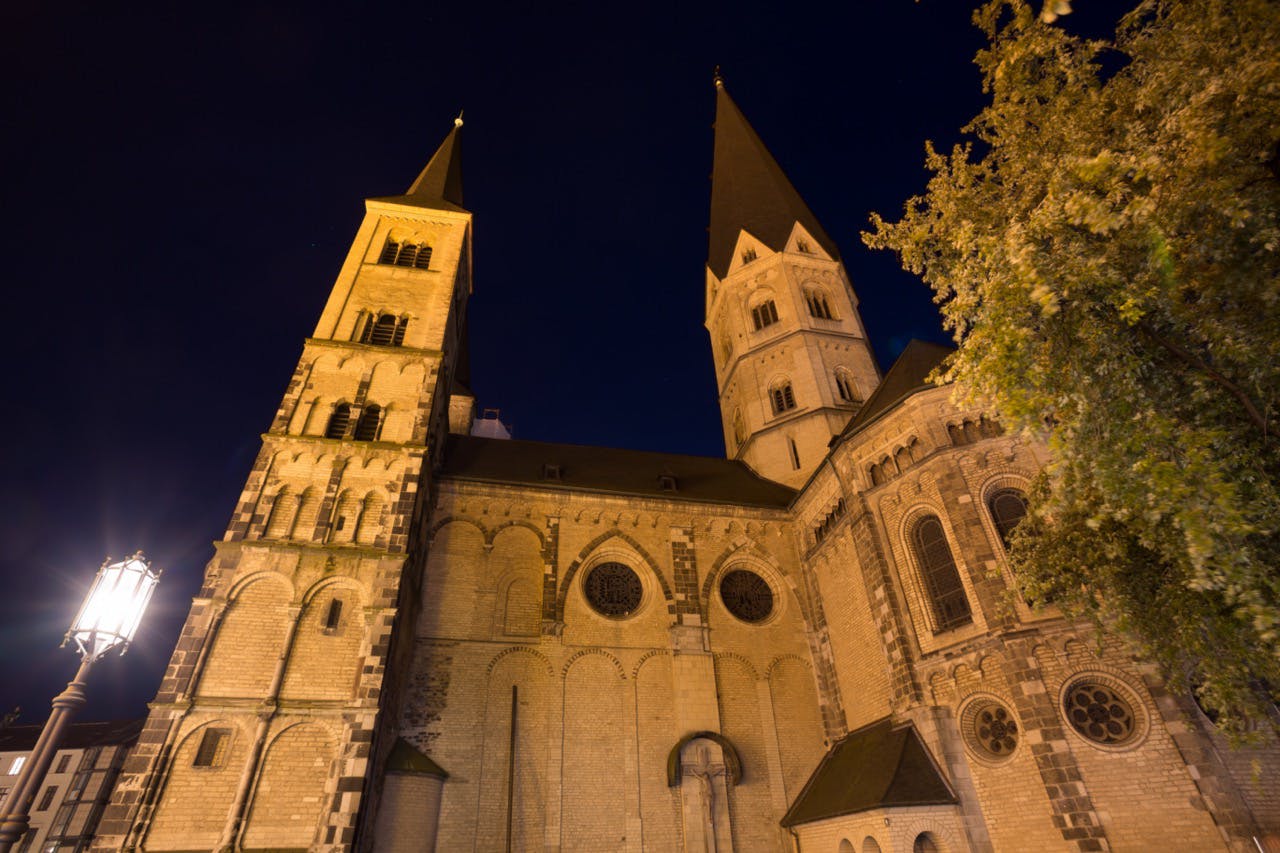
Bonn Minster
Bonn Minster is one of the city’s principal landmarks.
The church has almost one thousand years of architectural history and incorporates Romanesque, Gothic and later elements.
Highlights
The tall crossing tower.
Romanesque stonework.
The cloister.
Historic sculpture.
The crypt and religious traditions associated with the city’s patron saints.
The open space of Münsterplatz.
It remains an active church. Tourist access may pause during services, concerts, confessions and other religious activities.
Dress respectfully, keep conversations quiet and avoid photographing worshippers.
Exploring the Historic Centre
Bonn’s centre is compact and mostly pedestrianised.
A useful walking route connects:
Bonn Central Station.
Münsterplatz and the Beethoven Monument.
Bonn Minster.
Remigiusplatz.
Market Square and the Old Town Hall.
Bonngasse and Beethoven-Haus.
Bertha-von-Suttner-Platz.
The Rhine promenade.
What to Expect
International shops.
Department stores.
Cafés and bakeries.
Historic façades mixed with post-war buildings.
University students.
Frequent markets and public events.
Bonn was heavily damaged during the Second World War, so the centre is not an untouched medieval old town. Its appeal comes from the mixture of surviving monuments, reconstructed buildings and modern city life.
Bonn’s Cherry Blossoms
Bonn’s northern Altstadt district becomes famous each spring when ornamental Japanese cherry trees bloom along residential streets.
The best-known locations include:
Heerstraße.
Breite Straße.
Maxstraße and nearby streets.
When Do They Bloom?
Flowering usually occurs during April, but the exact period changes annually.
Warm weather can bring early flowering and shorten the display. Cold conditions can delay it.
The strongest colour may last only around one or two weeks.
Crowd Advice
Visit early in the morning on a weekday for:
Fewer photographers.
Less vehicle traffic.
Better light.
Less disruption to residents.
Respecting the Neighbourhood
The blossom streets are residential.
Do not enter private doorways.
Do not block roads or bicycle access.
Do not shake branches for photographs.
Keep noise low.
Use public transport rather than searching for scarce parking.
The Rhine Promenade
The Rhine gives Bonn much of its character.
Several walking areas connect the central waterfront with parks, museums and neighbourhoods farther south.
Central Rhine Walk
From the city centre, visitors can walk past:
The opera area.
Beethovenhalle.
Boat landings.
Riverside lawns.
Views towards Beuel on the eastern bank.
South Towards the Government Quarter
A longer walk leads towards:
Villa Hammerschmidt.
Palais Schaumburg.
The Bundeshaus.
Museum Mile.
The UN Campus.
Rheinaue Park.
The route is largely level and works well for walking or cycling.
Crossing to Beuel
Bridges and public transport connect the city centre with Beuel.
The eastern bank provides broad views of Bonn’s waterfront and often feels more residential and relaxed.
Bonn’s Museum Mile
The Museum Mile is not one enclosed complex. It is a group of museums and cultural institutions along and around the former government district.
Principal attractions include:
Haus der Geschichte.
Bundeskunsthalle.
Kunstmuseum Bonn.
Museum Koenig.
Deutsches Museum Bonn farther south.
The Heussallee/Museumsmeile Stadtbahn stop serves the central group.
Do not attempt to see every museum in one day. Choose one history museum and one art or science museum.
Haus der Geschichte
Haus der Geschichte is one of Germany’s most informative modern-history museums.
Its exhibitions examine Germany from the end of the Second World War to the present, covering both East and West Germany, reunification and subsequent political and social developments.
Subjects Covered
Division of Germany.
The Cold War.
Economic recovery.
Everyday life in East and West.
Protest movements.
Migration.
German reunification.
European integration.
Recent social change.
Current Admission
Entry is free.
Current Hours
Tuesday–Friday: 9:00 am–6:00 pm.
Saturday and Sunday: 10:00 am–6:00 pm.
Monday: Closed.
How Long to Allow
Allow at least two hours.
Visitors who read extensively and explore temporary exhibitions can spend half a day.
Accessibility
The museum is largely barrier-free and provides:
Level entrance access.
Lifts.
Accessible parking.
Seating.
Free cloakroom and lockers.
Space for pushchairs and mobility aids.
Bundeskunsthalle
The Bundeskunsthalle is a national exhibition venue rather than a museum with one fixed permanent collection.
Its programme can include:
Fine art.
Photography.
Archaeology.
Design.
Science and environmental subjects.
Cultural history.
Large international loan exhibitions.
Current Hours
Tuesday: 10:00 am–6:00 pm.
Wednesday: 10:00 am–9:00 pm.
Thursday–Sunday: 10:00 am–6:00 pm.
Monday: Normally closed, except selected public holidays.
Current Day Ticket
Regular: €14.
Reduced: €7.
Final-hour ticket: A reduced ticket may be available shortly before closing.
Roof Garden
The roof can host gardens, sculpture, installations and views, but access depends on weather and exhibition construction.
Do not assume it will be open during every visit.
Kunstmuseum Bonn
Kunstmuseum Bonn focuses particularly on modern and contemporary German art.
It is especially associated with:
August Macke and the Rhenish Expressionists.
German art after 1945.
Contemporary exhibitions.
Works on paper.
Large-scale sculpture and installation.
Current Hours
Tuesday–Sunday: 11:00 am–6:00 pm.
Wednesday: Open until 7:00 pm.
Monday: Closed.
Current Admission
Regular: €10.
Reduced: €5.
First Sunday of each month: Free under the current programme.
Visitors aged 18 or younger: Free.
Combined Art Ticket
A combined ticket with the neighbouring Bundeskunsthalle may be available. Confirm which temporary exhibitions it covers before purchasing.
Museum Koenig
Museum Koenig is a major natural-history museum and research institution.
Its historical importance extends beyond science. The opening session of the Parliamentary Council that prepared West Germany’s Basic Law took place in the museum in 1948.
Exhibitions
Displays explore habitats and biodiversity through reconstructed environments and zoological collections.
Subjects can include:
African savanna.
Central European wildlife.
Polar regions.
Rainforest ecosystems.
Birds and mammals.
Evolution and biodiversity.
Check current exhibition access, opening hours and renovation notices before visiting.
The Former Government Quarter
The government quarter explains Bonn’s role as the political centre of West Germany.
Many buildings are modest compared with monumental capital architecture elsewhere. That restraint reflected the idea that Bonn’s capital status was temporary and that the new republic should distance itself from authoritarian displays of power.
Important Sites
Bundeshaus: The former parliamentary complex.
Plenary Chamber: Associated with the Bundestag before the move to Berlin.
Palais Schaumburg: Former Chancellor’s Office.
Villa Hammerschmidt: Official residence associated with Germany’s federal president.
Chancellor’s Bungalow: Modern residence used by several chancellors.
Path of Democracy: Outdoor route connecting important political sites.
Some interiors are accessible only on scheduled guided tours and may require advance registration and identification.
The UN Campus
Bonn reinvented part of its former government district as an international centre after the capital moved to Berlin.
The UN Campus accommodates organisations working on subjects including:
Climate change.
Desertification.
Volunteering.
Environmental protection.
International development.
The tall former parliamentary office tower, now known as the Langer Eugen, is a visible symbol of this transition.
Security restrictions mean the campus is not generally explored like a public museum. Visitors can view the district from surrounding roads, the Rhine promenade and Rheinaue Park, or join a scheduled tour when offered.
Poppelsdorf Palace and Botanical Gardens
Poppelsdorf Palace stands at the end of a long, tree-lined avenue extending from the university’s main palace.
The Baroque building now forms part of the University of Bonn.
The Botanical Gardens
The gardens surrounding the palace contain:
Historic trees.
Systematic plant collections.
Greenhouses.
Water plants.
Succulents and tropical species.
Research and teaching collections.
Current Summer Hours
April–October: Daily from 10:00 am to 6:00 pm.
April–September Thursdays: Open until 8:00 pm.
Greenhouses: Close 30 minutes before the garden.
Weekday entry is normally free. A small admission charge applies on weekends and public holidays, and current visitor information indicates that payment facilities may be cash-only.
Current Winter Hours
From November through March, the gardens generally open Monday to Friday from 10:00 am to 4:00 pm and close on weekends and public holidays.
Walking from the Centre
The gardens are approximately a 15-minute walk from Bonn Central Station along Poppelsdorfer Allee.
Bonn’s Südstadt
Südstadt lies south of the central station and is one of Bonn’s most attractive residential districts.
Its broad, tree-lined streets contain a large concentration of late-19th-century and early-20th-century buildings.
What to Look For
Decorative historic façades.
Bay windows and balconies.
Mature street trees.
Small cafés and restaurants.
Connections towards Poppelsdorf and the Rhine.
The neighbourhood is best explored as a slow architectural walk rather than a checklist of individual monuments.
Rheinaue Park
Rheinaue is a large landscape park beside the Rhine south of the former government quarter.
It was created for the 1979 Federal Horticultural Show and remains one of Bonn’s principal outdoor spaces.
Activities
Walking and cycling.
Picnics.
Lake and garden views.
Outdoor concerts and festivals.
Flea markets on selected dates.
Views of the Post Tower and UN district.
The park is spacious and largely level, making it suitable for families and visitors wanting a break from museums.
Bad Godesberg
Bad Godesberg is a southern district of Bonn with its own town centre and historical identity.
It became particularly important during Bonn’s capital years because many embassies, diplomatic residences and international organisations were based nearby.
Things to See
Godesburg castle ruins and views.
Historic villas.
Redoute and surrounding architecture.
Residential embassy districts.
Rhine access at Plittersdorf and Rüngsdorf.
Bad Godesberg is more spread out than central Bonn. Use local transport rather than attempting to include every attraction on foot.
Rhine Cruises from Bonn
Seasonal sightseeing boats operate from Bonn along the Rhine.
Possible routes include:
Short Bonn panorama cruises.
Königswinter and Drachenfels.
Bad Godesberg.
Remagen and Linz.
Longer journeys into the Romantic Rhine.
What to Check Before Booking
Exact departure pier.
One-way or return arrangements.
Duration of shore stops.
Whether bicycles are accepted.
Accessibility of the vessel.
Food and drink availability.
The final return sailing.
Timetables vary substantially by month and day of the week. Early and late season services are less frequent than summer departures.
Drachenfels and Schloss Drachenburg
Königswinter and Drachenfels provide Bonn’s classic day trip.
The wooded hills of the Siebengebirge rise immediately south of the city, marking the beginning of the Romantic Rhine landscape.
Getting There
Take Stadtbahn Line 66 from Bonn towards Königswinter or Bad Honnef.
From Königswinter, visitors can continue:
On foot.
By the historic Drachenfels rack railway.
By combining the railway with walking.
Schloss Drachenburg
Schloss Drachenburg is an elaborate 19th-century villa designed to resemble a romantic castle.
It contains decorated rooms, exhibitions, terraces, a landscape park and Rhine views.
Current 2026 Admission
Adults: €10.
Children and concessions: €8.
Family ticket: €25.
Children under six: Free.
Current Hours
January–February: Daily, 12:00 pm–5:00 pm.
March–1 November: Daily, 11:00 am–6:00 pm.
Late November and December: Reduced seasonal hours.
24 and 31 December: Closed.
Drachenfels Summit
Above the castle, the Drachenfels summit has:
Ruined medieval fortifications.
Viewing terraces.
Rhine panoramas.
Walking trails.
Cafés and visitor facilities.
The final walk contains slopes and steps. Weather can be colder and windier than in Bonn.
Other Day Trips from Bonn
Cologne
Cologne is the easiest city excursion, with frequent regional trains and a journey that can take around 20 to 30 minutes depending on the service.
Main attractions include Cologne Cathedral, the Roman-Germanic heritage area, museums and the Rhine waterfront.
Brühl
Brühl is known for the UNESCO-listed Augustusburg and Falkenlust palaces.
It lies between Bonn and Cologne and can be reached by regional transport.
Linzer Altstadt
Linz am Rhein offers colourful half-timbered buildings and a small historic centre beside the Rhine.
Remagen
Remagen is associated with the famous Second World War bridge and has riverside walks and museums.
Ahr Valley
The Ahr region is known for red wine, vineyards and walking.
Transport and trail access can continue to be affected by long-term rebuilding, so check current local conditions before travelling.
Getting to Bonn
By Train
Bonn Hauptbahnhof is on the Rhine rail corridor and is served by regional and selected long-distance trains.
Frequent services connect Bonn with:
Cologne.
Koblenz.
Düsseldorf.
Mainz and Frankfurt connections.
Rhine Valley towns.
From Cologne Bonn Airport
The airport lies between Cologne and Bonn.
Options include:
Airport bus services to central Bonn.
Rail connections involving an interchange.
Taxi.
Private transfer.
Check the live journey planner because engineering works and line changes can affect the best route.
From Cologne
Regional trains provide the fastest connection between the two city centres.
Stadtbahn Line 16 also links Cologne and Bonn, but it is slower and more useful for intermediate districts.
Getting Around Bonn
Central Bonn is easy to explore on foot.
Public transport is useful for:
Museum Mile.
Bad Godesberg.
Rheinaue.
Königswinter.
Beuel.
Accommodation outside the centre.
Useful Stops
Bonn Hauptbahnhof: Historic centre and regional transport.
Bertha-von-Suttner-Platz: Beethoven-Haus, Rhine and eastern centre.
Heussallee/Museumsmeile: Major museums and government quarter.
UN Campus: Rail access to the international district.
Rheinaue: Park and Post Tower area.
Current 24-Hour Ticket
The current 24-hour Bonn ticket costs €10.30 and permits unlimited journeys within the Bonn city zone on:
Buses.
Trams and Stadtbahn.
S-Bahn.
Regional trains within the valid city area.
A group version is also available. Confirm the applicable fare zone when travelling beyond Bonn to Königswinter, Cologne or other neighbouring areas.
Driving and Parking
A car is unnecessary for a central Bonn visit.
Potential problems include:
Limited street parking.
Pedestrian zones.
One-way streets.
Environmental-zone requirements.
Event-related closures.
Heavy traffic around Rhine bridges.
Where Driving Is Useful
A car becomes more practical for:
Multiple countryside destinations.
The Ahr Valley.
Remote Siebengebirge trailheads.
Travellers staying outside the public-transport network.
Parking Strategy
Use a central underground car park and continue on foot rather than searching for street parking beside each attraction.
For the Museum Mile, dedicated parking facilities are available near the museums.
The Best Time to Visit
March and April
Spring brings flowers, longer daylight and the possibility of cherry blossoms.
Weather remains changeable.
May and June
These are excellent months for gardens, Rhine walks, outdoor dining and regional excursions.
July and August
Summer offers the strongest river-cruise schedules and many festivals.
Popular museums, boats and Drachenfels can be busy during weekends and school holidays.
September and Early October
Conditions are often comfortable, Beethovenfest takes place, and Rhine and wine-region excursions remain attractive.
Late Autumn
November is quieter but can be grey, wet and cool. Seasonal cruises become limited.
December
Christmas markets and concerts create a festive atmosphere, although major attractions close on selected holidays.
January and February
Winter is best for museums and music rather than gardens and cruises.
What to Eat and Drink in Bonn
Bonn’s food reflects the wider Rhineland rather than one narrowly defined city cuisine.
Regional Dishes
Rheinischer Sauerbraten: Marinated pot roast, often served with a sweet-and-sour sauce.
Himmel un Ääd: Potatoes and apple, traditionally served with black pudding.
Reibekuchen: Fried potato pancakes.
Halver Hahn: A rye roll with cheese, despite the name suggesting chicken.
Flammkuchen: Thin flatbread commonly found in wine bars and casual restaurants.
Beer
Kölsch is widely available because of Bonn’s proximity to Cologne.
Local and regional breweries also produce pilsner, wheat beer and seasonal varieties.
Wine
Bonn stands close to both the Rhine and Ahr wine regions.
Look for:
Riesling.
Spätburgunder, or Pinot Noir.
Regional white blends.
Federweisser during the autumn season.
Good Dining Areas
Historic centre and Market Square.
Poppelsdorf.
Südstadt.
Northern Altstadt.
Rhine waterfront.
Bad Godesberg.
Where to Stay in Bonn
Historic Centre
Best for first-time visitors wanting:
Beethoven-Haus.
Shopping.
Restaurants.
Main station access.
Short walks to the Rhine.
Südstadt and Poppelsdorf
Best for attractive architecture, neighbourhood restaurants and a quieter atmosphere.
Museum and Government Quarter
Best for:
Museum Mile.
UN events.
Business travel.
Rhine walks.
The area becomes quieter in the evening than the historic centre.
Bad Godesberg
Best for longer stays, diplomatic and international business, villas and southern excursions.
Beuel
Best for Rhine views, residential surroundings and potentially better-value accommodation with easy tram access to central Bonn.
Bonn with Children
Bonn has several strong family attractions.
Good Choices
Haus der Geschichte.
Museum Koenig.
Botanical Gardens.
Rheinaue Park.
Rhine cruises.
Drachenfels rack railway.
Schloss Drachenburg.
Deutsches Museum Bonn.
Planning Advice
Do not schedule several large museums on the same day.
Use trams for the journey between the centre and Museum Mile.
Carry snacks for Drachenfels excursions.
Supervise children closely beside the Rhine.
Choose a compact pushchair for historic buildings.
Accessibility
Modern museums and much of Bonn’s public transport are comparatively accessible, but individual historic buildings vary.
More Accessible Attractions
Haus der Geschichte.
Bundeskunsthalle.
Kunstmuseum Bonn.
Rheinaue Park.
Central Rhine promenade.
UN and government-quarter outdoor routes.
Potentially Difficult Attractions
Beethoven’s historic birthplace.
Church towers and crypts.
Drachenfels summit paths.
Parts of Schloss Drachenburg’s landscape park and towers.
Cobbled blossom streets.
Contact individual museums and boat operators when exact step-free access, wheelchair spaces or accessible toilets are essential.
Suggested One-Day Bonn Itinerary
9:00 am: Münsterplatz
Begin at Bonn Minster and the Beethoven Monument before the central streets become busy.
10:00 am: Beethoven-Haus
Spend 60 to 90 minutes in the birthplace museum.
11:45 am: Market Square
See the Old Town Hall and stop for coffee or an early lunch.
1:15 pm: Rhine Walk
Walk towards the waterfront and continue south through the former political district.
2:30 pm: Haus der Geschichte
Allow at least two hours for the museum.
5:00 pm: Museum Mile or Rhine
Visit the Bundeskunsthalle on a late-opening Wednesday or return to the Rhine for an evening walk.
7:00 pm: Dinner
Eat in Südstadt, Poppelsdorf or the historic centre.
Suggested Two-Day Bonn Itinerary
Day One: Beethoven and Central Bonn
Bonn Minster.
Beethoven Monument.
Beethoven-Haus.
Market Square and Old Town Hall.
Historic-centre lunch.
Northern Altstadt or cherry-blossom streets.
Rhine promenade.
Concert when available.
Day Two: Museums and Gardens
Haus der Geschichte.
Government quarter.
Bundeskunsthalle or Kunstmuseum.
Südstadt architectural walk.
Poppelsdorf Palace.
Botanical Gardens.
Dinner in Poppelsdorf.
Suggested Three-Day Bonn Itinerary
Day One
Explore Beethoven sites, the historic centre and Rhine waterfront.
Day Two
Spend the day around Museum Mile, the former government quarter, UN district and Rheinaue.
Day Three
Travel by Line 66 or seasonal boat to Königswinter.
Ride or walk up Drachenfels.
Visit Schloss Drachenburg.
Continue to the summit.
Return to Bonn by tram or boat.
Is Bonn Worth Visiting?
Bonn is worthwhile for visitors interested in music, German history, museums, the Rhine or quieter European cities.
Main Advantages
Beethoven’s birthplace and musical heritage.
Outstanding museums.
Free admission to Haus der Geschichte.
Walkable city centre.
Attractive Rhine setting.
Excellent regional transport.
Easy day trips.
Less overwhelming than Cologne.
Possible Drawbacks
The centre is not an intact medieval town.
Some political sites require advance tours.
Nightlife is quieter than Cologne or Düsseldorf.
River cruises are seasonal.
Cherry-blossom timing is unpredictable.
The city’s best attractions are divided between the centre and Museum Mile.
Bonn is particularly rewarding as a two-day cultural break or as a base for exploring the northern Romantic Rhine.
Frequently Asked Questions About Bonn
Where is Bonn?
Bonn is in North Rhine-Westphalia in western Germany, approximately 25 kilometres south of Cologne.
Was Bonn the capital of Germany?
Bonn was the capital of West Germany from 1949 and remained the seat of government of reunified Germany until the principal move to Berlin.
Is Bonn still politically important?
Yes. Several federal ministries and government offices remain, and Bonn is a major United Nations and international-cooperation centre.
What is Bonn best known for?
It is best known as Beethoven’s birthplace and as Germany’s former capital.
How many days do I need?
Two days are ideal. One day covers the main highlights, while three days allow a Rhine or Drachenfels excursion.
Is Bonn a good day trip from Cologne?
Yes. Frequent trains make it an easy independent day trip.
How long is the train from Cologne?
Fast regional journeys commonly take around 20 to 30 minutes, depending on the service and station.
Is Beethoven-Haus worth visiting?
Yes, particularly for anyone interested in classical music, European culture or Beethoven’s life.
How much is Beethoven-Haus?
Current admission is €15 for adults and €10 for children.
When is Beethoven-Haus open?
It currently opens Wednesday through Monday from 10:00 am to 6:00 pm. Tuesdays are reserved for registered groups.
Was Beethoven born in the museum building?
Yes. The museum incorporates Beethoven’s birthplace.
How long should I spend there?
Allow around 60 to 90 minutes.
Is Beethoven-Haus wheelchair accessible?
Access is limited by the historic building’s floors, stairs, beams and changing levels. Contact the museum for current arrangements.
Is Haus der Geschichte free?
Yes.
What does Haus der Geschichte cover?
It covers German history from the end of the Second World War to the present.
How long should I allow for Haus der Geschichte?
At least two hours.
What is the Museum Mile?
It is Bonn’s principal museum district, containing Haus der Geschichte, Bundeskunsthalle, Kunstmuseum and other institutions.
How much is the Bundeskunsthalle?
The current general day ticket is €14, with a €7 reduced rate.
Does the Bundeskunsthalle have a permanent collection?
It is primarily an exhibition venue with changing programmes rather than a conventional permanent-collection museum.
How much is Kunstmuseum Bonn?
Current regular admission is €10.
When is Kunstmuseum free?
Admission is currently free on the first Sunday of each month and for visitors aged 18 or younger.
Is Bonn Minster free?
Normal church entry is generally free, subject to services and special events.
Can I visit the Old Town Hall?
The exterior and Market Square can be visited freely. Interior access depends on official events and guided arrangements.
Where are Bonn’s cherry blossoms?
The most famous streets are Heerstraße and Breite Straße in the northern Altstadt.
When do the cherry blossoms bloom?
Usually during April, although the exact timing depends on winter and spring temperatures.
How long do the blossoms last?
The strongest display may last only one or two weeks.
Is Bonn easy to walk around?
The historic centre is very walkable. Public transport is useful for Museum Mile, Rheinaue and Bad Godesberg.
How much is a Bonn day transport ticket?
The current 24-hour city ticket costs €10.30.
Does the Bonn ticket include Cologne?
No. Cologne lies outside the Bonn city zone and requires the appropriate wider-area fare.
Can I cycle in Bonn?
Yes. The Rhine routes and many central areas are cycle-friendly, although busy pedestrian streets require care.
Can I take a Rhine cruise from Bonn?
Yes, during the operating season. Routes and frequency vary by month.
Where do the cruises go?
Common destinations include Königswinter, Bad Godesberg, Remagen, Linz and longer Rhine routes.
Can I reach Drachenfels without a car?
Yes. Take Stadtbahn Line 66 to Königswinter and continue on foot or by the rack railway.
How much is Schloss Drachenburg?
Current adult admission is €10.
Is Drachenfels suitable for children?
Yes. The rack railway, castle and summit are popular with families.
Is Bonn good for families?
Yes. Strong options include Museum Koenig, Haus der Geschichte, Rheinaue, Rhine cruises and Drachenfels.
What is the best time to visit Bonn?
May, June, September and early October provide a good balance of weather, gardens and outdoor activities.
Is April a good time?
Yes, especially when the cherry trees are flowering, but timing is unpredictable and weather can be cool or wet.
Is Bonn busy in summer?
It is busier around festivals, river cruises and Drachenfels, but generally less crowded than Cologne.
Is Bonn worth visiting in winter?
Yes for museums, concerts and Christmas events. River cruises and gardens are more limited.
Does Bonn have a Christmas market?
Yes. Seasonal markets normally operate around the central squares during the weeks before Christmas.
What food is Bonn known for?
Bonn shares Rhineland specialities such as Sauerbraten, Reibekuchen, regional sausages and Kölsch beer.
Where should first-time visitors stay?
The historic centre is most convenient for Beethoven-Haus, restaurants and the main station.
Is the Museum Quarter a good place to stay?
Yes for museums, conferences and UN business, although it is quieter at night than the city centre.
Is Bonn cheaper than Cologne?
Accommodation and dining can sometimes be less expensive, but prices depend on events, trade fairs and the exact neighbourhood.
Can I combine Bonn and Cologne in one day?
It is possible, but each city deserves at least most of a day. A rushed combination limits museum time.
Can I combine Bonn with Brühl?
Yes. Bonn in the morning and Augustusburg Palace in Brühl in the afternoon can form a practical rail-based itinerary.
Can I combine Bonn with the Ahr Valley?
Yes, but check current transport and trail conditions before travelling.
What is the best free attraction?
Haus der Geschichte is the strongest free indoor attraction. The Rhine promenade and historic centre are also free.
What is the best rainy-day plan?
Visit Beethoven-Haus, Haus der Geschichte and either Bundeskunsthalle or Kunstmuseum.
What is the best sunny-day plan?
Explore the centre, walk beside the Rhine, visit the Botanical Gardens and travel to Drachenfels.
Is English widely understood?
English is commonly understood in museums, hotels, restaurants and visitor services, although basic German remains useful.
What is the most important planning advice?
Do not treat Bonn only as a quick Beethoven stop. Reserve enough time for the Museum Mile and the Rhine.
Sponsored Popular Items
Quick take: Musement.com offers a worldwide selection of tours and attractions
Bonn Folklore, Legends & Cultural Tours Best deals for Folklore in Bonn. Get tickets for Folklore in Bonn with secure booking, price match guarantee and 24/7 customer support. Available from .
Final Thoughts
Bonn is an understated city whose importance becomes clearer the longer a visitor stays.
Beethoven’s birthplace provides the obvious starting point, but the city’s wider story includes Roman settlement, Baroque university architecture, the creation of post-war German democracy and Bonn’s modern transformation into a United Nations centre.
The best visit combines several sides of the city: Beethoven-Haus in the historic centre, Haus der Geschichte on Museum Mile, a walk beside the Rhine and the gardens at Poppelsdorf.
With an additional day, travel to Königswinter for Drachenfels and Schloss Drachenburg. The journey introduces the wooded hills and castle scenery that mark the beginning of the Romantic Rhine.
Bonn may lack the dramatic cathedral skyline of Cologne or the nightlife of Düsseldorf, but its music, museums, political history and riverside setting make it one of western Germany’s most rewarding compact city breaks.
Sponsored Popular Items
Quick take: Musement.com offers a worldwide selection of tours and attractions
Bonn Torchlit Night Watchman Tour Germany Nightwatchman tour with torch through Bonn is a convenient way to add structure, local context and purposeful sightseeing to the itinerary. Nightwatchman tour with torch through Bonn: experience overview Experience this guided tour and accompany the night watchman through Bonn's city center at night! Listen to spooky stories of murderers and witches. This makes the experience a useful option when planning time in Bonn. The exact duration can depend on the selected date, option or operating schedule. Routes, start times, inclusions and meeting arrangements may vary, so the current booking page should be treated as the final source of operational…
Bonn Witch Commissioner Guided Walking Tour Germany Guided witch tour with the witch commissioner in Bonn is a convenient way to add structure, local context and purposeful sightseeing to the itinerary. Guided witch tour with the witch commissioner in Bonn: experience overview Experience this guided tour of Bonn and learn exciting information about the witch fires of the 17th century and the background. This makes the experience a useful option when planning time in Bonn. The exact duration can depend on the selected date, option or operating schedule. Routes, start times, inclusions and meeting arrangements may vary, so the current booking page should be treated as the…
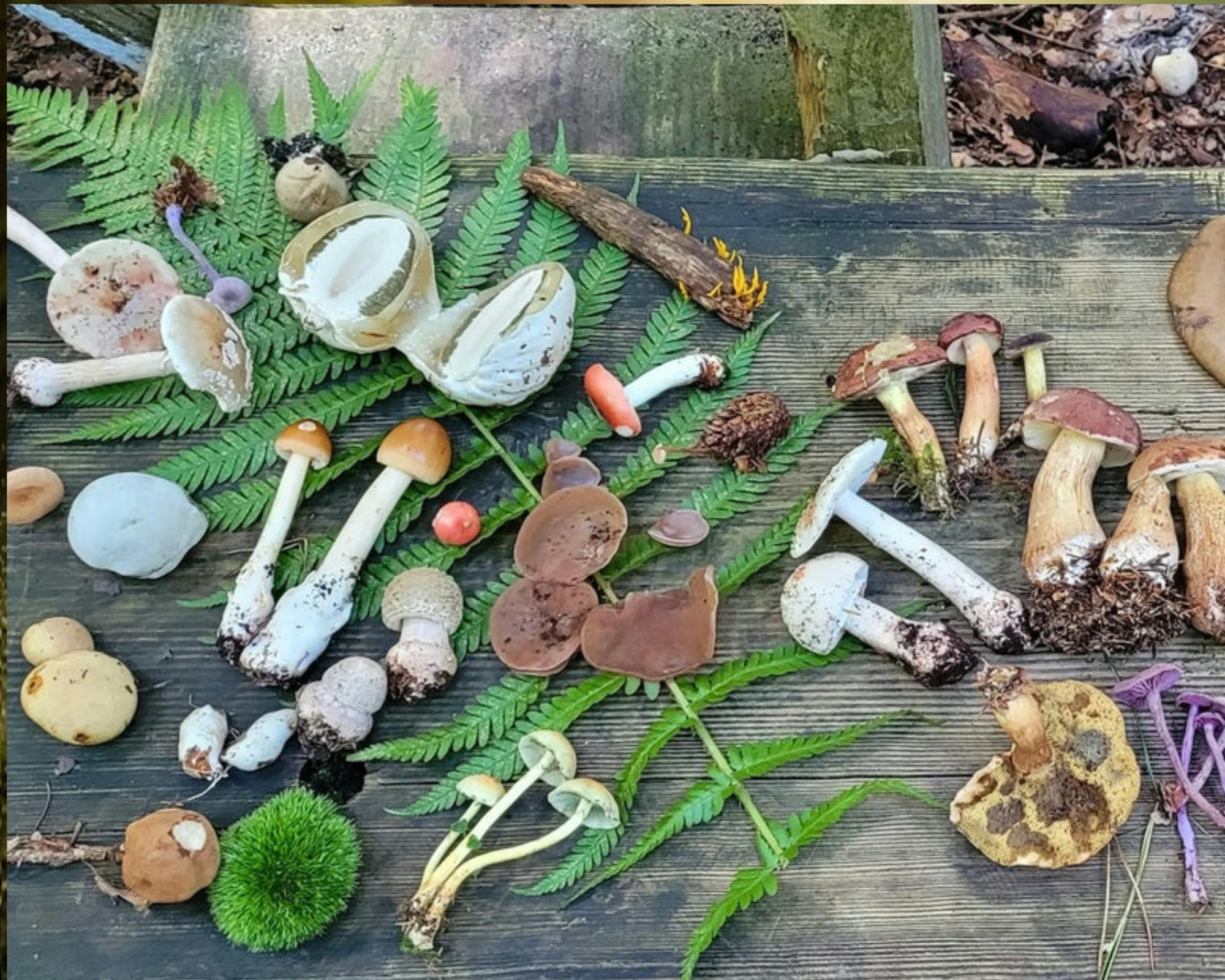
Mushroom Foraging Guided Hike in Bonn Süd – Outdoor Adventure Mushroom Foraging Guided Hike in Bonn Süd USD 71 adds structure, local context and purposeful sightseeing to the itinerary. Mushroom Foraging Guided Hike in Bonn Süd USD 71: experience overview Book a 3-hour mushroom foraging guided hike in Bonn Süd. Discover seasonal fungi, learn from expert guides, and enjoy a relaxing forest nature experience. This makes the experience a useful option when planning time in Bonn. The listing describes this as a 3-hour experience. Routes, start times, inclusions and meeting arrangements may vary, so the current booking page should be treated as the final source of operational information. At a…
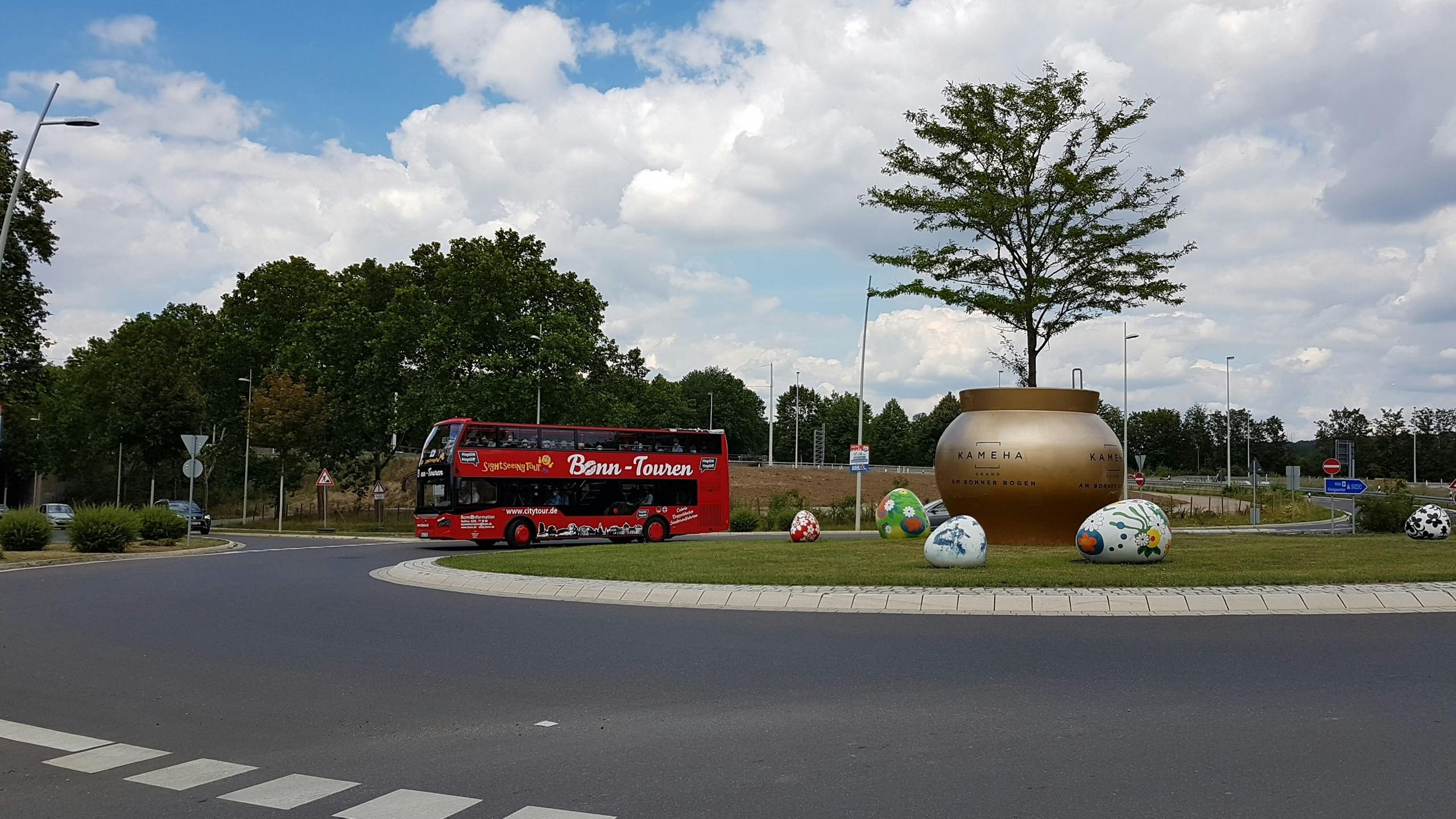
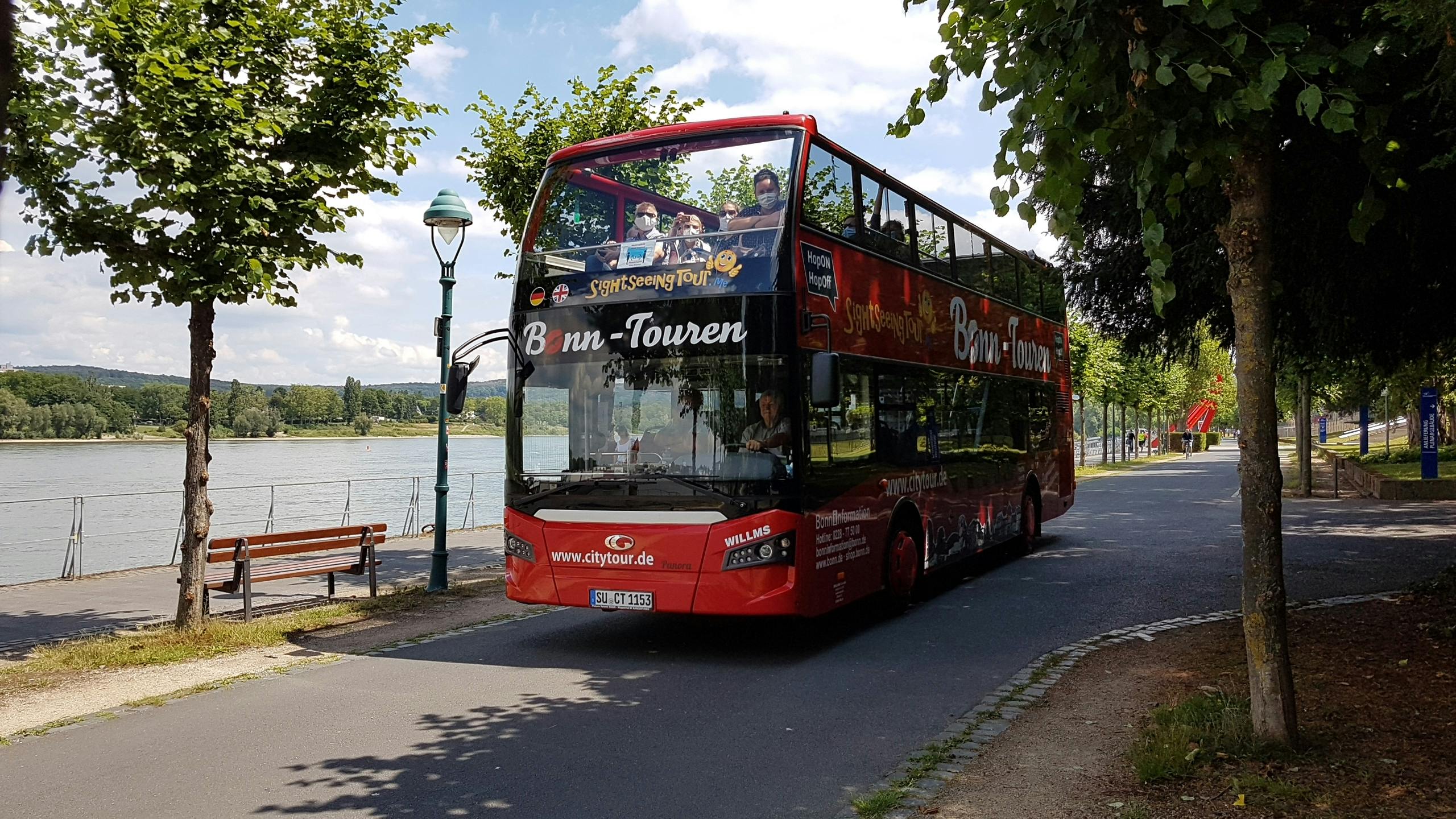
24-Hour Bonn Hop-on Hop-Off Bus Tour - Sightseeing Pass - Booking Option 2 24-hour Bonn hop-on hop-off bus tour gives independent travellers a flexible framework for organising several sightseeing stops. 24-hour Bonn hop-on hop-off bus tour: experience overview Admire Bonn from a red double-decker bus and hop on and off where you want to explore the city's rich cultural life. This makes the experience a useful option when planning time in Bonn. The listing describes this as a 24-hour experience. Routes, start times, inclusions and meeting arrangements may vary, so the current booking page should be treated as the final source of operational information. At a glance Experience type: Flexible sightseeing pass Destination:…
24-Hour Bonn Hop-on Hop-Off Bus Tour - Sightseeing Pass - Booking Option 1 24-hour Bonn hop-on hop-off bus tour gives independent travellers a flexible framework for organising several sightseeing stops. 24-hour Bonn hop-on hop-off bus tour: experience overview Visit the most important sights of Bonn with the hop-on-hop-off bus and stop along the way as many times as you like. This makes the experience a useful option when planning time in Bonn. The listing describes this as a 24-hour experience. Routes, start times, inclusions and meeting arrangements may vary, so the current booking page should be treated as the final source of operational information. At a glance Experience type: Flexible sightseeing pass Destination:…
Escape Tour Self-Guided, Interactive City Challenge in Bonn - Self-Guided Experience Escape Tour self-guided, interactive city challenge in Bonn supports independent exploration while still providing structured digital guidance. Escape Tour self-guided, interactive city challenge in Bonn: experience overview Discover Bonn in a unique way: find clues and complete the puzzle in an escape app-guided tour! This makes the experience a useful option when planning time in Bonn. The exact duration can depend on the selected date, option or operating schedule. Routes, start times, inclusions and meeting arrangements may vary, so the current booking page should be treated as the final source of operational information. At a glance Experience type: Self-guided or…
Bonn City Walking Tour in 2 Hours with a Local Guide – Guided Local Tour Bonn City Walking Tour in 2 Hours with a Local Guide: Practical Visitor Guide Quick overview: This experience is presented as streets, architecture, local history and urban character in Bonn. The listing may offer admission, a guide, transport, a package or premium access. Read the complete live description because similarly named products can have different meeting points, durations and inclusions. Table of Contents About the experience What you may experience Planning the visit Booking checklist Frequently asked questions About This Experience A booking is most useful when it solves a practical problem: securing limited admission, providing reliable interpretation, arranging transport…
Bonn Monument Visits & Heritage Tours Best deals for Monument visits in Bonn. Get tickets for Monument visits in Bonn with secure booking, price match guarantee and 24/7 customer support. Available from .
Bonn Hop-On Hop-Off Bus Tours & Sightseeing Best deals for Hop-on hop-off in Bonn. Get tickets for Hop-on hop-off in Bonn with secure booking, price match guarantee and 24/7 customer support. Available from .
Bonn Folklore, Legends & Cultural Tours Best deals for Folklore in Bonn. Get tickets for Folklore in Bonn with secure booking, price match guarantee and 24/7 customer support. Available from .
Bonn City Tours & Sightseeing Experiences Best deals for City in Bonn. Get tickets for City in Bonn with secure booking, price match guarantee and 24/7 customer support. Available from .
Bonn Visitor Guide: Top Attractions, Tours & Activities Things to Do in Bonn: A Practical Travel Guide Quick overview: Bonn in North Rhine-Westphalia, Germany is best experienced by combining its headline attractions with neighbourhoods, landscapes and local culture. Most visitors should allow two or three days. The linked product page brings together currently available tours, tickets and activities, but dates, languages, prices and inclusions can change. Table of Contents Why visit Bonn Top things to see and do How to plan your visit Choosing tours and tickets Frequently asked questions Why Visit Bonn? Bonn offers more than a single postcard sight. Its history, architecture, food and surrounding scenery…