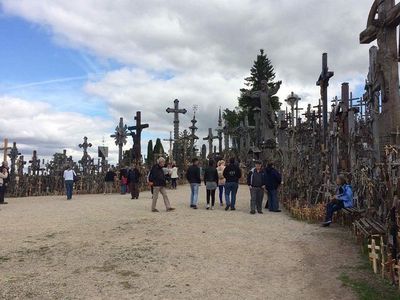
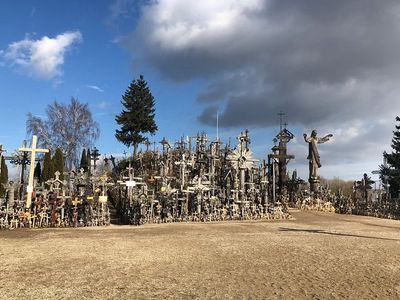
The Hill of Crosses, known in Lithuanian as Kryžių Kalnas, is one of the most moving and unusual places to visit in Lithuania. Set in the countryside near Šiauliai, this small hill is covered with crosses of every size and style: tall carved wooden crosses, metal crosses, tiny handmade crosses, rosaries, religious statues, memorial plaques and personal tokens left by pilgrims from around the world.
At first glance, the sight is almost overwhelming. Thousands upon thousands of crosses rise from the ground, lean into one another, hang from larger crosses and line the narrow paths. But this is not simply a visual spectacle. The Hill of Crosses is a place of faith, memory, resistance and national identity. For many visitors, it becomes one of the most unforgettable stops in the Baltic region.
The Hill of Crosses can be visited as a day trip from Šiauliai, Vilnius or Riga. It is especially useful for travellers moving between Lithuania and Latvia, as it can be combined with other Baltic highlights such as Rundāle Palace, Bauska Castle, Jelgava or northern Lithuanian towns.
Quick take: Musement.com offers a worldwide selection of tours and attractions
The Hill of Crosses is one of Lithuania’s most meaningful cultural and spiritual landmarks. It is not a polished monument built by a single architect. It has grown over generations through the actions of ordinary people who came to leave a cross, say a prayer, remember someone, ask for protection, give thanks or express hope.
For religious visitors, it is a Catholic pilgrimage site. For history lovers, it is a symbol of Lithuanian resilience through periods of foreign rule and Soviet suppression. For photographers and cultural travellers, it is an extraordinary landscape of handmade objects, weathered timber, ironwork, rosaries and inscriptions.
The Hill of Crosses is best for:
Travellers interested in sacred sites and pilgrimage traditions
Visitors exploring Lithuania beyond Vilnius and Kaunas
People travelling between Vilnius and Riga
History lovers interested in Baltic identity and resistance
Photographers looking for a dramatic and deeply symbolic location
Culture-focused travellers who want to understand Lithuanian cross-crafting
Visitors who prefer meaningful places over ordinary tourist attractions
Where Is the Hill of Crosses?
The Hill of Crosses is located near Šiauliai in northern Lithuania, in a rural area close to the village of Domantai. Šiauliai is the nearest major city and the most practical base if you want a shorter independent visit.
Starting Point
Best Travel Style
Notes
Šiauliai
Taxi, local bus, bike, car or short tour
The easiest nearby base for visiting the Hill of Crosses.
Vilnius
Full-day tour, car hire or train/bus plus local transfer
Best for travellers based in Lithuania’s capital.
Riga
Day tour or private transfer
A popular cross-border day trip from Latvia.
Vilnius to Riga route
One-way sightseeing transfer
Useful if you want to turn a travel day into a sightseeing day.
Kaunas
Car hire or private transfer
Possible as part of a broader Lithuania road trip.
If you are travelling without a car, a guided tour or private transfer is often the easiest option. Independent public transport is possible, but it usually requires more planning and a final local transfer or walk.
A Short History of the Hill of Crosses
The exact origins of the Hill of Crosses are uncertain, which adds to its mystery. Many accounts link the tradition of leaving crosses to the 19th century, when families and pilgrims placed crosses as memorials, prayers and symbols of faith. Over time, the hill became a powerful place of devotion.
The site gained deeper national meaning during periods when public expressions of Lithuanian identity and religion were restricted. Crosses were removed or destroyed more than once, especially under Soviet rule, but people kept returning and placing new ones. This repeated act of rebuilding turned the hill into a symbol of peaceful resistance.
After Lithuania regained independence, the Hill of Crosses became even more widely known. Pope John Paul II visited in 1993, helping bring international attention to the site. Today, visitors continue to leave crosses, rosaries and small devotional items, making the hill a living and changing place rather than a static monument.
Important note about UNESCO
The Hill of Crosses itself should not be described as a UNESCO World Heritage site. However, Lithuanian cross-crafting and its symbolism are recognised by UNESCO as intangible cultural heritage. The Hill of Crosses is one of the most striking places to see this tradition expressed in physical form.
What to Expect When You Visit
The Hill of Crosses is not a large attraction in the usual sense. It is a compact sacred site in an open rural setting. The emotional impact comes from the density of the crosses and the personal stories they suggest.
You can walk along paths through and around the hill, climb small steps, look closely at the crosses, read inscriptions, listen to rosaries moving in the wind and take time for quiet reflection. Some crosses are simple and handmade; others are tall, carved, decorative or metalworked. Many have rosaries, flowers, ribbons, photographs or small religious figures attached.
Typical visit experience
Arrival at the car park or visitor area
Short walk toward the hill
Time to walk around the paths and take photographs
Optional visit to souvenir stalls or nearby facilities
Chance to leave a small cross respectfully, if appropriate
Return to Šiauliai, Vilnius, Riga or your next Baltic stop
Most visitors spend around 45 minutes to 90 minutes at the site. Travellers with a deeper interest in photography, religion or Lithuanian history may want longer.
Best Things to Do at the Hill of Crosses
1. Walk slowly through the crosses
The Hill of Crosses rewards slow walking. Move carefully along the paths and take time to notice the detail: names, dates, carvings, rosaries, small crucifixes, personal messages and handmade crosses from different countries.
2. Look for Lithuanian cross-crafting details
Lithuanian crosses often blend Christian symbolism with local artistic traditions. Look for carved wooden forms, sunburst shapes, decorative ironwork and folk-style ornamentation. These details help explain why cross-crafting is such an important cultural tradition in Lithuania.
3. Take respectful photographs
The site is visually powerful, but it is also sacred to many visitors. Photographs are generally part of the travel experience, but avoid treating the hill like a novelty backdrop. Be especially respectful if pilgrims are praying.
4. Leave a small cross
Many visitors leave a small cross as a personal prayer, memorial or sign of thanks. If you do this, keep it modest and respectful. Avoid damaging existing crosses or blocking paths.
5. Visit the nearby monastery or chapel area
Depending on your time and route, you may also see nearby religious buildings associated with the pilgrimage landscape. These can add useful context to the visit.
6. Combine the visit with Šiauliai
Šiauliai is often overlooked, but it can be a practical stop for lunch, museums or transport connections. If you have time, explore the city before or after the Hill of Crosses.
Suggested Hill of Crosses Itinerary Ideas
Option 1: Easy Visit from Šiauliai
Morning: Travel from Šiauliai to the Hill of Crosses by taxi, bus, bike or car.
Midday: Spend around one hour walking through the site.
Afternoon: Return to Šiauliai for lunch, a museum visit or onward transport.
Option 2: Day Trip from Vilnius
Morning: Depart Vilnius early by tour, private transfer or rental car.
Midday: Visit the Hill of Crosses and take time for photographs and reflection.
Afternoon: Add a stop in Šiauliai or another northern Lithuania location.
Evening: Return to Vilnius.
Option 3: Day Trip from Riga
Morning: Leave Riga and cross into Lithuania.
Midday: Visit the Hill of Crosses.
Afternoon: Combine the trip with Jelgava, Rundāle Palace or Bauska Castle, depending on the tour route.
Evening: Return to Riga.
Option 4: Vilnius to Riga Sightseeing Transfer
Morning: Depart Vilnius with luggage.
En route: Visit the Hill of Crosses and other Baltic stops.
Afternoon: Continue into Latvia.
Evening: Arrive in Riga without wasting the travel day.
Useful Booking Resources for the Hill of Crosses and Baltic Tours
The Hill of Crosses is free to visit independently, but tours can make transport much easier, especially from Vilnius or Riga. A guide can also help explain the site’s religious, historical and cultural meaning. The suppliers below are useful places to compare travel products. Skimlinks may automatically convert these merchant links into affiliate links if the merchant is active in your Skimlinks account.
GetYourGuide – offers Hill of Crosses day trips, Lithuania tours, Riga-to-Lithuania excursions, Vilnius sightseeing, Baltic transfers and guided experiences that may include Rundāle Palace, Bauska Castle or Šiauliai.
Viator – offers Hill of Crosses tours from Vilnius and Riga, small-group cross-border day trips, private Baltic transfers, pilgrimage-style tours and combined routes including Rundāle Palace, Bauska Castle or Jelgava.
Klook – offers city activities, attraction tickets, transport products and local experiences in selected destinations. It is worth checking for Lithuania, Latvia and wider Baltic travel add-ons where available.
KKday – offers local tours, attraction tickets, transport services and cultural activities. It may be useful for comparing Baltic, European and cross-border travel experiences depending on current availability.
Tiqets – offers mobile-friendly tickets for museums, attractions, landmarks and cultural sites. It is useful for ticket-led sightseeing in Vilnius, Riga or other European cities before or after the Hill of Crosses.
Musement – offers city tours, museum tickets, cultural activities and local experiences. It can help travellers compare Baltic sightseeing, Lithuania tours and wider European travel options.
G Adventures – offers small-group and multi-day adventure tours. It is best suited to travellers planning a broader Baltic or Eastern Europe itinerary rather than a standalone Hill of Crosses visit.
Go City – offers bundled city attraction passes in selected destinations. It is not a main Hill of Crosses booking option, but it can help readers planning multi-city stopovers before or after the Baltics.
CityPASS – offers bundled attraction passes mainly for selected North American cities. It is not designed for Lithuania, but may suit readers planning a wider international trip.
Booking tip: Before booking a Hill of Crosses tour, check whether the price includes hotel pickup, guide service, border-crossing time if travelling from Riga, stops at Rundāle Palace or Bauska Castle, free time at the hill, lunch, and drop-off at your hotel or onward city.
Travel Tips for Visiting the Hill of Crosses
Go with the right expectations
The Hill of Crosses is not a theme-park attraction or a grand cathedral. It is a sacred outdoor site in a rural setting. Its power comes from symbolism, repetition and personal devotion.
Wear practical shoes
Paths around the hill can be uneven, muddy, icy or dusty depending on the season. Comfortable shoes are recommended.
Dress for open weather
The site is exposed to wind, rain, sun and snow. Bring a warm layer in cooler months, and carry a rain jacket if the forecast is uncertain.
Be respectful if leaving a cross
Leaving a cross is part of the tradition, but it should be done thoughtfully. Keep the cross small, avoid damaging existing items and do not block walking paths.
Allow time for quiet reflection
Even if you are not religious, this is a place of memory and emotion. Give yourself time to slow down rather than rushing through for photographs only.
Visit early or late for quieter photos
The site can be more atmospheric in soft light. Early morning, late afternoon or misty weather can make the hill feel especially powerful.
Consider a guide for history
A guide can explain the site’s link with Lithuanian identity, religious resilience, Soviet-era suppression and cross-crafting traditions.
Check accessibility before travelling
The main approach is relatively straightforward, but paths around the hill are not fully smooth. Visitors with mobility needs may need assistance, especially in wet or icy conditions.
Is the Hill of Crosses Worth Visiting?
Yes, the Hill of Crosses is worth visiting if you are interested in Lithuania, Baltic history, sacred places or unusual cultural landscapes. It is one of those places that is difficult to fully understand from photographs alone. Standing among the crosses, you feel the accumulation of personal stories, prayers and national memory.
If you are based in Šiauliai, the visit is easy. If you are travelling between Vilnius and Riga, it can be an excellent stop that turns a transfer into a meaningful travel day. If you are in Riga, a guided cross-border day trip can make the logistics simple.
The Hill of Crosses is not about luxury, entertainment or polished sightseeing. It is about faith, endurance and remembrance. That is exactly why it stays with many travellers long after they leave.
FAQs About the Hill of Crosses
Where is the Hill of Crosses?
The Hill of Crosses is near Šiauliai in northern Lithuania, close to the village of Domantai.
Is the Hill of Crosses free to visit?
Yes, the Hill of Crosses is generally free to visit. There may be costs for parking, transport, guided tours or souvenirs depending on how you visit.
How many crosses are at the Hill of Crosses?
Estimates vary because new crosses are continually added, but Lithuania’s official tourism information describes the hill as being covered with around 200,000 crosses.
Is the Hill of Crosses a UNESCO World Heritage site?
No. The Hill of Crosses itself is not a UNESCO World Heritage site. However, Lithuanian cross-crafting and its symbolism are recognised by UNESCO as intangible cultural heritage.
Can you visit the Hill of Crosses from Riga?
Yes. The Hill of Crosses is a popular day trip from Riga in Latvia, often combined with stops such as Rundāle Palace, Bauska Castle or Jelgava.
Can you visit the Hill of Crosses from Vilnius?
Yes. It can be visited from Vilnius as a long day trip, by tour, private transfer or rental car. Independent public transport is possible but usually requires extra planning.
Can visitors leave a cross?
Yes, many visitors leave a small cross as a prayer, memorial or symbol of hope. It should be done respectfully and without damaging existing crosses or blocking paths.
How long do you need at the Hill of Crosses?
Most visitors spend around 45 minutes to 90 minutes at the site. Allow longer if you want to take photographs, reflect quietly or visit nearby facilities.
Is the Hill of Crosses suitable for older travellers?
Yes, but the ground can be uneven, muddy or slippery depending on the season. Older travellers may prefer a guided tour or private transfer and should wear supportive shoes.
What is the best time to visit the Hill of Crosses?
The Hill of Crosses can be visited year-round. Summer is easier for weather, while autumn, winter and misty days can create a more solemn and atmospheric experience.
Sponsored Popular Items
Quick take: Musement.com offers a worldwide selection of tours and attractions
Uluru Guide: Cultural Tours, Desert Walks & Sacred Landscape Experiences Australia The best things to do at Ayers Rock Uluru Australia The best things to do at Ayers Rock Uluru Australia Uluru, also known as Ayers Rock, is Australia’s most iconic natural landmark — a sacred sandstone…. Check current availability, inclusions and booking details before you go.
My Son Sacred Symbols Half-Day Tour & Coffee Experience Vietnam Explore My Son Sanctuary through Champa beliefs, sacred symbols, and ancient brickwork. Choose a group or private guided tour, with a Vietnamese coffee stop in the countryside
Hoi An Old Town Walking: Trader's Old House & Sacred Temple Vietnam Where the river meets the sea, traders once found shelter from storms. Hoi An grew into a busy port filled with languages, goods, and spices. Join us and bring its story to life
Sacred Hanoi: Temples, Rituals & Spiritual Traditions Vietnam Explore the spiritual side of Hanoi on a guided walking tour. Visit the Temple of Literature, Ngoc Son Temple, and Tran Quoc Pagoda, and learn about Vietnamese divination and spiritual traditions
Koh Samui: Around Island Tour Highlights with Sacred Temples Thailand Explore Koh Samui's spiritual and natural wonders on a guided tour. Visit Wat Plai Laem, Wat Phra Yai, and Wat Khunaram, see the Big Buddha, and relax at Na Muang Waterfall