Best for: Art lovers, history enthusiasts, first-time visitors to Ghent
How long to spend: 60–90 minutes
Tickets: Available on-site or online; multimedia guides recommended.
Why the Ghent Altarpiece Is So Important
Widely regarded as one of the most influential artworks in Western history, the Ghent Altarpiece is a monumental polyptych that changed the direction of European art. Its incredible detail, use of oil paint, and lifelike realism were centuries ahead of their time.
The work is packed with complex religious symbolism, masterful craftsmanship, and humanised figures that almost feel alive. For many visitors, seeing it in person is a “bucket-list” cultural experience—comparable to the Mona Lisa or Michelangelo’s David.
Where to See the Ghent Altarpiece
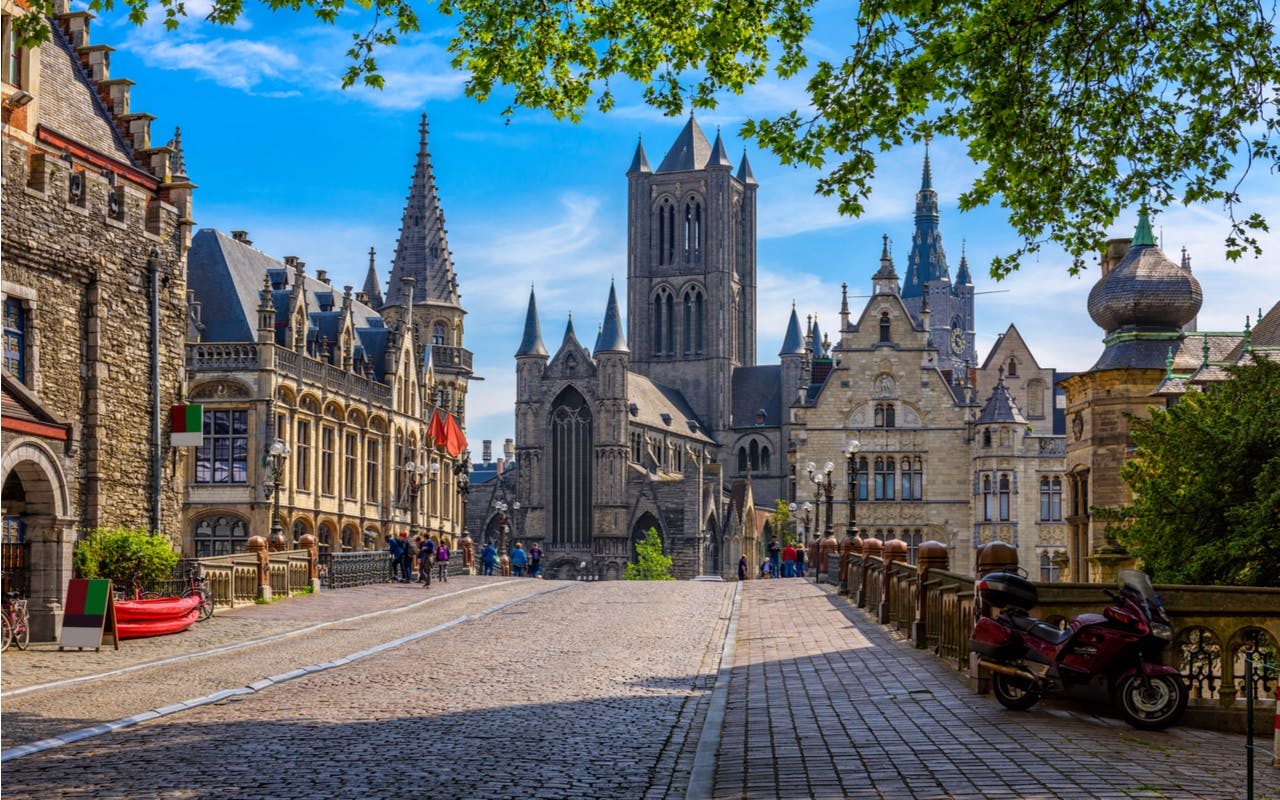
The masterpiece is housed inside St Bavo’s Cathedral in Ghent’s historic centre. Recently restored and presented with modern lighting and multimedia support, it’s now easier than ever to appreciate the artwork’s brilliant colours and meticulous details.
Location
St Bavo’s Cathedral (Sint-Baafskathedraal) Sint-Baafsplein, Ghent
Opening Hours
Usually daily, with slight variations by season. Morning visits are quieter.
What Makes the Ghent Altarpiece a Masterpiece?
Revolutionary Use of Oil Paint
Jan van Eyck perfected oil painting, allowing for unprecedented precision and luminosity. The jewel-like colours and ultra-fine textures are unlike anything else from the 15th century.
Hyperrealistic Detail
From reflections in armour to individual strands of hair, the realism is astonishing. Many visitors bring binoculars just to appreciate the tiny details.
Deep Symbolism
The panels depict scenes rich with meaning:
The Mystic Lamb symbolising Christ
Prophets and sibyls foretelling salvation
Adam and Eve portrayed with startling honesty
Heavenly musicians played with exquisite expression
A Complex Multi-Panel Structure
The altarpiece has 12 hinged panels that open and close, revealing different scenes depending on whether it’s displayed open or closed. When fully opened, it feels like a theatre of religious narrative.
Restoration Brilliance
A major restoration project (2012–2020) removed centuries of overpainting, revealing colours and details not seen since the 1400s. The transformation stunned art historians worldwide.
Highlights of the Panels
The Adoration of the Mystic Lamb (Central Panel)
The most famous section. Angels, saints, and prophets gather around a lamb standing on an altar, blood flowing into a chalice—a vivid symbol of sacrifice and redemption.
Adam and Eve
Honest, human, and anatomically realistic, these figures were groundbreaking for their time.
The Singing Angels
Renowned for their expressive faces and intricate fabrics. Some art lovers visit just to see this panel.
God the Father / Christ the King
A majestic figure in radiant red robes, surrounded by heavenly symbols.
How Long Do You Need?
Plan for 60–90 minutes, including:
15–20 minutes with the closed panels
20–30 minutes with the open panels
20 minutes for the multimedia guide
Additional time exploring St Bavo’s Cathedral
Tickets, Tours & Visitor Tips
Tickets
Available at the cathedral entrance or online
Multimedia audio guide strongly recommended
Combo tickets may include the cathedral crypt
Best Time to Visit
Early morning or late afternoon for fewer crowds
Weekdays are quieter than weekends
Photography
Allowed in some areas—check signage.
Accessibility
The cathedral has accessible entrances and staff assistance.
Fun Facts About the Ghent Altarpiece
It is one of the most stolen artworks in history, targeted by Napoleon, Calvinists, and even the Nazis.
The famous panel “The Just Judges” was stolen in 1934 and never recovered—a replica is used today.
Jan van Eyck’s signature line, “Als ich can” (“As best I can”), appears hidden in the artwork.
Why You Shouldn’t Miss It
The Ghent Altarpiece isn’t just a painting—it’s a turning point in the history of art. Seeing it up close reveals layers of colour, symbolism, and craftsmanship you simply can’t appreciate in photographs. Whether you’re an art lover or a casual traveller, this masterpiece is a life-enhancing experience and the cultural heart of Ghent.
Sponsored Popular Items
Quick take: Musement.com offers a worldwide selection of tours and attractions
The Lottery Hunt in Historic Ghent Belgium Plan The Lottery Hunt in Historic Ghent, a cultural or heritage experience, with practical tips on timing, inclusions and what to check before booking. Compare current availability, prices and booking conditions before you go.
Ghent Tour from Brussels – Guided Sightseeing Experience Belgium Ghent tour from Brussels adds structure, local context and purposeful sightseeing to the itinerary. Check current availability, inclusions and booking details before you go.
Ghent and Bruges Tour from Brussels - Guided Sightseeing Tour Belgium Ghent and Bruges Tour from Brussels is a convenient way to add structure, local context and purposeful sightseeing to the itinerary. Check current availability, inclusions and booking details before you go.
Historic Ghent City Exploration Game Historic Ghent city exploration game is a convenient way to add structure, local context and purposeful sightseeing to the itinerary. Check current availability, inclusions and booking details before you go.