Saqqara Travel Guide: Egypt’s Ancient Necropolis and the Step Pyramid of Djoser
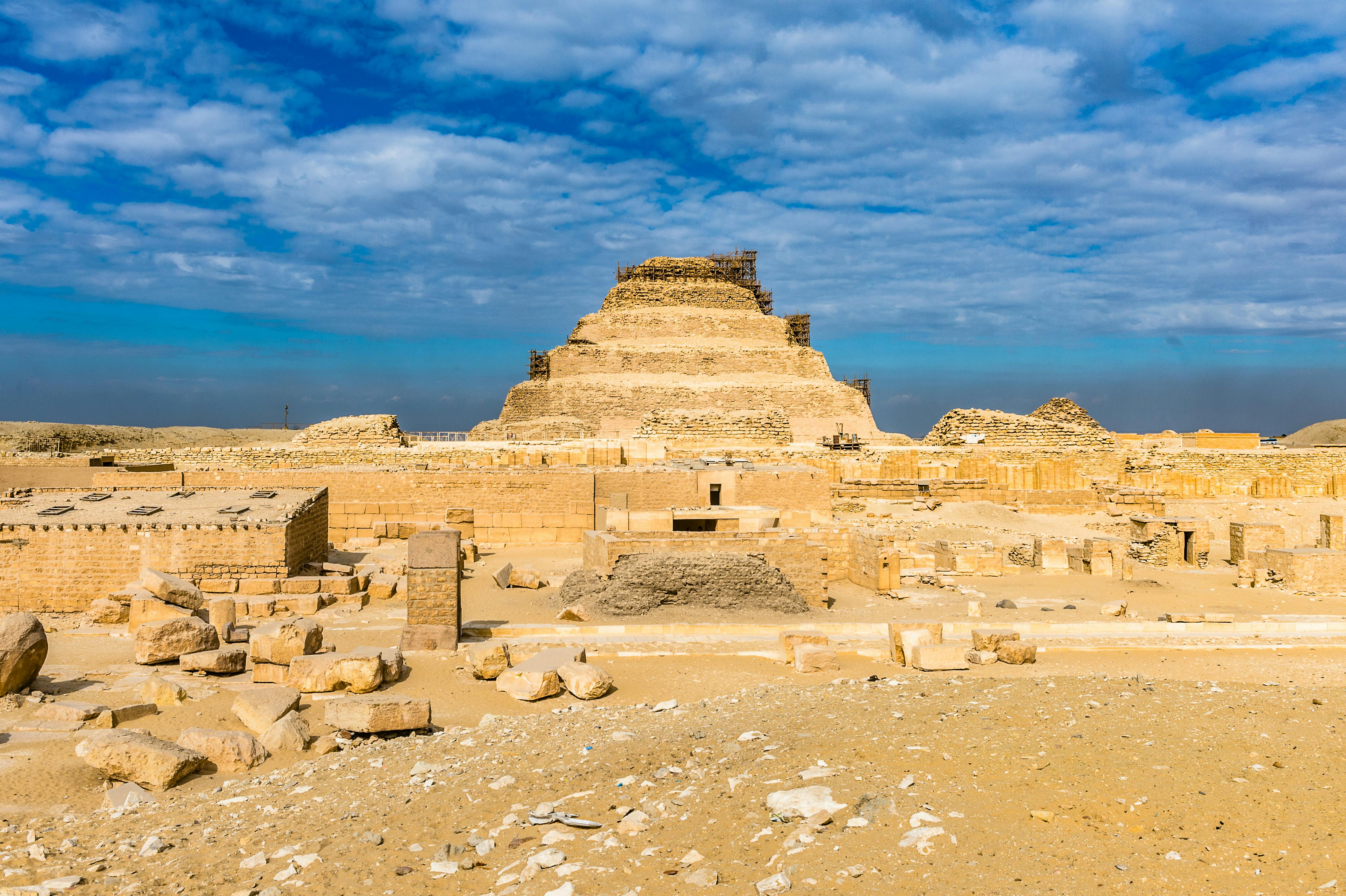
Saqqara is one of the most important archaeological sites in Egypt and one of the best day trips from Cairo. Located south of Giza on the edge of the Western Desert, Saqqara was the vast burial ground of ancient Memphis, Egypt’s early capital. It is best known for the Step Pyramid of Djoser, the world-famous terraced pyramid designed during the Third Dynasty and often described as one of the earliest monumental stone structures in ancient Egypt.
While many visitors rush straight to the Pyramids of Giza, Saqqara gives you a deeper understanding of how Egyptian pyramid building began. Here you can see the transition from flat-roofed mastaba tombs to the pyramid form that later reached its most famous expression at Giza and Dahshur.
Saqqara is not just one monument. It is a huge ancient necropolis filled with pyramids, tombs, courtyards, causeways, relief carvings, underground galleries and desert views. It is one of the most rewarding places near Cairo for travellers who love history, architecture, archaeology and ancient Egyptian art.
Quick take: Musement.com offers a worldwide selection of tours and attractions
Full-Day Discover Saqqara Step Pyramid, Serapium and Tomb of Mereruka -… Egypt Full-day discover Saqqara Step Pyramid, Serapium and tomb of Mereruka is a convenient way to add structure, local context and purposeful sightseeing to the itinerary. Check current availability, inclusions and booking details before you go.
Why Visit Saqqara?
Saqqara is where the story of Egypt’s great pyramids becomes clearer. At Giza, you see the finished masterpiece. At Saqqara, you see the beginning of the idea: the move from mastaba tombs to monumental stone architecture and pyramid construction.
The site also feels more varied than many first-time visitors expect. You can stand in the Step Pyramid complex, enter beautifully decorated tombs, walk through desert paths, see ancient carved scenes of daily life and explore underground burial chambers if access is open. Saqqara is a place where the grandeur of royal monuments meets the intimate detail of tomb art.
Saqqara is best for:
Travellers who want to understand how pyramid building began
Visitors staying in Cairo or Giza
History lovers interested in Old Kingdom Egypt
People combining Saqqara, Memphis and Dahshur in one day
Photographers looking for desert pyramid views
Travellers who prefer archaeology with fewer crowds than Giza
Families with older children or teenagers interested in ancient Egypt
Where Is Saqqara?
Saqqara is south of Cairo and Giza, near the site of ancient Memphis. It sits on the desert plateau west of the Nile Valley and forms part of the wider Memphis necropolis, which stretches through some of Egypt’s most famous pyramid fields.
Starting Point
Best Travel Style
Notes
Cairo
Private driver, guided tour or organised day trip
The easiest option for most visitors.
Giza
Private car or pyramid-field tour
Works well if combining Giza, Saqqara and Dahshur.
Memphis
Short transfer as part of a wider route
Often paired with Saqqara for ancient capital context.
Dahshur
Private tour or driver
Perfect for a full pyramid-development itinerary.
Saqqara is not as simple to visit by public transport as central Cairo attractions. A private driver or guided tour is usually the most practical choice, especially if you want to combine several sites in one day.
Top Sights at Saqqara
Sight
Why It Matters
Best For
Step Pyramid of Djoser
One of Egypt’s earliest monumental stone structures and the centrepiece of Saqqara.
First-time visitors, pyramid history, photography
Step Pyramid Complex
Includes courtyards, walls, ceremonial spaces and reconstructed architectural features.
Architecture and ancient royal ritual
Pyramid of Unas
Known for early Pyramid Texts inside the burial chamber.
Ancient writing and religious history
Tomb of Mereruka
One of Saqqara’s impressive mastaba tombs, known for relief scenes.
Old Kingdom daily-life carvings
Tomb of Kagemni
Fine relief decoration and elite tomb architecture.
Art, history and detail
Tomb of Ti
Famous for beautiful carved scenes of everyday life and agriculture.
Relief art and photography
Serapeum of Saqqara
Underground galleries associated with the sacred Apis bulls.
Atmosphere, mystery and underground archaeology
Not every tomb or monument is always open, so your exact visit may depend on current access rules, restoration work and ticket arrangements.
The Step Pyramid of Djoser: Saqqara’s Great Landmark
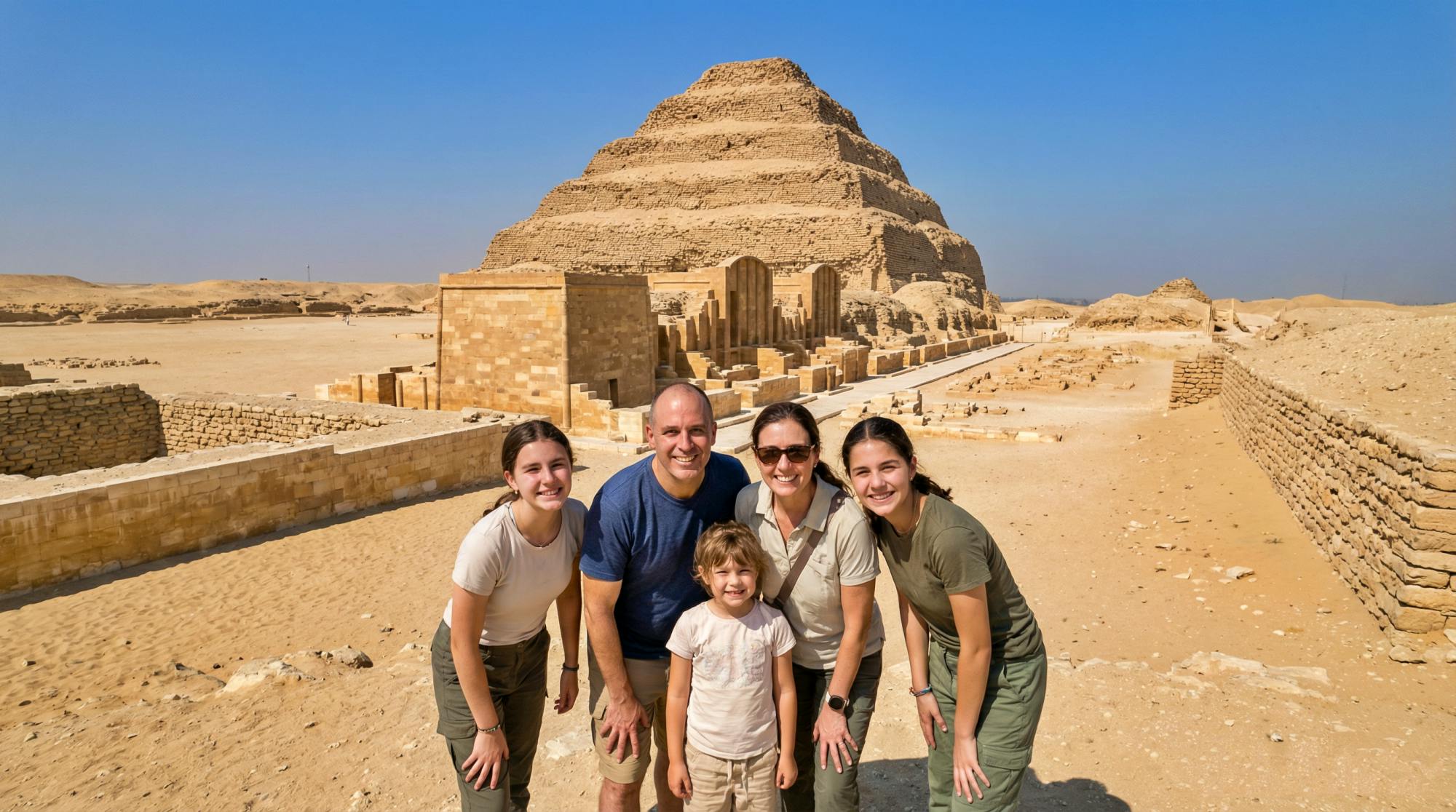
The Step Pyramid of Djoser is the main reason many travellers visit Saqqara. Built for Pharaoh Djoser, it rises in six stepped layers, creating a form that looks very different from the smooth-sided pyramids at Giza and Dahshur. Its design represents a major turning point in ancient Egyptian architecture.
Before pyramids, royal and elite burials commonly used mastabas: flat-roofed rectangular tomb structures built above underground burial chambers. The Step Pyramid can be understood as a bold architectural leap, stacking mastaba-like forms into a monumental royal pyramid.
The architect most closely associated with the Step Pyramid complex is Imhotep, one of the most famous figures in ancient Egyptian history. His name is often linked with innovation in stone building, planning and royal funerary architecture.
Why the Step Pyramid matters
It marks a major development in Egyptian pyramid architecture.
It is the centrepiece of a larger funerary complex, not a standalone monument.
It shows how royal tomb design evolved from mastabas toward pyramids.
It helps explain the later achievements at Dahshur and Giza.
Its setting on the Saqqara plateau gives excellent desert views.
Even if you have already visited the Great Pyramid of Giza, the Step Pyramid is worth seeing because it tells a different part of the story. It feels older, more experimental and more connected to the origins of pyramid building.
Tombs and Mastabas at Saqqara
Saqqara is not only about pyramids. Some of its most memorable experiences are inside the decorated tombs and mastabas of high officials. These tombs often show scenes of daily life: farming, fishing, hunting, food preparation, animals, boats, servants, musicians and offerings.
For many visitors, these reliefs are easier to connect with than the giant pyramids. They show movement, personality and everyday detail, giving a glimpse of how elite Egyptians wanted life, status and abundance to continue into the afterlife.
Tombs to look for if open
Tomb of Mereruka – one of the most impressive Old Kingdom mastabas at Saqqara.
Tomb of Kagemni – known for detailed relief decoration.
Tomb of Ti – famous for beautifully carved scenes of agriculture and daily life.
Tomb of Mehu – another richly decorated tomb sometimes included in visits.
Tomb of Ptahhotep – associated with elite Old Kingdom burial culture.
Access to individual tombs can change, and some may require separate tickets. A knowledgeable guide can help you prioritise which tombs are open and most worthwhile on the day.
The Serapeum of Saqqara
The Serapeum of Saqqara is one of the most atmospheric parts of the necropolis. It is an underground burial complex associated with the sacred Apis bulls, which were linked to the god Ptah and later religious traditions.
Inside, visitors may see long underground corridors and massive stone sarcophagi. The scale of the stonework is striking, and the dim interior gives the Serapeum a very different mood from the bright open spaces around the Step Pyramid.
The Serapeum is especially appealing if you enjoy ancient religion, mystery, underground spaces and less obvious archaeological highlights. It can feel more intense than the open-air monuments, so travellers with claustrophobia should consider whether it suits them.
Good to know before visiting the Serapeum
It may require a separate ticket or special access depending on current rules.
The interior can feel enclosed and dim.
Photography rules may vary.
It is best appreciated with a guide who can explain the Apis bull tradition.
Comfortable shoes are recommended because the ground may be uneven.
Pyramid Texts and the Pyramid of Unas
The Pyramid of Unas may look less impressive from the outside than the Step Pyramid, but it is extremely important for ancient Egyptian religious history. It is closely associated with the Pyramid Texts, among the oldest known religious texts from ancient Egypt.
These inscriptions were designed to help the king in the afterlife, guiding and protecting him on the journey beyond death. Seeing written religious texts inside a pyramid adds another layer to Saqqara’s importance: it is not just an architectural site, but also a place where ancient Egyptian beliefs were carved into stone.
If the Pyramid of Unas is open during your visit, it is one of the most worthwhile stops at Saqqara. Even if the exterior appears ruined, the interior inscriptions can be a major highlight for travellers interested in ancient writing and religion.
Saqqara vs Giza and Dahshur: Which Should You Visit?
Site
Best For
How It Feels
Giza
The Great Pyramid, Sphinx and iconic Egypt experience
Famous, dramatic, busy and essential for first-time visitors
Saqqara
Step Pyramid, tombs, Pyramid Texts and early pyramid development
Archaeologically rich, varied and deeply historic
Dahshur
Bent Pyramid, Red Pyramid and quieter desert views
Spacious, atmospheric and excellent for pyramid evolution
Memphis
Ancient capital context and museum-style stop
Short, cultural and easy to combine with Saqqara
If you only have one day in Cairo, Giza is the classic first choice. If you have more time, Saqqara is the best place to understand how pyramid building began. If you want the full story, combine Saqqara, Memphis and Dahshur in one day, then visit Giza separately.
Suggested Saqqara Itinerary Ideas
Option 1: Saqqara Half-Day Visit
Morning: Depart Cairo or Giza with a private driver or guide.
Late morning: Visit the Step Pyramid complex of Djoser.
Midday: Explore one or two decorated mastaba tombs if open.
Early afternoon: Visit the Serapeum or Pyramid of Unas if included in your ticket and route.
Afternoon: Return to Cairo or continue to Memphis.
Option 2: Full-Day Saqqara, Memphis and Dahshur
Morning: Start at Saqqara with the Step Pyramid, tombs and Serapeum.
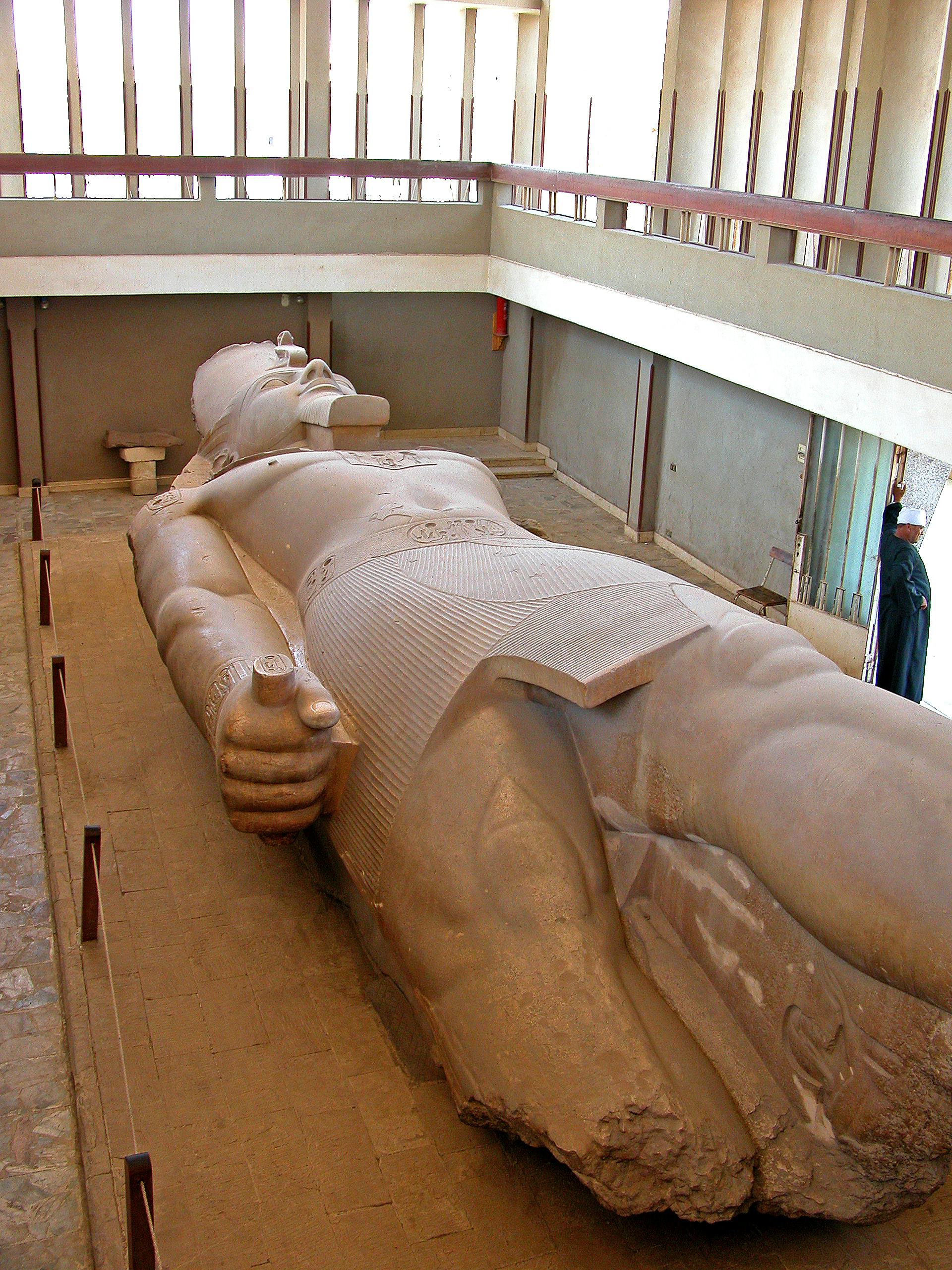
Midday: Visit Memphis for statues and ancient capital context.
Afternoon: Continue to Dahshur to see the Bent Pyramid and Red Pyramid.
Evening: Return to Cairo or Giza.
Option 3: Pyramid Evolution Day
Start: Saqqara for the Step Pyramid of Djoser.
Continue: Dahshur for the Bent Pyramid and Red Pyramid.
Finish: Giza for sunset views of the Great Pyramid and Sphinx.
This final route is ambitious and best done with a private driver or guide. It gives travellers a powerful visual timeline of pyramid development, from stepped forms to experimental smooth-sided pyramids and finally the iconic pyramids of Giza.
Useful Booking Resources for Saqqara and Cairo Pyramid Tours
Saqqara can be visited independently with a private driver, but most travellers benefit from a guide because the site is large and historically complex. A good guide can explain the Step Pyramid, tomb reliefs, Pyramid Texts, Serapeum and how Saqqara connects with Memphis, Dahshur and Giza. The suppliers below are useful places to compare travel products. Skimlinks may automatically convert these merchant links into affiliate links if the merchant is active in your Skimlinks account.
GetYourGuide – offers Cairo day tours, Saqqara and Dahshur combinations, private Egyptologist-guided trips, pyramid entry options and multi-site itineraries covering Giza, Memphis, Saqqara and Dahshur.
Viator – offers private Saqqara tours, full-day pyramid routes, Cairo hotel pickup, Egyptologist guides, Memphis and Dahshur excursions and customisable ancient Egypt sightseeing.
Klook – offers Egypt activities, attraction tickets, local tours, airport transfers and travel add-ons in selected destinations. It is worth checking for Cairo pyramid tours and private transport options.
KKday – offers local tours, attraction tickets, transport services and cultural activities. It may be useful for comparing Egypt sightseeing, Cairo day trips and regional travel experiences depending on availability.
Tiqets – offers mobile-friendly tickets for museums, attractions and landmarks. It is useful for ticket-led sightseeing in Cairo and other major cities, although Saqqara-specific availability may vary.
Musement – offers city tours, museum tickets, cultural activities and local experiences. It can help travellers compare Cairo sightseeing, pyramid tours and wider Egypt travel options.
G Adventures – offers small-group and multi-day adventure tours. It is best suited to travellers planning a broader Egypt itinerary rather than a standalone Saqqara visit.
Go City – offers bundled city attraction passes in selected destinations. It is not a main Saqqara booking option, but it can help readers planning multi-city stopovers before or after Egypt.
CityPASS – offers bundled attraction passes mainly for selected North American cities. It is not designed for Saqqara, but may suit readers planning a wider international trip.
Booking tip: Before booking a Saqqara tour, check whether the price includes hotel pickup, licensed Egyptologist guide, entrance fees, Serapeum ticket, tomb entries, Memphis stop, Dahshur extension, lunch, bottled water and return transport. Some listings include only driver service, while others include full guiding and entry support.
Saqqara Travel Tips
Start early
Saqqara is exposed and can become hot, especially from late morning onwards. Early visits are more comfortable and often better for photography.
Wear comfortable shoes
The site involves sand, stone, steps and uneven ground. Good walking shoes are much better than sandals.
Bring water and sun protection
Shade is limited. Bring water, sunscreen, sunglasses and a hat, especially in warmer months.
Use a guide if you love history
Saqqara is far more meaningful with interpretation. A guide can explain the Step Pyramid, Imhotep, mastabas, tomb reliefs, Pyramid Texts and the Serapeum.
Check which tombs are open
Individual tombs may open or close due to restoration, ticketing or site management. Ask your guide or ticket office what is available on the day.
Do not try to see everything too fast
Saqqara is a large and layered site. It is better to see fewer monuments properly than race between too many stops without understanding them.
Combine with Dahshur if you have time
Saqqara and Dahshur together make one of the best ancient Egypt day trips from Cairo. You can see the Step Pyramid, Bent Pyramid and Red Pyramid in one route.
Carry small cash
Small Egyptian pound notes can be useful for tips, toilets, snacks or small local expenses.
Is Saqqara Worth Visiting?
Yes, Saqqara is absolutely worth visiting, especially if you want to understand ancient Egypt beyond the famous Pyramids of Giza. It is one of the most important archaeological landscapes in the country and offers an extraordinary mix of pyramid architecture, decorated tombs, religious texts, underground galleries and desert atmosphere.
For first-time visitors, Saqqara is best paired with Giza or Dahshur. Giza gives you Egypt’s most iconic pyramid scene, while Saqqara explains how that story began. Dahshur then shows the next stage of pyramid experimentation and refinement.
If you have a full day available from Cairo, a Saqqara, Memphis and Dahshur itinerary is one of the strongest historical travel experiences in Egypt.
FAQs About Saqqara
Where is Saqqara?
Saqqara is south of Cairo and Giza, on the desert plateau near the ancient city of Memphis in Egypt.
What is Saqqara famous for?
Saqqara is famous for the Step Pyramid of Djoser, decorated mastaba tombs, the Serapeum, the Pyramid of Unas and its role as part of the ancient Memphis necropolis.
Is Saqqara part of a UNESCO World Heritage site?
Yes. Saqqara is included within the UNESCO-listed “Memphis and its Necropolis – the Pyramid Fields from Giza to Dahshur.”
Is the Step Pyramid at Saqqara older than the Great Pyramid?
Yes. The Step Pyramid of Djoser predates the Great Pyramid of Giza and represents an earlier stage in Egyptian pyramid architecture.
Can you visit Saqqara and Dahshur in one day?
Yes. Saqqara and Dahshur are commonly combined in one day, often with Memphis included as a short stop between them.
Do you need a guide for Saqqara?
You can visit without a guide, but a guide is highly recommended because Saqqara is large, complex and full of historical details that are easy to miss.
How long do you need at Saqqara?
Most visitors should allow at least two to three hours. Archaeology lovers may want half a day or more, especially if visiting tombs, the Serapeum and multiple pyramid areas.
Is Saqqara better than Giza?
Saqqara is not more iconic than Giza, but it is more varied and better for understanding the origins of pyramid building. Giza is best for first-time wow factor, while Saqqara is best for deeper history.
Is Saqqara suitable for older travellers?
Yes, but the ground can be uneven and exposed to sun. Older travellers should use a comfortable vehicle, wear supportive shoes, move slowly and avoid difficult interiors if they have mobility or breathing concerns.
What should I bring to Saqqara?
Bring water, sun protection, comfortable walking shoes, a hat, sunglasses, small cash, your camera or phone, and your passport or ID if required by your tour or ticketing process.
Sponsored Popular Items
Quick take: Musement.com offers a worldwide selection of tours and attractions
Hue Royal Tombs Tour Visit 3 Best Tombs & Pagoda Vietnam Enjoy a day tour of the Hue Royal Tombs and take a journey into the past, exploring 3 of the most well-preserved and beautiful royal tombs of the Nguyen Dynasty: Tu Duc, Minh Mang, and Khai Dinh
Memphis and Saqqara Private Tour with Home Cooked Lunch from Cairo - Food Experience Egypt Memphis and Saqqara private tour with home cooked lunch from Cairo explores the destination through flavour, regional customs and the stories connected with food or drink. Check current availability, inclusions and booking details before you go.
Ancient Egypt Night Tour with 2 Course Dinner in Cairns Australia Explore the Tomb of the Pharaohs on an after-hours tour. Discover eleven lavishly decorated burial chambers and enjoy a 2-course dinner. Check current availability, inclusions and booking conditions.
Ancient Egypt Night Tour in the heart of Cairns Australia Step into the world of ancient Egypt on an exclusive after-hours tour of the Tomb of the Pharaohs. Explore eleven lavishly decorated burial chambers with a guide. Check current availability, inclusions and booking conditions.
Full-Day Memphis, Saqqara and Dahshour - Guided Sightseeing Tour Egypt Full-day Memphis, Saqqara and Dahshour is a convenient way to add structure, local context and purposeful sightseeing to the itinerary. Check current availability, inclusions and booking details before you go.
Alexandria, Egypt Museums, Galleries & Art Tours Egypt Compare cultural experiences in Alexandria, Egypt, with practical tips on timing, inclusions and choosing the right option. Check current availability, prices and booking conditions before you go.