São Jorge Castle Guide: Lisbon Views, Alfama Walks, Castle Walls, Tickets and Travel Tips
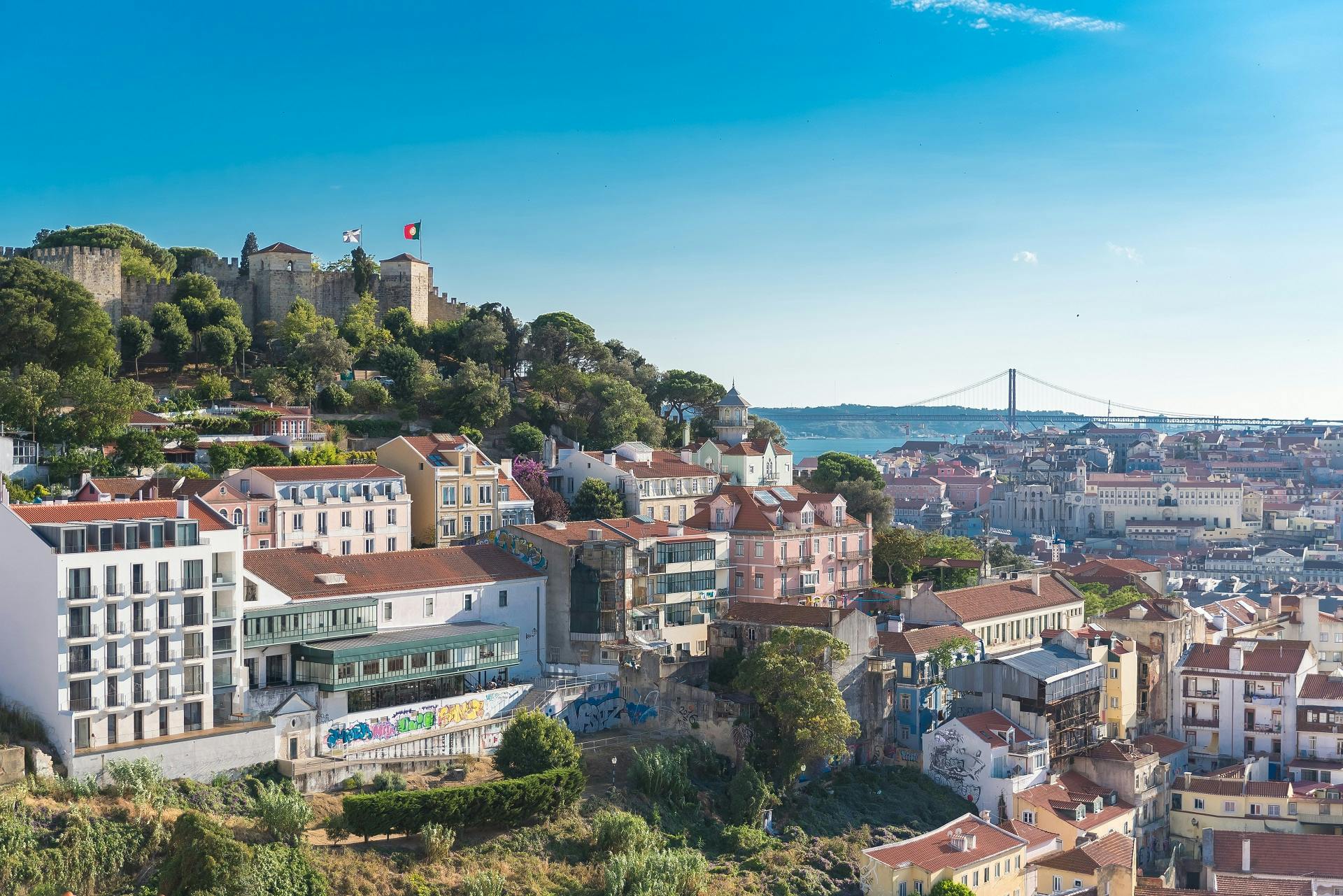
São Jorge Castle, or Castelo de São Jorge, is one of Lisbon’s most famous landmarks and one of the best places to understand the city’s hilltop history. Perched above Alfama, Mouraria and the Baixa district, the castle offers sweeping views over Lisbon’s tiled rooftops, the Tagus River, the 25 de Abril Bridge and the maze of old streets below.
This is not a palace filled with furnished royal rooms. The main experience is outdoors: walking the ramparts, climbing towers, exploring defensive walls, seeing archaeological remains, watching peacocks in the gardens, enjoying panoramic viewpoints and imagining Lisbon as a fortified city shaped by Romans, Islamic rule, medieval kings, earthquakes and urban rebuilding.
São Jorge Castle is especially good for first-time visitors because it combines history, photography, views and a beautiful walk through old Lisbon. It pairs perfectly with Alfama, Portas do Sol, Miradouro de Santa Luzia, Lisbon Cathedral and Tram 28.
Quick take: Trip.com offers a worldwide selection of tours and attractions and hotels
Old Lisbon Tour: Alfama & São Jorge Castle – Heritage & History Experience Old Lisbon tour: Alfama and São Jorge Castle adds structure, local context and purposeful sightseeing to the itinerary. Old Lisbon tour: Alfama and São Jorge Castle: experience overview Book this tour of Alfama and São Jorge Castle and discover the origins of the Portuguese capital in the historic Alfama area. This makes the experience a useful option when planning time in Lisbon. The exact duration can depend on the selected date, option or operating schedule. Routes, start times, inclusions and meeting arrangements may vary, so the current booking page should be treated as the final source of operational information. At…
Quick take: Trip.com helps you compare prices across accommodations. Use it to shortlist hotels, then click through to confirm the final price, room type, and inclusions on the booking site.
São Jorge Castle is worth visiting because it gives you one of the clearest views of Lisbon’s geography. From the ramparts, you can see how the city spreads across hills, down to the river and across neighbourhoods that developed over centuries.
The castle also helps explain Lisbon’s layered history. The hill was important long before modern Portugal existed. It was occupied and fortified through different periods, including Islamic Lisbon, medieval Christian rule, royal residence, military use and later restoration.
São Jorge Castle is best for:
First-time visitors to Lisbon
City viewpoints and photography
History lovers
Families with older children
Walking routes through Alfama and Mouraria
Travellers interested in Moorish and medieval Lisbon
Sunset and golden-hour city views
Combining with Lisbon Cathedral, Portas do Sol and Tram 28
Where Is São Jorge Castle?
São Jorge Castle sits on one of Lisbon’s highest central hills, above Alfama and close to the old Moorish quarter of Mouraria. Its official address is Rua de Santa Cruz do Castelo, 1100-129 Lisboa.
Location Detail
Traveller Notes
Destination
São Jorge Castle / Castelo de São Jorge
City
Lisbon, Portugal
Neighbourhood
Castle hill above Alfama, Mouraria and Baixa
Official address
Rua de Santa Cruz do Castelo, 1100-129 Lisboa
Best nearby viewpoints
Portas do Sol and Miradouro de Santa Luzia
Useful transport
Bus 737, Tram 28E, Rossio metro plus uphill walk/lifts, taxi or walking routes
Best visit length
1.5 to 3 hours, depending on guided tours and photography stops
What to Expect at São Jorge Castle
Expect a large open-air historic site with stone walls, towers, courtyards, gardens, viewpoints, archaeological areas, a museum, peacocks, uneven paving and many steps. The castle is atmospheric rather than highly furnished. Its strongest features are the views, fortifications and sense of place.
What you may find
Medieval castle walls and battlements
Stone towers and rampart walks
Views over Lisbon and the Tagus River
Gardens and shaded areas
Peacocks roaming the grounds
Archaeological ruins
Museum collection from the castle area
Camera Obscura / Periscope experience when available
Guided tours included with tickets, subject to availability
Steep approaches and uneven stone surfaces
What not to expect
Do not expect a fully furnished royal palace.
Do not expect flat, easy walking everywhere.
Do not expect tower access to suit all mobility levels.
Do not expect the Camera Obscura to operate in poor weather.
Do not expect the castle to be quiet in peak season.
Do not expect Tram 28 to be empty or quick during busy hours.
Do not leave the castle visit until the last minute if you want sunset views.
A Short History of São Jorge Castle
The hill where São Jorge Castle stands has been important for centuries because of its defensive position over Lisbon and the Tagus River. Archaeological and historical evidence points to occupation long before the medieval castle took the form visitors see today.
During the Islamic period, Lisbon was protected by walls and included a fortified hilltop citadel, or kasbah. After the Christian conquest of Lisbon in the 12th century, the castle and surrounding fortifications became part of the city’s medieval defensive and royal landscape.
The castle developed through several reigns, with major changes associated with Portuguese monarchs such as Afonso III and Dinis. Later, it served different roles including royal residence, military base, prison and hospital. The 1755 earthquake severely damaged the castle and palace areas, and 20th-century restoration shaped much of the monument visitors experience today.
Key historical themes
Hilltop settlement and defence
Islamic Lisbon and the fortified city
The Christian reconquest of Lisbon
Medieval royal and military use
The castle as part of Lisbon’s wider defensive walls
Damage after the 1755 earthquake
Restoration and modern heritage tourism
Castle Walls, Towers and Battlements
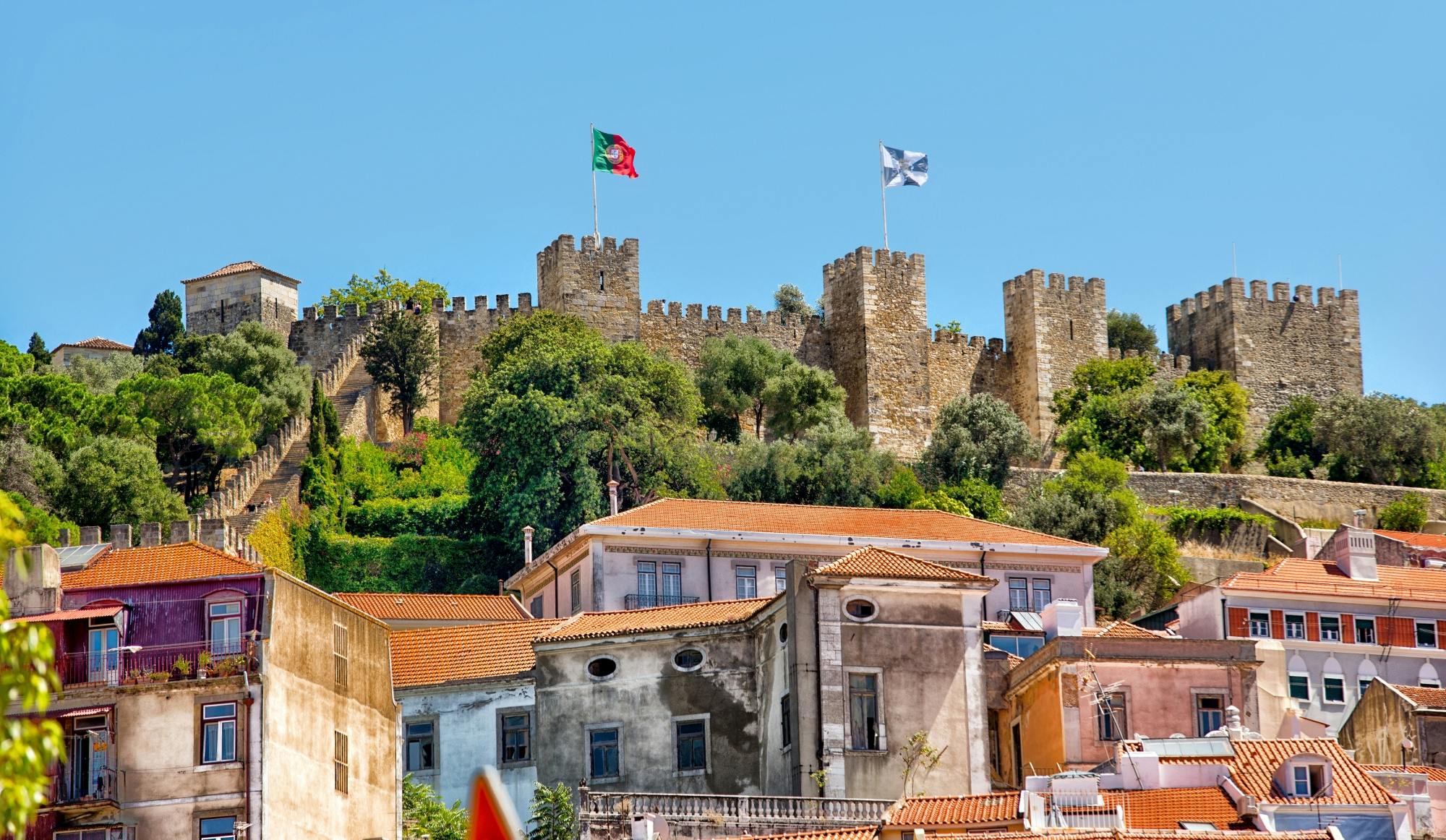
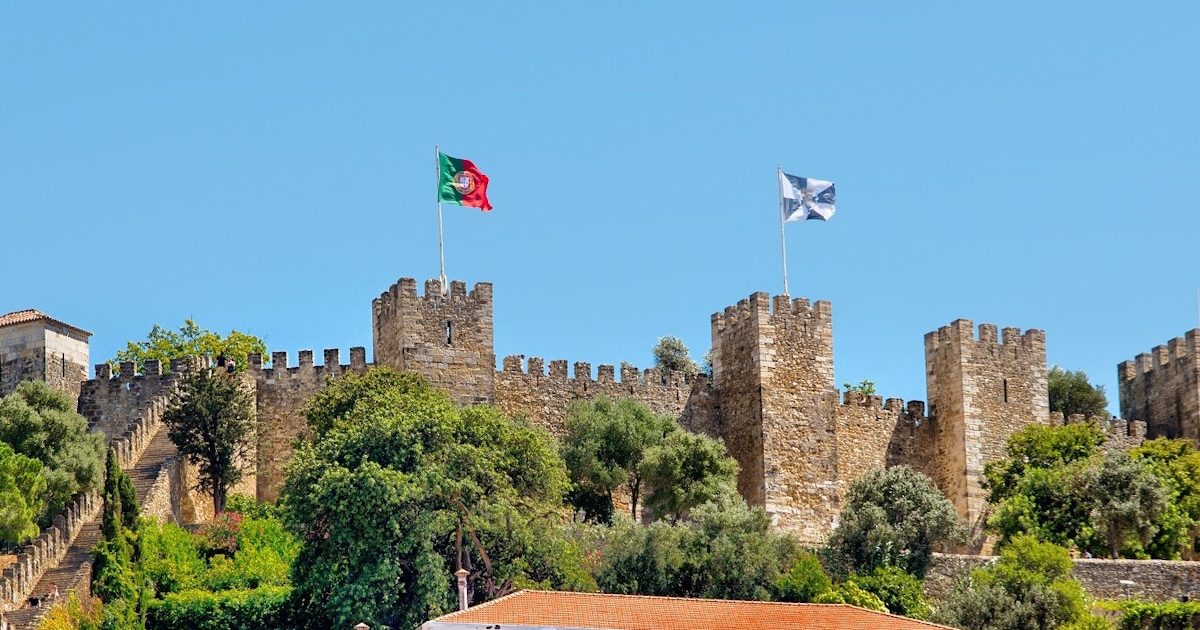
The castle’s walls and towers are the highlight for many visitors. You can walk along sections of the battlements, climb towers and look down across Lisbon’s dense historic neighbourhoods. The layout includes defensive features such as gateways, towers, wall-walks, a barbican and moat elements.
Some areas have steep steps and exposed stone surfaces, so wear proper shoes and take care if visiting with children or during wet weather.
What to look for
Main Gateway: the formal entrance into the castle’s defensive core.
Tower of Ulysses: linked with the Camera Obscura experience.
Observatory Tower: one of the castle’s highest viewpoints.
Cistern Tower: a defensive tower with water-storage history.
Albarrana towers: advanced defensive towers connected to the walls.
Wall-walks: excellent for city photography.
Barbican and moat: defensive outer structures designed to slow attackers.
Wall-walk tips
Hold handrails where available.
Keep children close on the ramparts.
Wear shoes with grip.
Avoid rushing on narrow steps.
Visit early or late to avoid the most crowded tower sections.
Best Views from São Jorge Castle
São Jorge Castle offers some of the best views in Lisbon. From the ramparts and terraces, you can see Baixa, Chiado, the Tagus River, the 25 de Abril Bridge, the Praça do Comércio area, Alfama rooftops, Mouraria, Graça and the hills beyond.
Best things to spot from the castle
Tagus River
Praça do Comércio
Baixa grid streets
Alfama rooftops
Lisbon Cathedral
25 de Abril Bridge
Christ the King statue across the river
Miradouro da Graça and Senhora do Monte
Elevador de Santa Justa
Terreiro do Paço waterfront
Viewpoint tips
Visit late afternoon for softer light.
Bring a zoom lens if you like detailed city photos.
Use panorama mode for the river and bridge.
Stay for golden hour if the weather is clear.
Morning can be better for fewer crowds.
Camera Obscura / Tower of Ulysses
The Camera Obscura, also described as the castle’s Periscope experience, is one of the most interesting features at São Jorge Castle. It uses lenses and mirrors to project a real-time 360-degree view of Lisbon from inside the Tower of Ulysses.
Access is usually through a short guided experience included with the castle ticket, but it is subject to availability and weather conditions. On cloudy or rainy days, visibility may affect whether it operates.
Why try it?
It gives a different perspective on Lisbon.
It helps you identify landmarks from above.
It is short and easy to add to a castle visit.
It is especially interesting for families and curious travellers.
Camera Obscura tips
Ask at the ticket office about availability when you arrive.
Do it earlier in your visit if spaces are limited.
Expect small-group capacity.
Do not rely on it during poor weather.
Archaeological Site and Museum
São Jorge Castle is also an archaeological site. The official castle information notes evidence from different periods of Lisbon’s history, including early settlement, the Moorish-era residential area and later palace remains affected by the 1755 earthquake.
The museum collection displays objects found in the castle’s alcáçova area and helps explain the many cultures that shaped Lisbon over time.
Why visit the archaeology area?
It adds depth beyond the walls and views.
It helps connect the castle to Islamic and medieval Lisbon.
It explains how the hilltop changed over time.
It is useful for travellers interested in archaeology and urban history.
Archaeology tips
Check whether access requires joining the included “Discovering the Castle” guided tour.
Ask staff about the next available guided-tour time.
Allow extra time if you want more than just viewpoints.
Read the displays rather than rushing through the ruins.
Gardens, Peacocks and Rest Areas
The castle grounds include gardens and shaded areas that make the visit more relaxed. You may see peacocks wandering through the site, often perched on walls, pathways or trees. They add charm to the castle, but they are wild animals, not pets.
Garden tips
Use the gardens as a break from Lisbon’s steep streets.
Do not feed the peacocks.
Keep food sealed if eating in permitted areas.
Use shaded spots in summer.
Bring water, especially if walking up from Baixa or Alfama.
How to Get to São Jorge Castle
Getting to São Jorge Castle is part of the experience, but it can be tiring because the castle sits high above the lower city. The easiest option depends on your fitness, hotel location and how much walking you want.
Transport Option
Best For
Traveller Notes
Bus 737
Shortest public-transport climb
Runs from Praça da Figueira toward the castle area, followed by a short walk.
Tram 28E
Classic Lisbon experience
Get off near Santa Luzia or Portas do Sol, then walk uphill to the castle.
Walk from Baixa/Rossio
Active travellers
Scenic but steep; use lifts such as Chão do Loureiro or Castelo Lift to reduce the climb.
Taxi or rideshare
Families, older travellers and hot days
Can get you close, but traffic and narrow streets may affect drop-off.
Walking from Alfama
Slow sightseeing
Beautiful but steep, with narrow lanes, stairs and cobbles.
Private guide
History-focused travellers
Useful if you want the castle, Alfama and viewpoints explained in context.
Walking advice
If walking from Baixa, use the public lifts around Rua dos Fanqueiros and Chão do Loureiro where practical. They can save your legs before you reach the final streets near the castle.
Tickets, Opening Hours and Guided Tours
São Jorge Castle is a ticketed monument. Opening hours are seasonal, with longer opening in the warmer months and earlier closing in winter. Always check the official schedule before visiting, especially around public holidays, events or maintenance periods.
Ticket tips
Buy tickets online if visiting in peak season.
If you already have a ticket, go directly to the entrance rather than waiting to purchase on arrival.
Check whether guided tours are available when you enter.
Ask about Camera Obscura availability at the ticket office.
Allow enough time before last admission.
Remember that wall-walk and tower access may close earlier for safety reasons.
Guided tours
The standard entrance ticket may include “Discovering the Castle” guided tours and the Camera Obscura experience, subject to availability. Group tours can also be booked in advance, and specialist tours may be available in several languages depending on arrangements.
How long to allow
Quick visit: 60 to 90 minutes for views and walls.
Standard visit: 2 hours for walls, gardens, museum and photos.
Full visit: 2.5 to 3 hours with guided tour, Camera Obscura and archaeology.
Combining São Jorge Castle with Alfama
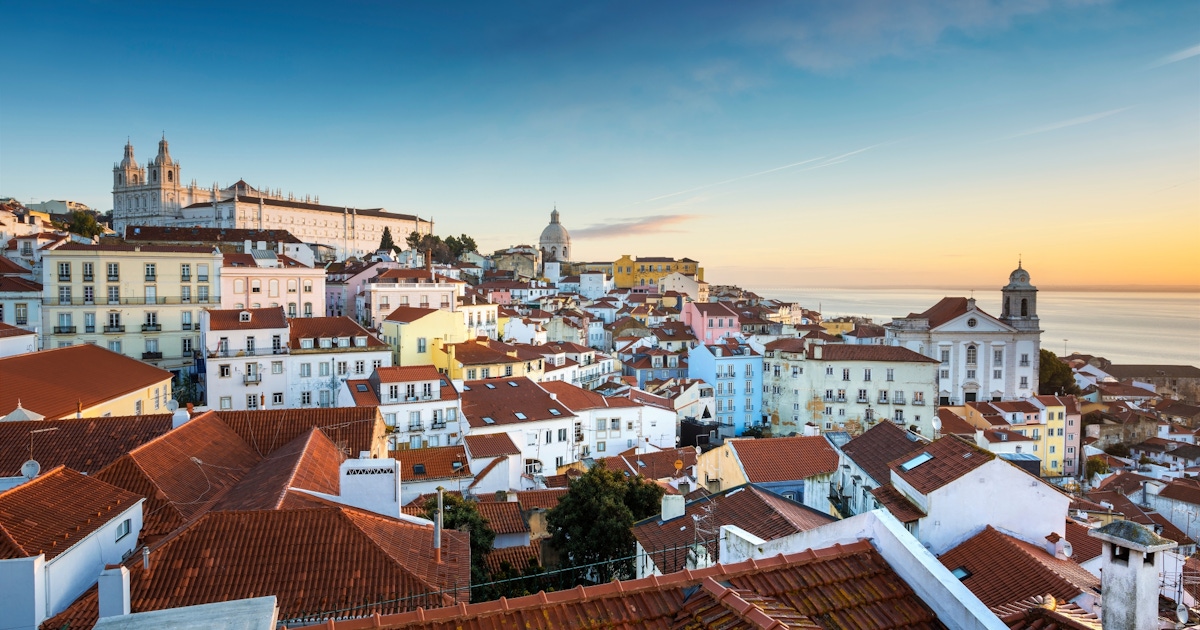
São Jorge Castle is ideal to combine with Alfama, Lisbon’s oldest and most atmospheric neighbourhood. You can visit the castle first, then walk downhill through Alfama’s lanes, viewpoints, churches and tiled houses toward the river.
Good Alfama stops after the castle
Miradouro de Santa Luzia: tiled viewpoint with Alfama and river views.
Portas do Sol: one of Lisbon’s best-known lookout points.
Lisbon Cathedral: a major historic stop between Alfama and Baixa.
Fado Museum: useful if you are interested in Lisbon’s music history.
Alfama lanes: narrow streets, stairs, small squares and tiled façades.
Miradouro da Graça: another strong viewpoint if you are walking toward Graça.
Mouraria: historic multicultural neighbourhood below the castle.
Best route idea
Start at São Jorge Castle, walk down to Portas do Sol and Santa Luzia, continue to Lisbon Cathedral, then finish in Baixa or Praça do Comércio. This is easier than climbing up from the river.
Best Photo Spots and Photography Tips
São Jorge Castle is one of Lisbon’s strongest photo locations because it gives you city panoramas from multiple angles. The best photos usually come from the ramparts, terrace viewpoints and sections where the stone walls frame the river and rooftops.
Best photo ideas
Tagus River framed by castle walls
Baixa rooftops from the ramparts
25 de Abril Bridge in the distance
Peacocks in the gardens
Stone towers against blue sky
Sunset light on Lisbon rooftops
Alfama lanes on the walk down
Castle walls viewed from Miradouro da Graça or São Pedro de Alcântara
Photography tips
Visit late afternoon for warm light.
Use panorama mode for the river and city.
Bring a zoom lens for rooftops and bridge details.
Morning is better for fewer people in tower shots.
Be careful when taking photos on steps and walls.
Do not block narrow walkways for long photo sessions.
Suggested São Jorge Castle Itinerary Ideas
Option 1: Quick Castle Visit
Start: Take Bus 737 or a taxi close to the castle.
Visit: Walk the walls and main viewpoints.
Photo stop: Capture the Tagus River and Baixa views.
Finish: Walk down to Portas do Sol and Santa Luzia.
Option 2: Castle and Alfama Half-Day
Morning: Visit São Jorge Castle early.
Late morning: Join an included guided tour if available.
Midday: Walk to Portas do Sol and Santa Luzia.
Lunch: Eat in Alfama or near Lisbon Cathedral.
Afternoon: Continue downhill to Baixa or Praça do Comércio.
Option 3: Sunset Castle Visit
Afternoon: Explore Mouraria or Alfama first.
Late afternoon: Enter the castle and walk the ramparts.
Golden hour: Photograph rooftops, river and bridge.
Evening: Walk down for dinner or fado in Alfama.
Option 4: Family-Friendly Castle Route
Transport: Use taxi, rideshare or Bus 737 to avoid a tiring climb.
Castle: Focus on walls, gardens, peacocks and viewpoints.
Break: Use shaded garden areas for rest.
Finish: Take a gentle downhill route to Santa Luzia and Alfama.
Option 5: Historic Lisbon Walking Day
Start: Rossio or Praça da Figueira.
Climb: Use public lifts toward the castle hill.
Visit: São Jorge Castle.
Walk: Alfama, Lisbon Cathedral and Fado Museum.
Finish: Praça do Comércio and the Tagus waterfront.
Nearby Places to Visit
Miradouro de Santa Luzia
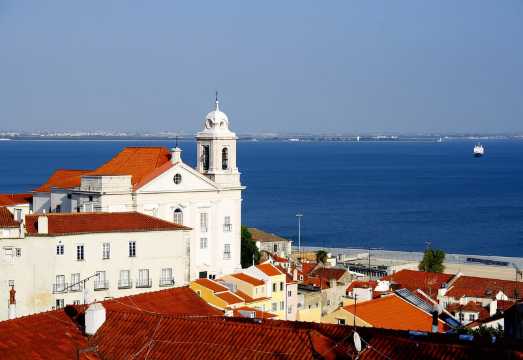
Miradouro de Santa Luzia is one of Lisbon’s prettiest viewpoints, with tiled panels, bougainvillea, Alfama rooftops and river views.
Portas do Sol
Portas do Sol is a broad viewpoint overlooking Alfama and the Tagus River. It is a natural stop before or after the castle.
Lisbon Cathedral
Sé de Lisboa, Lisbon Cathedral, is a major historic church downhill from the castle and on the route toward Baixa.
Alfama
Alfama is Lisbon’s oldest neighbourhood, known for narrow streets, fado houses, viewpoints, tiled façades and atmospheric walking routes.
Mouraria
Mouraria sits below the castle and is strongly associated with multicultural Lisbon and fado history.
Graça
Graça has excellent viewpoints, including Miradouro da Graça and nearby Senhora do Monte, both offering castle and city views.
Baixa
Baixa is Lisbon’s downtown grid, rebuilt after the 1755 earthquake. It is useful for transport, shopping, cafés and walking routes.
Praça do Comércio
Praça do Comércio is Lisbon’s grand riverfront square and a good end point after walking downhill from the castle.
Best Time to Visit São Jorge Castle
São Jorge Castle can be visited year-round, but timing makes a big difference because it is popular, exposed and highly photogenic.
Time / Season
What to Expect
Advice
Early morning
Fewer crowds and cooler temperatures
Best for quiet walls, peacock photos and easier walking.
Late afternoon
Warm light over Lisbon and better sunset atmosphere
Best for photography and romantic views.
Midday
Busier, hotter and more exposed
Use shade and bring water, especially in summer.
Spring
Pleasant weather and good visibility
Excellent overall season.
Summer
Long opening hours, high heat and larger crowds
Book ahead and avoid the hottest part of the day.
Autumn
Comfortable weather and softer light
One of the best seasons for exploring Lisbon on foot.
Winter
Shorter hours and possible rain
Good for lower crowds, but wear shoes with grip.
Where to Stay Near São Jorge Castle
Area
Best For
Traveller Notes
Alfama
Historic atmosphere and fado nights
Beautiful but steep, with many stairs and narrow streets.
Baixa
First-time visitors and transport convenience
Easy for walking up to the castle or using public lifts.
Chiado
Shopping, cafés and elegant city stays
Good for restaurants and central sightseeing.
Graça
Views, quieter streets and local feel
Good for longer stays and viewpoint lovers.
Mouraria
Multicultural atmosphere and castle access
Characterful and close to the hill, but check exact street access.
Avenida da Liberdade
Comfort, hotels and easier taxi access
Less atmospheric than Alfama but more convenient for some travellers.
Food, Cafés and Rest Stops Near São Jorge Castle
The castle area has small cafés, viewpoints and restaurants nearby, but prices can be higher close to the monument. For more choice, walk toward Alfama, Graça, Mouraria or Baixa.
Food ideas nearby
Pastel de nata: classic custard tart with coffee.
Bifana: Portuguese pork sandwich, good for a quick snack.
Bacalhau dishes: salted cod prepared in many traditional ways.
Grilled sardines: especially popular during summer festivals.
Petiscos: Portuguese small plates, ideal for sharing.
Ginjinha: cherry liqueur, common in central Lisbon.
Fado dinner: best in Alfama or Mouraria, but book carefully.
Food tips
Eat after the castle if walking downhill into Alfama.
Carry water if visiting in summer.
Book fado restaurants ahead.
Check menus and prices before sitting in very touristy areas.
Use Graça or Mouraria for a more local-feeling meal.
Useful Booking Resources for São Jorge Castle and Lisbon Activities
São Jorge Castle can be visited independently, but booking platforms are useful for skip-the-line entry, guided castle tours, Alfama walking tours, fado evenings, Lisbon viewpoint walks, Tuk Tuk tours, food tours, tram-themed routes and broader Lisbon sightseeing. Skimlinks may automatically convert these merchant links into affiliate links if the merchant is active in your Skimlinks account.
GetYourGuide – offers São Jorge Castle tickets, Lisbon walking tours, Alfama tours, Tuk Tuk rides, fado experiences, food tours and day trips.
Viator – offers Lisbon castle tours, private guides, Alfama and Mouraria walks, historical Lisbon routes, sunset tours and custom itineraries.
Klook – offers Lisbon attraction tickets, transport products, eSIMs, airport transfers, guided tours and selected Portuguese experiences.
KKday – offers Lisbon activities, local tours, attraction tickets, transfers and Europe travel products.
Trip.com – useful for Lisbon hotels, flights, trains, attraction listings and city-break planning.
Tiqets – useful for mobile-friendly Lisbon attraction tickets, museums, monuments and cultural experiences.
Musement – offers Lisbon tours, castle tickets, fado experiences, food tours, day trips and cultural activities.
Go City – offers attraction passes in selected destinations, useful for travellers comparing multi-attraction sightseeing before or after Lisbon.
TourRadar – useful for comparing multi-day Portugal tours that include Lisbon and nearby regions.
Booking tip: Before booking, check whether the ticket includes direct entry, a guided castle tour, Camera Obscura access, Alfama walking-route extras, hotel pickup or only standard admission. For peak season, online tickets can save time at the ticket office.
São Jorge Castle Travel Tips
Buy tickets ahead in busy periods
Queues can build in peak season. Online tickets are useful if you want to go directly to the entrance.
Go early or late
Early morning is quieter, while late afternoon gives better light for photos.
Wear proper shoes
The castle has uneven paving, stone steps and wall-walks. Smooth sandals are not ideal.
Use public lifts to reduce the climb
If walking from Baixa, the Castelo Lift and Chão do Loureiro lift can reduce the steepest parts of the climb.
Do not rely only on Tram 28
Tram 28 is iconic but often crowded. Bus 737, walking routes, taxis and lifts may be easier.
Ask about guided tours when you arrive
Included tours are subject to availability and limited capacity, so check the schedule early.
Protect yourself from sun
Many castle areas are exposed. Bring a hat, sunglasses and water in warm weather.
Keep children close on walls
Ramparts and tower steps require care, especially with younger children.
Walk downhill afterward
It is easier to start high at the castle, then walk down through Alfama to Lisbon Cathedral and Baixa.
Allow time for viewpoints
The castle is not only a monument; it is one of Lisbon’s best places to pause and understand the city.
Is São Jorge Castle Worth Visiting?
Yes, São Jorge Castle is worth visiting, especially if this is your first time in Lisbon. The castle combines panoramic views, medieval walls, archaeological history, gardens, peacocks and one of the city’s most atmospheric hilltop settings.
It may not suit travellers expecting a furnished palace interior or an easy flat walk. The site is mainly outdoors, with uneven surfaces, steps and exposed viewpoints. But if you enjoy history, scenery and photography, it is one of Lisbon’s essential stops.
The best way to enjoy São Jorge Castle is to visit early or late, buy tickets ahead when busy, check included guided-tour times, walk the walls slowly, take in the views, then continue downhill through Alfama for one of Lisbon’s best half-day routes.
FAQs About São Jorge Castle
Where is São Jorge Castle?
São Jorge Castle is on a hill above Alfama and Mouraria in Lisbon, Portugal. The official address is Rua de Santa Cruz do Castelo, 1100-129 Lisboa.
Is São Jorge Castle worth visiting?
Yes. São Jorge Castle is worth visiting for its city views, medieval walls, towers, gardens, archaeological remains, museum and strong connection to Lisbon’s history.
How long do you need at São Jorge Castle?
Allow 1.5 to 2 hours for a normal visit. Allow up to 3 hours if you want guided tours, the Camera Obscura, archaeology and plenty of photography time.
What is the easiest way to get to São Jorge Castle?
Bus 737 from Praça da Figueira is one of the easiest public transport options. Tram 28E stops near Santa Luzia and Portas do Sol, followed by a short uphill walk.
Can you walk to São Jorge Castle?
Yes, you can walk from Baixa, Rossio, Alfama or Mouraria, but the route is steep. Public lifts such as the Castelo Lift and Chão do Loureiro lift can reduce the climb.
Does São Jorge Castle have good views?
Yes. The castle has some of the best views in Lisbon, including Baixa, Alfama, the Tagus River, Praça do Comércio, the 25 de Abril Bridge and the city’s hills.
Are guided tours included?
Some guided tours, including “Discovering the Castle” and the Camera Obscura experience, may be included with the ticket, subject to availability, capacity and weather conditions.
Is São Jorge Castle suitable for children?
Yes, many children enjoy the walls, towers, gardens and peacocks. However, parents should supervise closely on steps, ramparts and uneven stone surfaces.
When is the best time to visit São Jorge Castle?
Early morning is best for fewer crowds. Late afternoon is best for warm light and city photography. Summer midday can be hot and busy.
What should I visit after São Jorge Castle?
After the castle, walk downhill to Portas do Sol, Miradouro de Santa Luzia, Lisbon Cathedral, Alfama, Mouraria or Praça do Comércio.
Sponsored Popular Items
Quick take: Trip.com offers a worldwide selection of tours and attractions and hotels
Old Lisbon Tour: Alfama & São Jorge Castle – Heritage & History Experience Old Lisbon tour: Alfama and São Jorge Castle adds structure, local context and purposeful sightseeing to the itinerary. Old Lisbon tour: Alfama and São Jorge Castle: experience overview Book this tour of Alfama and São Jorge Castle and discover the origins of the Portuguese capital in the historic Alfama area. This makes the experience a useful option when planning time in Lisbon. The exact duration can depend on the selected date, option or operating schedule. Routes, start times, inclusions and meeting arrangements may vary, so the current booking page should be treated as the final source of operational information. At…
Lisbon Card (City Transport Pass & Jerónimos Monastery & São Jorge – Attraction Entry Lisbon Card (City Transport Pass + Jerónimos Monastery + São Jorge Castle and 51 other attractions) gives independent travellers a flexible framework for organising several sightseeing stops. Lisbon Card (City Transport Pass + Jerónimos Monastery + São Jorge Castle and 51 other attractions): experience overview Unlimited public transportation rides;Free admission to Jerónimos Monastery, Belém Tower, Santa Justa Lift, and more;Valid for one year after purchase, activated upon first use Available from trip.com. This makes the experience a useful option when planning time in > Lisbon local experienceSearch results. The exact duration can depend on the selected date, option or operating…
Alfama District Lisbon – Guided Tours & Visitor Guide Alfama District: Tickets, Tours and Visitor Guide Quick overview: Alfama District is presented as a neighbourhood or city tour in Lisbon. A listing may offer admission, a guided visit, transport, a combination package or premium access. Read the exact live description because similarly named products can have different meeting points, durations and inclusions. Table of Contents About the experience What you may experience Planning the visit Booking checklist Frequently asked questions About Alfama District This booking is most valuable when it solves a practical problem: securing limited admission, providing reliable interpretation, arranging transport or making a complicated site easier to…
Lisbon Walled City, Alfama & Viewpoints Walking Tour – Guided Sightseeing Tour Portugal The Lisbon Walled City, Alfama & Viewpoints Tour is a relaxed walking experience through some of the oldest and most atmospheric parts of Lisbon. It is designed for travellers who want more than a quick photo stop and prefer to explore the city through narrow streets, local stories, historic walls, azulejo tiles and panoramic viewpoints. This Trip.com activity is listed as Lisbon Tour: Walled City, Alfama & Viewpoints. The route starts near the river, climbs uphill through historic neighbourhoods and finishes at Miradouro da Graça, one of Lisbon’s most beautiful viewpoint terraces. If you enjoy walking tours, hidden corners, old-city…
Discovery Game Lisbon’s Alfama and Baixa Outdoor Art – Self-Guided Experience Discovery Game Lisbon’s Alfama and Baixa outdoor art is a convenient way to add structure, local context and purposeful sightseeing to the itinerary. Discovery Game Lisbon’s Alfama and Baixa outdoor art: experience overview See Lisbon in a new light during this interactive Discovery Game. Solve riddles that lead you through the city while learning about its history. This makes the experience a useful option when planning time in Lisbon. The exact duration can depend on the selected date, option or operating schedule. Routes, start times, inclusions and meeting arrangements may vary, so the current booking page should be treated as…
Alfama District in Lisbon Exploration Game and Tour - Self-Guided Experience Alfama district in Lisbon exploration game and tour is designed for travellers who prefer independent exploration while still having structured digital guidance available. Alfama district in Lisbon exploration game and tour: experience overview Go on a fun Lisbon walking tour in Alfama district where you will follow clues to discover amazing places and local stories using your smartphone. This makes the experience a useful option when planning time in Lisbon. The exact duration can depend on the selected date, option or operating schedule. Routes, start times, inclusions and meeting arrangements may vary, so the current booking page should be treated…
Quick take: Trip.com helps you compare prices across accommodations. Use it to shortlist hotels, then click through to confirm the final price, room type, and inclusions on the booking site.
São Jorge Castle Skip-the-Line Entry Ticket São Jorge Castle Skip-the-line Entry Ticket provides a structured way to visit a notable attraction or cultural site. São Jorge Castle Skip-the-line Entry Ticket: experience overview Avoid waiting in line by purchasing skip-the-line tickets to the castle;Discover the medieval castle complex of São Jorge Castle at your leisure;Learn about the history of Lisbon through a permanent exhibition Available from trip.com. This makes the experience a useful option when planning time in > Lisbon local experienceSearch results > São Jorge Castle Skip-the-line Entry Ticket. The exact duration can depend on the selected date, option or operating schedule. Routes, start times, inclusions…
Ticket and Guided Tour of Castelo de São Jorge – Guided Sightseeing Ticket and Guided Tour of Castelo de São Jorge is a focused sightseeing option for travellers with a particular landmark or exhibition on their priority list. Ticket and Guided Tour of Castelo de São Jorge: experience overview Explore Lisbon's rich heritage with a guided tour of Castelo de São Jorge. Uncover the city's past and take in panoramic vistas. This makes the experience a useful option when planning time in Lisbon. The exact duration can depend on the selected date, option or operating schedule. Routes, start times, inclusions and meeting arrangements may vary, so the current booking page should be…
Castelo de São Jorge Tickets, Tours & Visitor Experiences Castelo de São Jorge: Tickets, Tours and Visitor Guide Quick overview: Castelo de São Jorge is presented as a visitor attraction in Lisbon. A listing may offer basic admission, a guided visit, transport, a combination package or premium access. Read the exact live description because similarly named options can have different meeting points, durations and inclusions. Table of Contents About the experience What to expect Planning the visit Booking checklist Frequently asked questions About Castelo de São Jorge This type of booking is most valuable when it solves a practical problem: securing limited admission, providing reliable interpretation, arranging transport or…
3 – Hour Walking Tour in Girona, Spain: The Walls/Churches/Game of Thrones – Guided Tour 3-Hour Walking Tour in Girona, Spain: The Walls/Churches/Game of Thrones Filming Locations adds a restorative pause to the itinerary. 3-Hour Walking Tour in Girona, Spain: The Walls/Churches/Game of Thrones Filming Locations: experience overview Take a stroll along the ancient city walls and enjoy a panoramic view of the city from above;Visit Girona Cathedral and admire its Gothic nave;Check in at the filming locations of the "Game of Thrones" series Available from trip.com. This makes the experience a useful option when planning time in > Girona local experienceSearch results. The listing describes this as a 3-hour experience. Routes, start times, inclusions…
Dubrovnik Old Town & Fortress & City Walls & Dubrovnik Port Private Charter – Guided Tour Dubrovnik Old Town + Fortress + City Walls + Dubrovnik Port Private Charter Day Tour adds structure, local context and purposeful sightseeing to the itinerary. Dubrovnik Old Town + Fortress + City Walls + Dubrovnik Port Private Charter Day Tour: experience overview Premium private charter, exclusive space, door-to-door service, effortless travel;Bilingual in Chinese and English, seamless communication, adjustable itinerary, complete flexibility throughout;Customize itineraries to suit all types of travelers. For details, please contact customer support. Available from trip.com. This makes the experience a useful option when planning time in > Dubrovnik local experienceSearch results. The exact duration can depend on…
Dubrovnik Cable Car & Dubrovnik City Walls & Fort Bokar Private Charter Day – Guided Tour Dubrovnik Cable Car + Dubrovnik City Walls + Fort Bokar Private Charter Day Tour adds structure, local context and purposeful sightseeing to the itinerary. Dubrovnik Cable Car + Dubrovnik City Walls + Fort Bokar Private Charter Day Tour: experience overview Premium private charter, exclusive space, door-to-door service, effortless travel;Bilingual in Chinese and English, seamless communication, adjustable itinerary, complete flexibility throughout;Customize itineraries to suit all types of travelers. For details, please contact customer support. Available from trip.com. This makes the experience a useful option when planning time in > Dubrovnik local experienceSearch results. The exact duration can depend on the selected…
Quick take: Trip.com helps you compare prices across accommodations. Use it to shortlist hotels, then click through to confirm the final price, room type, and inclusions on the booking site.