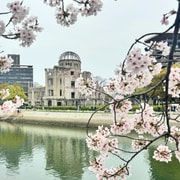
Discover two of Japan’s most significant UNESCO World Heritage Sites on a guided Hiroshima and Miyajima tour combining breathtaking island scenery, traditional Japanese culture and the powerful history of Hiroshima.
This six-hour guided sightseeing experience takes visitors from Hiroshima Station to beautiful Miyajima Island, home to the famous floating torii gate and magnificent Itsukushima Shrine.
After exploring the island’s historic shrines, traditional shopping streets and local food culture, return to Hiroshima to visit the Atomic Bomb Dome, Peace Memorial Park and Hiroshima Peace Memorial Museum.
Travelling with a knowledgeable local guide in a small group or private party, visitors discover the fascinating contrast between Japan’s ancient spiritual traditions and Hiroshima’s modern history.
Unlike conventional coach excursions, this tour uses Japan’s efficient railways, ferries and historic Hiroshima trams, creating a more personal introduction to everyday travel in Japan.
With transportation and admission to major attractions included, the experience offers a convenient way to discover two of western Japan’s most memorable destinations in a single day.
Hiroshima and Miyajima UNESCO Small-Group Tour Overview
This guided six-hour sightseeing excursion introduces visitors to the cultural heritage of Miyajima Island and the important historical landmarks of Hiroshima.
Operated by Evergrove, the tour is available with a knowledgeable local guide in English or Traditional Chinese, depending on the selected option.
Departure: Hiroshima Station, Japan
Meeting point: Second floor, South Gate, near the 7-Eleven beside the JR Lines Central Gate
Duration: Approximately 6 hours
Tour operator: Evergrove
Tour type: Guided small-group or private sightseeing tour
Languages: English and Traditional Chinese
Transportation: JR train, ferry and Hiroshima tram
UNESCO attractions: Itsukushima Shrine and Atomic Bomb Dome
Admission tickets: Included for Itsukushima Shrine, Senjokaku Hall and Hiroshima Peace Memorial Museum
Food and drinks: Listed among the inclusions; optional purchases may cost extra
Ending location: Hiroshima Peace Memorial Museum
The itinerary combines guided visits and free time, allowing travellers to appreciate both the historic attractions and the atmosphere of the surrounding neighbourhoods.
Hiroshima and Miyajima Six-Hour Tour Itinerary
The tour begins at Hiroshima Station, where passengers meet their local guide before travelling by train and ferry to Miyajima Island.
Morning: Depart Hiroshima Station
Meet your guide near the 7-Eleven on the second floor of Hiroshima Station, close to the JR Lines Central Gate.
The guide will contact participants before the tour to confirm meeting arrangements.
After introductions, the group boards a local JR train towards Miyajimaguchi.
Travel by Ferry to Miyajima
From the mainland ferry terminal, enjoy a short crossing across the Seto Inland Sea to Miyajima Island.
The journey provides beautiful views of the coastline and surrounding mountains.
Visit the Floating Torii Gate
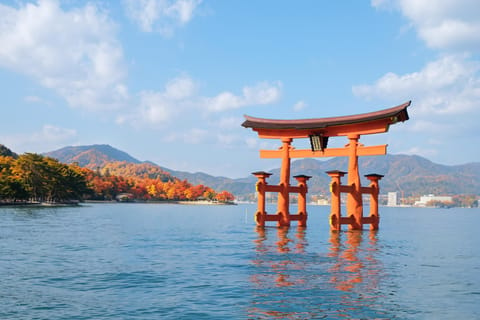
Discover one of Japan’s most famous landmarks, the enormous vermilion torii gate standing in the tidal waters beside Itsukushima Shrine.
The guide explains the spiritual significance of the gate and its relationship with the island’s Shinto traditions.
Explore Itsukushima Shrine
Continue to the UNESCO-listed Itsukushima Shrine, renowned for its beautiful overwater architecture and historic religious importance.
The scheduled guided visit lasts approximately 40 minutes.
Optional Senjokaku Pavilion Visit
Depending on the itinerary and selected arrangements, the group may also visit Senjokaku Pavilion, a fascinating historic wooden hall overlooking part of Miyajima.
Discover Omotesando Shopping Street
Enjoy a combination of guided exploration and free time on Miyajima’s bustling traditional shopping street.
Browse souvenir shops, sample local snacks and discover the island’s traditional food culture.
Return to Hiroshima
After exploring Miyajima, return to the mainland by ferry and continue to Hiroshima City by tram.
Visit the Atomic Bomb Dome
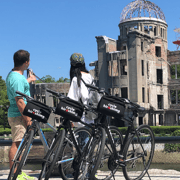
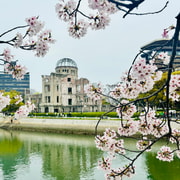
Explore the preserved ruins of the Atomic Bomb Dome, a UNESCO World Heritage Site and powerful reminder of the atomic bombing of 6 August 1945.
Hiroshima Peace Memorial Park
Continue through the beautifully landscaped memorial park, where the guide introduces important monuments and explains Hiroshima’s commitment to peace.
Hiroshima Peace Memorial Museum
The final major attraction is Hiroshima Peace Memorial Museum, which documents the events of the atomic bombing and its human consequences.
The itinerary includes approximately one hour at the museum.
The guided experience concludes at the museum rather than returning to Hiroshima Station.
Discover Japan by Train, Ferry and Historic Tram
One of the distinctive features of this excursion is its use of public transportation instead of a sightseeing coach.
Travelling on local trains, ferries and trams provides an opportunity to experience everyday transport in Japan.
JR Train to Miyajimaguchi
The journey begins aboard a local JR train connecting Hiroshima with the ferry terminal at Miyajimaguchi.
The advertised train journey takes approximately 27 minutes.
Ferry to Miyajima Island
The crossing between Miyajimaguchi and Miyajima takes approximately 10 minutes.
Depending on the ferry route, visitors may enjoy views towards the iconic floating torii gate.
Historic Hiroshima Tram
After the island visit, the journey continues towards central Hiroshima aboard one of the city’s trams.
Hiroshima’s streetcars are an important part of its transport network and urban identity.
Using these different forms of transportation adds variety to the sightseeing experience.
Transportation costs associated with the advertised guided itinerary are included.
Miyajima Island: Discover One of Japan’s Most Sacred Destinations
Miyajima Island, officially known as Itsukushima, is one of Japan’s most beautiful cultural and natural attractions.
Located in the Seto Inland Sea near Hiroshima, the island is famous for its historic Shinto shrine, spectacular floating torii gate, forested mountains and traditional Japanese streets.
Miyajima has been regarded as a sacred place for centuries, with religious traditions closely connected to its natural landscape.
Why Is Miyajima Famous?
Itsukushima Shrine, a UNESCO World Heritage Site
The spectacular floating torii gate
Historic Buddhist temples and Shinto shrines
Beautiful mountain and coastal scenery
Traditional Japanese shopping streets
Regional food and confectionery
Free-roaming deer
Travelling with a knowledgeable guide allows visitors to appreciate the island’s religious and cultural significance.
The Floating Torii Gate: One of Japan’s Most Famous Landmarks
The magnificent Great Torii Gate of Itsukushima Shrine is among the most recognisable images of Japan.
Standing in the tidal waters of the Seto Inland Sea, the enormous vermilion gate marks the sacred entrance to the shrine.
Why Does the Torii Gate Appear to Float?
At high tide, seawater surrounds the gate, giving it the appearance of floating above the water.
At low tide, the seabed becomes exposed, and visitors may be able to approach the structure on foot when conditions permit.
The Spiritual Significance of Torii Gates
In Shinto tradition, torii gates mark the transition between ordinary space and sacred ground.
The Great Torii at Miyajima symbolically welcomes visitors to the sacred island and the magnificent Itsukushima Shrine.
Photography Opportunities
The gate provides beautiful photographic opportunities throughout the day.
High tide is particularly popular for photographs showing the structure surrounded by water.
Low tide reveals a different perspective, highlighting the size of the gate against the surrounding mountains and coastline.
The appearance of the gate during your visit will depend on the tide.
Itsukushima Shrine: UNESCO World Heritage Architecture
Itsukushima Shrine is one of Japan’s most beautiful and historically significant Shinto shrines.
Its architecture is particularly remarkable because many of its buildings stand on pillars above the shoreline, connected by elegant covered walkways.
At high tide, the shrine appears to extend across the water, creating an extraordinary combination of religious architecture and natural scenery.
The History of Itsukushima Shrine
The shrine’s religious origins date back more than a thousand years.
Much of its famous architectural form developed during the 12th century under the patronage of Taira no Kiyomori, one of Japan’s most influential historical figures.
Itsukushima Shrine was designated a UNESCO World Heritage Site in 1996.
What Can Visitors See?
Elegant vermilion shrine buildings
Traditional wooden corridors
Beautiful coastal scenery
Views of the Great Torii Gate
Historic Shinto architectural features
Scenic mountain surroundings
During the guided visit, the local guide introduces visitors to the island’s Shinto traditions and the cultural importance of the shrine.
Admission to Itsukushima Shrine is included in the tour.
Senjokaku Pavilion: Discover Miyajima’s Historic Wooden Hall
Another interesting attraction on Miyajima is Senjokaku Pavilion, also known as Toyokuni Shrine or the Hall of One Thousand Tatami Mats.
This impressive wooden structure stands on elevated ground overlooking the island’s historic area.
The History of Senjokaku
Construction began in 1587 under the direction of Toyotomi Hideyoshi, one of Japan’s most powerful military leaders.
The hall was intended as a place for Buddhist worship and the chanting of sutras.
However, the building was never fully completed according to the original plans.
What Makes the Pavilion Special?
The vast wooden interior creates a striking sense of space.
Visitors can appreciate its traditional timber construction and elevated setting.
Nearby stands a distinctive five-storey pagoda, another recognisable landmark of Miyajima.
Is Senjokaku Included?
Senjokaku is listed as an optional stop in the itinerary.
Its admission fee is included among the advertised tour inclusions, but the actual visit may depend on time and arrangements with the guide.
Miyajima Omotesando Shopping Street: Traditional Japanese Culture and Souvenirs
The tour includes time to explore Miyajima Omotesando Shopping Street, the island’s lively shopping and dining area.
The street is lined with traditional shops, restaurants, cafés and businesses selling regional Japanese products.
What Can Visitors Discover?
Traditional Japanese sweets
Local food specialities
Handmade souvenirs
Japanese crafts
Small cafés and restaurants
Traditional wooden shopfronts
Omotesando offers an enjoyable contrast to the peaceful atmosphere of Itsukushima Shrine.
The itinerary includes approximately 50 minutes for a combination of guided exploration, refreshments and independent shopping.
Discover Miyajima’s Delicious Traditional Food
Miyajima is famous for several regional foods, including maple-leaf-shaped cakes and fresh seafood.
Momiji Manju
Momiji manju is one of Miyajima’s best-known traditional sweets.
These small maple-leaf-shaped cakes are commonly filled with sweet red bean paste, although modern versions may include custard, chocolate or other flavours.
The tour description includes a local experience featuring Japanese tea and freshly baked maple cakes.
Hiroshima Oysters
Hiroshima Prefecture is particularly famous for its oysters, which are an important part of the region’s coastal food culture.
Visitors may find grilled oysters and other seafood dishes sold by shops on Miyajima.
Additional Food Experiences
The tour may include an optional stop at another local food shop for dessert.
Some optional tastings and purchases may incur additional charges.
Although the booking page lists food and drinks among the inclusions, travellers should not assume that a full lunch or unlimited refreshments are included.
Hiroshima: Discover a City of History and Peace
After exploring Miyajima, the tour returns to Hiroshima City to discover some of Japan’s most important memorial landmarks.
Hiroshima is internationally recognised for the events of 6 August 1945, when the city became the first target of an atomic bombing during wartime.
The bombing caused enormous destruction and human suffering, and the city continues to preserve the memory of those affected.
Today, Hiroshima is a vibrant modern city whose museums and memorials promote education, remembrance and peace.
Atomic Bomb Dome: A UNESCO World Heritage Memorial
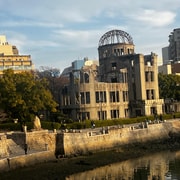
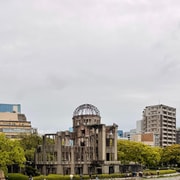
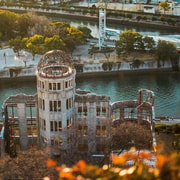
The Atomic Bomb Dome, also known as the Hiroshima Peace Memorial, is one of Japan’s most powerful historical landmarks.
Originally completed in 1915, the building served as an exhibition hall before the atomic bombing.
Although much of Hiroshima was destroyed, portions of the building’s walls and its distinctive skeletal dome remained standing.
Why Was the Atomic Bomb Dome Preserved?
The ruins were preserved as a permanent reminder of the consequences of nuclear warfare.
The site encourages reflection on the destruction caused by the bombing and the importance of preventing future tragedies.
It was inscribed on the UNESCO World Heritage List in 1996.
What Happens During the Guided Visit?
The guide explains the historical significance of the preserved building and introduces visitors to the events surrounding the bombing.
The advertised itinerary includes approximately 15 minutes at the Atomic Bomb Dome.
The building itself is not open to visitors, but it can be viewed from surrounding public areas.
Hiroshima Peace Memorial Park: Remembering the Victims
Hiroshima Peace Memorial Park is an important place of remembrance dedicated to those who died and suffered as a result of the atomic bombing.
Situated near the Motoyasu River, the park contains memorials, monuments and landscaped grounds intended to encourage reflection on the importance of peace.
Important Memorials Within the Park
Several landmarks are associated with the park’s history and message.
Children’s Peace Monument
This memorial honours children who died as a result of the atomic bombing and its aftermath.
It is closely associated with the story of Sadako Sasaki and the international symbolism of folded paper cranes.
Cenotaph for the Atomic Bomb Victims
The memorial cenotaph commemorates those who lost their lives.
Its carefully designed setting forms part of the park’s central memorial landscape.
Flame of Peace
The Flame of Peace symbolises the hope for a world free from nuclear weapons.
Learning from a Local Guide
The guide introduces the park’s historical importance and may share local perspectives that add context to the city’s past and present.
The advertised guided visit lasts approximately 30 minutes.
Visitors should maintain a respectful attitude while exploring the memorial grounds.
Hiroshima Peace Memorial Museum: Understanding the Events of 1945
The final major destination is the Hiroshima Peace Memorial Museum, one of Japan’s most important historical museums.
The museum documents the atomic bombing and its impact on Hiroshima’s residents.
Through photographs, personal belongings, historical records and survivor testimonies, the exhibitions provide a powerful account of the human consequences of nuclear warfare.
What Can Visitors Learn?
Hiroshima before the atomic bombing
The events of 6 August 1945
The immediate destruction of the city
The experiences of survivors
The long-term consequences of radiation exposure
The city’s reconstruction and recovery
Efforts to promote nuclear disarmament and international peace
How Long Is the Museum Visit?
The advertised itinerary provides approximately one hour at the museum.
Some visitors may prefer additional time to explore the exhibitions independently after the guided experience finishes.
Are the Exhibitions Suitable for Everyone?
The museum contains photographs and historical accounts that may be distressing, particularly for young children or visitors sensitive to graphic wartime material.
Visitors should approach the exhibitions with respect and allow time for reflection.
Is Museum Admission Included?
Yes. Admission to Hiroshima Peace Memorial Museum is included in the advertised tour package.
Why Choose a Small-Group Tour with a Local Hiroshima Guide?
Exploring Hiroshima and Miyajima with a knowledgeable local guide offers several advantages.
Discover Two UNESCO Sites in One Day
The tour combines Itsukushima Shrine and the Atomic Bomb Dome in a single six-hour experience.
Learn About Japanese Culture and History
The guide introduces visitors to Shinto traditions, local customs and Hiroshima’s important historical events.
Travel with a Small Group
The small-group or private format offers opportunities for discussion and personalised attention.
Use Japan’s Public Transportation
Train, ferry and tram travel allows visitors to discover everyday transport in Japan without needing to organise each journey independently.
Enjoy Included Admissions
The tour includes major attraction admissions, simplifying the sightseeing arrangements.
Discover Local Food and Hidden Places
The guide may introduce small local businesses and traditional snacks that visitors might otherwise overlook.
Practical Information for the Hiroshima and Miyajima UNESCO Tour
Where Does the Tour Start?
The meeting point is Hiroshima Station, second floor, South Gate, near the 7-Eleven convenience store beside the JR Lines Central Gate.
The local guide contacts participants the day before the experience to confirm the exact meeting arrangements.
How Long Does the Tour Last?
The advertised duration is approximately six hours.
What Languages Are Available?
The tour is offered with live guidance in English and Traditional Chinese, depending on the booking option selected.
What Is Included?
Professional local guide
Small-group or private guided sightseeing experience
Transportation during the advertised itinerary
Return ferry transportation to Miyajima
Admission to Itsukushima Shrine
Admission to Senjokaku Hall, where visited
Admission to Hiroshima Peace Memorial Museum
Food and drink inclusions as specified by the operator
What Costs Extra?
The itinerary includes an optional dessert stop described as requiring an additional fee.
Visitors should also budget for any personal shopping, additional food, drinks or activities outside the scheduled itinerary.
Does the Tour Include Lunch?
The operator lists food and drinks among the inclusions but does not clearly advertise a complete sit-down lunch.
Visitors should confirm whether their chosen booking option provides a meal or only selected refreshments.
What Should You Bring?
Comfortable walking shoes
Weather-appropriate clothing
A waterproof jacket or umbrella when needed
A camera or smartphone
Japanese yen in cash
Booking confirmation
Any personal medication or essentials
Are Large Bags Allowed?
No. Large luggage and oversized bags are prohibited during the experience.
Travellers arriving with suitcases should arrange luggage storage before meeting the guide.
Is the Tour Wheelchair Accessible?
No. The advertised tour is listed as unsuitable for wheelchair users.
The itinerary includes walking through public transport stations, island streets, shrine areas and memorial attractions.
Can Young Children Participate?
The operator states that children under six can participate free of charge.
Families should consider the amount of walking and the sensitive historical content of the Peace Memorial Museum.
Where Does the Tour End?
The advertised itinerary concludes at Hiroshima Peace Memorial Museum.
Return transportation to Hiroshima Station after the tour is not listed as part of the experience.
Can You Catch a Shinkansen After the Tour?
The operator advises travellers to book Shinkansen departures after 4:30 pm.
However, passengers should also allow enough time to travel independently from the museum to Hiroshima Station and account for possible delays.
What Is the Cancellation Policy?
The booking page advertises free cancellation up to 24 hours before departure for a full refund, subject to the current terms.
Who Will Enjoy This Hiroshima and Miyajima Tour?
This guided excursion is particularly suitable for:
First-time visitors to Hiroshima: Explore the city’s most important historic attractions.
History enthusiasts: Learn about the atomic bombing and Hiroshima’s enduring message of peace.
Japanese culture enthusiasts: Discover Shinto traditions and historic shrine architecture.
Photography enthusiasts: Capture Miyajima’s famous floating torii gate and scenic island landscapes.
Couples: Enjoy a guided cultural experience combining history and natural beauty.
Solo travellers: Join a small group with an experienced local guide.
Travellers with limited time: Visit two UNESCO World Heritage landmarks in approximately six hours.
Travellers using public transport: Experience Japan’s railways, ferries and trams with guided assistance.
Frequently Asked Questions About the Hiroshima and Miyajima UNESCO Tour
How long does the tour last?
The guided sightseeing experience lasts approximately six hours.
Where does the tour start?
The tour begins at Hiroshima Station, on the second floor near the South Gate and JR Lines Central Gate.
Does the tour visit two UNESCO World Heritage Sites?
Yes. The itinerary includes Itsukushima Shrine on Miyajima Island and the Atomic Bomb Dome in Hiroshima.
Does the tour travel to Miyajima by ferry?
Yes. The excursion includes return ferry transportation between Miyajimaguchi and Miyajima Island.
Will we see the floating torii gate?
Yes. The Great Torii of Itsukushima Shrine is one of the main highlights.
Does the torii gate always appear to float?
No. Its appearance depends on the tide. High tide surrounds the gate with water, while low tide exposes the seabed.
Is Itsukushima Shrine admission included?
Yes. Admission to Itsukushima Shrine is included in the tour.
Does the tour visit Senjokaku Hall?
Senjokaku is listed as an optional stop. Its admission is included in the package, but the visit itself is subject to the itinerary.
Is there free time on Miyajima?
Yes. The itinerary includes free time around Omotesando Shopping Street for refreshments, photographs and shopping.
Can visitors try local Japanese food?
Yes. The itinerary introduces traditional Miyajima foods such as momiji manju, and the guide may visit local shops offering refreshments.
Is lunch included?
The operator lists food and drinks among the inclusions but does not clearly identify a full lunch. Confirm meal arrangements before booking.
Does the excursion visit Hiroshima Peace Memorial Park?
Yes. A guided visit to the park forms an important part of the afternoon itinerary.
Will we see the Atomic Bomb Dome?
Yes. The tour includes a guided visit to the preserved Atomic Bomb Dome.
Is Peace Memorial Museum admission included?
Yes. Entrance to Hiroshima Peace Memorial Museum is included.
Does the tour use a sightseeing bus?
No. This particular experience uses public transportation, including local train, ferry and tram journeys.
Is the tour private?
Private and small-group booking options are advertised. Select the preferred format when reserving.
Are English-speaking guides available?
Yes. English-language guidance is available. Traditional Chinese is also listed.
Is the tour wheelchair accessible?
No. The advertised experience is not suitable for wheelchair users.
Can young children participate?
The operator states that children under six can join free of charge, subject to current booking conditions.
Can visitors bring large suitcases?
No. Oversized luggage and large bags are not permitted.
Does the excursion return to Hiroshima Station?
No. The guided itinerary ends at Hiroshima Peace Memorial Museum.
Can I take a Shinkansen after the tour?
The operator recommends booking trains after 4:30 pm. Allow additional time to return independently to Hiroshima Station.
Can I cancel the tour?
The advertised cancellation policy allows free cancellation up to 24 hours before departure for a full refund, subject to current booking conditions.
Is the Hiroshima and Miyajima UNESCO tour worth taking?
For travellers interested in Japanese culture, UNESCO heritage and Hiroshima’s history, this six-hour guided experience offers a convenient way to explore Miyajima and the city’s principal peace memorial landmarks.
Book Your Hiroshima and Miyajima UNESCO Small-Group Tour
Exploring Hiroshima and Miyajima offers an extraordinary opportunity to discover two important aspects of Japanese heritage.
Miyajima Island showcases the beauty of traditional Shinto architecture, sacred landscapes and centuries-old cultural traditions.
Hiroshima’s Peace Memorial Park and Atomic Bomb Dome provide a powerful opportunity to understand the events of 1945 and reflect on the importance of peace.
Combining these destinations in a single guided experience allows travellers to appreciate the contrast between Japan’s ancient traditions and modern history.
With a knowledgeable local guide, organised train and ferry transportation, admission to major attractions and opportunities to explore local shops, the experience provides a memorable introduction to western Japan.
Whether you are visiting Hiroshima for a short stay or looking for a meaningful cultural activity, this small-group or private tour is an excellent way to explore two UNESCO World Heritage landmarks.
Discover the beauty of Miyajima’s floating torii gate, explore historic Itsukushima Shrine and learn about Hiroshima’s powerful history on a guided six-hour experience.
Tour schedules, admission arrangements, optional stops, transport and booking conditions may change. Confirm the current itinerary and inclusions before making a reservation.
Best deals for Hiroshima & Miyajima: 2 UNESCO Sites with a Local Guide. Discover Hiroshima’s two UNESCO World Heritage sites with a local guide. This small-group or private tour combines the spiritual beauty of Miyajima with the powerful history of the Atomic Bomb Dome. Available from getyourguide.com.
Sponsored Popular Items
Quick take: Musement.com offers a worldwide selection of tours and attractions
Osaka/Kyoto/Hiroshima : Hiroshima Miyajima Bus Tour Japan Best deals for Osaka/Kyoto/Hiroshima : Hiroshima Miyajima Bus Tour. Discover popular sightseeing spots in Hiroshima on a tour from Osaka or Kyoto with bullet train tickets or join us directly in Hiroshima. This tour is conducted by an English-speaking guide only. Available from getyourguide.com.
Hiroshima: Best of Hiroshima Guided Bike Tour Japan Best deals for Hiroshima: Best of Hiroshima Guided Bike Tour. Discover Hiroshima with a relaxing and fun ride past the iconic sites and unknown gems of this interesting and welcoming city. Available from getyourguide.com.
Hiroshima: History of Hiroshima Small Group Walking Tour Japan Best deals for Hiroshima: History of Hiroshima Small Group Walking Tour. Join our tour to explore the history of Hiroshima, understand the impact of the atomic bombing, and witness how the city transformed into a symbol of peace and resilience. Uncover the stories! Available from getyourguide.com.
Kansai and Hiroshima: Japan Area Rail Pass Japan Best deals for Kansai and Hiroshima: Japan Area Rail Pass. JR West Kansai-Hiroshima Area Pass! Enjoy unlimited rides on local trains and the Sanyo Shinkansen, covering popular destinations like Kyoto, Osaka, and Hiroshima with ease. Ideal for tourists! Available from getyourguide.com.
Walking Through History: Hiroshima’s Path to Peace Day/Night Japan Best deals for Walking Through History: Hiroshima’s Path to Peace Day/Night. Join our expert-led walking tour with a PhD scholar of Hiroshima's Peace Memorial Park and Atomic Bomb Dome. Learn about the city's history, cultural heritage, and the impact of the atomic bombing. Available from getyourguide.com.
From Osaka or Kyoto: Hiroshima, Miyajima & Himeji Castle Private Tour Japan Best deals for From Osaka or Kyoto: Hiroshima, Miyajima & Himeji Castle Private Tour. Discover Hiroshima, Miyajima Island, and Himeji Castle on a private day trip from Osaka or Kyoto. Travel comfortably by private vehicle with a local English-speaking guide. Available from getyourguide.com.
From Osaka/Kyoto: Hiroshima & Miyajima Private Full-Day Tour Japan Best deals for From Osaka/Kyoto: Hiroshima & Miyajima Private Full-Day Tour. Discover Hiroshima and Miyajima on a private day trip from Osaka or Kyoto. Enjoy a lunch stop for Hiroshima-style okonomiyaki, cross to Miyajima Island, and explore Hiroshima Peace Memorial Park. Available from getyourguide.com.
Osaka/Kyoto: Hiroshima Full-Day Guided Luxury Tour & Lunch Japan Best deals for Osaka/Kyoto: Hiroshima Full-Day Guided Luxury Tour & Lunch. Discover Hiroshima on a private guided tour from Kyoto/Osaka. Travel in comfort with a luxury vehicle and a dedicated driver/guide, and enjoy a flexible itinerary designed around you. Available from getyourguide.com.
History of Hiroshima Private Walking Tour (Multilingual) Japan Best deals for History of Hiroshima Private Walking Tour (Multilingual). Experience Hiroshima Peace Memorial Park with your own private guide on a completely personal walking tour. Explore iconic memorials, survivor stories, and Hiroshima’s history at your own pace. Available from getyourguide.com.