Auschwitz-Birkenau Guided Tour with Transport from Krakow Auschwitz-Birkenau is preserved as a memorial, museum and place of remembrance. Check current availability, inclusions and booking details before you go.
Auschwitz-Birkenau Guided Tour with Transport from Krakow
Auschwitz-Birkenau is preserved as a memorial, museum and place of remembrance. Visitors should approach the site with solemnity and respect.
This full-day guided visit from Krakow provides organised transport to the Auschwitz-Birkenau Memorial and Museum, admission at a pre-arranged time and a tour led by a licensed museum guide. Musement lists the complete excursion as lasting approximately eight hours, with about three hours spent visiting Auschwitz I and Auschwitz II-Birkenau.
Auschwitz-Birkenau was the largest complex of German Nazi concentration camps and extermination centres. Established in German-occupied Poland, it became a central site of the Holocaust and of the persecution and murder of Poles, Roma and Sinti, Soviet prisoners of war and people of many other nationalities. Historians at the Memorial estimate that around 1.1 million people were murdered there, approximately one million of them Jews.
This is not a conventional sightseeing attraction. The preserved buildings, ruins, personal possessions and landscapes form a place of memory and evidence. The visit can be emotionally difficult, and thoughtful preparation is worthwhile.
Musement lists this English-language excursion as an eight-hour guided tour operating daily. It includes return transport from Krakow, entrance fees, a licensed Auschwitz-Birkenau Memorial guide, an English-speaking driver and either accommodation pickup or collection from a designated meeting point.
The guided visit itself is described as a condensed tour of approximately three hours. The product normally includes both main sections of the Memorial: Auschwitz I, the original main camp, and Auschwitz II-Birkenau, the much larger site where most of the victims of the Auschwitz complex were murdered.
The tour group is described as having approximately 16 to 30 participants. Pre-arranged entry reduces the risk of arriving without an available admission time, but all visitors must still complete security procedures.
The museum controls entry times and may alter the scheduled visit. Musement states that the final pickup time is confirmed by email one or two days before departure, so travellers should avoid making plans based only on the provisional time displayed when booking.
Quick facts
Experience
Auschwitz-Birkenau guided tour with transport from Krakow
Total listed duration
Approximately 8 hours
Guided memorial visit
Approximately 3 hours according to the Musement listing
Sites visited
Auschwitz I and Auschwitz II-Birkenau
Language
English
Availability
Daily, subject to museum capacity and operational changes
Group size
Approximately 16 to 30 participants
Pickup
Accommodation pickup or one of three designated meeting points, depending on the selected option
Transport
Return transport included
Admission
Entrance fees and a pre-arranged entry time included
Guide
Licensed museum guide
Driver
English-speaking driver
Food and drinks
Not included
Voucher
Mobile voucher and e-voucher accepted
Provider
Welcome in Cracow
Starting price shown
From £53.00 when checked on 22 June 2026; the final price depends on date and pickup option
Cancellation policy
Non-refundable and not changeable under the product policy shown by Musement
Booking fee
No additional booking fee shown
Historical context
KL Auschwitz was established by Nazi Germany in 1940 on the outskirts of Oświęcim, a Polish town annexed to the Third Reich during the occupation of Poland. The German name Auschwitz was imposed on the town and used for the camp complex.
Auschwitz I opened first as a concentration camp, initially imprisoning large numbers of Poles. Soviet prisoners of war, Jews, Roma and Sinti and prisoners from many other countries were also incarcerated there.
Auschwitz II-Birkenau was established in 1941 and expanded into the largest part of the complex. From 1942, it became a principal centre for the mass murder of European Jews. It also functioned as a concentration camp and forced-labour site.
At least 1.3 million people were deported to the Auschwitz complex. Around 1.1 million were murdered, including approximately one million Jews, about 70,000 Poles, roughly 20,000 to 21,000 Roma and Sinti, around 14,000 Soviet prisoners of war and thousands of others.
Soviet troops liberated Auschwitz on 27 January 1945. The Auschwitz-Birkenau State Museum was created in 1947, and the former camp was added to the UNESCO World Heritage List in 1979.
The preserved site is evidence of Nazi Germany’s system of persecution, deportation, forced labour and mass murder. Its purpose as a memorial is to honour the victims, preserve historical truth and educate future generations.
What to expect
The day begins with pickup from the selected Krakow location. Travellers choosing accommodation pickup must provide their hotel details. When a hotel is inside a restricted-traffic area, collection may be arranged from the nearest accessible meeting point rather than directly outside the property.
The museum can alter the entry time, which can also change the departure from Krakow. Final instructions are normally sent one or two days before the tour. Passengers should monitor email and keep the booking phone number active.
After arrival, all visitors pass through security screening. The guide then leads the group through the two main sections of the Memorial. The route and access to individual buildings can change according to preservation work, visitor numbers, ceremonies and museum decisions.
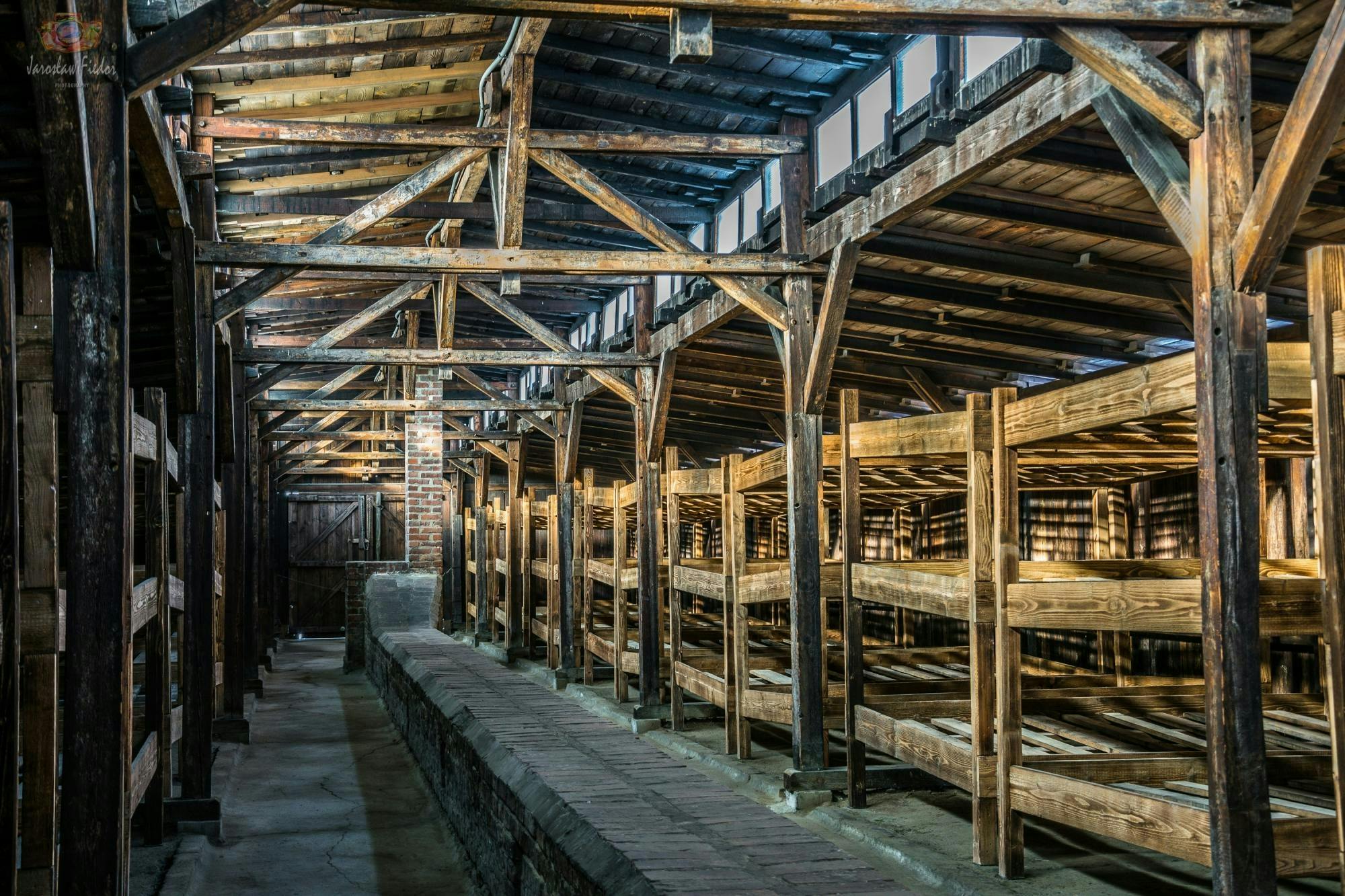
At Auschwitz I, the visit usually moves through preserved brick blocks and permanent exhibitions. At Birkenau, the route is broader and more exposed, covering the railway area, barracks and ruins associated with mass extermination.
The visit is emotionally intense. Exhibitions may include personal possessions, photographs, documents and evidence of the crimes committed at the site. Visitors should expect periods of silence and may need time after the tour to process what they have seen.
There may be a transfer between Auschwitz I and Birkenau by the tour vehicle or another authorised service, depending on the day’s organisation. Follow the guide and driver closely because departure times between sections are fixed.
Visiting Auschwitz I
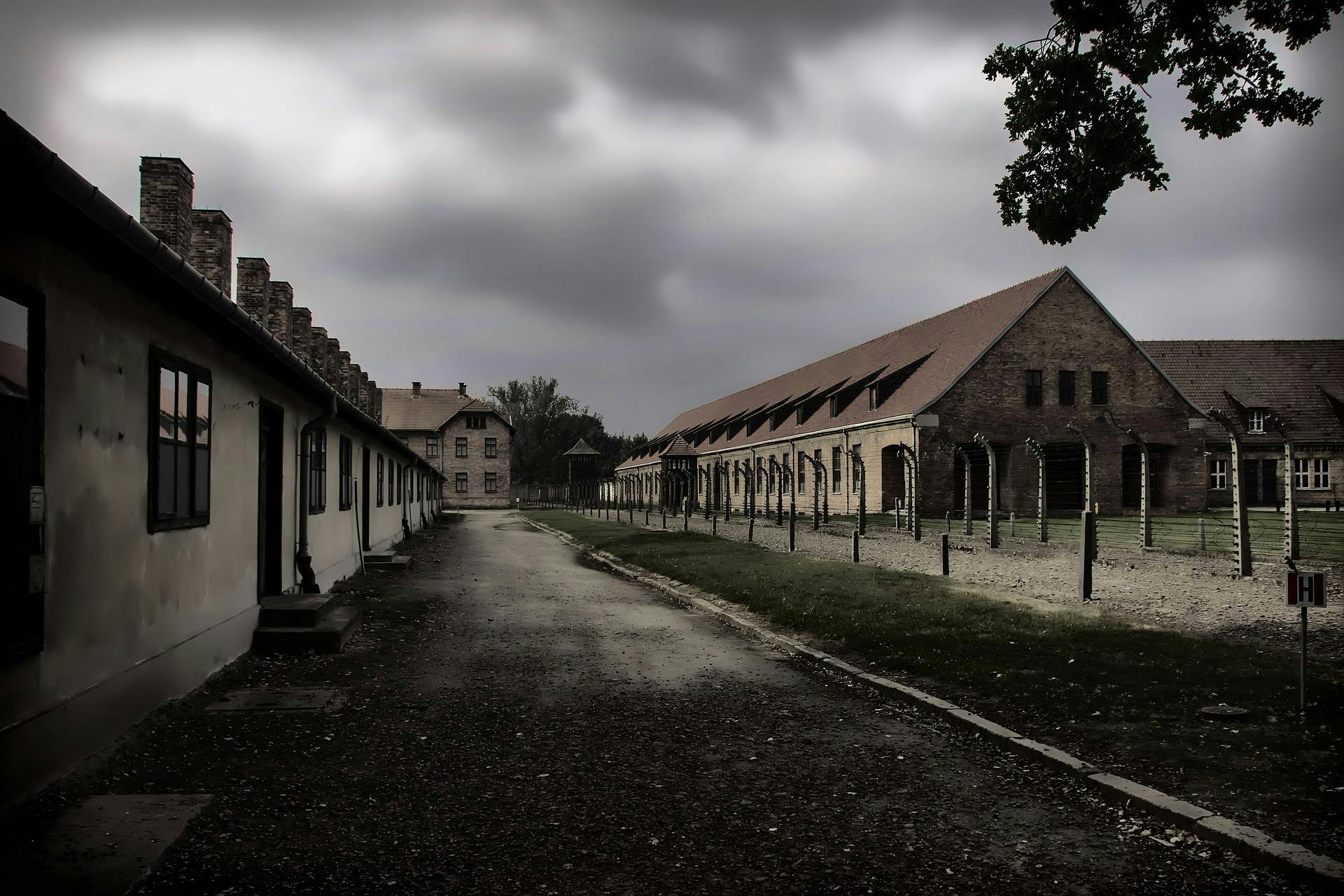
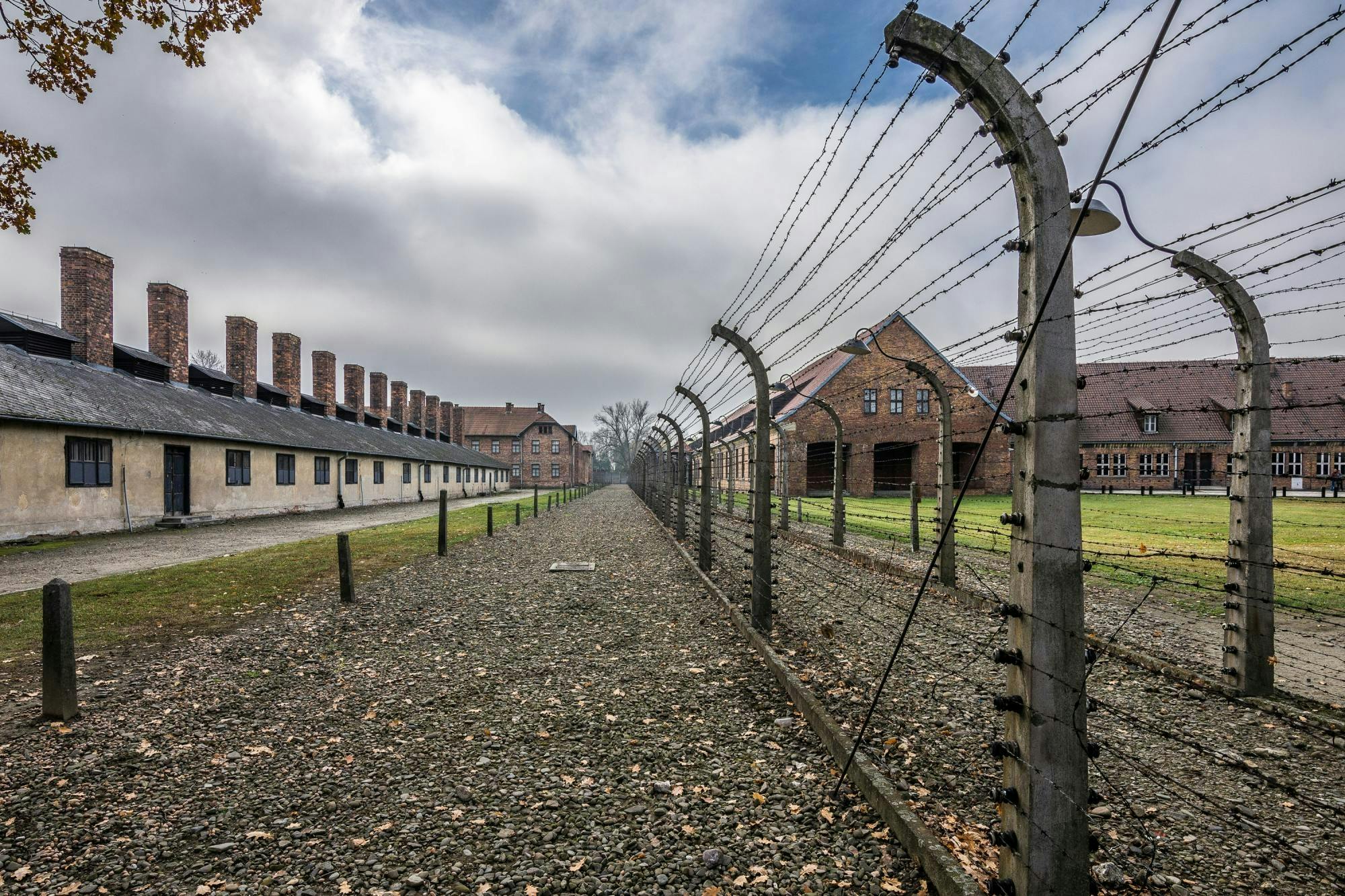
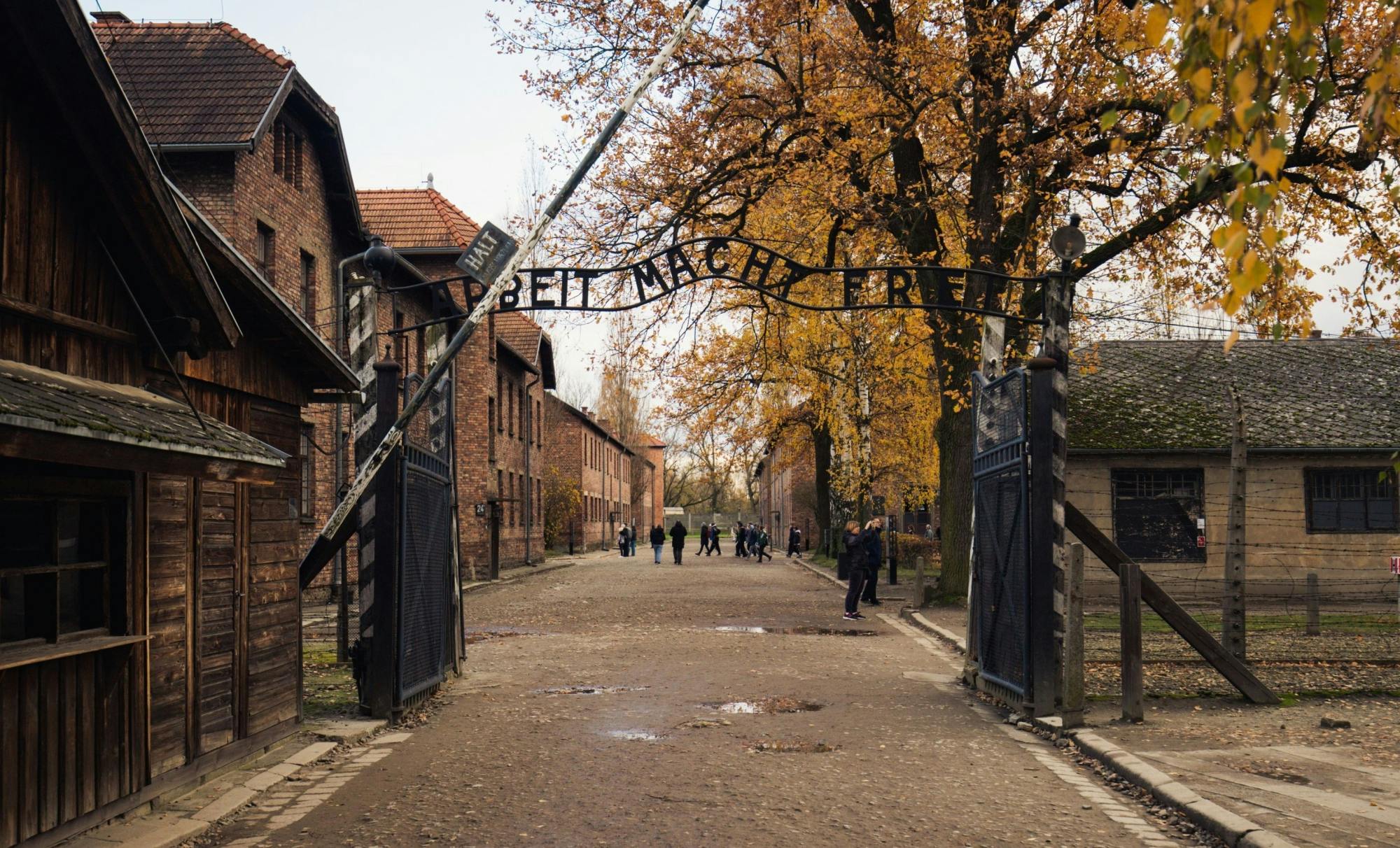
Auschwitz I was the original main camp and administrative centre of the wider complex. It contains rows of preserved brick barracks, camp fencing, guard towers and exhibitions documenting the history of the prisoners and victims.
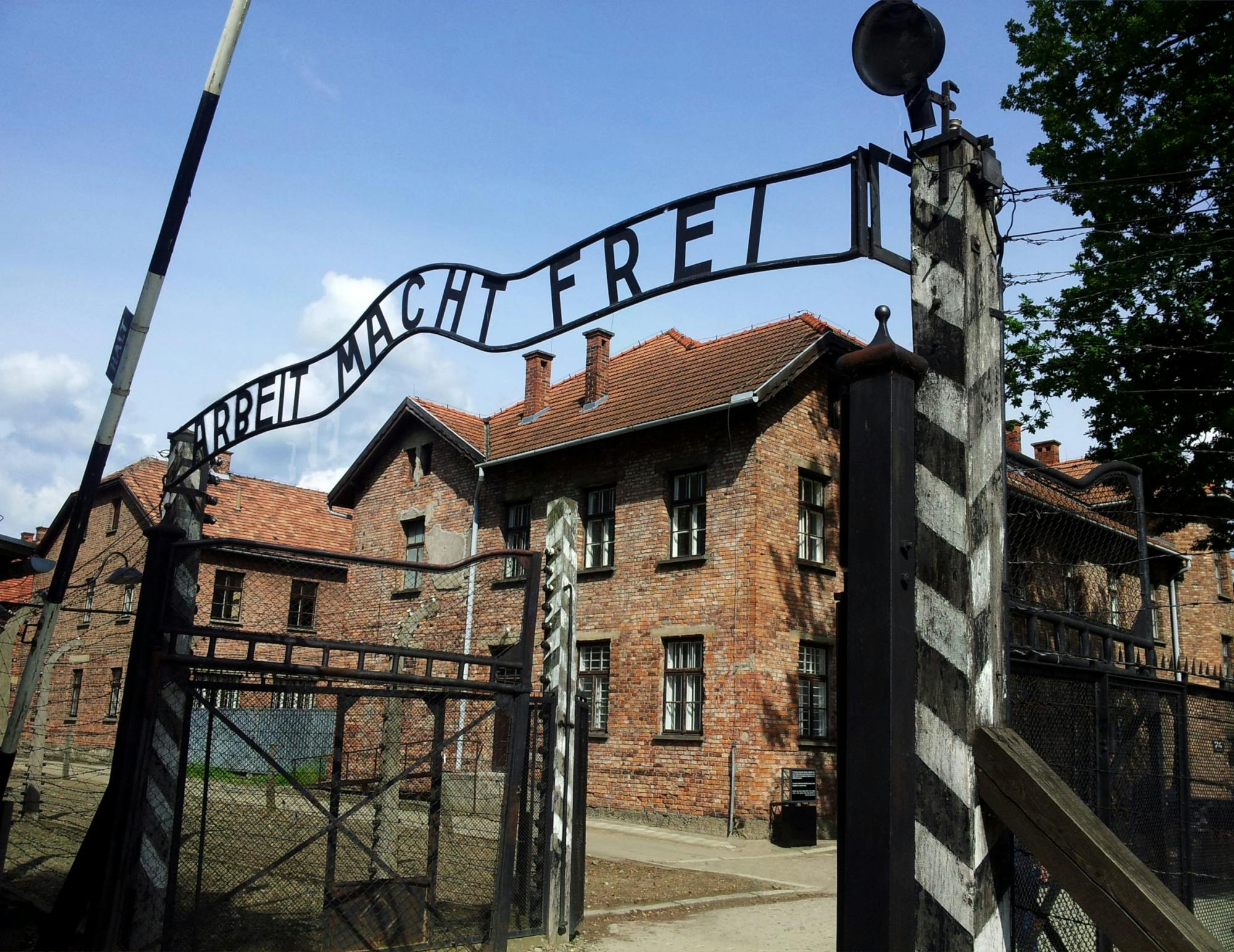
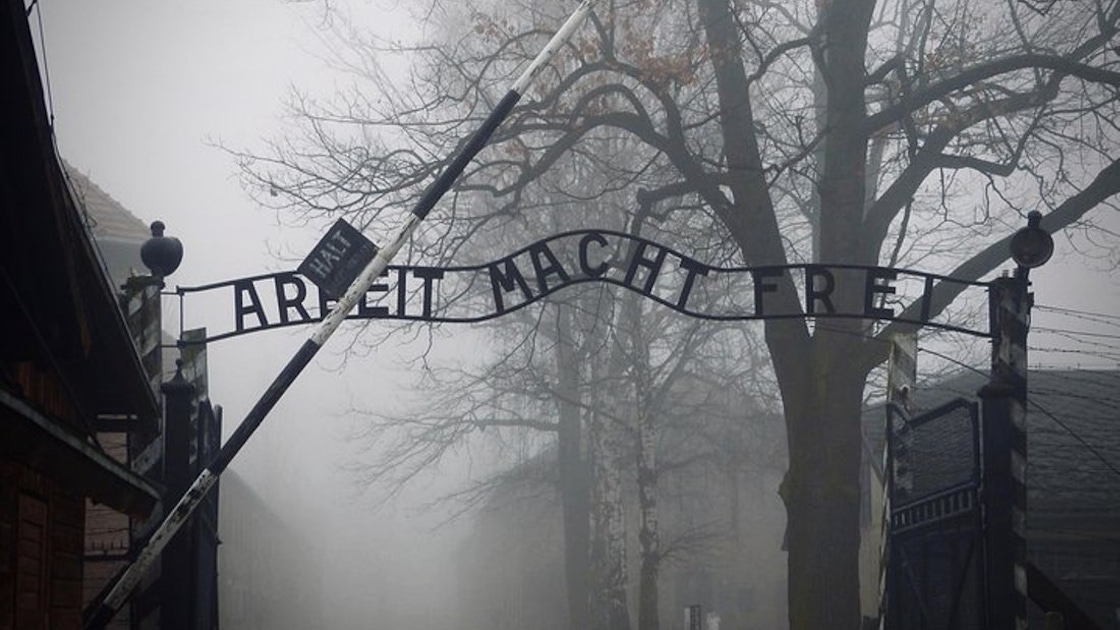
The route commonly passes beneath the gate bearing the cynical German inscription “Arbeit macht frei,” usually translated as “Work sets you free.” The phrase became one of the most recognisable symbols of the camp system’s cruelty and deception.
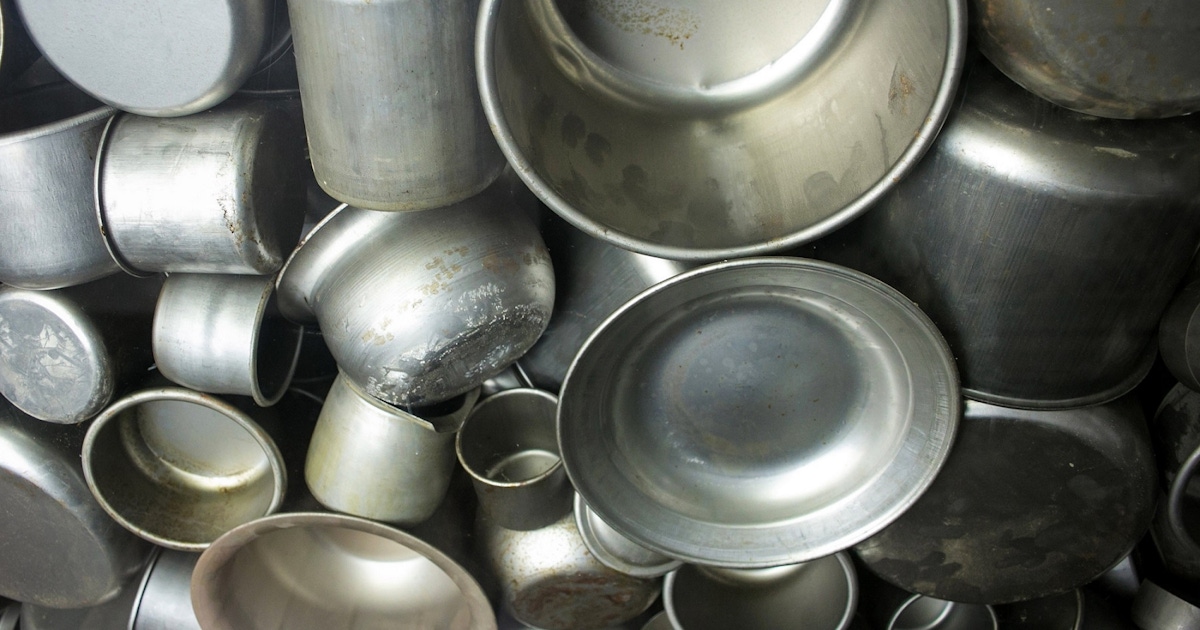
Inside the former blocks, exhibitions present documents, photographs and objects taken from deportees. Some displays are deeply distressing because they show the scale of deportation and the individuality of people whose lives were destroyed.
The Musement listing also refers to traces of wartime crimes and the remains of a gas chamber and crematorium. The precise route through Auschwitz I is controlled by the museum and may not include every exhibition.
Block 11 and the area between Blocks 10 and 11 are associated with imprisonment, punishment and executions. Access to particular interiors or basements may be restricted, and photography is prohibited in some sensitive rooms.
Visiting Auschwitz II-Birkenau
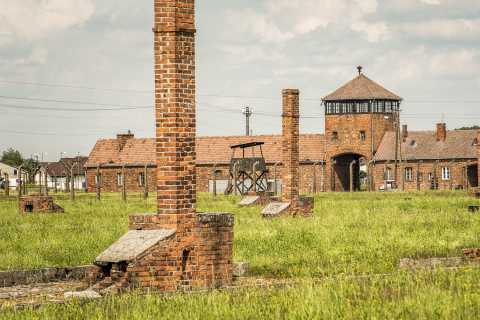
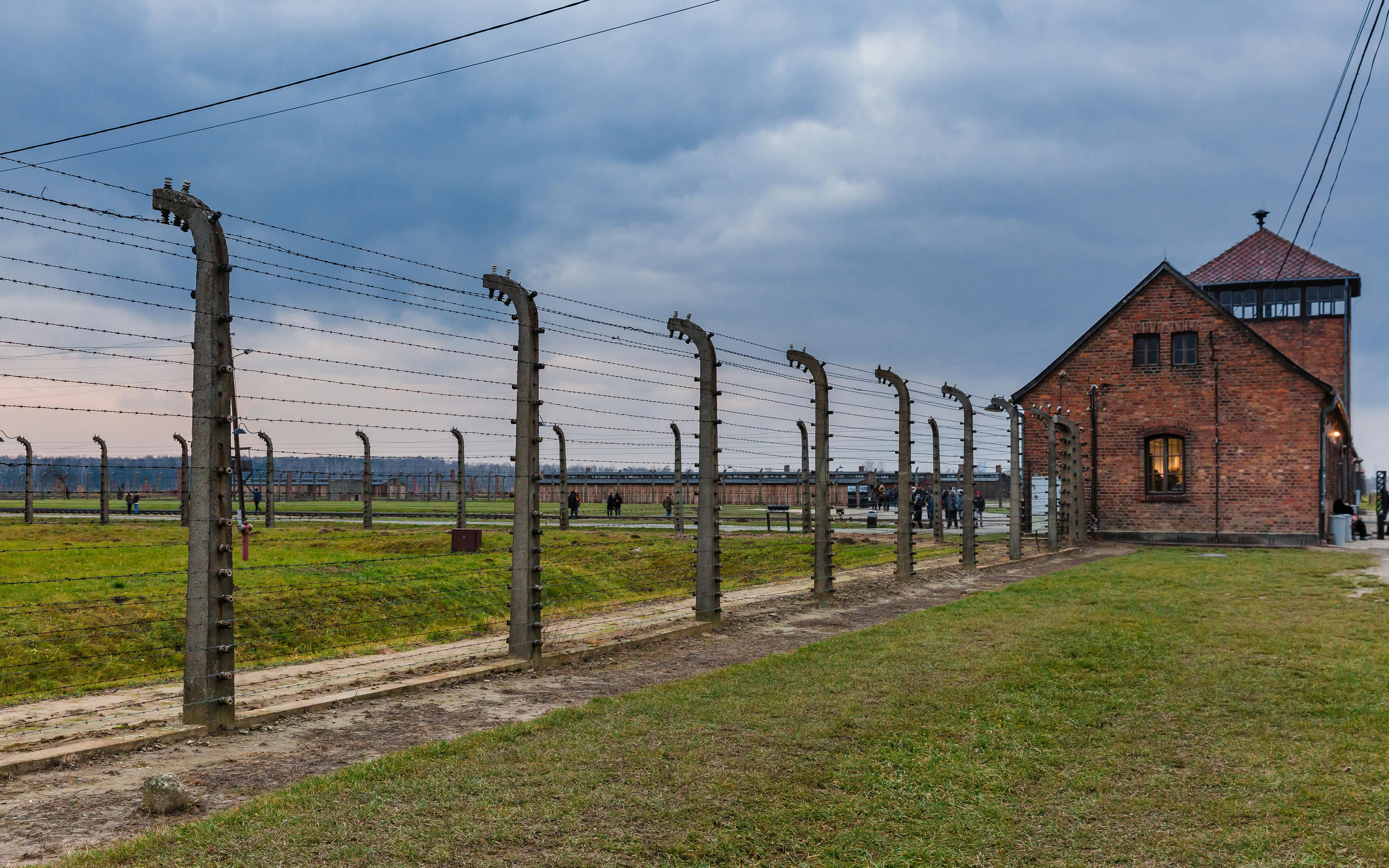
Birkenau is much larger than Auschwitz I and is characterised by open ground, surviving brick and wooden barracks, barbed-wire fencing, watchtowers, the railway line and extensive ruins.
The tour normally includes the main gate, often called the Death Gate, and the railway ramp where deportees arrived in transports. Nazi SS personnel carried out selections here, sending many people directly to the gas chambers while others were registered as prisoners and subjected to forced labour.
The guide may lead the group through prisoner barracks and explain the overcrowding, starvation, disease, forced labour and violence experienced by those imprisoned at Birkenau.
The ruins of gas chambers and crematoria II and III stand near the far end of the railway ramp. The SS attempted to destroy these facilities as the camp was evacuated, but the ruins remain central evidence of the mass murder committed there.
Birkenau is highly exposed to sun, wind, rain, snow and cold. The ground can be uneven or muddy, and distances are greater than they appear when viewed from the entrance.
The role of the museum guide
The Musement package includes a licensed Auschwitz-Birkenau museum guide. Museum guides are trained to explain the site’s history and preserved evidence within the educational standards of the Memorial.
A guide is especially valuable because the Auschwitz complex is extensive and historically complex. The preserved structures had different functions, and the history changed significantly between 1940 and 1945.
Guides help distinguish Auschwitz I from Auschwitz II-Birkenau, explain the deportation and selection process and place personal objects and buildings within their historical context.
The product describes a condensed visit of approximately three hours. The Auschwitz Memorial generally recommends about 90 minutes at each of the two main sites, while a standard guided visit is often around three and a half hours. The exact pace of this tour may therefore be relatively brisk.
Headsets may be used so participants can hear the guide without requiring loud speech in a place where quiet conduct is expected.
Transport and pickup from Krakow
Return transport is included, removing the need to coordinate trains, local buses, museum entry times and the transfer between the two memorial sites.
Travellers can choose between pickup and meeting-point options. When choosing a meeting point, Musement states that three Krakow locations are offered during checkout. When choosing accommodation pickup, the full property details must be supplied.
Old Town traffic restrictions mean that some hotels cannot be reached directly by tour vehicles. In this situation, pickup is arranged from the nearest accessible point outside the restricted zone.
The overall eight-hour duration includes road travel, pickup logistics, security checks, the guided visit and transfers between the two sites. Traffic, museum scheduling and passenger collection can extend the day.
Do not arrange a tight train, flight, restaurant reservation or evening tour immediately after the expected return. The finish time should be treated as approximate.
What is included and not included
Included
Live guided visit
Entrance fees
Licensed Auschwitz-Birkenau museum guide
Pickup and drop-off service according to the selected option
Return transport from Krakow
English-speaking driver
Pre-arranged museum entry time
Mobile voucher acceptance
Instant booking confirmation
Not included
Food
Drinks
Personal purchases
Any luggage-storage charges
Optional gratuities
Because food and drinks are not included, ask the operator whether there will be a designated break. Eating and drinking should only take place where permitted and never in a way that conflicts with the dignity of the Memorial.
Identification and security checks
Every participant must provide a full name and contact details when booking. The name supplied must match the visitor’s identification exactly.
Carry the same passport or official photo identification used for the booking. Differences in spelling, missing middle names or nicknames can create problems at entry.
All visitors must pass through security checks before entering the museum grounds. Arrive with only essential items and follow instructions from security and museum staff.
The museum controls the final admission time. Even after a tour is confirmed, internal policy, visitor volume, official ceremonies or operational decisions can cause changes or cancellation.
Musement states that if the museum cancels a tour or guide, the operator will inform travellers and offer an alternative date or programme when possible. This is different from a customer-requested cancellation, which the product terms describe as non-refundable.
Bag limits and prams
The Musement product listing sets a maximum bag size of 30 × 20 × 10 centimetres. Follow this stricter limit for this particular booking, even though the museum’s general visitor information may display a slightly larger standard allowance.
A very small handbag or compact day bag is the safest choice. Large backpacks, shopping bags and luggage should remain at the hotel or be placed in approved storage.
The museum offers paid luggage storage, but relying on it can delay the group. A bag that does not meet the tour requirement may need to be left behind.
Prams are not allowed inside the museum buildings. Families should ask the provider about storage and whether the route is practical with a young child.
Respectful conduct and photography
The Auschwitz-Birkenau Memorial requires appropriate solemnity and respect. Visitors should remember that the grounds contain sites of mass murder, human remains and the personal possessions of victims.
Speak quietly and follow the guide’s instructions.
Do not pose for playful, theatrical or attention-seeking photographs.
Do not climb on ruins, railway equipment, fences or memorial structures.
Do not touch exhibits or personal possessions.
Avoid clothing, slogans or behaviour that could be regarded as disrespectful.
Keep mobile phones silent during the guided visit.
Do not leave rubbish or consume food in memorial areas.
Personal photography is generally allowed without flash or tripods, but it is prohibited in designated sensitive spaces, including the room containing victims’ hair in Block 4 and the basements of Block 11. Always obey signs and instructions.
Commercial photography, drones and filming outside normal personal use require permission from the museum.
Accessibility and walking conditions
The Memorial preserves authentic historic terrain, which creates accessibility challenges. Visitors encounter uneven paving, gravel, thresholds, stairs, narrow doorways and long outdoor distances.
Birkenau is particularly extensive and exposed. A standard route may involve substantial walking over rough ground with limited shelter.
The museum states that wheelchairs are available free of charge at the Visitor Service Centre, but this does not make every building or path fully accessible.
The Musement listing does not provide detailed information about wheelchair-accessible vehicles, lifts, mobility assistance or adapted routes. Contact the operator before booking when a traveller uses a wheelchair, walking aid or requires regular rest stops.
People with heart, respiratory, balance or mobility concerns should consider both the physical effort and the emotional intensity of the visit.
Children and emotional readiness
The Auschwitz-Birkenau Memorial does not recommend visits for children under 14. The exhibitions and historical content include evidence of mass murder, persecution and the deaths of children.
Parents and guardians should consider a child’s maturity rather than treating the visit as an ordinary family outing. Preparation before the visit and a calm discussion afterwards can help younger visitors understand what they have seen.
The tour’s pace, security procedures, long day, restricted pram access and periods of quiet may also be difficult for young children.
Adults should prepare themselves as well. Some visitors experience sadness, anger, shock or emotional exhaustion during or after the tour. These responses are understandable.
What to wear and bring
Passport or official photo identification matching the booking name
A very small bag within the 30 × 20 × 10 centimetre product limit
The mobile voucher saved offline
Comfortable closed walking shoes
Weather-appropriate, respectful clothing
A waterproof jacket or umbrella in wet weather
Warm layers in autumn and winter
A hat and sunscreen in summer
Personal medication
A small bottle of water, to be used only where permitted
A modest snack for an authorised break because food is not included
Avoid large backpacks, heavy camera equipment and unnecessary belongings. Weather at Birkenau can feel much colder or hotter than central Krakow because the site is open and exposed.
Booking and planning tips
Enter every participant’s full legal name exactly as shown on their identification.
Understand that this product is non-refundable and cannot be changed under the listed policy.
Choose the pickup or meeting-point option carefully before payment.
Monitor email one or two days before departure for the final pickup time.
Carry a bag no larger than 30 × 20 × 10 centimetres.
Bring photo identification and the booking voucher.
Wear sturdy shoes suitable for rough ground and long periods of walking.
Dress respectfully and prepare for changing weather.
Eat beforehand and carry a small snack for any authorised break.
Do not schedule a tight onward connection after the expected return.
Contact the operator in advance about mobility requirements.
Consider carefully before bringing a child under 14.
Keep photography discreet and observe all prohibited-photo signs.
Allow quiet time after the visit rather than immediately moving into a celebratory activity.
Check for any museum closures, official ceremonies or changed access instructions close to the date.
Frequently asked questions
How long is the Auschwitz-Birkenau tour from Krakow?
Musement lists the complete excursion as approximately eight hours, including transport, security procedures and the guided visit.
How long is the guided visit inside the Memorial?
The product describes a condensed visit of approximately three hours. The exact duration and route can change according to museum operations.
Does the tour visit both Auschwitz and Birkenau?
Yes. The advertised itinerary includes Auschwitz I and Auschwitz II-Birkenau.
Is hotel pickup included?
Pickup and drop-off are included with the appropriate option. Hotels inside restricted-traffic areas may use a nearby accessible meeting point.
Can I choose a central meeting point instead?
Yes. Musement states that three meeting-point choices are offered during checkout.
Are admission fees included?
Yes. Entrance fees and a pre-arranged museum entry time are included.
Is the guide licensed by the museum?
Yes. The package includes a licensed Auschwitz-Birkenau museum guide.
What language is the tour?
The listing is for an English-language tour with an English-speaking driver.
Do I need identification?
Yes. The name on the identification must exactly match the name entered during booking.
What size bag can I take?
The Musement listing sets a maximum size of 30 × 20 × 10 centimetres. Use a very small bag to avoid problems at security.
Are food and drinks included?
No. Food and drinks are not included.
Is the tour suitable for children?
The Memorial does not recommend visits for children under 14 because of the distressing historical content and character of the site.
Is the tour wheelchair accessible?
Some assistance may be possible, but authentic terrain and historic buildings make access difficult. Confirm the vehicle and route arrangements with the operator before booking.
Can I take photographs?
Personal photography is generally permitted without flash or tripods, except in designated sensitive areas. All signs and guide instructions must be followed.
Can I cancel or change the booking?
No. Musement displays this product as non-refundable and not changeable under the partner’s policy.
Can the pickup time change?
Yes. The museum may alter the admission time, so final pickup details are normally sent one or two days before departure.
How much does the tour cost?
Musement showed prices from £53.00 when checked on 22 June 2026. The final amount depends on the travel date and selected pickup arrangement.
Important: Entry times, pickup schedules, route access and guide availability are controlled by the museum and may change. Review the final confirmation carefully and approach the Memorial with the respect appropriate to a site of mass murder and remembrance.
Ready to book Auschwitz-Birkenau Guided Tour from Kraków?
Check the supplier for current availability, pricing, inclusions and booking conditions.
Memorial and Museum Auschwitz-Birkenau Poland Book your Memorial and Museum Auschwitz-Birkenau tickets online. Save time and money with our best price guarantee. Make the most of your visit to Oswiecim. Check current availability, inclusions and booking conditions.
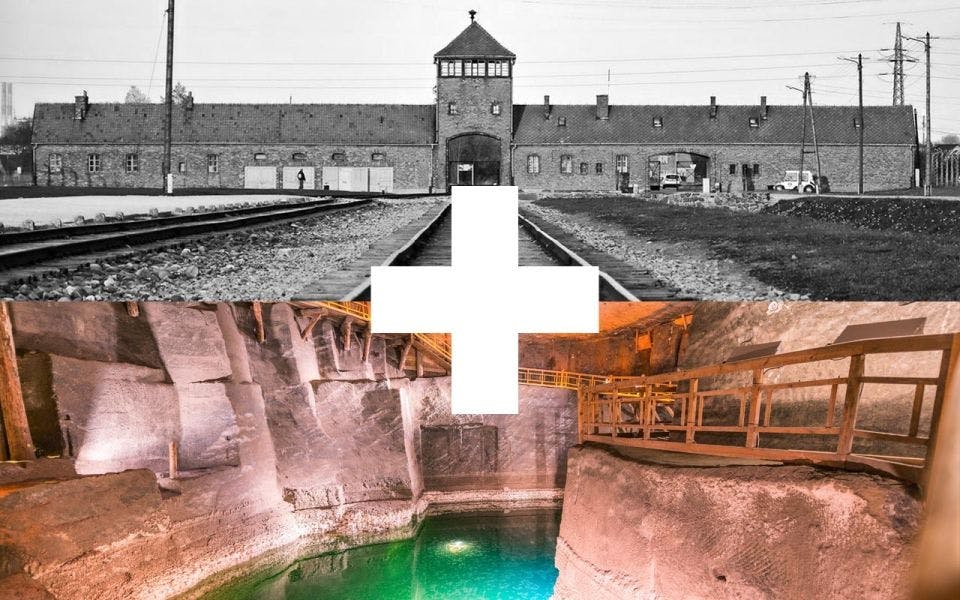
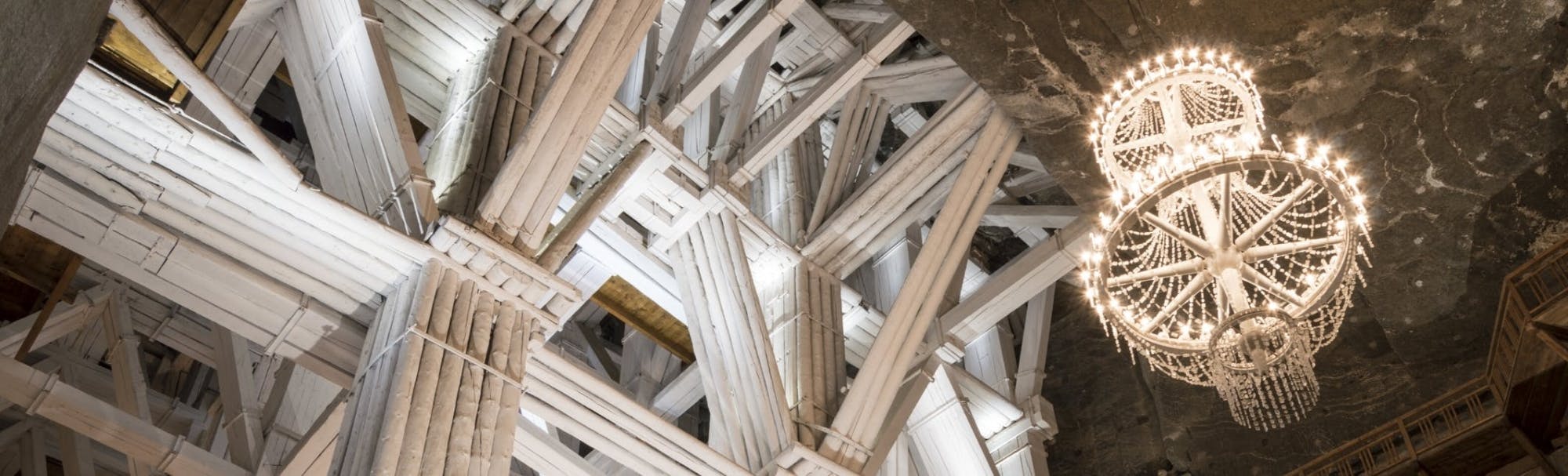
Full-day Tour of Auschwitz-Birkenau and Wieliczka Salt Mine from Krakow Poland Plan Full-day Tour of Auschwitz-Birkenau and Wieliczka Salt Mine from Krakow, a guided sightseeing experience, with practical tips on timing, inclusions and what to check before booking. Compare current availability, prices and booking conditions before you go.
Auschwitz - Birkenau guided Memorial tour from Krakow Poland Plan Auschwitz - Birkenau guided Memorial tour from Krakow, a guided sightseeing experience, with practical tips on timing, inclusions and what to check before booking. Compare current availability, prices and booking conditions before you go.