Port Arthur Tasmania: The Powerful Story Behind Australia’s Most Notorious Penal Settlement
Port Arthur, located on Tasmania’s rugged Tasman Peninsula, is one of Australia’s most historically significant and hauntingly beautiful destinations. Once a feared penal colony of the British Empire, today it stands as a deeply moving heritage site that tells the story of punishment, reform, resilience, and remembrance.
The Remote Penal Colony That Shaped Early Australia
Port Arthur was established in 1830 during the era when Britain transported convicts to Australia. The location was chosen deliberately. Surrounded by water and dense forest, the Tasman Peninsula formed a natural prison that was extremely difficult to escape.
Convicts arriving at Port Arthur were typically repeat offenders who had already been transported to Australia but committed further crimes. Authorities intended the settlement to be both a punishment facility and a place of labour that would contribute to the colony’s development.
The site quickly became one of the most important penal settlements in the Australian colonies. At its peak, thousands of convicts, soldiers, and administrators lived and worked here.
Rather than relying solely on physical punishment, Port Arthur became known for experimenting with a controversial system of psychological discipline that was considered progressive for its time.
The Silent System: A Harsh Experiment in Psychological Punishment
One of the most distinctive aspects of Port Arthur was the introduction of the Separate Prison in the 1840s. Inspired by prison reform movements in Britain and the United States, this facility aimed to reform convicts through isolation and reflection rather than constant physical punishment.
Prisoners were forced to remain silent at all times. When they moved through the prison, they wore hoods so they could not see other inmates. Even during chapel services, prisoners sat in narrow cubicles so they could hear the sermon but never see the person beside them.
The theory was that isolation would encourage moral reflection and repentance. In reality, many prisoners experienced severe mental distress under these conditions.
Today, visitors walking through the restored prison cells often remark that the atmosphere remains deeply unsettling, offering a powerful reminder of the psychological toll of early prison systems.
Hard Labour and Industry at Port Arthur
While imprisonment was severe, Port Arthur was also a working settlement that produced goods for the wider colony.
Convicts laboured in several industries including:
Shipbuilding and timber harvesting
Stone quarrying and brickmaking
Agriculture and food production
Construction of buildings and infrastructure
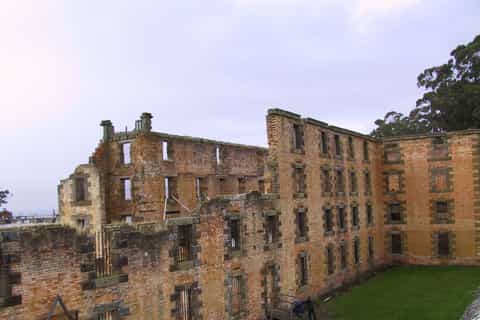
One of the most remarkable achievements of the settlement was the extensive network of buildings and docks created largely by convict labour. Many of these structures still stand today and form the core of the heritage site.
The shipyard in particular was highly productive, building vessels used throughout the Australian colonies.
The Dramatic Natural Prison of the Tasman Peninsula
The geography of Port Arthur played a major role in its operation as a prison.
The only land access to the peninsula was a narrow strip called Eaglehawk Neck. Authorities stationed guards and fierce dogs there to prevent escapes. The waters surrounding the peninsula were also believed to be shark-infested, adding another deterrent.
Because of this natural isolation, Port Arthur became known as one of the most secure prisons in the British Empire.
Despite these barriers, a few daring escape attempts occurred. Some convicts disguised themselves or attempted to swim across dangerous waters, though very few succeeded.
The End of Transportation and Closure of the Prison
Transportation of convicts to Tasmania officially ended in 1853. Over time the penal settlement began to decline, and by 1877 Port Arthur was closed as a prison.
After the closure, the area gradually transformed into a small township. Many of the original buildings fell into ruin, while others were repurposed by local residents.
Interestingly, the town was briefly renamed Carnarvon in an attempt to distance the community from its convict past. However, the historical significance of Port Arthur eventually led to preservation efforts rather than erasure.
Port Arthur Today: One of Australia’s Most Important Heritage Sites
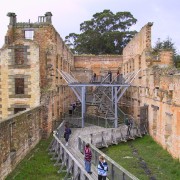
Today Port Arthur is protected as part of the Australian Convict Sites World Heritage listing. The site attracts visitors from around the world who come to explore the preserved ruins, restored buildings, and museum exhibits.
Key areas visitors often explore include:
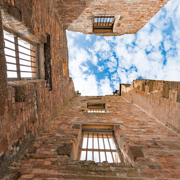
The Penitentiary ruins
The Separate Prison
The historic church and gardens
The dockyards
The Isle of the Dead cemetery
Guided tours, harbour cruises, and evening ghost tours help visitors better understand both the history and the human stories connected to the settlement.
A Place of Reflection and Remembrance
Port Arthur is also remembered for a modern tragedy. In 1996, the Port Arthur massacre occurred nearby, leading to significant changes in Australian gun laws. A memorial garden now honours those who lost their lives.
This additional layer of history makes Port Arthur not only a place to learn about colonial Australia but also a place of quiet reflection.
Planning a Visit to Port Arthur
Port Arthur is located approximately 95 kilometres southeast of Hobart and can be reached by car in about 90 minutes. The journey itself is scenic, passing through coastal landscapes and small Tasmanian communities.
Nearby towns and areas worth exploring include:
Hobart – Tasmania’s capital and main travel hub
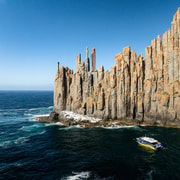
Eaglehawk Neck – known for dramatic coastal rock formations
Taranna – a small community near the Tasmanian Devil Unzoo
Nubeena – the local service town of the Tasman Peninsula
Many visitors combine Port Arthur with a broader exploration of the Tasman Peninsula, including walks, coastal viewpoints, and wildlife experiences.
Why Port Arthur Remains One of Australia’s Most Fascinating Historic Sites
Few places in Australia present history as powerfully as Port Arthur. The preserved ruins, dramatic natural setting, and detailed historical interpretation make it possible to understand the realities of the convict era in a very personal way.
For historians, travellers, and anyone interested in Australia’s past, Port Arthur offers an unforgettable journey into the stories that shaped the nation.
Walking among the stone ruins and quiet gardens, it becomes clear that Port Arthur is not just a historic site — it is a place where the past still speaks.
Frequently Asked Questions About Port Arthur Tasmania
Why was Port Arthur chosen as a penal colony?
Port Arthur’s isolated position on the Tasman Peninsula made it extremely difficult for prisoners to escape. The narrow land connection at Eaglehawk Neck and surrounding waters created a natural barrier.
When did Port Arthur operate as a prison?
The settlement operated as a penal colony from 1830 until 1877.
How far is Port Arthur from Hobart?
Port Arthur is approximately 95 kilometres from Hobart and takes about 90 minutes to reach by car.
Is Port Arthur a UNESCO World Heritage Site?
Yes. Port Arthur is included in the Australian Convict Sites World Heritage listing because of its importance in the history of convict transportation.
Can visitors explore the original prison buildings?
Yes. Many of the original buildings and ruins remain preserved, including the Penitentiary, Separate Prison, and historic church.
Sponsored Popular Items
Quick take: Musement.com offers a worldwide selection of tours and attractions
From Port Arthur: Tasman Island Wilderness Cruise Australia This Tasman Island cruise provides an unforgettable 3-hour wilderness trip along the spectacular coastline between Port Arthur and Eaglehawk Neck in southern Tasmania.
Port Arthur: Cape Raoul Wilderness Cruise Australia Discover the dramatic cliffs, caves, and arches of the Tasman Peninsula on a cruise from Port Arthur Historic Site. Marvel at the towering dolerite columns of Cape Raoul.
Hobart: Port Arthur, Harbor Cruise and Isle of the Dead Tour Australia Learn about Port Arthur's convict era and gain insights into its past on a guided tour from Hobart. Explore Tasman National Park, cruise along Carnarvon Bay, and walk around the Isle of the Dead.
Cruise Ship - Port Arthur Shore Excursion - Hobart Australia Created for cruise ships arriving & docked in Hobart only. We will tailor the tour based on your arrival and departure times. We will visit the Port Arthur Historic Site & some local producers.
Isle of the Dead, Port Arthur Australia Book your Isle of the Dead, Port Arthur tickets online. Save time and money with our best price guarantee. Make the most of your visit to Port Arthur, Australia.
Hobart: Port Arthur & Tasman National Park Full-Day Trip with Cruise Australia Visit Port Arthur, a compelling and dramatic reminder of Australia’s convict past and the early settlement known as the Colony of Van Diemen's Land. See the main sights of Tasman National Park.
Tasman Peninsula Tour, Cruise & Port Arthur Historic Site Australia Join the ultimate Tasman Peninsula day tour from Hobart that includes a visit to the Port Arthur Historic Site. Enjoy a return guided bus tour from Hobart, an award-winning wilderness cruise, morning tea, and lunch.
Port Arthur Tasman Sights with Harbour Cruise Australia Explore the rich history of the Port Arthur Historic Site, gaze in awe at the spectacular scenery of the Tasman Peninsula, and taste exquisite hand-forged chocolates and lavender-based produce.
Hobart: Port Arthur, Tassie Devils, Richmond & Tasman NP Australia All-inclusive full day from Hobart - hike the Waterfall Bay clifftop track, watch a Tasmanian Devil feeding, explore Port Arthur Historic Site, and stop in historic Richmond on the way home.