East Salalah Mountain Safari: Wadi Darbat, Jabal Samhan and Dhofar’s Wild Green Mountains
An East Salalah Mountain Safari is one of the best ways to experience the dramatic natural beauty of Oman’s Dhofar region. This scenic journey takes you away from Salalah city and into a landscape of green wadis, limestone cliffs, mountain viewpoints, waterfalls, coastal villages, camels, sinkholes and misty highlands.
The route is especially popular during the Khareef season, when monsoon clouds turn the mountains around Salalah green and cool. However, it is also a rewarding trip outside Khareef, when the landscape becomes drier, clearer and more rugged, with sweeping views across valleys, cliffs and the Arabian Sea.
Sponsored Popular Items
Quick take: Musement.com offers a worldwide selection of tours and attractions
Full-Day Mountain Safari from Salalah - Outdoor Adventure Oman Full-Day Mountain Safari from Salalah places landscapes, habitats or wildlife at the centre of the experience. Check current availability, inclusions and booking details before you go.
What Is the East Salalah Mountain Safari?
The East Salalah Mountain Safari is a guided sightseeing trip through the eastern side of Salalah and the Dhofar mountains. It usually combines natural attractions, cultural stops and scenic viewpoints in one day.
Typical highlights include Wadi Darbat, Jabal Samhan, Taqah, Tawi Atair Sinkhole, baobab trees, mountain roads, coastal views and sometimes Sumhuram archaeological site. Depending on the operator, the route may also include camel sightings, waterfalls, a boat ride, a local lunch, or the famous Anti-Gravity Point.
This is not a rough desert dune-bashing safari. It is better described as a mountain, wadi and countryside sightseeing tour, usually done by 4WD or comfortable private vehicle.
Why Do This Tour?
An East Salalah Mountain Safari is ideal if you want to see the natural side of Dhofar without renting a car or planning the route yourself. The area east of Salalah has scattered attractions that are much easier to visit with a driver who knows the roads, viewpoints and seasonal conditions.
The tour gives travellers a strong contrast of landscapes. In a single day, you may see green valleys, waterfalls, dry limestone plateaus, mountain cliffs, coastal villages, archaeological ruins and camels wandering near turquoise water.
It is especially worthwhile for nature lovers, photographers, families, couples, cruise passengers and travellers visiting Oman during Khareef.
Wadi Darbat
Wadi Darbat is usually the highlight of an East Salalah Mountain Safari. During Khareef, the valley becomes lush and green, with waterfalls, pools, mist and grazing camels. Outside the monsoon season, it can look drier but still beautiful, with limestone cliffs, trees, water channels and peaceful picnic areas.
Depending on the season and water levels, visitors may see cascades, larger waterfalls, calm pools and camels crossing or drinking near the water. Some tours may also offer time for a small boat ride if conditions allow.
Wadi Darbat is one of the most photogenic places near Salalah. The combination of green water, rocky hills, misty air and camels gives it a very distinctive Dhofar atmosphere.
Jabal Samhan
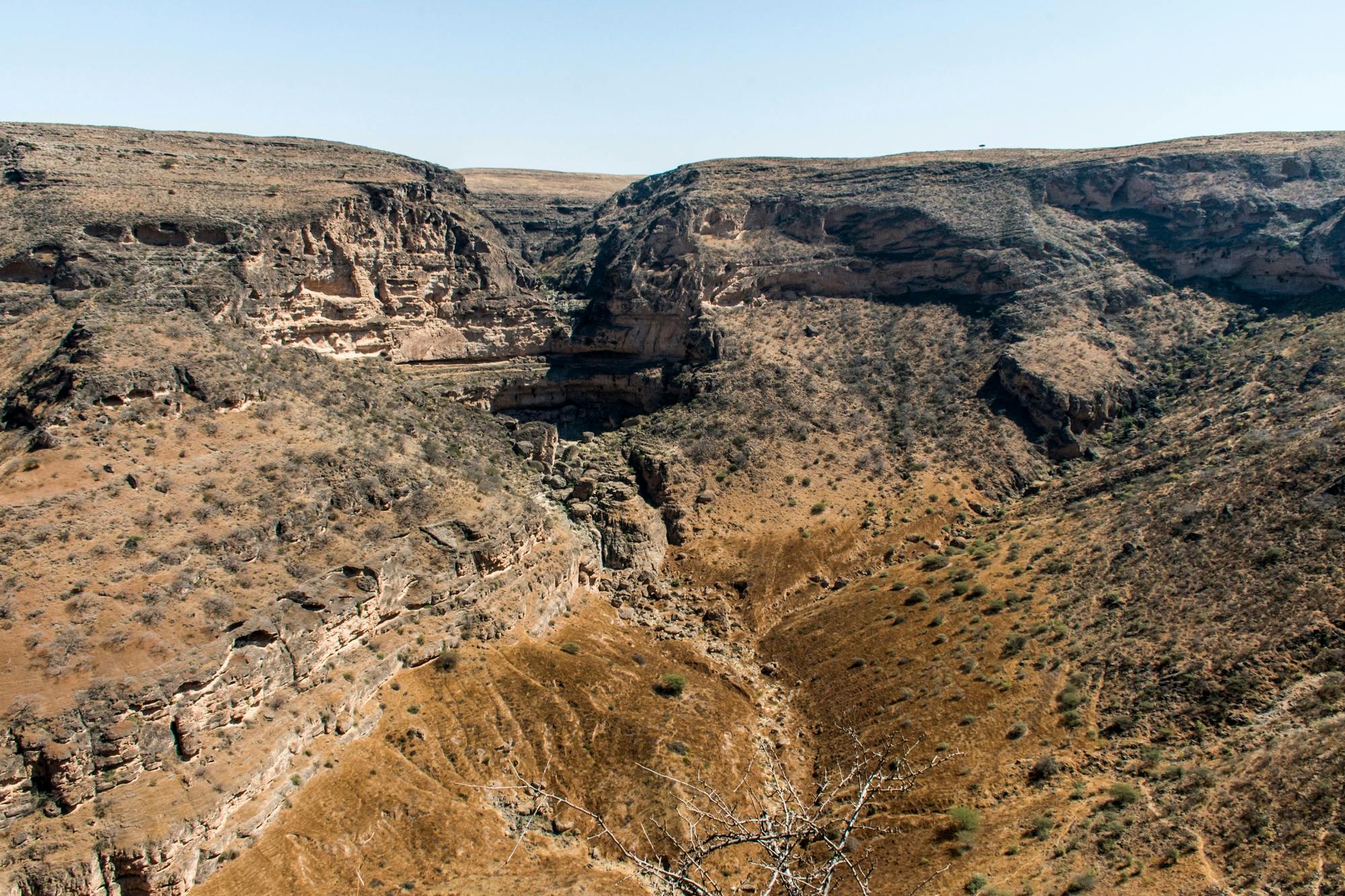
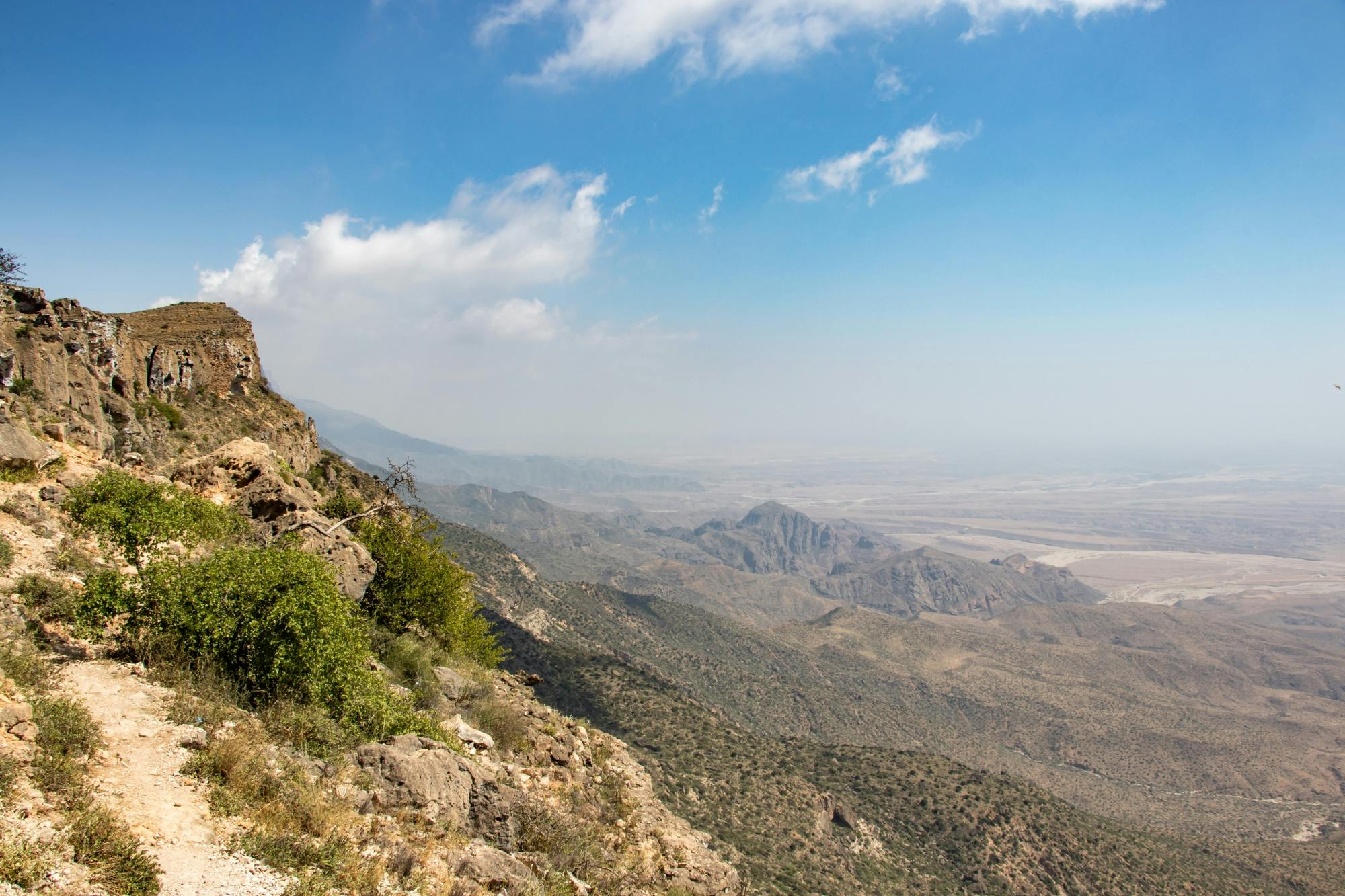
Jabal Samhan is one of the most dramatic mountain areas east of Salalah. The viewpoint is known for huge cliffs, deep valleys and wide views across the Dhofar landscape. During Khareef, clouds and mist can roll through the mountains, sometimes creating a “view above the clouds” effect.
On clear days, the scenery is vast and rugged, with rocky plateaus dropping into deep canyons. During the monsoon season, visibility may change quickly, but the mist adds atmosphere and makes the mountain feel wild and mysterious.
Jabal Samhan is one of the main reasons to choose a mountain safari rather than only visiting Salalah’s beaches and city sights.
Tawi Atair Sinkhole
Tawi Atair Sinkhole, sometimes called the “Well of Birds,” is another common stop on East Salalah tours. It is a large natural sinkhole set within the limestone landscape of Dhofar.
The site is impressive because of its scale and setting. Visitors usually view it from designated areas rather than climbing down. The surrounding mountain terrain, birdlife and geological character make it a worthwhile addition to the route.
Wear proper shoes if your tour includes walking near the viewpoint, as paths and ground surfaces can be uneven.
Baobab Trees and Mountain Landscapes
One of the most surprising features of the East Salalah route is the presence of ancient-looking baobab trees. Their thick trunks and sculptural shapes stand out against the rocky Dhofar landscape, making them a favourite stop for photography.
The baobab area gives the tour a different feel from the more familiar Arabian desert scenery. It is a reminder that Dhofar has a unique climate and landscape compared with much of Oman.
Taqah Beach and Taqah Castle
Many East Salalah tours include Taqah, a coastal town east of Salalah. Taqah Beach is known for open sea views, fishing activity and a peaceful coastal atmosphere.
Taqah Castle is another common stop. This small historic fort gives visitors a glimpse into local life, traditional architecture and Dhofar’s coastal heritage. It is not a huge fortress, but it adds useful cultural context to a route that is otherwise focused mainly on nature.
Sumhuram Archaeological Site
Some East Salalah Mountain Safari itineraries include Sumhuram, an ancient archaeological site linked with the region’s frankincense trade. The ruins overlook a scenic lagoon area near Khor Rori and help explain Dhofar’s historical importance as a centre of trade.
If your tour includes Sumhuram, it adds a valuable historical stop to the day. The site is especially interesting for travellers who want more than waterfalls and viewpoints.
Anti-Gravity Point
The Anti-Gravity Point is a fun roadside stop often included on East Salalah tours. It is promoted as a place where vehicles appear to roll uphill when placed in neutral.
The effect is generally understood as an optical illusion created by the surrounding landscape, but it is still a popular stop because it is quick, unusual and entertaining. It works best as a light-hearted break between the larger scenic attractions.
Sample East Salalah Mountain Safari Itinerary
Full-Day East Salalah Mountain Safari
Morning: Pick up from your Salalah hotel, cruise port or meeting point.
First stop: Drive east toward Taqah for beach views or a visit to Taqah Castle.
Mid-morning: Continue to Wadi Darbat for waterfalls, pools, camels and valley scenery.
Lunch: Stop at a local restaurant or have lunch included with the tour, depending on the package.
Afternoon: Visit Tawi Atair Sinkhole, baobab trees and mountain viewpoints.
Main mountain view: Continue toward Jabal Samhan for dramatic cliffs, clouds and panoramic scenery.
Optional stop: Visit Anti-Gravity Point or Sumhuram archaeological site if included.
Return: Drive back to Salalah in the late afternoon or early evening.
Best Time to Go
The most famous time to visit East Salalah is during Khareef, from around June to September. During this season, the mountains become green, waterfalls are more active, the weather is cooler and mist often covers the hills.
Khareef is also the busiest time. Expect more local and regional visitors, more traffic near popular sights and higher demand for hotels and tours.
Outside Khareef, the landscape is drier but still impressive. You may get clearer mountain views, fewer crowds and easier road conditions. Waterfalls may be reduced or absent, but the cliffs, sinkholes, coastal scenery and desert-like mountain views remain worthwhile.
What to Wear and Bring
Comfortable walking shoes with good grip
Light clothing for warm weather
A light jacket or rain layer during Khareef
Sunglasses and sunscreen outside misty conditions
Reusable water bottle
Camera or phone with enough battery
Small cash for snacks, tips or entry fees
Modest clothing for cultural stops such as forts or villages
Motion sickness tablets if you are sensitive to winding mountain roads
Practical Travel Tips
Choose a 4WD or Experienced Local Driver
Some routes involve mountain roads, changing weather and remote viewpoints. A local guide or experienced driver makes the day easier, especially during Khareef when mist and traffic can affect travel times.
Check What Is Actually Included
Different operators use the name “East Salalah Mountain Safari” for slightly different routes. Before booking, check whether the tour includes Wadi Darbat, Jabal Samhan, Taqah, Tawi Atair, Sumhuram, lunch, entry fees and hotel pickup.
Start Early
An early start helps you avoid some crowds, especially during Khareef. It also gives you more flexibility if roads are busy or visibility changes in the mountains.
Expect Weather Changes
In Dhofar, especially during Khareef, weather can change quickly. You may experience mist, drizzle, bright sun and cloudy mountain views on the same day.
Do Not Expect Every Waterfall Year-Round
The waterfalls and greenery are highly seasonal. If you visit outside Khareef, enjoy the geological scenery, cliffs, caves, sinkholes and mountain views rather than expecting the full green monsoon landscape.
Respect Local Customs
Dhofar is welcoming but traditional. Dress modestly in villages, forts and public places. Ask before photographing people, especially families or locals at picnic areas.
Use the Tour as a Landscape Day
This trip is best enjoyed slowly. The beauty is in the shifting scenery: camels in water, mist on cliffs, baobab trees, mountain roads, old forts and wide views over the Dhofar countryside.
FAQs About East Salalah Mountain Safari
What does an East Salalah Mountain Safari include?
Most tours include Wadi Darbat, Jabal Samhan and several eastern Dhofar attractions such as Taqah, Tawi Atair Sinkhole, baobab trees, Anti-Gravity Point or Sumhuram. Exact inclusions vary by operator.
Is Wadi Darbat worth visiting?
Yes. Wadi Darbat is one of the most beautiful natural sights near Salalah, especially during Khareef when waterfalls, green hills and camels create a memorable landscape.
When is the best time for the East Salalah Mountain Safari?
Khareef season, from June to September, is the most famous time because the mountains become green and misty. Outside Khareef, the tour is still worthwhile for cliffs, viewpoints, sinkholes and quieter travel.
Do I need a 4WD?
A 4WD is useful for some mountain routes and viewpoints, especially if conditions are wet or if your tour goes beyond standard paved roads. If you are booking a guided safari, check what vehicle is used.
Is this tour suitable for children?
Yes, it can be suitable for families, especially children who enjoy animals, waterfalls, mountain scenery and short sightseeing stops. Parents should take care near viewpoints, cliffs, water edges and uneven ground.
Is there a lot of walking?
Most East Salalah Mountain Safari tours involve light walking rather than serious hiking. However, some stops may include uneven surfaces, viewpoints, short paths or steps.
Can I do the trip independently?
Yes, experienced drivers can visit many of the sights independently, but a guided tour is easier if you are unfamiliar with the roads, seasonal conditions or exact locations.
How long does the tour take?
Many East Salalah Mountain Safari tours take around six to eight hours, although full-day private tours can take longer depending on stops, traffic and weather.
Final Thoughts
An East Salalah Mountain Safari is one of the most rewarding day trips in Dhofar. It brings together the best of Salalah’s eastern landscapes: Wadi Darbat’s green valley, Jabal Samhan’s dramatic mountain views, Taqah’s coastal heritage, unusual baobab trees, sinkholes and seasonal waterfalls.
For the best experience, choose a tour that clearly lists its stops, start early, dress for changing weather and remember that Dhofar looks different depending on the season. During Khareef, expect mist, greenery and waterfalls. Outside Khareef, expect clearer views, drier mountains and a quieter, more rugged side of Oman.
Sponsored Popular Items
Quick take: Musement.com offers a worldwide selection of tours and attractions
Full-Day Mountain Safari from Salalah - Outdoor Adventure Oman Full-Day Mountain Safari from Salalah places landscapes, habitats or wildlife at the centre of the experience. Check current availability, inclusions and booking details before you go.
Half-Day Treasures of West Salalah – Guided Sightseeing Tour Oman Half-Day Treasures of West Salalah adds structure, local context and purposeful sightseeing to the itinerary. Check current availability, inclusions and booking details before you go.
Snorkelling Tour in Salalah – Outdoor Adventure Oman Snorkeling Tour in Salalah adds movement, scenery and a more active element to the itinerary. Check current availability, inclusions and booking details before you go.