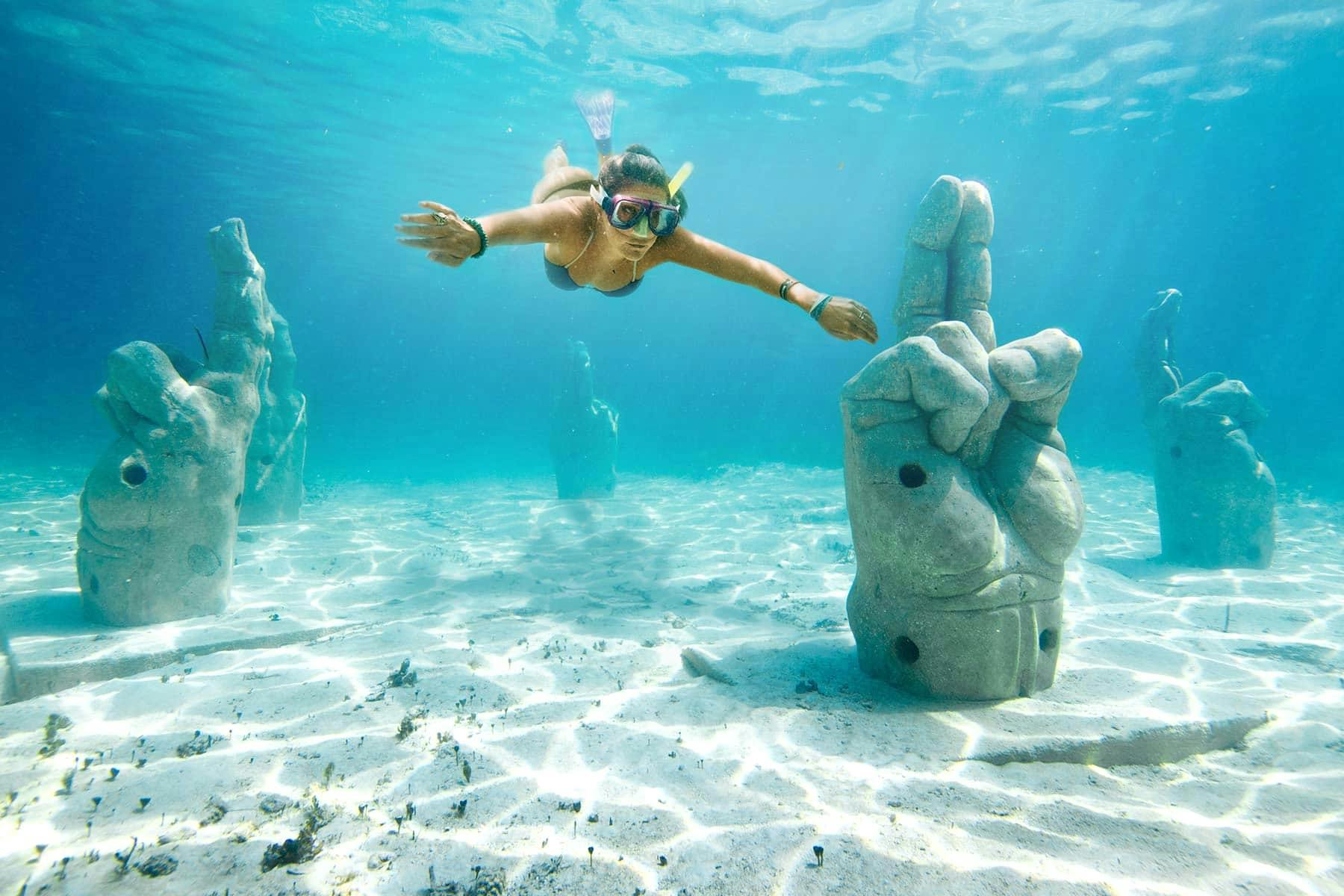
Nusa Penida is the largest of the three Nusa islands lying southeast of mainland Bali and one of Indonesia’s most dramatic coastal destinations. Towering limestone cliffs, brilliant-blue water, white-sand coves, offshore rock formations and rich marine life make it look remarkably different from the resort areas of southern Bali.
The island is home to some of Bali’s most photographed places, including Kelingking Beach, Diamond Beach, Broken Beach, Angel’s Billabong and Crystal Bay. Offshore, the protected waters surrounding Nusa Penida, Nusa Lembongan and Nusa Ceningan are internationally known for reef manta rays and seasonal sightings of mola-mola, or ocean sunfish.
A day trip from Bali is possible, but Nusa Penida is much larger and slower to travel around than many first-time visitors expect. Two nights is a much better choice if you want to see both the western and eastern sides without spending most of your visit rushing between viewpoints.
Nusa Penida at a Glance
Visitor Information
Details
Location
Southeast of mainland Bali, Indonesia
Main access
Passenger fast boat
Main Bali departure point
Sanur
Other Bali departure points
Kusamba and Padang Bai
Typical fast-boat crossing
About 30–45 minutes in normal conditions
Main visitor harbours
Banjar Nyuh/Toyapakeh and Sampalan/Buyuk area
Best-known landmark
Kelingking Beach
Best eastern-coast scenery
Diamond Beach and Atuh Beach
Marine highlight
Manta rays
Mola-mola season
Most associated with July–October
Best general weather period
April–October
Day-trip minimum
One full day
Recommended stay
2–3 nights
Best transport
Private car with local driver for most visitors
Best for
Scenery, photography, snorkelling, diving and adventure
Why Nusa Penida Is Different From Mainland Bali
Nusa Penida is not primarily a resort island. Its appeal comes from a rugged landscape where roads twist across hilly limestone terrain before suddenly reaching enormous sea cliffs and hidden beaches.
Indonesia’s Ministry of Tourism specifically warns that the island’s terrain is hilly and that some access roads and paths remain rocky and challenging. It recommends using a suitable vehicle in good condition.
This means distances on a map can be misleading. A destination that appears only a modest distance away may require a slow drive along narrow roads.
1. Kelingking Beach
Kelingking Beach is the defining image of Nusa Penida.
The viewpoint overlooks a gigantic green limestone headland projecting into intensely blue water, with a white-sand beach enclosed at its base. The unusual formation is frequently compared with the shape of a Tyrannosaurus rex.
You do not need to descend to the sand to understand why Kelingking is famous. In fact, for most day visitors, the cliff-top viewpoint is the main attraction.
Think Carefully Before Hiking Down Kelingking
The Indonesian Ministry of Tourism explicitly describes access to the beach as steep and dangerous.
The descent is not comparable with walking down a normal staircase to a beach. Parts are very steep, exposed and physically demanding, and after reaching the sand you still have to climb all the way back up.
Do not descend simply because you see other tourists doing it.
Stay at the Viewpoint If:
You have knee or balance problems
You dislike exposed heights
The ground is wet
You have limited time
You are wearing unsuitable footwear
You are not confident you can complete the return climb
The view from above is already exceptional and is the photograph most visitors actually come to see.
When to Visit Kelingking
Early morning is considerably better than the middle of a typical day-trip period. Many organised groups arrive after the first boats from Sanur have unloaded, so the narrow photo areas can become extremely busy.
If you stay overnight on Nusa Penida, Kelingking is one of the places where you gain the greatest advantage over day-trippers.
2. Broken Beach
Broken Beach is not really a swimming beach. It is a remarkable circular coastal inlet created in the limestone, with seawater entering beneath a huge natural rock arch.
The surrounding cliff-top path lets you look into the turquoise cove and towards the natural bridge connecting the two sides of the formation.
It is one of the island’s easiest major sights to appreciate without undertaking a serious beach descent.
3. Angel’s Billabong
Angel’s Billabong lies beside the Broken Beach area and is normally visited during the same stop.
It is a natural rock pool beside the ocean. Although photographs sometimes show people inside the pool, conditions can change quickly when waves break across the outer rocks.
Do not enter the water merely because other visitors are doing so. Follow local restrictions and remain out when waves or swell make the area unsafe.
Broken Beach and Angel’s Billabong Work Well Together
The two attractions are close enough that they are normally combined rather than treated as separate journeys.
A typical western-island itinerary therefore becomes:
Crystal Bay provides a very different experience from the cliff viewpoints.
Indonesia’s Ministry of Tourism highlights its clear water, sunset scenery and popularity with divers and snorkellers because of the area’s marine biodiversity.
It is a useful final stop after a day spent looking down at beaches from cliffs because you can actually reach the shoreline easily.
Sea conditions should still determine whether you enter the water. Nusa Penida is surrounded by powerful currents and is not a place to assume that every attractive-looking beach is safe for swimming.
5. Diamond Beach
Diamond Beach is one of the great sights of eastern Nusa Penida.
The viewpoint looks across brilliant turquoise water towards white limestone pinnacles rising offshore. A stairway cut into the cliff provides access towards the beach below.
The Ministry of Tourism lists Diamond Beach as one of Nusa Penida’s major natural attractions alongside Atuh Beach.
Do You Need to Walk Down to Diamond Beach?
No. The upper viewpoint is worthwhile even if you do not want to tackle the staircase.
The descent is steep and exposed in places. Going down also commits you to climbing back up in tropical heat, so consider your fitness, footwear and the amount of time available.
For travellers with reduced mobility, the best strategy is usually to enjoy the spectacular upper views rather than trying to reach the sand.
Swimming at Diamond Beach
Do not assume Diamond Beach is a conventional swimming beach. It faces open ocean and can experience significant surf and currents.
Treat swimming as dependent entirely on conditions on the day rather than as a guaranteed part of the visit.
6. Atuh Beach
Atuh Beach lies in the same eastern section of the island as Diamond Beach, making the two an obvious combination.
The setting consists of steep limestone cliffs, a small beach and dramatic offshore rock formations.
Visitors with only one eastern-island day can see both without crossing the island twice.
7. Manta Point
For many travellers, the best reason to visit Nusa Penida is underwater.
Reef manta rays are present around Nusa Penida throughout the year. The Coral Triangle Center reports more than 600 individual reef manta rays identified in the protected area since monitoring began.
Manta Point is one of the principal sites where boats take divers and snorkellers hoping to encounter them.
Manta Rays Are Wild Animals
A manta sighting is never guaranteed.
This is a natural marine environment, not an aquarium. Weather, currents, visibility and the movement of the animals determine what you see.
Choose an operator that follows marine-protected-area codes of conduct rather than one that promises guaranteed close contact.
Respect the Manta Rays
The Nusa Penida Marine Protected Area uses codes of conduct developed with dive operators and conservation organisations to reduce the impact of tourism on manta rays and mola-mola.
A responsible encounter means:
Do not touch manta rays
Do not chase them
Do not block their direction of travel
Follow your guide’s positioning instructions
Avoid standing on coral
Keep fins away from the reef
The objective is to watch normal animal behaviour rather than force an interaction.
8. Mola-Mola – Ocean Sunfish
Nusa Penida is also internationally known among divers for mola-mola.
The Coral Triangle Center explains that nutrient-rich upwelling becomes particularly important from July through October, when mola-mola are attracted towards cleaning stations around the islands.
Seeing one is still never guaranteed, and many of the dive sites where they occur can experience strong currents. Choose an appropriately qualified dive operator and be accurate about your experience level.
9. Goa Giri Putri
Nusa Penida is not only about beaches.
Goa Giri Putri is a Hindu temple complex inside a huge cave and is one of the island’s most distinctive cultural attractions. Indonesia’s Ministry of Tourism specifically recommends it for visitors interested in the island’s spiritual life.
The unusual aspect is the entrance: visitors pass through a relatively small opening before emerging into a surprisingly large cavern used for worship.
This remains an active sacred place, not simply a tourist cave. Dress appropriately, follow temple etiquette and avoid disrupting ceremonies.
10. Teletubbies Hill
Teletubbies Hill provides a change from the coastline. The landscape is composed of rounded hills that become particularly green during and after wetter periods.
The Ministry of Tourism includes it among the island’s recognised trekking and scenic attractions.
It fits most naturally into an eastern or central-island itinerary rather than a rushed western day trip.
How to Get to Nusa Penida From Bali
There is no road bridge from Bali.
Passenger fast boats operate from Sanur, Kusamba and Padang Bai. Indonesia’s Ministry of Tourism gives the normal crossing time as approximately 30–45 minutes, depending on weather and the harbour used.
Sanur is the most convenient departure point for many travellers staying around southern Bali because it has a large purpose-built fast-boat terminal and numerous daily departures.
Current Sanur Fast-Boat Schedule Example
Schedules vary by company, so there is no single universal Nusa Penida timetable.
As of August 2026, Angel Billabong Fast Cruise, for example, publishes Sanur departures at:
Sanur → Nusa Penida
7:30 am
8:30 am
10:00 am
2:15 pm
5:00 pm
Its currently published Nusa Penida → Sanur departures are 7:20 am, 9:00 am, 1:00 pm, 4:00 pm and 5:00 pm.
Do not build a trip around these times without reconfirming. Boat schedules can change because of weather, sea conditions and operational requirements.
How Early Should You Arrive at Sanur Harbour?
Allow substantially more time than the 30–45 minute boat crossing itself.
Sanur can be busy, particularly during summer and holiday periods. A sensible approach is to arrive approximately 45–60 minutes before departure unless your operator gives different instructions.
You need time to find the correct company desk, check in, deal with luggage and reach the boarding area.
The Boat Can Be Rough
The stretch of sea between Bali and Nusa Penida can be choppy.
If you are prone to seasickness, take appropriate precautions before boarding and choose a morning sailing when practical. Weather conditions can also delay or cancel boats.
Do not schedule an extremely tight international flight connection immediately after returning from Nusa Penida.
Where Do Boats Arrive?
Different operators use different ports.
Indonesia’s Ministry of Tourism specifically mentions Toyapakeh and Sampalan as important arrival points.
Current services also commonly use the Banjar Nyuh and Buyuk harbour areas.
Check the exact arrival harbour before arranging your hotel transfer because “Nusa Penida ferry ticket” does not always mean every company lands at the same pier.
Current Bali Foreign Tourist Levy
International visitors to Bali are currently subject to the province’s Rp150,000 foreign tourist levy per person.
The official Love Bali system states that the levy is normally paid once during the visitor’s Bali trip, rather than every time you travel between mainland Bali and Nusa Penida.
If you have already paid the Bali levy when entering the province, keep the QR-code voucher that was issued to you.
Local Nusa Penida Charges
Separate local retribution, attraction and parking charges can also apply on Nusa Penida. Current 2026 visitor information commonly reports a small island arrival levy and individual site or parking fees, but implementation and attraction tariffs have been changing during 2026.
Carry Indonesian rupiah in small denominations and confirm the actual amount at official ticket booths rather than relying on an old online list.
This is especially important because some tour prices include local admission while cheap transport-only packages may not.
Getting Around Nusa Penida
Once you land, the principal choices are:
Private car with driver
Rental car
Scooter
Organised tour vehicle
Indonesia’s Ministry of Tourism confirms that motorbikes and cars are the primary ways of exploring the island but cautions that the terrain is hilly and some roads and access tracks are challenging.
Should You Rent a Scooter?
Only if you are genuinely experienced riding scooters in difficult conditions.
Nusa Penida is not a sensible place to learn.
You may encounter:
Steep gradients
Narrow roads
Sharp corners
Uneven surfaces
Loose gravel
Heavy tourist traffic
Large vehicles sharing narrow roads
For most first-time visitors, a local driver is the safer and more relaxing option.
Private Driver Versus Group Tour
Private Driver
Best overall choice.
You determine the pace, can leave a crowded viewpoint earlier and can change the route according to road and weather conditions.
Group Tour
Usually cheaper but more rigid. Much of the day can be spent waiting for other passengers and following a fixed photography schedule.
Scooter
Provides freedom but brings considerably greater road risk and physical exposure.
West Nusa Penida or East Nusa Penida?
West
East
Kelingking Beach
Diamond Beach
Broken Beach
Atuh Beach
Angel’s Billabong
Thousand Islands viewpoints
Crystal Bay
More remote cliff scenery
Best-known first visit
Excellent second-day route
If You Have Only One Day
Choose either the west or east rather than trying to see everything.
Many tours advertise an east-and-west combination in a single day, but that usually means considerable time in a vehicle and very short stops.
For a first visit, the western route is the classic choice because it includes Kelingking, Broken Beach and Crystal Bay.
A Good One-Day Western Route
Early Morning – Fast Boat From Sanur
Use one of the first practical departures.
Kelingking Beach
See the cliff-top panorama. Do not attempt the beach descent on a short day trip.
Broken Beach and Angel’s Billabong
Explore both during the same stop.
Lunch
Use a local restaurant rather than spending time returning to the harbour area.
Crystal Bay
Finish beside the sea before returning towards your departure harbour.
Afternoon – Return Boat
Allow plenty of road time to the port. Missing your booked final fast boat is a much bigger problem than shortening a beach stop.
A Good Eastern Day
A logical east-coast itinerary is:
Diamond Beach → Atuh Beach → surrounding viewpoints → Teletubbies Hill or Goa Giri Putri.
Trying to add Kelingking to the same day makes the itinerary far more rushed.
Two-Day Nusa Penida Itinerary
Day 1 – Western Penida
Early boat from Bali
Check in or leave luggage
Kelingking viewpoint
Broken Beach
Angel’s Billabong
Crystal Bay
Overnight on Nusa Penida
Day 2 – Eastern Penida
Early start before day-trip groups arrive
Diamond Beach
Atuh Beach
Eastern viewpoints
Goa Giri Putri if time permits
Late-afternoon fast boat to Bali
This is substantially more enjoyable than compressing both coasts into one frantic day.
Three-Day Nusa Penida Itinerary
Three days is ideal if marine activities matter to you.
Day 1
Western-landscape circuit.
Day 2
Eastern-landscape circuit.
Day 3
Morning manta snorkelling or diving, followed by a relaxed afternoon before returning to Bali.
This also gives you a weather buffer if a boat excursion is cancelled because of sea conditions.
Snorkelling or Land Tour First?
If you are staying overnight, consider putting snorkelling early in the morning and land sightseeing later.
Morning seas can sometimes be more comfortable, while visiting the famous land attractions outside the central day-trip rush can produce a better experience.
Never assume a planned manta trip will operate regardless of weather. A responsible operator should be willing to cancel when conditions are unsafe.
The Nusa Penida Marine Protected Area
The waters around Nusa Penida form a major marine protected area containing coral reefs, mangroves and seagrass habitats.
The Coral Triangle Center records 296 coral species from surveys in the protected area and describes its waters as an important migration corridor for manta rays, dolphins, turtles, dugongs and whales.
Strong currents are also a defining feature. They carry nutrient-rich water through the channels between the islands, creating remarkable marine productivity but also making some dive and snorkel sites demanding.
Do Not Underestimate the Currents
This is particularly important for travellers who see beautiful clear water and assume every snorkelling site is easy.
Nusa Penida’s marine environment contains areas of strong tidal current. Always snorkel or dive with an experienced operator who chooses locations according to conditions and participant ability.
If a boat crew tells you a site is unsuitable that day, treat the change as good safety management rather than a disappointing service.
Where to Stay
Banjar Nyuh / Toyapakeh Area
Best for first-time visitors and transport convenience.
This northwestern part of Nusa Penida is close to major fast-boat arrival points and provides practical access for western sightseeing and marine trips.
Batununggul / Sampalan Area
Best for eastern-island access and local services.
Staying farther east reduces some of the driving required for Diamond Beach, Atuh Beach and Goa Giri Putri.
The best choice depends on which harbour your fast boat uses and which side of the island you intend to explore first.
Should You Stay on Nusa Penida or Nusa Lembongan?
Nusa Penida is the better choice if dramatic land scenery is your priority.
Nusa Lembongan tends to feel more compact and resort-oriented, while Penida requires more driving and rewards travellers with larger landscapes and more remote viewpoints.
If you have enough time, the islands work well together rather than competing with one another.
Best Time of Year
The Indonesian Ministry of Tourism recommends the April–October dry season for generally more favourable Nusa Penida travel conditions.
April–June
Generally an excellent balance of drier weather and landscapes that may retain more greenery after the wet season.
July–August
Popular, generally dry and excellent for sightseeing. It is also peak travel season, so boats, drivers and accommodation should be booked ahead.
August additionally falls within the period when nutrient-rich upwelling around Nusa Penida is associated with increased mola-mola activity.
September–October
Still generally favourable for sightseeing and part of the main mola-mola period.
November–March
The wetter season can bring heavier rainfall, rougher sea conditions and slippery cliff paths. Travel remains possible, but itineraries need greater flexibility.
August 2026: Is It a Good Time to Visit?
Yes. August sits within the dry season recommended by Indonesia’s tourism authority and is one of the most popular months for Nusa Penida.
The disadvantages are crowds and high demand. Book your fast boat and accommodation ahead and start sightseeing earlier than the organised day-tour traffic when staying overnight.
What to Wear
For a sightseeing day, bring:
Secure walking shoes or good sandals with grip
Lightweight clothing
Hat
Sunscreen
Plenty of water
Swimwear if visiting an appropriate swimming location
Light rain protection outside the dry season
Sarong or suitable clothing for temple visits
Flip-flops are acceptable around many viewpoints but are a poor choice for steep cliff descents.
Visiting With Children
Nusa Penida can be enjoyable for children, but choose the itinerary carefully.
The main problems are:
Long drives on winding roads
Exposed cliff edges
Steep beach staircases
Heat
Rough fast-boat crossings
A family day is usually better when it concentrates on viewpoints and an accessible beach rather than attempting every dramatic descent.
Accessibility and Reduced Mobility
Nusa Penida is not an easy accessibility destination.
Some cliff-top viewpoints can be enjoyed with relatively little walking from vehicle parking areas, but many famous beaches involve steep steps, uneven paths and difficult terrain.
Indonesia’s tourism authority itself describes the island’s roads and routes as challenging and Kelingking’s beach descent as steep and dangerous.
A private car and driver is the best option for someone who wants to minimise walking and still see the major landscapes.
Photography Tips
Kelingking
Arrive early. Crowds can make finding a clean composition more difficult than the photography itself.
Diamond Beach
The upper stairway provides excellent angles showing the offshore limestone pinnacles and turquoise water.
Broken Beach
Walk around the rim to change the angle of the natural rock arch rather than taking the first photograph from the arrival path.
Protect Your Equipment
Dust, sea spray and sudden tropical rain can all affect cameras and phones. A simple waterproof pouch is useful even on land-tour days.
Do You Need a Tour?
No. Independent travel is possible.
However, for a first visit, booking a car and driver solves several logistical problems at once:
Navigation
Road conditions
Parking
Timing the return boat
Choosing an achievable route
The advantage of independence is greater freedom; the disadvantage is that Penida is a difficult place to underestimate travel times.
Day Trip or Overnight?
Choose a Day Trip If:
You have very limited Bali time
You mainly want Kelingking and western highlights
You are happy with a fast-paced itinerary
You do not mind returning by boat the same afternoon
Stay Overnight If:
You want both east and west
You want fewer crowds
You want sunrise or sunset viewpoints
You want manta snorkelling or diving
You dislike rushing
For most travellers genuinely interested in Nusa Penida, staying at least two nights is the better experience.
Common Mistakes to Avoid
Trying to See the Whole Island in One Day
Road travel is slower than the map suggests.
Renting a Scooter Without Real Experience
The Ministry of Tourism warns that terrain and road conditions can be challenging.
Descending Kelingking Just Because Everyone Else Is
The official tourism authority describes the route as steep and dangerous.
Assuming Every Beautiful Beach Is Safe for Swimming
Ocean swell and currents can be powerful.
Expecting Guaranteed Manta Rays
The rays are wild animals in a protected marine ecosystem.
Booking the Last Possible Return Before a Flight
Sea conditions can delay fast boats.
Carrying No Cash
Small local entry and parking charges are common.
Choosing a Tour Solely by the Number of Attractions
A tour advertising eight stops is not necessarily better than one providing enough time at four.
Practical Tips
Stay two nights if your Bali itinerary allows it.
Use an early fast boat from Sanur.
Book boats ahead during July and August.
Use a private driver unless you are a confident and experienced scooter rider.
Do west and east Nusa Penida on separate days.
Enjoy Kelingking from above unless you are genuinely prepared for the descent.
Never assume ocean conditions are safe based on appearance alone.
Choose responsible manta-ray operators.
Carry small-denomination Indonesian rupiah.
Keep your Bali tourist-levy QR voucher.
Allow a generous buffer before the return fast boat.
Is Nusa Penida Worth Visiting?
Yes. Nusa Penida contains some of the most spectacular coastal scenery anywhere in Bali.
The extraordinary appeal comes from variety. At Kelingking you stand hundreds of metres above a tiny beach enclosed by monumental cliffs. At Broken Beach, the sea enters a circular limestone basin through a natural arch. On the eastern side, Diamond Beach combines turquoise water, pale cliffs and offshore rock pinnacles. Offshore, a protected marine ecosystem supports reef manta rays throughout the year and attracts mola-mola particularly during the July–October upwelling period.
It is also remarkably easy to reach in geographical terms. Fast boats from Bali normally take only around 30–45 minutes, and current operators run multiple departures between Sanur and Nusa Penida each day.
The mistake is assuming that the short boat crossing means the island itself can be seen quickly. It cannot. Nusa Penida’s hills, winding roads and widely separated coastlines make rushing frustrating, and several of the best-known beaches require steep physical descents.
For a first visit, spend one day exploring western Penida, one day exploring the east and, if possible, a third morning on the water. That gives you time to enjoy the landscape rather than simply queue for photographs before racing back to the harbour.
Nusa Penida is at its best when treated as an island to explore rather than an attraction to tick off. Give it two or three days, start early, respect the cliffs and currents, and it becomes one of the outstanding experiences of a Bali trip.
Sponsored Popular Items
Quick take: Musement.com offers a worldwide selection of tours and attractions
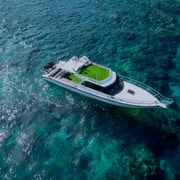
Bali: Private Yacht Cruise to Nusa Penida & Nusa Lembongan Indonesia Cruise from Bali to Nusa Penida and Nusa Lembongan on a private yacht. Snorkel, fish, and relax on deck or at a beach club. Add an optional land tour of Nusa Penida to explore the island.
2-Day All-Inclusive Nusa Lembongan & Nusa Penida Tour – Guided Tour 2-Day All-Inclusive Nusa Lembongan & Nusa Penida Tour brings several elements of the destination together in one organised experience. Check current availability, inclusions and booking details before you go.
From Bali: Private Half-Day Snorkeling Tour to Nusa Penida Indonesia Our half-day tour offers guided, supervised private boat snorkeling from Sanur to Nusa Penida’s top sites, including Manta Point, with observation only and a flexible itinerary based on sea conditions
Skydeck Chicago at Willis Tower is one of the city’s signature attractions, taking visitors to the 103rd floor of the former Sears Tower for panoramic views across Chicago and the famous Ledge—glass balconies projecting outside the face of the skyscraper.
The Skydeck stands approximately 1,353 feet (412 metres) above street level. On a clear day, the view can extend around 50 miles and potentially across parts of Illinois, Indiana, Wisconsin and Michigan.
The experience is no longer simply an elevator ride followed by a view. Admission now combines an interactive Chicago museum, the high-speed journey to the observation deck, 360-degree views and access to The Ledge.
Willis Tower Skydeck at a Glance
Visitor Information
Details
Location
Willis Tower, downtown Chicago
Address
233 S. Wacker Drive, Chicago, Illinois 60606
Skydeck entrance
Jackson Boulevard, south side of Willis Tower
Observation deck
103rd floor
Skydeck height
1,353 ft / 412 m
Willis Tower height
1,450 ft / 443 m to architectural roof
Building
110 stories
The Ledge
Five glass balconies projecting 4.3 ft outside the tower
2026 adult general admission
From US$32
2026 youth admission
From approximately US$22–24 depending on current pricing
Under age 3
Free
Expedited Entry
From US$55
Current summer hours
Generally 9:00 am–10:00 pm; Saturday from 8:30 am
Typical visit
45–60 minutes officially; allow 1½–2 hours for a relaxed visit
Accessibility
Wheelchair, scooter and stroller accessible, including The Ledge
Best for
City views, architecture, photography, families and first-time Chicago visitors
Willis Tower or Sears Tower?
They are the same building.
The skyscraper opened as the Sears Tower in 1973 after being commissioned as the headquarters of Sears, Roebuck and Company. The building was renamed Willis Tower in 2009, although many Chicago residents and visitors still refer to it by its original name.
If you search for “Sears Tower observation deck,” you are looking for Skydeck Chicago at Willis Tower.
A Skyscraper That Changed the Chicago Skyline
Construction began in 1970 and was substantially completed in 1973. More than 2,000 workers were involved in creating what was then the tallest building in the world.
Its structural design is closely associated with architect Bruce Graham and structural engineer Fazlur Rahman Khan of Skidmore, Owings & Merrill. Khan’s innovative bundled-tube structural system allowed an extraordinarily tall building to withstand Chicago’s powerful winds while remaining commercially practical.
The tower rises to approximately 1,450 feet and contains 110 stories. With its antennas included, its total height reaches around 1,730 feet.
It Was Once the World’s Tallest Building
When completed, the Sears Tower surpassed New York’s Empire State Building and remained the world’s tallest building for almost a quarter of a century.
Although newer skyscrapers have since surpassed it, Willis Tower remains Chicago’s most recognisable skyscraper and one of the most significant buildings in modern high-rise engineering.
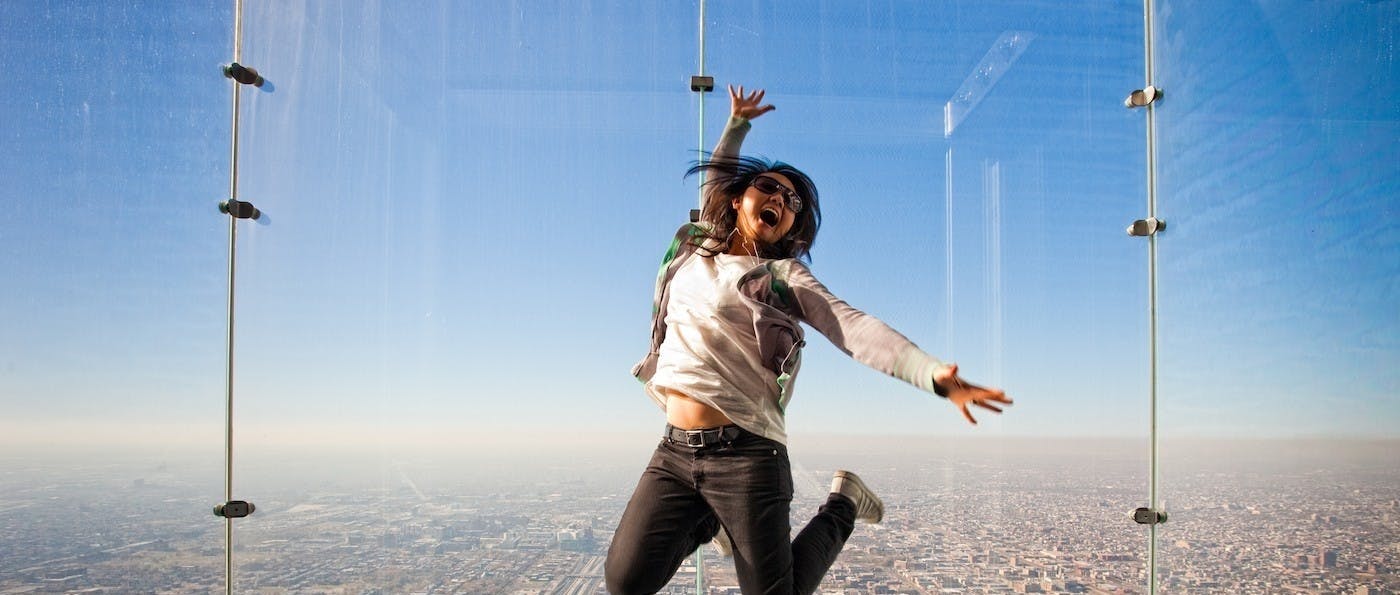
What Is The Ledge?
The Ledge is the attraction that makes Skydeck different from a conventional observation deck.
Five transparent glass balconies project approximately 4.3 feet outside the building from the 103rd floor. When you walk into one, the floor beneath your feet is transparent and the streets of Chicago appear more than 1,350 feet below.
The experience can look intimidating from inside the observation deck, but the balconies are fully enclosed. There is glass beneath your feet, around your sides and above you.
How Strong Is The Ledge?
Each balcony is constructed from three laminated layers of half-inch glass and is engineered to support up to approximately 10,000 pounds.
The glass boxes can retract back into the building for maintenance and cleaning. The original Ledge opened in July 2009.
How Long Do You Get on The Ledge?
The Ledge is extremely popular, so your private time inside a particular glass box is limited.
The official visitor guidance generally allows approximately 60 seconds for smaller parties and up to around 90 seconds for larger parties. Procedures can vary on busy days, and some Ledges may be shared between groups.
That sounds brief, but it is normally enough for several photographs if you decide what you want before entering.
Plan Your Ledge Photograph Before Your Turn
When the queue is busy, do not spend the first half of your allotted time deciding what pose to use.
Popular options include:
Standing and looking straight down
Sitting on the glass floor
Lying flat on the glass
A family photograph
A photograph looking towards the horizon
A photograph showing the city directly beneath your feet
Personal photography and video are encouraged, although tripods are not permitted. Monopods are currently allowed.
You Do Not Have to Step Onto The Ledge
If you dislike heights, you can still enjoy Skydeck without entering a glass balcony.
The observation floor provides enclosed panoramic windows around the building, so The Ledge is optional even though access is included in every standard admission ticket.
You can therefore accompany friends or family to the attraction without being forced to stand on transparent glass.
What Can You See From Skydeck?
The observation floor offers 360-degree views across downtown Chicago, Lake Michigan and the wider metropolitan area.
On exceptionally clear days, the official Skydeck information states that visibility may extend approximately 40–50 miles, allowing visitors to see territory belonging to four states:
Illinois
Indiana
Wisconsin
Michigan
Do not expect to see state borders marked on the landscape. The claim refers to the theoretical geographical distance visible under excellent atmospheric conditions.
Look Down at Chicago’s Street Grid
One of the most interesting aspects of Skydeck is not simply seeing distant scenery but understanding Chicago’s urban layout from above.
Railway lines, streets, the Chicago River, bridges and high-rise buildings form an enormous geometric pattern beneath the tower. The western and southern views are especially useful for appreciating how far the city’s regular grid extends beyond the downtown skyline.
Lake Michigan
Looking east, the enormous blue surface of Lake Michigan dominates the horizon. On clear days the contrast between the dense city and seemingly endless water is one of the strongest views from the tower.
The Chicago Museum Comes First
Visitors do not simply enter an elevator at street level.
The modern Skydeck experience begins with an interactive museum devoted to Chicago’s neighbourhoods, food, sports, music, architecture, history and popular culture.
Displays include playful recreations and photo opportunities rather than traditional rows of display cases. The attraction highlights subjects such as Chicago’s elevated trains, local food and entertainment history before you reach the skyscraper experience itself.
Allow Time for the Museum
Willis Tower currently describes the interactive section before the observation deck as approximately a 30–60 minute experience for visitors who explore it fully.
If your main interest is simply reaching The Ledge, you can move through more quickly. Families and first-time visitors may find the museum worth slowing down for.
The Elevator Ride
The ascent is part of the experience. Willis Tower’s elevators can operate at speeds of up to around 1,600 feet per minute.
Some passengers notice their ears popping as air pressure changes during the rapid climb. Swallowing or yawning usually helps in the same way it does during an aircraft ascent.
How Long Does a Skydeck Visit Take?
Skydeck’s current visitor information says most guests spend around 45–60 minutes completing the museum, observation deck and Ledge experience.
In practice, the time varies considerably.
45–60 Minutes
Enough for a relatively efficient visit when queues are short.
1½ Hours
A better allowance for most first-time visitors.
You can enjoy the museum, observation floor and Ledge without watching the clock continuously.
2 Hours
Recommended if you are visiting around sunset or during a busy holiday period.
Skydeck does not impose a normal fixed time limit on how long you remain on the observation deck after admission.
Current 2026 General Admission Prices
Skydeck uses timed and variable pricing, so the exact amount can depend on your chosen date and entry time.
As of August 2026, the official visitor page lists:
Visitor
Current Starting Price
Adult age 12+
US$32
Youth age 3–11
From approximately US$22
Child under 3
Free
Another current official Skydeck ticket page displays youth admission from US$24, confirming that advertised starting prices can vary. Use the live ticket calendar for the exact price on your chosen date.
What Does General Admission Include?
Standard admission includes:
The Chicago museum experience
The high-speed elevator journey
The 103rd-floor observation deck
360-degree views
Access to The Ledge
You do not need to buy a separate ticket simply to step onto The Ledge.
Expedited Entry
Visitors wanting to reduce waiting can purchase Expedited Entry, currently starting at approximately US$55 for visitors aged three and over.
This includes an express route to the elevators and a dedicated priority lane at The Ledge.
It becomes most valuable during weekends, holidays and popular sunset periods when ordinary lines are much longer.
Do You Need to Book Ahead?
Yes, advance booking is strongly recommended.
Skydeck now uses timed admission. Tickets are booked for a specific date and entry period, with the current system using approximately 30-minute entry windows.
Buying ahead does not mean the attraction will be empty, but it protects you against arriving when the available time slots have sold out.
Current Summer 2026 Opening Hours
For the current summer period from 26 May through 30 September 2026, Skydeck publishes:
Day
Hours
Sunday–Friday
9:00 am–10:00 pm
Saturday
8:30 am–10:00 pm
Last entry is 30 minutes before closing.
Skydeck operates 365 days a year, but seasonal hours change outside summer, so check the current schedule when visiting after September.
Best Time of Day to Visit
Opening Time
Best for shorter queues and clearer photographs.
Skydeck itself recommends early morning as one of the best periods for avoiding heavier visitor traffic.
Late Afternoon
Good if you want daylight views but prefer not to arrive first thing in the morning.
Sunset
Best overall experience if the weather cooperates.
You can see Chicago in daylight, watch the city change colour and then remain as the lights begin to appear.
Skydeck advises planning to arrive at least 30 minutes before sunset. Booking 45–60 minutes before sunset provides an additional buffer for queues and the museum.
Night
Nighttime views are dramatic, with Chicago’s illuminated street grid extending far into the distance.
The disadvantage is that you lose much of the detail visible across Lake Michigan and the surrounding landscape during daylight.
Sunset Tickets Can Be Popular
If sunset is important, reserve well ahead rather than waiting until the afternoon of your visit.
Timed admission limits the number of visitors entering during each period, and the combination of sunset views and city lights makes the late-afternoon slots particularly attractive.
What if the Weather Is Cloudy?
The view is naturally weather-dependent.
On a clear day, Skydeck advertises visibility of up to about 50 miles. Low cloud, fog, rain or haze can reduce that dramatically.
If panoramic views are the principal reason for your visit and your itinerary is flexible, check Chicago’s weather shortly before choosing your ticket time.
Accessibility
Skydeck is fully ADA compliant and The Ledge itself is wheelchair accessible.
Ramps and elevators accommodate:
Wheelchairs
Mobility scooters
Strollers
Complimentary wheelchairs are available on a first-come, first-served basis, and the attraction allows service animals.
Sensory Accessibility
Skydeck also provides options for guests who find highly stimulating environments difficult.
Current facilities include:
Sensory bypass doors around selected exhibits
Sensory kits
A quiet room available through staff
Is Skydeck Suitable for Children?
Yes.
The combination of interactive exhibits, elevators, skyline views and transparent balconies tends to work better for children than a traditional observation platform consisting only of windows.
Strollers are accommodated, and family bathrooms are available on Lower Level 2.
Children who are uncomfortable with heights can simply avoid stepping onto The Ledge.
There Are No Storage Lockers
Skydeck does not currently provide visitor storage lockers.
This is worth knowing if you are visiting between checking out of a hotel and travelling to the airport or railway station. Leave large luggage with your accommodation or use a dedicated luggage-storage service rather than arriving at Willis Tower expecting to store it onsite.
Photography Tips
Glass observation decks create reflections, particularly after dark.
For clearer photographs:
Move the camera or phone close to the window.
Turn off the flash.
Avoid brightly lit reflections behind you.
Photograph before sunset for better landscape detail.
Clean your phone camera lens before entering The Ledge.
The attraction itself recommends avoiding flash when shooting through windows and notes that tripods are prohibited.
Where Exactly Is the Entrance?
The official address is:
Willis Tower
233 South Wacker Drive
Chicago, IL 60606
United States
However, Skydeck visitors should enter from Jackson Boulevard on the south side of Willis Tower.
This detail can save time because arriving at the Wacker Drive side and assuming every entrance leads directly to Skydeck can be confusing in such a large building.
Arriving by Public Transport
Willis Tower sits in the heart of Chicago’s Loop and is straightforward to reach using downtown rail and bus services.
It is also within walking distance of Chicago Union Station, making Skydeck convenient for travellers arriving in central Chicago by intercity or commuter rail.
Because parking in downtown Chicago can be expensive and traffic can be heavy, public transport is usually the simplest choice for visitors already staying in the city centre.
Parking
Skydeck currently promotes advance discounted parking at garages at:
211 W. Adams Street
241 S. Franklin Street
Both are described as approximately a 2–5 minute walk from Willis Tower.
Food Inside Willis Tower
Willis Tower’s lower levels now contain a substantial dining and retail complex, so it is easy to eat before or after visiting Skydeck without immediately leaving the building.
Current options listed by Skydeck include businesses such as Shake Shack, Brown Bag Seafood, Do-Rite Donuts & Chicken, Tortazo, sweetgreen, Starbucks and Joe & The Juice.
These restaurants are separate from standard Skydeck admission.
Combine Skydeck With the Chicago Riverwalk
The Chicago Riverwalk makes a good addition before or after Skydeck because it provides the opposite architectural perspective: instead of looking down from one of Chicago’s tallest buildings, you walk among the skyscrapers at river level.
The combination works particularly well for anyone interested in architecture.
Combine It With Millennium Park
Millennium Park is another practical downtown addition. The contrast between Cloud Gate, landscaped public space and the panoramic tower view gives first-time visitors two very different perspectives on central Chicago.
If you have only half a day, Skydeck plus one of these nearby central attractions is usually more enjoyable than attempting to race through several major sights.
A Good Half-Day Chicago Plan
Morning
Explore central Chicago at street level.
Late Morning
Visit Willis Tower and work through the interactive museum.
Midday
Take the elevator to the 103rd floor, enjoy the panoramic views and step onto The Ledge.
Lunch
Eat inside Willis Tower or elsewhere in the Loop.
Afternoon
Continue to either the Chicago Riverwalk or Millennium Park.
Skydeck or 360 CHICAGO?
Chicago has another major observation deck at 875 North Michigan Avenue, commonly known as 360 CHICAGO.
Choose Skydeck If You Want:
The highest observation deck experience in Chicago
The famous glass Ledge
Willis Tower architecture and history
An interactive Chicago museum before the view
A classic first-time Chicago landmark
Consider 360 CHICAGO If:
Your itinerary is focused around the Magnificent Mile
You particularly want views along the Lake Michigan shoreline
You are interested in its separate TILT attraction
For a first visit to Chicago, Skydeck generally has the stronger historical connection because Willis Tower itself is such an important part of the city’s architectural identity.
Is Expedited Entry Worth the Extra Cost?
It depends heavily on when you visit.
Probably Not Essential
Early weekday mornings
Quiet periods outside holidays
When you have plenty of time
More Attractive
Summer weekends
School holidays
Sunset
When your Chicago itinerary is tightly scheduled
Expedited Entry currently provides priority access both for the elevator and The Ledge, so its main value is saving time rather than adding another attraction.
Best Time of Year
Spring
Potentially excellent visibility with fewer peak-summer visitors, although Chicago weather can change rapidly.
Summer
Long daylight hours make it easy to combine daytime and sunset views. This is also one of the busiest seasons, making advance tickets particularly useful.
Autumn
Often an excellent balance of comfortable weather and good visibility.
Winter
Clear winter air can produce extraordinary views, although seasonal opening hours are shorter on some days. Snow can transform the city grid into an especially striking landscape.
Common Mistakes to Avoid
Going to the Wrong Entrance
Remember that the visitor entrance for Skydeck is on Jackson Boulevard, not simply whichever Willis Tower door you reach first.
Assuming The Ledge Costs Extra
It is included with regular Skydeck admission.
Not Booking a Timed Ticket
Advance reservations are strongly recommended and secure your admission window.
Expecting Unlimited Time on The Ledge
Your observation-deck visit can be relaxed, but your individual Ledge turn is generally only around 60–90 seconds.
Arriving at Sunset Without a Reservation
Sunset is one of the most desirable visiting periods. Reserve ahead.
Bringing a Tripod
Tripods are not currently allowed.
Expecting Luggage Lockers
There are none.
Practical Tips
Book a timed ticket in advance.
Current adult admission starts at US$32.
The Ledge is already included.
Enter from Jackson Boulevard.
Allow 1½ hours even though the official average visit is shorter.
Book at least 30 minutes before sunset if you want changing light.
Prepare your Ledge photograph before your turn.
Turn off your flash when photographing through windows.
Do not bring a tripod.
Do not rely on Skydeck for luggage storage.
The entire experience, including The Ledge, is wheelchair accessible.
Is Willis Tower Skydeck Worth Visiting?
Yes, particularly on a first visit to Chicago.
The attraction combines several things that are strongly associated with the city: skyscraper engineering, Chicago’s architectural history, panoramic views and the unmistakable profile of what generations of visitors still know as the Sears Tower.
Willis Tower has dominated the skyline since 1973. At approximately 1,450 feet tall and 110 stories, it was the tallest building in the world for almost 25 years and remains one of the great achievements of 20th-century skyscraper engineering.
Skydeck itself sits at 1,353 feet on the 103rd floor. On a clear day, the view can extend roughly 50 miles, while The Ledge’s five glass balconies project 4.3 feet beyond the building and allow you to look directly down towards Chicago’s streets.
As of August 2026, general admission currently begins at about US$32 for adults, with children under three free. The ticket includes the Chicago museum, observation deck and The Ledge rather than charging separately for each component.
During the current summer period, Skydeck is open until 10:00 pm, making it possible to visit in daylight, at sunset or after dark.
For the strongest experience, reserve ahead, choose an early-morning slot for shorter queues or a late-afternoon slot for sunset, allow at least 90 minutes and do not rush through the museum purely to reach the elevator.
Even if stepping onto a transparent floor 103 stories above Chicago sounds terrifying, the combination of Willis Tower’s history, the extraordinary city panorama and The Ledge makes Skydeck one of the defining Chicago experiences.
Sponsored Popular Items
Quick take: Musement.com offers a worldwide selection of tours and attractions
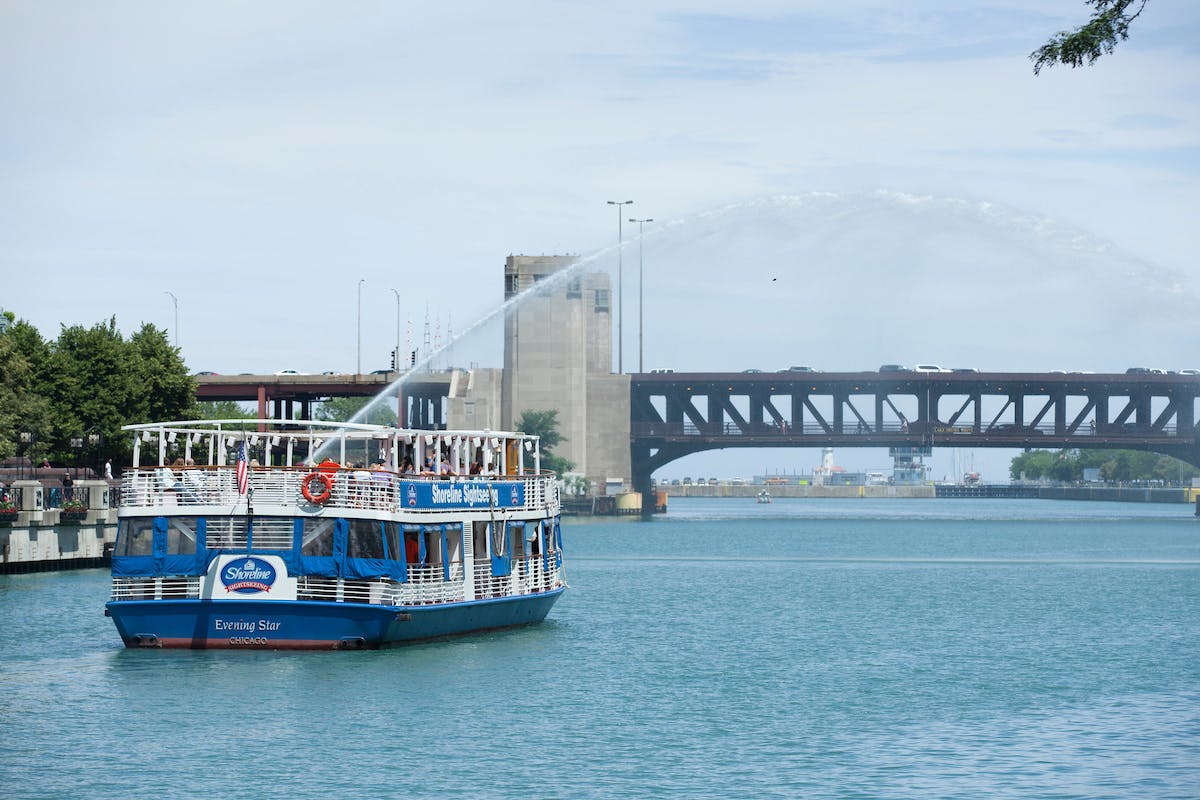
Architecture cruise in Spanish on the Chicago River from Michigan Ave United States Chicago Architecture Cruise in Spanish from Michigan Avenue See Chicago's celebrated riverfront architecture on a Spanish-language cruise departing from Michigan Avenue. Check current availability, inclusions and booking details before you go.
Willis Tower Skydeck Chicago Tickets United States Plan Willis Tower Skydeck Chicago Tickets, a ticket or attraction experience, with practical tips on timing, inclusions and what to check before booking. Compare current availability, prices and booking conditions before you go.
Chicago Loop District Food Tour with Tastings United States Plan Chicago Loop District Food Tour with Tastings, a food and drink experience, with practical tips on timing, inclusions and what to check before booking. Compare current availability, prices and booking conditions before you go.
Highlights Berlin: Between Love and War is a self-guided walking game through central Berlin that combines sightseeing, Second World War history, puzzles and a fictional love story. Instead of following a conventional tour guide, you use the Questo Outdoor Escape Games app to solve clues that reveal your next location.
The experience begins beside the World Time Clock at Alexanderplatz and finishes approximately 4 kilometres away at the Memorial to the Murdered Jews of Europe. Along the way, the story takes you through areas affected by the destruction of World War II and towards locations associated with the final days of Nazi Germany, including the vicinity of the former Führerbunker.
The current game contains 11 location-based puzzles. It is available in English, German and Italian through the main provider, and because there is no guide or fixed starting time, you can stop for coffee, sightseeing or a museum and restart the game later.
Highlights Berlin at a Glance
Tour Information
Details
Full experience name
Highlights Berlin: Between Love and War
Provider
Questo
Format
Self-guided outdoor city exploration game
Starting point
World Time Clock, Alexanderplatz
Finishing point
Memorial to the Murdered Jews of Europe
Walking distance
Approximately 4 km
Number of puzzles
11
Advertised duration
About 1–2 hours, depending on seller and pace
Languages
English, German and Italian
Live guide
No
Fixed departure time
No
Can the game be paused?
Yes
Entrance fees included?
No
Current direct Questo price
About €9.99
Current Fever price
About €9.99
Current Musement price
From about US$12
Best for
History, first-time visitors, couples, families with older children and independent travellers
What Exactly Is Highlights Berlin?
This is not a normal guided Berlin highlights tour.
There is no guide carrying an umbrella, no group meeting at a particular hour and no bus transporting you from attraction to attraction.
Instead, your smartphone becomes your guide. At each stage of the journey, you solve a puzzle or observation challenge. A correct answer unlocks directions to the next location and another section of the story.
The experience combines three elements:
A walking tour through central Berlin
An outdoor escape game containing location-based puzzles
A fictional wartime love story built around real historical locations
The Story: Lilly and a Lost Wartime Love
The story gives the walking tour its unusual structure.
You take the role of a nurse working in a retirement home. One of your favourite patients, Lilly, frequently speaks about someone she loved during World War II, but dementia has affected her memories.
Your task is to help reconstruct her past.
Starting at Alexanderplatz, you follow places that might trigger Lilly’s memories. Each new location reveals another clue while the story gradually moves through Berlin’s wartime history.
The love story itself is a storytelling device rather than a documented historical biography. The locations and historical setting are real, while Lilly’s personal mystery creates the narrative connecting them.
Start at the World Time Clock on Alexanderplatz
Your starting point is the Weltzeituhr, or World Time Clock, at:
Alexanderplatz 1
10178 Berlin
Germany
The clock is one of Berlin’s most recognisable meeting points. It was installed in September 1969 during the socialist redevelopment of Alexanderplatz in East Berlin. After German reunification it was restored, and it has been protected as a listed monument since 2015.
It is therefore an appropriate starting point for a historical game: even before you begin exploring World War II Berlin, you are standing beside a landmark representing another major period in the city’s divided 20th-century history.
There Is No Guide Waiting at Alexanderplatz
Do not look for a tour representative.
Musement specifically states that this is a self-guided treasure-hunt-style tour and that nobody assists you at the starting location.
Before arriving, make sure you have:
Downloaded the Questo app
Created the required account
Activated your purchased game
A charged smartphone
Mobile data available
How the Game Works
Purchase access through Questo or another authorised seller.
Download the Questo: Outdoor Escape Games app.
Activate the game using the instructions supplied with your booking.
Go to the World Time Clock at Alexanderplatz.
Open the first challenge.
Observe the surroundings and solve the puzzle.
Unlock directions to the next location.
Continue through all 11 stages.
Finish at the Memorial to the Murdered Jews of Europe.
How Long Does It Take?
The published duration varies depending on which seller you read.
Musement and Fever advertise approximately two hours, while Questo’s current direct listing gives a typical game time around an hour and currently reports an average completion time of approximately 53 minutes.
This difference is understandable because a participant solving clues quickly can move through the digital game much faster than a visitor who stops to read historical information and explore the surrounding sights.
About 1 Hour
Possible if you solve puzzles efficiently and concentrate almost entirely on the game.
About 2 Hours
Best minimum for most visitors.
This provides a more comfortable pace for the 4 km route and 11 puzzles.
3 Hours
Better for sightseeing.
You can take photographs, stop for refreshments and spend time examining historic locations rather than immediately moving to the next puzzle.
4 Hours or More
Worth considering if you plan to enter the Holocaust Memorial’s underground Information Centre or add another museum during the journey.
The Route Is Approximately 4 Kilometres
Both Musement and the direct Questo listing currently give the route as approximately 4 km.
This is manageable for most visitors, although your actual walking distance may become considerably longer if you explore side streets, Museum Island or other attractions while the game is paused.
Eleven Puzzle Locations
The current direct game contains 11 location-based puzzles.
The provider does not publicly reveal every challenge in detail beforehand. That is intentional: discovering the next destination is part of the game.
What is confirmed is that the route begins at Alexanderplatz, explores central Berlin locations connected with war and destruction, approaches the site associated with Hitler’s former bunker and ends at the Holocaust Memorial.
A Route Through Layers of Berlin History
One of the most interesting aspects of the walk is that present-day Berlin frequently gives little indication of how heavily some neighbourhoods were damaged during World War II.
Modern buildings, reconstructed historic streets and post-war developments now occupy areas that were profoundly altered between 1939 and 1945.
The game deliberately uses this contrast between modern Berlin and wartime Berlin as part of its storytelling.
Museum Island and Central Berlin
Questo describes this particular Berlin quest as passing through central locations around Alexanderplatz and Museum Island. Museum Island itself is one of Berlin’s most important cultural areas and has been a UNESCO World Heritage Site since 1999.
In 2026 the island is in the middle of a multi-year celebration marking 200 years since the development of the museum ensemble began. The Alte Nationalgalerie, which opened 150 years ago, is a particular focus of the 2026 anniversary programme.
If a museum visit is one of your priorities, pause the game and return to it afterwards. The ability to stop and restart is one of the major advantages of this type of self-guided tour.
The Former Führerbunker Site
One of the advertised historical themes is the area around Hitler’s former bunker.
Visitors expecting a preserved underground bunker attraction may be surprised. The site is deliberately understated. An information panel stands near the corner of Gertrud-Kolmar-Straße and In den Ministergärten, while the surrounding area is largely ordinary modern development.
The public information board marking the former Führerbunker location was installed in 2006. The absence of a monumental visitor attraction is deliberate; the location is interpreted historically rather than celebrated as a shrine.
Do Not Expect to Enter Hitler’s Bunker
The Führerbunker is not an underground museum open to normal tourists.
The value of the stop is understanding where events took place during the final days of Nazi Germany and seeing how completely the surrounding city has changed.
The Tour Finishes at the Memorial to the Murdered Jews of Europe
The final destination is:
Memorial to the Murdered Jews of Europe
Cora-Berliner-Straße 1
10117 Berlin
This is an appropriate and considerably more sombre conclusion to a game built around wartime Berlin.
The memorial is Germany’s central memorial to the Jewish victims of the Holocaust. It was officially opened on 10 May 2005 and combines an outdoor Field of Stelae designed by architect Peter Eisenman with an underground Information Centre.
The Field of Stelae
The memorial covers approximately 19,000 square metres and currently consists of 2,710 concrete stelae according to the administering foundation’s current technical information.
The ground gradually changes height as you walk between the blocks, causing the taller stelae to surround you as you move farther into the field.
This is a memorial rather than an amusement attraction. The foundation’s rules require visitors to behave respectfully and prohibit climbing or jumping on the stelae.
The Memorial Is Free
The outdoor memorial and the underground Information Centre currently have free admission.
The Field of Stelae is accessible 24 hours a day.
Visit the Information Centre After the Game
If the history covered during the quest has interested you, the strongest way to finish is to visit the underground Information Centre.
Its exhibition documents the persecution and murder of European Jews and places individual victims and families within the wider history of the Holocaust.
As of August 2026, normal opening hours are:
Day
Information Centre
Monday
Normally closed
Tuesday–Sunday
10:00 am–6:00 pm
Last admission
45 minutes before closing
The foundation recommends approximately one hour for the exhibition or around 90 minutes when using an audio guide.
A Better Way to Plan the Game
If you want to add the Information Centre, do not begin the quest too late in the afternoon.
A strong schedule is:
1:00 pm – Alexanderplatz
Begin at the World Time Clock.
1:15–3:30 pm – Complete the Main Quest
Follow the clues across central Berlin while allowing time for photographs and historical stops.
3:30–4:00 pm – Memorial to the Murdered Jews of Europe
Finish the game and spend time walking through the Field of Stelae.
4:00–5:00 pm – Information Centre
Visit the free underground exhibition before its 6:00 pm closing time.
This turns what might otherwise be a quick puzzle game into a much more complete historical afternoon.
Current 2026 Price
Prices vary depending on the seller.
As of August 2026:
Questo direct: approximately €9.99
Fever: approximately €9.99 for a single-device ticket
Musement: from approximately US$12
Check the final price before purchasing because exchange rates, reseller promotions and ticket configurations can differ.
Important Ticket Discrepancy: One Device or One Group?
Read the ticket conditions carefully.
Current Musement information states that one ticket is valid for a group.
Fever, however, states that its single ticket activates the game on one device and recommends purchasing separate access if several people want to participate independently on their own phones.
Questo’s direct version similarly describes classic quests as being sold per device/player for participants who want to solve the game independently.
If two or three people are happy to gather around one phone and solve the clues together, check whether the group-ticket wording on your chosen seller allows that arrangement.
Cancellation
The current Musement version offers a 100% refund when cancelled at least 24 hours before the experience begins.
The direct Questo product instead promotes an instant money-back guarantee under its own terms. Conditions therefore depend on your seller.
No Fixed Starting Time
One of the game’s biggest advantages is flexibility.
The direct provider allows instant access without waiting for a guide, and the game can be paused and resumed later.
Fever describes the game as available to play at any time, 24/7.
In practical terms, daylight is better because you will see more architectural and historical detail.
Best Time of Day
Morning
Best for combining the game with museums.
You have plenty of time to stop around Museum Island and continue afterwards.
Early Afternoon
Best overall choice.
You can walk in daylight and reach the Holocaust Memorial while the Information Centre is still open.
Evening
The quest remains possible, but the historical sites can be easier to understand during daylight and the Information Centre may be closed by the time you finish.
Internet Connection
Musement currently states that an internet connection is required to play its version of the city game.
Have working mobile data rather than relying entirely on public Wi-Fi.
Bring a Power Bank
The operator specifically recommends a fully charged phone or portable battery.
Navigation, GPS, mobile data, photographs and the game screen can consume battery surprisingly quickly over several hours.
Languages
The current Musement and direct Questo versions are available in:
English
German
Italian
Because the game requires interpreting written clues rather than merely listening to an audio commentary, choose the language in which your group is most comfortable solving puzzles.
Is It Suitable for Children?
Fever currently lists the digital experience for all ages, with children under nine accompanied by an adult.
However, the theme deserves more consideration than the technical age limit suggests.
The route deals with:
World War II
Nazi Germany
Bombing and destruction
Hitler’s final headquarters area
The Holocaust Memorial
Families should therefore consider whether the historical material is suitable for their particular child.
The Holocaust Memorial Foundation itself recommends its underground Information Centre particularly for young people from around 14 years of age.
Is It a Good Activity for Teenagers?
Potentially yes.
The puzzle format can make the history more engaging than simply listening to a two-hour lecture, especially for teenagers who enjoy escape rooms, scavenger hunts or mobile games.
For older teenagers, combining the quest with the Information Centre at the end can add significantly more historical depth.
Accessibility
The provider does not currently guarantee that the entire 4 km game route is completely step-free, so visitors requiring a fully wheelchair-accessible itinerary should not assume every clue position is equally easy to reach.
The finishing memorial itself is considerably better documented for accessibility. The Field of Stelae contains 13 marked wheelchair-accessible entry axes, and the underground Information Centre is barrier-free with lift assistance available.
If mobility is limited, allowing extra time is sensible because 4 km of city pavement can be tiring even when individual areas are technically accessible.
What Happens if It Rains?
The activity is completely outdoors unless you independently choose to enter a museum, café or other building.
Musement specifically advises participants to dress according to the weather and wear comfortable shoes.
The ability to pause the game is particularly useful in poor weather. Stop somewhere indoors and resume when conditions improve.
What to Bring
Fully charged smartphone
Mobile internet
Power bank
Comfortable walking shoes
Water
Weather-appropriate clothing
Rain jacket or umbrella if necessary
Sun protection during summer
Getting to the Starting Point
Alexanderplatz is one of Berlin’s biggest public-transport hubs.
The World Time Clock stands only a very short distance from S+U Alexanderplatz, which is served by multiple S-Bahn, U-Bahn, tram and bus routes.
This makes the quest straightforward to start even if you are staying outside central Mitte.
Where Does the Game Leave You?
The finishing point at the Holocaust Memorial is excellent for continuing a sightseeing day because you are already in one of Berlin’s most important historical areas.
The Brandenburg Gate is nearby, while the Reichstag and Potsdamer Platz are also within the central government and memorial district.
You do not need to return to Alexanderplatz after finishing unless your hotel or next attraction is there.
A Good Half-Day Berlin Plan
Morning – Alexanderplatz
See the TV Tower and surrounding East Berlin architecture before activating the game.
Late Morning – Begin Highlights Berlin
Start beside the World Time Clock and follow the first clues.
Lunch Break
Pause the app and stop somewhere along the route.
Afternoon – Continue the Historical Walk
Work through the remaining puzzles and wartime locations.
Late Afternoon – Holocaust Memorial
Finish the game and explore the Field of Stelae.
Before 6:00 pm – Information Centre
If open, spend approximately an hour inside the free underground exhibition.
Can You Combine It With Museum Island?
Yes.
Museum Island is central to this part of Berlin and provides an excellent optional stop if you are turning the game into a full sightseeing day.
In 2026 the standard Museum Island day ticket is currently listed at €24 and covers the principal open museums and associated exhibitions included under the ticket conditions.
Do not try to explore several major museums and complete the game within two hours. Pause the quest and treat the museum as a separate activity.
Is This a Good First Berlin Tour?
Yes, provided you understand that it focuses heavily on 20th-century wartime history rather than giving a complete overview of Berlin.
It works particularly well for first-time visitors because it:
Begins at Alexanderplatz
Crosses central Mitte on foot
Introduces World War II history
Includes famous and less obvious locations
Ends in Berlin’s principal government and memorial district
However, it is not designed to cover every major Berlin theme. It does not replace a dedicated Berlin Wall tour, Museum Island visit or comprehensive architectural city tour.
Highlights Berlin or a Guided Walking Tour?
Choose Highlights Berlin If You Want:
Complete flexibility
No fixed start time
A private experience
Puzzles and interactive challenges
A relatively low-cost tour
Freedom to stop for museums and food
Choose a Live Guided Tour If You Want:
Questions answered immediately
More detailed historical interpretation
A professional historian or guide
Less dependence on your phone
A structured itinerary
It Is More Than a Scavenger Hunt
The strongest aspect of the experience is that the puzzles are used to make you examine the city more carefully.
The current direct game is rated around 4.6 out of 5 by more than 130 players, and recent verified comments particularly mention learning about Berlin’s history and finding the story moving.
That suggests the experience works best when participants are interested in both the history and the game rather than simply trying to achieve the fastest completion time.
Be Respectful at the Final Stop
The shift from fictional puzzle-solving to the Holocaust Memorial requires a change of tone.
The Memorial to the Murdered Jews of Europe is a place of remembrance. The foundation prohibits activities such as climbing or jumping across the stelae, excessive noise, smoking and sporting activity within the memorial field.
Once you reach the final challenge, take time to experience the memorial independently rather than treating it merely as the final checkpoint in a game.
Where to Stay
Alexanderplatz
Best for starting-point convenience.
You can walk directly to the World Time Clock and have excellent public-transport connections throughout Berlin.
Unter den Linden / Museum Island
Best for central sightseeing.
This area gives you convenient access to historic Berlin, museums and several sections of the quest corridor.
Brandenburg Gate / Potsdamer Platz
Best for finishing-point convenience.
You will be close to the Holocaust Memorial, Brandenburg Gate and government district when the game ends.
Best Season
Spring
Excellent walking temperatures and long enough daylight for an afternoon game.
Summer
Long daylight makes the self-guided format especially flexible. Carry water and sun protection on hot days.
Autumn
Often ideal for walking, although rain becomes more likely.
Winter
Still possible, but short daylight and cold weather make the four-kilometre outdoor route less comfortable. The pause function becomes particularly useful.
Common Mistakes to Avoid
Looking for a Tour Guide
There is none. Everything is delivered through the app.
Starting With a Low Phone Battery
Your phone is your guide, puzzle book and navigation system.
Assuming Entrance Fees Are Included
They are not. The standard game includes only the digital experience.
Rushing the Route
You can technically complete it quickly, but the value comes from understanding the locations.
Expecting to Tour the Führerbunker
There is no conventional underground visitor attraction at the site.
Finishing After the Holocaust Information Centre Has Closed
If you want to visit the exhibition, remember that it currently closes at 6:00 pm Tuesday–Sunday, with last admission 45 minutes before closing.
Assuming Every Seller Uses the Same Ticket Rules
Musement currently says one ticket can cover a group, while Fever and Questo use device/player-based access language. Read the exact conditions attached to your purchase.
Practical Tips
Allow around two hours for the game itself.
Allow three or four hours if you want to stop and explore properly.
Start at the World Time Clock on Alexanderplatz.
Download and activate the app before you begin.
Have mobile data available.
Carry a power bank.
Wear comfortable shoes for the 4 km route.
Use the pause function rather than rushing museums or historical sites.
Remember that the game contains serious WWII and Holocaust themes.
Finish early enough to visit the Holocaust Information Centre if that interests you.
Compare seller prices and device rules before booking.
Is Highlights Berlin: Between Love and War Worth Doing?
Yes, particularly if you enjoy history but prefer discovering it actively rather than following a conventional tour group.
The current experience combines a 4 km walk, 11 puzzles and a fictional wartime love story, beginning at Alexanderplatz and ending at the Memorial to the Murdered Jews of Europe.
It is also inexpensive compared with most guided Berlin tours. Current direct and Fever prices are around €9.99, while Musement currently lists the activity from approximately US$12.
The greatest advantage is flexibility. There is no guide to wait for and no timetable forcing you past somewhere interesting. If you discover a museum, café or historic location you want to explore, pause the game and continue afterwards.
The main limitation is depth. An app-based game cannot provide the same detailed interpretation or answer questions in the way an expert Berlin historian can. Visitors who want a rigorous study of Nazi Germany should treat this as an introduction and supplement it with museums and memorials.
The finishing location makes that particularly easy. The Memorial to the Murdered Jews of Europe is free, its Field of Stelae is accessible 24 hours a day, and the underground Information Centre is currently open Tuesday through Sunday from 10:00 am to 6:00 pm.
For the best experience, do not try to beat the advertised time. Give yourself two to three hours, examine the city around each puzzle and allow the light-hearted act of solving clues to give way to reflection as the route approaches the sites associated with Nazi Germany’s final days and ultimately the Holocaust Memorial.
Highlights Berlin works best as an interactive introduction to the layers of history hidden beneath modern Berlin: part city walk, part mystery and part reminder that some of Europe’s most consequential history took place on streets that today can appear completely ordinary.
Sponsored Popular Items
Quick take: Musement.com offers a worldwide selection of tours and attractions
The BEST Berlin Tours and Things to Do in 2026 - FREE Cancellation | GetYourGuide Germany Find the top-rated and best-reviewed tours and activities in Berlin for 2026. From prices and availability to skip-the-line options and mobile tickets, get all the information you need… Check current availability, inclusions and booking conditions.
Berlin: Shows & musicals Germany Book the most popular Shows & musicals in Berlin. Best price and money back guarantee! Check current availability, inclusions and booking conditions.
Berlin: Family-friendly activities Germany Book the most popular Family-friendly activities in Berlin. Best price and money back guarantee! Check current availability, inclusions and booking conditions.
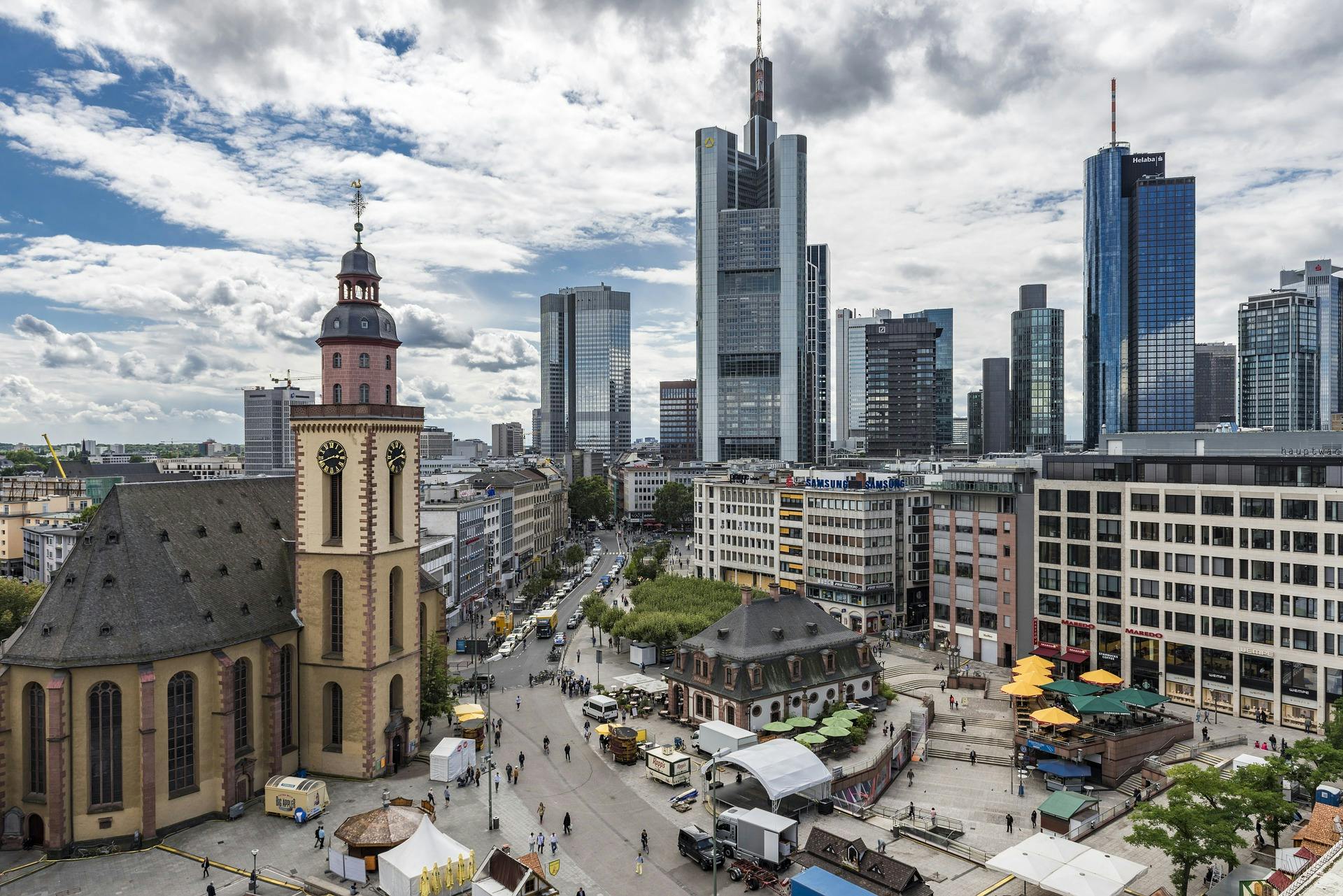
Goethe’s Footsteps in Frankfurt is a self-guided outdoor exploration game that combines literary history, sightseeing and puzzle-solving through central Frankfurt. Instead of following a conventional tour guide, participants use the Questo smartphone app to solve clues that gradually reveal the next location on a walking route connected with Johann Wolfgang von Goethe and the city in which he was born.
The route begins at the Goethe Monument on Goetheplatz, leads through Frankfurt’s historic centre, includes Goethe’s birthplace and Römerberg, ventures through the city’s wider historic quarters and finishes at the Kleinmarkthalle. The current route covers approximately 3.2 kilometres and contains 11 location-based puzzles. :contentReference[oaicite:2]{index=2}
The experience is particularly useful for travellers who prefer exploring independently. There is no guide, no group and no compulsory departure time. You can begin when convenient, pause for coffee or lunch and continue later from where you stopped. :contentReference[oaicite:3]{index=3}
Goethe’s Footsteps in Frankfurt at a Glance
Tour Information
Details
Experience
Goethe’s Footsteps in Frankfurt city exploration game
Provider
Questo
Format
Self-guided outdoor escape game and walking tour
Starting point
Goethe Monument, Goetheplatz
Finishing point
Kleinmarkthalle, Hasengasse 5–7
Distance
Approximately 3.2 km
Puzzle locations
11
Typical game time
About 1½–2¼ hours depending on pace
Language
English
Human guide
No
Fixed starting time
No
Can you pause?
Yes
Attraction admissions included?
No
Goethe House admission included?
No
Internet
Required by the Musement version; Questo says ordinary play can also function offline after setup
Current direct Questo price
From €9.99 solo
Best for
Literature, history, couples, families with older children and independent sightseeing
The direct Questo listing currently estimates 110–140 minutes, while the TUI Musement version gives a nominal duration of around 1 hour 30 minutes. The difference mainly reflects individual puzzle-solving and sightseeing pace. :contentReference[oaicite:4]{index=4}
What Exactly Is the Experience?
This is best described as a cross between a self-guided literary walking tour, treasure hunt and outdoor escape game.
After downloading the app, you travel to the Goethe Monument. The app presents a story and your first challenge. When you solve it correctly, the next location is revealed. This continues through 11 stages until you reach the final destination at Kleinmarkthalle. :contentReference[oaicite:5]{index=5}
There is no member of staff waiting at Goetheplatz. TUI Musement specifically notes that this is a self-guided treasure-hunt-style experience and that no person assists participants at the starting point. :contentReference[oaicite:6]{index=6}
The Story: Frankfurt in 1774
The current game places you imaginatively in Frankfurt in 1774.
A young Johann Wolfgang Goethe is searching for inspiration for his next work when he receives a mysterious letter inviting him to an unusual meeting. The game uses this fictional premise to lead players through real locations associated with Goethe and Frankfurt’s history. :contentReference[oaicite:7]{index=7}
It is worth remembering that the puzzles are entertainment rather than a documentary reconstruction. The locations and Goethe biography are historical, while the mystery surrounding them provides the game’s fictional framework.
Who Was Johann Wolfgang von Goethe?
Johann Wolfgang Goethe was born in Frankfurt in 1749 and spent his childhood and much of his youth in the family home on Großer Hirschgraben. He remained closely associated with Frankfurt until leaving for Weimar in 1775. :contentReference[oaicite:8]{index=8}
During his Frankfurt years he created some of the works that established his reputation, including Götz von Berlichingen and The Sorrows of Young Werther, while also beginning work on the subject that eventually became Faust. :contentReference[oaicite:9]{index=9}
That makes Frankfurt more than simply Goethe’s birthplace. It was the setting for the formative period in which the young writer developed into one of the central figures of German literature.
Start at the Goethe Monument
The game begins at:
Goethe-Denkmal
Goetheplatz
Frankfurt am Main
Germany
There is no ticket office and no guide to meet. Open the app once you reach the monument and begin the first challenge. :contentReference[oaicite:10]{index=10}
An Interesting Irony About Goetheplatz
The game’s creators deliberately point out that the adventure starts somewhere Goethe himself never saw in its present form. From there the narrative gradually takes you into locations much more directly connected with his life, including his birthplace. :contentReference[oaicite:11]{index=11}
This makes the starting point useful symbolically: modern Frankfurt’s memorial to Goethe becomes the gateway into the Frankfurt that shaped the young writer.
The Route Is About More Than Goethe
Although Goethe provides the central theme, the route also introduces the wider history and culture of Frankfurt.
The current itinerary specifically incorporates:
Goetheplatz
Goethe’s birthplace
Frankfurt’s Old Town
Römerberg
Sachsenhausen
Local food traditions
Kleinmarkthalle
The operator describes the experience as combining Goethe, Frankfurt history and local gastronomy rather than functioning solely as a literary biography. :contentReference[oaicite:12]{index=12}
Do Not Miss the Goethe House
The most important Goethe-related location on the route is the Frankfurter Goethe-Haus.
The house on Großer Hirschgraben is where Goethe was born and where he spent his childhood and most of his youth before moving to Weimar in 1775. The reconstructed period rooms recreate the domestic world of the Goethe family and 18th-century Frankfurt. :contentReference[oaicite:13]{index=13}
Is Goethe House Admission Included?
No.
The outdoor game includes views of certain attractions from outside and specifically excludes entrance fees. You therefore need a separate museum ticket if you want to explore the Goethe House interior. :contentReference[oaicite:14]{index=14}
This distinction is important because simply completing the puzzle route does not provide the same experience as entering Goethe’s home.
Current 2026 Goethe House Admission
As of August 2026, the official combined admission for the Frankfurter Goethe-Haus and Deutsches Romantik-Museum is:
Ticket
Current Price
Regular
€12
Students / trainees
€7
Visitors with Frankfurt Card
€6
School students
€3
Family ticket
€18
Children up to age 6
Free
Tickets are currently sold at the museum ticket desk rather than online. :contentReference[oaicite:15]{index=15}
Current Goethe House Opening Hours
Day
Hours
Monday
10:00 am–6:00 pm
Tuesday
10:00 am–6:00 pm
Wednesday
10:00 am–6:00 pm
Thursday
10:00 am–9:00 pm
Friday
10:00 am–6:00 pm
Saturday
10:00 am–6:00 pm
Sunday and public holidays
10:00 am–6:00 pm
Special opening times apply on a handful of dates. For example, the official 2026 calendar lists an early 5:00 pm closure on 28 August 2026 and complete closures on 24–25 December and 31 December. :contentReference[oaicite:16]{index=16}
A Very Good Way to Combine the Game and Goethe House
If Goethe is the main reason you chose the activity, allow more than the advertised game duration.
A strong plan is:
Goethe Monument → begin game → pause at Goethe House → visit the museum → resume the game → Römerberg → continue route → finish at Kleinmarkthalle.
The app allows participants to pause and resume, so there is no need to rush past Goethe’s birthplace simply to protect your game time. :contentReference[oaicite:17]{index=17}
Allow About 1½ Hours for Goethe House
The historic home deserves at least an hour if you enjoy literature or period interiors. Combining it with the adjacent Deutsches Romantik-Museum can easily turn the stop into a longer visit.
Public Goethe House tours are currently offered at 2:00 pm and 4:00 pm daily, with an additional 10:30 am tour on Saturdays and Sundays. They last around 50 minutes and are included with admission, subject to availability and minimum participation. :contentReference[oaicite:18]{index=18}
The Goethe House Is Not Fully Accessible
This is an important practical limitation.
The official museum states that the historic Goethe House can only be reached using stairs. The newer Deutsches Romantik-Museum, Goethe Gallery and temporary-exhibition areas are barrier-free. :contentReference[oaicite:19]{index=19}
Visitors with substantial mobility limitations can still enjoy the outdoor Goethe game, but should not assume the historic house itself has full step-free access.
Römerberg
The route also leads into Römerberg, Frankfurt’s famous historic central square. The current game specifically identifies the restored Römerberg as one of its major highlights. :contentReference[oaicite:20]{index=20}
This is one of the sections where the experience broadens beyond Goethe. Römerberg provides a visual introduction to the city’s civic history and reconstructed Old Town environment.
Nearby landmarks include:
Römer town hall complex
St Paul’s Church
Frankfurt Cathedral
New Old Town
Main riverfront
Eiserner Steg footbridge
Römerberg and St Paul’s Church sit only a few minutes from Goethe House on foot, making this one of the most sightseeing-dense parts of the game. :contentReference[oaicite:21]{index=21}
Sachsenhausen
The tour description also references Sachsenhausen, Frankfurt’s well-known district south of the Main. :contentReference[oaicite:22]{index=22}
Sachsenhausen is particularly associated with Frankfurt’s traditional Apfelwein, or apple wine, culture. The game’s inclusion of Frankfurt food traditions therefore fits naturally with its wider exploration of the city rather than Goethe alone.
Food Is Part of the Theme
The game does not include a meal or food tasting, but the operator deliberately incorporates Frankfurt’s culinary traditions into the experience. :contentReference[oaicite:23]{index=23}
That makes it worth leaving enough time for a stop rather than playing purely against the clock.
Typical Frankfurt foods you may encounter around the wider city centre include:
Frankfurter green sauce
Apple wine
Frankfurter sausages
Handkäse
Regional breads and pastries
The Game Finishes at Kleinmarkthalle
The final destination is:
Kleinmarkthalle
Hasengasse 5–7
Frankfurt am Main
The exact finishing location is confirmed by both the Questo and Musement/TUI listings. :contentReference[oaicite:24]{index=24}
Why Kleinmarkthalle Makes a Good Finish
Kleinmarkthalle is one of Frankfurt’s principal food markets. Frankfurt’s official tourism organisation describes a market containing approximately 150–156 stalls selling fresh produce, regional specialities, international foods, herbs, spices and prepared food. :contentReference[oaicite:25]{index=25}
That makes the finish feel less arbitrary than simply ending at another monument. After several kilometres of walking and puzzles, you arrive somewhere specifically suited to eating and exploring local food.
Do the Game While Kleinmarkthalle Is Open
If you want to experience the market properly, avoid completing the route late at night or on Sunday.
Frankfurt’s tourism authority states that Kleinmarkthalle operates every day except Sunday. :contentReference[oaicite:26]{index=26}
The digital quest itself is flexible, so you can still complete it when the market is closed, but you would lose one of the most useful aspects of the finishing location.
Kleinmarkthalle Is Being Modernised
Visitors during 2026 should also be aware that Frankfurt has begun a multi-stage modernisation of Kleinmarkthalle. The city states that preparatory and construction work started in 2026, initially focusing on non-public areas on the northern side of the building. :contentReference[oaicite:27]{index=27}
The market remains a visitor attraction, but temporary changes around parts of the building may occur while work progresses.
How Long Does Goethe’s Footsteps Take?
90 Minutes
This is the approximate duration advertised by the TUI Musement version. It is realistic if you solve the puzzles efficiently and do not enter museums or make lengthy stops. :contentReference[oaicite:28]{index=28}
110–140 Minutes
This is the current direct Questo estimate and is probably a more comfortable allowance for the 3.2 km route and 11 puzzles. :contentReference[oaicite:29]{index=29}
3 Hours
Better for sightseeing.
This gives you time to solve clues, photograph Römerberg and stop for coffee without treating the experience as a race.
4–5 Hours
Best for Goethe enthusiasts.
Pause to visit the Goethe House and Deutsches Romantik-Museum, then resume the outdoor route and finish with food at Kleinmarkthalle.
The Route Is 3.2 Kilometres
Questo currently gives a total walking distance of approximately 3.2 km, equivalent to around 4,200 steps on its route estimate. :contentReference[oaicite:30]{index=30}
This is not a physically demanding city walk for most travellers, but the total distance you actually cover may be higher once you explore side streets, museums and food stops.
Current 2026 Direct Questo Prices
The direct provider currently offers several access options:
Pass
Current Price
Solo – 1 player / 1 phone
€9.99
Duo – 2 players / 2 phones
€17.99 total
Fellowship – up to 5 players / 5 phones
€29.99 total
The direct provider states that each participant who wants to solve the challenges independently on their own phone needs suitable access. :contentReference[oaicite:31]{index=31}
Important Ticket Discrepancy
Third-party seller conditions differ.
The current TUI Musement product states that one ticket is valid for a group, whereas the direct Questo site sells solo, duo and multi-device passes according to how many participants want the game on their own phones. :contentReference[oaicite:32]{index=32}
Use the conditions displayed by the seller you actually book through rather than assuming the rules are identical on every platform.
Current Third-Party Price
Musement currently advertises the Goethe’s Footsteps experience among its Frankfurt activities from approximately US$9, although price and currency can vary with market, date and sales channel. :contentReference[oaicite:33]{index=33}
Because the direct provider also offers different group configurations, compare the final checkout price according to the number of people who want to play.
What Is Included?
Access to the downloadable city-game app
Goethe-themed story
Self-guided route
11 location-based puzzles on the current direct version
Ability to pause and resume
Independent sightseeing through central Frankfurt
The TUI Musement product lists the downloadable app as the main included item. :contentReference[oaicite:34]{index=34}
What Is Not Included?
Goethe House admission
Museum tickets
A live tour guide
Food
Drinks
Public transport
Hotel transfers
Entrance fees are specifically excluded from the current seller version. :contentReference[oaicite:35]{index=35}
No Fixed Departure Time
One of the biggest advantages is that there is no scheduled meeting time.
The direct provider describes the game as instantly accessible with no booking slot, while players can stop and restart whenever they choose. :contentReference[oaicite:36]{index=36}
This makes the activity particularly useful on an arrival day when you are unsure exactly when you will reach central Frankfurt.
Best Time to Start
Morning
Best if you want to enter Goethe House.
Starting around 10:00 am allows you to pause at the house, continue through Römerberg and reach Kleinmarkthalle while food stalls are operating.
Late Morning
Excellent if food is important.
Time your finish around lunch at Kleinmarkthalle.
Afternoon
Good for a straightforward sightseeing game, especially during warmer months.
Evening
The game itself can still work outdoors, but you lose the opportunity to enter Goethe House or properly enjoy Kleinmarkthalle after their opening hours.
For that reason, daylight hours are considerably better for a first visit.
Can You Play on Sunday?
Yes, the outdoor game can be played independently, and Goethe House is normally open on Sundays from 10:00 am to 6:00 pm. :contentReference[oaicite:37]{index=37}
However, Kleinmarkthalle is normally closed on Sunday, so the final stop will be less interesting from a food perspective. :contentReference[oaicite:38]{index=38}
If you have a choice of days, Monday through Saturday is preferable.
What Phone Do You Need?
You need a smartphone capable of running the Questo Outdoor Escape Games app.
The Musement/TUI instructions say to:
Download the app
Create an account using the same email address used for booking
Enter the activation code supplied after purchase
Have an internet connection while playing
They also recommend bringing a fully charged phone or power bank. :contentReference[oaicite:39]{index=39}
Direct Questo Says the Quest Can Work Offline
The current direct provider states that ordinary quest play can operate offline once prepared, while live group racing requires a connection. :contentReference[oaicite:40]{index=40}
Because the Musement instructions still explicitly require internet access, the safest approach is to have mobile data available regardless of where you purchase it.
The Game Is English Only
The current version is offered in English. :contentReference[oaicite:41]{index=41}
This matters more than on a simple audio sightseeing tour because participants must understand written clues well enough to solve puzzles.
How Difficult Are the Puzzles?
The route is designed as a city-exploration game rather than a professional escape-room competition.
The emphasis is on observing surroundings, interpreting clues and discovering the next place rather than solving highly technical riddles.
Questo currently rates the experience highly among its Frankfurt literary/cultural quests, with a listed user rating around 4.6 out of 5 at the time checked. :contentReference[oaicite:42]{index=42}
Can You Play as a Couple?
Yes. This format works particularly well for two people.
Unlike a guided tour, you can discuss clues privately, stop whenever something interests you and spend extra time in Goethe House or at a café without holding up a group.
The direct provider currently offers a dedicated two-player Duo pass. :contentReference[oaicite:43]{index=43}
Is It Good for Families?
Families with school-age or teenage children who enjoy puzzles may find the format considerably more engaging than a conventional literary walking tour.
Children can concentrate on locating clues while adults absorb more of the historical context.
The main consideration is the 3.2 km walking distance and approximately two-hour game time. :contentReference[oaicite:44]{index=44}
Is It Good for Solo Travellers?
Yes.
The direct provider sells a solo pass and there is no requirement to join other participants. :contentReference[oaicite:45]{index=45}
It can be a good first-day activity for a solo visitor because the route provides a purpose and structure while introducing central Frankfurt.
Is the Outdoor Route Wheelchair Accessible?
The sales material does not provide a complete step-free accessibility guarantee for every puzzle location, so travellers who require a fully accessible route should not assume every clue can be reached without obstacles.
Central Frankfurt itself contains many pedestrianised and relatively level areas, but historic paving, kerbs and individual locations can create difficulties.
The most important confirmed limitation is that the historic Goethe House itself is only accessible via stairs, although entry to the house is optional and not included in the game. :contentReference[oaicite:46]{index=46}
What If the Weather Is Bad?
This is a fully outdoor activity apart from optional stops you choose to make. TUI Musement recommends dressing according to the weather and wearing comfortable shoes. :contentReference[oaicite:47]{index=47}
Questo specifically notes that the game can be paused, allowing visitors to go indoors and warm up before continuing. :contentReference[oaicite:48]{index=48}
Light rain therefore does not necessarily ruin the experience, but a prolonged downpour will make puzzle-solving and phone use less enjoyable.
What to Bring
Fully charged smartphone
Mobile internet
Power bank
Comfortable walking shoes
Water
Umbrella or rain jacket if required
Sun protection in summer
Camera or phone for photographs
The phone, power-bank, weather protection and comfortable-footwear recommendations are specifically highlighted by the operator. :contentReference[oaicite:49]{index=49}
Getting to the Starting Point
Goetheplatz is extremely central and is easiest to reach from the Hauptwache public-transport interchange.
The nearby Goethe House lists Hauptwache as its principal S-Bahn and U-Bahn stop, served by S-Bahn lines 1, 2, 3, 4, 5, 6, 8 and 9 and several U-Bahn routes. :contentReference[oaicite:50]{index=50}
This makes the game easy to begin from Frankfurt Hauptbahnhof, the airport or accommodation elsewhere in the city.
Where to Stay
Innenstadt / Hauptwache
Best for the starting point.
Goetheplatz and Goethe House are within easy walking distance, while the main shopping and public-transport connections are nearby.
Altstadt
Best for historic atmosphere.
Römerberg, cathedral, Goethe House and Kleinmarkthalle all lie within a compact central area.
Sachsenhausen
Best for evening atmosphere and apple-wine taverns.
This is particularly appealing if you want the daytime Goethe game to flow into a more traditional Frankfurt evening.
A Good Half-Day Goethe Itinerary
10:00 am – Goethe Monument
Activate the game and solve the first clue.
10:30 am – Goethe House
Pause the quest and enter Goethe’s birthplace.
11:45 am – Resume the Game
Continue through central Frankfurt.
12:15 pm – Römerberg
Take time to explore the historic square rather than simply solving the clue and leaving.
1:00 pm – Continue the Route
Follow the remaining puzzles through the historic centre.
2:00 pm – Kleinmarkthalle
Finish the quest and stay for a late lunch or regional snack.
A Faster Two-Hour Version
If the city game itself is your main priority:
Start at Goethe Monument
View Goethe House from outside
Continue through Römerberg
Solve all 11 puzzles
Finish at Kleinmarkthalle
This is closest to the route intended by the direct provider, which estimates approximately 110–140 minutes. :contentReference[oaicite:51]{index=51}
Outdoor Game or Goethe House?
The two experiences serve different purposes.
Choose the Outdoor Game If You Prefer:
Walking
Puzzles
Exploring several parts of Frankfurt
Freedom to set your own pace
Seeing Goethe in the wider context of his city
Choose Goethe House If You Prefer:
Original and reconstructed interiors
Detailed literary history
Goethe’s family life
18th-century domestic history
Museum interpretation
Best Option
Do both.
The outdoor game explains Goethe through the geography of Frankfurt, while the museum gives you the closest experience of his domestic world.
Goethe House and Deutsches Romantik-Museum
The standard €12 museum ticket currently includes both Goethe House and the adjacent Deutsches Romantik-Museum. :contentReference[oaicite:52]{index=52}
The Romanticism museum examines the wider literary and cultural movement surrounding Goethe’s period through original objects and modern exhibition design. :contentReference[oaicite:53]{index=53}
If you are genuinely interested in German literature, the combination can turn the Goethe game into an excellent half-day literary itinerary.
Current Summer 2026 Exhibition
Visitors in August 2026 can also encounter the current exhibition programme around Goethe House and the Romanticism Museum. A temporary presentation on Schopenhauer and Romanticism is scheduled through 13 September 2026. :contentReference[oaicite:54]{index=54}
A combined museum ticket including the applicable special exhibition is currently €15 for a regular adult. :contentReference[oaicite:55]{index=55}
Can You Make It a Food Tour Too?
Not formally, but the ending at Kleinmarkthalle makes that easy.
The market contains roughly 150 stalls and specialises in both Frankfurt regional food and international ingredients. Frankfurt’s official tourism organisation specifically highlights local products including Frankfurt Green Sauce. :contentReference[oaicite:56]{index=56}
A good strategy is to avoid a large meal before the game and finish with lunch or snacks at the market.
Can You Do the Game From Frankfurt Airport?
Yes, if you have enough time between flights, but this should be treated as a city excursion rather than an airport attraction.
You need time to travel into central Frankfurt, complete roughly 3.2 km of walking and return through airport security. The flexible start helps, but a short connection is not suitable.
For travellers staying overnight near the airport, the game is an easy way to turn a spare afternoon into a structured visit to the centre.
Photography
The route includes several of central Frankfurt’s most photogenic locations.
Good subjects include:
Goethe Monument
Goethe House façade
Römerberg
Historic Old Town buildings
Main river views
Sachsenhausen streets
Kleinmarkthalle food stalls when open
Because there is no guide controlling the pace, photographers can simply pause the game whenever the light or architecture deserves more attention.
Best Season
Spring
Comfortable walking temperatures and longer daylight make the outdoor route particularly pleasant.
Summer
Long daylight is excellent, but choose morning or later afternoon on hot days.
Autumn
Often one of the most comfortable periods for an urban walk.
Winter
The game still operates, but short daylight, cold weather and possible rain make the pause function especially useful.
During the Christmas-market season, Römerberg becomes part of Frankfurt’s major Christmas market, which in 2026 is scheduled from 23 November to 22 December. :contentReference[oaicite:57]{index=57}
Common Mistakes to Avoid
Expecting a Tour Guide at Goetheplatz
There is none. The entire experience operates through the app. :contentReference[oaicite:58]{index=58}
Assuming Goethe House Entry Is Included
It is not. Entrance fees are excluded. :contentReference[oaicite:59]{index=59}
Starting With a Nearly Flat Phone
The phone is effectively your guide, map, puzzle book and ticket.
Playing Late on Sunday and Expecting Kleinmarkthalle to Be Open
The market is normally closed on Sundays. :contentReference[oaicite:60]{index=60}
Rushing Through Römerberg
The flexibility is one of the main advantages of the experience. Pause and actually explore the historic centre.
Assuming Every Seller Uses the Same Group-Ticket Rules
Musement/TUI currently says one ticket is valid for a group, while direct Questo access is structured according to the number of players and devices. :contentReference[oaicite:61]{index=61}
Practical Tips
Allow around two hours for the game alone.
Allow four hours if adding Goethe House.
Start during daylight.
Use Monday–Saturday if you want Kleinmarkthalle open at the finish.
Charge your phone fully.
Carry a power bank.
Have mobile internet available.
Wear comfortable shoes for the 3.2 km route.
Pause at Goethe House rather than rushing past it.
Remember that museum admission is separate.
Compare direct Questo and third-party ticket conditions before paying.
Finish with food at Kleinmarkthalle when its stalls are operating.
Is Goethe’s Footsteps in Frankfurt Worth Doing?
Yes, particularly if you want to explore central Frankfurt independently and prefer active sightseeing to simply listening to a guide.
The route is substantial enough to feel worthwhile without consuming an entire day: approximately 3.2 kilometres, 11 puzzle locations and around two hours of play on the current direct Questo version. :contentReference[oaicite:62]{index=62}
It also follows a logical story. You begin beside the modern Goethe Monument, move into the Frankfurt associated with the young writer, encounter his birthplace and Römerberg and finish somewhere that represents another part of the city’s identity: the food stalls of Kleinmarkthalle. :contentReference[oaicite:63]{index=63}
The main limitation is that this is not a substitute for the Goethe House. The game shows the house from the wider city context, but entrance tickets are not included. If Goethe himself is your primary interest, the strongest version of the experience is to pause the game and go inside. :contentReference[oaicite:64]{index=64}
Current 2026 Goethe House admission is €12 for the standard combined ticket with the Deutsches Romantik-Museum, with the museums generally open from 10:00 am to 6:00 pm and until 9:00 pm on Thursdays. :contentReference[oaicite:65]{index=65}
The game itself remains inexpensive. Direct Questo access currently starts at €9.99 for a solo player, with discounted multi-player packages, while Musement listings can show different pricing and group-access conditions. :contentReference[oaicite:66]{index=66}
For the best visit, do not treat it as a race. Start in the morning or late morning, pause to explore Goethe’s home, take your time around Römerberg and finish while Kleinmarkthalle is still operating.
Goethe’s Footsteps works best not merely as a puzzle game, but as a framework for discovering the Frankfurt that surrounded one of Germany’s most important writers during the years in which his literary career began.
Sponsored Popular Items
Quick take: Musement.com offers a worldwide selection of tours and attractions
Frankfurt Public Walking Tour – Frankfurt Am Main City Tour Germany Frankfurt public walking tour is a convenient way to add structure, local context and purposeful sightseeing to the itinerary. Check current availability, inclusions and booking details before you go.
Frankfurt Skyline Tour by Bus – Frankfurt Am Main Guided Tour Germany Frankfurt skyline tour by bus is a convenient way to add structure, local context and purposeful sightseeing to the itinerary. Check current availability, inclusions and booking details before you go.
The Dublin Speakeasy and Cocktail Bar Self-Guided City Game is an unusual way to explore Dublin after dark. Rather than joining a conventional pub crawl with a guide, you use a smartphone app to follow clues between five cocktail venues in central Dublin, including underground speakeasies, a prohibition-inspired jazz venue and other distinctive bars.
The route starts at Vintage Cocktail Club in Temple Bar and finishes at Peruke & Periwig on Dawson Street. Between the bars, the game leads you past Dublin landmarks including the Gaiety Theatre, the Phil Lynott Statue and The Little Museum of Dublin. The walking distance is only about 1.1 kilometres, making this much more about discovering bars and solving clues than completing a strenuous walking tour. :contentReference[oaicite:2]{index=2}
One important point should be understood before booking: drinks are not included. Your ticket pays for access to the downloadable city-game experience. Anything you order in the bars is paid for separately. :contentReference[oaicite:3]{index=3}
Dublin Speakeasy City Game at a Glance
Tour Information
Details
Experience
Dublin Speakeasy and Cocktail Bar Self-Guided City Game
Provider
Questo
Format
Self-guided smartphone game and cocktail-bar trail
Number of locations
5
Walking distance
Approximately 1.1 km
Starting point
Vintage Cocktail Club, 15 Crown Alley, Temple Bar
Finishing point
Peruke & Periwig, 31 Dawson Street
Language
English
Guide
No – completely self-guided
Fixed departure time
No
Can the game be paused?
Yes
Drinks included?
No
Food included?
No
Internet required?
Yes
Current Musement price
From about US$9, subject to date and seller
Cancellation
Current Musement listing: full refund up to 24 hours before
Important age restriction
Vintage Cocktail Club is strictly 23+
Best for
Couples, friends, cocktail enthusiasts and independent travellers
These details reflect the current August 2026 listings. Pricing varies substantially between sellers, so compare the actual checkout price rather than assuming every site sells identical access. :contentReference[oaicite:4]{index=4}
What Exactly Is the Dublin Speakeasy Experience?
This is best described as a combination of a cocktail-bar crawl, walking tour and outdoor escape game.
After activating the game on your phone, you begin at Vintage Cocktail Club and follow location-based clues through central Dublin. Solving each challenge unlocks the next stage of the route. The current direct Questo version contains five location-based puzzles. :contentReference[oaicite:5]{index=5}
The game leads towards five carefully selected drinking venues. Current descriptions deliberately do not reveal every stop beforehand, preserving some of the discovery element. The advertised mix includes:
Two underground speakeasy-style bars
A prohibition-era or prohibition-inspired jazz venue
A refined cocktail bar associated with notable guests
A lively modern drinking venue
The itinerary finishes at Peruke & Periwig on Dawson Street. :contentReference[oaicite:6]{index=6}
This Is Not a Guided Pub Crawl
There is no human tour guide waiting at the starting point.
The Questo app provides the instructions, clues and route. You are not grouped with strangers and there is no fixed group departure. This gives you considerably more freedom than a traditional Dublin pub crawl. :contentReference[oaicite:7]{index=7}
You can stop for dinner, spend longer over a cocktail or pause the game completely and restart from the same point later. Musement specifically promotes this ability to pause and continue whenever you want. :contentReference[oaicite:8]{index=8}
How the Game Works
Purchase access to the city game.
Download the required outdoor escape-game app.
Create your account using the same email address used when booking.
Enter the activation code supplied after purchase.
Travel to Vintage Cocktail Club at 15 Crown Alley.
Begin the game on your smartphone.
Solve the location-based clues.
Follow the unlocked route towards subsequent cocktail bars.
Pause whenever you want to eat or have a drink.
Finish at Peruke & Periwig on Dawson Street.
An active internet connection is required while playing. :contentReference[oaicite:9]{index=9}
Start at Vintage Cocktail Club
The official starting location is:
Vintage Cocktail Club
15 Crown Alley
Temple Bar
Dublin 2
D02 E229
Vintage Cocktail Club, commonly abbreviated to VCC, suits the theme perfectly. It is hidden behind a discreet entrance in Temple Bar and deliberately evokes the clandestine cocktail lounges and speakeasies of the early 20th century. :contentReference[oaicite:10]{index=10}
The venue describes itself as a throwback to the era of speakeasies, aviators and silent-film stars, with a substantial cocktail menu and food available. :contentReference[oaicite:11]{index=11}
Look for the Doorbell
Do not expect an enormous illuminated nightclub sign announcing Vintage Cocktail Club.
The concealed entrance is part of the experience. The venue invites customers to ring the doorbell before entering its vintage interior. :contentReference[oaicite:12]{index=12}
If this is your first night in Dublin, it creates an appropriate beginning to a tour designed around bars that are not always immediately obvious from the street.
Very Important: Vintage Cocktail Club Is Strictly Over 23
This is probably the most important practical detail about the entire city game.
Vintage Cocktail Club’s official policy states that it is strictly for guests over 23 years old and that identification is checked regularly. :contentReference[oaicite:13]{index=13}
This is considerably stricter than Ireland’s general minimum age for purchasing alcohol, which is 18. :contentReference[oaicite:14]{index=14}
Some third-party versions of the outdoor game describe the game itself as suitable for younger participants, but that does not override the entry policy of the bars. Anyone younger than 23 should therefore not book this experience expecting to complete the full bar-based itinerary as advertised. :contentReference[oaicite:15]{index=15}
Current Vintage Cocktail Club Opening Hours
As of August 2026, VCC currently publishes:
Day
Opening Hours
Monday–Wednesday
4:15 pm–11:00 pm
Thursday
3:15 pm–11:00 pm
Friday
3:15 pm–midnight
Saturday–Sunday
Noon–midnight
These are the venue’s currently published hours and can change. :contentReference[oaicite:16]{index=16}
Do Not Start the Game at 10:00 am
The digital game may technically be available whenever you want to activate it, but that does not mean the participating bars are open.
For the complete cocktail experience, an evening start makes much more sense. On Monday through Wednesday, for example, the advertised starting bar does not currently open until 4:15 pm. :contentReference[oaicite:17]{index=17}
A start around 5:00–6:00 pm is practical for most visitors because it allows time to work through the route without pushing every stop towards closing time.
How Long Does the Dublin Speakeasy Tour Take?
The digital walking-and-puzzle portion is short. Questo currently describes a route of approximately 1.1 km with five challenge locations, while another current seller estimates around 60–90 minutes for the game itself. :contentReference[oaicite:18]{index=18}
That does not mean you should expect to visit five cocktail bars in one hour.
About 1 Hour
Possible if you concentrate primarily on solving the clues and walking the route without stopping for drinks.
2 Hours
A reasonable quick evening if you enter only a couple of venues.
3–4 Hours
Much more realistic if you actually want to enjoy the bars.
The whole purpose of the flexible format is that you can stop rather than rush from door to door. :contentReference[oaicite:19]{index=19}
An Entire Evening
Perfectly possible if you add dinner or spend substantial time in several bars.
Five Bars Does Not Mean Five Cocktails
You are not required to purchase a drink at every stop.
Musement specifically notes that the flexible itinerary allows time for food and non-alcoholic alternatives. :contentReference[oaicite:20]{index=20}
You could therefore have one or two cocktails during the entire route and simply explore the atmosphere of the other venues.
Drinks Are Not Included
The city-game price does not include cocktails.
Musement lists only the downloadable app as included. Drinks are explicitly excluded. :contentReference[oaicite:21]{index=21}
Your total evening cost will therefore depend much more on what you order than on the relatively inexpensive game itself.
Food Is Not Included Either
Food purchases are also separate.
This can actually work in the game’s favour because you can choose when and where to eat rather than being committed to a fixed group dinner.
Vintage Cocktail Club currently serves food alongside its cocktails, and Peruke & Periwig also operates as both a cocktail venue and dining establishment. :contentReference[oaicite:22]{index=22}
The Walk Through Central Dublin
The route covers only around 1.1 km, but it passes through one of Dublin’s most interesting evening districts. :contentReference[oaicite:23]{index=23}
Published landmarks encountered along the way include:
The Gaiety Theatre
Phil Lynott Statue
The Irish Famine and Emigration Exhibition
The Little Museum of Dublin
The attraction therefore contains some conventional sightseeing even if you decide not to drink much. :contentReference[oaicite:24]{index=24}
The Phil Lynott Statue
The route passes the statue commemorating Thin Lizzy frontman Phil Lynott, one of Dublin’s best-known music landmarks. Musement specifically identifies it as one of the sights incorporated into the game route. :contentReference[oaicite:25]{index=25}
It makes an easy photo stop while moving between the cocktail venues.
The Gaiety Theatre
The Gaiety Theatre is another listed landmark encountered during the walk. :contentReference[oaicite:26]{index=26}
This makes the city game potentially useful before or after a theatre performance, although you need enough time to enjoy the bars rather than trying to squeeze the complete trail into a short pre-show gap.
Finish at Peruke & Periwig
The official finishing point is:
Peruke & Periwig
31 Dawson Street
Dublin 2
D02 DR58
Peruke & Periwig occupies several atmospheric floors in a historic Dawson Street building and specialises in cocktails, spirits and dining. :contentReference[oaicite:27]{index=27}
Because it is a genuine destination bar rather than merely a marker on the game, there is no need to leave immediately once the final puzzle is complete.
Current Peruke & Periwig Opening Hours
Day
Current Opening Hours
Monday–Wednesday
5:00 pm–11:30 pm
Thursday
4:00 pm–1:00 am
Friday–Saturday
3:00 pm–2:00 am
Sunday
3:00 pm–11:00 pm
These are the venue’s current August 2026 published hours. :contentReference[oaicite:28]{index=28}
Friday and Saturday Are Best for a Late Finish
If you want the game to turn into a complete night out, Friday and Saturday provide the greatest flexibility because Peruke & Periwig currently remains open until 2:00 am. :contentReference[oaicite:29]{index=29}
Thursday also works well with a current 1:00 am closing time.
Earlier in the week, it is better to start the route earlier so you are not reaching Dawson Street close to closing.
Do You Need Reservations at the Bars?
Access to the city game is not the same thing as having a table reservation at each cocktail bar.
The Musement listing includes the downloadable app but does not list table reservations or drinks among the inclusions. :contentReference[oaicite:30]{index=30}
Both Vintage Cocktail Club and Peruke & Periwig operate their own reservation systems. If sitting down at a particular venue is essential to your evening, especially on Friday or Saturday, consider arranging that venue separately rather than assuming the city-game ticket guarantees a table. :contentReference[oaicite:31]{index=31}
Current 2026 City-Game Price
Prices currently vary according to where you buy access.
As of August 2026:
Musement: currently advertises from about US$9.
Fever: currently advertises around €9.99.
Questo direct: currently displays €29.99 on its own product page.
This unusually large difference means it is particularly worthwhile comparing the final checkout price. :contentReference[oaicite:32]{index=32}
One Ticket or One Ticket Per Person?
There is another important discrepancy between current sales pages.
Musement states that one ticket is valid for a group. :contentReference[oaicite:33]{index=33}
The direct Questo page instead explains that each person who wants to solve clues independently on their own phone needs their own access. :contentReference[oaicite:34]{index=34}
Follow the conditions shown by the seller you actually use. If a couple is happy to play together on one phone, the Musement group-ticket wording may be particularly attractive.
Cancellation
The current Musement ticket offers a 100% refund when cancelled up to 24 hours before the experience begins. :contentReference[oaicite:35]{index=35}
Questo’s own current listing uses a different money-back arrangement, which is another reason to read the conditions attached to your particular seller rather than assuming all versions are identical. :contentReference[oaicite:36]{index=36}
What Phone Do You Need?
You need a smartphone capable of running the game app and maintaining an internet connection.
Musement recommends arriving with at least:
60% battery
or bringing a portable power bank. :contentReference[oaicite:37]{index=37}
That advice is sensible because navigation, mobile data and screen use can drain a phone considerably faster than normal standby use.
The Game Is English Only
The city game is currently available in English only. :contentReference[oaicite:38]{index=38}
You do not need to be an expert English speaker, but puzzle solving naturally becomes more difficult if no one in your group is comfortable reading English.
Can You Stop for Dinner?
Yes.
This is one of the strongest features of the experience.
The game can be paused and resumed from the same point, so there is no need to choose between completing the tour and enjoying a proper dinner. :contentReference[oaicite:39]{index=39}
A sensible evening could therefore be:
first speakeasy → several clues → dinner → continue the game → final cocktails at Peruke & Periwig.
Is There a Dress Code?
The city game itself does not require special clothing, but you are visiting cocktail bars rather than completing only an outdoor walking tour.
Current reservation information describes both Vintage Cocktail Club and Peruke & Periwig as smart casual venues. :contentReference[oaicite:40]{index=40}
You do not need formal evening wear, but clothing suitable for a stylish cocktail bar is a safer choice than beachwear or very casual sports clothing.
The total distance of 1.1 km is short, but you may spend far longer standing and walking inside bars than the route length suggests.
What If You Do Not Drink Alcohol?
You can still play the game.
The route itself does not require you to buy alcohol, and Musement specifically mentions the opportunity to choose non-alcoholic alternatives. :contentReference[oaicite:42]{index=42}
The attraction can therefore work for a mixed group in which some participants drink cocktails and others do not.
Is It Suitable for Solo Travellers?
Yes.
Because there is no organised group, you can complete the route independently and spend as much or as little time as you want at each location. Questo specifically positions its city games as private, self-directed experiences rather than large guided groups. :contentReference[oaicite:43]{index=43}
The main consideration for a solo visitor is whether you personally enjoy entering cocktail bars alone.
Is It Good for Couples?
Very much so.
The combination of puzzles, short walks and atmospheric cocktail bars makes it particularly well suited to a date night or evening activity for two.
Because there is no guide setting the pace, you can turn what is technically a short city game into a relaxed three- or four-hour evening.
Is It Suitable for Families?
Not if you intend to complete the experience as a genuine cocktail-bar tour.
Although one current reseller describes the digital game itself as suitable for a broad age range, the first venue, Vintage Cocktail Club, is officially strictly over 23. :contentReference[oaicite:44]{index=44}
Irish law generally requires a person to be 18 or over to purchase alcohol, but individual licensed premises can impose stricter admission policies. :contentReference[oaicite:45]{index=45}
For the full intended experience, treat this as an adult evening activity and ensure everyone in the group meets the restrictions of the participating venues.
Best Day to Do the Tour
Monday–Wednesday
Potentially quieter, but bars close earlier. Start around 5:00 pm rather than leaving the game until late.
Thursday
A very good compromise. The finishing venue currently remains open until 1:00 am. :contentReference[oaicite:46]{index=46}
Friday–Saturday
Best for atmosphere and a long night out.
Expect busier venues, and consider making reservations at any bar you particularly want to enter. Peruke & Periwig currently remains open until 2:00 am. :contentReference[oaicite:47]{index=47}
Sunday
Still workable, but the final venue currently closes at 11:00 pm, so begin earlier. :contentReference[oaicite:48]{index=48}
A Good Way to Plan the Evening
5:00 pm – Temple Bar
Arrive around Crown Alley and make sure the app is activated.
5:15 pm – Vintage Cocktail Club
Begin the game and, if you have a reservation or space is available, start with a cocktail.
6:00 pm – Follow the Clues
Move through the central Dublin route and discover the next venues.
7:00 pm – Dinner Break
Pause the game and eat rather than trying to drink at every bar.
8:30 pm – Continue
Resume the remaining challenges and bars.
10:00 pm – Peruke & Periwig
Finish the game on Dawson Street and stay for a final cocktail if you wish.
Because the app can be paused, these times are only a practical example rather than a required itinerary. :contentReference[oaicite:49]{index=49}
Where to Stay
Temple Bar
Best for starting-point convenience and nightlife.
The city game begins on Crown Alley in Temple Bar, so accommodation in this area puts the starting point within easy walking distance. :contentReference[oaicite:50]{index=50}
Grafton Street and St Stephen’s Green
Best overall location for this particular route.
The game finishes on Dawson Street and passes landmarks around this central south-Dublin area. Staying nearby means you can walk back to your hotel after the final bar rather than arranging late-night transport. :contentReference[oaicite:51]{index=51}
Can You Do the Game During the Day?
You can walk the route and solve clues whenever the app permits, but the full speakeasy experience is inherently an afternoon/evening activity.
The starting venue currently does not open until 4:15 pm on Monday through Wednesday, while the finishing venue does not open until 5:00 pm on those days. :contentReference[oaicite:52]{index=52}
For that reason, a morning start largely defeats the purpose of choosing a cocktail-bar city game.
What Is Included?
Access to the downloadable city-game app
Self-guided route
Five location-based challenges
Clues and puzzles
Recommended cocktail-bar stops
Ability to pause and resume
:contentReference[oaicite:53]{index=53}
What Is Not Included?
Alcoholic drinks
Non-alcoholic drinks
Food
A human tour guide
Hotel transport
Guaranteed tables at participating bars
The Musement listing expressly excludes drinks and lists only downloadable app access as the included service. :contentReference[oaicite:54]{index=54}
What Should You Bring?
Smartphone
Mobile internet access
At least 60% phone battery
Power bank if possible
Comfortable shoes
Valid identification
Payment card or cash for drinks and food
Rain jacket or umbrella if the Dublin forecast requires it
The smartphone, internet, battery and footwear requirements are specifically identified by the current seller. :contentReference[oaicite:55]{index=55}
Important Things to Know Before Booking
The tour begins at Vintage Cocktail Club in Temple Bar.
Vintage Cocktail Club is strictly over 23.
The experience finishes at Peruke & Periwig on Dawson Street.
The route covers approximately 1.1 km.
There are five challenge locations.
Drinks are not included.
The game is English only.
You need mobile internet.
You can pause and restart whenever you like.
Bar opening hours still apply despite the game’s flexible availability.
Your city-game purchase should not be assumed to guarantee a bar reservation.
Seller pricing and ticket-per-group rules currently differ, so read the exact checkout conditions.
:contentReference[oaicite:56]{index=56}
Is the Dublin Speakeasy City Game Worth Doing?
Yes, particularly if you like cocktails and want a night out that involves more than simply choosing a pub and sitting there.
The attraction is inexpensive compared with most guided Dublin evening tours because you are essentially paying for a self-guided digital experience. Musement currently advertises access from around US$9, although prices vary substantially between sellers. :contentReference[oaicite:57]{index=57}
The strongest feature is flexibility. You follow a compact 1.1 km route through five locations, but there is no pressure to complete it within a fixed hour. Stop for food, spend an hour in a bar you particularly like or skip an alcoholic drink entirely and continue solving the clues. :contentReference[oaicite:58]{index=58}
The starting and finishing venues are also genuine Dublin cocktail destinations rather than arbitrary meeting points. Vintage Cocktail Club provides the hidden-door speakeasy atmosphere in Temple Bar, while Peruke & Periwig offers an atmospheric multi-floor cocktail venue on Dawson Street. :contentReference[oaicite:59]{index=59}
The main drawback is that the ticket does not include drinks, and access to the game should not be confused with reservations at the bars. Anyone under 23 also needs to be particularly careful: despite the digital game’s broader age descriptions on some sellers, the official starting venue is strictly 23+. :contentReference[oaicite:60]{index=60}
For the best experience, begin around 5:00 or 6:00 pm, allow at least three hours rather than treating it as a one-hour walk, stop for dinner and finish the evening properly at Peruke & Periwig.
Dublin’s Speakeasy City Game works best when you do not rush it. The puzzles give you a reason to keep moving, while the hidden bars give you a reason to keep stopping.
Sponsored Popular Items
Quick take: Musement.com offers a worldwide selection of tours and attractions
Shore Tour from Dublin: Wicklow Mountains & Dublin Best deals for Shore Tour from Dublin: Wicklow Mountains & Dublin. The tour allows you to see the highlights of Dublin City, and also visit Glendalough and the Wicklow Mountains. Available from getyourguide.com.
Dublin: Fast-Track Book of Kells Ticket & Dublin Castle Tour Best deals for Dublin: Fast-Track Book of Kells Ticket & Dublin Castle Tour. Visit the Old Library at Trinity College Dublin to see the illuminated manuscript of the Book of Kells, one of Ireland's national treasures, before exploring the grounds and gardens of Dublin Castle. Available from getyourguide.com.
Dublin: St Patrick's, Book of Kells, and Dublin Castle Tour Best deals for Dublin: St Patrick's, Book of Kells, and Dublin Castle Tour. Stroll through Dublin's historic center on an insightful tour with timed-entry tickets to the iconic Book of Kells. Visit the imposing St Patrick's Cathedral and gaze at the Dublin Castle's facade. Available from getyourguide.com.
The Essence of Douro, also sold as Douro Essence, is a short panoramic boat trip through one of the most beautiful sections of Portugal’s Douro Valley. Departing from Cais da Folgosa, the cruise travels quietly along the Douro River towards Cais do Ferrão before returning to the same departure point.
The experience lasts approximately 50 minutes and takes place aboard Ferrão I, a panoramic solar-powered vessel designed to operate quietly and with zero emissions. Unlike a full-day Douro excursion, there are no winery visits, no stops and no wine tasting included in the standard Essence cruise. The attraction is the river journey itself: terraced vineyards, steep hills and views towards famous wine estates including Quinta do Crasto, Quinta do Menin and Quinta Nova.
This makes The Essence of Douro particularly useful for travellers who are already exploring the valley independently and want a short scenic river experience without spending several hours on a traditional cruise.
The Essence of Douro at a Glance
Tour Information
Details
Experience
Douro Essence / The Essence of Douro
Operator
Ferrão Boats
Departure point
Cais da Folgosa
Address
Rua da Quelha 2, 5110-204 Folgosa, Armamar
Duration
Approximately 50 minutes
Route
Folgosa → Cais do Ferrão area → Folgosa
Stops
None
Boat
Panoramic solar-powered Ferrão I
Guide
Portuguese and English on current operator listing
Wheelchair access
Yes
Onboard toilet
Yes
Shade
Yes
Wine tasting
Not included on the standard Essence cruise
Swimming
Not included
Transfers from Porto
Not normally included; optional transfers may be available
Current advertised price
Varies considerably by booking platform
Best for
Couples, independent Douro travellers, seniors, families and visitors wanting a short scenic cruise
Where Does the Cruise Depart?
The cruise departs from Cais da Folgosa in the small riverside village of Folgosa, in the municipality of Armamar.
The current meeting point is:
Cais da Folgosa
Rua da Quelha 2
5110-204 Folgosa
Armamar, Portugal
Ferrão Boats recommends arriving approximately 15 minutes before departure. The vessel and crew are identified with Ferrão Boats branding.
This is important because The Essence of Douro does not depart from Porto. It is a Douro Valley activity for travellers who have already reached Folgosa or who arrange their own transport into the wine region.
The Cruise Route
The itinerary is deliberately simple.
Board at Cais da Folgosa.
Sail eastward along the Douro.
Pass the Cais do Ferrão area.
Enjoy river-level views towards major wine estates and terraced vineyards.
Turn around and cruise back towards Folgosa.
Disembark at the same quay where you started.
The complete journey takes approximately 50 minutes and there are no scheduled landings along the route.
What Will You See?
The principal attraction is the Douro landscape itself. The river winds between remarkably steep hills covered by terraces that have been shaped over centuries for vines.
Ferrão Boats currently highlights views towards three important estates:
Quinta do Crasto
Quinta do Menin
Quinta Nova
You see these estates from the river; the standard cruise does not stop at them. If you want a cellar tour or wine tasting, arrange that separately before or after the boat trip.
The Douro Is a UNESCO World Heritage Cultural Landscape
This stretch of river forms part of a wine landscape with an exceptionally long history. UNESCO inscribed the Alto Douro Wine Region on the World Heritage List in 2001.
Wine has been produced in the wider Alto Douro for around 2,000 years, while Port became an internationally important product from the 18th century. UNESCO recognises the valley not only for wine but for the way generations of people transformed extremely steep terrain into a distinctive agricultural landscape.
Portugal’s official tourism organisation also describes the Douro as the world’s oldest demarcated wine region, with vines planted across terraces carved into the schist hillsides.
Why Seeing the Douro From the River Is Different
Driving through the Douro gives you spectacular elevated viewpoints. Travelling on the river gives you almost the opposite perspective.
From the boat, the hills rise steeply on both sides and you gain a much clearer appreciation of:
The height of the vineyard terraces
How close many quintas are to the river
The difficulty of cultivating steep slopes
The relationship between the river and wine transport
The enormous scale of the landscape
A short boat journey therefore complements a road trip particularly well.
The Solar-Powered Ferrão I
One feature distinguishing this cruise from many traditional Douro boats is the vessel itself.
Ferrão I is powered by solar energy and is promoted by the operator as a zero-emission vessel. Because electric propulsion is considerably quieter than a conventional diesel engine, there is less engine noise competing with the landscape.
The operator describes the boat as panoramic and designed for a comfortable sightseeing journey rather than a high-speed trip.
What Is On Board?
Current facilities include:
Seating for passengers
A shaded canopy
Panoramic viewing
An onboard toilet
Flat accessible boarding and passenger areas
Background music
Professional crew
Passenger insurance
The combination of seating, shade and a proper onboard bathroom makes the cruise particularly suitable for travellers who may not want a long or physically demanding excursion.
Is This a Traditional Rabelo Boat?
No.
The Douro is famous for historic rabelo boats, which were traditionally used to transport barrels of Port wine downstream towards Vila Nova de Gaia.
The Essence of Douro uses a modern panoramic solar vessel rather than a traditional rabelo-style sightseeing boat.
If the historic appearance of the boat itself is important to you, a traditional cruise departing from Pinhão may be a better choice. If quiet operation, accessibility and comfort matter more, Ferrão I has considerable advantages.
Is Wine Included?
No wine tasting or open bar is included with the standard Douro Essence cruise.
Ferrão Boats offers other products involving wine and sunset experiences, but those are separate tours.
The 50-minute Essence itinerary is fundamentally a scenic sightseeing cruise.
Can You Bring Food and Drinks?
The current operator information allows passengers to bring their own food and non-alcoholic drinks on the standard Essence cruise.
There is no normal onboard bar service included on this particular trip.
Is Swimming Included?
No.
The 50-minute Essence tour does not include a swimming stop and passengers remain aboard for the entire round trip.
This is another important distinction between this cruise and some of Ferrão Boats’ longer experiences.
Current 2026 Price
Prices vary surprisingly widely according to the booking platform.
As of August 2026:
One current Musement listing advertises the experience from approximately US$46–47 per person.
Current GetYourGuide and Expedia listings have shown the standard Ferrão Boats Douro Essence experience from approximately US$23 per person.
Compare the exact product before booking rather than assuming all listings are identical. Check whether you are purchasing a shared scheduled departure, a private version or an experience with additional inclusions.
Is It a Private Cruise?
There is some inconsistency between current sales listings.
Musement currently labels “Private tour” as an inclusion on its version of The Essence of Douro, while the operator’s own Douro Essence page and other major booking platforms describe scheduled daily departures suitable for families, couples and groups.
Ferrão Boats also sells a separate explicitly private Essence cruise.
If having the entire boat to yourself matters, confirm that your exact ticket is for a private charter before paying.
Cancellation Policy
The current operator product information allows free cancellation up to 24 hours before departure.
Musement currently publishes the same 24-hour full-refund condition on its Essence listing.
However, some third-party listings use different ticket conditions, including non-refundable fares. Always rely on the terms displayed during your own booking.
What Happens in Bad Weather?
The tour can be cancelled when adverse weather creates unsafe navigation conditions.
The operator currently states that where weather compromises safety, the excursion is cancelled and refunded.
Light cloud or a small amount of rain does not necessarily mean a cruise will be cancelled. Strong winds, storms and river conditions are much more important operational factors.
Accessibility
Accessibility is one of the strongest features of this particular Douro cruise.
The operator describes Ferrão I as fully adapted for visitors with reduced mobility, with a flat platform and accessible passenger areas.
The current Musement listing also describes the experience as wheelchair accessible.
Visitors using a particularly large powered wheelchair or requiring a specific boarding arrangement should still contact the operator before travelling.
Pushchairs
The operator currently states that the boat is pram and pushchair accessible.
This makes the cruise much easier for families with very young children than some traditional vessels involving narrow gangways or steep steps.
Important Child-Age Discrepancy
Families should check the rules carefully because current sales pages conflict.
The Musement listing for The Essence of Douro currently states that children under 10 are not allowed.
However, Ferrão Boats’ own current product information describes the experience as family-friendly and simply states that children must remain supervised by a responsible adult. Current GetYourGuide listings also promote it as suitable for families.
If travelling with a child under 10, confirm the age rule directly with the operator or booking platform before purchasing.
Is It Suitable for Seniors?
Yes.
The short duration, seating, shade, onboard toilet and step-free accessibility make this one of the easier ways for older travellers to experience the Douro from the water.
The operator specifically promotes the relaxed itinerary as suitable for seniors as well as couples and groups.
How Long Should You Allow?
The cruise itself takes only:
Approximately 50 minutes.
Allow around 1 hour 15 minutes in total once you include arriving 15 minutes early and disembarking after the trip.
This is short enough to fit comfortably between a winery visit and lunch or between two other Douro sightseeing stops.
When Should You Arrive?
Be at Cais da Folgosa approximately 15 minutes before your scheduled departure.
The cruise follows a fixed timetable, so arriving late risks missing the boat rather than simply joining a later portion of the trip.
Best Time of Day
Morning
Best during very hot weather.
The air is generally cooler and the vineyards can look especially attractive in softer morning light.
Middle of the Day
The shaded canopy makes midday possible, although summer temperatures in the Douro can become very high.
Late Afternoon
Excellent for photography.
Lower sunlight can create stronger contrast across the terraces and warmer tones on the vineyards.
If sunset itself is your priority, Ferrão Boats operates a separate longer sunset cruise rather than simply extending the standard Essence journey.
What Should You Bring?
The operator specifically recommends sunscreen.
It is also sensible to bring:
Hat
Sunglasses
Camera or phone
Water
Light layer during cooler months
Comfortable clothing
The boat has shade, but the Douro sun can still be powerful in summer.
Getting to Folgosa
Folgosa lies deep inside the Douro wine country rather than in Porto itself.
For most independent travellers, car, taxi, private driver or organised transfer is the simplest way to reach the quay.
The operator states that transfers can sometimes be arranged on request and are subject to availability and additional cost.
Driving From Porto
Folgosa is roughly 100 kilometres by road from Porto, depending on your starting point and route.
Do not treat the journey merely as transport. Roads through the Douro pass viewpoints, river bends, vineyards and wine estates, so allow considerably more time if you intend to stop for photographs.
The EN222
Cais da Folgosa lies beside the famous EN222 corridor through the Douro Valley.
This makes the cruise particularly easy to incorporate into a driving itinerary between the Régua and Pinhão sections of the valley.
Can You Get There by Train?
The Douro railway follows the river and provides some of Portugal’s most attractive train scenery, but the train does not deliver you directly to Cais da Folgosa.
Travellers relying entirely on public transport should therefore plan the final transfer carefully rather than assuming the cruise operates beside Pinhão or Peso da Régua station.
If you do not have a car, an organised transfer or taxi is normally more convenient for this specific boat departure.
Folgosa or Pinhão Cruise?
Many first-time visitors automatically look for a boat at Pinhão because it is the best-known river-cruise centre in the central Douro.
Choose The Essence of Douro at Folgosa If You Want:
A quiet solar-powered vessel
A short 50-minute trip
Excellent accessibility
An onboard toilet
A cruise that fits easily between winery visits
A less conventional departure point
Choose Pinhão If You Want:
A larger selection of boat operators
Traditional rabelo-style cruises
Easy connection with the Douro railway
More visitor services concentrated around one waterfront
This Is Not a Full Douro Valley Tour
The name “The Essence of Douro” can make the experience sound like a complete regional excursion.
It is important to understand what you are purchasing:
This is a 50-minute river cruise, not a full-day Douro Valley tour.
The standard product does not include:
Transport from Porto
Winery visits
Wine tastings
Lunch
Land sightseeing
Swimming
This is not a disadvantage if you are already exploring independently. In fact, the short format is one of its greatest strengths.
How to Build a Half-Day Around the Cruise
A good independent schedule is:
Morning – Winery Visit
Book one Douro wine estate for a cellar tour and tasting.
Lunch – Folgosa or Nearby
Have lunch overlooking the valley or river.
Afternoon – The Essence of Douro
Arrive at Cais da Folgosa 15 minutes before your departure and enjoy the 50-minute cruise.
Late Afternoon – Scenic Drive
Continue towards Pinhão or return towards the western Douro as the light softens across the vineyards.
This provides a much more complete impression of the region than the boat cruise alone.
Can You Visit the Quintas Seen From the Boat?
Some of the estates visible from the river offer wine-tourism experiences, but seeing them from the boat does not include admission.
Winery visits in the Douro generally need to be booked independently and availability can be limited during busy periods.
If a particular estate matters to you, arrange the winery first and fit the boat departure around it.
Where to Stay
Folgosa
Best for maximum convenience and tranquillity.
Staying in Folgosa places you immediately beside the river and makes it easy to build a relaxed itinerary involving wineries, scenic driving and the Essence cruise.
Accommodation in the village includes river-facing options, and Hotel Folgosa Douro is located directly within the local riverside setting.
Pinhão
Best for travellers wanting more wine-tourism infrastructure.
Pinhão is one of the principal visitor bases in the heart of the Douro, with railway access, numerous wine estates and several other boat excursions.
Staying there still allows you to travel to Folgosa for this cruise while giving you more alternatives for the rest of your itinerary.
Photography Tips
The Douro is exceptionally photogenic from river level.
Useful subjects include:
Terraced vineyards climbing above the river
Wine estates positioned high on the slopes
Reflections on calm sections of water
Patterns created by vineyard rows
Other river traffic
Small riverside buildings and quays
Because Ferrão I is quiet, photography is generally easier than on a boat where vibration and engine movement are significant.
Spring
Spring brings increasingly green vineyards and generally comfortable sightseeing temperatures.
It is particularly suitable for travellers planning winery visits and walking in addition to the cruise.
Summer
The landscape is green and the weather is generally well suited to boating, but the Douro interior can become extremely hot.
Choose a morning or later-afternoon departure, wear sun protection and carry water.
Autumn and Harvest Season
Autumn is one of the most interesting periods in the wine region as the vineyards change colour and harvest activity becomes part of the landscape.
Popular wineries can be busy during this period, so book tastings and tours ahead.
Winter
Winter gives the valley a quieter atmosphere and dramatically different colours.
Weather is less predictable, so flexibility becomes more important for any river activity.
Is It Good for a Porto Day Trip?
Yes, but only as one part of the day.
It would make little sense to travel from Porto to Folgosa solely for a 50-minute boat trip and immediately return.
Instead, combine the cruise with:
A winery visit
Lunch in the valley
A scenic drive
Time in Pinhão or another nearby river location
The Essence cruise then becomes an excellent short water-based component within a larger Douro day.
Who Will Enjoy It Most?
The cruise is particularly suitable for:
Couples
Seniors
Visitors with reduced mobility
Independent road-trippers
Families, subject to the age rule of the booking platform
Photographers
Travellers who dislike long boat journeys
Anyone wanting a peaceful break between winery visits
Who Should Choose a Different Tour?
Consider a full-day Douro excursion instead if you want:
Hotel pickup from Porto
Several wineries
A traditional Portuguese lunch
Multiple wine tastings
A guide throughout the day
All transport organised for you
The Essence cruise is better viewed as a single activity to add to a Douro itinerary rather than the itinerary itself.
Practical Tips
Arrive 15 minutes before departure.
Remember that the cruise leaves from Folgosa, not Porto.
Allow approximately 50 minutes on the water.
There are no stops.
Wine tasting is not included.
The boat has shade and a toilet.
Wheelchair access is a major advantage of Ferrão I.
Bring sunscreen.
Food and non-alcoholic drinks are currently allowed.
Compare booking-platform prices before purchasing.
Confirm whether your exact ticket is shared or private.
Families with children under 10 should confirm the age rule before booking because current listings conflict.
Is The Essence of Douro Worth Booking?
Yes, if you want a short, quiet and comfortable way to see the Douro from river level.
The experience is refreshingly uncomplicated. You board at Folgosa, spend around 50 minutes travelling through one of Portugal’s most celebrated wine landscapes and return to the same quay. There are no lengthy stops, sales presentations or complicated itinerary changes.
The solar-powered Ferrão I is also a significant part of the appeal. Its quiet propulsion, panoramic layout, seating, shade, accessible design and onboard bathroom make it particularly comfortable compared with some smaller traditional boats.
The scenery has genuine historical significance. UNESCO recognises the Alto Douro as a cultural landscape shaped by roughly two millennia of winemaking, and from the river you get an excellent view of just how dramatically vineyards have transformed the steep terrain.
The main limitation is also worth emphasising: this is not a complete Douro Valley excursion. There is no winery visit, meal or standard wine tasting, and transport from Porto is not automatically included.
For travellers already driving through the valley, however, that simplicity is precisely what makes it useful. Book a winery separately, enjoy lunch, take the 50-minute cruise and continue along the Douro without sacrificing half the day to a long boat journey.
The Essence of Douro is best understood as a peaceful pause in a larger Douro adventure: 50 minutes of vineyards, river and silence in the heart of Portugal’s historic wine country.
Sponsored Popular Items
Quick take: Musement.com offers a worldwide selection of tours and attractions
The Essence of Douro and a 50-Minute River Cruise with Views Portugal Plan The Essence of Douro and a 50-Minute River Cruise with Views, a water-based experience, with practical tips on timing, inclusions and what to check before booking. Compare current availability, prices and booking conditions before you go.
Douro Solar Boat Tour Experience with Wine Tasting - Scenic Water Experience Portugal Douro Solar Boat Tour Experience with Wine Tasting Douro Solar Boat Tour Experience with Wine Tasting is a practical way to combine sightseeing with local flavours in Pinhão. Check current availability, inclusions and booking details before you go.
Osaka Minami: Guided tour of the history, alleyways, and essence of Kansai Best deals for Osaka Minami: Guided tour of the history, alleyways, and essence of Kansai. Come and discover the most iconic area of Osaka; wander its alleys, see its neon lights, discover the city's commercial origins, and experience its real culture without filters or scripts. Available from getyourguide.com.
Isla Mujeres is a small Caribbean island just off the coast of Cancún in Quintana Roo, Mexico. It is best known for the shallow turquoise water of Playa Norte, the cliffs and Maya heritage of Punta Sur, excellent snorkelling and diving, the underwater sculptures of MUSA and seasonal encounters with whale sharks.
Despite being so close to Cancún, Isla Mujeres feels quite different. The island is compact, low-rise and easy to explore, with most visitors arriving by passenger ferry in the northern town. Mexico’s official tourism service describes the crossing from Cancún as taking around 20 minutes. :contentReference[oaicite:2]{index=2}
Isla Mujeres works as a day trip, but staying for one or two nights gives you a much better experience. Day visitors concentrate heavily around Playa Norte and the ferry terminal; early mornings and evenings are noticeably more relaxed.
Isla Mujeres at a Glance
Visitor Information
Details
Location
Off Cancún, Quintana Roo, Mexico
Approximate length
7 km
Approximate maximum width
650 metres
Ferry journey from Cancún
About 20 minutes
Main ferry gateway
Puerto Juárez, Cancún
2026 Ultramar adult ferry
MXN 290 one way / MXN 580 return
2026 Ultramar child ferry
MXN 220 one way / MXN 440 return
Best-known beach
Playa Norte
Historic/scenic highlight
Punta Sur
Marine highlight
MUSA and Manchones Reef
Whale-shark season
Generally May–September
Day-trip minimum
6–8 hours
Better stay
1–2 nights
Best for
Beaches, swimming, snorkelling, diving and relaxed island sightseeing
The island is approximately seven kilometres long and about 650 metres wide at its widest point, making it practical to explore without long road journeys. :contentReference[oaicite:3]{index=3}
Why Visit Isla Mujeres?
Isla Mujeres offers a useful contrast to Cancún. You can arrive in the morning, walk from the ferry terminal to one of Mexico’s best-known beaches, hire transport to explore the southern half of the island, snorkel over reefs and return to the mainland in the evening.
Mexico’s national tourism site highlights Playa Norte, Punta Sur, the sanctuary associated with the Maya goddess Ixchel, underwater art, snorkelling, diving and seasonal whale sharks as principal reasons to visit. :contentReference[oaicite:4]{index=4}
1. Spend Time at Playa Norte
Playa Norte is the island’s signature beach and is within walking distance of the passenger ferry terminal.
The beach is known for pale sand and unusually shallow, clear Caribbean water. Official regional tourism information describes its water as calm and shallow, making it particularly attractive for relaxed swimming. :contentReference[oaicite:5]{index=5}
You will find sections where you can simply place a towel on the beach as well as beach clubs renting loungers and umbrellas.
Why Playa Norte Works Well for Families
The relatively shallow water makes Playa Norte one of the more approachable swimming beaches in the area, although normal supervision of children is still essential and conditions can change with weather and wind. :contentReference[oaicite:6]{index=6}
If your only purpose in visiting Isla Mujeres is swimming and relaxing, it is perfectly reasonable to spend most of your day here rather than attempting to tour the entire island.
2. Walk Through El Centro
The compact town at the northern end of Isla Mujeres contains the ferry terminal, restaurants, cafés, souvenir shops and accommodation.
It is easy to explore on foot and makes a practical base if you stay overnight. The northern end is also the most convenient area for travellers who do not want to hire a golf cart or scooter.
Avenida Hidalgo
Avenida Hidalgo forms part of the island’s main pedestrian-oriented restaurant and shopping area. In the evening it becomes one of the liveliest parts of town, particularly after many day-trippers have returned to Cancún.
Staying nearby allows you to walk to dinner and reach Playa Norte without transport.
3. Explore Punta Sur
Punta Sur occupies the southern tip of Isla Mujeres and provides a completely different landscape from Playa Norte.
Instead of a shallow sandy beach, you find rocky cliffs, open Caribbean views, sculpture, walking paths and archaeological remains associated with the Maya worship of Ixchel. Mexico’s official tourism service describes Punta Sur as the southernmost point of the island and one of Mexico’s easternmost locations. :contentReference[oaicite:7]{index=7}
The area is particularly attractive early in the morning because of its eastern position. It is one of the most popular locations on the island for watching sunrise.
The Maya History of Isla Mujeres
Before Spanish contact, the island had religious importance connected with the Maya goddess Ixchel. Mexican government historical material records that Isla Mujeres was a sanctuary dedicated to Ixchel in the early 16th century. :contentReference[oaicite:8]{index=8}
When the expedition led by Francisco Hernández de Córdoba reached the island in 1517, Spaniards encountered female religious figures and gave the island the name Isla Mujeres – Island of Women. :contentReference[oaicite:9]{index=9}
Temple Remains at Punta Sur
Visitors should not expect a large archaeological complex comparable with Tulum or Chichén Itzá. The surviving structure is modest, but its location on a high Caribbean headland gives the site considerable atmosphere.
The combination of Maya history, cliffs and open-sea views makes Punta Sur worthwhile even for travellers who have already visited much larger archaeological sites elsewhere in the Yucatán Peninsula.
Current Punta Sur Admission
Punta Sur’s cliffside sculpture and heritage area normally charges a separate entrance fee. A recent April 2026 visitor report quoted approximately MXN 120, but a reliable current official tariff page was not available when this guide was checked, so treat this only as a reference and confirm the price locally before visiting. :contentReference[oaicite:10]{index=10}
4. Snorkel Around the Island
Snorkelling is one of the major reasons to leave Playa Norte and explore farther south.
The waters west of Isla Mujeres form part of the protected Costa Occidental de Isla Mujeres, Punta Cancún y Punta Nizuc marine area, which protects coral reefs, seagrass beds, mangroves and associated marine life. :contentReference[oaicite:11]{index=11}
Conditions and visibility vary, so use a reputable operator and follow marine-park rules rather than walking over coral or attempting to touch wildlife.
5. Visit MUSA – The Underwater Museum of Art
MUSA, the Museo Subacuático de Arte, is one of the area’s most unusual attractions.
The museum consists of hundreds of sculptures installed underwater around Cancún and Isla Mujeres. The official MUSA site currently describes a collection of more than 500 life-size sculptures. :contentReference[oaicite:12]{index=12}
The works are not simply decorative. They are constructed and positioned as part of a wider marine-conservation project, providing surfaces that can become incorporated into the underwater ecosystem.
MUSA at Manchones Reef
The Manchones gallery off Isla Mujeres contains hundreds of underwater figures, including the large installation The Silent Evolution.
MUSA states that its Manchones area contains 473 sculptures and lies roughly eight to ten metres below the surface. :contentReference[oaicite:13]{index=13}
Snorkelling MUSA From Isla Mujeres
MUSA currently sells a Manchones snorkelling excursion departing directly from Isla Mujeres. As of August 2026, the published price is US$70, plus a stated US$20 dock/marine-park charge. The approximately four-hour excursion includes snorkelling equipment, a life jacket, water, around 30 minutes at MUSA and another 30 minutes at Manchones Reef. :contentReference[oaicite:14]{index=14}
The operator currently lists a minimum age of four and other health and age restrictions, so check the exact conditions before booking. :contentReference[oaicite:15]{index=15}
Scuba Diving MUSA
Certified divers can see the underwater installations much more closely. MUSA currently lists its certified-diver excursion from Isla Mujeres at US$157. Prices can change, so treat this as an August 2026 reference rather than a permanent rate. :contentReference[oaicite:16]{index=16}
6. Visit the Garrafón Area
The southern part of Isla Mujeres is also known for the Garrafón reef area, where clear water and reef habitat make snorkelling a major attraction.
The Mexican Caribbean tourism authority includes Garrafón among the island’s principal snorkelling and water-activity destinations. :contentReference[oaicite:17]{index=17}
Several commercial facilities operate in the area, so compare exactly what is included before buying a package. Some products combine reef access with pools, kayaking, zip lines, meals and other activities.
7. Swim With Whale Sharks – Seasonal
One of the most extraordinary seasonal experiences around Isla Mujeres is travelling offshore to encounter whale sharks.
These enormous filter-feeding sharks gather in the waters north and northeast of the Yucatán Peninsula during the warmer months. Mexico’s tourism service describes May through September as the general Isla Mujeres whale-shark period. :contentReference[oaicite:18]{index=18}
The protected Whale Shark Biosphere Reserve was established specifically to protect aggregations occurring north of the Yucatán Peninsula. :contentReference[oaicite:19]{index=19}
2026 Whale-Shark Season
Mexico’s environmental authorities have published a specific 2026 whale-shark season notice and management framework for the Mexican Caribbean, so this is a regulated wildlife activity rather than unrestricted swimming with animals. :contentReference[oaicite:20]{index=20}
Book only with an authorised operator and follow instructions on approach distance, entry into the water and the number of swimmers allowed with an animal.
Wildlife sightings are never guaranteed. Even during peak season, weather, sea conditions and the natural movement of whale sharks determine what you see.
Is August a Good Month for Whale Sharks?
Yes. August falls within the normal May–September period highlighted by Mexico’s tourism and environmental authorities. :contentReference[oaicite:21]{index=21}
However, this is an open-ocean excursion. The boat journey can be uncomfortable for travellers prone to seasickness, so consider preventative measures before departure.
8. Take a Boat Trip
Boat excursions around Isla Mujeres range from simple snorkelling outings to private sailing trips and full-day catamaran excursions from Cancún.
If you are already staying on Isla Mujeres, local departures often make more sense than returning to Cancún simply to join another boat.
Check whether quoted prices include:
Marine-park fees
Dock fees
Snorkelling equipment
Life jackets
Food and drinks
Hotel transfers
Photography
Extra environmental and dock charges are common around protected marine areas. For example, MUSA’s current Isla Mujeres snorkelling product separately lists a US$20 dock/marine-park charge. :contentReference[oaicite:22]{index=22}
Getting to Isla Mujeres From Cancún
Most independent visitors use the passenger ferry.
Puerto Juárez is the principal mainland departure point and is usually the most practical option because of its frequent service and dedicated ferry terminal.
Ultramar also currently operates Isla Mujeres services from Playa Tortugas and Playa Caracol in Cancún’s Hotel Zone. :contentReference[oaicite:23]{index=23}
Current 2026 Ultramar Ferry Prices
Passenger
One Way
Return
Adult
MXN 290
MXN 580
Child
MXN 220
MXN 440
These fares are currently published for Puerto Juárez, Playa Tortugas and Playa Caracol. Playa Caracol has an additional pier fee that is not included in the ferry fare. :contentReference[oaicite:24]{index=24}
Ultramar defines its child fare by age/height rather than simply by school age: infants under one year travel free with a boarding pass, while children over 1.20 metres are charged the adult fare. :contentReference[oaicite:25]{index=25}
How Long Is the Ferry?
Mexico’s national tourism service describes Isla Mujeres as approximately 20 minutes by ferry from Cancún. :contentReference[oaicite:26]{index=26}
Allow additional time for ticketing, queuing and boarding.
Arrive Early for the Ferry
Ultramar currently advises passengers to arrive at the terminal 30 minutes before departure. Schedules and fares can change without notice. :contentReference[oaicite:27]{index=27}
Open tickets are currently valid for six months on an available sailing on the purchased route, but are non-refundable under the operator’s published conditions. :contentReference[oaicite:28]{index=28}
Luggage on the Ferry
Ultramar’s current passenger conditions include one piece of luggage weighing up to 25 kg, subject to stated size limits. :contentReference[oaicite:29]{index=29}
If you are staying overnight, travelling with a normal suitcase is therefore possible, although rolling luggage through sandy or uneven island streets can still be inconvenient.
Getting Around Isla Mujeres
Because the island is small, transport is part of the experience.
Popular options include:
Walking around the northern town
Taxi
Golf cart
Bicycle
Scooter
Mexico’s national tourism service specifically identifies bicycles, golf carts and scooters as common ways to explore Isla Mujeres. :contentReference[oaicite:30]{index=30}
Should You Rent a Golf Cart?
A golf cart is useful if you want to see the whole island in a day.
It allows you to travel from the ferry terminal and Playa Norte down towards Garrafón and Punta Sur while stopping at viewpoints along the way.
Rental prices vary considerably by season, cart type and duration. Rather than relying on a quoted online price, compare several established rental companies after checking what is included, particularly insurance, fuel/charging arrangements, deposit requirements and return time.
Do You Need a Golf Cart for Playa Norte?
No.
If your plan is simply ferry terminal → town → Playa Norte → restaurants → ferry, walking is easier.
A cart becomes worthwhile when Punta Sur and the southern island are part of the itinerary.
Driving a Golf Cart Safely
Remember that a golf cart is still a road vehicle. Follow local traffic rules, do not drink and drive, keep valuables secured and park only where permitted.
The driver should confirm licence requirements directly with the rental company before accepting the vehicle.
A Good Isla Mujeres Day Trip From Cancún
7:30–8:00 am – Travel to Puerto Juárez
Arrive early enough to buy or validate ferry tickets without rushing.
Morning – Ferry to Isla Mujeres
The crossing itself takes roughly 20 minutes. :contentReference[oaicite:31]{index=31}
9:00 am – Playa Norte
Spend an hour or two swimming before the beach becomes busier.
11:00 am – Hire a Golf Cart or Taxi
Travel south through the island.
Noon – Punta Sur
Walk the cliffside paths, see the sculpture area and explore the Maya heritage site.
1:30 pm – Lunch
Stop for seafood or Mexican food away from the busiest ferry-terminal area.
3:00 pm – Snorkelling or Island Exploration
Choose a reef activity or slowly return north with stops along the coast.
5:00 pm – Return to El Centro
Walk through the shops and waterfront before heading back to Cancún.
Evening – Ferry to the Mainland
Check the current same-day sailing schedule rather than assuming a particular last departure. Ultramar’s timetable is date-dependent and can change. :contentReference[oaicite:32]{index=32}
A Better Two-Day Isla Mujeres Itinerary
Day 1
Morning ferry from Cancún
Check into accommodation
Playa Norte
Explore El Centro
Late-afternoon beach time
Dinner around Avenida Hidalgo
Day 2
Early trip to Punta Sur
Southern-island exploration
Snorkelling or MUSA excursion
Lunch
Final swim at Playa Norte
Late ferry to Cancún
This arrangement is less rushed and allows you to enjoy the island before and after the main day-trip crowds.
Three Days on Isla Mujeres
Three days is worthwhile if you want a genuine beach break rather than simply sightseeing.
A third day allows time for a longer marine activity such as:
Whale-shark excursion in season
Scuba diving
MUSA
Private boat trip
Long beach day
Where to Stay on Isla Mujeres
Playa Norte
Best for beach lovers.
You can walk directly to one of the island’s best swimming areas and remain close to restaurants and the ferry terminal.
The trade-off is that it is also the island’s busiest tourist zone.
El Centro
Best for first-time visitors without a vehicle.
You are close to:
Ferry terminal
Restaurants
Shops
Playa Norte
Taxi services
Mid-Island
Best for a more residential atmosphere.
Accommodation tends to feel farther removed from day-trip traffic, although you will rely more on taxis, bicycles or a golf cart.
Southern Isla Mujeres
Best for quiet resorts, sea views and a slower stay.
This area suits travellers who value privacy and scenery more than being able to walk to Playa Norte every morning.
Stay on Isla Mujeres or Cancún?
Stay on Isla Mujeres If You Want:
Easy beach access
A slower evening atmosphere
Early access to Playa Norte
Multiple snorkelling or diving trips
A small-island holiday
Stay in Cancún If You Want:
Large resorts
Extensive nightlife
More restaurants and shopping
Easy mainland excursions
Only one day on Isla Mujeres
A particularly good compromise is to spend several nights in Cancún and then one or two nights on Isla Mujeres.
Is Isla Mujeres Good for Children?
Yes. Playa Norte’s shallow water is one of the main reasons families enjoy the island. :contentReference[oaicite:33]{index=33}
Families can also combine beach time with a short golf-cart tour, although very young children may find a full day of snorkelling and island sightseeing tiring.
Marine excursions have individual age restrictions. MUSA’s current snorkelling tour from Isla Mujeres, for example, lists a minimum age of four. :contentReference[oaicite:34]{index=34}
Accessibility
The flat streets around the ferry terminal and northern town are easier to navigate than some other island destinations, but accessibility becomes more variable at beaches, boats and the rocky paths of Punta Sur.
Travellers who use wheelchairs or have substantial mobility limitations should check accessibility with their chosen ferry, hotel and excursion operator before booking marine activities.
Best Time of Year to Visit
December–April
Popular for generally drier Caribbean holiday conditions and cooler temperatures than midsummer. This is also peak tourism season, so accommodation may cost more.
May–September
Warmer and more humid, but this is the important seasonal period for whale-shark encounters. Mexico’s official tourism service identifies May through September as the general whale-shark period around Isla Mujeres. :contentReference[oaicite:35]{index=35}
Summer and Early Autumn
Hot weather and tropical rainfall are possible, and the wider Caribbean hurricane season must be considered when planning travel.
Travel insurance and flexible arrangements become especially valuable if travelling during the tropical-storm season.
What About Sargassum?
Sargassum conditions around the Mexican Caribbean vary considerably from day to day and beach to beach.
Do not assume that a regional seaweed forecast applies equally to every side of Isla Mujeres. Wind direction, currents and beach orientation can produce very different conditions around the island.
If beach quality is especially important, check recent local conditions shortly before travelling rather than relying on photographs taken months earlier.
What to Eat
Seafood is an obvious choice on Isla Mujeres.
Mexico’s tourism service particularly mentions local seafood and Tikin Xic, a regional preparation in which fish is seasoned with achiote and citrus before cooking. :contentReference[oaicite:36]{index=36}
Other easy island choices include:
Ceviche
Grilled fish
Shrimp tacos
Fish tacos
Mexican breakfast dishes
Fresh fruit and juices
What Should You Bring?
Reef-conscious sun protection
Hat
Swimwear
Quick-drying towel
Water
Secure sandals or walking shoes
Waterproof phone pouch
Cash and card
Motion-sickness medication if taking an offshore boat
Is Isla Mujeres Good for Cruise Passengers?
It can be, but most cruise passengers arriving elsewhere in the region must factor in transport to the ferry, the ferry crossing and a safe buffer before returning to their ship.
Do not plan your return around the final possible ferry. Allow substantial contingency for queues, weather and traffic on the Cancún side.
Is Isla Mujeres Better as a Day Trip or Overnight Stay?
Day Trip
Best if your main holiday is based in Cancún.
You can comfortably see Playa Norte and tour the island in one full day.
One Night
Much better for atmosphere.
You experience the island after many mainland visitors leave and can visit Playa Norte early the next morning.
Two Nights
Best balance for most travellers.
You have time for a beach day and a separate snorkelling, diving or island-exploration day.
Common Mistakes to Avoid
Spending the Entire Day in Transit and Queues
Leave Cancún early and arrive at the ferry terminal ahead of departure.
Hiring a Golf Cart When You Only Want Playa Norte
It is unnecessary if you plan to stay in the north.
Trying to See Everything in Four Hours
A rushed visit often means barely experiencing Playa Norte before driving quickly to Punta Sur and returning to the ferry.
Assuming Every Snorkelling Price Includes All Fees
Marine-park and dock charges can be separate. MUSA’s current Manchones snorkelling excursion is one example. :contentReference[oaicite:37]{index=37}
Assuming Whale Sharks Are Guaranteed
They are wild animals in open water.
Forgetting the Return Ferry
Check the day’s actual sailing timetable and leave a comfortable buffer. Ultramar states that schedules can change without prior notice. :contentReference[oaicite:38]{index=38}
Practical Tips
Take an early ferry if visiting for one day.
Use Puerto Juárez unless a Hotel Zone departure is more convenient.
Allow 30 minutes before ferry departure.
Walk to Playa Norte rather than immediately hiring transport.
Rent a golf cart only if you want to explore the whole island.
Visit Punta Sur earlier in the day for cooler conditions.
Book an authorised operator for protected marine activities.
Check extra dock and marine-park fees.
Stay overnight if your itinerary allows it.
Check current weather, ferry and marine conditions immediately before travelling.
Is Isla Mujeres Worth Visiting?
Yes. Isla Mujeres is one of the easiest ways to add a genuine island experience to a Cancún holiday.
The journey is short—Mexico’s tourism authority describes the island as about 20 minutes from Cancún by ferry—yet the atmosphere changes quickly once you arrive. :contentReference[oaicite:39]{index=39}
Playa Norte provides the classic Caribbean beach experience, while Punta Sur introduces a rocky coastline, contemporary sculpture and the island’s Maya connection to Ixchel. Offshore, protected reefs and the MUSA underwater sculpture galleries provide excellent reasons to snorkel or dive. :contentReference[oaicite:40]{index=40}
From May through September there is another compelling reason to visit: seasonal whale-shark activity in protected waters north of the island. :contentReference[oaicite:41]{index=41}
As of August 2026, the principal Ultramar passenger ferry from Cancún costs MXN 290 one way or MXN 580 return for adults, making an independent visit straightforward without purchasing a packaged tour. :contentReference[oaicite:42]{index=42}
A day trip is enough to understand why Isla Mujeres is popular, but an overnight stay is better. Once the main afternoon ferries carry many visitors back to Cancún, the island becomes a much more relaxed place to enjoy dinner, walk the waterfront and return to Playa Norte the following morning.
For the best first visit, combine Playa Norte, the northern town and Punta Sur, then add either a reef snorkel, MUSA excursion or whale-shark experience according to the season.
Sponsored Popular Items
Quick take: Musement.com offers a worldwide selection of tours and attractions
Isla Mujeres full-day sailing tour Mexico Plan Isla Mujeres full-day sailing tour, a water-based experience, with practical tips on timing, inclusions and what to check before booking. Compare current availability, prices and booking conditions before you go.
Isla Mujeres Pleasure Ticket Only – Attraction Entry Mexico Isla Mujeres Pleasure Ticket Only USD 89 provides a structured way to visit a notable attraction or cultural site. Check current availability, inclusions and booking details before you go.
Iguazu Falls is one of South America’s great natural experiences: an immense system of waterfalls cutting through subtropical rainforest on the border between Argentina and Brazil. Rather than one single waterfall, Iguazu is a vast semicircular complex of cascades spread across roughly 2.7 kilometres, with major drops reaching about 80 metres.
The waterfalls are protected by two adjoining national parks: Iguazú National Park in Argentina and Iguaçu National Park in Brazil. Argentina’s park became a UNESCO World Heritage Site in 1984 and Brazil’s neighbouring park followed in 1986. Together they protect one of the most significant surviving areas of the Interior Atlantic Forest.
If your itinerary allows it, visit both countries. The experiences are genuinely different. Argentina provides the longer and more immersive visit, with extensive walkways taking you above and close to the waterfalls. Brazil provides the great panoramic view, allowing you to stand back and appreciate the extraordinary scale of the entire landscape.
Important August 2026 Devil’s Throat Update
As of 17 August 2026, the Argentine Circuito Garganta del Diablo is temporarily CLOSED. The official Iguazú Argentina visitor page currently states that the circuit has been closed preventively because of increased flow in the Iguazú River.
This is a temporary safety measure and can change quickly. The Argentine Upper and Lower Circuits remain separate attractions, so a visit to the Argentine park is still worthwhile even when the Devil’s Throat walkway is unavailable. Check the official circuit status immediately before travelling.
On the Brazilian side, the official park reported on 5 August 2026 that its main Cataratas walkway remained open for visitors and that conditions were being continually monitored. River conditions can change rapidly, so the same advice applies: verify the latest status before setting out.
Iguazu Falls at a Glance
Visitor Information
Details
Countries
Argentina and Brazil
Main gateway towns
Puerto Iguazú, Argentina and Foz do Iguaçu, Brazil
Waterfall frontage
About 2.7 km
Major drop height
Up to approximately 80 m
Commonly quoted number of cascades
About 275, varying with water conditions and definition
Argentina UNESCO status
1984
Brazil UNESCO status
1986
Argentina 2026 international admission
AR$60,000
Brazil 2026 international/full admission
R$134
Argentina visit
Allow most of a day
Brazil traditional visit
Approximately 2 hours
Recommended total stay
2 full days; 3 nights is comfortable
Best overall plan
One day Argentina + half to full day Brazil
Why Iguazu Falls Is So Impressive
The scale is difficult to appreciate from photographs. The Iguazú River reaches a broad basaltic escarpment and breaks into numerous channels, islands and cascades before plunging into the gorge below.
Official Argentine information commonly describes the system as containing approximately 275 separate falls, while UNESCO describes the main semicircular waterfall system as roughly 2,700 metres across and up to about 80 metres high.
The surrounding rainforest is equally important. UNESCO records more than 2,000 species of vascular plants and wildlife including tapirs, howler monkeys, ocelots, jaguars and caimans within the protected ecosystem.
Argentina or Brazil: Which Side Is Better?
The best answer is both.
The two sides are complementary rather than repetitive.
Argentina
Brazil
Longer visit
Shorter visit
Extensive walking circuits
Outstanding panoramic views
Walk above and close to numerous falls
Look across towards a broad wall of waterfalls
Eco-train inside the park
Internal park transport from visitor centre
Upper and Lower Circuits
Approximately 1 km traditional waterfall trail
Usually needs most of a day
Traditional experience approximately 2 hours
Best for exploring
Best for appreciating overall scale
If You Have Only One Day
If you must choose only one side, the decision depends on what you want from the experience.
Choose Argentina If:
You want the longest waterfall experience.
You enjoy walking.
You want several different viewpoints.
You want to move through the rainforest rather than simply view the falls from a distance.
You have most of the day available.
Choose Brazil If:
You have limited time.
You want the strongest overall panoramic view.
You prefer less walking.
You have reduced mobility.
You want to combine the falls with another Foz do Iguaçu activity.
Argentina: Parque Nacional Iguazú
The Argentine side provides the most extensive network of visitor trails and walkways.
Current admission includes access to the Upper Circuit, Lower Circuit, Green Trail, Ecological Train, Devil’s Throat Circuit when open, Macuco Trail and visitor facilities.
Iguazú National Park protects more than 67,000 hectares of the Selva Paranaense ecosystem in Misiones Province.
Argentina 2026 Admission Prices
Current official rates have applied since 1 June 2026.
Category
Current Admission
General / international visitor
AR$60,000
Argentine resident
AR$25,000
Misiones provincial resident
AR$8,000
Student qualifying for concession
AR$15,000
Children age 0–6
Free
Other exemptions apply to specified categories such as qualifying visitors with disabilities and certain Argentine resident groups. Bring appropriate documentation if claiming a concession.
50% Discount for a Second Argentine National Park Day
Argentina’s current National Parks tariff system provides a 50% reduction for a second visit under its applicable repeat-visit arrangements. This can make a second day particularly attractive if you want to explore Iguazú without rushing.
Confirm the validation procedure when buying the first ticket so that your return visit qualifies correctly.
Argentina Opening Hours
The Argentine Cataratas area is normally open:
Every day: 8:00 am–6:00 pm
including public holidays and rainy days.
General entry to the park is currently permitted until 4:00 pm. You should not arrive anywhere near that late if this is your first visit.
Arrive close to 8:00 am. There is enough to see that the Argentine side deserves most of the day.
The Ecological Jungle Train
The Tren Ecológico de la Selva connects the principal visitor areas inside the Argentine park and is included with admission.
The normal timetable currently begins with the first train at about 8:20 am. The final scheduled train towards the Devil’s Throat area is around 3:30 pm, although the Devil’s Throat circuit is currently closed because of river conditions.
Trains normally operate at intervals of roughly 30–40 minutes.
Do not assume the train is always the fastest option. The short Green Trail can be an enjoyable walking alternative between the main visitor services and Cataratas Station.
The Green Trail
Sendero Verde is a straightforward rainforest path connecting the service area with Cataratas Station.
Current details are:
Length: 650 metres one way
Walking time: approximately 15 minutes
Difficulty: low
Wheelchair accessibility: 100%
It is a pleasant way to begin the day and gives you a better feeling for the forest than spending every internal journey on the train.
The Upper Circuit
Circuito Superior provides broad views from above the waterfalls.
The newly expanded current route is approximately:
3.7 km return
About 90 minutes
Low difficulty
100% wheelchair accessible
The circuit provides viewpoints over falls including Dos Hermanas, Ramírez and Bossetti as well as wider panoramas over the San Martín area.
This is one of the best sections for photography because you look across and down onto the water rather than constantly standing within heavy spray.
The Lower Circuit
Circuito Inferior takes you closer to the base and sides of several cascades and consequently feels more physical and immersive.
Current official information gives:
Length: approximately 2.9 km return
Duration: around 90 minutes
Difficulty: medium
Wheelchair accessible: approximately 70%
Parts of the circuit involve steep stairs, although an adapted alternative path is available for some sections.
If you have enough mobility, do both the Upper and Lower Circuits. They present the same waterfall system from completely different levels.
Devil’s Throat – Garganta del Diablo
Garganta del Diablo, or Devil’s Throat, is the most powerful and famous section of Iguazu Falls.
The main drop is approximately 80 metres and funnels enormous volumes of water into a horseshoe-shaped gorge, producing a continuous cloud of spray.
Under normal conditions, the Argentine experience involves travelling towards Garganta Station and then following a long raised walkway across islands and channels of the upper Iguazú River until suddenly reaching the edge of the chasm.
The official circuit is approximately 2.2 km return and normally fully wheelchair accessible.
Current Devil’s Throat Closure
Do not plan your August 2026 itinerary assuming this circuit is open.
At the time of writing, the official operator marks it:
“CERRADO – Cierre preventivo por aumento del caudal del Río Iguazú.”
High water is part of the natural behaviour of Iguazu. Walkways on both sides can be temporarily restricted when river volume reaches safety thresholds.
Check again on the morning of your visit because conditions can improve or deteriorate quickly.
Macuco Trail
Visitors wanting more rainforest and fewer crowds can consider Sendero Macuco.
The current route is approximately:
7.6 km return
About 3 hours
Medium difficulty
Natural trail without normal visitor services
The trail finishes at Salto Arrechea, a 23-metre rainforest waterfall. Opening depends on weather and trail conditions and is decided by park rangers.
Do not add Macuco to a first one-day visit unless you are a keen walker and have already allowed enough time for the principal waterfall circuits.
Brazil: Parque Nacional do Iguaçu
The Brazilian side gives the great panoramic experience.
Instead of spending hours moving between numerous separate circuits, the traditional visit is more linear. Internal park transport takes visitors from the entrance area into the protected zone, after which a waterfall trail passes a succession of viewpoints before reaching the most dramatic section close to Devil’s Throat.
Brazil’s Iguaçu National Park covers approximately 169,696 hectares and has been a UNESCO World Heritage Site since 1986.
Brazil 2026 Admission Prices
Current official 2026 admission is:
Ticket
Current Price
Full / international admission
R$134
Brazil / Mercosur tariff
R$121
Local Community Pass
R$26
Children up to age 6
Free
The published R$134 full price includes R$131 admission plus a R$3 voluntary contribution to Fundo Iguaçu.
Book the Brazilian Side Ahead
The park strongly recommends purchasing tickets online and selecting your day and entry time when booking. Availability is controlled by time period, making advance booking particularly sensible during busy weekends and holiday seasons.
Brazil Opening Hours
Current normal opening times are:
Day
Current Entry Hours
Monday–Friday
9:00 am–4:00 pm
Saturday–Sunday
8:30 am–4:00 pm
Your booking time is an entry time rather than a compulsory exit time. Once admitted, visitors can currently remain inside until the park’s full closing time of approximately 5:30 pm.
What Is Included on the Brazilian Side?
Regular admission currently includes:
Internal transport between the Visitor Centre and waterfall area
Approximately 12 km of internal park transport each way
Access to the traditional Cataratas Trail
Approximately 1 km of waterfall walking trail
Main walkways and viewpoints
Elevator access in the principal visitor area
Additional included nature trails within the park
The park estimates about two hours for the standard waterfalls experience.
The Brazilian Cataratas Trail
The traditional Brazilian walkway is roughly 1 kilometre long.
It begins with more distant views and gradually becomes increasingly dramatic as you approach the principal viewing areas.
This progressive reveal is one of the strengths of the Brazilian side. Instead of immediately reaching the biggest waterfall, the view expands as you walk.
Prepare to Get Wet
At the principal Brazilian walkway near Devil’s Throat, mist can become heavy enough to soak clothing.
Bring:
A lightweight rain jacket or poncho
Water-resistant bag or phone pouch
Comfortable shoes with grip
Quick-drying clothing where possible
A bright sunny day does not mean you will remain dry beside Iguazu Falls.
Additional Brazil Nature Trails
The Brazilian park has expanded considerably beyond the traditional one-kilometre waterfall walk.
Current regular admission also provides access to several longer routes, including the Caminho do Poço Preto, Caminho das Bananeiras, Circuito São João and other nature trails.
For example, the Caminho do Poço Preto extends approximately nine kilometres into Atlantic Forest, while Caminho das Bananeiras covers about 2.6 kilometres return.
These additions make the Brazilian park much more suitable for a full-day nature visit than older travel guides suggest.
Boat Trips
Both sides offer optional adventure experiences associated with the falls, including boat trips that take passengers into the river below the cascades.
Expect to become extremely wet on the more adventurous versions.
Boat excursions cost extra and operate separately from the normal national-park admission. Availability and safety conditions depend on water levels, so check the day’s operation before committing to the experience.
Should You Do a Boat Ride?
Yes, if you enjoy adventure and do not mind getting soaked.
A waterfall walkway shows you Iguazu. A river boat gives you a much stronger feeling for the sheer force of the water.
However, skip it if:
You dislike rough boat rides.
You have a relevant back or neck problem.
You need to keep cameras or medical equipment dry.
You have limited time and have not yet walked the main circuits.
Wildlife
Iguazu is not only about waterfalls.
The surrounding Atlantic Forest supports exceptional biodiversity, and wildlife commonly seen around the visitor areas can include:
Coatis
Toucans
Monkeys
Butterflies
Lizards
Numerous forest birds
Much rarer animals protected within the wider national parks include jaguars, tapirs and ocelots.
Do Not Feed the Coatis
Coatis frequently approach areas where tourists eat.
Do not feed them and do not encourage them to approach for photographs.
Keep food securely packed away and maintain distance from wildlife. Animals that appear accustomed to people are still wild animals and can bite or scratch.
Accessibility on the Argentine Side
The Argentine park has made significant sections accessible.
Current official information states that:
Upper Circuit: 100% wheelchair accessible
Devil’s Throat Circuit: normally 100% accessible when open
Green Trail: 100% accessible
Lower Circuit: approximately 70% accessible with some stairs
Conventional wheelchairs are available free at train stations and need to be pushed by a companion. A free golf-cart transfer is also available for qualifying visitors with reduced mobility between the entrance area and Central Station.
Accessibility on the Brazilian Side
The Brazilian park provides accessible internal transport and access at its principal viewpoints.
Conventional wheelchairs can currently be borrowed free from the Visitor Centre, and elevators form part of the traditional waterfall visit.
For travellers with substantially reduced mobility, the Brazilian side is often the easier of the two experiences to manage because the traditional itinerary is shorter.
Visiting With Children
Iguazu works very well for families, although young children may become tired during a full Argentine day.
Useful strategies include:
Start early.
Do not attempt every optional jungle trail.
Carry water and snacks where permitted.
Use the train when children become tired.
Keep children close around wildlife.
Bring a waterproof layer.
The Argentine park currently offers stroller rental for children up to about two years old, and many main walkways are suitable for pushchairs.
Where Should You Stay?
Puerto Iguazú, Argentina
Best if your priority is the extensive Argentine park.
Puerto Iguazú has a broad range of hotels, restaurants and tour services and provides easy access to the Argentine national-park entrance.
Foz do Iguaçu, Brazil
Best for a larger city base and the Brazilian park.
Foz has a wider urban infrastructure and straightforward road access towards the national park and airport.
Stay Close to the Parks
Several accommodation options lie closer to the protected areas for travellers who value rainforest surroundings and early access more than nightlife and town restaurants.
Do You Need to Change Hotels to See Both Countries?
No.
Many travellers stay entirely in either Puerto Iguazú or Foz do Iguaçu and cross the international border for the other park.
Changing hotels for a two-night visit usually creates unnecessary luggage handling.
The important issue is allowing enough time for immigration and border procedures. Crossing between Argentina and Brazil is an international border journey, so carry the required travel documents and verify entry requirements applying to your nationality before travelling.
Puerto Iguazú or Foz do Iguaçu?
Puerto Iguazú Is Particularly Good For:
Immediate focus on the Argentine falls
A smaller tourism-oriented town
Restaurants and hotels within a compact centre
Foz do Iguaçu Is Particularly Good For:
Larger choice of urban services
Easy Brazilian park access
Longer stays in the wider Triple Frontier region
For a short waterfall-focused trip, either makes a perfectly practical base.
Getting to the Brazilian Falls
The Brazilian park lies on BR-469 outside central Foz do Iguaçu.
The current official visitor information identifies local bus 120 – Parque Nacional/Aeroporto as the public bus linking the urban terminal with the national park.
Taxi, ride-hailing services and organised transfers are also practical.
Driving to the Brazilian Park
Private vehicles are left at the Visitor Centre because normal visitor cars do not continue into the protected waterfall area. Internal transport is included with the admission ticket.
Current public parking for cars and motorcycles is approximately R$65 per day.
How Many Days Do You Need?
One Day
Possible but compromised.
Choose one country rather than trying to race through both parks unless you have a private transfer and are comfortable with a tightly scheduled day.
Two Days
Best minimum.
Devote one day to Argentina and the second to Brazil.
Three Days
Best for a relaxed visit.
You gain flexibility for weather, border delays, a boat activity or additional forest walking.
A Sensible Two-Day Strategy
Day 1 – Argentina
Arrive at opening and concentrate on the main circuits.
With the current August 2026 Devil’s Throat closure, devote additional time to the Upper and Lower Circuits and rainforest areas rather than rushing through the park.
Day 2 – Brazil
Book an early entry time for the Brazilian park and take the traditional waterfall route at a relaxed pace.
If you still have energy, add one of the park’s newer forest trails or another local activity afterwards.
What Is the Best Time of Year?
Iguazu can be visited throughout the year.
The region has a warm, humid subtropical climate without a strongly defined dry season. Official Argentine park information gives average temperatures of approximately 24°C in summer and 14°C in winter, with around 1,800 mm of annual rainfall and heavier precipitation generally concentrated in summer.
December–February
Hot, humid and generally wetter.
High rainfall can produce spectacular water volumes, but also increases the possibility of weather-related walkway restrictions.
March–May
Often a good compromise between warmth, greenery and walking conditions.
June–August
Cooler and generally pleasant for walking. August conditions can be excellent, although—as the current 2026 Devil’s Throat closure demonstrates—river levels do not always follow a simple seasonal pattern.
September–November
Warmer spring conditions return and the forest remains intensely green.
High Water or Lower Water?
There is no single “perfect” river level.
High Water
Provides astonishing power, noise and spray.
The disadvantage is that extreme river levels can force temporary closure of exposed walkways.
Moderate Water
Often provides the best balance between strong cascades and full visitor access.
Lower Water
Exposes more individual rock faces and separates the falls into clearer individual cascades.
Each condition produces a different landscape.
Rain Is Not Necessarily Bad
The Argentine park remains open during normal rainy weather and specifically advises visitors to carry waterproof clothing and use suitable footwear.
Heavy storms and exceptional river flows are different: individual circuits can be closed temporarily for safety.
Do not cancel automatically because your forecast shows showers. Iguazu is a rainforest waterfall destination; getting wet is part of the experience.
What to Wear
Comfortable walking shoes with grip
Quick-drying clothes
Light rain jacket or poncho
Hat
Sunscreen
Insect repellent
Water-resistant protection for phone and camera
Avoid footwear that becomes dangerously slippery when wet.
Protect Your Camera and Phone
Mist can behave like heavy rain around some platforms.
A simple waterproof phone pouch is extremely useful. If carrying a large camera, bring a rain cover or dry bag rather than assuming you can keep the equipment beneath your shirt.
Lockers and Luggage
The Argentine visitor area currently provides lockers and larger supervised luggage storage for items that do not fit normal lockers.
The Brazilian park also has visitor lockers. Current Brazilian information lists a large locker at approximately R$45.
Even so, visiting the falls with a suitcase is inconvenient. Leave luggage at your hotel whenever possible.
Full-Moon Visits in Argentina
The Argentine side operates a special Full Moon Walk on only a handful of nights around each full moon.
The experience takes place after normal daytime visiting hours and has limited capacity.
If your trip happens to coincide with the moon schedule, book ahead rather than assuming tickets will remain available.
Brazilian Sunrise and Sunset Experiences
The Brazilian park also operates separately ticketed special experiences outside normal opening hours, including sunrise and sunset programmes on selected days.
These can be attractive for photographers because they provide access when light is softer and visitor numbers are more controlled.
Is Paraguay Part of Iguazu Falls?
The wider area is known as the Triple Frontier because Argentina, Brazil and Paraguay meet nearby.
The waterfalls themselves, however, lie on the Argentina–Brazil border, not in Paraguay.
Photography Tips
Argentina
Use the Upper Circuit for wider compositions and the Lower Circuit for more dramatic close-range photographs.
Brazil
The Brazilian side is generally stronger for broad panoramas showing multiple waterfall sections within one frame.
Mist
Clean your lens regularly. Fine spray can cover a camera lens within seconds without you noticing.
Rainbows
Sunlight interacting with enormous quantities of mist frequently produces rainbows, so watch areas opposite the sun rather than staring only at the waterfall itself.
Do You Need a Guided Tour?
No, the parks can be visited independently.
Trails are organised and clearly established, while internal transport makes navigation relatively straightforward.
A guide becomes more useful if:
You want help crossing the international border.
You have limited time.
You are particularly interested in wildlife.
You want transport arranged from your hotel.
You prefer not to manage tickets and logistics yourself.
Can You Visit Both Sides in One Day?
Technically yes, but it is not the best plan.
The Argentine circuits alone deserve most of a day. Add an international border crossing and the Brazilian park and you risk spending too much of the day looking at the clock.
If one day is genuinely all you have, a private tour or transfer can make a two-country itinerary more realistic, but you will sacrifice the slower rainforest experience.
Common Mistakes
Visiting Only One Side When You Have Time for Both
The second country is not simply a duplicate viewpoint.
Arriving Late in Argentina
The park is far larger than first-time visitors expect.
Assuming Devil’s Throat Is Always Open
River conditions can force temporary closures. This is particularly relevant in August 2026, with the Argentine Devil’s Throat circuit currently closed.
Not Protecting Electronics
The spray can soak a phone surprisingly quickly.
Feeding Wildlife
Do not turn coatis or monkeys into part of your lunch stop.
Trying to Complete Every Trail
A first visit should concentrate on the waterfalls. Save long rainforest trails for additional time.
Forgetting the Border
Argentina and Brazil are separate countries. Allow time for immigration and carry appropriate travel documents.
Practical Tips
Give Iguazu at least two days.
Visit both Argentina and Brazil if possible.
Use Argentina for close-up exploration and Brazil for panoramas.
Book the Brazilian side ahead with an entry time.
Arrive at the Argentine side near 8:00 am.
Check live circuit status before leaving your hotel.
The Argentine Devil’s Throat Circuit is currently closed as of 17 August 2026.
Wear shoes with good grip.
Carry waterproof protection for electronics.
Do not feed wildlife.
Carry the correct documents when crossing between Argentina and Brazil.
Is Iguazu Falls Worth Visiting?
Absolutely. Iguazu is one of the world’s great waterfall landscapes and deserves far more than a hurried photograph.
UNESCO describes a waterfall system roughly 2.7 kilometres across and up to about 80 metres high, surrounded by an internationally important subtropical rainforest ecosystem.
The strongest itinerary combines both countries. Spend most of one day exploring the Argentine Upper and Lower Circuits and then devote another visit to Brazil’s panoramic walkway.
Current 2026 admission is AR$60,000 for a general international visitor on the Argentine side and R$134 for standard international/full admission on the Brazilian side.
The Argentine park normally operates from 8:00 am to 6:00 pm every day, while the Brazilian park currently admits visitors from 9:00 am on weekdays and 8:30 am on weekends, with normal entry ending at 4:00 pm.
At present, travellers need to be particularly flexible. The Argentine Garganta del Diablo circuit is temporarily closed because of increased river flow, while the Brazilian principal walkway was reported open by its operator in early August. These conditions can change quickly.
Do not let a temporary closure convince you that the entire trip is wasted. Iguazu is far larger than one viewing platform. The Upper and Lower Circuits, rainforest, wildlife and Brazilian panoramas still provide an extraordinary experience.
The best way to appreciate Iguazu Falls is not to ask whether Argentina or Brazil is better. Stand beside the water in Argentina, then cross the border and look back at the enormous panorama from Brazil. Only after seeing both perspectives does the true scale of Iguazu become clear.
Sponsored Popular Items
Quick take: Musement.com offers a worldwide selection of tours and attractions
Full-Day Guided Tour Through Iguazu Falls Argentina Plan Full-Day Guided Tour Through Iguazu Falls, a guided sightseeing experience, with practical tips on timing, inclusions and what to check before booking. Compare current availability, prices and booking conditions before you go.
Full-Day Tour of the Argentine Side of Iguazu Falls Argentina Full-day tour of the Argentine side of Iguazu Falls is a convenient way to add structure, local context and purposeful sightseeing to the itinerary. Check current availability, inclusions and booking details before you go.
Full-Day Tour of the Brazilian Side of Iguazu Falls Brazil Full-day tour of the Brazilian side of Iguazu Falls brings several elements of the destination together in one organised experience. Check current availability, inclusions and booking details before you go.
The Ammochostos Motor Museum is a relatively new attraction in the centre of Ayia Napa, Cyprus, displaying more than 100 classic cars, motorcycles and other historic vehicles in a modern indoor museum.
The collection ranges from elegant cars of the 1920s through post-war classics and colourful vehicles of the 1960s and 1970s to 1980s performance cars. Highlights promoted by the museum include a 1927 Fiat 509, 1928 Renault Tourer, 1955 Rolls-Royce Silver Cloud I and a dramatic Batmobile built from a 1940 Lincoln Zephyr.
The museum is particularly convenient for holidaymakers because it is not hidden in an industrial estate outside town. It is located at 20 Kryou Nerou in central Ayia Napa, close to other attractions, restaurants and hotels. The museum also provides free parking behind the building and has a bus stop nearby.
As of August 2026, general admission is €12 for adults, €10 for visitors over 65 and €6 for children aged 4–12. Children under four enter free. Current published opening hours are 10:00 am–10:00 pm daily, although the museum warns that hours can vary during the season.
Ammochostos Motor Museum at a Glance
Visitor Information
Details
Location
Ayia Napa, Famagusta District, Cyprus
Address
Kryou Nerou 20, Ayia Napa 5330
Opened
2025
Total collection
About 105 exhibits
Classic cars
70
Motorcycles
29
Small vehicles
3
Historic tractors
2
Special display
Batmobile based on a 1940 Lincoln Zephyr
Adult admission
€12
Age 4–12
€6
Age 65+
€10
Under 4
Free
Current hours
10:00 am–10:00 pm daily
Typical visit
About 1–1½ hours
Tour style
Self-guided
Accessibility
Wheelchair-accessible attraction
Parking
Free parking behind the museum
Best for
Car enthusiasts, families, teenagers and rainy or very hot days
A New Attraction in Ayia Napa
The Ammochostos Motor Museum opened in 2025, adding something quite different to a destination better known for beaches, nightlife and water activities.
Local reporting when the museum opened described a collection of restored vehicles ranging broadly from the 1920s through the 1980s, including traditional classics and sporting machines.
The museum’s own description places a strong emphasis on restoration. Vehicles were located, restored and prepared for display so that visitors can see examples representing different stages in the development of motoring.
Why Is It Called Ammochostos Motor Museum?
Ammochostos is the Greek name associated with the Famagusta district of Cyprus. Ayia Napa lies within the Famagusta region.
The name can occasionally confuse visitors into assuming that the museum is located in the city of Famagusta. It is not.
The museum itself is in Ayia Napa at 20 Kryou Nerou.
What Is Inside?
The current collection contains approximately 105 exhibits.
Published regional tourism information breaks this down as:
70 classic cars
29 motorcycles
3 small or compact vehicles
2 historic tractors
A Batmobile display
The collection therefore covers much more than expensive sports cars. Part of the attraction is seeing how ordinary personal transport changed alongside luxury and performance vehicles.
The Batmobile
The Batmobile is likely to be one of the biggest attractions for children and movie-car enthusiasts.
The museum describes its example as being constructed from a 1940 Lincoln Zephyr and styled as Gotham City’s famous crime-fighting vehicle.
It should be viewed as a themed automotive display rather than automatically assuming it is an original vehicle used in a particular Batman film or television production.
The dramatic black bodywork makes it one of the easiest exhibits for younger visitors to recognise immediately.
1955 Rolls-Royce Silver Cloud I
At the opposite end of the automotive spectrum is the Rolls-Royce Silver Cloud I.
The museum highlights a 1955 example representing the tradition of large British luxury cars.
The Silver Cloud is worth examining for details such as:
The prominent Rolls-Royce grille
Long bonnet
Formal body proportions
Chrome work
Luxury interior treatment
It provides an excellent comparison with much smaller European cars built during roughly the same period.
1928 Renault Tourer
The 1928 Renault Tourer takes visitors much closer to the early days of practical motoring.
The museum describes it as an open-air vintage vehicle that captures the character of the period when automobiles were still dramatically different from modern cars in their controls, construction and everyday usability.
Look at details such as the wheels, lighting, instrumentation and passenger compartment and compare them with a car built only 30 or 40 years later.
1927 Fiat 509
Another officially highlighted early car is the 1927 Fiat 509.
Produced during a period when manufacturers were trying to make automobiles smaller and more accessible, the 509 represents a completely different philosophy from enormous prestige cars.
For visitors interested in automotive history, these ordinary early cars can actually be more revealing than a modern supercar because they demonstrate how quickly the basic automobile evolved.
Cars From the 1920s to the 1980s
The museum describes its collection as spanning much of the golden age of motoring, from the 1920s through the 1980s.
That means the displays allow you to compare radically different eras:
Pre-war touring cars
Large luxury automobiles
Post-war family cars
European compact vehicles
Sports cars
Motorcycles
Later performance machinery
Even visitors who know little about engines can easily see the changes in styling, comfort, aerodynamics and vehicle size.
The Motorcycle Collection
With approximately 29 motorcycles, bikes form a substantial part of the exhibition rather than a token addition beside the cars.
The motorcycles are useful for comparing the evolution of two-wheeled transport with changes happening simultaneously in the automobile industry.
Look at:
Engine size
Frame design
Suspension
Braking systems
Fuel tanks
Seating
Lighting
Instrument panels
Compact Vehicles
The museum also lists three small vehicles within its current collection.
Compact and unusual cars can be particularly entertaining because they show some of the different solutions manufacturers developed for cheap and efficient personal transport.
They also provide an amusing contrast with the enormous luxury cars nearby.
Historic Tractors
Two historic tractors broaden the story beyond cars and motorcycles.
Agricultural mechanisation had an enormous impact on rural life, so these machines represent an important branch of motoring history that is easy to overlook in a museum dominated by attractive road cars.
Restoration Is a Major Part of the Story
The Ammochostos Motor Museum is not simply a room containing old vehicles acquired in perfect condition.
The museum states that considerable restoration work went into bringing vehicles back to display standard, with attention paid to bodywork, engines and individual details.
That makes it worth looking closely at:
Paintwork
Chrome
Wheels
Interior upholstery
Badges
Dashboard instruments
Engine-bay details where visible
A Self-Guided Museum
The standard experience is self-guided.
Your admission ticket covers entry to the permanent exhibition, but a personal guided tour is not included in the regular ticket sold through current booking platforms.
This works well for a car museum because different visitors naturally want to spend very different amounts of time with individual vehicles.
How Long Does the Ammochostos Motor Museum Take?
45 Minutes
Enough for a quick look if only one member of your group is genuinely interested in cars.
1 Hour
A realistic visit for many holidaymakers.
Recent visitors commonly describe spending around an hour exploring the collection.
1½ Hours
Better for anyone interested in classic vehicles.
You can stop to read the information, photograph favourite cars and look more carefully at the motorcycles and smaller exhibits.
Up to 2 Hours
Current commercial ticket listings allow up to approximately two hours for the experience.
Serious collectors and enthusiasts may naturally remain longer than casual visitors.
Current 2026 Ticket Prices
As of August 2026, the official museum prices are:
Visitor
Current Admission
Adult age 13+
€12
Child age 4–12
€6
Pensioner age 65+
€10
Child under 4
Free
The museum’s current flexible online tickets remain valid for a single admission during the stated validity period rather than requiring visitors to commit to one particular hour.
Current 2026 Opening Hours
The museum currently publishes the following hours:
Daily: 10:00 am–10:00 pm
This unusually late closing time makes the museum easy to include around a beach day.
However, the museum specifically states that opening hours are subject to change during the season, so check the current schedule if visiting outside the main summer period.
Seasonal Opening
The museum reopened for its 2026 season on 15 April 2026, indicating that travellers visiting Ayia Napa during the quieter winter period should not assume the long summer opening schedule operates year-round.
For summer visitors, the current daily 10:00 am–10:00 pm schedule provides considerable flexibility.
Best Time of Day to Visit
Late Morning
Good if you want to see the museum before heading to lunch or the beach.
Mid-Afternoon
One of the best times in summer.
Ayia Napa can be extremely hot in the afternoon, and the museum provides an indoor break from several hours in the sun.
Recent visitor reports also describe the museum as air-conditioned.
Early Evening
Excellent for fitting the museum around a beach holiday.
Because the current summer schedule extends until 10:00 pm, you can spend the day swimming and visit the collection after returning from the beach.
Do You Need to Book in Advance?
Flexible tickets are currently available online, but this is not the type of attraction where ordinary admission is tied to one short timed slot.
For most visitors, advance booking is mainly useful for convenience.
Groups travelling during busy holiday periods may still prefer to arrange admission beforehand.
Check Cancellation Conditions
Booking conditions can differ according to where you buy the ticket.
One current third-party self-guided ticket specifically states that the booking is non-refundable and cannot be changed.
If flexibility matters, compare the conditions with the museum’s direct ticket before purchasing through an intermediary.
Is the Museum Suitable for Children?
Yes, particularly for school-age children and teenagers who like cars.
Unlike an art gallery where younger visitors may struggle with lengthy interpretation, the exhibits here are large and immediately understandable.
Children may especially enjoy:
The Batmobile
Brightly coloured classic cars
Motorcycles
Unusual compact vehicles
Comparing very old cars with modern vehicles
The museum specifically promotes itself for families as well as enthusiasts and collectors.
A Good Activity for Teenagers
The attraction can work particularly well for teenagers who are less enthusiastic about churches, archaeological sites or conventional museums.
Performance cars, motorcycles and film-inspired displays provide a very different experience from the cultural attractions elsewhere in Cyprus.
Current visitor feedback also describes the museum as particularly enjoyable for families and teenagers.
Is It Only for Serious Car Enthusiasts?
No.
A knowledgeable collector may be interested in specific engines, production history and restoration details, but casual visitors can simply enjoy the changing designs.
The easiest way to appreciate the collection without knowing anything about automotive engineering is to compare:
A 1920s car with a 1950s car
Luxury vehicles with people’s cars
European compact cars with large cruisers
Early motorcycles with later machines
Traditional cars with the Batmobile display
Photography
The museum actively encourages visitors to get close enough to appreciate and photograph its restored vehicles.
Useful photographic subjects include:
Front grilles and badges
Steering wheels
Dashboard details
Chrome work
Motorcycle fuel tanks
Classic wheel designs
The Batmobile
The Rolls-Royce
Do not cross display barriers or touch vehicles unless museum staff specifically indicate that it is permitted.
Wheelchair Accessibility
The current self-guided attraction listing describes the Ammochostos Motor Museum as wheelchair accessible.
As with any visitor requiring a particular facility, it is sensible to contact the museum directly before travelling if you need confirmation about toilets, lifts or a specific type of mobility equipment.
Free Parking
Free visitor parking is available behind the museum.
This is particularly useful for visitors travelling around eastern Cyprus by rental car.
Cyprus drives on the left-hand side of the road, an important point for overseas visitors renting a vehicle.
Getting There by Bus
The museum states that there is a bus stop directly outside or immediately beside the attraction.
Ayia Napa and the wider Protaras/Paralimni region are served by OSEA local buses.
A particularly useful central Ayia Napa service is Route 201, which passes the nearby Thalassa Museum on Kryou Nerou before continuing through central Ayia Napa and towards the Nissi Avenue side of town.
Because routes and seasonal frequencies can change, check the current OSEA schedule on the day you travel.
Getting There From Protaras
Visitors staying in Protaras can travel towards Ayia Napa using the regional bus network or by taxi.
Current OSEA routes 101 and 102 connect the Ayia Napa, Cape Greco, Konnos, Protaras, Pernera and Paralimni corridor.
Once in central Ayia Napa, the museum’s Kryou Nerou location is straightforward to reach on foot, by local bus or taxi.
Getting There From Larnaca
Ayia Napa is connected with Larnaca by intercity bus services, while airport transfer services also connect the Ammochostos region with Larnaca International Airport.
If the motor museum is only one stop in a full eastern-Cyprus day trip, a rental car generally provides the greatest flexibility.
Where Is the Museum in Ayia Napa?
The museum is located at:
Ammochostos Motor Museum
20 Kryou Nerou
Ayia Napa 5330
Cyprus
This is a very convenient location because Kryou Nerou runs through the eastern side of central Ayia Napa towards Cape Greco.
Combine It With Thalassa Museum
The Thalassa Ayia Napa Municipal Museum is only a short distance away on the same street.
Thalassa is devoted to Cyprus and its relationship with the sea, with exhibits including a full-size replica of the ancient Kyrenia ship, archaeological material, fossils and displays about marine life.
The two museums work surprisingly well together:
Ammochostos Motor Museum → lunch or coffee → Thalassa Museum
One explores the history of vehicles; the other explores maritime and natural history.
Combine It With the Ayia Napa Sculpture Park
If you prefer to mix indoor and outdoor sightseeing, continue east from central Ayia Napa towards the International Sculpture Park.
It provides an open-air contrast after spending an hour among vehicles and is particularly attractive later in the afternoon when the heat begins to decrease.
A Good Half-Day Ayia Napa Plan
Late Morning – Motor Museum
Allow around 60–90 minutes to see the complete collection.
Lunch
Stop in central Ayia Napa.
Afternoon – Another Museum or Beach
Visit the nearby maritime museum or return to the coast.
Evening
Explore central Ayia Napa once temperatures become more comfortable.
An Excellent Hot-Weather Activity
Most visitors come to Ayia Napa for the beaches, but summer temperatures can make continuous outdoor sightseeing tiring.
The Motor Museum provides a useful indoor activity during the hottest part of the day.
A practical summer schedule is:
Beach during the morning
Lunch
Motor Museum during the hotter afternoon
Return outdoors in the late afternoon
Good on a Rare Rainy Day
Cyprus is famous for sunshine, but poor-weather days do occur.
Because the collection is indoors, the museum becomes a particularly useful backup attraction when beaches, boat trips or Cape Greco activities are less appealing.
Where to Stay
Central Ayia Napa
Best choice for visiting the museum.
Staying centrally means you can normally reach Kryou Nerou easily and combine the museum with restaurants, shops and other attractions without needing a car.
Eastern Ayia Napa
Best for quieter surroundings and easier access towards Cape Greco.
This side of town is particularly convenient if your itinerary combines the museum with coastal sightseeing.
Protaras
Best if beaches and a quieter resort atmosphere are your priority.
You can still visit Ayia Napa using a rental car, taxi or the regional bus network.
Ayia Napa Motor Museum or Cyprus Motor Museum in Limassol?
Do not confuse the Ammochostos Motor Museum in Ayia Napa with the older Cyprus Historic & Classic Motor Museum in Limassol.
They are separate attractions in different parts of Cyprus.
Choose Ammochostos Motor Museum If:
You are staying in Ayia Napa
You are staying in Protaras or Paralimni
You want a compact one-hour museum visit
You want an activity near eastern Cyprus beaches
You want to see the Batmobile display
Choose the Limassol Motor Museum If:
You are staying around Limassol
You are touring southern Cyprus by car
You specifically want another large historic vehicle collection
There is little reason for an Ayia Napa holidaymaker to drive across Cyprus purely because an older guide refers generically to the “Cyprus Motor Museum.” Make sure you are looking at the correct attraction.
What Should Car Enthusiasts Look For?
Rather than simply photographing the whole vehicle, compare the details that changed through different decades.
Headlights
Watch them change from separate external lamps to integrated body designs.
Wheels and Tyres
Early narrow wheels gradually evolve into increasingly wide performance tyres.
Dashboard
Compare sparse early instrumentation with later speedometers, gauges, switches and entertainment systems.
Body Shape
Look at the transition from upright bodies and running boards to lower, smoother and increasingly aerodynamic forms.
Interiors
Compare early utilitarian seating with the leather, wood and comfort features of prestige cars.
Tips for Visiting With Someone Who Does Not Like Cars
The museum is compact enough that a mixed-interest couple or family can still visit without committing half a day.
If one person is a serious enthusiast and the other is not:
Allow around an hour
Concentrate on visually interesting cars
Find the oldest and newest vehicles
Look for the Batmobile
Compare luxury and ordinary cars
Continue afterwards to another Ayia Napa attraction
This makes the museum easier to include than a huge specialist collection that takes three or four hours to explore.
Is There a Café?
The museum’s own website currently includes visitor feedback referring to an upstairs café.
Because café opening arrangements can be seasonal, do not make it an essential part of your meal plans without checking when you arrive.
Central Ayia Napa has plenty of alternative cafés and restaurants within the surrounding area.
What to Bring
You do not need special equipment for the visit.
Useful items include:
Phone or camera
Comfortable walking shoes
Water during very hot weather
Proof of age if claiming the pensioner rate
Your mobile ticket if booked online
Practical Tips
Allow around 1–1½ hours.
Current adult admission is €12.
Children aged 4–12 currently pay €6.
Children under four enter free.
Visitors over 65 currently pay €10.
Summer opening hours are currently 10:00 am–10:00 pm daily.
Hours can change seasonally.
Free parking is available behind the museum.
There is public transport close to the entrance.
Look for the Batmobile, Rolls-Royce, Renault Tourer and Fiat 509.
Use the museum as a hot-afternoon or rainy-day activity.
Combine it with another central Ayia Napa attraction rather than dedicating an entire day to it.
Is the Ammochostos Motor Museum Worth Visiting?
Yes, particularly if you are interested in classic cars or want an easy indoor attraction during an Ayia Napa holiday.
The biggest advantage is the combination of a substantial collection and a very convenient location. The museum currently contains around 105 exhibits, including 70 cars, 29 motorcycles, three small vehicles and two historic tractors, together with its distinctive Batmobile display.
The variety is important. You are not simply looking at a row of modern supercars. The collection stretches back into the 1920s and includes vehicles representing very different approaches to motoring, from small practical cars to prestigious luxury machines.
Officially highlighted exhibits include the 1927 Fiat 509, 1928 Renault Tourer, 1955 Rolls-Royce Silver Cloud I and the Batmobile constructed from a 1940 Lincoln Zephyr.
Admission is also relatively straightforward. Current 2026 prices are €12 for adults, €10 for visitors over 65 and €6 for children aged 4–12, with children under four admitted free.
The current 10:00 am–10:00 pm daily schedule is particularly useful in a beach destination. You do not need to sacrifice the best part of a sunny morning to visit the museum; it can easily be saved for the hottest afternoon period or early evening.
Most visitors will need only around one to one-and-a-half hours, making it easy to combine with the rest of Ayia Napa.
For car enthusiasts it is an obvious addition to an eastern Cyprus itinerary, but even casual visitors may find that an hour surrounded by beautifully restored vehicles makes a surprisingly enjoyable change from another day on the beach.
Sponsored Popular Items
Quick take: Musement.com offers a worldwide selection of tours and attractions
Ayia Napa Ammochostos Motor Museum entry ticket Cyprus Plan Ayia Napa Ammochostos Motor Museum entry ticket, a cultural or heritage experience, with practical tips on timing, inclusions and what to check before booking. Compare current availability, prices and booking conditions before you go.
Ayia Napa Ammochostos Motor Museum entry ticket Cyprus Plan Ayia Napa Ammochostos Motor Museum entry ticket, a cultural or heritage experience, with practical tips on timing, inclusions and what to check before booking. Compare current availability, prices and booking conditions before you go.
The Musée des Arts et Métiers is one of Paris’s most fascinating museums for anyone interested in inventions, engineering, transport, science or the machines that changed everyday life. Its collection includes early automobiles, calculating machines, scientific instruments, mechanical automata, steam engines, communication technology, pioneering aircraft and the famous Foucault Pendulum.
The setting makes the experience even more unusual. More than 2,400 inventions and technical objects are displayed partly inside the historic former Saint-Martin-des-Champs priory, with some of the museum’s largest transport exhibits dramatically suspended inside the old church.
The Conservatoire national des arts et métiers was founded in 1794 by Henri Grégoire as a repository for useful inventions and technological knowledge. The present museum was extensively refurbished and reopened in its modern form in 2000.
For a first visit, allow around 2 to 3 hours. Visitors with a serious interest in engineering or technological history can easily spend half a day examining the collections.
Musée des Arts et Métiers at a Glance
Visitor Information
Details
Location
3rd arrondissement, Paris
Address
60 rue Réaumur, 75003 Paris
Institution founded
1794
Objects displayed
More than 2,400
Permanent collection sections
7
Current standard ticket
€12
Current reduced ticket
€9
Free for everyone
First Sunday of each month and Fridays 6:00–9:00 pm
Normal opening hours
Tuesday–Sunday, 10:00 am–6:00 pm
Friday late opening
Until 9:00 pm
Monday
Closed
Typical visit
2–3 hours
Nearest Metro
Arts et Métiers
Best for
Science, inventions, engineering, aviation, transport and families
What Is the Musée des Arts et Métiers?
The name can be slightly confusing for English-speaking visitors. This is not a decorative-arts museum.
“Arts et Métiers” is closer to the idea of practical arts, engineering, trades and technology. The museum follows the development of machines and scientific knowledge through seven permanent collections:
Scientific Instruments
Materials
Construction
Communication
Energy
Mechanics
Transport
The result is effectively a history of how humans learned to measure, calculate, build, communicate, generate power and travel.
A Museum Created During the French Revolution
The Conservatoire national des arts et métiers was established in 1794 during the French Revolution. Henri Grégoire envisioned a public repository in which machines, models and useful inventions could be collected and demonstrated so that technical knowledge could be shared.
In 1798, the former Saint-Martin-des-Champs priory was assigned to the newly created Conservatoire. The historic religious buildings gradually became home to scientific collections, teaching facilities and eventually the museum visitors explore today.
The Former Saint-Martin-des-Champs Priory
The historic architecture is one of the unexpected pleasures of the visit.
Instead of seeing early aircraft and steam engines in an industrial warehouse, you eventually enter the former church of Saint-Martin-des-Champs, where machines are displayed beneath Gothic vaults and stained-glass windows.
This contrast is particularly dramatic in the Transport collection, where historic aircraft appear to float above medieval architecture.
More Than 2,400 Inventions
The museum currently displays more than 2,400 objects, while its broader holdings are far larger. The permanent route is organised so that technological developments can be followed chronologically as well as thematically.
You can move from instruments used by early scientists through mechanical calculation, steam power, industrial machinery, photography, cinema, telecommunications, automobiles and aviation.
The 7 Permanent Collections
1. Scientific Instruments
This section explores how scientists learned to measure and describe the physical world.
Expect objects connected with:
Astronomy
Measurement
Timekeeping
Optics
Chemistry
Electricity
Mathematics
Physics
Several of the museum’s most historically important objects are found here, including equipment connected with Antoine Lavoisier, early calculation and precision measurement.
2. Materials
The Materials collection looks at how humans learned to extract, process and transform substances into useful products.
The displays connect traditional craftsmanship with industrial manufacturing and help explain why advances in metallurgy, glass, ceramics, textiles and synthetic materials were essential to technological development.
3. Construction
The Construction galleries concentrate on the engineering required to create buildings and infrastructure.
Models are particularly important here. Before computer modelling existed, highly detailed physical models allowed engineers, architects and students to understand structures, bridges and construction techniques.
4. Communication
The Communication collection traces the enormous transformation in the way information is recorded and transmitted.
The route includes technology associated with printing, photography, telegraphy, sound recording, cinema and later forms of electronic communication.
5. Energy
The Energy galleries explain the machines that turned heat, water, electricity and other energy sources into usable power.
Steam engines are particularly important because industrialisation depended on the ability to generate reliable mechanical power without relying exclusively on animals, wind or flowing water.
6. Mechanics
Gears, transmissions, mechanisms and machine tools show how apparently simple mechanical ideas can be combined into increasingly sophisticated machines.
This section is especially worthwhile if you enjoy seeing how things actually work rather than simply reading about the finished invention.
7. Transport
The Transport collection contains some of the museum’s most spectacular objects.
Cars, steam-powered vehicles and aircraft eventually lead visitors into the former church, where enormous machines occupy multiple levels of the historic space.
Do Not Miss the Foucault Pendulum
The Foucault Pendulum is one of the museum’s signature exhibits.
French physicist Léon Foucault demonstrated in 1851 that a freely swinging pendulum could provide visible evidence that Earth rotates on its axis.
The idea is beautifully simple. A heavy sphere hangs from a long wire and swings back and forth. The pendulum’s plane of oscillation remains comparatively stable while Earth rotates beneath it, so its path appears gradually to change relative to the floor.
The museum preserves Foucault’s historic pendulum sphere and displays the pendulum in the former church, giving the experiment an unusually dramatic architectural setting.
Watch a Foucault Pendulum Demonstration
The museum currently schedules demonstrations of the pendulum at:
12:00 noon
5:00 pm
from Tuesday to Sunday except public holidays. Each explanation lasts around 20 minutes.
There are occasional exceptions, so check the day’s programme if seeing the demonstration is particularly important.
Cugnot’s Steam-Powered Fardier
Another essential exhibit is Nicolas-Joseph Cugnot’s steam-powered fardier.
In 1769, military engineer Cugnot constructed a vehicle able to propel itself without animal traction. The enormous three-wheeled machine was intended to move heavy artillery equipment and is widely regarded as one of the earliest self-propelled road vehicles and an ancestor of the automobile.
The front is dominated by a large boiler positioned ahead of a single driven wheel, giving the machine a wonderfully unconventional appearance by modern standards.
Why the Fardier Matters
Modern cars look nothing like Cugnot’s machine, but the principle was revolutionary: a vehicle could move under its own mechanical power rather than being pulled by horses.
Seeing the full-size machine helps make the leap from stationary steam engines to powered transport much easier to understand.
Clément Ader’s Avion No. 3
One of the most visually impressive exhibits is Clément Ader’s Avion No. 3, built in 1897.
The aircraft looks almost organic. Its broad wings resemble those of a giant bat, reflecting Ader’s interest in using forms from nature to solve the problem of powered flight.
The aircraft measures roughly 15 metres across and weighs about 258 kilograms.
Ader later presented the machine to the Conservatoire, and today it hangs dramatically above the museum’s grand staircase and transport galleries.
The Beginnings of Powered Flight
Ader’s experiments belong to the period immediately before controlled powered aviation became practical.
The museum uses his aircraft to tell a broader story about the enormous engineering problems early aviation pioneers had to solve: weight, engines, lift, control and structural strength.
The Lumière Cinématographe
Film enthusiasts should look for the museum’s early Lumière Cinématographe.
The brothers Auguste and Louis Lumière patented their cinematograph in 1895. Jules Carpentier manufactured the apparatus based on their patent, creating a compact machine capable of recording and projecting moving images.
The Lumière technology helped transform moving pictures from a scientific and technical curiosity into public entertainment.
Lavoisier’s Laboratory
The museum also preserves instruments and equipment associated with Antoine Lavoisier, one of the foundational figures of modern chemistry.
The displays connect physical objects with experiments and theories developed during the 18th century, allowing visitors to see the types of equipment with which chemical science was being transformed into a quantitative discipline.
The Pascaline
The history of computing starts far earlier than electronic computers.
Blaise Pascal created his mechanical calculating machine, generally known as the Pascaline, in the 1640s. Its gear mechanism could perform arithmetic while automatically handling numerical carrying.
Seeing mechanical calculation alongside later communication and computing technologies helps illustrate how many modern digital ideas have surprisingly old ancestors.
The Standard Metre
The museum’s collections also connect directly with the creation of the modern metric system.
A metre standard produced by Étienne Lenoir in 1799 forms part of the museum’s interpretation of measurement and scientific standardisation.
The object may not have the theatrical impact of an aircraft or steam vehicle, but agreeing on reliable universal measurements was essential for modern science, engineering and international trade.
The Joueuse de Tympanon
One of the museum’s most charming objects is the Joueuse de Tympanon, an extraordinary mechanical automaton dating from 1784.
The figure represents an elegantly dressed young woman playing a small hammered string instrument. A complex internal mechanism created by clockmaker Pierre Kintzing controls the movements required to play.
The automaton demonstrates that the desire to reproduce human actions mechanically existed centuries before modern robotics.
The Automata Theatre
The museum maintains a dedicated area devoted to automata and mechanical toys, including the Joueuse de Tympanon and later moving figures.
This is particularly engaging for children because gears, cams and mechanical movement are easier to understand when they cause a figure to walk, play music or perform an action.
Why the Church Is the Best Part of the Building
Even visitors who begin to experience “museum fatigue” often regain their enthusiasm when the route enters the former church.
The architecture suddenly opens into a large Gothic space filled with transport technology.
Here the museum feels almost theatrical:
Early aircraft hang overhead
Historic vehicles sit below
Mechanical machinery occupies platforms
The Foucault Pendulum swings beneath medieval vaults
The combination of ancient architecture and industrial technology is one of the reasons the Musée des Arts et Métiers feels different from a conventional science museum.
Zeus, the Metallic Horse
Visitors in 2026 may also encounter Zeus, the striking mechanical horse created for the Paris 2024 Olympic Games opening ceremony.
The large metallic horse is currently displayed on the museum forecourt as a free outdoor installation, allowing visitors to see it even without entering the paid galleries.
The accompanying indoor exhibition about its design and construction finished earlier in 2026, but the exterior installation is scheduled to remain for a longer period.
Current 2026 Ticket Prices
As of August 2026, the museum’s standard combined ticket for the permanent collections and any applicable temporary exhibition is:
Ticket
Current Price
Full price
€12
Reduced price
€9
Reduced and free categories have eligibility requirements, so bring proof if you intend to claim a concession.
Free Entry for Visitors Under 26
Current Paris visitor information lists free museum admission for visitors under 26, including both EU and non-EU visitors.
Check the current eligibility conditions when obtaining the ticket, particularly if temporary exhibitions or special events are involved.
Free First Sunday of the Month
Admission is currently free for everyone on the first Sunday of each month.
This can be excellent for budget travellers, although free days naturally tend to attract more visitors.
Free Friday Evening
One of the best-value museum opportunities in Paris is the museum’s Friday late opening.
Admission is currently free for everyone from 6:00 pm until 9:00 pm on Fridays.
This is particularly useful if you want to save daytime hours for outdoor sightseeing.
Current Opening Hours
Day
Hours
Monday
Closed
Tuesday
10:00 am–6:00 pm
Wednesday
10:00 am–6:00 pm
Thursday
10:00 am–6:00 pm
Friday
10:00 am–9:00 pm
Saturday
10:00 am–6:00 pm
Sunday
10:00 am–6:00 pm
The museum is also closed on 1 January, 1 May and 25 December.
Current Temporary Exhibition Situation in August 2026
The previous major temporary exhibition, Flops?!, finished on 17 May 2026, while the next major exhibition, Lady Liberté: De la sueur, de l’audace, du génie, is scheduled to begin on 22 September 2026.
Visitors in August 2026 should therefore treat the outstanding permanent collection as the main attraction rather than planning the trip around a large temporary exhibition.
How Long Do You Need?
1 Hour
Too short for the full museum, but possible for a highlights-only visit.
Concentrate on:
Foucault Pendulum
Cugnot’s Fardier
Avion No. 3
Lumière Cinématographe
The former church
2 Hours
Good minimum for a first visit.
You can move through all seven collections while slowing down for the most important objects.
3 Hours
Best for most interested adults.
This gives you enough time to read the interpretation, examine models and mechanisms and include a Foucault Pendulum demonstration.
Half a Day
Appropriate for engineering, aviation, transport or industrial-history enthusiasts.
The museum contains enough technical material that a specialist visitor can easily spend four hours or more.
Best Time of Day to Visit
10:00 am
Best if the museum is a major priority.
You can explore the upper collections first and then position yourself in the church for the noon Foucault demonstration.
Late Morning
A particularly good choice if you specifically want the 12:00 noon pendulum demonstration.
Friday Evening
Best for value.
The museum remains open until 9:00 pm and general admission is free from 6:00 pm.
Suggested Route Through the Museum
The museum is large enough that attempting to examine every label can become exhausting.
A useful first-visit strategy is:
Begin with the Scientific Instruments.
See the Lavoisier material and calculating machines.
Move through Materials and Construction at a moderate pace.
Spend extra time in Communication for photography and cinema.
Follow the development of steam and mechanical power through Energy and Mechanics.
Finish with Transport and the former church.
Time your arrival in the church for a Foucault demonstration.
If You Have Only 90 Minutes
Prioritise the museum’s flagship objects rather than trying to complete every room.
Pascaline and early scientific instruments
Lavoisier displays
Lumière Cinématographe
Cugnot’s Fardier
Clément Ader’s Avion No. 3
Foucault Pendulum
The museum itself identifies a selection of around 150 flagship objects for visitors wanting a faster route.
Guided Visits and Demonstrations
The museum offers guided tours, short interpretive visits, demonstrations, workshops and family programmes throughout the year.
Current programmes can include explanations of:
Foucault Pendulum
Cugnot’s Fardier
Lavoisier’s laboratory
Automata
Aviation
Major inventions
Check the programme for your specific date because activities vary during school holidays and special events.
Visiting With Children
The Musée des Arts et Métiers can be excellent for children, particularly from primary-school age onwards.
The strongest exhibits are large, mechanical and visually understandable.
Children may particularly enjoy:
The giant bat-shaped Ader aircraft
Steam vehicles
Automata
The Foucault Pendulum
Mechanical gears
Old cameras
Early cars
Scientific demonstrations
The museum also runs dedicated family workshops and children’s activities throughout its programme.
A Good Museum for Curious Children
Rather than asking children to memorise dates, try questions such as:
How did this machine move?
What powered it?
Why was this invention useful?
What modern object replaced it?
Which parts are still used today?
The museum works particularly well when children are encouraged to compare old technologies with devices they recognise.
Accessibility
The museum provides step-free access directly from rue Réaumur and has adapted circulation for visitors with reduced mobility.
Two wheelchairs can currently be borrowed at reception in exchange for identification, and seating is positioned around the route to provide opportunities for regular rest.
The museum also provides accessibility information and services for visitors with visual, hearing, intellectual and psychological disabilities.
Luggage and Cloakroom Rules
The museum has cloakroom facilities, but luggage rules are important.
Small bags up to approximately 55 × 35 × 25 centimetres can be accommodated within the current restrictions.
Rolling suitcases are not admitted regardless of size, and luggage larger than cabin dimensions is prohibited.
If you are visiting between hotel check-out and a train or flight, arrange proper luggage storage elsewhere rather than relying on the museum.
Where Is the Museum?
The address is:
Musée des Arts et Métiers
60 rue Réaumur
75003 Paris
France
It lies in the 3rd arrondissement, on the northern side of the historic Marais area.
Getting There by Metro
The most convenient station is appropriately named:
Arts et Métiers
The museum also lists Réaumur–Sébastopol as a nearby Metro option.
The Arts et Métiers Metro station itself is worth noticing. Its unusual metallic design makes it one of the more distinctive stations on the Paris Métro network.
Getting There by Bus
The museum currently lists bus routes:
20
38
39
as useful public-transport connections.
Combine the Museum With Le Marais
The museum sits close to Le Marais, making it easy to combine technology and science with several hours exploring one of central Paris’s most interesting historic neighbourhoods.
A particularly good plan is to visit the museum in the morning and then walk south into the Marais for lunch and afternoon sightseeing.
Continue Towards Place de la République
Another easy option is to continue northeast towards Place de la République after the museum.
This works particularly well if you are using the museum as part of a broader walking day rather than making a dedicated return journey from another part of Paris.
A Good Half-Day Itinerary
10:00 am – Enter the Museum
Begin with Scientific Instruments and the early history of measurement and calculation.
11:00 am – Communication, Energy and Mechanics
Concentrate on inventions whose purpose you can compare with modern equivalents.
Noon – Foucault Pendulum
Reach the former church for the scheduled 12:00 demonstration.
12:30 pm – Transport
Spend time with Cugnot’s Fardier and Clément Ader’s aircraft.
1:00 pm – Leave for Lunch
Continue into Le Marais or the surrounding 3rd arrondissement.
A Good Rainy-Day Paris Attraction
The museum is particularly useful when poor weather makes long outdoor walks less appealing.
Because the collections are extensive, you can easily spend several hours indoors without feeling that you chose a minor attraction simply because it was raining.
Is It Good During Hot Weather?
Yes. A long visit provides a useful break from exposed streets during the warmest part of a summer day.
Another strategy is to visit outdoor Paris during the morning and then use the museum during the afternoon before returning outside for the evening.
Friday Night Is an Excellent Option
For travellers trying to maximise sightseeing time, the Friday schedule is particularly valuable.
The museum remains open until 9:00 pm, and entrance is free from 6:00–9:00 pm.
This makes it possible to spend the entire day elsewhere in Paris and visit Arts et Métiers after many other museums have closed.
Is This Museum Mainly for Engineers?
No.
Engineers will obviously find enormous amounts of technical detail, but the best exhibits tell stories that are easy to appreciate without specialist knowledge.
You do not need to understand thermodynamics to appreciate an enormous steam vehicle, aerodynamics to enjoy Ader’s bat-shaped aircraft or advanced physics to understand the basic idea behind Foucault’s Pendulum.
Musée des Arts et Métiers or a Traditional Science Museum?
The experience is slightly different from a modern interactive science centre.
Choose Arts et Métiers If You Want:
Original historic machines
Engineering history
Early automobiles
Aviation pioneers
Scientific instruments
Mechanical automata
The history of inventions
Choose a Modern Science Centre If You Want:
Large numbers of hands-on experiments
Interactive digital exhibits
Contemporary science demonstrations
Activities designed primarily for children
Arts et Métiers is best understood as a museum of technological history containing real landmark inventions rather than a giant interactive playground.
Photography
The former church is one of the most photogenic areas.
Look for compositions involving:
Aircraft beneath Gothic vaults
The reflection of the Foucault Pendulum
Steam machinery against historic architecture
Mechanical details and gears
Early automobiles
Low light can make photography difficult in some galleries, so hold your camera or phone steady and follow any photography restrictions displayed by the museum.
Where to Stay
Le Marais
Best for atmosphere and walking access.
Staying in or around the Marais places the museum within easy walking distance while also giving convenient access to restaurants, historic streets and central Paris.
République
Best for transport connections and a wider range of accommodation.
The museum remains close while several Metro lines make travelling to other parts of Paris straightforward.
Common Mistakes to Avoid
Confusing It With the Musée des Arts Décoratifs
They are completely different museums.
The Musée des Arts et Métiers is devoted to science, technology, engineering and inventions.
Allowing Only 30 Minutes
The collection contains more than 2,400 displayed objects across seven major themes. A quick visit misses much of what makes the museum worthwhile.
Missing the Former Church
The Transport collection, early aircraft and Foucault Pendulum make this one of the most memorable sections.
Not Checking the Pendulum Times
The current regular demonstrations are at noon and 5:00 pm from Tuesday to Sunday, subject to exceptions.
Arriving on Monday
The museum is closed every Monday.
Bringing a Rolling Suitcase
Rolling luggage is currently prohibited even when it is relatively small.
Ten Things Not to Miss
Foucault Pendulum
Cugnot’s steam-powered Fardier
Clément Ader’s Avion No. 3
Lumière Cinématographe
Lavoisier laboratory instruments
Pascaline and early calculation
The Joueuse de Tympanon automaton
The historic measurement collections
The Transport gallery inside the former church
Zeus, the metallic horse, while it remains on display
Practical Tips
Allow 2–3 hours for a first visit.
Do not visit on Monday because the museum is closed.
Try to see a Foucault Pendulum demonstration at noon or 5:00 pm.
Use Friday evening for free admission from 6:00–9:00 pm.
The first Sunday of each month is also free.
Do not bring a rolling suitcase.
Spend extra time in the former church.
Look for the original machines rather than trying to read every label.
Families should check the current workshop programme.
Combine the museum with a walk through Le Marais.
Is the Musée des Arts et Métiers Worth Visiting?
Yes, particularly if you want to visit a Paris museum that feels completely different from the Louvre, Musée d’Orsay and the city’s traditional art collections.
The Conservatoire was founded in 1794, and the modern museum now displays more than 2,400 inventions across seven technological collections.
Its great strength is that many of the objects are not replicas created simply to illustrate an idea. You are looking at machines connected directly with important stages in technological history: Cugnot’s pioneering steam vehicle, Clément Ader’s experimental aircraft, the Lumière cinematograph, mechanical calculation, Lavoisier’s scientific apparatus and Foucault’s famous pendulum experiment.
The building adds another dimension. Finishing the visit beneath the Gothic vaults of the former Saint-Martin-des-Champs church, surrounded by early aircraft, machines and a swinging Foucault Pendulum, is an experience few other technology museums can reproduce.
Current admission is also reasonable by Paris standards at €12 full price and €9 reduced. Better still, admission is free for everyone on the first Sunday of each month and every Friday from 6:00 pm until the 9:00 pm closing time.
The museum is normally open Tuesday through Sunday from 10:00 am to 6:00 pm, with the Friday late opening until 9:00 pm. It closes on Mondays as well as 1 January, 1 May and 25 December.
For the best visit, give yourself around three hours, choose several inventions you genuinely want to understand and arrange your route so that you reach the former church in time for one of the Foucault Pendulum demonstrations.
The Musée des Arts et Métiers is ultimately a museum about how ideas became machines—and how those machines gradually created the technological world we now take for granted.
Sponsored Popular Items
Quick take: Musement.com offers a worldwide selection of tours and attractions
Musée des Arts et Métiers with City Audio Tour and eSIM France Plan Musée des Arts et Métiers with City Audio Tour and eSIM, a guided sightseeing experience, with practical tips on timing, inclusions and what to check before booking. Compare current availability, prices and booking conditions before you go.
Entrance Ticket for the Musée des Confluences – Attraction Entry France Entrance Ticket for the Musée des Confluences USD 16 provides a structured way to visit a notable attraction or cultural site. Check current availability, inclusions and booking details before you go.
Tickets & Guided Tours for the Musée des Confluences in Lyon France Compare sightseeing experiences in Tickets & Guided, with practical tips on timing, inclusions and choosing the right option. Check current availability, prices and booking conditions before you go.
The Royal Monastery of Brou in Bourg-en-Bresse is one of the most remarkable late-Gothic monuments in France. Its brilliant glazed-tile roof, intricate white-stone church, three cloisters and spectacular Renaissance tombs were created from a deeply personal story: Margaret of Austria built the monastery as a memorial to her husband, Philibert the Handsome, Duke of Savoy, after his sudden death.
Construction began in 1506 and was largely completed by 1532. Margaret recruited artists, stonecutters and craftsmen from across Europe, producing a building that combines Flamboyant Gothic architecture, Flemish artistic influence and Burgundian decorative traditions.
The monastery is much more than a church. A standard ticket also gives access to the three historic cloisters, Margaret of Austria’s apartments and the Musée des Beaux-Arts, whose collection ranges from medieval and Flemish art to Gustave Doré and major modern artists.
Allow around 1½ to 2 hours for a good first visit. Art enthusiasts can easily spend considerably longer.
Royal Monastery of Brou at a Glance
Visitor Information
Details
French name
Monastère royal de Brou
Location
Bourg-en-Bresse, Ain, eastern France
Address
63 boulevard de Brou, 01000 Bourg-en-Bresse
Founder
Margaret of Austria
Construction began
1506
Church completed
1532
Architectural style
Flamboyant Gothic with strong Flemish influence
Current general admission
€11
April–September
9:00 am–6:00 pm
October–March
9:00 am–5:00 pm
Typical self-guided visit
About 1½ hours
Audio-guide visit
About 1 hour 45 minutes
Audio guide
€4 extra
Nearest railway station
Bourg-en-Bresse
Walk from station
About 20 minutes
Accessibility
Main monument fully accessible to visitors with reduced mobility
Best for
Architecture, history, Renaissance sculpture, art and photography
A Monument Built From Love and Loss
The story of Brou begins with Margaret of Austria, one of the most powerful women in early 16th-century Europe.
Margaret married Philibert II of Savoy, known as Philibert the Handsome, in 1501. Contemporary accounts portray the marriage as unusually happy, but it lasted only three years. Philibert died suddenly in 1504.
Margaret decided to create an exceptional religious complex and mausoleum in his memory.
The church would ultimately contain three monumental tombs:
Philibert the Handsome
Margaret of Austria
Margaret of Bourbon, Philibert’s mother
It is this personal story that has given Brou its reputation as a “monument to eternal love”.
Margaret of Austria
Margaret was not simply a wealthy widow commissioning an elaborate tomb.
She was the daughter of Emperor Maximilian I, aunt of Emperor Charles V, Duchess of Savoy and later Regent of the Habsburg Netherlands.
She governed from Mechelen in present-day Belgium while directing construction of Brou from a distance.
Margaret spent a substantial part of her fortune on the project and demanded exceptional craftsmanship. Artists, architects, sculptors and materials came from different parts of Europe.
She died in 1530, two years before the work was completed. Remarkably, although she controlled the project from Mechelen, she never returned to Brou during the construction.
Her body was finally brought to the monastery and buried beside Philibert in 1532.
Construction Began in 1506
Margaret laid the first stone on 28 August 1506.
The project proceeded remarkably quickly for such an ambitious complex. The three cloisters were completed by approximately 1513, while construction of the present church began in 1512.
By 1532 the ensemble had become one of the finest expressions of late Flamboyant Gothic architecture in Europe.
The Spectacular Glazed-Tile Roof
Before entering the church, look carefully at the roof.
Its geometric pattern of brown, green, ochre and pale-yellow glazed tiles immediately distinguishes Brou from most French Gothic churches.
More than 150,000 tiles were required to cover the nave and choir roofs.
The colourful design is associated with the great glazed roofs of Burgundy and deliberately recalled Margaret’s connections with the Burgundian territories.
Similar decorative traditions can be seen at famous buildings such as the Hôtel-Dieu in Beaune.
The Roof You See Today Is a Restoration
The roof changed considerably over the centuries.
By the 18th century the original structure had deteriorated badly. Major reconstruction in 1758 altered the shape of the roof and removed its colourful glazed tiles.
Only in 1998 was the church given a roof intended to recreate the appearance and profile of the original 16th-century design.
The current roof has now become one of the monastery’s defining visual features.
Enter the Church
The interior creates an interesting contrast with the exterior.
The nave is relatively restrained, drawing the eye towards the richly decorated choir.
This distinction was intentional. The comparatively sober public areas make the extraordinarily detailed funerary and religious decoration beyond the rood screen appear even more dramatic.
The Extraordinary Rood Screen
Do not rush past the rood screen.
It is one of the monastery’s masterpieces and one of the relatively few historic rood screens to survive in France.
The screen originally separated the nave used by the faithful from the choir occupied by the religious community.
Its carved decoration resembles exceptionally delicate stone lace.
Look carefully for:
Intertwined letters P and M for Philibert and Margaret
Flamboyant Gothic foliage
Daisy motifs
Burgundian symbols
Finely carved architectural details
The Hidden Love Symbol
The intertwined P and M initials are connected by decorative “love knots”, symbolically joining Philibert and Margaret for eternity.
Once you know to look for them, the couple’s initials appear repeatedly within the church decoration.
Walk Across the Rood Screen
One of the unusual aspects of visiting Brou is that you can actually walk across the upper level of the rood screen.
The passage was originally designed to connect Margaret’s apartments with her private chapel, allowing the princess to reach the church without moving through public areas.
Today visitors can follow essentially the same route.
From above, you get an excellent view over:
The church nave
The choir
The princely tombs
The stained-glass windows
This elevated viewpoint is one of the best places for appreciating the overall design of the interior.
The Three Princely Tombs
The three tombs in the choir are the artistic heart of the monastery.
Their carved pinnacles, arches, statuettes and canopies are so intricate that the official monument describes them as resembling stone lace.
Philibert the Handsome
Philibert’s tomb occupies the central position.
It is particularly fascinating because it presents him at two different levels.
The upper recumbent figure portrays the duke magnificently dressed as a prince.
Beneath it is a second representation, the transi, depicting him much more simply in death.
Margaret of Austria
Margaret’s tomb stands to one side beneath an exceptionally elaborate architectural canopy appropriate to her imperial rank.
Like Philibert’s monument, it contains both an idealised living figure and a lower funerary representation.
Margaret of Bourbon
The third monument commemorates Philibert’s mother, Margaret of Bourbon.
Her original vow to restore the religious community at Brou helped inspire Margaret of Austria’s much more ambitious project.
Look Closely at the Materials
Margaret selected luxurious stone from several parts of Europe.
The tombs incorporate:
Black stone from Belgian and Swiss quarries
White Carrara marble from Italy
Jura alabaster for fine sculptural details
The alabaster was especially suitable for the intricate carving of small figures, pinnacles and decorative elements.
The Tombs Were Restored in 2018
A major restoration completed in 2018 cleaned the funerary monuments and revealed details that had become difficult to see beneath centuries of accumulated dirt.
The work was intentionally delicate, using water, steam, brushes, absorbent materials and even tools as simple as cotton and toothbrushes.
The Renaissance Stained Glass
The choir contains an exceptional group of stained-glass windows produced between 1525 and 1531 from designs created in Brussels.
The central window presents scenes connected with the risen Christ, while neighbouring windows include images of Philibert and Margaret accompanied by their patron saints.
Heraldic emblems celebrate the distinguished ancestry of both families.
Look closely at the windows after viewing the tombs: sculpture, heraldry and stained glass were designed to work together as one dynastic memorial.
Margaret’s Private Chapel
The decoration becomes particularly elaborate around Margaret of Austria’s chapel.
Highlights include:
White alabaster
Black marble
Highly detailed carving
A large Assumption stained-glass window
An elaborate alabaster altarpiece
The great altarpiece depicts the Seven Joys of the Virgin.
The Three Cloisters
Brou is unusual because it has three separate cloisters rather than one.
The official monument describes this arrangement as unique in France.
Together their galleries cover more than 4,000 square metres.
Each cloister served a different community and function:
Guest Cloister
Monks’ Cloister
Clerks’ Cloister
1. The Guest Cloister
The first cloister acted as a transition between the outside world and the enclosed religious community.
Guest accommodation overlooked it, and apartments were intended for Margaret and her ladies-in-waiting if she visited Brou.
Look for the sculpted supports beneath the vaulting. Small figures include:
Angels
Monks
Fantastic animals
Foliage
Heraldic shields
Many visitors walk through the galleries without noticing these details.
2. The Monks’ Cloister
The second cloister is the largest of the three.
It has a more austere appearance and was used by the Augustinian monks for contemplation and walking.
Seven open arches along each gallery provided a symbolic rhythm that could recall ideas such as the seven virtues, seven sacraments or seven days of the week.
3. The Clerks’ Cloister
The third cloister is simpler and more functional.
It served the practical working life of the monastery.
Buildings around it contained facilities including:
Refectory
Kitchens
Furnaces
Wine cellar
Infirmary
Servants’ rooms
Even a small prison
Its more rustic character provides a useful contrast with the extraordinary decoration of the church.
Contemporary Art in the Cloisters
Brou is not frozen in the 16th century.
The monastery deliberately places contemporary artworks within its historic architecture.
In the second cloister, look for two huge forged-steel works by American sculptor Richard Serra.
Created in 1985 and titled Marguerite and Philibert, the two blocks weigh approximately 7.5 and 8.5 tonnes.
The massive industrial forms deliberately contrast with the extraordinarily delicate stone carving of the 16th-century tombs.
The Musée des Beaux-Arts
A major advantage of visiting Brou is that your admission ticket includes the Fine Arts Museum.
The museum has occupied part of the monastery since 1922.
The permanent museum route covers several centuries of European art and currently displays more than 400 works.
Collections include:
Medieval art
15th- and 16th-century Flemish painting
Renaissance works
17th-century European art
18th-century painting and decorative arts
19th-century art
Orientalist works
Modern and contemporary art
An Important Flemish Collection
The museum’s Flemish collection is especially appropriate because Margaret governed the Netherlands from Mechelen and brought northern European artistic influence to Brou.
The collection includes works connected with Margaret’s own period, including portraits by Bernard van Orley of Margaret and her nephew Emperor Charles V.
Do Not Miss Gustave Doré’s Dante and Virgil
One of the museum’s most dramatic paintings is Dante and Virgil in the Ninth Circle of Hell by Gustave Doré.
Painted in 1861, the enormous canvas is more than four metres wide.
The scene comes from Dante’s Divine Comedy and depicts Dante and his guide Virgil observing condemned traitors trapped in a frozen lake.
The painting caused a sensation when it was exhibited at the Paris Salon and is now one of the principal works in the Brou museum.
The Wider Gustave Doré Collection
The museum holds an important group of works by Doré, including paintings and sculptures, while the City of Bourg-en-Bresse preserves more than 220 works connected with the artist.
If you mainly came for the Gothic monastery, this collection may be an unexpected highlight.
Modern and Contemporary Art
The museum continues far beyond the Renaissance.
Its modern collections include works by artists such as:
Pierre Soulages
Judith Reigl
Olivier Debré
Joan Mitchell
Simon Hantaï
This broad time span makes the museum considerably more substantial than the small collection sometimes found inside historic monuments.
Why Is It Called a “Royal” Monastery?
Although Margaret was the daughter of an emperor and a major European princess, the monastery was not originally called “royal”.
For more than a century it was occupied by Augustinian monks from Lombardy.
They were replaced by French Augustinians in 1659. At that point the monastery was placed under the protection of the French king and acquired the title Royal Monastery of Brou.
What Happened During the French Revolution?
The monks were expelled following the French Revolution in 1789.
The monastery narrowly escaped demolition in 1791 when a local deputy successfully argued that the complex should be preserved at national expense.
Over subsequent years it served several unexpected purposes, including:
Prison for refractory priests
Cavalry barracks
Begging depot
Psychiatric institution
A diocesan seminary moved into the buildings in 1823 and remained for much of the 19th century.
The monastery finally ceased religious use in 1906.
A Cultural Monument Today
The site opened increasingly to the public during the early 20th century and became a permanent cultural institution when the municipal museum was installed in 1922.
The visitor route was extensively renewed in 2018 and 2022 to integrate the history of Margaret, the architecture and the museum collection.
In 2014, Brou was voted France’s Favourite Monument during the inaugural edition of the national television competition.
Current 2026 Admission
As of August 2026, general admission is:
€11 per adult
The ticket includes:
The church
The three cloisters
Margaret of Austria’s apartments
Musée des Beaux-Arts
Temporary exhibitions when operating
Free Admission
Current free-entry categories include:
Visitors under 18 under the applicable individual-visitor conditions
European Union nationals under 26
Visitors with disabilities and an accompanying adult
Qualifying jobseekers and RSA recipients
Education Pass holders
Architecture students
ICOM cardholders
Supporting documentation may be required.
Free First Sundays in Winter
The monastery also currently offers free admission for everyone on the first Sunday of January, February, March, November and December.
Discount for Recent SNCF Travellers
An unusual current discount may be useful for visitors arriving by train.
A passenger presenting a qualifying recent SNCF TGV INOUI ticket less than five days old currently qualifies for a reduced monument rate of €9.50.
Check current conditions at the ticket office before relying on the discount.
Current Opening Hours
Season
Opening Hours
1 April–30 September
9:00 am–6:00 pm
1 October–31 March
9:00 am–5:00 pm
Last admission is currently 30 minutes before closing, and visitors begin being cleared from the monument approximately 15 minutes before closing.
Annual Closing Days
The monastery is closed on:
1 January
1 May
25 December
How Long Should You Allow?
1 Hour
Too short for the complete complex. You could concentrate on the church and princely tombs, but would miss much of the museum and cloisters.
1½ Hours
The official approximate duration for a normal self-guided visit.
2 Hours
Best for most first-time visitors.
This gives you time to appreciate the tombs, stained glass, rood screen and cloisters while seeing the museum highlights.
3 Hours
Recommended for visitors particularly interested in painting, sculpture, architecture or photography.
Audio Guide
The current audio-guide experience costs an additional:
€4
It provides more than an hour of commentary covering the monastery’s history, architecture, Margaret’s apartments and museum collections.
Current languages are:
French
English
German
Spanish
Italian
The complete audio-guided visit takes approximately 1 hour 45 minutes.
Free Guided Church Visits
The monument currently offers approximately one-hour guided visits of the church led by site staff.
These are included with normal admission but are conducted in French.
Times vary and are displayed at the monument.
Upcoming 2026 Exhibition
Visitors travelling later in 2026 can see a major temporary exhibition entitled The Moulins Triptych: A Renaissance Masterpiece Restored to Its Former Glory.
The current exhibition dates are:
12 September 2026–3 January 2027
Temporary exhibitions are included within the normal monument admission ticket.
Visiting With Children
Brou is surprisingly suitable for families.
The attraction provides child-oriented interpretation, booklets and QR-code games, while special activities and workshops are scheduled for children throughout the year.
Things children may particularly enjoy include:
Searching for strange carved animals in the cloisters
Finding the hidden P and M initials
Walking across the elevated rood screen
The huge tomb sculptures
The colourful tiled roof
The dramatic Gustave Doré painting
Accessibility
The entire main monument is accessible to visitors with reduced mobility.
A lift provides access to the upper level, including:
Upper gallery of the rood screen
Margaret’s apartments
Musée des Beaux-Arts
Additional facilities include:
Accessible toilets
Wheelchairs available on request
Folding seats
Accessible interpretation
Adaptations for visually and hearing-impaired visitors
The monument received the Tourisme & Handicap designation in 2026.
Pushchairs and Babies
Pushchairs are permitted, and a baby-changing facility is available.
This makes the monument considerably easier for families than many historic monasteries with extensive staircases and inaccessible galleries.
Luggage Lockers
Luggage lockers are available.
This is particularly useful if visiting Bourg-en-Bresse as a train stop between other destinations.
Can You Bring Food Inside?
No. Food is currently prohibited inside the monument.
Dogs are also prohibited except for guide and assistance dogs.
Where Is the Royal Monastery of Brou?
The address is:
63 boulevard de Brou
01000 Bourg-en-Bresse
France
The monastery lies just southeast of central Bourg-en-Bresse and is close enough to the historic centre to combine both on foot.
Getting There From Lyon
Bourg-en-Bresse is particularly easy to visit from Lyon.
The official monument information gives a typical direct regional train journey of approximately:
45 minutes from Lyon to Bourg-en-Bresse.
This makes Brou practical as a day trip if you are staying in Lyon but want to see somewhere much less crowded than the city’s principal tourist attractions.
Getting There From Paris
Direct high-speed trains can connect Paris with Bourg-en-Bresse in approximately:
1 hour 50 minutes
This technically makes a day trip possible, although Bourg-en-Bresse deserves more than simply arriving, visiting Brou and immediately returning.
From Bourg-en-Bresse Railway Station
The monastery is approximately:
20 minutes on foot
10 minutes by bicycle
Current local bus options include:
Line 2 to Valéry
Line 6 to Monastère de Brou
Arriving by Car
Typical driving times published by the monument are approximately:
Lyon: 1 hour
Mâcon: 35 minutes
Geneva: 1 hour 15 minutes
Actual journey times naturally depend on traffic.
Combine Brou With the Historic Centre of Bourg-en-Bresse
Do not leave Bourg-en-Bresse immediately after seeing the monastery.
The town centre contains historic streets, timber-framed buildings, shops and restaurants and is compact enough to explore on foot.
A useful day is:
Royal Monastery of Brou → lunch in Bourg-en-Bresse → historic-centre walk.
Visit the Old Apothecary
Only a short distance from Brou is the historic Apothicairerie de Bourg-en-Bresse, preserved inside the former Hôtel-Dieu.
The pharmacy moved to this location at the end of the 18th century and remained in use until 1963.
Its rooms still contain:
18th-century oak cabinetry
Historic medicine jars
Glass containers
Mortars
Distillation equipment
Medical books
Old pharmaceutical substances
Visits are generally organised as guided experiences, so check the current programme before building it into your day.
What to Eat in Bourg-en-Bresse
Bourg-en-Bresse is an excellent destination for travellers interested in French regional food.
The area is particularly famous for Bresse chicken, but menus may also feature:
Quenelles
Frogs’ legs
Comté
Bleu de Bresse
Local poultry dishes
A traditional lunch makes a natural break between a morning visit to Brou and an afternoon walk through the town.
A Good Half-Day Visit
9:00 am – Arrive at Brou
Begin early while the monument is relatively quiet.
9:15 am – Explore the Church
Take time with the roof, nave, rood screen, stained glass and three tombs.
10:15 am – Walk Across the Rood Screen
Follow Margaret’s private route towards her apartments.
10:30 am – Musée des Beaux-Arts
Concentrate on the Flemish Renaissance works and Gustave Doré if you are short on time.
11:15 am – Three Cloisters
Walk through each cloister and look for the carved figures hidden beneath the vaults.
Noon – Walk Towards Central Bourg-en-Bresse
Continue into town for lunch.
A Good Full-Day Bourg-en-Bresse Itinerary
Morning
Royal Monastery of Brou
Church and princely tombs
Three cloisters
Fine Arts Museum
Lunch
Try Bresse regional cuisine in the town centre.
Afternoon
Historic Bourg-en-Bresse streets
Old Apothecary if a tour is available
Cafés and local shops
Where to Stay
Central Bourg-en-Bresse
Best overall choice.
Staying centrally gives you access to restaurants and historic streets while keeping Brou within walking distance or a short local bus ride.
Near the Railway Station
Best for an overnight rail stop.
This is practical if Bourg-en-Bresse forms part of a larger rail journey between Lyon, Geneva, Paris or eastern France.
The monastery is still only around a 20-minute walk from the station.
Best Time of Day to Visit
9:00 am
Best overall choice.
You have plenty of time to explore the church before moving into the museum and cloisters.
Late Morning
Good if you plan to continue directly into town for lunch.
Afternoon
Still worthwhile, but avoid arriving close to the final admission time because the complex is considerably larger than the church exterior suggests.
Best Time of Year
Spring
Comfortable temperatures make it easy to combine the monastery with walking around Bourg-en-Bresse.
Summer
The monument operates its longer 9:00 am–6:00 pm schedule and the cloisters provide pleasant shaded spaces.
Autumn
Often excellent for architecture and photography with fewer peak-season visitors.
Winter
The shorter 9:00 am–5:00 pm schedule applies, but the monastery is a strong indoor cultural attraction. First-Sunday free admission also operates in several winter months.
Photography Tips
The monastery offers excellent architectural photography.
Useful subjects include:
Patterned glazed roof
White Flamboyant Gothic façade
Rood-screen carving
Princely tombs
Stained glass
Cloister arcades
Reflections and shadows within the galleries
For the exterior, move away from the façade rather than photographing only from immediately outside the entrance. A wider position makes it easier to include the distinctive roof.
What Should You Make Sure You See?
If you have limited time, prioritise:
The colourful Burgundian-style roof
The Flamboyant Gothic church
The rood screen
Philibert’s tomb
Margaret of Austria’s tomb
The Renaissance stained glass
Margaret’s private passage
The three cloisters
Flemish paintings in the museum
Dante and Virgil by Gustave Doré
Common Mistakes to Avoid
Thinking Brou Is Only a Church
Your ticket includes an extensive art museum, three cloisters and historic apartments.
Walking Straight Past the Rood Screen
Look closely at the carvings and then use the upper passage for a completely different view of the church.
Ignoring the Museum
The collection is much stronger than many visitors expect and includes important Flemish art and Gustave Doré.
Allowing Only 30 Minutes
The official self-guided route alone takes approximately 1½ hours.
Looking Only at the Tombs From Ground Level
Use the upper rood-screen gallery for one of the best overall views of the choir.
Royal Monastery of Brou or a Day in Lyon?
Brou is not a replacement for Lyon. It offers a completely different experience.
Choose Brou If You Want:
Flamboyant Gothic architecture
Renaissance tomb sculpture
A quieter historic attraction
Flemish art
An unusual French regional day trip
Stay in Lyon If You Want:
A larger city
More museums
Roman monuments
Extensive restaurants and nightlife
Several days of sightseeing
Because the train journey from Lyon to Bourg-en-Bresse can take only around 45 minutes, it is easy to combine both during the same French itinerary.
Practical Tips
Allow at least 1½–2 hours.
Visit the church before the museum so the story of Margaret and Philibert is clear.
Look carefully at the roof before entering.
Do not miss the three tombs.
Walk across the rood screen.
Use the audio guide if you want a detailed independent visit.
Check for temporary exhibitions because they are included in admission.
Use the luggage lockers if visiting during a rail journey.
Spend some time in Bourg-en-Bresse rather than immediately returning to Lyon.
Is the Royal Monastery of Brou Worth Visiting?
Absolutely, especially if you enjoy architecture, Renaissance art or historic buildings with a strong personal story.
Brou is unusual because virtually every major part of the monument connects back to one woman and one relationship. After Philibert the Handsome died only three years into their marriage, Margaret of Austria transformed her grief into an architectural project of extraordinary ambition.
She laid the first stone in 1506, recruited artists and craftsmen from across Europe and created a monastery intended to preserve the memory of Philibert, his mother and ultimately Margaret herself.
The result includes an exceptional Flamboyant Gothic church, a roof containing more than 150,000 coloured tiles, three richly sculpted princely tombs, Renaissance stained glass and one of France’s surviving historic rood screens.
The visit becomes even more worthwhile because the €11 admission ticket also includes the three cloisters and Musée des Beaux-Arts. The museum adds Flemish Renaissance paintings, decorative arts, 19th-century works and one of Gustave Doré’s most dramatic monumental paintings.
Current opening hours are 9:00 am–6:00 pm from April through September and 9:00 am–5:00 pm from October through March.
Brou is also surprisingly easy to reach. Bourg-en-Bresse is around 45 minutes by train from Lyon, and the monastery is approximately a 20-minute walk from Bourg-en-Bresse station.
For the strongest experience, give yourself about two hours, spend time examining the tombs rather than simply photographing them and follow Margaret’s old passage across the rood screen before exploring the cloisters and art museum.
The Royal Monastery of Brou is memorable not simply because it is beautiful, but because its architecture, sculpture and symbolism were all designed around one central idea: preserving the memory of Margaret and Philibert’s love long after both of them were gone.
Sponsored Popular Items
Quick take: Musement.com offers a worldwide selection of tours and attractions
Aquarium du Grand Lyon Entrance Ticket and 1GB eSIM France Plan Aquarium du Grand Lyon Entrance Ticket and 1GB eSIM, a ticket or attraction experience, with practical tips on timing, inclusions and what to check before booking. Compare current availability, prices and booking conditions before you go.
Guided Crime History Walking Tour in Lyon Presqu'île France Plan Guided Crime History Walking Tour in Lyon Presqu'île, a outdoor experience, with practical tips on timing, inclusions and what to check before booking. Compare current availability, prices and booking conditions before you go.
Lyon Murder Mystery City Exploration Game France Plan Lyon Murder Mystery City Exploration Game, a self-guided game or exploration experience, with practical tips on timing, inclusions and what to check before booking. Compare current availability, prices and booking conditions before you go.
Villa Ephrussi de Rothschild is one of the most elegant historic houses on the French Riviera. Perched on the narrow isthmus of Saint-Jean-Cap-Ferrat, the pink Belle Époque villa looks across the Mediterranean towards both Villefranche Bay and Beaulieu Bay and is surrounded by an extraordinary collection of themed gardens.
The estate was created for Baroness Béatrice Ephrussi de Rothschild, a wealthy art collector and member of the Rothschild banking family. She acquired the site in 1905 and spent years creating a home filled with 18th-century furniture, paintings, tapestries, porcelain and decorative art. The villa was completed by 1912.
Today the villa and its collections belong to the Académie des Beaux-Arts. Visitors can explore the furnished interiors and then wander through nine themed gardens, including French, Spanish, Florentine, Japanese, exotic and Provençal landscapes.
For most visitors, allow around 2½ to 3 hours. Garden enthusiasts, photographers and anyone planning lunch at the on-site restaurant can comfortably spend half a day here.
Villa Ephrussi de Rothschild at a Glance
Visitor Information
Details
Location
Saint-Jean-Cap-Ferrat, French Riviera
Setting
Between Villefranche Bay and Beaulieu Bay
Estate created
From 1905
Villa completed
1912
Founder
Baroness Béatrice Ephrussi de Rothschild
Estate
Approximately 7 hectares
Themed gardens
9
Current 2026 adult admission
€18
Reduced admission
€12
Children under 7
Free
July–August opening hours
10:00 am–7:00 pm
Last admission
30 minutes before closing
Audio guide
Included
Parking
Free on site, subject to availability
Recommended visit
2½–3 hours
Best for
Gardens, architecture, art, history and photography
Who Was Béatrice Ephrussi de Rothschild?
Charlotte Béatrice de Rothschild was born in 1864 to Baron Alphonse de Rothschild and Léonora de Rothschild. She grew up surrounded by major art collections and lavish residences, including the family’s Château de Ferrières outside Paris.
At 19 she married banker Maurice Ephrussi. The marriage ended in divorce in 1904, after which Béatrice increasingly devoted herself to collecting art, furniture and decorative objects.
When her father died in 1905, Béatrice inherited a considerable fortune. In the same year she discovered the Cap Ferrat site and decided to create her dream residence there.
Building a Palace on Cap Ferrat
The site was beautiful but difficult. It occupied a rocky ridge exposed to coastal winds and was not naturally suited to the kind of elaborate gardens Béatrice envisioned.
Land had to be reshaped extensively, with large quantities of soil brought onto the property. Work on the gardens ultimately took about seven years.
Several architects contributed ideas during the project. French heritage records identify Aaron Messiah as the principal architect responsible for carrying out the building work, while other architects and landscape designers also contributed to the estate.
The resulting villa draws heavily on Italian Renaissance architecture, with Tuscan, Venetian and Lombard influences combined with Béatrice’s highly personal taste.
Why Is the Villa Pink?
The soft pink-and-white exterior has become one of the villa’s defining features.
The building was not always painted exactly as it appears today. After the Second World War, restoration work introduced the reddish-pink colour scheme that gives the villa its distinctive Venetian character.
The Villa Was Originally Called Île-de-France
Béatrice named her home Villa Île-de-France after a memorable voyage aboard a ship bearing that name.
The nautical idea also influenced the gardens. From the villa’s loggia, the long French Garden was intended to resemble the deck of a ship, with the Mediterranean visible on either side.
Béatrice even dressed her gardeners in sailor-style berets with red pompoms, allowing her to imagine herself commanding a vessel from the villa above.
Inside Villa Ephrussi
The interior is not arranged like a conventional museum full of glass cases. Instead, the rooms retain the atmosphere of a wealthy Belle Époque residence furnished with objects collected from several periods.
Béatrice particularly loved 18th-century French decorative arts, although her tastes were eclectic.
The collections include:
French furniture
Sèvres porcelain
Meissen porcelain
Tapestries
Paintings
Sculpture
Clocks
Decorative objects
Asian works of art
When Béatrice bequeathed the estate, the Académie des Beaux-Arts received approximately 5,000 works of art together with the seven-hectare property.
The Central Patio
One of the villa’s most attractive architectural spaces is the covered central patio.
The light-filled courtyard acts as the heart of the residence and reflects the Italian Renaissance influences seen throughout the building.
When visiting, pause here rather than immediately continuing through the rooms. The patio helps explain how Béatrice wanted the villa to feel: Mediterranean, theatrical and more like a private palace than a simple seaside holiday house.
The Grand Salon
The Grand Salon contains some of the estate’s most important furnishings.
Among the objects highlighted by the villa are an 18th-century games table, a large Savonnerie carpet and an elaborate ceiling painting associated with Venetian artist Giandomenico Tiepolo.
The room also demonstrates what is sometimes called the Rothschild style: exceptional works from several periods brought together because of their quality rather than because they originally formed one decorative ensemble.
Marie Antoinette’s Games Table
One of the villa’s more intriguing objects is a games table traditionally associated with Marie Antoinette.
Béatrice was particularly attracted to furniture and decorative art from 18th-century France, and the royal connection made pieces such as this especially desirable to collectors of her generation.
Sèvres Porcelain
The villa holds an important collection of porcelain from the Sèvres manufactory.
Among the highlighted pieces are large ornamental vases and smaller objects associated with elite domestic life during the 18th century.
Even visitors who are not particularly interested in porcelain should look closely at the craftsmanship, painted decoration and gilding. These objects were luxury products at the highest end of European decorative art.
The Monkey Room
Béatrice had a well-known affection for animals, and one of the villa’s more playful spaces contains porcelain figures of musician monkeys produced by Meissen.
The room provides a lighter contrast to the grand formal salons and illustrates the whimsical side of Béatrice’s collecting.
The Baroness’s Private Rooms
The visit also provides glimpses into Béatrice’s private life through her bedroom and associated apartments.
These rooms are particularly useful because they make it easier to imagine the villa as an actual home rather than simply an art museum.
Béatrice used the villa primarily as a winter residence and divided her time between Cap Ferrat, Paris, Monaco and other fashionable destinations.
The Nine Gardens
The gardens are at least as important as the house.
The estate officially presents nine distinct garden environments:
French Garden
Spanish Garden
Florentine Garden
Sèvres Garden
Stone Garden
Japanese Garden
Exotic Garden
Provençal Garden
Rose Garden
The result is almost a miniature journey around the world. Within a relatively compact estate, visitors move from formal French landscaping to cacti, Japanese water features, roses, Mediterranean planting and architectural fragments.
1. The French Garden
The French Garden is the centrepiece of the estate.
It extends directly behind the villa along a long water basin framed by flowerbeds, lawns, clipped vegetation and ornamental urns.
At the far end stands a Temple of Love, completing the carefully controlled perspective.
The garden was designed to resemble the deck of a ship. From the villa’s upper viewpoint, the sea appears on both sides of the property and reinforces the illusion of travelling across the Mediterranean.
The Fountains
Water is essential to the French Garden’s design.
Basins, cascades and fountains animate what might otherwise be a very formal geometric landscape. The best overall view is from the villa looking down the long axis towards the Temple of Love.
When the fountains are operating, spend several minutes here rather than immediately continuing into the smaller gardens.
2. The Spanish Garden
The Spanish Garden feels much more enclosed than the French Garden.
It resembles a shaded courtyard with arcades, water channels and lush planting. Ochre-coloured walls, Corinthian-style columns and tropical plants create an atmosphere with both Mediterranean and Moorish influences.
This is particularly pleasant during hot weather because the shaded setting provides relief from the more exposed gardens.
3. The Florentine Garden
The Florentine Garden is a surviving section of what was once a much larger Italian-style garden.
Features include a dramatic horseshoe staircase, a grotto-like setting, marble sculpture and luxuriant planting.
Its position overlooking the surrounding coastline makes it feel particularly appropriate to the Italian Renaissance character of the villa itself.
4. The Sèvres Garden
The Sèvres Garden reflects Béatrice’s fascination with porcelain and decorative arts.
It also lies close to the villa’s restaurant and tea-room area and looks towards the Bay of Villefranche.
5. The Stone Garden
The Stone Garden, sometimes called the lapidary garden, combines plants with architectural fragments that did not find a permanent place inside the villa.
The collection includes:
Bas-reliefs
Gargoyles
Columns
Arches
Fountains
Medieval and Renaissance architectural elements
The mixture feels intentionally romantic rather than archaeological. It is a garden of fragments and atmosphere rather than a chronological architectural display.
6. The Japanese Garden
The Japanese garden is known as Cho-Seki-Tei, translated by the villa as the garden where one can calmly listen to the sound of waves at twilight.
Features include:
A wooden pavilion
Bridge
Lanterns
White gravel
Water basins
Koi
The garden underwent a major restoration in 2016.
7. The Exotic Garden
The Exotic Garden is a dramatic contrast to the formal French and shaded Spanish gardens.
It contains large collections of:
Agaves
Aloes
Prickly pears
Barrel cacti
Other succulents
The area was formerly known as the Mexican Garden. Severe frost in 1985 destroyed much of the collection, after which it was replanted with assistance from the neighbouring Marnier-Lapostolle family.
8. The Rose Garden
The Rose Garden occupies a beautiful section of the estate overlooking the Mediterranean.
Approximately 100 varieties of rose grow here, including a variety bearing the Baroness’s name.
The villa identifies May to July as the best period for seeing the rose garden at its most abundant and fragrant.
August visitors can still enjoy the garden, but travellers whose primary interest is roses may prefer a late-spring or early-summer visit.
9. The Provençal Garden
The Provençal Garden returns you firmly to the landscape of southern France.
Paths are bordered by plants associated with the Mediterranean climate, including:
Olive trees
Pines
Lavender
Agapanthus
After the more exotic garden styles, this section is a reminder that Cap Ferrat itself already has a distinctive and beautiful natural environment.
Current 2026 Ticket Prices
As of August 2026, standard admission for the villa and gardens is:
Visitor
Current Price
Adult
€18
Age 7–17
€12
Student age 18–25 with valid student card
€12
Child under 7
Free
The audio guide is included in the admission price.
Audio Guide
A free audio guide is available for self-guided visits.
Current languages include:
French
English
German
Italian
Spanish
Dutch
Japanese
Chinese
Russian
The commentary covers Béatrice, the history of the villa, the collections, the Rothschild family and Riviera life during the Belle Époque.
Combined Ticket With Villa Kérylos
If you enjoy historic houses, consider the current combined ticket with nearby Villa Kérylos, a remarkable recreation of an ancient Greek residence at Beaulieu-sur-Mer.
The combined ticket is currently available only at the Villa Ephrussi ticket office.
Combined Ticket
Current Price
Age 26+
€24
Age 7–25
€20
The ticket remains valid for eight days, so you do not need to rush both villas into the same afternoon.
Current 2026 Opening Hours
For most of 2026, the villa operates:
2 February–1 November: 10:00 am–6:00 pm
During July and August, opening is extended until:
7:00 pm
Last admission is 30 minutes before closing.
Important 2026 Closure Dates
Although the villa normally operates throughout the year, several exceptional closure dates are currently listed for late summer and autumn 2026:
Saturday 29 August
Saturday 5 September
Sunday 6 September
Saturday 12 September
Saturday 26 September
Saturday 3 October
If your trip falls around one of these dates, check the current calendar before travelling to Cap Ferrat.
Do You Need to Book Ahead?
Online booking is recommended but ordinary visits do not currently require a fixed time slot.
The villa specifically advises visitors to disregard the time printed on the ticket because no scheduled entrance slot is required.
Buying online also does not provide priority entrance, and online tickets are currently non-refundable and non-exchangeable.
How Long Should You Allow?
1½ Hours
Possible if you concentrate on the main rooms and French Garden, but you will miss much of the estate.
2 Hours
A reasonable visit if you are travelling on a tight schedule.
2½–3 Hours
Best for most visitors.
This gives you time to see the interiors, use part of the audio guide and walk through all nine garden areas without constantly watching the clock.
Half a Day
Best for garden lovers and photographers.
Add lunch or afternoon tea and spend more time enjoying the Mediterranean viewpoints rather than treating the estate as a checklist.
Best Time of Day to Visit
10:00 am
Best overall choice during summer.
Arriving near opening gives you cooler conditions for exploring the gardens and leaves the villa interiors available once the day becomes warmer.
Late Afternoon
A later visit can also be beautiful because the light softens and the surrounding Mediterranean views become more atmospheric.
During July and August the 7:00 pm closing time gives visitors greater flexibility.
Best Time of Year
April–May
Excellent for spring growth and comfortable garden temperatures.
May–July
Best for the Rose Garden.
The villa itself identifies this period as the strongest season for its approximately 100 varieties of rose.
July–August
Excellent for long opening hours and Riviera weather, but garden areas can be hot during the middle of the day.
September–October
Often pleasant for exploring the gardens without the peak summer heat, although visitors in 2026 should check the listed special closure dates.
Restaurant and Tea Room Béatrice
The Restaurant and Tea Room Béatrice occupies what was once Béatrice Ephrussi de Rothschild’s dining room.
Its terrace overlooks the Bay of Villefranche, making it one of the most attractive places on the estate to stop for lunch or coffee.
The menu focuses on relatively light meals such as salads, quiches and a daily dish.
Current Restaurant Hours
The restaurant currently opens from approximately:
11:00 am–5:30 pm
with:
Lunch: noon–3:00 pm
Coffee and tea service: 3:00 pm–5:30 pm
July and August: service extends until 6:30 pm
The restaurant is reserved for visitors to the villa, so admission to the estate is required.
Getting to Villa Ephrussi by Bus
The villa’s current transport information lists:
Bus 15 – use the Passable–Rothschild stop
Bus 607 – use the Pont Saint Jean stop and walk approximately 15 minutes
During July and August, the villa currently notes that Line 15 operates late into the evening, which can be useful during the extended summer season.
Getting There by Train
The nearest useful railway station is Beaulieu-sur-Mer.
From there, continue by local bus, taxi or on foot depending on your mobility and the weather.
Walking can be attractive in mild weather, but remember that the villa itself occupies an elevated site and the final approach involves slopes.
Driving and Parking
The villa is reached by the lower coastal road and provides free on-site parking, subject to availability.
Parking can fill during busy periods, particularly in summer. The villa also notes that Saint-Jean-Cap-Ferrat operates an alternative valet-parking service when necessary.
Motorhomes are not permitted in the villa’s parking area.
Luggage and Bags
Do not arrive with large suitcases.
The current security rules prohibit bags larger than:
55 × 35 × 20 cm
and the villa states that it does not provide luggage storage for travellers.
A small left-bag facility may be available for appropriate items, but it should not be treated as a suitcase-storage service.
Accessibility
The villa is accessible to visitors with reduced mobility.
The current visitor policy states that qualifying visitors with reduced mobility can receive free admission together with one accompanying person when appropriate supporting documentation is presented.
Pushchairs are also permitted.
Some garden paths naturally involve slopes and outdoor surfaces, so visitors with particular mobility concerns may wish to ask staff which garden route is most comfortable.
Visiting With Children
The estate can work surprisingly well for families because children are not confined to indoor galleries for the entire visit.
After seeing the villa, they can move through gardens containing:
Fountains
Koi
Cacti
Bridges
Flowers
Water features
Children under seven currently enter free, and a children’s activity booklet is available for ages approximately 7–12.
Food, Animals and Drones
Current visitor rules state that:
Food may not be brought into the site
Pets are prohibited
Guide and assistance dogs are permitted
Drones require specific authorisation
Appropriate clothing is required
Combine the Visit With Villa Kérylos
If you enjoy Belle Époque villas and architecture, Villa Kérylos makes an excellent companion attraction.
The experiences are completely different.
Villa Ephrussi
Italian Renaissance-inspired architecture
18th-century decorative art
Nine themed gardens
Rothschild collecting
Formal landscaping
Villa Kérylos
Ancient Greek architectural inspiration
Archaeological reconstruction
Classical furniture and decoration
Seafront location
The current €24 adult combined ticket makes visiting both especially attractive if historic villas are a major interest.
A Good Half-Day Visit
10:00 am – Arrive
Begin when the villa opens, especially during the warmer months.
10:15 am – Explore the Interiors
Use the audio guide and concentrate on the Grand Salon, Béatrice’s apartments, porcelain and highlighted decorative pieces.
11:15 am – French Garden
Walk the central axis and enjoy the long perspective towards the Temple of Love.
11:45 am – Themed Gardens
Continue through the Spanish, Florentine, Japanese, exotic, rose and Provençal sections.
1:00 pm – Lunch
Finish with lunch at Restaurant Béatrice overlooking Villefranche Bay.
Where to Stay
Saint-Jean-Cap-Ferrat
Best for a relaxed Riviera stay.
Staying on Cap Ferrat places you close to the villa, coastal walks and the peninsula’s Mediterranean scenery.
This is the strongest choice if Villa Ephrussi is part of a slower, luxury-oriented Côte d’Azur holiday rather than a quick sightseeing excursion.
Nice
Best overall base for most visitors.
Nice provides a much larger choice of accommodation, restaurants and transport while Villa Ephrussi remains an easy day or half-day excursion.
There is little reason to change hotels simply to visit the estate.
Is Villa Ephrussi Mainly About the Gardens or the House?
Both are important, but many visitors ultimately remember the gardens most clearly.
The villa contains genuinely valuable art and furniture, and Béatrice’s personal story makes the interiors much more interesting than a generic historic mansion.
However, the combination of formal gardens, Mediterranean views and contrasting garden styles makes the estate unusually memorable.
If you have limited time, do not spend your entire visit indoors.
Is It Worth Visiting if You Are Not Interested in Gardening?
Yes.
The villa also works as:
A Belle Époque history attraction
An art museum
A decorative-arts collection
An architectural visit
A photography location
A Riviera viewpoint
The gardens enhance the experience rather than requiring specialist horticultural knowledge.
Practical Tips
Allow at least 2½ hours.
Visit close to opening in summer.
Use the included audio guide.
Do not skip the smaller gardens after seeing the French Garden.
Allow extra time for lunch or tea.
Check exceptional 2026 closure dates before travelling.
Do not arrive with large luggage.
Use the combined Villa Kérylos ticket if you plan to visit both.
Garden lovers should consider May–July for the roses.
Remember that online tickets are currently non-refundable.
Is Villa Ephrussi de Rothschild Worth Visiting?
Yes. It is one of the most rewarding historic-house visits on the French Riviera.
The attraction combines three things unusually well: an extravagant Belle Époque residence, a serious decorative-art collection and one of the Côte d’Azur’s most imaginative garden ensembles.
Béatrice Ephrussi de Rothschild began developing the estate after acquiring the Cap Ferrat site in 1905. By 1912 she had created a villa that reflected both her passion for art and her taste for theatrical surroundings. A year before her death, she bequeathed the property, its seven hectares of land and around 5,000 works of art to the Académie des Beaux-Arts.
The nine gardens are particularly impressive because each creates a different atmosphere within a relatively small area. Within one visit you move between formal French landscaping, a shaded Spanish courtyard, Japanese water features, monumental cacti, Provençal planting and a rose garden containing around 100 varieties.
Current 2026 admission is €18 for adults and €12 for visitors aged 7–17 and qualifying students aged 18–25. Children under seven currently enter free, and the multilingual audio guide is included.
During July and August the villa is normally open from 10:00 am until 7:00 pm, although several exceptional closure dates apply later in the 2026 season.
For the best experience, arrive early, explore the villa before the day becomes too warm, then devote plenty of time to the gardens. If your schedule permits, finish with lunch or afternoon tea overlooking Villefranche Bay.
Villa Ephrussi de Rothschild is much more than a beautiful pink mansion. It is the highly personal creation of one of the Belle Époque’s great collectors, set inside gardens designed to make a rocky Mediterranean peninsula feel like a voyage around the world.
Sponsored Popular Items
Quick take: Musement.com offers a worldwide selection of tours and attractions