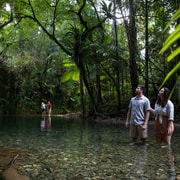
The Daintree Rainforest in Tropical North Queensland is one of Australia’s most remarkable natural attractions. Dense tropical forest, clear rivers, mountain ranges and secluded beaches combine to create a landscape unlike almost anywhere else in the country.
The Daintree forms part of the Wet Tropics of Queensland World Heritage Area and contains exceptionally ancient rainforest, an extraordinary variety of plants and wildlife, and places of great cultural importance to the Eastern Kuku Yalanji people.
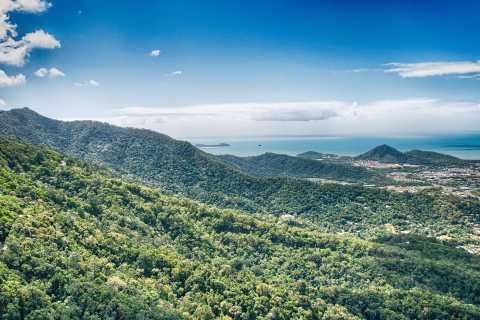
Daintree Rainforest, Queensland. Photo: Robert Linsdell / Wikimedia Commons, CC BY 2.0.
About the Daintree Rainforest
Daintree National Park is generally explored in two main areas: Mossman Gorge in the south and the coastal rainforest around Cape Tribulation north of the Daintree River.
The region is particularly unusual because tropical rainforest extends towards the coastline, bringing two World Heritage-listed environments — the Wet Tropics and the Great Barrier Reef — remarkably close together.
Mossman Gorge
Mossman Gorge is one of the easiest places to experience the Daintree Rainforest and is approximately 75 kilometres north of Cairns.
The Mossman River flows through the rainforest between huge granite boulders, creating attractive cascades and clear pools surrounded by dense vegetation.
Visitors normally begin at the Mossman Gorge Centre, where shuttle buses provide transport to the main walking tracks.
Walks at Mossman Gorge
Several walking tracks allow visitors to explore different sections of the rainforest.
Baral Marrjanga
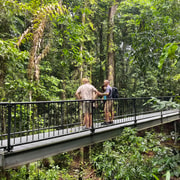
The Baral Marrjanga boardwalk is approximately 270 metres one way and leads through the lower rainforest canopy to views over the Mossman River.
Lower River Track
The Lower River Track follows the Mossman River through rainforest and provides views of granite boulders and cascading water.
Rainforest Circuit Track
The Rainforest Circuit Track is approximately 2.4 kilometres and usually takes around 1 to 1.5 hours.
The track travels deeper into the forest past huge strangler figs, vines and buttress roots.
Ngadiku Dreamtime Walk
Visitors interested in learning more about the area’s Aboriginal heritage can join a Ngadiku Dreamtime Walk at Mossman Gorge.
Guided by local Indigenous guides, these experiences introduce visitors to Eastern Kuku Yalanji culture, traditional plant uses, rainforest knowledge and the cultural significance of the landscape.
Crossing the Daintree River
To continue towards Cape Tribulation, visitors cross the Daintree River by vehicle ferry.
Once across the river, the road travels through increasingly dense rainforest with beaches, walking tracks and viewpoints located along the route.
The ferry is an important part of the Daintree experience and is the main road access to communities north of the river.
Daintree River Cruises
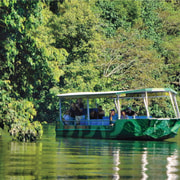
A wildlife cruise on the Daintree River is one of the most popular activities in the region.
Guided cruises explore the river and mangrove-lined waterways while looking for wildlife.
Animals that may be seen include:
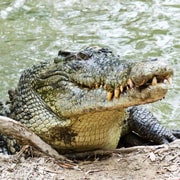
Estuarine crocodiles
Tree snakes
Kingfishers
Herons
Frogs
Butterflies
Other tropical birds
Wildlife sightings can never be guaranteed, but experienced guides know many of the locations where crocodiles and other animals are regularly seen.
Alexandra Lookout
Alexandra Lookout provides one of the best roadside views in the Daintree.
The lookout offers panoramic views across the rainforest towards the Daintree River, surrounding coastline and Coral Sea.
It makes a convenient stop when travelling between the Daintree River and Cape Tribulation.
Rainforest Boardwalks
Several short boardwalks allow visitors to explore the rainforest without undertaking a long hike.
These walks pass through different environments including lowland rainforest, mangroves and swamp forest.
They are excellent places to look for tropical plants, butterflies, lizards and rainforest birds.
Cape Tribulation
Cape Tribulation is one of the most famous destinations within the Daintree region.
Here, forest-covered mountains descend towards beaches and the Coral Sea, creating one of Australia’s most distinctive tropical landscapes.
Visitors can explore beaches, rainforest walks and coastal viewpoints or join guided rainforest and adventure tours.
Cape Tribulation Beach
Cape Tribulation Beach is backed by dense tropical vegetation and offers impressive views of the surrounding rainforest-covered mountains.
Although the beaches are beautiful, visitors should follow local swimming advice because marine stingers and crocodiles can occur in tropical North Queensland waters.
Wildlife in the Daintree
The Daintree supports an exceptional range of wildlife, including several species found in very few other places.
Animals that may be encountered include:
Southern cassowaries
Musky rat-kangaroos
Boyd’s forest dragons
Daintree River ringtail possums
Ulysses butterflies
Wompoo fruit-doves
Victoria’s riflebirds
Estuarine crocodiles
Southern Cassowary
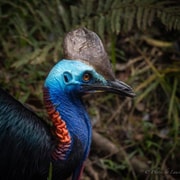
The endangered southern cassowary is one of the Daintree’s most famous residents.
These large flightless birds play an important role in maintaining the rainforest by eating fruit and spreading seeds.
If you encounter a cassowary, keep your distance, never feed it and follow national park safety advice.
Things to Do in the Daintree Rainforest
Explore Mossman Gorge
Join a Ngadiku Dreamtime Walk
Take a Daintree River wildlife cruise
Cross the Daintree River by ferry
Visit Alexandra Lookout
Walk through tropical rainforest
Look for cassowaries and other wildlife
Visit Cape Tribulation
Explore rainforest boardwalks
Photograph rainforest-covered mountains and beaches
Best Time to Visit the Daintree
The Daintree Rainforest can be visited throughout the year.
The period from approximately May to October generally brings lower humidity, cooler temperatures and less rainfall, making it particularly popular for sightseeing and walking.
The warmer wet season brings higher humidity and heavier tropical rainfall, but the rainforest becomes especially lush and waterfalls and streams can be more impressive.
Getting to the Daintree Rainforest
The Daintree is north of Cairns and Port Douglas in Tropical North Queensland.
Mossman Gorge is approximately 75 kilometres north of Cairns and is easily reached by road via the Captain Cook Highway.
From Port Douglas, Mossman Gorge is considerably closer and can be visited as part of a day trip.
Travellers continuing to Cape Tribulation cross the Daintree River by ferry before following the road north through the rainforest.
Great Barrier Reef Drive
The journey north from Cairns towards the Daintree follows sections of the spectacular Great Barrier Reef Drive.
The coastal road passes beaches, rainforest-covered mountains and views of the Coral Sea, making the journey part of the attraction.
How Long Should You Spend in the Daintree?
The Daintree can be visited on a full-day trip from Cairns or Port Douglas, but this provides only a brief introduction to the region.
Spending 2 to 3 days allows more time to explore Mossman Gorge, take a river cruise, walk the rainforest boardwalks and stay around Cape Tribulation.
Suggested Daintree Day Trip
A good one-day itinerary could include:
Leave Cairns or Port Douglas early in the morning
Visit Mossman Gorge
Continue to the Daintree River
Join a wildlife cruise
Cross the river by ferry
Stop at Alexandra Lookout
Complete a rainforest boardwalk
Visit Cape Tribulation
Return in the late afternoon
Travel Tip
Take insect repellent, drinking water, sun protection, comfortable walking shoes and lightweight rain protection when exploring the Daintree.
Tropical weather can change quickly, particularly during the wet season. Check current road conditions and Queensland Parks alerts before travelling north of the Daintree River.
Never swim in rivers, creeks or beaches unless the location is specifically identified as safe, and always obey crocodile and marine stinger warning signs.
Image credit: Robert Linsdell, via Wikimedia Commons. Licensed under Creative Commons Attribution 2.0.
Sponsored Popular Items
Quick take: Musement.com offers a worldwide selection of tours and attractions
Southern Daintree Explorer Tour - Half Day Australia Join our experienced guides as they take you through the most amazing locations of the Southern Daintree Rainforest on this exclusive small group experience. Check current availability, inclusions and booking conditions.
Private Daintree Rainforest and Wildlife Half-Day Tour Australia Discover the essence of the Daintree on a private half-day tour. Enjoy a guided rainforest walk in Mossman Gorge and a private Daintree River crocodile cruise. Check current availability, inclusions and booking conditions.
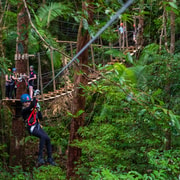
Port Douglas: Daintree Rainforest Canopy Ziplining Tour Australia Explore the rainforest canopy of the ancient Daintree Rainforest with this ziplining adventure in Cape Tribulation. Soar at heights of up to 15 meters on a fully-guided 2-hour zipline… Check current availability, inclusions and booking conditions.
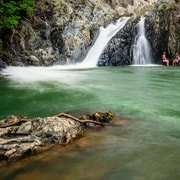
Daintree Rainforest: Magic Waterfall Walk with Lunch & Swim Australia Explore the oldest rainforest on Earth on a ONE HOUR walk to a secret waterfall. Enjoy gourmet lunch in a superb rainforest restaurant with a choice of dishes and a tropical fruit… Check current availability, inclusions and booking conditions.
Port Douglas: Daintree Rainforest and Mossman Gorge Tour Australia Embark on a full-day guided trip to the Daintree Rainforest from Port Douglas. Explore the main sites, such as Mossman Gorge, Alexandra Lookout, Cape Tribulation, Noah Valley, and… Check current availability, inclusions and booking conditions.
Daintree Rainforest Australia Book your Daintree Rainforest tickets online. Save time and money with our best price guarantee. Make the most of your visit to Daintree National Park. Check current availability, inclusions and booking conditions.
Daintree Rainforest: Crocodile & Wildlife River Cruise Australia Explore the Daintree Rainforest on a guided river cruise. Learn about the area's unique ecology and history from your guide, and get the chance to spot crocodiles and other native… Check current availability, inclusions and booking conditions.
Tour 2: Crocodile Express Greater Daintree Wildlife Cruises Australia Explore the Lower Daintree River, commencing near Daintree Ferry. Spot abundant wildlife, including saltwater crocodiles from the boat. Includes bonus cruise option from Daintree Village. Check current availability, inclusions and booking conditions.
Cairns: Full-Day Aboriginal Cultural Tour of Daintree and Mossman Gorge Australia Join a full-day cultural tour from Cairns and explore Kuku Yalanji Country (Daintree). Learn about the Kuku Yalanji people, participate in a traditional ceremony, and discover the… Check current availability, inclusions and booking conditions.