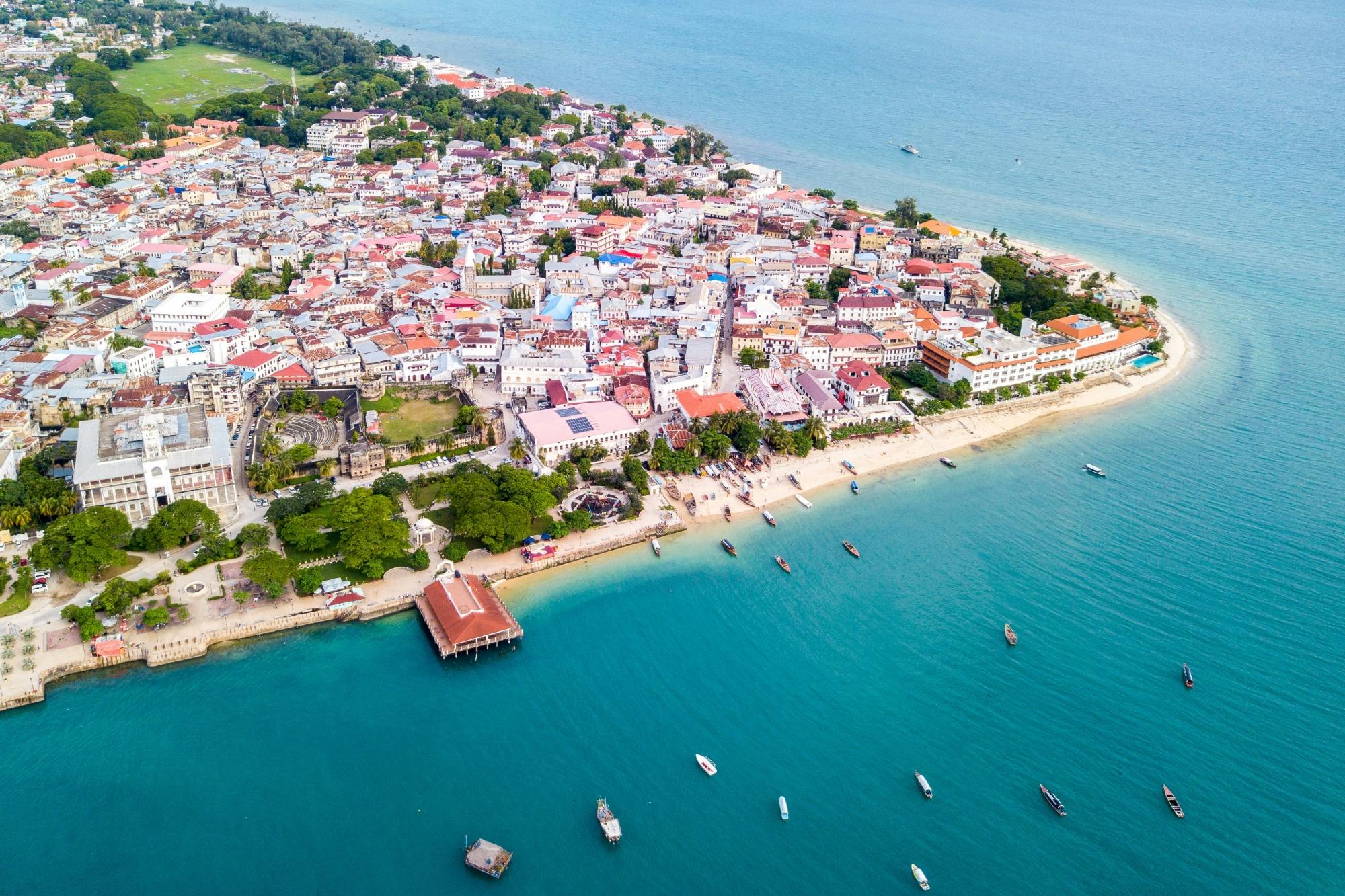
Stone Town is the historic heart of Zanzibar City and one of the most fascinating old towns on the East African coast. Behind its Indian Ocean waterfront lies a maze of narrow lanes filled with coral-stone houses, elaborately carved wooden doors, mosques, churches, former palaces, merchants’ houses, markets and small courtyards.
Stone Town was inscribed on the UNESCO World Heritage List in 2000. UNESCO describes it as an outstanding example of a Swahili coastal trading town whose architecture reflects more than a thousand years of interaction between African, Arab, Indian and European cultures.
This is not an open-air museum. Around the historic buildings are homes, schools, workshops, cafés, shops, mosques and markets used every day by local residents. That mixture of monumental history and ordinary life is a large part of Stone Town’s appeal.
Stone Town at a Glance
Visitor Information
Details
Location
Zanzibar City, Unguja Island, Tanzania
UNESCO World Heritage
Since 2000
UNESCO property area
96 hectares
Best known for
Swahili architecture, carved doors, trading history and waterfront
Essential sights
Old Fort, Forodhani Gardens, Anglican Cathedral, Darajani Market, Old Dispensary and historic lanes
Time needed
At least half a day; 1–2 days is better
Best way to explore
On foot
Stone Town admission
Free – individual museums and monuments may charge admission
Main airport
Abeid Amani Karume International Airport
Airport location
About 5 km south of Zanzibar City
Best for
History, architecture, culture, food, photography and walking
Why Is Stone Town So Important?
Stone Town developed as part of the network of Swahili trading communities along the East African coast. Its position in the Indian Ocean connected Zanzibar with mainland Africa, Arabia, Persia, India and eventually European trading powers.
Those connections are visible in the buildings. A single street can contain African and Swahili building traditions beside Omani Arab houses, Indian merchant architecture and European colonial structures.
UNESCO considers Stone Town an exceptional example of cultural fusion rather than a town representing only one civilisation. Its winding street pattern, low-rise buildings, large seafront mansions and enclosed courtyards remain key elements of its historic character.
A Town Built From Coral Stone
The name Stone Town distinguishes the historic stone-built centre from surrounding neighbourhoods that traditionally contained simpler structures.
UNESCO notes that many historic buildings were constructed primarily from coralline ragstone and mangrove timber, held together with thick lime mortar before being plastered and limewashed.
These traditional materials helped create the distinctive pale buildings and irregular walls that line the narrow streets today.
The Famous Zanzibar Doors
One of the first architectural details most visitors notice is the collection of enormous carved wooden doors.
Historic houses often have double doors surrounded by deeply carved timber frames. Some incorporate floral motifs, geometric patterns, Arabic inscriptions or metal studs.
UNESCO identifies these elaborately carved double doors as one of the distinctive external features of Stone Town’s traditional houses.
Do not concentrate only on the most elaborate examples. Once you begin looking carefully, even ordinary lanes reveal beautiful old doors, balconies, shutters and decorated entrances.
Getting Lost Is Part of the Experience
Stone Town’s lanes were never laid out as a modern grid.
UNESCO describes a network of narrow, winding streets and alleys created as different communities and groups of buildings developed around courtyards and shared spaces.
You will frequently turn a corner expecting another street and instead discover:
A tiny square
A mosque entrance
A carved doorway
A small café
A textile shop
A courtyard
A glimpse of the sea
Navigation apps are useful, but Stone Town is one of those destinations where following every instruction on your phone can actually make the visit less interesting.
1. Start at Forodhani Gardens
Forodhani Gardens is one of the easiest places to begin exploring Stone Town.
The waterfront park sits beside several of the historic centre’s best-known monuments, including the Old Fort and the House of Wonders area.
During the day it is a convenient landmark and meeting place. During the evening it becomes much livelier as food vendors set up stalls around the waterfront.
Forodhani Gardens at Night
The evening food market is one of Stone Town’s most popular experiences.
Depending on the stalls operating that night, food can include:
Grilled seafood
Mishkaki meat skewers
Chapati
Fresh sugar-cane juice
Local snacks
Zanzibar-style pizza
Go for the atmosphere as much as the food. Families, visitors and local residents gather along the waterfront as the temperature becomes more comfortable after sunset.
2. Explore the Old Fort
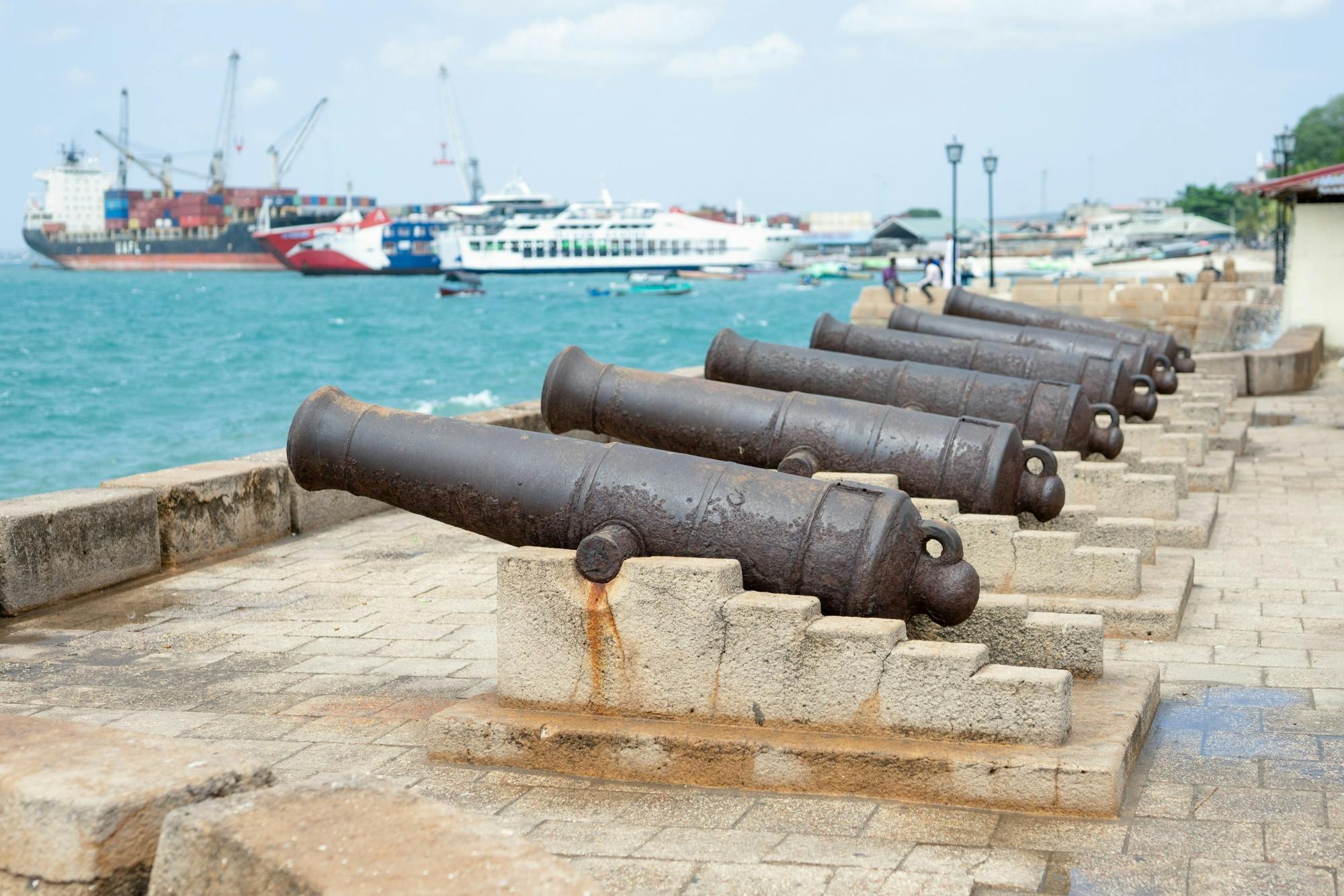
The imposing Old Fort, also known as the Arab Fort or Ngome Kongwe, is one of Stone Town’s most obvious landmarks.
UNESCO lists it among the major 18th- and 19th-century monuments contributing to Stone Town’s World Heritage significance. The fort occupies the site of an earlier Portuguese church.
Its thick defensive walls and battlements provide a striking contrast to the elaborate merchant houses elsewhere in the old town.
The interior has been adapted over time for cultural uses and events, while the building remains an excellent landmark for orientating yourself near the waterfront.
3. See the House of Wonders
Beit al-Ajaib, or the House of Wonders, is one of Zanzibar’s most important historic buildings.
UNESCO describes it as a large ceremonial palace built by Sultan Barghash and identifies it as one of the major monuments defining Stone Town’s historic waterfront.
Important 2026 House of Wonders Information
The House of Wonders should not currently be treated as a normal museum attraction with guaranteed interior access.
A major section of the building collapsed in December 2020 while restoration work was underway. UNESCO and Zanzibar authorities subsequently began extensive assessment, documentation and rehabilitation planning.
A UNESCO technical mission published in 2026 was still examining rehabilitation, reconstruction and future-use plans for the House of Wonders. Visitors should therefore check its latest status locally rather than relying on older guides that describe it as an operating museum.
Even when the interior is unavailable, the site remains an important part of understanding Stone Town’s seafront history.
4. Visit the Anglican Cathedral and Former Slave Market Site
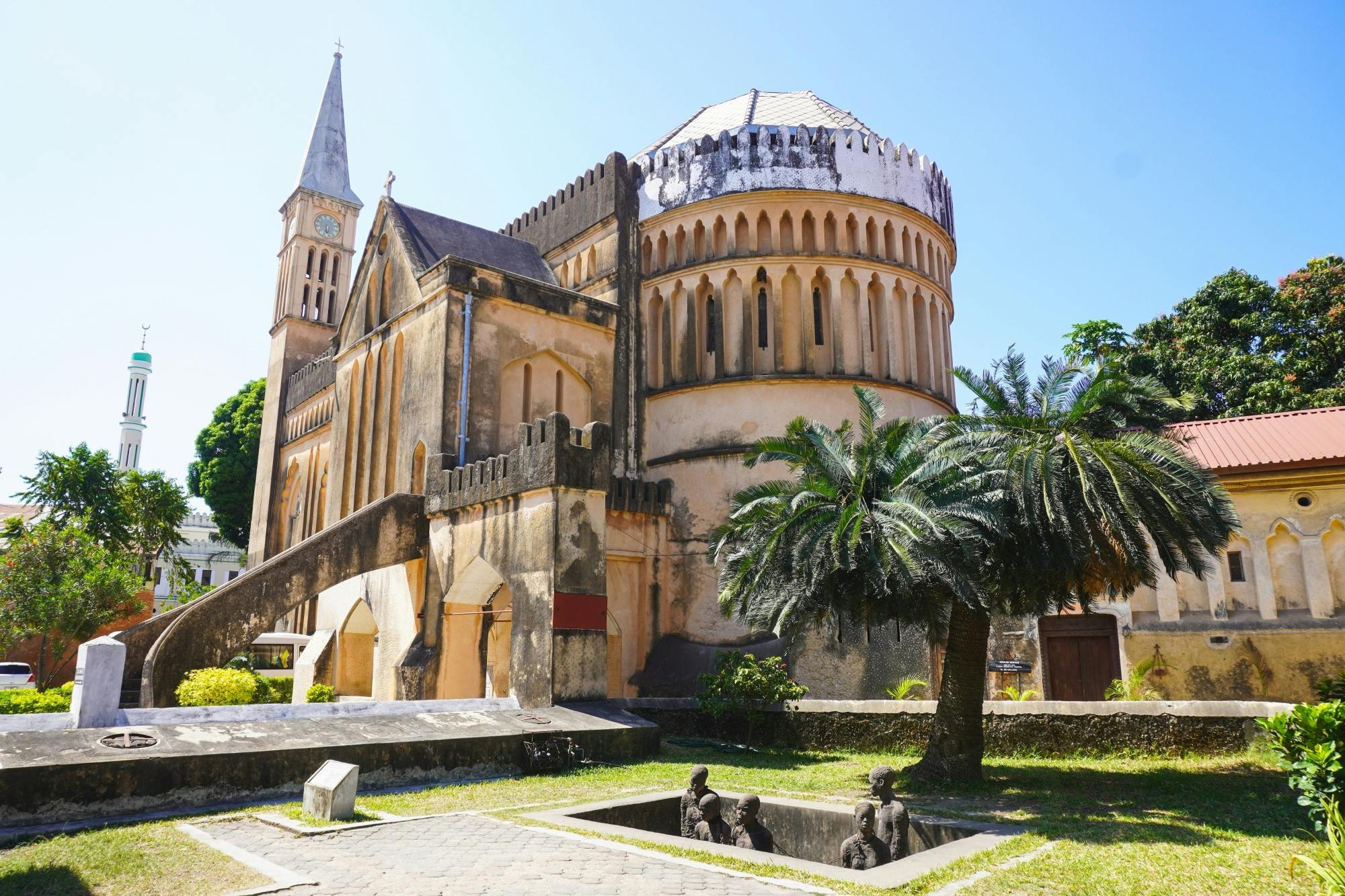
One of the most important historical stops is Christ Church Anglican Cathedral.
The cathedral stands on the site of Zanzibar’s former slave market. UNESCO describes it as a monument associated with the abolition of the slave trade and highlights Zanzibar’s wider symbolic importance in the suppression of slavery.
This is an essential part of Stone Town’s history and should not be reduced to a brief photographic stop.
Zanzibar was one of East Africa’s major slave-trading ports. Enslaved people from the African mainland were transported through Zanzibar as part of Indian Ocean trading networks.
The site provides an opportunity to learn about this history and the human consequences of the trade that contributed to Zanzibar’s commercial wealth.
Take Time at the Memorial
The experience is naturally much more sombre than visiting the waterfront or markets.
Give yourself enough time to read the interpretation and understand why UNESCO specifically includes Zanzibar’s role in both the slave trade and its abolition among the reasons Stone Town has international historical significance.
5. Walk Through Darajani Market
Darajani Market lies beside the historic district and provides one of the best opportunities to experience everyday Zanzibar rather than solely its preserved monuments.
Expect a busy working market selling combinations of:
Fruit
Vegetables
Spices
Fish
Meat
Household products
Clothing
The market can be hot, crowded and chaotic, which is precisely why it feels completely different from Stone Town’s boutique shops and heritage hotels.
Current Zanzibar travel information continues to identify Darajani as one of the principal markets for spices and tropical produce in the historic city area.
Photography at the Market
Ask before taking close photographs of individual stallholders.
A busy market is a workplace rather than simply a tourist attraction, and respecting people who do not want to be photographed makes for a better visit.
6. See the Old Dispensary
The Old Dispensary is one of Stone Town’s most distinctive buildings.
UNESCO’s Urban Heritage Atlas describes it as a symbol of the different peoples and cultural influences that contributed to Zanzibar’s development during the 19th century.
Its architecture is particularly notable for:
Decorative balconies
Carved timber
Indian-influenced ornamentation
Multiple levels overlooking the waterfront area
Even if you are not visiting every museum, the building is worth seeking out for its architecture.
7. Find St Joseph’s Cathedral
St Joseph’s Roman Catholic Cathedral provides another example of Stone Town’s cultural and religious diversity.
UNESCO identifies the cathedral as one of the major religious monuments contributing to the World Heritage townscape.
Its twin spires occasionally appear above the surrounding rooftops while walking through the narrow lanes, helping you orientate yourself when the streets become confusing.
8. Look for the Hamamni Persian Baths
Hamamni is one of Stone Town’s surviving Persian-style bath complexes.
UNESCO describes it as one of the town’s largest and best-preserved historic monuments originally constructed for public bathing.
The baths are particularly interesting because they reveal a different side of urban life from palaces, churches and forts.
Where access is available, look for the interconnected rooms traditionally associated with changing, washing, hot-water bathing and cooling.
9. Explore Stone Town’s Mosques Respectfully
Mosques remain an important part of Stone Town’s living character.
UNESCO specifically identifies historic religious structures including the Malindi Bamnara Mosque, whose distinctive minaret dates to the 19th century.
Many mosques are active places of worship rather than tourist monuments. Do not assume non-Muslim visitors may enter every building.
Observe signs, dress respectfully and avoid interrupting prayer.
10. Walk the Waterfront at Sunset
Stone Town’s relationship with the Indian Ocean is fundamental to its history.
The historic city developed as a trading port, and UNESCO considers the relationship between its buildings, open spaces and the sea an important part of the World Heritage site’s integrity.
Late afternoon is an excellent time to walk along the waterfront. The heat begins to ease, fishing and passenger boats move across the water and the old seafront buildings catch the softer evening light.
11. Take a Traditional Dhow Trip
Traditional sailing vessels remain one of the most recognisable sights around Zanzibar.
Sunset dhow cruises and short boat trips leave from areas around Stone Town and can provide excellent views back towards the historic skyline from the water.
This is particularly worthwhile after spending the day walking the lanes because the town looks completely different from offshore.
12. Visit Prison Island
Changuu Island, commonly called Prison Island, is a popular boat excursion from Stone Town.
It is normally visited as a half-day outing rather than being included within a walking tour of the city.
If you only have one day in Stone Town, prioritise the historic centre first. If you have two days, an offshore excursion becomes much easier to include.
13. Visit Nakupenda Sandbank
Nakupenda is another popular boat excursion from Stone Town.
The sandbank lies offshore and is generally visited for swimming, beach time and seafood lunches.
Current destination information places Nakupenda approximately 20 minutes by boat from Zanzibar’s port, although journey times naturally depend on boat and sea conditions.
A common full-day combination is:
Prison Island → Nakupenda Sandbank → Stone Town sunset
Stone Town’s Connection With the Indian Ocean Trade
The architecture makes much more sense once you understand why so many cultures are represented.
For centuries the East African coast participated in trade connecting:
Inland Africa
The Swahili coast
Arabia
Persia
India
Other parts of the Indian Ocean
UNESCO states that the architecture and urban structure of Stone Town provide exceptional evidence of this long period of seaborne trading between Africa and Asia.
Omani Influence
Omani Arab influence became particularly important in Zanzibar’s later history and is clearly visible in some of the town’s palaces, houses and defensive structures.
The large mansions facing the sea and enclosed courtyard houses illustrate how imported traditions were adapted to local Swahili urban life rather than simply copied unchanged.
Indian Merchant Influence
Indian traders also left a strong architectural legacy.
UNESCO identifies narrow-fronted Indian shop houses along Stone Town’s bazaar streets, with commercial areas at ground level and residential space above.
Decorative balconies and elaborately worked timber on several important buildings also reflect Indian architectural traditions.
Stone Town Is Still a Living City
This may be the most important thing to remember.
UNESCO describes Stone Town not simply as a historic settlement but as an important commercial and socio-cultural centre of the Zanzibar Archipelago.
People live above the shops, children walk to school, residents meet on stone benches outside houses and businesses operate inside buildings that may themselves be several generations old.
Visitors should therefore avoid treating every doorway or courtyard as public property.
The Baraza
As you explore, look for stone or concrete benches built along the front of buildings.
These social spaces, often referred to as baraza, are an important element of Swahili urban life and provide places for residents to sit, talk and interact with neighbours.
UNESCO heritage-planning work in Zanzibar specifically identifies the importance of protecting traditional baraza and other shared public and semi-public spaces.
Should You Take a Guided Walking Tour?
A guided tour is very worthwhile on your first morning.
Stone Town’s greatest sights are not difficult to find, but understanding what you are looking at is much harder.
A knowledgeable guide can explain:
Swahili architecture
The slave trade
Omani rule
Indian merchant communities
Carved door symbolism
Historic houses
Religious buildings
Local customs
After the tour, spend additional time exploring independently rather than leaving immediately.
How Long Do You Need in Stone Town?
3 Hours
Enough for a guided highlights walk, but too short to understand the town properly.
Half a Day
Good minimum.
You can see the Old Fort, waterfront, Anglican Cathedral area, Darajani Market and some of the historic lanes.
One Full Day
Good for most visitors.
Add museums, shopping, a long lunch, sunset and the Forodhani evening market.
Two Days
Best if you enjoy culture and photography.
You can explore without rushing and add Prison Island, Nakupenda or another short boat excursion.
A Good One-Day Stone Town Itinerary
8:30 am – Historic Lanes
Begin before the strongest heat and explore the quieter streets while shops are opening.
9:30 am – Anglican Cathedral and Former Slave Market
Give this site enough time to understand Zanzibar’s role in the East African slave trade and its abolition.
11:00 am – Darajani Market
Walk through the busy market and surrounding commercial streets.
Noon – Hamamni and Historic Lanes
Continue through the old residential area, watching for carved doors and courtyards.
1:00 pm – Lunch
Stop for Swahili or Zanzibari food and escape the strongest midday heat.
3:00 pm – Old Dispensary and Waterfront
Explore the northern side of the historic town before gradually returning along the sea.
4:30 pm – Old Fort and House of Wonders Area
Explore the fort and view the historic palace area from outside, remembering that House of Wonders access remains affected by rehabilitation work.
6:00 pm – Sunset
Walk along the waterfront.
Evening – Forodhani Gardens
Finish with the night food market and the atmosphere around the harbour.
A Better Two-Day Stone Town Itinerary
Day 1 – History and Architecture
Guided walking tour
Anglican Cathedral and former slave-market site
Darajani Market
Hamamni Baths
Old Dispensary
Old Fort
Waterfront sunset
Forodhani Gardens
Day 2 – Sea and Slow Exploration
Prison Island or Nakupenda excursion
Lunch in Stone Town
Carved-door photography
Shopping
St Joseph’s Cathedral area
Rooftop sunset
What to Eat in Stone Town
Zanzibar’s food reflects the same cultural mixture seen in its architecture.
Look for dishes involving:
Fresh fish
Octopus
Coconut
Rice
Cardamom
Cinnamon
Cloves
Chilli
Tropical fruit
Current Zanzibar travel guidance highlights dishes such as coconut octopus curry, pilau and grilled seafood as characteristic island foods.
Try Mishkaki
Mishkaki are seasoned grilled meat skewers and are easy to find at casual food stalls.
They make a good addition to an evening at Forodhani, especially if you prefer tasting several small dishes rather than sitting down for a formal meal.
Zanzibar Pizza
Despite the name, Zanzibar pizza bears little resemblance to a traditional Italian pizza.
A thin piece of dough is filled, folded and fried on a hot plate. Savoury and sweet versions are available.
Forodhani Gardens is one of the best-known places for visitors to try it.
Shopping in Stone Town
The old centre contains everything from inexpensive souvenirs to high-quality craft and design shops.
Popular purchases include:
Spices
Textiles
Woven bags and baskets
Paintings
Wood carvings
Jewellery
Locally designed clothing
If buying an item represented as locally handmade, ask where it was produced rather than assuming every souvenir is made in Zanzibar.
Spice Shopping
Zanzibar is strongly associated with spices, particularly cloves as well as cinnamon, pepper, nutmeg and other products.
Darajani and numerous specialist shops sell packaged spices, but a dedicated spice-farm tour elsewhere on Unguja gives a much better explanation of how the plants actually grow.
What Should You Wear?
Zanzibar has a predominantly Muslim culture, and Stone Town is a lived-in urban community rather than a beach resort.
Visitors should generally choose relatively modest clothing while walking around town.
Lightweight clothing is important in the tropical climate, but beachwear is better kept for beaches, pools and boats rather than historic residential lanes and religious sites.
Walking Conditions
Stone Town is compact but not particularly smooth.
Expect:
Uneven paving
Narrow alleys
Occasional steps
Busy market areas
Motorbikes in some lanes
Strong heat and humidity
Comfortable closed shoes or secure sandals are preferable to footwear that becomes uncomfortable after several hours of walking.
Accessibility
Stone Town can be challenging for travellers with significant mobility limitations.
The historic street pattern includes narrow lanes and uneven surfaces, while many older buildings were constructed long before modern accessibility standards.
A traveller who uses a wheelchair or has limited walking ability may still enjoy the waterfront and selected accessible sites, but a specialised vehicle and guide can make the visit much easier.
Stone Town With Children
Families can enjoy Stone Town, especially if the visit is broken into shorter sections.
Children may particularly enjoy:
Exploring the maze-like streets
Finding carved doors
Watching boats
Old Fort
Fresh fruit juices
Forodhani Gardens
A short boat trip
The former slave-market site naturally involves distressing history, so parents may want to decide how much detail is appropriate for younger children.
Getting to Stone Town From Zanzibar Airport
Abeid Amani Karume International Airport is the principal airport serving Zanzibar.
The Zanzibar Airports Authority places it approximately 5 kilometres south of Zanzibar City.
A taxi or pre-arranged hotel transfer is normally the simplest option when arriving with luggage.
Stone Town’s narrow interior streets mean vehicles cannot necessarily drive directly to every hotel entrance. If your accommodation is deep inside the historic lanes, you may need to walk the final section with your luggage.
Arriving by Ferry From Dar es Salaam
Fast passenger ferries operate between Dar es Salaam and Zanzibar.
Azam Marine currently operates daily services on the route.
As a current 2026 example, Azam Marine lists non-resident economy fares at:
Passenger
Current Economy Fare
Adult
US$35
Child aged 5–11
US$30
Schedules and fares can change, so check the operator directly before travelling.
The ferry company also warns passengers to purchase tickets through its official offices, website or approved agents rather than unofficial sellers approaching travellers in the street.
Important 2026 Zanzibar Travel Insurance Requirement
International visitors should be aware of Zanzibar’s mandatory inbound travel insurance.
The Zanzibar Insurance Corporation currently states that this insurance is compulsory for foreign visitors even when they already hold private travel or medical insurance from another provider.
Current 2026 prices are:
Visitor
Current Mandatory Insurance Cost
Adult
US$44
Child
US$22
SADC/EAC traveller
US$22
The official insurer notes that fees and coverage can change, so verify the requirement before departure.
Where to Stay in Stone Town
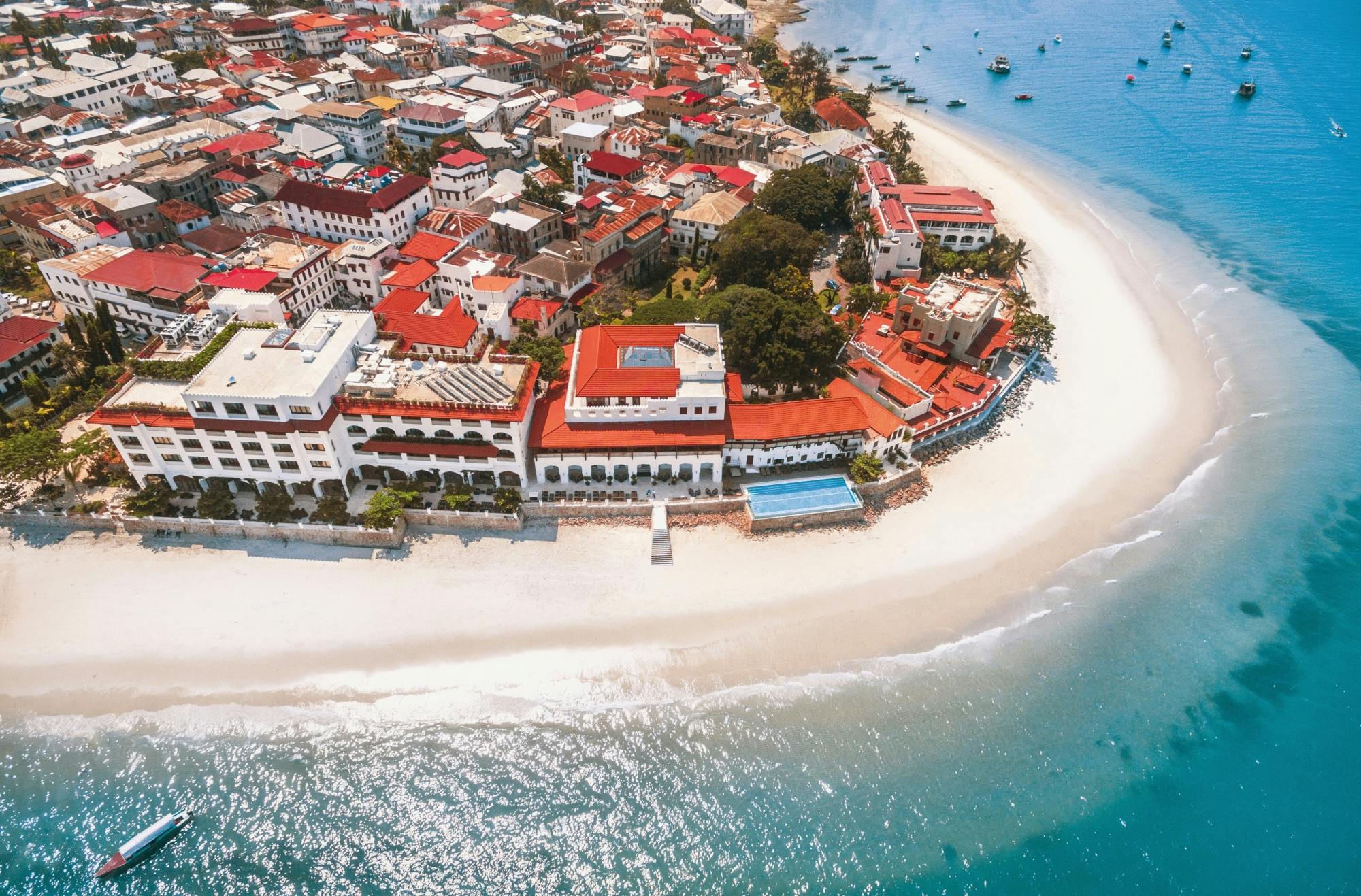
Waterfront and Shangani
Best for first-time visitors.
This area places you close to:
Forodhani Gardens
Old Fort
Restaurants
Waterfront sunsets
Boat excursions
Accommodation ranges from converted historic buildings to larger international-style hotels.
Inside the Historic Lanes
Best for atmosphere.
Staying inside an old merchant house or traditional building can become part of the Stone Town experience.
The trade-off is access. Taxis may be unable to reach the door, and luggage sometimes needs to be carried through narrow streets.
Near Darajani
Best for markets and local activity.
This side of the historic centre is busier and less polished than the waterfront but provides quick access to everyday shopping and transport.
Stay in Stone Town or at a Beach Resort?
The best solution for many visitors is to do both.
Stay in Stone Town If You Want:
History
Architecture
Restaurants
Walking
Markets
Boat excursions
Evening atmosphere
Stay at Nungwi, Kendwa, Paje or Another Beach If You Want:
Swimming
Beachfront resorts
Long days beside the sea
Diving
Snorkelling
Kitesurfing in suitable areas
A very good Zanzibar holiday combines one or two nights in Stone Town with several nights on the coast.
Stone Town Is Not Zanzibar’s Best Swimming Beach
The waterfront is attractive, but travellers coming to Zanzibar primarily for white-sand beaches will find much better swimming areas elsewhere around Unguja.
Use Stone Town for history, culture, food and atmosphere and then move to one of the island’s dedicated beach areas.
Best Time of Day for Photography
Early Morning
Best for streets and doors.
There are fewer visitors, temperatures are lower and the commercial lanes are only beginning to wake up.
Late Afternoon
Best for waterfront photography.
Warm light reaches the seafront buildings before sunset.
Evening
Best for people and atmosphere.
Forodhani and surrounding streets become lively after dark.
Do Not Rush Stone Town
It is easy to treat Stone Town as a checklist:
Old Fort – photograph. Cathedral – photograph. Door – photograph. Market – photograph.
That misses much of what makes the place special.
Some of the most memorable moments come from sitting for a drink, watching people in a small square or deliberately taking a lane that does not appear to lead to a major attraction.
Heritage Conservation Matters
The historic buildings are vulnerable.
UNESCO has repeatedly identified challenges including deterioration, maintenance problems and development pressure within and around the World Heritage area.
The partial collapse of the House of Wonders in 2020 dramatically demonstrated the difficulties involved in preserving historic coral-stone architecture in a busy tropical city.
Visitors can help by respecting protected buildings, avoiding damage to old doors and plasterwork and supporting responsible heritage businesses and local guides.
Practical Stone Town Tips
Allow at least one full day if history interests you.
Take a guided walk first and explore independently afterwards.
Wear comfortable shoes for uneven streets.
Dress respectfully in residential and religious areas.
Ask before photographing people closely.
Carry drinking water in the heat.
Visit Darajani earlier in the day for the busiest market atmosphere.
Return to Forodhani after sunset.
Do not rely on old information about House of Wonders access.
Arrange airport transfers if carrying heavy luggage.
Check mandatory Zanzibar travel insurance before departure.
Is Historic Stone Town Zanzibar Worth Visiting?
Absolutely. Stone Town is essential to understanding Zanzibar.
The beaches explain why Zanzibar is a famous holiday destination, but Stone Town explains much of why Zanzibar became historically important in the first place.
UNESCO recognises the town because its remarkably intact urban structure demonstrates centuries of cultural interchange between Africa, Arabia, India and Europe. Its houses were constructed from coral stone and mangrove timber; its streets grew into a maze of interconnected communities; and its architecture records centuries of Indian Ocean trade.
The same history also contains a much darker chapter. Zanzibar became one of East Africa’s major slave-trading ports, and the Anglican Cathedral now stands on the site of the last open slave market. Understanding that history is essential to appreciating Stone Town honestly rather than seeing it only as a collection of beautiful old buildings.
Allow at least a full day. Start in the lanes while the morning is cooler, visit the former slave-market site and Darajani, examine the carved doors and historic houses, then move towards the Old Fort and waterfront during the afternoon.
Finish at Forodhani Gardens after sunset, when the waterfront fills with food stalls and people and the historic city becomes a living public space rather than simply a heritage attraction.
If your itinerary allows it, stay overnight. Stone Town is at its most atmospheric early in the morning and after the day-trippers have left.
Stone Town’s greatest attraction is not any single palace, fort or museum. It is the entire historic city: a living Swahili trading town where centuries of African, Arab, Indian and European history remain visible around almost every corner.
Sponsored Popular Items
Quick take: Musement.com offers a worldwide selection of tours and attractions
Zanzibar historic stone town tour and Masingini Forest walk Tanzania Plan Zanzibar historic stone town tour and Masingini Forest walk, a cultural or heritage experience, with practical tips on timing, inclusions and what to check before booking. Compare current availability, prices and booking conditions before you go.
Zanzibar historic stone town and Masingini Forest walk private tour Tanzania Plan Zanzibar historic stone town and Masingini Forest walk private tour, a cultural or heritage experience, with practical tips on timing, inclusions and what to check before booking. Compare current availability, prices and booking conditions before you go.
Zanzibar Historic Stone Town Private Tour – Guided Tour Tanzania You’ll find African, Indian, European and Arabic influences all muddled together in the UNESCO World Heritage Site of Stone Town. Check current availability, inclusions and booking details before you go.
Easy Access - The Blarney Stone & Castle Gardens Tour Best deals for Easy Access - The Blarney Stone & Castle Gardens Tour. This expertly curated tour offers unique access to Ireland’s must-see Blarney Castle & Gardens, home to the world-famous Blarney Stone. Available from getyourguide.com.
Busan: Private Tour, Stone Buddha, UN Cemetery & Experiences South Korea Best deals for Busan: Private Tour, Stone Buddha, UN Cemetery & Experiences. Discover Busan's hidden gems on a private car tour. Visit Seokbulsa Temple, a rose garden, a Samgyetang restaurant, ZM-ILLENNIAL, and the UN Memorial Cemetery. Available from getyourguide.com.
Aotearoa Bone and Stone - Maori Pounamu Workshop New Zealand Create a beautiful Maori pounamu/jade necklace in Auckland while learning about the Māori culture, hearing the ancient stories, and completing a taonga (pendant) to keep or share with a loved one
Koh Samui Day Trip: Overlap Stone, Lunch, Koh Tan & Pig Island Thailand Discover the best of Koh Samui on a full-day tour. Visit the Overlap Stone, snorkel at Koh Tan, and relax on Pig Island. Enjoy a delicious lunch and a scenic boat ride back to Samui