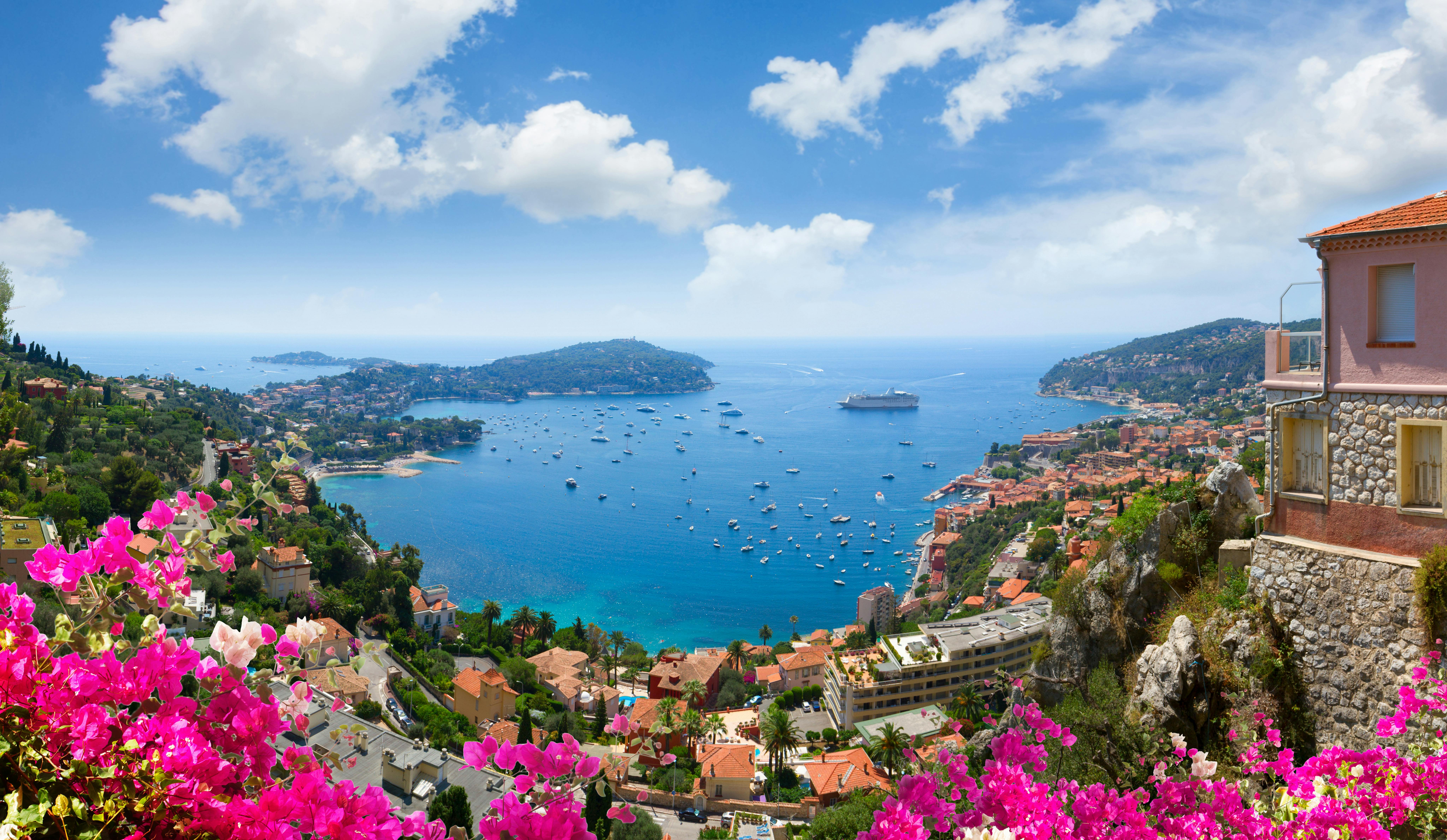
Villa Ephrussi de Rothschild is one of the most elegant historic houses on the French Riviera. Perched on the narrow isthmus of Saint-Jean-Cap-Ferrat, the pink Belle Époque villa looks across the Mediterranean towards both Villefranche Bay and Beaulieu Bay and is surrounded by an extraordinary collection of themed gardens.
The estate was created for Baroness Béatrice Ephrussi de Rothschild, a wealthy art collector and member of the Rothschild banking family. She acquired the site in 1905 and spent years creating a home filled with 18th-century furniture, paintings, tapestries, porcelain and decorative art. The villa was completed by 1912.
Today the villa and its collections belong to the Académie des Beaux-Arts. Visitors can explore the furnished interiors and then wander through nine themed gardens, including French, Spanish, Florentine, Japanese, exotic and Provençal landscapes.
For most visitors, allow around 2½ to 3 hours. Garden enthusiasts, photographers and anyone planning lunch at the on-site restaurant can comfortably spend half a day here.
Villa Ephrussi de Rothschild at a Glance
Visitor Information
Details
Location
Saint-Jean-Cap-Ferrat, French Riviera
Setting
Between Villefranche Bay and Beaulieu Bay
Estate created
From 1905
Villa completed
1912
Founder
Baroness Béatrice Ephrussi de Rothschild
Estate
Approximately 7 hectares
Themed gardens
9
Current 2026 adult admission
€18
Reduced admission
€12
Children under 7
Free
July–August opening hours
10:00 am–7:00 pm
Last admission
30 minutes before closing
Audio guide
Included
Parking
Free on site, subject to availability
Recommended visit
2½–3 hours
Best for
Gardens, architecture, art, history and photography
Who Was Béatrice Ephrussi de Rothschild?
Charlotte Béatrice de Rothschild was born in 1864 to Baron Alphonse de Rothschild and Léonora de Rothschild. She grew up surrounded by major art collections and lavish residences, including the family’s Château de Ferrières outside Paris.
At 19 she married banker Maurice Ephrussi. The marriage ended in divorce in 1904, after which Béatrice increasingly devoted herself to collecting art, furniture and decorative objects.
When her father died in 1905, Béatrice inherited a considerable fortune. In the same year she discovered the Cap Ferrat site and decided to create her dream residence there.
Building a Palace on Cap Ferrat
The site was beautiful but difficult. It occupied a rocky ridge exposed to coastal winds and was not naturally suited to the kind of elaborate gardens Béatrice envisioned.
Land had to be reshaped extensively, with large quantities of soil brought onto the property. Work on the gardens ultimately took about seven years.
Several architects contributed ideas during the project. French heritage records identify Aaron Messiah as the principal architect responsible for carrying out the building work, while other architects and landscape designers also contributed to the estate.
The resulting villa draws heavily on Italian Renaissance architecture, with Tuscan, Venetian and Lombard influences combined with Béatrice’s highly personal taste.
Why Is the Villa Pink?
The soft pink-and-white exterior has become one of the villa’s defining features.
The building was not always painted exactly as it appears today. After the Second World War, restoration work introduced the reddish-pink colour scheme that gives the villa its distinctive Venetian character.
The Villa Was Originally Called Île-de-France
Béatrice named her home Villa Île-de-France after a memorable voyage aboard a ship bearing that name.
The nautical idea also influenced the gardens. From the villa’s loggia, the long French Garden was intended to resemble the deck of a ship, with the Mediterranean visible on either side.
Béatrice even dressed her gardeners in sailor-style berets with red pompoms, allowing her to imagine herself commanding a vessel from the villa above.
Inside Villa Ephrussi
The interior is not arranged like a conventional museum full of glass cases. Instead, the rooms retain the atmosphere of a wealthy Belle Époque residence furnished with objects collected from several periods.
Béatrice particularly loved 18th-century French decorative arts, although her tastes were eclectic.
The collections include:
French furniture
Sèvres porcelain
Meissen porcelain
Tapestries
Paintings
Sculpture
Clocks
Decorative objects
Asian works of art
When Béatrice bequeathed the estate, the Académie des Beaux-Arts received approximately 5,000 works of art together with the seven-hectare property.
The Central Patio
One of the villa’s most attractive architectural spaces is the covered central patio.
The light-filled courtyard acts as the heart of the residence and reflects the Italian Renaissance influences seen throughout the building.
When visiting, pause here rather than immediately continuing through the rooms. The patio helps explain how Béatrice wanted the villa to feel: Mediterranean, theatrical and more like a private palace than a simple seaside holiday house.
The Grand Salon
The Grand Salon contains some of the estate’s most important furnishings.
Among the objects highlighted by the villa are an 18th-century games table, a large Savonnerie carpet and an elaborate ceiling painting associated with Venetian artist Giandomenico Tiepolo.
The room also demonstrates what is sometimes called the Rothschild style: exceptional works from several periods brought together because of their quality rather than because they originally formed one decorative ensemble.
Marie Antoinette’s Games Table
One of the villa’s more intriguing objects is a games table traditionally associated with Marie Antoinette.
Béatrice was particularly attracted to furniture and decorative art from 18th-century France, and the royal connection made pieces such as this especially desirable to collectors of her generation.
Sèvres Porcelain
The villa holds an important collection of porcelain from the Sèvres manufactory.
Among the highlighted pieces are large ornamental vases and smaller objects associated with elite domestic life during the 18th century.
Even visitors who are not particularly interested in porcelain should look closely at the craftsmanship, painted decoration and gilding. These objects were luxury products at the highest end of European decorative art.
The Monkey Room
Béatrice had a well-known affection for animals, and one of the villa’s more playful spaces contains porcelain figures of musician monkeys produced by Meissen.
The room provides a lighter contrast to the grand formal salons and illustrates the whimsical side of Béatrice’s collecting.
The Baroness’s Private Rooms
The visit also provides glimpses into Béatrice’s private life through her bedroom and associated apartments.
These rooms are particularly useful because they make it easier to imagine the villa as an actual home rather than simply an art museum.
Béatrice used the villa primarily as a winter residence and divided her time between Cap Ferrat, Paris, Monaco and other fashionable destinations.
The Nine Gardens
The gardens are at least as important as the house.
The estate officially presents nine distinct garden environments:
French Garden
Spanish Garden
Florentine Garden
Sèvres Garden
Stone Garden
Japanese Garden
Exotic Garden
Provençal Garden
Rose Garden
The result is almost a miniature journey around the world. Within a relatively compact estate, visitors move from formal French landscaping to cacti, Japanese water features, roses, Mediterranean planting and architectural fragments.
1. The French Garden
The French Garden is the centrepiece of the estate.
It extends directly behind the villa along a long water basin framed by flowerbeds, lawns, clipped vegetation and ornamental urns.
At the far end stands a Temple of Love, completing the carefully controlled perspective.
The garden was designed to resemble the deck of a ship. From the villa’s upper viewpoint, the sea appears on both sides of the property and reinforces the illusion of travelling across the Mediterranean.
The Fountains
Water is essential to the French Garden’s design.
Basins, cascades and fountains animate what might otherwise be a very formal geometric landscape. The best overall view is from the villa looking down the long axis towards the Temple of Love.
When the fountains are operating, spend several minutes here rather than immediately continuing into the smaller gardens.
2. The Spanish Garden
The Spanish Garden feels much more enclosed than the French Garden.
It resembles a shaded courtyard with arcades, water channels and lush planting. Ochre-coloured walls, Corinthian-style columns and tropical plants create an atmosphere with both Mediterranean and Moorish influences.
This is particularly pleasant during hot weather because the shaded setting provides relief from the more exposed gardens.
3. The Florentine Garden
The Florentine Garden is a surviving section of what was once a much larger Italian-style garden.
Features include a dramatic horseshoe staircase, a grotto-like setting, marble sculpture and luxuriant planting.
Its position overlooking the surrounding coastline makes it feel particularly appropriate to the Italian Renaissance character of the villa itself.
4. The Sèvres Garden
The Sèvres Garden reflects Béatrice’s fascination with porcelain and decorative arts.
It also lies close to the villa’s restaurant and tea-room area and looks towards the Bay of Villefranche.
5. The Stone Garden
The Stone Garden, sometimes called the lapidary garden, combines plants with architectural fragments that did not find a permanent place inside the villa.
The collection includes:
Bas-reliefs
Gargoyles
Columns
Arches
Fountains
Medieval and Renaissance architectural elements
The mixture feels intentionally romantic rather than archaeological. It is a garden of fragments and atmosphere rather than a chronological architectural display.
6. The Japanese Garden
The Japanese garden is known as Cho-Seki-Tei, translated by the villa as the garden where one can calmly listen to the sound of waves at twilight.
Features include:
A wooden pavilion
Bridge
Lanterns
White gravel
Water basins
Koi
The garden underwent a major restoration in 2016.
7. The Exotic Garden
The Exotic Garden is a dramatic contrast to the formal French and shaded Spanish gardens.
It contains large collections of:
Agaves
Aloes
Prickly pears
Barrel cacti
Other succulents
The area was formerly known as the Mexican Garden. Severe frost in 1985 destroyed much of the collection, after which it was replanted with assistance from the neighbouring Marnier-Lapostolle family.
8. The Rose Garden
The Rose Garden occupies a beautiful section of the estate overlooking the Mediterranean.
Approximately 100 varieties of rose grow here, including a variety bearing the Baroness’s name.
The villa identifies May to July as the best period for seeing the rose garden at its most abundant and fragrant.
August visitors can still enjoy the garden, but travellers whose primary interest is roses may prefer a late-spring or early-summer visit.
9. The Provençal Garden
The Provençal Garden returns you firmly to the landscape of southern France.
Paths are bordered by plants associated with the Mediterranean climate, including:
Olive trees
Pines
Lavender
Agapanthus
After the more exotic garden styles, this section is a reminder that Cap Ferrat itself already has a distinctive and beautiful natural environment.
Current 2026 Ticket Prices
As of August 2026, standard admission for the villa and gardens is:
Visitor
Current Price
Adult
€18
Age 7–17
€12
Student age 18–25 with valid student card
€12
Child under 7
Free
The audio guide is included in the admission price.
Audio Guide
A free audio guide is available for self-guided visits.
Current languages include:
French
English
German
Italian
Spanish
Dutch
Japanese
Chinese
Russian
The commentary covers Béatrice, the history of the villa, the collections, the Rothschild family and Riviera life during the Belle Époque.
Combined Ticket With Villa Kérylos
If you enjoy historic houses, consider the current combined ticket with nearby Villa Kérylos, a remarkable recreation of an ancient Greek residence at Beaulieu-sur-Mer.
The combined ticket is currently available only at the Villa Ephrussi ticket office.
Combined Ticket
Current Price
Age 26+
€24
Age 7–25
€20
The ticket remains valid for eight days, so you do not need to rush both villas into the same afternoon.
Current 2026 Opening Hours
For most of 2026, the villa operates:
2 February–1 November: 10:00 am–6:00 pm
During July and August, opening is extended until:
7:00 pm
Last admission is 30 minutes before closing.
Important 2026 Closure Dates
Although the villa normally operates throughout the year, several exceptional closure dates are currently listed for late summer and autumn 2026:
Saturday 29 August
Saturday 5 September
Sunday 6 September
Saturday 12 September
Saturday 26 September
Saturday 3 October
If your trip falls around one of these dates, check the current calendar before travelling to Cap Ferrat.
Do You Need to Book Ahead?
Online booking is recommended but ordinary visits do not currently require a fixed time slot.
The villa specifically advises visitors to disregard the time printed on the ticket because no scheduled entrance slot is required.
Buying online also does not provide priority entrance, and online tickets are currently non-refundable and non-exchangeable.
How Long Should You Allow?
1½ Hours
Possible if you concentrate on the main rooms and French Garden, but you will miss much of the estate.
2 Hours
A reasonable visit if you are travelling on a tight schedule.
2½–3 Hours
Best for most visitors.
This gives you time to see the interiors, use part of the audio guide and walk through all nine garden areas without constantly watching the clock.
Half a Day
Best for garden lovers and photographers.
Add lunch or afternoon tea and spend more time enjoying the Mediterranean viewpoints rather than treating the estate as a checklist.
Best Time of Day to Visit
10:00 am
Best overall choice during summer.
Arriving near opening gives you cooler conditions for exploring the gardens and leaves the villa interiors available once the day becomes warmer.
Late Afternoon
A later visit can also be beautiful because the light softens and the surrounding Mediterranean views become more atmospheric.
During July and August the 7:00 pm closing time gives visitors greater flexibility.
Best Time of Year
April–May
Excellent for spring growth and comfortable garden temperatures.
May–July
Best for the Rose Garden.
The villa itself identifies this period as the strongest season for its approximately 100 varieties of rose.
July–August
Excellent for long opening hours and Riviera weather, but garden areas can be hot during the middle of the day.
September–October
Often pleasant for exploring the gardens without the peak summer heat, although visitors in 2026 should check the listed special closure dates.
Restaurant and Tea Room Béatrice
The Restaurant and Tea Room Béatrice occupies what was once Béatrice Ephrussi de Rothschild’s dining room.
Its terrace overlooks the Bay of Villefranche, making it one of the most attractive places on the estate to stop for lunch or coffee.
The menu focuses on relatively light meals such as salads, quiches and a daily dish.
Current Restaurant Hours
The restaurant currently opens from approximately:
11:00 am–5:30 pm
with:
Lunch: noon–3:00 pm
Coffee and tea service: 3:00 pm–5:30 pm
July and August: service extends until 6:30 pm
The restaurant is reserved for visitors to the villa, so admission to the estate is required.
Getting to Villa Ephrussi by Bus
The villa’s current transport information lists:
Bus 15 – use the Passable–Rothschild stop
Bus 607 – use the Pont Saint Jean stop and walk approximately 15 minutes
During July and August, the villa currently notes that Line 15 operates late into the evening, which can be useful during the extended summer season.
Getting There by Train
The nearest useful railway station is Beaulieu-sur-Mer.
From there, continue by local bus, taxi or on foot depending on your mobility and the weather.
Walking can be attractive in mild weather, but remember that the villa itself occupies an elevated site and the final approach involves slopes.
Driving and Parking
The villa is reached by the lower coastal road and provides free on-site parking, subject to availability.
Parking can fill during busy periods, particularly in summer. The villa also notes that Saint-Jean-Cap-Ferrat operates an alternative valet-parking service when necessary.
Motorhomes are not permitted in the villa’s parking area.
Luggage and Bags
Do not arrive with large suitcases.
The current security rules prohibit bags larger than:
55 × 35 × 20 cm
and the villa states that it does not provide luggage storage for travellers.
A small left-bag facility may be available for appropriate items, but it should not be treated as a suitcase-storage service.
Accessibility
The villa is accessible to visitors with reduced mobility.
The current visitor policy states that qualifying visitors with reduced mobility can receive free admission together with one accompanying person when appropriate supporting documentation is presented.
Pushchairs are also permitted.
Some garden paths naturally involve slopes and outdoor surfaces, so visitors with particular mobility concerns may wish to ask staff which garden route is most comfortable.
Visiting With Children
The estate can work surprisingly well for families because children are not confined to indoor galleries for the entire visit.
After seeing the villa, they can move through gardens containing:
Fountains
Koi
Cacti
Bridges
Flowers
Water features
Children under seven currently enter free, and a children’s activity booklet is available for ages approximately 7–12.
Food, Animals and Drones
Current visitor rules state that:
Food may not be brought into the site
Pets are prohibited
Guide and assistance dogs are permitted
Drones require specific authorisation
Appropriate clothing is required
Combine the Visit With Villa Kérylos
If you enjoy Belle Époque villas and architecture, Villa Kérylos makes an excellent companion attraction.
The experiences are completely different.
Villa Ephrussi
Italian Renaissance-inspired architecture
18th-century decorative art
Nine themed gardens
Rothschild collecting
Formal landscaping
Villa Kérylos
Ancient Greek architectural inspiration
Archaeological reconstruction
Classical furniture and decoration
Seafront location
The current €24 adult combined ticket makes visiting both especially attractive if historic villas are a major interest.
A Good Half-Day Visit
10:00 am – Arrive
Begin when the villa opens, especially during the warmer months.
10:15 am – Explore the Interiors
Use the audio guide and concentrate on the Grand Salon, Béatrice’s apartments, porcelain and highlighted decorative pieces.
11:15 am – French Garden
Walk the central axis and enjoy the long perspective towards the Temple of Love.
11:45 am – Themed Gardens
Continue through the Spanish, Florentine, Japanese, exotic, rose and Provençal sections.
1:00 pm – Lunch
Finish with lunch at Restaurant Béatrice overlooking Villefranche Bay.
Where to Stay
Saint-Jean-Cap-Ferrat
Best for a relaxed Riviera stay.
Staying on Cap Ferrat places you close to the villa, coastal walks and the peninsula’s Mediterranean scenery.
This is the strongest choice if Villa Ephrussi is part of a slower, luxury-oriented Côte d’Azur holiday rather than a quick sightseeing excursion.
Nice
Best overall base for most visitors.
Nice provides a much larger choice of accommodation, restaurants and transport while Villa Ephrussi remains an easy day or half-day excursion.
There is little reason to change hotels simply to visit the estate.
Is Villa Ephrussi Mainly About the Gardens or the House?
Both are important, but many visitors ultimately remember the gardens most clearly.
The villa contains genuinely valuable art and furniture, and Béatrice’s personal story makes the interiors much more interesting than a generic historic mansion.
However, the combination of formal gardens, Mediterranean views and contrasting garden styles makes the estate unusually memorable.
If you have limited time, do not spend your entire visit indoors.
Is It Worth Visiting if You Are Not Interested in Gardening?
Yes.
The villa also works as:
A Belle Époque history attraction
An art museum
A decorative-arts collection
An architectural visit
A photography location
A Riviera viewpoint
The gardens enhance the experience rather than requiring specialist horticultural knowledge.
Practical Tips
Allow at least 2½ hours.
Visit close to opening in summer.
Use the included audio guide.
Do not skip the smaller gardens after seeing the French Garden.
Allow extra time for lunch or tea.
Check exceptional 2026 closure dates before travelling.
Do not arrive with large luggage.
Use the combined Villa Kérylos ticket if you plan to visit both.
Garden lovers should consider May–July for the roses.
Remember that online tickets are currently non-refundable.
Is Villa Ephrussi de Rothschild Worth Visiting?
Yes. It is one of the most rewarding historic-house visits on the French Riviera.
The attraction combines three things unusually well: an extravagant Belle Époque residence, a serious decorative-art collection and one of the Côte d’Azur’s most imaginative garden ensembles.
Béatrice Ephrussi de Rothschild began developing the estate after acquiring the Cap Ferrat site in 1905. By 1912 she had created a villa that reflected both her passion for art and her taste for theatrical surroundings. A year before her death, she bequeathed the property, its seven hectares of land and around 5,000 works of art to the Académie des Beaux-Arts.
The nine gardens are particularly impressive because each creates a different atmosphere within a relatively small area. Within one visit you move between formal French landscaping, a shaded Spanish courtyard, Japanese water features, monumental cacti, Provençal planting and a rose garden containing around 100 varieties.
Current 2026 admission is €18 for adults and €12 for visitors aged 7–17 and qualifying students aged 18–25. Children under seven currently enter free, and the multilingual audio guide is included.
During July and August the villa is normally open from 10:00 am until 7:00 pm, although several exceptional closure dates apply later in the 2026 season.
For the best experience, arrive early, explore the villa before the day becomes too warm, then devote plenty of time to the gardens. If your schedule permits, finish with lunch or afternoon tea overlooking Villefranche Bay.
Villa Ephrussi de Rothschild is much more than a beautiful pink mansion. It is the highly personal creation of one of the Belle Époque’s great collectors, set inside gardens designed to make a rocky Mediterranean peninsula feel like a voyage around the world.
Sponsored Popular Items
Quick take: Musement.com offers a worldwide selection of tours and attractions
Discovery Tour of French Riviera – Nice Guided Tour France Discovery tour of French Riviera is a convenient way to add structure, local context and purposeful sightseeing to the itinerary. Check current availability, inclusions and booking details before you go.
Tour of the French Riviera in Full-Day – Nice Guided Tour France Tour of the French Riviera in one day is a convenient way to add structure, local context and purposeful sightseeing to the itinerary. Check current availability, inclusions and booking details before you go.
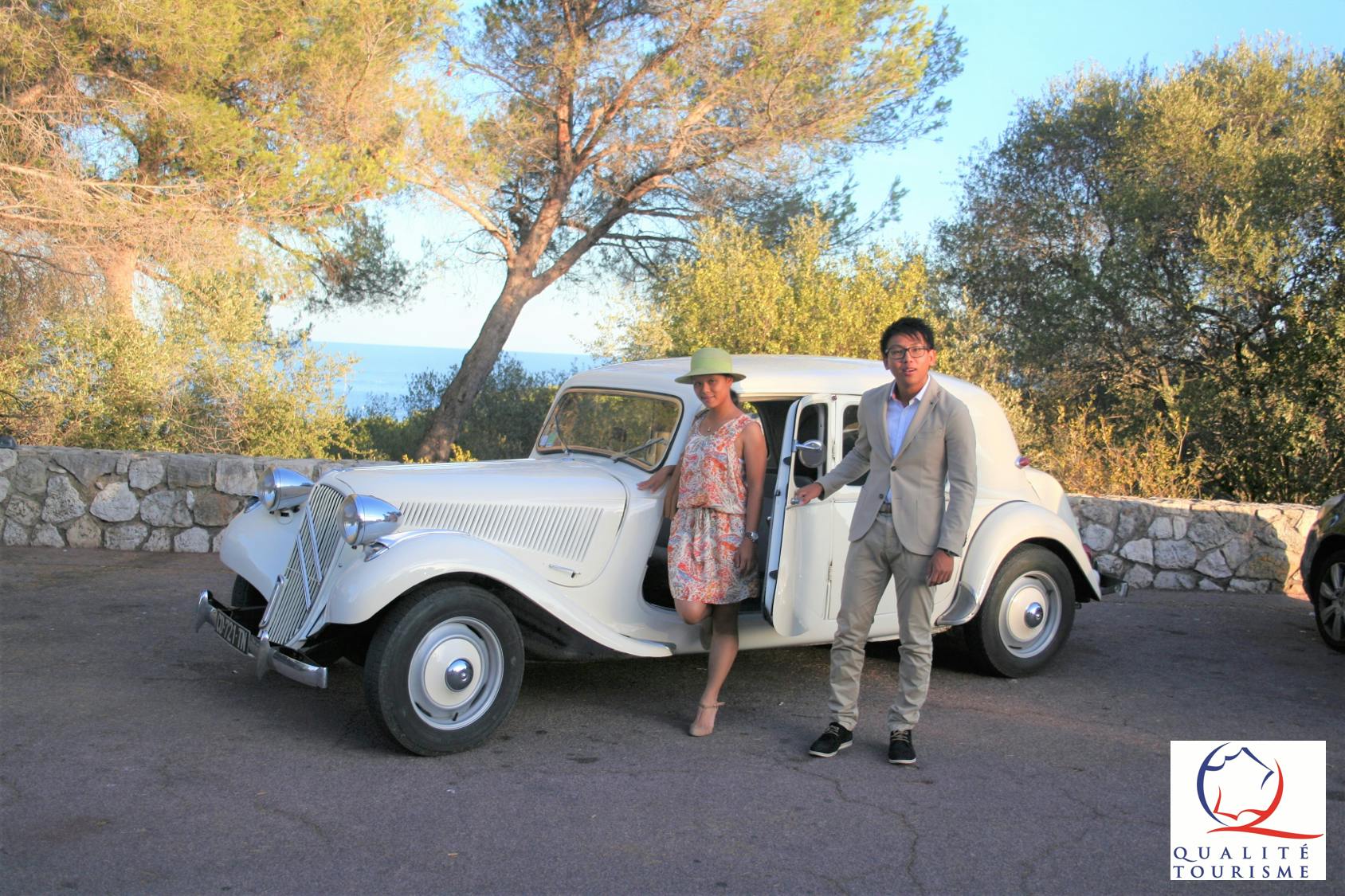
French Riviera Tour in a Vintage Car from Cannes – Guided Tour France French Riviera tour in a vintage car from Cannes is a convenient way to add structure, local context and purposeful sightseeing to the itinerary. Check current availability, inclusions and booking details before you go.
French Riviera Day – Day Trips & Visitor Guide France A listing may offer admission, a guided visit, transport, a combination package or premium access. Check current availability, inclusions and booking details before you go.