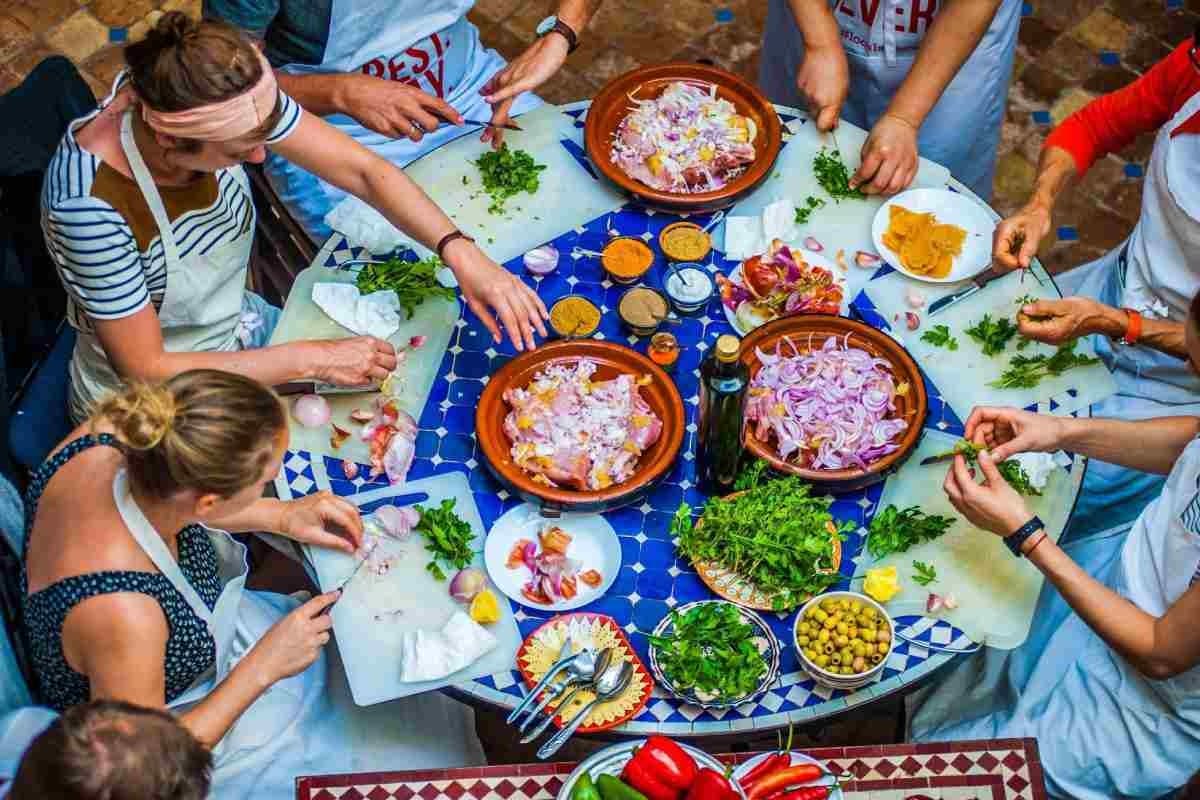
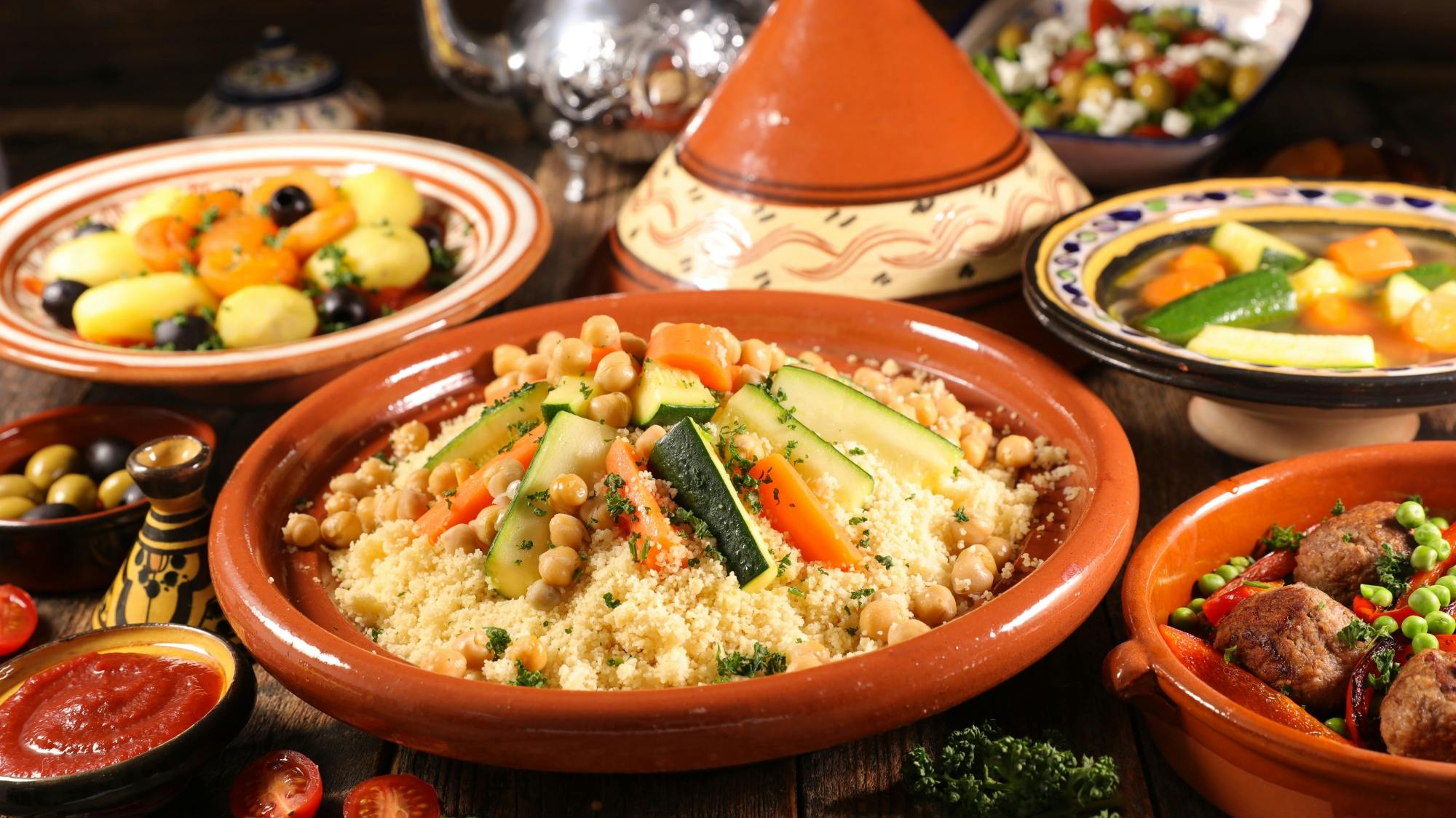
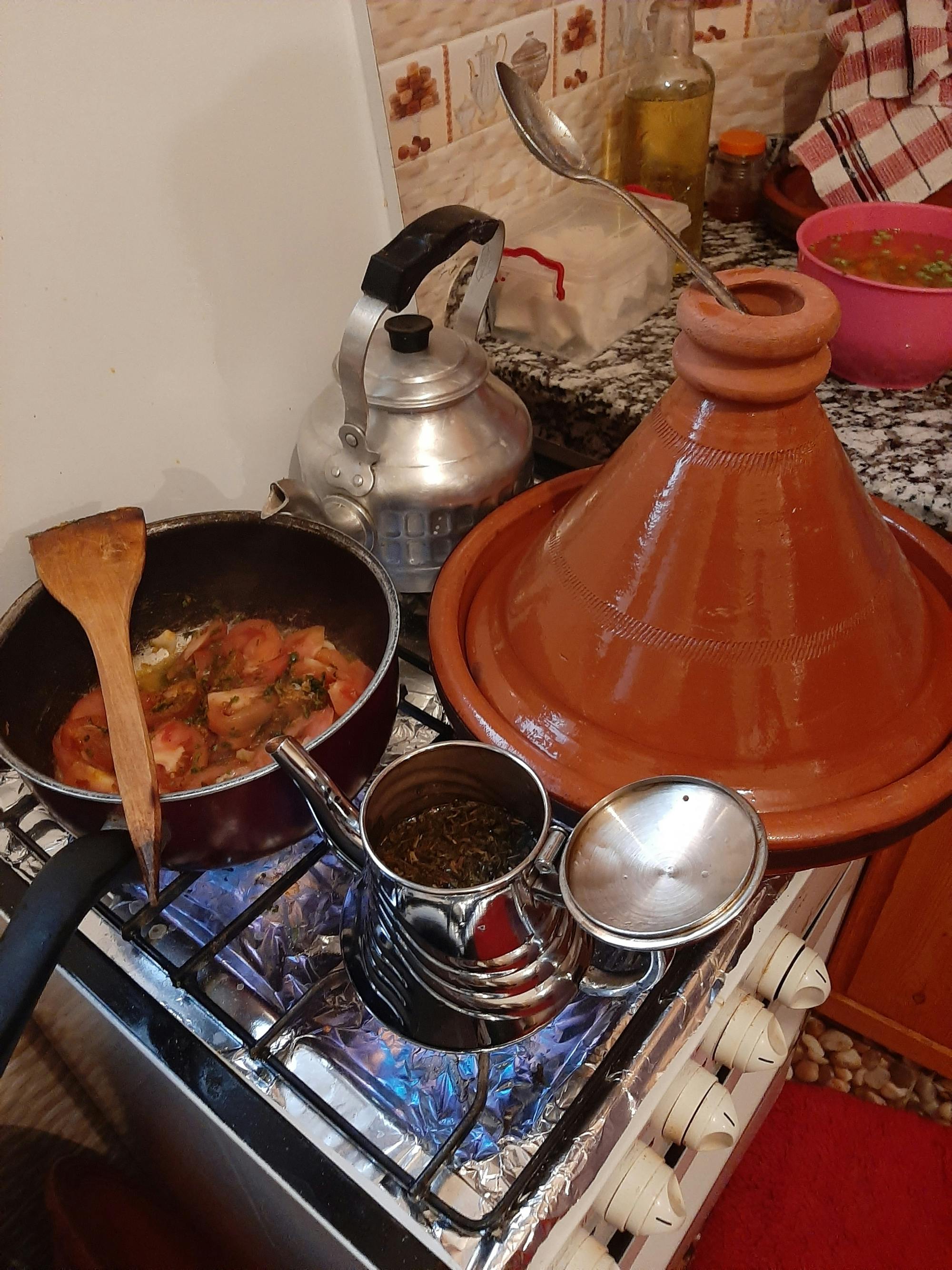
A Marrakech cooking class is one of the best ways to experience Moroccan culture beyond sightseeing. Instead of simply ordering a tagine in a restaurant, you can visit a local market, learn how Moroccan spices are combined, prepare traditional dishes with a local cook or chef and then sit down to eat the meal you have created.
Most Marrakech cooking experiences last around three to four hours. Many include a market visit, Moroccan mint tea, hands-on preparation of several dishes and a shared lunch or dinner. Some schools also offer short one-hour workshops, private classes and specialist Moroccan culinary programmes. :contentReference[oaicite:1]{index=1}
The experience works particularly well in Marrakech because food is such an important part of everyday life in the city. Markets overflow with vegetables, herbs, olives, preserved lemons and spices, while traditional Moroccan recipes combine influences accumulated over generations.
Marrakech Cooking Classes at a Glance
Experience
Typical Details
Typical duration
3–4 hours
Short classes
About 1 hour at selected cooking schools
Popular dishes
Tagine, couscous, Moroccan salads and pastilla
Market visit
Included with many classes
Mint tea
Commonly included
Meal
Usually eat what you prepare
Current budget example
From approximately €30 per person
Vegetarian options
Widely available if requested
Best for
Couples, families, solo travellers and food lovers
Recommended booking
Reserve ahead
As a current 2026 example, one Marrakech operator offers a four-hour class from €30 per person, including a market visit, mint-tea session, ingredients, hands-on cooking and the meal afterwards. :contentReference[oaicite:2]{index=2}
What Happens During a Marrakech Cooking Class?
Every school is slightly different, but a typical class follows a relaxed sequence rather than feeling like a formal culinary lesson.
You may:
Meet your chef or local host
Visit a neighbourhood food market
Shop for vegetables, herbs and spices
Learn how Moroccan mint tea is prepared
Discuss common Moroccan spices
Prepare salads or starters
Make a tagine or couscous dish
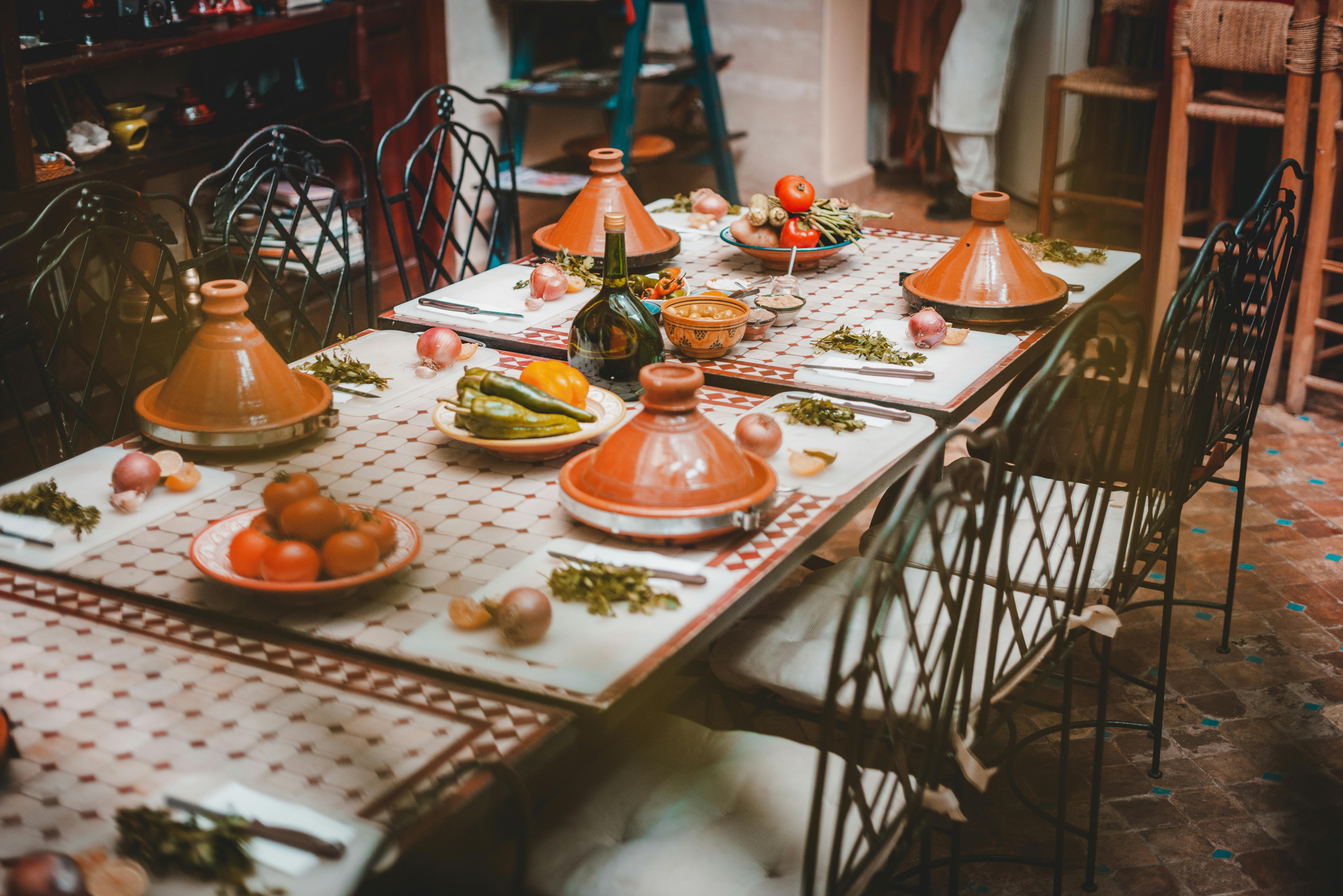
Learn how traditional clay cookware is used
Prepare or watch a dessert demonstration
Sit down with the group and eat your meal
For example, the current Cook in Marrakech experience lasts around four hours and combines a short local market visit with mint tea, approximately three hours of cooking and time to eat the finished dishes. :contentReference[oaicite:3]{index=3}
Start With a Marrakech Market Visit
A class that includes a market visit can provide more insight than one that begins with every ingredient already arranged on the kitchen bench.
A guide or chef can explain ingredients you may otherwise walk past without recognising.
You may encounter:
Fresh coriander and parsley
Tomatoes and peppers
Aubergine
Olives
Preserved lemons
Dates and dried fruit
Almonds
Fresh bread
Cinnamon
Cumin
Paprika
Ginger
Turmeric
Saffron and saffron substitutes
Some cooking experiences specifically take participants shopping for fresh vegetables, herbs and spices before returning to the kitchen. :contentReference[oaicite:4]{index=4}
Learning About Moroccan Spices
One useful lesson from a good cooking class is that Moroccan cooking is not simply about adding as many spices as possible.
The balance varies according to the dish.
Commonly used seasonings include:
Cumin
Ginger
Turmeric
Paprika
Cinnamon
Black pepper
Saffron
Fresh coriander
Parsley
You may also hear about ras el hanout, a spice blend whose composition varies considerably between shops, cooks and families.
A hands-on class is useful because you can smell and taste individual seasonings instead of simply receiving a list of ingredients in a recipe.
Make a Traditional Moroccan Tagine
Tagine is one of the dishes most commonly associated with Moroccan cooking classes.
The word refers both to the dish and to the distinctive earthenware cooking vessel with its conical lid.
Depending on your class, you might prepare:
Chicken with preserved lemon and olives
Vegetable tagine
Lamb tagine
Beef tagine
Fish tagine
Kefta meatball tagine
The lesson is usually much more useful than simply copying a recipe because you learn how the ingredients are layered, seasoned and cooked.
Some classes deliberately teach techniques that can be recreated at home with ordinary kitchen equipment rather than requiring specialist Moroccan cookware. La Maison Arabe specifically structures its workshops around techniques and recipes that participants can reproduce using modern home kitchens. :contentReference[oaicite:5]{index=5}
Learn to Make Couscous
Couscous is another fundamental Moroccan dish, although not every class includes it because traditional preparation can take considerable time.
A good class can demonstrate the difference between properly steamed couscous and the very quick preparation commonly used outside North Africa.
Depending on the programme, it may be accompanied by vegetables, chickpeas, meat, caramelised onion or raisins.
Moroccan Salads
A Moroccan meal may begin with several small salads rather than one large bowl of raw leaves.
Cooking classes can introduce dishes such as:
Zaalouk – cooked aubergine and tomato salad
Taktouka – cooked pepper and tomato salad
Carrot salad
Tomato and cucumber salad
Various cooked vegetable starters
These dishes are particularly useful to learn because many are easy to recreate after returning home.
Pastilla
Some cooking schools also teach or demonstrate pastilla.
This elaborate Moroccan pastry combines thin pastry with savoury or sweet fillings and is very different from tagine or couscous.
Marrakech Food Tours currently lists tagine and fruit pastilla among dishes used in its cooking-class programme. :contentReference[oaicite:6]{index=6}
The Moroccan Mint Tea Ceremony
Tea is an important part of Moroccan hospitality, so many cooking classes include a demonstration of Moroccan mint tea.
The preparation is often more ceremonial than simply placing tea leaves in hot water.
You may learn about:
Green tea
Fresh mint
Sugar
Rinsing and brewing the tea
Pouring from height
Serving guests
Some current classes dedicate a separate part of the experience to the mint-tea ceremony before the main cooking session begins. :contentReference[oaicite:7]{index=7}
You Eat What You Cook
The reward comes at the end.
Rather than finishing the lesson and leaving, participants usually sit together and eat the dishes they have prepared.
This turns the activity into both a cooking lesson and a meal.
When comparing prices, take this into account. A class that includes several hours of instruction, ingredients, a market experience and lunch or dinner may represent better value than the initial price suggests.
How Much Does a Marrakech Cooking Class Cost?
Prices vary substantially according to the size of the group, location, length of the class and whether market visits, transport or premium ingredients are included.
Example
Current Published Details
Local small-group class
From €30, approximately 4 hours
Marrakech Food Tours class
From US$54
La Maison Arabe
3-hour workshop or 1-hour express option; enquire for current price
The €30 example currently includes the chef, market visit, cooking lesson, mint tea, ingredients and recipes, while Marrakech Food Tours currently advertises classes from US$54. :contentReference[oaicite:8]{index=8}
Prices can change, so always check the final amount and inclusions for your chosen date.
La Maison Arabe Cooking School
One of Marrakech’s established cooking-school options is La Maison Arabe.
Its culinary history dates to 1946, when the property established a restaurant in the medina. Today its cooking workshops are open both to hotel guests and outside visitors. :contentReference[oaicite:9]{index=9}
The standard workshop lasts approximately three hours.
Participants typically prepare an appetiser and main course, watch a dessert demonstration and then eat the finished dishes.
Each individual cooking station is equipped so participants can follow the demonstrations closely.
For visitors with less time, La Maison Arabe also offers an approximately one-hour express class. :contentReference[oaicite:10]{index=10}
Amal Cooking Experience
Another well-known name associated with Marrakech cooking experiences is Amal, a nonprofit organisation that provides training intended to help women develop employable culinary skills.
Its cooking programme has offered visitors the chance to prepare Moroccan food with local cooks while learning more about Moroccan cuisine and culture.
The traditional format has included a multi-hour lesson, Moroccan tea and a meal prepared during the class. :contentReference[oaicite:11]{index=11}
If supporting a social enterprise is important to you, this type of programme can be worth investigating when comparing cooking classes.
Local Home Cooking Classes
Some of the most relaxed Marrakech cooking experiences take place in homes or small local kitchens.
These usually involve smaller groups than hotel cooking schools and may feel less formal.
One current Marrakech class meets near Bab Doukkala, visits a neighbourhood market and then continues to a home kitchen for tea and cooking with a local chef. :contentReference[oaicite:12]{index=12}
This type of class is particularly suitable if you want interaction with the host rather than a highly polished culinary-school environment.
Which Type of Cooking Class Should You Choose?
Choose a Market and Cooking Class If:
You want to understand Moroccan ingredients
You enjoy local markets
This is your first visit to Marrakech
You want more cultural context
Choose a Hotel Cooking School If:
You prefer a highly organised experience
You want individual cooking stations
You value professional facilities
You have limited time
Choose a Home Cooking Class If:
You prefer smaller groups
You want more conversation with local hosts
You prefer an informal atmosphere
Choose a Private Class If:
You are travelling as a family or group
You have specific dietary requirements
You want to choose particular dishes
You prefer individual attention
Morning or Afternoon Cooking Class?
Morning Class
Best overall choice if a market visit is included.
Markets are active, ingredients are being purchased for the day and the class naturally finishes with lunch.
Afternoon Class
An afternoon class allows you to spend the morning sightseeing and then move indoors during part of the hotter afternoon.
Some current Marrakech cooking programmes offer both late-morning and afternoon departures. :contentReference[oaicite:13]{index=13}
Evening Class
An evening cooking class can work particularly well for travellers with a short itinerary because it leaves most of the sightseeing day free.
Availability is less universal than morning and afternoon sessions, so check individual operators.
How Long Should You Allow?
1 Hour
Suitable for a quick introduction or learning one particular Moroccan dish.
3 Hours
A good choice if you mainly want the cooking experience.
This is long enough to prepare several components without occupying most of the day.
4 Hours
Best overall experience.
A four-hour programme can comfortably include a market visit, tea, preparation, cooking and the final meal.
Current local classes using this format take approximately four hours. :contentReference[oaicite:14]{index=14}
Vegetarian and Vegan Cooking Classes
Moroccan cuisine lends itself well to vegetarian cooking.
Vegetable tagines, salads, couscous and other dishes can often be adapted without meat.
Several current Marrakech cooking providers explicitly offer vegetarian and vegan options when requested in advance. :contentReference[oaicite:15]{index=15}
Do not wait until the class begins to mention dietary restrictions. Give the operator advance notice so ingredients and menus can be adjusted.
Food Allergies and Special Diets
If you have a significant food allergy, contact the cooking school before booking rather than relying solely on a general statement that dietary requirements can be accommodated.
Ask about the actual ingredients being used and whether there is a possibility of cross-contact in a shared kitchen.
Current operators may be able to cater for requirements including vegetarian, vegan, dairy-free and gluten-free diets, but the exact ability to manage an allergy varies from one kitchen to another. :contentReference[oaicite:16]{index=16}
Are Marrakech Cooking Classes Suitable for Beginners?
Yes.
You generally do not need any previous cooking experience.
The objective is normally to teach approachable Moroccan dishes rather than test professional kitchen skills.
La Maison Arabe, for example, explicitly teaches traditional recipes using techniques and equipment intended to be practical for ordinary home cooks. :contentReference[oaicite:17]{index=17}
Are Cooking Classes Suitable for Children?
Many classes can be enjoyable for families, particularly children who already like helping in the kitchen.
Chopping herbs, arranging vegetables, mixing spices and preparing bread can make the experience more engaging than a conventional sightseeing tour.
However, minimum ages vary. One current four-hour local programme states that its standard class is not suitable for children under six. :contentReference[oaicite:18]{index=18}
Families should therefore check the operator’s age rules before booking.
Accessibility
Accessibility varies considerably.
Some classes take place inside historic riads or traditional homes reached through narrow medina streets, stairs or uneven entrances.
Do not assume that a cooking class is wheelchair accessible simply because most of the activity takes place around a kitchen table.
At least some current Marrakech cooking experiences specifically state that their premises are not wheelchair accessible. :contentReference[oaicite:19]{index=19}
If mobility is an issue, confirm step-free access directly with the provider before paying.
What Should You Wear?
You do not need specialised clothing.
Wear:
Comfortable lightweight clothing
Closed or comfortable shoes
Clothing suitable for walking through markets
A hat if the market section is outdoors in summer
Aprons are usually supplied where required.
Remember that Marrakech can become extremely hot, particularly in summer, although the cooking itself may take place indoors or in a shaded riad courtyard.
What Should Be Included?
Before booking, check whether the quoted price includes:
Market visit
Chef or instructor
All ingredients
Cooking equipment
Mint tea
Lunch or dinner
Recipes
Drinking water
Hotel pickup
Do not assume transport is included. For example, one current four-hour Marrakech class specifically excludes hotel pickup and drop-off. :contentReference[oaicite:20]{index=20}
Will You Get the Recipes Afterwards?
Many operators provide recipes so you can recreate the dishes after returning home.
This is worth confirming when booking.
The best cooking classes teach recipes using ingredients and equipment that can realistically be found outside Morocco.
One current local class specifically includes take-home recipes as part of its €30 experience. :contentReference[oaicite:21]{index=21}
Cooking Class or Marrakech Food Tour?
Both are worthwhile, but they provide different experiences.
Choose a Cooking Class If You Want To:
Prepare food yourself
Learn recipes
Understand spices and techniques
Sit down for a meal you have made
Spend more time with a local chef or host
Choose a Food Tour If You Want To:
Taste more different dishes
Explore several food stalls
Walk through more of Marrakech
Learn about street food
Avoid spending several hours cooking
If you have enough time, the experiences complement each other very well.
Combine a Cooking Class With Jemaa el-Fna
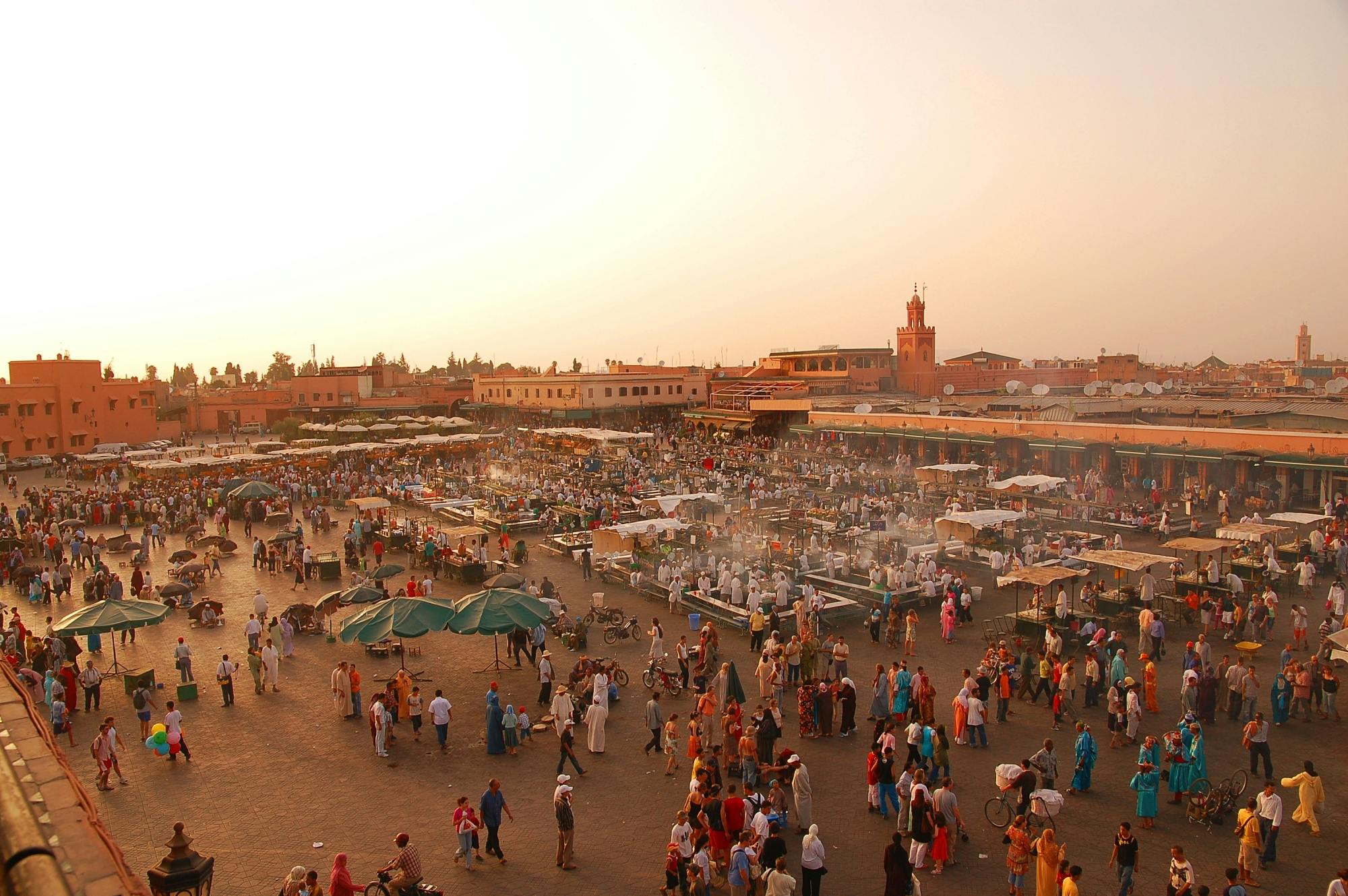
If your class is in or around the medina, Jemaa el-Fna is an obvious activity to combine with it.
The famous square becomes especially lively towards evening when food stalls begin operating and the atmosphere changes dramatically from the daytime.
A morning cooking class followed by an afternoon exploring the medina and an evening around Jemaa el-Fna creates an excellent food-focused Marrakech day.
Combine a Cooking Class With Bahia Palace
Bahia Palace also works well with a cooking class because it provides a completely different kind of cultural experience without requiring a journey outside central Marrakech.
Visit the palace during the morning and book an afternoon class, or reverse the order if your cooking programme begins early.
Where to Stay for a Marrakech Cooking Class
The Medina
Best overall choice for atmosphere and convenience.
Many cooking classes take place within or close to the historic medina.
Staying in a riad gives you easy access to markets, traditional restaurants and many cultural attractions.
Gueliz
Best for modern hotels, restaurants and easier road access.
Gueliz provides a very different atmosphere from the old city.
You can stay in a modern hotel and travel into the medina for a cooking experience when required.
A Good Marrakech Cooking-Class Day
Morning – Meet Your Chef
Meet at the designated location and begin with an introduction to Moroccan cuisine.
Visit the Market
Shop for vegetables, herbs and spices while learning how local cooks choose their ingredients.
Mint Tea
Return to the kitchen and learn about Moroccan tea preparation.
Cook
Prepare your starters and main course with guidance from your chef.
Lunch
Sit down with the group and eat what you have prepared.
Afternoon
Continue sightseeing or return to your accommodation for a break.
Evening
Visit Jemaa el-Fna and compare the dishes and aromas of Marrakech’s food stalls with what you learned during the class.
Tips for Choosing a Good Marrakech Cooking Class
Check whether it is genuinely hands-on. Some experiences involve more demonstration than cooking.
Look at the group size. Smaller groups usually provide more interaction with the chef.
Check whether the market visit is included.
Confirm the menu. Particularly important if you already eat tagine frequently during your trip.
Ask about dietary requirements before booking.
Check the exact meeting point. Medina addresses can be difficult to locate.
Confirm whether transport is included.
Check whether you eat the finished meal.
Choose morning or afternoon according to the rest of your itinerary.
Is a Marrakech Cooking Class Worth Doing?
Yes.
A Marrakech cooking class is more than simply another meal.
A good experience helps explain why Moroccan food tastes the way it does: how spices are balanced, how vegetables are prepared, how tagines are assembled and why tea, bread and shared dishes play such an important role in hospitality.
For most first-time visitors, the best option is a three- to four-hour hands-on class that includes a market visit, mint tea and a meal.
Current 2026 options demonstrate that the experience does not need to be expensive. One local four-hour programme currently starts at approximately €30 per person and includes the market, chef, ingredients, tea, cooking session and recipes. :contentReference[oaicite:22]{index=22}
Visitors wanting a more polished culinary-school experience can consider an established institution such as La Maison Arabe, which currently offers both a three-hour workshop and a shorter one-hour express option. :contentReference[oaicite:23]{index=23}
Whichever class you choose, look for one where you actually prepare the food rather than simply watch it being made.
The real value comes when you return home able to open your spice cupboard, prepare a Moroccan salad or tagine and recreate a small part of Marrakech in your own kitchen.
Sponsored Popular Items
Quick take: Musement.com offers a worldwide selection of tours and attractions
Native Diving Learning - Try Dive Spain Plan Native Diving Learning - Try Dive, a guided sightseeing experience, with practical tips on timing, inclusions and what to check before booking. Compare current availability, prices and booking conditions before you go.
Moroccan Cooking Class in Marrakech - Food & Drink Experience Morocco Moroccan cooking class in Marrakech offers a hands-on way to engage with local skills, traditions or creativity. Check current availability, inclusions and booking details before you go.
Moroccan Cooking Experience in a Local Village from Agadir Moroccan cooking experience in a local village from Agadir offers a hands-on way to engage with local skills, traditions or creativity rather than simply observing. Check current availability, inclusions and booking details before you go.
Moroccan Cooking Experience in a Village from Agadir – Hands-On Workshop Morocco Moroccan Cooking Experience in a Village from Agadir turns part of the trip into a practical learning experience and an alternative to conventional sightseeing. Check current availability, inclusions and booking details before you go.
Moroccan desert quad or buggy ride with dinner-and-a-show Morocco Plan Moroccan desert quad or buggy ride with dinner-and-a-show, a food and drink experience, with practical tips on timing, inclusions and what to check before booking. Compare current availability, prices and booking conditions before you go.
Fantazia Chez Ali Moroccan Dinner & Show – Live Entertainment Morocco Fantazia Chez Ali, Authentic Moroccan Dinner and Show USD 98 explores the destination through flavour and regional customs. Check current availability, inclusions and booking details before you go.