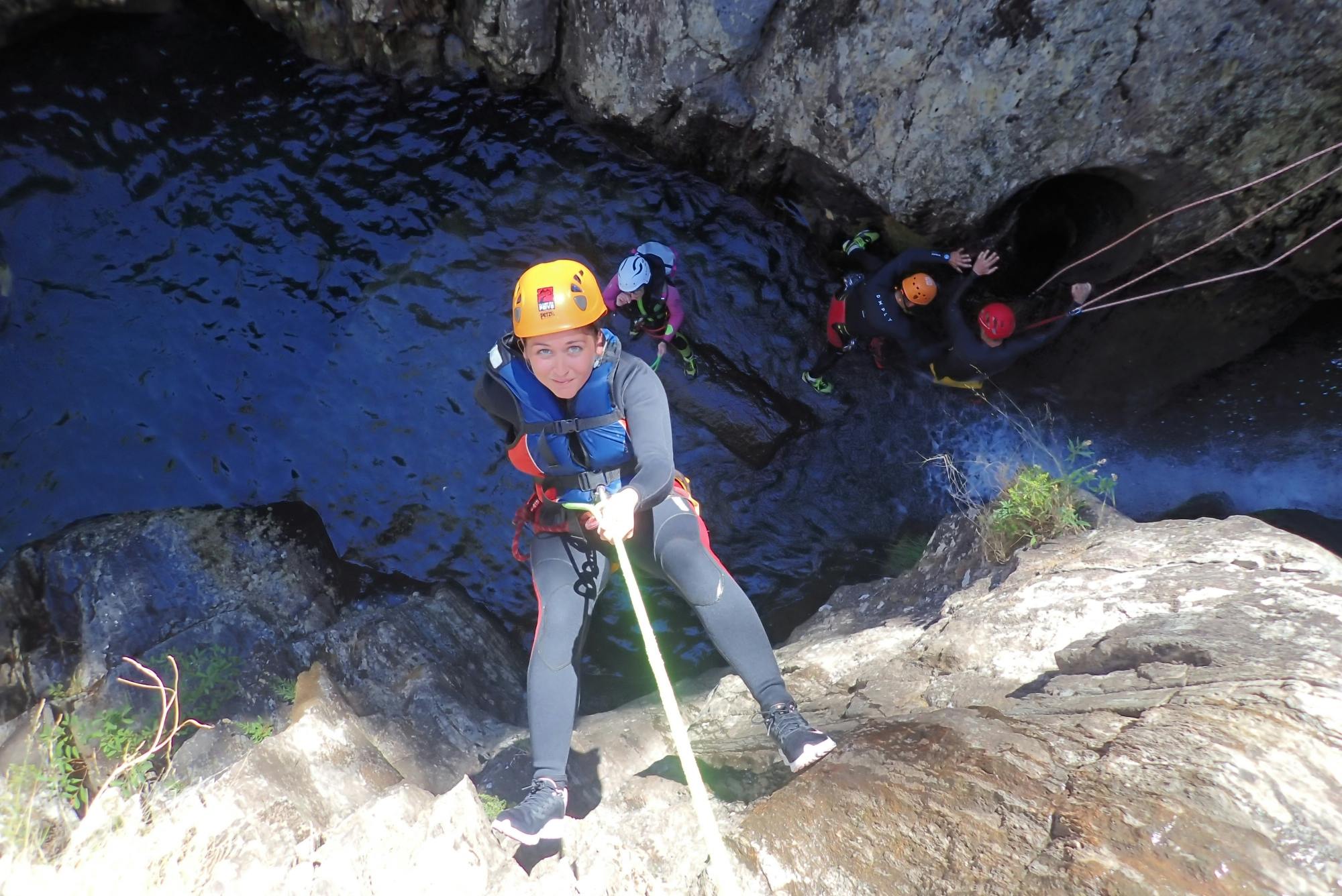
Paiva River canyoning offers one of northern Portugal’s most exciting outdoor experiences. Participants travel through steep mountain streams, descend waterfalls by rope, swim across natural pools, scramble over boulders and slide along rock shaped by centuries of flowing water.
The activity takes place within and around Arouca UNESCO Global Geopark, a mountainous region approximately 50 kilometres from Porto. The landscape combines granite plateaus, narrow schist valleys, abandoned mining settlements, clear waterways and the wild Paiva River.
Sponsored Popular Items
Quick take: Musement.com offers a worldwide selection of tours and attractions
Paiva River Six-Hour Canyoning Experience from Arouca Paiva river six-hour canyoning experience from Arouca is for travellers who want movement, scenery and a more active element in their itinerary. Paiva river six-hour canyoning experience from Arouca: experience overview Experience the Paiva river six-hour canyoning experience from Arouca to Feel the excitement of an activity between the river and the trees. Perfect for those who enjoy nature and adventure. This is also for everyone with routes chosen for the little ones, the amateurs, and the more adventurous. This makes the experience a useful option when planning time in Arouca. The listing describes this as a six-hour experience. Routes,…
Despite the popular name, most canyoning trips do not descend the principal channel of the Paiva River itself. Commercial canyoning normally takes place in its tributaries and nearby mountain streams, including Rio de Frades, Ribeira do Fontão and other canyons within the geopark. The main Paiva is better known for white-water rafting, canoe-rafting and river trekking.
Routes range from gentle family introductions with optional jumps to full adventure descents involving sustained swimming, rappels and higher waterfalls. Choosing the correct programme is therefore more important than simply booking the least expensive tour.
This guide explains where Paiva canyoning takes place, what the activity involves, current tour examples, minimum ages, safety requirements, seasonal conditions, transport from Porto and how to combine the experience with the Paiva Walkways and 516 Arouca suspension bridge.
Paiva River Canyoning Quick Facts
Visitor information
Details
Country
Portugal
Region
Arouca, northern Portugal
Natural area
Arouca UNESCO Global Geopark
Distance from Porto
Approximately 50 kilometres, with longer road travel depending on the canyon
Main advanced canyon
Rio de Frades
Family locations
Smaller streams such as Ribeira de Vessadas or similar guide-selected routes
Official canyoning network
Eleven recognised routes with different difficulty levels
Typical activity duration
3½–6 hours
Typical operating season
May to September or October
Current beginner price example
From €70 per person
Current adventure price example
From €70 per person for larger groups
Minimum age
From five or six on selected family routes; approximately 16 on some adventure routes
Previous experience
Not usually required for introductory guided routes
Swimming
Required or strongly expected on most routes
Equipment
Normally wetsuit, helmet, harness and technical rope equipment
Best base
Arouca town, Alvarenga or rural accommodation within the geopark
Nearest major city
Porto
Important: Prices, routes, minimum ages and operating seasons differ between operators. The guide selects the canyon according to water levels, participant ability, weather and group composition.
Where Does Paiva River Canyoning Take Place?
Paiva canyoning takes place in the mountains and tributary valleys surrounding the Paiva River in Arouca.
The river crosses a rugged landscape between the Serra da Freita, Arada and Montemuro mountain areas. Smaller streams descend from these uplands through narrow valleys, waterfalls and polished-rock channels before joining the Paiva or its tributaries.
These steep waterways provide the essential features required for canyoning:
Waterfalls suitable for rappelling.
Natural pools deep enough for swimming.
Narrow rocky corridors.
Water-smoothed slides.
Boulders and scrambling sections.
Safe access and exit points known to local guides.
The precise canyon may not be confirmed until shortly before the activity. Operators sometimes change routes when rainfall, low water, fire risk, road access or group ability makes the original choice unsuitable.
Is the Canyoning Actually in the Paiva River?
Usually not.
“Paiva River canyoning” is a useful tourism description for canyoning within the Paiva Valley and Arouca Geopark. However, true canyoning generally occurs in smaller and steeper tributaries.
The main Paiva River is more suitable for:
White-water rafting.
Canoe-rafting.
Kayaking.
River trekking.
Swimming in approved recreational areas.
Well-known canyoning locations include Rio de Frades and several mountain streams flowing towards the Paiva.
This distinction matters when booking. A river-trekking trip on the main Paiva usually involves swimming, walking and optional rock jumps but little or no technical rappelling. A canyoning trip normally includes a harness, ropes and waterfall descents.
What Is Canyoning?
Canyoning is the guided descent of a steep river, mountain stream or narrow gorge using a combination of outdoor techniques.
A typical route may include:
Walking through flowing water.
Scrambling over wet rocks.
Swimming through natural pools.
Descending waterfalls by rope.
Sliding down smooth rock channels.
Jumping into deep pools where conditions allow.
Crossing rock faces using fixed or temporary safety ropes.
Canyoning differs from ordinary hiking because the waterway itself forms the route. Once participants enter a narrow section, leaving the canyon may not be possible until the next established exit.
This is why canyoning should be undertaken with a qualified local guide unless participants have specialist training, technical equipment and detailed knowledge of the canyon.
Arouca UNESCO Global Geopark
Arouca Geopark covers approximately 328 square kilometres of mountains, river valleys and traditional villages.
The territory is recognised for geological features including:
Giant trilobite fossils.
The unusual “birthing stones” of Castanheira.
Granite plateaus.
Waterfalls.
Mining landscapes.
Metamorphic rock formations.
The Paiva Gorge.
The geopark’s waterways are closely connected with its geology. Hard granite, fractured rock and softer schist have produced waterfalls, narrow gorges and deep pools suitable for canyoning.
Visitors may encounter alder, ash and willow near the rivers, together with kingfishers, salamanders, lizards, butterflies and dragonflies.
These are not interchangeable visitor attractions.
Differences may include:
Waterfall height.
Length of rappels.
Number of compulsory obstacles.
Water temperature.
Swimming distance.
Approach and exit walks.
Technical rope requirements.
Seasonal water flow.
Beginners should book a programme described specifically as discovery, introduction or family canyoning rather than choosing a canyon name independently.
Rio de Frades
Rio de Frades is Arouca’s best-known canyoning destination.
The stream descends through a wild valley connected with historic tungsten and tin mining. Clear water, rock walls, waterfalls and former mining galleries give the route an unusual combination of natural scenery and industrial history.
Commercial descents may include:
Rappelling beside or through waterfalls.
Swimming in clear pools.
Rock jumps.
Natural slides.
Scrambling through narrow channels.
A finish near the Vale da Cerdeira mining gallery.
Rio de Frades is divided into upper and lower canyoning sections. The route chosen depends on experience, water level and the operator’s programme.
Mining History
The surrounding region experienced intensive tungsten mining during the Second World War.
Ruined buildings, paths and galleries remain in the valley. Some old underground spaces now provide habitat for bats and should not be entered without permission and specialist guidance.
Who Is Rio de Frades For?
It is most appropriate for:
Active adults.
Teenagers meeting the operator’s age requirement.
Beginners booking a professionally adapted descent.
People comfortable with water and heights.
Groups seeking a full half-day or day adventure.
Families with very young children are normally directed to a smaller, easier stream.
Family and Beginner Canyoning
Family canyoning uses shorter and less technical waterways.
A typical beginner programme may feature:
Small waterfalls.
Simple rope descents.
Short swims.
Low natural slides.
Optional jumps.
Easy escape routes.
A guide positioned closely beside children.
Ribeira de Vessadas and smaller waterways around rural villages are among the locations associated with family experiences.
Current commercial programmes accept children from approximately five or six years old, but age alone does not determine suitability.
The child should also be able to:
Follow instructions.
Remain calm in cold water.
Walk over uneven ground.
Wear the required safety equipment correctly.
Be separated briefly from a parent while a guide manages a rope descent.
Ribeira do Fontão and Vau
Ribeira do Fontão enters the Paiva near Vau, approximately midway along the Paiva Walkways.
The stream follows a fractured valley before dropping in a waterfall close to the river. The lower section provides terrain used for canyoning and introductory activities.
Vau is also important because it is:
A rest point along the Paiva Walkways.
Close to a small suspension crossing.
A starting or finishing point for some white-water activities.
A useful location for observing the Paiva’s riverside vegetation.
Access arrangements should be organised through the operator because normal walkway admission does not authorise independent canyoning.
Aguieiras Waterfall
Aguieiras Waterfall consists of several drops along the Chieira stream, a tributary of the Paiva.
The complete formation descends approximately 140 metres through fractured granite.
The waterfall can be seen from the 516 Arouca suspension bridge and sections of the Paiva Walkways.
It is associated with technical canyoning, but it should not be approached as an unsupervised swimming waterfall. The height, exposed rock and multiple drops demand specialist knowledge and equipment.
Other Arouca Canyons
Mizarela and Castanheira
The Serra da Freita contains steep waterways around Mizarela and Castanheira. Seasonal flow strongly affects these routes.
Côto do Boi
Upper and lower sections of Côto do Boi form after significant rainfall and may be particularly associated with the wetter months.
Pena Amarela
The Pena Amarela waterways run through the Rio de Frades mining region and provide technical upper and lower sections.
Rio Pequenino
This smaller canyon offers another route within the geopark’s extensive adventure network.
Visitors should not select one of these routes solely from photographs. The guide must assess whether its water level and technical features are appropriate for the group.
Current Tour Examples
The following examples illustrate the range available in 2026. They are not the only operators or programmes, and prices should be rechecked before booking.
Programme example
Duration
Minimum age
Season
Current advertised price
Family or Discovery Canyoning
Approximately 3½ hours
6 years
May–October
From €70 per person
Adventure Canyoning
Approximately 4 hours
16 years
May–October
From €70 per person for groups above three; higher for smaller groups
Rio de Frades or group-adjusted canyoning
Approximately 6 hours
From 5 years on selected family routes
May–September
Price supplied during booking enquiry
Inclusions commonly cover:
Qualified guides.
Wetsuit.
Helmet.
Harness and ropes.
Personal-accident insurance.
Liability insurance.
Transfer from the meeting point to the canyon.
Water or a small snack.
Photographs or video.
Confirm every inclusion in writing. Porto pickup, lunch, specialist footwear and hotel transfers may cost extra.
What Happens on a Canyoning Tour?
1. Meeting and Registration
Participants meet in Arouca town, Alvarenga, the operator’s base or another confirmed location.
The guide checks:
Booking details.
Age and group composition.
Medical information.
Clothing and footwear.
Transport arrangements.
2. Transfer to the Canyon
The operator may provide a minibus or four-wheel-drive transfer. Some programmes require guests to follow the guide in their own car.
The road to the canyon can be narrow, steep and remote.
3. Equipment Fitting
Participants receive a wetsuit, helmet, harness and other required gear.
Correct fit is important. A loose helmet or oversized harness should be reported before entering the canyon.
4. Safety Briefing
The guide explains:
How to move over wet rock.
Rope signals.
Safe jumping posture.
How to use natural slides.
Where to place hands and feet.
What to do after entering a pool.
Emergency instructions.
5. Approach Walk
There is normally a walk from the vehicle to the canyon entrance.
This may involve steep tracks, forest, old mining paths or loose stone.
6. Canyon Descent
The group progresses through a sequence of pools, waterfalls and rock obstacles.
The guide installs or checks ropes and assists each participant individually where necessary.
7. Exit and Return
After leaving the water, participants walk back to a vehicle or collection point.
Dry clothes, food and drinking water are especially welcome after a long route.
Rappelling Down Waterfalls
Rappelling, also called abseiling, is the controlled descent of a rock face using a rope.
During canyoning, the rope may run beside or directly through flowing water.
The guide normally controls the safety system while the participant:
Sits back into the harness.
Keeps feet against the rock.
Moves down in small steps.
Follows instructions from above or below.
No previous climbing experience is normally required on beginner tours.
Participants uncomfortable with heights should tell the operator before booking. Some routes contain unavoidable rope descents and cannot be completed by walking around every waterfall.
Are the Jumps Compulsory?
On introductory routes, jumps are frequently optional or can be replaced with a rope descent.
However, this is not guaranteed for every canyon.
Ask the operator:
What is the highest jump?
Can every jump be bypassed?
Are any slides compulsory?
What happens if a participant refuses an obstacle?
Is there an early exit?
Never jump before the guide has checked the pool and given a clear instruction.
Natural pools change after storms. A location used safely on a previous tour may contain new debris or altered depth.
Natural Slides and Swimming
Water flowing over smooth rock can create natural slides.
The guide demonstrates the correct position, commonly involving:
Feet together.
Arms close to the body.
Head protected.
No attempt to stand before reaching calm water.
Swimming sections may be short, but a wetsuit, helmet and harness make movement different from ordinary pool swimming.
Participants should be comfortable floating and moving through deep water.
How Difficult Is Paiva Canyoning?
Difficulty ranges from low to highly technical.
Introductory Difficulty
Suitable for active beginners and families, with:
Short approach.
Small waterfalls.
Simple rappels.
Optional obstacles.
Limited swimming.
Moderate Difficulty
May involve:
Longer time in the water.
Several rappels.
Higher jumps.
Slippery scrambling.
Greater physical effort.
Advanced Difficulty
Can include:
Long or exposed rappels.
Strong water.
Few escape routes.
Sustained technical movement.
Long approaches and exits.
Cold-water endurance.
A person can be physically fit but still find canyoning difficult because of fear of heights, cold water or loss of control on slippery terrain.
Fitness and Swimming Requirements
Introductory canyoning does not require elite fitness, but participants should normally be able to:
Walk for several hours.
Climb uneven steps.
Balance on wet rock.
Swim or remain calm in deep water.
Support their body while using a rope.
Follow instructions quickly.
Adventure programmes may require considerably more endurance.
Tell the operator honestly about swimming ability. A life jacket improves buoyancy but does not remove the need to remain calm in moving water.
Minimum Age
There is no single minimum age covering every Arouca canyon.
Current examples include:
Five years for selected family canyoning.
Six years for a discovery programme.
Sixteen years for a more demanding adventure programme.
The operator may also consider:
Child height and weight.
Equipment fit.
Water temperature.
Current flow.
Group size.
Confidence around water.
Do not book a young child onto an adult adventure route merely because another company accepts the same age on a family route.
Health and Medical Considerations
Participants should disclose any condition that could affect safe movement, temperature control or emergency treatment.
Discuss the activity with the operator before booking when a participant has:
Heart or circulatory problems.
Serious breathing difficulties.
Epilepsy or unexplained loss of consciousness.
Recent surgery.
Major joint or spinal problems.
Severe fear of water or heights.
Pregnancy.
A serious allergy requiring emergency medication.
Bring essential medication in a waterproof arrangement approved by the guide.
The operator, rather than a general travel article, must make the final participation decision based on the route and current conditions.
The Canyoning Season
Most general visitor programmes operate from May until September or October.
This period normally offers:
Warmer air temperatures.
More manageable water flow.
Longer daylight.
Lower risk of severe winter floods.
Some individual streams can be used outside the main summer season when conditions are appropriate. Conversely, a route may be impossible in summer if water becomes too low.
May and June
These months may provide strong water flow and green scenery. The water remains cold.
July and August
Warm air makes immersion more comfortable, although routes and roads are busier.
September and October
Conditions can remain excellent, but shorter days and early autumn rain require closer assessment.
Winter
Heavy rainfall may create dangerous flow in major canyons. Specialist winter routes should only be attempted with guides who have selected them specifically for the conditions.
Weather and River Conditions
Canyoning is controlled by conditions throughout the drainage area, not only by the weather at the meeting point.
A canyon may be cancelled because of:
Heavy rain upstream.
Thunderstorms.
Rapidly rising water.
Cold conditions.
Fire closures.
Fallen trees or rock damage.
Unsafe road access.
Sudden water-level changes are particularly dangerous in narrow channels.
A professional operator may change the canyon, delay the start or cancel the activity. This should be treated as a safety decision rather than poor service.
Safety and Licensed Operators
Use a registered Portuguese tourist-animation company with qualified canyoning guides.
Before Booking, Confirm:
The company’s Turismo de Portugal registration.
Personal-accident insurance.
Public-liability insurance.
Guide qualifications.
Technical equipment included.
Emergency procedures.
Maximum group size.
Cancellation policy for unsafe weather.
During the Activity
Follow the guide’s instructions immediately.
Do not move ahead of the group.
Never jump without permission.
Keep the helmet fastened.
Report loose equipment.
Tell the guide when cold, tired or frightened.
Do not consume alcohol before the trip.
Independent canyoning is unsuitable for ordinary visitors. Technical rescue from a remote gorge can be difficult and slow.
Equipment Provided
A standard guided trip normally provides:
Full wetsuit.
Thermal top where necessary.
Helmet.
Canyoning harness.
Carabiners and rope equipment.
Life jacket on routes where required.
Group ropes and rescue equipment.
Some companies provide canyoning shoes, while others require participants to bring old trainers.
Ask whether wetsuits and shoes are washed and dried between uses, particularly when booking for children or during a busy summer period.
What to Bring
Swimwear: Wear it underneath the wetsuit.
Secure footwear: Old trainers with grip unless specialist shoes are supplied.
Towel: Leave it with dry clothes at the vehicle or base.
Complete change of clothes: Include underwear and warm layers.
Water: Drink before and after the canyon.
Snack: Useful after a long descent.
Sun protection: Needed during approach and exit walks.
Hair tie: Secure long hair beneath the helmet.
Medication: Inform the guide and protect it from water.
Small amount of cash: Useful for food or additional services.
Leave jewellery, watches and valuable electronics at the accommodation.
What Shoes Should You Wear?
Footwear is one of the most important personal items.
Suitable shoes should have:
A closed toe.
Secure laces.
Good wet-rock grip.
A sole that will not detach when soaked.
Enough room for neoprene socks if provided.
Avoid:
Flip-flops.
Open sandals.
Bare feet.
New fashion trainers with smooth soles.
Heavy hiking boots that retain large amounts of water.
The shoes will become completely wet and may be scratched or stained.
Photographs and Personal Belongings
Many operators include a photo report because carrying a personal phone through the canyon is risky.
Potential problems include:
Water damage.
Dropping the device into a deep pool.
Impact against rock.
Loose straps becoming caught in ropes.
Distraction during technical obstacles.
Use a personal action camera only with the guide’s permission and a secure mounting system.
Handheld selfie sticks should not be used during canyoning.
Canyoning Versus River Trekking
Feature
Canyoning
River trekking
Typical location
Steep tributary or narrow canyon
Main river or gentler river section
Ropes
Normally required
Usually limited or unnecessary
Harness
Normally worn
Often not required
Waterfall rappels
Central part of the experience
Usually absent
Swimming
Common
Common
Rock jumps
Possible
Possible
Beginner suitability
Depends strongly on route
Often easier
River trekking is a better choice for visitors who enjoy swimming and rock jumps but do not want to rappel from waterfalls.
Canyoning Versus Rafting
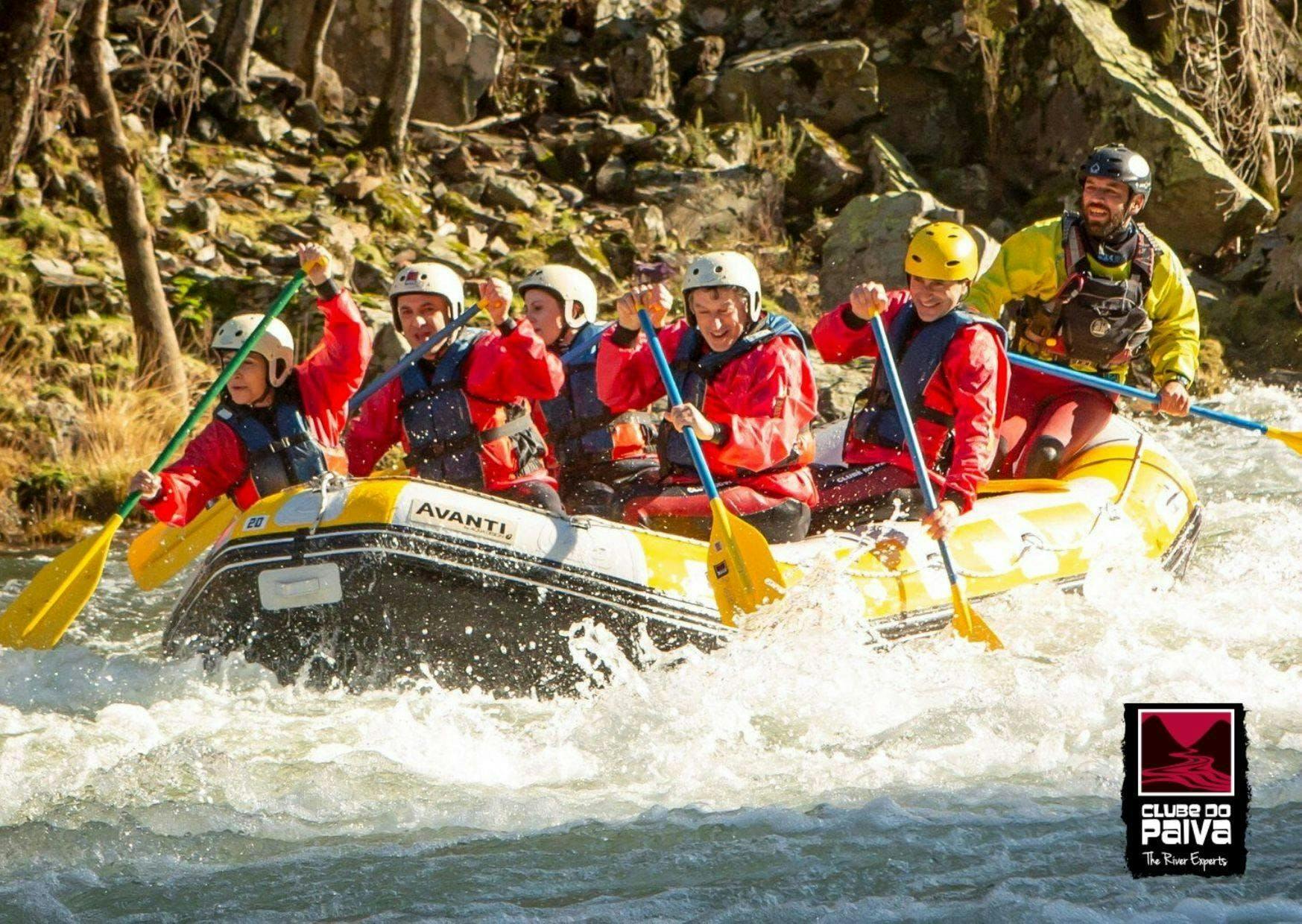
Rafting takes place in an inflatable boat on the Paiva River’s rapids.
Canyoning involves travelling on foot and by rope through a narrow tributary.
Choose Canyoning For:
Individual physical challenges.
Waterfalls and rappelling.
Close contact with rock and water.
Small-group adventure.
Choose Rafting For:
Team paddling.
Longer movement along the main river.
White-water rapids.
Participants uncomfortable with heights.
Rafting is commonly strongest during the wetter months, while mainstream canyoning programmes are concentrated in summer.
Getting to Arouca
Arouca lies inland from Porto and Aveiro in northern Portugal.
The easiest transport is:
Rental car.
Private transfer.
Operator pickup.
Organised excursion from Porto.
There is no convenient direct railway connection to the canyoning areas.
Public buses can reach Arouca town, but their timetables may not match an early activity start or a remote canyon meeting point.
Paiva Canyoning from Porto
Arouca is roughly one hour from Porto by road under favourable conditions, although the final mountain journey can make total travel longer.
A day from Porto commonly involves:
Early hotel pickup or departure.
Road transfer to Arouca.
Equipment fitting and briefing.
Three to six hours of canyoning.
Lunch or snack.
Return to Porto in late afternoon or evening.
Some operators offer Porto pickup for an additional charge or as part of a full-day package.
Confirm whether the pickup is:
From the hotel.
From a central meeting point.
Private or shared.
Included in the quoted activity price.
Meeting Points and Transfers
Meeting arrangements differ considerably.
Possible meeting locations include:
Central Arouca near the monastery.
An operator’s base in Alvarenga.
A rural village near the selected canyon.
A hotel.
A Porto pickup point.
One current operator asks participants to meet in Arouca and follow the guide in their own vehicle to the mountain start unless a transfer has been arranged.
Ask for:
A map pin.
Parking instructions.
Required arrival time.
A contact number.
What to do when delayed.
Do not rely only on the canyon name in a navigation application.
Driving and Parking
Roads within Arouca Geopark can be narrow, steep and winding.
Driving conditions may include:
Blind corners.
Single-lane village sections.
Farm vehicles.
Loose gravel near trailheads.
Limited mobile reception.
Animals on the road.
Use the operator’s meeting location rather than attempting to drive independently to Rio de Frades or another canyon entrance.
Parking is normally arranged at the base, meeting point or activity transfer location.
Do not leave luggage visible in unsupervised rural car parks.
Where to Stay
Arouca Town
Best for:
Restaurants and shops.
Meeting points.
The monastery and historic centre.
A choice of hotels and guesthouses.
Access to Serra da Freita.
Alvarenga
Best for:
Paiva Walkways and 516 Arouca.
River activities.
Rural guesthouses.
Traditional restaurants.
Espiunca
Best for the eastern entrance to the Paiva Walkways and quiet rural accommodation.
Serra da Freita
Best for hiking, waterfalls and a remote mountain atmosphere.
Porto
Best for travellers with limited time who book a transfer-inclusive canyoning day trip.
Staying in Arouca is less rushed and allows a second day for the bridge, walkways and geopark.
Paiva Walkways
The Passadiços do Paiva follow the left bank of the Paiva River between Areinho and Espiunca.
The wooden route provides views of:
Paiva Gorge.
Aguieiras Waterfall.
Vau.
River rapids.
Riparian forest.
Geological formations.
The traditional complete route is approximately eight kilometres and includes many stairs.
Storms, fires, repair work or river conditions can close individual sections. Check the live access status rather than assuming the entire route is available.
Combining the Walkways with Canyoning
A complete walkway hike and a six-hour canyoning descent are too much for most visitors on the same day.
Better combinations include:
Short morning canyoning and a brief Vau or Areinho walk.
Canyoning on day one and the complete walkway on day two.
The bridge and partial walkway before an afternoon activity only when timings are confirmed.
516 Arouca Suspension Bridge
516 Arouca crosses the Paiva Gorge near Aguieiras Waterfall.
The bridge is:
516 metres long.
Approximately 175 metres above the river at its highest point.
Fitted with a transparent metal-grid deck.
Crossed as part of a timed guided visit.
Bridge tickets are limited and are not normally sold at the bridge entrance. Advance booking is essential.
The ticket includes access to the Areinho–Vau section of the Paiva Walkways on the same day under current arrangements.
Important Rules
Minimum age is six.
Children and teenagers must be accompanied.
Suitable closed footwear is required.
Dogs are not permitted.
Visits may be cancelled because of wind or storms.
Arrive before the selected time.
The bridge can be uncomfortable for visitors with severe fear of heights because the grid floor allows views directly into the gorge.
Rio de Frades Mines
The abandoned mines around Rio de Frades add historical interest to the canyoning landscape.
Tungsten and tin were extracted in the region, with activity increasing dramatically during the Second World War.
Today visitors may see:
Ruined mining structures.
Old tracks.
Gallery entrances.
Stone remains hidden by vegetation.
Interpretive walking routes.
Never enter an abandoned gallery independently. Risks include collapse, deep water, poor air, hidden shafts and disturbance of bat colonies.
Other Attractions Near Arouca
Frecha da Mizarela
This high waterfall drops from the Serra da Freita plateau and is most impressive after rain.
Pedras Parideiras
The “birthing stones” of Castanheira are a rare geological phenomenon in which dark nodules weather out of the surrounding granite.
Giant Trilobites of Canelas
A local interpretation centre displays unusually large trilobite fossils found in the region’s slate.
Drave
Drave is an isolated slate village reached on foot. It requires a separate half-day or longer excursion.
Senhora da Mó
This hilltop viewpoint overlooks Arouca town and the surrounding mountain landscape.
Arouca Monastery
The historic monastery stands in the town centre and provides a cultural contrast with the region’s adventure activities.
Food to Try
Arouquesa Veal
Arouquesa beef is the region’s best-known speciality. Roasted veal is commonly served with potatoes and seasonal vegetables.
Posta Arouquesa
This thick grilled beef steak is a substantial meal after an outdoor activity.
Convent Sweets
Arouca’s monastery tradition produced rich sweets based on egg yolk, sugar and almonds.
Other Local Foods
Regional cheeses.
Smoked meats.
Traditional bread.
Chestnut dishes.
Honey.
Vinho Verde and Douro-region wines.
Do not drink alcohol before canyoning. Save wine or local spirits for the evening after the activity.
Suggested One-Day Canyoning Itinerary
7:30 am: Leave Porto
Drive or meet the arranged transfer.
9:00 am: Meet in Arouca
Complete registration, equipment fitting and the safety briefing.
9:45 am: Transfer to the Canyon
Travel with the guide to Rio de Frades or the route selected for the group.
10:30 am–2:30 pm: Canyoning
Descend waterfalls, swim through pools and complete the canyon exit.
3:00 pm: Change and Late Lunch
Eat Arouquesa veal or another regional meal.
4:30 pm: Short Geopark Stop
Choose Senhora da Mó, Arouca’s historic centre or a short Paiva viewpoint.
6:00 pm: Return to Porto
Allow additional time on weekends and during summer.
Suggested Two-Day Arouca Adventure Itinerary
Day One: Canyoning and Arouca
Arrive in Arouca the previous evening or early morning.
Complete a discovery or adventure canyoning tour.
Have a late lunch.
Explore Arouca town and monastery.
Stay in Arouca or Alvarenga.
Day Two: 516 Arouca and Paiva Walkways
Attend a pre-booked morning bridge visit.
Walk the available Paiva Walkways section.
Stop at Vau or Areinho.
Have lunch in Alvarenga.
Visit a geopark viewpoint before departure.
This two-day schedule is safer and more enjoyable than attempting a major canyon descent, the full walkway and the bridge in one day.
Canyoning with Children
Arouca offers genuine family canyoning, but the correct product must be selected.
Before Booking, Ask:
What is the minimum age for this exact route?
What is the coldest and deepest swimming section?
Are all jumps optional?
How high is the longest rappel?
Does the guide provide child-sized equipment?
Can a nervous child leave early?
How many children are assigned to each guide?
Prepare Children By Explaining:
The water will feel cold initially.
The helmet must remain fastened.
They may need to wait while others descend.
The guide’s instruction overrides peer pressure.
Refusing an optional jump is acceptable.
Do not surprise a child with canyoning when they believe they are attending an ordinary swimming trip.
Older Travellers
There is no universal maximum age. Physical condition is more relevant than age alone.
Older active travellers may enjoy introductory canyoning when they have:
Good balance.
Healthy knees and hips.
Confidence in water.
Enough strength to manage slippery rocks.
No uncontrolled health condition.
A long Rio de Frades route may be unsuitable for someone who comfortably walks on level ground but struggles with repeated squatting, climbing and wet-rock balance.
Discuss the precise route with the operator rather than relying on a general description such as “beginner friendly.”
Responsible Canyoning
Canyons are sensitive habitats rather than permanent adventure parks.
Use established operators and access routes.
Do not leave litter.
Avoid sunscreen immediately before entering small pools when practical.
Do not remove rocks, plants or fossils.
Do not enter bat galleries.
Keep noise low near wildlife and villages.
Use toilets before entering the canyon.
Follow fire restrictions.
Do not damage anchors or safety equipment.
Support local accommodation, restaurants and guides.
Small groups generally reduce congestion and environmental impact inside narrow canyons.
Is Paiva River Canyoning Worth It?
Paiva canyoning is highly worthwhile for active travellers who want more involvement than an ordinary sightseeing trip.
Main Advantages
Clear mountain water.
Waterfalls and natural pools.
Routes for families, beginners and experienced participants.
Professional local operators.
Unusual mining history at Rio de Frades.
Easy combination with 516 Arouca and the Paiva Walkways.
Approximately one hour from Porto.
Equipment and insurance normally included.
Possible Drawbacks
Cold water.
Slippery rock.
Fear of heights.
Weather-related cancellation.
Limited independent public transport.
Long approach or exit walks.
Routes that cannot be left easily.
Minimum age and health restrictions.
The strongest experience comes from choosing a route that matches the least-confident member of the group. A well-run introductory descent is more enjoyable than struggling through a canyon that is too technical.
Frequently Asked Questions About Paiva River Canyoning
Where is Paiva River canyoning?
It takes place around Arouca in northern Portugal, within Arouca UNESCO Global Geopark.
Is it close to Porto?
Yes. Arouca is approximately 50 kilometres from Porto, although mountain-road travel can take more than an hour.
Does canyoning take place in the main Paiva River?
Usually not. Most canyoning takes place in steep tributaries such as Rio de Frades. The main Paiva is more commonly used for rafting and river trekking.
What is the best-known canyon?
Rio de Frades is the region’s best-known canyoning location.
How many canyoning routes are there?
Arouca Geopark identifies eleven established canyoning routes with different difficulty levels.
What does canyoning involve?
It combines walking, swimming, scrambling, natural slides, rock jumps and waterfall rappelling.
Do I need previous experience?
No previous experience is usually required for discovery and beginner tours.
Do I need to know how to swim?
Most programmes expect participants to be able to swim or remain calm in deep water. Confirm the exact requirement with the operator.
How long does a tour take?
Commercial tours commonly last between 3½ and 6 hours, including briefing and transfers.
How much does canyoning cost?
Current introductory examples begin around €70 per person. Prices vary with group size, route, transfer and inclusions.
What is normally included?
Wetsuit, helmet, harness, technical equipment, guide, insurance, local transfer and photographs are commonly included.
Is transport from Porto included?
Not always. Some operators provide Porto pickup at additional cost or within a full-day package.
What is the minimum age?
Selected family tours accept children from five or six. More demanding programmes may require participants to be at least 16.
Is there a maximum age?
There is normally no simple maximum age, but the operator assesses health, mobility and fitness.
Are the jumps compulsory?
Many introductory-route jumps are optional, but not every obstacle in every canyon can be bypassed.
What is the highest jump?
It depends on the route and current water depth. Ask the operator for the specific programme.
Do I have to rappel?
Yes on most true canyoning routes. River trekking may be a better alternative when you do not want to use ropes.
Is canyoning frightening?
It can feel intimidating because of cold water, heights and slippery rock. Beginner routes are designed to introduce the techniques gradually.
Is canyoning safe?
Guided canyoning uses specialised equipment and risk management, but it remains an adventure activity. Use a licensed and insured operator.
Can I go independently?
Independent canyoning is unsuitable without specialist training, rescue knowledge, technical equipment and detailed route information.
When is the canyoning season?
Most visitor programmes operate from May until September or October.
Can canyoning be cancelled?
Yes. Heavy rain, thunderstorms, unsafe water levels, fire restrictions or damaged access can cause cancellation.
What happens if it rains?
Light rain may not stop the activity, but upstream rainfall or storms can make a narrow canyon dangerous.
Is the water cold?
Yes. Mountain streams remain cool even during summer, which is why wetsuits are provided.
What should I wear under the wetsuit?
Wear swimwear.
What shoes do I need?
Use secure closed trainers with good wet-rock grip unless canyoning shoes are supplied.
Can I wear sandals?
Open sandals and flip-flops are normally unsuitable.
Will my shoes get wet?
Yes. They will be fully submerged.
Should I bring a towel?
Yes, together with a complete change of dry clothes.
Can I carry my phone?
It is better to leave it in a secure dry location and use the operator’s included photo service.
Are photographs included?
Many current tours include photographs or video, but this should be confirmed when booking.
Can I use an action camera?
Only with the guide’s approval and a secure mount.
Is food included?
Some tours include water and a snack. Lunch may be optional or part of a larger package.
Are toilets available in the canyon?
No. Use facilities before the transfer to the route.
Can pregnant visitors participate?
Canyoning is normally unsuitable during pregnancy. Discuss this directly with the operator.
Can someone with a heart condition participate?
Medical conditions must be disclosed. The route operator should determine suitability before booking.
Can non-swimmers participate?
Some extremely gentle family programmes may use buoyancy equipment, but non-swimmers must obtain explicit approval from the operator.
Is canyoning suitable for families?
Yes, when booking a dedicated family or discovery route rather than an adult adventure descent.
Is Rio de Frades suitable for children?
Selected adapted programmes may be suitable for older children, while very young families are normally taken to a smaller stream.
What is river trekking?
River trekking involves moving along the river by walking, swimming and jumping without the extensive rope work used in canyoning.
What is rafting?
Rafting is a group descent of the Paiva River’s rapids in an inflatable boat.
Which is easier, rafting or canyoning?
It depends on the programme. Introductory rafting is often less demanding for people uncomfortable with heights, while family canyoning can be suitable for young children.
Can I combine canyoning with the Paiva Walkways?
Yes, but a long canyon and the complete walkway are usually better spread over two days.
Can I combine canyoning with 516 Arouca?
Yes, provided the bridge time and activity schedule are coordinated carefully.
Do I need to book 516 Arouca in advance?
Yes. Visits are timed, capacity is limited and tickets are not normally sold at the bridge entrance.
How high is 516 Arouca?
Its highest point is approximately 175 metres above the Paiva River.
How long is the bridge?
It is 516 metres long.
What is the minimum bridge age?
Children must be at least six years old.
Where should I stay?
Arouca is the most convenient all-round base, while Alvarenga is useful for river activities, the bridge and walkways.
Can I visit from Porto in one day?
Yes. A transfer-inclusive canyoning excursion makes this straightforward.
Is there a train to Arouca?
No convenient direct rail service reaches the canyoning area.
Can I use public buses?
Buses may reach Arouca town, but schedules and remote meeting points make a car or arranged transfer more practical.
What food should I try afterwards?
Arouquesa veal, regional cheese and Arouca’s convent sweets are popular choices.
Is Paiva canyoning suitable in winter?
Mainstream commercial programmes are usually seasonal. High flow can make winter canyons unsafe, although specialists may use selected routes.
What is the biggest booking mistake?
Booking an adventure route without checking whether every participant is comfortable with swimming, heights and rappelling.
What is the most important safety rule?
Never jump, slide or descend until the guide gives a clear instruction.
Sponsored Popular Items
Quick take: Musement.com offers a worldwide selection of tours and attractions
Paiva River rafting experience in Arouca – Outdoor Adventure Paiva River rafting experience in Arouca adds movement, scenery and a more active element to the itinerary. Paiva River rafting experience in Arouca: experience overview Experience the Paiva River rafting experience in Arouca to witness the white water rapids, Paiva's walkways, and the 516 Arouca Bridge. Meet your guide, then gain knowledge by hearing useful and interesting facts. Plus, learn how this area is the habitat of protected and endangered rare species. This makes the experience a useful option when planning time in Arouca. The exact duration can depend on the selected date, option or operating schedule. Routes, start times,…
Final Thoughts
Paiva River canyoning provides a much closer experience of Arouca’s landscape than viewing the valley from a road or footbridge.
Participants enter the mountain waterways themselves, moving through waterfalls, narrow rock channels and clear pools that cannot be seen from ordinary walking routes.
The name can be slightly misleading. The best canyoning normally occurs in tributaries such as Rio de Frades rather than in the main Paiva River. This distinction helps travellers choose between canyoning, rafting and river trekking.
Families and first-time participants should select a discovery programme with optional obstacles. Stronger and more confident travellers can choose a longer Rio de Frades descent involving sustained swimming and multiple rappels.
Stay overnight when possible and add the Paiva Walkways or 516 Arouca on a second day. Together, the canyon, river gorge, suspension bridge and mountain villages create one of northern Portugal’s most rewarding outdoor itineraries.
Sponsored Popular Items
Quick take: Musement.com offers a worldwide selection of tours and attractions
Paiva River Six-Hour Canyoning Experience from Arouca Paiva river six-hour canyoning experience from Arouca is for travellers who want movement, scenery and a more active element in their itinerary. Paiva river six-hour canyoning experience from Arouca: experience overview Experience the Paiva river six-hour canyoning experience from Arouca to Feel the excitement of an activity between the river and the trees. Perfect for those who enjoy nature and adventure. This is also for everyone with routes chosen for the little ones, the amateurs, and the more adventurous. This makes the experience a useful option when planning time in Arouca. The listing describes this as a six-hour experience. Routes,…
Paiva River rafting experience in Arouca – Outdoor Adventure Paiva River rafting experience in Arouca adds movement, scenery and a more active element to the itinerary. Paiva River rafting experience in Arouca: experience overview Experience the Paiva River rafting experience in Arouca to witness the white water rapids, Paiva's walkways, and the 516 Arouca Bridge. Meet your guide, then gain knowledge by hearing useful and interesting facts. Plus, learn how this area is the habitat of protected and endangered rare species. This makes the experience a useful option when planning time in Arouca. The exact duration can depend on the selected date, option or operating schedule. Routes, start times,…