Guam is a tropical island destination in the western Pacific, known for turquoise water, coral reefs, Chamorro culture, World War II history, resort beaches, dramatic viewpoints, waterfalls, coastal drives and warm island hospitality. It is the largest and southernmost island in the Mariana Archipelago and is an unincorporated U.S. territory in the western Pacific. 2
For travellers who want a mix of beach time, history, local food, snorkelling, scenic drives and cultural experiences, Guam is an easy island to enjoy over several days. The main visitor area is Tumon, while Hagåtña, Two Lovers Point, Ritidian Beach, War in the Pacific National Historical Park, southern villages and the island’s coastal roads add depth and variety to a Guam holiday.
Why Visit Guam?
Guam is ideal for travellers who want a Pacific island escape with beaches, shopping, snorkelling, military history, local food and island drives in a compact destination. Visit Guam highlights the island’s warm turquoise waters, local cuisine, cultural sites, scenic trails, beaches, history and Chamorro traditions. 3
Guam is also very practical compared with more remote Pacific islands. It has international hotels, restaurants, shopping centres, car rental, organised tours, family attractions and good access to beaches and historic sites. At the same time, it still offers quiet corners, village scenery, reef views and culturally meaningful places for travellers who want to explore beyond the resort strip.
Best Places to Visit in Guam
Tumon Bay
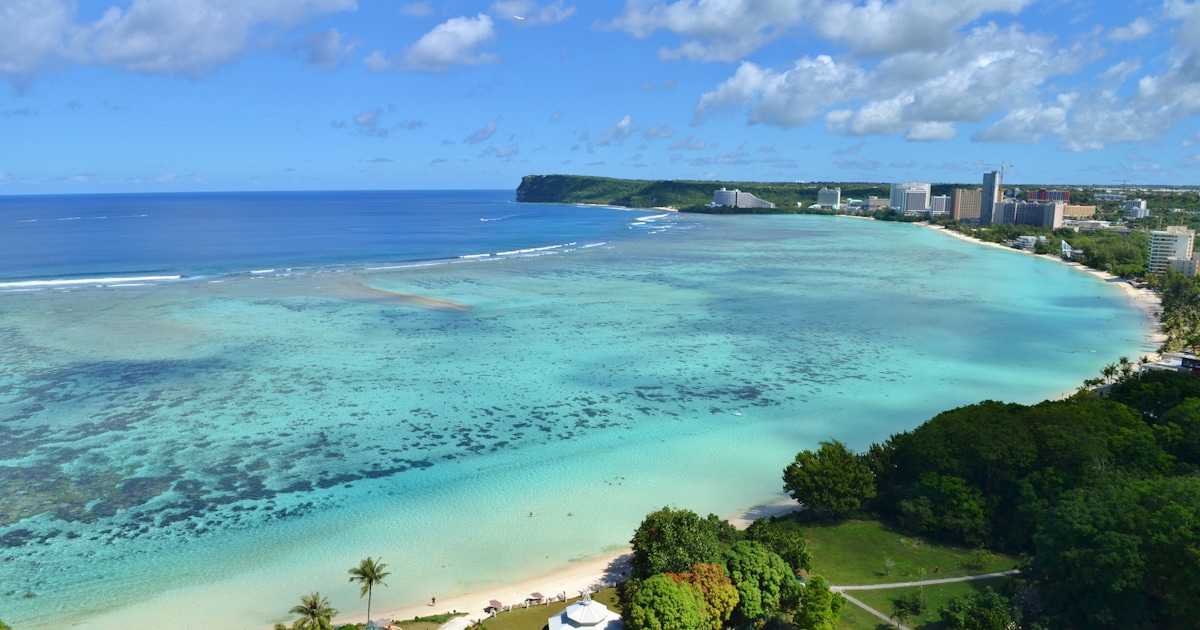
Tumon Bay is Guam’s main tourist area and the best base for many first-time visitors. It is known for beachfront hotels, clear water, shops, restaurants, bars, family attractions and easy access to tours and transport.
The bay is popular for swimming, snorkelling, paddleboarding and relaxed beach days. It is also close to Two Lovers Point, Gun Beach, Ypao Beach Park and many of Guam’s best-known resorts.
Best for: first-time visitors, beach resorts, swimming, restaurants, shopping, families, nightlife and easy holiday planning.
Two Lovers Point
Two Lovers Point, also known as Puntan Dos Amantes, is one of Guam’s most famous viewpoints. Visit Guam describes it as one of the island’s most iconic attractions, connected to a well-known romantic legend and offering sweeping views over Tumon Bay from a cliffside lookout. 4
The lookout is especially popular at sunset, when the ocean, reef and resort coastline below are lit by soft evening colour. It is an easy stop from Tumon and one of the best places in Guam for photography.
Best for: ocean views, sunset photography, romantic stops, easy sightseeing and first-time Guam itineraries.
Hagåtña
Hagåtña is Guam’s capital and one of the island’s most important cultural and historic areas. It offers government buildings, churches, plazas, monuments, museums and access to nearby historic sites.
Visitors can explore Plaza de España, Dulce Nombre de Maria Cathedral Basilica, Skinner Plaza and nearby coastal areas. Hagåtña is a good place to understand Guam beyond the resort zone.
Best for: history, culture, churches, monuments, local life and short city sightseeing.
Plaza de España
Plaza de España is one of Guam’s key historic sites in Hagåtña. It reflects the island’s Spanish colonial history and sits near several other cultural landmarks.
It is a simple but worthwhile stop for visitors interested in Guam’s layered history, including Chamorro heritage, Spanish influence, World War II and modern island life.
Best for: history, architecture, photography, walking and Hagåtña sightseeing.
Chamorro Village
Chamorro Village is one of the easiest places for visitors to experience local food, crafts, music and island atmosphere. It is especially known for its market-style setting and evening food culture.
Travellers can try barbecue, red rice, kelaguen, local desserts and tropical drinks while browsing stalls and enjoying a casual community feel.
Best for: local food, souvenirs, casual dining, cultural atmosphere and evening outings.
War in the Pacific National Historical Park
War in the Pacific National Historical Park is one of Guam’s most important historic and natural areas. The National Park Service says the park was established to commemorate those who participated in the Pacific Theater of World War II and to conserve Guam’s natural, scenic and historic resources. The park is made up of six different units, each telling a different story. 5
Visitors can explore beach landing areas, overlooks, trails, memorials, fortifications and interpretive sites connected to Guam’s wartime history. The NPS also notes that the park offers hiking, jungle areas, World War II fortifications, coral reefs, jungle and mountaintop scenery. 6
Best for: World War II history, hiking, beaches, educational travel, families, military history and scenic coastal stops.
Asan Beach
Asan Beach is part of War in the Pacific National Historical Park and is one of the most meaningful World War II sites on Guam. It is connected to the 1944 Battle of Guam and the U.S. landing operations during the Pacific campaign.
The area is peaceful today, with open lawns, beach scenery, memorials and interpretive signs. It is best visited thoughtfully, with time to read and reflect.
Best for: World War II history, quiet walks, coastal scenery, reflection and national park sites.
Asan Bay Overlook
Asan Bay Overlook offers one of the best elevated views over the historic landing beaches and coastline. It helps visitors understand the geography of the Battle of Guam and the scale of the World War II events that shaped the island.
This is one of the strongest stops for travellers who want history and views in the same place.
Best for: history, viewpoints, photography, battlefield interpretation and scenic drives.
Ga’an Point
Ga’an Point is another important unit of War in the Pacific National Historical Park. It includes coastal scenery, historic military features and interpretation of the fighting in southern Guam.
It is easy to include on a southern Guam drive and gives visitors a broader picture of the island’s wartime experience beyond the Tumon and Hagåtña areas.
Best for: World War II history, coastal stops, quiet sightseeing and southern Guam itineraries.
Ritidian Beach and Guam National Wildlife Refuge
Ritidian Beach is one of Guam’s most beautiful natural beach areas and is part of Guam National Wildlife Refuge. The U.S. Fish & Wildlife Service says the refuge is a sanctuary for native and endemic species, and notes that Ritidian Beach is normally open Wednesday to Sunday from 7:30 a.m. to 4:00 p.m., with closures on Mondays, Tuesdays, federal holidays and during hazardous ocean conditions. 7
The refuge has tropical blue water, limestone forest, native wildlife and an important cultural and natural setting. Visitors should check current access before going, as refuge hours and safety conditions can change. Swimming is at your own risk, and local guidance warns visitors to stay close to shore and avoid reef cuts and rip currents. 8
Best for: natural beaches, photography, wildlife, quiet scenery, reef views and nature-focused travellers.
Ypao Beach Park
Ypao Beach Park is one of the best beach parks in the Tumon area. It offers open grassy areas, beach access, picnic space and snorkelling close to major hotels.
The park is a good choice for families because it is easier to access than more remote beaches, and it works well for a relaxed half-day near Tumon.
Best for: families, snorkelling, picnics, beach walks, easy access and Tumon-area stays.
Gun Beach
Gun Beach is a popular beach near the northern end of Tumon Bay. It is known for sunset views, snorkelling potential, beach bars and a more relaxed feel than the busiest hotel beaches.
Conditions can vary, so check currents and reef safety before entering the water. It is especially enjoyable in the late afternoon.
Best for: sunsets, snorkelling, beach drinks, photography and relaxed Tumon-area beach time.
FaiFai Beach
FaiFai Beach is a scenic beach area near Two Lovers Point and the northern Tumon coast. It is less central than Tumon’s main beaches and can feel more secluded depending on access and conditions.
Visitors should check current access arrangements and avoid swimming when surf or currents are unsafe.
Best for: quiet beach scenery, photography, coastal walks and travellers exploring beyond central Tumon.
Inarajan Natural Pool
Inarajan Natural Pool is one of southern Guam’s best-known coastal stops. The pools are formed by natural rock barriers along the shore, creating scenic areas where ocean water collects.
This is a popular stop on a southern island drive, especially for photos and coastal views. Swimming conditions can vary with tides and surf, so visitors should use caution.
Best for: coastal scenery, photography, families, southern island drives and natural pool views.
Talofofo Falls
Talofofo Falls is one of Guam’s best-known waterfall attractions. It is set in a green inland area and is often visited as part of a southern Guam sightseeing route.
The area is more developed than a wilderness waterfall, making it suitable for travellers who prefer easy access over rugged hiking.
Best for: waterfalls, families, easy sightseeing, southern Guam drives and inland scenery.
Cetti Bay Overlook
Cetti Bay Overlook is one of the best scenic stops in southern Guam. It offers views across a lush bay, rolling hills and the island’s rugged southern landscape.
The overlook is easy to add to a loop drive and is especially good for photography on a clear day.
Best for: scenic drives, photography, bay views, nature scenery and southern Guam road trips.
Umatac Bay
Umatac Bay is one of Guam’s most picturesque southern villages, with coastal views, historic associations and a quieter atmosphere than the main tourist areas.
It is a good stop for travellers driving around the island and wanting to see village landscapes, ocean views and Guam’s southern coastline.
Best for: village scenery, coastal views, photography, history and relaxed drives.
Fort Nuestra Señora de la Soledad
Fort Nuestra Señora de la Soledad overlooks Umatac Bay and is one of Guam’s most atmospheric historic sites. The old Spanish-era fort remains create a strong sense of place, with sweeping views over the coast.
It is a short but worthwhile stop for visitors interested in Guam’s Spanish colonial history and southern scenery.
Best for: history, ocean views, photography, Spanish-era sites and southern Guam itineraries.
Merizo
Merizo, also known as Malesso’, is a southern village with coastal views, local character and access to boat trips toward Cocos Island. It is one of the quieter places to experience southern Guam’s slower rhythm.
Visitors can pair Merizo with Umatac, Inarajan, Cetti Bay Overlook and other southern stops.
Best for: village atmosphere, coastal drives, boat trips, local scenery and quiet exploring.
Cocos Island
Cocos Island sits off Guam’s southern coast and is reached by boat from the Merizo area. It is known for tropical scenery, water activities and a more remote island feel.
Access, tours and facilities can vary, so visitors should check current operators, weather and sea conditions before planning the trip.
Best for: island day trips, water activities, photography, families and southern Guam adventures.
Mount Lamlam
Mount Lamlam is one of Guam’s best-known hiking destinations and an important high point on the island. The hike offers open hillside views, southern scenery and a rewarding outdoor experience for active travellers.
The trail can be exposed, hot and slippery after rain, so start early, carry water and wear proper shoes.
Best for: hiking, views, outdoor fitness, photography and active travellers.
Pagat Cave and Pagat Point
Pagat Cave and Pagat Point are popular hiking and cultural landscape areas in northern Guam. The route can include limestone forest, coastal views, cave features and access to a wilder side of the island.
This is best for prepared hikers or visitors going with someone who knows the trail. Conditions can be hot, rocky and slippery, and navigation matters.
Best for: hiking, caves, coastal views, archaeology interest, adventure and experienced walkers.
Fish Eye Marine Park
Fish Eye Marine Park is a family-friendly marine attraction that gives visitors an easy way to view reef life without needing to snorkel deeply or dive. It is often included in organised tours and marine-themed activities.
It is a useful option for families, non-swimmers or travellers who want a gentler introduction to Guam’s underwater world.
Best for: families, marine life, easy reef viewing, non-swimmers and organised tours.
Dulce Nombre de Maria Cathedral Basilica
Dulce Nombre de Maria Cathedral Basilica is one of the most important religious landmarks in Hagåtña. It sits near Plaza de España and is part of the capital’s cultural and historic landscape.
Visitors should dress respectfully and be mindful of services or local worshippers.
Best for: churches, architecture, culture, history and Hagåtña walking stops.
Best Beaches in Guam
Tumon Bay: Best for resorts, swimming, restaurants, shopping and first-time visitors.
Ypao Beach Park: Best for families, picnics, snorkelling and easy Tumon access.
Gun Beach: Best for sunsets, snorkelling and a relaxed beach atmosphere.
Ritidian Beach: Best for natural scenery, wildlife refuge setting and quiet beach views. Check current access before visiting. 9
Two Lovers Point coastline: Best for cliff views and dramatic coastal photography.
Agaña Bay: Best for coastal walks, local scenery and central Guam access.
Inarajan Natural Pool: Best for southern coastal scenery and natural rock pool views.
Cocos Island: Best for boat-based island activities and tropical scenery.
Best Historical and Cultural Places in Guam
War in the Pacific National Historical Park: Best for World War II history, fortifications, beaches, jungle trails and interpretive sites. 10
Asan Beach: Best for reflective walks and learning about the 1944 Battle of Guam.
Asan Bay Overlook: Best for elevated views over historic landing areas.
Ga’an Point: Best for southern Guam World War II history.
Plaza de España: Best for Spanish colonial history in Hagåtña.
Fort Nuestra Señora de la Soledad: Best for Spanish-era coastal views and history.
Chamorro Village: Best for local food, crafts and evening atmosphere.
Dulce Nombre de Maria Cathedral Basilica: Best for religious heritage and Hagåtña sightseeing.
Best Outdoor Adventures in Guam
Snorkel in Tumon Bay: Enjoy reef-protected water and easy access from hotels.
Visit Ritidian Beach: Explore one of Guam’s most scenic natural beach areas when the refuge is open. 11
Hike Mount Lamlam: Take on one of Guam’s best-known hikes for island views.
Walk Pagat Cave and Pagat Point: Explore limestone forest, cave scenery and coastal views with proper preparation.
Drive southern Guam: See Cetti Bay Overlook, Umatac, Merizo, Inarajan and coastal villages.
Explore War in the Pacific sites: Combine hiking, history, beaches and scenic viewpoints. 12
Watch sunset at Two Lovers Point: Enjoy cliffside views over Tumon Bay. 13
Visit Cocos Island: Take a boat trip for water activities and island scenery.
Best Scenic Drives in Guam
Tumon to Two Lovers Point: Best for easy resort-area sightseeing and cliff views.
Hagåtña to Asan and Piti: Best for War in the Pacific history, coastal views and central Guam stops.
Southern Guam loop: Best for Cetti Bay, Umatac, Merizo, Inarajan and village scenery.
Eastern coastal route: Best for quieter beaches, local villages and scenic coastal sections.
Northern Guam route: Best for Ritidian Beach, limestone forest and wildlife refuge scenery when access is open.
Best Places in Guam for Families
Tumon Bay: Easy beach access, hotels, restaurants, shops and family-friendly water activities.
Ypao Beach Park: Picnic space, swimming, snorkelling and open park areas.
Two Lovers Point: Easy viewpoint stop with memorable views.
Fish Eye Marine Park: Simple marine-life experience for children and non-swimmers.
War in the Pacific National Historical Park: History, beaches, trails and educational stops. 14
Chamorro Village: Local food, souvenirs and casual evening atmosphere.
Inarajan Natural Pool: Scenic southern stop for photos and coastal views.
Talofofo Falls: Easy inland attraction with waterfall scenery.
Best Places in Guam for Food Lovers
Tumon: Best for hotel restaurants, Japanese food, Korean food, cafes, bars and international dining.
Hagåtña: Best for local eateries, markets, cultural stops and casual meals.
Chamorro Village: Best for barbecue, red rice, kelaguen, local desserts and market-style food.
Dededo: Best for local markets, casual food and everyday island flavours.
Southern villages: Best for simple local meals, roadside stops and relaxed village atmosphere.
Guam Foods and Local Specialties to Try
Kelaguen: A Chamorro dish often made with chicken, seafood or beef, usually flavoured with lemon, coconut, chilli and onions.
Red rice: A classic Chamorro side dish coloured and flavoured with achote.
Chicken barbecue: A popular island favourite, often served with rice and finadene sauce.
Finadene: A savoury dipping sauce commonly made with soy sauce, vinegar or lemon, onions and chilli.
Seafood: Look for grilled fish, shrimp, reef fish dishes and local-style preparations.
Chamorro-style ribs: A hearty barbecue favourite.
Latiya: A local dessert made with sponge cake, custard and cinnamon.
Fresh tropical fruit: Depending on season, look for mango, papaya, banana and coconut.
Best Time to Visit Guam
Guam has a tropical climate, with warm weather year-round. The best time to visit usually depends on rainfall, typhoon risk, sea conditions and personal travel preferences.
Dry season: Often the easiest period for beach days, snorkelling, hiking and sightseeing.
Rainy season: Can still be enjoyable, but expect heavier showers, humidity and more flexible planning.
Year-round: Tumon, Hagåtña, War in the Pacific sites, food stops and cultural experiences can be visited in any season.
For beach and outdoor activities, always check weather, surf, currents and reef conditions before entering the water. Guam’s beaches can look calm while still having strong currents, reef hazards or sudden changes in conditions.
Suggested 5-Day Guam Itinerary
Day 1: Tumon Bay and Two Lovers Point
Start in Tumon. Relax on the beach, explore the shops and restaurants, then visit Two Lovers Point for sweeping views over the bay. Finish with dinner in Tumon.
Day 2: Hagåtña and War in the Pacific Sites
Visit Hagåtña, Plaza de España, the cathedral area and Chamorro Village. Continue to Asan Beach and Asan Bay Overlook to learn about Guam’s World War II history.
Day 3: Ritidian Beach and Northern Guam
Head north to Guam National Wildlife Refuge and Ritidian Beach if the refuge is open and conditions are safe. Bring water, snacks and sun protection, and follow all refuge rules. 15
Day 4: Southern Guam Scenic Drive
Take a southern loop drive. Stop at Cetti Bay Overlook, Umatac Bay, Fort Nuestra Señora de la Soledad, Merizo, Inarajan Natural Pool and Talofofo Falls.
Day 5: Snorkelling, Culture or Adventure
Choose a relaxed beach day at Ypao Beach or Gun Beach, a family-friendly marine experience, a hike such as Mount Lamlam or Pagat Cave, or a cultural evening with local food.
Longer 7-Day Guam Itinerary
Day 1: Tumon Bay, beach time, shopping and sunset at Two Lovers Point.
Day 2: Hagåtña, Plaza de España, Chamorro Village and local food.
Day 3: War in the Pacific National Historical Park, including Asan Beach, Asan Bay Overlook and Ga’an Point. 16
Day 4: Ritidian Beach and Guam National Wildlife Refuge, subject to opening hours and ocean conditions. 17
Day 5: Southern Guam scenic loop, including Umatac, Merizo, Cetti Bay and Inarajan.
Day 6: Outdoor adventure day with Mount Lamlam, Pagat Cave, snorkelling or diving.
Day 7: Relaxed final beach day, food stops, markets and last sunset in Tumon or Gun Beach.
Travel Tips for Visiting Guam
Rent a car: Tumon is easy to enjoy without much driving, but a car is best for Ritidian, southern villages, viewpoints and historic sites.
Check beach safety: Currents, surf and reef cuts can be dangerous, especially at less-developed beaches.
Respect reef environments: Do not stand on coral, touch marine life or remove shells and coral.
Check Ritidian hours before going: Guam National Wildlife Refuge has set operating hours and may close during hazardous ocean conditions. 18
Bring sun protection: Use reef-safe sunscreen, sunglasses, a hat and lightweight clothing.
Carry water: Heat and humidity can make short walks and hikes feel harder than expected.
Dress respectfully in villages and cultural sites: Swimwear is fine at beaches, but modest clothing is better away from resort areas.
Do not rush southern Guam: The best part of the drive is stopping for viewpoints, villages and coastal scenery.
Learn basic Chamorro culture: Guam’s identity is shaped by Indigenous Chamorro traditions, Spanish history, American influence and Pacific island life.
Try local food: Chamorro barbecue, kelaguen, red rice, finadene and local desserts are part of the island experience.
Final Thoughts on the Best Places to Visit in Guam
Guam is a rewarding Pacific island destination with a strong mix of beaches, culture, history and scenery. Tumon offers easy resort-style travel, while Hagåtña, War in the Pacific National Historical Park, Ritidian Beach, Two Lovers Point, southern villages and scenic drives reveal a deeper and more memorable side of the island.
For a first visit, consider Tumon Bay, Two Lovers Point, Ypao Beach, Hagåtña, Chamorro Village, War in the Pacific National Historical Park, Asan Beach, Asan Bay Overlook, Ritidian Beach, Inarajan Natural Pool, Umatac Bay and Cetti Bay Overlook.
Whether you are planning a family beach holiday, snorkelling trip, history-focused itinerary, romantic island escape or scenic road trip, Guam offers memorable places to visit in a compact and culturally rich Pacific setting.
Frequently Asked Questions About Visiting Guam
What is the prettiest place in Guam?
Some of the prettiest places in Guam include Tumon Bay, Two Lovers Point, Ritidian Beach, Ypao Beach, Gun Beach, Cetti Bay Overlook, Umatac Bay, Inarajan Natural Pool and the coastline around War in the Pacific National Historical Park.
What is Guam best known for?
Guam is best known for Tumon Bay, Two Lovers Point, Chamorro culture, World War II history, coral reefs, beaches, shopping, tropical scenery, War in the Pacific National Historical Park and its location in the western Pacific.
Is Guam good for a family holiday?
Yes, Guam is good for families. Tumon has family-friendly hotels, restaurants, shopping and beach access, while Ypao Beach Park, Fish Eye Marine Park, Two Lovers Point, Chamorro Village and War in the Pacific sites are good family activities.
How many days do you need in Guam?
Five days is enough for a first Guam trip covering Tumon, Hagåtña, Two Lovers Point, War in the Pacific sites, Ritidian and a southern island drive. Seven days is better if you want more beach time, snorkelling, hiking and relaxed meals.
What is the best time to visit Guam?
The drier months are generally easier for beach days, snorkelling, hiking and sightseeing. Guam is warm year-round, but travellers should always check weather, typhoon risk, surf and ocean conditions.
Is Guam good for a road trip?
Yes, Guam is good for short road trips. The island is compact, and scenic routes can include Tumon, Hagåtña, Asan, Piti, Umatac, Merizo, Inarajan, Talofofo, Cetti Bay and Ritidian.
Where should first-time visitors stay in Guam?
Most first-time visitors stay in Tumon because it has the greatest concentration of hotels, restaurants, shops, beach access and tour services. Travellers who want quieter local experiences can explore other villages by rental car.
Does Guam have good snorkelling?
Yes, Guam has good snorkelling, especially around protected reef areas such as Tumon Bay and Ypao Beach when conditions are calm. Visitors should avoid standing on coral and should check currents, reef cuts and local safety advice before entering the water.
What are the best cultural experiences in Guam?
Good cultural experiences include visiting Chamorro Village, exploring Hagåtña, trying local Chamorro food, learning about World War II history at War in the Pacific National Historical Park, visiting Spanish-era sites and respecting village traditions during island drives.
What should I pack for Guam?
Pack lightweight clothing, swimwear, reef-safe sunscreen, sunglasses, a hat, sandals, walking shoes, insect repellent, a refillable water bottle and modest clothing for villages, churches and cultural sites. For hiking, bring sturdy footwear and extra water.
Sponsored Popular Items
Quick take: Musement.com offers a worldwide selection of tours and attractions
Guam Self-Driving Audio Tour Guam Ultimate Guam self-driving audio tour is designed for travellers who prefer independent exploration while still having structured digital guidance available. Check current availability, inclusions and booking details before you go.
Guam Visitor Guide: Top Attractions, Tours & Activities Guam Guam is especially well suited to beach travellers, divers, families and visitors interested in Pacific and wartime history. Check current availability, inclusions and booking details before you go.