Sichuan Cuisine Museum Cooking Class and Food Experience from Chengdu
The Sichuan Cuisine Museum combines food history, tasting and hands-on cooking in one experience outside central Chengdu.
This Sichuan Cuisine Museum experience gives visitors a practical introduction to one of China’s most influential regional food traditions. Rather than simply walking through display galleries, participants learn about Sichuan flavours, taste a broad selection of local snacks and prepare three dishes during an English-guided cooking session.
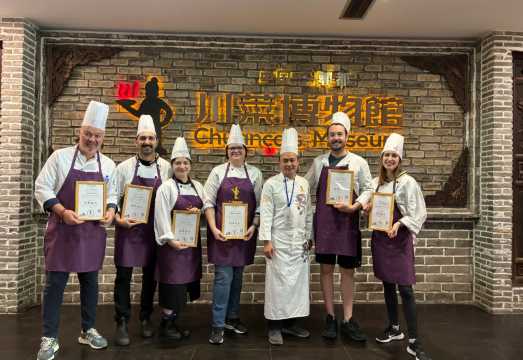
Trip.com lists the experience as lasting approximately three and a half hours, with round-trip transfer, an electronic voucher and instant confirmation. The main advertised highlights are hands-on preparation of three Sichuan dishes, unlimited tasting of more than 20 local snacks and a commemorative certificate at the end of the activity.
The museum is in Chengdu’s Pidu District, outside the central tourist area. The transfer component is therefore particularly useful for travellers who do not want to arrange their own journey to and from the museum.
The Trip.com product combines three connected activities: a guided introduction to the history and culture of Sichuan cuisine, a hands-on cooking session and an extended tasting of traditional local snacks.
The experience is listed in English, with package choices selected during booking. It includes round-trip transfer and uses an electronic voucher, making it suitable for overseas visitors who want a more structured food experience than visiting restaurants independently.
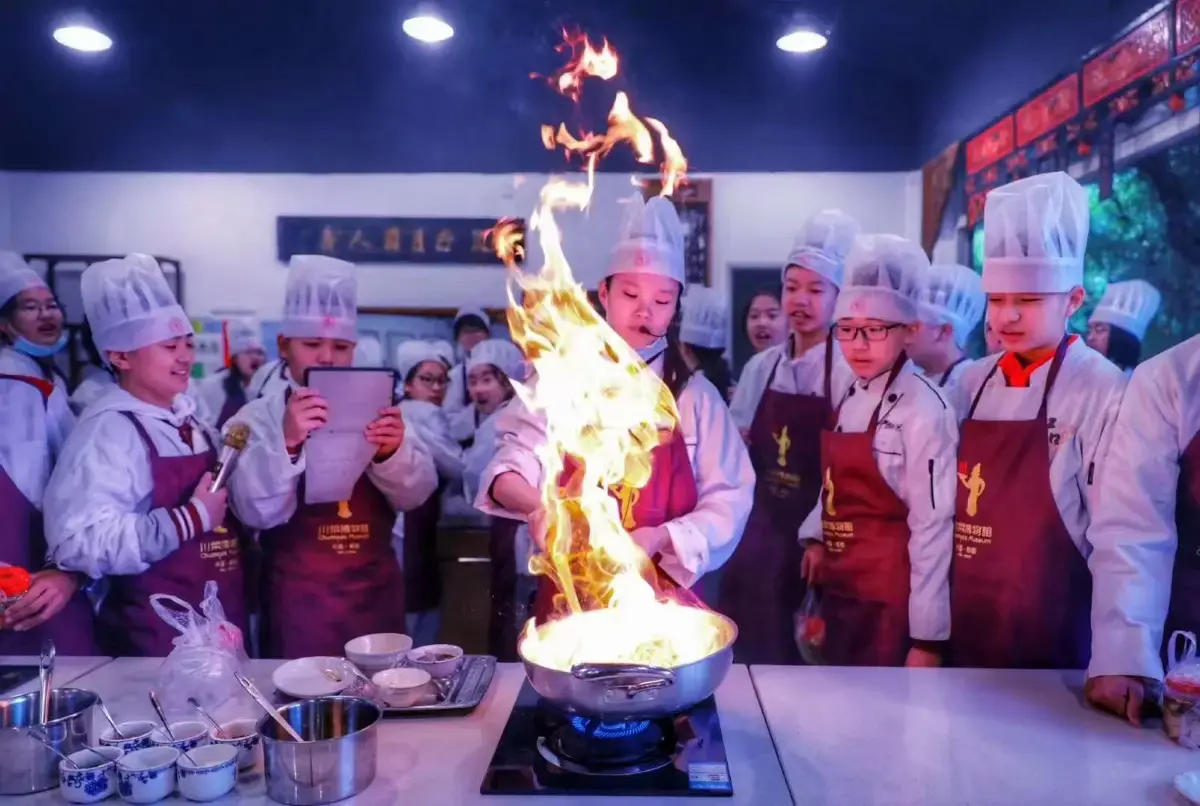
The cooking component is participatory rather than demonstration-only. Guests prepare three dishes with guidance, learning how ingredients and seasonings are combined to create the layered flavours associated with Sichuan cooking.
The public listing does not provide one fixed menu for every date and package. The exact dishes, start time, group format and pickup arrangement should therefore be checked in the selected package and final voucher.
Quick facts
Experience
Sichuan Cuisine Museum tour, cooking class and snack tasting
Destination
Chengdu, Sichuan, China
Museum location
Pidu District, northwest of central Chengdu
Listed duration
Approximately 3.5 hours
Language
English, selected through the package options
Transfer
Round-trip transfer is advertised
Cooking activity
Prepare three Sichuan dishes with guidance
Food tasting
More than 20 types of authentic Sichuan snacks advertised for unlimited tasting
Museum element
Guided exploration of Sichuan culinary history, ingredients and cooking culture
Souvenir
Commemorative certificate
Voucher
Electronic voucher
Confirmation
Instant confirmation
Rating shown
4.5 out of 5 from 2 reviews when checked
Bookings shown
24 booked when checked
Starting price shown
From US$65.01 per person when checked; prices vary by package and date
Cancellation shown
Free cancellation by 16:59, three days before the date of use
Source checked
Trip.com on 22 June 2026
What to expect
The experience is designed as an introduction to Sichuan food through several senses. Visitors see historic utensils and exhibits, hear explanations about ingredients and cooking techniques, smell spices and fermented seasonings, taste local snacks and then cook dishes themselves.
This makes the museum different from a conventional collection of static displays. Its focus is on food as a living cultural tradition, showing how flavour, heat, knife skills, timing and presentation work together.
A typical visit begins with transfer from the agreed pickup point in Chengdu. After arriving at the museum, the guide introduces the site and explains important parts of Sichuan culinary history. The sequence may then continue through tasting areas, exhibits about ingredients and the practical cooking classroom.
During the class, participants work at individual or shared cooking stations. Ingredients are generally prepared in advance so the focus can remain on seasoning, wok control, order of preparation and the final taste.
After cooking, participants can taste what they have made. The separate snack component provides an opportunity to try a much wider selection of dishes than the three prepared during the lesson.
Exploring the Sichuan Cuisine Museum
The Sichuan Cuisine Museum, also known as the Chuancais Museum, presents the development of regional food through displays of cookware, tableware, documents, images and reconstructed culinary settings.
Exhibits explain how Sichuan cuisine developed over time and how local climate, agriculture, trade and household traditions shaped its flavours. Visitors may see utensils from different periods and learn how preparation methods changed as kitchens and food production evolved.
The museum also presents Sichuan dining as more than spicy food. The cuisine includes a broad range of flavour profiles, combining salty, sweet, sour, fragrant, numbing, hot and savoury elements in different proportions.
Live and interactive elements are central to the visit. Knife work, heat control and wok technique are difficult to understand through display cases alone, so demonstrations and hands-on teaching form an important part of the museum experience.
The site also explores associated traditions such as tea drinking, banquets, household cooking, snacks and the cultural importance of the kitchen.
The hands-on cooking class
Trip.com advertises a class in which participants prepare three Sichuan dishes. The specific menu may differ between dates or package options, so travellers should not assume that one set of dishes is guaranteed.
Museum cooking programs commonly feature approachable classics such as Kung Pao chicken, mapo tofu and shaped steamed dumplings. These are useful teaching dishes because they introduce several important techniques, including balancing sauces, controlling wok temperature and working with aromatic ingredients.
The instructor normally demonstrates each stage before participants repeat it at their own station. Even inexperienced cooks can usually follow the process because the ingredients and equipment are arranged for a guided lesson.
Sichuan cooking relies on timing. Garlic, ginger, spring onion, chilli, peppercorn, fermented bean paste and sauces may be added at different stages so that their flavours develop without burning.
The class is not necessarily a professional culinary course. Its purpose is to provide a memorable cultural experience and a practical understanding of how familiar Sichuan dishes are assembled.
Skills visitors may encounter
Using a wok safely
Controlling cooking heat
Combining sauces and seasonings
Recognising the role of Sichuan pepper
Understanding chilli heat versus numbing flavour
Stir-frying ingredients in the correct order
Shaping dumplings or steamed dough, depending on the menu
Adjusting seasoning before serving
The Sichuan snack tasting
One of the strongest features of the Trip.com listing is unlimited tasting of more than 20 types of authentic Sichuan snacks. This allows visitors to compare different textures and flavour combinations rather than experiencing only the three dishes prepared during the class.
Possible museum snack selections may include dumplings, wontons, noodles, tofu pudding, cold dishes, rice or flour-based sweets and chilli-seasoned specialities. The exact choice can change according to daily preparation and availability.
Portions are often small, which makes it easier to try several items. It is still sensible to begin gradually rather than filling a plate immediately, especially for travellers who are not accustomed to chilli, Sichuan pepper or rich sauces.
Not every Sichuan snack is extremely hot. Some are mild, sweet, sour or savoury, while others have the distinctive numbing-and-spicy character known as mala.
Ask the guide which dishes are mild and which contain strong chilli or Sichuan pepper. This can make the tasting more enjoyable for visitors with a lower spice tolerance.
Learning about doubanjiang
Doubanjiang is one of the most important seasonings in Sichuan cooking. It is a fermented paste commonly made with broad beans, chillies, salt and other ingredients, and it contributes deep savoury flavour, colour and heat to many dishes.
Pidu District is closely associated with Pixian doubanjiang, a famous regional version of the paste. The museum experience may include an explanation of how the ingredient is fermented and why it is sometimes described as the soul of Sichuan cuisine.
Large fermentation jars and production displays help visitors understand that the flavour develops over time rather than coming only from fresh chilli. The paste can add saltiness, umami, aroma and a fermented depth that differs from ordinary chilli sauce.
Mapo tofu is one of the best-known dishes in which doubanjiang may be used, although recipes and quantities vary.
Hotel transfers and location
The museum is located in Pidu District, northwest of central Chengdu. It is considerably farther from the city centre than attractions such as Tianfu Square, People’s Park or the Wide and Narrow Alleys.
Travel time from central Chengdu is often around one hour by road, depending on traffic and the exact pickup point. This is why the advertised round-trip transfer adds practical value.
The public Trip.com listing does not define every eligible hotel or pickup district. Confirm whether the transfer covers your accommodation before booking, particularly when staying near Tianfu International Airport, Shuangliu Airport, Dujiangyan or outside central Chengdu.
Provide the complete hotel name, address and a reachable mobile number. The final pickup time may be sent by email or messaging service after the supplier organises the route.
Be in the lobby or agreed pickup area before the stated time. Chengdu traffic can be heavy, and a shared transfer may collect participants from several hotels.
What is included and what to confirm
Advertised highlights
English-language guided experience
Hands-on preparation of three Sichuan dishes
More than 20 varieties of Sichuan snacks for unlimited tasting
Visit to the Sichuan Cuisine Museum
Round-trip transfer
Commemorative certificate
Electronic voucher
Instant confirmation
Confirm in the selected package
The exact three-dish menu
Whether the package is private or shared
The guide language
The eligible pickup area
Whether museum admission is separately itemised
Whether all ingredients and cooking equipment are included
Whether chef clothing, aprons or hats are provided
Any minimum participant requirement
Child pricing and minimum age
Dietary substitutions
Insurance, gratuities and personal expenses
Trip.com displays multiple package options, so the lowest starting price may not represent the same transfer or group arrangement as a more expensive package.
Dietary requirements and food allergies
Contact the provider before booking when food allergies, religious restrictions or dietary preferences are important. The class uses a shared cooking environment, and complete separation of ingredients may not be possible.
Common ingredients in Sichuan cooking can include peanuts, sesame, soy, wheat, eggs, meat, shellfish, chilli, Sichuan pepper and fermented bean products. This does not mean every dish contains all of them, but travellers with severe allergies should obtain specific written confirmation.
Vegetarian substitutions may be possible for some dishes, although sauces or stocks can still contain animal products. Vegan, halal, kosher and gluten-free requirements should be discussed in advance rather than raised only on arrival.
Travellers with a low tolerance for chilli can ask whether seasonings can be reduced during the cooking class. Snack dishes may already be prepared, so their spice level may be less adjustable.
Families and younger participants
The museum’s interactive format can work well for families because children can learn through tasting, shaping food and watching ingredients change during cooking.
However, the activity involves hot woks, open heat, sharp utensils and busy cooking stations. Adults should supervise children closely and follow the instructor’s safety rules.
The public Trip.com summary does not clearly state a minimum age. Check the selected package before booking, especially for younger children who may be too short to use a workstation safely.
Families should also consider whether children are comfortable with unfamiliar aromas, spice and a transfer of roughly an hour each way from central Chengdu.
What to wear and bring
Comfortable closed shoes with non-slip soles
Light, comfortable clothing suitable for cooking
A charged phone with the electronic voucher saved
Passport or identification requested for the booking
A small bottle of water
Personal medication
Written details of serious allergies translated into Chinese when necessary
A small bag that can be stored safely away from the cooking station
A phone or camera for photographs where permitted
Avoid very loose sleeves, dangling jewellery and open footwear around the cooking stations. Tie long hair back before the class begins.
Who this experience suits
Food-focused travellers visiting Chengdu
Beginners interested in learning basic Sichuan cooking techniques
Visitors who prefer an English-guided cultural activity
Couples, families and groups looking for an interactive experience
Travellers who want to taste many local snacks in one place
People interested in food history, fermentation and regional ingredients
Visitors who value included transport to an attraction outside central Chengdu
The experience may be less suitable for travellers with severe food allergies that cannot be safely accommodated, people who dislike strong food aromas or anyone who wants a highly technical professional cookery course.
Booking and planning tips
Check the exact menu and package language before payment.
Confirm whether your hotel falls within the transfer area.
Provide dietary information at the time of booking.
Do not eat a large meal immediately before the experience because the snack tasting is substantial.
Wear closed, non-slip shoes suitable for a cooking environment.
Save the electronic voucher and supplier contact details offline.
Keep your phone available for final pickup messages.
Allow extra time for Chengdu traffic before planning another activity.
Ask the guide which snacks are mild before tasting the hottest dishes.
Take notes or photographs of ingredient names if you want to recreate the recipes later.
Confirm whether recipes are provided in English.
Check the local-time cancellation deadline shown on the final booking.
Do not assume every package includes the same private or shared transfer arrangement.
Frequently asked questions
How long is the Sichuan Cuisine Museum experience?
Trip.com lists the activity as lasting approximately three and a half hours. Transfer time and traffic may affect the total time away from the hotel.
Where is the Sichuan Cuisine Museum?
It is in Pidu District, northwest of central Chengdu.
Is hotel transfer included?
Round-trip transfer is advertised. Confirm the eligible pickup zone for the selected package and hotel.
Is the activity conducted in English?
English service is advertised and should be selected through the package options.
How many dishes do participants cook?
The listing states that participants prepare three Sichuan dishes.
Which dishes will I cook?
The public summary does not guarantee one fixed menu. Museum classes commonly include well-known dishes such as Kung Pao chicken, mapo tofu or shaped steamed dumplings, but the selected package should be checked.
Are the snacks unlimited?
Trip.com advertises unlimited enjoyment of more than 20 types of authentic Sichuan snacks.
Is all Sichuan food very spicy?
No. Sichuan cuisine includes spicy, numbing, sweet, sour, savoury and aromatic dishes. Ask the guide which snacks are mild.
Can vegetarians participate?
Possibly, but substitutions are not guaranteed. Contact the provider before booking and confirm whether sauces, stocks and cooking equipment can meet the requirement.
Is the experience suitable for people with food allergies?
It may not be suitable for severe allergies without advance confirmation because the kitchen and tasting areas may use shared ingredients and equipment.
Is the cooking class suitable for beginners?
Yes. It is designed as a guided visitor experience rather than an advanced professional course.
Do participants receive anything to take home?
The listing advertises a commemorative certificate. Confirm whether recipes or other souvenirs are included.
Is the experience suitable for children?
It can be engaging for families, but the class uses hot woks and cooking utensils. Check the minimum age and supervise children closely.
How much does the experience cost?
The Trip.com page showed prices from US$65.01 per person when checked on 22 June 2026. The final price depends on the package, date and number of travellers.
What is the cancellation policy?
The listing showed free cancellation by 16:59, three days before the date of use. The deadline in the final booking confirmation should be treated as authoritative.
Important: Menus, snack selections, pickup areas, guide languages, prices and package inclusions can change. Review the selected option and final supplier instructions before travelling.
Sponsored Popular Items
Quick take: Trip.com offers a worldwide selection of tours and attractions and hotels
Eatwith Chengdu: Get Up Close with Chengdu’s Folk Crafts and Chat by – Travel Experience China Eatwith Chengdu: Get Up Close with Chengdu’s Folk Crafts and Chat by the Fire with Local Masters This Chengdu cultural experience is built around the city’s slow-life spirit, combining folk craft, conversation and a more intimate local atmosphere than a standard sightseeing stop. If you want a Chengdu activity that feels more personal than simply visiting another attraction, this experience is an intriguing option. Rather than being a museum ticket or a formal workshop with a rigid structure, it is positioned as a face-to-face cultural encounter built around Chengdu folk skills, local masters and conversation by the fire. That makes…
Chengdu City Highlights Private Day Tour: Qingyang Taoist Temple, Chengdu Wuhou Shrine China Chengdu City Highlights Private Day Tour: Qingyang Taoist Temple, Chengdu Wuhou Shrine Museum, Chengdu Du Fu Thatched Cottage Museum & Jinli Street adds structure, local context and purposeful sightseeing to the itinerary. Chengdu City Highlights Private Day Tour: Qingyang Taoist Temple, Chengdu Wuhou Shrine Museum, Chengdu Du Fu Thatched Cottage Museum & Jinli Street: experience overview Exploring Taoist Culture at Qingyang Taoist Temple: Delve into Qingyang Taoist Temple to experience the essence of thousand-year-old Taoism and admire the splendor of ancient architecture.;Explore the history of the Three Kingdoms at Chengdu Wuhou Shrine Museum, immersing yourself in its ancient charm. Stroll…
Chengdu: Giant Panda Breeding Research Base Ticket – Wildlife & Nature Experience Chengdu: Giant Panda Breeding Research Base Ticket provides a structured way to visit a notable attraction or cultural site. Chengdu: Giant Panda Breeding Research Base Ticket: experience overview Experience the ticket in advance to the Giant Panda Breeding Research Base at Chengdu. Avoid the risk of tickets selling out with advance tickets that guarantee your admission on your chosen day and time. Available from getyourguide.com. This makes the experience a useful option when planning time in the destination. The exact duration can depend on the selected date, option or operating schedule. Routes, start times, inclusions and meeting arrangements may vary,…
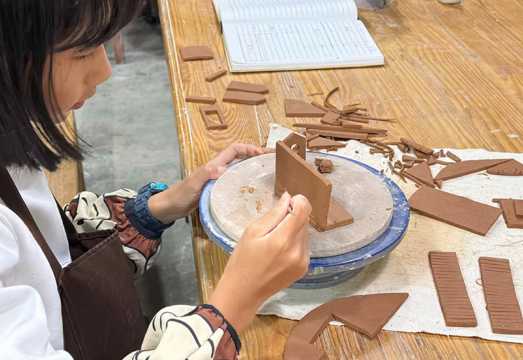
Chengdu Intangible Cultural Heritage Pottery Experience: Western – Hands-On Experience China Chengdu Intangible Cultural Heritage Pottery Experience: Western Sichuan Folk House Facade Model Making If you want a Chengdu activity that feels more personal than simply visiting another attraction, this pottery experience is a strong option. Instead of looking at culture from behind a barrier, you sit down, work with clay, and create something with your own hands. That immediately makes the experience feel more memorable than a standard sightseeing stop. The appeal is broader than a simple craft class. The live listing frames this as an intangible cultural heritage pottery experience, and the project itself is tied to the distinctive…
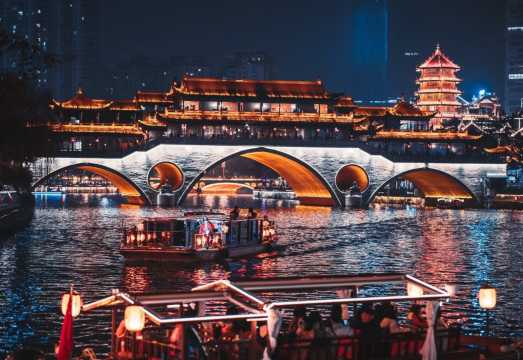
Chengdu Jinjiang Cruise: What to Expect on This 30-Minute Night River Ride – Scenic Cruise China Chengdu Jinjiang Cruise: What to Expect on This 30-Minute Night River Ride A Jinjiang night cruise gives you one of Chengdu’s most photogenic evening perspectives, with historic-style bridges, glowing riverbanks, and reflections shimmering across the water. If you want an easy evening experience in Chengdu that feels scenic without taking up half the night, the Chengdu Jinjiang Cruise is a strong option. It is short, simple to understand, and built around one thing Chengdu does especially well after dark: blending old-style river scenery with a modern illuminated skyline. This is not a long dinner cruise or a complicated guided excursion.…
Chengdu – [Eastern Suburbs Memory] Weimian Hall – Sichuan Opera – Live Entertainment China Chengdu · [Eastern Suburbs Memory] Weimian Hall · Sichuan Opera Face-Changing Performance adds live entertainment to the itinerary. Chengdu · [Eastern Suburbs Memory] Weimian Hall · Sichuan Opera Face-Changing Performance: experience overview Integration of Intangible Cultural Heritage and Technology: The millennium-old Sichuan Opera face-changing skill is combined with modern stage technology to create a unique audio-visual experience.;Collection of Classic Elements: In addition to face-changing, classic Sichuan Opera elements such as fire-spitting and long silk sleeves are incorporated to enrich the performance content.;Immersive Interactive Experience: Audiences can watch closely and also step onto the stage to experience intangible cultural heritage skills…
Quick take: Trip.com helps you compare prices across accommodations. Use it to shortlist hotels, then click through to confirm the final price, room type, and inclusions on the booking site.
Chengdu Jinjiang River Night Cruise China Chengdu Jinjiang Cruise - A top pick for must-visit night attractions in Chengdu, offering a scenic boat tour to experience the city's iconic night... presents the destination from the water and offers a different perspective. Chengdu Jinjiang Cruise - A top pick for must-visit night attractions in Chengdu, offering a scenic boat tour to experience the city's iconic night...: experience overview Popular Spots to Enjoy Chengdu's Night Views;The ancient charm blends with modern style under the dim lights as night falls, with both banks of the Jinjiang River brilliantly illuminated.;Embark on a cruise, gliding between ancient bridges and modern light…
Chengdu Panda Valley, Dujiangyan & South Bridge Private Day Tour China Chengdu Panda Valley + Dujiangyan Private Day Tour + South Bridge Night View - Includes Guide - Admission Ticket - Driver & Vehicle - Hotel... provides a structured way to visit a notable attraction or cultural site. Chengdu Panda Valley + Dujiangyan Private Day Tour + South Bridge Night View - Includes Guide - Admission Ticket - Driver & Vehicle - Hotel...: experience overview Popular attractions, professional guides, private small group tours, efficient sightseeing, worry-free travel;No hidden fees, just a joyful journey Available from trip.com. This makes the experience a useful option when planning time in > Chengdu local experienceSearch…
Chengdu Trip Moments – Guided Sightseeing Tour China Chengdu Trip Moments[Adventure to towering peaks and deep forests, with photographers capturing every moment, challenge your limits in extreme... adds structure, local context and purposeful sightseeing to the itinerary. Chengdu Trip Moments[Adventure to towering peaks and deep forests, with photographers capturing every moment, challenge your limits in extreme...: experience overview Global Shooting · Multilingual Companion;One-on-One · Full-Category Customization;Camera / Phone · Dual Shooting Options Available from trip.com. This makes the experience a useful option when planning time in > Chengdu local experienceSearch results. The exact duration can depend on the selected date, option or operating schedule. Routes, start times, inclusions…
Chengdu Bipenggou & Ganbao Tibetan Village Full – Day tour / Ample – Guided Tour China Chengdu Bipenggou + Ganbao Tibetan Village 1-day tour / Ample sightseeing time / Pure play / Optional morning pickup adds structure, local context and purposeful sightseeing to the itinerary. Chengdu Bipenggou + Ganbao Tibetan Village 1-day tour / Ample sightseeing time / Pure play / Optional morning pickup: experience overview [Cultural & Natural Dual Experience] One-Day Tour from Chengdu: Explore the Essence of Western Sichuan - Alpine Wonderland + Tibetan Village Culture; [No Shopping, Pure Fun] Enjoy a shopping-free tour with no stops at retail stores; [Tour Experience] Ample visiting time with free exploration at the attraction Available from trip.com.…
Bipenggou Private Full-Day Charter Tour from Chengdu – Guided Sightseeing Tour China Chengdu-Bipenggou 1-Day Tour | Optional 5, 7, or 9-Seat Private Charter | Pure Play | All-Inclusive Price adds structure, local context and purposeful sightseeing to the itinerary. Chengdu-Bipenggou 1-Day Tour | Optional 5, 7, or 9-Seat Private Charter | Pure Play | All-Inclusive Price: experience overview [Travel Assurance] No shopping.;Departure Time: Private tour with 5-seater (max 4 passengers), 7-seater (max 6 passengers), or 9-seater (max 8 passengers);[Thoughtful Service] One-on-one customer support. Notifications will be sent by 10 PM the day before departure at the latest. Available from trip.com. This makes the experience a useful option when planning time in >…
Chengdu Must – Guided Sightseeing Tour China Chengdu Must-Visit Lifetime Trip: Leshan Giant Buddha & Huanglongxi Ancient Town Day Tour with Optional Group Types adds structure, local context and purposeful sightseeing to the itinerary. Chengdu Must-Visit Lifetime Trip: Leshan Giant Buddha & Huanglongxi Ancient Town Day Tour with Optional Group Types: experience overview A must-see attraction in life, one of the world's most spectacular reclining Buddhas;Explore the full view of the Leshan Giant Buddha and experience the local customs of Leshan's old town;Flexibly choose your travel package for a richer travel experience Available from trip.com. This makes the experience a useful option when planning time in >…
Quick take: Trip.com helps you compare prices across accommodations. Use it to shortlist hotels, then click through to confirm the final price, room type, and inclusions on the booking site.

![Chengdu – [Eastern Suburbs Memory] Weimian Hall – Sichuan Opera – Live Entertainment](https://ak-d.tripcdn.com/images/0355o12000qld6n5a5295_C_960_660_Q50.jpg "Chengdu – [Eastern Suburbs Memory] Weimian Hall – Sichuan Opera – Live Entertainment")