Home » Tours Sightseeing » Royal Gardens of Herrenhausen Guided Tour – Guided Sightseeing Experience
Royal Gardens of Herrenhausen Guided Tour – Guided Sightseeing Experience
$13.00
This guided walk introduces visitors to the formal Baroque landscape of Hannover’s Royal Gardens of Herrenhausen. Check current availability, inclusions and booking details before you go.
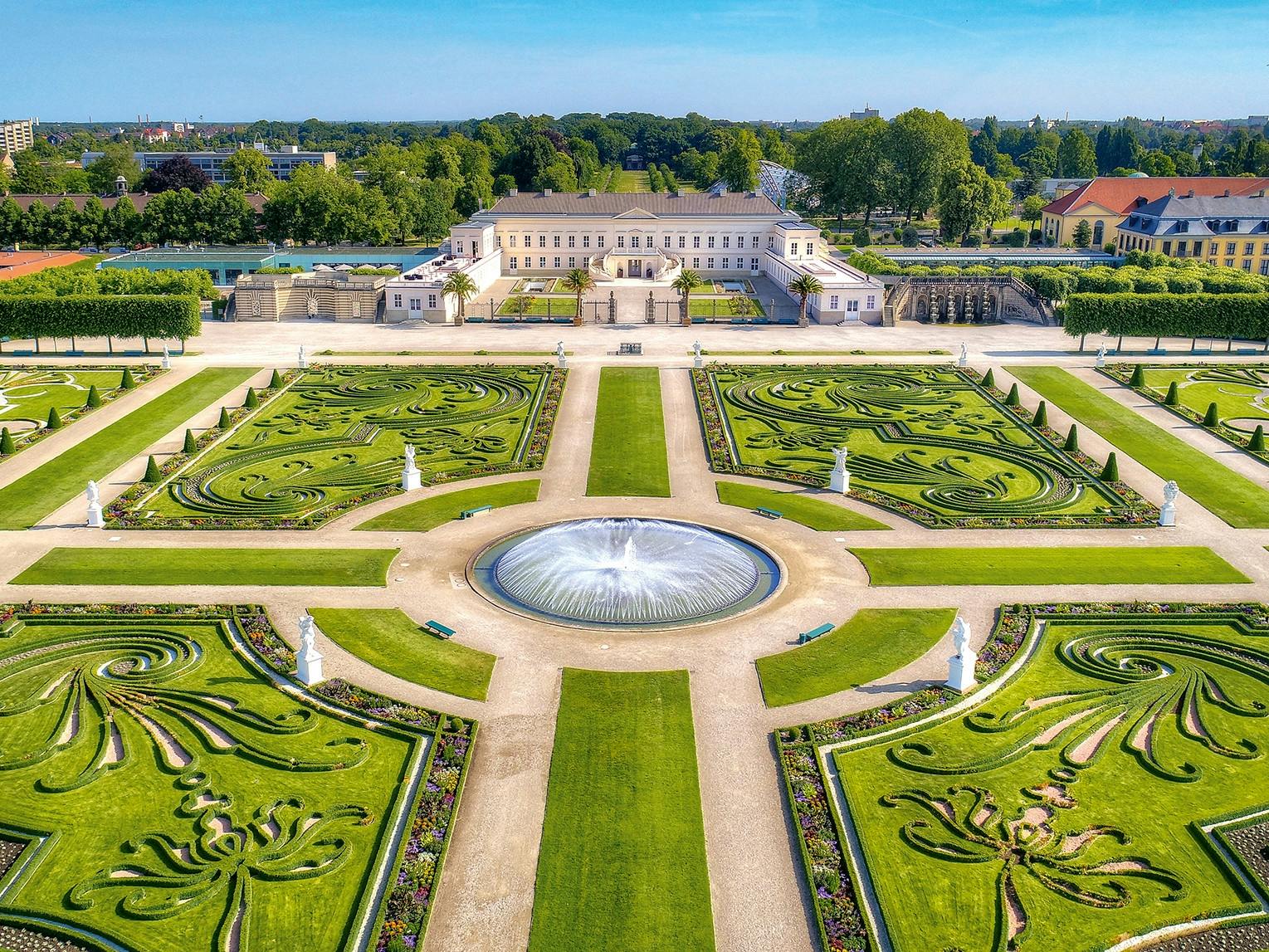
This guided walk introduces visitors to the formal Baroque landscape of Hannover’s Royal Gardens of Herrenhausen. The tour focuses on the Great Garden, one of Europe’s best-preserved Baroque gardens, and explains how Electress Sophia transformed the estate into an ambitious French-inspired court garden at the end of the 17th century.
Musement currently lists the experience as a 90-minute German-language group tour with admission included, mobile vouchers, instant confirmation, skip-the-line entry and free cancellation up to 24 hours before the scheduled start. The displayed price was from US$13 when checked.
Advertised highlights include the Great Garden’s geometric parterres, boxwood patterns, marble-pebble surfaces and flower borders, together with the colourful Grotto redesigned by Niki de Saint Phalle. The listing also mentions the botanical Berggarten and its orchid displays, although the exact route covered within the 90-minute guided period should be confirmed for the selected date.
The Herrenhausen tour is a compact guided introduction rather than a full-day garden visit. During approximately 90 minutes, a local guide explains the history, symbolism and design principles behind the Great Garden while leading the group through selected formal areas.
The experience is conducted in German. This is important for international visitors because the live historical commentary is a central part of the product and no English-language option is shown on the current Musement page.
Admission is included, allowing the group to enter without buying a separate ticket at the garden. The exact areas entered can be influenced by opening arrangements, seasonal planting, special events, restoration work and the guide’s route.
Quick facts
Musement product
Royal Gardens of Herrenhausen Guided Tour
Product ID
446816
Displayed price
From US$13 when checked; live price depends on the selected date and currency
Duration
1 hour 30 minutes
Language
German
Tour format
Guided group tour
Admission
Entrance ticket included
Voucher
Mobile e-voucher accepted
Confirmation
Instant confirmation
Entry
Skip-the-line access listed
Meeting point
Main entrance and ticket office, Herrenhäuser Strasse 4, 30419 Hannover
Provider
Hannover Marketing und Tourismus GmbH
Cancellation
Full refund when cancelled up to 24 hours before the experience begins
Recommended footwear
Comfortable walking shoes
What to expect
The guide introduces the Great Garden as a carefully ordered royal landscape rather than simply a collection of flower beds. Visitors learn how broad axes, clipped hedges, patterned parterres, canals, fountains, sculpture and enclosed garden rooms were used to express control, rank and courtly taste.
The tour description highlights:
The creation and development of the Baroque garden
Electress Sophia’s role in shaping Herrenhausen
Formal boxwood patterns
Marble-pebble and gravel surfaces
Seasonal flower borders
The Niki de Saint Phalle Grotto
The wider Herrenhausen garden ensemble
Because a garden changes throughout the year, the visual emphasis differs by season. Spring bulbs, summer bedding, clipped evergreen structure, autumn colour and winter geometry all produce a different experience.
The Great Garden
The Great Garden, or Großer Garten, forms the historic centre of Herrenhausen. Its formal design has survived with an unusual degree of integrity, making it one of the most significant Baroque gardens in Europe.
The garden is organised around long sightlines and symmetrical relationships. Visitors encounter ornamental parterres near the palace, broad avenues, enclosed bosquets, fountains, canals, statuary and smaller themed gardens concealed behind tall hedges.
A guided visit is useful because many design features are easier to understand when their original courtly purpose is explained. What may initially appear to be decorative planting often forms part of a carefully planned visual sequence.
Electress Sophia and the garden’s history
Electress Sophia of the Palatinate was the central figure in Herrenhausen’s development. Inspired by French royal gardens associated with Louis XIV, she oversaw the expansion of the estate during the late 17th and early 18th centuries.
The garden became closely connected with the House of Hanover and the political rise of the dynasty. Sophia’s descendants later inherited the British throne, creating the personal union between Great Britain and Hanover in the 18th century.
The guided commentary places the formal landscape within this wider royal and European context, helping visitors understand why the garden was designed on such an ambitious scale.
Baroque garden design
Baroque gardens were intended to be viewed along controlled lines and from selected positions. At Herrenhausen, geometry creates a visual relationship between palace, parterres, fountains and distant garden spaces.
Features to look for include:
Strong central and cross axes
Mirrored planting patterns
Low boxwood embroidery in the formal parterre
Contrasting gravel and coloured planting
High clipped hedges forming outdoor rooms
Statues used as focal points
Water channels framing the garden
Changes from open ceremonial spaces to secluded bosquets
The guide may explain how these devices created surprise, framed views and directed the movement of royal guests through the grounds.
Niki de Saint Phalle Grotto
The historic Grotto was transformed by French-American artist Niki de Saint Phalle. Its octagonal central chamber and adjoining rooms are decorated with colourful glass, mirrors, pebbles and sculptural figures exploring themes connected with human life.
The interior sharply contrasts with the disciplined geometry outside. Reflective mosaics break light into changing colours, while curving figures and richly textured surfaces create an immersive contemporary artwork within the Baroque garden.
Musement advertises the Grotto as a tour highlight. Access can still be influenced by special events, maintenance or seasonal closing times. Pushchairs are not permitted inside the Grotto, according to the official garden information.
Commercial or professional photography inside the Grotto can be subject to copyright and permission requirements because the interior is protected as an integrated artwork.
Fountains and water displays
Water is an essential part of the Great Garden’s design. Basins, channels and fountains add sound, movement and reflected light to the otherwise controlled geometry.
During the summer season from April to October, the official garden timetable normally operates water displays:
Monday to Friday: 10:00 am–12:00 pm and 3:00 pm–5:00 pm
Saturday, Sunday and public holidays: 10:00 am–12:00 pm and 2:00 pm–5:00 pm
These times can change, and a tour beginning outside the operating periods may still visit the fountains when they are not running. Special events or technical work can also affect the displays.
Berggarten and orchids
The Berggarten stands across Herrenhäuser Strasse from the Great Garden. It developed from a kitchen and cultivation garden into an important botanical collection.
Musement’s highlights mention the Berggarten and up to 800 flowering orchids. Official garden information confirms that its Orchid House displays approximately 500 to 800 flowering orchids throughout the year, selected from a collection of about 25,000 plants.
The public conservatories also include tropical, subtropical, cactus and succulent collections. Because the scheduled guided tour lasts only 90 minutes and the main description focuses on the Great Garden, visitors should check whether the booked tour enters the Berggarten or whether the ticket permits independent exploration before or after the guide finishes.
Herrenhausen Palace and museum
Herrenhausen Palace stands at the head of the Great Garden. The original palace was destroyed during the Second World War and later reconstructed on its historic site.
The palace now contains the Museum Schloss Herrenhausen and event facilities. Museum admission should not be assumed from the wording “entrance ticket included” unless it is explicitly listed on the selected voucher.
Visitors wishing to add the museum should check its separate schedule. The official 2026 opening information lists Tuesday to Sunday hours, with different summer and winter times.
Meeting point
The group meets at the main entrance and ticket office of the Herrenhausen Gardens:
Herrenhäuser Strasse 4 30419 Hannover Germany
Arrive at least 10 to 15 minutes before the booked start. The guide may need to check names or vouchers before leading the group through the entrance.
Keep the mobile voucher open and ensure the phone has enough battery. A screenshot or offline copy is helpful if mobile data is unreliable.
Getting there
The easiest public-transport route from central Hannover is by Stadtbahn line 4 toward Stöcken or line 5 toward Garbsen. From Kröpcke in the city centre, the journey to the Herrenhäuser Gärten stop takes about 10 minutes, and the stop is immediately outside the garden area.
Drivers can use the visitor-parking area near Herrenhäuser Strasse 3c. Parking charges and special-event arrangements can change, so public transport is often simpler.
Allow extra time during festivals, concerts and the international fireworks competition, when roads, entrances and garden closing times may be altered.
What is included
90-minute guided tour
German-speaking guide
Entrance ticket
Group-tour participation
Skip-the-line access as advertised
Mobile e-voucher
Instant booking confirmation
The final Musement voucher controls exactly which garden areas and admissions are included.
What is not included
Transport to and from Herrenhausen
Hotel pickup
Food and drinks
Optional gratuities
Private tour service
English-language commentary
Museum admission unless explicitly shown on the voucher
Special-event tickets
Professional photography permissions
Language and group format
The live tour is offered in German. Visitors should have enough German to follow historical and horticultural commentary, as the listing does not promise translation or an audio guide in another language.
This is a shared group tour. The guide sets the route and pace, and participants should remain close enough to hear explanations without blocking paths used by other garden visitors.
Travellers requiring an English-language tour should search for a private guide or a separately scheduled multilingual product rather than assuming the guide can translate during this departure.
Accessibility
Much of the Great Garden consists of broad, relatively level gravel avenues, but not every entrance and feature is fully step-free. Official information states that the revolving gates at the Great Garden and Berggarten are not accessible.
Wheelchairs can be borrowed for a garden visit when arranged in advance, and mobility scooters are available for the Great Garden during the summer season by prior arrangement. These services are not generally available during events.
Travellers using a wheelchair or mobility aid should contact the gardens and the tour provider before booking to confirm:
An accessible entrance route
Whether the complete guided route is suitable
Grotto access
Wheelchair or mobility-scooter availability
Accessible toilets
The location of seating and rest points
Gravel can require more effort than a paved surface, particularly for manual wheelchairs.
Children and families
The tour can suit older children who are interested in royal history, fountains, sculpture or gardens. Younger children may find a 90-minute German-language historical explanation difficult to follow.
Pushchairs are useful on the broad garden paths but are not permitted inside the Niki de Saint Phalle Grotto. Families should be prepared to leave a pushchair outside if the group enters.
Children should remain on paths, avoid touching clipped hedges and sculptures, and follow the guide around water features.
Weather and seasonal conditions
This is primarily an outdoor experience. The garden remains attractive in different seasons, but weather affects comfort, flower displays, fountain operation and the amount of time spent in exposed areas.
Spring often brings bulbs and fresh foliage. Summer offers long opening hours, bedding displays and scheduled water features. Autumn provides colour and quieter paths, while winter reveals the garden’s formal structure but may offer fewer flowers.
The tour may proceed in light rain. Bring appropriate protection rather than relying on covered areas. Severe weather, ice or official safety restrictions can lead to route changes or cancellation.
Garden opening hours
The Great Garden, Berggarten and Berggarten conservatories open at 9:00 am throughout the year. Official seasonal closing times are:
November to January: 4:30 pm
February: 5:30 pm
March: 6:00 pm
April: 7:00 pm
May to August: 8:00 pm
September: 7:00 pm
October: 6:00 pm
Last admission and ticket-office closing are normally one hour before the gardens close. The Grotto and conservatories close earlier than the main gardens.
On days with major events such as the international fireworks competition or the Kleines Fest, the Great Garden may close at 5:00 pm. Always check the official schedule for the selected date.
Photography advice
The Great Garden rewards symmetrical compositions. The strongest positions often align central avenues, fountains, statues and parterre patterns.
Useful subjects include:
Formal parterres viewed from the palace side
Long avenues framed by clipped trees
Reflections and fountain spray
White statues against green hedges
Seasonal flower borders
Details of the Grotto, where permitted
Orchids and tropical plants in the Berggarten conservatories
Commercial photography, organised shoots and professional use may require permission. The Niki de Saint Phalle Grotto is copyright-protected as a complete artwork, so visitors should follow current photography rules.
What to wear and bring
Comfortable walking shoes
Weather-appropriate layers
Compact rain jacket or umbrella
Sun protection in warm weather
Water bottle
Personal medication
Charged phone with the e-voucher
Portable power bank
Camera if desired
Small bag that is easy to carry through the group
Formal gardens involve more walking than their flat appearance suggests. Comfortable footwear is the only preparation specifically highlighted by Musement.
Cancellation and booking checks
Musement states that travellers receive a 100% refund when cancelling up to 24 hours before the experience begins. Cancellations submitted after the deadline may not be refundable.
Before payment, verify:
The selected date and start time
German-language operation
90-minute duration
Exact admissions included
Meeting point at the main entrance and ticket office
Whether the Grotto is included on that departure
Whether the Berggarten is guided or available independently
Accessibility arrangements
The cancellation deadline in Hannover local time
Planning tips
Arrive 10 to 15 minutes early.
Use Stadtbahn line 4 or 5 rather than driving during major events.
Choose a tour time that overlaps with the seasonal fountain schedule when possible.
Wear shoes suitable for gravel paths.
Check the official garden calendar for early closures.
Plan extra independent time after the tour for photography.
Confirm whether the ticket permits entry to the Berggarten and museum.
Visit the orchid houses if they are not covered by the guided route.
Bring rain protection even when the forecast is mixed.
Download the voucher before leaving Wi-Fi.
Frequently asked questions
How long is the Royal Gardens of Herrenhausen guided tour?
The guided tour lasts 1 hour 30 minutes.
Which language is used?
The current Musement listing offers the tour in German.
Is admission included?
Yes. Musement lists an entrance ticket as included, although the exact covered areas should be checked on the voucher.
Where does the tour begin?
It begins at the main entrance and ticket office of the Herrenhausen Gardens, Herrenhäuser Strasse 4, 30419 Hannover.
Does the tour visit the Niki de Saint Phalle Grotto?
The Grotto is advertised as a highlight. Entry can still depend on opening arrangements, maintenance and special events.
Does the tour include the Berggarten?
The listing highlights the Berggarten and orchids, but the main description focuses on the Great Garden. Confirm whether the guided route enters the Berggarten or whether it can be visited independently afterward.
How many orchids can be seen?
The official Orchid House normally displays about 500 to 800 flowering orchids selected from a collection of approximately 25,000 plants.
Is the tour suitable for wheelchair users?
Many paths are level, but revolving gates and some features are not fully accessible. Contact the provider before booking to arrange an accessible entrance and confirm the route.
Are pushchairs allowed?
Pushchairs can be used in much of the garden but are not permitted inside the Grotto.
How can visitors travel from central Hannover?
Take Stadtbahn line 4 toward Stöcken or line 5 toward Garbsen to the Herrenhäuser Gärten stop. The journey from Kröpcke takes about 10 minutes.
Does the tour operate in rain?
Light rain does not necessarily cancel the tour. Visitors should bring suitable clothing, while severe weather may cause route changes or cancellation.
Can the booking be cancelled for a refund?
Yes. Musement offers a full refund when cancellation is completed up to 24 hours before the experience begins.
Important: Prices, tour routes, fountain schedules, opening hours, event closures and admission arrangements can change. Recheck Musement, the official Herrenhausen Gardens website and the final voucher before travel.
Ready to book Royal Gardens of Herrenhausen Guided Tour – Guided Sightseeing Experience?
Check the supplier for current availability, pricing, inclusions and booking conditions.
SEA LIFE Hannover Hanover – Wildlife Attraction Tickets Germany A listing may offer admission, a guided visit, transport, a combination package or premium access. Check current availability, inclusions and booking details before you go.
Hannover Hiking & Cycling Tours Germany Compare nature and outdoor experiences in Hannover Hiking & Cycling, with practical tips on timing, inclusions and choosing the right option. Check current availability, prices and booking conditions before you go.
.jpg/1280px-Aerial_image_of_Gro%C3%9Fer_Garten_(view_from_the_south).jpg)