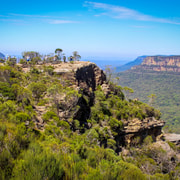
Blue Mountains Nature Walks, Waterfalls & Guided Tours
Compare nature and outdoor experiences in Blue Mountains Nature Walks, Waterfalls & Guided, with practical tips on timing, inclusions and choosing the right option. Check current availability, prices and booking conditions before you go.
Nature in the Blue Mountains: Walks, Waterfalls and Guided Experiences
The Blue Mountains combine sandstone cliffs, deep forested valleys, waterfalls and more than 140 kilometres of national-park walking tracks.
The Blue Mountains are one of Australia’s most accessible large natural landscapes. Within roughly two hours of central Sydney, visitors can stand above the Jamison Valley, walk beside rainforest creeks, watch waterfalls descend over sandstone cliffs and explore a World Heritage property covering more than one million hectares.
Musement’s Blue Mountains nature category currently highlights a full-day guided tour with lunch. Its wider recommendations also include a three-hour open-air army-truck tour and a Megalong Valley wine-and-lunch experience. These products suit different travellers, from active visitors wanting short guided walks to people who prefer scenery from a vehicle or a relaxed valley outing.
This guide explains the region’s main natural areas, the current Musement options, practical walking choices, safety issues and how to plan around fast-changing weather and national-park closures.
The Blue Mountains are not a single mountain chain in the conventional sense. Much of the landscape is a sandstone plateau cut by rivers, creeks, gorges and valleys. From the cliff-top towns, visitors look across a vast forest canopy rather than towards one dominant summit.
The region offers nature at many levels of difficulty. A traveller with limited walking ability can enjoy major views from developed lookouts, while experienced walkers can spend multiple days on cliff-top and valley trails.
The most visited natural features include the Three Sisters, Jamison Valley, Wentworth Falls, Katoomba Falls, Leura Cascades, Govetts Leap and the Grose Valley. Away from the headline sites are fern-filled creeks, quiet rock platforms, heathland, canyon systems and remote wilderness.
Guided experiences add local knowledge and remove the need to coordinate trains, buses, parking, changing track conditions and meal stops. They can also reach viewpoints that are difficult to combine efficiently on a self-guided day.
Quick facts
Region
Blue Mountains, New South Wales, Australia
Main visitor towns
Wentworth Falls, Leura, Katoomba, Medlow Bath and Blackheath
Distance from Sydney
Approximately two hours by road or train to Katoomba, depending on traffic and service
World Heritage property
Greater Blue Mountains Area
World Heritage size
Approximately 1.03 million hectares
National-park tracks
More than 140 kilometres within Blue Mountains National Park
Main nature base
Katoomba, especially Echo Point and the surrounding cliff walks
Best-known formation
The Three Sisters
Major waterfall area
Wentworth Falls
Long-distance option
Grand Cliff Top Walk, 19 kilometres over two days
Musement nature listing
Blue Mountains full-day guided tour with lunch
Other Musement experiences
Three-hour army-truck tour and Megalong Valley winery tour
Weather
Cooler and more changeable than Sydney, with fog possible throughout the year
Essential planning step
Check NSW National Parks alerts on the day of travel
Nature experiences currently shown by Musement
The Musement category page is a directory rather than one activity. When checked on 23 June 2026, it presented one dedicated nature listing and several popular Blue Mountains experiences.
Prices are dynamic. The nature category page and the individual product pages can display different amounts, so use the final checkout total rather than an older category-page price.
The winery listing currently publishes an unusual age restriction excluding both travellers under 18 and travellers over 60. Anyone near that limit should verify the rule directly before booking because it may be a listing error or a vehicle-specific restriction.
Full-day guided nature tour with lunch
The eight-hour full-day experience is the activity directly classified under “Nature” on Musement.
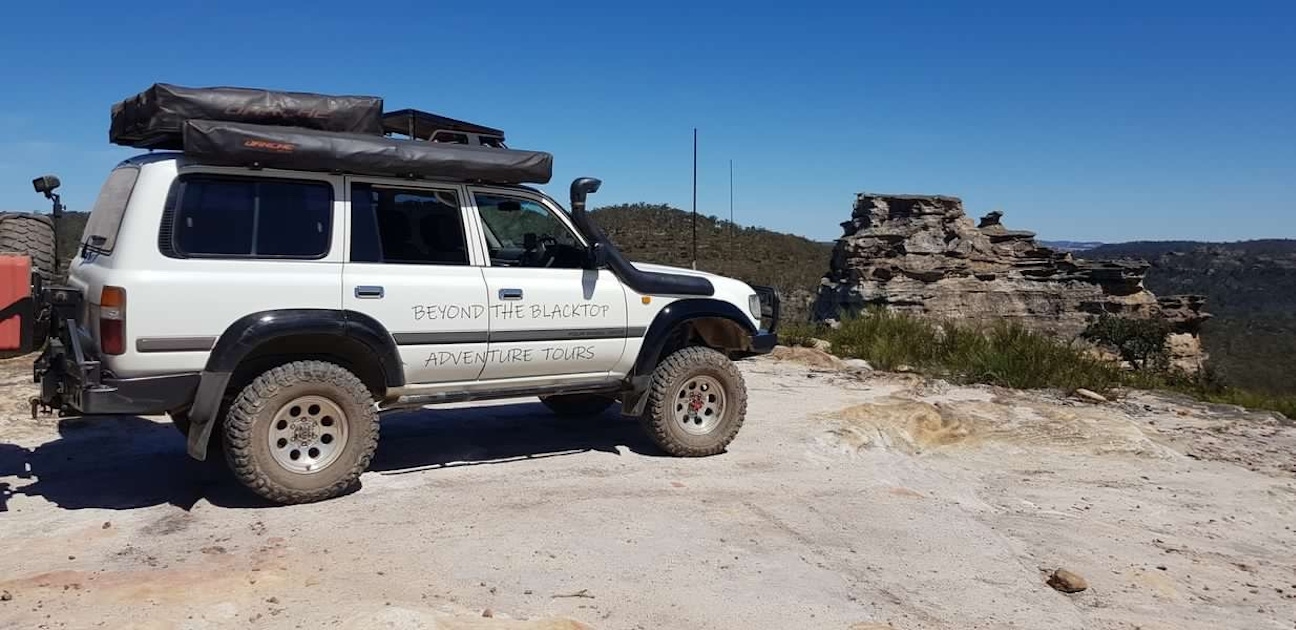
It is operated by Beyond The Blacktop Adventure Tours and begins at Katoomba Station. The product focuses on quieter viewpoints and a flexible itinerary rather than a fixed circuit of the most crowded platforms.
Lunch, guided touring, round-trip local transport and bottled water are included. The operator sources lunch from Blue Mountains cafés and includes a drink.
The activity is in English, requires a minimum of two participants and allows no more than four people in one booking. Children under eight are not allowed, and enclosed walking shoes are required.
Musement currently states that cancellation up to 24 hours before the start earns a 50% refund rather than a full refund.
The tour suits visitors staying in Katoomba who want a local guide to select the best scenery according to weather and current park access. It is not a Sydney hotel-pickup excursion.
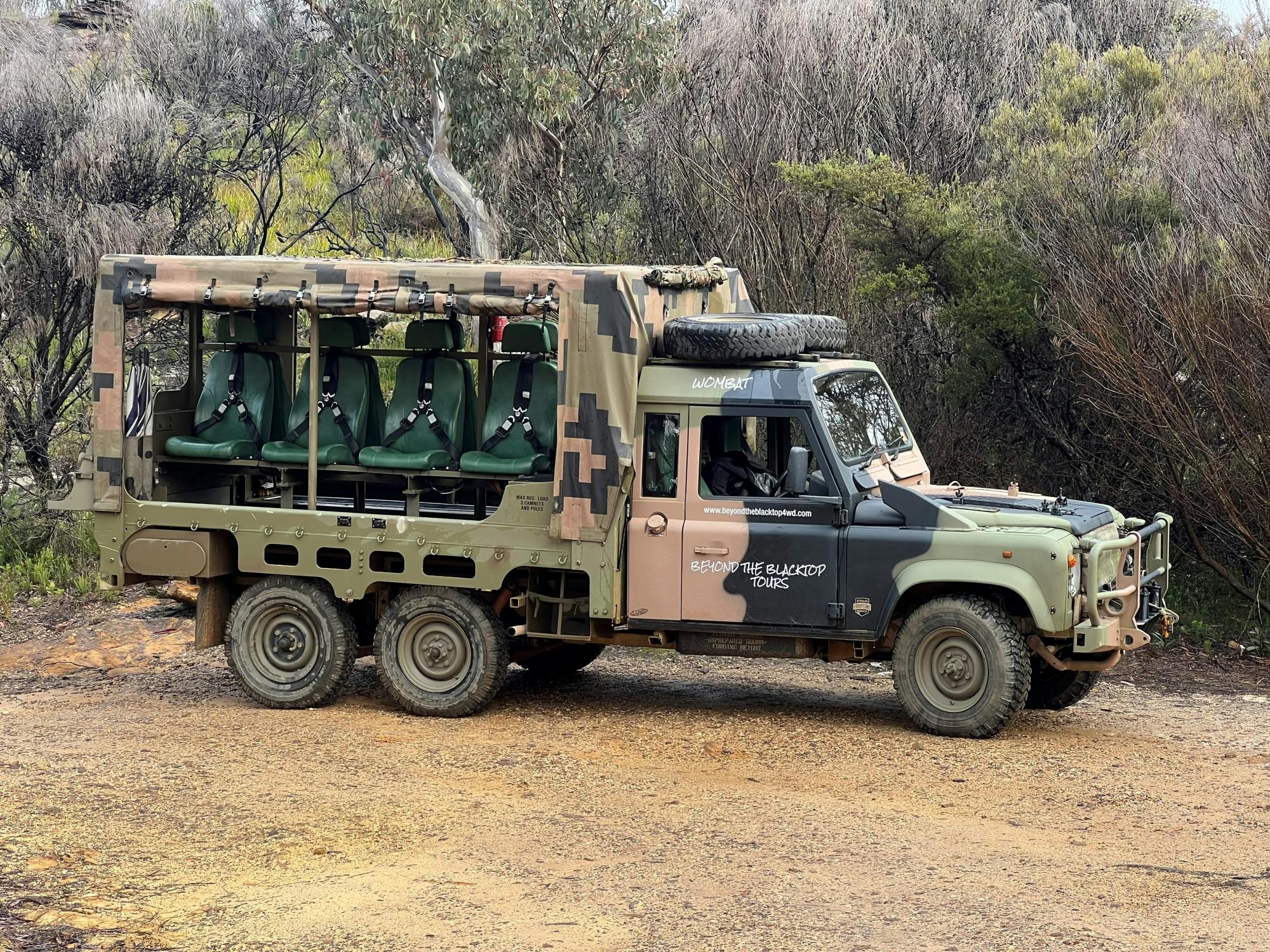
The three-hour army-truck experience uses an open-air ex-Australian Army Land Rover and begins near Echo Point in Katoomba.
The guide drives through the upper Blue Mountains and adds short walks to viewpoints. The vehicle is distinctive and exposed to the weather, giving passengers a closer sense of the forest, wind and temperature than an enclosed coach.
Despite its adventurous appearance, the operator describes the standard tour as an on-road sightseeing experience rather than extreme off-road driving.
Pickup and drop-off from designated local areas, a driver-guide and bottled water are included. The tour is not wheelchair accessible, children must be at least eight and bookings are limited to eight participants and two families.
Musement currently offers a 50% refund when the booking is cancelled up to 24 hours before departure.
The Megalong Valley lies below the sandstone escarpments west of Blackheath. Its open fields, farms and vineyards provide a marked contrast to the cliff-top towns and dense forest.
Musement’s four-hour experience visits Dryridge Estate and Megalong Creek Estate. Lunch, wine tasting, guided transport and visits to both wineries are included.
Participants can choose between a LandCruiser and army-truck vehicle during booking, subject to availability. The standard meeting point is Katoomba Station, with accommodation pickup potentially available from Wentworth Falls, Leura, Katoomba, Medlow Bath and Blackheath.
This is primarily a wine and food outing rather than a bushwalking tour, but the landscape is a major part of the appeal.
The public listing restricts participants to ages 18–60, requires at least two people and allows no more than eight per booking. The upper-age restriction is unusual and should be reconfirmed.
The Greater Blue Mountains Area was inscribed on the UNESCO World Heritage List in 2000.
It consists of approximately 1.03 million hectares of sandstone plateaux, escarpments and gorges dominated by temperate eucalypt forest. Eight protected areas form the World Heritage property.
The listing recognises the region’s exceptional representation of eucalypt evolution and diversification after Australia’s separation from Gondwana. More than 90 eucalypt taxa occur within the property.
The landscape also protects rare plants, including evolutionary relicts such as the Wollemi pine, together with a diverse range of birds, mammals, reptiles and invertebrates.
Most visitors experience only a small developed part of the wider World Heritage area. The valleys beyond the lookouts contain extensive wilderness that requires serious planning and navigation.
Three Sisters and Echo Point
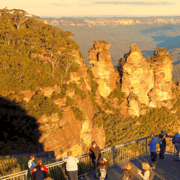
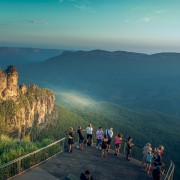
Echo Point is the best-known viewpoint in Katoomba. Its main platforms overlook the Three Sisters, Mount Solitary and the forested Jamison Valley.
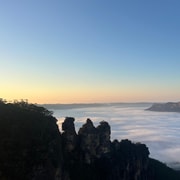
The Three Sisters are sandstone pillars separated from the cliff by erosion. They form part of a declared Aboriginal Place on Gundungurra and Darug Country.
The principal Echo Point platforms are easy to reach and suitable for visitors who cannot manage a long walk. The short Three Sisters walk provides changing views and reaches Oreades Lookout.
Continuing beyond the easier platforms involves steep stairs. Honeymoon Bridge, the side route towards the closest pillar, was closed for rockfall risk when checked in June 2026.
Sunrise and late afternoon can offer softer light and fewer tour groups, but fog can obscure the formation at any time.
Wentworth Falls
Wentworth Falls is one of the region’s most important waterfall and bushwalking areas. The water descends from the plateau into the Jamison Valley over multiple sandstone levels.
Visitors can choose between developed lookouts, short cliff-top paths and demanding routes descending below the escarpment.
The Grand Cliff Top Walk begins in Wentworth Falls and continues through Leura to Katoomba. Shorter local options include sections of the Overcliff-Undercliff track and views from the picnic-area precinct.
Water volume changes greatly. The falls can be powerful after rain and much lighter during dry periods.
Several Wentworth Falls tracks have experienced closures because of landslides, rockfall and boardwalk work. Always use the current NSW National Parks alert page rather than an old blog itinerary.
Leura, waterfalls and rainforest pockets
Leura combines a compact village centre with easy access to cliff walks, rainforest pockets and waterfall areas.
Popular natural stops include Leura Cascades, Gordon Falls lookout, Pool of Siloam and sections of the Prince Henry Cliff Walk and Grand Cliff Top Walk.
Pool of Siloam is a 1.6-kilometre return Grade 3 walk taking roughly 30 minutes to one hour. It descends through forest to a small waterfall and pool before climbing back to the reserve.
Gordon Falls lookout offers broad valley views, while the surrounding routes link towards Katoomba and Wentworth Falls.
Leura is useful for travellers who want to combine nature with cafés and shops, but village parking becomes busy on weekends.
Blackheath and the Grose Valley
Blackheath overlooks the Grose Wilderness, a deeper and often more dramatic landscape than the developed Jamison Valley viewpoints.
Govetts Leap is the most accessible major lookout, with views of cliffs, forest and the waterfall across the valley.
Evans Lookout is the starting point for the Grand Canyon Track, one of the region’s classic Grade 3–4 canyon walks. It involves steep stairs and can be slippery, so it should not be treated as a casual lookout extension.
Blackheath is also a base for routes towards Pulpit Rock, Perry’s Lookdown and more remote sections of the national park.
Current closures frequently affect the Blackheath area. Rockfall and road maintenance can close descent tracks and remote access roads for months.
Megalong Valley
The road into Megalong Valley descends from the plateau through forest before opening onto farms, vineyards and rural properties beneath high sandstone walls.
The valley is crossed by the historic Six Foot Track, which traditionally links Katoomba with the Jenolan area.
Visitors come for horse riding, vineyard meals, country scenery, short rural drives and accommodation in a quieter landscape.
Jenolan Caves and part of the Six Foot Track connection remained closed when checked in June 2026, so do not assume the complete traditional route is open.
Glenbrook and the lower mountains
Glenbrook provides the eastern gateway to Blue Mountains National Park and is closer to Sydney than Katoomba.
The area offers picnic sites, Aboriginal rock art, mountain biking, camping and natural swimming locations. Unlike the cliff-top upper mountains, its landscape includes open woodland, creek valleys and lower-elevation heat.
Swimming conditions can change after rain and during drought. Use only recognised locations, check current warnings and never jump into unfamiliar water.
Glenbrook can suit repeat visitors who want nature without travelling as far as Katoomba.
Choosing the right walk
Blue Mountains tracks range from paved lookout paths to remote Grade 5 wilderness routes. Distance alone does not indicate difficulty because short tracks can include hundreds of stairs.
Walk type
Typical experience
Who it suits
Developed lookout
Short, formed path with viewing platform
Most visitors and limited-mobility travellers
Grade 2 short walk
Formed track, modest gradients and limited obstacles
Families and casual walkers
Grade 3 walk
Stairs, uneven surfaces and some steep sections
Visitors with general fitness and walking experience
Grade 4 walk
Long or steep route with rough surfaces and route complexity
Fit, experienced walkers
Grade 5 or canyon route
Remote terrain, navigation and specialist skills
Highly experienced participants or guided groups
Check ascent as well as descent. A track that feels easy going down can become strenuous on the return climb.
Do not begin a valley walk late in the day. Sunset occurs earlier below cliffs, and mobile reception is unreliable.
Grand Cliff Top Walk
The Grand Cliff Top Walk links Wentworth Falls, Leura and Katoomba over approximately 19 kilometres.
NSW National Parks recommends completing it over two days: roughly 11 kilometres from Wentworth Falls to Gordon Falls, followed by approximately eight kilometres from Gordon Falls to Katoomba.
The overall walk is Grade 3 and passes lookouts, waterfalls, villages and sites of Aboriginal significance.
Short sections can be completed as day walks. Examples include the 11-kilometre Wentworth Falls to Leura section and the eight-kilometre Gordon Falls to Katoomba section.
Track closures can break the route or require detours. Check both NSW National Parks and Blue Mountains City Council alerts before setting out.
Waterfalls and water safety
The best-known waterfall areas include Wentworth Falls, Katoomba Falls, Leura Cascades, Gordon Falls and Govetts Leap.
Rain improves waterfall flow but also increases hazards. Wet sandstone, mud, damaged steps, falling branches and fast-moving creeks can make tracks unsafe.
Do not climb beyond barriers or step onto wet cliff edges for photographs. Water-polished rock can be far more slippery than it appears.
Natural pools are not supervised. Water depth, submerged objects, water quality and current strength can change after rain.
Use official swimming advice and avoid assuming that every photographed pool is safe or legally accessible.
Wildlife and plants
Commonly seen birds include sulphur-crested cockatoos, crimson rosellas, king parrots, yellow-tailed black cockatoos, lyrebirds and currawongs.
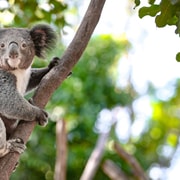
Wallabies, swamp wallabies, possums, echidnas and wombats live in the region, although many mammals are most active at dawn, dusk or night.
Reptiles, including snakes, become more active in warm weather. Give every snake space and do not attempt to move it.
The vegetation changes with elevation, soil and moisture. Exposed plateau areas support eucalypt forest and heath, while sheltered gullies contain tree ferns, coachwood and other rainforest plants.
Do not feed wildlife. Human food harms animals and can create aggressive behaviour around lookouts and picnic sites.
Aboriginal Country and respectful travel
The Greater Blue Mountains landscape lies within the Country of several Aboriginal peoples, including the Gundungurra, Dharug, Wiradjuri, Darkinjung, Wanaruah and Dharawal peoples.
The Three Sisters is a declared Aboriginal Place, and many other landscapes, tracks, shelters and water sources hold cultural meaning.
Tourism stories about Aboriginal places should be treated carefully. Popular versions repeated in visitor marketing are not always the only or most culturally authoritative accounts.
Stay on open tracks, do not touch rock art, do not remove objects and follow requests concerning photography and access.
Guided Aboriginal experiences can provide more direct cultural interpretation than general sightseeing commentary.
Best seasons and weather
Summer
Summer can be warm, but the mountains are often cooler than Sydney. Bushfire danger, storms and exposed walking conditions remain important considerations.
Autumn
Autumn usually brings comfortable walking temperatures and colourful gardens in the mountain villages.
Winter
Winter days can be crisp and clear, but wind chill is significant at exposed lookouts. Frost, occasional snow and icy roads are possible.
Spring
Spring brings wildflowers, variable temperatures and increasing daylight. Weekends can be busy.
Fog is possible in every season. A forecast showing clear weather in Sydney does not guarantee clear valley views in Katoomba.
Getting there from Sydney
Katoomba is roughly two hours from central Sydney by car in good conditions. Weekend traffic on the M4 and Great Western Highway can extend the journey.
Blue Mountains Line trains connect Sydney with Wentworth Falls, Leura, Katoomba, Medlow Bath and Blackheath.
Local buses connect Katoomba Station with Echo Point and Scenic World. Timetables can change during rail works and special events.
A guided local tour beginning in Katoomba can be combined with the train, but leave a generous margin before the meeting time.
Visitors staying overnight gain access to quieter early mornings, sunsets and walks that are difficult to fit into a Sydney day trip.
Accessibility
Accessibility varies greatly between sites and tours.
Echo Point’s principal platforms and several major lookouts have accessible paths and parking. Some sections of the Grand Cliff Top Walk and Three Sisters precinct can be used with assistance.
Natural bushwalks generally include stairs, roots, uneven sandstone and steep gradients.
The Musement army-truck tour explicitly states that it is not wheelchair accessible. The full-day tour also requires enclosed shoes and guided walking, so individual mobility needs should be discussed before booking.
Do not rely on the accessibility of one attraction to assess the complete tour. Vehicle boarding, toilets, walking surfaces and meal venues all matter.
Visiting with children
Families can enjoy Echo Point, short lookout walks, picnic areas and easy village-based nature stops.
Keep children within arm’s reach at cliff edges. Barriers are not present at every natural viewpoint.
Both current Beyond The Blacktop Musement nature tours exclude children under eight. Families with younger children should choose independent lookouts or another tour operator.
Bring warm layers, water, snacks and suitable shoes. A long day of driving and walking can be tiring for young children.
Check pram access before choosing a track. A path described as short may still contain steep stairs.
Bushwalking and cliff safety
Check the forecast and national-park alerts before leaving.
Tell someone the route and expected return time for independent walks.
Carry water, food, warm clothing and rain protection.
Use enclosed shoes with grip.
Stay behind barriers and away from unstable cliff edges.
Do not enter closed tracks or roads.
Turn back when weather, daylight or fitness makes continuing unsafe.
Do not depend on mobile coverage.
Carry an offline map for longer walks.
Call emergency services on 000 in a life-threatening emergency.
Cliff-top photographs are not worth leaving the marked area. Sandstone edges can crumble, and fog can hide drops.
Current alerts and closures
Blue Mountains National Park was open when checked on 23 June 2026, but many roads, fire trails and tracks were closed or partly closed because of upgrades, wet-weather damage, subsidence, rockfall and landslides.
Examples included:
Honeymoon Bridge closed because of rockfall hazards
Furber Steps and the complete Round Walk loop closed until 30 June 2026
Sections of National Pass, Wentworth Pass and Valley of the Waters closed
Fletchers Lookout and Princes Rock walking track temporarily closed until 30 June 2026
Lincoln’s Rock closed
Mount Hay Road and several associated tracks closed until 17 December 2026
Parts of the Blackheath descent network closed because of rockfall and landslide risk
Jenolan Caves Visitor Precinct closed until 31 December 2026
These dates can be extended or shortened. Do not reproduce an old itinerary without checking the official alert pages on the day.
What to wear and bring
Enclosed walking shoes with good grip
Layered clothing
Warm jacket outside summer
Waterproof jacket or compact umbrella
Hat and sunscreen
At least one bottle of water per person
Snacks
Personal medication
Camera or charged phone
Portable power bank
Offline map for independent walks
Small day pack
Mobile voucher saved offline for booked tours
Open-air vehicle tours require warmer clothing than a conventional coach. Secure hats, scarves and loose possessions.
How to choose a nature experience
Choose the full-day guided tour when:
You want a personalised day based in Katoomba.
Lunch and local transport are useful.
You prefer a guide to choose viewpoints around weather and closures.
Everyone is at least eight years old.
Choose the army-truck tour when:
You have only half a day.
The unusual open vehicle is part of the attraction.
You are comfortable with exposure to wind and cold.
You can manage short natural-surface walks.
Choose Megalong Valley when:
You prefer scenery, food and wine to bushwalking.
You are within the published age limits.
You want local accommodation pickup where available.
Choose independent travel when:
You want a specific long walk.
You need a fully flexible pace.
You are comfortable checking track alerts and arranging transport.
You need accessible routes selected individually.
Frequently asked questions
What does the Musement Blue Mountains nature page contain?
It currently features an eight-hour full-day guided tour with lunch and recommends other experiences including an army-truck tour and a Megalong Valley winery outing.
What is the best-known natural attraction?
The Three Sisters at Echo Point in Katoomba are the region’s most recognised landmark.
Is the Blue Mountains a UNESCO World Heritage Site?
Yes. The Greater Blue Mountains Area was inscribed in 2000 and covers approximately 1.03 million hectares.
How far are the Blue Mountains from Sydney?
Katoomba is approximately two hours from central Sydney by road or train, depending on traffic and the service.
Can the Blue Mountains be visited as a day trip?
Yes, but a day trip limits walking time. Staying overnight makes sunrise, sunset and longer trails easier.
Does Musement offer a tour from Sydney?
The nature experiences currently discussed on the category page are locally based in the Blue Mountains. Check each product’s meeting point rather than assuming Sydney pickup.
Is lunch included on the full-day tour?
Yes. Musement lists lunch with a drink, guided touring, transport and bottled water.
Does the army-truck tour go off-road?
No. The operator describes the standard three-hour experience as an on-road sightseeing tour with short walks.
Are young children allowed on the guided tours?
The current full-day and army-truck Musement listings do not allow children under eight.
Are the tours wheelchair accessible?
The army-truck tour is not wheelchair accessible. Contact the provider about individual requirements for any other product.
What is the easiest major viewpoint?
Echo Point’s principal viewing platforms are among the easiest major viewpoints to access.
What is the best area for waterfalls?
Wentworth Falls offers a strong combination of developed viewpoints, short walks and more demanding valley tracks.
How long is the Grand Cliff Top Walk?
The complete route is approximately 19 kilometres and is recommended as a two-day walk between Wentworth Falls and Katoomba.
Why do the mountains look blue?
Light scattering by moisture and fine airborne particles contributes to the haze, with volatile compounds from extensive eucalypt forests also associated with the effect.
When is the best time to visit?
Autumn and spring often provide comfortable walking temperatures, but every season has advantages. Weather can change quickly.
Can fog hide the Three Sisters?
Yes. Fog and low cloud can completely obscure the valley and rock formation.
Do I need to check track closures?
Yes. Closures caused by rockfall, landslides, maintenance and fire conditions are common and can change daily.
How much do Musement nature tours cost?
When checked on 23 June 2026, product pages showed the full-day tour from US$195, the army-truck tour from US$91 and the winery tour from US$131. Prices are dynamic.
What is the cancellation policy?
The three current Beyond The Blacktop listings state that cancellation up to 24 hours before departure earns a 50% refund. Check the exact terms before payment.
What should I bring?
Bring enclosed shoes, layers, rain protection, water, snacks, sun protection and the booking voucher saved offline.
Important: This Musement URL is a category page, not one tour. Prices, age restrictions, meeting points and cancellation terms differ between products. National-park access also changes frequently, so check both the selected booking and official NSW National Parks alerts before travelling.
Ready to plan Blue Mountains Nature Walks, Waterfalls & Guided Tours?
Check the supplier for current availability, pricing, inclusions and booking conditions.
From Sydney: Blue Mountains Sightseeing And Sunset Day Tour Australia Discover the Blue Mountains with a private, luxury 9-hour tour. Enjoy stunning landscapes, iconic lookouts, and a magical sunset. Perfect for small groups, traveling in style and comfort.
Blue Mountains: Overcliff-Undercliff Guided Hike Australia Embark on a guided hike of the Overcliff-Undercliff hike in the Blue Mountains. Admire the views of the Jamison Valley, explore the beauty & see waterfalls within a part of the Blue Mountains.
Sydney: Blue Mountains 3 Scenic Walks Ultimate Guided Tour Australia Explore the Blue Mountains beyond the crowds — no queues, no theme parks, just 3 guided scenic walks, 2 panoramic valley views, 2 waterfalls and 3 villages to explore, all completed in only one day!
Sydney: Blue Mountains, Scenic World, and Featherdale Tour Australia Discover the stunning Blue Mountains. Visit the Scenic World, see unique animals at Featherdale Wildlife Park, and enjoy a comfortable private tour with only your friends or family.
Sydney: Blue Mountains Small Group: Walks, Wildlife & Dinner Australia We depart later, enjoy walks and viewpoints. Lunch and dinner included. Max 11 guests. No theme parks. No 7am pickup. Spot wild kangaroos in late afternoon sun. Discover where Charles Darwin walked.
Sydney: Blue Mountains Into the Wild – Hiking & Scenic Tour Australia Journey Into the Wild on a full-day Blue Mountains tour from Sydney. Hike scenic trails, swim in natural pools when weather allows, and connect deeply with nature – no zoos, just pure wilderness.
Blue Mountains: Private Luxury Tour Australia Explore the stunning Blue Mountains on a customizable private tour. With expert guidance and a flexible itinerary, enjoy serene landscapes and unique experiences away from the crowds!