Jeju Island Eastern UNESCO Tour with Cave and Haenyeo
This east Jeju day tour blends lava-tube geology, living folk heritage, the story of the haenyeo women divers, and some of the island’s most photogenic coastlines.
If you want a Jeju day tour that gives you more than just pretty viewpoints, this eastern UNESCO route is one of the stronger options. It combines volcanic landscape, local culture, coastal scenery, and Jeju’s best-known intangible heritage in one well-rounded day. Instead of focusing on only one landmark, it moves through the elements that make Jeju feel distinct: lava caves, traditional villages, women divers, dramatic sea cliffs, and beaches with that unmistakable island colour.
What makes this itinerary especially appealing is the balance. It does not feel like a tour built only for photographs, and it does not lean so hard into museums that the day loses its sense of place. You get a good mix of natural scenery and cultural context, which makes the route feel fuller and more memorable than a simple scenic bus ride.
Quick overview
Tour name
Jeju: Eastern UNESCO Tour with Cave & Haenyeo
Location
Jeju Island, South Korea
Duration
Approximately 10 hours
Tour style
Join-in day tour
Language
English
Pickup options
Lotte Duty Free Shop, Jeju Airport Gate 5, or Ocean Suites Hotel
Main highlights
Micheongul Cave, Seongeup Folk Village, Jeju Haenyeo Museum, Seopjikoji, and Hamdeok Beach
Seasonal note
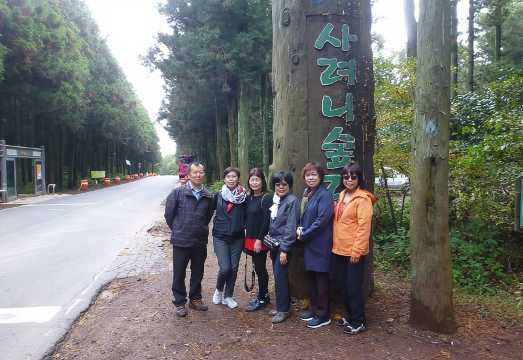
Hamdeok Beach may be replaced with Saryeoni Forest Path in winter
Why this tour stands out
Jeju has many east-coast tours, but this one works well because it gives the day a clear identity. It is not only about UNESCO branding. It is about understanding why Jeju is so different from mainland Korea. The lava-tube stop explains the island’s volcanic story. The haenyeo stop introduces one of Jeju’s most iconic cultural traditions. The folk village adds a historical layer, while the coastal stops deliver the scenery most visitors come for.
That variety is what makes the route feel satisfying. By the end of the day, you have seen more than just viewpoints. You have seen geology, community life, local identity, and the kind of coastline that gives Jeju its reputation.
What to expect at Micheongul Cave
Micheongul Cave is the cave currently used on this route while Manjanggul remains closed. It sits inside Ilchul Land and offers a more accessible lava-tunnel experience without losing the volcanic atmosphere that makes Jeju so distinctive. If you have never visited a lava cave before, this stop gives the day a strong opening because it immediately grounds the island in geology rather than postcard scenery alone.
The cave also helps explain why Jeju is so often discussed in UNESCO terms. The island’s lava tubes are not just scenic curiosities. They are a major part of Jeju’s global natural significance.
Why Seongeup Folk Village matters
Seongeup Folk Village gives the day a completely different texture. Rather than a reconstructed theme setting, it is known as a living village where residents still remain part of the place. That gives it more authenticity and warmth than a standard open-air museum feel.
It is also one of the best places to understand older Jeju life. Traditional homes, village layout, and local guiding all help make this stop feel grounded in daily history rather than just old architecture on display.
The importance of the haenyeo story
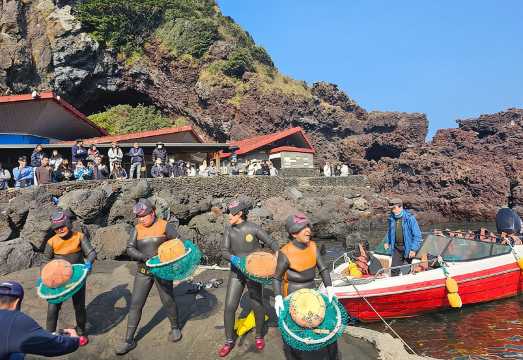
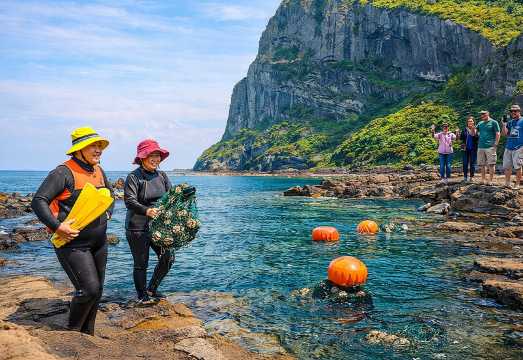
The Jeju Haenyeo Museum is one of the most distinctive cultural stops on the island because the haenyeo are not just an old tradition. They remain one of the strongest symbols of Jeju identity. These women divers became known for free-diving without oxygen tanks to gather seafood, and their culture has been recognized by UNESCO as Intangible Cultural Heritage.
That makes this stop more meaningful than a standard local museum visit. It adds human depth to the day and helps explain why Jeju’s heritage is not only volcanic and scenic, but also social and deeply shaped by women’s labor and resilience.
What Seopjikoji adds to the route
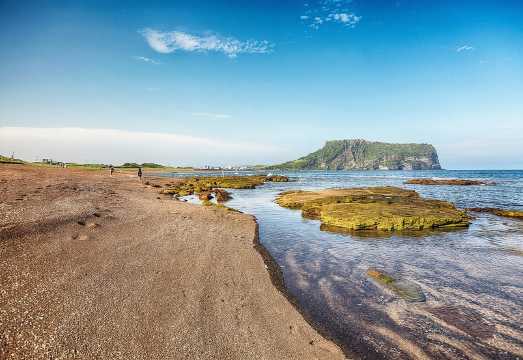
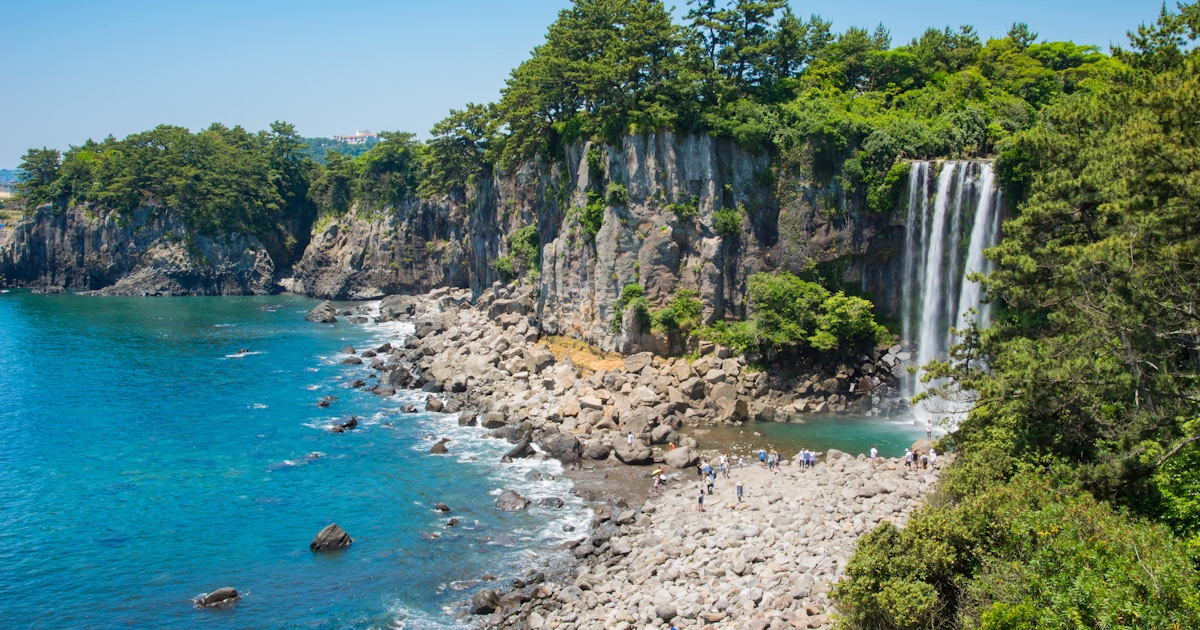
After the cave and cultural stops, Seopjikoji shifts the day into full scenic mode. This cape on Jeju’s eastern coast is known for open sea views, cliffs, and its striking visual relationship with Seongsan Ilchulbong in the distance. It is one of those places where the wind, the horizon, and the volcanic coastline all do the work.
This stop is especially effective because it feels spacious. After the more enclosed and interpretive parts of the tour, Seopjikoji gives the day a strong sense of release.
Why Hamdeok Beach is such a popular finish
Hamdeok Beach is one of Jeju’s most photographed beaches for good reason. The water is bright, the sand is pale, and the whole setting has a cleaner, more tropical look than many visitors expect from Korea. It is an easy place to end the day because it feels light, open, and visually rewarding.
Even if the weather is not perfect beach weather, Hamdeok still works as a scenic stop. In good conditions, it is one of those places that makes Jeju feel very different from the rest of the country.
Food and practical pacing
The tour includes a lunch stop at a local restaurant, but the current listing indicates the meal cost itself is not included. That is worth knowing in advance, because it means the day is structured around lunch without making it a prepaid dining package.
In practice, that is not a drawback. It simply means you should carry a little cash or card budget for the meal and treat lunch as part of the broader day rather than a bundled inclusion.
Who this tour suits best
First-time Jeju visitors wanting a strong introduction to the east side of the island
Travellers interested in both nature and culture
People who want a full day out without arranging a car
Visitors curious about UNESCO-linked Jeju experiences
Couples, solo travellers, and small groups looking for an easy join-in route
What to wear and bring
Comfortable walking shoes
A light jacket or layer for coastal wind
Water and small personal essentials
Sun protection in brighter months
Spending money for lunch and any extras
This is not a difficult tour, but it does cover a lot of ground over the day, so practical clothing makes a noticeable difference.
Is it worth it?
Yes, especially if you want one east Jeju tour that feels more complete than a simple scenic circuit. The combination of cave, folk village, haenyeo culture, and coastline gives the day a clearer sense of Jeju’s identity than a route built only around viewpoints.
It is particularly worthwhile for travellers who like understanding a destination, not just photographing it.
Frequently asked questions
How long is the Jeju Eastern UNESCO Tour with Cave and Haenyeo?
The current listing shows it as a full-day tour of around 10 hours.
Is Manjanggul included?
At the moment, the route uses Micheongul Cave at Ilchul Land while Manjanggul is closed. If Manjanggul reopens, the cave stop may change.
Is lunch included in the price?
The itinerary includes a lunch stop, but the listing says lunch itself is not included.
What are the main cultural stops?
The main cultural stops are Seongeup Folk Village and the Jeju Haenyeo Museum.
Why is the haenyeo stop important?
The haenyeo women divers are one of Jeju’s defining cultural traditions and are recognized by UNESCO as Intangible Cultural Heritage.
What happens in winter?
In winter, Hamdeok Beach may be replaced with Saryeoni Forest Path depending on the season and operating conditions.
Is this a good tour for first-time visitors?
Yes. It gives a broad and well-balanced look at eastern Jeju without needing a self-drive plan.
What makes this route different from a basic scenic tour?
It combines natural scenery with Jeju’s deeper cultural identity, especially through the cave stop and the haenyeo heritage component.
Final thoughts
This tour works because it shows Jeju as more than a pretty island. You get the volcanic story, the living village story, the women divers’ story, and then the coastline that ties it all together. That makes the day feel more layered than many standard island routes.
If you want one east Jeju tour that balances scenery with genuine local character, this is a very solid option.
Jeju island Jumbo taxi Private tour with Mr.Hong East of jeju – Guided Tour jeju island Jumbo taxi Private tour with Mr.Hong East of jeju adds structure, local context and purposeful sightseeing to the itinerary. jeju island Jumbo taxi Private tour with Mr.Hong East of jeju: experience overview from Trip.com in Seogwipo. Stay connected with family and friends. Available from trip.com. This makes the experience a useful option when planning time in > Seogwipo local experienceSearch results. The exact duration can depend on the selected date, option or operating schedule. Routes, start times, inclusions and meeting arrangements may vary, so the current booking page should be treated as the final source of operational information.…
Jeju Island Photographer Experience: Wedding, Travel & One-on-One – Travel Experience South Korea Jeju Island Photographer Experience: Wedding, Travel & One-on-One Photo Sessions Jeju’s volcanic landscapes, coastline and open skies make it one of South Korea’s most photogenic destinations for travel and couple sessions. For travellers who want more than ordinary holiday snapshots, this Jeju photography experience offers a more polished and personal way to remember time on the island. Rather than being a standard attraction ticket, it is built around a tailored photo session with a Jeju Island photographer, with a clear focus on one-on-one service, multilingual support and a more customised visual result. That makes it especially appealing for couples, honeymooners,…
Jeju Island 2-Day Private Tour with Experienced Driver – Guided Sightseeing Experience South Korea This 2-day Jeju private tour is built for travelers who want the freedom of a custom schedule without having to self-drive around the island. If you want to explore Jeju without turning the trip into a navigation exercise, this private two-day driver tour is a very practical option. Rather than locking you into a rigid one-day sightseeing loop, it gives you more time, more flexibility and a driver-led format that can be shaped around your own priorities. The biggest selling point here is not one single attraction. It is the freedom. The product is clearly positioned as a “free schedule”…
Jeju Island Private Taxi Tour: UNESCO Day Tour Guide – Guided Sightseeing Experience South Korea Seongsan Ilchulbong is one of Jeju’s most famous UNESCO-listed volcanic landscapes. Image: Asaf Zebulon, Wikimedia Commons, CC BY-SA 3.0. If you want to see Jeju Island without being locked into a large bus tour, the Jeju Island Private Taxi Tour: UNESCO Day Tour is a practical and comfortable option. Jeju is bigger than many first-time visitors expect, and its best sights are spread across coastlines, forests, volcanic cones, folk villages and beaches. Having a private taxi for the day can make the island feel much easier to explore. This Trip.com experience is built around a private taxi-style sightseeing day, with…
Jeju island Eastern UNESCO site Full-Day Guided Tour – Guided Sightseeing Experience Jeju island Eastern UNESCO site Full Day Guided Tour adds structure, local context and purposeful sightseeing to the itinerary. Jeju island Eastern UNESCO site Full Day Guided Tour: experience overview from Trip.com in Seogwipo. Stay connected with family and friends. Available from trip.com. This makes the experience a useful option when planning time in > Seogwipo local experienceSearch results. The listing describes this as a full day experience. Routes, start times, inclusions and meeting arrangements may vary, so the current booking page should be treated as the final source of operational information. At a glance Experience type: Guided sightseeing experience…
Private Half-Day South and West Tour in Jeju Island – Guided Sightseeing Experience Private Half Day South and West Tour in Jeju Island adds structure, local context and purposeful sightseeing to the itinerary. Private Half Day South and West Tour in Jeju Island: experience overview from Trip.com in Seogwipo. Stay connected with family and friends. Available from trip.com. This makes the experience a useful option when planning time in > Seogwipo local experienceSearch results. The listing describes this as a half day experience. Routes, start times, inclusions and meeting arrangements may vary, so the current booking page should be treated as the final source of operational information. At a glance Experience type: Guided…
Quick take: Trip.com helps you compare prices across accommodations. Use it to shortlist hotels, then click through to confirm the final price, room type, and inclusions on the booking site.
Jeju Island; Full-Day Authentic Tour South Korea – Guided Sightseeing Experience South Korea This full-day Jeju Island tour is built for travelers who want a broad west-and-south island sampler with volcanic scenery, waterfalls, coastal cliffs, tea fields and a relaxed café finish. If you want a Jeju day trip that feels more varied than a single UNESCO stop or a simple coast-only drive, this west-and-south route is a very strong option. Rather than focusing on just one side of the island, it combines mountain scenery, volcanic coastline, waterfall landscapes, green tea fields and a modern oceanfront café district into one well-paced day. That variety is exactly what makes the itinerary work. One moment…
Jeju island Southern UNESCO Day Tour With Hallasan MT – Guided Sightseeing Tour Jeju island Southern UNESCO Day Tour With Hallasan MT adds structure, local context and purposeful sightseeing to the itinerary. Jeju island Southern UNESCO Day Tour With Hallasan MT: experience overview from Trip.com in Seogwipo. Stay connected with family and friends. Available from trip.com. This makes the experience a useful option when planning time in > Seogwipo local experienceSearch results. The exact duration can depend on the selected date, option or operating schedule. Routes, start times, inclusions and meeting arrangements may vary, so the current booking page should be treated as the final source of operational information. At a glance Experience…
Jeju Island Private Full-Day Custom Tour Private Day tour East & south & west of All area in jeju island adds structure, local context and purposeful sightseeing to the itinerary. Private Day tour East & south & west of All area in jeju island: experience overview from Trip.com in Seogwipo. Stay connected with family and friends. Available from trip.com. This makes the experience a useful option when planning time in > Seogwipo local experienceSearch results. The exact duration can depend on the selected date, option or operating schedule. Routes, start times, inclusions and meeting arrangements may vary, so the current booking page should be treated as…
Jeju Island Visitor Guide: Attractions, Tours & Activities Visiting Jeju Island: Things to Do and Practical Travel Advice Jeju Island is best suited to hikers, road-trippers, couples and nature-focused visitors. Jeju is a volcanic island of crater landscapes, waterfalls, lava formations, coastal roads and distinctive local culture. The most satisfying visit combines headline sights with enough time to notice local neighbourhoods, landscapes and everyday culture rather than treating the destination as a checklist. Table of contents Why visit Jeju Island Top things to do Planning your visit Tours and tickets Frequently asked questions Why Visit Jeju Island? Jeju is a volcanic island of crater landscapes, waterfalls, lava formations,…
Quick take: Trip.com helps you compare prices across accommodations. Use it to shortlist hotels, then click through to confirm the final price, room type, and inclusions on the booking site.