Home » History & Architecture » Diriyah UNESCO Heritage Tour from Riyadh – History & Heritage Experience
Diriyah UNESCO Heritage Tour from Riyadh – History & Heritage Experience
$53.00
Diriyah UNESCO Heritage Tour from Riyadh At-Turaif is the historic heart of Diriyah and one of the most important heritage sites in Saudi Arabia. Check current availability, inclusions and booking details before you go.
At-Turaif is the historic heart of Diriyah and one of the most important heritage sites in Saudi Arabia.
This half-day Diriyah tour from Riyadh introduces visitors to the historic centre associated with the First Saudi State and the origins of the modern Saudi kingdom. Musement lists the experience as lasting up to four hours, with pickup from a Riyadh hotel and a licensed English- or Arabic-speaking driver-guide.
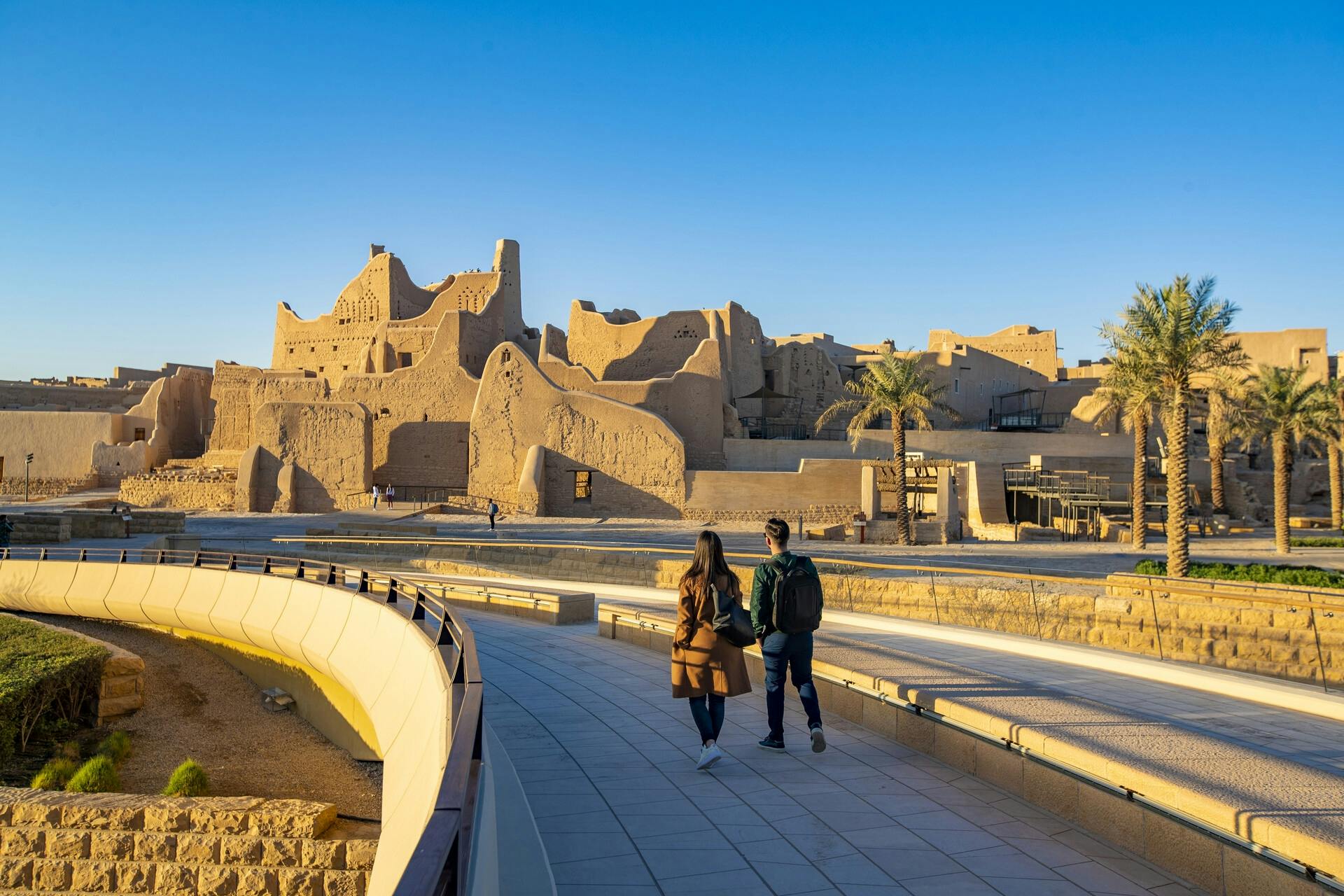
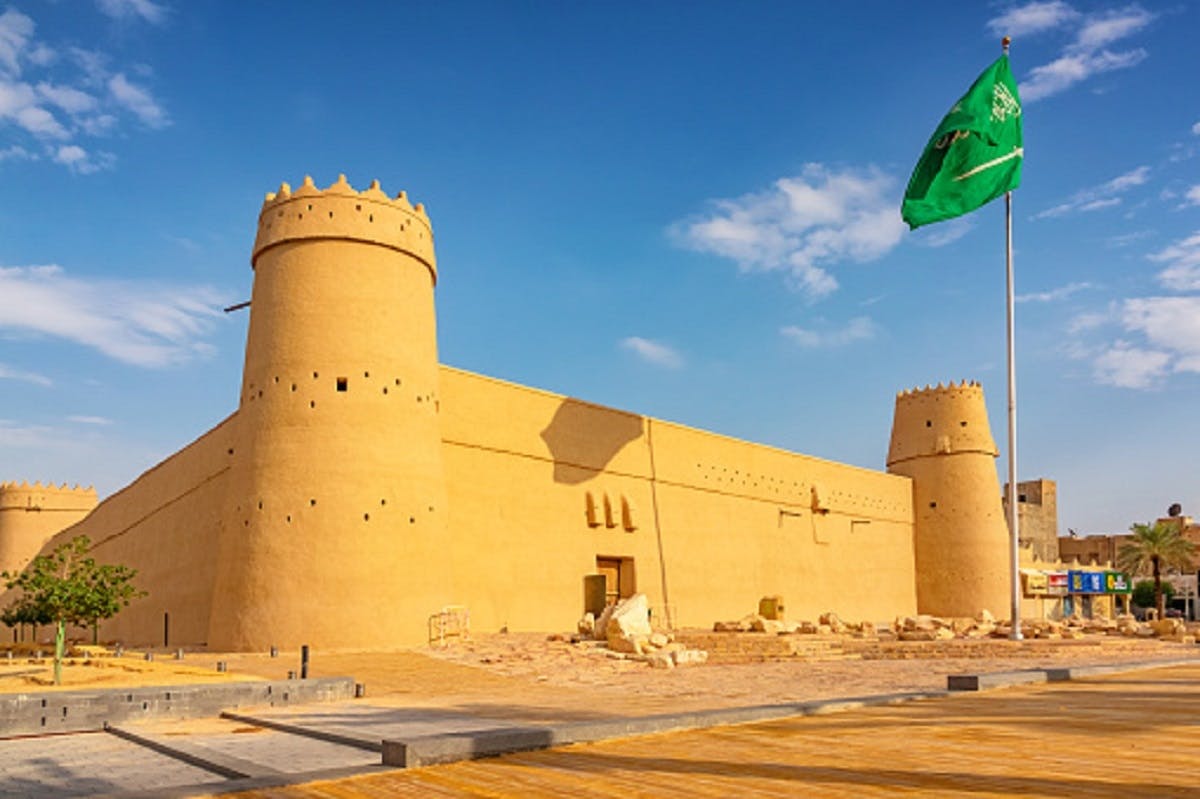
The main focus is Diriyah’s UNESCO-listed At-Turaif district, a fortified mud-brick settlement overlooking Wadi Hanifah. The tour description highlights the city walls, traditional Najdi architecture and the site’s significance as the birthplace of the first Saudi kingdom.
The public Musement listing does not explicitly name an At-Turaif access pass among the inclusions. Official Diriyah guidance states that an access pass is required to enter At-Turaif and Bujairi Terrace, so travellers should confirm before booking whether the tour provider arranges admission or whether a separate pass is needed.
Tour overview
The Musement product is titled Diriyah UNESCO Heritage Tour from Riyadh. It is a compact cultural excursion intended for travellers who want to visit Diriyah without arranging transport independently.
The journey from Riyadh to Diriyah is described as taking around 30 minutes. During the drive, the guide can point out the rapid development of the Saudi capital before the landscape changes towards Wadi Hanifah and the historic district.
Musement lists the complete experience as lasting up to four hours. This includes hotel pickup, road travel, the site visit and return transport. Pickup begins 30 to 60 minutes before the advertised departure time.
The product is available with a live driver-guide in English or Arabic. The guide is also the driver, so this should be understood as a driver-guided tour rather than a separate driver and specialist site guide.
The public page does not provide a detailed stop-by-stop itinerary, a guaranteed length of time inside At-Turaif or a list of individual buildings entered. The exact route may depend on access arrangements and the operating conditions on the day.
Quick facts
Experience
Diriyah UNESCO heritage tour from Riyadh
Destination
Diriyah and the At-Turaif historic district, northwest of Riyadh
Duration
Up to 4 hours
Travel time
Approximately 30 minutes from Riyadh according to the tour description
Languages
English or Arabic
Guide format
Licensed driver-guide
Pickup
Pickup from a Riyadh hotel
Pickup window
30 to 60 minutes before the activity begins
Main advertised highlight
At-Turaif, a UNESCO World Heritage Site and historic centre of the First Saudi State
Architecture
Najdi mud-brick walls, palaces and urban remains
Identification
Passport required and checked on site according to Musement
Access pass
Not explicitly listed among the Musement inclusions; confirm before booking
Food and drinks
Not listed as included
Voucher
Mobile voucher accepted
Confirmation
Instant confirmation
Provider
Gray Line
Starting price shown
From US$53.00 when checked on 23 June 2026
Cancellation policy
100% refund when cancelled up to 24 hours before the experience begins
Booking fee
No additional booking fee shown
Why Diriyah is historically important
Diriyah stands northwest of central Riyadh on the banks of Wadi Hanifah. Settlement in the area developed around the oasis, where access to water and fertile land supported agriculture and urban life.
The historic At-Turaif district was founded in the 15th century and later became the seat of the Emirate of Diriyah, commonly known as the First Saudi State, which existed from 1727 to 1818.
Under Imam Muhammad bin Saud, Diriyah grew into a centre of political power. Its alliance with religious scholar Muhammad ibn Abd al-Wahhab also gave the city major religious influence across the Arabian Peninsula during the 18th century.
The First Saudi State expanded from Diriyah before being defeated by an Ottoman-Egyptian campaign in 1818. At-Turaif was heavily damaged, and political leadership later moved away from the site.
Diriyah nevertheless remained central to Saudi historical memory. It is widely regarded as the birthplace of the Saudi state and the ancestral home of the Al Saud family.
UNESCO inscribed At-Turaif on the World Heritage List in 2010 because of its historical role, its fortified oasis settlement and its exceptional Najdi architectural tradition.
At-Turaif UNESCO World Heritage Site
At-Turaif occupies elevated ground above Wadi Hanifah. Its surviving walls, palaces, mosques, lanes and defensive features form a large urban ensemble built mainly from earth and mud brick.
UNESCO describes the district as the first capital of the Saudi Dynasty and an outstanding example of traditional settlement in the desert environment of central Arabia.
The site combines preserved ruins with carefully restored sections, visitor pathways and interpretation galleries. Some buildings remain deliberately ruinous because their historic fabric is part of the site’s authenticity.
Official Diriyah material describes At-Turaif as containing four museums and multiple interpretive experiences. However, the Musement product does not guarantee entry to every museum or gallery during this four-hour excursion.
Visitors should follow the driver-guide and site staff closely because access routes, museum openings and event arrangements can change.
Najdi mud-brick architecture
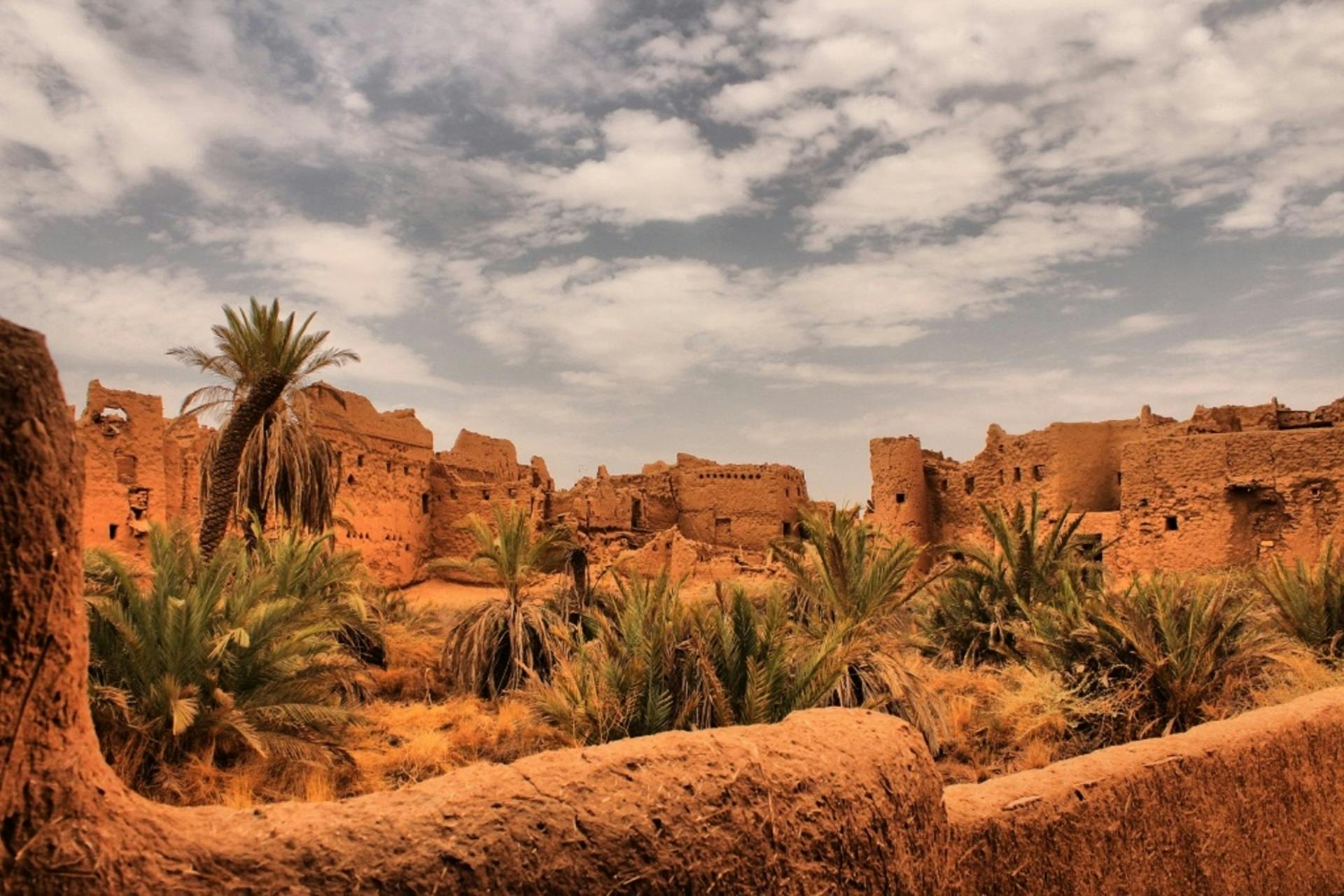
Najdi architecture developed in the central Arabian Peninsula and is adapted to hot, dry conditions. Thick earthen walls help regulate internal temperature, while limited external openings reduce heat and glare.
Buildings were commonly constructed from adobe or mud brick, with timber and palm materials used for roofs and internal structures. Walls were often plastered with earth and repaired regularly.
At-Turaif’s palaces and defensive structures demonstrate that mud-brick construction was not limited to simple houses. It could be used for large, multi-level government and residential complexes.
Decorative elements often include triangular openings, geometric patterns, parapets and carefully shaped doorways. These features add visual character while serving ventilation, drainage or defensive purposes.
Musement specifically highlights the mud-brick city walls running along the edge of the wadi. Their scale is one of the clearest indicators of Diriyah’s former political importance.
What to expect on the tour
The excursion begins with collection from a Riyadh hotel. Because pickup starts 30 to 60 minutes before the published start time, the total time away from the hotel may exceed the listed four-hour activity duration.
The drive towards Diriyah gives travellers a view of Riyadh’s modern development before reaching the historic landscape of Wadi Hanifah.
At Diriyah, the experience focuses on the UNESCO site, its architecture and its role in Saudi history. The driver-guide provides commentary in the selected language.
The Musement description does not state whether the vehicle only stops at external viewpoints or whether the itinerary includes a complete walk through the ticketed At-Turaif precinct. This is an important detail to confirm before payment.
If entry is included, expect a walking route through restored pathways, courtyards and museum spaces. If entry is not included, the visit may concentrate on exterior views and general orientation.
The tour is short compared with the two to three hours that official Diriyah guidance suggests for independent exploration of At-Turaif. Travellers should expect an introduction rather than a comprehensive study of every gallery and palace.
Salwa Palace and other historic structures
Salwa Palace is the largest and most important palace complex at At-Turaif. It served as a centre of government and residence for the rulers of the First Saudi State.
The palace consists of several connected units developed over time. Its high walls, stairways, courtyards and multiple levels dominate views of the district.
Other notable structures within At-Turaif include the Imam Muhammad bin Saud Mosque, Saad bin Saud Palace, guest facilities, bath-house remains and defensive towers.
Official interpretation also covers subjects such as military history, Arabian horses, traditional daily life and the development of the Saudi state.
The public Musement listing does not name Salwa Palace or promise entry to any individual building. These landmarks provide useful context for the visit but should not be treated as guaranteed interior stops.
Bujairi Terrace
Bujairi Terrace is a modern dining and leisure precinct opposite At-Turaif. Its terraces provide views across the wadi towards the illuminated mud-brick district.
The area contains restaurants and cafés serving Saudi and international food. It can be a convenient place to eat before or after an independent Diriyah visit.
Bujairi Terrace is not mentioned among the inclusions of this Musement tour. The short duration may not allow time for a meal there unless the operator specifically adds a stop.
Official Diriyah guidance states that access passes are required for both Bujairi Terrace and At-Turaif. Restaurant bookings may generate an access pass, while access-only passes can also be offered.
Opening hours and ticket arrangements change seasonally and during events, so official Diriyah information should be checked close to the travel date.
What is included and what to confirm
Included according to Musement
Pickup from a Riyadh hotel
Licensed driver-guide
English- or Arabic-language commentary
Return transport
Mobile voucher acceptance
Instant confirmation
Not explicitly listed as included
At-Turaif or Diriyah access pass
Separate specialist museum guide
Food
Drinks
Restaurant reservations
Personal purchases
Optional gratuities
Questions to ask before booking
Does the price include entry to the ticketed At-Turaif precinct?
Which buildings or museums are included?
Is Bujairi Terrace part of the itinerary?
How much walking is involved?
Is pickup available from every Riyadh district?
Is the selected departure conducted entirely in English or Arabic?
Because the official Diriyah site states that an access pass is required, confirmation of ticket arrangements is particularly important.
Hotel pickup and timing
Musement states that pickup is available from hotels in Riyadh. Travellers must provide a phone number during checkout so the operator can organise collection.
Pickup begins 30 to 60 minutes before the activity’s stated departure time. Be ready in the hotel lobby or at the instructed exterior location before the beginning of this window.
Large hotels may have several entrances, so check whether the driver will use the lobby, main road, parking area or a dedicated tour-bus point.
Private apartments and properties in distant parts of Riyadh may require an alternative meeting arrangement. Confirm the exact pickup point before the day of travel.
Riyadh traffic can be heavy, especially during afternoon and evening periods. Travel time may exceed the advertised 30 minutes.
Passport and identification
Musement states that a passport is required and will be checked on site. Every traveller should carry the original passport rather than relying only on a photograph or photocopy.
The booking name should match the passport. Check spelling carefully when entering participant details.
Residents may wish to confirm whether a Saudi residency card is accepted instead, but international visitors should follow the published instruction and carry a passport.
Keep identification secure during the walking portion of the visit. A small zipped bag is preferable to a loose pocket.
Dress and cultural etiquette
Visitors should dress modestly in keeping with Saudi cultural expectations and the official At-Turaif code of conduct.
Clothing should cover the shoulders, upper arms and legs. Loose, lightweight clothing is practical in hot weather and respectful in public heritage areas.
Women are not generally required to wear an abaya as a tourist, but clothing should remain modest and non-transparent. Men should avoid sleeveless tops and very short shorts.
Additional care is required when entering historic mosque areas. Official guidance asks visitors to ensure appropriate covering of shoulders, arms and legs and to keep noise to a minimum.
Do not enter restricted areas, touch fragile walls or climb on archaeological remains. Earth buildings can be damaged easily.
Photography rules
Official Diriyah guidance allows personal photography and recording for social media, provided it is for non-commercial use.
Commercial photography and video production require prior permission. This includes professional shoots, promotional content, business projects and some forms of monetised production.
Follow any signs restricting photography inside galleries or mosque areas. Avoid photographing people at close range without permission.
Tripods, large lighting equipment and drones may be restricted. A mobile phone or compact camera is the most practical option for a short guided tour.
Late-afternoon and evening light can enhance the warm colours of the mud-brick walls, but the actual tour start time is selected during booking.
Walking and accessibility
At-Turaif contains restored visitor routes, ramps and accessible pathways, but the historic site also has slopes, changes in level and uneven surfaces.
Official guidance states that wheelchairs and golf carts may be available subject to availability. A limited number of wheelchairs can be requested in advance.
The Musement listing does not confirm a wheelchair-accessible tour vehicle or describe the amount of walking. Contact the provider before booking when a traveller has reduced mobility.
Older visitors should wear supportive footwear and consider the heat, distances and repeated vehicle boarding.
The presence of accessible paths does not mean every historic interior can be entered without steps.
Weather and the best time of day
Riyadh has a hot desert climate. Summer daytime temperatures can be extremely high, making evening visits more comfortable.
Winter and the cooler months generally provide better conditions for walking, although evenings can feel surprisingly cool.
At-Turaif is visually impressive after sunset when walls and pathways are illuminated. Official opening schedules often favour late-afternoon and evening visiting, but published hours can change.
Carry water and sun protection for daytime departures. During cooler evening tours, a light outer layer may be useful.
Dust, wind or rare heavy rain can affect outdoor routes. The operator may adjust the visit when conditions require it.
Ramadan timing changes
Musement specifically warns that departure times may change during the holy month of Ramadan.
Daytime activity patterns, prayer times, sunset meals and attraction hours can all affect the schedule. Evening departures may be later than usual.
Visitors should avoid eating, drinking or smoking openly in public during fasting hours and follow current local guidance.
Restaurants may operate on altered hours. Do not assume that food will be available during the tour, especially before sunset.
Check the final pickup message carefully because the time shown during the initial booking may be adjusted.
What to wear and bring
Original passport
Mobile voucher saved offline
Modest clothing covering shoulders, arms and legs
Comfortable closed walking shoes
A bottle of water
Sunscreen and sunglasses for daytime departures
A hat that can be removed in mosque areas
A light layer for cool winter evenings
A charged phone or camera
A portable power bank
Personal medication
A small secure bag
Money or a payment card for any access pass, drinks or purchases not included
Avoid heavy luggage and large backpacks. They are unnecessary for a short excursion and may be inconvenient at security or on narrow pathways.
Who this tour suits
First-time visitors to Riyadh
Travellers interested in Saudi history and architecture
Visitors who prefer hotel pickup to arranging taxis independently
People with limited time who want a half-day heritage experience
Solo travellers, couples and small groups
Photographers interested in Najdi mud-brick architecture
The tour may be less suitable for travellers who want several hours inside every At-Turaif museum or a long evening meal at Bujairi Terrace.
It may also disappoint visitors expecting a large conventional museum with air-conditioned galleries throughout. Much of At-Turaif is an open-air historic district.
Booking and planning tips
Confirm that an At-Turaif access pass is included in the tour price.
Ask whether the visit enters the UNESCO precinct or only views it from outside.
Select the preferred English or Arabic departure carefully.
Provide a reachable phone number for pickup coordination.
Be ready 60 minutes before the scheduled activity time.
Carry the original passport stated in the booking instructions.
Dress modestly and wear comfortable shoes.
Bring water because food and drinks are not listed as included.
Check for Ramadan or seasonal timing changes.
Do not schedule a tight airport transfer immediately after the expected return.
Contact the operator before booking about wheelchair access or limited mobility.
Keep photography for personal use unless commercial permission has been arranged.
Do not assume that Bujairi Terrace or a restaurant stop is included.
Cancel at least 24 hours in advance to qualify for the stated full refund.
Frequently asked questions
How long is the Diriyah tour from Riyadh?
Musement lists the experience as lasting up to four hours.
How far is Diriyah from Riyadh?
The tour description estimates around 30 minutes by road, although traffic and hotel location can change the journey time.
Is hotel pickup included?
Yes. Pickup from a Riyadh hotel is listed as included.
When does pickup begin?
Pickup begins 30 to 60 minutes before the activity starts.
Which languages are available?
The tour is offered with a live English- or Arabic-speaking driver-guide.
What is At-Turaif?
At-Turaif is the historic mud-brick district of Diriyah, the former seat of the First Saudi State and a UNESCO World Heritage Site.
When did At-Turaif become a UNESCO World Heritage Site?
UNESCO added At-Turaif to the World Heritage List in 2010.
Is the At-Turaif access pass included?
The public Musement page does not explicitly list an access pass among the inclusions. Confirm this with the provider before booking.
Do I need a passport?
Yes. Musement states that a passport is required and checked on site.
Is food included?
Food and drinks are not listed among the included services.
Does the tour visit Bujairi Terrace?
Bujairi Terrace is not specifically named in the Musement itinerary, so a visit or meal there should not be assumed.
Will I enter Salwa Palace?
The listing does not promise entry to Salwa Palace or any specific museum. The precise route should be confirmed with the operator.
Is the tour suitable for wheelchair users?
At-Turaif has accessible pathways and limited wheelchair support, but the Musement listing does not confirm an adapted vehicle. Contact the provider before booking.
What should I wear?
Wear modest clothing covering the shoulders, arms and legs, together with comfortable walking shoes.
Can I take photographs?
Personal photography is generally allowed. Commercial photography requires prior permission.
Does the timing change during Ramadan?
Yes. Musement warns that the departure time may change during Ramadan.
Who operates the tour?
The listed provider is Gray Line.
How much does the tour cost?
Musement showed prices from US$53.00 when checked on 23 June 2026. The final amount depends on the date and selected participants.
What is the cancellation policy?
Musement states that a 100% refund is available when the booking is cancelled up to 24 hours before the experience begins.
Important: At-Turaif access rules, opening hours, passport checks, Ramadan schedules and individual building access can change. Confirm that the required access pass is included and review the final supplier instructions before travelling.
” rel=”sponsored nofollow”>Half-day Dirriyah tour from Riyadh. Discover Dirriyah in half a day from Riyadh and learn more about its ancient history. Available from Musement.
Ready to book Diriyah UNESCO Heritage Tour from Riyadh – History & Heritage Experience?
Check the supplier for current availability, pricing, inclusions and booking conditions.
Riyadh Metro Tour from Masmak Fort to KAFD Saudi Arabia Plan Riyadh Metro Tour from Masmak Fort to KAFD, a guided sightseeing experience, with practical tips on timing, inclusions and what to check before booking. Compare current availability, prices and booking conditions before you go.
Full-Day Riyadh tour – Local Sightseeing Experience Saudi Arabia Full-day Riyadh tour adds structure, local context and purposeful sightseeing to the itinerary. Check current availability, inclusions and booking details before you go.