Description
Few political figures are as closely associated with Buenos Aires as María Eva Duarte de Perón, better known as Evita. Her life, public image, charitable work, political influence and early death continue to inspire admiration, criticism and intense debate throughout Argentina.
The Evita and Peronism Private Tour in Buenos Aires is a three-hour guided experience connecting several of the city’s most important Evita-related locations.
The advertised itinerary includes Plaza de Mayo, the Casa Rosada, Recoleta Cemetery and the Evita Museum. Hotel pickup and drop-off, private transportation, a professional driver, a private guide and museum admission are included.
The tour is more than a biography of one person. It provides an introduction to the rise of Juan Domingo Perón, organised labour, women’s political participation, social welfare, political symbolism and the enduring influence of Peronism on Argentine society.
Because Evita and Peronism remain politically sensitive subjects, the most rewarding tours acknowledge both the achievements associated with the movement and the controversies surrounding its methods, leadership and historical legacy.
Table of Contents
- What Is the Evita and Peronism Private Tour?
- Why Book This Tour?
- Is It a Walking Tour or Vehicle Tour?
- Tour Itinerary and What to Expect
- Hotel Pickup and Starting Arrangements
- Who Was Eva Perón?
- What Is Peronism?
- Plaza de Mayo
- Casa Rosada and Evita’s Balcony
- The Madonna and Evita Film Connection
- Where Eva and Juan Perón Met
- The Monument to Eva Perón
- Recoleta Cemetery
- The Duarte Family Tomb
- The Extraordinary Story of Evita’s Body
- Evita Museum
- What Can You See in the Museum?
- History of the Museum Building
- Current Museum Hours
- What Is Included?
- What Is Not Included?
- Practical Tour Information
- Accessibility and Mobility
- Is the Tour Suitable for Children?
- Understanding the Political Context
- What to Wear
- What to Bring
- Photography Guidance
- Safety and Personal Belongings
- Who This Tour Is Best For
- What to Do After the Tour
- Is the Tour Good Value?
- Frequently Asked Questions
- Final Thoughts
What Is the Evita and Peronism Private Tour?
This is a private, guided sightseeing tour focused on Eva Perón and the political movement associated with her husband, President Juan Domingo Perón.
The tour lasts approximately three hours and is available in English, Spanish and Portuguese.
It includes private transport between key locations rather than requiring visitors to walk the entire route.
The principal advertised stops are:
- Plaza de Mayo
- Casa Rosada
- Recoleta Cemetery
- The Duarte family mausoleum
- Evita Museum
Some operator descriptions also mention passing additional Evita-related locations, such as the place where Eva and Juan Perón met, an Evita monument, Avenida 9 de Julio and neighbourhoods including Retiro, Puerto Madero, San Telmo and Recoleta.
These additional drive-by sights should be treated as route-dependent rather than guaranteed stops.
Why Book This Tour?
The locations connected with Evita are spread across several parts of Buenos Aires. Visiting them independently requires transport planning, museum arrangements and an understanding of complex political history.
Main advantages of the private tour include:
- Pickup and return from participating downtown hotels
- Private transport between distant locations
- A professional driver
- A private guide dedicated to your group
- Admission to the Evita Museum
- Commentary in English, Spanish or Portuguese
- Context about Peronism and Argentine politics
- A guided visit to Evita’s burial place
- Freedom to ask questions
- A more personal experience than a large coach tour
The tour may be particularly valuable to visitors who know Evita mainly through the stage musical or film and want to distinguish popular culture from Argentine historical memory.
Is It a Walking Tour or Vehicle Tour?
The experience combines private transportation with walking at the principal locations.
Guests should expect to:
- Travel between districts by car or minivan
- Walk through sections of Plaza de Mayo
- Enter Recoleta Cemetery
- Walk through narrow cemetery pathways
- Explore the Evita Museum on foot
- Stand during guide explanations
The exact balance between driving and walking depends on traffic, parking, the group’s mobility and the guide’s chosen route.
This is not a continuous three-hour walking tour, but comfortable footwear remains important.
Tour Itinerary and What to Expect
Central Hotel Pickup
The guide and driver collect guests from a participating hotel in central Buenos Aires.
Drive Through the City
The vehicle may pass important avenues and neighbourhoods while the guide introduces the political and social environment in which Eva Duarte rose to prominence.
Plaza de Mayo
The group stops near Argentina’s most important civic square to discuss mass political rallies, organised labour and the relationship between the Perón government and its supporters.
Casa Rosada
Visitors view the presidential palace and the balconies from which Juan and Eva Perón addressed crowds.
Recoleta Cemetery
The tour continues to Recoleta, where Evita is buried in the Duarte family mausoleum.
Evita Museum
The museum visit brings together photographs, clothing, documents, film footage and personal objects connected with her public and private life.
Hotel Return
After the museum, guests are returned to their participating central hotel.
The order of the stops may be changed according to museum hours, traffic, demonstrations, cemetery access or the location of the pickup hotel.
Hotel Pickup and Starting Arrangements
Pickup and drop-off are included for hotels located in central Buenos Aires.
The public listing does not define every district covered by the pickup zone.
Visitors staying in Palermo, Belgrano, airport hotels, private apartments or accommodation outside the centre should confirm whether collection is available.
Guests outside the pickup area may be asked to meet at a central hotel or pay an additional transfer charge.
On the day of the tour:
- Be in the hotel lobby 10 minutes before pickup
- Keep your phone switched on
- Tell reception that a private tour is collecting you
- Have the mobile voucher available
- Do not wait upstairs in your room
Traffic delays are common in Buenos Aires, particularly near Plaza de Mayo and central government buildings.
Who Was Eva Perón?
María Eva Duarte was born in rural Argentina in 1919 and moved to Buenos Aires as a teenager to pursue a career in acting and radio.
She met Colonel Juan Domingo Perón in 1944 and married him the following year.
After Perón was elected president in 1946, Eva became one of the most visible and influential women in Argentine public life.
Her activities included:
- Supporting labour organisations
- Addressing workers from the Casa Rosada
- Operating the Eva Perón Foundation
- Promoting women’s political participation
- Helping organise the Female Peronist Party
- Representing Argentina internationally
- Distributing material assistance through charitable programmes
Her supporters viewed her as a defender of workers, women and poorer Argentines.
Her critics accused the Perón government of authoritarian behaviour, political patronage, propaganda, pressure on opponents and restrictions on parts of the media and opposition.
Eva died from cancer in 1952 at the age of 33.
Her early death, dramatic public funeral and the later disappearance of her embalmed body strengthened her symbolic status.
What Is Peronism?
Peronism is a broad Argentine political movement associated with Juan Domingo Perón, Eva Perón and the Justicialist Party.
It emerged strongly during the 1940s through an alliance involving organised labour, sections of the military, working-class voters and nationalist political ideas.
Common historical themes include:
- Social justice
- Economic independence
- National sovereignty
- State involvement in the economy
- Workers’ rights
- Trade-union organisation
- Political leadership centred on charismatic figures
Peronism is not a single, fixed ideology.
Over the decades, different Peronist governments and factions have adopted left-wing, centrist, nationalist, conservative and market-oriented policies.
This flexibility is one reason the movement remains influential and difficult to define simply.
A responsible guide should explain that Argentine opinions about Perón, Evita and Peronism remain deeply divided.
Plaza de Mayo
Plaza de Mayo is Buenos Aires’ oldest and most politically important public square.
It has been the setting for:
- The May Revolution of 1810
- Presidential ceremonies
- Military events
- Trade-union rallies
- Speeches by Juan and Eva Perón
- Demonstrations by the Mothers of Plaza de Mayo
- Political celebrations and protests
The Perón movement’s relationship with the square was especially important because large crowds of workers gathered there to express support and hear speeches from Casa Rosada.
Important surrounding buildings include:
- Casa Rosada
- The Metropolitan Cathedral
- The Cabildo
- Banco de la Nación
- Government ministries
Political demonstrations can affect access, traffic and parking without notice.
Casa Rosada and Evita’s Balcony
Casa Rosada is Argentina’s presidential palace and the most recognisable building in Plaza de Mayo.
The Peróns used the palace balconies to address supporters gathered below during the late 1940s and early 1950s.
These appearances helped create some of the defining images of Peronism.
From the square, the guide may discuss:
- Evita’s relationship with organised labour
- Mass rallies supporting Juan Perón
- Her public speeches
- Her attempt to become vice president
- The public response to her illness
- The continuing symbolism of the balcony
The standard private tour views the exterior. Entry to Casa Rosada is not included.
Government ceremonies, security barriers or political events can prevent close access.
The Madonna and Evita Film Connection
The Musement listing highlights the balcony associated with Madonna’s performance in the film Evita.
The 1996 film adaptation helped introduce Evita’s story to a large international audience.
Visitors should remember that the musical and film are artistic interpretations rather than neutral historical documentaries.
The tour provides an opportunity to compare:
- The international popular-culture image of Evita
- The way supporters remember her in Argentina
- The views of political opponents
- The historical evidence presented in museums and archives
The same Casa Rosada façade therefore connects real political history with the later film portrayal.
Where Eva and Juan Perón Met
Some versions of the operator’s itinerary mention passing the place where Eva Duarte and Juan Perón met in 1944.
The meeting is associated with a charity event organised after a devastating earthquake in San Juan Province.
The event brought entertainers, officials and military figures together to raise relief funds.
Whether the tour stops or merely drives past the associated site depends on the selected route and traffic.
This location is not explicitly guaranteed on the main Musement page, so visitors should ask the guide if it is particularly important to them.
The Monument to Eva Perón
Some operator descriptions also refer to an emblematic monument dedicated to Eva Perón.
Buenos Aires contains several memorials, murals and institutional sites connected with her image.
The guide may point out a monument or public artwork during the drive, depending on the route between the centre, Recoleta and Palermo.
Because the Musement listing does not specify the monument’s address, it should be treated as a possible drive-by feature rather than a guaranteed formal stop.
Recoleta Cemetery
Recoleta Cemetery is one of Buenos Aires’ best-known historical attractions.
The cemetery was established in the early 19th century and contains thousands of statues, crypts, sarcophagi and elaborate family mausoleums.
Architectural styles include:
- Neo-Gothic
- Art Nouveau
- Art Deco
- Neoclassical
- Baroque revival
Numerous Argentine presidents, military figures, writers, scientists and wealthy families are buried there.
Evita’s tomb is the cemetery’s most visited location.
The official cemetery schedule is generally daily from 8:00am to 6:00pm, although public holidays, maintenance or special events may affect access.
Only the Evita Museum ticket is explicitly listed among the Musement inclusions. Visitors should confirm whether any applicable Recoleta Cemetery admission charge is included or payable separately.
The Duarte Family Tomb
Eva Perón is buried in the Duarte family mausoleum rather than in a large tomb bearing the name Perón.
This can surprise visitors expecting a monumental grave.
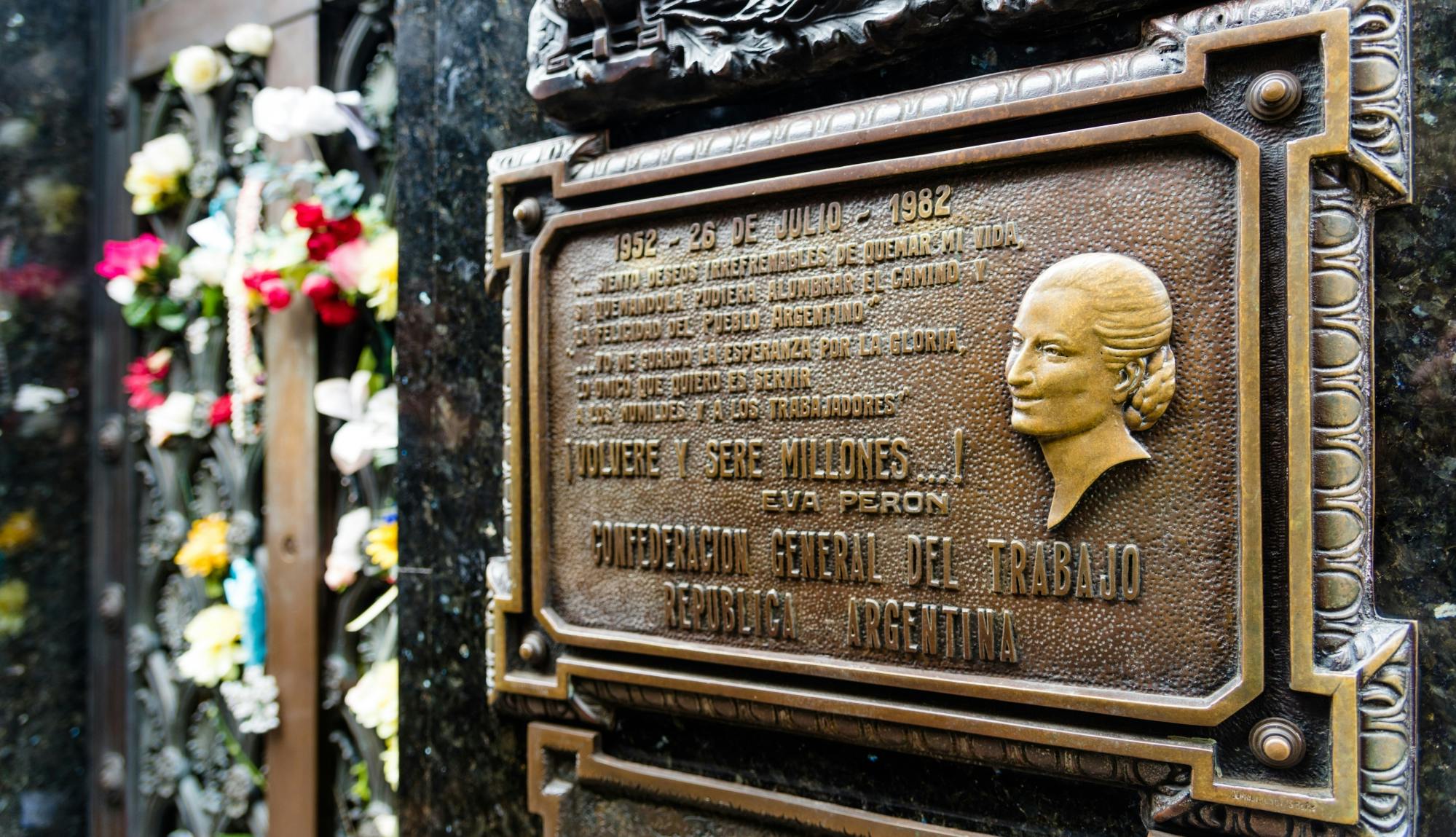
The mausoleum is relatively narrow and dark, with:
- A black stone façade
- An ornate metal door
- Bronze memorial plaques
- Flowers and messages left by visitors
The guide explains how Evita eventually came to be buried there and why the crypt was designed to protect her remains.
The tomb continues to attract both Argentine supporters and international visitors.
Visitors should behave respectfully, avoid blocking the narrow passage and allow families or mourners to pass.
The Extraordinary Story of Evita’s Body
After Evita died in 1952, her body was embalmed and displayed while a large memorial structure was being planned.
Following the military coup that removed Juan Perón from power in 1955, her body was secretly taken and hidden.
It was eventually buried under another name in Italy.
Years later, the body was returned to Juan Perón while he was living in exile in Spain.
After further political upheaval, Evita’s remains were finally returned to Argentina and placed in the Duarte family tomb at Recoleta Cemetery.
This unusual history is an important part of the tour because it demonstrates how politically powerful her image remained even after her death.
The guide may explain the sequence in more detail and distinguish documented facts from later rumours and legends.
Evita Museum
The Evita Museum is located at:
Lafinur 2988
Palermo
Buenos Aires
Argentina
The museum opened in 2002, marking the 50th anniversary of Eva Perón’s death.
It presents her life through photographs, documents, clothing, recordings, posters, film footage and personal belongings.
The museum is likely to be the most detailed stop of the tour and provides visual material that cannot be understood from exterior landmarks alone.
Admission is included with the Musement booking.
What Can You See in the Museum?
The collection and displays may include:
- Childhood and family photographs
- Material from her acting and radio career
- Clothing and formal dresses
- Shoes, accessories and personal items
- Political posters
- Speeches and audio recordings
- Newsreel footage
- Documents related to the Eva Perón Foundation
- Material concerning women’s political participation
- Displays about her illness and funeral
- Exhibits about the later treatment of her body
The exhibitions present Evita through the institution’s own historical and interpretive perspective.
Visitors interested in the full debate should combine the museum’s material with broader historical sources and viewpoints.
History of the Museum Building
The museum occupies a historic townhouse that was acquired by the Eva Perón Foundation.
It was used as a refuge for women who needed temporary support and accommodation.
This connection gives the building historical significance beyond its later museum role.
Architectural features may include:
- Period rooms
- Courtyards
- Decorative tiles
- Traditional doors and windows
- Interior garden spaces
The property also has a restaurant-bar, but food and drinks there are not included with the tour unless separately confirmed.
Current Museum Hours
The Evita Museum currently publishes the following general schedule:
- Tuesday to Sunday: 11:00am–7:00pm
- Monday: Closed
Hours may change on public holidays or for maintenance, special events and private functions.
The tour calendar should normally avoid times when the museum is closed, but the final voucher remains the controlling information.
If the museum closes unexpectedly, ask what substitute, rescheduling or refund arrangement applies.
What Is Included?
The current Musement booking includes:
- Three-hour private guided tour
- Admission ticket to the Evita Museum
- Pickup from participating downtown hotels
- Drop-off at the hotel
- Roundtrip private transportation
- Professional driver
- Private guide
- Commentary in English, Spanish or Portuguese
- Plaza de Mayo visit
- Casa Rosada exterior view
- Recoleta Cemetery visit
- Mobile voucher acceptance
- Instant booking confirmation
What Is Not Included?
The following are not included or not clearly confirmed:
- Food and drinks
- Evita Museum restaurant purchases
- Casa Rosada interior admission
- Casa Rosada Museum admission arrangement
- Tips
- Souvenirs
- Hotel pickup outside the central service area
- Guaranteed entry to additional political buildings
- Any cemetery fee unless confirmed by the operator
Practical Tour Information
- Experience: Evita and the Peronism Private Tour in Buenos Aires
- Location: Buenos Aires, Argentina
- Price: From $61.00
- Duration: Approximately 3 hours
- Tour type: Private vehicle tour with walking stops
- Languages: English, Spanish and Portuguese
- Pickup: Participating downtown hotels
- Return transport: Included
- Guide: Private guide
- Driver: Professional driver
- Museum admission: Included
- Wheelchair accessibility: Listed as accessible
- Mobile voucher: Accepted
- Confirmation: Instant confirmation
- Provider: PRIVATE TOURS
- Booking fee: No additional booking fee
- Cancellation: Full refund when cancelled at least 24 hours before departure
The current Musement listing does not display customer ratings for this particular tour.
Accessibility and Mobility
Musement lists the tour as wheelchair accessible.
However, several practical factors should be confirmed before booking.
Possible challenges include:
- Steps into the tour vehicle
- Limited storage for a non-folding wheelchair
- Narrow Recoleta Cemetery pathways
- Uneven stone and paving
- Historic thresholds inside the museum
- Standing during extended explanations
Ask the operator:
- Does the vehicle have a lift or ramp?
- Can the passenger remain seated in the wheelchair?
- Are electric wheelchairs accepted?
- Must the wheelchair fold?
- Is personal assistance required?
- Is the complete museum route step-free?
- Can the cemetery route be shortened?
The private format may make it easier to adapt the pace, but it does not automatically guarantee full physical access.
Is the Tour Suitable for Children?
No minimum age is published.
The tour can suit older children and teenagers interested in history, politics or the musical Evita.
Parents should consider:
- The tour lasts three hours
- Much of the commentary concerns political history
- The cemetery visit includes discussion of death and embalming
- The museum may contain emotionally serious material
- Young children may find the subject difficult to follow
Families needing a child restraint should request it before the tour. Do not assume the vehicle automatically carries suitable seats.
Understanding the Political Context
Evita remains one of the most admired and criticised personalities in Argentine history.
Supporters often emphasise:
- Her connection with workers
- Material assistance to poorer families
- Her role in women’s political organisation
- Her challenge to established elites
- Her emotional connection with supporters
Critics commonly focus on:
- The concentration of political power
- Personality-based propaganda
- Pressure on political opponents
- The relationship between welfare and political loyalty
- Restrictions associated with the wider Perón government
A good private tour should allow room for questions and make clear when a claim is:
- A documented historical fact
- A political interpretation
- A popular legend
- A claim made by supporters or opponents
Visitors should approach the subject with curiosity rather than expecting a simple verdict that Evita was either entirely heroic or entirely harmful.
What to Wear
Comfortable Shoes
Musement recommends comfortable footwear.
Recoleta Cemetery contains hard and sometimes uneven surfaces, so shoes with good grip are preferable.
Respectful Clothing
The cemetery is an active burial place. Casual sightseeing clothing is acceptable, but extremely revealing or disruptive clothing is inappropriate.
Weather-Appropriate Layers
Buenos Aires can be hot and humid in summer and cool in winter.
Bring a light jacket in cooler months and sun protection during warm weather.
What to Bring
- Mobile voucher: Keep the confirmation accessible.
- Photo identification: Carry official ID.
- Water: Useful during cemetery and plaza visits.
- Sunscreen: Plaza de Mayo and Recoleta can be exposed.
- Hat: Helpful during summer.
- Charged phone or camera: For photographs and pickup communication.
- Small secure bag: Easier to manage in crowded areas.
- Payment card or cash: For museum-shop or café purchases.
- Personal medication: Carry anything required during the tour.
Photography Guidance
Exterior photography is generally possible at Plaza de Mayo, Casa Rosada and Recoleta Cemetery.
Visitors should:
- Avoid photographing mourners without permission
- Keep narrow cemetery paths clear
- Follow museum photography rules
- Do not use flash when prohibited
- Avoid touching displays or tombs
- Respect any government security restrictions
The Evita Museum may restrict flash, video or photography in particular galleries.
Safety and Personal Belongings
The tour includes a guide and driver, but normal city precautions still apply.
- Keep bags closed
- Do not leave phones unattended
- Avoid carrying large amounts of cash
- Remain with the guide in crowded locations
- Follow instructions during political demonstrations
- Do not leave valuables visible inside the vehicle
Plaza de Mayo can be affected by rallies, barriers or police activity. The guide may adjust the stopping point when necessary.
Who This Tour Is Best For
The tour is particularly suitable for:
- First-time Buenos Aires visitors
- Travellers interested in political history
- Fans of the musical or film Evita
- Visitors wanting a private guide
- Couples and small groups
- Students of Latin American history
- Travellers wanting hotel transport
- English-, Spanish- or Portuguese-speaking visitors
Who Might Prefer Another Tour?
A different experience may suit:
- Visitors uninterested in politics
- People wanting a broad general city tour
- Travellers looking for food or nightlife
- Visitors wanting several hours inside Recoleta Cemetery
- People expecting access inside Casa Rosada
- Travellers who prefer a low-cost shared group
- Families with very young children
What to Do After the Tour
Explore Palermo
The Evita Museum is near Palermo’s parks, cafés, restaurants and botanical attractions.
Visit the Buenos Aires Botanical Garden
The botanical garden is within the broader Palermo area and can be combined with a separate visit.
Spend More Time in Recoleta
Recoleta also contains:
- Basílica Nuestra Señora del Pilar
- Centro Cultural Recoleta
- Museo Nacional de Bellas Artes
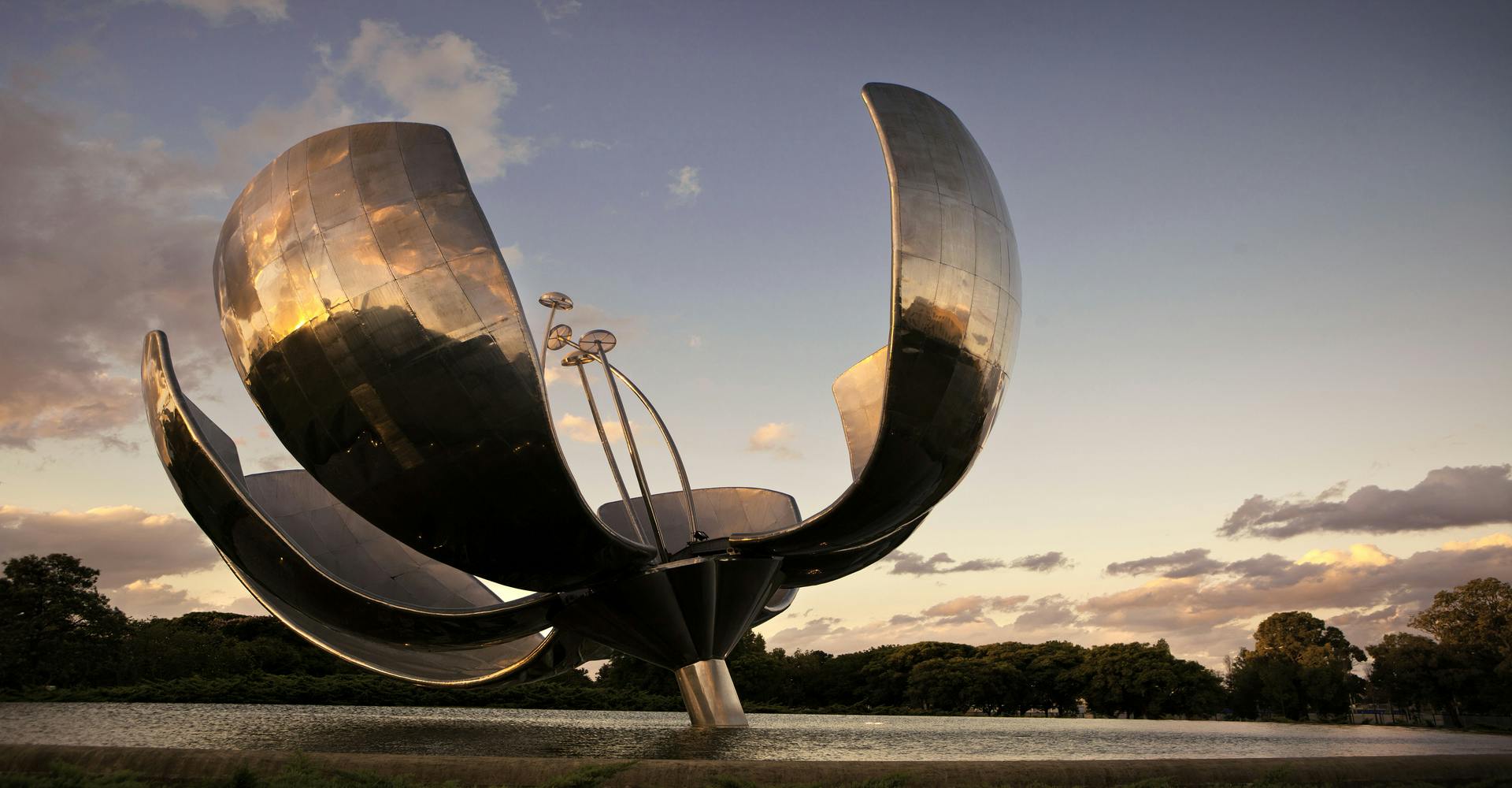
- Floralis Genérica
- Avenida Alvear
Visit the Casa Rosada Museum
The museum behind Casa Rosada explores Argentina’s political history and is normally free, but opening times and reservations should be checked separately.
Follow an Independent Evita Route
Visitors particularly interested in the subject can use another day to explore additional monuments, former foundation buildings and political sites not covered during the three-hour tour.
Is the Tour Good Value?
The tour can offer good value because it combines several services that would otherwise need to be arranged separately.
The price includes:
- Private hotel pickup
- Private hotel return
- A professional driver
- A private guide
- Transport between several districts
- Evita Museum admission
- Three hours of historical interpretation
The strongest value is for couples, families or small groups sharing the private booking.
The experience may be less economical for one person, especially when compared with public transport and independent museum entry.
However, the main value is not simply transportation or tickets. It is the guide’s ability to connect the museum, tomb, political square and Casa Rosada into a coherent historical narrative.
Frequently Asked Questions About the Evita and Peronism Tour
How much does the tour cost?
The current Musement listing shows prices starting from $61.00.
How long does the tour last?
The tour lasts approximately three hours.
Is it private?
Yes. The experience is booked for a private group.
Is hotel pickup included?
Yes, from participating hotels in central Buenos Aires.
Is hotel drop-off included?
Yes. Roundtrip transport is included.
Which languages are available?
English, Spanish and Portuguese.
Is Evita Museum admission included?
Yes. The museum ticket is explicitly listed as included.
What are the Evita Museum opening hours?
The museum currently publishes hours of 11:00am to 7:00pm from Tuesday to Sunday. It is normally closed on Mondays.
Does the tour enter Casa Rosada?
No interior palace admission is listed. The tour views the building and balconies from outside.
Will I see Evita’s grave?
Yes. Recoleta Cemetery and the Duarte family mausoleum are principal advertised stops.
Is Recoleta Cemetery admission included?
Only the Evita Museum ticket is specifically listed among the inclusions. Confirm whether any applicable cemetery charge is included.
Is Evita buried under the name Perón?
No. She rests in the Duarte family mausoleum.
Will I see the balcony used in the film Evita?
The tour highlights Casa Rosada and the balcony associated with the film and with the real Perón-era speeches.
Does the tour visit the place where Eva and Perón met?
Some operator descriptions mention passing the location, but it is not guaranteed on the main Musement itinerary.
Does the tour include an Evita monument?
Some related itineraries mention one, but the exact monument is not specified on the Musement page.
Is this a walking tour?
It combines private transportation with walking at the main locations.
How much walking is involved?
Expect walking and standing in Plaza de Mayo, Recoleta Cemetery and the Evita Museum.
Is the tour wheelchair accessible?
Musement lists it as accessible, but vehicle access and historic surfaces should be confirmed before booking.
Can children join?
No minimum age is published, although the political and cemetery content may be better suited to older children.
Is food included?
No. Food and drinks are not listed as included.
Can I buy food at the museum?
The museum has a restaurant-bar, but purchases are separate from the tour.
Can I take photographs?
Photography is generally possible outside. Follow the museum’s rules and avoid flash where prohibited.
Can political demonstrations affect the tour?
Yes. Events in Plaza de Mayo can require route or stopping-point changes.
Can I use a mobile voucher?
Yes. Mobile vouchers are accepted.
Who operates the tour?
The listed provider is PRIVATE TOURS.
Can I cancel?
Yes. A full refund is available when cancellation is completed at least 24 hours before departure.
Are there additional booking fees?
No additional Musement booking fee is applied.
Are customer reviews available?
The current Musement page does not show customer ratings for this particular tour.
Is the tour worth booking?
Yes, for travellers who want a private, structured introduction to Evita, Peronism and the Buenos Aires locations connected with her life and legacy.
Final Thoughts
The Evita and Peronism Private Tour connects biography, politics and physical places in a way that is difficult to achieve through an independent museum visit alone.
Plaza de Mayo and Casa Rosada illustrate Evita’s public political role, while Recoleta Cemetery reveals the extraordinary events that followed her death. The Evita Museum then provides photographs, clothing, documents and film material that place her life within a broader historical narrative.
The tour’s main strengths are its private guide, hotel transport, professional driver and included museum admission.
Visitors should understand that Peronism remains politically active and deeply contested. The most informative experience will present differing interpretations rather than reducing Evita to either a flawless saint or a simple political villain.
Only the Evita Museum admission is clearly identified as included, so confirm the current Recoleta Cemetery entry arrangement before departure.
Wear comfortable shoes, be ready in the hotel lobby 10 minutes early and advise the operator of mobility requirements in advance.
For visitors interested in Argentine history, women in politics, mass political movements or the real story behind the international image of Evita, this three-hour private tour provides one of Buenos Aires’ most focused historical experiences.