Busan to Gyeongju Day Tour: Bulguksa Temple, Yangdong Folk Village, Daereungwon & Donggung Palace
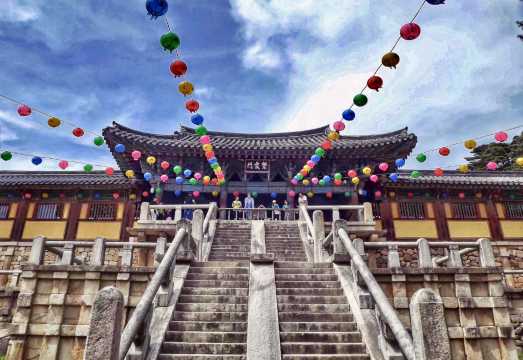
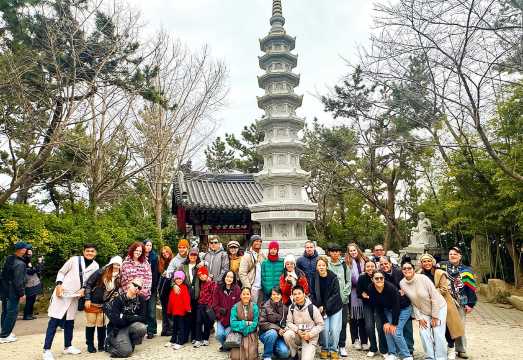
Bulguksa Temple is one of the standout heritage stops on this full-day Gyeongju trip from Busan.
If you are staying in Busan and want to experience the historic heart of the Silla Kingdom without trying to piece together trains, local buses, tickets and timings on your own, this Gyeongju day tour is a very appealing option. In a single outing, it brings together one of Korea’s most important Buddhist temples, a beautifully preserved traditional village, the royal burial grounds of ancient Gyeongju, and one of the city’s most atmospheric palace-and-pond sites.
Rather than feeling like a rushed checklist, this route has a strong narrative. You move from sacred architecture at Bulguksa Temple to the lived landscape of Yangdong Folk Village, then into the royal world of Daereungwon, before ending with the elegant mood of Donggung Palace and Wolji Pond. For travellers who enjoy history, culture, architecture and photography, it is the kind of itinerary that makes Gyeongju feel less like a side trip and more like a highlight of a Korea itinerary.
Quick take: This Busan round-trip tour is a smart way to see Gyeongju’s signature heritage sites in one day. It suits travellers who want a structured overview of the ancient Silla capital, especially if they prefer not to organise transport and sightseeing separately.
Why this Gyeongju tour stands out
Gyeongju is one of those destinations where nearly every stop carries historical weight. It was the ancient capital of the Silla Kingdom, and many of its most important sites are spread across different parts of the city. That is what makes a well-planned day tour valuable. Instead of spending half the day navigating between landmarks, you can focus on the experience itself: stone bridges and pagodas, old tiled roofs and thatched homes, royal tomb mounds, and reflective palace grounds that still hold a sense of ceremony.
This tour also gives good variety. You are not seeing four versions of the same thing. Each stop offers a different lens on Korean heritage, from religion and aristocratic village life to royal burial culture and courtly leisure.
What you will see on the day
Bulguksa Temple
Bulguksa is one of the great names in Korean cultural heritage, and for many visitors it is the emotional anchor of the day. The temple is famous for its stone terraces, bridges, pagodas and long association with the Silla Kingdom. Even if you are not especially interested in Buddhist history, it is a rewarding place to walk slowly, take in the symmetry of the grounds and appreciate the craftsmanship that made it one of Korea’s best-known temple complexes.
There is a calm, elevated feel to Bulguksa that contrasts beautifully with the rest of the itinerary. It is a place for details: worn stone steps, balanced courtyards, tiled roofs and the quiet dignity that historic temples often carry.
Yangdong Folk Village
Yangdong Folk Village shifts the mood from monumental heritage to living cultural landscape. This is not a reconstructed theme-park village. It is a long-preserved traditional settlement known for its old houses, natural setting and links to Joseon-era elite culture. The layout, tucked into a valley with traditional roofs and woodland around it, makes it one of the most visually distinctive stops of the day.
For visitors interested in traditional Korean architecture, village planning and a more human scale of history, Yangdong adds depth to the tour. It shows how heritage was lived, not just commemorated.
Daereungwon Tomb Complex
Daereungwon delivers one of Gyeongju’s signature scenes: broad grassy burial mounds rising like soft green hills across the city. These are the tombs of Silla royalty and nobility, and they give Gyeongju its nickname as a place where ancient history remains in plain sight. Walking here feels both peaceful and quietly grand, with the scale of the royal tumuli doing most of the storytelling.
This stop is particularly good for travellers who enjoy open-air historical sites. It is easy to appreciate visually, even before you begin learning about the excavations, the grave goods and the dynastic history behind the mounds.
Donggung Palace and Wolji Pond
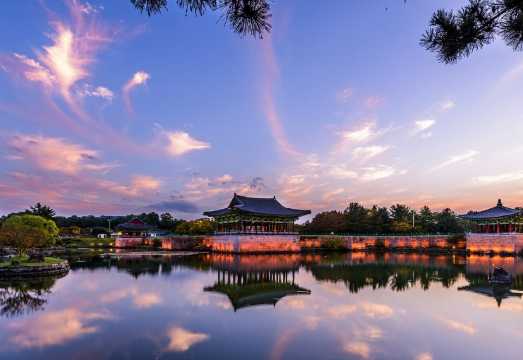
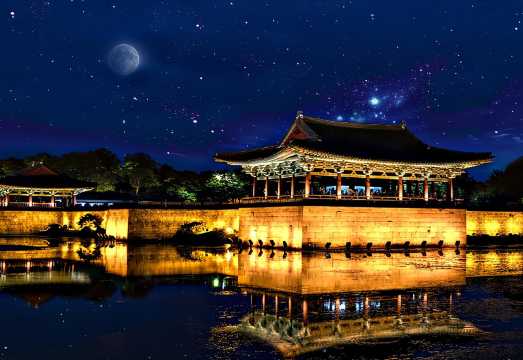
Donggung Palace and Wolji Pond provide a more refined and courtly finish to the day. Once used as an eastern palace complex of Silla, the site is closely tied to royal life, banquets and ceremonial occasions. The pond, islands and landscaped setting give it a more graceful, almost poetic quality compared with the heavier symbolism of tombs and temples.
You may also see this site referred to by the older name Anapji. Either way, it is one of Gyeongju’s most memorable landmarks, especially for travellers who love reflective water scenes, reconstructed heritage spaces and elegant historical atmosphere.
What to expect overall
This is the sort of day trip that works best if you are happy covering several major sights in one outing rather than lingering for hours at a single attraction. Expect a full day with a clear sightseeing rhythm: meet in Busan, head to Gyeongju, visit the key heritage sites, then return the same day.
Because it is a join-in experience, it can be especially useful for solo travellers, couples and small groups who want a simpler way to visit Gyeongju from Busan. It removes much of the planning friction while still giving you access to some of the city’s most recognisable landmarks.
How to get there
The main advantage here is that the product is sold as a Busan round-trip day tour, so you do not need to independently arrange a full self-guided journey to each attraction. You simply make your way to the designated meeting point in Busan, join the group, and travel out and back on the same day.
That makes this a strong fit for visitors based in Busan who want to see Gyeongju efficiently, especially if they are short on time or would rather avoid coordinating rail or bus transfers between multiple historic sites.
Who this tour is best for
Travellers based in Busan who want an easy day trip to Gyeongju
First-time visitors to Korea interested in major cultural landmarks
History lovers drawn to Silla-era heritage
Photographers who enjoy temples, traditional villages and landscaped historic sites
Visitors who prefer a structured sightseeing day over independent logistics
Things to know before booking
This is a shared join-in tour rather than a private tour.
The current listing describes it as a meet-at-meeting-point experience in Busan.
It is a full-day itinerary, so comfortable walking shoes are a good idea.
As with many day tours, exact timings, inclusions and operational details should be checked on the booking page before payment.
Cancellation terms and package details can change, so review the latest Trip.com listing before travel.
Is it worth booking?
For many visitors, yes. Gyeongju is one of South Korea’s richest historical destinations, but its highlights are spread out enough that independent day-tripping can feel fragmented. This tour solves that neatly by bundling together four of the city’s most rewarding stops into one day from Busan.
If your goal is to come away with a strong first impression of Silla heritage rather than an ultra-deep dive into one single site, this is a very sensible way to do it. The combination of temple, village, tomb complex and palace pond gives the day breadth as well as visual contrast, which is exactly what makes it memorable.
Frequently asked questions
How long is this Busan to Gyeongju day tour?
The current listing shows a duration range of roughly 10 hours 25 minutes to 12 hours 15 minutes, so you should plan for a full-day outing.
Is this a private tour?
No. The listing describes it as a join-in tour.
Where does the tour start?
The experience is listed as a meet-at-meeting-point tour departing from Busan. Check the booking page for the exact meeting instructions for your chosen date.
What are the main stops included?
The tour title highlights Bulguksa Temple, Yangdong Folk Village, Daereungwon Tomb Complex, and Donggung Palace and Wolji Pond.
Why is Gyeongju so famous?
Gyeongju was the ancient capital of the Silla Kingdom and is known for its remarkable concentration of temples, palace sites, tombs and other cultural treasures.
Is Yangdong Folk Village worth visiting?
Yes, especially if you enjoy traditional architecture and cultural landscapes. It adds a different dimension to the day compared with temples and royal tombs.
Is Donggung Palace the same as Anapji?
Wolji Pond was long popularly called Anapji, so travellers often see both names used in descriptions of the same historic area.
Does the tour offer free cancellation?
At the time of writing, the Trip.com listing states free cancellation by 23:59, 7 days before the date of use. Always recheck the current policy before booking.
Busan to Gyeongju UNESCO Day Tour: Bulguksa Temple, Yangdong Village & Silla – Guided Tour South Korea Busan to Gyeongju UNESCO Day Tour: Bulguksa Temple, Yangdong Village & Silla Highlights This Busan-to-Gyeongju day tour is built for travellers who want a broad look at Silla heritage, UNESCO sites and some of Gyeongju’s most photogenic landmarks in one outing. If you are based in Busan and want to experience the historical heart of the old Silla capital without trying to piece together trains, local transport and separate attraction planning, this Gyeongju day tour is a very practical option. Rather than focusing on just one temple or one city landmark, it brings together major heritage sites, a traditional village,…
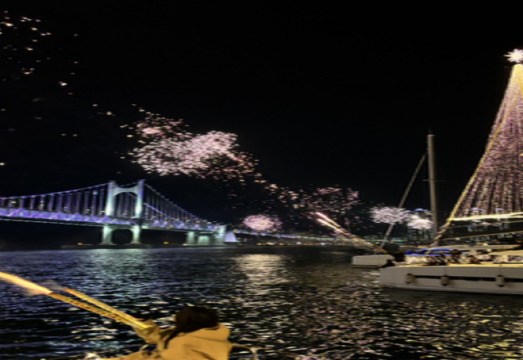
YHOLIC Busan Yacht Tour: Public & Private Yacht Ride in Gwangalli – Scenic Cruise South Korea Gwangan Bridge and Gwangalli Beach are the signature views that make a Busan yacht ride so memorable. Image: bryan..., Wikimedia Commons, CC BY-SA 2.0. If you want to see Busan from a more memorable angle, the YHOLIC Busan public and private yacht tour is one of those experiences that makes the city feel completely different. Instead of looking at the coast from the beach, you head out onto the water and see Busan’s skyline, bridges and seaside neighbourhoods from the deck of a yacht. This Trip.com listing is for YHOLIC Busan! Public/Private Yacht Tours, also shown as a Busan Yacht…
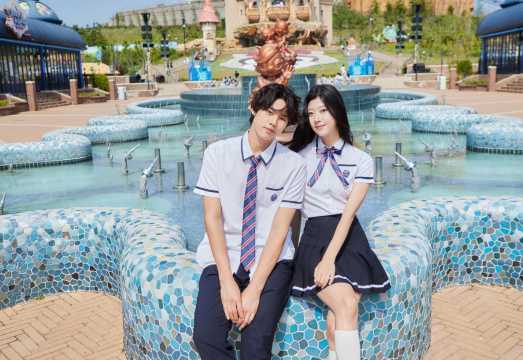
Busan school uniform rental – GAMSUNG School Uniform Lotte World – Travel Experience Busan school uniform rental - GAMSUNG School Uniform Lotte World Busan branch adds structure, local context and purposeful sightseeing to the itinerary. Busan school uniform rental - GAMSUNG School Uniform Lotte World Busan branch: experience overview Optional experience with various popular Korean school uniforms;Children's school uniforms are available for rent, creating wonderful memories with your family. Available from trip.com. This makes the experience a useful option when planning time in > Busan local experienceSearch results. The exact duration can depend on the selected date, option or operating schedule. Routes, start times, inclusions and meeting arrangements may vary, so the current…
Busan: Top Attractions Authentic Full-Day Guided Tour – Guided Sightseeing Experience Busan: Top Attractions Authentic One-Day Guided Tour adds structure, local context and purposeful sightseeing to the itinerary. Busan: Top Attractions Authentic One-Day Guided Tour: experience overview Certified professional guide who speaks English;End your tour with a special drop-off at Nampo-dong & Jagalchi Market;Exceptional value without compromise Available from trip.com. This makes the experience a useful option when planning time in > Busan local experienceSearch results. The listing describes this as a one-day experience. Routes, start times, inclusions and meeting arrangements may vary, so the current booking page should be treated as the final source of operational information. At a glance…
Busan Yacht Experience – Gwangalli & Haeundae Shared Yacht – YachtHolic – Scenic Cruise Busan Yacht Experience | Gwangalli & Haeundae Shared Yacht | YachtHolic presents the destination from the water and offers a different perspective. Busan Yacht Experience | Gwangalli & Haeundae Shared Yacht | YachtHolic: experience overview Daily departures! Day/Sunset/Night views - Premium yacht experience showcasing Busan's stunning coastal scenery!;Complimentary beer, beverages, and snacks provided / Enjoy a romantic fireworks show and drone show at night (Saturdays);Daytime Polaroid Service / Nighttime Fireworks Show (March: from 5:30 PM / April: from 6:30 PM) Available from trip.com. This makes the experience a useful option when planning time in > Busan local experienceSearch results. The…
Busan Shinsegae Spa Land Sauna Experience in Korea – Wellness Experience Busan Shinsegae Spa Land Sauna Experience in Korea adds a restorative pause to the itinerary. Busan Shinsegae Spa Land Sauna Experience in Korea: experience overview There are 18 different hot springs and 13 themed SPAs to choose from;The hot spring water is sourced from 1,000 meters underground and is rich in sodium bicarbonate.;Relax with premium spa services and enjoy high-end spa facilities Available from trip.com. This makes the experience a useful option when planning time in > Busan local experienceSearch results. The exact duration can depend on the selected date, option or operating schedule. Routes, start times, inclusions and meeting…
Quick take: Trip.com helps you compare prices across accommodations. Use it to shortlist hotels, then click through to confirm the final price, room type, and inclusions on the booking site.
Busan, South Korea Full-Day tour – Guided Sightseeing Experience Busan, South Korea one-day tour[Haeundae Blue Line Park/Gamcheon Culture Village/Cheongsapo/Yonggungsa Temple] adds structure, local context and purposeful sightseeing to the itinerary. Busan, South Korea one-day tour[Haeundae Blue Line Park/Gamcheon Culture Village/Cheongsapo/Yonggungsa Temple]: experience overview Beach Train and Sky Capsule: Enjoy breathtaking views of Busan's eastern coast from a unique perspective;Busan one-day tour Highlights: Explore Busan's iconic attractions and landmarks in one day;Comfortable Tour Vehicle: Travel in style and comfort by bus, with expert guides ensuring a seamless journey Available from trip.com. This makes the experience a useful option when planning time in > Busan local experienceSearch results. The listing describes…
Busan Sunset Sky Capsule Coastal Quest: 5 Iconic East Shore Gems – Travel Experience Busan Sunset Sky Capsule Coastal Quest: 5 Iconic East Shore Gems presents the destination from the water and offers a different perspective. Busan Sunset Sky Capsule Coastal Quest: 5 Iconic East Shore Gems: experience overview Glide through sapphire skies in sky capsules, coastlines unfurling beneath like living scrolls;Cheongsapo Deck's sea-meets-sky canvas, yacht deck immersed in diamond city glow;Trace century-old Busan in miniature, tiny rooftops alive with harbor whispers Available from trip.com. This makes the experience a useful option when planning time in > Busan local experienceSearch results. The exact duration can depend on the selected date, option or operating schedule.…
Busan Full-Day City Tour with Blueline Park Sky Capsule – Guided Sightseeing Experience Busan One Day City Tour with Blueline Park Sky Capsule (Oryukdo Skywalk + Huinnyeoul Culture Village + Gamcheon Culture Village) adds structure, local context and purposeful sightseeing to the itinerary. Busan One Day City Tour with Blueline Park Sky Capsule (Oryukdo Skywalk + Huinnyeoul Culture Village + Gamcheon Culture Village): experience overview See several of Busan's main attractions on one convenient tour that includes roundtrip transportation and your entry ticket. Enjoy coastal views as you ride on the Sky Capsule without wasting time waiting in line for a ticket. Travel seamlessly between attractions on a tour bus as you head…
Jagalchi Sightseeing Cruise Experience in Busan – Scenic Water Experience Jagalchi Sightseeing Cruise Experience in Busan presents the destination from the water and offers a different perspective. Jagalchi Sightseeing Cruise Experience in Busan: experience overview Take a sightseeing boat to enjoy Busan's scenery from a unique perspective.;The 2 PM departure time slot every Saturday will allow everyone to enjoy the beautiful scenery of Busan's Yeongdo Bridge.;Enjoy Busan's beautiful nightscape on a sunset and night cruise. Available from trip.com. This makes the experience a useful option when planning time in > Busan local experienceSearch results. The exact duration can depend on the selected date, option or operating schedule. Routes, start times,…
Busan South Korea Travel Photography Package – Travel Experience South Korea If you want a professionally styled photoshoot in Busan rather than a standard sightseeing tour, this Trip.com listing is one of the clearer specialist options to consider. It is presented as a travel-photography package, with the emphasis on curated portraits and photographer-led planning rather than guided attraction hopping. The strongest appeal is the professional setup. The page positions the service around experienced photographers, hourly charging and an immersive travel-photography style, which makes it feel more like a dedicated photo session than a casual holiday add-on. Check availability on Trip.com Table of Contents Tour overview Quick facts What the listing clearly…
Old Korea Thousand History Tour of Gyeongju from Busan – Guided Sightseeing Tour Old Korea Thousand History Tour of Gyeongju from Busan adds structure, local context and purposeful sightseeing to the itinerary. Old Korea Thousand History Tour of Gyeongju from Busan: experience overview from Trip.com in Busan. Stay connected with family and friends. Available from trip.com. This makes the experience a useful option when planning time in > Busan local experienceSearch results. The exact duration can depend on the selected date, option or operating schedule. Routes, start times, inclusions and meeting arrangements may vary, so the current booking page should be treated as the final source of operational information. At a glance Experience…
Quick take: Trip.com helps you compare prices across accommodations. Use it to shortlist hotels, then click through to confirm the final price, room type, and inclusions on the booking site.