Nusa Penida is the largest of the three Nusa islands lying southeast of mainland Bali and one of Indonesia’s most dramatic coastal destinations. Towering limestone cliffs, brilliant-blue water, white-sand coves, offshore rock formations and rich marine life make it look remarkably different from the resort areas of southern Bali.
The island is home to some of Bali’s most photographed places, including Kelingking Beach, Diamond Beach, Broken Beach, Angel’s Billabong and Crystal Bay. Offshore, the protected waters surrounding Nusa Penida, Nusa Lembongan and Nusa Ceningan are internationally known for reef manta rays and seasonal sightings of mola-mola, or ocean sunfish.
A day trip from Bali is possible, but Nusa Penida is much larger and slower to travel around than many first-time visitors expect. Two nights is a much better choice if you want to see both the western and eastern sides without spending most of your visit rushing between viewpoints.
Nusa Penida at a Glance
Visitor Information
Details
Location
Southeast of mainland Bali, Indonesia
Main access
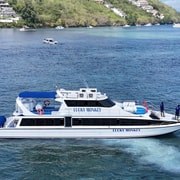
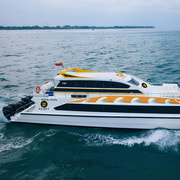
Passenger fast boat
Main Bali departure point
Sanur
Other Bali departure points
Kusamba and Padang Bai
Typical fast-boat crossing
About 30–45 minutes in normal conditions
Main visitor harbours
Banjar Nyuh/Toyapakeh and Sampalan/Buyuk area
Best-known landmark
Kelingking Beach
Best eastern-coast scenery
Diamond Beach and Atuh Beach
Marine highlight
Manta rays
Mola-mola season
Most associated with July–October
Best general weather period
April–October
Day-trip minimum
One full day
Recommended stay
2–3 nights
Best transport
Private car with local driver for most visitors
Best for
Scenery, photography, snorkelling, diving and adventure
Why Nusa Penida Is Different From Mainland Bali
Nusa Penida is not primarily a resort island. Its appeal comes from a rugged landscape where roads twist across hilly limestone terrain before suddenly reaching enormous sea cliffs and hidden beaches.
Indonesia’s Ministry of Tourism specifically warns that the island’s terrain is hilly and that some access roads and paths remain rocky and challenging. It recommends using a suitable vehicle in good condition.
This means distances on a map can be misleading. A destination that appears only a modest distance away may require a slow drive along narrow roads.
1. Kelingking Beach
Kelingking Beach is the defining image of Nusa Penida.
The viewpoint overlooks a gigantic green limestone headland projecting into intensely blue water, with a white-sand beach enclosed at its base. The unusual formation is frequently compared with the shape of a Tyrannosaurus rex.
You do not need to descend to the sand to understand why Kelingking is famous. In fact, for most day visitors, the cliff-top viewpoint is the main attraction.
Think Carefully Before Hiking Down Kelingking
The Indonesian Ministry of Tourism explicitly describes access to the beach as steep and dangerous.
The descent is not comparable with walking down a normal staircase to a beach. Parts are very steep, exposed and physically demanding, and after reaching the sand you still have to climb all the way back up.
Do not descend simply because you see other tourists doing it.
Stay at the Viewpoint If:
You have knee or balance problems
You dislike exposed heights
The ground is wet
You have limited time
You are wearing unsuitable footwear
You are not confident you can complete the return climb
The view from above is already exceptional and is the photograph most visitors actually come to see.
When to Visit Kelingking
Early morning is considerably better than the middle of a typical day-trip period. Many organised groups arrive after the first boats from Sanur have unloaded, so the narrow photo areas can become extremely busy.
If you stay overnight on Nusa Penida, Kelingking is one of the places where you gain the greatest advantage over day-trippers.
2. Broken Beach
Broken Beach is not really a swimming beach. It is a remarkable circular coastal inlet created in the limestone, with seawater entering beneath a huge natural rock arch.
The surrounding cliff-top path lets you look into the turquoise cove and towards the natural bridge connecting the two sides of the formation.
It is one of the island’s easiest major sights to appreciate without undertaking a serious beach descent.
3. Angel’s Billabong
Angel’s Billabong lies beside the Broken Beach area and is normally visited during the same stop.
It is a natural rock pool beside the ocean. Although photographs sometimes show people inside the pool, conditions can change quickly when waves break across the outer rocks.
Do not enter the water merely because other visitors are doing so. Follow local restrictions and remain out when waves or swell make the area unsafe.
Broken Beach and Angel’s Billabong Work Well Together
The two attractions are close enough that they are normally combined rather than treated as separate journeys.
A typical western-island itinerary therefore becomes:
Crystal Bay provides a very different experience from the cliff viewpoints.
Indonesia’s Ministry of Tourism highlights its clear water, sunset scenery and popularity with divers and snorkellers because of the area’s marine biodiversity.
It is a useful final stop after a day spent looking down at beaches from cliffs because you can actually reach the shoreline easily.
Sea conditions should still determine whether you enter the water. Nusa Penida is surrounded by powerful currents and is not a place to assume that every attractive-looking beach is safe for swimming.
5. Diamond Beach
Diamond Beach is one of the great sights of eastern Nusa Penida.
The viewpoint looks across brilliant turquoise water towards white limestone pinnacles rising offshore. A stairway cut into the cliff provides access towards the beach below.
The Ministry of Tourism lists Diamond Beach as one of Nusa Penida’s major natural attractions alongside Atuh Beach.
Do You Need to Walk Down to Diamond Beach?
No. The upper viewpoint is worthwhile even if you do not want to tackle the staircase.
The descent is steep and exposed in places. Going down also commits you to climbing back up in tropical heat, so consider your fitness, footwear and the amount of time available.
For travellers with reduced mobility, the best strategy is usually to enjoy the spectacular upper views rather than trying to reach the sand.
Swimming at Diamond Beach
Do not assume Diamond Beach is a conventional swimming beach. It faces open ocean and can experience significant surf and currents.
Treat swimming as dependent entirely on conditions on the day rather than as a guaranteed part of the visit.
6. Atuh Beach
Atuh Beach lies in the same eastern section of the island as Diamond Beach, making the two an obvious combination.
The setting consists of steep limestone cliffs, a small beach and dramatic offshore rock formations.
Visitors with only one eastern-island day can see both without crossing the island twice.
7. Manta Point
For many travellers, the best reason to visit Nusa Penida is underwater.
Reef manta rays are present around Nusa Penida throughout the year. The Coral Triangle Center reports more than 600 individual reef manta rays identified in the protected area since monitoring began.
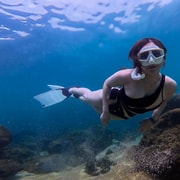
Manta Point is one of the principal sites where boats take divers and snorkellers hoping to encounter them.
Manta Rays Are Wild Animals
A manta sighting is never guaranteed.
This is a natural marine environment, not an aquarium. Weather, currents, visibility and the movement of the animals determine what you see.
Choose an operator that follows marine-protected-area codes of conduct rather than one that promises guaranteed close contact.
Respect the Manta Rays
The Nusa Penida Marine Protected Area uses codes of conduct developed with dive operators and conservation organisations to reduce the impact of tourism on manta rays and mola-mola.
A responsible encounter means:
Do not touch manta rays
Do not chase them
Do not block their direction of travel
Follow your guide’s positioning instructions
Avoid standing on coral
Keep fins away from the reef
The objective is to watch normal animal behaviour rather than force an interaction.
8. Mola-Mola – Ocean Sunfish
Nusa Penida is also internationally known among divers for mola-mola.
The Coral Triangle Center explains that nutrient-rich upwelling becomes particularly important from July through October, when mola-mola are attracted towards cleaning stations around the islands.
Seeing one is still never guaranteed, and many of the dive sites where they occur can experience strong currents. Choose an appropriately qualified dive operator and be accurate about your experience level.
9. Goa Giri Putri
Nusa Penida is not only about beaches.
Goa Giri Putri is a Hindu temple complex inside a huge cave and is one of the island’s most distinctive cultural attractions. Indonesia’s Ministry of Tourism specifically recommends it for visitors interested in the island’s spiritual life.
The unusual aspect is the entrance: visitors pass through a relatively small opening before emerging into a surprisingly large cavern used for worship.
This remains an active sacred place, not simply a tourist cave. Dress appropriately, follow temple etiquette and avoid disrupting ceremonies.
10. Teletubbies Hill
Teletubbies Hill provides a change from the coastline. The landscape is composed of rounded hills that become particularly green during and after wetter periods.
The Ministry of Tourism includes it among the island’s recognised trekking and scenic attractions.
It fits most naturally into an eastern or central-island itinerary rather than a rushed western day trip.
How to Get to Nusa Penida From Bali
There is no road bridge from Bali.
Passenger fast boats operate from Sanur, Kusamba and Padang Bai. Indonesia’s Ministry of Tourism gives the normal crossing time as approximately 30–45 minutes, depending on weather and the harbour used.
Sanur is the most convenient departure point for many travellers staying around southern Bali because it has a large purpose-built fast-boat terminal and numerous daily departures.
Current Sanur Fast-Boat Schedule Example
Schedules vary by company, so there is no single universal Nusa Penida timetable.
As of August 2026, Angel Billabong Fast Cruise, for example, publishes Sanur departures at:
Sanur → Nusa Penida
7:30 am
8:30 am
10:00 am
2:15 pm
5:00 pm
Its currently published Nusa Penida → Sanur departures are 7:20 am, 9:00 am, 1:00 pm, 4:00 pm and 5:00 pm.
Do not build a trip around these times without reconfirming. Boat schedules can change because of weather, sea conditions and operational requirements.
How Early Should You Arrive at Sanur Harbour?
Allow substantially more time than the 30–45 minute boat crossing itself.
Sanur can be busy, particularly during summer and holiday periods. A sensible approach is to arrive approximately 45–60 minutes before departure unless your operator gives different instructions.
You need time to find the correct company desk, check in, deal with luggage and reach the boarding area.
The Boat Can Be Rough
The stretch of sea between Bali and Nusa Penida can be choppy.
If you are prone to seasickness, take appropriate precautions before boarding and choose a morning sailing when practical. Weather conditions can also delay or cancel boats.
Do not schedule an extremely tight international flight connection immediately after returning from Nusa Penida.
Where Do Boats Arrive?
Different operators use different ports.
Indonesia’s Ministry of Tourism specifically mentions Toyapakeh and Sampalan as important arrival points.
Current services also commonly use the Banjar Nyuh and Buyuk harbour areas.
Check the exact arrival harbour before arranging your hotel transfer because “Nusa Penida ferry ticket” does not always mean every company lands at the same pier.
Current Bali Foreign Tourist Levy
International visitors to Bali are currently subject to the province’s Rp150,000 foreign tourist levy per person.
The official Love Bali system states that the levy is normally paid once during the visitor’s Bali trip, rather than every time you travel between mainland Bali and Nusa Penida.
If you have already paid the Bali levy when entering the province, keep the QR-code voucher that was issued to you.
Local Nusa Penida Charges
Separate local retribution, attraction and parking charges can also apply on Nusa Penida. Current 2026 visitor information commonly reports a small island arrival levy and individual site or parking fees, but implementation and attraction tariffs have been changing during 2026.
Carry Indonesian rupiah in small denominations and confirm the actual amount at official ticket booths rather than relying on an old online list.
This is especially important because some tour prices include local admission while cheap transport-only packages may not.
Getting Around Nusa Penida
Once you land, the principal choices are:
Private car with driver
Rental car
Scooter
Organised tour vehicle
Indonesia’s Ministry of Tourism confirms that motorbikes and cars are the primary ways of exploring the island but cautions that the terrain is hilly and some roads and access tracks are challenging.
Should You Rent a Scooter?
Only if you are genuinely experienced riding scooters in difficult conditions.
Nusa Penida is not a sensible place to learn.
You may encounter:
Steep gradients
Narrow roads
Sharp corners
Uneven surfaces
Loose gravel
Heavy tourist traffic
Large vehicles sharing narrow roads
For most first-time visitors, a local driver is the safer and more relaxing option.
Private Driver Versus Group Tour
Private Driver
Best overall choice.
You determine the pace, can leave a crowded viewpoint earlier and can change the route according to road and weather conditions.
Group Tour
Usually cheaper but more rigid. Much of the day can be spent waiting for other passengers and following a fixed photography schedule.
Scooter
Provides freedom but brings considerably greater road risk and physical exposure.
West Nusa Penida or East Nusa Penida?
West
East
Kelingking Beach
Diamond Beach
Broken Beach
Atuh Beach
Angel’s Billabong
Thousand Islands viewpoints
Crystal Bay
More remote cliff scenery
Best-known first visit
Excellent second-day route
If You Have Only One Day
Choose either the west or east rather than trying to see everything.
Many tours advertise an east-and-west combination in a single day, but that usually means considerable time in a vehicle and very short stops.
For a first visit, the western route is the classic choice because it includes Kelingking, Broken Beach and Crystal Bay.
A Good One-Day Western Route
Early Morning – Fast Boat From Sanur
Use one of the first practical departures.
Kelingking Beach
See the cliff-top panorama. Do not attempt the beach descent on a short day trip.
Broken Beach and Angel’s Billabong
Explore both during the same stop.
Lunch
Use a local restaurant rather than spending time returning to the harbour area.
Crystal Bay
Finish beside the sea before returning towards your departure harbour.
Afternoon – Return Boat
Allow plenty of road time to the port. Missing your booked final fast boat is a much bigger problem than shortening a beach stop.
A Good Eastern Day
A logical east-coast itinerary is:
Diamond Beach → Atuh Beach → surrounding viewpoints → Teletubbies Hill or Goa Giri Putri.
Trying to add Kelingking to the same day makes the itinerary far more rushed.
Two-Day Nusa Penida Itinerary
Day 1 – Western Penida
Early boat from Bali
Check in or leave luggage
Kelingking viewpoint
Broken Beach
Angel’s Billabong
Crystal Bay
Overnight on Nusa Penida
Day 2 – Eastern Penida
Early start before day-trip groups arrive
Diamond Beach
Atuh Beach
Eastern viewpoints
Goa Giri Putri if time permits
Late-afternoon fast boat to Bali
This is substantially more enjoyable than compressing both coasts into one frantic day.
Three-Day Nusa Penida Itinerary
Three days is ideal if marine activities matter to you.
Day 1
Western-landscape circuit.
Day 2
Eastern-landscape circuit.
Day 3
Morning manta snorkelling or diving, followed by a relaxed afternoon before returning to Bali.
This also gives you a weather buffer if a boat excursion is cancelled because of sea conditions.
Snorkelling or Land Tour First?
If you are staying overnight, consider putting snorkelling early in the morning and land sightseeing later.
Morning seas can sometimes be more comfortable, while visiting the famous land attractions outside the central day-trip rush can produce a better experience.
Never assume a planned manta trip will operate regardless of weather. A responsible operator should be willing to cancel when conditions are unsafe.
The Nusa Penida Marine Protected Area
The waters around Nusa Penida form a major marine protected area containing coral reefs, mangroves and seagrass habitats.
The Coral Triangle Center records 296 coral species from surveys in the protected area and describes its waters as an important migration corridor for manta rays, dolphins, turtles, dugongs and whales.
Strong currents are also a defining feature. They carry nutrient-rich water through the channels between the islands, creating remarkable marine productivity but also making some dive and snorkel sites demanding.
Do Not Underestimate the Currents
This is particularly important for travellers who see beautiful clear water and assume every snorkelling site is easy.
Nusa Penida’s marine environment contains areas of strong tidal current. Always snorkel or dive with an experienced operator who chooses locations according to conditions and participant ability.
If a boat crew tells you a site is unsuitable that day, treat the change as good safety management rather than a disappointing service.
Where to Stay
Banjar Nyuh / Toyapakeh Area
Best for first-time visitors and transport convenience.
This northwestern part of Nusa Penida is close to major fast-boat arrival points and provides practical access for western sightseeing and marine trips.
Batununggul / Sampalan Area
Best for eastern-island access and local services.
Staying farther east reduces some of the driving required for Diamond Beach, Atuh Beach and Goa Giri Putri.
The best choice depends on which harbour your fast boat uses and which side of the island you intend to explore first.
Should You Stay on Nusa Penida or Nusa Lembongan?
Nusa Penida is the better choice if dramatic land scenery is your priority.
Nusa Lembongan tends to feel more compact and resort-oriented, while Penida requires more driving and rewards travellers with larger landscapes and more remote viewpoints.
If you have enough time, the islands work well together rather than competing with one another.
Best Time of Year
The Indonesian Ministry of Tourism recommends the April–October dry season for generally more favourable Nusa Penida travel conditions.
April–June
Generally an excellent balance of drier weather and landscapes that may retain more greenery after the wet season.
July–August
Popular, generally dry and excellent for sightseeing. It is also peak travel season, so boats, drivers and accommodation should be booked ahead.
August additionally falls within the period when nutrient-rich upwelling around Nusa Penida is associated with increased mola-mola activity.
September–October
Still generally favourable for sightseeing and part of the main mola-mola period.
November–March
The wetter season can bring heavier rainfall, rougher sea conditions and slippery cliff paths. Travel remains possible, but itineraries need greater flexibility.
August 2026: Is It a Good Time to Visit?
Yes. August sits within the dry season recommended by Indonesia’s tourism authority and is one of the most popular months for Nusa Penida.
The disadvantages are crowds and high demand. Book your fast boat and accommodation ahead and start sightseeing earlier than the organised day-tour traffic when staying overnight.
What to Wear
For a sightseeing day, bring:
Secure walking shoes or good sandals with grip
Lightweight clothing
Hat
Sunscreen
Plenty of water
Swimwear if visiting an appropriate swimming location
Light rain protection outside the dry season
Sarong or suitable clothing for temple visits
Flip-flops are acceptable around many viewpoints but are a poor choice for steep cliff descents.
Visiting With Children
Nusa Penida can be enjoyable for children, but choose the itinerary carefully.
The main problems are:
Long drives on winding roads
Exposed cliff edges
Steep beach staircases
Heat
Rough fast-boat crossings
A family day is usually better when it concentrates on viewpoints and an accessible beach rather than attempting every dramatic descent.
Accessibility and Reduced Mobility
Nusa Penida is not an easy accessibility destination.
Some cliff-top viewpoints can be enjoyed with relatively little walking from vehicle parking areas, but many famous beaches involve steep steps, uneven paths and difficult terrain.
Indonesia’s tourism authority itself describes the island’s roads and routes as challenging and Kelingking’s beach descent as steep and dangerous.
A private car and driver is the best option for someone who wants to minimise walking and still see the major landscapes.
Photography Tips
Kelingking
Arrive early. Crowds can make finding a clean composition more difficult than the photography itself.
Diamond Beach
The upper stairway provides excellent angles showing the offshore limestone pinnacles and turquoise water.
Broken Beach
Walk around the rim to change the angle of the natural rock arch rather than taking the first photograph from the arrival path.
Protect Your Equipment
Dust, sea spray and sudden tropical rain can all affect cameras and phones. A simple waterproof pouch is useful even on land-tour days.
Do You Need a Tour?
No. Independent travel is possible.
However, for a first visit, booking a car and driver solves several logistical problems at once:
Navigation
Road conditions
Parking
Timing the return boat
Choosing an achievable route
The advantage of independence is greater freedom; the disadvantage is that Penida is a difficult place to underestimate travel times.
Day Trip or Overnight?
Choose a Day Trip If:
You have very limited Bali time
You mainly want Kelingking and western highlights
You are happy with a fast-paced itinerary
You do not mind returning by boat the same afternoon
Stay Overnight If:
You want both east and west
You want fewer crowds
You want sunrise or sunset viewpoints
You want manta snorkelling or diving
You dislike rushing
For most travellers genuinely interested in Nusa Penida, staying at least two nights is the better experience.
Common Mistakes to Avoid
Trying to See the Whole Island in One Day
Road travel is slower than the map suggests.
Renting a Scooter Without Real Experience
The Ministry of Tourism warns that terrain and road conditions can be challenging.
Descending Kelingking Just Because Everyone Else Is
The official tourism authority describes the route as steep and dangerous.
Assuming Every Beautiful Beach Is Safe for Swimming
Ocean swell and currents can be powerful.
Expecting Guaranteed Manta Rays
The rays are wild animals in a protected marine ecosystem.
Booking the Last Possible Return Before a Flight
Sea conditions can delay fast boats.
Carrying No Cash
Small local entry and parking charges are common.
Choosing a Tour Solely by the Number of Attractions
A tour advertising eight stops is not necessarily better than one providing enough time at four.
Practical Tips
Stay two nights if your Bali itinerary allows it.
Use an early fast boat from Sanur.
Book boats ahead during July and August.
Use a private driver unless you are a confident and experienced scooter rider.
Do west and east Nusa Penida on separate days.
Enjoy Kelingking from above unless you are genuinely prepared for the descent.
Never assume ocean conditions are safe based on appearance alone.
Choose responsible manta-ray operators.
Carry small-denomination Indonesian rupiah.
Keep your Bali tourist-levy QR voucher.
Allow a generous buffer before the return fast boat.
Is Nusa Penida Worth Visiting?
Yes. Nusa Penida contains some of the most spectacular coastal scenery anywhere in Bali.
The extraordinary appeal comes from variety. At Kelingking you stand hundreds of metres above a tiny beach enclosed by monumental cliffs. At Broken Beach, the sea enters a circular limestone basin through a natural arch. On the eastern side, Diamond Beach combines turquoise water, pale cliffs and offshore rock pinnacles. Offshore, a protected marine ecosystem supports reef manta rays throughout the year and attracts mola-mola particularly during the July–October upwelling period.
It is also remarkably easy to reach in geographical terms. Fast boats from Bali normally take only around 30–45 minutes, and current operators run multiple departures between Sanur and Nusa Penida each day.
The mistake is assuming that the short boat crossing means the island itself can be seen quickly. It cannot. Nusa Penida’s hills, winding roads and widely separated coastlines make rushing frustrating, and several of the best-known beaches require steep physical descents.
For a first visit, spend one day exploring western Penida, one day exploring the east and, if possible, a third morning on the water. That gives you time to enjoy the landscape rather than simply queue for photographs before racing back to the harbour.
Nusa Penida is at its best when treated as an island to explore rather than an attraction to tick off. Give it two or three days, start early, respect the cliffs and currents, and it becomes one of the outstanding experiences of a Bali trip.
Sponsored Popular Items
Quick take: Musement.com offers a worldwide selection of tours and attractions
Bali: Private Yacht Cruise to Nusa Penida & Nusa Lembongan Indonesia Cruise from Bali to Nusa Penida and Nusa Lembongan on a private yacht. Snorkel, fish, and relax on deck or at a beach club. Add an optional land tour of Nusa Penida to explore the island.
2-Day All-Inclusive Nusa Lembongan & Nusa Penida Tour – Guided Tour 2-Day All-Inclusive Nusa Lembongan & Nusa Penida Tour brings several elements of the destination together in one organised experience. Check current availability, inclusions and booking details before you go.
From Bali: Private Half-Day Snorkeling Tour to Nusa Penida Indonesia Our half-day tour offers guided, supervised private boat snorkeling from Sanur to Nusa Penida’s top sites, including Manta Point, with observation only and a flexible itinerary based on sea conditions
From Bali: Nusa Penida 3-Spot Snorkeling & West Coast Tour Indonesia Explore Nusa Penida in one unforgettable day! Snorkeling at Manta Bay, Gamat Bay, and Crystal Bay, and visit Kelingking Beach, Broken Beach, and Angel’s Billabong. Enjoy stunning views.
From Bali: 1-Way or Return Boat Sanur to/from Nusa Penida Indonesia Enjoy a seamless journey from Bali to Nusa Penida with our fast boat transfer. Choose one-way or round-trip options for a comfortable crossing with stunning ocean views and reliable daily service.
Bali: Nusa Penida One-Way Fast Boat Transfer Ticket Indonesia Travel between Sanur and Nusa Penida in just 30 minutes with a comfortable fast boat. Enjoy panoramic ocean views, smooth boarding, and a reliable one-way island transfer.
Bali: 3-Day Private Tour with Nusa Penida & Ubud Indonesia Discover Bali's highlights on a private 3-day tour with a Tour guide. Visit Uluwatu Temple, explore Ubud's rice terraces, and take a fast boat to Nusa Penida to see Kelingking Beach.