The HMAS Swan (DE50) is one of the largest accessible dive wrecks in the Southern Hemisphere and one of Western Australia’s most distinctive scuba-diving attractions.
The former Royal Australian Navy destroyer escort was deliberately sunk in Geographe Bay near Dunsborough in 1997 to create an artificial reef and purpose-built dive site. Today the wreck attracts divers from around Australia and overseas.
About HMAS Swan
HMAS Swan was a River-class destroyer escort built for the Royal Australian Navy.
The ship was approximately 113 metres long and served with the Navy from 1970 until it was decommissioned in 1996.
After retirement, the vessel was transferred to Western Australia and prepared specifically for use as an artificial reef and recreational dive site.
Scuttling of HMAS Swan
Before the ship was sunk, potentially hazardous materials were removed and the vessel was extensively prepared for divers.
Large access openings were cut into the hull, decks and internal bulkheads to provide better light, easier access and safer routes through sections of the wreck.
HMAS Swan was deliberately scuttled in Geographe Bay on 14 December 1997.
Thousands of spectators watched from the shore and from boats as controlled explosive charges sent the vessel to the seabed.
Diving HMAS Swan
The wreck sits upright on the seabed and provides opportunities for both external exploration and, for suitably trained divers, penetration of selected internal areas.
The deepest sections are around 30 to 35 metres below the surface, while the upper parts of the ship are considerably shallower.
The crow’s nest rises to within roughly 8 metres of the surface, allowing divers to explore different depths depending on their certification and experience.
Suitable for Different Diving Levels
The HMAS Swan wreck offers dive opportunities for a range of certified divers because different parts of the vessel sit at different depths.
Less experienced certified divers may explore the upper structures under suitable supervision, while advanced and wreck-qualified divers can visit deeper areas.
Penetrating the interior of any wreck requires appropriate training, equipment and experience.
What Can Divers See?
Since being sunk, HMAS Swan has developed into a substantial artificial reef.
Marine life commonly seen around the wreck can include:
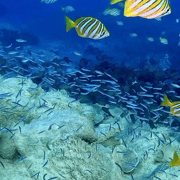
Schools of bullseye fish
King George whiting
Samson fish
Blue devil fish
Sweep
Other reef fish
Marine growth covering sections of the vessel
Large schools of fish are often found around the superstructure and inside some of the accessible sections of the ship.
Exploring the Wreck
Divers can see many recognisable parts of the former naval vessel, including:
Bridge
Decks
Superstructure
Crow’s nest
Openings through the hull
Internal compartments
Former machinery and working areas
The ship’s large size means it is difficult to explore the entire wreck during a single dive.
Artificial Reef
One of the main reasons HMAS Swan was sunk was to create an artificial reef.
Over time, marine organisms have colonised the steel structure, attracting increasing numbers of fish and other marine species.
The combination of maritime history and marine life has helped make the wreck one of Western Australia’s best-known diving locations.
Where Is HMAS Swan?
The wreck lies in Geographe Bay off the coast near Dunsborough and Eagle Bay in south-west Western Australia.
It is approximately 1.3 nautical miles offshore and can be reached by dive boat in around 15 minutes from the Dunsborough area.
Dunsborough
Dunsborough is the main base for diving the HMAS Swan wreck.
The coastal town lies close to Cape Naturaliste and the Margaret River wine region and provides accommodation, restaurants, beaches and diving services.
Dunsborough is approximately a three-hour drive south of Perth.
Dive Tours
Commercial dive operators in the Dunsborough and Busselton area offer guided and unguided dives on HMAS Swan.
Dive trips commonly involve two dives, allowing visitors to explore different parts of the ship.
Equipment hire and scuba training may also be available through local dive centres.
Private Boat Diving
Experienced divers with their own boat can also visit the wreck, but an appropriate access permit may be required.
Check current local regulations and permit requirements before travelling to the dive site independently.
Dive Depth
The wreck occupies a substantial depth range.
Upper structures: approximately 5 to 8 metres below the surface
Main wreck structure: approximately 20 to 30 metres
Seabed: approximately 30 to 35 metres
Actual dive depth depends on the section of the wreck being explored and local conditions.
Best Time to Dive HMAS Swan
The wreck can be dived throughout much of the year when weather and sea conditions are suitable.
Geographe Bay is relatively sheltered, but visibility, currents and surface conditions can vary.
Local dive operators can provide the most accurate information about current conditions.
Things to Do Near HMAS Swan
The Dunsborough and Cape Naturaliste region has many other attractions that can be combined with a dive trip.
Visit Eagle Bay
Explore Meelup Beach
Visit Cape Naturaliste Lighthouse
Walk sections of the Cape to Cape Track
Explore Yallingup
Visit Margaret River wineries
Snorkel in Geographe Bay
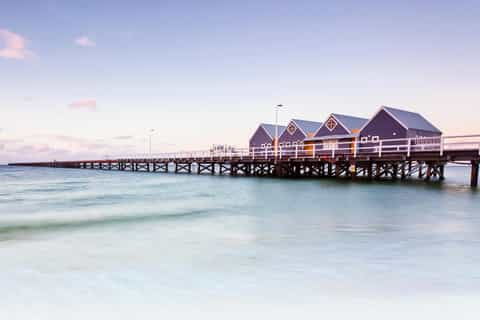
Visit Busselton Jetty
How Long Should You Allow?
Allow at least half a day for a typical two-dive charter, including equipment preparation, boat travel, dive briefings and surface intervals.
Visitors staying in the Margaret River region may wish to spend several days around Dunsborough to combine wreck diving with beaches, wineries and other coastal attractions.
Diving Safety
HMAS Swan is a deep wreck and divers should remain within the limits of their certification and experience.
Wreck penetration should only be attempted by divers with appropriate training and equipment.
Always dive with a reputable operator, follow your dive plan and pay close attention to depth, air consumption and decompression limits.
Travel Tip
If diving HMAS Swan is a priority, consider booking a two-dive charter. The vessel is 113 metres long, so two dives provide a much better opportunity to explore different parts of the wreck.
Stay in Dunsborough or nearby Busselton and combine the dive with Cape Naturaliste, Eagle Bay and the Margaret River wine region.
Sponsored Popular Items
Quick take: Musement.com offers a worldwide selection of tours and attractions
Busselton Jetty, Canal Rocks, Wine & Chocolate Day Tour Australia Discover Margaret River on a scenic day tour from Perth featuring the iconic Busselton Jetty, dramatic Canal Rocks, local wine tasting and delicious chocolate.
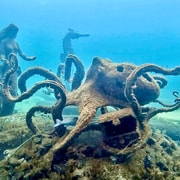
Busselton: Jetty Snorkeling Tour with Underwater Sculptures Australia Explore the underwater world on a snorkel tour at the Busselton Jetty. Enjoy a short boat ride before swimming among schools of fish and discovering 13 unique underwater sculptures!
Busselton: Jetty Scuba Dive Tours with Underwater Sculptures Australia Come experience one of WA’s best dive sites and be among the first to see the new Underwater Sculptures. The 1.8km long Busselton Jetty is home to over 300 species of colourful marine life and corals
Busselton: Jetty Discover Scuba Diving Experience Australia Dive into the vibrant underwater world of Busselton Jetty, the longest timber-piled jetty in the Southern Hemisphere. Explore Australia’s largest artificial reef with over 300 marine species.
Busselton: Forest Adventure with Zip Lining and Rope Course Australia Enjoy a fascinating forest adventure in Busselton with activities for all skill levels. Climb an increasingly challenging rope course, feel the thrill of zip lining, and snowboard through the trees.
Busselton: 4 Mile Reef Guided Scuba Diving Tour Australia Dive into the vibrant underwater world of 4 Mile Reef on a guided scuba diving tour. Explore the reef's diverse marine life, from large corals to tiny nudibranchs, all with a friendly dive guide.
Busselton Jetty Australia Book your Busselton Jetty tickets online. Save time and money with our best price guarantee. Make the most of your visit to Busselton.