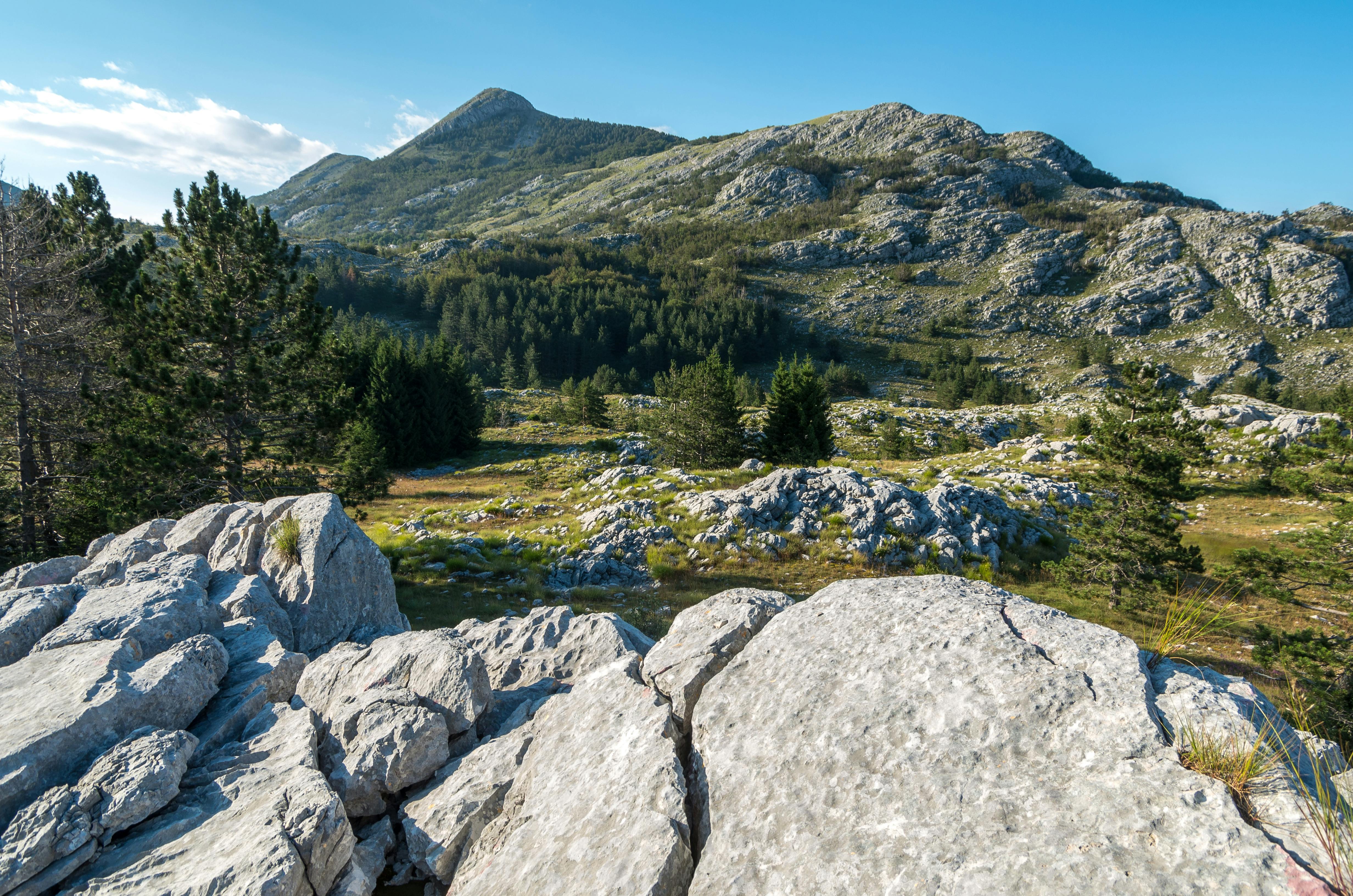
Lovćen National Park rises directly behind Montenegro’s Adriatic coast, creating one of the country’s most dramatic transitions between sea and mountain.
From the lower slopes above Kotor, narrow roads climb through bare limestone, forest and traditional villages to high viewpoints overlooking the Bay of Kotor, the Adriatic coast and Montenegro’s rugged interior. At the centre of the park is Jezerski Vrh, where the monumental mausoleum of Petar II Petrović-Njegoš stands at approximately 1,657 metres above sea level.
Sponsored Popular Items
Quick take: Musement.com offers a worldwide selection of tours and attractions
Lovćen National Park & Budva Full-Day Private Tour Lovćen national park and Budva city full-day private tour places landscapes, habitats or wildlife at the centre of the experience. Lovćen national park and Budva city full-day private tour: experience overview Join the ancient road to Lovćen full-day tour and enjoy a complete experience visiting Montenegro by visiting Lovćen national park, historical Cetinje, and the city of Budva. This makes the experience a useful option when planning time in Kotor. The listing describes this as a full-day experience. Routes, start times, inclusions and meeting arrangements may vary, so the current booking page should be treated as the final source of…
Lovćen is much more than a single viewpoint. Visitors can walk through beech forest at Ivanova Korita, explore traditional food culture in Njeguši, drive the historic Kotor Serpentine, cycle mountain roads, follow marked hiking trails or combine the park with Cetinje, Montenegro’s former royal capital.
The park is close to Kotor and Budva on a map, but mountain roads, weather and seasonal traffic can make travel slow. A successful visit requires realistic timing, suitable footwear and an understanding that the national-park ticket, mausoleum ticket and Kotor–Lovćen cable-car ticket are separate charges.
This guide explains what to see, how to reach the park, which road to choose, how demanding the mausoleum stairs are and how to plan a practical day trip from Kotor, Budva or Cetinje.
Lovćen National Park Quick Facts
Visitor information
Details
Country
Montenegro
Location
Between Kotor, Cetinje and the Adriatic coast
National-park status
Protected since 1952
Area
Approximately 6,220 hectares
Elevation range
Approximately 939–1,749 metres
Highest peak
Štirovnik, 1,749 metres
Mausoleum peak
Jezerski Vrh, approximately 1,657 metres
Main attraction
Njegoš Mausoleum
Steps to mausoleum
461
Current park entrance
€3 per person per day
Current mausoleum adult ticket
€8, currently combined with Njegoš’s birthplace
Student mausoleum ticket
€4 with appropriate identification
Mausoleum season
Normally 15 April–15 November
Main visitor area
Ivanova Korita
Nearest cultural centre
Cetinje
Best general season
May to October
Recommended visit
One full day
Important: The national-park entrance, mausoleum entrance and Kotor–Lovćen cable car are separate charges. The cable car does not deliver passengers directly to the mausoleum.
What Is Lovćen National Park?
Lovćen is a coastal mountain massif forming part of the southern Dinaric Alps.
Its position between the Adriatic Sea and Montenegro’s interior produces an unusual combination of:
Karst limestone peaks.
Deep rock depressions.
Beech and pine forest.
High meadows.
Traditional stone settlements.
Views towards the Bay of Kotor.
Mountain weather influenced by the nearby Mediterranean.
The park’s two most prominent summits are Štirovnik and Jezerski Vrh.
Štirovnik is the highest point at 1,749 metres, but its summit is associated with communications infrastructure and is not the normal tourist destination.
Jezerski Vrh is slightly lower but far more important to visitors because it contains the Njegoš Mausoleum and panoramic viewing platform.
Why Is Lovćen Important to Montenegro?
Lovćen is one of Montenegro’s principal national symbols.
The country’s name, Crna Gora or “Black Mountain,” is traditionally associated with the appearance of forested mountains such as Lovćen when viewed from the coast.
The mountain has played several roles in Montenegrin history:
A natural defensive barrier.
A refuge during periods of conflict.
A route between coastal settlements and Cetinje.
A landscape connected with the Petrović-Njegoš dynasty.
A source of national poetry, folklore and identity.
The burial place of Petar II Petrović-Njegoš.
For many Montenegrins, visiting the mausoleum is not simply a scenic excursion. It is a journey to a monument associated with national history, language, literature and statehood.
Landscape, Geology and Wildlife
Lovćen’s pale limestone has been shaped by rain, frost and underground water.
Typical karst features include:
Sinkholes.
Rock fissures.
Dry valleys.
Uneven limestone pavements.
Small caves and underground drainage.
The lower and more sheltered parts of the park contain forest, while the higher slopes become increasingly rocky and exposed.
Plants
Depending on altitude and location, visitors may see:
Beech forest.
Black pine.
Mountain grasslands.
Mediterranean shrubs on warmer slopes.
Wildflowers during spring and early summer.
Plants adapted to exposed limestone.
Animals
The wider mountain environment supports:
Foxes.
Wild boar.
Wolves.
Brown bears in the broader region.
Small mammals.
Birds of prey.
Woodland birds.
Reptiles and insects.
Large mammals avoid busy visitor areas and are rarely seen during ordinary daytime trips.
Do not feed wildlife or leave food waste at picnic areas.
Njegoš Mausoleum
The Njegoš Mausoleum stands along the rocky summit ridge of Jezerski Vrh.
Its austere stone exterior is deliberately monumental and closely integrated with the exposed mountain environment.
The complete visit includes:
The lower ticket and parking area.
A long enclosed stair tunnel.
An open approach across the summit ridge.
The mausoleum entrance.
Monumental sculptures.
The tomb chamber.
A circular panoramic viewpoint beyond the building.
The mausoleum is the park’s busiest attraction. Tour groups commonly arrive from Kotor cruise ships, Budva and Cetinje between late morning and mid-afternoon.
Arrive near opening time or later in the afternoon for a quieter experience.
Who Was Petar II Petrović-Njegoš?
Petar II Petrović-Njegoš lived from 1813 to 1851.
He was a prince-bishop, ruler, poet and philosopher during a period when Montenegro was governed by members of the Petrović dynasty who combined political and religious authority.
Njegoš is remembered for:
Strengthening central government.
Developing state institutions.
Promoting education.
Building diplomatic relationships.
Writing influential poetry and philosophy.
Contributing to Montenegrin and South Slavic literary culture.
His most famous work is The Mountain Wreath, a dramatic poem examining identity, conflict, freedom and moral responsibility.
Historical interpretations of Njegoš and his work differ across Montenegro and the wider Balkans. Visitors should approach simplified nationalist narratives with care and use museum interpretation to understand the period’s complexity.
History of the Mausoleum
Njegoš expressed a wish to be buried on Lovćen.
During his lifetime, he had a small chapel constructed on Jezerski Vrh and intended it to become his burial place.
The exposed summit suffered damage during later conflicts, and the chapel was rebuilt during the early 20th century.
In 1951, a decision was taken to construct a new monumental mausoleum in Njegoš’s honour.
The present structure was designed by Ivan Meštrović, one of the most prominent sculptors and architects associated with the former Yugoslavia.
Construction took place during the early 1970s, and the mausoleum opened in 1974.
The replacement of the chapel was controversial and remains a sensitive historical and religious issue for some people.
The 461-Step Climb
Visitors reach the mausoleum by climbing 461 steps.
A substantial portion of the route passes through a long, inclined tunnel cut through the mountain.
What the Climb Is Like
The stairway is:
Continuous and uphill.
Cooler inside the tunnel.
Potentially damp.
Busy when tour groups arrive.
Without lift or escalator access.
More demanding at high altitude than the number of steps may suggest.
Benches or stopping places are limited within the narrow sections. Allow faster visitors to pass where safe.
Who May Find It Difficult?
The climb may be unsuitable for visitors with:
Serious heart or respiratory conditions.
Severe knee or hip problems.
Balance limitations.
Claustrophobia affecting tunnel use.
Heat-related illness.
Move slowly and do not treat the stairs as a race.
After the Tunnel
Emerging from the tunnel does not mark the end of the climb.
An exposed paved route continues across the ridge to the mausoleum. Wind can be strong even when conditions at the parking area feel calm.
What to See Inside the Mausoleum
Stone Guardians
Two monumental female figures in traditional Montenegrin dress guard the entrance.
The sculptures are carved from dark stone and create a strong contrast with the pale exterior masonry.
Njegoš Statue
Inside is a monumental seated figure of Njegoš holding an open book.
The sculpture was created according to Ivan Meštrović’s design and weighs many tonnes.
Golden Mosaic Ceiling
The vaulted ceiling is covered with a mosaic made from approximately 200,000 gilded tiles.
The gold surface reflects limited interior light and gives the chamber a ceremonial atmosphere.
Tomb Chamber
A lower chamber contains the marble sarcophagus associated with Njegoš’s remains.
Visitors should behave respectfully. This is both a national monument and a burial place.
The Summit Viewpoint
A stone path continues behind the mausoleum to a circular viewpoint.
On a clear day, the panorama may include:
The Bay of Kotor.
Montenegro’s Adriatic coast.
Cetinje and the surrounding plateau.
Lake Skadar in the distance.
Montenegro’s interior mountains.
Parts of neighbouring countries under exceptional visibility.
The view is highly dependent on weather.
Summer haze can obscure the coastline, while clouds may surround the summit within minutes.
Safety at the Viewpoint
Remain behind walls and barriers.
Do not climb onto exposed masonry.
Hold children closely.
Secure hats and loose belongings.
Leave immediately when lightning approaches.
Current Entrance Fees
Several separate tickets may apply during a Lovćen visit.
Ticket or service
Current price or arrangement
Lovćen National Park entrance
€3 per person for one day
Njegoš Mausoleum adult ticket
€8, currently including Njegoš’s birthplace in Njeguši
Mausoleum student or school ticket
€4 with appropriate identification
Park bicycle rental
Approximately €3 per hour or €8 per day
Walking-pole rental
Approximately €3 per day
Snowshoe rental
Approximately €4 per day when available
Kotor–Lovćen cable car
Separate commercial ticket
Parking, camping, guiding and special activities may involve additional charges.
Carry cash because card acceptance can vary at remote ticket points and small businesses.
Mausoleum Opening Season and Hours
The mausoleum is a seasonal attraction rather than a guaranteed year-round monument.
Current Published Season
15 April–15 November: Open daily.
16 November–14 April: Closed to ordinary visitors.
The National Museum’s general working-hours page currently lists daytime operation from 9:00 am until 4:00 pm, with final groups accepted approximately 30 minutes before closing.
Another official mausoleum page displays a later closing time. Because the official pages are not completely consistent, confirm the current closing hour on the day of travel.
Why Can Hours Change?
Snow or ice.
Strong wind.
Fog.
Road conditions.
Staffing.
Maintenance.
Official ceremonies.
Do not drive to the summit late in the day without checking that entry remains available.
Ivanova Korita
Ivanova Korita is the principal recreation and visitor area within Lovćen National Park.
It lies on a high plateau approximately ten to fourteen kilometres from Cetinje, depending on the route and measurement point.
The landscape combines grassy clearings with mature beech forest and limestone hills.
Activities
Picnicking.
Easy woodland walks.
Longer hikes.
Cycling.
Children’s activities.
Winter snow recreation.
Eating at local restaurants.
Staying in mountain accommodation.
Ivanova Korita is considerably cooler than the coast during summer and is popular with Montenegrin families as well as international visitors.
Water Spring
The name refers to a spring traditionally associated with Ivan Crnojević.
Do not drink from an untreated natural water source unless current local information confirms that it is safe.
Visitor Centre and Park Services
The visitor centre at Ivanova Korita is the best place to ask about:
Current trail conditions.
Park maps.
Weather.
Guided walks.
Bicycle rental.
Equipment rental.
Rules concerning fires and camping.
Seasonal closures.
Operating hours can vary outside summer. Contact the park before travelling when equipment rental or a ranger service is essential.
Picnic Areas
Use established picnic areas rather than creating a fire site in the forest.
Barbecue and fire restrictions may apply during hot, dry or windy periods.
Guides
Park guiding can be arranged for shorter or full-day activities.
Advance booking is advisable, particularly for groups or specialist hiking routes.
Njeguši Village
Njeguši lies on the historic road between Kotor and Cetinje, close to the western side of Lovćen.
The village is closely associated with the Petrović-Njegoš dynasty and traditional Montenegrin food production.
Njegoš’s Birthplace
The house associated with Petar II Petrović-Njegoš operates as a small museum during the visitor season.
Its displays explain:
The ruler’s early life.
Traditional domestic architecture.
The Petrović family.
Household life in Njeguši.
The cultural relationship between the village and Lovćen.
The current combined mausoleum ticket includes admission to the birthplace, but the two attractions are in different locations and require separate travel.
Village Character
Njeguši contains:
Stone houses.
Smokehouses.
Roadside food producers.
Restaurants.
Mountain views.
Historic links with the old royal capital.
Some businesses are aimed heavily at tour groups. Ask about product origin and prices before purchasing.
Njeguši Food and Mountain Cuisine
Njeguški Pršut
Njeguški pršut is cured and smoked ham produced using mountain air and traditional drying methods.
It is commonly served in thin slices with cheese, olives and bread.
Njeguški Cheese
Local cheeses vary in age, texture and intensity.
They may be served fresh, matured or stored in oil.
Other Foods to Try
Smoked meat.
Lamb.
Kačamak, made with potatoes or cornmeal and dairy products.
Cicvara, a rich cheese-and-flour dish.
Homemade bread.
Honey.
Medovina, or honey drink.
Rakija fruit spirit.
Buying Food
When purchasing directly from a producer, ask:
Whether the product was made on the property.
How it should be stored.
Whether it can be carried across an international border.
Whether the price is per portion, item or kilogram.
Hiking in Lovćen National Park
Lovćen offers walking routes through forest, meadow and rocky mountain terrain.
Trail conditions vary. Some paths are clearly marked, while junctions can be confusing where forestry roads and older tracks meet.
General Hiking Conditions
Expect:
Uneven limestone.
Loose rock.
Forest shade followed by exposed slopes.
Rapidly changing weather.
Few water sources.
Limited mobile coverage in some areas.
Obtain a current map from the visitor centre and avoid depending solely on a phone application.
Wolf Trail and Babina Glava
The Wolf Trail, commonly identified as Staza Vukova, is one of the park’s best-known walking routes.
It normally begins around Ivanova Korita and passes through beech forest and open mountain countryside.
Approximate Route
The basic loop is often described as approximately seven kilometres.
An extension towards the Babina Glava viewpoint can increase the route to roughly ten kilometres or more, depending on the selected tracks.
Why Walk It?
Forest scenery.
Relative shade.
Views towards the Adriatic coast.
Karst landscape.
A quieter experience than the mausoleum.
A manageable half-day outing for fit walkers.
Difficulty
The trail is often described as moderate, but weather, navigation and extensions affect its difficulty.
Ask the visitor centre for the current route and markings before starting.
Hiking to the Mausoleum
It is possible to walk from Ivanova Korita towards Jezerski Vrh rather than driving to the upper parking area.
Routes vary but may involve approximately nine kilometres, significant elevation gain and five or more hours of walking.
The final 461 mausoleum steps are additional to the mountain hike.
Suitable For
This option suits walkers who:
Have good fitness.
Carry adequate water.
Have a reliable map.
Begin early.
Understand the return route.
Have checked the mausoleum closing time.
Do not begin late in the afternoon expecting to obtain transport back from the summit.
Hiking from Kotor
The historic mountain route above Kotor is commonly called the Ladder of Kotor.
It climbs steeply from near the Bay of Kotor through a series of stone switchbacks towards the Krstac and Njeguši area.
Important Warning
Walking all the way from Kotor to the Lovćen highlands is a serious full-day mountain undertaking.
Challenges include:
Very large elevation gain.
Intense summer heat.
Limited water.
Long exposed sections.
Navigation beyond the historic switchbacks.
Road walking.
Difficulty returning after dark.
The Ladder of Kotor should not be treated as a casual alternative to driving.
Many visitors complete only a shorter section for views over Kotor Bay before returning by the same route.
Cycling and Mountain Biking
Lovćen’s roads and tracks attract road cyclists and mountain bikers.
Road Cycling
The Kotor Serpentine is famous but demanding.
Cyclists must contend with:
Steep climbing.
Narrow bends.
Tour buses.
Cars stopping for photographs.
Heat.
Limited road shoulders.
Mountain Biking
Forest roads around Ivanova Korita provide less traffic but may include loose rock, mud and unmarked junctions.
Equipment Rental
Bicycles may be rented through park services when available.
Confirm bicycle type, helmet availability, return time and whether technical support is provided.
Kotor Serpentine Road
The historic Kotor Serpentine climbs from the Bay of Kotor towards Njeguši through numerous tight hairpin bends.
It is one of Montenegro’s most famous scenic roads.
Views
Higher bends provide views over:
Kotor Old Town.
The inner Bay of Kotor.
Tivat Bay.
Vrmac peninsula.
Surrounding limestone mountains.
Driving Conditions
The road is narrow and may become effectively single lane in places.
Drivers should expect:
Sharp blind bends.
Coaches using much of the roadway.
Vehicles stopping illegally.
Cyclists.
Motorcycles overtaking.
Limited barriers on exposed sections.
Who Should Avoid It?
Consider using the Cetinje road, cable car or a guided tour when:
You are uncomfortable reversing on narrow mountain roads.
You are driving a large motorhome.
Weather is foggy or icy.
Traffic is exceptionally heavy.
You have little mountain-driving experience.
Best Time to Drive
Early morning generally provides lighter traffic and clearer conditions.
Do not stop in the traffic lane for photographs. Use only proper pull-offs.
Kotor–Lovćen Cable Car
The Kotor–Lovćen cable car provides a rapid journey from the coastal area near Kotor to Kuk on the Lovćen highlands.
The approximately four-kilometre route rises from near sea level to around 1,348 metres in about 11 minutes.
What Is at the Upper Station?
The Kuk complex includes seasonal facilities such as:
Panoramic viewpoints.
Restaurants and bars.
Walking areas.
A children’s playground.
An alpine coaster.
Shops and visitor services.
Current 2026 Ticket Information
For tickets valid from 21 June 2026, the official booking system currently lists an adult return fare of €25.
Discounts and promotional prices may apply to children, people with disabilities, families, groups or particular online payment methods.
Prices can vary by period, so check the live booking page.
Weather
The cable car can suspend operations because of strong wind, lightning or other adverse conditions.
Check its operating status before leaving accommodation.
Does the Cable Car Reach the Mausoleum?
No. This is one of the most common Lovćen planning misunderstandings.
The cable car arrives at Kuk, while the Njegoš Mausoleum stands on Jezerski Vrh in another part of the park.
After reaching the upper station, visitors still require:
Onward road transport.
A prearranged tour or transfer.
A long and properly planned hike.
Do not purchase a cable-car ticket assuming the mausoleum is a short walk from the upper station.
A cable-car excursion can be enjoyed independently for its Bay of Kotor views, food and activities without visiting the mausoleum.
Driving from Cetinje
Cetinje provides the simplest road approach for many visitors.
The road climbs gradually through the park towards Ivanova Korita and then continues towards the mausoleum.
Advantages
Generally easier than the Kotor Serpentine.
Convenient combination with Cetinje museums.
Access to Ivanova Korita.
Suitable for a circular route through Njeguši.
Driving Conditions
The road is surfaced but becomes narrow near the upper mausoleum section.
Expect:
Tour coaches.
Sharp bends.
Animals near the road.
Fog.
Occasional roadside parking.
Drive slowly and avoid travelling after dark when unfamiliar with the route.
Travelling from Budva
From Budva, the most straightforward route usually passes through Cetinje before entering Lovćen National Park.
The direct map distance appears short, but mountain roads and seasonal congestion increase journey time.
Suggested Route
Leave Budva early.
Drive to Cetinje.
Continue to Ivanova Korita.
Visit the mausoleum.
Return through Njeguši and the Kotor road when comfortable with narrow mountain driving.
Alternatively, return through Cetinje.
A circular route offers greater variety, but it is considerably more demanding than returning along the easier road.
Public Transport and Guided Tours
Do not rely on a regular public bus reaching the mausoleum or Ivanova Korita.
Normal intercity buses connect Kotor, Budva and Cetinje, but the national park’s principal visitor sites require separate transport.
Practical Options
Rental car.
Prearranged taxi.
Private driver.
Small-group tour.
Cruise excursion.
Cable car combined with an organised onward transfer.
Taxi Advice
When hiring a taxi for Lovćen, agree in advance on:
Total price.
Waiting time.
Whether park and mausoleum tickets are included.
Stops in Njeguši or Cetinje.
The return destination.
What happens if the mausoleum is closed.
Tour Advice
Some tours allow only a brief mausoleum stop.
Check whether the itinerary includes enough time to climb the stairs, enter the monument and reach the viewpoint.
Parking at the Mausoleum
The final road ends at a small circular parking and turnaround area below the mausoleum steps.
Parking capacity is limited.
Peak-Time Problems
Tour buses manoeuvring.
Cars parking along the approach road.
Pedestrians in the roadway.
Drivers waiting for spaces.
Difficulty turning large vehicles.
Arrive early and follow staff instructions.
Do not block the turnaround area or emergency access.
Motorhomes
Large motorhomes may find the final approach and summit parking difficult.
Consider parking lower and using a transfer or visiting as part of an organised trip.
Weather and Seasonal Conditions
Lovćen’s weather can be completely different from Kotor or Budva.
A hot, sunny day beside the sea can become cool, cloudy and windy at Jezerski Vrh.
Common Conditions
Strong summit wind.
Rapid cloud development.
Fog.
Sudden rain.
Thunderstorms.
Summer heat on exposed limestone.
Snow and ice during winter.
Temperature
Expect the summit to be significantly cooler than the coast.
Carry a windproof layer even during summer.
Lightning
The exposed ridge is dangerous during thunderstorms.
Do not remain at the circular viewpoint or continue along the summit path when lightning is approaching.
Visiting in Winter
Lovćen receives snow and ice, and winter conditions can affect roads for extended periods.
The mausoleum is normally closed from mid-November until mid-April.
Winter Activities
Depending on snowfall and local operation, visitors may find:
Snowshoeing.
Sledding.
Cross-country-style recreation.
Winter walking around Ivanova Korita.
Mountain restaurants and accommodation.
Winter Driving
Check road reports.
Carry legally required winter equipment.
Use winter tyres.
Carry snow chains when conditions require them.
Avoid the Kotor Serpentine during ice or heavy fog.
Do not drive past road closures.
Rental companies may restrict driving in snow or require particular equipment.
The Best Time to Visit
April
The mausoleum normally reopens in mid-April, but snow or unstable weather may remain.
May and June
These are excellent months for:
Wildflowers.
Clearer views.
Comfortable hiking.
Lower temperatures than the coast.
Moderate visitor numbers.
July and August
Summer provides the most reliable general access but also the largest crowds.
Visit early to avoid:
Tour coaches.
Summit parking problems.
Afternoon thunderstorms.
Heat on hiking trails.
September
September offers warm conditions, good hiking and fewer families after the main European holiday period.
October
October can provide excellent forest colour and clear air.
Days become shorter and weather less predictable.
November to March
The park remains a mountain environment, but the mausoleum is normally closed and winter-road planning is essential.
Visiting with Children
Lovćen can be a strong family destination when activities match the children’s age and fitness.
Good Family Activities
Picnicking at Ivanova Korita.
Short woodland walks.
Visiting Njeguši.
Cable-car journey.
Upper-station playground and activities.
Easy cycling.
Seeing the mausoleum with older children.
Mausoleum Considerations
Children must climb all 461 steps and continue across the exposed ridge.
Parents should consider:
Whether the child can complete the return climb independently.
Wind.
Steep steps.
Crowds.
Open viewpoints.
Lack of pushchair access.
A child carrier may help with a small child, but carrying additional weight on hundreds of stairs can be demanding.
Accessibility and Reduced Mobility
The Njegoš Mausoleum is not fully accessible.
The 461-step stairway has no lift, and the summit route contains further slopes and exposed surfaces.
Visitors Unable to Climb
The lower parking area still provides:
Mountain scenery.
Views along the approach road.
Fresh air.
Access to lower visitor facilities when open.
Ivanova Korita and the cable-car upper station may provide more practical mountain experiences, although exact step-free access should be confirmed directly.
Cable Car
The official cable-car system offers a reduced fare for people with disabilities, but this does not automatically mean every upper-station activity is fully accessible.
Confirm:
Wheelchair dimensions.
Boarding arrangements.
Accessible toilets.
Terrain around the upper station.
Transport beyond Kuk.
Photography
Lovćen provides some of Montenegro’s strongest landscape photography.
Best Locations
Kotor Serpentine viewpoints.
The mausoleum approach.
The circular summit platform.
Ivanova Korita forests.
Njeguši stone buildings.
Kotor–Lovćen cable car.
Best Light
Morning commonly provides clearer air over the Bay of Kotor.
Late afternoon brings warmer light across the limestone ridges but may also coincide with haze or cloud.
Drones
Do not fly a drone without the required national-park, aviation and monument permissions.
The mausoleum, cable car, communications installations and protected natural areas create multiple restrictions.
Inside the Mausoleum
Follow all signs and staff instructions regarding interior photography, flash and tripods.
Where to Stay
Cetinje
Best for:
The easiest road access.
Museums and royal history.
Combining Lovćen with Lipa Cave.
A quieter atmosphere than the coast.
Early access to the park.
Ivanova Korita
Best for:
Hiking.
Forest and mountain atmosphere.
Family recreation.
Cool summer evenings.
A slow national-park stay.
Food and accommodation choices are limited compared with the coast.
Njeguši
Best for traditional food, rural accommodation and a location between Kotor and Cetinje.
Kotor
Best for visitors combining Lovćen with the Bay of Kotor.
The Kotor approach is scenic but traffic and the serpentine road can make the excursion tiring.
Budva
Best for travellers wanting beaches and nightlife as well as a day trip into the mountains.
Places to Visit Near Lovćen
Cetinje
Montenegro’s former royal capital contains:
Cetinje Monastery.
King Nikola’s Museum.
Biljarda.
Former embassy buildings.
Art and ethnographic collections.
Tree-lined streets and cafés.
Njeguši
Visit the Njegoš birthplace and sample smoked ham and cheese.
Kotor
Kotor offers a fortified Old Town, cathedral, maritime history and walks along the Bay of Kotor.
Budva
Budva combines a walled Old Town with beaches and coastal transport.
Lipa Cave
Lipa Cave near Cetinje operates guided underground tours during its visitor season.
Check tour times before planning it after Lovćen.
Lake Skadar
Lake Skadar can be added to a longer road trip through Cetinje and Rijeka Crnojevića.
Combining the lake, mausoleum, Kotor and Budva in one day is unrealistic.
Suggested One-Day Lovćen Itinerary from Kotor
7:30 am: Leave Kotor
Begin before tour traffic increases.
8:00 am: Kotor Serpentine
Use legal pull-offs for photographs of the bay.
9:00 am: Njeguši
Stop for breakfast, smoked ham and cheese.
10:00 am: Drive Through Lovćen
Continue towards Ivanova Korita and the mausoleum road.
11:00 am: Njegoš Mausoleum
Climb the stairs, see the monument and continue to the summit viewpoint.
1:00 pm: Ivanova Korita
Have lunch or take a short forest walk.
3:00 pm: Cetinje
Visit the monastery, Biljarda or King Nikola’s Museum.
5:30 pm: Return to Kotor
Return through Budva or use the same mountain route only when daylight and conditions are suitable.
Suggested One-Day Lovćen Itinerary from Budva
8:00 am: Leave Budva
Drive towards Cetinje before coastal traffic increases.
9:00 am: Cetinje
Walk through the historic centre and visit one principal museum.
11:00 am: Ivanova Korita
Stop at the visitor centre and take a short walk.
12:30 pm: Njegoš Mausoleum
Allow approximately 90 minutes for parking, stairs, the monument and views.
2:30 pm: Njeguši
Eat a late lunch and visit Njegoš’s birthplace when open.
4:30 pm: Scenic Return
Experienced drivers can descend the Kotor Serpentine and return to Budva along the coast.
Other visitors should return through Cetinje.
Suggested One-Day Itinerary from Cetinje
9:00 am: Leave Cetinje
Travel directly towards Jezerski Vrh.
10:00 am: Mausoleum
Visit before the main tour coaches arrive.
12:00 pm: Ivanova Korita
Have lunch or a picnic.
1:30 pm: Wolf Trail
Complete part or all of the route according to fitness, weather and daylight.
5:00 pm: Return to Cetinje
Finish with a walk through the former royal capital.
This is the easiest itinerary for travellers who want meaningful time in the national park rather than spending much of the day driving from the coast.
Suggested Two-Day Lovćen Itinerary
Day One: History and Summit
Explore Cetinje in the morning.
Drive through Ivanova Korita.
Visit the mausoleum.
Stay at Ivanova Korita, Njeguši or Cetinje.
Eat traditional mountain food.
Day Two: Hiking and Scenic Roads
Begin early at Ivanova Korita.
Walk the Wolf Trail or another current marked route.
Visit Njeguši.
Descend towards Kotor by the serpentine road.
Finish beside the Bay of Kotor.
Reverse the itinerary when summit weather is clearer on the second morning.
What to Bring
Walking shoes: Needed for stairs, limestone and trails.
Windproof layer: Essential near the summit.
Warm clothing: Useful even during summer mornings.
Sun protection: Exposed limestone reflects sunlight.
Drinking water: Carry enough for the complete visit.
Snacks: Services are limited outside visitor hubs.
Cash: Useful for tickets and small food producers.
Identification: Required for student or age-based discounts.
Offline maps: Mobile coverage may be inconsistent.
Small torch: Useful during late walks, but not a substitute for proper daylight planning.
Motion-sickness preparation: Helpful for passengers affected by winding roads.
Rain protection: Mountain showers can develop rapidly.
Safety and Responsible Visiting
Check the weather before travelling to Jezerski Vrh.
Do not climb exposed walls or rocks.
Leave summit areas during lightning.
Drive slowly on narrow mountain roads.
Use only proper roadside pull-offs.
Carry water on every hike.
Do not rely solely on a mobile navigation application.
Do not light fires outside authorised areas.
Remove all rubbish.
Do not disturb animals or collect plants.
Keep dogs under control and confirm local monument rules.
Respect the mausoleum as a burial place.
Do not enter communications or restricted summit areas.
Follow national-park signs and ranger instructions.
Is Lovćen National Park Worth Visiting?
Lovćen is one of Montenegro’s most worthwhile day trips, particularly for visitors staying in Kotor, Budva or Cetinje.
Main Advantages
Exceptional views over the Bay of Kotor.
One of Montenegro’s most important monuments.
Mountain scenery close to the coast.
Traditional food in Njeguši.
Forest walks at Ivanova Korita.
Several scenic approach routes.
Low national-park entrance fee.
Easy combination with Cetinje.
Possible Drawbacks
461 steps to the mausoleum.
Narrow roads.
Limited summit parking.
Frequent cloud and wind.
No dependable regular public transport to the main attractions.
Separate park, mausoleum and cable-car charges.
Winter mausoleum closure.
Heavy tour traffic during summer.
The park is most rewarding when visitors do more than drive directly to the mausoleum. Add Ivanova Korita, Njeguši or Cetinje to understand the mountain’s natural and cultural importance.
Frequently Asked Questions About Lovćen National Park
Where is Lovćen National Park?
It lies in southwestern Montenegro between Cetinje, Kotor and the Adriatic coast.
How large is the park?
It covers approximately 6,220 hectares.
When did Lovćen become a national park?
It was declared a national park in 1952.
What is the highest point?
Štirovnik is the highest peak at 1,749 metres.
Is the mausoleum on the highest peak?
No. It is on Jezerski Vrh, the second-highest major peak, at approximately 1,657 metres.
Can tourists climb Štirovnik?
The summit has communications and restricted installations and is not the park’s normal visitor peak.
What is Lovćen famous for?
It is famous for the Njegoš Mausoleum, views over the Bay of Kotor and its importance to Montenegrin national identity.
How much is the park entrance?
The current fee is €3 per person for one day.
Is the mausoleum included in the park ticket?
No. It requires a separate ticket.
How much is the mausoleum?
The current adult ticket is €8 and presently includes Njegoš’s birthplace in Njeguši.
How much is the student ticket?
The current student and school rate is €4 with identification.
Are children free?
Age-based exemptions may apply under National Museum rules. Carry identification and confirm the current policy.
How many steps lead to the mausoleum?
There are 461 steps.
Is there a lift?
No.
Are all the steps outside?
No. Much of the climb passes through an enclosed tunnel.
How long does the climb take?
Many visitors take 15–25 minutes each way, but fitness, crowds and rest stops make the timing highly variable.
Is the mausoleum open all year?
No. It normally opens from 15 April to 15 November and closes during winter.
What time does it open?
The current published opening time is 9:00 am.
What time does it close?
The National Museum’s general hours page currently shows 4:00 pm, although another official monument page displays a later time. Confirm before travelling.
Can the mausoleum close because of weather?
Yes. Snow, ice, fog, wind or road conditions can affect access.
Who was Njegoš?
He was a 19th-century Montenegrin prince-bishop, ruler, poet and philosopher.
Who designed the mausoleum?
Ivan Meštrović designed the monument and its major sculptures.
When was it completed?
The present mausoleum opened in 1974.
What was on the summit before it?
A chapel associated with Njegoš’s burial wish previously stood there.
What is inside the mausoleum?
It contains monumental sculptures, a gilded mosaic ceiling and Njegoš’s sarcophagus.
Is photography allowed?
Outdoor photography is generally possible. Follow current staff instructions inside the monument.
Can I fly a drone?
Not without the required national-park, aviation and monument permissions.
What can I see from the summit?
In clear conditions, visitors can see the Bay of Kotor, Adriatic coast, Cetinje plateau and interior mountain ranges.
Are the views guaranteed?
No. Fog, cloud and haze are common.
What is Ivanova Korita?
It is the park’s main visitor and recreation area, with forest, meadows, restaurants and walking trails.
Is there a visitor centre?
Yes, at Ivanova Korita, although seasonal hours apply.
Can I rent bicycles?
Park bicycle rental is available when operating, currently listed at approximately €3 per hour or €8 per day.
What is the Wolf Trail?
It is a popular loop walk beginning around Ivanova Korita and passing through forest and mountain countryside.
How long is the Wolf Trail?
The main loop is commonly described as approximately seven kilometres, with longer viewpoint extensions available.
Can I hike to the mausoleum?
Yes. Routes from Ivanova Korita are possible but require several hours, navigation and good fitness.
Can I hike from Kotor?
Yes, but it is a demanding full-day mountain route with very large elevation gain.
What is the Ladder of Kotor?
It is a historic switchback trail climbing from above Kotor towards the Njeguši and Lovćen highlands.
Is the Ladder of Kotor easy?
No. It is steep, exposed and hot during summer.
Can I reach Lovćen by cable car?
The Kotor–Lovćen cable car reaches Kuk at approximately 1,348 metres.
Does the cable car reach the mausoleum?
No. Onward road transport or a substantial hike is still required.
How long is the cable-car journey?
Approximately 11 minutes each way.
How much is the cable car?
The official booking system currently lists a €25 adult return fare for tickets valid from 21 June 2026.
Can the cable car close?
Yes. Strong wind, lightning and other adverse weather can suspend operations.
Is there parking at the cable car?
Yes. The lower Dub station has a large paid car park.
Can I drive from Kotor?
Yes, using the Kotor Serpentine through Njeguši.
Is the Kotor Serpentine dangerous?
It is surfaced but narrow, steep and demanding, particularly when meeting buses.
How many hairpins does it have?
The road is commonly described as having approximately 25 major switchbacks.
What is the easiest driving route?
The road from Cetinje through Ivanova Korita is generally easier than the Kotor Serpentine.
Can I drive from Budva?
Yes. The simplest route normally passes through Cetinje.
Is there a public bus to the mausoleum?
Do not rely on one. A car, taxi, driver or organised tour is normally required.
Can I take a taxi from Cetinje?
Yes. Agree on the complete return fare and waiting time before departure.
Can I visit from a Kotor cruise ship?
Yes, but use a tour or prearranged driver and leave a substantial margin before the ship’s all-aboard time.
How long should a Lovćen day trip take?
Allow six to eight hours when combining the mausoleum with Njeguši, Ivanova Korita or Cetinje.
Can I combine Lovćen and Kotor in one day?
Yes, but begin early and keep the Kotor visit focused.
Can I combine Lovćen and Budva?
Yes. Budva can be visited before or after the park, although summer traffic may make the day long.
Can I combine Lovćen and Cetinje?
Yes. This is the most logical and efficient combination.
What is Njeguši known for?
It is known for Njegoš’s birthplace, smoked ham, cheese and connections with the Petrović dynasty.
What food should I try?
Try Njeguški pršut, local cheese, kačamak, cicvara, lamb, honey and homemade bread.
Is Lovćen suitable for children?
Ivanova Korita and the cable car are family-friendly. The mausoleum suits children able to manage 461 stairs safely.
Can I take a pushchair to the mausoleum?
No. The stairway and summit route are unsuitable for pushchairs.
Is the mausoleum wheelchair accessible?
No. There is no step-free route to the monument.
Are there toilets?
Visitor facilities are available at principal areas such as Ivanova Korita and around commercial visitor points, but availability at the summit can vary.
Are there restaurants?
Restaurants operate around Ivanova Korita, Njeguši and the cable-car complex.
Can I camp in the park?
Camping is subject to park rules and designated-area charges. Confirm approved locations before setting up.
Can I light a fire?
Only where explicitly permitted. Fire bans can apply during dry or windy conditions.
Does it snow?
Yes. Snow and ice are normal possibilities during winter.
Is the park open in winter?
The natural park remains present and selected areas may be visited, but roads can be difficult and the mausoleum is normally closed.
What is the best month?
June and September offer a strong balance of access, hiking weather and manageable visitor numbers.
Is August too crowded?
The mausoleum and mountain roads can become crowded, especially when several cruise ships are in Kotor.
What time should I arrive?
Arrive near the mausoleum’s opening time for easier parking and fewer groups.
What should I wear?
Wear strong walking shoes and carry warm, windproof and waterproof layers.
Is it colder than Kotor?
Yes. The summit can be much colder and windier than the coast.
Is mobile reception available?
Reception exists in many areas but should not be assumed on every hiking trail.
What is the biggest planning mistake?
Assuming the cable car arrives at the mausoleum or that the coastal weather will be the same at the summit.
Sponsored Popular Items
Quick take: Musement.com offers a worldwide selection of tours and attractions
Lovćen National Park & Budva Full-Day Private Tour Lovćen national park and Budva city full-day private tour places landscapes, habitats or wildlife at the centre of the experience. Lovćen national park and Budva city full-day private tour: experience overview Join the ancient road to Lovćen full-day tour and enjoy a complete experience visiting Montenegro by visiting Lovćen national park, historical Cetinje, and the city of Budva. This makes the experience a useful option when planning time in Kotor. The listing describes this as a full-day experience. Routes, start times, inclusions and meeting arrangements may vary, so the current booking page should be treated as the final source of…
Final Thoughts
Lovćen National Park provides one of Montenegro’s most complete combinations of scenery, culture and history.
The Njegoš Mausoleum is the obvious focal point, but its meaning becomes clearer when the visit also includes the forests of Ivanova Korita, the traditional village of Njeguši and the former royal capital of Cetinje.
The mountain’s proximity to Kotor and Budva can be deceptive. Roads are slow, the mausoleum climb is physically demanding and summit weather changes rapidly.
Begin early, carry a warm layer and treat the national-park, mausoleum and cable-car arrangements as separate parts of the day.
Visitors who plan realistically are rewarded with far more than a panoramic photograph. Lovćen offers insight into Montenegro’s national identity, traditional food, mountain ecology and extraordinary geography between the Adriatic Sea and the Dinaric Alps.
Sponsored Popular Items
Quick take: Musement.com offers a worldwide selection of tours and attractions
Lovćen National Park & Budva Full-Day Private Tour Lovćen national park and Budva city full-day private tour places landscapes, habitats or wildlife at the centre of the experience. Lovćen national park and Budva city full-day private tour: experience overview Join the ancient road to Lovćen full-day tour and enjoy a complete experience visiting Montenegro by visiting Lovćen national park, historical Cetinje, and the city of Budva. This makes the experience a useful option when planning time in Kotor. The listing describes this as a full-day experience. Routes, start times, inclusions and meeting arrangements may vary, so the current booking page should be treated as the final source of…