Mahón Harbour is far more than a marina beside Menorca’s capital. It is a long natural inlet containing historic islands, military fortifications, fishing coves, ferry terminals, waterfront restaurants, naval facilities and some of the island’s most interesting cultural attractions.
Known locally as the Port of Maó, the harbour extends for almost six kilometres from the centre of Maó to the open Mediterranean. Its sheltered position and deep water made it strategically valuable to Spanish, British and French forces, all of whom left visible traces around the shoreline.
Sponsored Popular Items
Quick take: Musement.com offers a worldwide selection of tours and attractions
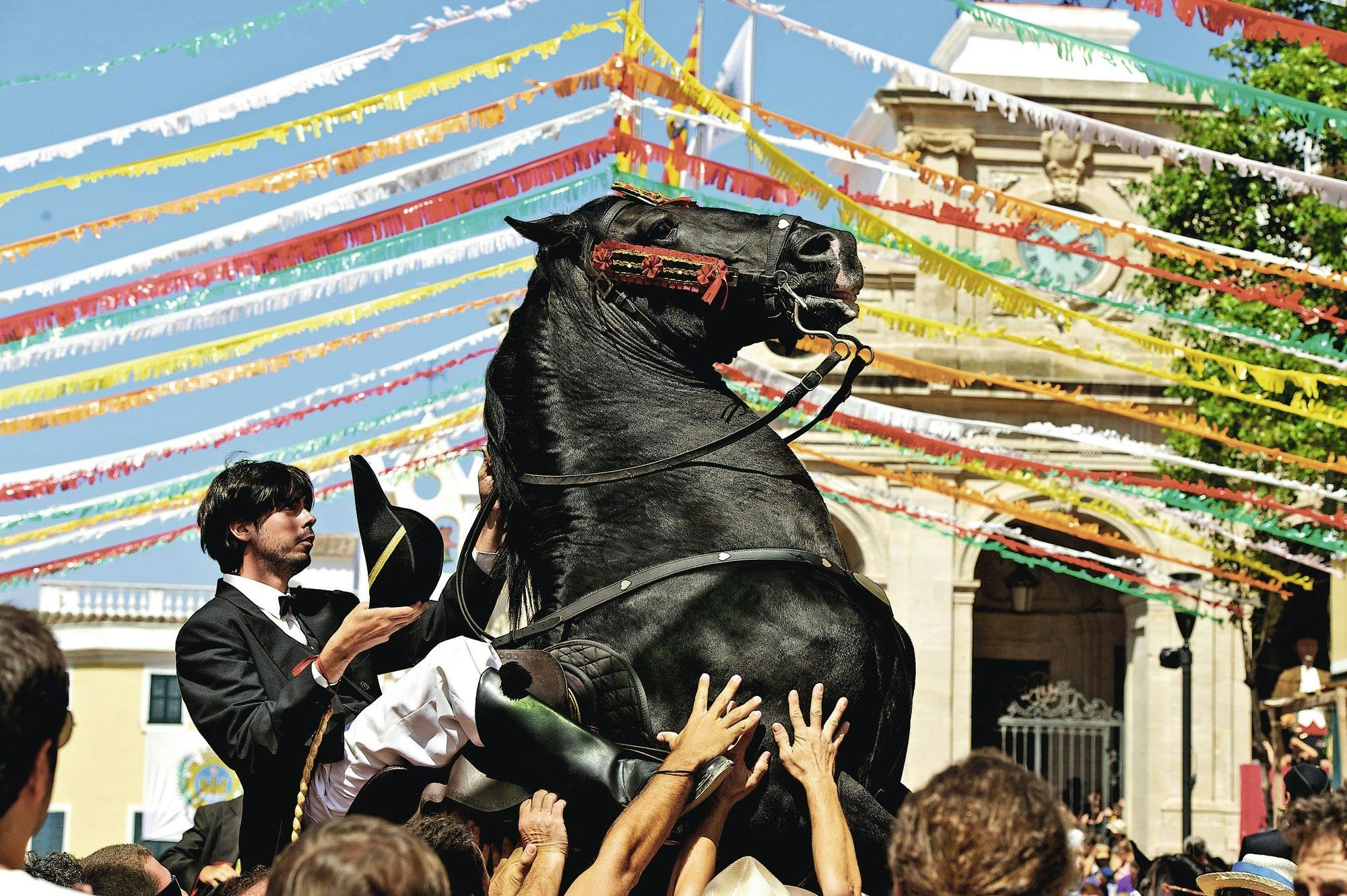
Mare de Déu de Gràcia celebrations and Mahón harbour boat trip Best deals for Mare de Déu de Gràcia celebrations and Mahón harbour boat trip. The streets of Maó pulse with music, tradition and celebration as Menorca honours Mare de Déu de Gràcia. Begin with a peaceful cruise through Mahón Harbour, gliding past historic fortresses, fishermen’s houses and hidden coves in one of the Mediterranean’s largest natural harbours. Then experience the island’s famous horses and riders as they take centre stage in the spectacular jaleo, where Menorcan culture comes alive in every square. Available from musement.com.
The harbour is best understood from the water. A sightseeing cruise reveals the true scale of the inlet and passes places that are difficult to see properly from the road, including the quarantine island, Illa del Rei, La Mola Fortress, the remains of Sant Felip Castle and the waterfront village of Es Castell.
Visitors should also spend time on land. The upper streets of Maó contain markets, churches, museums and Georgian-influenced architecture, while the lower harbour has marinas, seafood restaurants and long waterfront walks. Farther east, Cales Fonts offers one of Menorca’s most attractive evening dining areas.
Mahón Harbour Quick Facts
Visitor information
Details
Location
Eastern Menorca, Balearic Islands, Spain
Local name
Port de Maó
Approximate length
Nearly 6 kilometres
Municipalities
Maó and Es Castell
Main activities
Harbour cruises, island visits, fortresses, dining and waterfront walks
Standard harbour cruise
Approximately 60–70 minutes
2026 standard cruise price
€18 adults, €9 children aged 3–12
Illa del Rei shuttle
Approximately 15 minutes each way
Illa del Rei return fare
Currently €10
La Mola adult admission
Currently €8.25
Fort Marlborough admission
Currently around €6, including audio presentation
Nearest airport
Menorca Airport, approximately 4–6 kilometres away
Airport public transport
Bus Line 10 to Maó bus station
Best season
May, June, September and early October
Recommended visit
One full day
Important: Harbour tours, island shuttles and historic monuments operate seasonal schedules. Check live availability immediately before travelling.
Mahón, Maó or Port Mahon?
Visitors will encounter several names for the same city and harbour.
Maó: The official Catalan name.
Mahón: The Spanish form and the spelling widely used in English travel material.
Port Mahon: A traditional English name, especially common in naval history and literature.
Port de Maó: The Catalan name for the harbour.
All refer to the capital of Menorca and its harbour.
When searching maps, use Maó for the city, Moll de Llevant for the main visitor waterfront and the exact attraction name for individual forts or boat departure points.
Why Visit Mahón Harbour?
Mahón Harbour combines scenery, history and modern island life within one easily accessible area.
Visitors can:
Take a glass-bottom sightseeing cruise.
Visit a contemporary art gallery on an island.
Explore one of Europe’s largest 19th-century fortresses.
Walk through a British fort cut into rock.
Eat beside fishing boats at Cales Fonts.
Watch ferries and yachts pass through the inlet.
See Georgian-influenced architecture in Maó.
Learn about quarantine, naval medicine and military history.
Enjoy evening light over the water.
The harbour is particularly useful for travellers who want more than beaches. It provides insight into why Menorca was fought over repeatedly and why the island’s capital developed in the east rather than around a large open bay elsewhere.
How Large Is the Harbour?
Official tourism and port organisations frequently promote Mahón as the second-largest natural harbour in the world.
Exact international rankings vary according to how a natural harbour is defined and measured. What is not disputed is that Mahón is exceptionally long, deep and well sheltered.
Its principal characteristics include:
A length of almost six kilometres.
A broad outer entrance protected by fortifications.
Deep channels suitable for ferries and cruise ships.
Several islands and narrow channels.
Protected coves used for fishing, marinas and naval facilities.
A mainly east–west orientation that provides shelter from some prevailing winds.
The city centre occupies the high southern shore near the inner end. The harbour then widens towards Es Castell, the islands and the Mediterranean entrance.
A Short History of Mahón Harbour
Mahón’s natural shelter has attracted settlement and shipping for more than two thousand years.
Ancient Period
Phoenician, Carthaginian and Roman sailors used Menorca’s coastal anchorages. The name Mahón is traditionally connected with the Carthaginian general Mago, although the exact origin of the name is debated.
Medieval Menorca
After periods of Vandal, Byzantine and Muslim rule, Menorca was conquered by Alfonso III of Aragon in 1287.
Illa del Rei received its modern name from the tradition that the king first landed there during the campaign.
Spanish Fortification
Spain built Sant Felip Castle near the harbour entrance during the 16th century to defend against Ottoman and other naval threats.
British Rule
British forces occupied Menorca during the War of the Spanish Succession. Britain formally gained the island under the Treaty of Utrecht in 1713.
The harbour became an important Royal Navy base in the western Mediterranean. British influence remains visible in:
Fort Marlborough.
The military hospital on Illa del Rei.
Georgian-style sash windows and houses.
English loanwords in Menorcan culture.
Naval cemeteries and former residences.
French and Spanish Control
France captured Menorca in 1756. Britain regained it in 1763, Spain captured it in 1782, and Britain held it again between 1798 and 1802.
The Treaty of Amiens returned Menorca permanently to Spain in 1802.
La Mola
Spain began building La Mola Fortress during the 19th century in response to changing European naval power and concern that Britain or France might again seek control of the harbour.
Modern Harbour
Today the port combines:
Passenger ferries.
Cruise ships.
Commercial cargo.
Naval activity.
Marinas and repair services.
Fishing vessels.
Restaurants and tourism.
Harbour Sightseeing Cruises
A boat cruise is the most efficient way to understand the geography and history of Mahón Harbour.
The best-known public excursion is operated by Yellow Catamarans using glass-bottom boats designed specifically for the harbour.
2026 Schedule
Period
Typical departures
1–30 April
10:30 am, 12:00 pm, 1:30 pm and 3:00 pm
May, June, September and October
10:30 am, 12:00 pm, 1:30 pm and 3:00 pm
July and August
10:30 am, 12:00 pm, 1:30 pm, 3:00 pm and 4:30 pm
Duration
The complete cruise lasts around 60–70 minutes and does not include a landing stop.
Current Standard Prices
Adults: €18.
Children aged 3–12: €9.
Children aged 0–2: Free.
Discounted online prices may be offered.
Where to Board
Tickets and boarding are available at points around the Maó waterfront, including Moll de Llevant and Pla de Baixamar.
Passengers should be aboard at least ten minutes before departure.
Commentary
Recorded historical commentary is available in several languages, including English.
What You See on the Harbour Cruise
The route normally travels down one side of the harbour, approaches or briefly leaves the harbour entrance when conditions permit, and returns along the opposite shore.
Highlights may include:
Spanish Naval Base
The naval facilities show that Mahón remains an active strategic port rather than a harbour devoted only to tourism.
Photography may be restricted around sensitive military installations. Follow crew instructions.
S’Altra Banda
The quieter northern shore contains villas, former country houses, small coves and wooded slopes.
Anglo-American Cemetery
The historic cemetery reflects the international naval population once connected with the harbour.
Illa Plana
This small island formed part of the harbour’s military and quarantine landscape.
Lazaretto Island
The large walled quarantine complex occupies a strategically controlled island near the harbour entrance.
La Mola Fortress
The enormous fortifications extend across the northern headland and are especially impressive from the water.
Sant Felip Castle
Although much of the once-mighty fortress was demolished, its position opposite La Mola shows how the harbour entrance was controlled.
Cales Fonts and Es Castell
The former fishing harbour appears as a curved waterfront lined by restaurants and old boathouses.
Illa del Rei
The island’s former military hospital and cultural centre are clearly visible during the return journey.
Maó Skyline
The final approach reveals the old city rising above cliffs and the long marina below.
Glass-Bottom and Underwater Viewing
The harbour catamarans contain underwater viewing areas.
When weather and water clarity permit, the boat may approach the clear water near the outer harbour so passengers can see fish and the seabed.
Visibility depends on:
Sun angle.
Waves.
Recent wind.
Sediment.
Boat movement.
Whether fish are present.
Visitors should view this as an additional feature rather than the main reason for booking.
The tour remains worthwhile when underwater visibility is poor because the fortifications, islands and harbour history are the principal attractions.
Illa del Rei
Illa del Rei, also called Isla del Rey or King’s Island, lies roughly halfway between inner Maó and the harbour entrance.
The triangular island contains two particularly important historic sites:
Remains of an early Christian basilica.
An 18th-century British naval hospital.
The island is named after Alfonso III, who is traditionally said to have landed there before the conquest of Menorca in 1287.
The Naval Hospital
The British established a hospital on the island during the 18th century. It continued to develop under later administrations and served military and maritime patients for generations.
Restoration has preserved wards, courtyards, service buildings and medical-history displays.
How to Visit
Access is by shuttle boat from Moll de Llevant 61 in Maó.
The boat journey takes approximately 15 minutes.
2026 Shuttle Fare
The current return fare is €10, with an open return subject to the day’s schedule and capacity.
Hauser & Wirth Menorca
Hauser & Wirth Menorca occupies restored buildings beside the former hospital on Illa del Rei.
The seasonal art centre combines:
Contemporary exhibitions.
Outdoor sculpture.
Gardens designed for the island setting.
Educational activities.
Guided tours and events.
Cantina restaurant and bar.
Access to the historic hospital museum.
2026 Summer Season
For the main summer period from 21 June to 6 September, the island centre is scheduled to operate daily from 11:00 am until 10:00 pm.
From 9 September to 25 October, opening is scheduled from Wednesday to Sunday, 10:00 am to 4:00 pm.
Shuttle Times
During the main summer period:
Boats leave Maó approximately hourly from 11:00 am to 9:00 pm.
Return boats leave Illa del Rei approximately hourly from 12:30 pm to 11:30 pm.
Admission
Entry to the gallery and gardens is free, but the boat transfer must be reserved and paid for.
Animals
Animals are not permitted on the island, except recognised guide dogs, because Illa del Rei supports a protected native lizard population.
How Long to Allow
Allow two to three hours for the art centre, hospital and meal or drink.
Lazaretto Island
Illa del Llatzeret occupies a large island near the outer harbour.
The complex was constructed as a quarantine station for travellers, crews and cargo suspected of carrying infectious disease.
Its walls, isolation areas, chapels, warehouses and medical spaces reflect a period when maritime quarantine was a central part of Mediterranean public health.
Hundreds of thousands of people passed through the facility during its operation.
Can You Visit?
The island is not an ordinary walk-in attraction.
Visits generally require:
A scheduled guided tour.
An organised event.
Boat access arranged by an authorised operator.
Most travellers see the walls and buildings from a harbour cruise.
La Mola Fortress
La Mola, officially the Fortress of Isabel II, occupies the large headland on the northern side of the harbour entrance.
Construction began during the 19th century when Spain feared that foreign naval powers might again attempt to seize Mahón.
The fort was designed for modern artillery but became partly outdated as military technology advanced.
What You Can See
Massive defensive walls.
Underground galleries.
Gun batteries.
Casemates and powder magazines.
Military courtyards.
Coastal observation points.
Views across the harbour entrance.
Later artillery installations.
Current Admission
General admission: €8.25.
Ages 12–16 and visitors over 65: €5.75.
Ages 6–11: €4.25.
Children aged 0–5: Free.
Tickets are purchased at the fortress reception.
Current Seasonal Hours
April–September: Daily, 10:00 am–8:00 pm.
October: Daily, with progressively earlier closing.
November: Reduced morning hours, usually closed Mondays.
Early December: Limited operation.
January: Closed.
A special reduced schedule may apply on 8 September.
How Long to Allow
La Mola is enormous. Allow at least two hours, and preferably three, for a useful visit.
Walking distances are substantial, and many areas are exposed to sun and wind.
Getting There
The simplest options are:
Hire car.
Taxi.
Private excursion.
Seasonal water taxi.
Confirm return transport before travelling by boat or taxi.
Fort Marlborough
Fort Marlborough is an 18th-century British fort cut into the rock above Cala Sant Esteve on the southern side of the harbour entrance.
It was built between 1720 and 1726 and named after John Churchill, Duke of Marlborough.
Why It Is Unusual
Much of the fort is hidden underground.
Visitors pass through:
Rock-cut tunnels.
Defensive galleries.
Underground rooms.
Artillery positions.
An upper central enclosure.
Viewpoints over the harbour entrance.
An audiovisual presentation recreates the fort’s history and the conflicts of 18th-century Menorca.
Admission
Current published admission is approximately €6 and includes the audio presentation.
Opening
Hours vary significantly by season. Confirm the current timetable before travelling.
Getting There
Fort Marlborough is approximately five kilometres from Maó.
It is approximately two kilometres from Es Castell.
Parking is available before the descent into Cala Sant Esteve.
There is no direct public bus to the fort.
Visitors using public transport can take a bus to Es Castell and walk approximately two kilometres.
Sant Felip Castle
Sant Felip Castle once stood opposite La Mola on the southern side of the harbour entrance.
Spain began constructing the fortress during the 16th century. The British later expanded it into one of the Mediterranean’s largest fortified complexes.
After Spain recovered Menorca in 1782, King Charles III ordered much of the fortress demolished.
Today visitors can explore surviving underground galleries on scheduled guided visits.
Planning a Visit
Do not expect a complete castle standing above ground.
The principal value lies in:
Underground passages.
Military archaeology.
Siege history.
The relationship with Fort Marlborough.
Understanding the scale of the vanished fortress.
Opening dates and guided-tour schedules should be confirmed in advance.
Es Castell
Es Castell stands on the southern shore of Mahón Harbour, east of Maó.
The town developed strongly during British rule and was known as Georgetown.
Its orderly streets, military square and harbour orientation retain a different atmosphere from the older lanes of Maó.
Main Sights
Plaça de s’Esplanada.
Military Museum of Menorca.
Cales Fonts.
Cala Corb.
British-influenced street plan.
Harbour viewpoints.
Es Castell is commonly described as Spain’s easternmost town and is one of the first urban places in the country to see sunrise.
Getting There
Regular buses connect Maó and Es Castell, with frequency varying by season.
The trip is short enough for a taxi, and active visitors can also walk sections of the harbour-side route.
Cales Fonts
Cales Fonts is a former fishing cove below Es Castell.
Old boathouses and storage buildings have been converted into:
Restaurants.
Bars.
Craft shops.
Small galleries.
Seasonal market stalls.
Fishing boats and leisure craft still use the harbour, preserving a working-maritime atmosphere.
Best Time to Visit
Late afternoon and evening are the most attractive times.
The setting becomes especially atmospheric when restaurant lights reflect on the water.
Food
Menus commonly feature:
Grilled fish.
Squid.
Mussels.
Seafood rice.
Tapas.
Menorcan cheese.
Gin-based drinks.
Reserve a waterfront table during July and August.
Maó Waterfront
The Maó waterfront stretches along Moll de Llevant beneath the old city.
It contains:
Yacht marinas.
Harbour-tour ticket offices.
Restaurants and cafés.
Ferry and commercial facilities.
Boat-repair businesses.
Tourist information.
Seasonal island shuttles.
The harbour road is long. A restaurant described as being “at the port” may still be a considerable walk from your boat or parking space.
Walking Conditions
The waterfront itself is generally level and paved, but the historic centre is high above it.
Expect steep streets, stairs and sloping routes when moving between the harbour and upper town.
Signed lift access exists in parts of central Maó, but operation and the most convenient route should be checked locally.
Maó Old Town
Maó’s historic centre is compact enough to explore on foot once the climb from the harbour has been completed.
Santa Maria Church
The church is known for its large organ and regularly hosts recitals during the visitor season.
Mercat des Claustre
The market occupies the cloister area of the former Carmelite complex and contains food stalls, small shops and places to drink or eat.
Fish Market
The historic fish-market area combines food sales with modern tapas and drinks businesses.
Museum of Menorca
The museum presents the island’s archaeology, history and art, including Talayotic culture and later periods.
Georgian Influence
British-era features visible around Maó include sash windows, restrained façades and architectural details unusual elsewhere in Spain.
Viewpoints
Several streets and terraces provide elevated views across the harbour, marinas and opposite shore.
Eating Around the Harbour
Mahón Harbour offers everything from simple tapas to high-end waterfront dining.
Local Foods to Try
Mahón-Menorca cheese: Cow’s-milk cheese ranging from mild to strongly aged.
Caldereta: Menorcan seafood stew, commonly associated with lobster.
Oliaigua: Traditional vegetable and bread soup.
Stuffed aubergines: A common Menorcan preparation.
Fresh fish: Often priced by weight.
Pomada: Menorcan gin mixed with lemonade.
Restaurant Areas
Moll de Llevant in Maó.
Cales Fonts in Es Castell.
Maó old town.
Cala Corb.
Illa del Rei’s seasonal Cantina.
Practical Advice
Ask the price before ordering fish sold by weight, and check whether bread, olives or other table items are charged separately.
Waterfront restaurants are busiest after 8:00 pm during summer.
Ferries and Cruise Ships
Mahón remains an active passenger port.
Ferries connect Menorca with destinations that may include Barcelona, Valencia and Palma, depending on season and operator.
Ferry Passengers
The passenger terminal is within the wider harbour but may not be beside the main restaurant and sightseeing-boat area.
Check:
The exact terminal.
Check-in deadline.
Vehicle-boarding time.
Whether transport is required from your accommodation.
Cruise Ships
Smaller and medium-sized cruise ships may berth within the harbour. Larger vessels may use different arrangements depending on vessel size and port operations.
The harbour entrance is an attraction in itself, so remain on deck during arrival or departure when possible.
Commercial Activity
Parts of the harbour contain cargo, fuel and industrial infrastructure.
This working-port character is part of Mahón’s identity and explains why not every waterfront section is intended for leisurely walking.
Getting There from Menorca Airport
Menorca Airport is close to Maó.
Bus Line 10
Line 10 connects the airport with Maó’s main bus station.
From the bus station, visitors can:
Walk to the old town.
Continue downhill to the harbour.
Take a taxi to a specific marina or hotel.
Transfer to buses serving other towns.
The bus station is in the upper city rather than directly on Moll de Llevant.
Taxi
A taxi is the simplest option for travellers with luggage, mobility limitations or a ferry departure.
Give the driver the precise harbour address because the port extends for several kilometres.
Getting Around by Bus
Maó is Menorca’s principal eastern bus hub.
Services connect the city with:
Es Castell.
Sant Lluís.
Punta Prima.
Binibèquer.
Alaior.
Ciutadella.
Airport and resort areas.
Routes and frequency change between winter and summer.
For Es Castell and Cales Fonts
Take a regular bus from Maó towards Es Castell, then walk downhill to Cales Fonts.
For Fort Marlborough
No normal bus runs directly to the fort. Travel to Es Castell and continue on foot or by taxi.
For La Mola
Do not assume a regular public bus is available. A taxi, hire car or seasonal boat transfer is more dependable.
Driving and Parking
A car is useful for La Mola, Fort Marlborough and combining the harbour with other parts of eastern Menorca.
Parking in Maó
Options include:
Regulated blue-zone street parking.
Central public car parks.
Parking near Plaça de s’Esplanada.
Selected harbour-side spaces.
Free or less expensive areas farther from the central streets.
Rules and charging hours vary by zone and season.
Harbour Parking
Do not assume you can park directly beside a boat departure in peak summer.
Allow additional time to:
Find a legal space.
Pay at a meter or app.
Walk to the correct quay.
Locate the ticket office.
Es Castell
Larger parking areas are available near the upper town, followed by a downhill walk to Cales Fonts.
La Mola
The fortress has visitor parking at its reception area.
Walking Around the Harbour
The harbour is too large to walk in full during a casual visit.
Useful walking sections include:
Maó Waterfront
Walk along Moll de Llevant past marinas, excursion boats and restaurants.
Maó to Es Castell
Sections can be walked by active visitors, but traffic, heat and discontinuous waterfront access make it less straightforward than the distance suggests.
Es Castell to Cala Sant Esteve
This approximately two-kilometre route provides access towards Fort Marlborough.
Carry water and avoid midday heat.
Cales Fonts and Cala Corb
These small harbours can be combined in a relaxed evening walk.
Water Taxis and Private Boats
Water taxis provide a useful alternative to road travel for selected harbour destinations.
Possible services include:
Transfers to La Mola.
Private Illa del Rei transport.
Restaurant transfers.
Custom harbour tours.
Connections between Maó and Es Castell areas.
Services are seasonal and weather dependent.
Before booking, confirm:
Whether the price is per person or per boat.
Return time.
Minimum passenger numbers.
Whether attraction admission is included.
Cancellation rules.
Accessibility.
The Best Time to Visit
April
Harbour cruises begin operating, but restaurants and island services may still use reduced schedules.
May and June
These are excellent months for comfortable walking, good light and moderate visitor numbers.
July and August
Summer offers the widest range of tours and evening activity.
Expect:
More yachts and excursion boats.
Busy restaurants.
Hot conditions at La Mola.
Parking pressure.
Advance-booking requirements.
September
The harbour remains active while temperatures and crowds begin to ease.
October
Some boat tours continue, but weather becomes less predictable and seasonal venues begin closing.
Winter
Winter is suitable for walking around Maó and Es Castell, but most sightseeing-boat and island services are unavailable or limited.
Weather and Sea Conditions
The harbour is sheltered, but the entrance can be affected by wind and open-sea swell.
The Tramuntana, a strong northerly wind, can influence:
Harbour-tour routes.
Underwater visibility.
Water-taxi services.
Ferry movements.
Comfort near La Mola.
A cruise may remain inside the harbour when conditions prevent travel beyond the entrance.
Summer sun is intense on boats and exposed fortifications. Shade can be limited.
Visiting with Children
Mahón Harbour works well for families because activities vary from short cruises to large fortresses.
Best Family Activities
Glass-bottom harbour cruise.
Illa del Rei boat trip.
Exploring La Mola.
Watching boats at Cales Fonts.
Maó market and ice-cream stops.
Fort Marlborough’s audiovisual presentation.
Planning Tips
Choose the morning harbour cruise in hot weather.
Carry hats and sunscreen.
Do not schedule La Mola immediately after a long midday meal.
Keep children beside adults around quays and fort walls.
Confirm toilets on smaller boats.
Use a compact pushchair rather than a large pram.
Best Short Activity
The 60–70-minute harbour cruise is manageable for most children and provides frequent visual interest.
Accessibility and Mobility
Accessibility varies greatly between the waterfront, boats, islands and fortifications.
Maó Waterfront
Much of the main quay is level, although kerbs, marina equipment and long distances can create difficulties.
Upper Maó
The old town sits above the port and contains steep streets and stairways.
Use lifts, taxis or gentler access streets where available.
Harbour Cruises
Yellow Catamarans promotes relatively easy access, but travellers should confirm:
Gangway width.
Steps.
Wheelchair storage.
Accessible toilet availability.
Whether a passenger can remain in a wheelchair.
Illa del Rei
The shuttle boat, historic hospital and island surfaces may present boarding and mobility challenges. Contact the operator before booking.
La Mola
The fortress covers a vast area with long distances, slopes and uneven surfaces.
Mobility services or vehicle-assisted visits may be available, but should be reserved or confirmed directly.
Fort Marlborough
Rock-cut passages, steps and confined spaces limit accessibility.
What to Bring
Sun protection: Essential on boats and at La Mola.
Comfortable shoes: Needed for forts and old-town streets.
Water: Carry it during fortress visits.
Light wind layer: Useful on harbour cruises.
Booking confirmations: Keep boat and island tickets available offline.
Camera strap: Useful on moving boats.
Small bag: Easier on shuttle boats and narrow passages.
Motion-sickness treatment: Consider it when sensitive, especially near the harbour mouth.
Cash and card: Small vendors and parking systems vary.
Swimwear: Not needed for the standard harbour cruise, which makes no swimming stop.
Suggested One-Day Mahón Harbour Itinerary
9:00 am: Explore Maó Old Town
Visit the market area, Santa Maria Church and harbour viewpoints before the main heat.
10:30 am: Harbour Cruise
Take the 60–70-minute sightseeing trip to understand the islands and fortifications.
12:00 pm: Waterfront Walk
Continue along Moll de Llevant and stop for coffee or an early lunch.
1:30 pm: Illa del Rei
Take the shuttle to the island for the hospital, art centre and gardens.
4:30 pm: Return to Maó
Collect a car or take a bus or taxi towards Es Castell.
5:15 pm: Es Castell
Walk through the central square and descend to the harbour.
6:00 pm: Cales Fonts
Browse craft shops and enjoy drinks beside the fishing boats.
8:00 pm: Dinner
Eat at Cales Fonts or return to Maó’s harbour restaurants.
Suggested Half-Day Itinerary
Option One: Classic Harbour Visit
Harbour cruise.
Waterfront walk.
Old-town market.
Lunch in Maó.
Option Two: Military History
Drive to La Mola.
Spend two to three hours at the fortress.
Stop at Es Castell.
Lunch at Cales Fonts.
Option Three: Art and History
Shuttle to Illa del Rei.
Visit the naval hospital.
Explore Hauser & Wirth.
Eat at Cantina.
Return to Maó.
Advice for Cruise Passengers
Mahón is one of the easier Mediterranean cruise ports for independent exploration when the ship docks close to the city.
On Arrival
Check the exact berth or tender point.
Allow time for the uphill journey into the old town.
Confirm the ship’s all-aboard time.
Do not book a harbour cruise with a tight return margin.
Best Independent Options
Maó old town and market.
Standard harbour cruise.
Illa del Rei, when shuttle times fit.
Taxi to Es Castell and Cales Fonts.
Prearranged trip to La Mola.
Timing Warning
La Mola is large and distant enough that it should not be added casually to a short port call.
Return taxis and water transport should be arranged in advance.
Is Mahón Harbour Worth Visiting?
Mahón Harbour is one of Menorca’s most rewarding non-beach destinations.
Main Advantages
Exceptional natural-harbour scenery.
Strong British, Spanish and French history.
Easy public sightseeing cruises.
Major fortresses.
Contemporary art on Illa del Rei.
Waterfront restaurants.
Good access from the airport.
Suitable for a few hours or a full day.
Possible Drawbacks
The port is too large to explore entirely on foot.
The old town is steeply above the water.
Historic attractions use different seasonal schedules.
Summer parking can be difficult.
Some harbour sections are industrial.
La Mola requires substantial walking.
Water transport can be affected by wind.
The best first visit combines a one-hour harbour cruise with either Illa del Rei or Es Castell and Cales Fonts.
Frequently Asked Questions About Mahón Harbour
Where is Mahón Harbour?
It is on the eastern side of Menorca in Spain’s Balearic Islands.
Is Maó the same as Mahón?
Yes. Maó is the official Catalan name, while Mahón is the Spanish form.
How long is the harbour?
It extends for almost six kilometres.
Is it really the second-largest natural harbour in the world?
Official tourism sources often describe it that way, although global rankings depend on the measurement and definition used.
Can I walk around the whole harbour?
Not conveniently. The shoreline is long and includes military, industrial and inaccessible sections.
What is the best way to see it?
A sightseeing boat tour provides the clearest overall view.
How long is the standard harbour cruise?
Approximately 60–70 minutes.
How much does it cost?
The standard 2026 price is €18 for adults and €9 for children aged 3–12.
Are babies free?
Children aged two and younger currently travel free on the standard Yellow Catamarans cruise.
Does the boat stop anywhere?
No. The normal one-hour harbour circuit does not include a landing.
Is there English commentary?
Yes. Historical commentary is available in English and other languages.
Does the cruise leave the harbour?
It may briefly approach or pass outside the entrance when sea conditions permit.
Are the underwater views guaranteed?
No. Visibility depends on sunlight, waves, water clarity and marine life.
Where do the sightseeing boats depart?
They depart from the Maó waterfront around Moll de Llevant and Pla de Baixamar.
How early should I arrive?
Be aboard at least ten minutes before sailing and arrive earlier when buying tickets locally.
Can I visit Illa del Rei?
Yes, during its seasonal operating period by shuttle boat from Maó.
How much is the Illa del Rei boat?
The current return fare is €10.
How long is the crossing?
Approximately 15 minutes each way.
Is Hauser & Wirth free?
Entry to the gallery and gardens is free, but the shuttle boat is paid.
What else is on Illa del Rei?
The island contains an old British naval hospital and remains of an early Christian basilica.
Can I take a dog to Illa del Rei?
No, except for recognised guide dogs.
Can I visit Lazaretto Island?
Only through scheduled tours, authorised events or organised boat access.
What is La Mola?
It is the enormous 19th-century Fortress of Isabel II at the northern side of the harbour entrance.
How much is La Mola?
General admission is currently €8.25.
How long should I spend at La Mola?
Allow at least two hours, and preferably three.
Can I reach La Mola by bus?
A regular public bus should not be assumed. A car, taxi or seasonal water transfer is more practical.
What is Fort Marlborough?
It is an 18th-century British fort carved into rock near Cala Sant Esteve.
How much is Fort Marlborough?
Current admission is approximately €6.
Is Fort Marlborough in Maó?
It is on the Es Castell side of the harbour entrance, around five kilometres from Maó.
Can I take a bus to Fort Marlborough?
No direct bus reaches the fort. Take a bus to Es Castell and walk around two kilometres or continue by taxi.
What is Cales Fonts?
It is a former fishing cove below Es Castell lined with restaurants, bars and craft shops.
What is the best time for Cales Fonts?
Late afternoon and evening.
Can I swim in Mahón Harbour?
Do not swim from busy commercial quays or marinas. Use recognised bathing areas outside the working port.
Are there beaches in central Maó Harbour?
The central harbour is primarily a working port and marina rather than a beach destination.
How far is the airport?
Menorca Airport is approximately four to six kilometres from Maó, depending on the destination within the harbour.
Is there an airport bus?
Yes. Line 10 connects the airport with Maó bus station.
Does the airport bus go directly to the harbour?
It terminates in the upper city, so a walk, taxi or connecting journey may be required.
Can I park at the harbour?
Yes, but central spaces are regulated and can fill quickly during summer.
Is the harbour wheelchair accessible?
The principal quay is relatively level, but the steep connection with the old town and access to boats and forts vary considerably.
Are harbour cruises wheelchair accessible?
Some boats offer easier access, but exact gangway, toilet and wheelchair arrangements must be confirmed directly.
Is Mahón Harbour suitable for children?
Yes. Boat cruises, Illa del Rei and the fortifications are generally engaging for families.
Can I visit the harbour in winter?
Yes, but most excursion boats and island attractions use reduced schedules or close seasonally.
What is the best month to visit?
June and September provide warm weather, active services and generally lower crowd levels than August.
Yes. The waterfront, old town and sightseeing cruise are practical during most port calls.
Should I stay in Maó or Es Castell?
Stay in Maó for transport, shopping and museums. Choose Es Castell for a quieter harbour atmosphere and easy evening access to Cales Fonts.
Can I combine Mahón Harbour with a beach?
Yes, but use a car, taxi or bus and allow sufficient time. Punta Prima, Binibèquer and other eastern beaches require separate travel.
Is the harbour worth seeing without a boat trip?
Yes, but the islands and full defensive layout are much easier to understand from the water.
Final Thoughts
Mahón Harbour is one of Menorca’s most historically layered and visually impressive areas.
Its long protected waters explain centuries of naval rivalry, while its islands, forts and waterfront settlements reveal how military, medical, commercial and everyday life developed around the port.
A one-hour harbour cruise is the best introduction. It provides context for La Mola, Fort Marlborough, the quarantine island, Illa del Rei and Es Castell before visitors choose which places deserve a closer look.
Allow a full day when possible. Spend the morning in Maó, take a cruise, visit Illa del Rei and finish with dinner at Cales Fonts.
With sensible planning and attention to seasonal schedules, Mahón Harbour offers far more than a pleasant marina. It is one of the most complete combinations of maritime scenery, military history, contemporary culture and waterfront dining in the Balearic Islands.
Sponsored Popular Items
Quick take: Musement.com offers a worldwide selection of tours and attractions
Mare de Déu de Gràcia celebrations and Mahón harbour boat trip Best deals for Mare de Déu de Gràcia celebrations and Mahón harbour boat trip. The streets of Maó pulse with music, tradition and celebration as Menorca honours Mare de Déu de Gràcia. Begin with a peaceful cruise through Mahón Harbour, gliding past historic fortresses, fishermen’s houses and hidden coves in one of the Mediterranean’s largest natural harbours. Then experience the island’s famous horses and riders as they take centre stage in the spectacular jaleo, where Menorcan culture comes alive in every square. Available from musement.com.