Sintra is one of Portugal’s most extraordinary destinations. Forested hills rise behind a compact historic town, while brightly coloured palaces, ruined fortifications, mysterious gardens and former royal estates appear between granite peaks and dense vegetation.
The destination is often described as an easy day trip from Lisbon. The train journey is straightforward, but seeing Sintra well requires more planning than the short distance suggests. The main monuments are spread across steep hills, the roads are narrow, palace tickets use timed admission, and queues for local buses can consume a surprising part of the day.
Sponsored Popular Items
Quick take: Musement.com offers a worldwide selection of tours and attractions
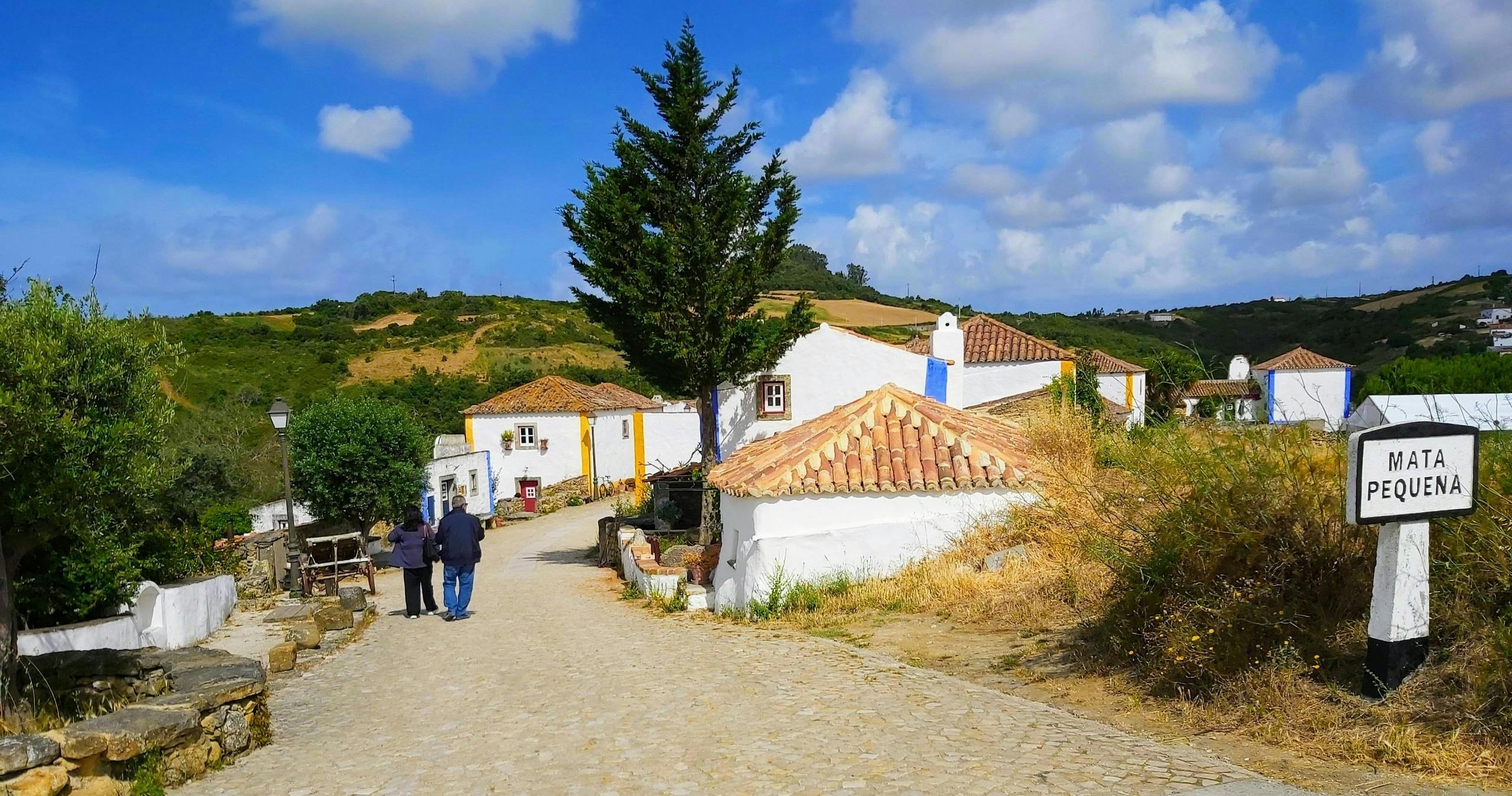
Sintra & Portuguese Dream Villages Tour from Lisbon Portugal Sintra and Portuguese dream villages tour from Lisbon is a convenient way to add structure, local context and purposeful sightseeing to the itinerary. Sintra and Portuguese dream villages tour from Lisbon: experience overview Admire the traditional homes in Penedo, visit the famous Azenhas do Mar and discover the ancient Portuguese life and traditions. This makes the experience a useful option when planning time in Lisbon. The exact duration can depend on the selected date, option or operating schedule. Routes, start times, inclusions and meeting arrangements may vary, so the current booking page should be treated as the final source of…
A successful visit does not attempt to see every palace. For one day, choose two major monuments and spend time in the historic centre. With two days, add Monserrate, the Moorish Castle, the National Palace or the quieter forested estates.
This guide explains what each attraction offers, how to travel from Lisbon, which tickets should be reserved, how to avoid an unrealistic itinerary and what current restoration work may affect your visit.
Sintra Quick Facts
Visitor information
Details
Country
Portugal
Region
Lisbon District
Distance from central Lisbon
Approximately 25–30 kilometres
Typical train journey
Approximately 40–50 minutes
UNESCO status
Cultural Landscape of Sintra, inscribed in 1995
Recommended visit
One full day minimum; two days preferred
Most popular attraction
Park and National Palace of Pena
Best central attraction
National Palace of Sintra
Best gardens and tunnels
Quinta da Regaleira
Best panoramic walk
Moorish Castle
Quietest major palace
Monserrate Palace
Best transport from Lisbon
Train from Rossio, Oriente or Entrecampos
Best time to arrive
Before 9:00 am
Walking conditions
Steep hills, cobbles, stairs and uneven garden paths
Best seasons
Spring and early autumn
Important: Palace opening hours, transport services and access roads can change because of weather, fire danger, restoration work or special events. Confirm current conditions before travelling.
Why Is Sintra So Special?
Sintra is not simply a town with several historic buildings. Its importance comes from the way architecture, gardens, hills and forest were deliberately combined into one Romantic landscape.
Cooler temperatures, mist, abundant water and dense vegetation attracted Portuguese royalty and wealthy residents for centuries. During the 19th century, King Ferdinand II and other patrons transformed older estates and ruins into highly imaginative palaces surrounded by landscaped parks.
Sintra’s monuments combine influences from:
Portuguese Manueline architecture.
Gothic revival design.
Moorish architecture.
Renaissance decoration.
Indian and Oriental motifs.
Medieval castles and monasteries.
English Romantic gardens.
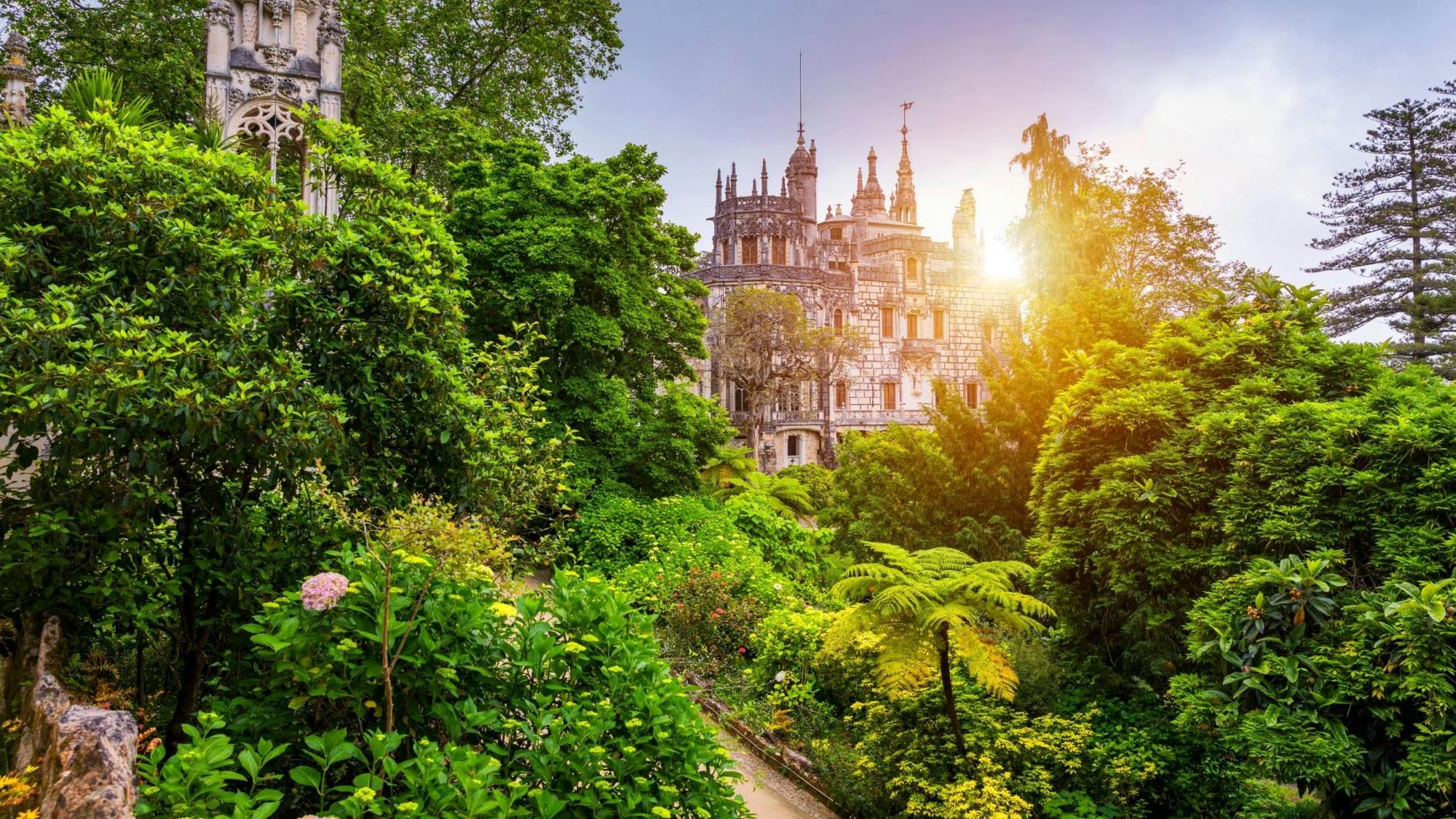
The result is visually dramatic but not uniform. Pena Palace is colourful and theatrical, Monserrate is refined and botanical, Regaleira is symbolic and mysterious, while the Moorish Castle remains rugged and defensive.
A Short History of Sintra
Human settlement in the Sintra region extends back thousands of years. Its defensible hills and access to fertile land made it strategically valuable long before the creation of the palaces seen today.
During Muslim rule, a fortified castle was constructed high on the ridge. After the Christian conquest of Lisbon and the surrounding area in the 12th century, Sintra became part of the Portuguese kingdom.
The National Palace developed as a royal residence in the town below. Successive monarchs enlarged and decorated it, leaving medieval rooms, Manueline additions, painted ceilings and important collections of Portuguese tiles.
The 1755 Lisbon earthquake damaged parts of Sintra but did not destroy the town’s importance.
Its most dramatic transformation began in the 19th century. King Ferdinand II acquired the ruins of a monastery above Sintra and created Pena Palace, combining architectural styles in a deliberately imaginative Romantic composition.
Other estates followed. Monserrate was rebuilt for Sir Francis Cook, while Quinta da Regaleira was shaped in the early 20th century for António Augusto Carvalho Monteiro with architect and stage designer Luigi Manini.
How Long Should You Spend in Sintra?
One Day
One day is enough for two major attractions and the historic centre.
Realistic combinations include:
Pena Palace and Quinta da Regaleira.
Pena Palace and the Moorish Castle.
Quinta da Regaleira and the National Palace.
Monserrate and Quinta da Regaleira.
Trying to enter Pena Palace, the Moorish Castle, Regaleira, Monserrate and the National Palace in one day creates an exhausting itinerary dominated by transport and queues.
Two Days
Two days provide enough time for four major sites without rushing.
An overnight stay also allows you to walk through the historic centre before day-trip crowds arrive and after they leave.
Three Days
Three days suit visitors interested in gardens, hiking, photography or the coast.
You can add:
The Convent of the Capuchos.
Chalet of the Countess of Edla.
Biester Palace.
Villa Sassetti.
Cabo da Roca.
Azenhas do Mar.
Colares or the Sintra-Cascais Natural Park.
Pena Palace and Park
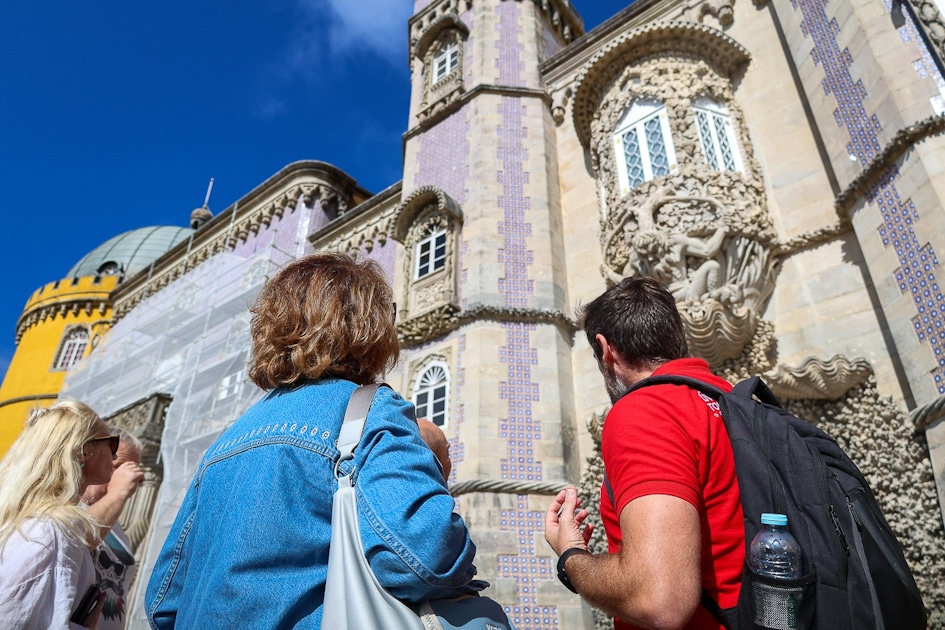
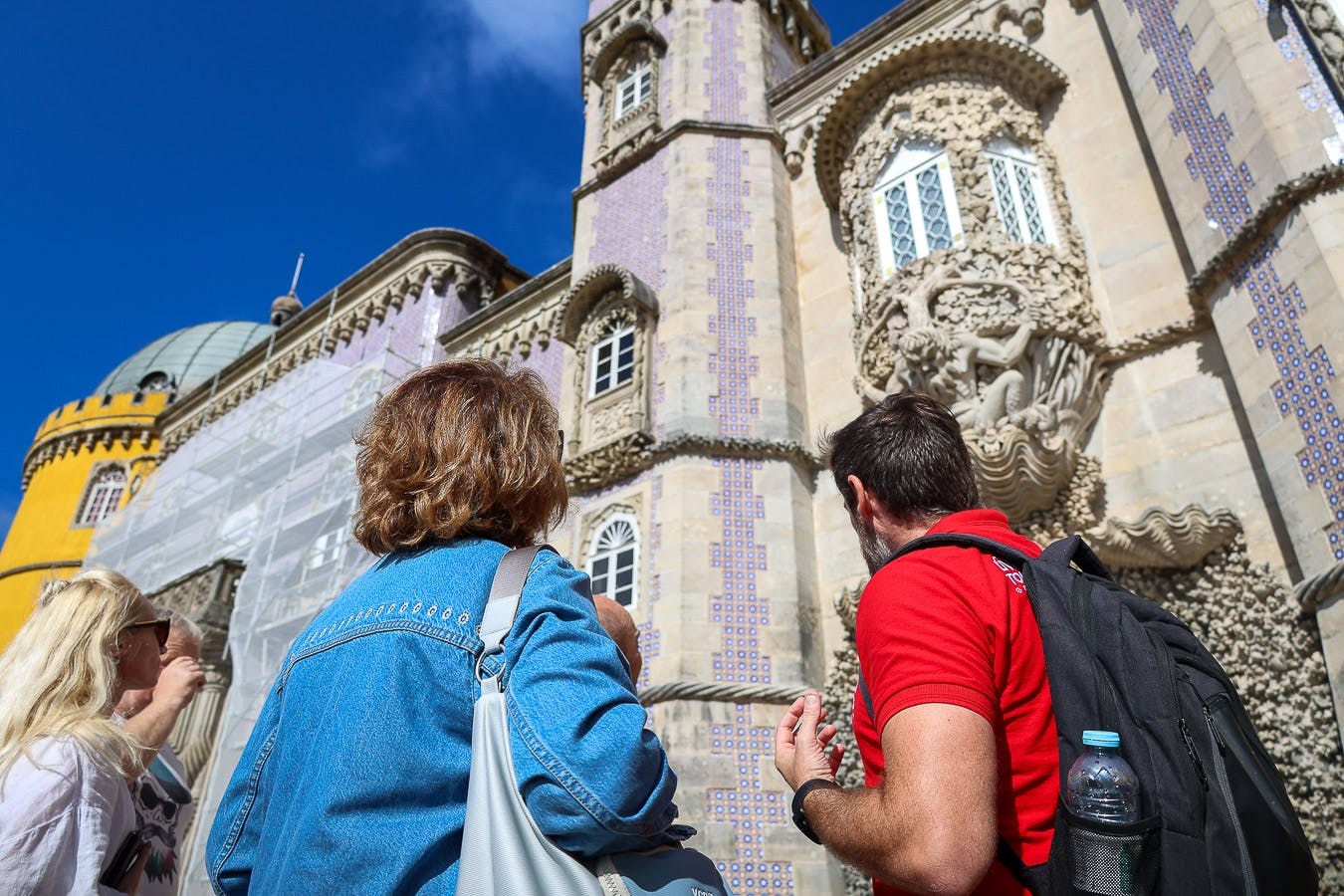
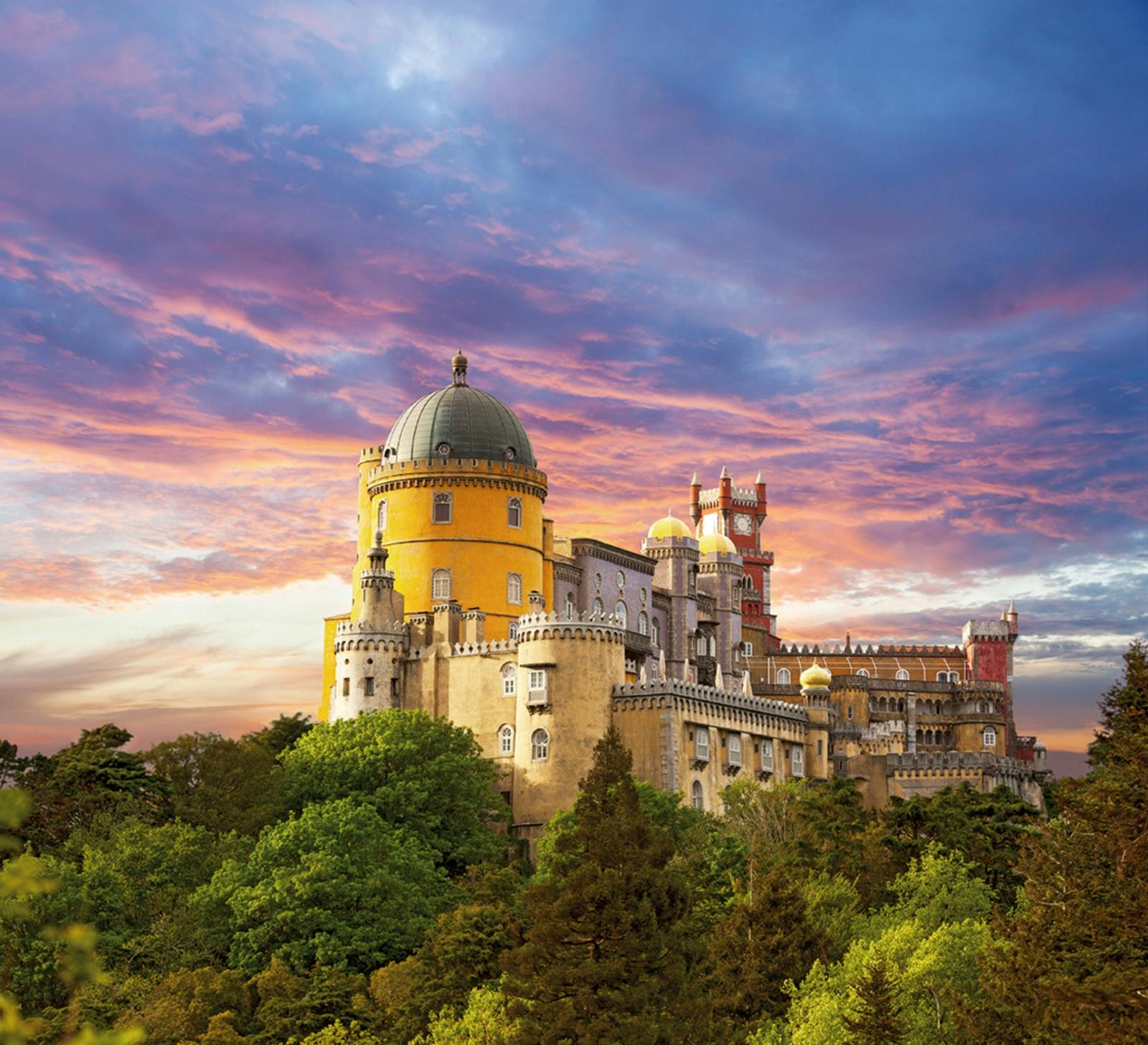
Pena Palace is Sintra’s most famous monument. Its red and yellow walls, towers, domes, gateways and terraces occupy one of the highest points in the Serra de Sintra.
King Ferdinand II developed the palace around the remains of a former Hieronymite monastery. The exterior combines medieval, Manueline, Moorish and Romantic elements, while the interior preserves royal rooms from the final decades of the Portuguese monarchy.
What to See
The monumental entrance and Triton gateway.
The palace terraces.
The former monastery cloister.
Royal apartments.
The chapel.
Views across the Sintra hills and Atlantic region.
The landscaped park surrounding the palace.
Timed Admission
Entry to the palace interior is permitted only at the date and time printed on the ticket.
The booked time refers to arrival at the palace itself, not arrival at the main park gate.
Allow approximately 30 minutes to travel between the principal park entrance and the palace meeting point. The route is uphill, and visitors who arrive late may be refused entry.
Palace and Park or Park Only?
The essential ticket includes both the palace interior and park.
A cheaper park-only ticket allows visitors to explore the grounds but does not include the royal interior route.
The park-only option may suit visitors who:
Have already visited the palace.
Dislike crowded interior routes.
Prefer gardens and walking.
Cannot obtain a suitable palace time slot.
Internal Transfer
A paid shuttle operates between the main park entrance and the palace area.
The shuttle reduces the uphill walking but does not eliminate all standing, ramps or movement around the palace.
How Long to Allow
Allow at least two hours for the palace and immediate terraces.
Allow three to four hours when exploring the wider park, Chalet of the Countess of Edla, lakes and viewpoints.
Moorish Castle
The Moorish Castle occupies a rocky ridge below Pena Palace.
Its walls and towers were built to defend the region during Muslim rule. After the Christian conquest, its strategic importance gradually declined, and later restoration helped preserve the dramatic battlements visible today.
What the Visit Involves
The castle is primarily an outdoor walking attraction.
Visitors follow stone paths and walls between towers overlooking:
Sintra town.
The National Palace.
Pena Palace.
Forested hills.
The plains towards Lisbon.
The Atlantic coast in clear weather.
Walking Difficulty
The route includes:
Steep stone stairs.
Uneven surfaces.
Exposed walls.
Sections without shade.
Slippery stone in rain or mist.
Secure footwear is essential.
Combining the Castle with Pena
Pena Palace and the Moorish Castle are relatively close by mountain standards and can be visited on the same half-day.
The combination works best when Pena is booked first thing in the morning, followed by a walk or bus journey to the castle.
Quinta da Regaleira
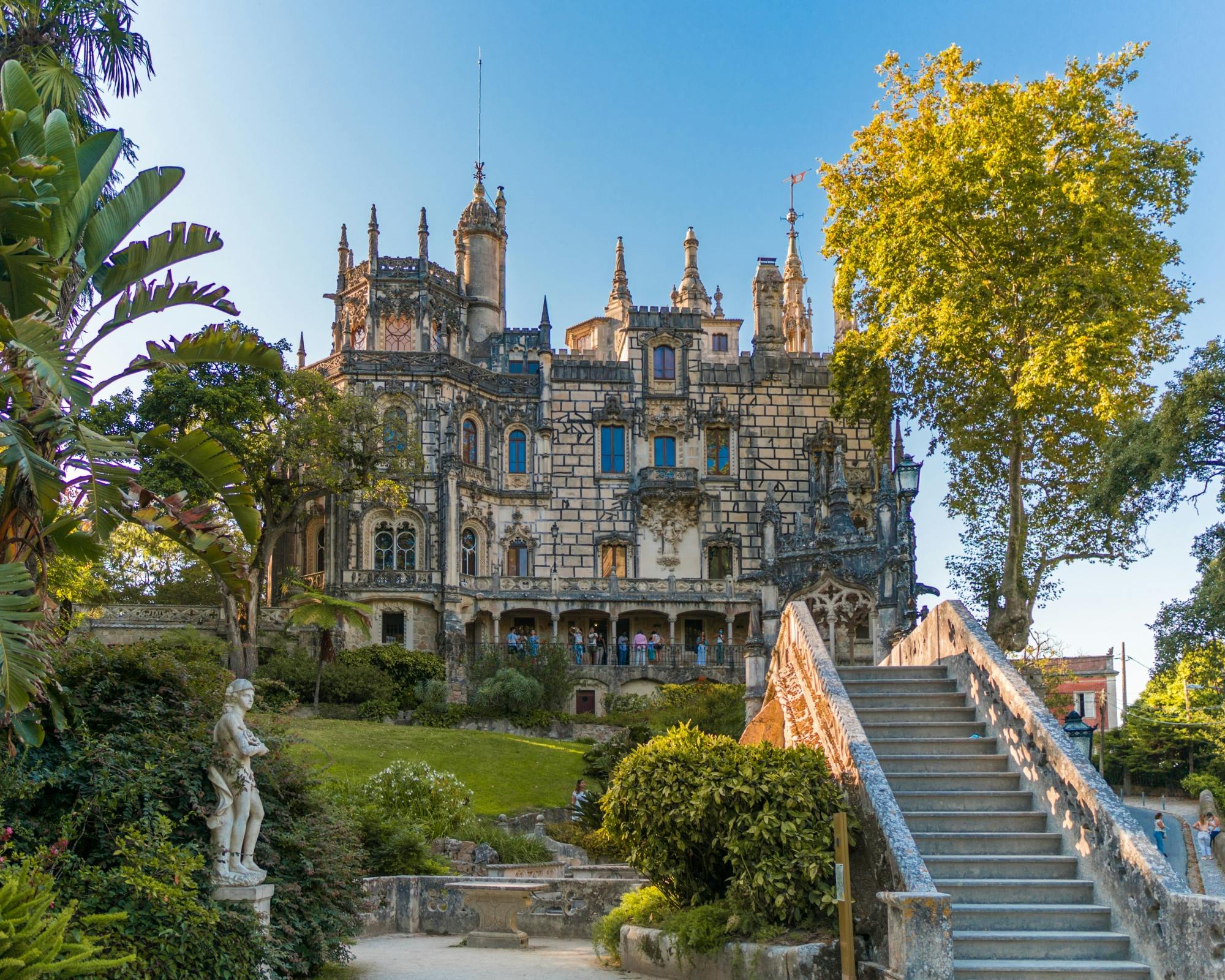
Quinta da Regaleira is an estate of gardens, towers, grottoes, tunnels, fountains, symbolic structures and a richly decorated Neo-Manueline palace.
It was developed for António Augusto Carvalho Monteiro with Luigi Manini during the early 20th century.
The estate contains references associated with mythology, Christianity, the Knights Templar, alchemy, initiation and Carvalho Monteiro’s personal interests. Not every symbol has one universally accepted explanation.
Main Attractions
The Initiation Well.
Underground passages.
The Chapel of the Holy Trinity.
Regaleira Palace.
Portal of the Guardians.
Towers, grottoes and fountains.
Terraced gardens.
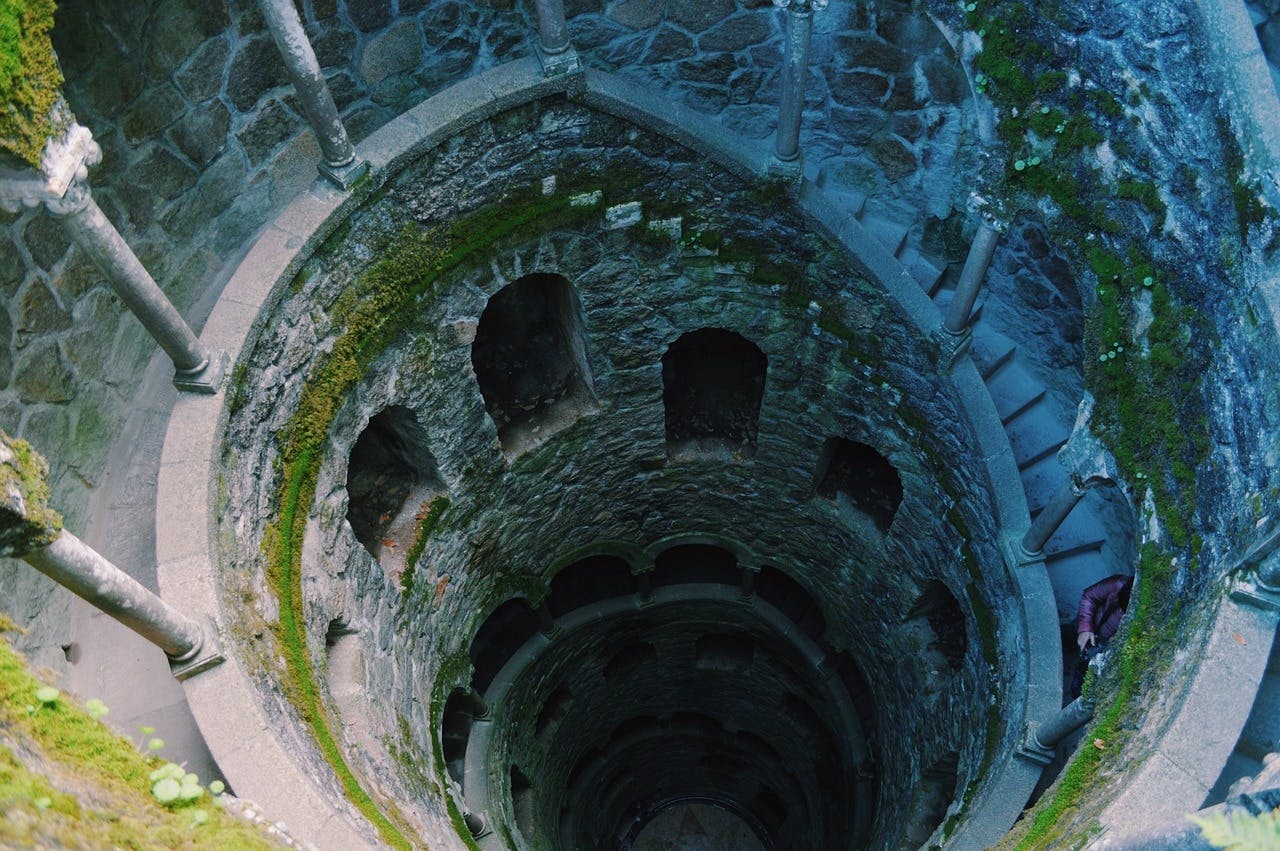
The Initiation Well
The Initiation Well is a deep spiral structure resembling an inverted tower.
Visitors currently move through it in one direction, descending from the upper entrance before following the underground route towards the Eastern Grotto.
The stairs are narrow, dark and often damp. Hold the handrail and allow space between visitors.
Current Restrictions
At the time of writing:
The Aquarium is closed for conservation work.
The Waterfall Path is closed.
Only publicly accessible parts of the palace are included.
The palace route is one-way.
The Initiation Well is descended in one direction.
Large suitcases, trolleys and large backpacks are not permitted.
How Long to Allow
Allow two hours at minimum.
Three hours is better for exploring the gardens without rushing from one popular feature to another.
National Palace of Sintra
The National Palace stands in the centre of Sintra and is immediately recognisable by its pair of large conical kitchen chimneys.
It is the most convenient major monument to visit because no mountain bus is required.
The building developed over several centuries and served as a Portuguese royal residence. Its rooms combine medieval, Moorish, Manueline and later decoration.
Highlights
The Swan Room.
The Magpie Room.
The Room of the Coats of Arms.
The Arab Room.
The palace chapel.
Historic tilework.
The large royal kitchens and chimneys.
Who Should Prioritise It?
The National Palace is an excellent choice for visitors who:
Have limited mobility.
Do not want another mountain transfer.
Are interested in Portuguese royal history.
Need an indoor option during poor weather.
Have only a few hours in Sintra.
Allow approximately 60 to 90 minutes.
Monserrate Palace and Park
Monserrate is one of Sintra’s most elegant and comparatively peaceful estates.
The present palace was developed for Sir Francis Cook during the 19th century. It combines Gothic, Moorish and Indian-inspired architecture with detailed carved decoration and a long interior gallery.
The surrounding park uses Sintra’s humid microclimate to support plants from different parts of the world.
Garden Highlights
The large lawn in front of the palace.
Mexican garden.
Fern valley.
Rose garden.
Lakes and small waterfalls.
Exotic and mature trees.
Paths through contrasting botanical zones.
Current Restoration Work
Roof restoration is expected to continue into the first quarter of 2027.
The palace remains open, but scaffolding and a temporary protective cover may alter exterior photographs and views of parts of the building.
Why Visit Monserrate?
It is ideal for visitors seeking:
Smaller crowds.
Botanical gardens.
A slower visit.
Architectural detail.
A picnic or rest on the lawn.
Allow two to three hours.
Convent of the Capuchos
The Convent of the Capuchos is a small Franciscan retreat hidden within the forest west of central Sintra.
Unlike the grand palaces, it was designed around poverty, simplicity and isolation.
Its tiny cells, narrow passages and cork-lined rooms were built directly around granite boulders and existing terrain.
What Makes It Different?
Very small monastic cells.
Cork used for insulation.
Buildings integrated into rock.
A quiet forest setting.
Minimal decorative luxury.
The convent is much less convenient to reach by public transport than Pena, Regaleira or Monserrate.
It is best visited by car, taxi, private tour or as part of a carefully planned hiking route.
Other Places Worth Seeing
Chalet of the Countess of Edla
This colourful chalet within Pena Park was created for King Ferdinand II and Elise Hensler, the Countess of Edla.
Its decoration imitates timber construction and uses cork extensively.
Admission is included with eligible Pena Park tickets, but reaching it requires additional walking.
Villa Sassetti
Villa Sassetti lies on a landscaped route between the historic centre and the upper palace zone.
It can be used as part of a demanding uphill walk towards Pena and the Moorish Castle.
Biester Palace
Biester Palace is a privately managed Romantic estate near the historic centre and Regaleira.
Its palace interiors, gardens and viewpoints make it a useful alternative when the largest monuments are crowded.
Seteais
The former Seteais Palace operates as a hotel, but the monumental arch and surrounding viewpoints form part of Sintra’s historic landscape.
Current Tickets and Opening Times
The following details were published for 2026 and should be reconfirmed before visiting.
Attraction
Typical opening
Adult price
Important condition
Pena Palace and Park
Park 9:00 am–7:00 pm; palace 9:30 am–6:30 pm
€20
Palace entry requires a timed slot
Pena Park only
9:00 am–7:00 pm
€12
Does not include palace interior
Moorish Castle
9:30 am–6:00 pm
€12
Outdoor site with steep stone stairs
National Palace of Sintra
9:30 am–6:30 pm
€13
Located in the historic centre
Monserrate Palace and Park
Park 9:00 am–7:00 pm; palace 9:30 am–6:00 pm
€12
Roof restoration visible until 2027
Convent of the Capuchos
9:00 am–5:30 pm
€11
Remote location; transport planning essential
Quinta da Regaleira
10:00 am opening; seasonal closing
€20
Dated entry slot required
Regaleira currently closes at 6:30 pm from January to March and October to December, and at 7:30 pm from April to September. Its last entry is normally 5:30 pm.
Buying official tickets online reduces the risk of arriving to find the preferred time sold out.
Avoid unofficial ticket websites that imitate an attraction’s branding or charge unclear service fees.
Travelling from Lisbon by Train
The train is generally the simplest way to reach Sintra from Lisbon.
Services operate on the Sintra Line from stations including:
Rossio.
Oriente.
Entrecampos.
Rossio to Sintra
Rossio is the most convenient departure for many visitors staying in central Lisbon.
The journey normally takes around 40 minutes, although stopping patterns and service changes can affect the exact time.
Buying Tickets
Allow time to obtain or load the appropriate transport card, especially during the morning tourist rush.
Keep the card until the return journey and validate it as required.
Arriving in Sintra
Sintra station is approximately a 10- to 15-minute walk from the main historic centre.
Local palace buses, taxis and tourist transport wait around the station area.
Do not confuse Sintra station with Portela de Sintra, which is a different stop.
Getting Around Sintra
Sintra’s monuments are spread across steep terrain, so local transport is an important part of the visit.
Bus 434
The 434 service links Sintra station and town with the Moorish Castle and Pena Palace.
It is the principal public-transport option for the upper mountain monuments.
Expect queues during busy periods, particularly late morning.
Bus 435
The 435 serves the western palace route, including locations associated with Quinta da Regaleira and Monserrate.
Bus 1253
Carris Metropolitana service 1253 also provides access towards Monserrate.
Taxis and Ride-Hailing
Taxis and app-based vehicles can be useful, but narrow roads and congestion affect them as well as buses.
Availability may be limited at the upper monuments during busy departure periods.
Tuk-Tuks
Tuk-tuks provide flexible short transfers and guided circuits.
Agree on the route, duration and total price before departure.
Walking
Walking is possible for fit visitors, but the climb from town to Pena is long and steep.
A walking route that appears short on a map may involve sustained uphill gradients, rough paths and substantial elevation gain.
Should You Drive to Sintra?
Driving is useful when staying overnight outside the centre or exploring remote sites such as Capuchos and the coastal region.
It is usually inconvenient for a standard day trip focused on Pena, Regaleira and the historic town.
Problems for Drivers
Very limited parking near the historic centre.
Narrow one-way streets.
Congestion.
Restricted access roads.
No practical visitor parking at Regaleira.
Private vehicles cannot use every road approaching Pena.
Navigation systems may suggest unsuitable routes.
Visitors arriving by car should use recognised peripheral parking and continue by shuttle, bus, taxi or on foot.
Never assume that a palace address includes visitor parking.
Walking and Hiking
Sintra can be highly rewarding for active visitors.
Possible walks connect:
The historic centre and Villa Sassetti.
Villa Sassetti and the upper palace zone.
The Moorish Castle and Pena Palace.
The town and Regaleira.
Forest routes across the Sintra-Cascais Natural Park.
What to Expect
Steep gradients.
Loose stone.
Tree roots.
Wet granite.
Mist and rapid weather changes.
Limited mobile reception in forested areas.
Wear suitable shoes, download a map and avoid remote trails during high fire danger or severe weather warnings.
Best One-Day Sintra Itinerary
8:00 am: Travel from Lisbon
Take an early train and aim to arrive in Sintra before the main day-trip groups.
9:00 am: Bus or Transfer to Pena
Allow sufficient time to reach the park entrance and then the palace itself.
9:30 or 10:00 am: Pena Palace
Explore the interior route, terraces and immediate park.
12:15 pm: Return to the Historic Centre
Allow for traffic and bus queues.
1:00 pm: Lunch
Eat in the centre before walking towards Regaleira.
2:15 pm: Quinta da Regaleira
Allow at least two hours for the palace, Initiation Well and gardens.
4:45 pm: Historic Centre
Walk around the central streets, see the National Palace exterior and try a local pastry.
6:00 pm: Return to Lisbon
Evening trains may be crowded, but no advance seat reservation is normally required for the urban service.
Alternative One-Day Itinerary
This route suits visitors who prefer gardens and history to the busiest Pena itinerary.
9:00 am: National Palace of Sintra
Begin in the historic centre before the palace becomes busy.
10:45 am: Coffee and Historic Streets
Walk through the centre and continue towards Regaleira.
11:30 am: Quinta da Regaleira
Explore for approximately two and a half hours.
2:15 pm: Lunch
Return to the centre or continue towards a transport stop.
3:30 pm: Monserrate
Spend the late afternoon in the palace and gardens.
This itinerary avoids the most congested upper mountain road while still covering three very different parts of Sintra.
Suggested Two-Day Itinerary
Day One: Pena and the Medieval Ridge
Early Pena Palace booking.
Pena Park or Chalet of the Countess of Edla.
Moorish Castle.
Late lunch in Sintra.
Historic centre at sunset.
Day Two: Gardens and Royal Sintra
Quinta da Regaleira at opening.
National Palace of Sintra.
Lunch in the historic centre.
Monserrate Palace and Park.
Visitors with a car can replace Monserrate with the Convent of the Capuchos and continue towards the coast.
Sintra Historic Centre
The historic centre lies around the National Palace and a network of narrow lanes, stairways and small squares.
Expect:
Traditional façades.
Tile-covered buildings.
Pastry shops.
Restaurants and cafés.
Souvenir and craft shops.
Views towards the Moorish Castle.
The centre becomes crowded between late morning and mid-afternoon.
Its atmosphere is much calmer early in the morning and after many Lisbon day-trippers leave.
What to Eat in Sintra
Travesseiros
Travesseiros are long puff-pastry cakes filled with an almond-based cream.
The name means “pillows,” referring to their shape.
Queijadas de Sintra
Queijadas are small cakes traditionally made with fresh cheese, sugar, eggs, flour and cinnamon.
They are denser and smaller than travesseiros and travel well as a packaged gift.
Portuguese Meals
Restaurant menus may include:
Grilled fish.
Salt cod dishes.
Pork and regional meat dishes.
Soup.
Cheese and cured meats.
Octopus.
Portuguese rice dishes.
Practical Lunch Advice
Restaurants in the immediate historic centre can be crowded and expensive.
Check the displayed menu before sitting down and confirm whether bread, olives and other table items carry separate charges.
Weather and the Best Time to Visit
Sintra has a cooler, wetter and mistier climate than central Lisbon.
Spring
March to May is excellent for gardens, flowers and comfortable walking.
Rain and fog remain possible.
Summer
June to August brings long daylight hours and the largest crowds.
Sintra may remain cool and misty even when Lisbon is hot and sunny.
Autumn
September and early October often combine mild weather with fewer visitors than August.
Rain becomes more likely later in the season.
Winter
Winter is quieter and can be atmospheric, but storms, strong wind and heavy rain may close exposed monuments or forest paths.
What Fog Means for Your Visit
Fog can hide views from Pena and the Moorish Castle, but it also creates the moody forest atmosphere for which Sintra is known.
When visibility is poor, prioritise interiors and gardens rather than panoramic sites.
Avoiding Crowds and Queues
Book Pena for the first available practical slot.
Arrive in Sintra before 9:00 am.
Visit on a weekday.
Avoid trying to buy every ticket on arrival.
Choose Monserrate instead of another heavily congested site.
Eat before or after the main 1:00–2:30 pm lunch period.
Stay overnight.
Do not schedule attractions too closely together.
Allow for queues at buses and entrances.
Sintra is popular throughout the year. Winter reduces crowds but does not guarantee empty monuments.
Visiting Sintra with Children
Sintra can be highly enjoyable for children who are comfortable with walking and stairs.
Good Family Attractions
Pena Palace exterior and terraces.
Moorish Castle for older children.
Regaleira tunnels and towers.
Pena Park lakes.
National Palace kitchens.
Monserrate lawns and gardens.
Challenges
Steep hills.
Crowded buses.
Long queues.
Narrow palace routes.
Dark tunnels at Regaleira.
Uneven stone and garden paths.
A lightweight folding pushchair is easier than a large pram, but many sections still require lifting it over stairs.
Do not plan more than two large monuments with young children.
Accessibility and Reduced Mobility
Sintra’s steep terrain and historic structures create significant accessibility challenges.
Pena Palace
A paid transfer operates between the park entrance and palace area, with facilities intended for wheelchair users.
The route without the transfer is long and steep.
Some sections of the palace and park remain difficult, and current equipment or platform availability should be confirmed before arrival.
National Palace
The central location makes it one of the more practical major sites for visitors avoiding steep mountain transfers.
Historic interiors still include level changes and restricted spaces.
Quinta da Regaleira
The gardens contain steep paths, steps, tunnels and uneven surfaces.
The Initiation Well is not suitable for every visitor with limited mobility.
Moorish Castle
The battlements and towers involve extensive stairs and uneven stone.
Monserrate
The palace and principal garden areas may be more manageable than the Moorish Castle, although the park contains slopes and long distances.
Contact each monument directly when exact wheelchair access or assistance is required.
What to Bring
Comfortable shoes: Essential for cobbles, stairs and wet stone.
Sintra, Pena Palace, Regaleira, Cabo Da Roca, Cascais Tour from Lisbon Sintra, Pena Palace, Regaleira, Cabo da Roca, Cascais Tour from Lisbon USD 42 adds structure, local context and purposeful sightseeing to the itinerary. Sintra, Pena Palace, Regaleira, Cabo da Roca, Cascais Tour from Lisbon USD 42: experience overview Book a full-day tour from Lisbon to Sintra, Pena Palace, Quinta da Regaleira, Cabo da Roca, and Cascais! This makes the experience a useful option when planning time in Lisbon. The listing describes this as a full-day experience. Routes, start times, inclusions and meeting arrangements may vary, so the current booking page should be treated as the final source of operational information.…
Final Thoughts
Sintra deserves its reputation, but it should not be approached as a checklist of colourful buildings.
The destination’s real character lies in the relationship between architecture and landscape: Pena Palace rising above the forest, the Moorish walls following a granite ridge, Monserrate surrounded by botanical gardens and Regaleira’s tunnels disappearing beneath the earth.
The greatest planning mistake is trying to see everything in one day. Travel times, hills, timed tickets and queues make that unrealistic.
Reserve one early palace, select one second major estate and allow time to walk through the historic centre without watching the clock.
With sensible planning, comfortable shoes and an acceptance that Sintra may be misty, crowded or both, it remains one of the most memorable cultural landscapes in Portugal.
Sponsored Popular Items
Quick take: Musement.com offers a worldwide selection of tours and attractions
Sintra & Portuguese Dream Villages Tour from Lisbon Portugal Sintra and Portuguese dream villages tour from Lisbon is a convenient way to add structure, local context and purposeful sightseeing to the itinerary. Sintra and Portuguese dream villages tour from Lisbon: experience overview Admire the traditional homes in Penedo, visit the famous Azenhas do Mar and discover the ancient Portuguese life and traditions. This makes the experience a useful option when planning time in Lisbon. The exact duration can depend on the selected date, option or operating schedule. Routes, start times, inclusions and meeting arrangements may vary, so the current booking page should be treated as the final source of…
Sintra, Pena Palace, Regaleira, Cabo Da Roca, Cascais Tour from Lisbon Sintra, Pena Palace, Regaleira, Cabo da Roca, Cascais Tour from Lisbon USD 42 adds structure, local context and purposeful sightseeing to the itinerary. Sintra, Pena Palace, Regaleira, Cabo da Roca, Cascais Tour from Lisbon USD 42: experience overview Book a full-day tour from Lisbon to Sintra, Pena Palace, Quinta da Regaleira, Cabo da Roca, and Cascais! This makes the experience a useful option when planning time in Lisbon. The listing describes this as a full-day experience. Routes, start times, inclusions and meeting arrangements may vary, so the current booking page should be treated as the final source of operational information.…
Sintra, Pena Palace, Cape Roca & Cascais Small-Group Tour Sintra, Pena Palace, Cape Roca, and Cascais Small Group Tour USD 479 adds structure, local context and purposeful sightseeing to the itinerary. Sintra, Pena Palace, Cape Roca, and Cascais Small Group Tour USD 479: experience overview Discover the timeless charm of Sintra on an unforgettable small-group journey from Lisbon. This makes the experience a useful option when planning time in Lisbon. The exact duration can depend on the selected date, option or operating schedule. Routes, start times, inclusions and meeting arrangements may vary, so the current booking page should be treated as the final source of operational information. At a…
Tour of Sintra and Quinta da Regaleira from Lisbon – Guided Sightseeing Tour of Sintra and Quinta da Regaleira from Lisbon USD 42 adds structure, local context and purposeful sightseeing to the itinerary. Tour of Sintra and Quinta da Regaleira from Lisbon USD 42: experience overview Discover the hidden gems of Portugal on a guided tour from Lisbon to Sintra and Quinta da Regaleira. This makes the experience a useful option when planning time in Lisbon. The exact duration can depend on the selected date, option or operating schedule. Routes, start times, inclusions and meeting arrangements may vary, so the current booking page should be treated as the final source of operational…
Tour of Sintra & Visit to Quinta da Regaleira Best deals for Guided Tour of Sintra and Visit to Quinta da Regaleira. Embark on a guided tour of the historic town of Sintra, and UNESCO World Heritage Site Quinta da Regaleira. Available from Musement.
Sintra Monument Tours & Historic Sites Best deals for Monument visits in Sintra | musement. Get tickets for Monument visits in Sintra with secure booking, price match guarantee and 24/7 customer support. Available from .
National Sintra Palace Entry Ticket with Audio Guide Best deals for National Sintra Palace Entrance Ticket with Audio Guide. Marvel at the Swan Room, the dressing Room or Julius Caesar's Room, discover the Manueline Room, the Central Patio and Grotto Baths and the Black Lady's Garden. Available from Musement.
Quinta da Regaleira E-Tickets with Sintra Self-Guided Audio Tour Best deals for Quinta da Regaleira e-tickets with Sintra self-guided audio tour. Explore the city of Sintra at your own pace, visit the Chapel of the Holy Trinity and learn about the history of Sintra. Available from Musement.
Sintra with Pena Palace & Quinta da Regaleira Tour Best deals for Sintra with Pena Palace and Quinta da Regaleira Tour. Explore the UNESCO World Heritage village of Sintra, visit Pena Palace and admire the views from Cabo da Roca, the westernmost point in Europe. Available from Musement.
Sintra City Tours, Tickets & Top Attractions Explore the city of Sintra and visit its main attractions | musement is a convenient way to add structure, local context and purposeful sightseeing to the itinerary. Explore the city of Sintra and visit its main attractions | musement: experience overview Sintra is not only the city of castles, it also has stunning forests and picturesque villas. Book your activity now with Musement! This makes the experience a useful option when planning time in Lisbon. The exact duration can depend on the selected date, option or operating schedule. Routes, start times, inclusions and meeting arrangements may vary, so the current…
Sintra, Cascais & Estoril Day Tour Sintra, Cascais and Estoril full-day tour is a convenient way to add structure, local context and purposeful sightseeing to the itinerary. Sintra, Cascais and Estoril full-day tour: experience overview Discover Sintra, Cascais, and Estoril booking this full-day tour. Enter the Pena Palace, relish the views of Cape Roca and explore the fisherman's village of Cascais. This makes the experience a useful option when planning time in Estoril. The listing describes this as a full-day experience. Routes, start times, inclusions and meeting arrangements may vary, so the current booking page should be treated as the final source of operational information. At…
Sintra Deluxe Tour – Guided Sightseeing Sintra Deluxe Tour is a convenient way to add structure, local context and purposeful sightseeing to the itinerary. Sintra Deluxe Tour: experience overview Let yourself enjoy the fantasy of Pena Palace and discover the charms of the village of Sintra with your ticket from Musement. This makes the experience a useful option when planning time in Estoril. The exact duration can depend on the selected date, option or operating schedule. Routes, start times, inclusions and meeting arrangements may vary, so the current booking page should be treated as the final source of operational information. At a glance Experience type: Guided…