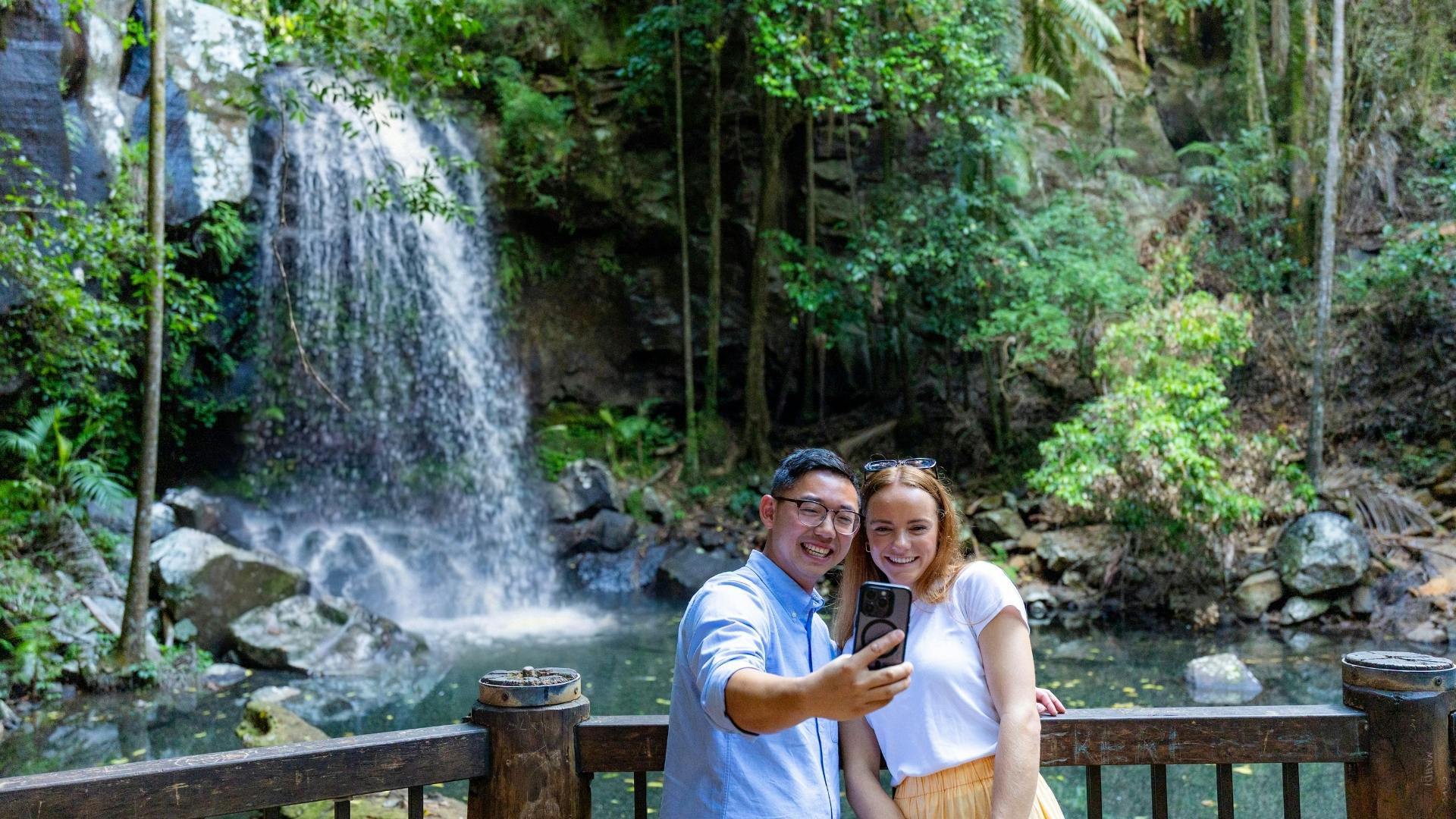
Tamborine Mountain rises above the Gold Coast hinterland as a cool, green retreat filled with rainforest, waterfalls, gardens, mountain views, wineries, galleries and locally owned food businesses.
It is close enough to Brisbane and the Gold Coast for an easy day trip, yet the mountain feels very different from the coastal resorts below. The plateau is more than 500 metres above sea level, and its elevation brings cooler temperatures, higher rainfall and pockets of subtropical rainforest.
Sponsored Popular Items
Quick take: Musement.com offers a worldwide selection of tours and attractions
Tamborine Mountain Rainforest Tour with Produce Tastings Australia Guided Rainforest Tour on Tamborine Mountain and Produce Tastings is a convenient way to add structure, local context and purposeful sightseeing to the itinerary. Guided Rainforest Tour on Tamborine Mountain and Produce Tastings: experience overview Enjoy a guided rainforest tour on Tamborine Mountain and taste delicious local produce such as mountain café and local gins! This makes the experience a useful option when planning time in Gold Coast. The exact duration can depend on the selected date, option or operating schedule. Routes, start times, inclusions and meeting arrangements may vary, so the current booking page should be treated as the…
Many visitors arrive expecting one compact mountain village. In reality, Tamborine Mountain is spread across several residential and commercial areas, including North Tamborine, Eagle Heights and Mount Tamborine. Waterfalls, lookouts, shops, gardens and cellar doors are separated by winding roads, so a car or organised tour is normally the most practical way to explore.
The best day combines one or two nature walks with Gallery Walk, a relaxed meal and a lookout. Trying to visit every waterfall, paid attraction, winery and shop in one day usually leads to more time in the car than in the forest.
Tamborine Mountain Quick Facts
Visitor information
Details
Location
Scenic Rim, Gold Coast hinterland, Queensland
Distance from Brisbane
Approximately 80 kilometres
Distance from Southport
Approximately 36 kilometres
Distance from Nerang
Approximately 28 kilometres
Elevation
More than 500 metres above sea level
Recommended visit
One full day or one to two nights
Best transport
Car, organised day tour or winery transfer
Main shopping area
Gallery Walk on Long Road
Main natural attractions
Rainforest tracks, waterfalls, gardens and lookouts
National park admission
Free
Paid attractions
Rainforest Skywalk, Glow Worm Caves and private adventure parks
Best seasons
Autumn and spring
Busiest periods
Weekends, school holidays and public holidays
Current warning
Some national park tracks remain partly or fully closed after severe weather
Tamborine Mountain or Mount Tamborine?
Tamborine Mountain is the accepted name for the wider plateau, community and visitor destination.
The term Mount Tamborine is also widely used in conversation, accommodation names, older travel guides and business listings. Visitors may see both names on signs and websites.
Tamborine is spelt without the letter “u.” It is not named after the musical instrument.
When using a navigation app, enter the exact attraction rather than simply selecting Tamborine Mountain. The plateau covers a broad area, and two places described as being “on the mountain” may be several kilometres apart.
Why Visit Tamborine Mountain?
Tamborine Mountain is popular because it combines nature, food, shopping and family attractions without requiring a long journey from Brisbane or the Gold Coast.
A typical visit can include:
A short rainforest walk.
A waterfall viewpoint.
A winery, brewery or distillery.
Local coffee or lunch.
Gallery and craft shopping.
A garden or glow-worm tour.
A sunset lookout.
The mountain is also cooler than the coastal lowlands. This makes it attractive during hot and humid weather, although summer storms and heavy rain can make tracks slippery.
It suits visitors who want rainforest scenery without committing to a long wilderness hike. Most national park tracks can be completed in less than two hours, while many viewpoints and commercial attractions require only short walks.
Understanding the Mountain
Tamborine Mountain is not one pedestrian village.
The main areas include:
North Tamborine: Main Street, the visitor information centre, cafés, shops and access towards Witches Falls.
Eagle Heights: Gallery Walk, restaurants, shops and access towards Curtis Falls.
Mount Tamborine: Accommodation, western lookouts and rural properties.
Natural attractions are located in separate sections of Tamborine National Park, each with its own car park and track entrance.
Walking between Curtis Falls, Cedar Creek Falls, Gallery Walk and the Botanic Gardens is impractical for most visitors. Driving remains the easiest option.
Tamborine National Park
Tamborine National Park is divided into several separate forest sections rather than one continuous reserve.
The Witches Falls section was declared in 1908 and is recognised as Queensland’s first national park.
The park protects:
Subtropical rainforest.
Piccabeen palm groves.
Wet eucalypt forest.
Open forest.
Creeks and waterfalls.
Native wildlife habitat.
The mountain landscape was shaped by ancient volcanic activity. Basalt soils helped support fertile rainforest and farming areas, while erosion created cliffs, gullies and waterfalls.
National Park Rules
Stay on marked tracks.
Do not enter fenced waterfall pools.
Take all rubbish away because bins are generally not provided.
Do not feed wildlife.
Do not remove plants, rocks or fungi.
Fires are prohibited.
Dogs and other domestic pets are not permitted.
Bicycles are not permitted on walking tracks.
Current National Park Closures
Severe weather linked to Tropical Cyclone Alfred caused damage in Tamborine National Park.
At the time of writing, current restrictions include:
The Jenyns circuit in Palm Grove is closed because of washouts.
Part of the Sandy Creek circuit between Cameron Falls and Cameron Falls lookout is closed because of a landslide.
Visitors using the open part of Sandy Creek must return by the same route.
Tracks currently listed as available include:
Curtis Falls track.
Lower Creek circuit.
MacDonald Rainforest circuit.
Palm Grove circuit.
Witches Falls circuit.
Witches Chase track.
Cedar Creek Falls lookout track.
Selected facilities at The Knoll.
Closures can be extended beyond the date first published. Check the Queensland Parks alert on the morning of the visit.
Curtis Falls
Curtis Falls is the best-known waterfall on Tamborine Mountain.
The track begins in the Joalah section of Tamborine National Park near Dapsang Drive and Eagle Heights Road.
Curtis Falls Track
Distance: 1.1 kilometres return.
Time: Approximately 30 minutes.
Grade: 3.
The route descends through wet eucalypt forest into subtropical rainforest. Visitors pass flooded gums, strangler figs, vines, palms and large ferns.
The waterfall is viewed from a fenced platform above the pool.
Can You Swim at Curtis Falls?
No. Swimming and entry to the rock pool are prohibited.
The restrictions protect visitors and sensitive glow-worm and platypus habitat.
Remain behind the barrier even when the water appears calm.
Lower Creek Circuit
Visitors wanting a longer walk can add the Lower Creek circuit.
Distance: 2.5 kilometres return.
Time: Approximately one hour.
Grade: 4.
This extension includes rougher terrain, creek crossings and rock hopping. It can be muddy and slippery after rain.
Cedar Creek Falls
Cedar Creek Falls offers one of the mountain’s easiest lookout walks.
The day-use area has picnic facilities and toilets, although parking is limited.
Waterfall Lookout Track
Distance: 500 metres return.
Time: Approximately 15 minutes.
Grade: 1.
The path is suitable for strollers and assisted wheelchair access.
Rock Pool Track
A steeper 1.1-kilometre return route normally descends towards the lower pool area.
Current alerts should be checked before walking beyond the lookout, because access and swimming conditions can change after rain or track damage.
Swimming Safety
Some areas near the waterfall are permanently closed.
Where swimming is permitted:
There are no lifeguards.
Water depth changes quickly.
Submerged rocks may be hidden.
Currents become dangerous after rain.
Jumping and diving are unsafe.
Serious accidents have occurred at natural swimming areas. Follow signs rather than copying other visitors who ignore barriers.
Witches Falls
Witches Falls is historically important because it lies within Queensland’s oldest national park section.
Witches Falls Circuit
Distance: 3.6 kilometres return.
Time: Approximately one hour.
Grade: 4.
The track passes open forest, rainforest and seasonal wet areas.
The waterfall depends heavily on rainfall. During dry weather, it may be reduced to a light trickle.
Witches Chase Track
Distance: 2.6 kilometres return.
Time: Approximately one hour.
Grade: 4.
This route passes large red cedars, rainforest and eucalypt forest.
Witches Falls is a better choice for visitors interested in forest ecology and walking than for anyone expecting a guaranteed large waterfall.
MacDonald Rainforest Circuit
The MacDonald section protects a compact area of subtropical rainforest.
Distance: 1.4 kilometres return.
Time: Approximately 30 minutes.
Grade: 3.
The walk features large strangler figs, yellow carabeens and piccabeen palms.
It is often quieter than Curtis Falls and makes a useful alternative when the major car parks are full.
There are picnic tables and a small shelter, but no toilets.
Palm Grove
Palm Grove provides one of Tamborine Mountain’s most immersive rainforest walks.
Palm Grove Circuit
Distance: 2.7 kilometres.
Time: Approximately one hour.
Grade: 4.
The route passes dense palm forest, roots, vines and damp gullies.
It can remain muddy after rain, even when the weather has cleared.
Jenyns Circuit
The longer Jenyns circuit is currently closed because of washouts.
Do not follow old online maps or GPS files into the closed section.
The Knoll and Cameron Falls
The Knoll offers picnic facilities, forest walks and views towards the Scenic Rim and Brisbane region.
The normal Sandy Creek circuit is 2.6 kilometres and takes approximately one hour.
A landslide currently affects the section between Cameron Falls and Cameron Falls lookout. Visitors must obey temporary signs and return along the open route.
The day-use area remains a good location for a picnic, especially when Cedar Creek is crowded.
Tamborine Rainforest Skywalk
Tamborine Rainforest Skywalk is a privately operated attraction on 30 acres of rainforest beside Cedar Creek.
The 1.5-kilometre experience combines:
Forest-floor trails.
Approximately 300 metres of elevated steel walkways.
A 40-metre cantilevered platform.
Views from around 30 metres above the creek and forest.
An eco-gallery with wildlife and rainforest displays.
Allow approximately 45 minutes to one hour.
Current Hours and Prices
Opening: Daily from 9:30 am to 5:00 pm.
Last ticket sale: 4:00 pm.
Adult: $21.50.
Child aged 6–17: $10.50.
Children aged 0–5: Free with an adult.
Senior and eligible student: $18 with identification.
Normal family groups do not need to reserve, but large groups should contact the attraction.
Skywalk or National Park?
The Skywalk offers interpretation, elevated structures and easier navigation.
The national park provides free, less-developed bushwalking.
They are different experiences rather than direct substitutes.
Glow Worm Caves
The Glow Worm Caves at Cedar Creek Estate are a purpose-built conservation attraction rather than a naturally formed public cave.
The controlled environment allows visitors to see glow worms during daylight throughout the year.
What the Visit Includes
A guided 30-minute tour.
An explanation of glow-worm biology.
A dark chamber containing the colony.
Access to the Frog Hollow insect and frog display.
Important Rules
Photography and video are not allowed inside.
Phones and electronic lights must remain off.
Light-up shoes are not permitted.
Visitors must keep noise low.
Entry is by guided tour only.
Opening
The attraction currently operates from 10:00 am to 4:00 pm, seven days a week, with closure on Good Friday and Christmas Day.
Advance booking is recommended because time slots can sell out.
Accessibility
The approach is mostly level, but steps prevent normal wheelchair and pram access.
Visitors with mobility needs should contact the attraction before booking.
Gallery Walk
Gallery Walk is the mountain’s main shopping and café precinct.
It runs along Long Road in Eagle Heights and contains a dense collection of:
Art galleries.
Jewellery shops.
Craft stores.
Confectionery and fudge shops.
Tea and coffee businesses.
Speciality food retailers.
Fashion and gift shops.
Cafés and restaurants.
Cellar doors and tasting venues.
The area becomes extremely busy from late morning on weekends.
Best Time to Visit
Arrive before 10:00 am or after 3:00 pm for easier parking and quieter footpaths.
Individual businesses set their own opening days and hours, so not every shop opens early or trades every weekday.
How Long to Allow
Allow at least 90 minutes for casual browsing. A meal and several specialty shops can easily extend the visit to three hours.
Tamborine Mountain Botanic Gardens
Tamborine Mountain Regional Botanic Gardens combine temperate and subtropical planting in a sheltered setting.
The gardens are developed and maintained largely by volunteers.
Features include:
A central lake.
Japanese garden.
Camellia and magnolia collections.
Rose and perennial gardens.
Orchid areas.
Rainforest walk.
Picnic spaces.
Waterbirds, frogs and occasional turtles.
The gardens are open every day from dawn until dusk.
Admission is free, although donations support maintenance.
Most paths are easy, but the rainforest section is steeper and less suitable for visitors with reduced mobility.
Lookouts and Sunset Views
Tamborine Mountain offers views towards the Scenic Rim, Brisbane outskirts, the Gold Coast and the Pacific Ocean.
Rotary Lookout and Western Lookouts
Western-facing viewpoints are popular at sunset.
They overlook rural valleys and distant mountain ranges rather than the Gold Coast skyline.
Parking is limited and can fill shortly before sunset.
The Knoll
The Knoll provides picnic space and views towards Flinders Peak and Brisbane on clear days.
Eastern Views
Selected roads, accommodation properties and lookouts provide views towards the Gold Coast skyline and ocean.
Haze, smoke and cloud can reduce visibility.
Lookout Etiquette
Park only in legal spaces.
Keep clear of hang-glider launch areas.
Keep children away from cliff edges.
Take rubbish away.
Avoid blocking roads while taking photographs.
Food, Wineries and Distilleries
Tamborine Mountain has developed a strong food-and-drink scene.
Visitors can find:
Winery cellar doors.
Gin, vodka, schnapps and liqueur tastings.
Craft beer.
Coffee plantations and roasters.
Cheese and grazing plates.
Local fruit and preserves.
Bakeries and cafés.
Country pubs.
Fine-dining restaurants.
Well-known producers include Cedar Creek Estate, Witches Falls Winery, Hampton Estate Wines, Tamborine Mountain Distillery, Cauldron Distillery and Fortitude Brewing Company.
Opening days and tasting arrangements vary. Book weekend lunches and structured tastings in advance.
Driving and Alcohol
Mountain roads are steep and winding.
Use a designated driver, private transfer or organised wine tour when visiting several tasting venues.
Do not underestimate the concentration of alcohol in tasting samples.
Markets
Tamborine Mountain hosts several regular markets selling produce, plants, crafts, food and second-hand goods.
Market schedules may include:
A local producers market at the Green Shed.
Country markets.
School or community markets.
Special seasonal garden and craft events.
Dates and locations can change, so verify the current calendar before travelling specifically for a market.
Market mornings create additional traffic around Main Western Road, Long Road and surrounding streets.
Things to Do with Children
Tamborine Mountain works well for families because activities range from easy garden walks to adventure courses.
Good Options for Younger Children
Botanic Gardens.
Cedar Creek Falls lookout.
Glow Worm Caves.
Gallery Walk treats and shops.
Short MacDonald rainforest circuit.
Picnic areas.
Good Options for Older Children
Rainforest Skywalk.
Curtis Falls.
Palm Grove circuit.
Witches Falls.
TreeTop Challenge and zipline activities.
Thunderegg and crystal-related activities at private attractions.
Family Planning Tips
Do not plan several paid attractions back-to-back.
Carry water and snacks.
Use toilets before starting a national park walk.
Keep children behind waterfall barriers.
Bring spare shoes after rain.
Check minimum ages for adventure activities.
Wildlife and Rainforest
The mountain protects rainforest and wet forest habitat within an increasingly developed region.
Possible wildlife sightings include:
Australian brush-turkeys.
Red-necked pademelons.
Land mullets.
Possums.
Scrubwrens.
Noisy pittas.
Glossy black-cockatoos.
Albert’s lyrebirds.
Frogs.
Freshwater eels.
Albert’s lyrebirds are more often heard than seen. Their calls may imitate other birds and sounds in the forest.
Walk quietly, keep music off and never feed wildlife.
Getting to Tamborine Mountain
From Brisbane
Tamborine Mountain is around 80 kilometres south of Brisbane.
Common approaches include:
The Pacific Motorway to Oxenford, followed by Tamborine–Oxenford Road.
Beenleigh and Tamborine Village via inland roads.
Travel commonly takes around one to one and a half hours, depending on traffic and the starting suburb.
From the Gold Coast
Visitors can approach from:
Oxenford.
Nerang.
Canungra.
The mountain roads are winding and can be steep.
Large Vehicles
The steep roads from Nerang and Canungra are unsuitable for buses, caravans, trailers and trucks.
Drivers of large vehicles should use recommended routes rather than relying on the shortest navigation-app option.
Without a Car
Options include:
Organised sightseeing tours.
Wine and distillery tours.
Private transfers.
Selected hop-on-hop-off services.
There is no simple frequent public bus linking every waterfall, winery and shopping area.
Getting Around
A car is the most flexible option.
Distances are moderate, but separate national park sections and scattered attractions make walking between them inefficient.
Navigation Tips
Enter the full address of each attraction.
Download an offline map.
Collect a local visitor map.
Allow extra time for winding roads.
Watch for cyclists, pedestrians and wildlife.
Do not confuse Cedar Creek Falls with privately operated Cedar Creek attractions.
Parking and Crowds
Parking is one of the main practical problems on busy days.
Cedar Creek Falls
The car park is small and often fills during summer weekends and public holidays.
Illegal roadside parking can attract fines.
Curtis Falls
Dapsang Drive can become congested from late morning.
Arrive early or choose another walk when legal parking is unavailable.
Gallery Walk
Parking is distributed around the precinct.
Traffic moves slowly, and pedestrians frequently cross Long Road.
Lookouts
Sunset produces a short, intense demand for limited spaces.
Best Parking Strategy
Visit the most popular waterfall before 9:00 am, then move to commercial attractions later.
The Best Time to Visit
Summer
Summer is warm, humid and storm-prone.
Rainforest shade is pleasant, but tracks can be slippery and waterfalls can rise quickly after heavy rain.
Autumn
Autumn often provides comfortable walking conditions and good garden displays.
Heavy rainfall events can still occur.
Winter
Winter brings cool days and cold evenings.
It is a good season for fireplaces, accommodation stays and hearing Albert’s lyrebirds.
Bring warm clothing even when the Gold Coast forecast appears mild.
Spring
Spring is excellent for gardens, outdoor meals and forest walks.
Later spring can become hot and dry.
Best Time of Day
Early morning is best for:
Parking.
Cooler walking.
Bird activity.
Quieter waterfalls.
Late afternoon is best for lookouts and sunset.
Bushwalking and Waterfall Safety
Check park alerts before departure.
Wear shoes with good grip.
Carry drinking water.
Remain on the track.
Never cross a closure barrier.
Do not climb above waterfalls.
Do not dive into natural pools.
Supervise children continuously.
Turn back when creeks are flooded.
Leave exposed areas when thunder is heard.
Tell someone which track you are using.
Carry a charged phone.
Leeches can be present after rain. Long socks and insect repellent can help.
Accessibility
Accessibility varies between attractions.
Cedar Creek Falls Lookout
The 500-metre lookout path is suitable for strollers and assisted wheelchair users.
Accessible picnic tables, toilets and parking are available with assistance.
National Park Tracks
Most rainforest circuits contain roots, stairs, mud or steep slopes and are not wheelchair accessible.
Botanic Gardens
Many garden sections are easy to reach, although the rainforest walk is steeper.
Glow Worm Caves
The cave has steps and is not normally wheelchair or pram accessible.
Rainforest Skywalk
Visitors with mobility requirements should contact the attraction before arrival to confirm current access across the complete route.
Gallery Walk
Many shops have step-free entry, but slopes, crowds and older building layouts vary.
What to Bring
Walking shoes: Forest tracks stay damp after rain.
Water: Carry it on every walk.
Rain jacket: Weather changes quickly.
Warm layer: Useful year-round and essential in winter.
Sun protection: Lookouts and gardens are exposed.
Insect repellent: Useful in humid rainforest.
Offline map: Helpful between scattered attractions.
Picnic supplies: Useful at national park day-use areas.
Rubbish bag: Park bins are generally not provided.
Booking confirmations: Keep paid-attraction tickets available offline.
Where to Stay
Accommodation ranges from simple cabins to luxury rainforest retreats.
Options include:
Bed-and-breakfast rooms.
Romantic cottages.
Boutique hotels.
Rainforest lodges.
Holiday homes.
Family cabins.
Wellness retreats.
Private campgrounds outside the national park.
Best Area for Shops and Restaurants
Stay near Eagle Heights, Gallery Walk or Main Street.
Best Area for Quiet
Choose a rural property or forest-edge cottage away from the main roads.
Best Area for Sunset Views
Look for accommodation along the western escarpment.
Check evening transport before drinking at restaurants or cellar doors, because taxis and rideshare services can be limited.
Suggested One-Day Tamborine Mountain Itinerary
8:00 am: Arrive on the Mountain
Begin with breakfast or coffee in North Tamborine or Eagle Heights.
8:45 am: Walk to Curtis Falls
Complete the short rainforest walk before the car park becomes busy.
10:00 am: Visit Gallery Walk
Browse shops, galleries and specialty food businesses.
11:30 am: Choose One Paid Attraction
Visit either the Rainforest Skywalk or Glow Worm Caves rather than rushing through both.
1:00 pm: Lunch
Book a winery, café, brewery or restaurant in advance on weekends.
2:30 pm: Botanic Gardens
Walk around the lake, Japanese garden and flower collections.
4:00 pm: Short Walk or Tasting
Choose MacDonald Rainforest circuit or a tasting venue with a designated driver.
5:15 pm: Sunset Lookout
Finish at a western viewpoint and drive down carefully after dark.
Suggested Two-Day Tamborine Mountain Itinerary
Day One: Rainforest and Village
Curtis Falls early.
Gallery Walk.
Lunch.
Glow Worm Caves.
Botanic Gardens.
Sunset lookout.
Day Two: Wider Mountain
Cedar Creek Falls lookout.
Rainforest Skywalk.
Winery or distillery lunch.
MacDonald or Palm Grove circuit.
Main Street shopping.
Relaxed dinner near the accommodation.
Two days allow greater flexibility when rain, parking or track closures affect the original plan.
Is Tamborine Mountain Worth Visiting?
Tamborine Mountain is one of the most varied and convenient day trips from Brisbane and the Gold Coast.
Main Advantages
Easy access from major population centres.
Short rainforest walks.
Waterfalls and lookouts.
Cooler mountain climate.
Strong café, wine and food scene.
Family attractions.
Free national park entry and gardens.
Enough variety for repeat visits.
Possible Drawbacks
Heavy weekend traffic.
Limited parking.
Attractions are spread across the plateau.
Waterfall flow depends on rainfall.
Some tracks remain closed after severe weather.
Gallery Walk can feel crowded and commercial.
Public transport between attractions is limited.
Mountain roads can be tiring after dark.
The mountain is most enjoyable when visited early, with a realistic itinerary and no more than two major attractions before lunch.
Frequently Asked Questions About Tamborine Mountain
Where is Tamborine Mountain?
It is in the Scenic Rim and Gold Coast hinterland of South East Queensland.
How far is Tamborine Mountain from Brisbane?
It is approximately 80 kilometres south of Brisbane.
How long does the drive from Brisbane take?
Allow around one to one and a half hours, depending on traffic and your starting suburb.
How far is it from the Gold Coast?
It is approximately 28 kilometres from Nerang and 36 kilometres from Southport.
Is Tamborine Mountain the same as Mount Tamborine?
The terms are often used interchangeably, although Tamborine Mountain is the accepted name for the wider destination.
Do I need a car?
A car is the easiest option because attractions are spread across the plateau.
Can I visit without a car?
Yes, using an organised sightseeing, wine or private transfer tour.
Is Tamborine National Park free?
Yes. National park entry and walking tracks are free.
Are all the walking tracks open?
No. Some remain closed or partly closed because of storm damage. Check the official park alert before departure.
Which tracks are currently closed?
The Jenyns circuit is closed, and part of the Sandy Creek circuit near Cameron Falls is also closed.
Is Curtis Falls open?
The Curtis Falls track is currently listed as open, subject to any new alert.
Can I swim at Curtis Falls?
No. Entry to the pool is prohibited.
Can I swim at Cedar Creek Falls?
Swimming may be permitted only in designated lower areas when open and safe. Follow current signs.
Is Cedar Creek Falls suitable for wheelchairs?
The lookout track is suitable for assisted wheelchair access.
How long is the Curtis Falls walk?
It is 1.1 kilometres return and usually takes around 30 minutes.
How long is the Witches Falls walk?
The circuit is approximately 3.6 kilometres and takes around one hour.
What is the easiest rainforest walk?
The MacDonald Rainforest circuit is short, while Cedar Creek Falls lookout is the easiest graded path.
How much is the Rainforest Skywalk?
Adult admission is currently $21.50.
What are the Skywalk opening hours?
It is currently open daily from 9:30 am to 5:00 pm, with last ticket sales at 4:00 pm.
Are the Glow Worm Caves natural?
No. They are a purpose-built conservation sanctuary designed to provide controlled daytime viewing.
How long is the glow-worm tour?
Approximately 30 minutes.
Can I photograph the glow worms?
No. Photography and video are prohibited inside the cave.
Do I need to book the Glow Worm Caves?
Advance booking is recommended because tours operate at fixed times.
Is Gallery Walk free?
Yes. There is no admission charge, although shopping, food and tastings cost extra.
How long should I spend at Gallery Walk?
Allow between 90 minutes and three hours.
Are the Botanic Gardens free?
Yes. Entry is free, with donations welcomed.
What time do the Botanic Gardens open?
They are open daily from dawn until dusk.
What is the best lookout for sunset?
Western-facing viewpoints such as Rotary Lookout are popular for sunset.
What is the best time to arrive?
Before 9:00 am for easier parking and quieter walks.
What is the best month to visit?
April, May, September and October usually provide comfortable walking conditions.
Is Tamborine Mountain cold in winter?
It can feel quite cold, especially in the evening, wind and fog. Bring warm layers.
Does it snow?
Snow is extremely rare.
Are dogs allowed on the national park tracks?
No. Domestic pets are not permitted in Tamborine National Park.
Can I take a pram on the walks?
Cedar Creek Falls lookout is suitable, but most rainforest tracks contain stairs, roots and steep sections.
Is Tamborine Mountain suitable for children?
Yes. The gardens, glow worms, short walks, Gallery Walk and private adventure parks suit families.
Are there wineries on the mountain?
Yes. Several wineries, cellar doors, breweries and distilleries operate across the plateau.
Can I do wine tasting and drive?
Use a designated driver or organised transfer. The roads are steep and winding.
Are there public toilets?
Yes, at selected national park day-use areas, shopping areas and visitor attractions.
Is parking free?
Most national park and roadside parking is free, but spaces are limited.
Can large buses or caravans use every road?
No. The steep roads from Nerang and Canungra are unsuitable for large vehicles, caravans and trailers.
Can I visit in heavy rain?
Some commercial attractions remain open, but forest tracks may become slippery or close. Check alerts.
Are waterfalls better after rain?
Yes, but immediate post-storm conditions can also create dangerous currents, fallen trees and closures.
Is one day enough?
One full day is enough for a waterfall, Gallery Walk, one paid attraction and a lookout.
Is it worth staying overnight?
Yes. Staying overnight allows a slower pace, sunset, dinner and early access to walks before day-trippers arrive.
Final Thoughts
Tamborine Mountain combines rainforest, waterfalls, village shopping, gardens, wildlife and regional food in a destination that is easy to reach from Brisbane and the Gold Coast.
Its popularity can also create traffic and parking problems, particularly on weekends. The most successful visits begin early, concentrate on one part of the mountain at a time and leave space for an unplanned café, viewpoint or short walk.
Current storm-related track closures make advance checking essential. Do not rely on an older map or assume that a full circuit is available simply because the entrance is open.
Choose Curtis Falls for a classic rainforest walk, Cedar Creek for an easy lookout, Gallery Walk for browsing, the Botanic Gardens for a quiet free attraction and a western lookout for sunset.
With realistic planning and suitable footwear, Tamborine Mountain remains one of South East Queensland’s most enjoyable and varied hinterland escapes.
Sponsored Popular Items
Quick take: Musement.com offers a worldwide selection of tours and attractions
Tamborine Mountain Rainforest Tour with Produce Tastings Australia Guided Rainforest Tour on Tamborine Mountain and Produce Tastings is a convenient way to add structure, local context and purposeful sightseeing to the itinerary. Guided Rainforest Tour on Tamborine Mountain and Produce Tastings: experience overview Enjoy a guided rainforest tour on Tamborine Mountain and taste delicious local produce such as mountain café and local gins! This makes the experience a useful option when planning time in Gold Coast. The exact duration can depend on the selected date, option or operating schedule. Routes, start times, inclusions and meeting arrangements may vary, so the current booking page should be treated as the…