Arouca is one of northern Portugal’s most rewarding inland destinations. The small town sits in a green valley surrounded by mountains, waterfalls, ancient rock formations, rural villages and the dramatic gorge of the Paiva River.
Many visitors know Arouca only as the gateway to the Paiva Walkways or the 516 Arouca suspension bridge. Those attractions are important, but they represent only one part of a much larger destination.
Sponsored Popular Items
Quick take: Trip.com offers a worldwide selection of tours and attractions
Freita Mountain and Arouca Geopark 4×4 Tour from Arouca Best deals for Freita Mountain and Arouca Geopark 4×4 Tour from Arouca. Explore the wonders of Arouca UNESCO Geopark on a thrilling 4×4 off-road tour. Available from Musement.
Quick take: Trip.com helps you compare prices across accommodations. Use it to shortlist hotels, then click through to confirm the final price, room type, and inclusions on the booking site.
The municipality contains a UNESCO Global Geopark, a historic monastery, enormous trilobite fossils, abandoned tungsten mines, mountain plateaus, traditional villages, river beaches and some of Portugal’s most distinctive regional food.
Arouca can be visited as a long day trip from Porto, but staying for two or three nights produces a much better experience. The main sights are spread across a large rural area, and mountain roads make journeys slower than they appear on a map.
This guide explains what to see, how to organise the Paiva attractions, which mountain sites are most worthwhile, where public transport is limited and how much time to allow.
Arouca Quick Facts
Visitor information
Details
Country
Portugal
Region
Aveiro District, northern Portugal
Distance from Porto
Approximately 60–75 kilometres, depending on the route
Typical drive from Porto
Approximately 60–90 minutes
UNESCO status
UNESCO Global Geopark since 2015
Geopark area
Approximately 328 square kilometres
Best-known attractions
Paiva Walkways, 516 Arouca, Serra da Freita and Arouca Monastery
Recommended stay
Two or three nights
Best transport
Hire car or organised tour
Public transport
Limited bus service to Arouca town; little useful transport to rural attractions
Best walking seasons
Spring and early autumn
Best white-water season
Normally wetter months, depending on river flow
Regional speciality
Arouquesa beef and traditional sweets
Important: Arouca’s outdoor attractions can close because of wildfire danger, high water, strong wind, maintenance or landslide risk. Check current official notices before travelling.
Why Visit Arouca?
Arouca offers a type of Portuguese travel experience that is difficult to find in heavily visited coastal cities.
It combines:
A compact historic town.
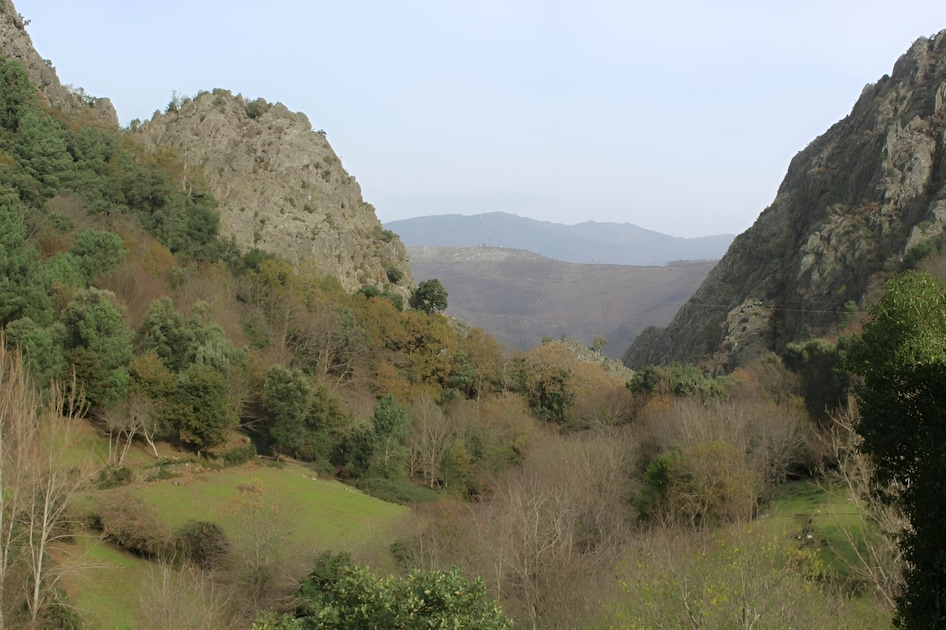
Mountain scenery.
Internationally important geology.
Adventure activities.
Traditional villages.
Regional food.
River landscapes.
Quiet rural accommodation.
The area is particularly suitable for active travellers, photographers, families with older children and visitors who want to add nature to a Porto itinerary.
Arouca also works well for travellers who are not serious hikers. Several major sights, including the monastery, Senhora da Mó, the Pedras Parideiras interpretation centre and the Mizarela viewpoint, can be reached by road with only short walks.
What Is Arouca UNESCO Global Geopark?
A UNESCO Global Geopark is a territory containing geological heritage of international importance that is managed together with its natural, cultural and community traditions.
The entire municipality of Arouca forms the geopark.
Its best-known geological features include:
Exceptionally large trilobite fossils.
The Pedras Parideiras nodular granite.
The Paiva Gorge.
Frecha da Mizarela waterfall.
Ancient quartzite ridges.
Granite plateaus.
Faults, folds and fossil traces.
The designation does not mean that the whole region is a fenced park with one entrance. It is a broad living territory containing towns, farms, villages, roads, forests and visitor attractions.
Many geosites can be visited freely, while interpretation centres, museums, the suspension bridge and managed walkways may require tickets.
Arouca Town and Historic Centre
Arouca town is the most practical base for exploring the region.
It contains:
Hotels and guesthouses.
Restaurants and cafés.
Supermarkets.
The tourism office.
The monastery complex.
Local shops and bakeries.
Bus connections.
The historic centre is small and can be explored comfortably on foot.
Allow time to walk around the monastery square, narrow surrounding streets and local food shops rather than treating the town only as a place to sleep.
The Interactive Tourism Shop is a useful first stop when trail conditions, fire restrictions or attraction opening hours are uncertain.
Monastery of Santa Maria de Arouca
The Monastery of Santa Maria de Arouca dominates the centre of town.
Its origins extend to the early medieval period, although much of the visible complex reflects later expansion and rebuilding.
The monastery became closely associated with Mafalda, daughter of King Sancho I and granddaughter of Portugal’s first king, Afonso Henriques.
She entered the religious community at Arouca during the 13th century and became one of the institution’s most important historical figures. She is remembered locally as Queen Saint Mafalda.
What to Look For
The long white exterior façades.
The monastery church.
The lower choir.
The pipe organ.
The cloister.
The chapter house.
The monastic kitchen.
The refectory.
Rooms connected with the history of the religious community.
The complex underwent many changes over the centuries and contains architecture and decoration from several periods.
Requalification work may affect access during 2026. Confirm which areas are open before planning the visit around a particular room or guided tour.
Museum of Sacred Art
The Museum of Sacred Art occupies part of the former monastery.
Its collections include:
Religious paintings.
Sculpture.
Gold and silverwork.
Textiles.
Furniture.
Tapestries.
Objects used by the monastic community.
The museum is valuable because it allows visitors to understand the monastery as a functioning religious and economic institution rather than merely a large historic building.
The kitchen and refectory help explain everyday life, while the chapter house and ceremonial spaces reveal the wealth and status of the community.
Planning the Visit
Opening arrangements can change because of restoration work, religious events and guided-tour schedules.
Check current hours before arrival, especially on Mondays, public holidays or during the quieter winter season.
Senhora da Mó Viewpoint
The hill of Senhora da Mó rises immediately above Arouca town.
From the summit, visitors can see:
Arouca town and monastery.
The surrounding agricultural valley.
Serra da Freita.
Montemuro mountains.
Wooded ridges and scattered villages.
A small chapel stands on the hilltop and is connected with a local legend involving a Christian prisoner, a millstone and miraculous intervention.
The viewpoint is especially attractive in the late afternoon, although haze can reduce distant visibility in summer.
The final road is narrow in places. Drive carefully and avoid blocking access near the chapel.
Paiva Walkways
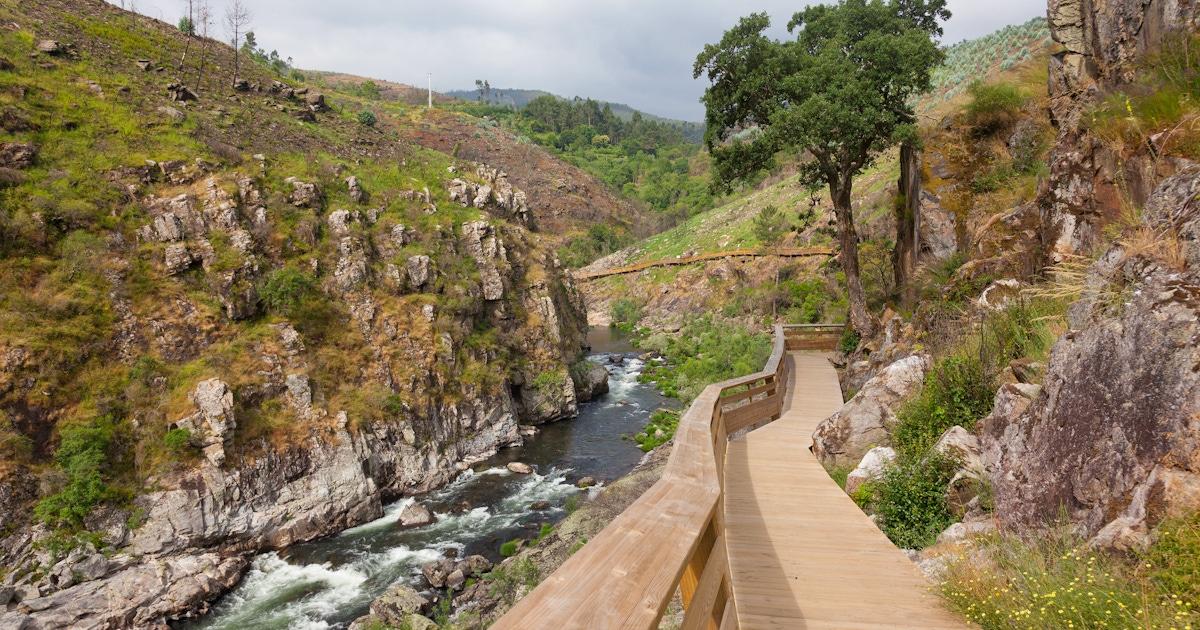
The Paiva Walkways follow the left bank of the Paiva River through a steep gorge.
The traditional complete route links Areinho and Espiunca, with Vau between them.
Wooden platforms, stairs and paths provide views of:
The Paiva River.
Rocky gorges.
Rapids.
Aguieiras Waterfall.
River beaches.
Geological formations.
Native vegetation.
The complete route is approximately eight to nine kilometres in one direction and is physically demanding because of its stairs and gradients.
It is a linear walk rather than a loop, so transport between the ends must be arranged.
Current Paiva Walkways Access
Wildfire in July 2025 damaged a substantial section between Vau and Espiunca.
Reconstruction began under a municipal contract in 2026. Until an official full reopening is announced, visitors should not rely on old itineraries describing an uninterrupted route between Areinho and Espiunca.
Current official bridge information refers to access between Areinho and Vau.
Before Travelling
Check which entrances are operating.
Confirm the distance currently available.
Ask whether Vau functions as an exit or turnaround point.
Arrange transport before starting.
Do not cross barriers into damaged or reconstructed areas.
Allow for closure during extreme fire weather.
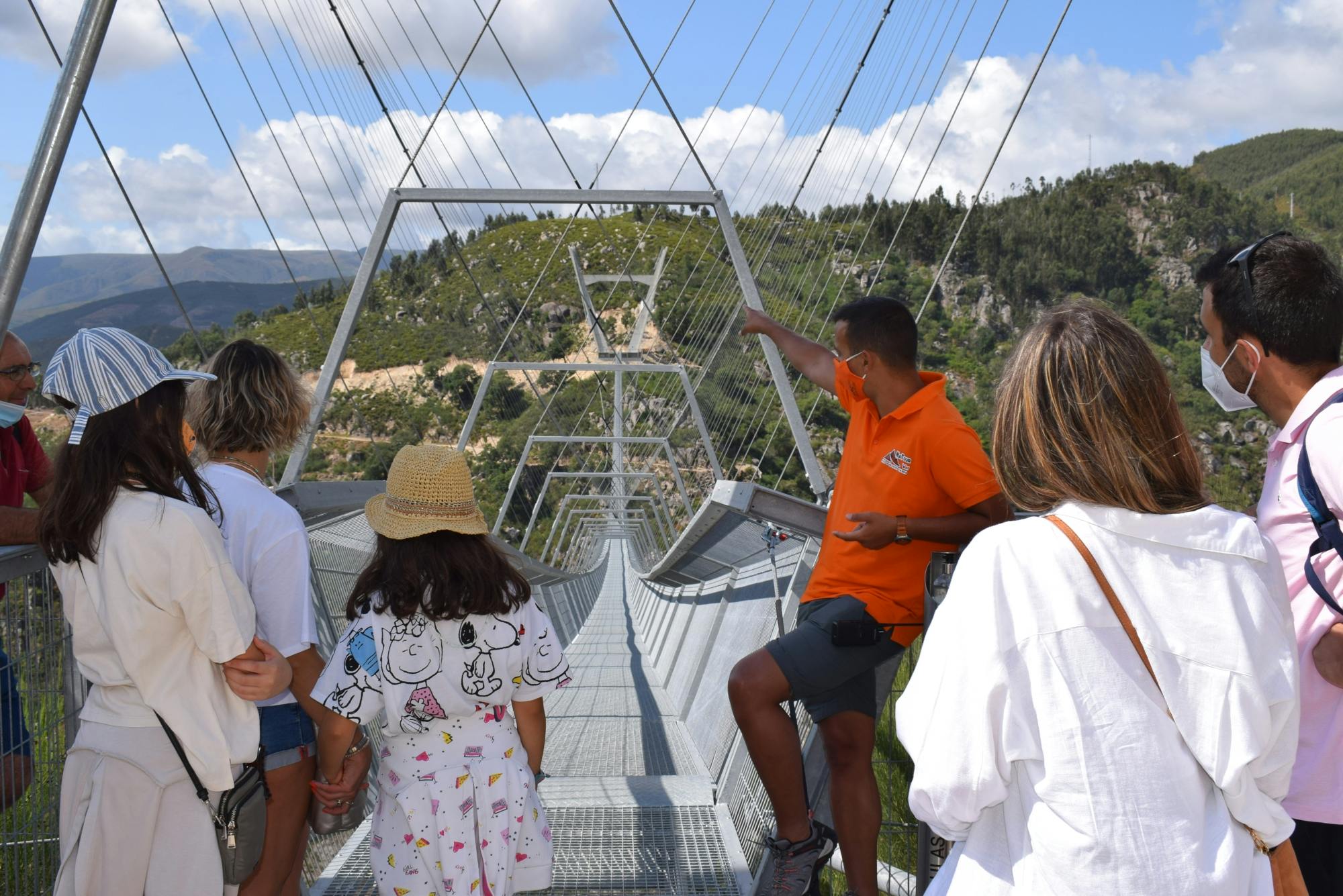
516 Arouca Suspension Bridge
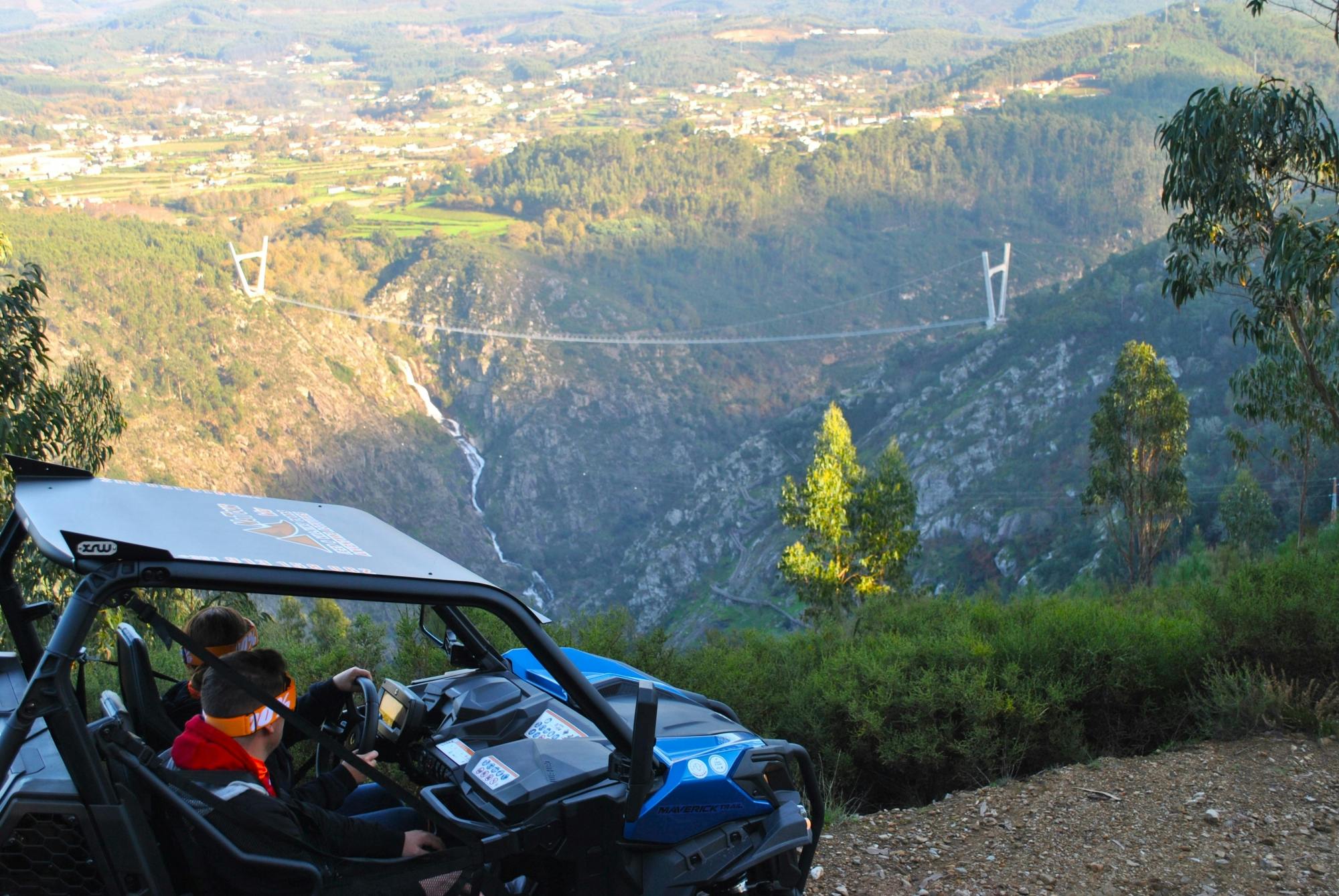
The 516 Arouca suspension bridge crosses the Paiva Gorge close to the walkways.
It is 516 metres long and reaches approximately 175 metres above the river.
The deck consists of metal grating, allowing visitors to see the landscape directly beneath their feet.
Ticketing
At the time of writing:
Tickets cost €12 per individual visitor.
Reservations are made online.
Tickets are not normally sold at the bridge entrance.
Visitor numbers are limited.
The ticket includes eligible same-day access to the operating Areinho–Vau walkway section.
Reaching the Bridge
The bridge cannot be reached directly by car.
Visitors approach from:
Areinho: The more demanding route, including approximately 500 stairs.
Alvarenga: The easier approach, with a shorter walk from designated parking areas.
Allow approximately 20 minutes from the closest Alvarenga-side parking or as much as an hour from Areinho, depending on fitness and congestion.
Who May Find It Difficult?
The crossing may be uncomfortable for people with:
Strong fear of heights.
Severe vertigo.
Difficulty walking on open metal grating.
Problems balancing on a structure that moves slightly.
Children under six are not admitted. Secure footwear is required.
Serra da Freita
Serra da Freita is the high mountain plateau south of Arouca town.
Its scenery differs greatly from the forested Paiva Valley. Visitors encounter:
Open moorland.
Granite outcrops.
Heather and gorse.
Free-grazing cattle.
Small stone villages.
Wind-exposed viewpoints.
Waterfalls and mountain streams.
The plateau is best explored by car combined with short walks.
Driving Conditions
Expect narrow roads, wandering animals, fog and rapid weather changes.
Drive slowly around blind bends and never assume livestock will move immediately from the road.
Winter conditions can include heavy rain, low cloud and occasional ice.
Frecha da Mizarela Waterfall
Frecha da Mizarela is one of mainland Portugal’s highest waterfalls.
The Caima River drops more than 60 metres where resistant granite meets more easily eroded schist.
The waterfall can be seen from a roadside viewpoint near the villages of Mizarela and Albergaria da Serra.
When Is It Most Impressive?
The flow is strongest after sustained rain, generally from late autumn through spring.
During a dry summer, the waterfall may become a narrow stream and can look far less dramatic than winter photographs suggest.
Walking Routes
Experienced walkers can use local marked routes to explore the surrounding slopes.
The terrain is steep and exposed, and the path to lower viewpoints is very different from simply stopping at the main roadside terrace.
Do not attempt unofficial descents after rain or in fog.
Pedras Parideiras
The Pedras Parideiras, or “birthing stones,” are found near the village of Castanheira.
Dark mineral nodules form within the granite and gradually separate through weathering and temperature changes. To earlier residents, the loose nodules appeared to have been “born” from the larger rock.
The formation is internationally significant and protected as a local natural monument.
Interpretation Centre
Casa das Pedras Parideiras explains:
How the nodules formed.
The geology of Serra da Freita.
Local folklore.
Why the loose stones must not be removed.
Do Not Take a Stone
Visitors must not collect nodules or pieces of granite.
Historic removal caused serious damage to the site, and the remaining formations are protected.
Giant Trilobites of Canelas
The Geological Interpretation Centre of Canelas displays fossils from the Valongo Formation.
The most famous specimens are unusually large trilobites from the Ordovician period, when the area that is now Portugal lay beneath an ancient sea.
Some slabs preserve groups of trilobites together, providing evidence of their behaviour and environment.
The museum is small but highly worthwhile for visitors interested in fossils, geology or natural history.
Check opening times before driving to Canelas, as hours may be more limited than those of a major city museum.
Regoufe and Rio de Frades Mines
Arouca’s mountains contain the remains of tungsten-mining operations associated particularly with the period around the Second World War.
Regoufe
Regoufe contains ruined industrial buildings, mine entrances and structures spread across a remote mountain landscape.
The complex is atmospheric, but it is not a fully restored industrial museum.
Visitors should remain outside closed shafts and unstable buildings.
Rio de Frades
Rio de Frades was another important mining community.
Walking routes reveal remains of worker accommodation, processing areas, tunnels and mountain infrastructure.
The history is connected with international demand for tungsten used in military and industrial production.
Safety
Do not enter unapproved mine tunnels.
Stay away from unstable walls.
Use a guide when exploring technical mining routes.
Wear walking shoes.
Carry water and offline navigation.
Traditional Villages
Arouca’s rural villages are an important part of the Geopark experience.
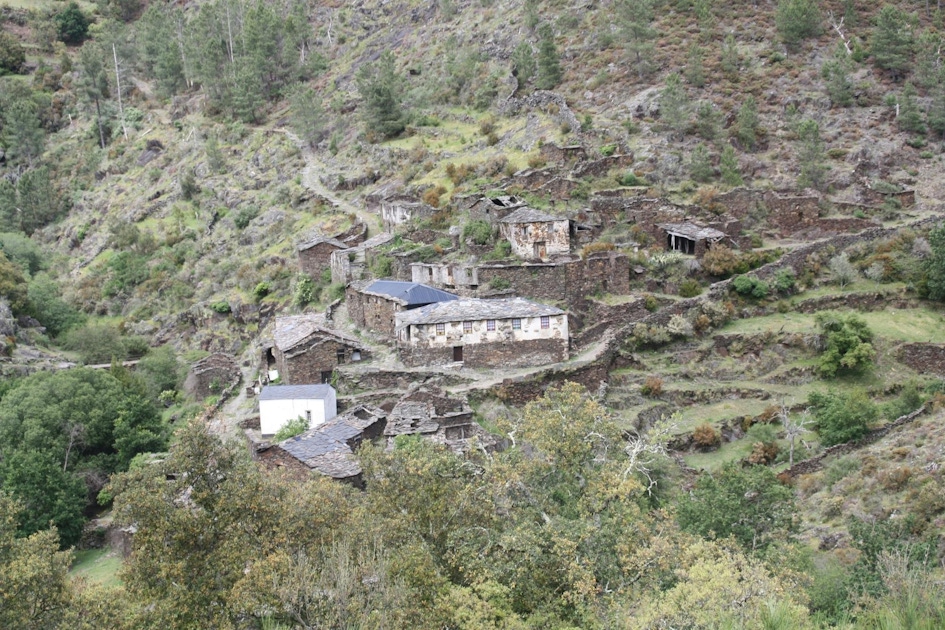
Stone houses, terraced slopes, small chapels, communal spaces and old paths reveal how communities adapted to mountain conditions.
Paradinha
Paradinha is a schist village above the Paiva River and is associated with walking routes, rafting and river scenery.
Meitriz
Meitriz retains traditional architecture and lies within a quieter section of the Paiva landscape.
Alvarenga
Alvarenga is larger and offers restaurants, accommodation and practical access to the suspension bridge.
Castanheira
Castanheira is the village closest to the Pedras Parideiras and is a useful stop while exploring Serra da Freita.
When visiting small villages, park without blocking residents, farm entrances or narrow emergency routes.
Drave Village
Drave is one of the region’s most famous abandoned or nearly uninhabited mountain villages.
It lies in a remote valley and has no normal road access for ordinary visitor vehicles.
The village is reached on foot along a mountain route, commonly from Regoufe.
What to Expect
A demanding walk.
Stone houses and terraces.
No dependable commercial facilities.
Limited mobile coverage.
Strong summer sun.
Muddy or slippery paths after rain.
Drave should not be treated as a quick roadside stop.
Carry sufficient food, water and navigation information, and begin early enough to return in daylight.
Rafting, Canyoning and Outdoor Activities
Arouca is one of Portugal’s principal centres for inland adventure tourism.
Rafting
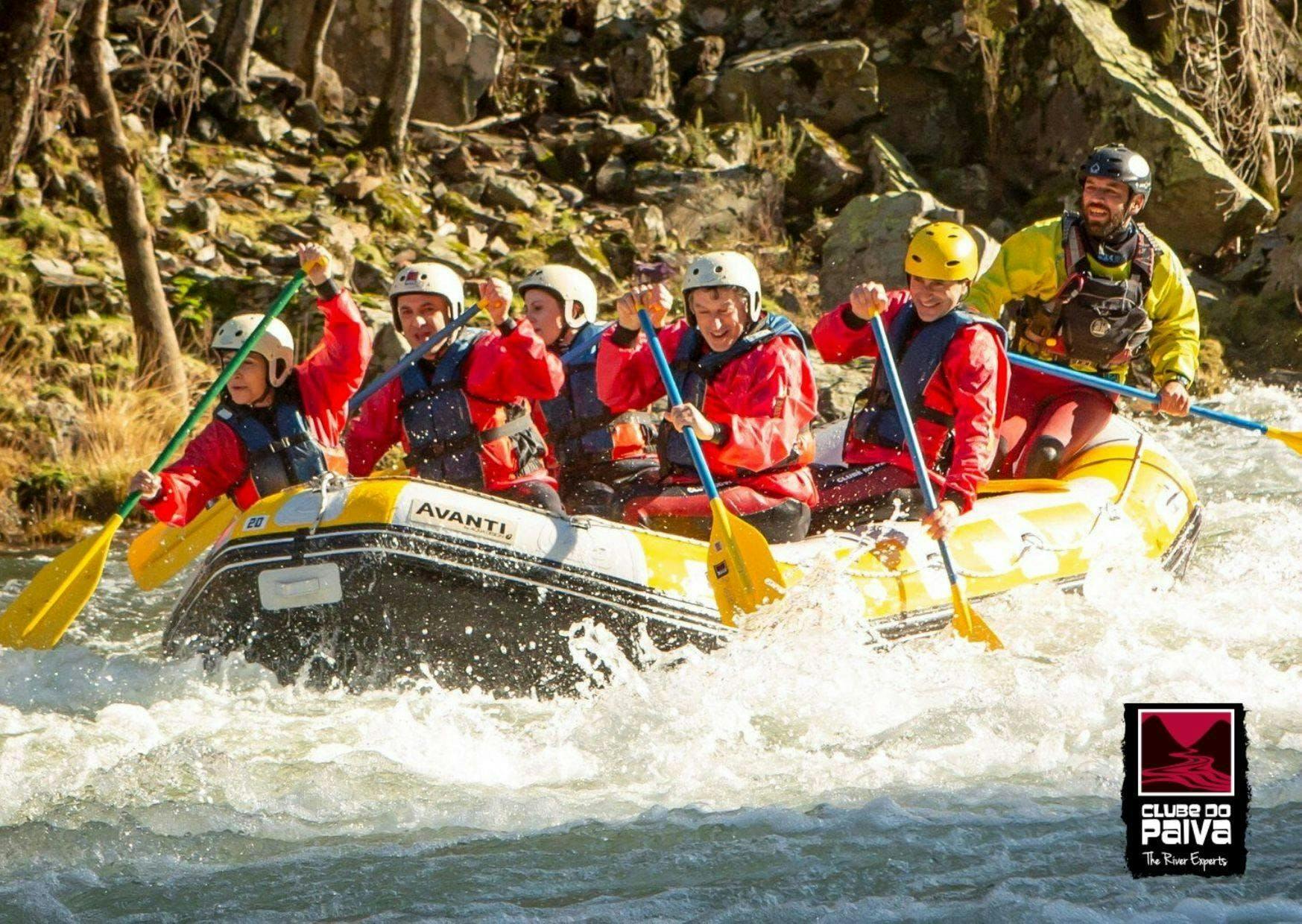
The Paiva River offers guided rafting when water levels are suitable.
The strongest white-water conditions normally occur during wetter months.
Summer activities may use gentler river sections or switch to canoe-rafting, tubing and canyoning.
Canyoning
Mountain streams around Serra da Freita provide canyoning routes involving:
Rappelling.
Swimming.
Rock scrambling.
Natural slides.
Waterfall descents.
Walking and Trail Running
The Geopark contains many marked short routes and longer trails.
Distances alone can be misleading because gradients, heat and rough ground add difficulty.
Use Registered Operators
Guided providers should supply appropriate equipment, qualified instructors and safety information.
Do not enter white-water sections, mine tunnels or technical canyons independently without relevant experience.
River Beaches and Swimming
The Paiva and other local waterways contain recognised river recreation areas.
Popular locations include:
Areinho.
Vau.
Espiunca.
Other village bathing areas across the municipality.
Facilities differ and may include parking, picnic spaces, toilets or seasonal cafés.
Swimming Safety
Use recognised bathing areas.
Check local warning signs.
Avoid water immediately above rapids.
Do not dive into unknown depth.
Supervise children continuously.
Leave the river during thunderstorms.
Avoid high, muddy or rapidly rising water.
The water can remain cold even during summer.
What to Eat in Arouca
Food is an essential part of a visit to Arouca.
Arouquesa Beef
Arouquesa cattle are a local mountain breed traditionally raised in the region.
Restaurants commonly serve:
Posta arouquesa, a thick grilled beef steak.
Roast veal.
Beef cooked with potatoes and regional vegetables.
Portions can be substantial. Ask whether a dish is intended for one person or sharing.
Traditional Meat and Country Food
Other foods may include:
Goat or lamb.
Regional sausages.
Roast dishes.
Soup.
Local bread.
Cheese.
Honey and chestnut products.
Convent Sweets
Arouca’s monastery is associated with a long tradition of sweets based on eggs, sugar and almonds.
Look for:
Castanhas doces.
Charutos or almond rolls.
Roscas de amêndoa.
Barrigas de freira.
Other Arouca Sweets
Pão de ló de Arouca.
Cavacas.
Melindres.
Several bakeries and specialist shops in town sell mixed boxes, making it possible to try a selection rather than buying a large quantity of one item.
How to Get to Arouca
By Car from Porto
Driving is the easiest option.
Allow around 60 to 90 minutes to reach Arouca town, depending on:
Starting point in Porto.
Traffic.
Chosen motorway route.
Mountain-road conditions.
The Paiva Walkways, bridge and Serra da Freita require additional driving beyond the town.
By Bus
A limited UNIR service currently connects Porto Campanhã with Arouca’s bus terminal.
The service is not frequent enough to assume that a convenient same-day return will always be available.
Check the current Line 1022 timetable and operating day before travelling.
Reaching the bridge, Paiva Walkways and mountain geosites from Arouca bus terminal still requires a taxi, tour or prearranged transfer.
By Organised Tour
Porto-based tours commonly combine:
Paiva Walkways.
The 516 bridge.
Arouca lunch.
A short town visit.
Check whether the tour reflects the current partial walkway operation and whether bridge admission is included.
Getting Around the Geopark
A car is strongly recommended for independent visitors.
Attractions are spread across a rural municipality, and public transport between them is extremely limited.
Driving Times Can Be Deceptive
Two attractions may appear close on a map but be separated by:
Narrow roads.
Steep mountain passes.
Livestock.
Slow village traffic.
Roadworks.
Fog.
Build extra time into every itinerary.
Mobile Coverage
Coverage may weaken in gorges and remote valleys.
Download offline maps before leaving town.
Parking
Parking is generally free at many natural attractions, but capacity varies.
Arouca Town
Street and public parking can be found within walking distance of the monastery and centre.
516 Arouca
Use designated parking at Areinho or on the Alvarenga side.
There is no car park immediately beside the bridge.
Paiva Walkways
Parking is normally associated with the operating trail entrances.
Check current arrangements because reconstruction can change access.
Mountain Viewpoints
Parking may consist of a small roadside area rather than a formal car park.
Never block narrow mountain roads or emergency access.
The Best Time to Visit Arouca
March to May
Spring is one of the best seasons.
Advantages include:
Green landscapes.
Stronger waterfalls.
Comfortable walking temperatures.
Wildflowers.
Rain can make paths slippery.
June
June often provides warm but manageable conditions and long daylight hours.
July and August
Summer brings the largest crowds and highest fire risk.
Begin outdoor activities early and avoid exposed midday walking.
Waterfalls may be weak after long dry periods.
September and October
Early autumn can provide comfortable walking and fewer visitors.
Significant rain may not return until later in the season.
November to February
Winter is useful for waterfalls and rafting when conditions permit.
Expect rain, cold mountain weather, shorter days and possible bridge closure due to wind.
How Long Should You Stay?
One Day
A day trip is enough for one major outdoor attraction plus lunch and a short town visit.
Do not attempt the bridge, a substantial walkway, Serra da Freita and the monastery in one short winter day.
Two Days
Two days allow:
The bridge and walkways.
Arouca town and monastery.
Serra da Freita.
Regional meals.
Three Days
Three days are ideal for adding:
The trilobite museum.
Rafting or canyoning.
Mining villages.
Drave or another longer walk.
River swimming.
Visiting Arouca with Children
Arouca can be an excellent family destination, especially for active school-aged children.
Good Family Attractions
Casa das Pedras Parideiras.
Trilobite museum.
River beaches.
Short mountain viewpoints.
Easy sections of marked walks.
Arouca town and sweet shops.
More Demanding Activities
The Paiva Walkways involve many stairs and are not suitable for pushchairs.
The 516 bridge requires children to be at least six years old and may frighten children uncomfortable with heights.
Adventure companies apply their own age and size restrictions for rafting and canyoning.
Accessibility
Arouca town is more accessible than many of the rural attractions, but historic surfaces and older buildings can still present obstacles.
The Paiva Walkways are not wheelchair accessible because of stairs and steep gradients.
The 516 bridge has special arrangements for visitors with reduced mobility, using the easier Alvarenga approach. Advance contact is required.
Roadside viewpoints such as Senhora da Mó and Mizarela may be manageable for visitors who can walk short distances, but exact surfaces and parking positions vary.
Discuss specific requirements directly with the tourism office or attraction before travelling.
What to Bring
Walking shoes: Suitable for stairs, gravel and mountain paths.
Water: Facilities are limited outside town.
Sun protection: Essential on the plateau and walkways.
Rain jacket: Mountain weather changes quickly.
Warm layer: Serra da Freita can be colder than Porto.
Offline maps: Useful in remote valleys.
Small amount of cash: Helpful in villages and small cafés.
Swimwear and towel: For river beaches in summer.
Water shoes: Useful on river rocks.
Booking confirmations: Keep bridge and activity tickets available offline.
Suggested One-Day Arouca Itinerary
7:30 am: Leave Porto
Travel directly to the correct parking area for the 516 bridge.
9:00 am: Approach the Bridge
Use Alvarenga for the easier walk or Areinho when combining the bridge with the operating walkway section.
10:00 am: Cross 516 Arouca
Complete the timed guided visit.
11:30 am: Walk the Open Paiva Section
Follow the currently authorised route and respect all closure barriers.
1:30 pm: Lunch in Alvarenga or Arouca
Try Arouquesa beef or another regional dish.
3:30 pm: Explore Arouca Town
See the monastery exterior, historic centre and local sweet shops.
5:00 pm: Senhora da Mó
Finish with views across the town and valley before returning to Porto.
Suggested Two-Day Arouca Itinerary
Day One: Paiva Valley
Cross the 516 bridge.
Walk the authorised Paiva route.
Stop at Areinho or Vau.
Eat in Alvarenga.
Stay overnight in Arouca or a rural guesthouse.
Day Two: Town and Serra da Freita
Visit Arouca Monastery and the historic centre.
Drive to Pedras Parideiras.
See Frecha da Mizarela.
Stop at mountain viewpoints.
Return for regional sweets and dinner.
Suggested Three-Day Arouca Itinerary
Day One
Paiva Walkways, 516 Arouca and Alvarenga.
Day Two
Arouca Monastery, Serra da Freita, Pedras Parideiras and Mizarela waterfall.
Day Three
Choose one:
Rafting on the Paiva.
Trilobite museum and Canelas.
Regoufe and mining heritage.
Drave hike.
Traditional villages and river beaches.
Is Arouca Worth Visiting?
Arouca is highly worthwhile for travellers interested in nature, geology, walking and regional food.
Main Advantages
Internationally significant geological sites.
Excellent mountain scenery.
One of the world’s longest pedestrian suspension bridges.
Historic monastery and town centre.
Strong regional cuisine.
Adventure activities.
Easy to combine with Porto.
Enough variety for several days.
Possible Drawbacks
A car is almost essential.
Mountain roads are slow.
Outdoor attractions can close unexpectedly.
The Paiva Walkways are currently affected by reconstruction.
Summer heat and wildfire risk can be severe.
Some museums and centres have limited hours.
The bridge and stairs are unsuitable for some visitors.
The best approach is to treat Arouca as a broad rural destination rather than a single bridge or walkway attraction.
Frequently Asked Questions About Arouca
Where is Arouca?
Arouca is in northern Portugal, within Aveiro District and southeast of Porto.
How far is Arouca from Porto?
It is approximately 60–75 kilometres away, depending on the route.
How long does it take to drive from Porto?
Allow approximately 60–90 minutes to reach Arouca town and longer for rural attractions.
Can Arouca be visited as a day trip?
Yes, but a day trip should focus on one main outdoor activity and the town rather than trying to see the entire Geopark.
How many days are ideal?
Two or three days provide a much more complete visit.
Is Arouca a UNESCO World Heritage Site?
It is a UNESCO Global Geopark, a designation covering the geological, natural and cultural territory of the municipality.
When did Arouca become a UNESCO Global Geopark?
It received the UNESCO designation in 2015.
What is Arouca most famous for?
It is best known for the Paiva Walkways, 516 Arouca bridge, giant trilobites, Pedras Parideiras and Serra da Freita.
Are the full Paiva Walkways open?
Do not assume so. The Vau–Espiunca section was damaged by wildfire and is being reconstructed.
Which walkway section is currently available?
Current official bridge guidance refers to the Areinho–Vau section.
How long is the traditional complete walkway?
Approximately eight to nine kilometres in one direction.
Is the walkway circular?
No. It is a linear route.
How long is the 516 Arouca bridge?
It is 516 metres long.
How high is the bridge?
Its highest point is approximately 175 metres above the Paiva River.
How much is the bridge ticket?
The current individual price is €12.
Can I buy a ticket at the bridge?
No. Tickets should be purchased online before arrival.
Does the bridge ticket include the walkways?
It includes eligible same-day access to the currently operating Paiva Walkways section.
Which bridge approach is easiest?
The Alvarenga-side approach is generally easier.
How many steps are there from Areinho?
The approach includes approximately 500 steps.
Can young children cross the bridge?
Children must be at least six years old.
Is the bridge suitable for someone afraid of heights?
It may be difficult because the deck is high, open and made from metal grating.
Can I visit Arouca without a car?
Yes, but it is much less convenient. Bus service reaches the town, while rural attractions require taxis, transfers or tours.
Is there a direct bus from Porto?
A limited UNIR Line 1022 service currently connects Porto Campanhã with Arouca. Confirm the current timetable.
Can I reach the Paiva Walkways by bus?
There is no dependable frequent public service designed for ordinary visitors. Arrange a taxi or tour.
Is Arouca Monastery open?
Parts normally operate as a church and museum, but requalification work can affect access. Check current arrangements.
Who was Mafalda of Arouca?
She was a daughter of King Sancho I who became closely associated with the monastery and is venerated locally as Queen Saint Mafalda.
What are Pedras Parideiras?
They are granite rocks containing dark nodules that gradually separate through natural weathering.
Can I take a Pedras Parideiras stone?
No. The geological site is protected and stones must not be removed.
Where can I see giant trilobites?
Visit the Geological Interpretation Centre of Canelas.
Is Frecha da Mizarela always flowing strongly?
No. It is strongest after rain and may be much weaker during dry summer periods.
Can I reach the waterfall viewpoint by car?
Yes. The principal viewpoint requires only a short walk from the road.
What is the best month to visit?
May, June, September and early October usually offer favourable walking conditions.
Is Arouca very hot in summer?
It can be extremely hot, particularly on exposed walkways and mountain slopes.
Does it snow in Arouca?
Snow is uncommon in town but can occasionally affect the higher Serra da Freita plateau.
Can I swim in the Paiva River?
Yes, at suitable recognised river beaches when local conditions and warnings permit.
Is rafting available all year?
It depends on river flow. The strongest rafting conditions usually occur during wetter months.
Is Arouca suitable for families?
Yes. The trilobite museum, geological sites and river beaches work particularly well for families, while major walks require active children.
Can I take a pushchair on the Paiva Walkways?
No. The stairs and gradients make pushchairs impractical.
Is the 516 bridge wheelchair accessible?
Special arrangements may be possible through the Alvarenga side, but advance contact is required.
What food should I try?
Try Arouquesa beef, pão de ló, convent sweets, regional sausages, cheese and local honey.
Are restaurants expensive?
Prices are generally moderate compared with major European tourist centres, although large meat dishes and specialist restaurants can cost more.
Should I stay in Arouca town or near the river?
Stay in town for restaurants and services. Choose rural accommodation for quiet scenery and easier access to a particular outdoor area.
Can Arouca be combined with the Douro Valley?
It is possible with a car and several days, but both regions deserve sufficient time and use slow rural roads.
Can Arouca be combined with Aveiro?
Yes, but the journey is longer than it appears because Arouca lies inland. An overnight stay is preferable.
Is Drave easy to visit?
No. It requires a substantial walk and has no dependable visitor facilities.
Are the old mines safe to enter?
Do not enter unapproved tunnels or unstable ruins. Use guided routes where available.
Can attractions close without much notice?
Yes. Wind, wildfire, rain, flooding, rockfall or maintenance can cause temporary closures.
Sponsored Popular Items
Quick take: Trip.com offers a worldwide selection of tours and attractions
Arouca: What to Do, What to Book, and How to Plan It (Tips + FAQ) Arouca: What to Do, What to Book, and How to Plan It (Tips + FAQ) Use the Musement page as your starting point for Arouca, then fine-tune your route with a map app. If you’re short on time (or you just don’t want to spend hours researching), the Musement destination page for Arouca gives you a quick way to browse tours, tickets, and experiences in one place. Use it like a menu: shortlist 2–3 “must-dos,” add one flexible option, and leave room for wandering. Open the Arouca page on Musement → What this Musement page helps you do Compare options…
Quick take: Trip.com helps you compare prices across accommodations. Use it to shortlist hotels, then click through to confirm the final price, room type, and inclusions on the booking site.
Arouca is far more than a stopping point for Portugal’s famous suspension bridge.
The region combines a historic monastic town, internationally important geology, mountain villages, waterfalls, river adventures and food traditions that remain closely connected with the surrounding land.
The principal challenge is distance. Arouca’s attractions are spread across valleys and plateaus connected by winding roads. Trying to see everything in one day creates a rushed experience.
Use Arouca town as a base, reserve the 516 bridge in advance and check the current Paiva Walkways access before departure. Give Serra da Freita a separate half-day and leave time for a proper regional meal.
With realistic planning, Arouca becomes one of the most varied and memorable inland destinations within reach of Porto.
Sponsored Popular Items
Quick take: Trip.com offers a worldwide selection of tours and attractions
Freita Mountain and Arouca Geopark 4×4 Tour from Arouca Best deals for Freita Mountain and Arouca Geopark 4×4 Tour from Arouca. Explore the wonders of Arouca UNESCO Geopark on a thrilling 4×4 off-road tour. Available from Musement.
Arouca: What to Do, What to Book, and How to Plan It (Tips + FAQ) Arouca: What to Do, What to Book, and How to Plan It (Tips + FAQ) Use the Musement page as your starting point for Arouca, then fine-tune your route with a map app. If you’re short on time (or you just don’t want to spend hours researching), the Musement destination page for Arouca gives you a quick way to browse tours, tickets, and experiences in one place. Use it like a menu: shortlist 2–3 “must-dos,” add one flexible option, and leave room for wandering. Open the Arouca page on Musement → What this Musement page helps you do Compare options…
Nature in Arouca Nature in Arouca Discover the best deals for Nature in Arouca. Get tickets for Nature in Arouca with secure booking, price match guarantee and 24/7 customer support. Available from. For schedules, inclusions, and current pricing, see the official supplier: https://www.musement.com/us/arouca/nature-c/. You can also view availability and details on our page: https://unusedrooms.com/product/nature-in-arouca-musement/.
Off-road in Arouca Off-road in Arouca Discover the best deals for Off-road in Arouca. Get tickets for Off-road in Arouca with secure booking, price match guarantee and 24/7 customer support. Available from. For schedules, inclusions, and current pricing, see the official supplier: https://www.musement.com/us/arouca/off-road-c/. You can also view availability and details on our page: https://unusedrooms.com/product/off-road-in-arouca-musement/.
Countryside in Arouca Countryside in Arouca Discover the best deals for Countryside in Arouca. Get tickets for Countryside in Arouca with secure booking, price match guarantee and 24/7 customer support. Available from. For schedules, inclusions, and current pricing, see the official supplier: https://www.musement.com/us/arouca/countryside-c/. You can also view availability and details on our page: https://unusedrooms.com/product/countryside-in-arouca-musement/.
Arouca Historic Centre Walking Tour with Optional Meal Best deals for Arouca Historic Centre Walking Tour with Optional Meal. Explore Arouca's history on a guided tour. Visit the Monastery, Sacred Art Museum, and more. Opt for a traditional meal to complete your experience. Available from Musement.
Quick take: Trip.com helps you compare prices across accommodations. Use it to shortlist hotels, then click through to confirm the final price, room type, and inclusions on the booking site.
São Macário Villages Private 4×4 Tour from Arouca Best deals for São Macário Villages Private 4×4 Tour from Arouca. Explore the rugged beauty of Serra da Arada on a private 4×4 tour. Visit São Macário villages and capture photos of the impressive mountain views. Available from Musement.
Freita Plateau and Arouca Geopark Guided Walking Tour Best deals for Freita Plateau and Arouca Geopark Guided Walking Tour. Explore the geological wonders of Freita Mountain and Arouca Geopark on a guided walking tour. Available from Musement.
Guided Walking Tour in the Village of Drave from Arouca Best deals for Guided Walking Tour in the Village of Drave from Arouca. Discover the hidden history of a remote village in the Arada mountains. Be guided by a local and understand the culture and traditions of this area. Available from Musement.
Arouca 1-Hour Buggy Experience Best deals for Arouca 1-Hour Buggy Experience. Book now and join an buggy adventure filled with thrills and educational insights! A perfect blend of excitement and exploration in the heart of Aruca. Available from Musement.
Paiva Walkways Guided Tour with 516 Arouca Bridge Best deals for Paiva Walkways Guided Tour with 516 Arouca Bridge. Embark on an journey along the acclaimed Paiva Walkways, traverse the iconic 516 Arouca Bridge, and end with a complimentary 4x4 tour through the Paiva Valley. Available from Musement.
Paiva River rafting experience in Arouca Best deals for Paiva River rafting experience in Arouca. Book your Paiva River rafting experience in Arouca to witness the white water rapids, Paiva's walkways, and the 516 Arouca Bridge. Meet your guide, then gain knowledge by hearing useful and interesting facts. Plus, learn how this area is the habitat of protected and endangered rare species. Available from Musement.
Quick take: Trip.com helps you compare prices across accommodations. Use it to shortlist hotels, then click through to confirm the final price, room type, and inclusions on the booking site.